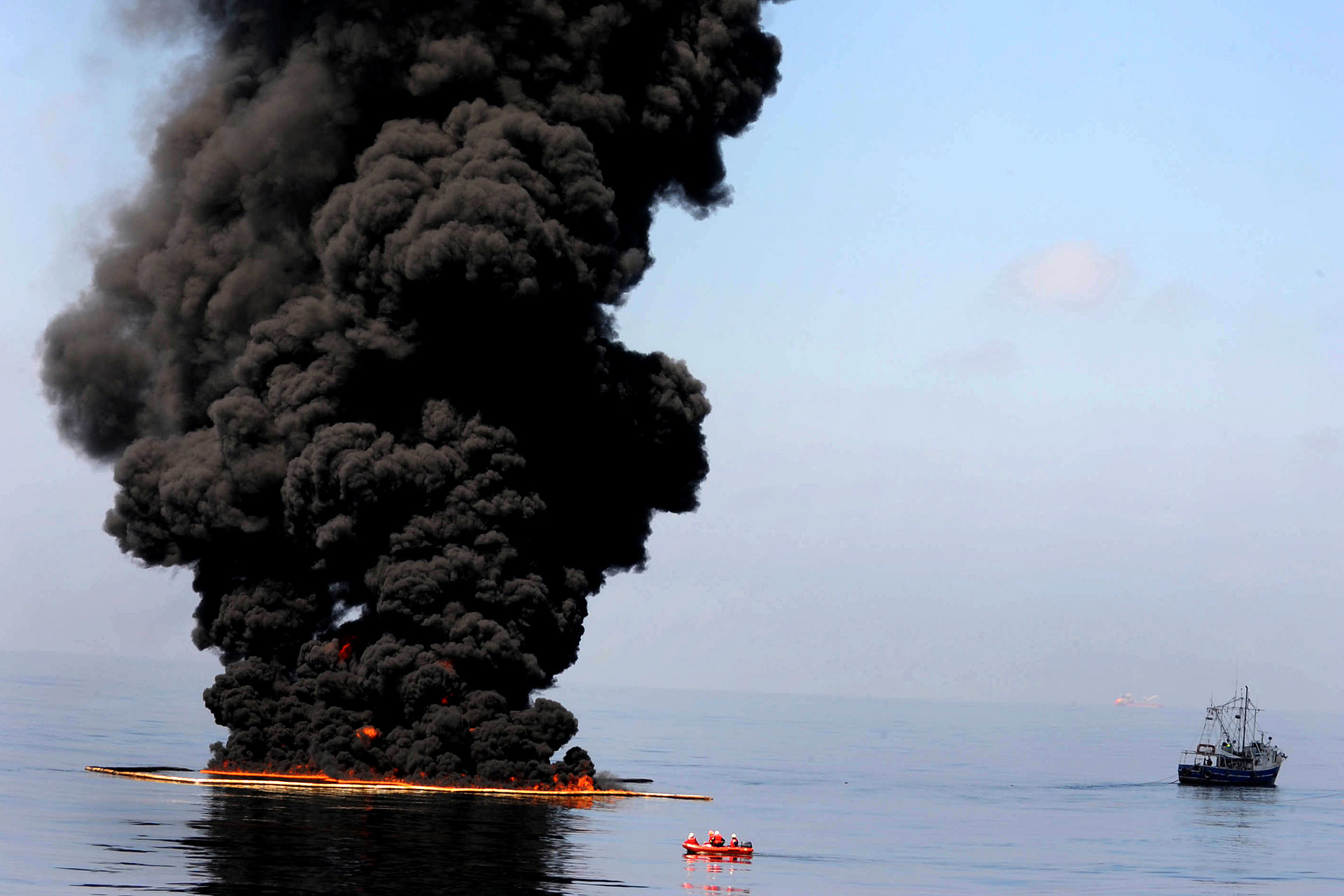

MANAMA — Iranian missiles struck a fuel storage facility on Bahrain’s Muharraq Island early on Thursday, igniting a fire that sent thick black smoke across the neighbourhood housing Bahrain International Airport and forced authorities to order residents in four districts to shelter indoors. The attack, on day thirteen of the war triggered by joint American and Israeli strikes on Iran, marks the most significant hit on Bahrain’s civilian energy infrastructure since the conflict began on 28 February.
Bahrain’s Ministry of Interior confirmed the strike targeted fuel tanks at a facility in Muharraq Governorate, according to a statement carried by the state news agency BNA. Civil Defence forces contained the blaze within hours, but the ministry instructed citizens and residents across Hidd, Arad, Qalali, and Samaheej to remain in their homes and close all windows and ventilation openings as a precaution against smoke inhalation. The attack follows a separate Iranian strike on Bahrain that killed one person earlier this week, as well as a drone attack on 8 March that damaged a water desalination plant serving the island nation. The strike was part of a broader escalation that culminated in an IRGC threat to burn all Gulf oil and gas infrastructure.
Since the war began, Bahrain’s air defences have intercepted 143 missiles and 242 drones launched by Tehran as of March 21, according to the Bahrain Defence Force. The cumulative toll on the Gulf’s smallest state — home to the United States Navy’s Fifth Fleet headquarters and connected to Saudi Arabia by the 25-kilometre King Fahd Causeway — has made Bahrain a focal point of Iran’s retaliatory campaign against the coalition that destroyed much of its nuclear programme and killed its supreme leader, Ayatollah Ali Khamenei.
Table of Contents
- What Happened at the Muharraq Fuel Depot?
- Residents Told to Shelter as Smoke Spreads
- How Much Damage Has Iran Inflicted on Bahrain?
- The Fifth Fleet Factor
- Can Bahrain’s Air Defenses Keep Up?
- Why Saudi Arabia Cannot Ignore Bahrain’s Vulnerability
- Oil Markets React as Gulf Fuel Infrastructure Burns
- Frequently Asked Questions
What Happened at the Muharraq Fuel Depot?
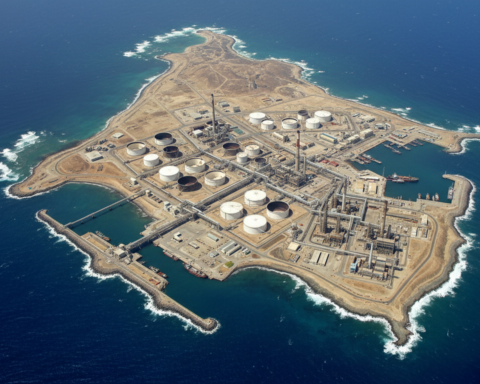
The Iranian strike hit fuel storage tanks at a facility in Muharraq Governorate in the early hours of 12 March 2026. Muharraq Island, a densely populated area north-east of Manama, houses both Bahrain International Airport and several oil-related storage and distribution facilities that supply jet fuel to the airport and heating and cooking fuel to residential areas across the island.
Bahrain’s Ministry of Interior described the attack as targeting “fuel tanks at a facility in Muharraq Governorate,” according to BNA. Video footage broadcast by CNN, Al Jazeera, and Euronews showed massive flames rising from the storage tanks with a dense column of black smoke visible from across the capital. Firefighters from the Civil Defence directorate were deployed immediately and brought the blaze under control, the ministry said, though it did not specify the number of tanks damaged or the volume of fuel destroyed.
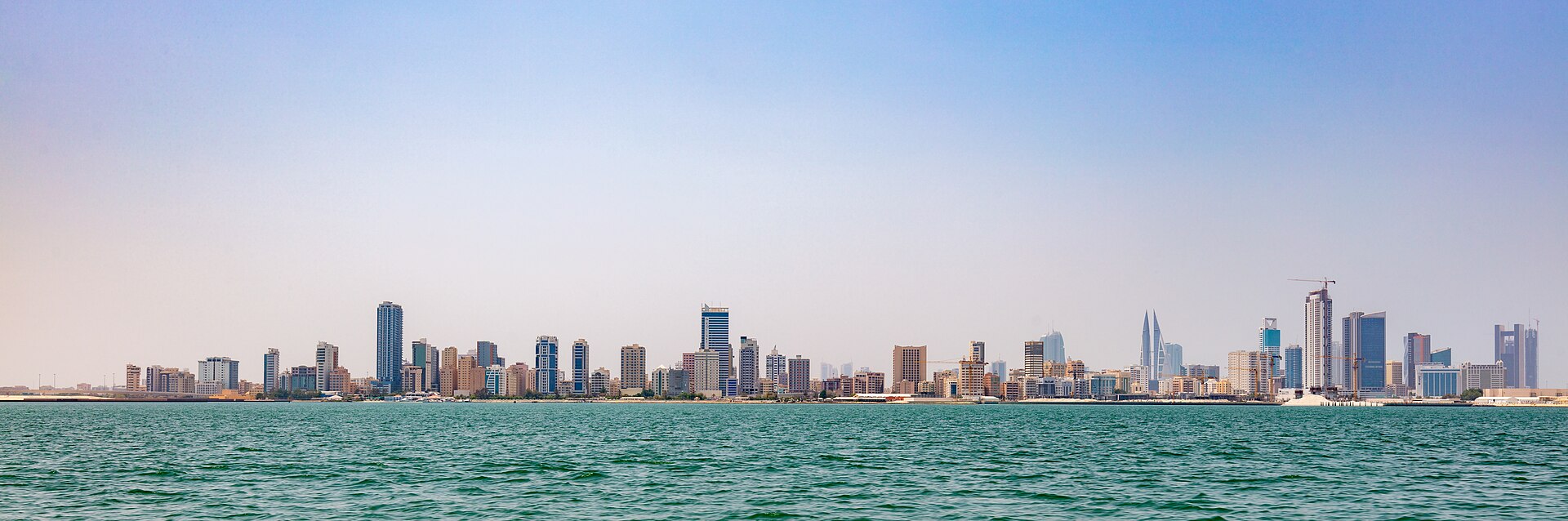
The proximity of the fuel depot to Bahrain International Airport raised immediate concerns about flight operations. The airport serves as a major regional hub handling more than 10 million passengers annually under normal conditions, according to Bahrain Airport Company data. While airport authorities had not issued a formal closure notice as of Thursday afternoon, flight tracking data showed a sharp reduction in traffic, with several carriers suspending services to Bahrain since the war began.
The Islamic Revolutionary Guard Corps did not immediately claim responsibility for the specific Muharraq strike, though Iran’s military has repeatedly declared Gulf energy infrastructure a legitimate target in response to the American and Israeli campaign, Reuters reported. The IRGC Aerospace Force has launched hundreds of ballistic missiles and drones at targets across six Gulf states since the war began on 28 February.
Residents Told to Shelter as Smoke Spreads
The Bahraini government’s decision to order residents of four Muharraq districts — Hidd, Arad, Qalali, and Samaheej — to remain indoors with windows sealed reflects the severity of the environmental hazard created by burning petroleum products. Black smoke from fuel fires contains particulate matter, volatile organic compounds, and hydrogen sulphide, all of which pose respiratory risks, according to the World Health Organisation.
The shelter-in-place order affected an estimated 120,000 residents based on Bahrain’s 2020 census data for the four districts, the Tribune India reported. Authorities warned that smoke inhalation posed particular risks to children, the elderly, and those with pre-existing respiratory conditions. Bahrain’s health ministry activated emergency protocols at Muharraq’s King Hamad University Hospital and Salmaniya Medical Complex in Manama to receive any casualties.
The attack on civilian fuel infrastructure marks an escalation in Iran’s targeting strategy in Bahrain. Previous strikes had focused on military targets, including the devastating 28 February attack on the U.S. Navy’s Fifth Fleet headquarters at Naval Support Activity Bahrain in Juffair that killed 21 American servicemembers, according to Military.com. A separate strike on 2 March hit Mina Salman Port, killing a shipyard worker. But Thursday’s attack struck a purely civilian facility that serves the residential population.
The Gulf Daily News, Bahrain’s largest English-language newspaper, reported that the fire was contained by mid-morning and the shelter-in-place order was lifted for the Qalali and Samaheej districts by noon, though residents of Hidd and Arad, closer to the depot, were asked to keep windows closed into the afternoon as smoke lingered.
How Much Damage Has Iran Inflicted on Bahrain?
Iran’s cumulative strikes on Bahrain since 28 February represent the most sustained foreign military assault on the island kingdom since its independence in 1971. The damage spans military, civilian, and critical infrastructure targets across the archipelago of 33 islands that together measure just 786 square kilometres — smaller than the city of London.
| Date | Target | Weapon | Damage | Casualties |
|---|---|---|---|---|
| 28 Feb | NSA Bahrain / Fifth Fleet HQ | Ballistic missiles | Multiple buildings destroyed, satellite comms terminals hit | 21 US killed |
| 1 Mar | Mina Salman Port | Ballistic missile | Port facilities damaged | 1 killed |
| 2 Mar | Residential area near Manama | Drones | Building damaged near petroleum refinery | 32 injured |
| 8 Mar | Water desalination plant | Drones | Plant damaged, water supply disrupted | Not reported |
| 12 Mar | Muharraq fuel depot | Missiles | Fuel tanks ignited, major fire | Under assessment |
The pattern shows a deliberate widening of Iran’s target set. The initial strikes focused on American military assets, specifically the Fifth Fleet headquarters whose destruction sent a dramatic message about Iran’s reach. Subsequent attacks moved to port infrastructure, residential areas, water supply, and now fuel storage — a systematic campaign against the foundations of civilian life on the island, according to analysis by the International Institute for Strategic Studies.
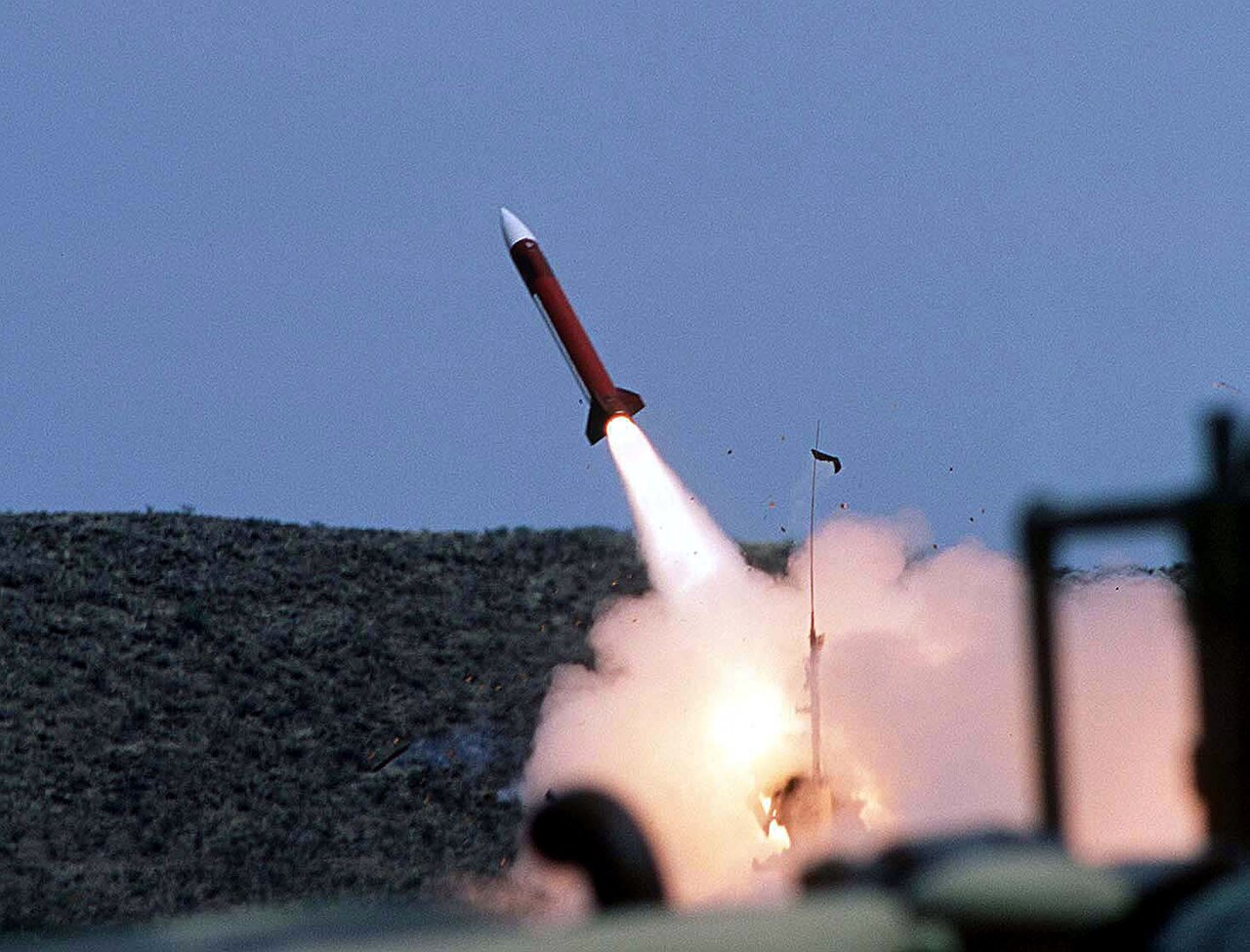
Satellite imagery from Planet Labs published by ABC News showed extensive damage at the Fifth Fleet headquarters in Manama, including the destruction of several large buildings and two satellite communications terminals. The U.S. Naval Central Command subsequently declared the Juffair base boundaries “no longer assessed as safe for US personnel,” according to Defense One, ordering all servicemembers and contractors who live and work in the area to evacuate.
Bahrain’s information minister, Ramzan Al-Nuaimi, told Al Arabiya on 10 March that the total cost of Iranian damage to Bahrain’s infrastructure exceeded $2 billion and was still rising. That figure, if accurate, represents roughly 5 percent of Bahrain’s $43 billion GDP, according to World Bank 2024 estimates.
The Fifth Fleet Factor
Bahrain’s strategic significance extends far beyond its size. The island nation has hosted the U.S. Navy’s Fifth Fleet since 1995, providing the command and control hub for American naval operations across the Persian Gulf, Arabian Sea, and Red Sea. The headquarters at Naval Support Activity Bahrain in the Juffair district of Manama coordinated operations ranging from counter-piracy patrols to the escort of oil tankers through the Strait of Hormuz.
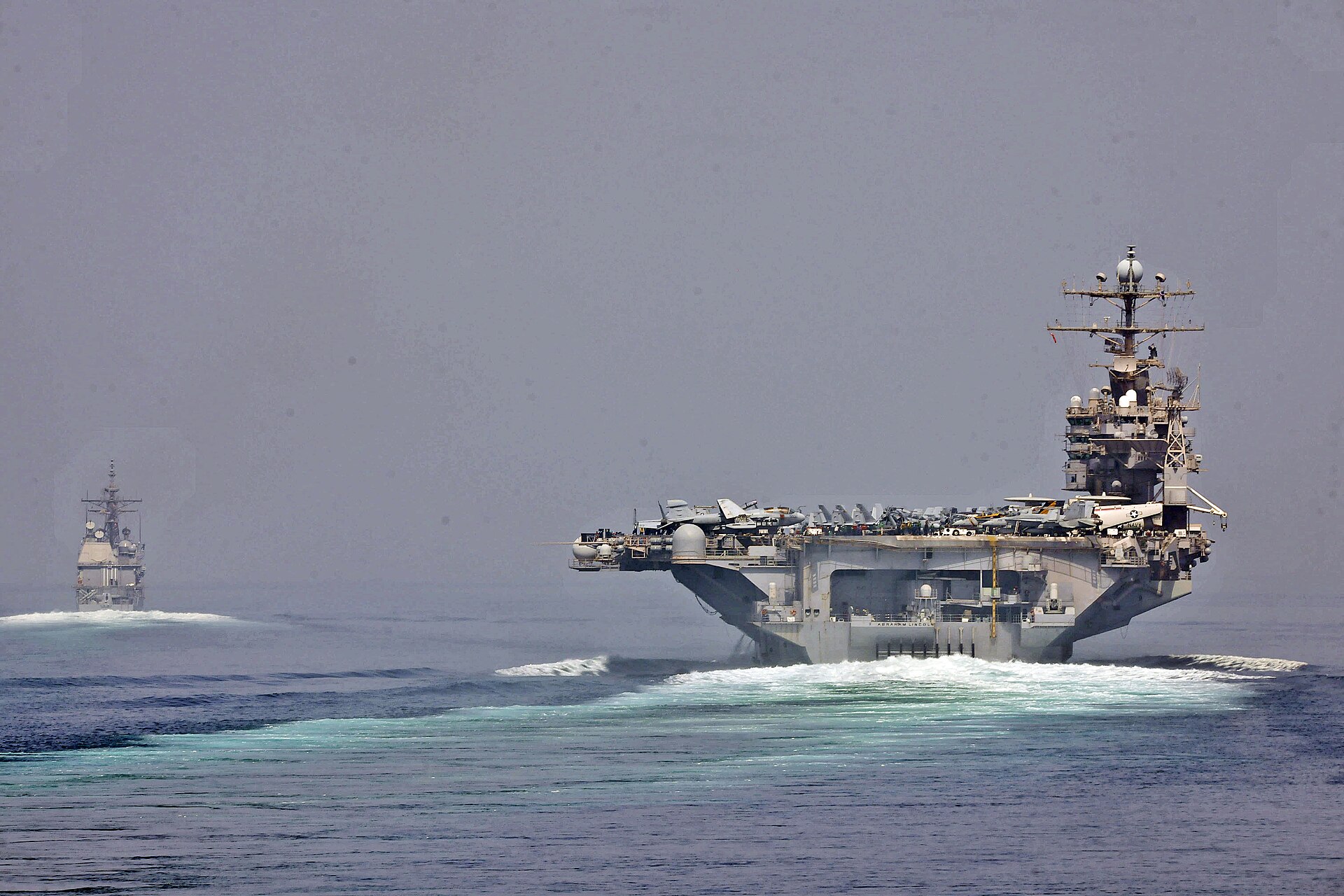
The 28 February strike on the Fifth Fleet headquarters was among the most consequential attacks on American military personnel since the 1983 Beirut barracks bombing, according to Stars and Stripes. The destruction of satellite communications terminals and command buildings forced the Navy to shift operational coordination to the aircraft carrier USS Dwight D. Eisenhower operating in the Gulf of Oman, a degradation that reduced the effectiveness of America’s missile shield across the region.
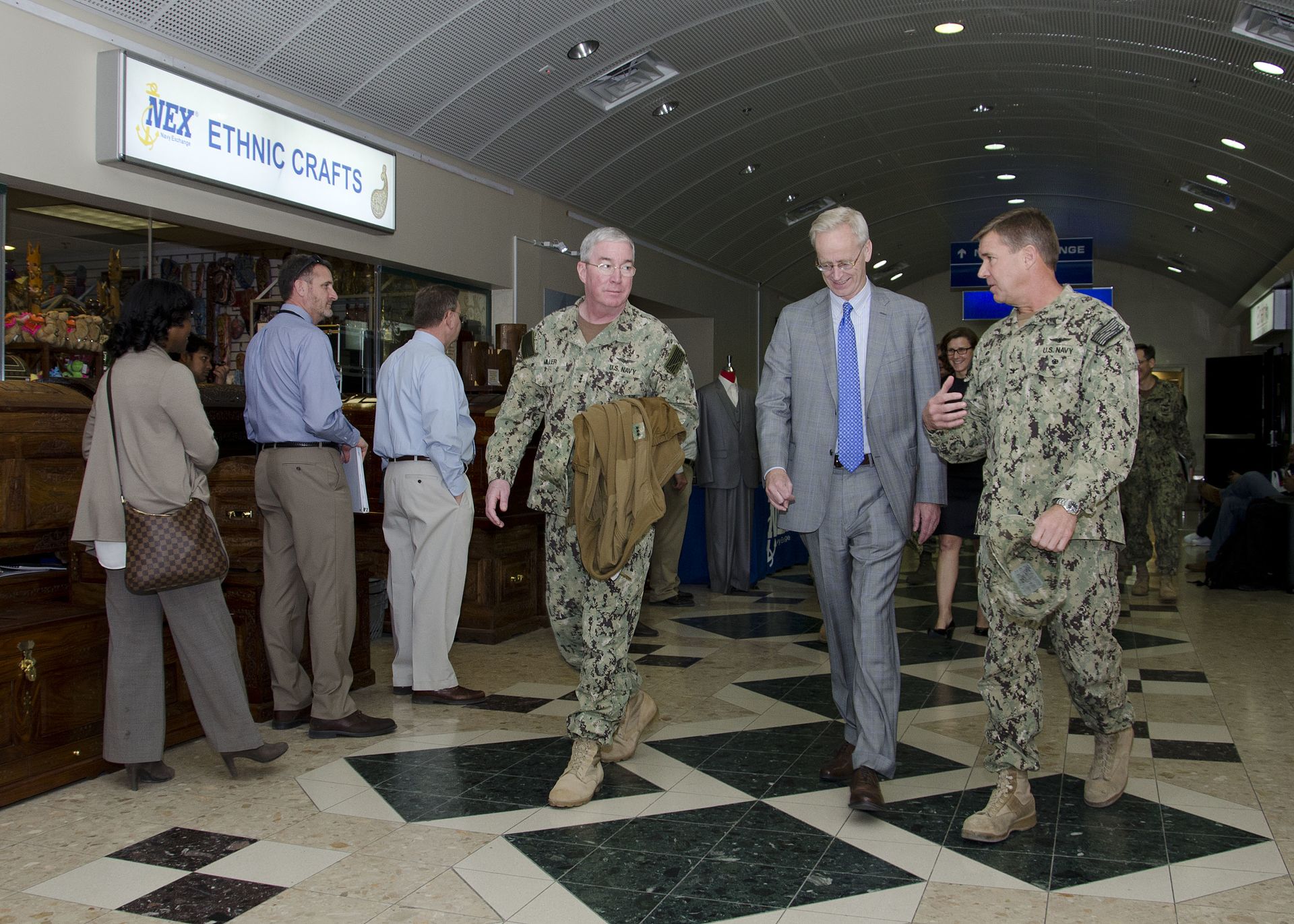
For Saudi Arabia, Bahrain’s position as a forward operating base for American power projection is inseparable from its own security architecture. The King Fahd Causeway, a 25-kilometre bridge connecting Saudi Arabia’s Eastern Province to Bahrain, has served as both a commercial lifeline and a military corridor — Saudi troops crossed the causeway in 2011 to help Bahrain’s government quell protests during the Arab Spring. The causeway means that any threat to Bahrain is, in practical terms, a threat to Saudi Arabia’s eastern flank.
The steady destruction of Bahrain’s military and civilian infrastructure also raises questions about whether the United States can maintain its forward posture in the Gulf. If NSA Bahrain remains untenable as a permanent base, Washington would need to rely more heavily on facilities in Qatar, the UAE, and Saudi Arabia itself — a shift that would alter the strategic geography of the region for years beyond the current conflict.
Can Bahrain’s Air Defenses Keep Up?
Bahrain’s claim to have intercepted 105 missiles and 176 drones since 28 February suggests an interception rate that military analysts describe as remarkably high for a nation of its size. Bahrain operates a layered air defence network that includes Patriot Advanced Capability-3 batteries provided by the United States, the AN/TPY-2 radar system, and short-range point defence systems, according to the International Institute for Strategic Studies Military Balance 2026.
But the Muharraq fuel depot strike demonstrates that even a high interception rate leaves gaps when the volume of incoming threats is sufficiently large. If Bahrain intercepted 281 projectiles and an unknown number got through to strike the Fifth Fleet, the port, the desalination plant, residential areas, and the fuel depot, the total Iranian salvo likely exceeded 300 missiles and drones — averaging more than 23 projectiles per day over thirteen days of conflict.
The economics of interception compound the problem. A single PAC-3 Missile Segment Enhancement interceptor costs between $4 million and $12 million per unit, according to the Congressional Research Service. Iran’s Shahed-136 attack drones cost an estimated $20,000 to $50,000 each, according to the Royal United Services Institute. This cost asymmetry means that Iran can sustain its assault far longer than Bahrain can afford to defend against it without continuous resupply from the United States.
The cost disparity has prompted a scramble for cheaper interceptor solutions. Ukraine, which has spent three years fighting Iranian-supplied Shahed drones on its own territory, has deployed air defence teams to Saudi Arabia, Qatar, and the UAE to share expertise, the Kyiv Independent reported. A Saudi arms company signed a deal to buy Ukrainian-made interceptor missiles this week, with a larger procurement package reportedly under negotiation, according to the same outlet.
Why Saudi Arabia Cannot Ignore Bahrain’s Vulnerability
The destruction of Bahrain’s fuel infrastructure carries direct implications for Saudi Arabia. The two kingdoms share far more than a causeway. Saudi Arabia provides Bahrain with a portion of its crude oil supply via the Abu Safa offshore field, which has been jointly administered since 1958 but whose revenues Riyadh ceded entirely to Bahrain in 1996, according to Reuters. Any disruption to Bahrain’s fuel storage and distribution network could require Saudi Arabia to increase direct supply — at a time when its own energy infrastructure faces Iranian attack.
Saudi air defences intercepted and destroyed 18 drones in the Eastern Province on Thursday, Defence Ministry spokesman Major General Turki Al-Maliki confirmed. A ballistic missile fired toward Prince Sultan Air Base fell in an uninhabited area. The simultaneous attacks on both Bahrain and Saudi Arabia suggest a coordinated Iranian strategy of stretching Gulf air defence networks across multiple fronts, forcing each nation to defend its own territory rather than providing mutual support.
Bahrain’s population of 1.5 million people and its compact geography — the entire country could fit inside the boundaries of Riyadh — make it uniquely vulnerable to sustained aerial bombardment. There is limited space for fuel storage redundancy, no hinterland to disperse critical infrastructure, and a civilian population that cannot evacuate to safe zones because there are no safe zones on an island 55 kilometres long. Saudi Arabia, by contrast, has vast territory that offers geographic depth — but it also has vastly more infrastructure to defend.
Pakistan’s Prime Minister Shehbaz Sharif landed in Riyadh on Thursday for an urgent meeting with Crown Prince Mohammed bin Salman, part of a regional diplomatic effort that has seen Islamabad engage with both sides. Pakistan deployed air defence troops to Saudi Arabia earlier this week, and the two nations invoked their bilateral defence pact under Iranian fire on 9 March, underscoring the extent to which Bahrain’s crisis has become Riyadh’s crisis.
The broader lesson for Saudi leadership is that Iran’s campaign against Gulf states does not need to achieve military victory to inflict strategic damage. Destroying a fuel depot near an international airport, even temporarily, disrupts the rhythms of normal life in ways that erode public confidence and impose economic costs far exceeding the value of the fuel lost. When the same pattern is replicated across Bahrain, Kuwait, the UAE, and Saudi Arabia simultaneously, the cumulative effect threatens the economic model that underpins every GCC state.
Oil Markets React as Gulf Fuel Infrastructure Burns
Oil prices surged on Thursday as the Muharraq attack added to a cascade of disruptions across the Gulf’s energy landscape. Brent crude climbed above $100 per barrel in London trading, up more than 38 percent since the conflict began, according to Reuters. The OPEC reference basket price rose from $67.90 in February to $92.36 in early March, OPEC data showed, and Thursday’s events pushed prices further into triple digits.
The Muharraq fuel depot is not, in itself, a major node in global oil supply. Bahrain produces only around 40,000 barrels per day from its own fields, according to the U.S. Energy Information Administration — a fraction of Saudi Arabia’s capacity. But the attack contributes to a broader narrative of Gulf energy vulnerability that traders are pricing into every barrel. When fuel infrastructure burns near a major international airport in a GCC state, the risk premium on oil produced anywhere in the region rises.
| Date | Event | Brent ($/bbl) | Change |
|---|---|---|---|
| 27 Feb | Pre-war baseline | 72.48 | — |
| 28 Feb | US-Israeli strikes on Iran begin | 85.20 | +17.6% |
| 2 Mar | Strait of Hormuz effectively closed | 98.40 | +35.8% |
| 5 Mar | IEA announces 400M barrel release | 91.10 | +25.7% |
| 10 Mar | Trump declares war “very complete” | 88.50 | +22.1% |
| 12 Mar | Bahrain fuel depot hit; 3 more ships struck | 101+ | +39%+ |
The International Energy Agency’s unprecedented release of 400 million barrels from strategic reserves, announced on 11 March, provided temporary relief. But the reserves are a finite buffer. If the Strait of Hormuz remains effectively closed and Gulf infrastructure continues to sustain damage, the world faces the prospect of a sustained supply deficit that reserve releases cannot cover indefinitely.
OPEC+ announced plans to add 206,000 barrels per day of production in April, led by Saudi Arabia and Russia, according to CNBC. But the increase is marginal relative to the roughly 17 million barrels per day that normally transit the Strait of Hormuz. Spare production capacity sits almost entirely in Saudi Arabia at this point, and Riyadh faces the paradox of needing to pump more oil while defending the infrastructure required to export it from an increasingly hostile operating environment.
Frequently Asked Questions
What was struck in the Bahrain attack on 12 March 2026?
Iranian missiles struck fuel storage tanks at a facility in Muharraq Governorate, Bahrain, on the morning of 12 March 2026. The attack ignited a major fire that sent thick black smoke across the neighbourhood housing Bahrain International Airport. Civil Defence forces contained the blaze within hours, but residents in four districts were ordered to shelter indoors as a precaution against smoke inhalation.
How many missiles and drones has Bahrain intercepted since the war began?
Bahrain’s air defences have intercepted and destroyed 105 missiles and 176 drones launched by Iran since 28 February 2026, according to Bahraini military officials cited by Al Jazeera. Despite this high interception rate, several projectiles have penetrated the defences and struck military targets including the U.S. Fifth Fleet headquarters, civilian infrastructure including a desalination plant, and the Muharraq fuel depot.
Is Bahrain International Airport still operating?
Bahrain International Airport had not issued a formal closure notice as of Thursday afternoon, but flight traffic was sharply reduced. Several airlines suspended services to Bahrain after the war began on 28 February. The proximity of the fuel depot fire to the airport compound raised additional safety concerns, though Bahraini authorities said the blaze was contained and did not directly affect runway operations.
How does the Bahrain attack affect Saudi Arabia?
Saudi Arabia and Bahrain are connected by the 25-kilometre King Fahd Causeway, and Saudi Arabia provides Bahrain with crude oil via the Abu Safa offshore field. Any disruption to Bahrain’s fuel storage capacity could increase demand on Saudi supply lines. The attack also demonstrates Iran’s ability to strike civilian energy infrastructure across multiple Gulf states simultaneously, adding to the pressure on Saudi Arabia’s own air defence network, which intercepted 18 drones in the Eastern Province on the same day.
What is the current status of the US Fifth Fleet in Bahrain?
The U.S. Navy’s Fifth Fleet headquarters at Naval Support Activity Bahrain suffered severe damage in the 28 February Iranian strikes that killed 21 American servicemembers. U.S. Naval Central Command subsequently declared the Juffair base boundaries “no longer assessed as safe for US personnel” and ordered evacuation. Operational coordination has shifted to the carrier USS Dwight D. Eisenhower in the Gulf of Oman.