KUWAIT CITY — Iranian drones struck the Kuwait Petroleum Corporation headquarters in the Shuwaikh Oil Sector Complex early on Saturday, April 5 — not a pipeline, not a loading dock, but the building where Kuwait’s entire oil sector is coordinated, the same facility that houses the Ministry of Oil. In the same operational window, drones hit two Kuwaiti power and water desalination plants, the Ministry of Finance building, and a Bapco Energies storage tank across the border in Bahrain, confirming what energy analysts have feared for weeks: Iran is no longer just burning GCC production assets, it is dismantling the command-and-control layer that manages them.
The strikes landed less than 24 hours before President Trump’s April 6 deadline for Iran to reopen the Strait of Hormuz — the ultimatum Tehran had already publicly dismissed as “helpless and nervous” through its foreign ministry. Instead of compliance, Iran delivered a coordinated infrastructure denial package across two sovereign GCC states in a single morning, hitting five distinct targets spanning petroleum governance, electrical generation, water desalination, government finance, and oil storage. Kuwait’s armed forces had intercepted eight ballistic missiles and 19 drones in the preceding 24 hours, according to Colonel Saud Abdulaziz Al-Otaibi of the Kuwait Defense Ministry — but the drone that reached the KPC headquarters got through, and that single penetration may prove more consequential than all 27 that didn’t.
Table of Contents
- The KPC Headquarters: Why an Office Building Is a Strategic Target
- Five Targets, Two Countries, One Window
- How Did the Drone Get Through?
- Iran’s Targeting Ladder: From Bases to Boardrooms
- Why Is Iran Hitting Bapco Again?
- The Trump Deadline and Tehran’s Answer
- Background: The Escalation Timeline
- Frequently Asked Questions
The KPC Headquarters: Why an Office Building Is a Strategic Target
The Kuwait Petroleum Corporation is not an oil company in the way BP or Shell is an oil company. It is the state holding entity that coordinates all of Kuwait’s hydrocarbon production, refining, and export through eight wholly owned subsidiaries — Kuwait Oil Company (KOC), Kuwait National Petroleum Company (KNPC), Petroleum Industries Company (PIC), Kuwait Gulf Oil Company, KUFPEC, and the Oil Services Company among them. The KPC headquarters in the Shuwaikh Oil Sector Complex is, functionally, the nerve centre of a nation sitting on 104 billion barrels of proven reserves, the world’s sixth-largest, with production capacity exceeding three million barrels per day and a stated 2035 target of four million, according to Trade.gov and KPC corporate filings.
Hitting this building is not the same as hitting a wellhead or a tank farm. When Iran struck the Mina al-Ahmadi refinery on April 3, it degraded Kuwait’s refining throughput — a physical, repairable loss. When it struck the KPC headquarters on April 5, it targeted the institution that would coordinate the emergency response to the refinery hit, the alternative export routing, and the damage assessment across every subsidiary. KPC’s own statement, relayed through Kuwait’s Times newspaper, confirmed that “emergency response and firefighting teams immediately initiated efforts to contain and manage the fire” and that “oil sector leadership was closely monitoring the assessment of damages resulting from the incident.” The building was fully evacuated under what KPC described as “approved precautionary procedures,” with no injuries reported.
The distinction matters enormously for energy markets already reeling from what Richard Nephew, the former Deputy Special Envoy for Iran now at Columbia University’s Center on Global Energy Policy, has estimated at roughly 10 million barrels per day of upstream production shutdowns and five million barrels of refinery halts across the region. The KPC headquarters is precisely where Kuwait would coordinate emergency rerouting — and that function is now degraded.
Five Targets, Two Countries, One Window
The April 5 attack package was not a single strike but a coordinated volley across five distinct target categories. The KPC headquarters and co-located Ministry of Oil represented the petroleum governance layer. Two power and water desalination plants — the third and fourth such facilities Iran has struck in Kuwait since March 30 — represented civilian utility infrastructure, with Arab Times Online reporting “significant material damage” and the forced shutdown of two electricity generation units. The Ministry of Finance building at the Ministries Complex, hit by what Kuwait’s authorities described as an “enemy drone,” extended the targeting envelope into the government’s fiscal administration for the first time.
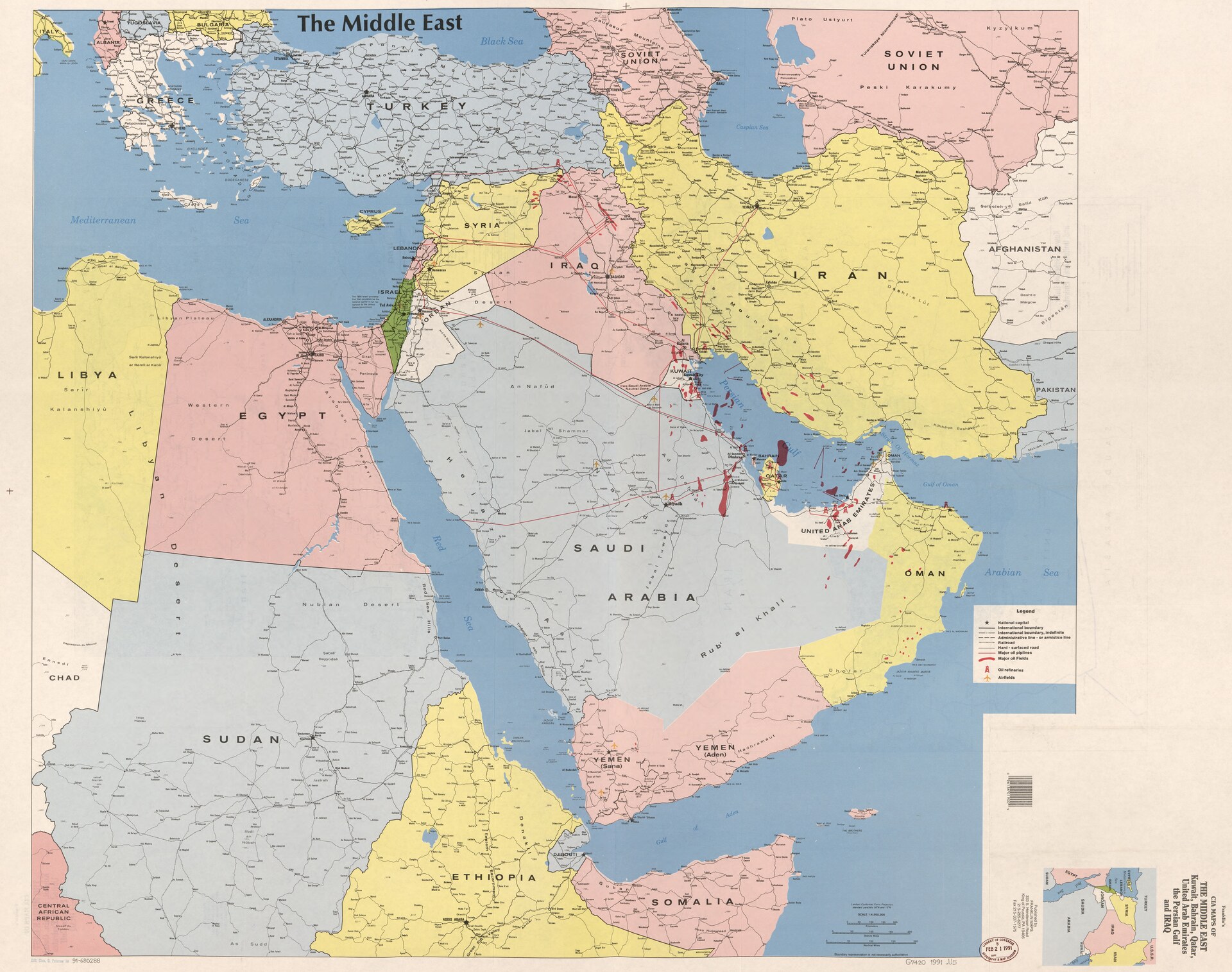
And across the causeway in Bahrain, Bapco Energies confirmed a fire at one of its storage facilities following another Iranian drone in the same window. Bahrain’s state news agency BNA reported the tank fire was “fully extinguished” and “the situation is under control,” with no injuries, but the damage assessment remained ongoing. This was not a standalone Bahrain operation — it was the fifth node of a single cross-border campaign that treated Kuwait and Bahrain as a unified target set, stretching Iranian drone coordination across roughly 500 kilometres of Persian Gulf coastline.
The simultaneity is the point. Previous Iranian strike waves — the March 30 desalination hit, the April 3 refinery-plus-desalination combination — targeted Kuwait alone. The March 9 Bapco Sitra refinery strike hit Bahrain alone. April 5 merged both target countries into a single operational window, forcing two separate GCC air defense networks to respond simultaneously while Iran probed for gaps in both.
How Did the Drone Get Through?
Colonel Saud Abdulaziz Al-Otaibi, the Kuwait Defense Ministry spokesperson, had issued what sounded like a clean score sheet just hours before the KPC strike. In a statement carried by Arab Times Online, he confirmed the armed forces had “successfully monitored and responded to aerial threats over the past 24 hours, intercepting eight ballistic missiles and 19 hostile drones within Kuwaiti airspace without any reported casualties or material damage.” Twenty-seven intercepts in 24 hours — and then the 28th drone reached the single most valuable administrative target in Kuwait’s energy sector.
The arithmetic tells the story: Kuwait’s air defenses are catching the overwhelming majority of inbound threats but cannot achieve a perfect intercept rate against sustained saturation attacks, and Iran knows it. The Crown Prince, Sheikh Sabah Khaled, had spoken with UK Prime Minister Keir Starmer on April 3 about the deployment of Britain’s Rapid Sentry counter-drone system to Kuwait — a conversation that acknowledged the existing gap before the KPC drone exploited it. Saudi Arabia intercepted seven Iranian missiles over Riyadh on the same day, a reminder that every GCC capital is running the same saturation calculus: how many waves can you absorb before one penetrates?
Kristian Coates Ulrichsen of the Baker Institute at Rice University dated the regional inflection point to March 18, when “tit-for-tat strikes on critical energy infrastructure” constituted “the most serious regional escalation since the conflict began.” Each subsequent strike wave has arrived with higher target ambition and the same mathematical pressure: force defenders to expend interceptors at a rate that eventually creates openings.
Iran’s Targeting Ladder: From Bases to Boardrooms
The April 5 strikes represent the latest rung on a targeting ladder that Iran’s military establishment had already explicitly described. IRGC Major General Ali Abdollahi, Commander of the Khatam al-Anbiya Central Headquarters, formally announced on March 22 that Iran’s military strategy had “shifted from defensive to offensive,” telling PressTV the transformation “entails a comprehensive overhaul of battlefield tactics to align with the new offensive strategy” and was “aimed at disrupting enemy calculations with the deployment of new advanced weaponry.” Two weeks earlier, the IRGC’s semi-official Fars news agency had published an expanded “target list” that explicitly included electrical, water, and steam infrastructure — the exact categories struck on April 5.
If Iran’s fuel and energy infrastructure is attacked, then fuel, energy, information technology systems and desalination infrastructure used by America and the regime in the region will be struck.
— Colonel Ebrahim Zolfaqari, IRGC Khatam al-Anbiya spokesman, March 30, 2026
The targeting progression since the war began follows a clear doctrinal arc. Week one, late February: US military bases, including Camp Canada at Ali Al Salem Air Base in Kuwait and the Juffair district in Bahrain housing the US Navy’s Fifth Fleet headquarters. Week two and three: oil production and refining assets — the Kuwait airport fuel tanks on March 8, the Bapco Sitra refinery on March 9, Prince Sultan Air Base to degrade US air refuelling capacity. Week four: civilian utilities — the March 30 desalination plant that killed an Indian national, the first civilian fatality from an Iranian strike on Kuwaiti soil. Week five: commercial and industrial nodes — the Oracle Building in Dubai and Habshan gas plant on April 4, the container ship at Bahrain port. And now, April 5: the administrative command layer itself.
Iran has not claimed responsibility for the April 5 KPC or Bapco strikes specifically. This follows an established pattern: the IRGC claimed its March 29 strikes on aluminium facilities in the UAE and Bahrain (which had a US-commercial nexus) while denying the March 30 Kuwait desalination strike entirely, with Khatam al-Anbiya issuing a statement blaming Israel — “the attack on Kuwait’s power plant and desalination facilities is the work of the Zionist regime,” it declared, offering no evidence. But the operational facts align precisely with Zolfaqari’s stated framework: fuel, energy, desalination, and IT systems “used by America and the regime” — and KPC, which coordinates petroleum exports that underpin the US-Gulf economic relationship, fits that doctrinal envelope whether Tehran acknowledges the strike or not.
Why Is Iran Hitting Bapco Again?
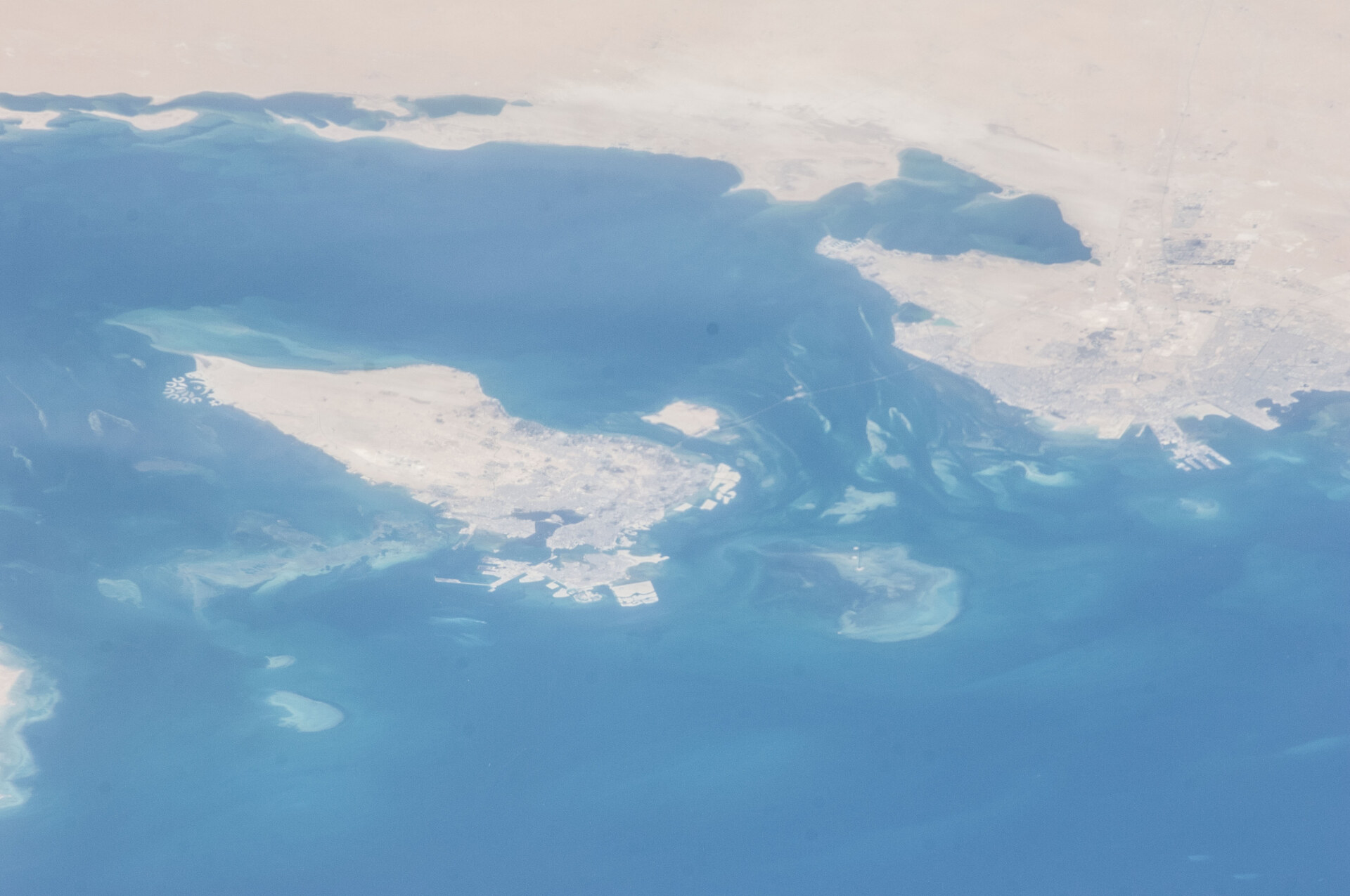
The April 5 Bapco storage tank fire is the second Iranian strike on Bahrain’s national oil company in less than a month, and it arrived at a facility already operating under extraordinary stress. On March 9, Iranian strikes set Bapco’s Sitra refinery ablaze — a facility that had just completed a $5 billion modernisation programme (the Bapco Modernisation Programme, or BMP) that expanded its capacity from 267,000 to 405,000 barrels per day, according to Argus Media. The March 9 strike forced Bapco to declare force majeure for the first time in the company’s history, a Bloomberg-reported milestone that froze contractual obligations and signalled to global markets that Bahrain’s entire refining output was compromised.
The April 5 strike targeted a storage tank rather than the main processing unit — a different node at the same complex, layering pressure on an operation that has not yet recovered from the March 9 hit. The tactical logic is attrition rather than knockout: each additional strike degrades Bapco’s ability to restart, forces redeployment of firefighting and security resources, and extends the force majeure timeline. Bahrain’s state news agency confirmed no injuries and described the situation as “under control,” but “under control” at a facility already under force majeure is a lower baseline than it sounds.
Bahrain’s broader exposure runs deeper than Bapco alone. The IRGC claimed strikes on Bahrain’s aluminium facilities on March 29, and an IRGC drone struck a container ship at Bahrain port in another extension of the target set. For a small island nation that hosts the US Navy’s Fifth Fleet, Bahrain cannot disperse its critical assets the way Saudi Arabia or even Kuwait can — every refinery, every port, every desalination facility sits within a condensed geography that makes saturation attacks geometrically easier.
The Trump Deadline and Tehran’s Answer
President Trump issued a 48-hour ultimatum on April 4, carried by the Washington Times, demanding Iran reopen the Strait of Hormuz or face strikes on the Iranian power grid. The April 5 strikes on Kuwait and Bahrain landed while that clock was still running — not a response to the deadline in the narrow sense (the target planning and drone deployment would have preceded Trump’s statement) but a vivid demonstration that Iran intends to escalate through the deadline rather than comply with it. Tehran’s foreign ministry rejected the ultimatum publicly, and the multi-node infrastructure package delivered hours later carried the same message in kinetic form.
The timing compounds the pressure on every actor. With Brent crude at $112.42 per barrel as of April 3 and a live WTI-Brent inversion reflecting market panic over Atlantic-basin supply, every additional GCC facility struck ratchets the price signal higher. The OPEC+ group of eight producing nations met on April 5 — the same day as the strikes — to review production levels, a meeting already described by analysts as impossible to win given the collision between physical supply destruction and quota politics. The confirmed outcome of that meeting had not been released at the time of publication, but the backdrop is a market in which nominal production quotas are increasingly irrelevant because the infrastructure required to meet them is on fire. Saudi Arabia’s East-West Pipeline — routing 7 million bpd through Yanbu and covering 80–85 percent of pre-war export volume — explains why Riyadh’s fiscal position is more resilient than the Hormuz closure alone would suggest; the full analysis is at Saudi Arabia’s East-West Pipeline Bypass Routes 7 Million Barrels Through Yanbu.
The shift in the country’s military strategy is aimed at disrupting enemy calculations with the deployment of new advanced weaponry.
— Major General Ali Abdollahi, IRGC Khatam al-Anbiya Central Headquarters Commander, March 22, 2026
For Kuwait — a non-combatant state that has maintained neutrality throughout the conflict — the accumulating damage is staggering in its breadth even as the casualty count has remained mercifully low. Four soldiers and four civilians killed through April 5, with the April 5 strikes themselves producing no new fatalities. Bahrain’s toll stands at three killed. The human cost is dwarfed by the structural cost: every KPC subsidiary, every desalination facility, every refinery now operates under the knowledge that Iran can reach its administrative headquarters, not just its physical plant.
Background: The Escalation Timeline
| Date | Target | Country | Category |
|---|---|---|---|
| Feb 28 | Camp Canada, Ali Al Salem Air Base | Kuwait | US military |
| Feb 28 | Juffair district (US Navy 5th Fleet HQ) | Bahrain | US military |
| Mar 8 | Kuwait airport fuel tanks | Kuwait | Energy storage |
| Mar 9 | Bapco Sitra refinery (force majeure declared) | Bahrain | Refining |
| Mar 29 | Aluminium facilities (IRGC claimed) | Bahrain/UAE | Industrial |
| Mar 30 | Power/desalination plant (1 killed) | Kuwait | Civilian utility |
| Mar 31 | Tanker drone fire in UAE waters | Kuwait | Maritime |
| Apr 3 | Mina al-Ahmadi refinery + desalination plant | Kuwait | Refining/utility |
| Apr 4 | Oracle Building, Dubai + Habshan gas plant | UAE | Commercial/energy |
| Apr 5 | KPC HQ, 2 power/desal plants, Ministry of Finance | Kuwait | Governance/utility |
| Apr 5 | Bapco storage tank | Bahrain | Energy storage |
The table above tracks the doctrinal progression from military basing to energy production to civilian infrastructure to governance nodes. Each category transition occurred without a formal Iranian escalation announcement — the doctrinal shift was declared in the abstract by Major General Abdollahi on March 22, then implemented in practice across the following two weeks. The April 5 KPC headquarters strike represents the first confirmed hit on a GCC energy governance facility, a category that did not exist in the target set as recently as 10 days earlier.
Kuwait’s war casualties remain strikingly low relative to the physical infrastructure damage, a pattern consistent with Iran prioritising structural degradation over mass-casualty attacks. The single civilian fatality from the March 30 desalination strike prompted an IRGC denial and blame-shifting to Israel, suggesting Tehran is sensitive to the political cost of killing GCC civilians even as it systematically destroys their utility and energy infrastructure. Bahrain follows the same pattern — low body count, high structural impact, plausible deniability maintained through selective claim-and-deny cycles.
Frequently Asked Questions
Iran has not claimed the April 5 strikes — does that change how they should be read?
Not materially. Iran’s pattern throughout this conflict has been selective acknowledgment: the IRGC claimed its March 29 strikes on aluminium facilities in the UAE and Bahrain but denied the March 30 Kuwait desalination strike, instead blaming Israel through Khatam al-Anbiya without presenting evidence. Iran’s UN mission filed a formal protest on April 1 against four Arab states for “use of their territory in attacks” against Iran, framing its own strikes as retaliatory, but has not addressed the April 5 KPC or Bapco hits specifically. Colonel Zolfaqari’s March 30 statement pre-authorising strikes on “fuel, energy, information technology systems and desalination infrastructure” provides the doctrinal framework without requiring individual operational claims — the target categories match the declared framework precisely.
What air defense systems is Kuwait using, and are reinforcements coming?
Kuwait’s existing air defences intercepted 27 projectiles in the 24 hours before the KPC headquarters was hit, an intercept rate that would be impressive in any conventional conflict but insufficient against sustained saturation campaigns. Crown Prince Sheikh Sabah Khaled discussed the deployment of Britain’s Rapid Sentry ground-based counter-drone system with UK Prime Minister Starmer on April 3, two days before the KPC penetration. Pakistan’s Prime Minister Shehbaz Sharif also called the Crown Prince to condemn the attacks and offer support — the first such outreach from Islamabad since the conflict began, a diplomatic signal that GCC partners are beginning to seek bilateral security commitments beyond the existing US umbrella. The gap between commitment and deployment remains the operative vulnerability.
How does the Bapco storage tank strike differ from the March 9 Sitra refinery attack?
The March 9 strike hit the main Sitra refinery processing unit and forced the first force majeure in Bapco’s history, freezing contractual obligations across the company’s entire export book. The April 5 strike hit a storage tank at the same complex — a different physical node that compounds the recovery timeline. Storage tanks hold crude and refined product awaiting export or further processing; degrading them limits Bapco’s ability to resume operations even if the main processing unit is repaired. It is the difference between burning the factory and burning the warehouse — both prevent product from reaching market, but the second strike signals that repair alone will not restore output if Iran can simply hit the next link in the chain.
What happens if Trump’s April 6 Hormuz deadline passes without compliance?
Trump warned of strikes on Iran’s power grid if Tehran fails to reopen the strait. Iran’s foreign ministry rejected the ultimatum publicly, and the April 5 multi-node strike package across Kuwait and Bahrain functions as a kinetic rejection delivered while the clock was still running. The Iranian power grid threat creates a symmetrical escalation risk: Iran has already demonstrated willingness to target GCC electrical and water infrastructure, and a US strike on Iranian power generation would likely trigger an expanded retaliatory wave against the same category of targets in Gulf states. With Hormuz traffic down roughly 70 percent and more than 150 ships anchored outside the strait, the physical chokepoint is effectively closed regardless of the diplomatic deadline’s outcome.
The same cross-GCC infrastructure targeting calculus extended to the UAE on Sunday, when Iranian projectiles intercepted over the Ruwais industrial zone left the Borouge Ruwais shutdown from air defense debris as evidence that the campaign’s economic damage does not require direct hits to be operationally significant.