RIYADH — Iran’s Revolutionary Guards threatened to block every drop of oil leaving the Middle East on Tuesday as the United States launched what Defense Secretary Pete Hegseth called “the most intense day of strikes inside Iran” since Operation Epic Fury began twelve days ago. Saudi Arabia’s defense ministry confirmed it intercepted six ballistic missiles targeting Prince Sultan Air Base and seven drones heading toward the Shaybah oil field, marking the heaviest single day of attacks on the Kingdom’s energy and military infrastructure since the war began on February 28.
The simultaneous escalation from both sides of the conflict has pushed the Iran war into its most dangerous phase yet. Brent crude swung between $80 and $90 a barrel as traders struggled to price the risk of a total Gulf oil shutdown, while the International Energy Agency proposed the largest-ever coordinated release from strategic petroleum reserves. For Saudi Arabia, a nation intercepting missiles over its cities while Ramadan begins and 36 million residents shelter under threat, the twin escalation raises an existential question about how long the Kingdom can absorb punishment from a war it did not start.
Table of Contents
- Iran’s ‘Not One Liter of Oil’ Ultimatum
- What Did Hegseth Mean by the ‘Most Intense Day’ of Strikes?
- Saudi Arabia Intercepts Missiles and Drones Across Three Fronts
- How Are Oil Markets Responding to the Dual Escalation?
- The Strait of Hormuz Standoff in Numbers
- Where Does Saudi Arabia Stand Diplomatically?
- What Is the Civilian Toll After Twelve Days of War?
- What Happens Next
- Frequently Asked Questions
Iran’s ‘Not One Liter of Oil’ Ultimatum
Iran’s Islamic Revolutionary Guard Corps issued its most sweeping economic threat of the war on Tuesday, declaring that “the armed forces of the Islamic Republic will not allow the export of even one liter of oil from the region to the hostile side and its partners until further notice.” The statement, attributed to IRGC spokesman General Ali-Mohammed Naeini, went beyond previous threats focused on the Strait of Hormuz by explicitly targeting all Gulf oil exports to nations aligned with the United States and Israel.
The threat marks a significant escalation in Iran’s economic warfare doctrine. Previous Iranian actions had focused on disrupting shipping through the Strait of Hormuz, where approximately one-fifth of the world’s seaborne oil trade passes daily. Shipping through the strait dropped 95 percent in the first week of March, according to S&P Global Market Intelligence. The new ultimatum suggests Tehran intends to target alternative export routes, including Saudi Arabia’s East-West pipeline to Yanbu on the Red Sea, which Aramco chief executive Amin Nasser said was approaching its full daily capacity of seven million barrels.
“It is we who will determine the end of the war,” the IRGC statement added, signaling that Tehran views its ability to disrupt Gulf energy exports as its primary leverage against the American-led bombing campaign.
President Donald Trump responded within hours. “If Iran blocks the Strait of Hormuz, there will be death, fire and fury at a level never seen before,” he wrote on Truth Social, escalating his rhetoric from an earlier demand for Iran’s “unconditional surrender” issued on March 6. The White House has defined unconditional surrender as the destruction of Iran’s navy, the elimination of its ballistic missile threat, the prevention of nuclear weapons capability, and the weakening of its regional proxies. White House press secretary Karoline Leavitt said the administration expects the war to continue for approximately four to six more weeks.
What Did Hegseth Mean by the ‘Most Intense Day’ of Strikes?
Defense Secretary Pete Hegseth announced at a Pentagon press conference on Monday evening that Tuesday, March 11 would feature “the most fighters, the most bombers, the most strikes” of any day since the campaign began. The United States has been hitting an average of approximately 500 targets per day inside Iran since February 28, according to Pentagon figures. Hegseth indicated that Tuesday’s sorties would substantially exceed that average.
The latest round of strikes is focused on three categories of Iranian military capability: ballistic missile production and storage facilities, drone manufacturing sites, and what remains of Iran’s naval fleet. The U.S. Navy has already destroyed 17 Iranian warships, including one submarine, according to ACLED conflict data. The Pentagon reported that approximately 200 Iranian air defense systems were degraded during the initial phase of the campaign, leaving much of Iranian airspace effectively undefended.
Hegseth noted that “the last 24 hours have seen Iran fire the lowest number of missiles they’ve been capable of firing yet,” suggesting the sustained bombing campaign is degrading Tehran’s offensive capacity. Iran’s pre-war arsenal was estimated at 2,500 long-range ballistic missiles, according to ACLED’s March 2026 special issue on the conflict.
The escalation in strike tempo comes as Iran’s new Supreme Leader, Mojtaba Khamenei — son of Ali Khamenei, who was killed in the initial strikes on February 28 — consolidates power with backing from the IRGC. Mojtaba Khamenei was formally named Supreme Leader by the Assembly of Experts on March 8, a selection that analysts described as signaling a continuation of his father’s hardline stance.

Saudi Arabia Intercepts Missiles and Drones Across Three Fronts
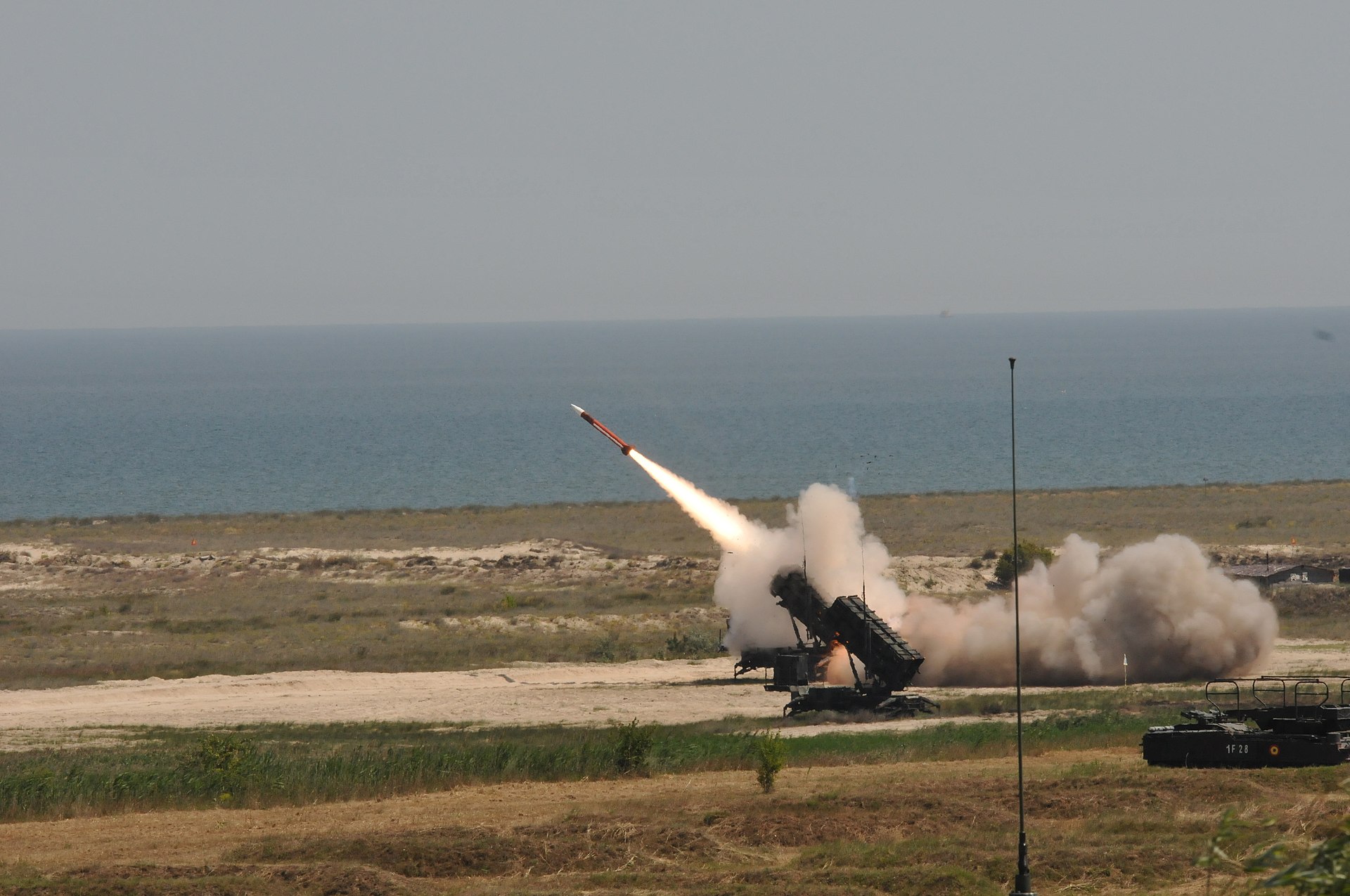
Saudi Arabia’s defense ministry reported intercepting and destroying at least 13 incoming projectiles on Tuesday across three distinct attack vectors, marking one of the heaviest days of Iranian strikes against the Kingdom. Six ballistic missiles were intercepted en route to Prince Sultan Air Base south of Riyadh, where American troops are stationed and where an American soldier was killed on March 1. Seven drones heading toward the Shaybah oil field were shot down over the Empty Quarter near the border with the United Arab Emirates.
Additional drones were intercepted east of al-Kharj Governorate and in Hafar al-Batin near the Iraqi border, according to Al Arabiya. A ballistic missile was also intercepted in the Kingdom’s eastern region. Qatar reported similar interceptions on the same day, with its defense ministry confirming that its air defenses engaged Iranian missiles and drones targeting its territory.
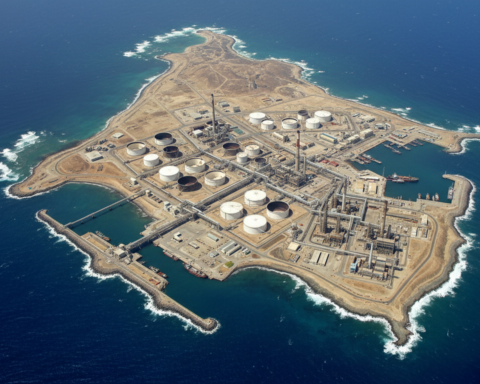
The Shaybah field, operated by Saudi Aramco and capable of producing approximately one million barrels per day, has been a persistent target throughout the conflict. Saudi Arabia has intercepted at least 25 drones targeting the facility since March 1, underscoring Iran’s intent to disrupt the Kingdom’s oil production at its source, not merely its export routes. Saudi Arabia’s layered missile defense network, built around Patriot PAC-3 batteries and supplemented by THAAD systems, has so far prevented a direct strike on the facility.
The attacks on Prince Sultan Air Base carry particular significance. The base, located in al-Kharj, approximately 80 kilometers south of Riyadh, hosts elements of the U.S. Air Force’s 378th Air Expeditionary Wing. Seven American service members have died in the Iran war, according to NBC News, and approximately 140 have been wounded, with eight currently classified as severely injured. Senator Lindsey Graham threatened last week to block the U.S.-Saudi defense pact unless Riyadh agreed to launch offensive strikes against Iran — a demand the Kingdom has so far resisted.
How Are Oil Markets Responding to the Dual Escalation?
Oil markets whipsawed on Tuesday as Iran’s total export threat collided with the Pentagon’s escalation announcement. Brent crude futures rose 2.2 percent to $89.72 a barrel, while U.S. West Texas Intermediate gained 2.5 percent to $85.55. The moves followed an extraordinary week of volatility in which Brent surged past $119 a barrel on March 9 before plunging 17 percent to below $80 on March 10 after Trump declared the war “very complete” and “very far ahead of schedule.”
Crude oil prices have surged approximately 50 percent since the war began on February 28, according to Al Jazeera. The OPEC reference basket averaged $90.69 per barrel in March, up from $67.90 in February — a 34 percent month-on-month increase that has rewritten fiscal calculations across the Gulf.
| Date | Event | Brent ($/bbl) | Change |
|---|---|---|---|
| Feb 27 | Pre-war close | $60.20 | — |
| Mar 1 | War begins, Hormuz disrupted | $78.00 | +30% |
| Mar 8 | Mojtaba Khamenei named leader | $100+ | +66% |
| Mar 9 | Peak: Hormuz fear + oil strikes | $119.00 | +98% |
| Mar 10 | Trump declares war “very complete” | $80.00 | -33% |
| Mar 11 | Iran oil ultimatum + heaviest strikes | $89.72 | +12% |
The International Energy Agency proposed the largest-ever coordinated release from strategic petroleum reserves to buffer against prolonged Gulf disruption, Reuters reported. The proposal reflects a grim assessment: without the resumption of normal exports from the Middle East Gulf — estimated at 20 million barrels per day of crude and refined products plus 10 billion cubic feet per day of liquefied natural gas — the global economy faces simultaneous recession and inflation, according to CSIS analysis.
OPEC+ members led by Saudi Arabia and Russia had already agreed on March 1 to increase collective output by 206,000 barrels per day starting in April, with Saudi Arabia’s target rising by 62,000 barrels per day to 10.2 million. That decision, made while Iranian drones were actively striking Saudi infrastructure, reflected Riyadh’s strategy of weaponizing spare capacity against an adversary whose economy depends entirely on oil revenue.
The Strait of Hormuz Standoff in Numbers
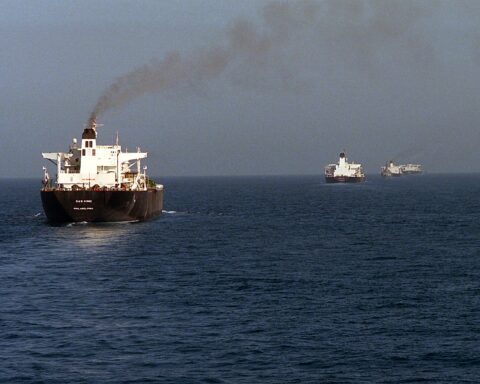
The Strait of Hormuz, a 21-mile-wide waterway between Iran and Oman that handles approximately one-quarter of the world’s seaborne oil trade, has become the war’s decisive economic battleground. Shipping through the strait has effectively ceased, forcing Gulf producers to seek alternative export routes with limited capacity.
| Metric | Pre-War | Current | Change |
|---|---|---|---|
| Hormuz shipping traffic | 100% | ~5% | -95% |
| Global oil supply disrupted | 0 mb/d | ~6 mb/d | -6% of global |
| Saudi Arabia output cut | ~10 mb/d | ~7.5-8 mb/d | -20-25% |
| Iraq output cut | ~4.5 mb/d | ~1.8 mb/d | -60% |
| War risk insurance premium | 0.25% | 3%+ | +1,100% |
| Tanker hull insurance cost | ~$625K | ~$7.5M | +1,100% |
Maritime insurance premiums have surged more than 1,000 percent, according to the Insurance Journal. Leading insurers have cancelled war risk policies for vessels operating in the Persian Gulf. Shipping firm Hapag-Lloyd introduced a War Risk Surcharge of $1,500 per standard container and $3,500 per refrigerated container for Gulf destinations. The Trump administration responded on March 7 by announcing a $20 billion reinsurance program through the U.S. International Development Finance Corporation to underwrite tanker losses and encourage shipping to resume through the strait.
Saudi Arabia has partially offset the Hormuz closure by ramping up crude flows through its 750-mile East-West pipeline to the Red Sea port of Yanbu. Aramco CEO Amin Nasser said the pipeline would reach its full seven-million-barrel daily capacity within days. Yanbu’s export loading capacity, however, is limited to approximately 4.5 million barrels per day, and cargo heading to Asian buyers must pass through the Bab el-Mandeb strait — another chokepoint potentially vulnerable to Houthi forces in Yemen.

Where Does Saudi Arabia Stand Diplomatically?
Saudi Arabia occupies an increasingly uncomfortable position: absorbing Iranian attacks on its cities and energy infrastructure while declining American pressure to join the offensive. Prince Faisal bin Farhan, the Saudi foreign minister, spoke by phone with U.S. Secretary of State Marco Rubio on Tuesday to discuss Iranian aggression and regional coordination, according to the Saudi Press Agency. The Saudi Ministry of Foreign Affairs issued a statement on March 9 warning Iran that continued attacks would make it “the biggest loser” and carry “the heaviest diplomatic, economic, and strategic consequences.”
The warning represented a hardening of Saudi rhetoric. Riyadh had initially attempted to maintain its diplomatic backchannel to Tehran, built during the Saudi-Iranian normalization of 2023, to de-escalate the conflict. Bloomberg reported on March 6 that Saudi officials had intensified direct engagement with Iran, deploying their diplomatic channel with greater urgency. Iran has rejected all ceasefire proposals while attacks continue, according to Foreign Minister Abbas Araghchi.
Beijing has also entered the diplomatic arena. China sent a peace envoy to Riyadh during the second week of the conflict, reprising its role as broker of the 2023 Saudi-Iranian normalization. France and Russia have separately contacted Tehran regarding a ceasefire, though without visible progress.
The U.S. Embassy in Riyadh issued its fourth security alert in as many days on March 11, updating shelter-in-place guidance for American citizens. The State Department ordered non-emergency government employees to leave the Kingdom on March 8 after drones struck the embassy compound, sparking a small fire. Commercial flights are operating from Riyadh, Jeddah, and Dammam, though Saudi airspace remains partially restricted over areas bordering Iraq and the Persian Gulf through at least March 13.
What Is the Civilian Toll After Twelve Days of War?
The human cost of the war continues to mount on all sides. Iran claims that U.S. and Israeli forces have struck nearly 10,000 civilian sites and killed more than 1,300 civilians since February 28, though these figures have not been independently verified. The Iranian Red Crescent confirmed 787 deaths as of March 8. Human rights organizations have estimated more than 2,400 total Iranian casualties, according to ACLED. A primary school strike in southeastern Iran reportedly killed nearly 170 children, according to the same data.
In Saudi Arabia, two civilians were killed in al-Kharj on March 8 when a projectile struck a residential building — the first confirmed Saudi civilian deaths from the conflict. The Saudi defense ministry has not released comprehensive casualty figures, though the Kingdom’s air defense systems have intercepted the vast majority of incoming missiles and drones.
In Lebanon, Israeli strikes have killed at least 570 people since the conflict widened to include Hezbollah on March 2, according to Lebanese health officials cited by NPR. Israel reported at least 12 civilian deaths from Iranian and Hezbollah attacks. Approximately 140 U.S. service members have been wounded, with the Pentagon classifying eight as severely injured.
The broader humanitarian crisis extends beyond direct military casualties. Saudi Arabia’s 13.4 million foreign workers — approximately 44 percent of the population — face severely limited evacuation options. Indonesia reported 58,000 citizens stranded, most of them Umrah pilgrims trapped by the conflict’s eruption during the approach to Ramadan. The Philippines is preparing mass evacuation plans for 813,000 workers. More than 12,000 flights to and from Middle Eastern destinations were cancelled in the first week of March alone.
What Happens Next
The dual escalation of March 11 — Iran’s total oil embargo threat meeting America’s heaviest bombing campaign — narrows the path toward de-escalation. Three variables will determine whether the conflict intensifies further or begins to stabilize.
The first is Iran’s remaining offensive capacity. Hegseth’s observation that Iranian missile fire has reached its lowest volume suggests the sustained bombing is degrading Tehran’s arsenal. Iran entered the war with an estimated 2,500 long-range ballistic missiles. If the IRGC has expended or lost a significant portion of that stockpile in twelve days of attacks on Gulf states and Israel, the “not one liter” threat may be bravado rather than operational reality.
The second is the effectiveness of Saudi Arabia’s alternative oil export routes. If Aramco can sustain exports of 4-5 million barrels per day through Yanbu while the Strait of Hormuz remains closed, the economic pressure on global markets — and therefore on Western governments to end the conflict — diminishes. If Houthi forces in Yemen begin targeting Red Sea shipping in solidarity with Iran, that fallback collapses.
The third is the diplomatic track. Saudi Arabia, China, Oman, France, and Russia have all engaged in mediation efforts. Iran’s refusal to negotiate while under bombardment is consistent with the maximalist posture adopted by Mojtaba Khamenei since assuming the supreme leadership. Trump’s demand for “unconditional surrender” leaves equally little room for compromise. Mohammed bin Salman faces the task of protecting Saudi Arabia’s 36 million residents, maintaining oil exports, and navigating between an American ally that started the war and an Iranian adversary that is punishing the Gulf for hosting U.S. forces.
The White House has said it expects the war to last four to six more weeks. For Saudi Arabia, each additional week brings more missiles over its cities, more drones targeting its oil fields, and more strain on the economic architecture that underpins Vision 2030.
Frequently Asked Questions
What does Iran mean by blocking “not one liter of oil” from the Middle East?
Iran’s IRGC threatened to prevent all Gulf oil exports to nations aligned with the United States and its partners. This goes beyond the existing Strait of Hormuz disruption by potentially targeting alternative export routes, including Saudi Arabia’s Red Sea pipeline to Yanbu. The threat serves as leverage against the American bombing campaign, though Iran’s ability to enforce a total blockade remains uncertain given its degraded naval and missile capabilities after twelve days of strikes.
Why is March 11 described as the “most intense day” of strikes on Iran?
Defense Secretary Pete Hegseth announced that the United States would deploy more fighters, more bombers, and conduct more strike sorties on March 11 than any previous day of Operation Epic Fury. The U.S. has been averaging approximately 500 targets per day. The escalation targets Iran’s remaining ballistic missile sites, drone factories, and naval assets. Hegseth noted that Iranian missile fire has dropped to its lowest levels, suggesting the bombing campaign is degrading Tehran’s offensive capability.
How many missiles and drones has Saudi Arabia intercepted?
On March 11 alone, Saudi Arabia intercepted six ballistic missiles targeting Prince Sultan Air Base, seven drones heading toward the Shaybah oil field, and additional drones over al-Kharj and Hafar al-Batin. Since the war began on February 28, Saudi defense forces have intercepted dozens of Iranian ballistic missiles and more than 50 drones. Two civilians were killed in al-Kharj on March 8, the only confirmed Saudi civilian fatalities.
What is the current oil price and how has the war affected it?
Brent crude was trading at approximately $89.72 per barrel on March 11, up roughly 50 percent from pre-war levels of around $60. Prices peaked above $119 on March 9 before crashing 17 percent on March 10 after President Trump declared the war “very complete.” The extreme volatility reflects uncertainty over whether Hormuz shipping will resume and how long the conflict will last. The OPEC basket averaged $90.69 in March compared to $67.90 in February.
Is Saudi Arabia joining the military campaign against Iran?
Saudi Arabia has not launched offensive strikes against Iran. The Kingdom has limited its military role to defending its own territory by intercepting incoming missiles and drones. Senator Lindsey Graham has pressured Riyadh to join the offensive, threatening the U.S.-Saudi defense pact, but Mohammed bin Salman has maintained a defensive posture while pursuing diplomatic channels with Tehran. Saudi Arabia warned Iran on March 9 that continued attacks would make Tehran “the biggest loser.”