
WASHINGTON — Three weeks into a war that has killed more than 1,400 Iranians, shut the Strait of Hormuz to commercial traffic, and driven oil prices above $110 per barrel, President Donald Trump faces a decision that no volume of cruise missiles can resolve. Buried beneath eighty metres of rock at Iran’s Fordow enrichment facility, stored in propane-tank-sized cylinders at Isfahan, and possibly hidden at a newly excavated tunnel complex near Natanz known as “Pickaxe Mountain,” approximately 440.9 kilograms of 60 percent enriched uranium hexafluoride remains intact. It survived Operation Epic Fury. It will survive whatever airstrikes come next. And it represents enough fissile material, if enriched to weapons grade, for roughly ten nuclear devices.
The question is no longer whether the United States can destroy Iran’s nuclear infrastructure from the air. That was accomplished in the opening days of the war. The question is whether it can secure the raw material that makes rebuilding possible — and whether the president who promised to “wind down” the conflict is prepared to authorise the ground operation that every nuclear expert, military planner, and senator briefed on the intelligence agrees would be required.
For Saudi Arabia, the answer will determine not just how long the war continues but whether the Kingdom’s own nuclear future takes shape in an American laboratory or an underground centrifuge hall of its own.
Table of Contents
- What Uranium Survived Operation Epic Fury?
- Why Airstrikes Cannot Finish What They Started
- The Nuclear Outcome Matrix
- What Would a Ground Operation to Seize the Uranium Look Like?
- Could the Uranium Be Neutralised Without Removal?
- The Pentagon’s $200 Billion Contradiction
- Iran Offered to Solve This Problem Before the First Bomb Fell
- How Does Iran’s Uranium Shape Saudi Arabia’s Nuclear Future?
- The Proliferation Clock Nobody Is Watching
- Will Trump Send Troops Into Iran?
- The War’s Endgame Runs Through a Mountain
- Frequently Asked Questions
What Uranium Survived Operation Epic Fury?
The International Atomic Energy Agency’s latest assessment, confirmed by Director General Rafael Grossi in closed briefings to the IAEA Board of Governors, identifies three primary locations where Iran’s enriched uranium stockpile remains.
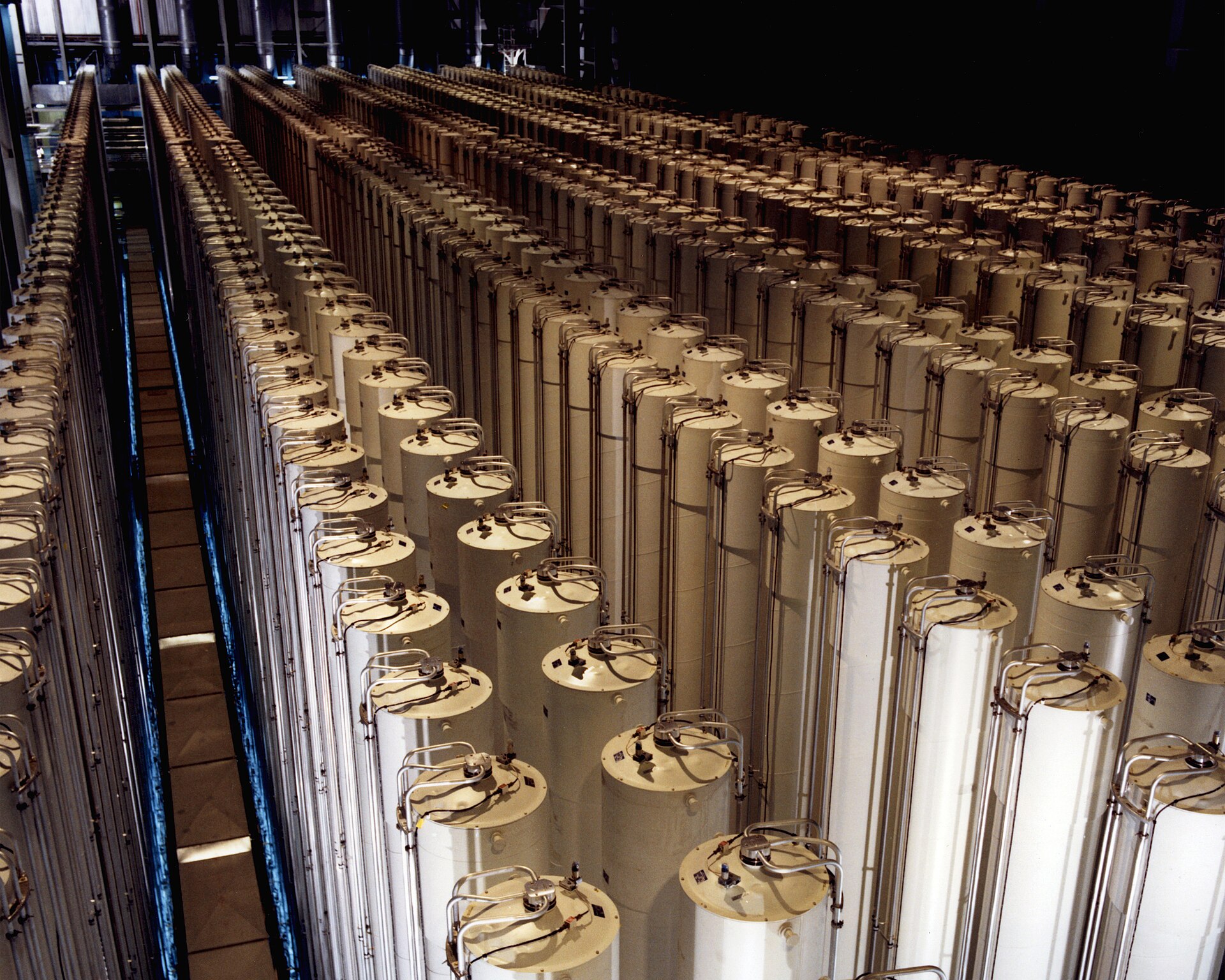
The largest concentration sits at the Isfahan underground complex, where approximately half of the total stockpile — more than 200 kilograms of uranium enriched to 60 percent — is stored in hardened tunnels that survived the June 2025 strikes. The material exists as uranium hexafluoride gas, a volatile compound that is shipped in steel cylinders roughly the size of domestic propane tanks. Satellite imagery published by the Institute for Science and International Security shows that Iran excavated old tunnel entrances near the Isfahan facility within a week of the initial strikes, suggesting the regime retained access to the material even as the surface infrastructure burned.
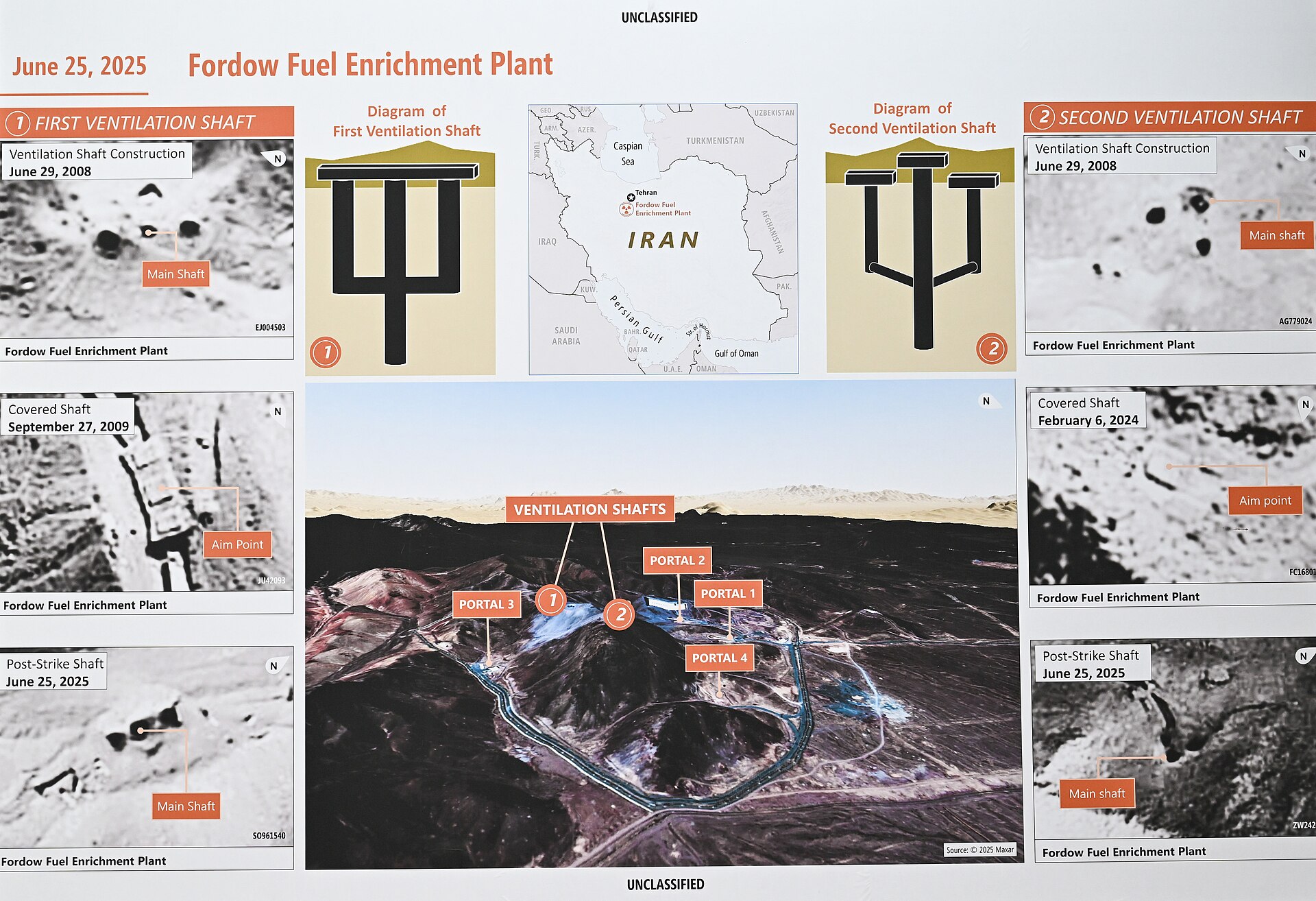
A second cache is buried beneath the Fordow Fuel Enrichment Plant near Qom, which was constructed at a depth of 80 to 90 metres inside a mountain. Pentagon imagery released during a June 2025 press briefing — the same imagery that now serves as the defining visual of the Iran war — shows that strikes collapsed the facility’s ventilation shafts and sealed its four tunnel portals. The enriched uranium inside, however, was not destroyed. It was merely entombed.
The Middle East briefing 3,000+ readers start their day with.
One email. Every weekday morning. Free.
The third and most troubling location is Iran’s newest underground complex near Natanz, referred to in intelligence assessments as “Pickaxe Mountain.” The Institute for Science and International Security reported that this tunnel complex, situated in mountains rising to 1,608 metres above sea level, features halls buried even deeper than Fordow. The IAEA has been unable to verify whether enriched material was transferred there before or during the conflict.
| Facility | Location | Depth (metres) | Est. Material (kg) | Status |
|---|---|---|---|---|
| Isfahan Underground Complex | Isfahan Province | Unknown (tunnels) | ~200+ | Tunnels excavated post-strike; material accessible |
| Fordow Fuel Enrichment Plant | Near Qom | 80-90 | ~150 | Portals sealed; material entombed |
| “Pickaxe Mountain” (Natanz) | Isfahan Province | 100+ (est.) | Unknown | Unverified; IAEA access denied |
The total verified stockpile of 440.9 kilograms of 60 percent enriched uranium could, if further enriched to 90 percent weapons grade, yield material sufficient for approximately ten sophisticated nuclear devices, according to CSIS analysis. Cruder designs would require less processing. The gap between 60 percent enrichment and weapons-grade material is, in the words of one former IAEA inspector, “a matter of weeks, not months, for a state with Iran’s technical knowledge.”
Why Airstrikes Cannot Finish What They Started
Operation Epic Fury demonstrated that the United States and Israel possess the capability to destroy Iran’s surface nuclear infrastructure comprehensively. Centrifuge halls, uranium conversion facilities, heavy water reactors, and weapons research centres were struck with bunker-busting ordnance in the opening salvos of the February 28 campaign. The defense industrial base that manufactured the centrifuges was reduced to rubble. The scientists who designed the enrichment cascades were, in many cases, killed alongside their work.
What the strikes could not do was reach the material itself. IAEA Chief Rafael Grossi has been explicit on this point, telling reporters that while Iran’s enrichment capability has been “comprehensively degraded,” the existing stockpile of enriched uranium “hasn’t been moved” and remains at its pre-war storage locations. The distinction matters enormously. Destroying the factory that makes the product is not the same as destroying the product.
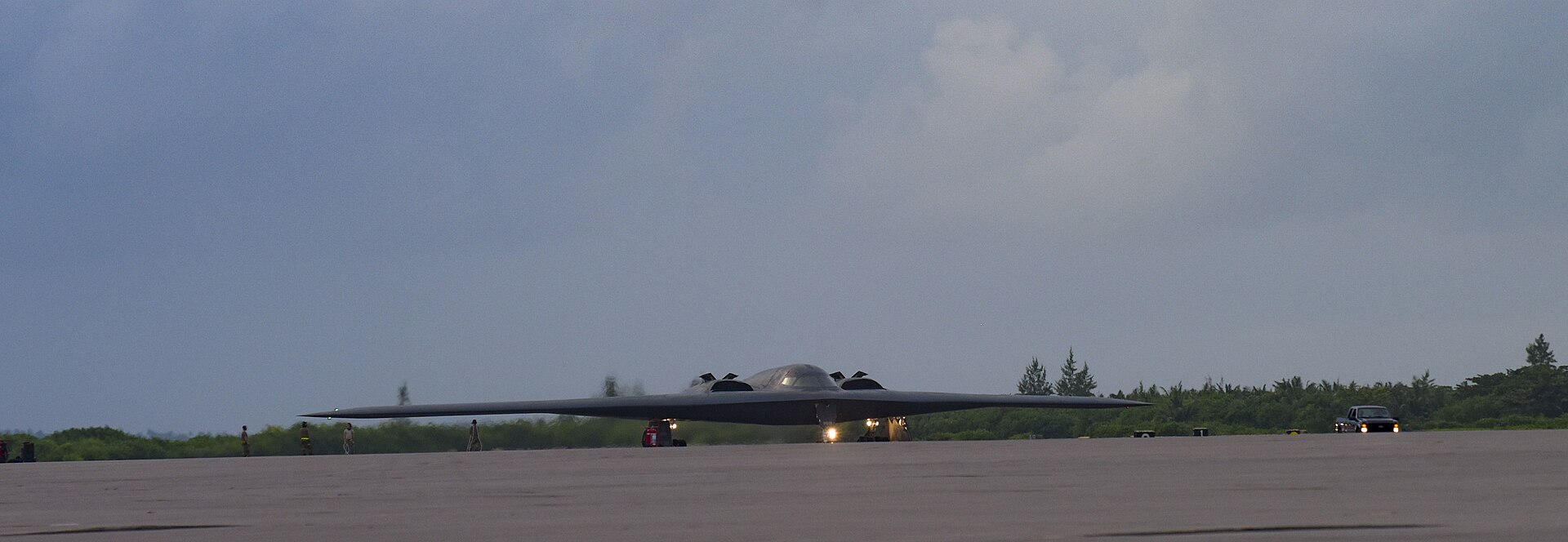
The physics of the problem are unforgiving. At Fordow, the uranium sits beneath 80 to 90 metres of hard rock — a depth that exceeds the penetration capability of the GBU-57 Massive Ordnance Penetrator, the largest conventional bunker-busting bomb in the American arsenal. The GBU-57 can penetrate approximately 60 metres of earth or 8 metres of reinforced concrete. Even repeated strikes on the same impact point — a technique used during Operation Epic Fury to collapse Fordow’s ventilation shafts — cannot reach material stored at the facility’s deepest levels.
Nuclear weapons would theoretically provide the destructive force necessary, but their use against an underground storage facility risks catastrophic radioactive contamination across a region that is already being bombarded with conventional missiles. The fallout from a nuclear strike on Fordow could reach Qatar, Bahrain, and the eastern coast of Saudi Arabia within days, depending on wind patterns — the very territories the war is ostensibly being fought to protect.
Senator Richard Blumenthal of Connecticut, the ranking Democrat on the Armed Services Committee, stated the operational reality plainly: “Securing the uranium cannot be done without a physical presence there.” Senator Rick Scott of Florida, a Republican, acknowledged the same constraint with less diplomatic language: “No one has given me a briefing on how you would do it without boots on the ground.”
The Nuclear Outcome Matrix
The decision facing the Trump administration is not binary. There are at least three distinct operational pathways for dealing with Iran’s remaining uranium stockpile, each carrying different consequences for the duration of the war, the cost to American and allied forces, the future of nuclear proliferation in the Middle East, and — most immediately for Riyadh — the trajectory of Saudi Arabia’s own nuclear ambitions.
A framework for evaluating these options against their likely outcomes reveals why every pathway leads to a different set of uncomfortable trade-offs — and why the decision has paralysed even those administration officials who supported the war from its inception.
| Dimension | Option A: Seize and Remove | Option B: Dilute in Place | Option C: Leave and Monitor |
|---|---|---|---|
| Troop requirement | 1,000+ per site (3 sites minimum) | Hundreds of specialists + security | Zero (IAEA inspectors only) |
| Time to execute | Weeks to months | Days to weeks per site | Immediate (no action required) |
| War extension | Extends conflict by 2-4 months minimum | Extends by weeks | Allows “winding down” immediately |
| Proliferation risk (5 years) | Near zero if successful | Low if verified | Moderate to high |
| Saudi nuclear pressure | Removes justification for Saudi enrichment | Partially removes justification | Provides strongest argument for Saudi program |
| Cost (est.) | $50-100 billion additional | $5-15 billion | Minimal |
| Casualty risk | High (contested environment) | Moderate | Low |
| Political feasibility | Contradicts “winding down” rhetoric | Requires Iranian cooperation | Most politically convenient |
The matrix reveals a structural paradox at the heart of the administration’s position. The option that most completely eliminates the proliferation threat — physical seizure and removal — is the one that most directly contradicts President Trump’s stated desire to “wind down” military operations. The option that best supports the political narrative of mission accomplished — leaving the material in place and declaring victory — is the one that most directly undermines the war’s stated justification and provides Saudi Arabia with the strongest argument for pursuing its own enrichment capability.
Richard Goldberg, a former National Security Council official now at the Foundation for Defense of Democracies, described the seizure option as “certainly doable” from a military-technical standpoint but acknowledged it would require “special operations forces trained in destroying centrifuges” alongside heavy construction equipment capable of excavating rubble-sealed tunnel entrances. The operation’s complexity, he noted, “significantly exceeds” that of the bin Laden raid or any comparable special forces mission in recent American history.
What Would a Ground Operation to Seize the Uranium Look Like?
Military planners briefed on the options describe a multi-phase campaign that would begin with the establishment of air superiority over the target sites — a condition that, three weeks into the war, largely exists — followed by the insertion of specialised units capable of operating in a chemical, biological, radiological, and nuclear environment.
The operation would unfold across at least three separate locations simultaneously, requiring what Brandan Buck of the Cato Institute estimated as “more than 1,000 troops at each Iranian site.” The forces involved would include Army special operations units, Navy SEAL teams, and — critically — nuclear weapons technical specialists from the Defense Threat Reduction Agency, the Department of Energy’s National Nuclear Security Administration, and potentially the IAEA itself.
At Isfahan, where tunnel entrances have been partially cleared by Iranian engineers since the June 2025 strikes, the primary challenge is logistical. The uranium hexafluoride cylinders must be handled by personnel wearing full protective equipment, including breathing apparatus and chemical-resistant suits. UF6 is highly toxic — exposure to moisture converts it to hydrogen fluoride, which causes severe chemical burns — and the cylinders themselves weigh several hundred kilograms each. Extracting them from underground tunnels, loading them onto vehicles, and transporting them to an airfield for evacuation would require a sustained military footprint in a hostile environment.
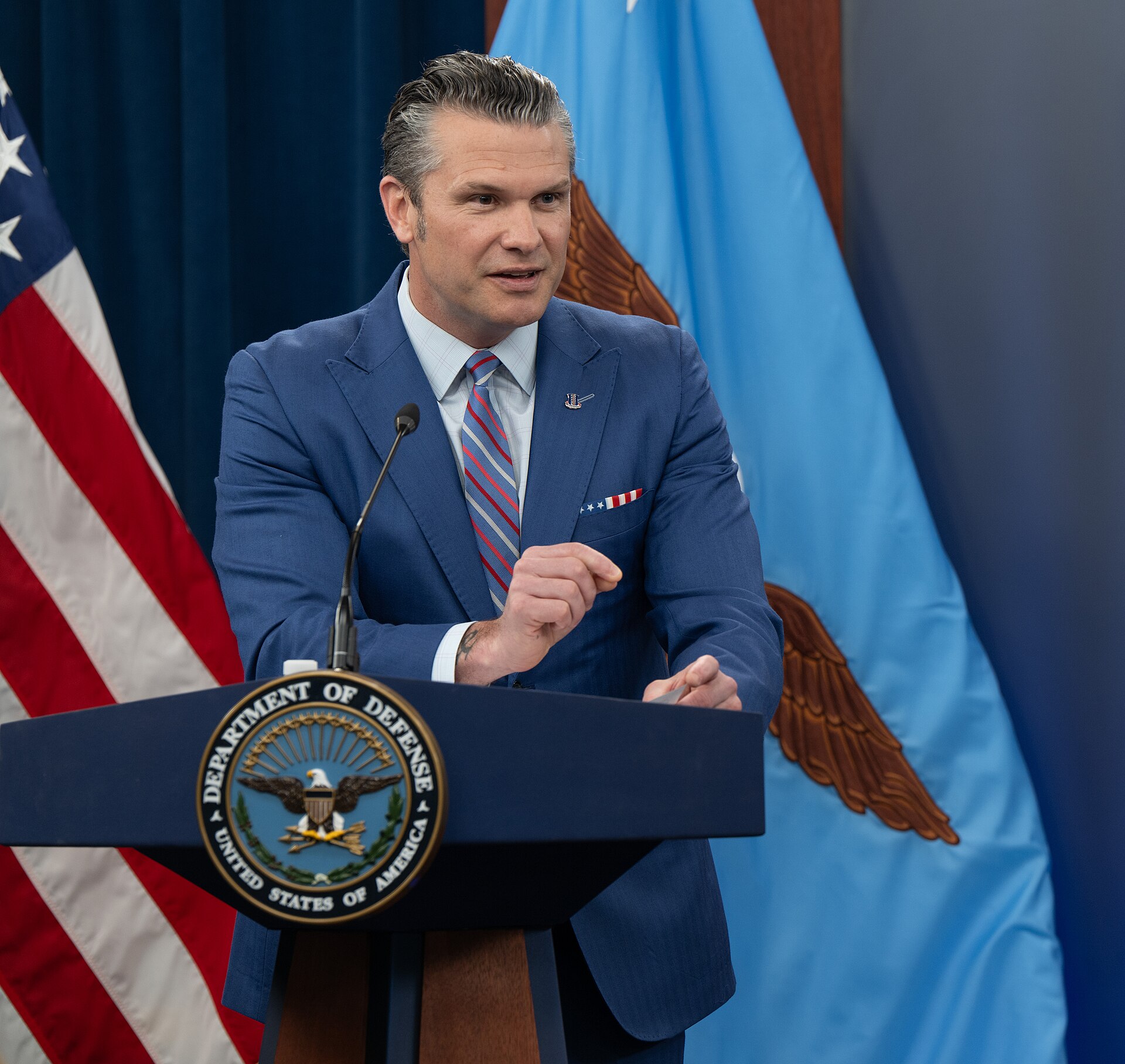
At Fordow, the operational challenge is orders of magnitude greater. The facility’s four portals were deliberately collapsed during Operation Epic Fury, and the ventilation shafts — the only other known points of entry — were destroyed by precision strikes. Reaching the enriched uranium stored inside would require heavy construction equipment to clear hundreds of tonnes of rock and reinforced concrete, a process that military engineers estimate could take weeks under the best conditions. Iranian forces, remnants of the Islamic Revolutionary Guard Corps, and local militia would almost certainly attempt to interdict any excavation operation.
Pickaxe Mountain presents the most daunting scenario of all. Located deeper underground than Fordow in mountainous terrain south of Natanz, the facility’s exact layout remains partially unknown to Western intelligence agencies. The IAEA has never inspected the interior. Any operation to access this site would amount to a tunnel assault against an adversary that has spent years preparing for exactly this contingency.
The combined operation, according to analysts at CSIS, could require hundreds or even over a thousand personnel per site, with a sustained presence measured in weeks rather than days. Defense Secretary Pete Hegseth has refused to discuss specifics, stating only that the administration sees “no point in telegraphing what we’re willing to do or how far we’re willing to go.” He added: “We have options, for sure.”
Could the Uranium Be Neutralised Without Removal?
The second option — diluting the uranium in place rather than physically extracting it — would reduce the material’s enrichment level below the threshold required for weapons production. This process, known as down-blending, involves mixing the 60 percent enriched UF6 with natural or depleted uranium to produce material suitable only for civilian reactor fuel.
Down-blending is a proven technique. The United States and Russia completed the Megatons to Megawatts programme in 2013, converting 500 tonnes of Russian weapons-grade uranium into civilian fuel over two decades. The chemistry is straightforward. The challenge in Iran is not technical but political: dilution requires access to the material, and access requires either Iranian cooperation or a military operation to secure the sites — the same precondition as removal.
Iranian Foreign Minister Abbas Araghchi disclosed in a March interview that Tehran had offered to dilute its uranium stockpile during pre-war negotiations with Trump’s envoys Steve Witkoff and Jared Kushner. The offer was rejected. The war began weeks later.
Reviving a dilution arrangement in the middle of an active conflict would require a ceasefire — something Trump has explicitly rejected, telling reporters “I don’t want to do a ceasefire” and adding: “You don’t do a ceasefire when you’re literally obliterating the other side.” Even if the political obstacle were overcome, the logistics of bringing IAEA inspectors and nuclear engineers into an active war zone to supervise the down-blending of 440.9 kilograms of enriched uranium present formidable security challenges.
The third option, tacitly preferred by those in the administration who prioritise political optics over proliferation security, is to declare the enrichment programme destroyed, leave the existing stockpile in place, and rely on continued monitoring to detect any reconstitution effort. This approach allows Trump to claim victory and begin withdrawing forces without the complications of a ground operation. It also leaves enough material for approximately ten nuclear weapons buried beneath Iranian mountains, guarded by a regime that has just endured three weeks of aerial bombardment and has every incentive to weaponise the one card it has left.
The Pentagon’s $200 Billion Contradiction
The internal contradiction in the administration’s position is best illustrated by the numbers. On March 19, Defense Secretary Hegseth requested approximately $200 billion in supplemental funding for the Iran war and associated military operations — the largest wartime spending request since the 2003 Iraq invasion. The same day, Trump posted on Truth Social that the United States was “getting very close to meeting our objectives as we consider winding down our great Military efforts in the Middle East.”
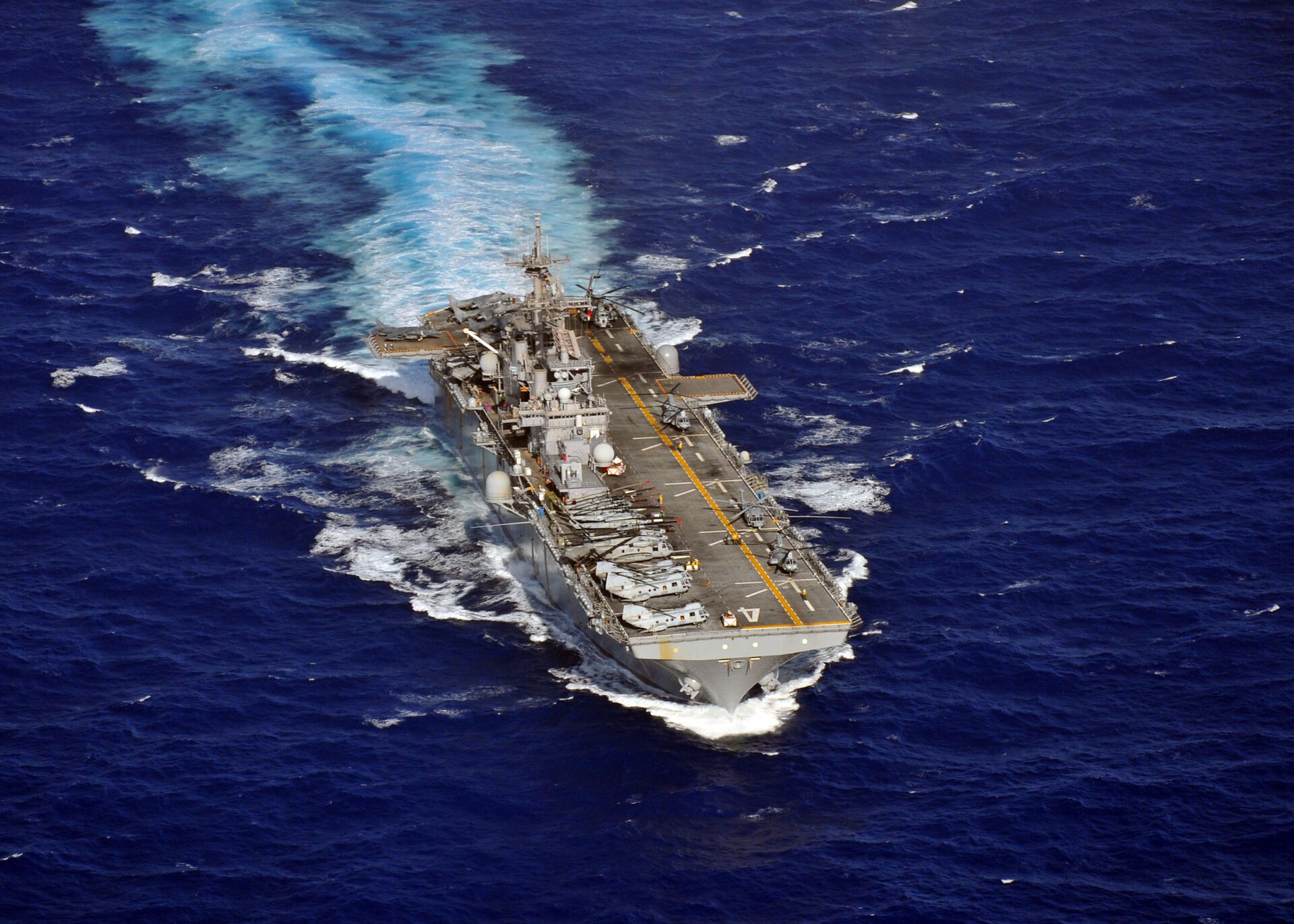
The disconnect extends to troop deployments. NPR confirmed that the USS Boxer amphibious ready group, carrying thousands of Marines from the 11th Marine Expeditionary Unit, departed California for the Persian Gulf, arriving in approximately three weeks. Trump told reporters the same day that he was “not putting troops anywhere.”
The $200 billion request, when broken down, reveals the operational reality. Approximately $80 billion is allocated to munitions replacement — the air campaign consumed vast quantities of precision-guided ordnance in its first three weeks. Another $45 billion covers naval operations in and around the Strait of Hormuz, where oil prices have surged past $110 per barrel as commercial shipping remains paralysed. The remaining $75 billion covers “contingency operations” — a budget line that military analysts interpret as earmarked for exactly the kind of ground operation that seizing the uranium would require.
Hegseth, when pressed on the apparent inconsistency between requesting $200 billion and claiming victory, responded: “Takes money to kill bad guys.”
National Intelligence Director Tulsi Gabbard confirmed in congressional testimony that Iran’s enriched uranium remains in place but focused her remarks on monitoring Iranian efforts to rebuild, rather than on securing the existing material. Her testimony reinforced what several administration officials have acknowledged privately: the easier political path is to define victory as the destruction of Iran’s enrichment capability (the centrifuges and facilities) rather than the elimination of its enriched material (the uranium itself).
Iran Offered to Solve This Problem Before the First Bomb Fell
The most uncomfortable fact in the entire nuclear debate is one that has received remarkably little attention. Before Operation Epic Fury began, Iran offered to dilute its entire enriched uranium stockpile under international supervision.
Iranian Foreign Minister Araghchi confirmed publicly what American negotiators have not denied: that during the Witkoff-Kushner diplomatic channel, Tehran proposed diluting its 60 percent enriched uranium to below 5 percent — the level used in civilian power reactors — with IAEA verification. The offer was, by the account of multiple diplomatic sources cited by PBS News, genuine. It was rejected.
The rejection’s logic was rooted in a broader strategic calculus. The Trump administration, under intense pressure from Israeli Prime Minister Netanyahu and Saudi Crown Prince Mohammed bin Salman, had concluded that Iran’s nuclear programme needed to be destroyed, not merely restrained. Dilution, from this perspective, was a reversible measure — Iran could re-enrich the material at any future date. Destruction, at least theoretically, was permanent.
The irony is now apparent. The destruction of Iran’s enrichment capability was indeed achieved. But the enriched material — the very substance that makes nuclear weapons possible — survived. The administration rejected a diplomatic solution to the uranium problem and then proved unable to achieve a military one. The stockpile that could have been diluted under IAEA supervision in a matter of weeks now sits beneath mountains that would require thousands of troops and months of ground operations to reach.
The war was fought to prevent Iran from getting nuclear weapons. The most direct path to securing the material — accepting Iran’s dilution offer — was the one path not taken.
Diplomatic assessment based on PBS News and Foreign Ministry disclosures
For Saudi Arabia, this sequence of events carries a specific and troubling implication. Riyadh lobbied aggressively for the military option, reportedly through Crown Prince Mohammed bin Salman’s regular phone calls with Trump in the weeks before the war. The Kingdom calculated that the permanent destruction of Iran’s nuclear programme would remove the existential threat that has shaped Saudi strategic planning for two decades. Instead, the war has left the critical material intact, extended the conflict into a third devastating week, driven oil prices to crisis levels, and provided Iran with the political grievance and strategic motive to reconstitute its programme the moment Western attention shifts.
How Does Iran’s Uranium Shape Saudi Arabia’s Nuclear Future?
The disposition of Iran’s enriched uranium will directly determine the trajectory of Saudi Arabia’s own nuclear programme — a connection that has received insufficient attention in the coverage of Trump’s ground war deliberations.
In February 2026, just days before the war began, U.S. Energy Secretary Chris Wright announced a preliminary agreement to cooperate on developing Saudi Arabia’s civil nuclear industry. The deal, which covers the construction of large-scale nuclear power plants in the Kingdom, was presented as an energy diversification initiative consistent with Vision 2030. Arms control experts immediately flagged a critical ambiguity: congressional documents listed enrichment, fuel fabrication, and reprocessing as potential areas of cooperation, and the agreement notably does not require Saudi Arabia to adopt the IAEA’s Additional Protocol — the enhanced safeguards framework that provides inspectors with greater access to undeclared facilities.
Crown Prince Mohammed bin Salman has stated explicitly, in a 2018 interview with CBS, that if Iran develops a nuclear weapon, Saudi Arabia will follow suit. The statement was widely interpreted as a deterrence signal at the time. In the context of the current war, it functions as a policy framework.
The Nuclear Outcome Matrix reveals why this matters. If the United States seizes and removes Iran’s enriched uranium (Option A), the justification for Saudi enrichment effectively disappears — Iran would have neither the capability nor the material to reconstitute a weapons programme. Washington would retain significant leverage over Riyadh’s nuclear ambitions, and the civilian power plant deal could proceed under tightly controlled conditions.
If the uranium is left in place (Option C), the calculus inverts. Saudi Arabia can argue — with considerable justification — that Iran retains a latent nuclear weapons capability and that the Kingdom requires its own enrichment programme as a hedge. The Foundation for Defense of Democracies warned in a February analysis that “Washington must not relax nonproliferation standards for Saudi Arabia,” but the political dynamics of a war fought partly at Riyadh’s urging may make such standards difficult to enforce. Saudi Arabia currently represents the largest potential market for American nuclear technology, and MBS has significant leverage: the Kingdom is offering to invest heavily in America’s domestic nuclear infrastructure as part of the deal.
| Uranium Outcome | Saudi Justification for Enrichment | US Leverage Over Saudi Nuclear Programme | Proliferation Trajectory |
|---|---|---|---|
| Seized and removed | Weak — Iran threat eliminated | High — Saudi depends on US technology | Contained |
| Diluted in place | Moderate — Iran retains knowledge | Moderate | Uncertain |
| Left under mountains | Strong — Iran retains latent capability | Low — Saudi can claim defensive necessity | Accelerating |
It would be, as the Bulletin of the Atomic Scientists observed, “ironic to put it mildly” if the war fought to eliminate Iran’s nuclear programme ended with an agreement that permitted Saudi enrichment. Yet that is precisely the trajectory that Option C makes most likely.
The Proliferation Clock Nobody Is Watching
Beyond the bilateral Saudi-Iranian dynamic, the disposition of Iran’s uranium stockpile carries implications for the broader Middle Eastern proliferation landscape. Turkey, Egypt, and the UAE have all expressed interest in nuclear energy programmes. Each has observed the Iran war closely, drawing lessons about the utility — or futility — of nuclear latency as a deterrent.
The lesson of the war, stripped to its essentials, is stark. Iran’s nuclear infrastructure was destroyed. Its centrifuges were smashed. Its scientists were killed. Its economy was devastated. Its cities were bombed. And yet, because it had already accumulated 440.9 kilograms of enriched uranium, it retains a pathway to nuclear weapons capability that neither the world’s most powerful air force nor its most advanced munitions could eliminate from the sky.
For any regional leader contemplating a nuclear programme, the strategic takeaway is that enrichment capability matters less than enriched material. Facilities can be rebuilt. Scientists can be trained. Centrifuges can be purchased. But once a state has accumulated sufficient fissile material and stored it deep enough underground, no conventional military force can take it away.
This is the proliferation signal that the uranium decision will send. If the material is seized, the signal is that accumulation provides no protection — the United States will come for the product as well as the factory. If the material is left in place, the signal is that accumulation works — that a state can withstand even a devastating military campaign and emerge with its nuclear option intact.
Saudi Arabia’s Mohammed bin Salman is watching this calculation more closely than any other leader. The military Saudi Arabia has built is designed for conventional deterrence, not nuclear competition. But if the war’s outcome teaches that conventional superiority is insufficient — that only enriched uranium, buried deep enough, provides genuine strategic insurance — then the pressure to acquire that insurance will become irresistible, regardless of what nonproliferation frameworks are in place. Iran’s missile strike on Diego Garcia, which proved Tehran can hit targets 4,000 kilometres away, only deepens that calculus.
Will Trump Send Troops Into Iran?
The evidence suggests the president has not made up his mind. CBS News reported on March 20 that Trump “hasn’t made up his mind on sending Americans into Iran to seize nuclear material.” When asked directly, Trump deflected: “I’m not going to talk about that.” He then contradicted the deflection by claiming strikes had “hit them harder than virtually any country in history has been hit” and asserting, without evidence, that Iran “doesn’t have nuclear potential.”
The IAEA’s data contradicts the assertion. Iran retains 440.9 kilograms of 60 percent enriched uranium — a stockpile that, by every technical measure, constitutes nuclear potential. The question is not whether the potential exists but whether the president is prepared to pay the political, military, and financial cost of eliminating it.
Three factors will likely determine the decision.
The first is intelligence. If American or Israeli intelligence detects evidence that Iran is attempting to move its enriched uranium to a new, undisclosed location — or, worse, that it has begun the relatively short process of enriching the 60 percent material to 90 percent weapons grade — the pressure for immediate action would become overwhelming. Gabbard’s testimony focused on monitoring for exactly this scenario.
The second is the war’s political trajectory. Trump has framed the conflict as a decisive, short-duration operation — more Desert Storm than Afghanistan. A ground operation to seize uranium, with its unpredictable timeline and risk of casualties, would shatter that narrative. The midterm elections of November 2026 already loom. A president who promised to end wars, not start new ones, would be sending troops into tunnels in the mountains of Iran.
The third factor is Saudi Arabia. Riyadh has been the war’s most consequential non-combatant, providing air bases, diplomatic cover, and — through the Crown Prince’s direct line to Trump — strategic counsel. If MBS communicates to Washington that the Kingdom will pursue its own enrichment programme unless Iran’s material is secured, the administration may calculate that the cost of a ground operation is less than the cost of a nuclear-armed Saudi Arabia.
Trump has put himself between a rock and a hard place — maximalist objectives requiring minimal military commitment create an impossible equation.
Brandan Buck, Cato Institute, March 2026
Senator James Risch, the Republican chairman of the Senate Foreign Relations Committee, acknowledged that “plans are on the table” but declined to discuss specifics. His language — plans, not a plan — suggests multiple options are being evaluated simultaneously, consistent with the three pathways outlined in the Nuclear Outcome Matrix.
The War’s Endgame Runs Through a Mountain
Twenty-two days into the Iran war, the conflict’s military arc appears to be reaching its inflection point. Iran’s air force, navy, and air defence systems have been comprehensively degraded. The Islamic Revolutionary Guard Corps’ missile inventory, while not exhausted, has been substantially reduced — though the continuing drone and missile attacks on Gulf states demonstrate that Iran retains the ability to impose costs on its adversaries. The death toll — more than 1,400 Iranians killed and over 18,000 injured, according to the Iranian Red Crescent — has reached a scale that strains even the most hardline regime’s capacity for domestic justification.
The Strait of Hormuz remains effectively closed. Oil prices, after briefly touching $119 per barrel before crashing on ceasefire speculation, have stabilised above $110. The International Energy Agency has released a record 400 million barrels from strategic reserves, but the supply gap — estimated at 8 million barrels per day — cannot be sustained indefinitely. The global economic consequences, including what Goldman Sachs has warned could be the Gulf’s worst recession in a generation, are mounting daily.
Against this backdrop, the uranium question is not an abstraction. It is the concrete, physical obstacle that stands between Trump and the declaration of victory he so clearly desires. He can declare Iran’s nuclear programme destroyed — and, in terms of infrastructure, he would be correct. But the material that programme produced sits beneath mountains his bombs cannot reach, in cylinders his planes cannot target, waiting for the day when the rubble is cleared, the centrifuges are rebuilt, and the enrichment begins again.
For Saudi Arabia, the stakes are existential in a way that transcends the war itself. The House of Saud has survived for nearly a century by calibrating its strategic position with extraordinary precision — aligning with the dominant external power while maintaining the internal legitimacy that comes from protecting the Kingdom and its holy sites. The current war tests both elements of that balance. Iranian missiles have reached Riyadh, Yanbu, and Jubail. American forces operate from Saudi soil. The Kingdom’s economic model — built on oil revenue, megaproject investment, and the cultivation of international confidence — has been disrupted at every level.
The nuclear dimension adds a layer of strategic risk that no amount of missile defence can mitigate. If Iran’s uranium survives the war, Saudi Arabia faces a permanent threat that conventional military superiority cannot neutralise. The Kingdom will be forced to choose between perpetual dependence on American nuclear guarantees — guarantees that three weeks of war have shown to be operationally imperfect — and the pursuit of its own nuclear capability, with all the diplomatic isolation and proliferation consequences that choice entails.
The answer lies beneath eighty metres of rock in a mountain near Qom. It will be determined not by the trajectory of any missile but by a decision made in a conference room in Washington — a decision that, as of March 21, 2026, has not yet been made.
Frequently Asked Questions
How much enriched uranium does Iran still have after the war?
Iran retains approximately 440.9 kilograms of uranium enriched to 60 percent, stored at underground facilities at Isfahan, Fordow near Qom, and potentially at the “Pickaxe Mountain” complex near Natanz. This material survived the aerial campaign because it was stored at depths beyond the reach of conventional bunker-busting munitions. If further enriched to 90 percent weapons grade, the stockpile could yield material for roughly ten nuclear devices, according to CSIS analysis.
Why can’t the US military bomb the uranium?
The enriched uranium at Fordow is stored 80 to 90 metres underground, exceeding the penetration capability of the GBU-57 Massive Ordnance Penetrator, which can reach approximately 60 metres. At Isfahan, the material is in tunnels that have been partially excavated since the initial strikes. Nuclear munitions could theoretically reach the material but would cause catastrophic radioactive contamination across the Persian Gulf region, potentially affecting Saudi Arabia, Qatar, Bahrain, and the UAE.
Did Iran offer to give up its uranium before the war?
Iranian Foreign Minister Abbas Araghchi confirmed that Tehran offered to dilute its enriched uranium stockpile to below 5 percent under IAEA supervision during pre-war negotiations with Trump envoys Steve Witkoff and Jared Kushner. The offer was rejected by the Trump administration, which concluded that Iran’s nuclear programme needed to be destroyed rather than restrained through diplomatic arrangements.
What does this mean for Saudi Arabia’s nuclear programme?
If Iran’s uranium is seized and removed, Saudi Arabia’s justification for pursuing its own enrichment capability weakens significantly. If the material is left in place, Saudi Arabia can argue that Iran retains a latent nuclear weapons capability, strengthening the case for a Saudi enrichment programme. The US-Saudi nuclear cooperation deal announced in February 2026 already contains potential pathways to enrichment, and arms control experts have warned that the deal lacks the Additional Protocol safeguards included in similar agreements with other nations.
How many troops would be needed to seize Iran’s uranium?
Military analysts and nuclear weapons experts estimate more than 1,000 troops at each of the three primary sites, requiring specialised units trained in chemical, biological, radiological, and nuclear operations. The operation would also require heavy construction equipment to clear rubble from sealed tunnel entrances at Fordow, nuclear weapons technical specialists from the Department of Energy, and potentially IAEA personnel to verify and catalogue the material. The combined operation could take weeks to months in a contested environment.