
DUBAI — The International Maritime Organization warned on Friday that more than 3,000 commercial vessels and 20,000 seafarers remain stranded across the Persian Gulf and Gulf of Oman, marking the largest maritime disruption since the Second World War. Two weeks after the United States and Israel launched strikes that killed Iranian Supreme Leader Ali Khamenei and triggered Tehran’s retaliatory campaign against Gulf states, shipping through the Strait of Hormuz has collapsed to a fraction of its pre-war volume, trapping oil tankers, cargo ships, and cruise liners in waters where Iranian drones and missiles continue to strike civilian targets. Among the trapped vessels are grain carriers and reefer ships loaded with perishable goods, deepening Saudi Arabia’s wartime food security crisis during Ramadan.
The crisis extends far beyond oil markets. At least 16 vessels have been struck since February 28, killing four crew members and leaving three others missing, according to Windward maritime intelligence. Fifteen thousand cruise passengers remain marooned on six ships across Gulf ports, while hundreds of seafarers face expiring contracts with no flights home. IMO Secretary-General Arsenio Dominguez called the situation “unacceptable,” declaring that “no attack on innocent seafarers or civilian shipping is ever justified.” For Saudi Arabia, the shipping paralysis has forced Aramco to reroute crude exports through the Red Sea via the East-West Pipeline, a manoeuvre that has reshaped the Kingdom’s logistics infrastructure in days. The UAE’s Fujairah oil terminal, which had served as another bypass option, was struck by Iranian drones on 14 March, further narrowing the Gulf’s export options.
Table of Contents
- How Many Ships Are Stranded in the Persian Gulf?
- What Happened to the Strait of Hormuz?
- Attacks on Commercial Shipping
- The Cruise Ship Crisis
- What Are Conditions Like for Stranded Seafarers?
- War Risk Insurance and the Cost of Inaction
- Saudi Arabia’s Red Sea Bypass
- What Comes Next for Gulf Shipping?
- Frequently Asked Questions
How Many Ships Are Stranded in the Persian Gulf?
At least 3,000 commercial vessels carrying approximately 20,000 seafarers are stranded across the Middle East, according to the IMO’s latest assessment. The figure includes oil tankers, bulk carriers, container ships, and liquefied natural gas carriers that entered the Persian Gulf before Iranian forces effectively shut the Strait of Hormuz to commercial traffic on March 1, 2026.
The scale of the stranding dwarfs previous maritime crises. When the Ever Given blocked the Suez Canal in March 2021, approximately 400 ships were delayed for six days. The current Gulf crisis has trapped seven times as many vessels for two weeks and counting, with no resolution in sight. Maritime intelligence firm Windward reported that daily transits through the Strait of Hormuz fell from a pre-war average of 70 to 80 per day to just 10 commercial crossings between March 7 and 11, with several days recording zero inbound movements. Iran has since begun selectively approving passage for vessels from friendly nations, including Turkish, Indian, and Saudi-chartered ships, though the vast majority of traffic remains blocked.
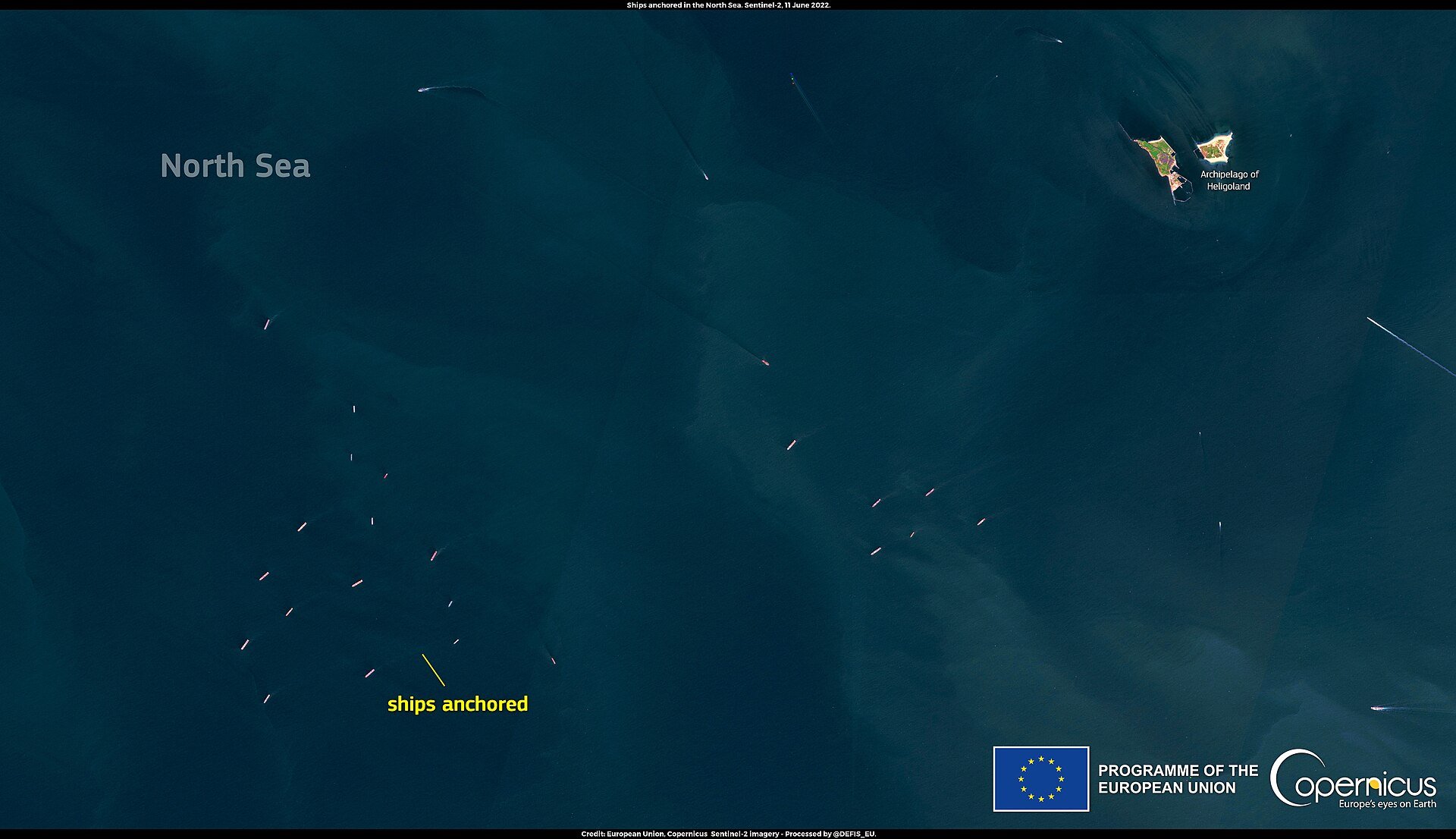
The trapped fleet represents hundreds of billions of dollars in vessel value and cargo. Arabian Gulf ports are full, leaving most stranded ships at anchor in open water. Jebel Ali, the region’s largest container port, reported 52 delays and 25 cargo rollovers in a single five-day period ending March 12, according to port operations data. Salalah in Oman recorded 126 delays, with 88 occurring in a single day as the port struggled to handle diverted traffic. By the end of March, even the anchorage zones themselves proved vulnerable — an Iranian drone struck a Kuwaiti supertanker inside Dubai’s anchorage among 400 other vessels, eliminating the last notionally safe staging area in the Gulf.
| Metric | Pre-War (Feb 27) | Current (March 13) | Change |
|---|---|---|---|
| Daily Hormuz transits | 70-80 | 1-3 | -96% |
| Vessels stranded in Gulf | 0 | 3,000+ | — |
| Seafarers affected | 0 | 20,000 | — |
| Vessels attacked | 0 | 16+ | — |
| Crew killed/missing | 0 | 7 | — |
| War risk insurance cost | Standard | 5x normal | +400% |
What Happened to the Strait of Hormuz?
The 21-mile-wide passage between Iran and Oman carried roughly 20 percent of the world’s daily oil supply before the war began. Within hours of the U.S.-Israeli strikes on February 28, Iran’s Islamic Revolutionary Guard Corps Navy issued warnings to all merchant shipping, effectively prohibiting vessel passage through the strait. The IRGC backed the warning with force.
On March 1, the oil tanker Skylight was struck by a projectile north of Khasab, Oman, killing two Indian crew members and injuring three others, Reuters reported. The attack established a pattern that would intensify over the following two weeks: any vessel attempting to transit the strait faced the risk of Iranian fire.
Traffic collapsed almost immediately. Kpler ship-tracking data showed a 70 percent drop in commercial transits within the first 48 hours, according to analyst Dimitris Ampatzidis. By the second week, the reduction had deepened to over 90 percent. Over 150 ships anchored outside the strait to avoid the risk entirely, while others that had already entered the Persian Gulf found themselves unable to leave.
Iran’s new Supreme Leader, Mojtaba Khamenei, reinforced the closure on March 12. In his first public address, he vowed that the Strait of Hormuz would remain closed “until the aggression against the Islamic Republic ceases,” CNN reported. The statement eliminated any near-term prospect of a negotiated reopening.
Electronic warfare has compounded the physical threat. Windward detected more than 1,650 vessels affected by GPS and AIS disruption across the region, with more than 30 jamming clusters identified spanning Saudi Arabia, Kuwait, the UAE, Qatar, Oman, and Iran. Interference patterns evolved from basic circular spoofing to what analysts described as “zig-zag displacement patterns” designed to confuse navigation systems on approaching vessels.
Attacks on Commercial Shipping
Iran has struck at least 16 commercial vessels since the war began on February 28, according to a maritime intelligence assessment by Windward published on March 13. The attacks span the Strait of Hormuz, the Gulf of Oman, UAE coastal waters, and Iraqi export zones, establishing a threat perimeter that covers virtually all commercial shipping routes in the region.
The largest single wave of attacks occurred on March 11, when three vessels were hit in rapid succession. The Thailand-flagged bulk carrier Mayuree Naree suffered an engine fire that forced its 20-member crew to be rescued by the Royal Navy of Oman, with three crew members still missing, CNBC reported. The Japanese container ship ONE Majesty sustained hull damage, and the Marshall Islands-flagged Star Gwyneth suffered structural damage in a separate incident.
Two days earlier, Iranian drone boats targeted the crude tankers Safesea Vishnu and Zefyros during a ship-to-ship transfer operation near Iraq’s Port of Basra, setting both vessels on fire and killing at least one crew member, according to USNI News. The attack on tankers conducting routine oil loading operations represented a new escalation: Iran was no longer targeting only vessels in transit but those engaged in economic activity anywhere in the Gulf.
Eight large vessels were detected operating without AIS transponders inside the Strait of Hormuz, Windward reported, including one vessel approximately 330 metres long — consistent with a Very Large Crude Carrier. The presence of dark vessels raises the possibility of Iranian-linked ships moving undetected through waters where commercial shipping has been warned to stay away.
The Washington Post reported on March 3 that an Iranian drone struck the CIA station compound within the U.S. Embassy in Riyadh, underscoring that the threat extends far beyond maritime targets. Attacks on civilian shipping, diplomatic compounds, and military installations across six GCC nations have created what shipping industry executives describe as a total insurance blackout across the region.
The Cruise Ship Crisis
Among the most visible consequences of the Gulf maritime shutdown are 15,000 cruise passengers stranded on six vessels across the region, the IMO reported on March 5. The crisis has affected major international cruise operators and Saudi Arabia’s flagship Aroya Cruises, dealing a blow to the Kingdom’s ambitions to become a global cruise tourism destination.
Aroya Cruises, a Saudi-backed line that launched in 2024 as part of Vision 2030’s tourism diversification strategy, cancelled the remainder of its 2025-2026 Arabian Gulf winter season entirely. All passengers aboard its flagship vessel were safely disembarked in Dubai on March 7, Seatrade Cruise reported. The line cited “ongoing regional operational considerations” and coordination with maritime and national authorities.
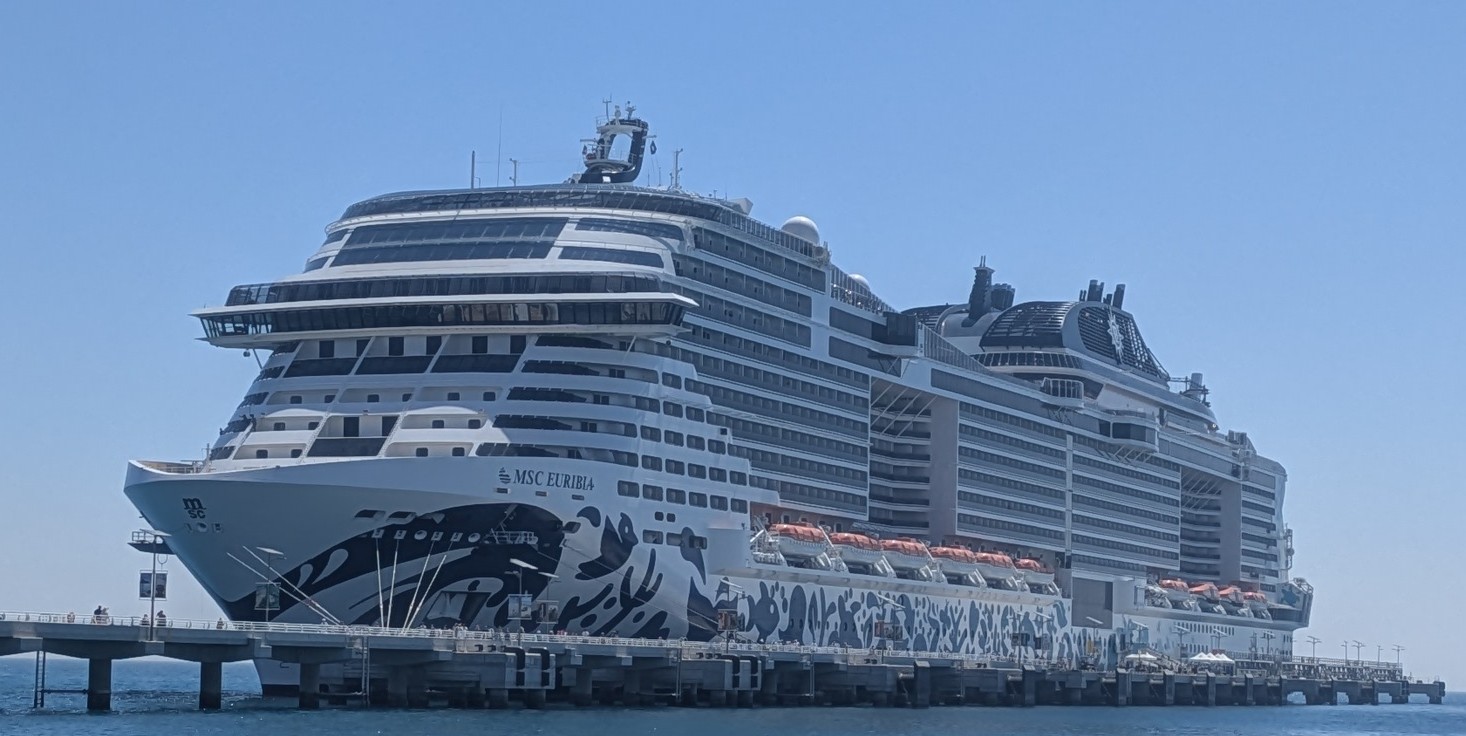
Five additional ships remain in Gulf waters. Celestyal Cruises has two vessels trapped — the Celestyal Discovery and Celestyal Journey — while MSC Cruises’ Euribia remains docked at a UAE port. TUI Cruises has two ships, Mein Schiff 4 and Mein Schiff 5, anchored in the region, Euronews reported. Airspace closures across much of the Gulf have complicated passenger repatriation, with only limited repatriation flights operating from select airports.
CNN reported on March 3 that passengers aboard one stranded vessel described a surreal environment of onboard entertainment continuing while missile interceptions were visible from the deck. The cruise industry’s Gulf exposure has become a cautionary tale for the broader collapse of Saudi Arabia’s international events calendar during the conflict.
What Are Conditions Like for Stranded Seafarers?
The 20,000 seafarers trapped in the Gulf face deteriorating conditions as the crisis enters its third week. Many crew members are nearing the end of their employment contracts but have no means of leaving their ships, The National reported on March 12. With Gulf ports at capacity and regional airports operating limited schedules, standard crew rotation has become impossible.
“Every day I can see missiles, hear explosions,” one sailor stranded in the Gulf told Dawn on March 13. “We don’t know when we will go home.” The account reflects the psychological toll on thousands of merchant mariners who entered the Gulf for routine commercial voyages and now find themselves in an active war zone.
The International Bargaining Forum, which represents mariners in collective negotiations, declared the Persian Gulf a high-risk area shortly after the war began, entitling crews to double pay and the contractual right to repatriation. In practice, however, the repatriation right is largely theoretical. Ships cannot be left uncrewed — owners will not abandon vessels worth tens to hundreds of millions of dollars — and replacement crews cannot reach the Gulf to relieve those currently aboard.
Croatia reported 250 of its nationals stranded on commercial ships in the Gulf of Oman, the Croatian media outlet The Dubrovnik Times reported, prompting calls from the country’s maritime unions for government-organized evacuation flights. The figure offers a glimpse of the crisis multiplied across dozens of nationalities. The Philippines, India, Indonesia, and Ukraine — nations that supply the majority of the global merchant fleet’s workforce — are believed to have thousands of citizens affected, though precise country-by-country figures have not been released.
IMO Secretary-General Arsenio Dominguez addressed the crisis directly. “These crews are simply doing their jobs and must be protected from the effects of wider geopolitical tensions,” he said, adding that “freedom of navigation is a fundamental principle of international maritime law, and it must be respected by all parties, with no exception.” He urged vessels to avoid the affected region until conditions improve — advice that offers no comfort to those already trapped inside.
War Risk Insurance and the Cost of Inaction
The maritime insurance market has effectively imposed its own blockade on the Persian Gulf, pricing war risk coverage at levels that make commercial voyages economically unviable. IMO Secretary-General Dominguez warned that “insurance companies are not ready to provide war risk insurance to vessels, or they are five times the price, which is of course not affordable.” The assessment, reported by Seatrade Maritime, describes a market where the risk of sailing has been priced to equal a prohibition.
Standard war risk premiums for Gulf transits before the conflict ran at fractions of a percent of hull value. By March 10, underwriters at Lloyd’s of London were quoting rates exceeding 5 percent for a single voyage, The National reported. For a VLCC valued at $120 million carrying $150 million in crude, a single transit could generate a war risk insurance bill exceeding $13 million — more than the vessel’s entire annual operating cost in peacetime.
The insurance crisis has created a paradox. Ships that cannot move still accumulate costs — crew wages, provisions, maintenance, port fees — while generating zero revenue. Owners of stranded vessels face a choice between paying ruinous insurance to attempt an exit through Hormuz or absorbing daily losses that compound with each week of inaction. Greek shipping associations have estimated that the combined daily cost of idle tonnage across the Gulf exceeds $50 million, Bloomberg reported.
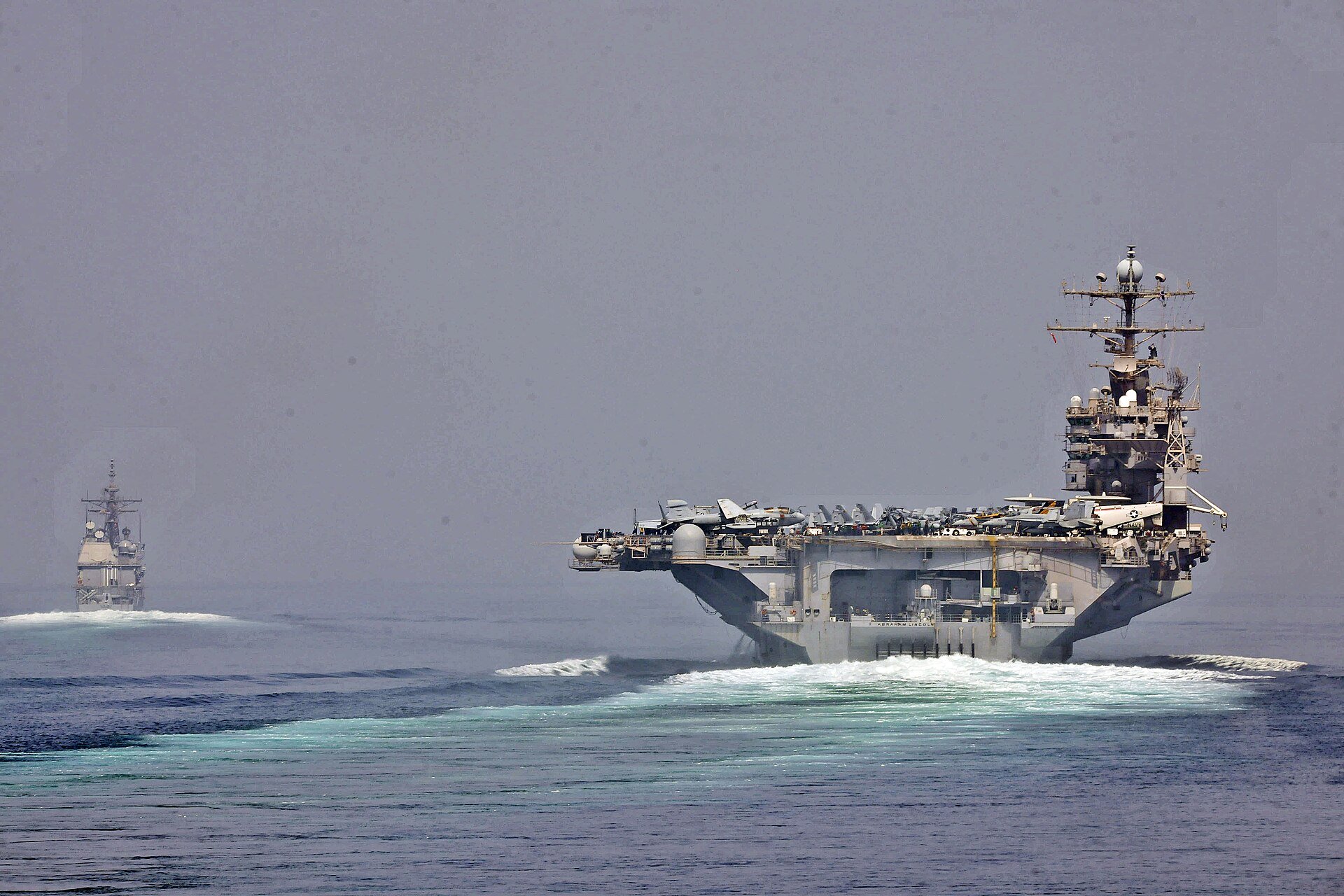
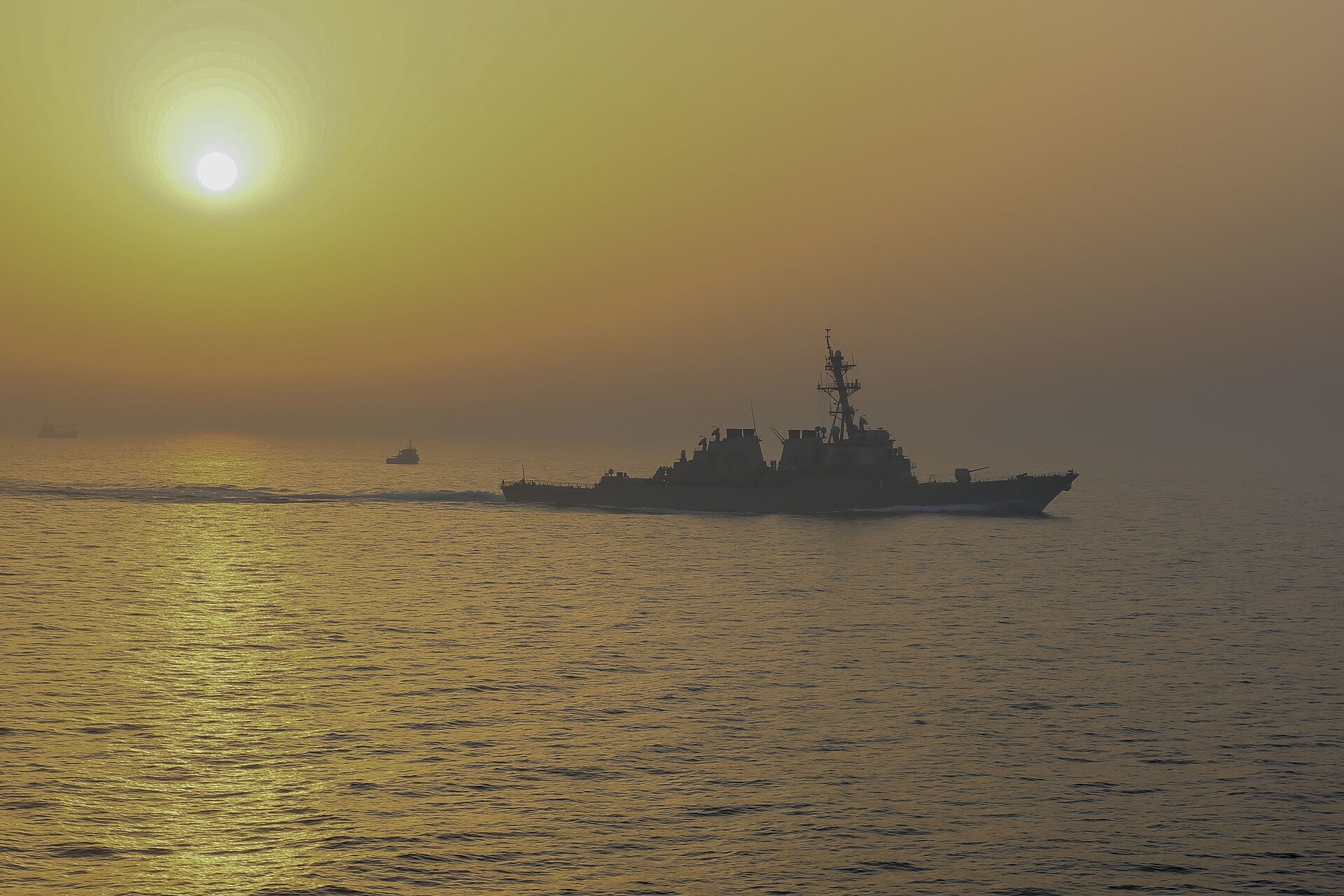
The deployment of the USS Tripoli and 2,200 Marines from Japan adds amphibious capability specifically suited to maritime rescue and convoy operations in these confined waters.
The situation has driven major rerouting of global trade. Cape of Good Hope transits surged to 383 during the five-day period from March 7 to 11, averaging 77 per day — a volume that recalls the peak of the Red Sea diversions during the Houthi shipping attacks of 2024. The Suez Canal recorded 185 transits in the same window as trade that previously flowed through Hormuz sought alternative paths westward.
Saudi Arabia’s Red Sea Bypass
Saudi Arabia has responded to the Hormuz closure by dramatically scaling up crude exports through the Red Sea, routing oil westward via the East-West Pipeline to the port of Yanbu on the Kingdom’s western coast. Red Sea shipments from Yanbu surged 330 percent to 2.47 million barrels per day, Windward data showed, with 27 Very Large Crude Carriers sailing to the port for loading as of March 12.
The pivot has partially offset the loss of Gulf-side exports, which dropped from 6.64 million barrels per day before the crisis to 4.06 million — a 39 percent reduction that accounts for approximately 2 to 2.5 million barrels of offshore production taken offline due to Iranian attacks on Saudi Arabia’s Eastern Province infrastructure.
The East-West Pipeline, built in the 1980s during the original Tanker War precisely for this contingency, can carry up to 7 million barrels of crude daily. The current 2.47 million barrels flowing through it represent just over one-third of theoretical capacity, suggesting room for further scaling if Gulf-side production remains at risk. Aramco has not commented publicly on the rerouting.
The infrastructure shift carries its own risks. Yanbu was not designed to handle the volume of tanker traffic now converging on its terminals. Loading times have increased, creating queues that could themselves become targets. And the Red Sea route adds approximately 3,500 nautical miles to shipments bound for Asia — the destination for the majority of Saudi crude — increasing both transit times and freight costs.
Iraq, by contrast, has no comparable bypass. Iraqi oil production collapsed from 4.3 million barrels per day to 1.3 million after Iranian drone strikes near Basra forced the suspension of southern export operations, according to Windward. South Korea and Greece received zero Iraqi cargoes in March. India and China saw 80 to 93 percent reductions in deliveries compared to January.
What Comes Next for Gulf Shipping?
Maritime industry executives and military analysts see no near-term resolution. Iran’s new leadership has explicitly tied the Hormuz closure to the continuation of U.S.-Israeli military operations, and those operations showed no sign of slowing as of March 14. President Trump declared on Friday night that U.S. forces had “totally obliterated every military target” on Iran’s Kharg Island, which handles 90 percent of Iran’s crude exports, CNN reported.
The prospect of U.S. Navy tanker escorts — a mechanism used during the 1987-1988 Tanker War to maintain oil flows through the Gulf — remains weeks away from implementation, according to Pentagon officials cited by Reuters. The Trump administration has acknowledged the need for convoy operations but has not yet assembled the naval assets required to guarantee safe passage for commercial vessels.
Iran’s estimated arsenal of approximately 2,000 naval mines adds a dimension that escorts alone cannot address. Any reopening of the strait would require extensive minesweeping operations that U.S. Navy commanders have acknowledged could take weeks or months to complete. Oil prices briefly surged $10 per barrel on reports of initial mine deployments, and Brent crude settled at $103.14 on March 14 — its highest level since July 2022.
For the 20,000 seafarers trapped in the Gulf, the arithmetic is bleak. Even if a ceasefire were announced tomorrow, the physical process of clearing the strait, resuming insurance underwriting, and restarting port operations would take weeks. Eid al-Fitr falls on approximately March 19-20, and some diplomatic channels have explored whether the end of Ramadan might catalyse a pause in hostilities. But Iran, under Mojtaba Khamenei, has rejected negotiations while attacks continue.
The IMO has urged flag states to establish emergency communication channels with their stranded nationals and called on shipowners to ensure adequate provisions for extended anchorage periods. The practical effect has been limited. The Gulf maritime crisis is not a logistics problem that shipping companies or maritime regulators can solve. It is a consequence of a war that shows no sign of ending, fought by states whose objectives do not include the welfare of the 20,000 sailors caught between them.
Frequently Asked Questions
How many ships are stuck in the Persian Gulf because of the Iran war?
The International Maritime Organization reported that approximately 3,000 commercial vessels and 20,000 seafarers are stranded across the Middle East as a result of Iran’s effective closure of the Strait of Hormuz. The figure includes oil tankers, bulk carriers, container ships, LNG carriers, and cruise liners. Daily transits through the strait have fallen from a pre-war average of 70 to 80 down to between one and three.
Are cruise ships trapped in the Gulf?
Six cruise ships carrying approximately 15,000 passengers became stranded in Gulf waters after the Strait of Hormuz closure. Saudi-backed Aroya Cruises cancelled its entire Arabian Gulf season and disembarked passengers in Dubai on March 7. Five vessels from Celestyal Cruises, MSC Cruises, and TUI Cruises remain in the region. Limited repatriation flights have begun but airspace restrictions complicate evacuation logistics.
How has the Hormuz crisis affected oil prices?
Brent crude surged past $100 per barrel for the first time since 2022, settling at $103.14 on March 14. The Strait of Hormuz normally handles 20 percent of global oil supply. Saudi Arabia has partially offset the disruption by rerouting exports through the Red Sea, where shipments from Yanbu surged 330 percent. Iraq’s exports collapsed 70 percent with no alternative route. The IEA released a record 400 million barrels from strategic reserves to ease the shortage.
What is war risk insurance for Gulf shipping?
War risk insurance premiums for Gulf transits have increased fivefold since the conflict began, with Lloyd’s of London quoting rates exceeding 5 percent of hull value per voyage. For a typical VLCC, this translates to insurance costs exceeding $13 million per transit. The IMO Secretary-General described the pricing as effectively unaffordable, noting that many insurers are declining to provide coverage entirely.
When will the Strait of Hormuz reopen?
No timeline exists for reopening. Iran’s new Supreme Leader Mojtaba Khamenei has vowed to keep the strait closed until U.S.-Israeli attacks cease. Even after a ceasefire, minesweeping operations, insurance normalization, and port restarts would require weeks to months. U.S. Navy tanker escort operations, modeled on the 1987-1988 Tanker War, remain weeks from implementation according to Pentagon officials.
Trump subsequently called on six nations to send warships to reopen the strait, naming China, France, Japan, South Korea, and the United Kingdom as potential participants in a multinational escort coalition.