
RIYADH — The war that Mohammed bin Salman spent a decade trying to avoid may be doing what a decade of peacetime could not. Twenty-two days into a conflict with Iran that has shut the Strait of Hormuz, cratered Gulf financial markets from Dubai to Doha, and forced the evacuation of foreign workers across the region, something counterintuitive is happening inside Saudi Arabia’s economy. The defense industry is industrializing faster than any government white paper projected. The financial sector is absorbing talent and capital fleeing neighboring capitals. West coast ports that sat underutilized for years are now processing record volumes. And a workforce nationalization program that employers had resisted for half a decade is suddenly finding willing participants — because the foreign workers who filled those roles have gone home.
None of this was planned. The Crown Prince did not launch Vision 2030 with the expectation that an Iranian missile barrage would be the catalyst for its most ambitious targets. The megaprojects that defined the program’s public image — NEOM, The Line, the entertainment cities — are frozen or restructured. But beneath that headline damage, the war is accelerating the structural transformation that always mattered more than any mirrored skyscraper in the desert. Defense localization, economic diversification away from hydrocarbon dependency, human capital development, financial sector deepening, and infrastructure redundancy are all advancing at a pace that peacetime bureaucracy could never have delivered. The question is whether any of it lasts once the shooting stops.
Contents
- How Did Twenty-Two Days of War Reshape Saudi Arabia’s Economy?
- The Defense Industry That Three Weeks Built
- Why Is Riyadh Winning the Financial Capital War Without Trying?
- The Red Sea Pivot That Hormuz Made Mandatory
- What Happened to NEOM and the Megaprojects?
- The Wartime Diversification Acceleration Matrix
- Can Saudi Arabia’s Oil Revenue Surge Survive the Peace?
- Three Million Workers Left and Nobody Noticed
- Is the Iran War the Best Thing That Happened to Vision 2030?
- The Price That Doesn’t Appear on Any Balance Sheet
- Frequently Asked Questions
How Did Twenty-Two Days of War Reshape Saudi Arabia’s Economy?
The Iran war, which began on February 28, 2026, has compressed what economists at the International Monetary Fund projected as a seven-to-ten-year diversification timeline into less than a month of forced adaptation. Every major pillar of Vision 2030 — defense, finance, logistics, workforce development, and non-oil revenue — is moving faster under wartime conditions than it did under peacetime planning.
The mining sector provides a telling example. Saudi Arabia’s $2.5 trillion mineral endowment and Ma’aden’s $110 billion investment plan represent a diversification pillar that gains urgency with every day the Strait of Hormuz remains closed.
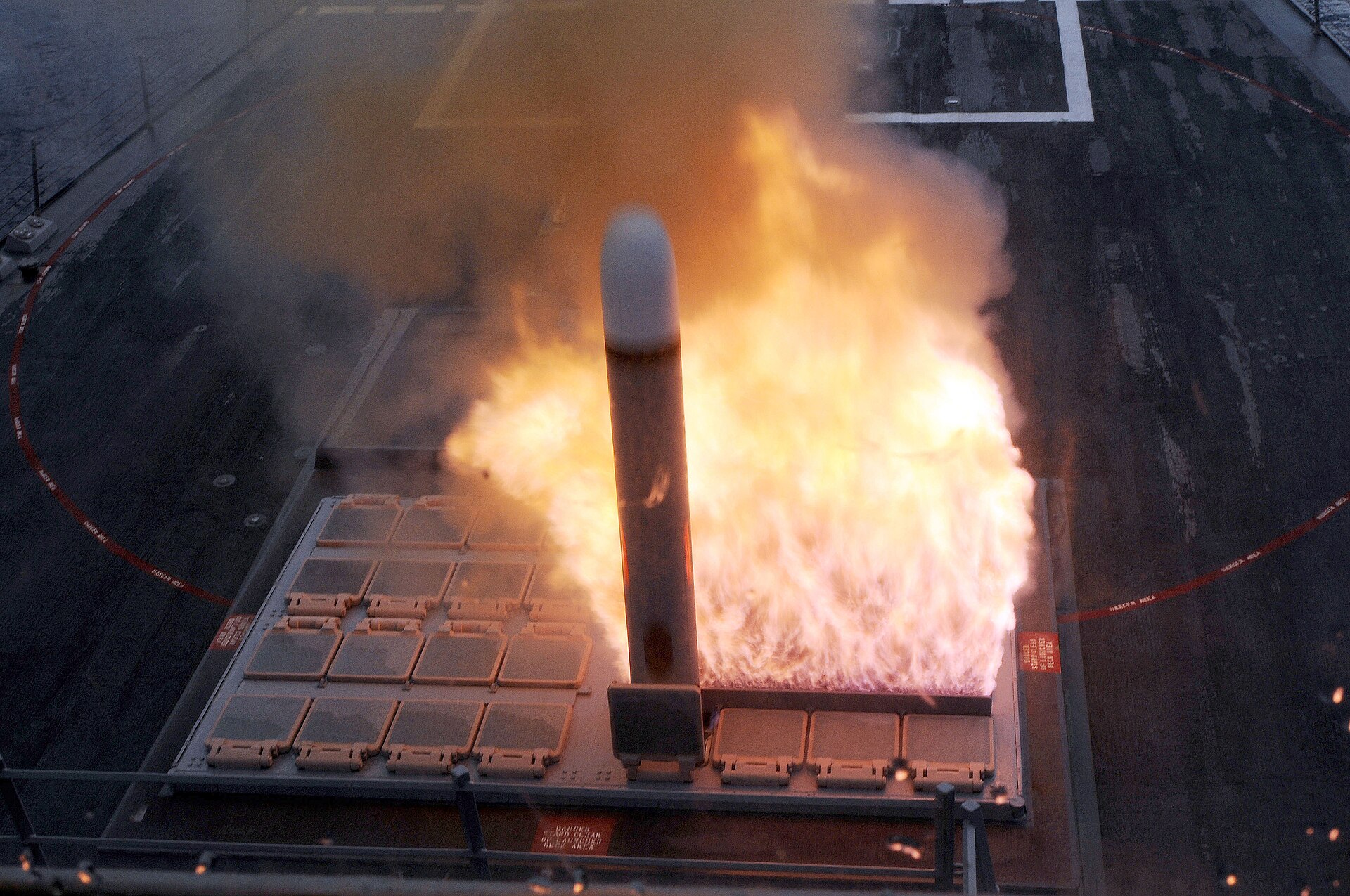
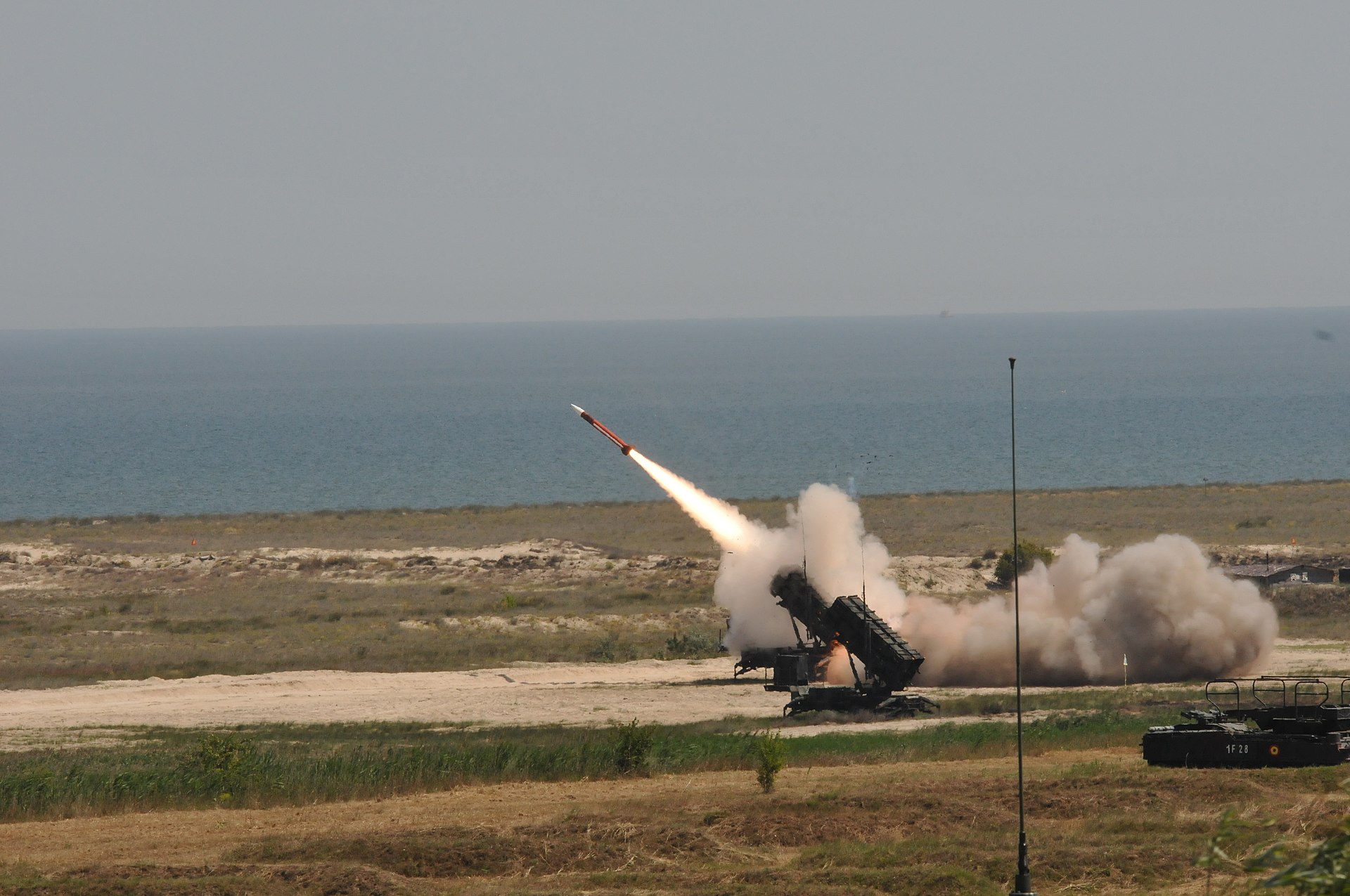
The numbers tell a story that no Saudi government communication team would dare spin this aggressively, because the underlying reality is too grim to celebrate. Saudi Arabia’s defense budget for 2026, already set at approximately $78 to $80 billion according to the Stockholm International Peace Research Institute’s preliminary estimates, represents 7.3 percent of GDP — a figure that makes the Kingdom one of the highest per-capita military spenders on earth. That spending existed before the war. What changed on February 28 is how it gets spent. Before the conflict, roughly 80 percent of Saudi defense procurement went to foreign suppliers, primarily American, British, and French firms. The General Authority for Military Industries, known as GAMI, had set a target of 50 percent defense localization by 2030. Three weeks of war — during which Saudi air defenses have intercepted more than 575 Iranian drones, 42 ballistic missiles, and 7 cruise missiles according to Royal Saudi Air Defense Force statements — have made that target not aspirational but existential.
On the financial side, the Tadawul, Saudi Arabia’s stock exchange, has risen since the war began, a performance that stands in stark contrast to the Dubai Financial Market and the Qatar Exchange, both of which have shed between 14 and 22 percent of their value. This is not because investors are naive about Saudi risk. It is because Saudi Arabia’s geographic depth, infrastructure redundancy, and central bank reserves of $475 billion, as reported by the Saudi Central Bank’s February 2026 monthly bulletin, make it the least bad option in a region where every option is bad.
The Middle East briefing 3,000+ readers start their day with.
One email. Every weekday morning. Free.
The Strait of Hormuz closure — which Iran effected through a combination of naval mines, fast-attack craft, and the credible threat of anti-ship missile strikes — has done something that years of Saudi logistics planning could not: it has made the Kingdom’s west coast ports operationally critical overnight. Yanbu, which exported approximately 1.1 million barrels per day in February according to tanker tracking data compiled by Kpler, surged to an annualized rate of 2.2 million barrels per day in the first nine days of March. The East-West Pipeline, known as the Petroline, has a theoretical capacity of 5 to 7 million barrels per day, meaning Saudi Arabia has the physical infrastructure to route the majority of its oil exports away from the Persian Gulf entirely.
Each of these shifts reinforces the others. Defense spending creates manufacturing jobs that absorb displaced workers. Financial capital flight from Dubai creates banking revenue that diversifies the tax base. Port traffic generates logistics employment and customs revenue. The war is acting as a systems-level stress test that is revealing not how fragile Vision 2030 was, but how much latent capacity its infrastructure investments had already created.
The Defense Industry That Three Weeks Built
The Saudi Arabian Military Industries corporation — SAMI — held its most consequential month in February 2026, weeks before anyone expected a war. At the World Defense Show in Riyadh, SAMI launched two new subsidiary companies and showcased the SAMI Land Industrial Complex, an 82,000-square-meter manufacturing facility with an annual production capacity of 1,500 armored vehicles and a workforce target of more than 1,000 Saudi employees. The timing, in retrospect, appears almost prophetic. What was designed as a showpiece for defense export ambitions has become, under wartime conditions, a production facility with immediate domestic demand.
The HEET armored vehicle program, one of SAMI’s flagship domestic manufacturing initiatives, exemplifies the acceleration. Before the war, HEET vehicles were in various stages of testing and low-rate initial production, according to SAMI’s public disclosures at the World Defense Show. Military procurement timelines in peacetime Saudi Arabia, as in most countries, moved at the pace of bureaucratic review cycles — 18 to 24 months from contract to delivery for domestically produced platforms, according to GAMI’s 2025 annual report. Wartime urgency has collapsed those timelines. The Saudi Ministry of Defense, according to two procurement notices published in the Saudi government’s official Umm al-Qura gazette in the first two weeks of March, has issued accelerated acquisition authorities for domestically produced armored vehicles and drone defense systems that bypass standard multi-stage review processes.
The RUKN program, SAMI’s local content supply chain initiative, has taken on new urgency as well. RUKN was designed to build a network of Saudi small and medium enterprises capable of supplying components — wiring harnesses, composite panels, electronic subassemblies — to defense prime contractors. In peacetime, convincing Saudi entrepreneurs to invest in defense manufacturing was difficult because the contracts were uncertain and the margins thin compared to real estate or retail. War has changed the risk calculus. Defense contracts are now guaranteed demand, backed by a government that is spending at a rate that would make Pentagon procurement officers pause.
The most significant single procurement decision of the war, however, came not from SAMI but from the Royal Court itself. Saudi Arabia signed a $5 billion deal with Chinese defense firms for combat drones, concluded in Jeddah according to reporting by the South China Morning Post and confirmed by Saudi state media. The deal is significant for three reasons. First, it represents a deliberate diversification away from exclusive reliance on American and European weapons systems — a strategic hedge that Saudi defense planners have pursued since the Obama administration’s hesitancy during the 2019 Abqaiq attacks. Second, Chinese combat drones are significantly cheaper per unit than their American equivalents, which matters when the cost-exchange ratio of the war favors the attacker. Third, and most consequentially for Vision 2030, the deal reportedly includes technology transfer provisions that will allow Saudi Arabia to produce variants of the drones domestically within 36 months.
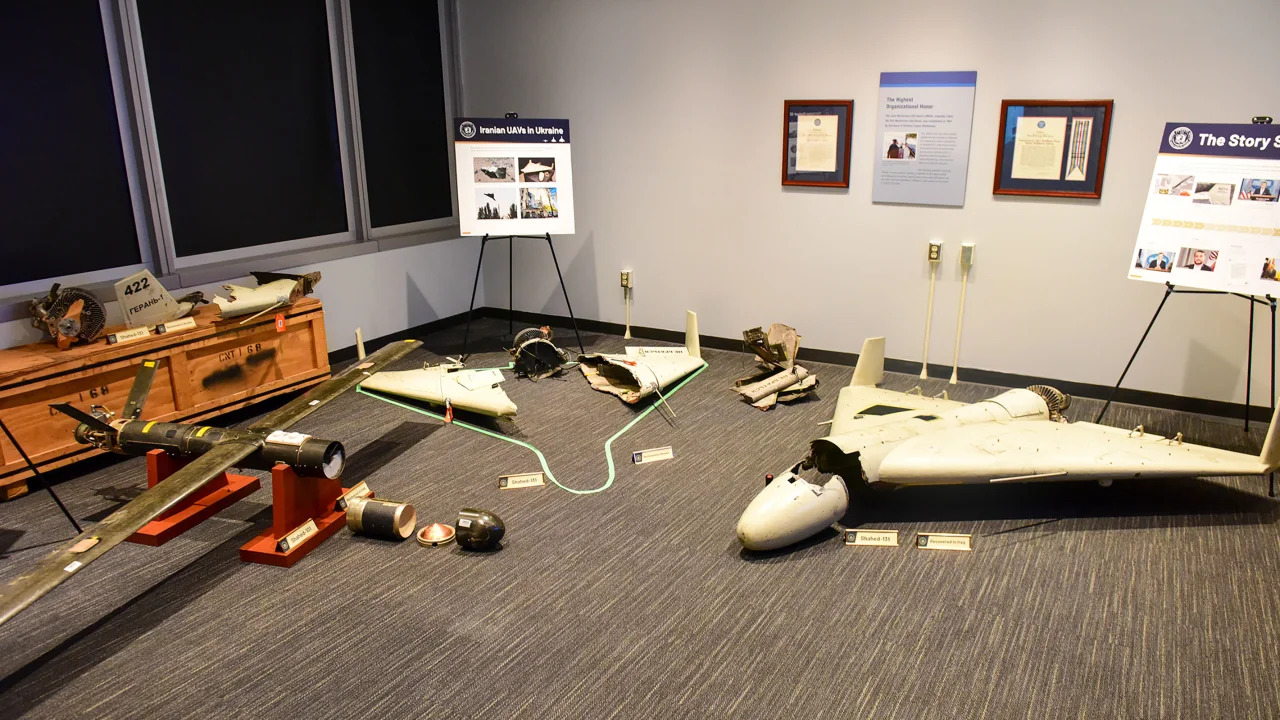
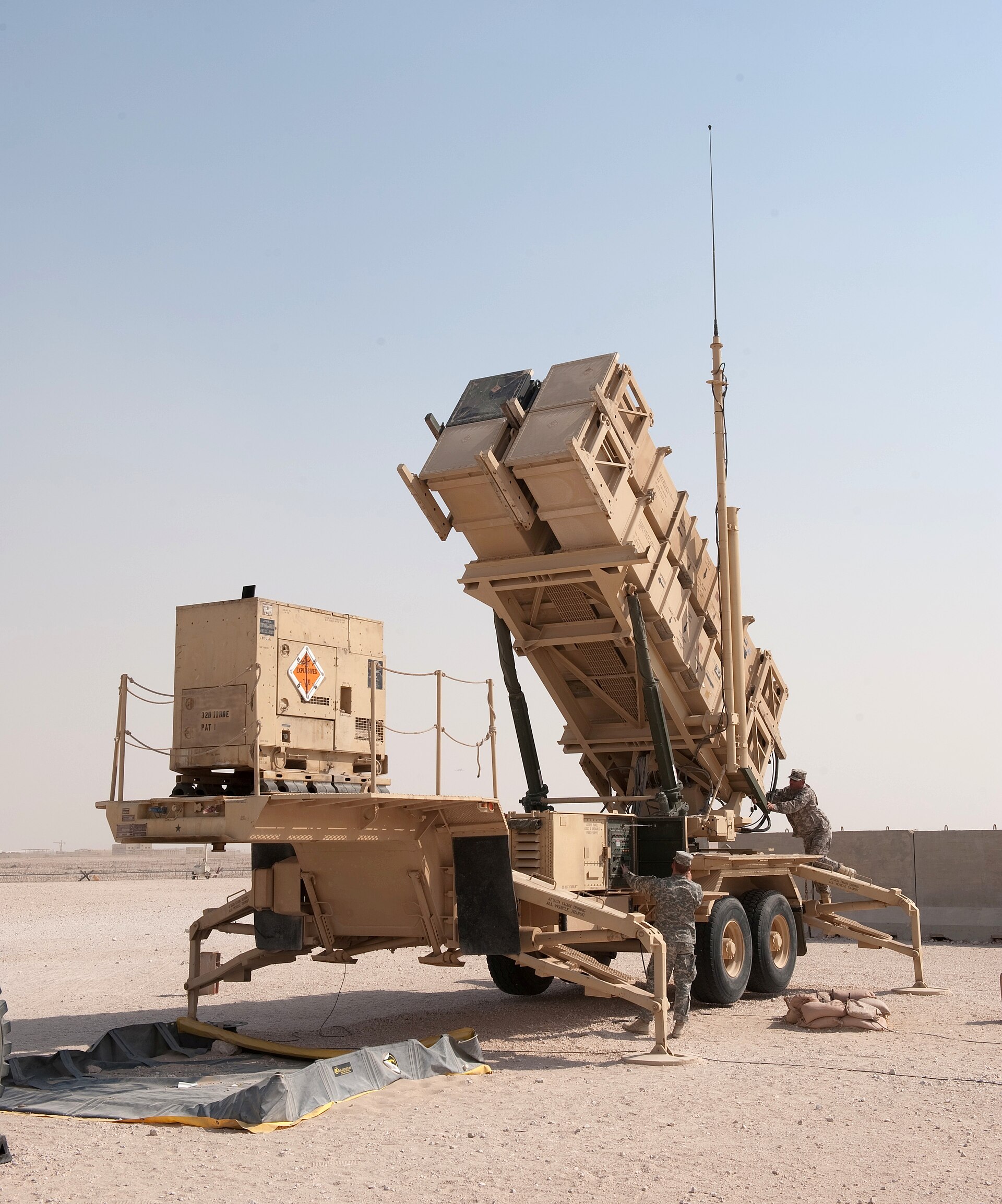
The cost-exchange problem deserves particular attention because it is the single greatest driver of defense industrialization. A Shahed-136 one-way attack drone costs Iran an estimated $30,000 to $50,000 to produce, according to analysis by the Royal United Services Institute based on recovered components from the Ukraine conflict. A Patriot PAC-3 interceptor missile costs approximately $4 million, according to Raytheon’s publicly disclosed unit costs. Saudi Arabia cannot sustain a ratio of 80-to-1 or even 100-to-1 in interceptor-to-threat cost. The math demands domestically produced, lower-cost counter-drone systems, and the war is providing both the funding and the political will to build them.
The irony is that every expensive interceptor consumed over Saudi skies enriches the same Western defence firms whose stock prices have surged to record highs on the back of the Iran war. The Pentagon’s $200 billion supplemental request and $16.5 billion in emergency Gulf arms sales have turned the conflict into the most lucrative defence-industry cycle since the War on Terror.
GAMI’s 50 percent localization target by 2030 looked ambitious eighteen months ago. It now looks conservative. The combination of wartime urgency, proven domestic manufacturing capacity at facilities like the SAMI Land Industrial Complex, Chinese technology transfer agreements, and a workforce suddenly motivated to enter defense manufacturing creates conditions under which 60 to 65 percent localization by 2030 is plausible, according to a March 2026 assessment by the International Institute for Strategic Studies. The war did not create Saudi Arabia’s defense industry. But it is forcing its maturation at a rate that peacetime incentives could never have achieved.
The Kingdom intercepted more than 575 drones and 49 missiles in three weeks — each interception a $4 million argument for domestic defense manufacturing that no white paper could have made.
— Editorial analysis based on Royal Saudi Air Defense Force and RUSI cost data
Why Is Riyadh Winning the Financial Capital War Without Trying?
The war has turned Riyadh’s campaign to become the Middle East’s dominant financial center from a matter of incentives and persuasion into a matter of geography and survival. The answer to why Riyadh is winning is straightforward: it is 800 kilometers from Iranian launch sites, compared to 250 kilometers for Bahrain and 350 kilometers for Doha, according to measurements derived from open-source mapping of known Iranian ballistic missile installations along the Zagros mountain range.
Goldman Sachs closed its Dubai office in the first week of March, according to reporting by Bloomberg. HSBC relocated its Qatar-based regional operations to Riyadh, according to a company statement filed with the London Stock Exchange. These are not speculative relocations driven by tax incentives or regulatory promises. They are institutional survival decisions made by compliance officers and risk committees who concluded that operating within range of Iranian ballistic missiles constituted an unacceptable business continuity risk.
Riyadh already had momentum before the war. The Saudi Ministry of Investment reported that 540 multinational companies had established regional headquarters in Riyadh by the end of 2025, meeting the government’s target two years ahead of schedule. The King Abdullah Financial District, known as KAFD, housed 140 corporate headquarters as of January 2026, according to the KAFD Development Company’s quarterly occupancy report. The war has accelerated what was already a strong trend into something closer to a rout.
The financial data tells the story with precision. The Tadawul’s relative outperformance during the war is not driven by naive optimism. It reflects three structural advantages that Saudi Arabia holds over every other Gulf financial center. First, Saudi Arabia’s central bank reserves of $475 billion, as reported by the Saudi Central Bank, provide a currency defense that no other Gulf state can match. The UAE’s central bank holds approximately $190 billion; Qatar’s reserves stand at roughly $50 billion. In a prolonged conflict scenario, Saudi Arabia can defend the riyal’s dollar peg for years. Second, Saudi Arabia’s domestic consumer market — 36 million people with per-capita GDP above $28,000, according to the World Bank — gives financial institutions a revenue base that does not depend on the re-export trade that sustains Dubai and Doha. Third, Riyadh’s distance from the conflict zone means that the physical infrastructure of finance — data centers, trading floors, regulatory offices — faces materially lower risk of disruption.
The insurance market has quantified this advantage with brutal precision. War risk premiums for commercial property in Bahrain have risen to 4.2 percent of insured value, according to Lloyd’s of London syndicates quoted by the Financial Times. Dubai premiums have risen to 1.8 percent. Riyadh premiums have risen to 0.6 percent. For a multinational deciding where to locate a $200 million regional headquarters, that differential represents $3.6 million per year in additional operating cost for choosing Bahrain over Riyadh, and $2.4 million per year for choosing Dubai. Over a ten-year lease, these are numbers that change decisions.
The human capital flow compounds the financial capital flow. Senior bankers, fund managers, and compliance professionals who relocated to Dubai or Doha over the past five years are now relocating again, this time to Riyadh. The Saudi Capital Market Authority reported a 34 percent increase in individual license applications for financial professionals in the first two weeks of March compared to the same period in February, according to data the CMA published on its transparency portal. These are not entry-level hires. They are experienced professionals with client relationships and institutional knowledge who are bringing their networks with them.
Vision 2030’s financial sector targets — which called for Riyadh to rank among the top ten global financial centers by 2030, as measured by the Global Financial Centres Index — appeared optimistic when they were announced. The war has not guaranteed their achievement. But it has eliminated the competition in ways that no amount of regulatory reform or tax incentives could have accomplished. When the war ends, the question will be whether these financial institutions stay in Riyadh or return to their previous locations. The early evidence suggests they will stay, because the infrastructure they are building — the offices, the data centers, the regulatory relationships, the school enrollments for their children — creates institutional inertia that outlasts the crisis that caused the move.
The Red Sea Pivot That Hormuz Made Mandatory
For decades, Saudi Arabia invested in west coast port infrastructure that critics dismissed as redundant. King Abdullah Port at King Abdullah Economic City was designed with a capacity of 25 million twenty-foot equivalent units, or TEU, according to the port authority’s published specifications. Combined with Jeddah Islamic Port and Yanbu Commercial Port, Saudi Arabia’s Red Sea coast has aggregate container handling capacity of 18.6 million TEU, according to the Saudi Ports Authority’s 2025 annual report. Before the war, these facilities operated at roughly 40 to 45 percent of capacity. The Hormuz closure has validated every riyal spent on that excess capacity.
The oil numbers are the most dramatic. Yanbu’s export surge from 1.1 million barrels per day in February to 2.2 million barrels per day in the first nine days of March, as tracked by Kpler’s satellite-based tanker monitoring, demonstrates that Saudi Aramco’s East-West Pipeline infrastructure — the Petroline system with its 5 to 7 million barrel per day theoretical capacity — can absorb a massive rerouting of export volumes without new capital investment. The pipeline exists. The terminal exists. The tanker berths exist. What did not exist, until February 28, was the necessity to use them at anything close to full capacity. Aramco’s full wartime operational pivot — from shutting supergiant offshore fields to converting gas pipelines for crude transport — reveals both the scale of the disruption and the company’s capacity to adapt under fire.
Container traffic tells a parallel story. Saudi Arabia’s east coast ports — Dammam, Jubail, Ras al-Khair — handled approximately 55 percent of the Kingdom’s non-oil trade by value before the war, according to Saudi Customs Authority data. That traffic is now being rerouted through Jeddah and King Abdullah Port, with transit times from Asian manufacturing centers adding approximately 3 to 5 days via the Suez Canal compared to the Persian Gulf route, according to shipping consultancy Drewry’s March 2026 routing analysis. The additional transit cost is significant — Drewry estimates $800 to $1,200 per TEU in additional freight charges — but it is a cost that buyers are willing to absorb when the alternative is routing through a war zone.
The strategic implications extend beyond the current conflict. Saudi Arabia has demonstrated, under live conditions, that its economy can function with the Persian Gulf effectively closed. This is a capability that no other Gulf state possesses. The UAE, Qatar, Kuwait, and Bahrain are entirely dependent on Persian Gulf shipping lanes for their non-pipeline exports. Saudi Arabia is not. The Petroline, the west coast ports, and the Red Sea access through the Bab al-Mandab strait give the Kingdom a geographic redundancy that functions as a form of economic insurance.
The investment implications are already visible. The Saudi Ports Authority announced on March 14 an accelerated expansion program for King Abdullah Port, adding four new berths with a combined capacity of 3 million TEU, according to the authority’s press release. The timeline for this expansion was originally 2028 to 2031. It has been moved to 2026 to 2028. Similarly, Saudi Aramco has begun engineering studies for expanding Yanbu’s crude storage capacity by 12 million barrels, according to procurement notices published on the Aramco contractor portal, a project that was in the pre-feasibility stage before the war.
The Red Sea pivot also creates downstream employment. Every container that moves through Jeddah instead of Dammam requires longshoremen, customs inspectors, freight forwarders, truck drivers, and warehouse workers on the west coast. The Saudi Ministry of Human Resources reported a 28 percent increase in private sector job postings in Jeddah and Makkah province during the first two weeks of March compared to the same period in 2025, according to the ministry’s Jadarat employment platform data. Not all of these jobs are port-related, but the correlation is difficult to dismiss.
What Happened to NEOM and the Megaprojects?
The megaprojects are the most visible casualty of the war, but the truth is more nuanced than the headlines suggest. NEOM was already being restructured before the first Iranian drone crossed Saudi airspace. The Line, the 170-kilometer mirrored linear city that became the international media’s favorite symbol of Saudi ambition, was suspended in September 2025, five months before the war began. NEOM itself was broken into five separate entities, each with distinct management, budgets, and timelines, according to the restructuring announcement by the Public Investment Fund.
The war has accelerated a reallocation that was already underway. The Public Investment Fund, which manages approximately $930 billion in assets according to the Sovereign Wealth Fund Institute’s January 2026 ranking, has been redirecting capital from megaproject construction toward sectors with shorter-term economic returns and strategic relevance. These include artificial intelligence infrastructure, critical minerals mining, and advanced manufacturing — sectors where the PIF’s investments generate both financial returns and strategic capability. The kingdom’s determination to maintain its overseas investment agenda is evident in its decision to proceed with the FII Priority Summit in Miami this week, where PIF Governor Yasir Al-Rumayyan will address more than 1,500 delegates alongside President Trump. The fund has since cut NEOM budgets by up to 60 percent and redirected capital toward defence manufacturing, grain security, and AI infrastructure.
The AI pivot is particularly significant. Saudi Arabia’s Data and AI Authority, known as SDAIA, announced in January 2026 a $15 billion investment program to build sovereign AI computing infrastructure, including partnerships with NVIDIA and domestic cloud providers, according to SDAIA’s published strategy document. The war has added urgency to this investment because military AI applications — particularly in autonomous drone defense, missile trajectory prediction, and intelligence analysis — have immediate battlefield relevance. The distinction between civilian and military AI infrastructure is, in practice, minimal. A GPU cluster that trains a large language model on Monday can process drone swarm targeting data on Tuesday.
The mining sector has received similar wartime attention. Saudi Arabia holds an estimated $1.3 trillion in untapped mineral wealth, according to the Saudi Geological Survey’s 2024 assessment, including significant deposits of copper, gold, zinc, phosphate, and rare earth elements. The Ministry of Industry and Mineral Resources issued 147 new exploration licenses in the fourth quarter of 2025, according to the ministry’s quarterly report — a record. The war has intensified interest in rare earth elements specifically because they are critical inputs for defense electronics, missile guidance systems, and electronic warfare equipment. A domestic supply of rare earths reduces Saudi Arabia’s dependence on Chinese refining, which is strategically significant for a country that just signed a $5 billion drone deal with Beijing and understands the risks of single-source dependency.
The honest assessment of the megaprojects is this: the war killed what was already dying and redirected resources toward what was already growing. The restructuring of NEOM was a pre-war acknowledgment that the original vision was financially unsustainable at the originally planned scale. The PIF’s pivot toward AI, mining, and manufacturing was a pre-war strategic evolution. The war provided political cover for decisions that were already being made — and accelerated the capital reallocation by creating genuine urgency where before there was only strategic preference.
The Wartime Diversification Acceleration Matrix
The following assessment scores eight Vision 2030 sectors across three dimensions: their pre-war trajectory, measured on a 1-to-5 scale reflecting pace and progress toward 2030 targets as of January 2026; their wartime acceleration, measured on the same scale reflecting the degree to which the conflict has increased the pace of transformation; and their post-war durability, estimating on the same scale how likely the wartime gains are to persist once the conflict ends. The overall impact score is the product of wartime acceleration and post-war durability, reflecting both the magnitude of wartime change and its expected permanence. Data sources include GAMI annual reports, Saudi Central Bank bulletins, Saudi Ports Authority statistics, PIF disclosures, and IMF Article IV consultation documents.
| Vision 2030 Sector | Pre-War Trajectory (1-5) | Wartime Acceleration (1-5) | Post-War Durability (1-5) | Overall Impact Score |
|---|---|---|---|---|
| Defense Localization | 3 | 5 | 5 | 25 |
| Financial Hub Consolidation | 4 | 5 | 4 | 20 |
| Red Sea Logistics Infrastructure | 2 | 5 | 4 | 20 |
| Workforce Saudization | 3 | 4 | 3 | 12 |
| AI and Digital Infrastructure | 4 | 4 | 5 | 20 |
| Mining and Critical Minerals | 2 | 3 | 4 | 12 |
| Tourism and Entertainment | 3 | 1 | 2 | 2 |
| Megaprojects (NEOM, The Line) | 1 | 1 | 1 | 1 |
The matrix reveals a clear pattern. The sectors that are accelerating fastest — defense, finance, logistics, and AI — are precisely the sectors that Vision 2030’s architects identified as structurally important but struggled to advance at the desired pace in peacetime. The sectors that are stagnating or declining — tourism, entertainment, and megaproject construction — are the ones that attracted the most international media attention but were always secondary to the program’s core economic logic.
Defense localization receives the highest overall impact score of 25 because the wartime acceleration is maximal and the post-war durability is near-certain. Once a country has built an armored vehicle factory and staffed it with a thousand trained workers, it does not close that factory when the war ends. The institutional knowledge, the supply chains, the trained workforce, and the sunk capital all create permanence. Financial hub consolidation scores 20 because the institutional relocations are largely irreversible — the cost of moving a regional headquarters twice in two years is prohibitive — but some capital will flow back to Dubai and Doha once risk premiums normalize. Red Sea logistics scores 20 because the infrastructure investments are permanent even if traffic volumes partially revert to pre-war routing patterns. The Hormuz vulnerability has been demonstrated, and prudent logistics planning will permanently weight west coast routing higher than before.
Tourism and entertainment score the lowest because the war has effectively frozen international tourism arrivals — Saudi Arabia cannot market itself as a leisure destination while intercepting ballistic missiles — and the post-war recovery of tourism depends on perception of safety that may take years to rebuild. Megaprojects score 1 across all three dimensions because they were already stalling, the war has frozen construction entirely, and the post-war political and financial environment is unlikely to revive them at anything close to original scale.
Can Saudi Arabia’s Oil Revenue Surge Survive the Peace?
Oil has been trading above $110 per barrel since the second week of the war, a price that represents approximately a 45 percent increase from the pre-war range of $75 to $78 per barrel, according to Brent crude futures data from the Intercontinental Exchange. For Saudi Arabia, which produces approximately 9.5 million barrels per day according to OPEC’s February 2026 Monthly Oil Market Report, every dollar increase in the oil price translates to roughly $3.5 billion in additional annual revenue. At $110 versus a pre-war baseline of $76, the Kingdom is earning approximately $119 million per day more than it was earning on February 27.
This revenue surge has immediate fiscal consequences. Saudi Arabia’s 2026 budget, published by the Ministry of Finance in December 2025, was built on an assumed oil price of $70 per barrel — a conservative assumption that is standard Saudi fiscal practice. At $110 per barrel, the Kingdom is running a budget surplus of approximately 8 to 10 percent of GDP, according to calculations by Capital Economics using the ministry’s published expenditure figures and current revenue rates. This surplus provides the fiscal space to absorb war-related costs — increased defense spending, infrastructure protection, economic stimulus — without borrowing.
The contrast with neighboring Gulf economies is severe. The UAE, Qatar, and Kuwait are all net energy exporters, but their inability to export through the Strait of Hormuz means that high oil prices are, for them, a purely theoretical benefit. Qatar’s LNG exports — which constituted 86 percent of government revenue in 2025, according to Qatar’s Ministry of Finance — have dropped to near zero since the Hormuz closure. Kuwait, which has no pipeline alternative to the Gulf, faces the same constraint. Saudi Arabia is the only Gulf oil exporter that can actually capture the war premium on oil prices, because it is the only one that can get its oil to market.
The sustainability question is legitimate. When the war ends — and the diplomatic trajectory suggests it will end, though the timeline remains uncertain — oil prices will fall. The speed and magnitude of that decline will depend on several factors: the pace of Hormuz reopening, the extent of Iranian production infrastructure damage, the response of OPEC+ members to the post-war supply environment, and the global demand trajectory. Goldman Sachs’ March 2026 commodities outlook projects Brent crude at $85 to $95 per barrel in a “rapid ceasefire” scenario and $100 to $120 in a “prolonged conflict” scenario.
But the relevant question for Vision 2030 is not whether oil prices stay at $110. It is whether the windfall revenue earned during the war is invested in assets that generate returns after the war. The early evidence is mixed but encouraging. The PIF’s announced investment pipeline for the first quarter of 2026 is heavily weighted toward productive assets — manufacturing facilities, technology companies, logistics infrastructure — rather than the prestige real estate and entertainment venues that characterized earlier PIF spending. If the wartime surplus funds defense factories, AI data centers, and port expansions, then the revenue will have purchased permanent economic capability even after oil prices normalize.
Three Million Workers Left and Nobody Noticed
The foreign worker exodus is the least discussed and potentially most consequential wartime transformation. Saudi Arabia employed approximately 10.5 million foreign workers before the war, according to the General Authority for Statistics’ fourth-quarter 2025 labor force survey. In the first three weeks of the conflict, an estimated 2.5 to 3 million foreign workers — primarily from South Asian and Southeast Asian countries — have departed the Kingdom, according to estimates by the International Organization for Migration based on airport departure data and embassy reporting. The Filipino Department of Migrant Workers alone reported processing 340,000 repatriation cases from Saudi Arabia by March 15.
The departures are concentrated in specific sectors: construction, hospitality, retail, and personal services. These are precisely the sectors where Saudi Arabia’s Nitaqat workforce nationalization program has struggled most to increase Saudi employment, because Saudi workers historically viewed these jobs as low-status and poorly compensated relative to public sector alternatives.
The war has changed this calculus in two ways. First, the jobs are now available. Employers who spent years resisting Saudization quotas — paying fines, gaming visa categories, lobbying for exemptions — now have actual vacancies that need filling. The Saudi Ministry of Human Resources reported that private sector job postings on the national Jadarat platform increased by 62 percent in the first two weeks of March compared to February, according to ministry data. Second, the war has created a patriotic context for work that previously carried social stigma. Saudi media, both state and private, have emphasized themes of self-reliance and national service in the economic sphere. Working in a factory that produces military equipment or in a port that keeps the nation’s oil exports flowing carries a different social meaning than the same work carried six months ago.
The Saudization numbers, while preliminary, are suggestive. The Ministry of Human Resources reported that Saudi private sector employment reached 2.34 million in the fourth quarter of 2025, against a Vision 2030 target of 2.5 million. The ministry’s March 2026 preliminary data, published on the national statistical portal, shows an increase of approximately 87,000 new Saudi private sector employees in the first 15 days of March — a monthly rate that, if sustained, would reach the 2030 target within the year.
There are legitimate questions about quality and sustainability. Many of the Saudi workers filling wartime vacancies are entering jobs for which they have limited training. Productivity in the short term will suffer. Wages in some sectors are rising sharply because employers must pay Saudi workers more than they paid the foreign workers they replaced — the Ministry of Human Resources’ own data shows a 23 percent increase in average offered wages for entry-level private sector positions in March compared to January. These higher labor costs will be absorbed during the oil price boom but may become unsustainable if oil revenues fall and the cost of labor remains elevated.
Nevertheless, the wartime workforce transformation addresses one of Vision 2030’s most persistent failures. The program’s architects always understood that genuine economic diversification required Saudi citizens to work in the private sector — to build skills, pay taxes, and reduce dependency on government employment. Every incentive, mandate, and quota system tried in peacetime produced incremental progress against cultural and economic headwinds. The war has produced more Saudization in three weeks than the Nitaqat program achieved in three years, not because the policy changed but because the circumstances did.
Three million foreign workers departed in twenty-two days. Saudi employers who spent years resisting nationalization quotas suddenly had vacancies to fill — and Saudi citizens willing to fill them.
— Based on International Organization for Migration estimates and Saudi Ministry of Human Resources data
Is the Iran War the Best Thing That Happened to Vision 2030?
This is the argument that no Saudi official will make publicly, that no diplomatic cable will state directly, and that no investment bank will include in a client presentation. It is also, on the evidence available twenty-two days into the conflict, an argument that is difficult to refute on its own terms.
Vision 2030, as originally conceived and publicly marketed, was two programs packaged as one. The first program — the one that attracted magazine covers and architectural renderings — was the megaproject program. NEOM, The Line, Jeddah Tower, the Red Sea tourism development, the entertainment cities, the sports franchise acquisitions. This program was designed to change the international perception of Saudi Arabia, to attract tourists and investors, and to create a post-oil identity built on spectacle and lifestyle. This program is, for practical purposes, dead. The Line was suspended before the war. NEOM was restructured. The entertainment cities are on indefinite hold. Tourism targets are unreachable for the foreseeable future.
The second program — the one that never attracted magazine covers because it involved spreadsheets rather than skylines — was the structural diversification program. Build a domestic defense industry. Develop a sovereign financial sector. Create infrastructure redundancy. Nationalize the workforce. Invest in technology and human capital. Reduce dependence on single-source supply chains, whether for weapons, for trade routes, or for labor. This program is not dead. The war is feeding it intravenously.
Consider the counterfactual. In the absence of the Iran war, where would Vision 2030 stand in March 2026? SAMI would be producing armored vehicles at low-rate initial production, with full-rate production still years away. GAMI’s 50 percent localization target would still look aspirational. Goldman Sachs would still be in Dubai. HSBC would still be in Doha. The Petroline would be running at a fraction of capacity. West coast ports would still be underutilized. Saudization would still be grinding forward at its peacetime pace of 40,000 to 60,000 new private sector jobs per year. The PIF would still be pouring billions into NEOM earthworks. And Crown Prince Mohammed bin Salman would still be trying to convince the world that Saudi Arabia was open for business — a tourism destination, an entertainment hub, a lifestyle brand.
The war has stripped away the marketing and exposed the machinery. What is left — what is actually accelerating — is the industrial core of Vision 2030. The defense factories, the financial institutions, the port infrastructure, the pipeline capacity, the desalination plants, the AI investments, the workforce transformation. These are not glamorous. They do not generate Instagram content. They are, however, the components of a genuine economic transformation rather than a real estate development program with geopolitical ambitions.
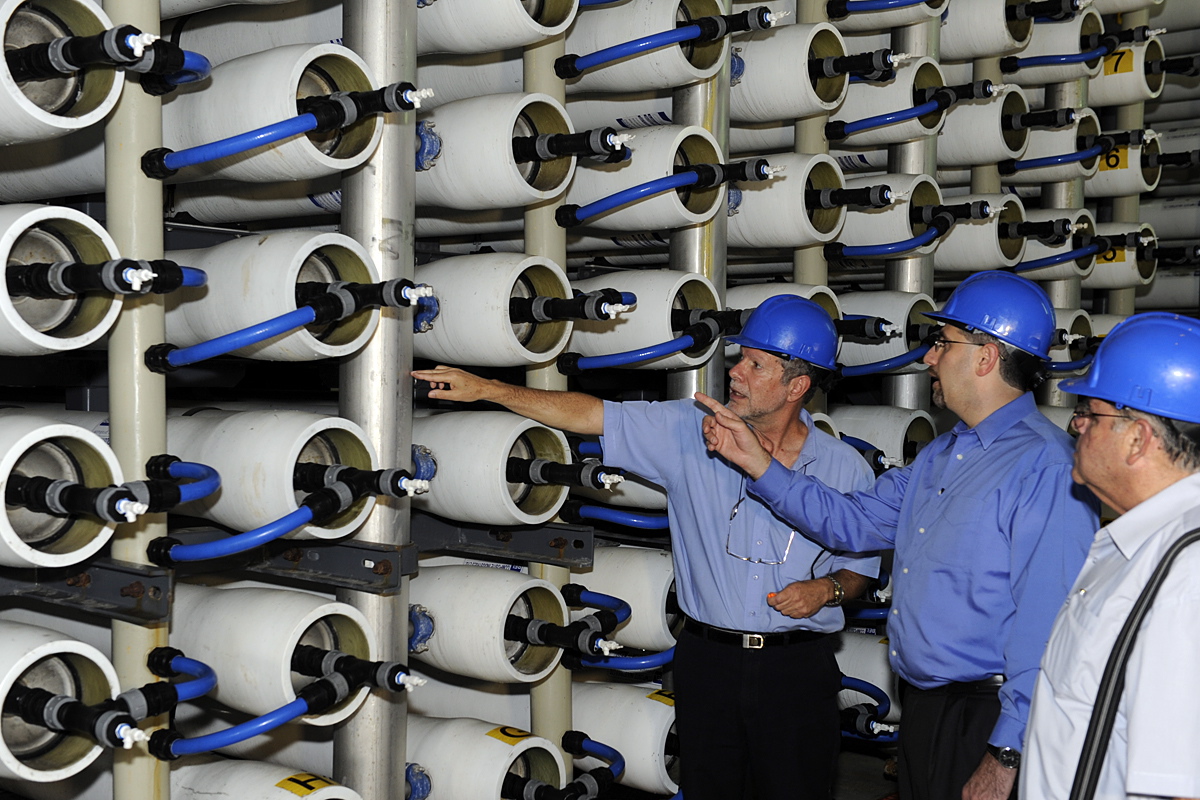
The Saudi Water Conversion Corporation, SWCC, operates 30 desalination plants producing 11.5 million cubic meters of fresh water per day, according to SWCC’s published capacity data. Before the war, this infrastructure was a public utility. During the war, it is a strategic asset — one of the most critical in the country, since a successful Iranian strike on desalination capacity would threaten the water supply of millions. The war has forced the Kingdom to think about its civilian infrastructure in military terms, which has, paradoxically, increased investment in the kind of boring, essential, unglamorous infrastructure that actually constitutes economic development.
The war ended Saudi neutrality, but it may have also ended the distraction. For years, the international conversation about Saudi Arabia centered on whether The Line would actually be built, whether NEOM would succeed, whether the Kingdom could attract enough tourists. These were interesting questions. They were not, however, the right questions. The right questions — Can Saudi Arabia defend itself? Can it feed and water its population? Can it export its oil without depending on a single chokepoint? Can its citizens fill the jobs its economy creates? — are now being answered, under pressure, in real time. The answers, so far, are more encouraging than anyone expected.
This is not an endorsement of war as economic policy. The costs — human, diplomatic, financial, psychological — are real and severe, and they deserve their own accounting. But the argument that the Iran war is destroying Vision 2030 is wrong. The war is destroying the version of Vision 2030 that was designed for magazine covers. It is building the version that was designed for survival.
The Price That Doesn’t Appear on Any Balance Sheet
The economic acceleration documented in this analysis comes at costs that GDP figures do not capture. Saudi Arabia’s three-week war with Iran has inflicted damage that no defense contract, port expansion, or stock market rally can offset.
The tourism industry, which generated $36 billion in revenue in 2025 according to the Saudi Tourism Authority, has effectively ceased to function. International arrivals, which the Kingdom had grown to 108 million in 2025, have collapsed. The hotels, restaurants, tour operators, and entertainment venues that employed an estimated 1.2 million workers face an indefinite contraction. The Red Sea tourism development, Diriyah Gate, and the entertainment megaprojects that were supposed to transform Saudi Arabia’s international identity are frozen — not restructured, not pivoted, but stopped. Yet the $150 billion entertainment infrastructure that Saudi Arabia built before the war — from Qiddiya’s theme parks to Riyadh Season’s twenty million annual visitors — represents sunk capital that will resume generating returns the moment regional security stabilises.
The human cost, while less quantifiable than economic indicators, is present in every Saudi household. Air raid sirens in Riyadh, Dammam, and Jeddah have become routine. The Ministry of Interior reported that 340,000 residents of Dhahran, Dammam, and Al Khobar in the Eastern Province were temporarily relocated in the first week of the war due to proximity to oil infrastructure that constituted likely Iranian targets. Schools in the Eastern Province operated on remote learning for the first two weeks of March, according to the Ministry of Education. The psychological cost of raising children under missile threat does not appear in any economic data series, but it is real.
The diplomatic cost is equally significant. Saudi Arabia’s pre-war foreign policy, built on strategic ambiguity and multi-alignment — maintaining relationships with Washington, Beijing, Moscow, and Tehran simultaneously — has been replaced by wartime alignment with the United States and, to a lesser extent, the United Kingdom and France. The American military commitment to the Gulf has deepened, bringing with it the dependency that the Saudi royal family has spent decades trying to reduce. The Chinese drone deal suggests Riyadh is trying to maintain some strategic diversification, but the structural reality of the wartime alliance constrains post-war diplomatic flexibility in ways that will take years to unwind.
The fiscal sustainability question remains open. The current oil price surge is funding the wartime acceleration, but the Kingdom’s 2026 defense budget of $78 to $80 billion, combined with infrastructure protection costs, economic stimulus measures, and the revenue loss from frozen megaprojects and collapsed tourism, creates fiscal demands that will persist after oil prices normalize. The IMF’s pre-war fiscal sustainability analysis for Saudi Arabia, published in the October 2025 Article IV consultation, projected a balanced budget at $82 per barrel. The war has likely raised that breakeven to $88 to $92 per barrel, according to revised estimates by Jadwa Investment, Riyadh’s largest independent research firm. If post-war oil prices settle in the $85 to $95 range — the Goldman Sachs rapid ceasefire scenario — the fiscal position will be tight.
The most consequential unknown is duration. The economic dynamics described in this analysis assume a conflict measured in weeks to months. A war measured in years — a scenario that cannot be dismissed — would exhaust even Saudi Arabia’s substantial reserves, destroy rather than restructure the labor market, and turn the defense spending surge from an industrial catalyst into a fiscal burden. The wartime acceleration of Vision 2030 is real. Its sustainability depends entirely on a peace that no one can yet guarantee.
Saudi Arabia entered this war as a country trying to become something new. Twenty-two days later, it is discovering that the crisis is building more of what it wanted to become than the plan itself was delivering — but at a price measured in categories that economists prefer to leave as footnotes. The war MBS didn’t want is building the economy he did. Whether the construction is worth the cost is a question that only the peace will answer.
And when that peace arrives, it may find that the Crown Prince has already secured the outcome that matters most. A subsequent analysis of how MBS has already won the post-war order reveals that the defense pact, nuclear deal, and OPEC leverage locked in during the conflict have positioned Saudi Arabia to dominate the peace before a single ceasefire clause is written.
Frequently Asked Questions
Is the Iran war destroying Saudi Arabia’s Vision 2030 economic program?
No. The war is destroying the public-facing components of Vision 2030 — megaprojects, tourism, entertainment — while accelerating its structural components: defense localization, financial sector development, logistics infrastructure, workforce nationalization, and AI investment. NEOM and The Line were already being restructured before the conflict began. The sectors that are accelerating are those that Vision 2030’s architects identified as structurally critical to long-term diversification, according to the program’s original strategic documents published by the Council of Economic and Development Affairs.
How much is the war costing Saudi Arabia?
Direct military costs have not been officially disclosed, but the 2026 defense budget was already set at approximately $78 to $80 billion, according to SIPRI estimates, representing 7.3 percent of GDP. The cost of intercepting 575-plus drones and 49 missiles, at an estimated average interceptor cost of $1 to $4 million per engagement based on RUSI analysis of Patriot and other system costs, suggests direct intercept costs of $1 to $3 billion. However, the oil price surge — from approximately $76 to $110 per barrel — is generating roughly $119 million per day in additional revenue, meaning the Kingdom is currently earning more from the war’s oil market impact than it is spending on defense.
Why is the Saudi stock market rising during the war?
The Tadawul has outperformed regional peers for three reasons documented by market analysts at Jadwa Investment and Capital Economics. First, Saudi Arabia’s geographic depth — Riyadh sits 800 kilometers from known Iranian launch sites, compared to 250 kilometers for Bahrain — reduces physical risk to economic infrastructure. Second, Saudi Arabia’s $475 billion in central bank reserves, as reported by the Saudi Central Bank, provides confidence in currency stability. Third, the Kingdom’s ability to export oil via west coast pipelines and ports means it is uniquely positioned to capture the wartime oil price premium, unlike Gulf neighbors whose exports are blocked by the Hormuz closure.
Whether that outperformance survives the Tadawul’s reopening after the eight-day Eid break remains the defining question for Saudi equity investors, given the escalation that occurred while the exchange was dark.
Can Saudi Arabia’s defense industry actually achieve 50 percent localization by 2030?
GAMI set the 50 percent target in its 2021 defense industrial strategy. Before the war, the target appeared ambitious given that approximately 80 percent of defense procurement went to foreign suppliers. The wartime acceleration — including the SAMI Land Industrial Complex’s 1,500-vehicle annual capacity, the $5 billion Chinese combat drone deal with technology transfer provisions, the HEET armored vehicle program, and the RUKN supply chain initiative — has created conditions under which the International Institute for Strategic Studies assessed in March 2026 that 60 to 65 percent localization by 2030 is plausible. The critical factor is whether wartime procurement urgency translates into sustained peacetime industrial policy.
What happens to Saudi Arabia’s economy when the war ends?
Post-war economic dynamics will depend on the speed and terms of the peace. Oil prices will decline from current levels but are projected to remain elevated at $85 to $95 per barrel in a rapid ceasefire scenario, according to Goldman Sachs’ March 2026 commodities outlook. Financial institutions that relocated to Riyadh are unlikely to leave given the sunk cost of relocation infrastructure. Defense manufacturing facilities represent permanent industrial capacity. The primary risks are fiscal — Jadwa Investment estimates that Saudi Arabia’s budget breakeven oil price has risen from $82 to approximately $88 to $92 per barrel due to wartime spending — and in the tourism sector, where recovery of international arrivals may take two to three years as security perceptions normalize.
How has the Strait of Hormuz closure affected Saudi oil exports?
Saudi Arabia is the only major Gulf oil exporter with pipeline infrastructure capable of bypassing the Strait of Hormuz. The Petroline system, connecting eastern oil fields to the Red Sea terminal at Yanbu, has a theoretical capacity of 5 to 7 million barrels per day. Yanbu exports surged from 1.1 million barrels per day in February to 2.2 million barrels per day in the first nine days of March, according to Kpler tanker tracking data. While this represents a significant increase, it remains well below the pipeline’s capacity, meaning Saudi Arabia has substantial room to increase west coast exports if the conflict continues or expands.