RIYADH — A ceasefire in the Iran war will not end Saudi Arabia’s crisis. The missiles will stop, the air raid sirens will fall silent, and Riyadh’s diplomatic machinery will grind into motion — but the economic damage inflicted over the past two weeks has created a recovery challenge that stretches years beyond the last salvo. Iran’s mines sit on the floor of the Strait of Hormuz. Insurance companies have cancelled war risk coverage for the entire Persian Gulf. International investors are pulling capital from a region that promised the future and delivered a war zone. The question dominating boardrooms from London to Tokyo is not when the shooting stops, but how long the aftermath will last — and whether Saudi Arabia’s $3.3 trillion transformation agenda can survive what comes next.
Two weeks of Iranian missile and drone strikes have caused infrastructure damage that Aramco can repair in months. The deeper wounds — collapsed investor confidence, a mined strait that could take a year to clear, insurance rates that will not normalize for eighteen months, and a trust deficit between Gulf states and Tehran that may never heal — will define Saudi Arabia’s trajectory for the rest of this decade. Recovery from armed conflict, according to World Bank analysis, leaves GDP below pre-war trend levels in nearly half of all cases even twenty-five years after the fighting ends. Saudi Arabia’s challenge is not rebuilding what the missiles destroyed. It is rebuilding the credibility that made Vision 2030 possible in the first place.
Table of Contents
- Why Won’t a Ceasefire Fix Saudi Arabia’s Economy?
- How Long Will It Take to Clear the Mines From Hormuz?
- The Insurance Crisis That Will Outlast Every Missile
- What Happens to Saudi Tourism After the War?
- Can Vision 2030 Survive a Two-Year Setback?
- The Recovery Clock — Mapping the Post-War Reconstruction Timeline
- Why the Financial Sector May Be Slowest to Recover
- Who Pays for Reconstruction When the Victim Is Rich?
- The Trust Deficit That No Treaty Can Fix
- What Historical Precedents Reveal About Gulf War Recovery
- The Contrarian Case for Why This War May Accelerate Saudi Modernization
- Frequently Asked Questions
Why Won’t a Ceasefire Fix Saudi Arabia’s Economy?
A ceasefire agreement between Iran and the US-led coalition will halt active military operations but cannot reverse the economic damage already embedded in global markets, supply chains, and risk calculations. The recovery from the 2026 Iran war will unfold across at least five distinct dimensions — military, financial, infrastructural, economic, and diplomatic — each operating on its own timeline and none resolving in less than six months.
The immediate military threat from Iranian ballistic missiles and drone swarms will end when a ceasefire takes effect. Saudi Arabia’s air defense network, which has intercepted hundreds of incoming projectiles since February 28, can stand down from sustained combat operations. But the mines Iran has planted in the Strait of Hormuz will not vanish with a diplomatic handshake. The insurance companies that cancelled war risk coverage for every vessel transiting the Persian Gulf will not reinstate policies based on a press conference. The foreign executives who evacuated their regional headquarters — Goldman Sachs from Dubai, HSBC from Qatar — will not return until their risk committees certify the region as stable, a process that typically requires twelve to eighteen months of incident-free operations.
The multidimensional nature of this recovery challenge is what makes it fundamentally different from a natural disaster or a single terrorist attack. The 2019 Abqaiq-Khurais drone strike, the most serious previous attack on Saudi energy infrastructure, caused temporary disruption but no lasting structural damage to investor confidence. The 2026 conflict has shattered three pillars simultaneously: physical security (daily missile strikes on Saudi territory), maritime freedom (the Strait of Hormuz effectively blockaded), and regional stability (the entire GCC under fire for the first time in its history). Rebuilding one pillar depends on rebuilding all three — and the slowest determines the pace.
How Long Will It Take to Clear the Mines From Hormuz?
Clearing the Strait of Hormuz of Iranian naval mines will take between six and eighteen months after hostilities end, depending on the density and sophistication of the minefields laid. Iran possesses an estimated stockpile of 2,000 to 5,000 naval mines, ranging from simple contact devices to EM-52 rocket-propelled rising mines capable of destroying the largest supertankers, and has deployed what US intelligence assesses as “a few dozen” in the strait’s navigable channels since March 10.
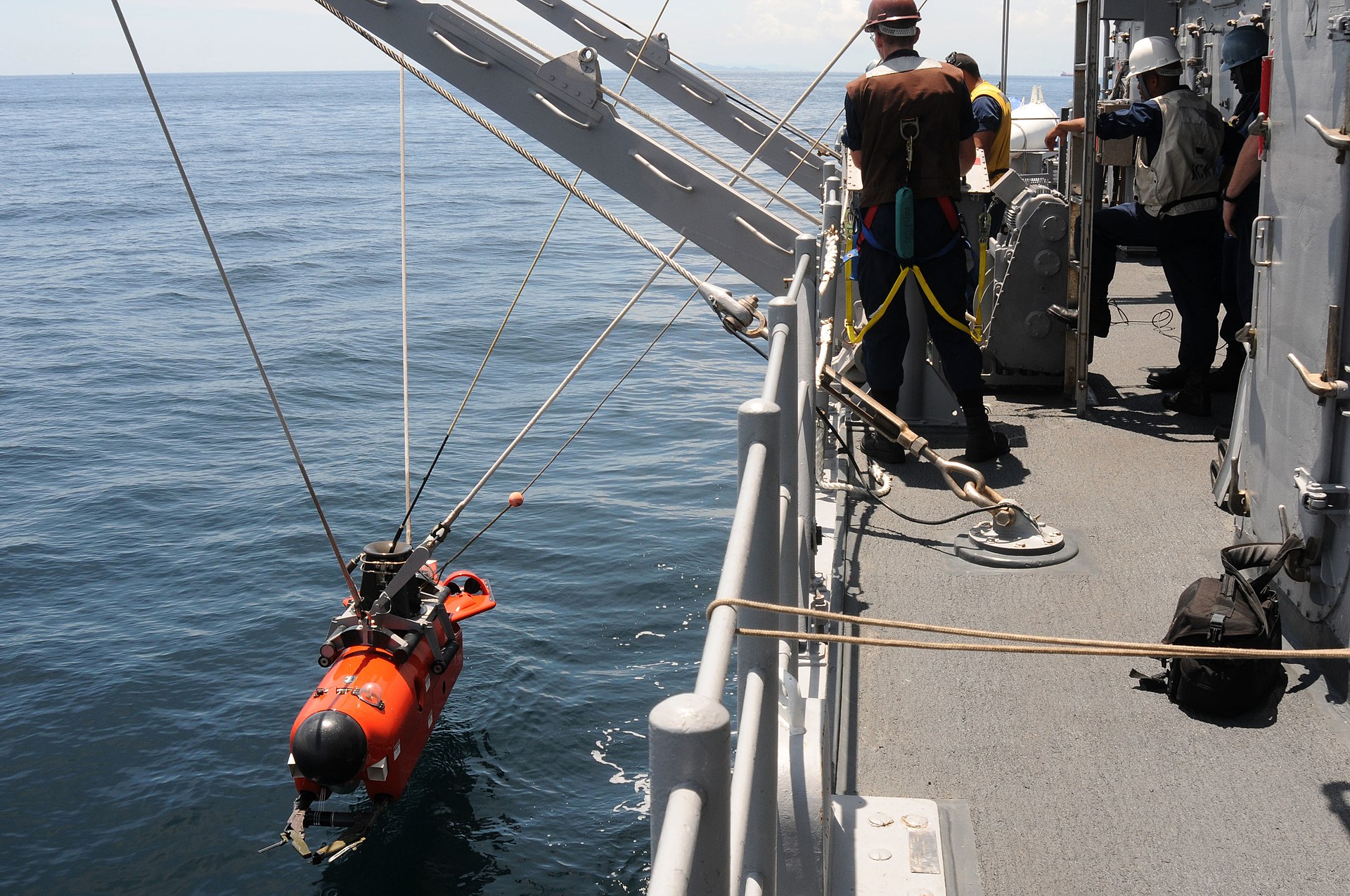
The mine warfare challenge facing coalition naval forces is compounded by a critical timing gap. The US Navy withdrew its four decommissioned Avenger-class mine countermeasures ships from the Middle East in January 2026, replacing them with three Independence-class Littoral Combat Ships — USS Canberra, USS Santa Barbara, and USS Tulsa — now forward-deployed in Bahrain. Naval officials and defense analysts have acknowledged that the new LCS mine countermeasures mission modules are not yet fully capable of matching the reliability of the vessels they replaced. The Navy’s own mine countermeasures suite was declared operationally ready only in May 2023, and the transition remains incomplete.
Historical precedent offers sobering guidance. Operation Earnest Will, the US naval escort operation during the Iran-Iraq Tanker War, lasted fourteen months from July 1987 to September 1988. During that operation, the very first convoy encountered Iranian mines — the reflagged Kuwaiti tanker MV Bridgeton struck a mine on July 24, 1987, just hours into the first escort mission. At peak deployment, the US committed six ocean-going minesweepers, five riverine minesweepers, and as many as thirty vessels to the operation. The current US mine countermeasures presence in the Gulf consists of three LCS ships.
Iran retains an estimated 80 to 90 percent of its small boats and mine-laying capability, according to US Central Command assessments, despite the destruction of 16 Iranian minelaying vessels on March 10. The IRGC Navy can deploy mines from small boats, helicopters, midget submarines, and its three Kilo-class submarines — the latter particularly dangerous because they can lay EM-52 rising mines covertly on the seabed. Even after the shooting stops, the mine-clearing operation will require methodical lane-by-lane sweeping of the strait’s navigable channels, verification passes, and sustained surveillance to ensure Iran does not reseed cleared areas. US Energy Secretary Chris Wright suggested on March 8 that normal traffic could resume in “a few weeks, not months.” Mine warfare experts consider that assessment optimistic by a factor of ten.
The Insurance Crisis That Will Outlast Every Missile
The maritime insurance market’s response to the Iran war has created a financial blockade that may prove more durable than the physical one. Five major Protection and Indemnity clubs — Gard, Skuld, NorthStandard, the London P&I Club, and the American Club — issued notices cancelling war risk coverage for vessels in the Persian Gulf effective March 5, 2026. War risk premiums for the few remaining underwriters willing to quote surged from 0.15 to 0.20 percent of hull and machinery value to 1.25 percent within days, according to insurance broker Marsh.
For a modern Very Large Crude Carrier valued at approximately $120 million, that premium increase translates from roughly $200,000 per voyage to $1.5 million — a sevenfold increase that makes Gulf shipping economically unviable for all but the most essential cargoes. The shadow fleet of vessels operating without Western insurance has partially filled the gap for Iranian oil exports, but legitimate commercial shipping has collapsed.
Insurance markets do not respond to ceasefire announcements. They respond to sustained periods without incidents, meaningful political progress, and verified reductions in threat capability. The Kpler maritime intelligence firm’s analysis of Red Sea shipping disruptions by Houthi forces in 2024-2025 provides a relevant benchmark: insurance rates in the Red Sea remained elevated for over twelve months after the peak of attacks, normalizing only after a sustained decline in hostile activity and improved naval escort coverage. The Persian Gulf crisis is significantly more severe — involving state-on-state warfare, naval mining, and a complete shutdown of the world’s most important oil chokepoint — suggesting a normalization timeline of twelve to twenty-four months.
The downstream consequences cascade through the entire energy supply chain. Every additional dollar on shipping insurance adds roughly $0.02 per barrel to the delivered cost of Gulf crude, according to maritime economics analysis. With approximately 17 million barrels per day normally transiting Hormuz, even a partial normalization that brings premiums down to 0.5 percent of hull value would impose a persistent cost premium on Gulf oil exports equivalent to billions of dollars annually. Saudi Aramco can absorb this cost. Smaller Gulf producers and the petrochemical sector face a structural competitive disadvantage against rivals shipping from the Americas, West Africa, or through pipelines that bypass maritime chokepoints entirely.
What Happens to Saudi Tourism After the War?
Saudi Arabia’s $800 billion investment in tourism infrastructure — the centrepiece of its post-oil economic transformation — faces a recovery timeline measured in years rather than months. International arrivals to the Middle East are projected to drop by 11 to 27 percent in 2026, according to tourism industry analysis, equivalent to 23 to 38 million fewer visitors than originally forecast. Over 23,000 flights have been cancelled since the escalation began on February 28. At the ITB Berlin trade show in early March 2026, Saudi Arabia’s once-dominant tourism presence appeared, in the words of industry observers, “subdued.”
The damage extends beyond cancelled flights and empty hotel rooms. Saudi Arabia’s entertainment and events calendar — Formula E in Jeddah, the Asian Winter Games at Trojena, international concerts, and sporting events that collectively anchor the Kingdom’s brand as a destination — has been gutted. The Trojena Winter Games were already postponed indefinitely in January 2026 as NEOM scaled back, and the war has eliminated any prospect of rescheduling major international events in 2026.
Tourism confidence recovery follows a well-documented pattern. Research across post-conflict destinations — from Sri Lanka after its civil war to Egypt after 2013 — consistently shows a twelve to twenty-four month lag between the end of hostilities and the return of international visitor numbers to pre-conflict levels. For premium tourism segments that Saudi Arabia is targeting — luxury, cultural, and experiential travel — the recovery is typically slower, because high-spending visitors have the widest choice of alternative destinations and the lowest tolerance for residual risk.
The US State Department’s March 8 decision to order non-emergency government employees to leave Saudi Arabia and issue a Level 3 travel advisory will remain in institutional memory long after it is formally downgraded. Travel advisories function as a ratchet: they are raised quickly but lowered slowly, typically requiring six months of stability before revision. Corporate travel policies, which many international firms use to restrict employee movement to regions with elevated advisories, add another layer of friction. The Saudi Tourism Authority’s target of 150 million visits per year by 2030 now looks less like ambition and more like fantasy unless the recovery trajectory defies historical precedent.
Can Vision 2030 Survive a Two-Year Setback?
Vision 2030 was already being recalibrated before the first Iranian missile struck Saudi territory. NEOM’s flagship project, The Line, had been suspended and its timeline deferred to a multi-decade horizon with 2045 now cited as a possible full completion date. The Mukaab cube project in downtown Riyadh was paused. The Trojena ski resort lost its Asian Winter Games hosting rights to Kazakhstan. Saudi Finance Minister Mohammed Al-Jadaan publicly acknowledged in late 2025 that the Kingdom planned to revise its Vision 2030 strategy, with megaprojects scaling down and spending redirected toward more immediately productive investments.
The war has accelerated this recalibration from a managed evolution into an emergency restructuring. The Public Investment Fund, Saudi Arabia’s $1.15 trillion sovereign wealth vehicle and the financial engine of Vision 2030, has shifted to a wartime footing. With 80 percent of its assets allocated domestically and 55 percent in alternative investments — many tied to real estate, infrastructure, and entertainment assets now directly affected by the conflict — the PIF faces a portfolio-wide value adjustment that no quarterly report can obscure.
Foreign direct investment, the critical complement to PIF capital, faces the steepest recovery challenge. Saudi Arabia is targeting SAR 388 billion ($100 billion) in annual FDI by 2030 — more than three times the record inflows of SAR 119 billion achieved in 2024. That target required sustained stability, regulatory modernization, and an aggressive international marketing campaign. The AGBI analysis of war-era investment patterns found that “in the short term lots [of investments] will be stalled, but in the medium term it depends on whether Iran ends up somewhere stable and non-threatening.” Sectors most affected include tourism, financial services, logistics, and technology — precisely the non-oil sectors that Vision 2030 was designed to grow.
The new Saudi investment law that came into force in February 2025, designed to strengthen protections for foreign investors, now faces its first real-world test under the worst possible conditions. International investment follows a herd dynamic: when one major firm pauses or exits, others follow. The challenge for Crown Prince Mohammed bin Salman is not merely restoring pre-war FDI levels but overcoming the narrative shift from “Saudi Arabia is the world’s most ambitious investment destination” to “Saudi Arabia is a war zone in a volatile region.”
The Recovery Clock — Mapping the Post-War Reconstruction Timeline
The post-war recovery will not unfold as a single event but as five overlapping timelines, each governed by different dynamics and bottlenecks. The Recovery Clock framework maps these dimensions against estimated timelines based on historical precedent, current conditions, and structural analysis of each sector’s dependencies.
| Recovery Dimension | Key Metric | Current Status | Estimated Timeline to Normalization | Primary Bottleneck |
|---|---|---|---|---|
| Military Security | Zero hostile fire incidents for 90+ days | Active conflict, daily strikes | 3-6 months post-ceasefire | Ceasefire compliance verification |
| Maritime Freedom | Hormuz transit traffic at 80%+ of pre-war levels | Effectively blockaded, ~5% of normal traffic | 6-18 months post-ceasefire | Mine clearing operations |
| Financial Normalization | War risk insurance at pre-war rates; credit spreads normalized | Premiums up 700%; P&I coverage cancelled | 12-24 months post-ceasefire | Sustained incident-free period |
| Economic Confidence | FDI inflows at 80%+ of pre-war trajectory | Investment stalled; corporate evacuations underway | 18-36 months post-ceasefire | Travel advisory downgrades; narrative shift |
| Diplomatic Trust | Restored Gulf-Iran diplomatic relations; security architecture | GCC declares “huge trust gap lasting years” | 5-10+ years | Regime change or generational leadership shift in Tehran |
The framework reveals a critical insight: the dimensions are not independent. Maritime freedom cannot normalize until military security is assured. Financial normalization depends on maritime freedom (shipping must be safe before insurers reinstate coverage). Economic confidence depends on financial normalization (investors need functioning capital markets and insurable supply chains). And diplomatic trust — the slowest dimension — governs the long-term sustainability of all other recoveries, because a renewed threat of conflict can collapse every other dimension simultaneously.
This cascading dependency means the actual recovery timeline is not the average of all dimensions but is constrained by the slowest credible bottleneck. If mine clearing takes twelve months, financial normalization cannot begin in earnest until month six at the earliest (when shipping lanes are partially cleared and incident-free). Economic confidence then follows six to twelve months behind financial normalization. The effective full recovery timeline — the point at which Saudi Arabia’s economy operates as if the war never happened — extends to four to six years under optimistic assumptions and potentially beyond a decade under pessimistic ones.
Why the Financial Sector May Be Slowest to Recover
Saudi Arabia’s financial sector entered the war in its strongest position in decades. Moody’s had upgraded the Kingdom’s sovereign credit rating to Aa3 with a stable outlook. Fitch affirmed its A+ rating. The PIF held $1.15 trillion in assets under management. The Tadawul stock exchange was attracting international listings. Riyadh’s King Abdullah Financial District was positioning to rival Dubai as the region’s financial capital. All of this progress now sits on a knife edge.
Credit ratings agencies operate on a lagging basis — they assess structural trends rather than responding to breaking news. The current ratings reflect Saudi Arabia’s pre-war fiscal position, including government debt-to-GDP ratios and sovereign net foreign assets “considerably stronger than both the A and AA medians,” according to Fitch. But a sustained conflict that draws down reserves, reduces non-oil revenue, and impairs the PIF’s domestic portfolio will eventually trigger outlook revisions and potential downgrades. Each notch of downgrade raises the Kingdom’s borrowing costs by approximately 15 to 25 basis points across its sovereign debt portfolio — a significant fiscal drag when Saudi Arabia was already running budget deficits projected to narrow to 3.6 percent of GDP by 2027.
The banking sector faces a more immediate stress test. Saudi Arabia’s wartime alliance structure has drawn international support, but the financial sector operates on confidence, not alliances. The departure of Goldman Sachs from Dubai and HSBC from Qatar signals to every international financial institution that the Gulf’s risk profile has fundamentally changed. Riyadh may benefit in the short term from capital fleeing other Gulf centres — the “last man standing” dynamic — but this is a hollow victory if the entire region’s risk premium rises permanently.
The financial migration pattern also creates a structural vulnerability: institutions that relocate to Riyadh during wartime may leave once conditions stabilize elsewhere, creating a boom-bust cycle in Saudi Arabia’s nascent financial services sector. The deeper risk is that international investors conclude the Gulf is structurally unstable — not because of any single conflict, but because the region’s geography makes it permanently vulnerable to Iranian disruption. If that perception takes hold, the recovery premium embedded in Saudi debt and equity markets could persist indefinitely.
Who Pays for Reconstruction When the Victim Is Rich?
Saudi Arabia’s reconstruction challenge is unique among post-conflict recoveries because the Kingdom can, in principle, fund its own rebuilding. With $1.15 trillion in PIF assets, approximately $440 billion in central bank reserves, and the paradoxical revenue boost from oil prices that surged above $110 per barrel during the conflict, Saudi Arabia does not need a Marshall Plan. It needs a strategy.
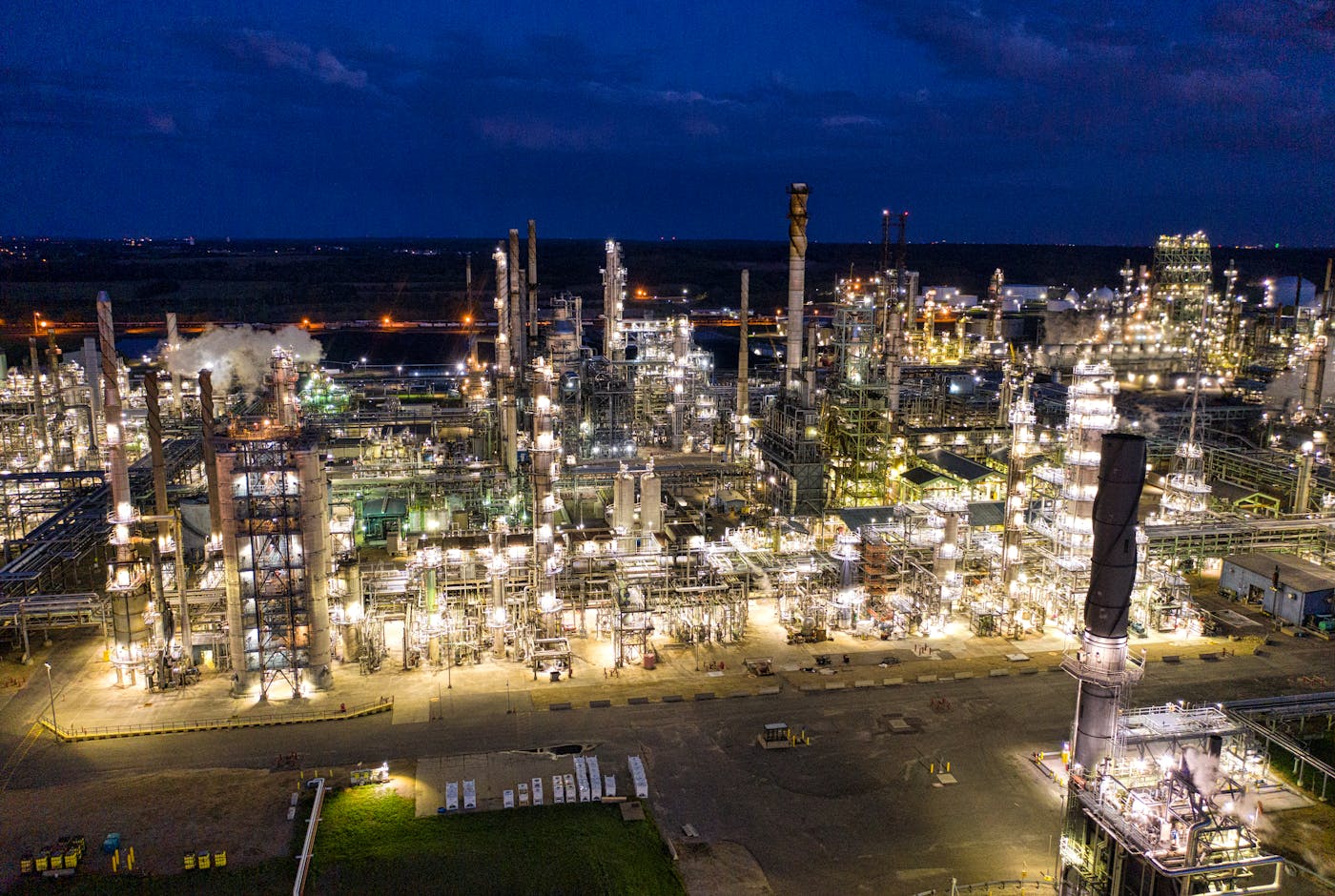
The physical infrastructure repair bill is substantial but manageable. Aramco’s Ras Tanura refinery — the Kingdom’s largest, processing over 500,000 barrels per day — was shut down after drone strikes on March 2 but reopened within approximately one week after repairs. The Shaybah oil field, targeted by 21 Iranian drones that were intercepted over the Empty Quarter, sustained minimal damage. The pattern from the 2019 Abqaiq-Khurais attack holds: Saudi oil infrastructure is hardened, dispersed, and backed by Aramco’s engineering capabilities. Physical repair costs from the current conflict are estimated in the low single-digit billions of dollars — significant, but a rounding error in the context of Saudi Arabia’s national balance sheet.
The real reconstruction cost lies in intangible assets: brand equity, investor confidence, institutional credibility, and human capital. Vision 2030’s success depends not on building physical infrastructure (Saudi Arabia can pour concrete at world-record pace) but on attracting the international talent, capital, and partnerships that transform concrete into economic value. These intangible assets depreciate faster than steel and take longer to rebuild.
Kuwait’s experience after the 1991 Gulf War offers a partial analogy. The physical reconstruction — capping 650 burning oil wells and rehabilitating 18 damaged gathering centres — was completed in nine months at a cost of approximately $5 billion. Kuwait’s oil production returned to pre-war levels within two years. But Kuwait’s broader economic recovery, particularly its financial sector and foreign investment environment, took the better part of a decade to fully normalize. And Kuwait in 1991 faced a simpler recovery: the threat (Iraqi occupation) was definitively removed. Saudi Arabia in 2026 faces a threat (Iranian aggression) that a ceasefire will pause but not eliminate — because Iran’s mine stockpile, missile arsenal, and proxy network will survive any negotiated settlement.
The Trust Deficit That No Treaty Can Fix
The diplomatic dimension of the post-war recovery operates on a fundamentally different timeline from every other dimension — and it may never fully resolve. The GCC’s extraordinary ministerial council, convened on March 1 to address what it called “Iranian aggression against the GCC,” declared the attacks “treacherous” and “heinous” and warned of consequences lasting “years to come.” That language was not diplomatic boilerplate. It reflected a genuine rupture in a relationship that had only recently been painstakingly rebuilt.
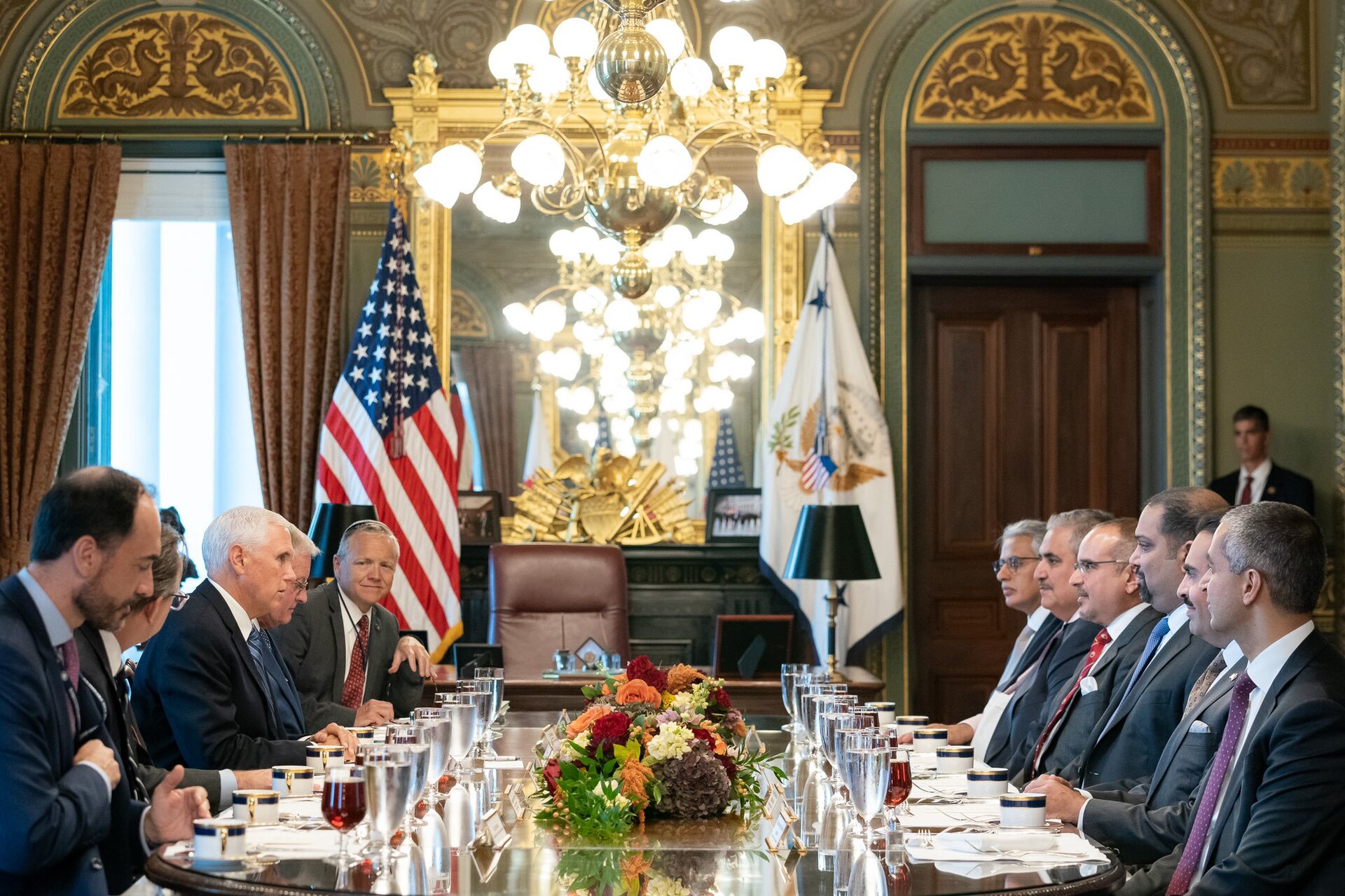
The 2023 Saudi-Iranian rapprochement, brokered by China and hailed as a diplomatic breakthrough, established embassies, restored flights, and created a framework for managing tensions. The Iran war destroyed all of it in less than seventy-two hours. Tehran’s decision to strike Saudi territory — including residential areas, energy infrastructure, and the diplomatic quarter in Riyadh — crossed a threshold that no future diplomatic initiative can easily bridge. Mojtaba Khamenei’s first public statement as Iran’s new Supreme Leader, vowing to hold Hormuz closed, reinforced the assessment that Iran’s post-Khamenei leadership may be more aggressive, not less.
UN Security Council Resolution 2817, adopted on March 11 with thirteen votes in favour and only Russia and China abstaining, condemned Iran’s attacks “in the strongest terms” and demanded an “immediate cessation.” The resolution, endorsed by 135 UN member states, provides a legal framework for holding Iran accountable — but legal frameworks do not rebuild trust. The GCC states entered this conflict having maintained that their territories would not be used to launch attacks against Iran and having pursued active diplomatic channels to prevent escalation. Iran attacked them anyway. The lesson Gulf leaders have drawn is not that diplomacy failed, but that Iranian assurances are structurally unreliable.
The post-war regional security architecture will need to address a fundamental question: what replaces the pre-war assumption that deterrence and diplomacy could manage Iranian threats? MBS’s approach to the ceasefire negotiations will shape whether the answer involves a US-backed security guarantee, a GCC collective defense mechanism with real military teeth, or an acceptance that the Gulf will live under permanent threat — with the economic costs that entails.
What Historical Precedents Reveal About Gulf War Recovery
Historical analysis of post-conflict economic recovery provides a framework for estimating Saudi Arabia’s trajectory — and the data is not encouraging. Research published by the Centre for Economic Policy Research found that while approximately one-third of post-conflict economies return GDP per capita to pre-war trend levels within five years, nearly half remain below trend even twenty-five years after a violent conflict ends. The determining factors are the duration of conflict, the degree of institutional damage, and the extent to which the underlying cause of conflict is resolved.
Kuwait 1991 represents the best-case scenario for energy infrastructure recovery. Iraqi forces sabotaged over 700 oil wells, storage tanks, refineries, and facilities — destroying approximately 85 percent of wells in every major Kuwaiti oil field. The reconstruction effort was heroic: privately contracted crews extinguished and capped 650 burning wells in nine months at a cost of $1.5 billion. Rehabilitation of the broader oil industry, including gathering centres and refineries, cost an additional $5 billion. Kuwait’s oil production returned to pre-invasion levels of approximately 2 million barrels per day by 1993 — just two years after liberation.
But Kuwait’s broader economic recovery was far slower. The financial sector required years to stabilize. Foreign investment took nearly a decade to return to pre-war patterns. Kuwait’s stock market did not recover its pre-invasion valuation in real terms until the early 2000s. And this occurred in a context where the threat had been definitively eliminated — Iraq’s military was destroyed, Saddam Hussein was contained by international sanctions and no-fly zones. Saudi Arabia faces no such closure.
Syria provides the worst-case benchmark. The World Bank estimated Syria’s post-conflict reconstruction costs at $216 billion after more than thirteen years of fighting, with infrastructure accounting for 48 percent of total damage ($52 billion), followed by residential buildings ($33 billion) and non-residential buildings ($23 billion). Saudi Arabia’s physical damage is orders of magnitude less severe — but the comparison is instructive in one respect: Syria’s pre-war economy was approximately $60 billion in GDP. Its reconstruction cost is 3.6 times its former economic output. Saudi Arabia’s GDP exceeds $1 trillion, meaning even proportionally modest economic damage translates to enormous absolute costs.
Iraq after 2003 offers the most troubling precedent for institutional recovery. Two decades after the invasion, Iraq’s GDP per capita remains below its pre-war trend, its institutional capacity is degraded, and its economy remains dependent on oil exports through infrastructure that has never been fully modernized. The lesson is not that Saudi Arabia will follow Iraq’s path — it will not — but that conflicts create institutional scars that persist long after physical reconstruction is complete. The question for Saudi Arabia is whether the institutional damage from the 2026 conflict — disrupted regulatory timelines, paused investment projects, broken diplomatic relationships, collapsed tourism branding — will leave permanent marks on Vision 2030 or prove to be a temporary setback from which the Kingdom bounces back stronger.
The Contrarian Case for Why This War May Accelerate Saudi Modernization
The conventional narrative holds that the Iran war has set Saudi Arabia back by years — derailing Vision 2030, frightening investors, and exposing the Kingdom’s vulnerability. But there is a credible contrarian case that this conflict, precisely because of its severity, may accelerate the transformation it appeared to interrupt.
Wars expose vulnerabilities that peacetime complacency conceals. Saudi Arabia’s $5 billion deal to build Chinese combat drones in Jeddah, signed during the conflict, represents a forced acceleration of domestic defense manufacturing that pre-war bureaucratic inertia had delayed for years. The wartime environment has compressed decision-making timelines across the Saudi government, enabling procurement decisions and strategic partnerships that would have languished in committee review for months under normal conditions.
The energy infrastructure rerouting forced by the Hormuz blockade has demonstrated that Saudi Arabia’s East-West pipeline and Red Sea export infrastructure can function as a strategic bypass — a capability that was theoretical before the war and is now battle-tested. Aramco’s emergency rerouting of oil exports away from the Gulf, while costly and disruptive, has proven the resilience of alternative supply routes that the company had invested in but never needed to use at scale. Post-war Saudi Arabia will have a diversified export infrastructure that is more resilient than the pre-war configuration.
The foreign investment that survives the conflict filter will be more durable than pre-war capital. Investors who maintained their Saudi commitments through a shooting war are, by definition, more committed than those who allocated capital during a period of artificial calm. The post-war investment landscape will feature fewer speculative participants and more strategic partners — a composition that actually serves Vision 2030’s long-term objectives better than a flood of fair-weather capital.
The Marshall Plan analogy, while imperfect, contains a relevant insight. Post-war Europe’s economic miracle was not achieved despite the devastation of World War II but was partly enabled by it — because the destruction of obsolete infrastructure created space for modern reconstruction, and the shared experience of crisis generated the political will for reforms that peacetime populations would have resisted. Saudi Arabia’s pre-war economy contained significant inefficiencies: overreliance on Gulf maritime routes, underinvestment in domestic defense manufacturing, and a Vision 2030 that had become bloated with prestige megaprojects (The Line, the Mukaab) that diverted resources from productive investments. The war is forcing a rationalization that Saudi economic planners needed but could not politically justify in peacetime.
This contrarian case does not minimize the war’s costs, which are enormous and real. It argues that the medium-term trajectory of Saudi economic development may be higher than the pre-war trend precisely because the conflict is forcing structural improvements that complacency would have prevented. The Kingdom that emerges from this war — with diversified export routes, domestic defense manufacturing, battle-tested infrastructure, and committed rather than speculative investors — may be more resilient than the Kingdom that entered it. Central to this resilience is what analysts are calling the Restraint Dividend Matrix — a framework for understanding how MBS’s refusal to join the offensive campaign is converting wartime restraint into post-war strategic capital at a rate no military intervention could match.
Frequently Asked Questions
How long will it take to clear mines from the Strait of Hormuz after a ceasefire?
Mine clearing operations in the Strait of Hormuz are estimated to take six to eighteen months after hostilities end. Iran possesses 2,000 to 5,000 naval mines and has deployed several dozen in the strait’s navigable channels. The US Navy’s mine countermeasures fleet was recently transitioned from Avenger-class ships to less-proven LCS platforms. Historical precedent from Operation Earnest Will suggests fourteen months of sustained operations were needed to secure Gulf shipping lanes in the 1980s.
When will maritime insurance rates in the Persian Gulf return to normal?
War risk insurance premiums surged from 0.15 percent to 1.25 percent of hull value after five major P&I clubs cancelled coverage on March 5, 2026. Based on the Red Sea shipping crisis precedent, where elevated rates persisted for over twelve months after peak attacks, Gulf insurance normalization is expected to take twelve to twenty-four months of incident-free operations after a ceasefire. Underwriters require statistical confidence that the risk environment has genuinely improved before reducing premiums.
What is the estimated total cost of reconstruction for Saudi Arabia after the Iran war?
Physical infrastructure repair costs are estimated in the low single-digit billions of dollars, as Saudi oil facilities are hardened and Aramco has demonstrated rapid repair capability. The larger economic cost comes from intangible damage: lost FDI estimated at tens of billions over the recovery period, tourism revenue losses of $15 to $30 billion over two to three years, elevated shipping costs, and the delayed implementation of Vision 2030 projects worth hundreds of billions. Total economic impact, including opportunity costs, likely exceeds $100 billion over the recovery timeline.
Will Saudi Arabia’s credit rating be downgraded because of the war?
Saudi Arabia currently holds an Aa3 rating from Moody’s and A+ from Fitch, both with stable outlooks. Rating agencies have not yet signalled downgrade pressure, as the Kingdom’s pre-war fiscal position was strong. However, a prolonged conflict that draws down reserves, reduces non-oil revenue, and impairs PIF portfolio values could trigger outlook revisions within six to twelve months. Each ratings notch downgrade raises sovereign borrowing costs by approximately 15 to 25 basis points.
How does the 2026 Iran war compare to the 1991 Kuwait war in terms of economic recovery?
Kuwait’s 1991 recovery saw oil infrastructure rebuilt in nine months and production restored within two years, but broader economic recovery — financial sector stabilization, investment return, stock market recovery — took nearly a decade. Saudi Arabia’s physical damage is less severe than Kuwait’s, but the recovery challenge is more complex because the underlying threat (Iran’s military capability) will survive any ceasefire, maritime mine clearing will take months, and the Kingdom’s economic transformation depends on international confidence that is harder to restore than physical infrastructure.