
RIYADH — Twenty-two days of sustained Iranian missile and drone attacks have done what three decades of defense exhibitions, lobbying delegations, and arms trade journals never managed: they have produced real-world performance data on nearly every major air defense system in the Western and allied arsenal, all operating simultaneously under combat conditions. The result is a procurement revolution that will reshape the Gulf arms market for a generation. Saudi Arabia and its neighbours spent more than $100 billion on missile defense over the past decade. The systems largely work. The economics do not. Iran’s $20,000 Shahed drones are forcing defenders to fire $4 million Patriot interceptors, creating a cost ratio of 200-to-1 in the attacker’s favour. Iran has since threatened to target Gulf desalination plants and power grids, exploiting the very defensive gaps this cost imbalance creates. Three weeks into the war, the interceptor stockpile is dwindling, production lines cannot keep pace, and Gulf procurement offices are signing contracts with countries — South Korea, Ukraine, China, Turkey — that most Western defense analysts dismissed as second-tier suppliers just six months ago.
The implications reach far beyond the current conflict. Battlefield data from Operation Epic Fury is rewriting the assumptions that governed Gulf defense procurement since the 1991 Gulf War. Every interceptor fired, every radar damaged, every drone that slipped through has generated evidence that will drive purchasing decisions worth tens of billions of dollars over the coming decade. The Gulf’s arms market is not shifting gradually. It is being remade in real time, under fire.
Table of Contents
- How Much Has the Iran War Cost Gulf Air Defenses?
- Why Did the Most Expensive Missile Shield in History Almost Fail?
- What Weapons Actually Worked in the First 22 Days?
- The Battlefield Value Matrix
- Why Korea’s $3.2 Billion Bet Outperformed America’s $100 Billion Arsenal
- What Are Ukraine’s Drone-Killers Doing in Saudi Arabia?
- China’s $5 Billion Drone Factory Changes the Rules
- Is THAAD Still Worth $12.7 Million Per Shot?
- How Is the Interceptor Shortage Reshaping Global Defense?
- Turkey’s Quiet Rise in the Gulf Arms Market
- Saudi Arabia’s Defense-Industrial Pivot
- The Arms Market After the War
- Frequently Asked Questions
How Much Has the Iran War Cost Gulf Air Defenses?
The financial arithmetic of three weeks of air defense operations tells a story that no pre-war simulation predicted. Within the first five days of Operation Epic Fury, the United States burned through more than $2.4 billion worth of Patriot missile interceptors, according to Military Watch Magazine. That figure covered the initial barrage — 282 Iranian ballistic missiles and 833 drones intercepted by coalition forces in just 72 hours, according to U.S. Central Command. The pace has not slowed. By day 22, Saudi Arabia alone had intercepted 92 drones, 42 ballistic missiles, and seven cruise missiles in a single 24-hour period, according to the Saudi Ministry of Defense.
The cost asymmetry is staggering. Iran’s Shahed-136 loitering munitions cost approximately $20,000 each to produce, according to analysis by the Japan Times. A single PAC-3 Patriot interceptor costs $3.7 million per round, according to the Center for Strategic and International Studies. The mathematics are brutal: destroying a $20,000 drone with a $3.7 million missile produces a cost ratio of 185-to-1 in the attacker’s favour. THAAD interceptors, at $12.7 million each, push that ratio past 600-to-1 against low-cost targets. Ukraine has offered Gulf states a way out of this trap: interceptor drones costing as little as $1,000 per unit, a deal Zelenskyy personally brought to Riyadh on March 26.
| System | Cost Per Interceptor | Iranian Weapon Cost | Cost Ratio | Role |
|---|---|---|---|---|
| PAC-3 Patriot | $3.7 million | $20,000 (Shahed) | 185:1 | Primary air defense |
| PAC-3 Patriot | $3.7 million | $500,000 (ballistic) | 7.4:1 | Ballistic missile defense |
| THAAD | $12.7 million | $500,000 (MRBM) | 25:1 | High-altitude intercept |
| THAAD | $12.7 million | $20,000 (Shahed) | 635:1 | Drone engagement (rare) |
| Cheongung-II | $1.2 million | $20,000 (Shahed) | 60:1 | Medium-range intercept |
These numbers matter because Iran’s cheapest weapon is winning the most expensive war not through accuracy or lethality, but through sheer economic pressure on the defender’s interceptor supply. Every dollar Iran spends on attack drones forces Saudi Arabia to spend between $80 and $600 on defense, according to the Kyiv Independent’s analysis of the Gulf procurement crisis. That ratio is not merely unsustainable in the long term. It is already forcing procurement decisions that would have been unthinkable before February 28.
Why Did the Most Expensive Missile Shield in History Almost Fail?
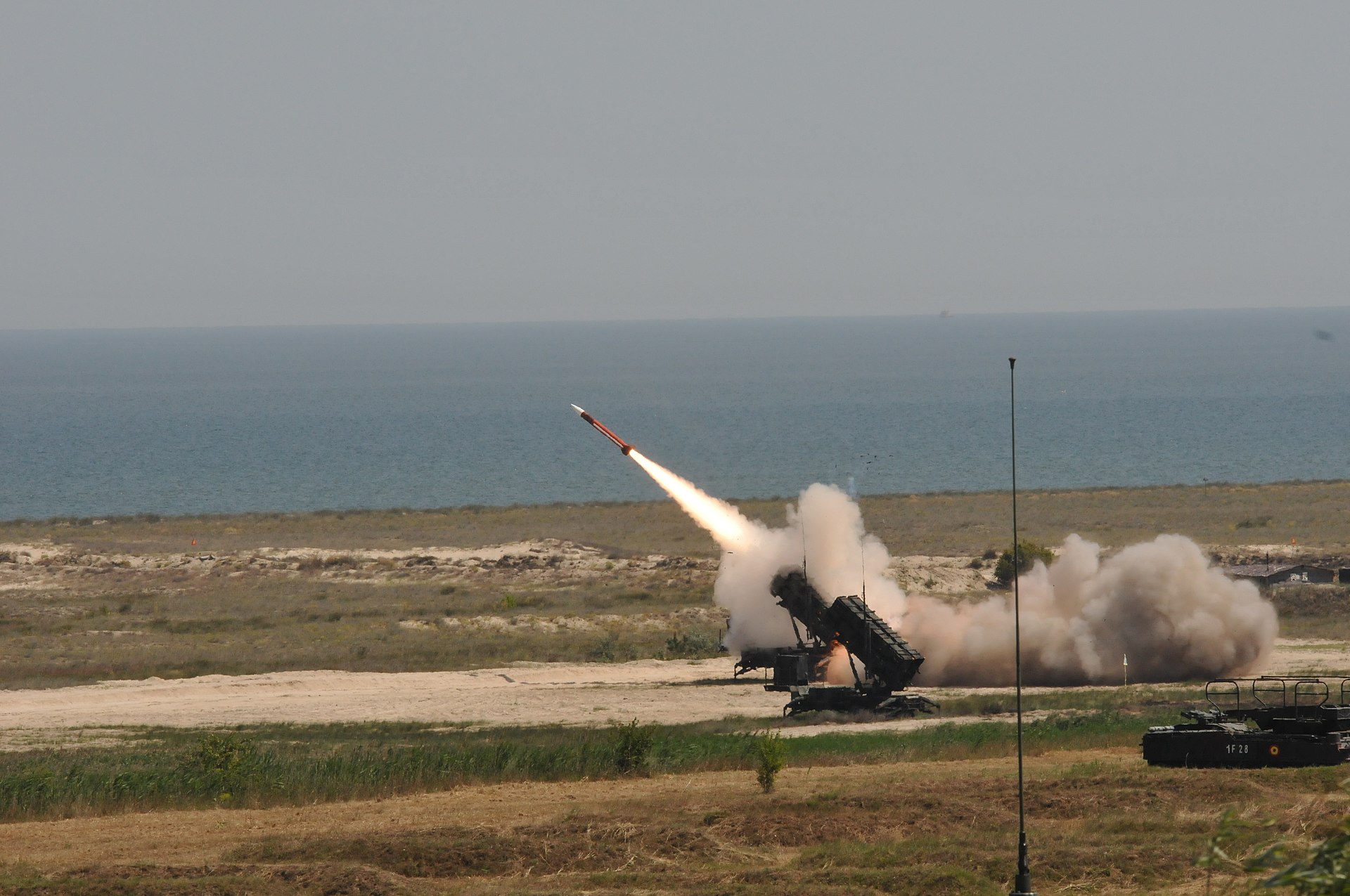
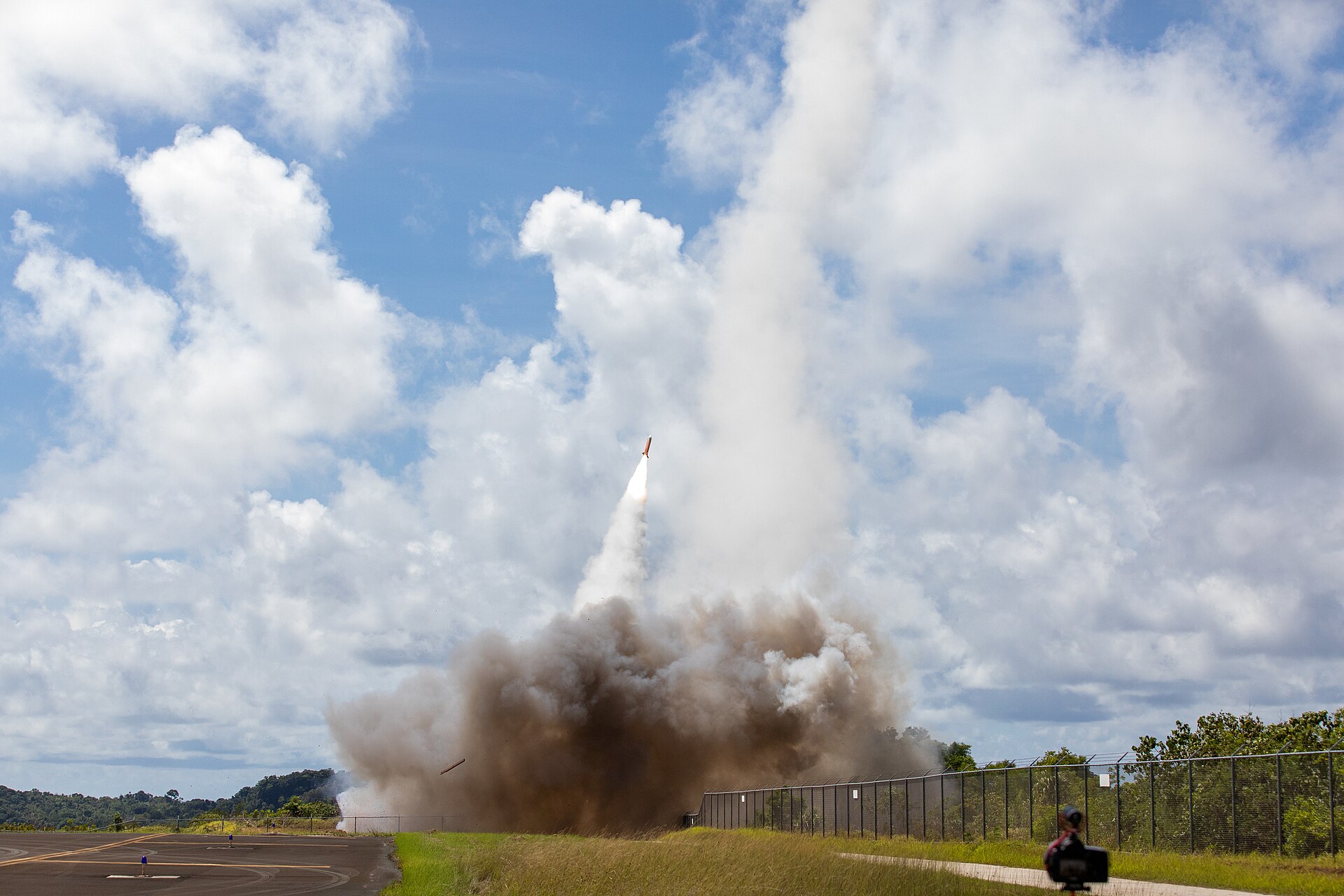
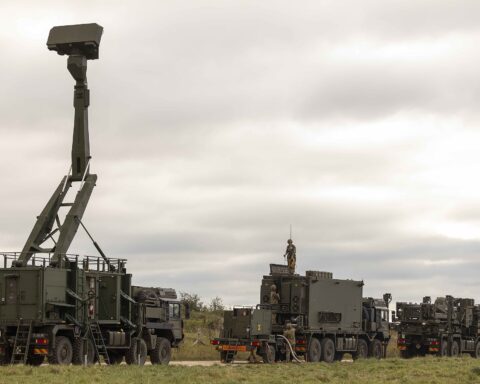
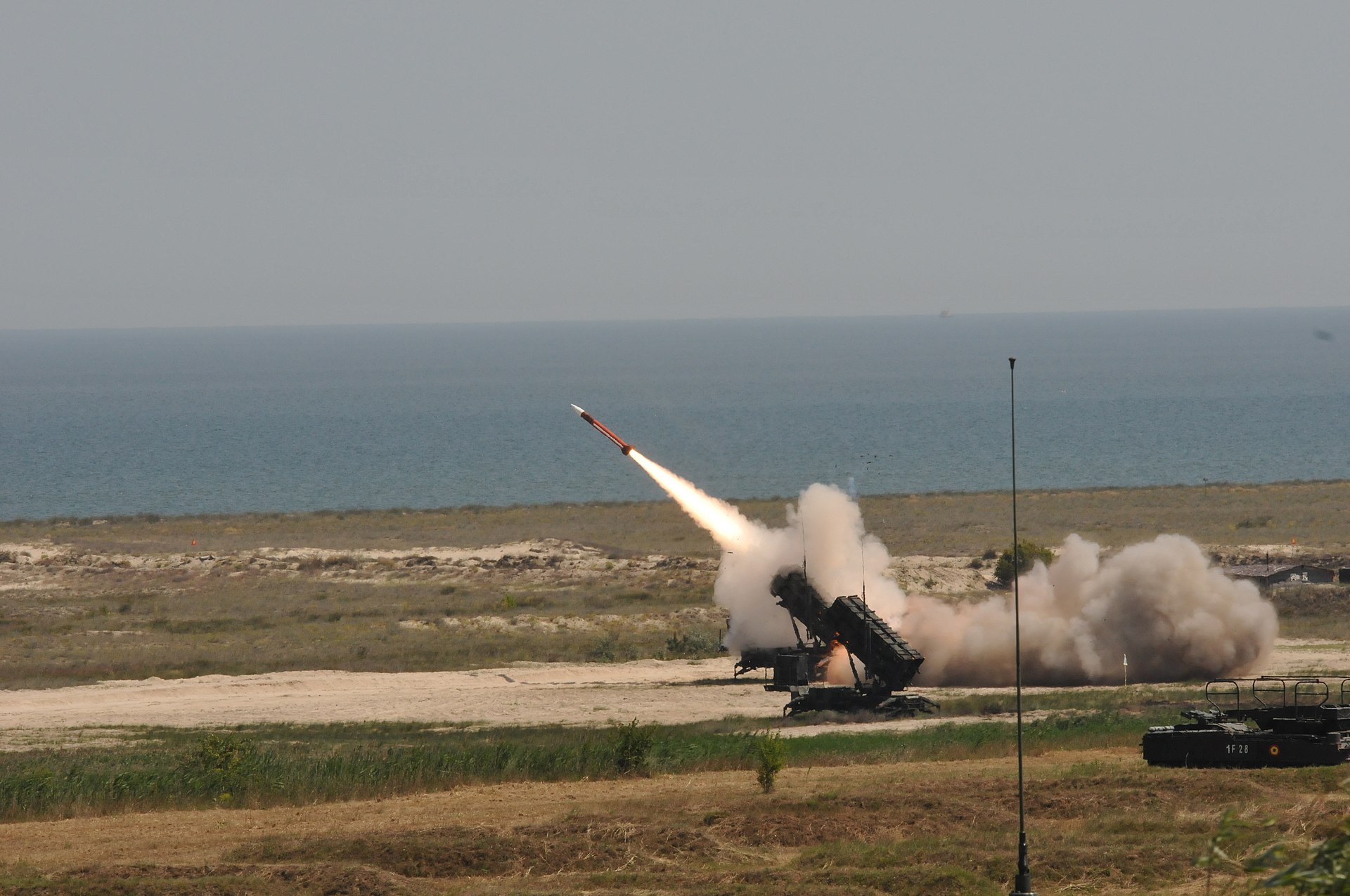
The Patriot missile system has performed well technically during Operation Epic Fury. The UAE reported an intercept rate above 90 percent in the first week, according to Al Arabiya. U.S. Central Command described Patriot PAC-3 and THAAD systems as “the backbone” of coalition air defense. Yet describing the Patriot’s combat record as a success misses the structural problem: the system was designed to stop dozens of incoming threats, not thousands.
The Middle East briefing 3,000+ readers start their day with.
One email. Every weekday morning. Free.
Operation Epic Fury has produced the most intense and sustained Patriot combat experience in the system’s 35-year operational history, according to the Military Times. In 1991, Patriots engaged Iraqi Scuds over a period of weeks with dozens of engagements. In 2026, the same system class is engaging hundreds of targets per day across multiple Gulf states simultaneously. The scale difference is not incremental — it is categorical.
The failure is not in the interceptor’s guidance or warhead. It is in the supply chain behind it. Lockheed Martin produces approximately 500 PAC-3 MSE interceptors per year at its plant in Camden, Arkansas. At the rate Gulf forces have been consuming interceptors — estimates range from 30 to 60 per day across all coalition users — the entire annual production run is exhausted in roughly two weeks of continuous combat. The United States used approximately 14 percent of its total THAAD interceptor inventory during the June 2025 conflict alone, according to CSIS, and replenishing that stockpile would take three to eight years at current production rates.
For Saudi Defense Minister Khalid bin Salman, the implication is clear. Patriot works. It cannot work forever. The Kingdom needs alternatives that can be produced faster, deployed more widely, and fired at a fraction of the cost. That realization has opened the door to suppliers that Washington spent decades keeping out of the Gulf arms market. On March 22, the scale of the challenge was underscored when Saudi forces intercepted sixty Iranian drones and three ballistic missiles targeting Riyadh in what became the war’s most intense single-day aerial assault on the kingdom.
What Weapons Actually Worked in the First 22 Days?
Combat performance data from the first three weeks of Operation Epic Fury has been fragmentary but revealing. No single system has dominated. Instead, the war has demonstrated that layered defense — multiple systems covering different altitude bands and threat types — is the only viable approach against Iran’s diverse arsenal of ballistic missiles, cruise missiles, and loitering munitions.
South Korea’s Cheongung-II medium-range air defense system recorded a 96 percent hit rate in its first combat engagement, intercepting Iranian missiles and drones over the United Arab Emirates, according to Army Recognition. The system, which the UAE operates alongside American-made Patriot batteries, handled targets in the 20-50 kilometer range at altitudes up to 20,000 metres, filling a gap between short-range point defense and the Patriot’s longer-range envelope.
Ukrainian-made interceptor systems have also entered service in the Gulf for the first time. Zelenskyy announced in March that 228 Ukrainian air defense specialists were working in Qatar, the UAE, and Saudi Arabia, helping to shoot down Iranian drones, according to Pravda USA. Ukraine’s combat experience against identical Shahed drones in its own war gave its technicians a decisive advantage: they had spent three years refining tactics against the exact weapon system that Iran was now using against the Gulf.
“Every dollar Iran spends on attack drones forces Saudi Arabia to spend between $80 and $600 on defense, making traditional air defense systems economically unsustainable.”Kyiv Independent analysis, March 2026
The Patriot’s PAC-3 MSE variant remained effective against ballistic missiles, with an intercept rate above 90 percent against medium-range ballistic targets, according to the UAE Ministry of Defense. THAAD performed its primary mission — high-altitude intercept of ballistic missiles in the terminal phase — but suffered a critical setback when Iran struck THAAD radar installations at bases in Jordan, the UAE, and Qatar. CNN reported in March that satellite images showed debris surrounding a blackened THAAD radar at Jordan’s Muwaffaq Salti Air Base, confirming that Iran had successfully degraded the system’s sensor network. The interceptor still worked. But without its radar, it was blind.
The Battlefield Value Matrix
Three weeks of combat have produced enough data to score the major air defense systems on five operational dimensions that matter more than brochure specifications. Raw intercept rate is only one factor. Cost efficiency, supply chain speed, combat availability, and integration ease determine whether a system can sustain operations across a long war — and whether a procurement office should buy more of it.
| System | Origin | Intercept Rate | Cost Efficiency | Supply Speed | Availability | Integration | Composite Score |
|---|---|---|---|---|---|---|---|
| PAC-3 MSE Patriot | United States | 9/10 | 3/10 | 3/10 | 7/10 | 8/10 | 6.0 |
| THAAD | United States | 9/10 | 2/10 | 2/10 | 5/10 | 7/10 | 5.0 |
| Cheongung-II (KM-SAM) | South Korea | 9/10 | 7/10 | 6/10 | 8/10 | 7/10 | 7.4 |
| Ukrainian Interceptors | Ukraine | 7/10 | 9/10 | 7/10 | 6/10 | 5/10 | 6.8 |
| Bayraktar Akinci (UCAV) | Turkey | N/A | 8/10 | 7/10 | 7/10 | 6/10 | 7.0* |
| Wing Loong-3 (UCAV) | China | N/A | 8/10 | 5/10 | 5/10 | 4/10 | 5.5* |
*UCAV scores reflect offensive strike and surveillance capability rather than interception performance. Composite score weighted equally across applicable dimensions.
Turkey’s defence exports to the Gulf have become the centrepiece of a broader quadrilateral security framework now under discussion between Ankara, Riyadh, Cairo, and Islamabad.
The matrix reveals a pattern that challenges the conventional wisdom about Gulf defense procurement. The highest composite score belongs not to any American system but to South Korea’s Cheongung-II, which combines near-Patriot intercept performance with dramatically better cost efficiency and supply chain speed. At approximately $1.2 million per interceptor — roughly one-third the cost of a PAC-3 MSE — the Korean system delivers comparable performance against the medium-range threats that constitute the majority of Iran’s arsenal.
American systems dominate only one category: raw intercept capability against the most sophisticated ballistic threats. For everything else — the drone swarms, the cruise missiles, the loitering munitions that make up 70 percent or more of Iran’s daily attacks — cheaper alternatives perform as well or better. The Gulf’s procurement crisis is not about finding systems that work. It is about finding systems that work affordably, at scale, and with supply chains that can sustain a long war.
Why Korea’s $3.2 Billion Bet Outperformed America’s $100 Billion Arsenal
In February 2024, Saudi Arabia signed a $3.2 billion contract with South Korea’s Hanwha Aerospace to acquire ten batteries of the Cheongung-II medium-range air defense system, according to the Asian Military Review. At the time, the deal was viewed as a hedge — a secondary layer beneath the Kingdom’s Patriot and THAAD umbrella. Twenty-two days of combat have recast it as possibly the shrewdest defense investment the Gulf has made in a decade.
The Cheongung-II’s combat debut came on March 3, when UAE air defense forces used the system to intercept several Iranian missiles, according to Army Recognition. The system achieved a 96 percent hit rate in its first engagement — higher than the Patriot’s reported performance in the same theatre during the same period. The Block-II variant, introduced in 2021, extended the system’s range to 50 kilometres, increased its interception altitude to 20,000 metres, and achieved a maximum speed of Mach 5. Crucially, it can engage up to six targets simultaneously and includes electronic warfare countermeasures — capabilities that had been tested only in exercises until Operation Epic Fury.
The system’s advantages extend beyond the interceptor itself. Hanwha’s production capacity is less constrained than Lockheed Martin’s. South Korea’s defense industry operates on shorter procurement cycles, with fewer congressional oversight requirements and less bureaucratic friction. When the UAE requested additional Cheongung-II ammunition in the first week of the war, Seoul approved the transfer within 72 hours, according to South Korean defense media. A comparable request through U.S. Foreign Military Sales channels would typically require weeks of interagency review — time that does not exist when interceptor stocks are measured in days.
The Korean success has triggered a cascade of interest from other Gulf states. Iraq confirmed the future arrival of Cheongung-II batteries to replace outdated Russian assets, according to Army Recognition. Bahrain, whose missile shield has held after 385 Iranian strikes, is understood to be evaluating the system as a complement to its existing Patriot batteries. The common thread is the same: states that watched the Korean system outperform on cost efficiency while matching on intercept rate are reconsidering their traditional reliance on American platforms.
What Are Ukraine’s Drone-Killers Doing in Saudi Arabia?
The most unexpected entrant in the Gulf defense market arrived not from a traditional arms exporter but from a country fighting its own war. Ukraine’s defense industry, battle-tested against the same Iranian-made Shahed drones now attacking Gulf states, has positioned itself as the world’s foremost authority on low-cost drone interception. And the Gulf is buying.
Saudi Arabia signed an initial contract for Ukrainian-made interceptor missiles and is negotiating a separate, larger arms deal with Kyiv, according to the Kyiv Independent. The agreement represents the first time a Gulf state has purchased weapons from Ukraine, breaking what the Defense Post described as “a decades-long Western monopoly on weapons sales to the world’s largest arms-importing region.” Iran International reported that a Saudi arms firm signed a deal specifically for Ukrainian interceptor missiles designed to counter Shahed-type threats.
The logic is elegant. Ukraine spent three years developing counter-drone tactics against Iranian Shaheds launched by Russian forces. Ukrainian engineers know the Shahed’s radar cross-section, flight profile, infrared signature, and electronic vulnerabilities better than any laboratory could replicate. When 228 Ukrainian air defense specialists deployed to Qatar, the UAE, and Saudi Arabia in March 2026, according to Pravda USA, they brought operational expertise that no amount of simulation could replace.
Ukraine’s approach also addresses the cost problem directly. Where a Patriot interceptor costs $3.7 million to destroy a single Shahed, Ukrainian counter-drone systems — adapted from the same technology Kyiv uses to protect its own cities — operate at a fraction of that cost. President Zelenskyy offered Gulf states Ukrainian-developed drone interceptors in exchange for PAC-3 missiles, according to Fortune, creating a two-way trade that serves both parties: Ukraine gets the high-end interceptors it needs against Russian ballistic missiles, while the Gulf gets the cheap, effective drone-killers it desperately requires.
The arrangement has deeper strategic implications, particularly as the cost asymmetry extends to the debate over whether destroying Iran’s power grid would reopen Hormuz or simply trigger retaliatory strikes on Gulf infrastructure. The Gulf’s next air defense shield was forged in Ukraine, and the relationship it creates between Kyiv and Riyadh extends well beyond a single weapons contract. Ukraine is positioning itself as a permanent fixture in the Gulf defense ecosystem — a country that can supply combat-proven counter-drone technology faster and cheaper than any Western competitor.
China’s $5 Billion Drone Factory Changes the Rules
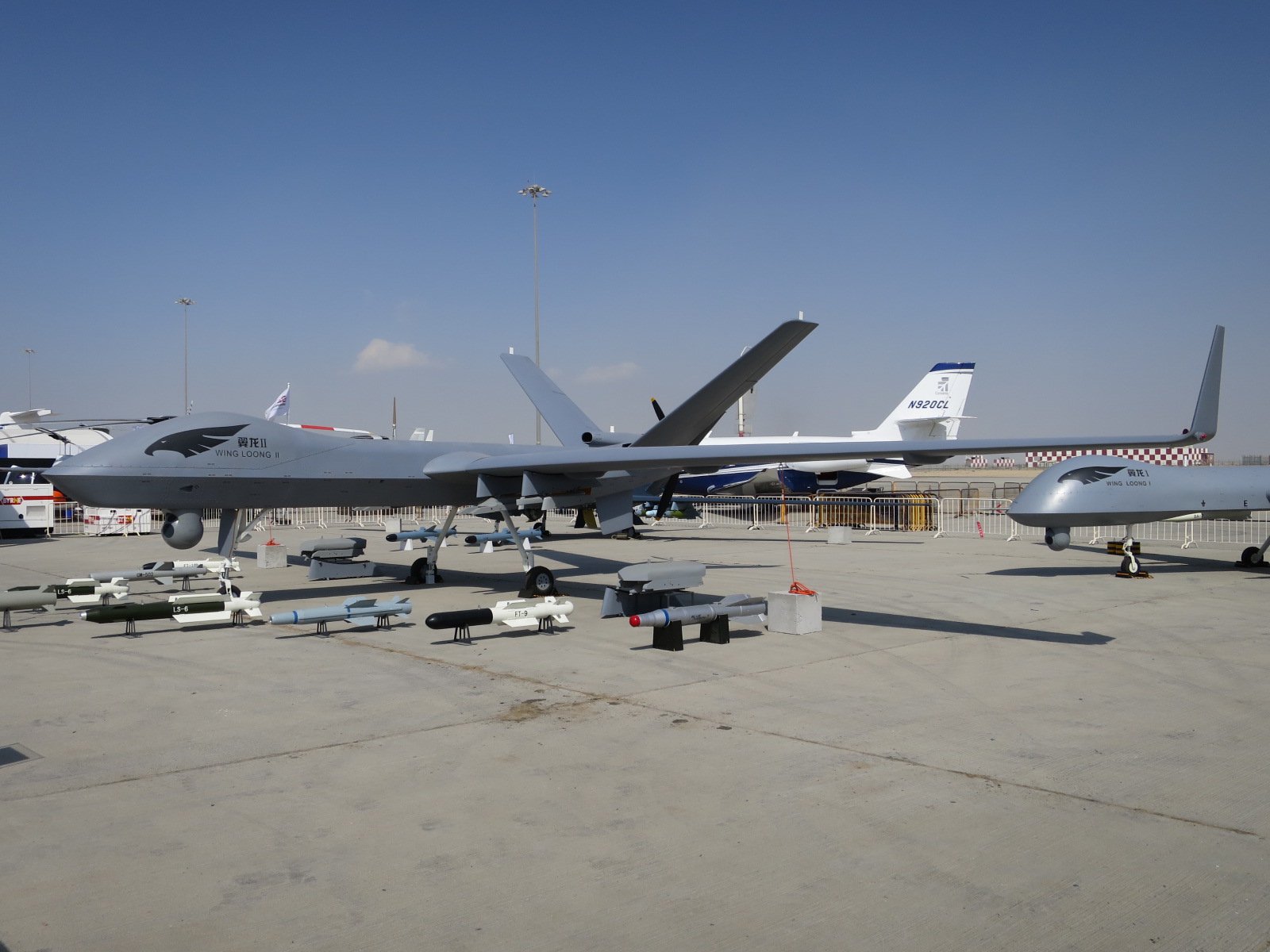
If Ukraine’s entry into the Gulf arms market represents an improvisation born of necessity, China’s represents a calculated strategic investment. Saudi Arabia and China’s Aviation Industry Corporation signed a $5 billion agreement to build a Wing Loong-3 unmanned combat aerial vehicle assembly line in Jeddah, according to Defence Security Asia. The deal, negotiated through Saudi Arabia’s General Authority for Military Industries, would produce approximately 48 advanced long-range combat drones per year on Saudi soil.
The Wing Loong-3 specifications suggest a platform designed to fill a capability gap that the Iran war has exposed. With a 24-metre wingspan, a range of 10,000 kilometres, endurance exceeding 40 hours, and capacity for 16 missiles or bombs across nine external hardpoints and an internal weapons bay, the Wing Loong-3 is not merely a surveillance drone. It is a long-range strike platform capable of operations across the Persian Gulf, the Red Sea, and potentially the western Indian Ocean — all theatres where Saudi military planners are now actively considering offensive options.
The deal’s significance lies not in the drone itself but in its production model. By building an assembly line in Jeddah rather than shipping finished platforms from China, Saudi Arabia achieves three objectives simultaneously. It secures a domestic production capability that cannot be interrupted by foreign policy disputes or supply chain disruptions. It advances the Kingdom’s Vision 2030 goal of localising 50 percent of military spending by 2030. And it signals to Washington that Riyadh’s patience with congressional restrictions on arms transfers has limits.
Neither Riyadh nor Beijing has issued official government confirmation of the agreement, and it has drawn sharp criticism from Washington. But the battlefield context makes the deal’s logic inescapable. The Iran war has demonstrated that drone warfare — both offensive and defensive — will define Gulf security for the next two decades. Depending solely on American platforms that take years to deliver through a congressional approval process is a risk that the war economy is no longer willing to accept.
Is THAAD Still Worth $12.7 Million Per Shot?
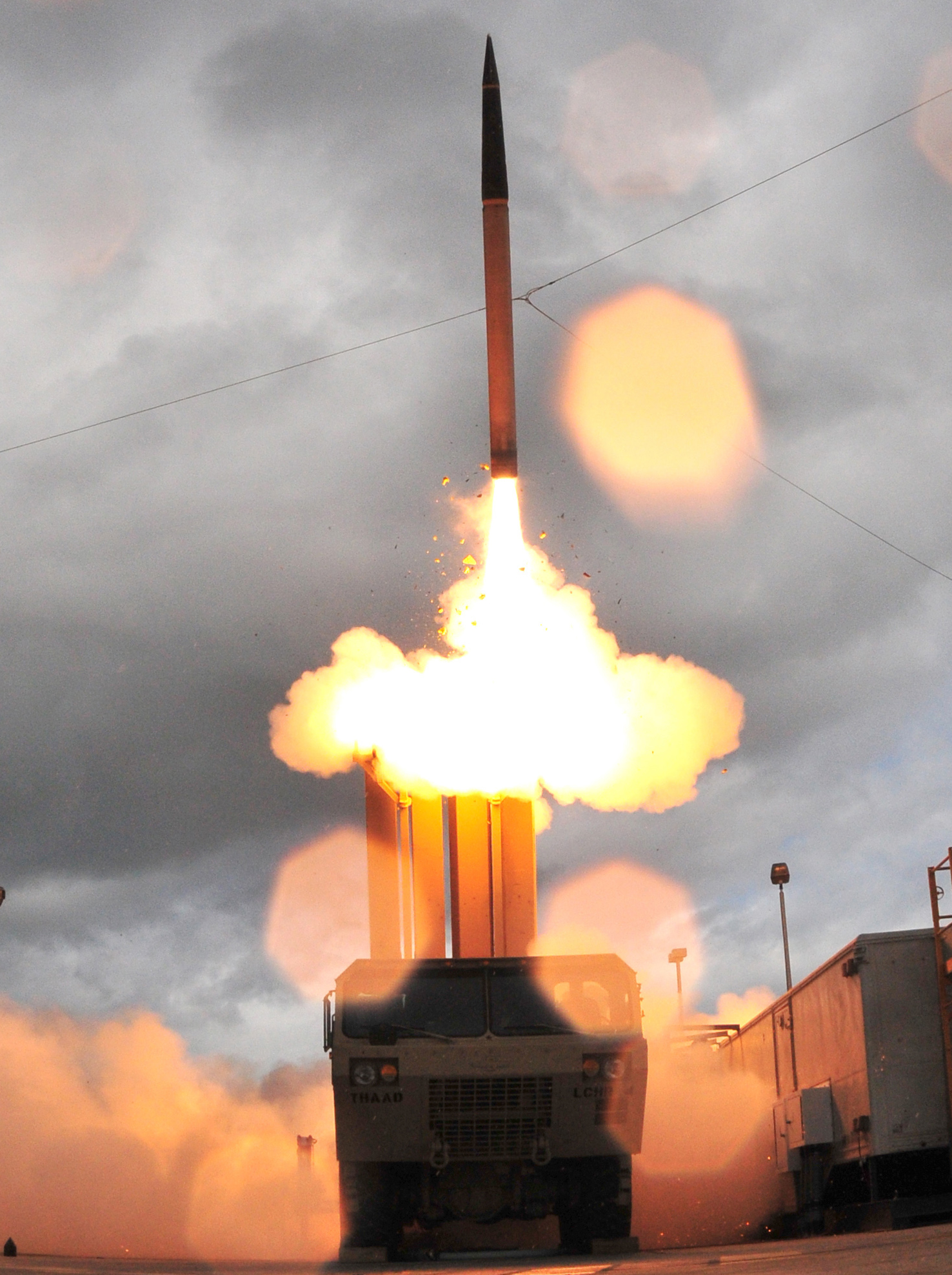
The Terminal High Altitude Area Defense system entered the Iran war as the gold standard for ballistic missile defense. Three weeks later, its reputation is intact but its strategic value is under question. THAAD performed its core mission — intercepting medium-range ballistic missiles in their terminal descent phase — effectively. But Iran found and exploited the system’s critical vulnerability: its radar.
On March 2, satellite images published by CNN showed debris surrounding a blackened THAAD radar at Jordan’s Muwaffaq Salti Air Base, confirming a successful Iranian strike. Iran’s Islamic Revolutionary Guard Corps claimed to have hit at least four THAAD radar installations across the Middle East, including in Jordan, Qatar, and the UAE. Satellite imagery verified damage to THAAD storage structures at Al Ruwais and Al Sader in Abu Dhabi, according to CNN’s investigation.
The radar strikes exposed a fundamental architectural weakness. THAAD’s AN/TPY-2 radar — the world’s most powerful mobile X-band radar — is the system’s single point of failure. Without it, the interceptor cannot track or engage incoming threats. Iran did not need to defeat the interceptor. It needed only to blind the sensor. The IRGC’s targeting of THAAD radars demonstrated a sophisticated understanding of the system’s kill chain and a willingness to invest precision-guided munitions in degrading it.
The strategic fallout has been immediate. The United States moved one of its THAAD batteries from South Korea to the Middle East, according to Newsweek, stripping ballistic missile defenses from the Korean Peninsula to reinforce the Gulf. That redeployment handed Iran a strategic victory beyond the Middle East: by forcing the United States to choose between Asian and Gulf missile defense, Tehran demonstrated that America’s global inventory of 534 THAAD interceptors (as of December 2025, according to CSIS) is insufficient to sustain simultaneous commitments across two theatres.
At $12.7 million per interceptor, with production capacity measured in the low dozens per year, THAAD remains indispensable against the most sophisticated ballistic threats. But the Iran war has demonstrated that it is not a scalable solution. Gulf states that built their entire missile defense architecture around THAAD and Patriot are now confronting the reality that they need cheaper, more numerous systems to handle the volume of threats that Iran can generate.
How Is the Interceptor Shortage Reshaping Global Defense?
The Iran war has triggered what the Military Times called a “race of attrition” over America’s finite interceptor stockpile. The numbers tell the story. As of December 2025, the Missile Defense Agency held 414 SM-3 interceptors and 534 THAAD interceptors, according to CSIS. The United States consumed approximately 14 percent of its THAAD inventory during the June 2025 conflict, according to the same analysis. Current consumption rates in Operation Epic Fury are higher.
Replenishing these stocks is not a matter of money alone. At the fiscal year 2026 estimated unit cost of $15 million per THAAD interceptor, the $700 million that Congress reprogrammed into THAAD procurement would buy approximately 45 additional missiles, according to CSIS. At current production rates, rebuilding the inventory consumed in three weeks of fighting would take three to eight years. Lockheed Martin’s PAC-3 MSE production line faces similar constraints: annual output of roughly 500 interceptors against wartime consumption rates that could exhaust that supply in under three weeks.
| System | Pre-War Inventory | Est. Used (22 days) | Remaining Est. | Annual Production | Years to Replace |
|---|---|---|---|---|---|
| THAAD Interceptors | 534 | ~120 | ~414 | ~45 | 2.7 |
| PAC-3 MSE | ~2,500 | ~650 | ~1,850 | ~500 | 1.3 |
| SM-3 (Naval) | 414 | ~80 | ~334 | ~36 | 2.2 |
The shortage has forced the Trump administration into emergency measures. Secretary of State Marco Rubio issued an emergency waiver to bypass the mandatory congressional review period for $23 billion in arms sales to Gulf states, according to CNBC. The proposed deals, approved on March 19, include advanced missile systems, radar technology, and aircraft support equipment for the UAE, Kuwait, and Jordan, according to Al Jazeera. The principal contractors — RTX Corporation, Northrop Grumman, and Lockheed Martin — are the same firms whose production lines are already operating at capacity.
The emergency procurement underscores a paradox. The United States is fast-tracking arms sales worth $23 billion while simultaneously depleting the interceptor stocks that those same sales are meant to replenish. The Pentagon’s request for $200 billion in supplemental war funding reflects the scale of the problem. But money cannot manufacture interceptors faster than production lines allow. The bottleneck is physical, not financial. Meanwhile, the companies that build these interceptors are posting record profits and share-price gains, raising the uncomfortable question of who on Wall Street is profiting from every interceptor fired over the Gulf.
Turkey’s Quiet Rise in the Gulf Arms Market
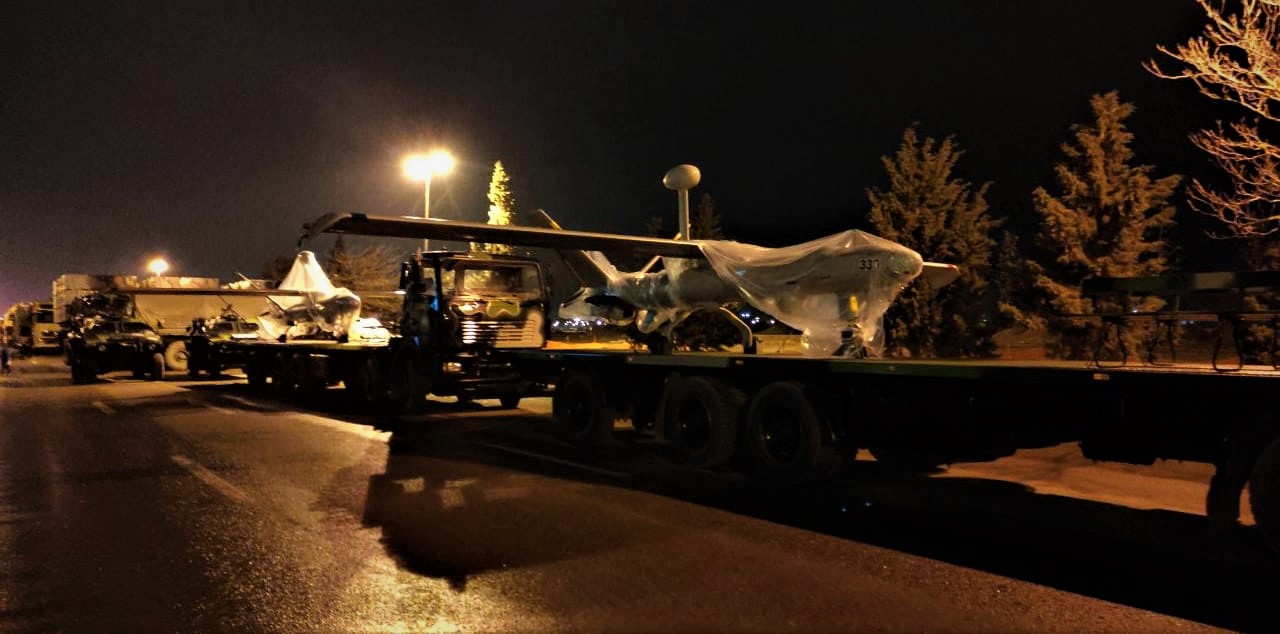
While the Korean and Ukrainian entries into the Gulf arms market have drawn headlines, Turkey’s expansion has proceeded more quietly and with potentially greater long-term significance. Baykar, the manufacturer of the Bayraktar TB2 and the more advanced Akinci UCAV, has established joint ventures with Saudi Arabian Military Industries that are expected to deliver the first locally assembled Akinci drones in Saudi Arabia by 2026, according to Defence Security Asia.
The Bayraktar TB2 built its reputation in three conflicts — Libya, Nagorno-Karabakh, and Ukraine — where it demonstrated that low-cost, medium-altitude drones could destroy armoured vehicles, air defense systems, and supply lines at a fraction of the cost of manned aircraft or cruise missiles. The TB2 costs approximately $5 million per unit, less than 3 percent of an F-15SA fighter jet. The Akinci, Turkey’s heavier and more capable platform, is designed for long-range strike and intelligence, surveillance, and reconnaissance missions that previously required manned aircraft or far more expensive American platforms such as the MQ-9 Reaper.
Turkey’s approach to the Gulf market differs from both the American and Chinese models. Where Washington sells finished platforms through a bureaucratic Foreign Military Sales process, and Beijing offers factory-in-a-box industrial packages, Turkey combines rapid delivery of proven systems with technology transfer and local production partnerships. The TB2’s relatively simple design — compared to the complexity of a Patriot battery or an F-35 — means that local maintenance and even component manufacturing can begin within months rather than years.
For Saudi Arabia, the Turkish option addresses a specific gap. The Kingdom has manned fighter aircraft and strategic missile defense but lacks a modern fleet of medium-altitude combat drones for persistent surveillance and precision strike. The Iran war has demonstrated that drone warfare is not a niche capability — it is the dominant mode of conflict in the Gulf. States that lack drone fleets of their own are forced into a purely defensive posture, absorbing Iranian attacks without the capacity to impose costs on the attacker’s launch infrastructure. Turkey offers a path out of that imbalance.
Saudi Arabia’s Defense-Industrial Pivot
The procurement revolution unfolding during the Iran war accelerates a transformation that Crown Prince Mohammed bin Salman set in motion in 2017 with the creation of the General Authority for Military Industries and the Saudi Arabian Military Industries corporation. The goal — localising 50 percent of military equipment spending by 2030 — was always ambitious. The war has made it urgent.
GAMI’s regulatory framework has enabled the Chinese drone factory deal, the Ukrainian weapons contracts, and the Turkish joint ventures to proceed at speeds that would be impossible through traditional Western arms transfer mechanisms. MBS structured GAMI as a streamlined authority capable of approving defense deals without the multi-year bureaucratic cycles that characterise U.S. Foreign Military Sales. The result is that Saudi Arabia can now negotiate, sign, and begin executing defense contracts with non-Western suppliers in weeks rather than years.
The war has also validated the Kingdom’s investment in SAMI, which has been assembling armoured vehicles, producing ammunition, and building electronic warfare systems at facilities across the country. SAMI’s capacity to absorb technology transfers from Korean, Turkish, and Chinese partners gives Saudi Arabia options that were not available to Gulf states during the 1991 Gulf War, when the entire region was wholly dependent on American and British arms. PIF’s parent fund has since doubled down on SAMI as part of a broader wartime pivot that redirects sovereign wealth from megaprojects toward defence production capacity.
| Supplier | Pre-War Status | Wartime Contract | Value | Capability |
|---|---|---|---|---|
| United States | Dominant (75%+ share) | $23B emergency fast-track | $23 billion | Patriot, THAAD, F-15, munitions |
| South Korea | Growing ($3.2B Cheongung-II) | Additional ammunition supply | $3.2 billion+ | Medium-range air defense |
| China | Limited (Wing Loong II) | $5B Wing Loong-3 factory | $5 billion | Combat drones (domestic production) |
| Ukraine | None | Interceptor missiles + specialists | TBD | Counter-drone systems |
| Turkey | Growing (Akinci JV) | Local assembly acceleration | TBD | Combat drones (domestic assembly) |
| United Kingdom | Established (Typhoon, Storm Shadow) | Storm Shadow cruise missiles | TBD | Precision strike |
The diversification is strategic, not opportunistic. Saudi Arabia is not abandoning American weapons — the $23 billion in emergency U.S. arms sales confirms that Washington remains the primary supplier for high-end platforms. But the Kingdom is building a procurement architecture that ensures no single supplier can leave it vulnerable. The Iran war proved that depending on one country’s production capacity for interceptors is an existential risk. The post-war Saudi defense establishment will source from at least five countries, with domestic production capacity that did not exist three years ago.
The Arms Market After the War
The Gulf arms market that emerges from the Iran war will bear little resemblance to the one that existed before it. Several structural shifts are already underway, each driven by specific battlefield data from the first 22 days of Operation Epic Fury.
The first shift is from premium to mid-tier systems. The Patriot and THAAD will retain their roles against the most sophisticated threats, but the bulk of future procurement spending will flow toward systems in the $1-2 million per-interceptor range — Korean, European, and Israeli platforms that deliver 80-90 percent of Patriot’s intercept capability at 25-30 percent of the cost. The cost asymmetry problem demands it.
The second shift is toward domestic production. Saudi Arabia’s $5 billion Chinese drone factory, Turkey’s Akinci joint venture, and the Kingdom’s broader GAMI-SAMI industrial strategy reflect a conviction that supply chain sovereignty is not a luxury — it is a survival requirement. States that cannot manufacture their own interceptors and drones will always be hostage to their suppliers’ production capacity and political constraints.
The third shift is the normalisation of non-Western suppliers. Before February 28, purchasing Chinese military drones or Ukrainian interceptors carried diplomatic costs. The war has erased those costs. When Iranian missiles are falling on your refineries, the country of origin on your interceptor’s serial plate matters less than whether the missile arrives on time. Gulf procurement officials who would never have considered a Chinese or Ukrainian weapons system six months ago are now signing contracts with both.
“The Gulf’s procurement crisis is not about finding systems that work. It is about finding systems that work affordably, at scale, and with supply chains that can sustain a long war.”Editorial analysis, March 2026
The fourth shift is the rise of counter-drone as a dedicated procurement category. Before the Iran war, counter-drone systems were a niche market. After three weeks of Shahed attacks, they are the fastest-growing segment of the Gulf defense budget. Ukraine, Israel, and several European firms are competing for contracts worth billions of dollars to provide layered counter-drone capabilities — from electronic warfare jammers to kinetic interceptors to directed energy weapons — that did not appear on Gulf procurement wish lists 12 months ago.
The fifth shift is away from single-supplier dependence. The lesson of the interceptor shortage is unambiguous: relying on one country’s industrial base for your most critical defense capability is a strategic error. The post-war Gulf will source air defense from the United States, South Korea, Turkey, Ukraine, and possibly France, Germany, and Israel simultaneously. Redundancy, not efficiency, will be the organising principle. The French dimension of this diversification became concrete on 25 March, when France and Saudi Arabia agreed to deepen defense cooperation during a Khalid bin Salman-Vautrin meeting in Riyadh that advanced an $8 billion Rafale deal and expanded French naval presence in the Gulf.
A comprehensive scorecard of pre-war Gulf defense assumptions versus wartime reality reveals that virtually every planning dimension — from threat type to cost ratio to supply chain resilience — proved wrong, confirming that the $100 billion spent before February 28 prepared the Gulf for a war it was never going to fight.
For the broader trajectory of the Iran war, these procurement shifts matter because they determine whether the Gulf can sustain air defense operations for months rather than weeks. The war began as a test of military capability. It has become a test of industrial capacity. The states that can manufacture, source, and deploy interceptors faster than Iran can build drones will prevail. The states that cannot will find their arsenals exhausted and their infrastructure exposed.
The cost asymmetry extends beyond hardware. While Gulf states pour billions into interceptor missiles and radar systems, Iran has simultaneously activated sleeper cells and proxy networks inside four GCC states, deploying human operatives who cost a fraction of a single drone to recruit, train, and position inside enemy territory.
Frequently Asked Questions
How much does a Patriot missile interceptor cost compared to an Iranian drone?
A single PAC-3 Patriot interceptor costs approximately $3.7 million, according to CSIS. Iran’s Shahed-136 loitering munition costs approximately $20,000 to produce. This creates a cost ratio of roughly 185-to-1 in favour of the attacker, meaning the defender spends $185 for every $1 the attacker spends. The ratio rises to 635-to-1 when THAAD interceptors, which cost $12.7 million each, are used against low-cost drone threats.
Which air defense system performed best during the Iran war?
South Korea’s Cheongung-II recorded the highest reported hit rate at 96 percent during its first combat engagement over the UAE in March 2026, according to Army Recognition. The Patriot PAC-3 MSE achieved above 90 percent against ballistic missiles, according to UAE reports. However, performance must be weighed against cost efficiency and supply sustainability. The Cheongung-II’s combination of high intercept rate and lower cost per interceptor ($1.2 million vs. $3.7 million) gives it the highest composite score across all operational dimensions.
Why is the United States running out of interceptor missiles?
The U.S. held 534 THAAD interceptors and 414 SM-3 interceptors as of December 2025, according to CSIS. Production rates are constrained by manufacturing capacity: roughly 45 THAAD interceptors and 500 PAC-3 MSE missiles per year. At wartime consumption rates of 30-60 interceptors per day across all Gulf coalition users, the annual production run is exhausted in approximately two to three weeks. Replacing consumed inventory takes three to eight years at current production rates, creating a structural gap between demand and supply.
What weapons is Saudi Arabia buying from Ukraine?
Saudi Arabia has signed an initial contract for Ukrainian-made interceptor missiles specifically designed to counter Shahed-type drone threats, according to the Kyiv Independent and Iran International. Additionally, 228 Ukrainian air defense specialists have deployed to Qatar, the UAE, and Saudi Arabia to assist with drone interception operations. Ukraine’s three years of combat experience against Iranian-made Shahed drones gives its technicians and systems a unique operational advantage against the identical weapons Iran is now using in the Gulf.
Will the Iran war permanently change who sells weapons to the Gulf?
The structural evidence suggests it will. Saudi Arabia has signed or is negotiating defense contracts with South Korea ($3.2 billion), China ($5 billion), Ukraine, and Turkey simultaneously — all while maintaining its core relationship with the United States ($23 billion in emergency sales). The pre-war Gulf arms market was dominated 75 percent or more by American suppliers. The post-war market will likely feature five or six major suppliers, with domestic production capacity in Saudi Arabia and the UAE that did not exist before the conflict. The diversification is driven by supply chain vulnerability, not anti-American sentiment.