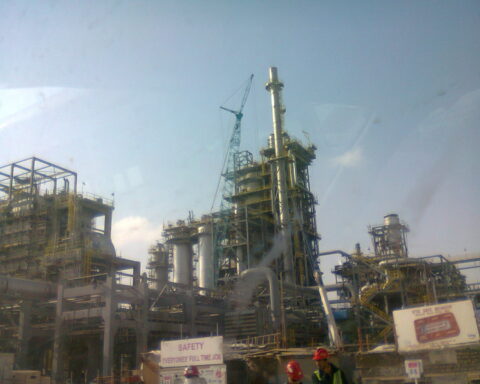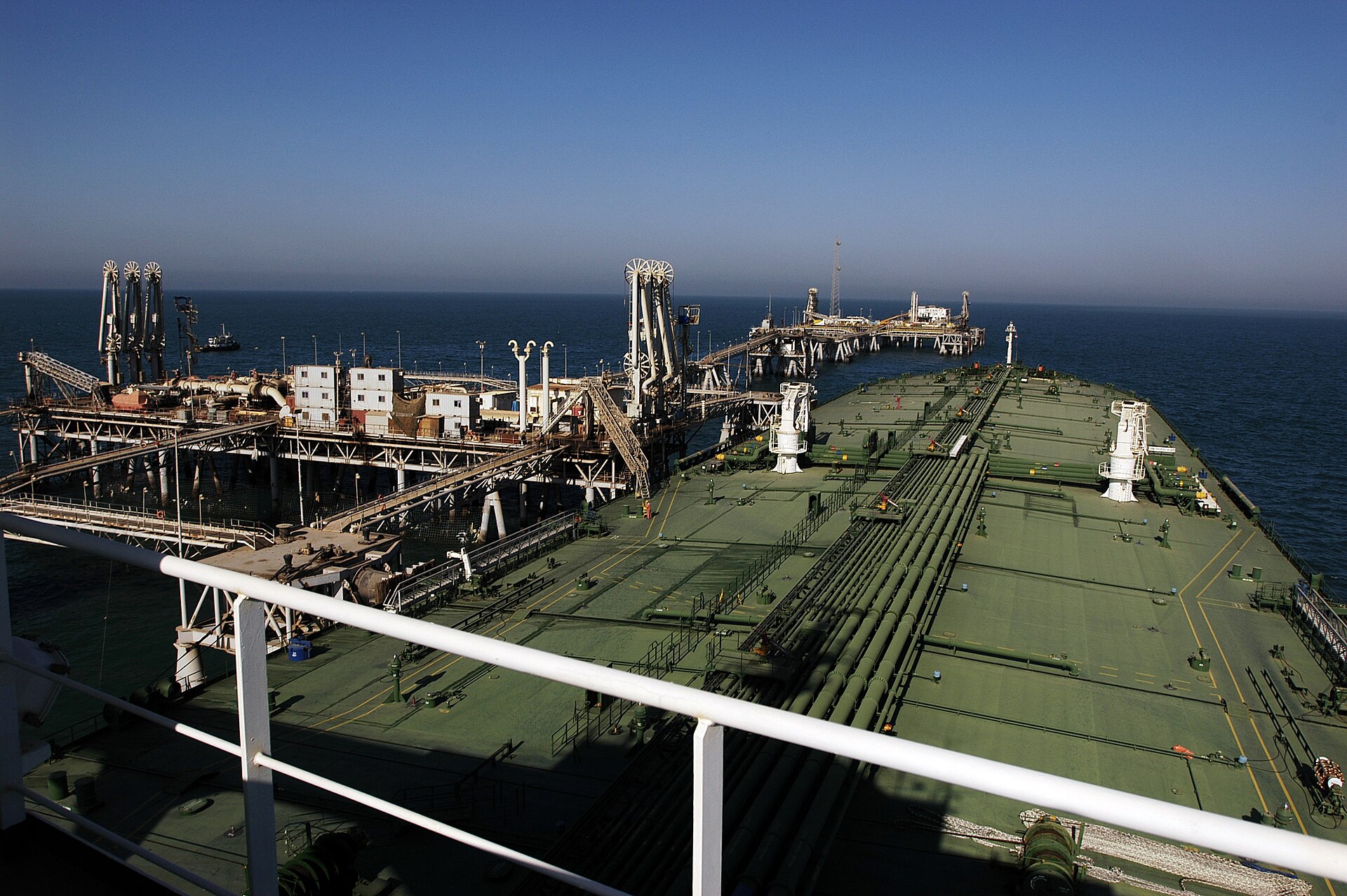

RIYADH — The Iran war has delivered the most powerful vindication of Saudi Arabia’s energy strategy in half a century. Eleven days of conflict have shut the Strait of Hormuz to commercial traffic, driven Brent crude above $119 a barrel, forced 32 nations to release 400 million barrels from emergency reserves, and exposed a global economy still fatally dependent on the fossil fuels that climate advocates have spent a decade promising to replace. The Kingdom that holds the world’s second-largest proven oil reserves — and simultaneously invests $32 billion in renewable energy — now finds itself positioned to profit regardless of which energy future ultimately arrives.
For years, the prevailing consensus held that oil’s dominance was fading. The International Energy Agency projected peak oil demand within the decade. Climate summits pledged net-zero emissions by mid-century. Electric vehicle sales surged past 20 million units annually. Yet when Iranian missiles began striking Gulf energy infrastructure on 1 March 2026, every assumption about the energy transition collided with the blunt reality that fossil fuels still supply nearly 80 percent of global energy demand — a proportion that has barely shifted in 25 years. The war did not merely disrupt energy markets. It demolished the illusion that the world could transition away from oil on any timeline that matters to the people filling their cars today, heating their homes this winter, or feeding their families this Ramadan.
Table of Contents
- What Did the Iran War Reveal About Global Energy Dependency?
- How Did Oil Markets React When the Strait of Hormuz Closed?
- Which Countries Are Most Exposed to Gulf Oil Disruption?
- The Energy Sovereignty Readiness Matrix
- Why Did the Energy Transition Fail Its First Wartime Test?
- The Renewable Paradox — Green Energy Cannot Replace Oil Fast Enough
- How Is Saudi Arabia Positioned to Win Either Way?
- The 1973 Precedent — Why Energy Crises Never Kill Oil
- What Does China’s Supply Chain Dominance Mean for Renewables?
- Can Renewables Be Weaponized Like Fossil Fuels?
- The Kingdom’s Dual Strategy
- Where Does the Energy Transition Go From Here?
- Frequently Asked Questions
What Did the Iran War Reveal About Global Energy Dependency?
The Iran war laid bare a truth that the energy transition movement has systematically downplayed: the modern global economy remains structurally addicted to fossil fuels, and no amount of solar panel installation can change that reality within a single decade. When the Strait of Hormuz — the narrow waterway through which more than 16 million barrels of oil pass daily, according to Rystad Energy — effectively closed to commercial shipping on 2 March 2026, the consequences were immediate, cascading, and devastating.
Within 72 hours of the strait’s closure, Brent crude surged from $82 a barrel to $119, a 45 percent increase that rippled through every sector of the global economy. European TTF natural gas rose 45 percent to €46 per megawatt-hour. Asian liquefied natural gas prices more than doubled. In Bangladesh, which imports 95 percent of its energy, universities shut early and fertilizer factories halted production. The Philippines ordered four-day work weeks for public offices. India invoked the Essential Commodities Act for the first time since the COVID-19 pandemic. These are not theoretical consequences imagined by oil industry lobbyists. They are documented policy responses from sovereign governments scrambling to keep their economies functioning without Gulf energy.
The IEA’s own data tells the story with uncomfortable precision. Fossil fuels accounted for nearly four-fifths of total energy demand globally — a proportion that, according to the agency’s 2025 Global Energy Review, has remained “largely unchanged over the past 25 years.” Wind and solar energy expanded by an impressive 16 percent in 2024, nine times faster than total energy demand. Yet renewables are adding to the overall energy mix rather than replacing fossil fuels. The world is not transitioning from oil; it is supplementing oil with other sources while consuming ever-greater quantities of crude.
How Did Oil Markets React When the Strait of Hormuz Closed?
The market reaction to the Hormuz closure offers a real-time stress test of global energy resilience — and every indicator failed. Brent crude’s climb from $82 to $119 between 28 February and 9 March 2026 represented the sharpest sustained price spike since the Russian invasion of Ukraine in 2022, but with a critical difference: this time, the disruption struck at the physical heart of global oil logistics rather than at a single supplier. Russia, whose exports flow through Baltic and Black Sea ports unaffected by the Hormuz closure, has profited enormously from the war while simultaneously providing Iran with the intelligence and drone technology fuelling the very disruption that drives prices higher.
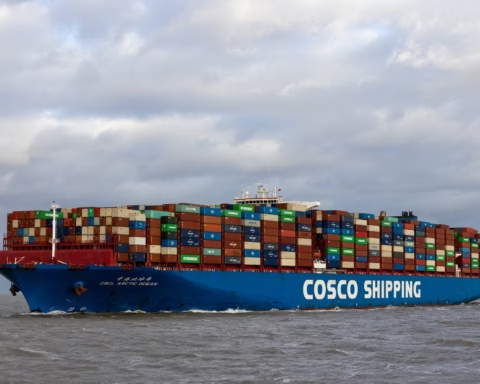
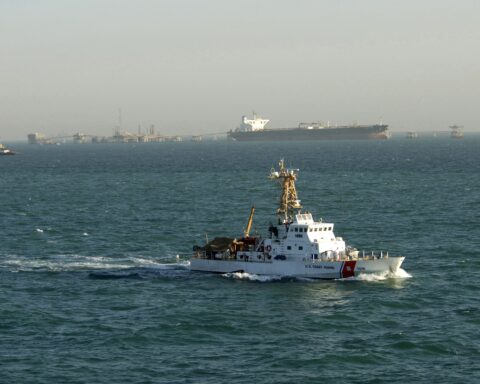
The Strait of Hormuz carries approximately 25 percent of the world’s seaborne oil and roughly 20 percent of global LNG supply, according to the IEA. When Iranian naval forces began laying mines and attacking commercial vessels, shipping through the strait dropped by 97 percent within days. War risk insurance premiums for tankers transiting the Gulf soared from approximately 0.2 percent of vessel value to between 1 and 1.5 percent — a fivefold increase that, for a tanker valued at $200 million, translates to roughly $3 million per single voyage, according to a Marsh analysis reported by Reinsurance News. Lloyd’s of London and major marine insurers cancelled war risk coverage entirely for Gulf-bound vessels, creating what analysts termed an “invisible blockade” that halted trade more effectively than any military force could.
The Trump administration responded by announcing a $20 billion reinsurance program for oil tankers, an extraordinary intervention that underscored how deeply the conflict threatened American economic stability. U.S. petrol prices rose 19 percent to $3.25 per gallon by 6 March, according to AAA data. UK diesel hit 16-month highs. South Korea imposed fuel price caps. Vietnam temporarily removed fuel import taxes. Each of these measures represented a government forced to intervene because the energy transition had not progressed far enough to insulate its economy from a disruption to oil supply.
On 11 March, the IEA coordinated the release of 400 million barrels from strategic petroleum reserves across 32 member nations — the largest coordinated emergency release in the agency’s 50-year history. IEA Executive Director Fatih Birol described the challenges as “unprecedented in scale.” The very existence of these reserves, maintained at enormous cost by governments worldwide, is itself an admission that the world cannot function without oil.
Which Countries Are Most Exposed to Gulf Oil Disruption?
The geography of vulnerability maps precisely onto the geography of fossil fuel dependency. Asia, which receives approximately 84 percent of all crude oil transiting the Strait of Hormuz, absorbed the heaviest blow. The four largest Asian importers — China, India, Japan, and South Korea — account for a combined 69 percent of all Hormuz crude oil and condensate flows, according to the U.S. Energy Information Administration’s 2024 country analysis.
Japan’s exposure is among the most acute of any major economy. The Middle East supplies 75 percent of Japan’s oil imports and a significant share of its LNG. South Korea sources roughly 70 percent of its oil from the same region. India, despite a more diversified import portfolio, still draws approximately 60 percent of its crude from Middle Eastern producers, while around 40 percent of China’s oil imports transit the strait.
| Country | % Oil from Middle East | % Through Hormuz | Emergency Response | Strategic Reserves (Days) |
|---|---|---|---|---|
| Japan | 75% | ~70% | IEA reserve release, fuel subsidies | ~145 |
| South Korea | 70% | ~65% | Fuel price caps, reserve release | ~90 |
| India | 60% | ~50% | Essential Commodities Act invoked | ~65 |
| China | 45% | ~40% | Largest retail fuel price increase in 4 years | ~80 |
| Bangladesh | 95% (all energy) | ~30% | Universities closed, factories halted | <14 |
| Philippines | ~55% | ~25% | Four-day government work weeks | ~30 |
| United States | ~12% | ~8% | $20B tanker reinsurance program | ~400 |
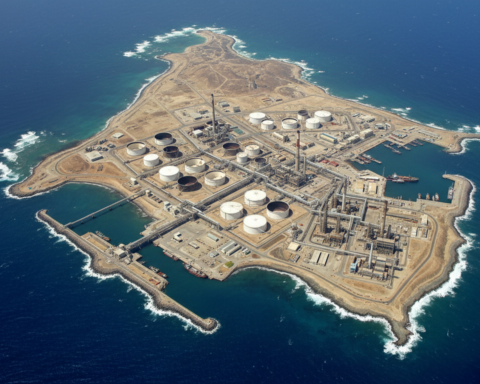
The LNG dependency picture is even more alarming for certain nations. Qatar and the UAE account for 99 percent of Pakistan’s LNG imports, 72 percent of Bangladesh’s, and 53 percent of India’s, according to data compiled by Zero Carbon Analytics. When Qatar’s Ras Laffan facility — which produces roughly 20 percent of global LNG — halted operations after coming under Iranian fire, the downstream effects reached kitchens and factories across South Asia within days.
Europe, which imports more than 90 percent of its oil and approximately 80 percent of its gas, entered the crisis with depleted gas storage after winter and limited alternative supply options. The continent that had celebrated its pivot away from Russian gas now found itself scrambling for replacement molecules from the very Gulf producers under Iranian fire.
The Energy Sovereignty Readiness Matrix
The Iran war’s energy shock demands a systematic assessment of how prepared major economies are for prolonged disruption to fossil fuel supply chains. Five dimensions determine whether a nation can weather an energy crisis of this magnitude: domestic fossil fuel production, strategic petroleum reserves, renewable energy share of total electricity generation, energy import dependency, and direct exposure to Gulf shipping routes.
| Country | Domestic Production Score (1-10) | Reserve Adequacy (1-10) | Renewable Share (1-10) | Import Dependency Risk (1-10, lower = better) | Gulf Exposure (1-10, lower = better) | Overall Readiness |
|---|---|---|---|---|---|---|
| United States | 9 | 9 | 5 | 3 | 2 | 28/40 |
| Saudi Arabia | 10 | 10 | 3 | 1 | 1 | 25/40* |
| China | 6 | 6 | 7 | 6 | 6 | 25/40 |
| Germany | 2 | 5 | 8 | 8 | 4 | 23/40 |
| United Kingdom | 4 | 4 | 7 | 7 | 3 | 21/40 |
| Japan | 1 | 8 | 5 | 9 | 9 | 16/40 |
| South Korea | 1 | 6 | 4 | 9 | 8 | 14/40 |
| India | 3 | 4 | 5 | 8 | 7 | 17/40 |
| Bangladesh | 2 | 1 | 2 | 10 | 5 | 10/40 |
*Saudi Arabia’s “overall readiness” score appears moderate because it is simultaneously the most energy-secure nation on Earth (as a producer) and one of the most directly exposed to the conflict’s physical effects (as a Gulf state under Iranian fire). The Kingdom does not need to import energy, but its ability to export energy — the foundation of its entire economy — depends on maintaining infrastructure that Iranian drones and missiles are actively targeting.
The matrix reveals a stark pattern: the nations that score highest on renewable energy share (Germany at 8, the UK at 7) still score poorly on overall readiness because renewables cannot substitute for oil in transportation, petrochemicals, or industrial heating on any meaningful timescale. Germany’s wind turbines do not move its freight trucks or fuel its chemical plants. The UK’s offshore wind farms do not refine the jet fuel that keeps Heathrow operating. Renewable electricity is one component of energy supply; it is not a substitute for the molecular energy density that petroleum provides.

Why Did the Energy Transition Fail Its First Wartime Test?
The energy transition did not merely underperform during the Iran war — it comprehensively failed to provide the energy security that its proponents promised. The reasons are structural, not temporary, and they explain why Saudi Arabia’s bet on remaining the world’s indispensable oil supplier was correct.
Renewables generate electricity. Oil moves things. This fundamental distinction explains why solar and wind capacity additions — however impressive in percentage terms — have done nothing to reduce the world’s consumption of petroleum. The IEA’s 2025 World Energy Outlook found that global oil demand was set to rise by 830,000 barrels per day in 2025 and a further 860,000 barrels per day in 2026. These are not demand figures from a world about to quit oil. They are demand figures from a world consuming more oil than ever before.
The structural mismatch runs deeper than electricity versus transport. Even in sectors where electrification is advancing rapidly — passenger vehicles, last-mile delivery, urban buses — the replacement rate is measured in decades, not years. The global passenger vehicle fleet exceeds 1.4 billion cars. Even with electric vehicle sales exceeding 20 million units annually, it would take more than 50 years to replace the existing fleet, assuming no growth in total vehicle numbers. Meanwhile, aviation, maritime shipping, long-haul trucking, petrochemicals, and industrial heating have no commercially viable electric alternative at scale.
The IMF quantified the risk in a 2023 report that has proven prescient: trade disruption of the kind now occurring could cut investment in renewables and electric vehicles by up to 30 percent. The mechanism is inflation. When energy prices spike, central banks raise interest rates to contain price pressures. Higher interest rates increase the cost of capital for renewable energy projects, which are capital-intensive and depend on low-cost financing. The irony is structural: the very energy crisis that should theoretically motivate faster transition away from fossil fuels simultaneously makes that transition more expensive and more difficult to finance.
David Hostert of BloombergNEF articulated this paradox in his assessment of the war’s energy market effects: higher energy prices trigger inflation, which increases interest rates, which raises clean energy deployment costs. Tancrède Fulop of Morningstar noted that previous energy crises had repeatedly depressed renewable investment for precisely this reason. The pattern is not new. It is a systemic feature of how energy markets interact with financial markets — and it works against the transition every time a crisis occurs.
The Renewable Paradox — Green Energy Cannot Replace Oil Fast Enough
The numbers that matter for the energy transition are not the numbers that advocates typically cite. The meaningful metric is not how fast renewable capacity is growing in percentage terms, but how large the remaining gap is between renewable capacity and total energy demand — and that gap remains enormous.
In 2024, renewables accounted for the largest share of growth in global energy supply at 38 percent, followed by natural gas at 28 percent, coal at 15 percent, oil at 11 percent, and nuclear at 8 percent, according to the IEA. This sounds encouraging until one recognizes what it means: 62 percent of new energy supply growth still came from fossil fuels and nuclear power. The world added more fossil fuel energy in absolute terms than it added in the previous decade, even as renewable capacity expanded at record rates.
Saudi Arabia’s leadership understands this mathematics intimately. Crown Prince Mohammed bin Salman has consistently argued — at OPEC summits, in bilateral meetings with Western leaders, and through Aramco’s public communications — that the world faces an “energy trilemma” of affordability, security, and sustainability, and that any strategy prioritizing one dimension at the expense of the others will fail catastrophically when tested by reality. The Iran war is that test.
The renewable paradox extends to the physical geography of energy production. King’s College London researchers have noted that mineral supply chains for renewables “do not converge on a single chokepoint” in the way that fossil fuel supply chains converge on the Strait of Hormuz. This is presented as an advantage for renewables. But it obscures a different vulnerability: renewable supply chains pass through dozens of chokepoints controlled by a single nation — China — whose dominance of solar panel manufacturing, battery production, and rare earth processing creates a dependency that is arguably more dangerous than Gulf oil dependency because it lacks the strategic petroleum reserve equivalent.
How Is Saudi Arabia Positioned to Win Either Way?
The Kingdom’s energy strategy, long dismissed by Western climate activists as foot-dragging on the transition, now reveals itself as the most sophisticated dual bet in energy geopolitics. Saudi Arabia is simultaneously the world’s largest oil exporter and the Middle East’s most aggressive investor in renewable energy — and the Iran war has validated both sides of this wager.
On the fossil fuel side, the war has dramatically reinforced Saudi Arabia’s market power. Bloomberg reported on 11 March 2026 that Saudi Arabia had ramped up crude production in February to 10.882 million barrels per day, up from 10.1 million in January — an 8 percent increase that occurred before the war began on 28 February. The timing suggests foreknowledge and strategic pre-positioning. Saudi Aramco, which operates the world’s largest spare production capacity, demonstrated that it could surge output on short notice — a capability that no other oil producer on Earth can match.
The Kingdom has been forced to make painful trade-offs between its megaproject ambitions and the economic realities of wartime. But the surge in oil revenues from $119-a-barrel crude provides a financial cushion that few nations enjoy. Even as the conflict damages infrastructure and disrupts supply chains, Aramco’s earnings power — which generated $104.7 billion in profit in 2025 — provides resources to absorb the shock and invest in post-war reconstruction. That same oil-fuelled wealth underpins the $1 trillion investment pledge MBS made to Washington — a commitment whose viability depends entirely on crude staying above the Kingdom’s fiscal breakeven.
On the renewable side, Saudi Arabia’s ambitions are staggering in scale and largely unknown to Western audiences. The Kingdom plans to award 14 gigawatts of new renewable energy capacity in 2026 through the National Renewable Energy Program, targeting a total of 130 GW of renewable capacity by the end of the decade. Saudi Arabia’s installed solar capacity reached 12 GW by the end of 2025, and the Kingdom aims to install 70 GW of solar capacity by 2030 — enough to place it among the world’s top solar producers, according to the Saudi Energy Consulting Group.
| Project / Program | Capacity (GW) | Investment ($B) | Status | Expected Completion |
|---|---|---|---|---|
| NREP 2026 Awards (Solar + Wind) | 14 | ~10 | Awarding 2026 | 2028-2030 |
| ACWA Power Renewable Portfolio | 15 | 8.3 | Under development | 2028 |
| NEOM Green Hydrogen Plant | 4 | 8.4 | Construction | Late 2026 |
| Total Green Energy Pipeline (2025-2030) | 130 | 32+ | Various stages | 2030 |
The NEOM Green Hydrogen Company’s mega-plant, financed by $6.1 billion in non-recourse financing from 23 international banks, will integrate up to 4 GW of solar and wind energy to produce 600 tonnes per day of carbon-free hydrogen by late 2026. This single project represents the world’s largest green hydrogen facility — and it is being built by the world’s largest oil exporter. The strategic logic is unmistakable: Saudi Arabia is ensuring that it will supply the world’s energy regardless of whether that energy comes from hydrocarbons or hydrogen.
The 1973 Precedent — Why Energy Crises Never Kill Oil
History offers a reliable guide to what happens after an energy shock of the kind now underway: governments make dramatic pledges about energy independence and diversification, invest heavily in alternatives for three to five years, and then gradually return to the same patterns of fossil fuel consumption as prices stabilize and memories fade. The 1973 Arab oil embargo, the 1979 Iranian Revolution, the 1990 Gulf War, and the 2022 Russian invasion of Ukraine all followed this pattern with remarkable consistency.
The 1973 embargo is the most instructive parallel. When Arab OPEC members cut production and embargoed exports to nations supporting Israel, oil prices quadrupled from $3 to $12 per barrel. The shock triggered a global recession, long queues at petrol stations across the Western world, and a wave of energy policy innovations including the creation of the IEA itself, the establishment of strategic petroleum reserves, new fuel efficiency standards, and the first significant investments in nuclear power and solar energy research.
Five decades later, the world’s fossil fuel dependency has barely budged. Oil’s share of primary energy was approximately 50 percent in 1973. It has declined to roughly 30 percent — but total oil consumption has nearly doubled in absolute terms, from 57 million barrels per day to over 103 million. The “transition” that followed the 1973 crisis did not reduce oil use; it expanded total energy supply while diversifying the mix at the margin. Every subsequent energy crisis has produced the same outcome: temporary disruption, policy pledges, partial diversification, and continued growth in fossil fuel consumption.
The pattern holds because the fundamental driver of energy demand — economic growth in developing nations — overwhelms the efficiency gains and fuel switching that crises motivate. When one billion people in China moved from rural poverty to urban industrial employment between 1980 and 2020, no amount of solar panel installation could have offset the energy required for that transformation. India’s industrialization, Southeast Asia’s manufacturing boom, and Africa’s urbanization are producing the same dynamic today.
What Does China’s Supply Chain Dominance Mean for Renewables?
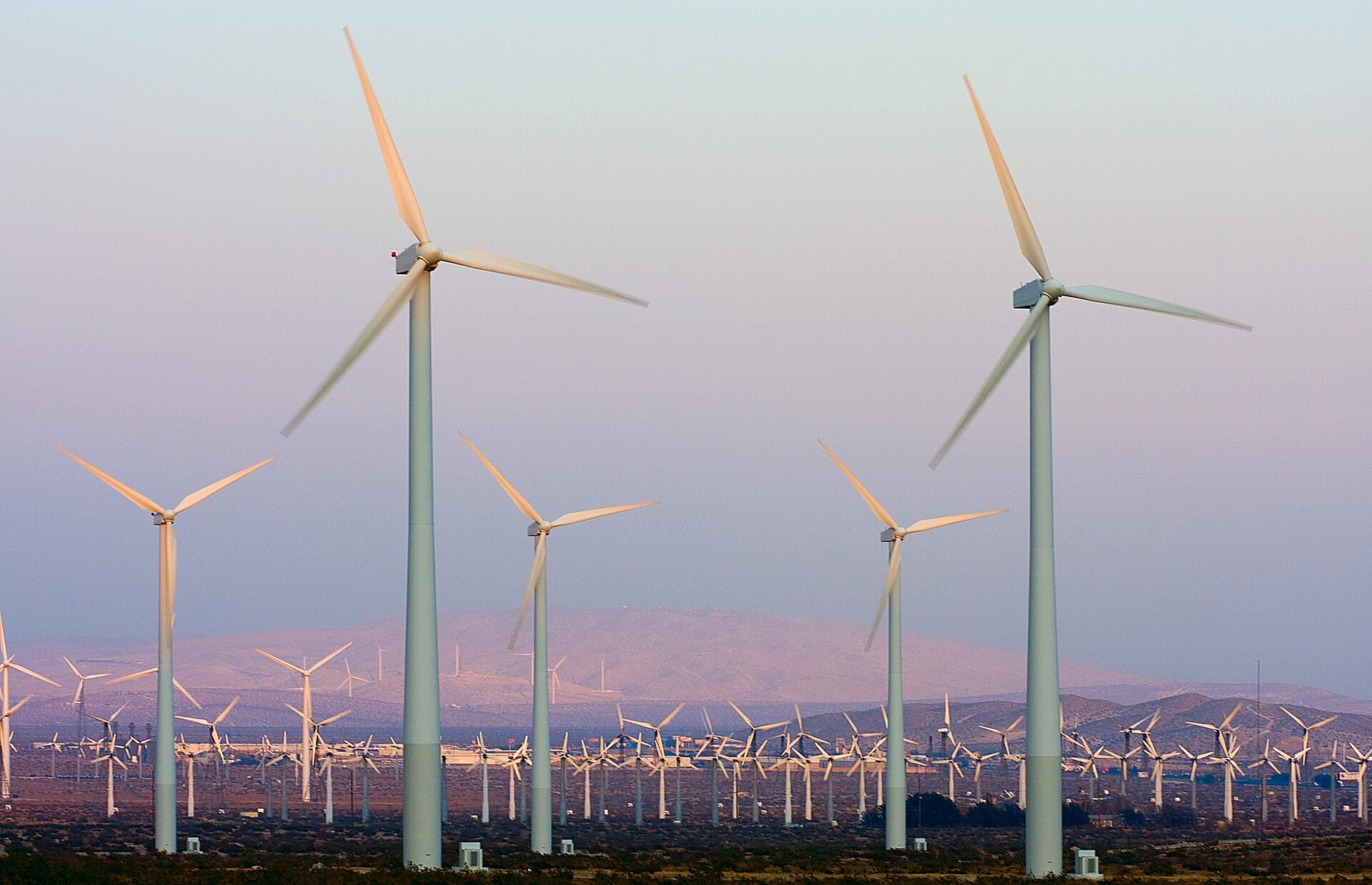
The energy transition’s most uncomfortable geopolitical reality is that replacing dependency on Gulf oil producers with dependency on Chinese-manufactured renewable technology does not increase energy security — it merely shifts the chokepoint. Jason Bordoff and Erica Downs of the Columbia Center on Global Energy Policy have argued that the Iran war “could consolidate China’s energy dominance” through Beijing’s control of solar panel manufacturing, battery production, wind turbine components, and rare earth processing.
China manufactures approximately 80 percent of the world’s solar panels, controls over 60 percent of global lithium refining capacity, produces roughly 75 percent of all lithium-ion batteries, and dominates the processing of rare earth elements essential for wind turbines, electric motors, and advanced electronics. A Western economy that fully electrified its transportation fleet and powered its grid entirely with renewables would exchange dependency on Saudi Arabian and Emirati oil for dependency on Chinese-manufactured equipment and Chinese-processed minerals.
The strategic implications are profound. Saudi Arabia, as an oil supplier, has never used energy exports as a political weapon against its major customers. The 1973 embargo was a collective Arab decision in the context of the Yom Kippur War; the Kingdom’s subsequent strategy has been to position itself as the world’s most reliable supplier. China, by contrast, has already demonstrated willingness to use supply chain leverage for political coercion — restricting rare earth exports to Japan during a 2010 territorial dispute, imposing trade restrictions on Australian commodities over COVID-19 diplomatic tensions, and signaling its capacity to disrupt Taiwanese semiconductor supply chains.
South Korean President Lee Jae Myung’s statement that the Iran war crisis presented “a good opportunity to swiftly and extensively transition to renewable energy” was quoted approvingly by transition advocates. But South Korea sources a majority of its renewable energy equipment from Chinese manufacturers. Accelerating South Korea’s renewable buildout would reduce its dependency on Gulf oil while deepening its dependency on Chinese manufacturing — a trade that offers no net improvement in strategic energy sovereignty.
Can Renewables Be Weaponized Like Fossil Fuels?
UN Secretary-General António Guterres argued during the Iran war’s first week that “sunlight and wind” cannot be “blockaded or weaponised.” This claim, while technically true of the primary energy source, is dangerously misleading about the complete supply chain required to convert sunlight and wind into usable electricity.
Sunlight cannot be blockaded. But the polysilicon ingots, solar cells, inverters, mounting systems, copper wiring, and rare earth magnets required to convert sunlight into grid electricity can all be disrupted, embargoed, sanctioned, or withheld. The same is true for the lithium, cobalt, nickel, manganese, and graphite required for the battery storage systems that make intermittent renewables viable. Each of these materials passes through concentrated supply chains, often controlled by a small number of nations or companies, creating vulnerabilities that are different from but not necessarily smaller than the Strait of Hormuz chokepoint.
The distinction matters because it shapes policy responses to the current crisis. If political leaders conclude that renewable energy supply chains are invulnerable to geopolitical disruption, they will underinvest in supply chain diversification, strategic mineral stockpiles, and domestic manufacturing capacity — repeating with renewables exactly the mistake that the current oil dependency crisis has exposed.
Saudi Arabia’s approach offers a contrasting model. The Kingdom is not merely installing renewable capacity; it is building domestic manufacturing capability for solar panels and green hydrogen electrolyzer technology, investing in the mineral supply chains required for battery production, and establishing itself as a potential hub for renewable energy technology exports to Africa and South Asia. This is not the strategy of a nation clinging to an oil-only future. It is the strategy of a nation determined to supply whatever the world needs, in whatever form the market demands.
The Kingdom’s Dual Strategy
Understanding Saudi Arabia’s energy positioning requires recognizing that Mohammed bin Salman’s Vision 2030 was never a plan to abandon oil. It was a plan to ensure that the Kingdom prospers whether oil remains dominant for another century or is gradually displaced by alternatives. The Iran war has stress-tested this strategy — and the results, despite the physical damage from Iranian attacks, vindicate the dual approach.
The oil dimension of the strategy is performing as designed. Saudi Arabia demonstrated in February 2026 that it could ramp production by nearly 800,000 barrels per day within weeks when it chose to — surging from 10.1 to 10.882 million barrels per day ahead of the conflict. Aramco maintains the world’s only meaningful spare production capacity, estimated at 2-3 million barrels per day, giving the Kingdom a market-moving capability that no other producer can replicate. With crude prices elevated to wartime levels, Aramco’s revenues are providing the fiscal resources to manage the crisis while continuing long-term investment.
The renewable dimension, less visible during the current crisis, represents the Kingdom’s insurance policy against an eventual decline in oil demand. The $32 billion green energy investment pipeline for 2025-2030 includes projects that will transform Saudi Arabia into a major renewable energy producer and exporter. The ACWA Power portfolio alone represents $8.3 billion of investment across 15 GW of renewable capacity. When the NEOM Green Hydrogen plant begins producing 600 tonnes per day of carbon-free hydrogen later this year, Saudi Arabia will become the world’s largest green hydrogen exporter — selling clean energy to the same customers currently buying its crude oil.
The strategic coherence is elegant. Saudi Arabia makes money on oil today while the world needs oil. It invests those oil revenues in renewable infrastructure that will make money tomorrow when the world needs hydrogen and solar electricity. The Iran war has not disrupted this strategy; it has accelerated the timeline by demonstrating to the world that it needs Saudi energy — in all its forms — more urgently than previously understood.
Renewable energy offers countries an “exit ramp” away from fossil-fuel dependence. Homegrown renewable energy has never been cheaper, more accessible or more scalable.
António Guterres, UN Secretary-General, March 2026
Guterres’s statement is correct in principle. But the Iran war has revealed that the exit ramp is 30 years long, and the world still needs someone to maintain the highway while it slowly transfers traffic. Saudi Arabia has positioned itself to be that someone — collecting toll revenue on the old road while simultaneously building the new one.
Where Does the Energy Transition Go From Here?
The Iran war will reshape energy transition policy in three fundamental ways, each of which strengthens Saudi Arabia’s strategic position.
Energy security will displace climate goals as the primary driver of energy policy in most countries. The EU’s Teresa Ribiera, European Commissioner for Energy, stated that the “answer is not new dependencies, but faster electrification, renewables and efficiency.” But her own member states are simultaneously extending coal plant lifetimes, accelerating LNG terminal construction, and exploring new nuclear reactor programs — moves that prioritize energy security over emissions reduction. Simon Stiell, the UN climate chief, warned that “fossil fuel dependence leaves economies at mercy of each conflict,” yet the immediate policy response across Asia has been to secure more fossil fuel supply, not less.
The second shift concerns strategic stockpiling. Just as the 1973 oil crisis created the IEA and the concept of strategic petroleum reserves, the 2026 Iran war will likely catalyze the creation of strategic mineral reserves for renewable energy supply chains. This is a necessary step, but it adds cost and complexity to the transition. Building stockpiles of lithium, cobalt, rare earths, and copper requires billions of dollars in upfront investment and years of procurement — time and money that will not be available for additional renewable capacity deployment.
The third and most consequential shift concerns the political economy of transition timelines. Before the Iran war, the dominant political narrative in Western capitals was that the energy transition needed to accelerate — that timelines should be pulled forward, targets made more ambitious, and fossil fuel investment actively discouraged. The war has introduced a powerful counter-narrative: that premature transition creates vulnerability, that energy security requires maintained access to fossil fuels, and that the pace of transition must be set by technological readiness rather than political aspiration.
Saudi Arabia’s Energy Minister, Prince Abdulaziz bin Salman, has argued this position consistently at every OPEC meeting and international energy forum for the past five years. The Kingdom has been accused of obstructing climate progress, lobbying against fossil fuel phase-out language at COP summits, and prioritizing oil revenue over planetary health. The Iran war has not vindicated obstruction. But it has vindicated the core argument that the transition must be gradual, that oil investment must continue alongside renewable investment, and that the world cannot safely reduce fossil fuel supply before alternatives are operating at sufficient scale to replace it.
| Country / Bloc | Pre-War Energy Transition Policy | Post-War Policy Response | Net Effect on Transition |
|---|---|---|---|
| European Union | Accelerated renewable targets, coal phase-out | Coal lifetime extensions, new LNG terminals, reserve releases | Slowed |
| United States | Trump fossil fuel expansion, IRA clean energy subsidies | $20B tanker reinsurance, “drill baby drill” rhetoric amplified | Slowed |
| Japan | Slow nuclear restart, solar expansion | Accelerated nuclear restart discussions, emergency LNG procurement | Mixed |
| South Korea | Renewable expansion, coal phase-down | Fuel price caps, emergency measures, president calls for faster transition | Mixed / Accelerated rhetoric |
| India | Massive solar buildout, continued coal expansion | Essential Commodities Act, expanded coal production, Russian oil waiver | Slowed |
| China | Largest renewable installer, peak coal pledge | Largest retail fuel price hike in 4 years, expanded coal production | Slowed |
| Saudi Arabia | Dual oil/renewable strategy, Vision 2030 | Oil production surge, continued renewable investment, wartime fiscal strength | Validated / Unchanged |
The table above reveals a striking pattern: every major economy responded to the Iran war energy shock by reinforcing its fossil fuel supply rather than accelerating its transition away from fossil fuels. Only South Korea’s rhetoric pointed toward faster transition, and even South Korea’s actual policy measures — fuel price caps, emergency reserve draws — were entirely fossil-fuel-focused. Saudi Arabia is the only country whose pre-war and post-war energy strategies are essentially identical, because its dual approach was designed to withstand exactly this kind of disruption.
The deeper question that the war forces every government to confront is whether the energy transition is best understood as a sprint or a marathon. The sprint model — which dominated pre-war policy discourse — calls for aggressive targets, immediate investment reallocation, and deliberate suppression of fossil fuel supply to force faster adoption of alternatives. The marathon model — which Saudi Arabia has consistently advocated — calls for parallel investment in both fossil fuels and renewables, gradual supply-side transition as demand naturally shifts, and realistic assessment of geopolitical risk.
Eleven days of war have not ended the energy transition. They have ended the fantasy that the transition can be accomplished without maintaining robust fossil fuel supply chains for decades to come. Saudi Arabia understood this before the first Iranian missile was fired. The rest of the world is learning it now.
Frequently Asked Questions
How has the Iran war affected global oil prices?
Brent crude surged from $82 per barrel to a peak of $119 between 28 February and 9 March 2026, representing a 45 percent increase. The spike was driven by the effective closure of the Strait of Hormuz, through which approximately 25 percent of the world’s seaborne oil and 20 percent of global LNG normally transit. Prices subsequently moderated to around $91.70 after President Trump’s peace comments on 10 March, but remain significantly elevated above pre-war levels.
Is Saudi Arabia investing in renewable energy?
Saudi Arabia is investing more heavily in renewable energy than any other Middle Eastern nation. The Kingdom plans to award 14 GW of new renewable capacity in 2026, has a $32 billion green energy investment pipeline for 2025-2030, and targets 130 GW of total renewable capacity by the decade’s end. The $8.4 billion NEOM Green Hydrogen plant, set to produce 600 tonnes of carbon-free hydrogen per day, will be the world’s largest when operational in late 2026. ACWA Power is investing $8.3 billion across 15 GW of renewable projects scheduled for completion by 2028.
Why can’t renewable energy replace oil immediately?
Renewable energy generates electricity, while oil primarily powers transportation, petrochemicals, and industrial processes that lack commercially viable electric alternatives at scale. The global vehicle fleet exceeds 1.4 billion cars, and even at 20 million electric vehicle sales per year, full replacement would take over 50 years. Aviation, maritime shipping, long-haul trucking, and petrochemical production remain almost entirely dependent on petroleum-derived fuels. Fossil fuels still supply nearly 80 percent of global energy demand, a proportion essentially unchanged over 25 years.
Which countries are most vulnerable to Gulf oil disruption?
Japan and South Korea face the greatest vulnerability, with 75 percent and 70 percent of their oil imports respectively sourced from the Middle East. India draws approximately 60 percent of its crude from the region, while 40 percent of China’s oil imports transit the Strait of Hormuz. Bangladesh, which imports 95 percent of its energy, has been among the hardest-hit nations, closing universities and halting industrial production within days of the Hormuz disruption. Pakistan, which sources 99 percent of its LNG from Qatar and the UAE, faces acute gas supply risk.
What did the IEA do in response to the Iran war energy crisis?
On 11 March 2026, 32 IEA member nations coordinated the release of 400 million barrels from strategic petroleum reserves — the largest emergency release in the agency’s 50-year history. IEA Executive Director Fatih Birol described the challenges as “unprecedented in scale.” The release was designed to stabilize markets and compensate for the loss of Gulf supply through the Strait of Hormuz, though analysts noted that strategic reserves provide only temporary relief and cannot substitute for restored physical supply routes.
How does Saudi Arabia’s energy strategy differ from other countries?
Saudi Arabia operates a dual strategy that simultaneously maximizes oil revenue and invests in renewable energy. The Kingdom ramped oil production to 10.882 million barrels per day in February 2026 while maintaining a $32 billion renewable energy investment pipeline. This approach contrasts with most Western economies, which have attempted to accelerate away from fossil fuels through targets and mandates, and with developing nations, which lack the resources for significant renewable investment. The Iran war has validated the dual approach by demonstrating that fossil fuel supply remains essential while renewable capacity continues to scale.