
RIYADH — The Iran war has inflicted more economic damage on Gulf states in seventeen days than the entire Covid-19 pandemic did in twelve months, according to Goldman Sachs projections released this week that show Qatar and Kuwait facing a 14 percent GDP contraction if the Strait of Hormuz remains closed through April. The assessment, the most granular country-by-country forecast published since hostilities began on February 28, reveals a Gulf Cooperation Council split in two by a single variable: which nations built pipeline bypasses before the missiles flew, and which did not. Saudi Arabia faces a comparatively manageable three percent GDP decline thanks to its East-West pipeline network, while Bahrain, Oman, and the two hardest-hit economies have no way to export hydrocarbons at all. The implications extend far beyond the region, threatening a global supply chain that provides 20 percent of the world’s seaborne oil, one-third of its helium, and nearly a third of its urea fertilizer.
Table of Contents
- What Does Goldman Sachs Project for Gulf Economies?
- Why Are Qatar and Kuwait Facing the Steepest Declines?
- The Pipeline Divide That Splits the GCC in Two
- How Does the Iran War Compare to Covid’s Economic Blow?
- The 1990 Gulf War Precedent and What It Reveals About Recovery
- Where Did $124 Billion in Gulf Stock Market Value Disappear?
- The Tourism Collapse and 40,000 Cancelled Flights
- The Hormuz Chokepoint and Global Trade Disruption
- Iran Spends Millions. The Gulf Spends Billions.
- The Gulf Economic Resilience Index
- Why Saudi Arabia May Emerge From This War Economically Stronger
- What Are Markets Still Underestimating About This War?
- Frequently Asked Questions
What Does Goldman Sachs Project for Gulf Economies?
Goldman Sachs economist Farouk Soussa published the most consequential economic forecast of the conflict on March 15, projecting that Qatar and Kuwait each face a 14 percent GDP contraction in 2026 if the Strait of Hormuz remains effectively closed through April. The figure exceeds every downside scenario that major investment banks had modeled before the war began.
The projections paint a picture of a GCC divided into two tiers of economic pain. Saudi Arabia and the UAE, which maintain pipeline infrastructure capable of bypassing Hormuz, face GDP declines of approximately three percent and five percent respectively. Qatar, Kuwait, Bahrain, and Oman, which have no such alternatives, confront the prospect of economic devastation not seen since the early 1990s.
| Country | Nominal GDP (2024) | Projected GDP Change | Pipeline Bypass | Oil Production Drop |
|---|---|---|---|---|
| Qatar | $219.2 billion | -14% | None | >25% |
| Kuwait | $160.2 billion | -14% | None | >25% |
| UAE | $552.3 billion | -5% | ADCOP (1.5 mbpd) | ~16% |
| Saudi Arabia | $1,239.8 billion | -3% | East-West (7 mbpd) | ~12% |
| Bahrain | $47.1 billion | N/A (severe) | None | >25% |
| Oman | $107.1 billion | N/A (severe) | None | >25% |
Goldman revised its global growth forecast downward to 2.6 percent from 2.9 percent, with headline inflation expected to reach 2.9 percent on a fourth-quarter basis. The oil price surge alone is projected to reduce global GDP by approximately 0.3 percent and raise headline inflation by 0.5 to 0.6 percentage points over the next twelve months, according to the bank’s modeling.
Oxford Economics separately downgraded its GCC real GDP growth forecast by 1.8 percentage points to 2.6 percent for 2026, noting that the UAE and Qatar are dragging regional growth down most severely due to their inability to fully reroute hydrocarbon exports. The firm expects trade and domestic activity to recover gradually in the second half of 2026, contingent on a ceasefire, and has raised its 2027 forecast by one percentage point to reflect catch-up growth.
Why Are Qatar and Kuwait Facing the Steepest Declines?
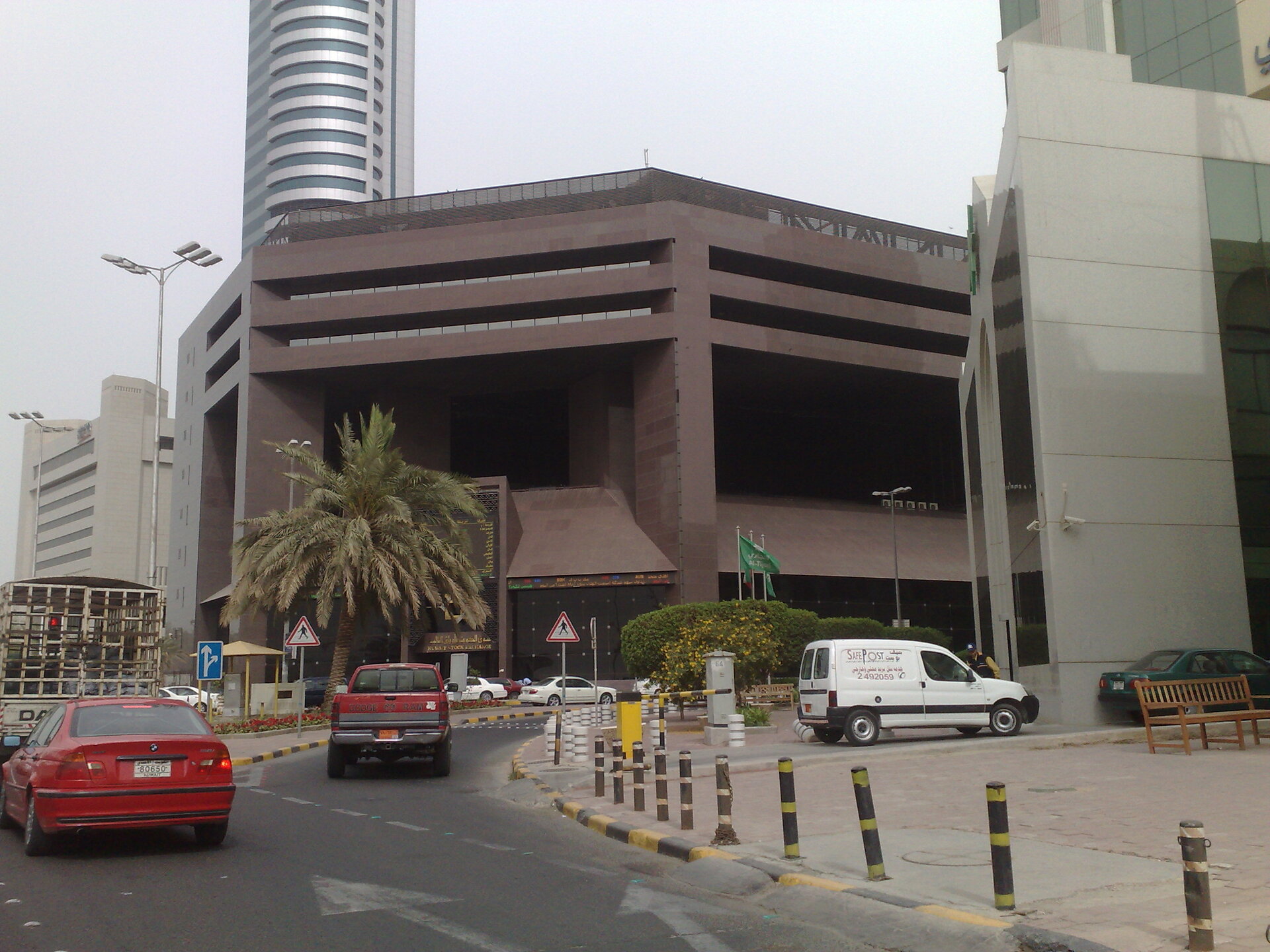
Qatar and Kuwait are absorbing the heaviest economic blows because they share a vulnerability no amount of sovereign wealth can offset: complete dependence on the Strait of Hormuz for hydrocarbon exports. Unlike Saudi Arabia, which can redirect crude through its 750-mile East-West pipeline to Yanbu on the Red Sea, and unlike the UAE, which maintains the 248-mile Habshan-Fujairah pipeline to the Indian Ocean, Qatar and Kuwait have no bypass infrastructure.
For Qatar, the math is particularly unforgiving. Hydrocarbons account for roughly 50 percent of GDP, and virtually all of Qatar’s liquefied natural gas — the commodity that transformed the peninsula from a fishing backwater into the world’s wealthiest country per capita — transits Hormuz. Goldman projects Qatar’s oil and gas production will shrink by more than 25 percent during a sustained blockade, a figure that compounds when downstream effects on the petrochemical sector, shipping services, and trade-dependent industries are factored in.
Qatar also sits at the center of two supply chains most people never think about. The country supplies roughly one-third of the world’s helium, a gas critical to semiconductor manufacturing and medical imaging equipment. It is also a major exporter of urea fertilizer, with Egyptian urea prices soaring 37 percent within days of Qatari gas facilities suspending operations, according to commodity trading data compiled by Reuters. Spring planting season across the Northern Hemisphere has made this disruption particularly acute.
Kuwait’s exposure mirrors Qatar’s in structure if not in scale. The country’s hydrocarbon revenues fund nearly everything — the public sector payroll, the construction pipeline, the generous welfare state that provides free education, healthcare, and subsidized housing to Kuwaiti nationals. A 14 percent GDP contraction would force the government to draw down its sovereign wealth reserves at a pace last seen during the 1990 Iraqi invasion, which Kuwait is still psychologically recovering from three decades later.
The smaller GCC states face comparably dire circumstances. Bahrain, with GDP of just $47.1 billion, depends heavily on Saudi Arabia for economic support and has no independent export route. Oman, despite Sultan Haitham’s careful neutrality and diplomatic efforts to mediate the conflict, cannot escape the geography that places its oil export terminals squarely within Hormuz’s chokepoint.
The Pipeline Divide That Splits the GCC in Two
The single most consequential infrastructure decision in modern Gulf history turned out to be a pipeline. Saudi Arabia’s East-West Crude Oil Pipeline, known as the Petroline, runs approximately 750 miles from the Abqaiq processing facility in the Eastern Province to the Yanbu terminal on the Red Sea. Originally built in the 1980s during the Iran-Iraq war — a previous Hormuz crisis — the system has a design capacity of seven million barrels per day following recent expansions. Aramco has announced it expects the network to reach full capacity within days of the blockade.
The UAE maintains a smaller but similarly vital alternative. The Abu Dhabi Crude Oil Pipeline, or ADCOP, stretches 248 miles from the Habshan fields to the Fujairah terminal on the Gulf of Oman, outside Hormuz entirely. The pipeline was operating at roughly 71 percent utilization before the war, moving approximately 1.07 million barrels per day against a normal capacity of 1.5 million and a surge capacity of up to 1.8 million barrels per day. That gives the UAE an additional 440,000 barrels per day of spare capacity that can be brought online relatively quickly.
CNBC reported on March 12 that both Saudi Arabia and the UAE had already begun increasing pipeline utilization to compensate for the Hormuz closure, with Saudi authorities diverting crude exports to the Yanbu terminal to reduce dependence on the blocked strait. The existence of these pipelines explains the stark divergence in Goldman’s projections: Saudi Arabia’s three percent decline versus Qatar and Kuwait’s 14 percent.
| Country | Pipeline Name | Route | Capacity (mbpd) | Status |
|---|---|---|---|---|
| Saudi Arabia | East-West (Petroline) | Abqaiq to Yanbu (Red Sea) | 7.0 | Ramping to full |
| UAE | ADCOP (Habshan-Fujairah) | Habshan to Fujairah (Indian Ocean) | 1.5-1.8 | 71% utilization, expanding |
| Qatar | None | — | 0 | Fully exposed |
| Kuwait | None | — | 0 | Fully exposed |
| Bahrain | None | — | 0 | Fully exposed |
| Oman | None | — | 0 | Fully exposed |
The pipeline divide reflects a deeper strategic truth. Saudi Arabia invested in bypass infrastructure after the Iran-Iraq war taught a lesson about Hormuz vulnerability. The lesson cost billions of dollars and decades of construction. Qatar, Kuwait, Bahrain, and Oman never built equivalents, either because the investment seemed unnecessary during decades of relative stability or because their geography made pipeline routes impractical. The Iran war has turned that decades-old infrastructure gap into the defining variable of the Gulf’s economic future.
How Does the Iran War Compare to Covid’s Economic Blow?
The GCC contracted by 4.8 percent overall during the Covid-19 pandemic in 2020, according to the World Bank. For context, Qatar’s economy — now facing a projected 14 percent contraction — shrank by only 3.1 percent during the pandemic, the smallest decline in the bloc. Kuwait, facing an equally dire projection, experienced an 8.1 percent contraction in 2020, which was the GCC’s worst performance. If the Goldman projections materialize, the Iran war will have inflicted nearly five times more damage on Qatar and almost twice as much on Kuwait as the worst pandemic in a century.
| Country | Covid-19 GDP Change (2020) | Iran War GDP Change (2026 projection) | Severity Multiple |
|---|---|---|---|
| Qatar | -3.1% | -14% | 4.5x worse |
| Kuwait | -8.1% | -14% | 1.7x worse |
| UAE | -5.0 to -5.9% | -5% | Comparable |
| Saudi Arabia | -4.1% | -3% | Slightly less severe |
| Bahrain | -5.9% | Severe (est. >10%) | >1.7x worse |
| Oman | -3.4% | Severe (est. >10%) | >2.9x worse |
“For many Gulf economies, the war could have a bigger near-term impact than Covid,” Farouk Soussa told Bloomberg, adding that while states may eventually rebuild, the longer-term damage to investor confidence remains unclear. The comparison is striking because Covid’s economic impact was cushioned by aggressive fiscal stimulus. Qatar deployed support equivalent to 14 percent of GDP during the pandemic. Saudi Arabia’s net borrowing peaked at 10.2 percent of GDP. Kuwait’s fiscal stimulus amounted to 1.5 percent of GDP.
The Iran war, by contrast, does not lend itself to the same policy toolkit. Central banks cannot print their way out of a physical blockade. Interest rate cuts cannot reopen a strait guarded by Iranian mines, fast-attack boats, and anti-ship missiles. The economic shock is supply-side — production facilities are intact, demand exists, but the transportation corridor that connects Gulf output to global markets has been physically severed. That distinction makes recovery contingent entirely on a ceasefire or a military solution to the Hormuz crisis, neither of which appears imminent.
Oil prices during the pandemic averaged $41.30 per barrel, a four-year low that compounded the demand destruction from lockdowns. The Iran war has produced the opposite problem: Brent crude surged from $67 per barrel before the conflict to a peak of $126 per barrel, settling around $103-105 per barrel as of March 16. Higher prices theoretically benefit producers, but only those who can actually export their oil. For Qatar and Kuwait, elevated prices on barrels they cannot ship represent a bitter irony — the world is willing to pay a premium for their hydrocarbons, but Hormuz stands between the commodity and its buyers.
The 1990 Gulf War Precedent and What It Reveals About Recovery
Kuwait’s economy collapsed by approximately 58 percent between 1989 and 1991 after Iraq’s invasion, falling from $24 billion to $10 billion in GDP. Iraqi forces set ablaze roughly 750 of Kuwait’s 1,300 oil wells, with lost revenue estimated at $12.3 to $38.4 billion over nine months. Total infrastructure damage approached $100 billion when asset destruction, petroleum losses, and foregone exports were combined. Government debt surged past 200 percent of GDP, and inflation reached 60 percent.
The recovery, however, offers a qualified precedent for optimism. Kuwait’s GDP rebounded between 1993 and 1995 as oil production resumed, and the country eventually surpassed its pre-invasion economic output. The process took roughly four years from liberation to full recovery, powered by the reconstruction boom and restored hydrocarbon exports.
The current crisis differs from 1990 in ways that cut both directions. On one hand, Gulf states today possess far larger sovereign wealth reserves than Kuwait did in 1990. The Abu Dhabi Investment Authority, the Qatar Investment Authority, the Kuwait Investment Authority, and Saudi Arabia’s Public Investment Fund collectively manage over $4 trillion in assets, providing a financial buffer that dwarfs anything available during the previous Gulf War. On the other hand, the 2026 conflict has not destroyed production infrastructure in the way Iraq’s demolition of Kuwaiti oil wells did. If a ceasefire opens Hormuz, production could resume within days rather than years.
The regional impact of the 1990 war extended beyond Kuwait. Saudi Arabia drained $27.9 billion from its treasury by the end of 1990 to cope with the crisis, including hosting coalition forces and absorbing Kuwaiti refugees. Bahrain’s offshore banking units lost $13.7 billion in deposits, representing 21 percent of total assets, as depositors fled for safer jurisdictions. Local commercial banks in Bahrain lost 15 percent of deposits. These historical patterns are now repeating: the financial sector across the UAE has already experienced significant capital outflows, and Bahrain’s banking sector faces renewed pressure.
The critical question is not whether Gulf economies will recover but how long recovery takes and what structural changes the conflict forces. After 1990, Kuwait did not simply rebuild its pre-war economy — it made new decisions about military spending, alliance structures, and the role of American bases on its soil that reshaped the country for a generation. The same transformation is already underway across the GCC.
Bloomberg published a separate analysis on March 13 arguing that the trauma of the conflict will permanently reshape Gulf Arab states, drawing the explicit parallel to Kuwait before and after 1990. The Kuwait of 1989 was an open society with participatory politics and modern infrastructure. Iraqi tanks rolled in, and the psychological rupture reversed decades of social progress. Bloomberg argued that Iranian missiles arcing across Gulf skies threaten to produce the same kind of structural discontinuity — not a temporary disruption but a permanent inflection point in how Gulf states think about defence, regional alliances, overseas investment, and their role in global markets. The Atlantic Council echoed this assessment, arguing that the Gulf that emerges from the Iran war will be fundamentally different from the one that entered it.
Where Did $124 Billion in Gulf Stock Market Value Disappear?
UAE stock exchanges suspended trading for two full days after the initial strikes on February 28. When the Dubai Financial Market and Abu Dhabi Securities Exchange reopened, the sell-off was immediate and punishing. The Dubai index plunged 4.65 percent on reopening day, shedding 302 points to close at 6,201. Abu Dhabi fell 2.78 percent, dropping 309 points to 10,156. The losses accelerated over the following sessions.
By the end of the second week of trading under wartime conditions, nearly $124 billion had been wiped from the value of listed UAE companies — approximately $49 billion from the Dubai market and $75 billion from Abu Dhabi, according to exchange data compiled by AGBI. The Dubai index fell between 17 and 19.5 percent from its pre-war level across eight trading sessions, while Abu Dhabi declined 9 to 9.5 percent.
Saudi Arabia’s Tadawul opened 4.8 percent lower on March 1, the first trading day after strikes began, but closed the session down 2.2 percent as bargain hunters absorbed the initial panic. The relatively modest Saudi decline — compared to the double-digit collapses in the UAE — reflects both the Kingdom’s pipeline infrastructure advantage and MBS’s success in positioning Riyadh as the indispensable Gulf economy in the conflict. A detailed sector-by-sector analysis of the Tadawul during the war reveals how local institutional buying and Aramco’s dominance powered the recovery.
Banking and real estate stocks absorbed the worst damage. Emaar Properties, the developer behind Dubai’s Burj Khalifa and dozens of megaprojects, fell three percent in a single session. Aldar Properties in Abu Dhabi dropped 4.3 percent. Emirates NBD, one of the Gulf’s largest banks, shed 4.9 percent. The real estate declines are particularly significant because property has been the primary asset class attracting foreign capital to Dubai over the past decade, and confidence damage in the sector tends to compound over multiple quarters.
The capital flight that preceded the market crash has its own geography. Bloomberg reported that more than 5,000 American employees critical to Vision 2030 knowledge-transfer programs have left or are preparing to depart Saudi Arabia. FDI inflows to the Kingdom could decline 60 to 70 percent in the first quarter of 2026 compared to the same period last year, according to AGBI analysis. Goldman Sachs relocated staff from Dubai. HSBC moved personnel from Qatar. The human capital flight represents a second-order economic cost that will persist long after the missiles stop — though some analysts argue the war is inadvertently accelerating Vision 2030 objectives by forcing diversification that peacetime bureaucracy could not deliver. The IRGC’s subsequent threat to strike every American-linked industrial facility in the Gulf has only accelerated these departures.
The Tourism Collapse and 40,000 Cancelled Flights
More than 40,000 flights have been cancelled across the Gulf region since Iran’s first retaliatory strikes, according to data from Al Jazeera and flight-tracking services. More than 80 percent of Dubai’s flights were cancelled during the peak of hostilities, and more than 50 percent of Abu Dhabi’s operations were suspended, per FlightAware data. Over one million travelers were stranded worldwide at the peak of the disruption, according to aviation analytics firm Cirium.
Dubai International Airport, the world’s busiest by international passenger traffic, remained closed or severely restricted for more than four days. Doha’s Hamad International Airport, the hub for Qatar Airways, faced similar constraints. Abu Dhabi International saw extended closures. Airspace restrictions and closures affected eleven countries simultaneously: Bahrain, Iran, Iraq, Israel, Jordan, Kuwait, Lebanon, Oman, Qatar, the UAE, and Saudi Arabia.
The total annual passenger capacity affected by the disruption exceeds 360 million passengers across the region’s major hubs. The UAE eventually established a safe air corridor with a capacity of 48 flights per hour for repatriation operations, but routine commercial aviation remains severely curtailed.
For the Gulf states, tourism is not a luxury economic input — it is the centrepiece of diversification strategies designed to reduce dependence on hydrocarbons. Dubai welcomed 17.15 million international visitors in 2023, generating $35.6 billion in tourism revenue. Saudi Arabia was targeting 100 million visitors by 2030 under Vision 2030 and had invested tens of billions in tourism infrastructure, including the Red Sea Global resort complex and a portfolio of giga-projects along the western coast. By the end of March, the Kingdom’s aviation shutdown had severed connections from 97 airlines serving 70 countries, turning what was the region’s most connected economy into something approaching a walled state. Luxury hotel bookings in Saudi Arabia dropped an estimated 45 percent in the first two weeks of March, and the Red Sea tourism project has been effectively paused, according to industry data.
CNBC reported that the conflict threatens the $11.7 trillion global travel industry, with Gulf airlines — Emirates, Qatar Airways, Etihad, Saudia, and Gulf Air — collectively representing some of the world’s most profitable and strategically important carriers. The damage to Gulf aviation extends beyond ticket revenues to the cargo operations, maintenance hubs, and connecting-traffic economics that underpin their hub-and-spoke models.
The Hormuz Chokepoint and Global Trade Disruption
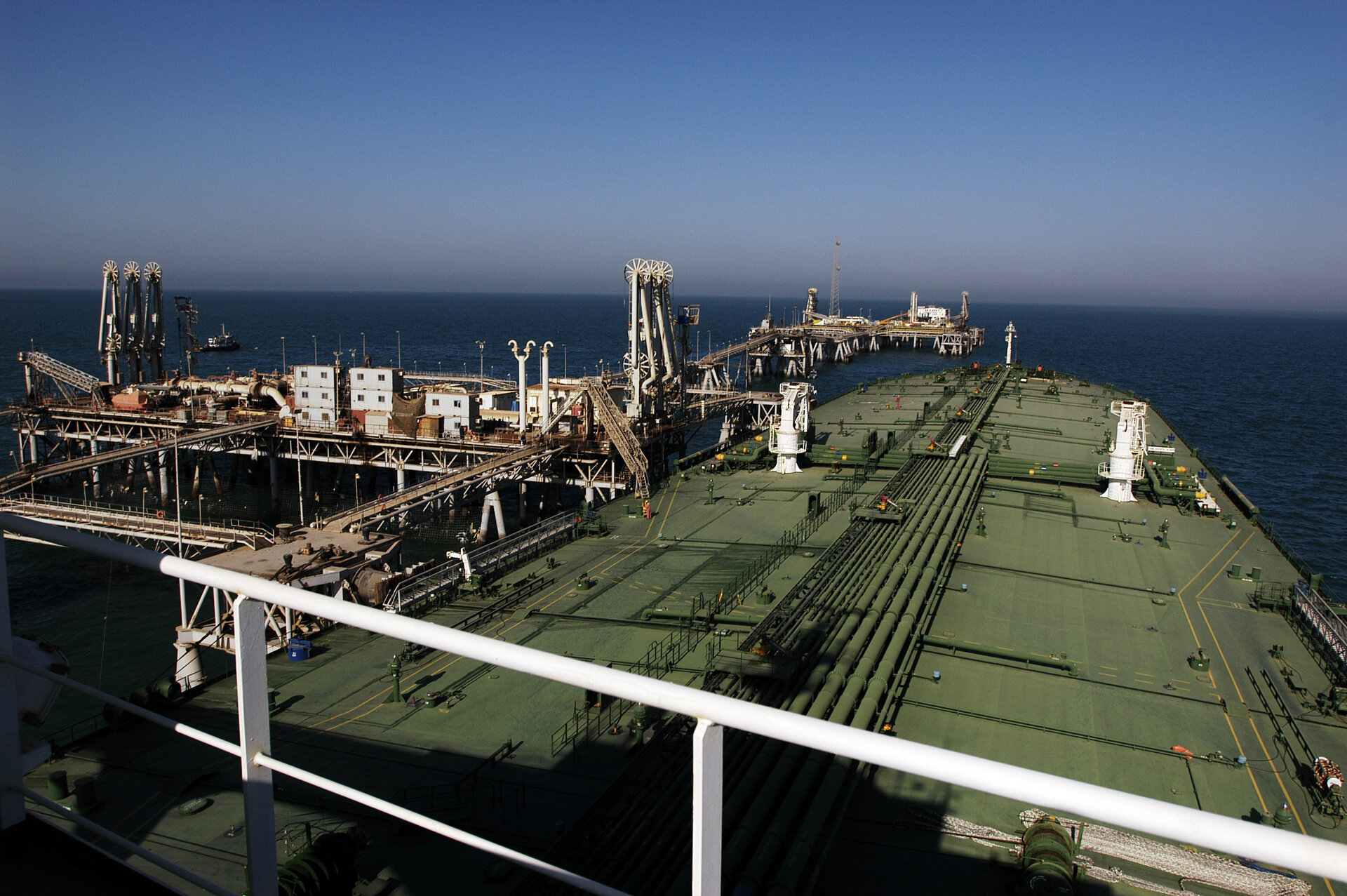
The Strait of Hormuz carried approximately 20 million barrels of crude oil and petroleum products per day before the war — roughly 20 percent of global seaborne oil trade. Significant volumes of liquefied natural gas, refined products, and dry cargo also transited the waterway. Tanker traffic initially dropped approximately 70 percent after Iran began mining operations and deploying fast-attack boats, then fell to effectively zero as major shipping companies suspended transits. Maersk, CMA CGM, and Hapag-Lloyd — three of the world’s four largest container lines — all announced suspension of Hormuz passages, according to shipping industry reports.
Export volumes from Hormuz-dependent states plummeted to less than 10 percent of pre-conflict levels. More than 150 ships anchored outside the strait to avoid risk, creating a floating traffic jam visible on satellite imagery. The disruption has been described by the International Energy Agency as the largest disruption to energy supply in the history of the global oil market — exceeding the 1973 oil embargo, the 1979 Iranian revolution, and the 1990 Gulf War in both absolute volume and market share affected.
The trade disruption extends far beyond hydrocarbons. Qatar and the UAE collectively account for 99 percent of Pakistan’s LNG imports, 72 percent of Bangladesh’s, and 53 percent of India’s. Pakistan and Bangladesh, which maintain limited LNG storage capacity, face immediate energy security crises. South Asian manufacturing, textile production, and agricultural processing all depend on stable gas supply from the Gulf, and the Hormuz blockade has introduced a level of energy insecurity not experienced in the region since the 1970s.
Iraq, though not a GCC state, illustrates the broader economic contagion. Iraqi oil production has been cut from 3.3 million barrels per day to approximately 1.3 million, with the country possessing maximum storage capacity of only six days. Three Gulf producers sharing one chokepoint created a concentration risk that energy economists had warned about for decades. The Iran war has converted that theoretical risk into observable economic destruction across multiple continents.
The United Nations Conference on Trade and Development has published analysis showing that Hormuz disruptions affect not just energy markets but the entire architecture of developing-world trade. Countries in South Asia, East Africa, and Southeast Asia that depend on Gulf trade routes face higher shipping costs, longer transit times, and supply uncertainty that compounds existing economic vulnerabilities. The war’s economic footprint, measured in these terms, extends far beyond the $2.37 trillion GCC economy.
Iran Spends Millions. The Gulf Spends Billions.
The economics of attack versus defence in the Iran war reveal an asymmetry so extreme it functions as a strategic weapon in its own right. Iran’s total strike costs have been estimated at between $194 million and $391 million, according to analysis cited by Al Jazeera. A single Shahed-136 drone costs Iran between $20,000 and $50,000 to produce, according to estimates from the Center for Strategic and International Studies. A single PAC-3 MSE interceptor fired to destroy that drone costs between $3 and $5 million.
The aggregate defence expenditures tell an even starker story. The UAE has spent an estimated $1.31 to $2.61 billion on air defence operations since the war began — up to 13 times Iran’s total expenditure on the strikes themselves. Kuwait’s air defence costs range from $800 million to $1.5 billion. Qatar’s air defence spending has reached $600 million to $900 million. The Gulf states are spending more to shoot down the drones than Iran spends to build and launch them.
This cost asymmetry is why the conflict has been described as a war of economic attrition in which Iran’s cheapest weapons are winning the most expensive war. Iranian drone production operates at industrial scale using commercially available components, many sourced from Chinese suppliers. Gulf interceptor stocks, by contrast, require years of production lead time from American, European, and South Korean manufacturers. The stockpile cannot be replenished at the rate it is being consumed.
| Category | Iran (Attacker) | Gulf States (Defenders) | Ratio |
|---|---|---|---|
| Total strike cost | $194-391 million | $2.7-5.5 billion (combined) | 1:14 |
| Cost per drone | $20,000-50,000 | — | — |
| Cost per interceptor | — | $3-5 million | 1:60-250 |
| UAE defence costs | — | $1.31-2.61 billion | Up to 13x Iran total |
| Kuwait defence costs | — | $800 million-1.5 billion | — |
| Qatar defence costs | — | $600-900 million | — |
The financial drain extends beyond missile expenditure. Every hour the Strait of Hormuz remains closed, Gulf states collectively lose an estimated $400 million in hydrocarbon export revenue that cannot be recovered. The blockade has turned Hormuz into the most expensive piece of geography on Earth — not because of what transits it, but because of what can no longer pass through.
The Gulf Economic Resilience Index
Measuring which Gulf economies are most and least vulnerable to the Iran war requires examining five structural variables: hydrocarbon dependency, export bypass capacity, sovereign wealth reserves relative to GDP, non-oil sector development, and strategic alliance strength. A weighted assessment of these factors reveals a clear hierarchy of resilience across the six GCC states.
| Factor (Weight) | Saudi Arabia | UAE | Qatar | Kuwait | Oman | Bahrain |
|---|---|---|---|---|---|---|
| Hydrocarbon Dependency (25%) | 6/10 | 7/10 | 3/10 | 3/10 | 3/10 | 5/10 |
| Export Bypass Capacity (30%) | 9/10 | 7/10 | 1/10 | 1/10 | 1/10 | 1/10 |
| Sovereign Wealth Buffer (15%) | 7/10 | 9/10 | 9/10 | 8/10 | 5/10 | 3/10 |
| Non-Oil Diversification (15%) | 6/10 | 8/10 | 5/10 | 3/10 | 4/10 | 6/10 |
| Alliance Strength (15%) | 9/10 | 8/10 | 6/10 | 7/10 | 5/10 | 7/10 |
| Weighted Resilience Score | 7.6 | 7.7 | 4.0 | 3.8 | 3.0 | 3.7 |
The scoring methodology assigns the highest weight to export bypass capacity (30 percent) because the Hormuz blockade is the primary economic mechanism of the war. A country with full bypass infrastructure, like Saudi Arabia, can redirect exports regardless of how long the blockade persists. A country without any bypass, like Kuwait, faces an absolute ceiling on economic activity that no amount of financial reserves can overcome in the short term.
Hydrocarbon dependency receives the second-highest weight (25 percent) because it determines how much of the economy is directly exposed to the export disruption. The UAE scores highest on diversification — hydrocarbons account for roughly 28 percent of GDP, compared to 50 percent for Qatar and 47 percent for Oman. Saudi Arabia falls in the middle at approximately 37 percent, reflecting the progress of Vision 2030 diversification efforts but also the Kingdom’s continued reliance on Aramco revenues.
Sovereign wealth reserves function as a shock absorber. Qatar’s Investment Authority manages assets estimated at over $475 billion, giving the peninsula one of the world’s highest sovereign-wealth-to-GDP ratios. Kuwait’s Investment Authority controls approximately $923 billion. Abu Dhabi’s ADIA manages over $900 billion. Saudi Arabia’s PIF has grown to approximately $930 billion. These reserves allow Gulf states to sustain government spending and social programs during revenue shortfalls, but they buy time rather than solving the underlying problem. Bahrain, with a relatively modest sovereign wealth position, is the most financially vulnerable.
Alliance strength matters because external military and diplomatic support determines how quickly the Hormuz crisis can be resolved. Saudi Arabia and the UAE benefit from direct U.S. military engagement, Pakistani troop deployments, and emerging defence partnerships with Ukraine and South Korea. Qatar maintains strategic value as a host of the largest U.S. air base in the region — Al Udeid — but its diplomatic positioning between Iran and the West complicates its alliance profile. Oman’s studied neutrality, while diplomatically useful, means it lacks the military partnerships that could accelerate protection of its export routes.
For many Gulf economies, the war could have a bigger near-term impact than Covid.
Farouk Soussa, Goldman Sachs economist, March 15, 2026
Why Saudi Arabia May Emerge From This War Economically Stronger
The contrarian case for Saudi Arabia is straightforward and uncomfortable for its neighbours: MBS invested in pipeline infrastructure, military capabilities, and strategic alliances before the war, and those investments are now paying dividends that will reshape the Gulf’s economic hierarchy for a decade. Saudi Arabia’s projected three percent GDP decline is not just smaller than its neighbours’ — it may understate the Kingdom’s relative gain.
Goldman Sachs noted that Saudi Arabia could actually outperform its pre-war economic forecasts if oil prices and exports remain elevated through the Yanbu pipeline network. The East-West pipeline’s seven-million-barrel-per-day capacity means Aramco can maintain significant export volumes even with Hormuz closed. Those exports are selling at war-premium prices — Brent crude at $103-105 per barrel versus the $67-68 pre-war baseline, a 55 percent markup. Revenue per barrel exported has increased substantially even as total volumes have declined.
The Kingdom is also capturing an increasing share of financial flows that previously went to Dubai, Doha, and other regional centres. As companies and high-net-worth individuals reassess their Gulf footprint, Riyadh — further from the Hormuz front line and protected by the most comprehensive air defence network in the region — is positioned as the default safe harbour. The $16 billion in additional revenue that the war has generated through higher oil prices on Yanbu-routed exports gives MBS fiscal space that other Gulf leaders can only envy.
The structural argument goes deeper. Before the war, Saudi Arabia’s Vision 2030 was frequently criticised as an overambitious vanity project — a $1 trillion bet on tourism, entertainment, sports, and technology that might never generate returns sufficient to replace oil revenue. The Iran war has reframed that criticism. Vision 2030’s non-oil economy now functions as a hedge against exactly the kind of hydrocarbon disruption the Kingdom is experiencing. Every percentage point of GDP that comes from non-oil sources is a percentage point insulated from the Hormuz blockade.
The Kingdom’s three-front war strategy — military defence, diplomatic mediation, and economic resilience — has positioned Riyadh as the GCC’s indispensable capital. Prince Faisal bin Farhan has held direct calls with Iranian, American, Russian, and Chinese counterparts, establishing Riyadh as one of the few actors with communication channels to all parties. That diplomatic centrality translates into economic influence: when the reconstruction contracts are awarded, when the new security architectures are negotiated, when the post-war energy agreements are signed, Saudi Arabia will sit at the head of every table.
None of this diminishes the genuine economic pain the Kingdom faces. A three percent GDP decline is significant for an economy of $1.24 trillion. Construction projects have slowed, luxury hotel bookings have plummeted, and the strategic petroleum reserve position requires careful management. But relative to the catastrophic projections facing Qatar, Kuwait, and the smaller Gulf states, Saudi Arabia’s economic outlook increasingly resembles not a crisis but a strategic opportunity to consolidate Gulf economic leadership.
What Are Markets Still Underestimating About This War?
On March 16, Euronews published analysis warning that global markets may be significantly underestimating the economic impact of a prolonged Iran war. Frederic Schneider, a senior fellow at the Middle East Council on Global Affairs, argued that if the conflict continues for another month with sustained energy price increases, the consequences for the global economy could become severe — potentially triggering a cascading crisis that extends far beyond energy markets.
The worst-case scenario involves a sequence that echoes the 2008 financial crisis: prolonged conflict drives energy costs higher, central banks raise interest rates to curb resulting inflation, higher rates burst asset bubbles inflated by years of cheap money, and the resulting financial stress compounds the real-economy damage from energy disruption. JPMorgan projects U.S. inflation could rise from 2.4 percent in January to above three percent in coming months. The IMF’s rule of thumb — every 10 percent rise in oil prices corresponds to a 0.4 percent rise in inflation and a 0.15 percent reduction in economic growth — suggests the current 55 percent oil price increase could cut global growth by roughly 0.8 percent and add 2.2 percentage points to inflation.
Markets are also underpricing the non-energy supply chain disruptions. Qatar’s helium production — roughly one-third of worldwide supply — is critical for semiconductor manufacturing and medical imaging. Disruptions to Gulf fertilizer exports, representing approximately 30 percent of global urea trade, are hitting agricultural markets during the Northern Hemisphere spring planting season. These second-order effects compound over time and are not adequately reflected in current equity valuations.
The metals dimension compounds those second-order costs further. Gulf aluminum smelters and Iranian copper exports transiting Hormuz account for a significant share of global supply, and the blockade has sent copper and aluminum prices into crisis territory alongside oil, adding yet another inflationary channel that central banks have barely begun to model.
Bank of America published a separate warning on March 16 that markets may be underpricing Iran-related risks. The Deutsche Bank and Oxford Economics stagflation warning — the simultaneous combination of stagnating growth and rising inflation — represents the outcome central banks are least equipped to manage, because the traditional tools for fighting inflation (higher rates) worsen the growth problem, and the tools for stimulating growth (lower rates) worsen inflation.
For Gulf economies specifically, the market has yet to price in the structural damage to foreign direct investment and human capital. The departure of American employees, the relocation of banking operations, the freezing of construction contracts — which leaves 35 million migrant workers trapped without evacuation plans — and the collapse of tourism bookings create compound effects that persist long after hostilities end. Oxford Economics has raised its 2027 GCC growth forecast by one percentage point to account for catch-up growth, but that catch-up assumes a ceasefire that remains elusive. If the war extends into the summer, the economic damage transitions from cyclical — recoverable within a year — to structural, requiring the kind of multi-year rebuilding that followed the 1990 Gulf War.
The insurance market represents another underappreciated risk vector. Marine war-risk premiums for vessels transiting the Persian Gulf have surged to levels not seen since the 1980s tanker war, effectively pricing many smaller shipping companies out of the market entirely. The broader consequences of the Hormuz blockade extend into the financial architecture of global trade — trade credit, letters of guarantee, and cargo insurance all require functioning supply chains and predictable transit times. When those foundations crack, the damage propagates through commercial relationships that take years to rebuild.
Morgan Stanley’s separate assessment of oil price impacts and inflation projections, also published in March 2026, warned that sustained crude above $100 per barrel creates a feedback loop in which higher energy costs reduce consumer spending, slower growth undermines corporate earnings, and weakening equity markets tighten financial conditions — a sequence that can push developed economies toward recession even before central banks respond with rate adjustments. The Dow Jones Industrial Average fell more than 400 points on March 2, the first full trading session after the war began, and global equity markets have since struggled to stabilize as the conflict enters its third week without a ceasefire framework.
Frequently Asked Questions
How much will Gulf GDP contract because of the Iran war?
Goldman Sachs projects that Qatar and Kuwait each face a 14 percent GDP contraction if the Strait of Hormuz remains closed through April 2026. The UAE faces approximately a five percent decline, while Saudi Arabia projects a three percent contraction thanks to its pipeline bypass infrastructure. Bahrain and Oman face severe but as yet unquantified declines due to their complete dependence on the Hormuz chokepoint for hydrocarbon exports.
Is the Iran war worse for Gulf economies than Covid-19?
For most GCC states, the answer is decisively yes. Qatar’s projected 14 percent contraction is 4.5 times worse than its 3.1 percent decline during the pandemic. Kuwait’s projection is 1.7 times more severe than its 8.1 percent Covid contraction. Goldman Sachs economist Farouk Soussa stated directly that the war “could have a bigger near-term impact than Covid” for many Gulf economies, primarily because the Hormuz blockade cannot be addressed through fiscal or monetary policy.
Why is Saudi Arabia less affected than Qatar and Kuwait?
Saudi Arabia maintains the East-West Crude Oil Pipeline, a 750-mile network connecting eastern oil fields to the Yanbu terminal on the Red Sea. This system has a capacity of seven million barrels per day and allows Aramco to export crude without transiting the Strait of Hormuz. Qatar and Kuwait have no equivalent bypass infrastructure, leaving them entirely dependent on a waterway Iran has effectively blockaded.
How much stock market value has been lost across the Gulf?
Nearly $124 billion was wiped from listed UAE companies alone across eight trading sessions, with approximately $49 billion from Dubai and $75 billion from Abu Dhabi. Saudi Arabia’s Tadawul experienced a comparatively modest decline, opening 4.8 percent lower on the first post-strike trading day but recovering to close 2.2 percent down. Banking and real estate stocks have been hardest hit across all GCC markets.
How does this compare to the 1990 Gulf War?
Kuwait’s GDP collapsed approximately 58 percent during the 1990-91 Gulf War, from $24 billion to $10 billion, driven by physical destruction of oil infrastructure. The current crisis has not destroyed production facilities at the same scale, meaning recovery could be faster once Hormuz reopens. However, the breadth of economic disruption — affecting six nations simultaneously rather than primarily one — is unprecedented, and the projected 14 percent contraction for both Qatar and Kuwait represents the worst economic performance for those countries since that era.
What are markets still underestimating about the conflict?
Bank of America and Euronews analysis from March 16 both warn that markets are underpricing the risk of a prolonged war. Key underestimated factors include the disruption to one-third of global helium supply from Qatar, the impact on 30 percent of global urea fertilizer trade during spring planting season, the potential for a stagflation spiral if energy prices remain elevated, and the structural damage to Gulf FDI and human capital that persists beyond the conflict itself.
These staggering costs are not merely abstract economic statistics. They are becoming entries in a reparations ledger that Gulf states are compiling against Iran, building on the legal framework established by UN Security Council Resolution 2817 and the Kuwait compensation precedent that paid out $52.4 billion over three decades.