
RIYADH — More than 27,000 commercial flights have been cancelled across seven major Gulf airports since Iran began striking civilian infrastructure and military installations across the region on February 28, according to Flightradar24 data, transforming the world’s busiest long-haul transit corridor into a near-no-fly zone and stranding over one million passengers worldwide.
The aviation crisis, which the CEO of luxury travel consultancy PC Agency called “the biggest shutdown we’ve seen certainly since the COVID pandemic,” has upended an $11.7 trillion global travel industry while thrusting Saudi Arabia into an unlikely new role. With airports in Dubai, Doha, Abu Dhabi, Kuwait, and Bahrain operating at sharply reduced capacity or fully closed during the worst of the attacks, Riyadh’s King Khalid International Airport has emerged as the Gulf’s last consistently functioning commercial aviation hub — a lifeline for hundreds of thousands of travellers desperate to leave the region.
Table of Contents
- How Many Flights Have Been Cancelled Across the Gulf?
- Which Airlines Have Suspended Gulf Routes?
- Why Has Saudi Arabia Kept Its Airports Open?
- How Are Stranded Passengers Getting Out of the Region?
- What Does the Crisis Mean for Saudi Aviation Ambitions?
- What Are Governments Telling Their Citizens?
- Will Gulf Aviation Recover Quickly?
- Ten Days of War and the Skies That Closed
- Frequently Asked Questions
How Many Flights Have Been Cancelled Across the Gulf?
The scale of disruption is staggering by any historical measure. According to Flightradar24, approximately 21,300 flights were cancelled at seven major airports — Dubai International (DXB), Hamad International in Doha (DOH), Abu Dhabi International (AUH), Kuwait International (KWI), Bahrain International (BAH), and airports across Iraq and Iran — in the first six days of the conflict alone. By March 6, Bloomberg reported that total cancellations had surpassed 27,000, a figure that has continued to climb as Iranian drone and missile attacks persist into the war’s second week.
Dubai International Airport, the world’s busiest international hub by passenger traffic and a critical connector between East and West, bore the heaviest initial impact. The UAE’s General Civil Aviation Authority announced a temporary and partial closure of national airspace on February 28, 2026, as an “exceptional precautionary measure” following the onset of US-Israeli strikes on Iran and Tehran’s retaliatory attacks across the Gulf. More than 11,000 flights in and out of the UAE were cancelled in the first week, according to Bloomberg.
Qatar, home to Hamad International Airport and Qatar Airways’ global hub, suffered an even more comprehensive shutdown. The Qatar Civil Aviation Authority temporarily closed all airspace as Iranian drones targeted key LNG facilities and military installations. Doha’s airport, which normally processes over 45 million passengers annually, went dark for commercial traffic for approximately 48 hours before a partial reopening allowed limited operations to resume.
| Airport | Country | Status (Mar 9) | Estimated Cancellations | Normal Daily Flights |
|---|---|---|---|---|
| Dubai (DXB) | UAE | 60% capacity | 11,000+ | ~1,100 |
| Hamad (DOH) | Qatar | Limited operations | 4,500+ | ~550 |
| Abu Dhabi (AUH) | UAE | 60% capacity | 3,200+ | ~350 |
| Kuwait (KWI) | Kuwait | Reduced schedule | 2,800+ | ~300 |
| Bahrain (BAH) | Bahrain | Reduced schedule | 1,500+ | ~200 |
| King Khalid (RUH) | Saudi Arabia | Fully operational | ~800 | ~450 |
| King Abdulaziz (JED) | Saudi Arabia | Fully operational | ~600 | ~380 |
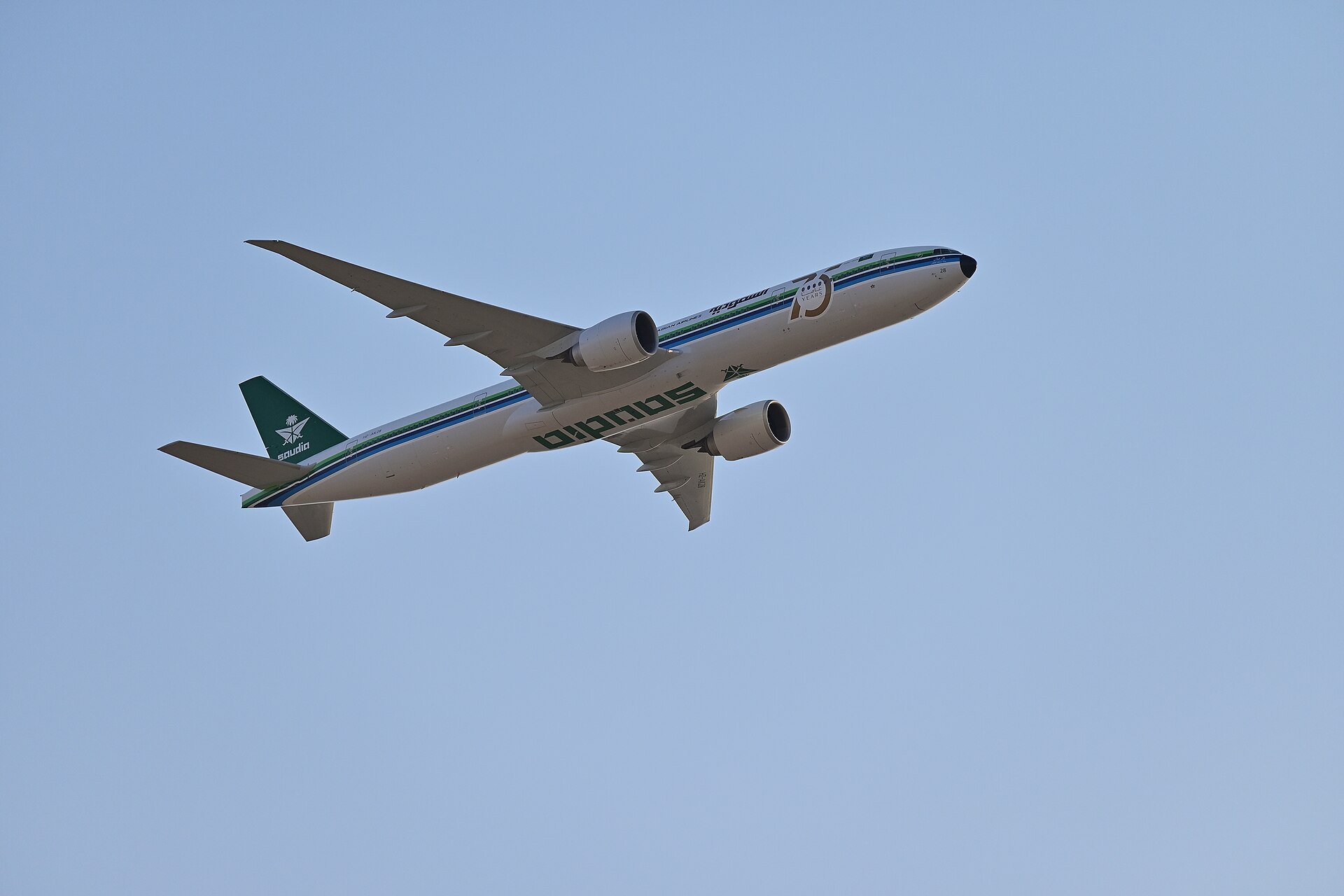
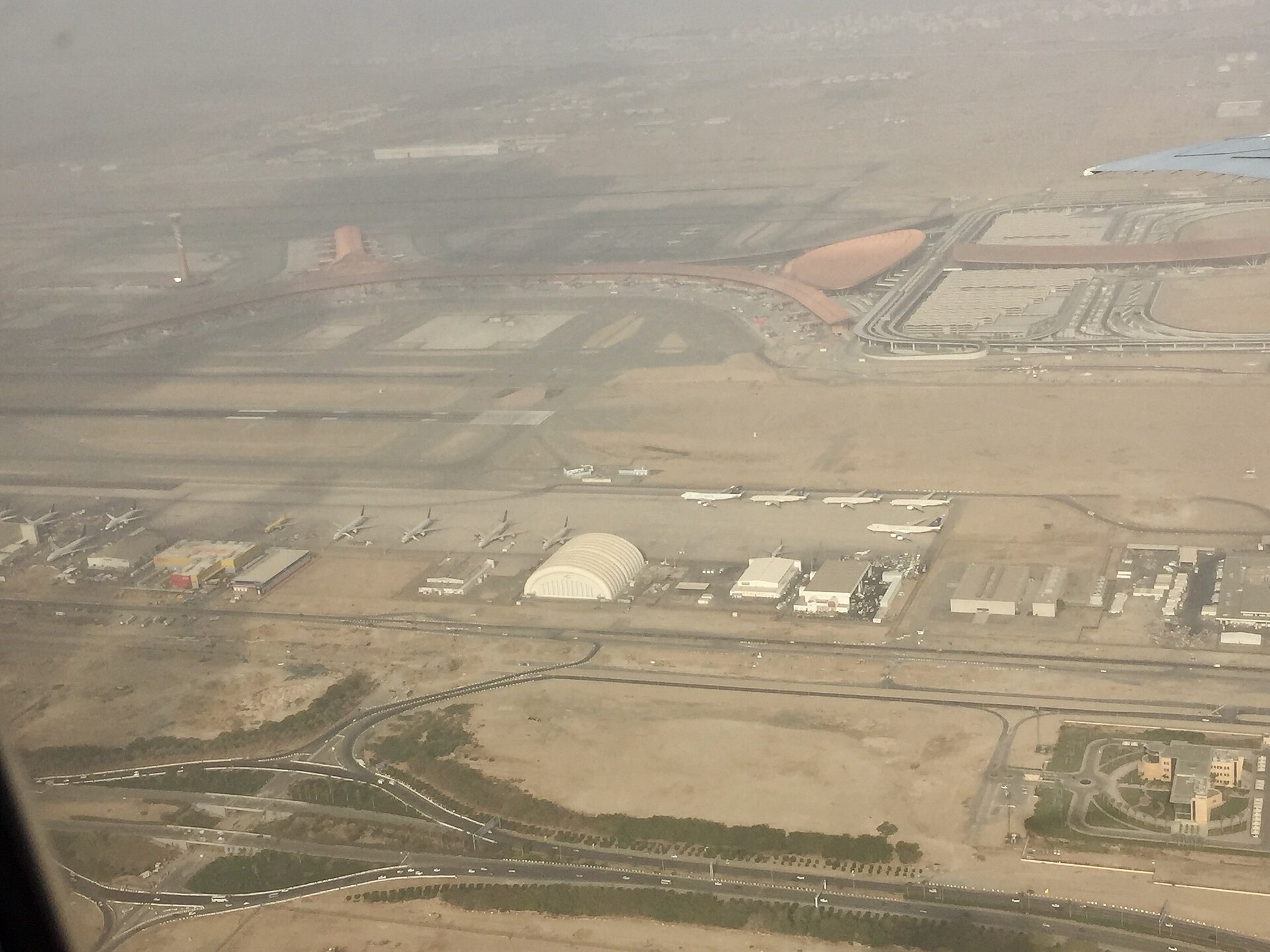
Saudi Arabia’s airports have not been immune to cancellations entirely. Saudia, the national carrier, cancelled flights to Amman, Kuwait, Abu Dhabi, Doha, and Bahrain — destinations in countries where airspace was partially or fully closed. Routes to Moscow and Peshawar were also suspended until March 15. But critically, Saudi airports themselves have remained open for both domestic and international traffic, and the Kingdom’s airspace has remained accessible to commercial aviation throughout the crisis.
Which Airlines Have Suspended Gulf Routes?
The list of international carriers that have pulled back from the Gulf reads like a directory of global aviation. According to tracking data compiled by The National and aerospace industry sources, more than 30 airlines have cancelled, suspended, or significantly reduced services to Gulf destinations since February 28.
Air France suspended all flights to and from Dubai and Riyadh until March 10, with services to Tel Aviv and Beirut cancelled until March 11. Lufthansa, along with subsidiary carriers Swiss International Air Lines and Austrian Airlines, halted flights to Dubai, Abu Dhabi, and Dammam until March 10, with routes to Amman and Erbil cancelled until March 15 and services to Tehran suspended until April 30. British Airways stopped operating flights from Abu Dhabi, Amman, Bahrain, Doha, Dubai, and Tel Aviv entirely, while adding emergency services from Muscat in Oman between March 9 and 12.
Other carriers that have announced full or partial suspensions include Aegean Airlines, Air Algerie, Air India, Cathay Pacific, Finnair, Iberia, IndiGo, Japan Airlines, KLM, Norwegian, Pakistan International Airlines, Scandinavian Airlines, Turkish Airlines, Virgin Atlantic, and Wizz Air, according to Al Jazeera’s compilation of airline announcements.
| Airline | Country | Routes Suspended | Resumption Date |
|---|---|---|---|
| Air France | France | Dubai, Riyadh | March 10 |
| British Airways | UK | Abu Dhabi, Bahrain, Doha, Dubai | TBC |
| Lufthansa Group | Germany | Dubai, Abu Dhabi, Dammam | March 10 |
| KLM | Netherlands | Dammam, Riyadh | March 10 |
| Turkish Airlines | Turkey | Bahrain, Dammam, Riyadh | Rolling review |
| Cathay Pacific | Hong Kong | Doha, Bahrain | TBC |
| Japan Airlines | Japan | Doha, Dubai | TBC |
| Emirates | UAE | Reduced to 60% of network | “Coming days” |
| Qatar Airways | Qatar | Hub disrupted; relief flights from Riyadh | TBC |
| Saudia | Saudi Arabia | Amman, Kuwait, Doha, Bahrain | March 10-15 |
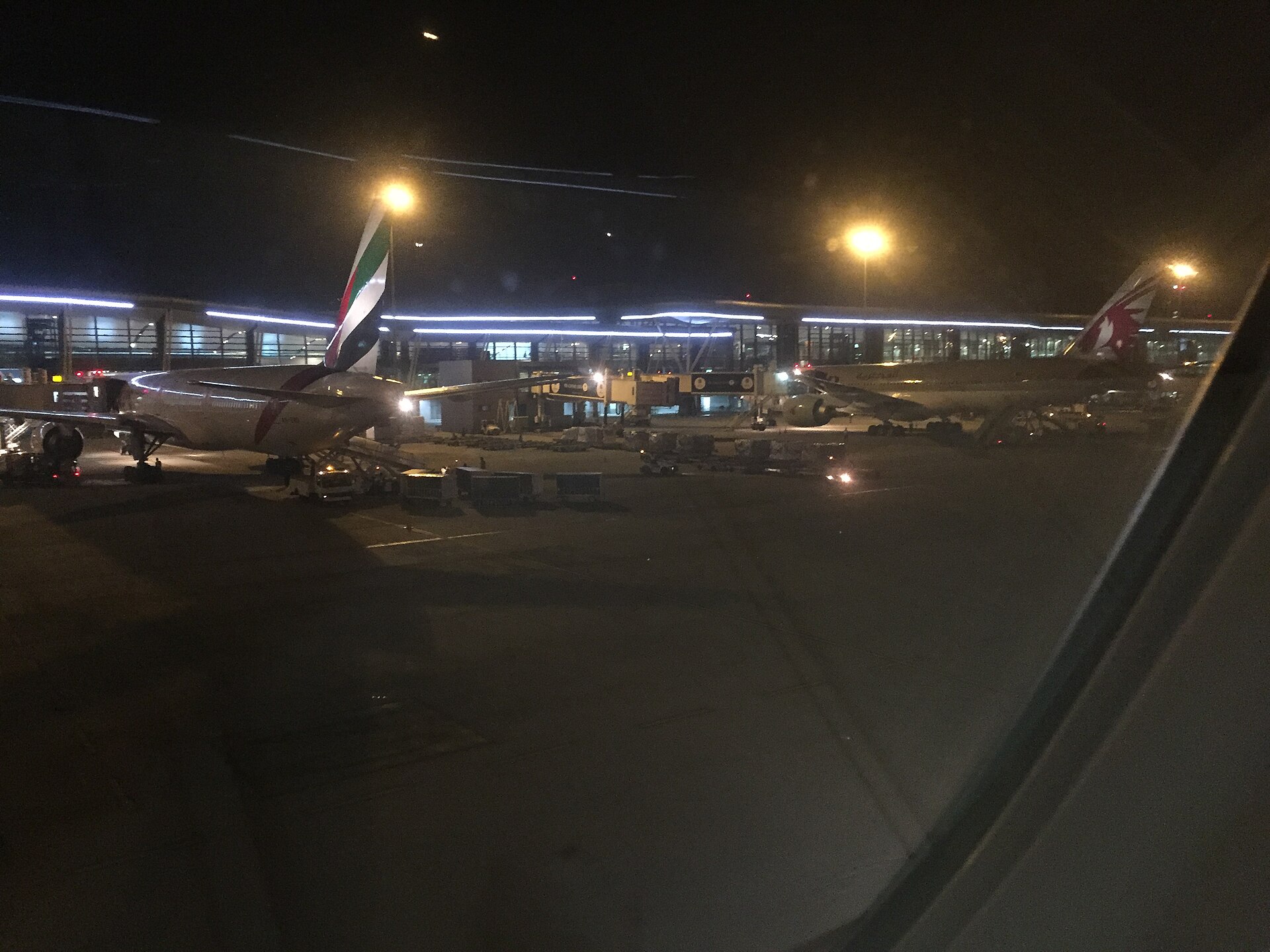
Emirates, the UAE’s flagship carrier that normally operates approximately 180 daily return flights to over 140 destinations, has been the Gulf’s highest-profile casualty. The airline carried roughly 30,000 passengers out of Dubai on March 5, according to a company statement, and by March 7 had restored 106 daily return flights to 83 destinations — roughly 60 percent of its network. An Emirates spokesperson told Euronews on March 9 that “the airline anticipates a return to 100 percent of its network within the coming days, subject to airspace availability and the fulfilment of all operational requirements.”
Airlines that typically route long-haul traffic through Gulf hubs have been forced into costly detours. Routing patterns have shifted dramatically, with carriers diverting flights via Singapore, Hong Kong, Istanbul, and other alternatives, according to CNBC. Fuel costs have spiked as detoured flight paths add hundreds of miles to journeys that previously transited through Gulf airspace.
Why Has Saudi Arabia Kept Its Airports Open?
Saudi Arabia’s ability to maintain commercial aviation operations while its neighbours ground fleets stems from a combination of geography, military capability, and strategic calculation. The Kingdom’s airports at Riyadh, Jeddah, and Dammam have remained fully operational throughout the crisis, though with “significant flight cancellations and prolonged operational delays,” according to the US Embassy in Riyadh.
Geography provides a partial explanation. Saudi Arabia’s major airports sit farther from the Iranian launch sites than Dubai, Doha, or Bahrain, offering slightly more warning time and a wider interception window. Riyadh is approximately 1,200 kilometres from the nearest Iranian border — roughly double the distance from Dubai.
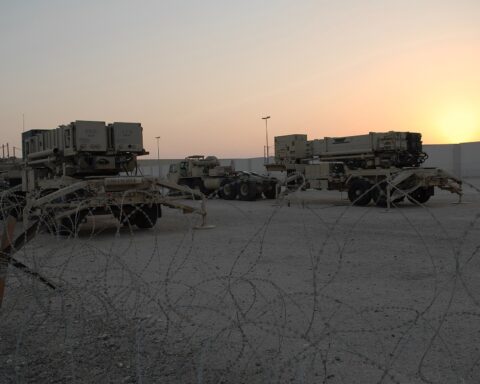
Military infrastructure offers another layer. Saudi Arabia’s $80 billion air defence network, which includes Patriot PAC-3 batteries, THAAD systems, and layered radar coverage, has been tested repeatedly over the past ten days. The Saudi Defence Ministry reported intercepting 15 drones, including an attempted attack on Riyadh’s diplomatic quarter, on the morning of March 9 alone. The Kingdom’s air defence system has intercepted ballistic missiles aimed at Prince Sultan Air Base, destroyed cruise missiles over Riyadh, and neutralised multiple drone swarms targeting the Shaybah oilfield, according to statements from the Saudi Ministry of Defence.
The strategic calculation is arguably the most important factor. Saudi Arabia has positioned itself throughout this conflict as a non-combatant caught in the crossfire, maintaining diplomatic channels with Tehran even as Iranian ordnance lands on Saudi territory. Keeping airports open signals normalcy and sovereignty — a message directed as much at international investors and the global travel industry as at Iran.
How Are Stranded Passengers Getting Out of the Region?
With Dubai and Doha operating at reduced capacity, travellers across the Gulf have turned to Saudi Arabia’s airports as their primary exit route. Al Arabiya English reported on March 6 that Riyadh had become “the key exit route as Gulf travelers scramble for flights amid Iran war,” with King Khalid International Airport functioning as the region’s primary gateway for passengers attempting to reach Europe, Asia, and beyond.
Qatar Airways, whose Doha hub was severely disrupted by airspace closures, began operating relief flights from Riyadh and Muscat on March 5, Euronews reported. The airline said it was “working around the clock” to organise additional relief services, with passengers travelling overland from Qatar to Saudi Arabia to access these flights. The Sunday Guardian reported that Riyadh’s airport had become the “primary gateway for travellers looking to exit the Gulf amid widespread airspace closures,” remaining “fully operational for commercial flights, private jets, and evacuation charters.”
Repatriation operations have also run through Saudi airports. CNN reported on March 4 that several governments were arranging special flights to bring citizens home from across the Middle East, with Riyadh and Jeddah serving as departure points. India, which has an estimated 9 million citizens working across the Gulf states, has been coordinating evacuation flights through multiple Saudi airports, according to the Indian Ministry of External Affairs.
The picture for the 13 million expatriates living in Saudi Arabia itself is more complicated. While those with valid travel documents and booked flights can depart from Saudi airports, the US State Department’s Level 3 advisory has prompted some embassies to limit consular services, creating backlogs for travellers needing emergency documentation.
It’s pretty well the biggest shutdown we’ve seen certainly since the COVID pandemic.
Paul Charles, CEO of PC Agency, March 2026
What Does the Crisis Mean for Saudi Aviation Ambitions?
The disruption arrives at a particularly awkward moment for Saudi Arabia’s aviation sector. The Kingdom has been investing heavily in Vision 2030 ambitions to transform itself into a global aviation hub, directly challenging the dominance of Dubai and Doha as long-haul transit points between East and West.
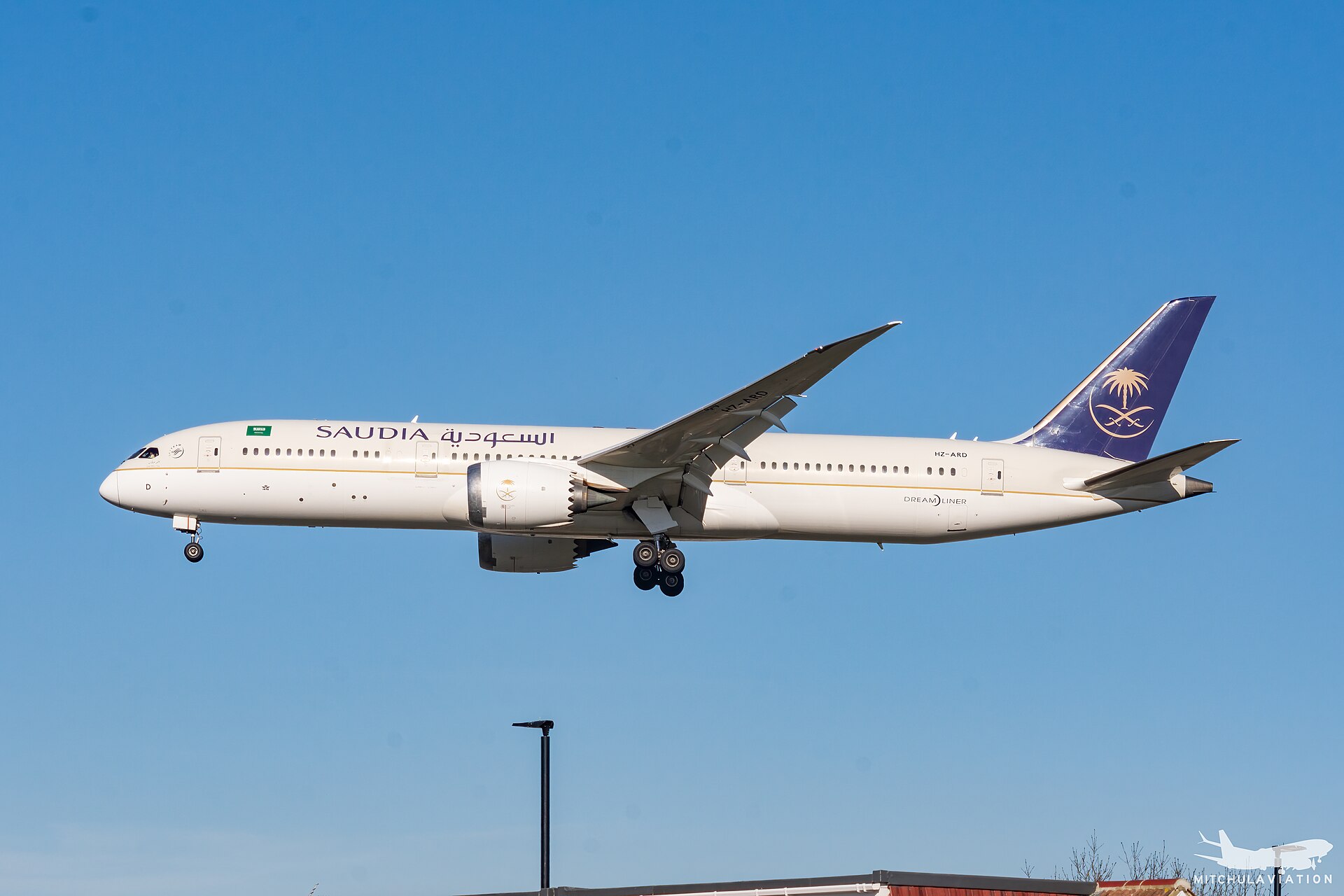
Riyadh Air, the Kingdom’s new flagship carrier announced by Crown Prince Mohammed bin Salman in 2023 and expected to begin operations in 2025, was designed to compete head-to-head with Emirates and Qatar Airways. The airline has ordered 72 Boeing 787 Dreamliners and plans to serve over 100 destinations from a new mega-terminal at King Khalid International Airport.
The irony is that the Iran war may have inadvertently accelerated the timeline for that competitive shift. With Dubai and Doha’s reputations as reliable transit hubs damaged — however temporarily — corporate travel managers, logistics companies, and airlines are being forced to consider contingency routing that runs through Saudi Arabia. The CNBC report on the $11.7 trillion travel industry noted that recovery from the disruption “may take months,” during which time the habits and contracts of the global aviation industry could permanently shift.
The risk, however, cuts both ways. Saudi Arabia’s own event economy and tourism ambitions depend on a perception of safety and stability that Iranian missile attacks fundamentally undermine. The Kingdom welcomed over 100 million tourists in 2023 according to the Ministry of Tourism, and had targeted 150 million annual visitors by 2030. Every intercepted drone over Riyadh makes that target harder to reach.
The Kingdom’s new King Salman International Airport in Riyadh, announced as a $147 billion megaproject capable of handling 120 million passengers annually by 2030, was designed to make the Saudi capital a rival to Dubai as a global super-connector. Construction has proceeded throughout the conflict, but the project’s business case depends on convincing the world’s airlines and passengers that Riyadh is a safe, reliable, and efficient transit point. The current crisis simultaneously proves and undermines that proposition — Saudi airports are working, but they are working in a war zone. A deeper analysis of Saudi Arabia’s $100 billion aviation strategy and its wartime vulnerability reveals how the geographic calculus is shifting in ways that could permanently reshape Gulf hub competition.
The Hajj pilgrimage season approaching in June adds another dimension of urgency. The annual pilgrimage brings over 2 million visitors to Saudi Arabia, the vast majority arriving by air. Any prolonged disruption to Gulf aviation networks could complicate logistics for one of the world’s largest mass travel events, potentially forcing the Kingdom to establish temporary air corridors and enhanced security protocols for incoming pilgrim flights.
What Are Governments Telling Their Citizens?
The US State Department raised Saudi Arabia’s travel advisory to Level 3 (“Reconsider Travel”) citing “risk of Iranian drone and missile targeting of American interests, armed conflict, terrorism, exit bans, and local laws regarding social media activity.” On March 8, the Department ordered non-emergency US government employees and family members to leave Saudi Arabia entirely, according to the US Embassy in Riyadh.
The Federal Aviation Administration issued a Notice to Airmen (NOTAM) and Special Federal Aviation Regulation restricting US-registered aircraft operations “within or nearby the Persian Gulf and the Gulf of Oman region, including Saudi Arabia,” according to the FAA. This restriction affects both commercial airlines and private aviation.
The UK Foreign, Commonwealth and Development Office has advised against all travel to eastern Saudi Arabia and all but essential travel to the rest of the Kingdom. France, Germany, Australia, and Canada have issued similar advisories urging citizens to avoid non-essential travel to the Gulf region, while several nations have established emergency hotlines for stranded citizens.
The March 9 security alert from the US Embassy in Riyadh noted that the Mission had “returned to a modified shelter-in-place for all remaining personnel” and advised all Americans in the Kingdom “to avoid the US Embassy and US Consulate Dhahran until further notice.”
Will Gulf Aviation Recover Quickly?
Aviation industry experts and airline executives are divided on the recovery timeline. Emirates’ statement on March 9, reported by Euronews, expressed confidence that the carrier would return to “100 percent of its network within the coming days.” But that projection assumed no further escalation — a significant caveat given that Iranian attacks on Gulf states continued into day 10 of the conflict.
AirHelp, the passenger rights organisation, warned that “global air travel turmoil may last months” based on expert assessments of the conflict’s trajectory. The disruption extends beyond the immediate airspace closures: insurance costs for flights transiting Gulf airspace have spiked, crew scheduling has been thrown into chaos by abrupt cancellations, and aircraft that were positioned at Gulf airports when the conflict began remain stranded in some cases.
The financial toll on Gulf carriers is mounting. Emirates, Etihad, Qatar Airways, Gulf Air, Kuwait Airways, and other regional carriers collectively generate over $50 billion in annual revenue, according to the International Air Transport Association. Each day of reduced operations costs the industry hundreds of millions of dollars in lost revenue, crew costs, aircraft repositioning, passenger compensation, and hotel accommodation for stranded travellers.
A ceasefire remains elusive, and the longer the conflict continues, the deeper the structural damage to Gulf aviation networks. Corporate travel policies are being rewritten in real time. Tour operators have begun redirecting bookings away from Gulf stopovers. Cargo operators are rerouting supply chains through alternative hubs. Each of these shifts becomes harder to reverse with every passing week.
Ten Days of War and the Skies That Closed
The aviation crisis traces directly to the US-Israeli strikes on Iran that began on February 28, 2026. Within hours of the first bombs hitting Tehran, Isfahan, Qom, and other Iranian cities, Iran launched retaliatory missile and drone attacks across the Gulf, targeting US military installations hosted by Saudi Arabia, the UAE, Qatar, Bahrain, Kuwait, and Oman.
For the first time in history, Iran attacked all six Gulf Cooperation Council member states simultaneously, according to Carnegie Endowment for International Peace analysis published on March 7. Although Iranian officials initially claimed the strikes targeted only US military installations, the reality proved more indiscriminate. Strikes hit energy infrastructure, civilian airports, a luxury hotel district in Dubai, and residential areas in Saudi Arabia’s Al-Kharj, killing two foreign nationals.
Iran’s President Masoud Pezeshkian apologised to Gulf nations on March 8 for the civilian impact of attacks and said Iran would stop striking its neighbours unless attacked. Saudi Arabia responded the following day by stating that Iranian attacks had continued regardless, warning that the strikes were based on “flimsy pretexts that have no basis in reality,” according to Al Jazeera.
The conflict has killed more than 1,200 people in Iran, more than 400 in Lebanon, and 11 in Israel, according to figures cited by NPR from Iranian and Lebanese health officials and Israeli authorities. Eight American service members have died, including Sgt. Benjamin N. Pennington, 26, of Glendale, Kentucky, who was killed on March 9 from injuries sustained during an Iranian attack on Prince Sultan Air Base in Saudi Arabia on March 1, the Pentagon confirmed.
As the war enters its second week with no ceasefire in sight, the Gulf’s aviation industry faces the uncomfortable reality that its most valuable asset — a geographic position at the crossroads of global air routes — has become its greatest vulnerability.
Frequently Asked Questions
Are flights operating from Saudi Arabia right now?
Commercial flights are operating from Riyadh, Jeddah, and Dammam as of March 9, 2026. Saudi airspace remains open, though Saudia has cancelled routes to several neighbouring countries including Kuwait, Bahrain, Doha, and Abu Dhabi until at least March 10. International routes to Europe, Asia, and beyond continue to operate with some delays and cancellations.
How many flights have been cancelled because of the Iran war?
More than 27,000 flights have been cancelled across seven major Gulf airports since the conflict began on February 28, 2026, according to Flightradar24 and Bloomberg data. Dubai International Airport alone has seen over 11,000 cancellations. The disruption has stranded more than one million passengers worldwide.
Is Dubai airport open?
Dubai International Airport is operating at approximately 60 percent of normal capacity as of March 9. Emirates has restored 106 daily return flights to 83 destinations and expects to return to full network operations “within the coming days,” subject to airspace availability. However, numerous international carriers have suspended their Dubai routes entirely.
What is the US travel advisory level for Saudi Arabia?
The US State Department has set Saudi Arabia at Level 3 (“Reconsider Travel”) due to risks from Iranian drone and missile attacks. On March 8, the Department ordered non-emergency US government employees and their families to leave Saudi Arabia. The US Embassy has issued multiple shelter-in-place directives for remaining personnel.
When will Gulf flights return to normal?
No firm timeline exists. Emirates has projected a return to full capacity “within days,” but this depends on the conflict trajectory. AirHelp and other aviation experts have warned that disruptions could last months, factoring in insurance cost increases, crew scheduling chaos, and the time required to reposition stranded aircraft across the global network.