
RIYADH — One month after the first American and Israeli bombs struck Iran on February 28, Saudi Arabia’s war ledger defies simple arithmetic. The Kingdom has absorbed more than 600 Iranian strikes, lost at least two civilians, watched its flagship Ras Tanura refinery go offline for a week, and seen $5 billion in NEOM contracts evaporate — yet it has simultaneously collected an estimated $119 million per day in additional oil revenue, secured unprecedented diplomatic centrality, and gained the political cover to kill megaprojects that were already failing.
The conventional framing treats this war as a pure liability for Riyadh. That framing is incomplete. Across military, economic, diplomatic, and structural dimensions, the balance sheet reveals a Kingdom absorbing enormous short-term costs while positioning for returns that may dwarf them. The contrarian reading of the first month is straightforward: Crown Prince Mohammed bin Salman‘s strategy of restraint — absorbing punishment without retaliating — may prove to be the most expensive bet in modern Saudi history that yields the highest long-term dividend.
Table of Contents
- The Human Toll Saudi Arabia Will Not Discuss
- How Has the Oil Price Surge Both Hurt and Helped Saudi Arabia?
- What Did Iranian Strikes Destroy on Saudi Soil?
- The $80 Billion Military That Cannot Fight Alone
- What Has Saudi Arabia Gained Diplomatically From the War?
- Did the War Save Vision 2030 From Itself?
- How Does Tehran Read the Saudi Balance Sheet?
- Why Did MBS Absorb 600 Strikes Without Firing Back?
- The One-Month Balance Sheet
- Frequently Asked Questions
The Human Toll Saudi Arabia Will Not Discuss
Saudi Arabia has disclosed almost nothing about its own casualties from one month of Iranian bombardment. The official Saudi position, maintained through carefully worded Ministry of Defense communiques, is that attacks were “repulsed” and defenses held. The numbers that have emerged come from fragments.
Two civilians — an Indian national and a Bangladeshi worker — died when an Iranian drone struck a residential building in Al-Kharj on March 2, according to the Saudi foreign ministry. Another 12 people sustained injuries in the same attack, which the IRGC claimed targeted radar systems at the nearby Prince Sultan Air Base. On March 27, at least 10-12 American service members were wounded when Iranian ballistic missiles and drones struck Prince Sultan Air Base again, according to NPR and the Washington Post.
The official Saudi silence on military casualties stands in sharp contrast to the transparency of other belligerents. Iran’s casualty figures, contested as they are, circulate freely — the Al Jazeera tracker records approximately 1,937 killed and 24,800 wounded, while the Israeli military estimates 3,000-4,000 Iranian soldiers killed and the Hengaw Organization for Human Rights places the figure above 5,300. The United States has acknowledged 13 service members killed and more than 300 wounded since February 28, according to NPR.
Saudi military personnel losses almost certainly exceed the two confirmed civilian deaths. Prince Sultan Air Base has been struck at least twice, with aircraft damaged on the ground during the March 27 attack. But Riyadh’s information discipline means the human cost on its side remains the war’s most significant unknown.
How Has the Oil Price Surge Both Hurt and Helped Saudi Arabia?
The Iran war has handed Saudi Arabia an oil paradox that no finance minister could have designed. Brent crude, which sat at approximately $72 per barrel on February 27, peaked at $126 on March 8 and traded at $112.57 as of March 28, according to Bloomberg. The war-risk premium alone accounts for $8-14 per barrel, according to Oxford Economics. This is the most severe supply disruption since the 1970s, Oxford Economics assessed in mid-March.
At $112 per barrel and daily production near 9 million barrels, Saudi Arabia generates roughly $119 million per day in revenue above its fiscal breakeven price of $78-85, according to The Middle East Insider. A detailed breakdown of Brent crude’s surge past $112 and the revenue paradox it creates reveals how this windfall flows through infrastructure the Kingdom cannot fully operate. Annualized, that windfall approaches $49-72 billion — enough to fund several flagship Vision 2030 projects or substantially bolster the Public Investment Fund, which manages approximately $941 billion in assets.
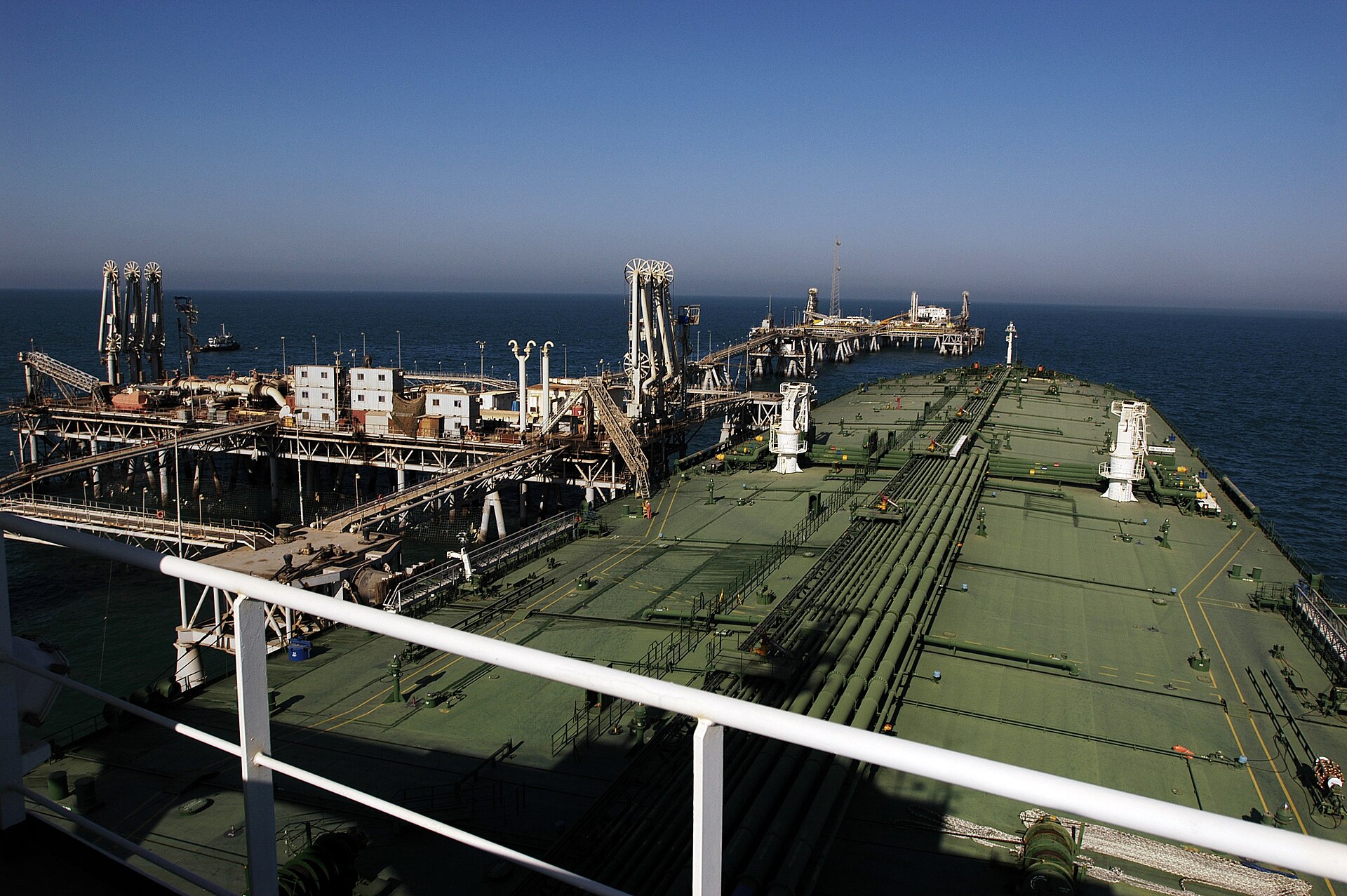
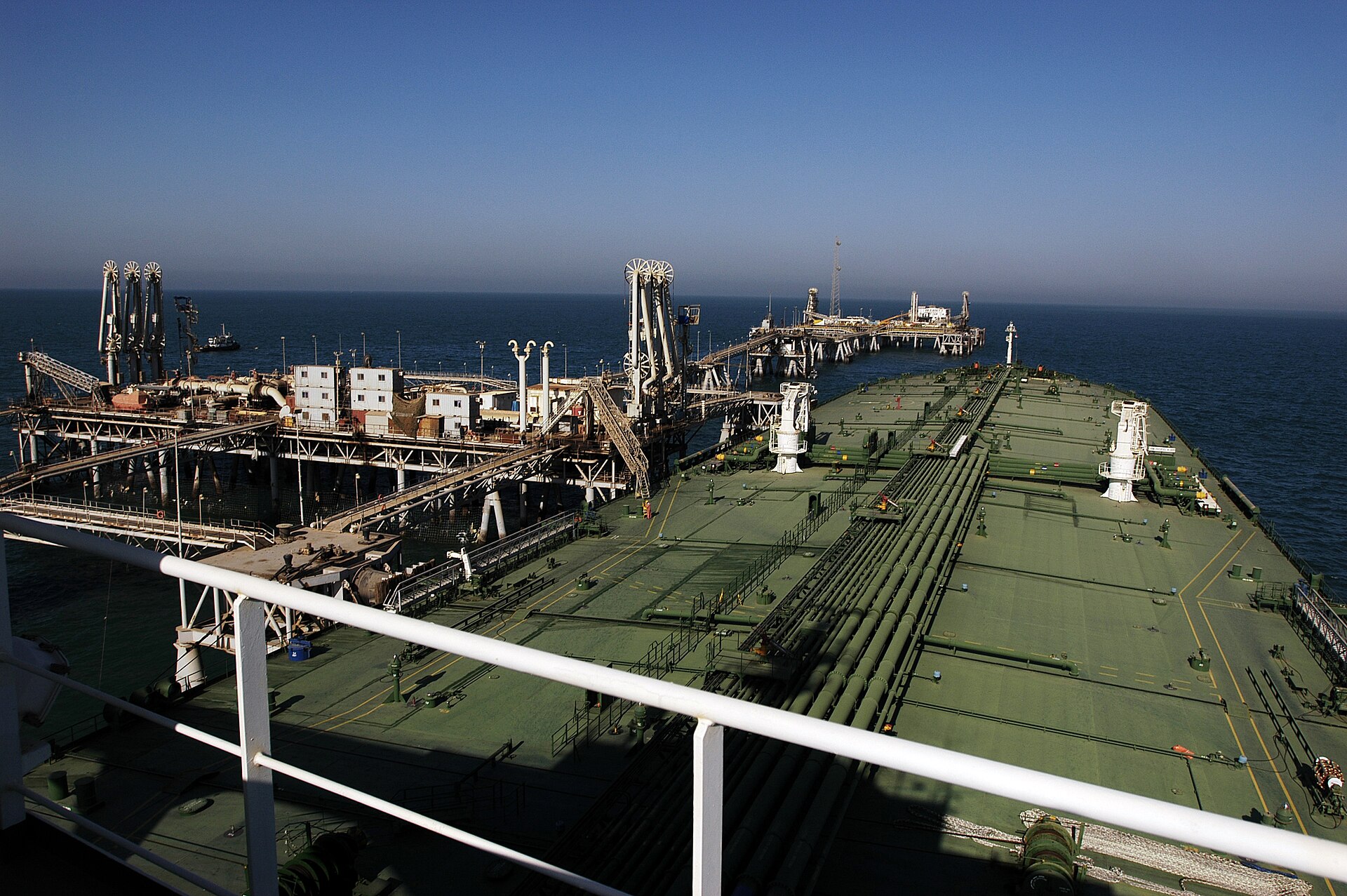
But the revenue bonanza comes with a punishing logistical cost. Aramco shut four supergiant oil fields in the Eastern Province as the Gulf rigs went dark. The Ras Tanura refinery, processing 550,000 barrels per day, went offline after a drone strike on March 2, according to Reuters, and required roughly a week to restart. Saudi oil exports have been rerouted to the Red Sea port of Yanbu through the East-West Pipeline at 3.66 million barrels per day, well below the pipeline’s 7-million-barrel maximum capacity.
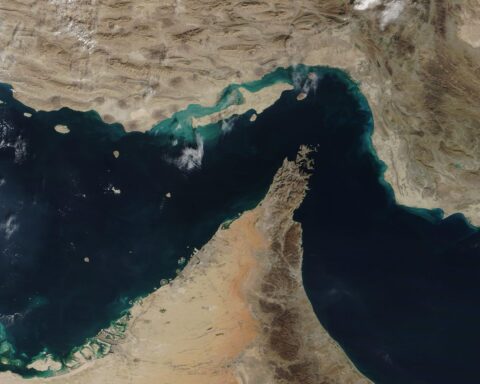
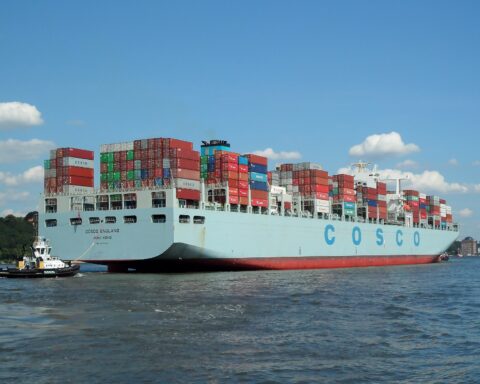
Strait of Hormuz traffic collapsed from more than 100 tankers per day to just 21 since February 28, according to CSIS. Insurance premiums for Gulf transit surged from 0.25% of hull value to 1-1.5%, with some contracts reaching 3%, according to S&P Global Market Intelligence. A tanker valued at $200-300 million now faces approximately $7.5 million in war-risk premiums per transit, up from roughly $625,000 before the conflict. Iran is charging approximately $2 million per transit in yuan and projects $100 billion or more annually from its toll regime on the strait, according to Al Jazeera.
The OECD revised its global inflation forecast to 4% in response to the disruption. Kuwait’s refineries lost approximately 400,000 barrels per day after drone attacks on March 20. Across the Gulf, Rystad Energy estimates the regional energy infrastructure repair bill at $25 billion.
What Did Iranian Strikes Destroy on Saudi Soil?
Iranian strikes have hit Saudi territory at least a dozen times since February 28, targeting both military installations and energy infrastructure. The damage, while significant, has been less catastrophic than pre-war scenarios predicted — partly because of Saudi air defenses, partly because Iran directed its heaviest barrages at Israeli and American targets rather than Saudi cities.
The most consequential strike hit Aramco’s Ras Tanura refinery complex on March 2. Aramco’s rapid restart — maintenance teams were already onsite for a planned turnaround — demonstrated deep domestic repair capability, but the weeklong outage sent a clear signal about Eastern Province vulnerability.
Prince Sultan Air Base, located roughly 60 miles south of Riyadh near Al-Kharj, absorbed Iranian ballistic missiles and drones on March 27. The Washington Post reported a KC-135 aerial refueling tanker caught fire and an E-3 Sentry AWACS surveillance aircraft sustained damage. Five US refueling planes were damaged, according to Turkiye Today. The base hosts both Saudi and American forces and serves as a critical node in the combined air defense architecture.
Two drones were destroyed over the Eastern Province on March 23-24. On March 28, Saudi ballistic missile defenses intercepted a missile over Riyadh. Arab News reported that Saudi air defenses neutralized missile and drone threats targeting both Al-Kharj and Ras Tanura throughout the month.
Perhaps the most important infrastructure that was not hit is the desalination network. Saudi Arabia depends on desalinated water for the vast majority of its municipal supply. The vulnerability of desalination plants has been identified but not yet exploited by Iran — a restraint that may be strategic rather than incidental, preserving a target set for future escalation.
The $80 Billion Military That Cannot Fight Alone
The war’s first month exposed a structural reality that Saudi defense planners have long understood but rarely acknowledged publicly: the Kingdom’s $80 billion military establishment cannot conduct sustained combat operations without foreign assistance. GCC collective defense, tested for the first time by a genuine cross-border assault, proved functionally nonexistent — six armies with zero integration, as one Gulf defense official described it to Foreign Policy.
Saudi Arabia responded not by attempting independent military operations but by opening its bases to the American force structure. King Fahd Air Base in Taif, approximately 1,200 kilometers from Iran’s western border, opened to US forces as a dispersal strategy, according to Military Times. Crown Prince Mohammed bin Salman reversed earlier positions on American base access — a concession that carried domestic political cost but immediate tactical necessity.
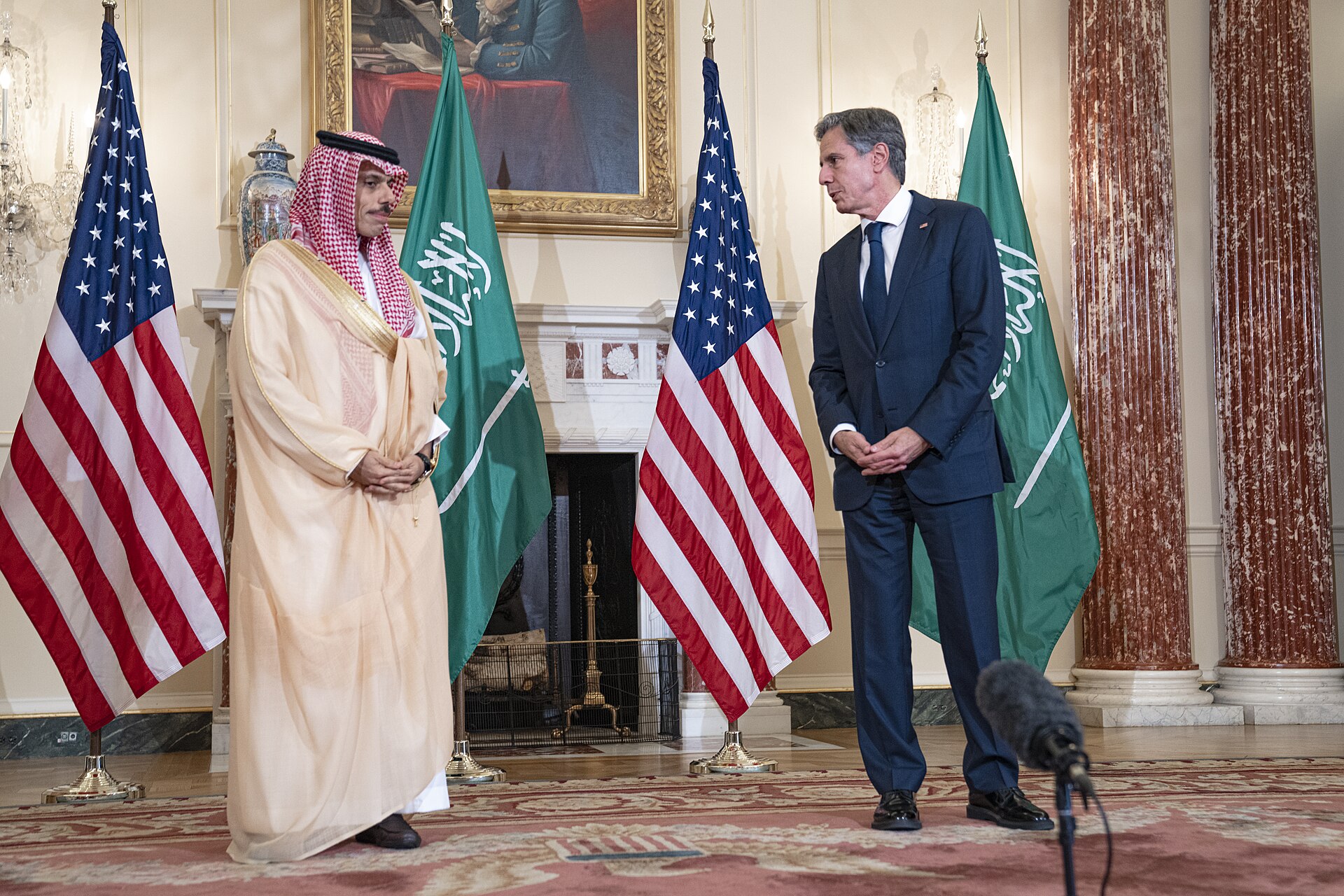
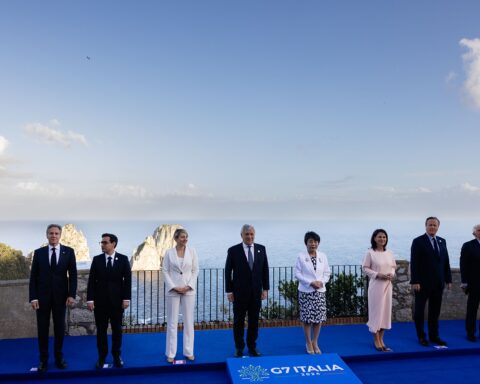
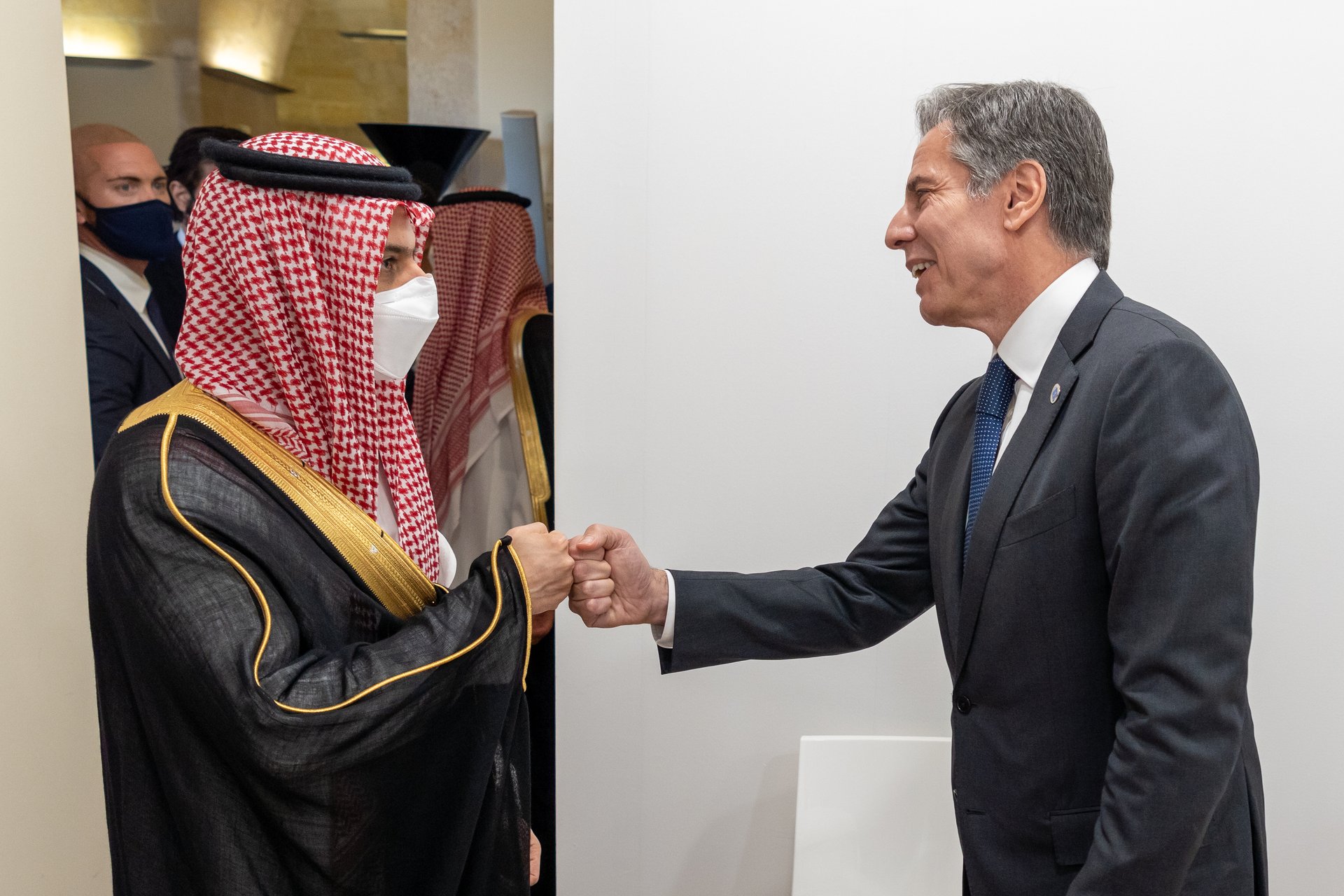
Foreign Minister Prince Faisal bin Farhan invoked Article 51 self-defense rights, and six Arab nations followed suit. The 12-nation meeting convened in Riyadh demonstrated Saudi diplomatic convening power, but the practical military output was negligible. Prince Faisal conducted five bilateral meetings at the G7 and left without a single escort vessel for Gulf shipping, according to CNN. The G7 agreed to protect the Strait of Hormuz only after hostilities end. More than 30 countries pledged escort readiness, but none deployed during active fighting.
The most productive military partnership came from an unexpected direction. Ukraine’s defense deal with Saudi Arabia delivered 200-plus counter-drone experts, acoustic Shahed detectors, and FPV interceptor drones — battlefield-tested technology from the world’s most experienced counter-drone force. Zelenskyy visited the Kingdom and offered assistance that Washington’s own defense contractors could not match for speed or relevance.
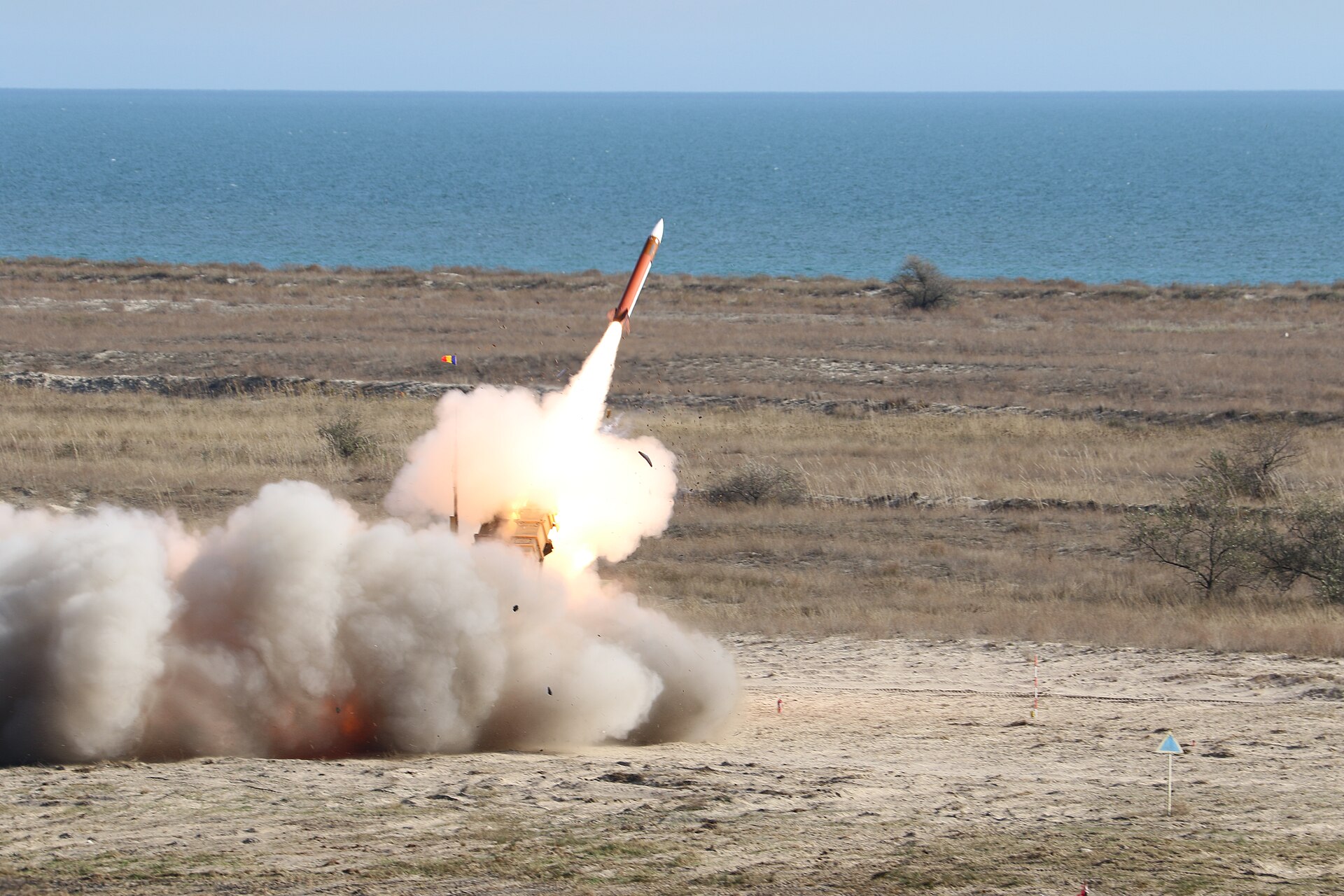
The cost asymmetry at the heart of the air defense problem remains unresolved. A $4 million Patriot interceptor destroying a $20,000 Iranian drone represents a 200:1 cost ratio that is economically unsustainable over any extended conflict, according to Defense Priorities. CSIS estimated interceptor costs at $1.2-3.7 billion for just the first 100 hours. The US deployed 10,000 AI-powered Merops counter-drone systems to the Gulf, but the fundamental economics favor the attacker.
What Has Saudi Arabia Gained Diplomatically From the War?
Saudi Arabia entered this war without firing a shot and has accumulated diplomatic capital that would have been impossible to acquire through any other means. Riyadh is now the indispensable address for anyone seeking to end the conflict, manage the oil shock, or shape the post-war regional order. This is not an accident — it is the structural consequence of the restraint strategy.
The diplomatic ledger is substantial. Pakistan’s Prime Minister Shehbaz Sharif met Mohammed bin Salman in Jeddah on March 12, carrying Trump’s 15-point peace proposal that had been transmitted through Islamabad. India’s External Affairs Minister S. Jaishankar raised Global South concerns about energy, fertilizer, and food security — framing Saudi Arabia as the essential interlocutor between warring parties and developing nations. Zelenskyy visited to offer counter-drone cooperation. China sent a special envoy to Riyadh with a five-point ceasefire proposal, which Prince Faisal received and discussed, according to Fortune.
Saudi Arabia expelled the Iranian military attache and four embassy staff — a calibrated diplomatic escalation that signaled displeasure without severing the channel entirely. The 2023 China-brokered Saudi-Iran normalization agreement, which restored diplomatic ties after a seven-year rupture, provides a framework that Riyadh has carefully avoided destroying even as Iranian missiles fall on Saudi soil.
The Washington relationship has shifted most consequentially. The United States needs Saudi bases for force projection, Saudi pipeline capacity for global oil stability, and Saudi diplomatic channels for any negotiated settlement. Mohammed bin Salman speaks regularly with President Trump, “urging harsh action against Iran,” according to the Washington Post. This is not the position of a supplicant. The base-access concessions that Saudi Arabia granted came with an implicit price — and the bill will come due in post-war security guarantees, defense technology transfers, and possibly a civilian nuclear agreement that the Stimson Center has noted would proceed regardless of the war’s outcome.
Did the War Save Vision 2030 From Itself?
The war has provided something that no McKinsey consultant could deliver: political cover for cutting projects that were already failing. NEOM’s restructuring into five separate entities, the cancellation of the $4.7 billion Webuild contract for the Trojena dam, and the roughly $1 billion Hyundai tunnel contract termination all predated or coincided with the war’s outbreak. The Line has been suspended since September 2025. PIF Governor Yasir Al Rumayyan finalized a revised strategy with approximately 15% capital spending cuts.
War transforms the narrative around these retreats. Cancelling a $4.7 billion dam contract during peacetime invites scrutiny about Vision 2030’s viability. Cancelling it during a shooting war invites sympathy. The distinction matters enormously for a sovereign wealth fund planning eight IPOs in 2026 and managing investor confidence across its portfolio.
The pivot is real and consequential. PIF signed a $5 billion DataVolt AI center deal. The $2.7 billion Hexagon data center contract in Riyadh, completed in January 2026, represents the new direction. NEOM’s green hydrogen plant stands at 80% completion, and its green ammonia will be exported through Red Sea shipping lanes that bypass the Strait of Hormuz entirely — an export route whose strategic value has been validated by the war itself.
The macroeconomic picture remains surprisingly resilient. The IMF projects Saudi GDP growth of 4.6-4.7% for 2026, following 4.5% growth in 2025. Non-oil sectors accounted for 55.6% of real GDP in the first half of 2025, according to Saudi General Authority for Statistics. But the war’s economic damage is concentrated in specific sectors: luxury hotel bookings in the Kingdom dropped an estimated 45% during the first two weeks of March, according to AGBI. The Diriyah Gate heritage project, valued at $20 billion, has seen construction slow as logistics resources were redirected. FDI inflows could decline by 60-70% in Q1 2026 compared to the same period last year, according to investment bank estimates cited by The Middle East Insider.
The Tadawul tells its own story. The TASI index fell as much as 5% on March 2, dropping to 10,214 before recovering to approximately 10,776 by mid-March, according to Trading Economics. The index is down roughly 9.6% since February 28 but has outperformed every other Gulf exchange — a reflection of Saudi Arabia’s geographic advantage, with its Red Sea terminals sitting beyond Iranian ballistic missile range from the western plateau.
How Does Tehran Read the Saudi Balance Sheet?
Iranian state media has framed the first month of war through a lens of defiant resilience, not strategic accounting. IRNA and Fars News Agency have projected an image of a nation absorbing punishment from two of the world’s most advanced militaries while maintaining the capacity to strike across the Gulf. The regime claims to have more than one million troops organized for sustained combat, according to reports from state-run outlets.
Tehran’s reading of the Saudi position is revealing. Iran stopped directing its heaviest attacks at Saudi Arabia roughly two weeks into the conflict — after Riyadh’s restraint became unmistakable. The Kingdom that has not fired a shot presents a different strategic calculus than the one that hosts American bombers. Iran’s calculus appears to be: punish the active combatants (the US and Israel), maintain pressure on Gulf shipping and energy infrastructure, but avoid giving the $80 billion Saudi military a reason to activate.
Ali Akbar Velayati, a senior adviser to Iran’s late Supreme Leader, warned through IRNA that any country participating in military action against Iran would face “a boomerang” of repercussions. The semi-official Fars News Agency issued warnings that hotels and civilian facilities housing US military personnel across the Middle East could be considered “legitimate defensive targets.” These threats are calibrated to deter Saudi escalation without provoking it.
Iran’s economic warfare strategy has targeted the global system rather than Saudi Arabia specifically. Tehran has converted the Strait of Hormuz into a yuan-denominated toll booth, while the insurance market — with premiums that have made commercial transit economically prohibitive — has done the rest. As the insurance blockade analysis has detailed, commercial risk logic became an irregular warfare tool more effective than any mine or missile.
Why Did MBS Absorb 600 Strikes Without Firing Back?
Crown Prince Mohammed bin Salman’s decision not to retaliate militarily against Iran — despite invoking self-defense rights, expelling diplomats, and hosting the coalition’s forward bases — is the single most consequential strategic choice of the war’s first month. It is also the most counterintuitive.
Saudi Arabia possesses Chinese-origin DF-3A and DF-21 ballistic missiles with the range to strike Iranian cities. Its military fields more than 800 combat aircraft. The political pressure to respond to missiles falling on Riyadh must be immense. Yet the restraint has held for 28 days.
The logic becomes visible only through the balance sheet. Every day Saudi Arabia absorbs strikes without retaliating, it accumulates leverage. Against Washington: the US needs Saudi forbearance to prevent a two-front Gulf war. Against Tehran: Iran cannot claim Saudi aggression to rally domestic support or justify wider escalation. Against the international community: Saudi Arabia holds the moral authority of the party that was attacked but did not attack back, a position that will prove decisive in post-war negotiations over security guarantees, reconstruction contracts, and regional architecture.
Secretary of State Marco Rubio told reporters that “this is not going to be a prolonged conflict” and that objectives could be achieved “without any ground troops.” President Trump told aides he wants to avoid a “forever war” and find an exit within four to six weeks, according to Fortune. But Trump’s 15-point peace plan, transmitted through Pakistan, has been rejected by Tehran, with Iran denying that talks are progressing. Fortune’s own analysts warn the war could drag into 2027.
If the war ends within months, Saudi Arabia’s restraint position translates into concrete demands: enhanced security guarantees, advanced defense technology transfers, reconstruction contract primacy, and a regional security architecture that marginalizes Iranian influence permanently. If the war extends into 2027, the oil windfall continues to accumulate while Iran grows poorer, weaker, and more isolated — precisely the assessment RAND offered in its March analysis.
The Houthi wildcard adds complexity. On March 28, Houthis fired their first missile at Israel since the war began, 28 days after hostilities commenced. Mohammed Mansour is reportedly considering closing the Bab al-Mandeb strait, which handles 6-7 million barrels per day. MSC, the world’s largest container shipping line, paused all Middle East bookings. If Bab al-Mandeb closes alongside Hormuz, the Kingdom’s Red Sea export route — the very route that has preserved Saudi oil revenue — faces a new threat that the restraint strategy cannot address through passivity alone.
The One-Month Balance Sheet
| Dimension | Debit (Costs) | Credit (Gains) |
|---|---|---|
| Human | 2 civilians killed, 12+ wounded (confirmed); military casualties undisclosed; 10-12 US troops wounded at Prince Sultan Air Base | Lowest confirmed casualty count among all belligerents |
| Energy infrastructure | Ras Tanura offline 7 days (550,000 bpd); four supergiant fields shut; $25B regional repair bill (Rystad Energy) | Red Sea reroute operational at 3.66M bpd; pipeline max capacity of 7M bpd provides surge room |
| Oil revenue | Eastern Province exports halted; Hormuz traffic down 79% | ~$119M/day additional revenue at $112 Brent; $49-72B annualized windfall above fiscal breakeven |
| Financial markets | TASI down 9.6% since Feb 28; FDI inflows projected to decline 60-70% in Q1 | TASI outperformed all Gulf peers; banking, IT, tourism sectors resilient |
| Vision 2030 | $5B+ NEOM contracts cancelled; hotel bookings down 45%; Diriyah Gate slowed | Political cover for cutting unviable megaprojects; PIF pivot to AI, data centers ($7.7B in new deals) |
| Military | $80B establishment cannot fight independently; GCC integration absent; cost asymmetry unsustainable | Ukraine counter-drone deal (200+ experts); US base access deepened; real-world defense testing |
| Diplomatic | G7 refused wartime escorts; 30+ pledges but zero deployments | Indispensable mediator role; hosts China, Pakistan, India, Ukraine envoys; post-war reconstruction primacy |
| Strategic position | Absorbed 600+ Iranian strikes; sovereignty repeatedly violated | Moral authority of non-retaliation; maximum future leverage over Washington, Tehran, and post-war order |
By striking both friends and foes in the region, Iran may end up poorer, weaker, and more isolated than ever.
RAND Corporation, March 2026
The US has struck more than 7,000 targets across Iran in one month, according to the Associated Press. The Pentagon has spent an estimated $36 billion or more, with combat costs running at roughly $200 million per day, according to the National Priorities Project. US interceptor costs alone reached $1.2-3.7 billion in the first 100 hours, according to CSIS. For Saudi Arabia, the striking feature of the balance sheet is that its largest expenditure has been patience — and patience, unlike Patriot missiles, does not deplete.
The Thirty-First Day
The war’s second month will test whether the balance sheet holds. Three variables could flip the ledger.
First, the Houthi threat to Bab al-Mandeb. If Houthis close the strait, Saudi Arabia’s Red Sea export route — the foundation of its current oil revenue stability — collapses. The Kingdom would face the nightmare scenario of both maritime chokepoints controlled by hostile actors. Hajj 2026, scheduled to begin around May 24, depends on Red Sea shipping lanes for logistics and pilgrim transport.
Second, desalination. Iran has not struck Saudi water infrastructure. If it does, the human consequences would dwarf every other entry on the balance sheet. The restraint on this target set may be Tehran’s most significant unplayed card.
Third, the peace process. The American timeline for exit remains weeks, not months, but Tehran denies talks are progressing and Pakistan’s mediation has yet to produce a breakthrough. If negotiations succeed, Saudi Arabia cashes in its restraint for concrete security guarantees. If they fail, the war extends into Ramadan and beyond, and the costs compound while the gains plateau.
One month in, the balance sheet favors the Kingdom — narrowly, provisionally, and contingent on events that Riyadh does not fully control. Mohammed bin Salman has placed the most expensive passive bet in modern Middle Eastern history. The returns are accumulating. The risks are compounding at the same rate.
This is not going to be a prolonged conflict.
US Secretary of State Marco Rubio, March 28, 2026
Frequently Asked Questions
How many times has Iran struck Saudi Arabia since the war began?
Iran has launched more than 600 strikes against targets in the Gulf region since February 28, with Saudi Arabia absorbing a significant share. Confirmed strikes on Saudi soil include the Ras Tanura refinery drone attack on March 2, the Al-Kharj residential building strike the same day, Eastern Province drone interceptions on March 23-24, a ballistic missile intercept over Riyadh on March 28, and two separate attacks on Prince Sultan Air Base. Saudi air defenses have intercepted additional incoming threats that were not publicly catalogued, but the Kingdom has released no comprehensive tally of total engagements.
Has Saudi Arabia’s credit rating been affected by the Iran war?
Major rating agencies placed Gulf sovereign credit on review in early March but have not yet downgraded Saudi Arabia. The Kingdom’s position is unusual among conflict-zone economies: its fiscal reserves exceed $400 billion, PIF assets remain among the largest of any sovereign fund, and the oil windfall from elevated prices is actively improving the fiscal balance rather than degrading it. The primary risk flagged by analysts is not current revenue but the potential for prolonged FDI disruption, with investment bank estimates suggesting a 60-70% decline in Q1 2026 foreign direct investment inflows compared to the prior year.
Could Saudi Arabia’s restraint strategy backfire domestically?
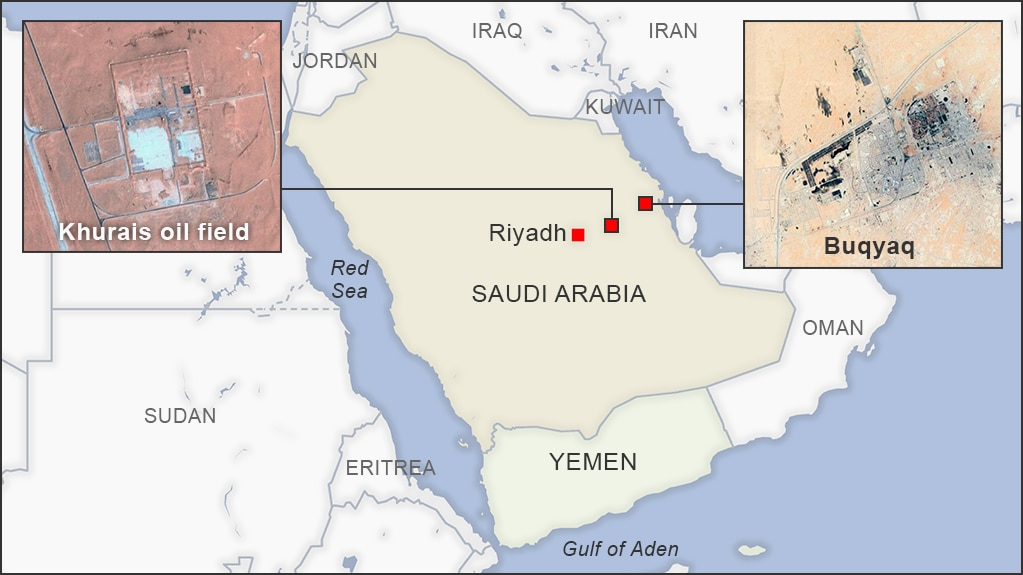
The domestic political dynamics of absorbing foreign strikes without military response are largely invisible to outside observers. Saudi Arabia has no independent polling, no free press covering public sentiment, and no parliamentary opposition to channel discontent. The closest analogue is the September 2019 Abqaiq-Khurais attack, when Iran struck Aramco facilities and Saudi Arabia did not retaliate — a decision that provoked private criticism within the royal family but no public dissent. The current war differs in scale but not in the regime’s capacity to absorb the political cost of restraint, which is effectively unlimited given the concentrated decision-making structure around the Crown Prince.
What would it take for Saudi Arabia to enter the war as an active combatant?
Three scenarios could trigger Saudi military action: a strike on desalination infrastructure causing a civilian water crisis, a mass-casualty event against Saudi military personnel on the scale of dozens killed rather than wounded, or a direct threat to Mecca or Medina from Houthi missiles transiting Saudi airspace. Defense Minister Prince Khalid bin Salman has maintained coordination with CENTCOM throughout the conflict, and the Article 51 self-defense invocation provides the legal framework for action should the political calculus shift.
How does the Iran war compare to the 2019 Abqaiq attack in terms of Saudi economic impact?
The 2019 Abqaiq-Khurais attack temporarily knocked out 5.7 million barrels per day of Saudi production — roughly half of total output — but lasted only two weeks before full restoration. The 2026 conflict has caused smaller individual disruptions (550,000 bpd at Ras Tanura for one week) but sustained, cumulative damage across a much wider geographic footprint over 28 days. The critical difference is duration and scope: in 2019, oil prices spiked briefly then retreated. In 2026, Brent has remained above $100 for nearly four weeks, the Strait of Hormuz remains functionally restricted, and the cumulative regional repair bill dwarfs the 2019 incident by an order of magnitude.