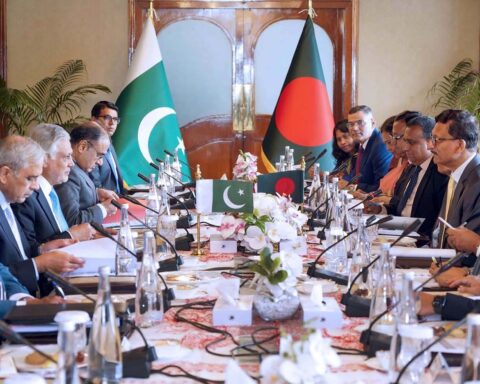
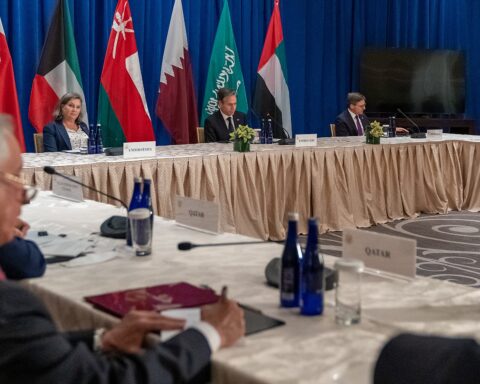
RIYADH — The missiles and drones that have struck Saudi Arabia, the UAE, Bahrain, Kuwait, Qatar, Oman, and Jordan since February 28 are building something far more consequential than craters. Every impact site is a data point. Every damaged desalination plant is an exhibit. Every civilian casualty is an entry in a reparations ledger that Gulf states are already compiling. UN Security Council Resolution 2817, adopted on March 11 with 13 votes in favour, zero against, and only Russia and China abstaining, gave this legal architecture its foundation — condemning Iran’s attacks “in the strongest terms” and reaffirming the Gulf states’ “inherent right of individual or collective self-defence” under Article 51 of the UN Charter. The war that dominates headlines for its missiles may ultimately be decided by its briefs.
The precedent already exists. After Iraq invaded Kuwait in 1990, the UN Compensation Commission processed 2.7 million claims and disbursed $52.4 billion in reparations funded by Iraqi oil revenues. Gulf states damaged by Iranian strikes in 2026 face a remarkably similar fact pattern — unprovoked attacks on sovereign territory by a neighbouring state — and the legal machinery to pursue compensation is being assembled. The question is not whether Tehran will face a reparations bill. The question is whether anyone can collect it.
Table of Contents
- What Does Resolution 2817 Mean for Saudi Arabia?
- Why Did Iran’s Legal Case for Striking the Gulf Collapse?
- The Kuwait Precedent — $52.4 Billion in Reparations That Actually Got Paid
- How Much Could Gulf States Claim in Reparations?
- The War Crimes Dossier Building on Both Sides
- Can the International Criminal Court Prosecute This War?
- The Drone Warfare Gap International Law Was Never Designed to Close
- The Conflict Accountability Matrix
- Is Saudi Arabia’s Restraint a Legal Strategy or a Military Weakness?
- Environmental War Crimes the Gulf Will Fight for Decades
- Did the United States Even Have Legal Authority to Start This War?
- What Does a Post-War Legal Settlement Look Like?
- Frequently Asked Questions
What Does Resolution 2817 Mean for Saudi Arabia?
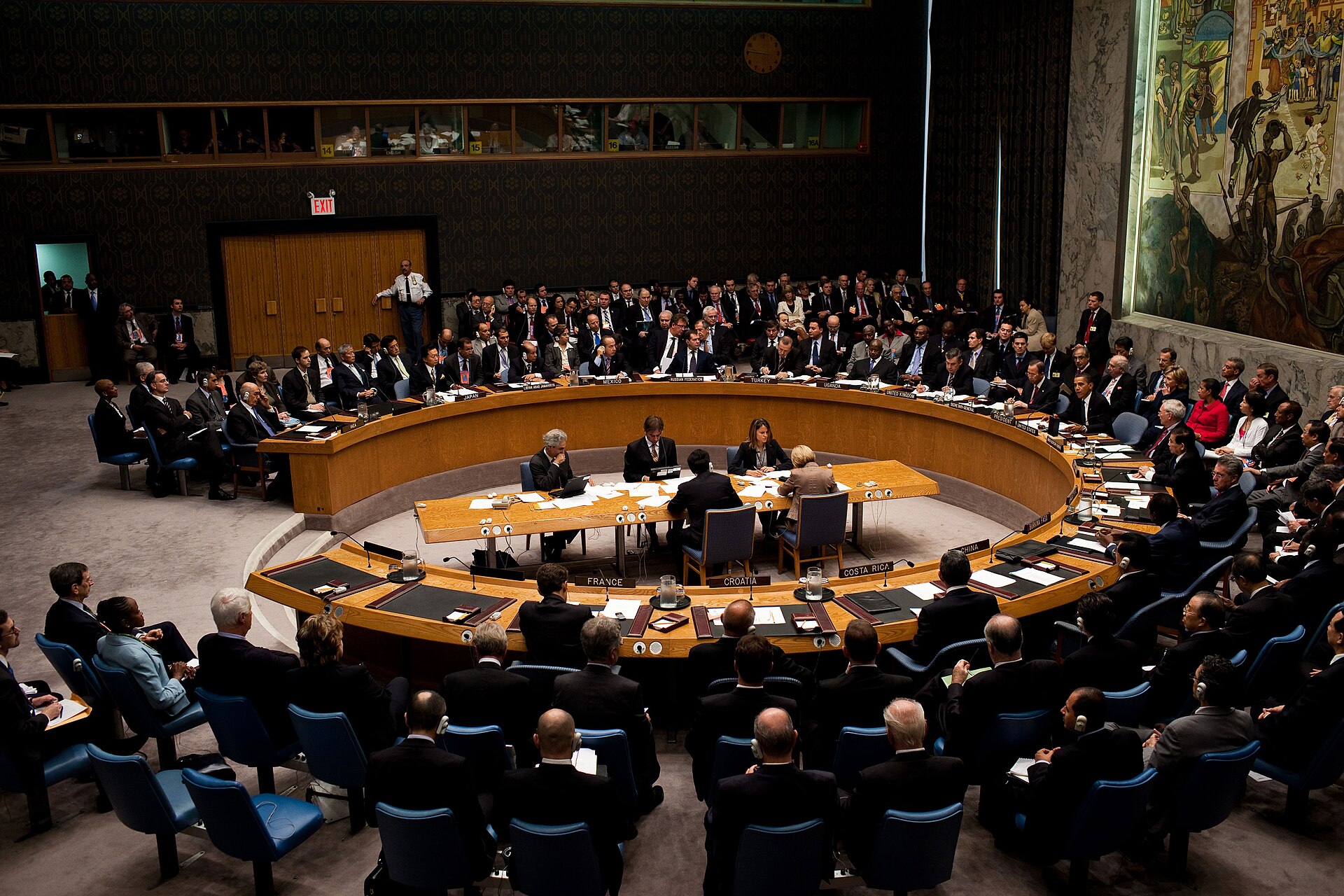
Resolution 2817 is the most significant UN Security Council action on a Middle Eastern conflict since Resolution 687 ended the Gulf War in 1991. Adopted on March 11, 2026, with 13 votes in favour, zero against, and two abstentions from Russia and China, the resolution condemned Iran’s strikes against seven sovereign nations and explicitly invoked Article 51 of the UN Charter — the legal foundation for self-defence. For Saudi Arabia and its Gulf neighbours, the resolution accomplished three things simultaneously: it established Iran as the aggressor in the eyes of international law, it pre-authorized the use of force in self-defence, and it created the documentary basis for future reparations claims.
The resolution was submitted by Bahrain on behalf of all six GCC members and Jordan, and co-sponsored by 135 UN member states — a level of diplomatic support that dwarfs most Security Council actions. Russia called the text “extremely one-sided” for failing to acknowledge the US-Israeli strikes that preceded Iran’s retaliation. China echoed this objection. Iran’s UN ambassador dismissed the resolution as “a manifest injustice” and a blow to Council credibility. Neither abstention, however, prevented the resolution from carrying the full legal weight of a Chapter VII-adjacent Security Council determination.
The critical operative paragraph reaffirmed Gulf states’ “inherent right of individual or collective self-defense” — language that mirrors the legal framing used before the liberation of Kuwait in 1991. This means that Saudi Arabia, the UAE, and their allies are legally authorised to use military force against Iran under international law. That they have chosen not to exercise this right is itself a strategic calculation with profound legal implications.
Prince Mohammed bin Salman‘s government has consistently positioned the Kingdom as a victim of unprovoked aggression rather than a co-belligerent in the US-Israeli campaign. This distinction matters enormously in the courtrooms and arbitration chambers where the war’s financial consequences will eventually be determined. A victim state claiming reparations stands on far stronger legal ground than a belligerent claiming war damages.
Why Did Iran’s Legal Case for Striking the Gulf Collapse?
Iran’s justification for attacking Gulf states rests on a self-defence argument that international law scholars have systematically dismantled. Tehran contends that because US military bases in Saudi Arabia, the UAE, Bahrain, Qatar, and Kuwait were used to stage or support the strikes against Iran, the host nations became legitimate targets under Article 51. The argument has a surface logic — these bases did house American forces — but it fails on three separate legal tests that govern the use of force in self-defence.
Professor Adil Ahmad Haque of Rutgers Law School, writing in Just Security, identified the central flaw: Gulf states “had not allowed their territory to be used” for the initial attacks on Iran. The US-Israeli strikes on February 28 were launched from aircraft carriers, submarines, and Diego Garcia — not from Gulf military installations. The fact that American troops were subsequently deployed to Gulf bases for defensive purposes does not transform those bases into offensive platforms, and it certainly does not transform the host nations into belligerents. Haque noted that striking US assets in Gulf states “constitute an act of force directed at the territorial state” — meaning Iran was attacking sovereign Gulf nations, not merely targeting American military assets on their soil.
The irony is that Iran itself has argued this exact position before. In the 1993 ICJ case Oil Platforms, Iran’s legal team argued that American attacks on distant military bases “would be illegitimate because directed at the wrong target.” Tehran is now doing precisely what it told the International Court of Justice was illegal three decades ago.
Al Jazeera’s legal analysis reached a similar conclusion, noting that Iran’s case collapses because the Gulf states were not parties to the conflict when Iran began its retaliatory strikes. International humanitarian law draws a sharp distinction between belligerents and neutral or non-belligerent states. By attacking nations that were not at war with it, Iran violated the foundational principle of distinction — one of the oldest and most widely accepted rules of armed conflict.
The GCC ministerial council responded by issuing a formal statement reserving member states’ legal right to respond in accordance with Article 51. The statement was carefully worded: it neither threatened retaliation nor renounced it. Instead, it preserved the legal option while the diplomatic track remained open — a posture that Saudi Arabia’s broader strategy of restraint has maintained since the war began.
The Kuwait Precedent — $52.4 Billion in Reparations That Actually Got Paid
The legal model for Gulf reparations already exists and already worked. The UN Compensation Commission, established in 1991 as a subsidiary organ of the Security Council under Resolution 687, processed approximately 2.7 million claims with an asserted value of $352.5 billion following Iraq’s invasion of Kuwait. The Commission ultimately awarded $52.4 billion to approximately 1.5 million successful claimants — roughly 15 percent of the total claimed value. The final payment was made on January 13, 2022, completing a process that took more than 31 years.
The UNCC’s structure was designed to handle six categories of claims, ranging from fixed-sum payments for individuals forced to leave Kuwait or Iraq during the invasion, to massive government and corporate claims for infrastructure destruction, economic loss, and environmental damage. Category F claims — filed by governments and international organisations — included some of the largest awards, particularly for environmental remediation in the Persian Gulf where Iraqi forces had deliberately spilled crude oil and ignited oil wells.
The funding mechanism was equally instructive. Rather than requiring voluntary payment from Baghdad, the UNCC was funded by a percentage of Iraqi oil export revenues. Initially set at 30 percent, this levy was subsequently reduced to 25 percent and then to 5 percent after the 2003 Iraq War disrupted oil exports. The model demonstrates that reparations can be structured as a long-term revenue share rather than a lump-sum demand — a critical consideration given that any post-war Iranian government will almost certainly lack the fiscal capacity to pay a multi-billion-dollar bill immediately.
The parallels between 1990 and 2026 are striking. In both cases, a regional power attacked sovereign neighbours who were not parties to the underlying conflict. In both cases, civilian infrastructure — oil facilities, airports, desalination plants — sustained significant damage. In both cases, the economic disruption extended far beyond the physical destruction, encompassing lost trade revenues, disrupted shipping, and collapsed tourism. The key difference is scale: the 2026 conflict has struck seven nations simultaneously, and the economic disruption caused by the Hormuz closure dwarfs anything Kuwait experienced in 1990.
| Dimension | Kuwait UNCC (1991-2022) | Potential 2026 Gulf Claims |
|---|---|---|
| Aggressor state | Iraq | Iran |
| Victim states | 1 (Kuwait) | 7 (Saudi Arabia, UAE, Bahrain, Kuwait, Qatar, Oman, Jordan) |
| Total claims filed | 2.7 million | Potentially 5-10 million (7 nations, larger populations) |
| Asserted value | $352.5 billion | Estimated $500 billion-$1 trillion (including Hormuz losses) |
| Amount awarded | $52.4 billion | TBD — likely $100-200 billion if UNCC model applied |
| Funding mechanism | Iraqi oil revenues (5-30%) | Iranian oil revenues, frozen assets, or commodity levies |
| Duration | 31 years | Potentially 20-40 years |
| UNSC basis | Resolution 687 | Resolution 2817 (partial — lacks explicit reparations mandate) |
How Much Could Gulf States Claim in Reparations?
The total damage inflicted by Iranian strikes since February 28 is difficult to quantify precisely while the conflict continues, but preliminary estimates from multiple sources suggest a reparations bill that could exceed $200 billion when direct infrastructure damage, lost economic output, environmental remediation, and shipping disruption are combined. Saudi Arabia alone has lost an estimated $4.5 billion in oil revenue since the war began, according to Wood Mackenzie analysis cited by the Financial Times. That figure represents only the Kingdom’s direct export losses and excludes the far larger economic impact of disrupted trade, cancelled tourism, and frozen investment that has already cost the Gulf more than the Covid pandemic.
Goldman Sachs estimates that if the Hormuz closure persists for two months, GDP contractions could reach 3 percent for Saudi Arabia, 5 percent for the UAE, and a devastating 14 percent for both Qatar and Kuwait. The global cost is equally staggering: Gulf oil production dropped by 6.7 million barrels per day by March 10 and by at least 10 million barrels per day by March 12. The IEA’s release of 1.2 billion barrels from emergency reserves — the largest coordinated release in the agency’s 50-year history — underscores the scale of disruption.
Infrastructure damage claims would encompass Saudi Arabia’s Ras Tanura refinery, Bahrain’s desalination plant, QatarEnergy’s Ras Laffan and Mesaieed facilities (which halted all LNG production), Dubai and Abu Dhabi airports, three Amazon Web Services data centres in the UAE that sustained “major structural damage,” and Kuwait’s airport. Iran has attacked at least 22 civilian vessels in Gulf waters, creating additional claims under maritime law. The civilian dimension of these claims is growing: a Human Rights Watch investigation found that Iranian strikes on Gulf hotels, airports, and residential areas killed eleven people and injured 268 others, adding individual casualty claims to the infrastructure dossier.
The aviation sector alone has absorbed losses of 46,000 cancelled flights, with an estimated $40 billion in lost visitor spending across the region during the Ramadan season. Emirates, Etihad, and Qatar Airways — three of the world’s largest carriers — suspended operations, creating ripple effects across the global aviation network.
The War Crimes Dossier Building on Both Sides
The Iran war has generated war crimes allegations against every major belligerent, creating a legal environment in which no party can claim clean hands. This mutual exposure may ultimately shape the political dynamics of any post-war settlement, as all sides weigh the risk of accountability against the benefits of negotiated immunity.
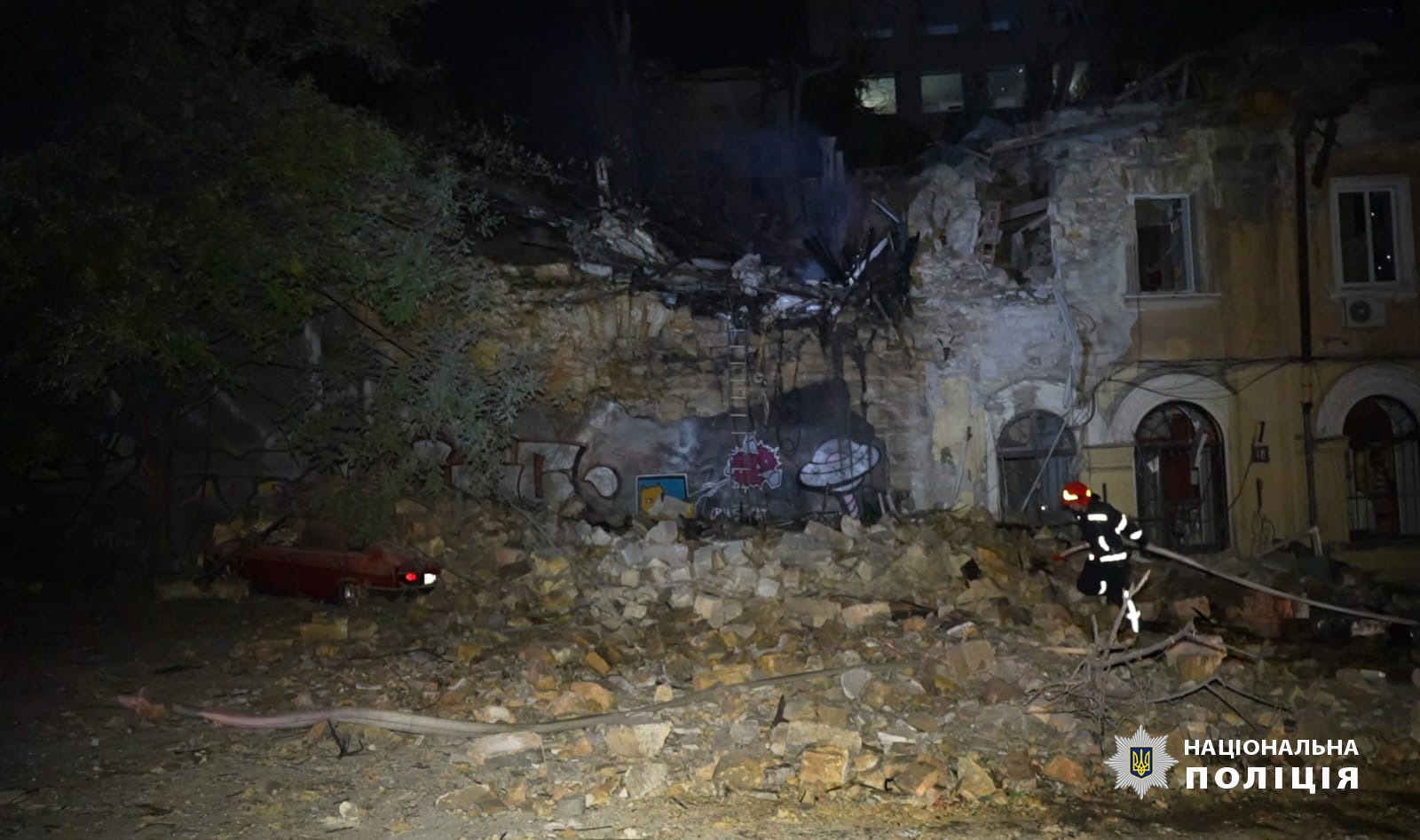
Against Iran, the dossier centres on the targeting of civilian infrastructure across seven sovereign states. Desalination plants occupy a particularly sensitive legal category. International humanitarian law gives special protection to drinking water installations and supplies as “objects indispensable to civilian survival” under Additional Protocol I to the Geneva Conventions. Gulf states depend on desalination for extraordinary proportions of their water supply — Kuwait at 90 percent, Oman at 86 percent, Saudi Arabia at 70 percent, and the UAE at 42 percent. Approximately 450 desalination plants serve some 100 million Gulf residents. The deliberate targeting of these facilities, if proven, would constitute one of the clearest violations of IHL in the conflict.
Against the United States and Israel, the most severe allegation involves the destruction of the Shajareh Tayyebeh girls’ elementary school in Minab, Hormozgan Province, on February 28 — the first day of the war. Investigations by the New York Times, CBC, BBC Verify, and Bellingcat identified the weapon as an American UGM-109 Tomahawk land attack missile. Between 175 and 180 people were killed, most of them schoolchildren. The school was struck three times in what investigators described as a “triple tap.” A preliminary Pentagon investigation found that the United States was indeed at fault. UNESCO called it “a grave violation of humanitarian law.” Amnesty International demanded accountability. The Saudi defence establishment maintained public silence on the incident — a silence that carried its own legal logic.
The “no quarter” declaration by US Defence Secretary Pete Hegseth on March 14 — “We will keep pressing. No quarter, no mercy for our enemies” — created a separate legal crisis. The declaration of no quarter has been explicitly prohibited since the 1907 Hague Convention (Article 23, Annex to Convention IV), the Geneva Convention Additional Protocol I (Article 40), and even the 1863 Lieber Code used during the American Civil War. The Pentagon’s own Law of War Manual states unequivocally that such statements constitute war crimes. Human Rights Watch’s Washington director Sarah Yager called the language “a serious red flag” from an atrocity-prevention perspective.
As of March 10, over 1,245 Iranian civilians had been killed and more than 12,000 injured, according to the Human Rights Activists News Agency. US and Israeli strikes had hit schools, medical facilities, residential areas, and water infrastructure across Iran. The Iran Fact-Finding Mission established by the UN Human Rights Council warned that “failures to respect the principles of distinction, proportionality, and precaution may attract accountability for war crimes and crimes against humanity.”
Can the International Criminal Court Prosecute This War?
The International Criminal Court faces a fundamental jurisdictional barrier in the 2026 Iran war: neither Iran, the United States, nor Israel is a party to the Rome Statute. This means the ICC cannot exercise jurisdiction over crimes committed by their nationals or on their territory through the standard referral process. The barrier is formidable but not insurmountable — three pathways remain theoretically available, each with significant political and legal obstacles.
The first pathway is an Article 12(3) declaration, under which any state — including non-members — may lodge a declaration with the ICC Registrar accepting the Court’s jurisdiction over crimes committed on its territory from a specific date. Palestine used this mechanism in 2014 and Ukraine used it twice before subsequently ratifying the Rome Statute. The US-based advocacy organisation DAWN (Democracy for the Arab World Now) has formally called on Iran to file such a declaration since March 5, and has sent letters to Bahrain, Lebanon, Israel, Kuwait, Qatar, Saudi Arabia, and the UAE identifying steps they should take to enable ICC jurisdiction. The problem: Iran is unlikely to invite scrutiny of its own conduct, and Saudi Arabia has shown no inclination to join the ICC.
The second pathway is a Security Council referral, as the Council did for Darfur and Libya. The Council can refer situations to the ICC even for non-member states, bypassing the jurisdictional gap entirely. But any permanent member can veto such a referral. The United States would almost certainly veto any referral that could expose its own forces to prosecution, and Russia has already demonstrated its willingness to shield Iran from Security Council action by abstaining rather than supporting Resolution 2817.
The third pathway is an ad hoc tribunal modelled on the International Criminal Tribunals for Yugoslavia (ICTY) and Rwanda (ICTR), which were established by Security Council resolutions in the 1990s. These tribunals operated outside the ICC framework and were tailored to specific conflicts. A similar tribunal for the 2026 Iran war would face the same veto problem as a Council referral, but could theoretically be established through a General Assembly resolution — as was proposed for Ukraine in 2022 — though such a body would lack the enforcement powers of a Security Council-mandated tribunal.
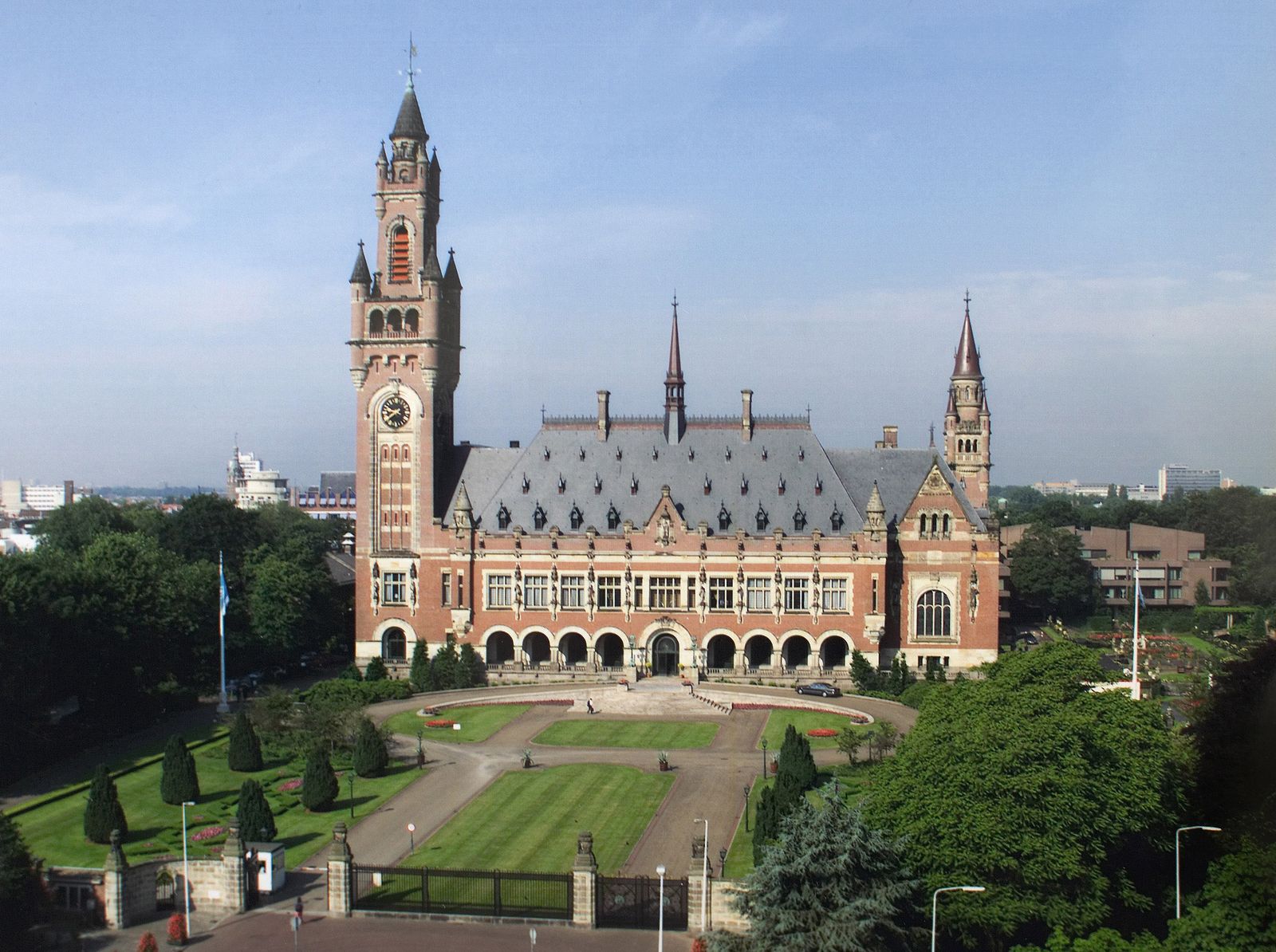
A fourth option operates outside formal criminal prosecution entirely. Iran and the United States already have an existing case before the ICJ — Certain Iranian Assets (Islamic Republic of Iran v. United States of America) — based on the 1955 Treaty of Amity. The Court confirmed jurisdiction in 2021 and issued an order regarding compensation in February 2026, just days before the war began. The ICJ could potentially hear new cases brought by Iran or Gulf states related to the current conflict, though ICJ judgments are often unenforceable without Security Council backing.
The Drone Warfare Gap International Law Was Never Designed to Close
Iran has launched approximately 4,000 unmanned aerial vehicles and 1,400 missiles across the region since Operation Roaring Lion began. The scale of the drone campaign has exposed a gap in international humanitarian law that no existing treaty was designed to address: the mass deployment of cheap, autonomous or semi-autonomous weapons that overwhelm defensive systems through sheer volume rather than technological sophistication.
The cost asymmetry is the core of the problem. A Shahed-136 one-way attack drone costs between $20,000 and $50,000 to produce. A Patriot PAC-3 interceptor costs $3-4 million. A THAAD interceptor costs $10 million. The exchange ratio means defenders spend 60 to 200 times more per interception than the attacker spent on the weapon. This is not just a military problem — it is a legal one. Existing arms control frameworks were designed for expensive, state-level weapons systems. The Missile Technology Control Regime restricts exports of systems capable of delivering 500-kilogramme payloads over 300 kilometres. Many Shahed variants fall near these thresholds, but the MTCR was designed for state-level transfers of sophisticated cruise missiles, not mass-produced drone armies.
Under Article 36 of Additional Protocol I to the Geneva Conventions, states must ensure that any “new weapon, means or method of warfare” complies with international law, including evaluating predictability and reliability. The ICRC has confirmed that drones are not inherently unlawful weapons, but their use must comply with IHL principles of distinction, proportionality, and precaution. The challenge is that mass saturation attacks — designed specifically to overwhelm air defences — do not fit neatly into existing proportionality frameworks. When Iran launches 50 drones at Saudi Arabia in a single night, some aimed at military targets and others at civilian infrastructure, the legal analysis of each drone must be conducted individually. No existing IHL provision addresses the legality of deliberately exhausting a defender’s missile stockpile as a military strategy.
The UN Secretary-General recommended that states conclude by 2026 a legally binding instrument to prohibit lethal autonomous weapon systems (LAWS) that function without human control. No agreement has been reached. The $35,000 Shahed occupies a grey zone: it is not fully autonomous (it follows pre-programmed GPS coordinates), but it lacks the discriminating capability to distinguish between military and civilian targets once launched. There is no equivalent of the Chemical Weapons Convention or Mine Ban Treaty for attack drones — and the Iran war is demonstrating why one is urgently needed.
The Conflict Accountability Matrix
The legal dimensions of the 2026 Iran war resist simple narratives of good and evil. Every major belligerent has violated international law in some fashion, but the severity, intent, and scale of violations differ dramatically. A structured assessment across six legal dimensions reveals where accountability is strongest, weakest, and most contested.
| Legal Dimension | United States / Israel | Iran | Saudi Arabia / GCC |
|---|---|---|---|
| Authorization legitimacy | Weak — no UNSC mandate, no Congressional AUMF, strikes launched without provocation | Mixed — self-defence claim exists but misdirected at non-belligerents | Strong — victim status confirmed by UNSC 2817, Article 51 right preserved |
| Distinction compliance | Poor — school bombing, residential strikes, “triple tap” documented | Poor — civilian infrastructure targeted across 7 nations, 22 civilian ships attacked | N/A — not conducting offensive operations |
| Proportionality | Poor — 1,245+ civilians killed, “no quarter” declaration | Poor — attacking non-belligerent states, desalination plants, airports | N/A — defensive operations only |
| Environmental responsibility | Severe — oil facility strikes caused black rain, 300+ environmental incidents | Moderate — oil infrastructure strikes, ship attacks creating spill risks | Minimal — not conducting strikes |
| Civilian protection record | Weak — Minab school (175-180 killed), hospitals struck | Weak — desalination plants, airports, data centres, residential areas | Strong — civilian protection posture maintained |
| Post-war accountability positioning | Protected — US veto power shields from ICC/UNSC action | Exposed — no veto protection, condemned by UNSC, frozen assets | Advantaged — victim status maximises reparations leverage |
The matrix reveals a paradox that runs through the entire conflict: the belligerent with the greatest military power (the United States) has the weakest legal authorization; the belligerent with the strongest grievance (Iran) has directed its response at the wrong targets; and the party with the strongest legal position (Saudi Arabia) has achieved it precisely by not fighting. This three-way accountability dynamic will shape every aspect of the post-war settlement, from reparations negotiations to tribunal proceedings to the design of any new regional security architecture.
The framework also highlights why a comprehensive peace settlement will be extraordinarily difficult to negotiate. Each party has leverage over the others: Iran can threaten to pursue war crimes cases against the US and Israel; the US can block ICC referrals and UNCC-style reparations mechanisms; and Saudi Arabia’s diplomatic reversal from détente partner to victim gives Riyadh moral authority that neither Washington nor Tehran can easily dismiss.
Is Saudi Arabia’s Restraint a Legal Strategy or a Military Weakness?
The conventional analysis of Saudi Arabia’s decision not to strike Iran directly has focused on military calculus: the Kingdom lacks the offensive capabilities to meaningfully damage Iran’s military infrastructure, its air defences are better suited to protection than projection, and any Saudi attack would invite escalation that could devastate its oil infrastructure. This assessment is not wrong, but it misses the most consequential dimension of Saudi restraint — the legal one.
By maintaining its status as a victim of unprovoked aggression rather than a co-belligerent in the US-Israeli campaign, Saudi Arabia has secured several advantages that fighting would have forfeited. First, the Kingdom’s reparations claims against Iran are legally unambiguous. A belligerent state claiming war damages faces counterclaims and offset arguments; a non-belligerent victim state does not. The UNCC precedent awarded Kuwait compensation precisely because Kuwait was the victim of aggression, not a participant in the broader conflict that followed. Saudi Arabia’s restraint replicates this legal posture.
The war that is fought in the Security Council chamber, the arbitration panel, and the compensation commission may redistribute more wealth and reshape more borders than the war fought with missiles and drones.
Editorial analysis, March 2026
Second, Saudi Arabia’s non-belligerent status preserves its diplomatic utility. Riyadh maintains active communication channels with Tehran — channels that no combatant nation could sustain. This positioning makes Saudi Arabia indispensable to any ceasefire or peace process, which in turn gives the Kingdom leverage over the terms of any post-war settlement. A Saudi Arabia that had joined the bombing campaign would be just another belligerent at the negotiating table. A Saudi Arabia that absorbed attacks without retaliating is the table’s most sympathetic and powerful voice.
Third, Saudi Arabia’s restraint undercuts Iran’s self-defence argument at its foundations. Tehran’s entire legal justification depends on characterising Gulf states as parties to the US-Israeli campaign. Every day that Saudi Arabia absorbs drone strikes without launching retaliatory strikes, the Iranian argument grows weaker. The Kingdom’s patience is not passivity — it is the most effective legal weapon in its arsenal.
Critics — including Senator Lindsey Graham, who threatened to block the US-Saudi defence pact over Riyadh’s refusal to strike Iran — misunderstand the strategy. Graham sees a free rider. International lawyers see a client building the strongest case on the docket.
Environmental War Crimes the Gulf Will Fight for Decades
The environmental damage from the 2026 Iran war extends far beyond the immediate destruction of oil facilities and industrial infrastructure. The Conflict and Environment Observatory (CEOBS) has identified over 300 environmental incidents as of March 10, with 232 assessed for environmental risk. Israeli airstrikes on approximately 30 oil facilities in and around Tehran triggered fires that produced “black rain” — precipitation laden with soot, particulate matter, nitrogen oxides, sulphur dioxide, dioxins, furans, polycyclic aromatic hydrocarbons, and formaldehyde. The WHO warned the black rain posed a danger to health. Iran’s Department of Environment warned of potential acid rain causing skin burns and lung damage.
In the Gulf itself, the damage to maritime and coastal ecosystems is accelerating. A 20-kilometre oil spill was documented near Sri Lanka after the US torpedoed the Iranian frigate Dena. At least 12 merchant ships have been struck in ports or Gulf waters, creating additional spill risks. The approximately 150 crude and LNG tankers anchored in Gulf waters at the conflict’s onset represent a floating environmental hazard — each carrying hundreds of thousands of barrels of crude that could be released by a single errant missile or drone.
Damage to desalination plants creates a particularly insidious form of contamination. These facilities use sodium hypochlorite, ferric chloride, and sulfuric acid in their treatment processes. Structural damage can release these chemicals into Gulf waters, compounding the pollution from oil spills. Gulf marine ecosystems are already among the world’s most stressed, with water temperatures that have risen significantly over the past three decades. Military contamination adds to this burden.
The legal framework for environmental war crimes exists but has never been successfully prosecuted. Article 8(2)(b)(iv) of the Rome Statute defines as a war crime “intentionally launching an attack in the knowledge that such attack will cause widespread, long-term and severe damage to the natural environment which would be clearly excessive in relation to the concrete and direct overall military advantage anticipated.” The threshold is extraordinarily high — scholars describe it as “exalted” — and there has never been a single prosecution under this provision. Additional Protocol I to the Geneva Conventions (Articles 35(3) and 55) prohibits warfare methods “intended, or may be expected, to cause widespread, long-term and severe damage to the natural environment,” but enforcement has been non-existent.
Historical precedent offers little comfort. Oil spilled during the Iran-Iraq War in the 1980s was linked to the near-total destruction of the Persian Gulf’s hawksbill sea turtle population and severe damage to green turtle populations. No reparations or accountability followed. The UNCC’s Category F claims after the 1991 Gulf War did include environmental damages from Iraq’s deliberate oil spills and well fires, setting a partial precedent. But the current conflict’s environmental footprint — spanning air pollution from burning refineries to marine contamination from sunken vessels to chemical releases from damaged industrial facilities — may exceed anything the UNCC encountered.
Did the United States Even Have Legal Authority to Start This War?
President Trump did not request an Authorization for Use of Military Force from Congress before launching strikes on Iran on February 28, 2026. The strikes clearly triggered the 48-hour notification requirement under the War Powers Resolution of 1973. Congress subsequently voted on measures to restrain presidential war-making authority, but both failed narrowly: the Senate rejected a War Powers Resolution 47-53 on March 4, and the House rejected a similar measure 212-219 on March 5.
The legal objections from constitutional scholars have been unambiguous. Professor Allen Weiner of Stanford Law School stated that “from an international law perspective, my judgment is that the attack was quite clearly illegal.” He warned that “if the world’s most powerful countries conclude, in effect, that they can engage in the international use of force whenever they believe it to be in their interests, the result will be the demise of the legal regime that has for 80 years been quite effective in reducing the level of interstate violence in the international system.”
Retired Air Force Lieutenant Colonel Rachel VanLandingham, former Chief of International Law at US Central Command, was equally direct: “Not only does this violate international law in numerous respects, it clearly violates the US Constitution and the War Powers Resolution. Congress is intended to decide when American lives are placed at risk in offensive wars.”
UN human rights experts issued a collective statement declaring the strikes “entirely illegal under international law” and characterising them as “an act of aggression” — one of the four core international crimes alongside genocide, crimes against humanity, and war crimes. Ben Saul, the UN Special Rapporteur on Human Rights and Counterterrorism, stated plainly: “This is not lawful self-defence against an armed attack by Iran, and the UN Security Council has not authorised it.”
The constitutional dimension adds another layer of legal exposure. Professor Kermit Roosevelt of the University of Pennsylvania noted that “the Constitution says that Congress has the power to declare war, and the records of the Constitutional Convention are pretty clear that the drafters did not want to give one person the power to take the United States into war.” The administration has avoided calling the conflict a “war,” framing it instead as a limited military operation — a semantic distinction that carries legal weight but is increasingly difficult to maintain as the operation enters its third week with no defined endpoint.
For Saudi Arabia, the question of US legal authority is not academic. If the initial strikes are ultimately adjudicated as an act of aggression, the entire chain of causation — from Iran’s retaliatory strikes on Gulf states to the Hormuz closure to the global economic disruption — traces back to an arguably illegal American action. This creates the possibility, however remote, that Gulf states could pursue claims not only against Iran for its attacks but against the United States for initiating the conflict that triggered them.
What Does a Post-War Legal Settlement Look Like?
The eventual end of the 2026 Iran war will produce a legal settlement of extraordinary complexity. At minimum, the settlement must address five intersecting legal frameworks: reparations for Gulf state damages, accountability for war crimes committed by all parties, the legal status of Iran’s leadership succession, the post-war maritime security architecture for the Strait of Hormuz, and the broader question of arms control for drone warfare. No single institution or legal mechanism can address all five.
The most likely outcome is a layered settlement in which different institutions handle different dimensions. A UNCC-style compensation commission — which Gulf states are already lobbying for — could process reparations claims funded by frozen Iranian assets (estimated at $100-150 billion held in various jurisdictions) and a percentage of future Iranian oil revenues. This pathway requires a new Security Council resolution, which China and Russia may block unless their own interests — particularly energy contracts with Iran — are protected.
Criminal accountability is less likely to materialise through formal tribunals. The jurisdictional barriers facing the ICC, combined with the US veto power that shields American forces from prosecution, make comprehensive war crimes trials improbable. The more realistic scenario involves a series of bilateral settlements in which war crimes allegations are traded as bargaining chips rather than prosecuted. Iran’s exposure to Gulf reparations claims gives it incentive to negotiate; the US exposure to criticism over the Minab school bombing and the “no quarter” declaration gives Washington incentive to avoid any accountability framework that could be turned against American personnel.
Saudi Arabia’s positioning for this settlement phase may be the most sophisticated element of Mohammed bin Salman’s entire war strategy. The Kingdom has accumulated maximum legal leverage — victim status, UNSC backing, Article 51 rights preserved, no offensive operations to generate counterclaims — while maintaining the diplomatic relationships necessary to influence the settlement’s terms. Riyadh can negotiate with Tehran because it never bombed Tehran. It can negotiate with Washington because it hosts American forces. It can negotiate at the UN because 135 nations co-sponsored its resolution.
The post-war order will also need to address the drone warfare gap that the conflict has exposed. The absence of any international treaty governing mass-produced attack drones means that the tactics Iran has used — saturating air defences with cheap, expendable weapons — remain perfectly legal under current international law. Any settlement that does not address this gap will simply postpone the next conflict. Saudi Arabia, which has absorbed the brunt of Iran’s drone campaign, has the standing and the motivation to lead this effort. The question is whether the Kingdom can translate its wartime restraint into peacetime influence.
Frequently Asked Questions
What is UN Security Council Resolution 2817?
Resolution 2817 was adopted on March 11, 2026, with 13 votes in favour, zero against, and two abstentions from Russia and China. It condemned Iran’s attacks against Bahrain, Kuwait, Oman, Qatar, Saudi Arabia, the UAE, and Jordan “in the strongest terms” and reaffirmed the attacked states’ “inherent right of individual or collective self-defence” under Article 51 of the UN Charter. It was co-sponsored by 135 UN member states.
How much could Gulf states claim in reparations from Iran?
Preliminary estimates suggest Gulf reparations claims could exceed $200 billion when combining direct infrastructure damage, lost oil revenues ($4.5 billion for Saudi Arabia alone), economic output losses from the Hormuz closure, aviation disruption (46,000 cancelled flights), environmental remediation, and shipping damage. Goldman Sachs projects GDP contractions of 3-14 percent across affected states if the conflict persists.
Can the International Criminal Court prosecute war crimes in the Iran conflict?
The ICC faces a fundamental jurisdictional barrier because neither Iran, the United States, nor Israel is a party to the Rome Statute. Three pathways exist: an Article 12(3) declaration by Iran or Gulf states accepting ICC jurisdiction, a Security Council referral (subject to US veto), or an ad hoc tribunal modelled on the Yugoslavia and Rwanda tribunals. None is politically likely in the near term.
What was the Kuwait UNCC and could it be replicated for the 2026 war?
The UN Compensation Commission processed 2.7 million claims and awarded $52.4 billion following Iraq’s 1990 invasion of Kuwait, funded by Iraqi oil revenues over 31 years. The model could theoretically be applied to Gulf states damaged by Iran, but would require a new Security Council resolution — which Russia and China might veto — and a mechanism to fund payments from frozen Iranian assets or future oil revenues.
Why has Saudi Arabia not exercised its Article 51 right to strike Iran?
Saudi Arabia’s restraint serves a strategic legal purpose beyond military calculation. By maintaining victim status rather than becoming a co-belligerent, the Kingdom preserves its reparations claims without generating counterclaims, sustains diplomatic channels that combatant states cannot maintain, and undercuts Iran’s legal justification for attacking Gulf states. Resolution 2817 explicitly preserved Saudi Arabia’s right to act militarily — the right remains available but unexercised.
Is the US war on Iran legal under international or domestic law?
Multiple international law scholars and UN human rights experts have characterised the initial February 28 strikes as illegal under the UN Charter, which permits force only in self-defence against an armed attack or with Security Council authorization — neither of which applied. Domestically, Congress did not authorize the military action; both the Senate and House narrowly rejected War Powers Resolutions that would have required congressional approval.