
RIYADH — For half a century, Saudi Arabia depended on Washington for security guarantees, on European capitals for diplomatic legitimacy, and on Asian markets for the revenue that kept the Kingdom solvent. Twenty-five days of war with Iran have inverted every one of those relationships. The United States now depends on Saudi military bases to prosecute its campaign against Tehran. European leaders are calling Crown Prince Mohammed bin Salman to express solidarity, not to extract concessions. India and Pakistan are deploying warships to escort tankers carrying Saudi crude their own economies cannot survive without. The dependency ran in one direction for fifty years. In less than a month, it reversed.
The reversal is not incidental. It is structural. Saudi Arabia controls the swing capacity in global oil production, the bypass pipeline that circumvents a closed Strait of Hormuz, nearly half the Gulf’s fertilizer exports, and the military real estate from which American fighter jets launch sorties against Iranian air defenses. No other country occupies all four positions simultaneously. The war did not create Saudi Arabia’s strategic assets. It revealed how many nations had been borrowing against them without acknowledgment — and how quickly those debts come due when the Gulf catches fire.
Table of Contents
- How Did the Iran War Change Saudi Arabia’s Global Position?
- The Military Reversal — Who Needs Whose Bases?
- Why Is Every European Leader Calling Riyadh?
- The Energy Weapon Nobody Expected — Fertilizer
- Can the World Feed Itself Without Saudi Arabia?
- What Does India’s Naval Deployment Reveal About Gulf Dependence?
- The Financial Lever — PIF and the Trillion-Dollar Portfolio
- How Did Pakistan Become Saudi Arabia’s Shield?
- Thirteen Million Workers and the Remittance Weapon
- The Dependency Reversal Matrix
- The Contrarian Case — Is This Power Permanent or a Wartime Illusion?
- Frequently Asked Questions
How Did the Iran War Change Saudi Arabia’s Global Position?
The Iran war transformed Saudi Arabia from a wealthy but strategically dependent petrostate into the single nation whose cooperation every major power requires to navigate the crisis. This shift occurred not through Saudi military aggression — Riyadh has conspicuously avoided formally entering the conflict — but through the sudden, simultaneous activation of leverage that had been accumulating for decades.
Before February 28, 2026, Saudi Arabia’s strategic value was theoretical. Analysts could write papers about the Kingdom’s importance as an oil swing producer, its geographic centrality, its financial firepower. The war made the theory operational. Within hours of the first American and Israeli strikes on Iran, the Strait of Hormuz effectively closed to commercial traffic, removing approximately 20 million barrels per day of oil transit capacity from global markets. Saudi Arabia’s East-West pipeline — a 1,200-kilometre piece of infrastructure built in the 1980s and largely forgotten — became the most important oil artery on Earth.
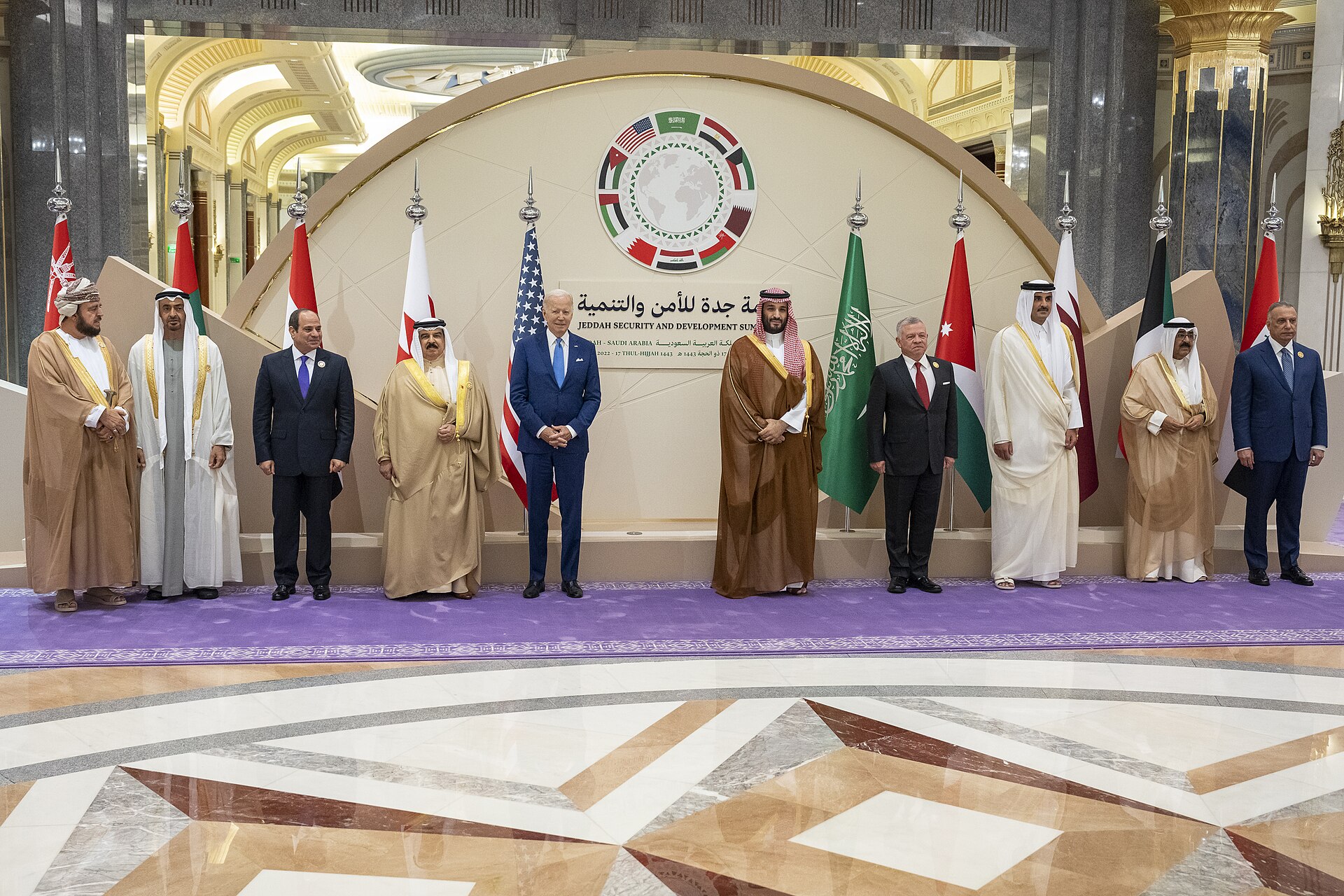
The transformation operates across five distinct dimensions: military basing, energy supply, food security, financial influence, and diplomatic positioning. In each, the pre-war relationship placed Saudi Arabia in the subordinate position. In each, the war reversed the hierarchy. On March 24, when Belgium’s King Philippe, Greek Prime Minister Kyriakos Mitsotakis, and Dutch Prime Minister Rob Jetten placed separate calls to Mohammed bin Salman to express support, according to the Saudi Press Agency, the reversal was no longer debatable. Three European heads of state were calling Riyadh. Riyadh was not calling them.
The Military Reversal — Who Needs Whose Bases?
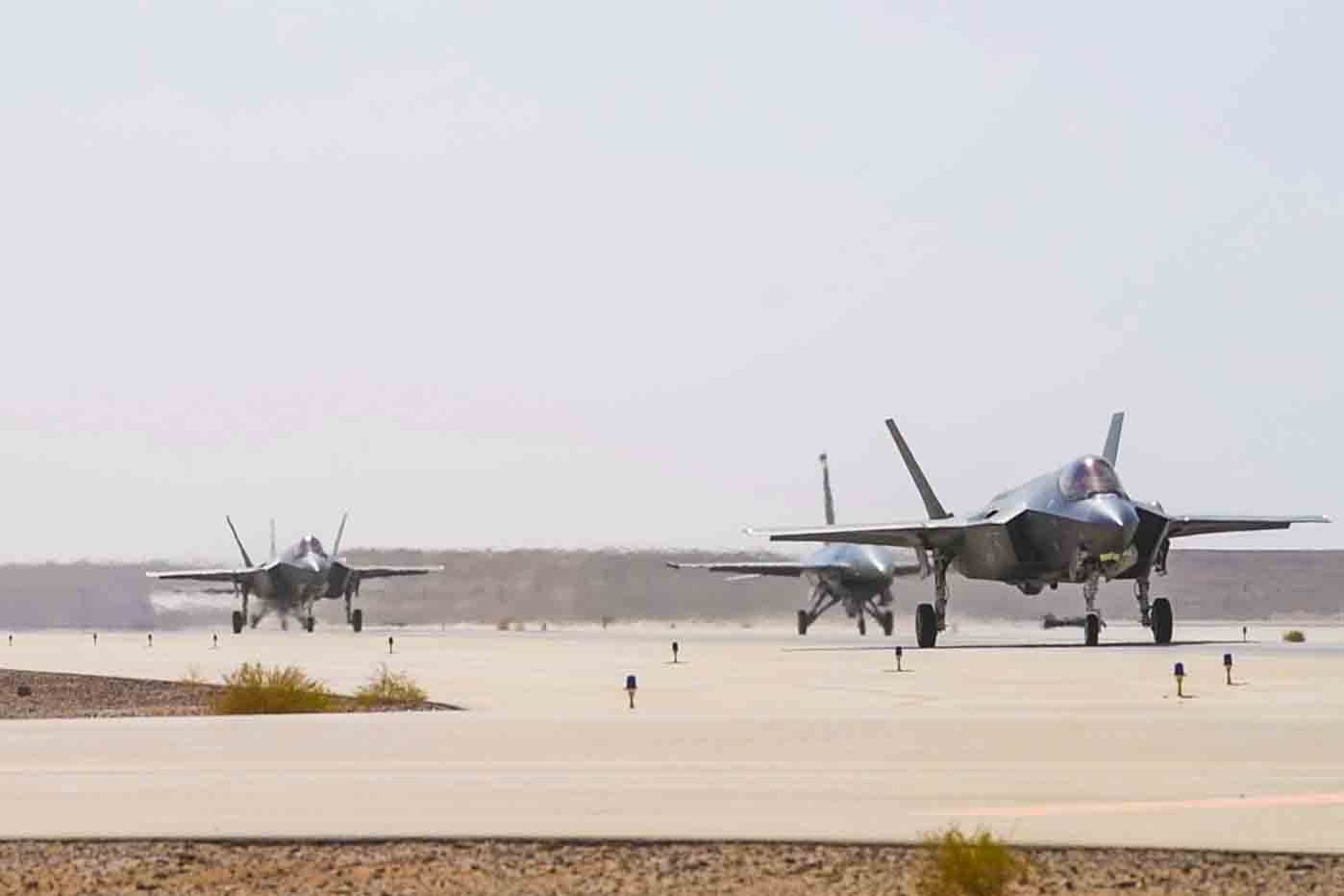
The most consequential reversal is military. For seven decades, the Saudi-American security relationship operated on an implicit bargain: the United States provided a security umbrella, and Saudi Arabia provided oil and base access. Washington set the terms. Riyadh accepted them. The 2026 Iran war has shattered that dynamic because the United States cannot prosecute its air campaign against Iran without Saudi territory, and both sides know it.
More than 50,000 American military personnel now operate across the Gulf region in what US Central Command has described as the largest deployment since the Iraq War, according to CENTCOM statements. The operational centre of gravity is Saudi Arabia. Prince Sultan Air Base near Al Kharj — the primary American facility in the Kingdom — hosts fighter squadrons, intelligence assets, and logistical infrastructure that are irreplaceable in the current campaign.
When Iranian drones began striking Prince Sultan Air Base in early March, the operational calculus shifted further in Riyadh’s favour. On March 20, Saudi Arabia agreed to open King Fahd Air Base in Taif to American forces, according to the Wall Street Journal — the first time Riyadh had granted Washington access to a major western military installation since the war began. The base sits approximately 1,200 kilometres from the Iranian border, placing it well beyond the effective range of Iran’s remaining drone arsenal. Around 200 Western personnel, including American advisers, were already stationed there.
The decision was framed publicly as Saudi generosity. Strategically, it was a demonstration of leverage. The United States needed the base. Saudi Arabia could have said no. The fact that it said yes — and chose the timing — established that Riyadh, not Washington, now controls the tempo of access. This is the opposite of the post-Gulf War arrangement, when American forces operated from Saudi soil on terms largely dictated by the Pentagon.
Britain’s contribution reinforces the pattern. London deployed air defense missiles to Saudi Arabia, Kuwait, and Bahrain during the war’s third week, according to the UK Ministry of Defence. A French soldier has been killed in the Gulf — the first European military fatality. These deployments are not charity. They reflect the calculation that European energy security depends on Saudi oil infrastructure remaining intact. The countries defending Saudi Arabia are, in operational terms, defending their own fuel supply.
The base access issue also reveals a deeper structural dependency. The United States military does not maintain sufficient forward-deployed infrastructure in the Indian Ocean region to sustain a major air campaign against Iran without Gulf basing. Diego Garcia is too distant. Oman’s facilities are too small. Bahrain’s Fifth Fleet headquarters, while critical for naval operations, cannot absorb the fighter and bomber capacity required for sustained strike operations against a country of 88 million people. Saudi Arabia is not one option among several. It is the only option at scale.
Why Is Every European Leader Calling Riyadh?
European dependence on Saudi Arabia was, before the war, primarily economic and indirect — channelled through oil markets, arms sales, and investment flows. The war made it direct and urgent. On March 24, three European leaders contacted Mohammed bin Salman in a single day. The calls were not ceremonial. They were transactional.
The Netherlands, a major natural gas and petroleum hub, faces acute energy supply disruption from the Hormuz closure. Dutch Prime Minister Rob Jetten conveyed his country’s support for Saudi Arabia and described Iran’s attacks as a threat to regional security, according to Arab News. Belgium’s King Philippe, whose country hosts EU and NATO headquarters, affirmed solidarity. Greece’s involvement is the most operationally significant: Athens has deployed a Patriot missile battery to Saudi Arabia, making it the first EU member state to place offensive military hardware on Saudi soil during the conflict.
The European pivot toward Riyadh is a reversal of a relationship that, for decades, saw European governments lecture Saudi Arabia on human rights while simultaneously selling it billions in weapons. Britain deployed air defense missiles to Saudi Arabia, Kuwait, and Bahrain in late March. France lost a soldier in the Gulf — the first European military fatality of the conflict. Germany, historically the most critical European voice on Saudi human rights, has remained conspicuously quiet since the war began.
The underlying driver is energy. The European Union imports approximately 20 percent of its crude oil from Gulf producers, and the war has disrupted supply chains that European policymakers assumed were permanent. The EU called an emergency energy meeting in mid-March as oil surged past $106 per barrel. By late March, the OPEC reference basket stood at $112.35. European refineries, particularly those in the Mediterranean, depend on Saudi crude grades that have no easy substitute.
Saudi Arabia’s leverage over Europe extends beyond oil. The Kingdom’s Public Investment Fund holds significant stakes in European companies. Saudi Aramco maintains refining joint ventures across the continent. And Riyadh’s diplomatic relationships with key non-European states — Pakistan, Egypt, India — give it a bridging role that Brussels cannot replicate. When European leaders call MBS, they are not simply expressing sympathy. They are acknowledging that the path to energy security, regional stability, and post-war reconstruction runs through Riyadh.
The Energy Weapon Nobody Expected — Fertilizer
Oil dominates the headlines. Fertilizer is the dependency that could reshape geopolitics more profoundly. Saudi Arabia and the broader Gulf region produce a disproportionate share of the world’s agricultural inputs, and the Hormuz closure has choked off supplies to countries that cannot grow enough food without them.
Approximately 27 percent of global oil exports, 20 percent of liquefied natural gas exports, and between 20 and 30 percent of global fertilizer exports — including urea, ammonia, phosphates, and sulphur — transit the Strait of Hormuz, according to the Council on Foreign Relations. Nearly half of the world’s traded urea, the most widely used fertilizer, is exported from Gulf countries via the strait. Drone and rocket strikes on tankers have made maritime insurance costs prohibitive, resulting in a more than 70 percent decline in shipping through the strait since the conflict began, according to Bloomberg.
Saudi Arabia occupies a commanding position in this market. SABIC Agri-Nutrients and Ma’aden Phosphate Company jointly control approximately 87 percent of the Saudi fertilizer market, according to Mordor Intelligence. Saudi Arabia commands 43.2 percent of the GCC fertilizer market share, with 2,793 metric tonnes of urea capacity that generated $3.7 billion in exports during 2024. Ma’aden’s expansion programme will bring Saudi phosphate capacity to 9 million metric tonnes by 2027, positioning the Kingdom among the world’s top three phosphate suppliers.
The war has weaponised this production capacity — not by Saudi intent, but by geographic circumstance. Urea prices have risen from $482.50 per ton on February 27 to approximately $720 by mid-March, according to CNBC, a 50 percent increase in less than three weeks. Qatar’s state-run energy firm halted output at the world’s largest urea plant after its LNG facilities were attacked. Gulf fertilizer plants have been forced to shut or reduce production as gas supplies and shipping are disrupted.
The countries most immediately affected are those least able to absorb the shock: Bangladesh, India, Pakistan, Sri Lanka, Sudan, Kenya, and Somalia, according to the International Food Policy Research Institute. Several of the largest importers of Gulf fertilizers — India, Brazil, and China — are also among the world’s largest food producers, meaning disruptions could cascade through global agricultural supply chains. The developing world is paying for the Iran war in food prices before it pays in fuel costs.
Can the World Feed Itself Without Saudi Arabia?
The short answer is no — not at current production levels, and not without a multi-year transition that the war has made impossible to execute quickly. Saudi Arabia’s fertilizer exports are not a luxury input. They are a structural requirement of modern agriculture in dozens of countries that have optimised their farming systems around Gulf-sourced urea and phosphates.
The dependency is most acute in South Asia. India, the world’s third-largest crude oil consumer, imports approximately 87 percent of its oil consumption, with over 60 percent of crude imports originating from Persian Gulf states, according to The Diplomat. But India’s fertilizer dependency is equally critical: the country imports substantial volumes of urea and diammonium phosphate from Gulf producers. A sustained disruption to these supplies during the April-June planting season — which coincides precisely with the war’s projected timeline — would reduce yields for the autumn harvest that feeds hundreds of millions of people.
The arithmetic is stark. Global fertilizer markets cannot absorb the simultaneous loss of Gulf production capacity and shipping access. Russia, the world’s largest fertilizer exporter, faces its own logistics constraints from sanctions and the war in Ukraine. North African producers — Morocco’s OCP Group, Algeria, and Egypt — lack the surplus capacity to replace Gulf volumes at scale. Canada and the United States produce potash and nitrogen fertilizers, but not in the grades and quantities that tropical and subtropical agriculture requires.
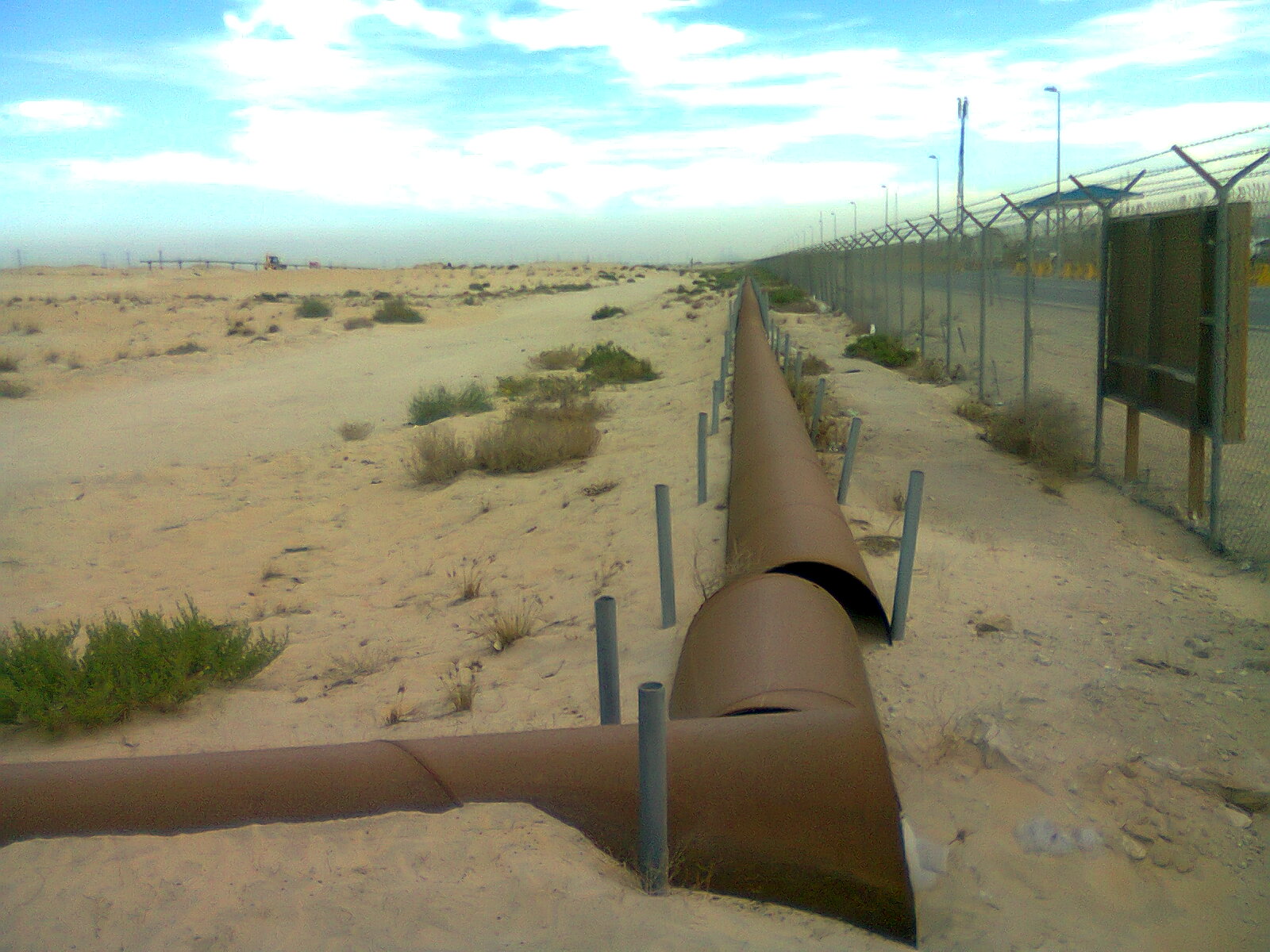
Saudi Arabia’s Yanbu port, which now handles the bulk of the Kingdom’s crude exports via the East-West pipeline, could theoretically serve as an alternative export point for fertilizer shipments. Crude loadings from Yanbu have surged to a five-day rolling average of 3.66 million barrels per day — approximately half of Saudi Arabia’s pre-crisis export levels, according to Bloomberg. But the port’s capacity is already strained. Yanbu’s two terminals have a nominal loading capacity of about 4.5 million barrels per day, with a tested actual capacity closer to 4 million. Adding bulk fertilizer exports to this pipeline would require infrastructure that does not yet exist.
The result is a dependency trap with no obvious exit. Countries that need Saudi fertilizer cannot get it through Hormuz. The alternative route through the Red Sea is constrained by capacity and by Houthi threats to the Bab el-Mandeb strait. And no other producer can replace Saudi and Gulf volumes in the timeframe that agricultural calendars demand. The Kingdom did not seek this leverage. But it possesses it.
What Does India’s Naval Deployment Reveal About Gulf Dependence?
India’s decision to deploy six to seven warships east of the Strait of Hormuz to escort its own fuel tankers is the clearest single illustration of the dependency reversal. The world’s fifth-largest economy and third-largest oil consumer is dedicating Kolkata-class destroyers — among the most advanced vessels in the Indian Navy — to ensure that Saudi crude reaches Indian ports. This is not a favour to Riyadh. It is an act of national survival.
Over 60 percent of Indian crude oil imports originate from Persian Gulf states, primarily Iraq, Saudi Arabia, Kuwait, and the UAE, according to Bloomberg. The MT Kallista, a Panama-flagged crude carrier, was loading at the Saudi port of Yanbu on March 24 for delivery to Paradip Port in India, according to The Week. Indian warships stationed in the Gulf of Oman provide escort through high-risk waters, coordinating with the Ministry of Petroleum and Natural Gas in what amounts to a wartime convoy system reminiscent of the 1980s Tanker War.
India is not alone. Pakistan has deployed its own naval escort capability to the Gulf of Oman, and the two nuclear-armed rivals are operating parallel escort operations in the same waters — an unprecedented alignment forced by shared energy dependence on Saudi Arabia. Saudi Arabia’s real allies in this conflict turned out to be not the ones chosen by treaty, but the ones compelled by thirst.
Japan’s situation is equally revealing. Tokyo, which imports approximately 90 percent of its crude from the Gulf, has refused to send warships to the strait but has negotiated a separate safe-passage arrangement with Iran. The arrangement underscores a point that pre-war diplomacy obscured: Japan, South Korea, and India are not merely Saudi Arabia’s customers. They are its dependants. The war stripped away the commercial language that disguised this reality and replaced it with the operational language of warship deployments and convoy schedules.
The Financial Lever — PIF and the Trillion-Dollar Portfolio
Before the war, Saudi Arabia’s financial clout was growing but still deferential. The Public Investment Fund sought co-investment opportunities with Western sovereign wealth funds and private equity firms. It courted Silicon Valley and Wall Street. It hosted conferences in Riyadh to attract the very capital managers it was trying to place money with. The financial relationship, like the military one, placed Saudi Arabia in the supplicant’s chair.
The war changed that calculus with the force of a $112-per-barrel oil price. Saudi Arabia’s financial influence now operates through a mechanism that most Western governments underestimate: the Public Investment Fund. With assets under management of approximately $1.15 trillion, according to the Sovereign Wealth Fund Institute, PIF ranks as the world’s fifth-largest sovereign wealth fund. It was also the most active in 2025, deploying $36.2 billion in investments — an 81 percent increase over 2024, according to Gulf News.
PIF’s portfolio spans sectors and geographies. It holds stakes in Lucid Motors, Uber, Electronic Arts, and dozens of other Western technology and consumer companies. It operates Sanabil Investments, which manages a portfolio of international private equity, venture capital, and real estate holdings. It controls NEOM, the Red Sea tourism project, and the entertainment company that is transforming Saudi Arabia’s leisure economy. Internationally, PIF has invested in clean energy projects, autonomous vehicles, gaming studios, and financial technology platforms across North America, Europe, and Asia.
The war has not diminished PIF’s influence — it has concentrated it. Oil revenues above $100 per barrel generate fiscal surpluses that flow into PIF’s investment capacity. Aramco, which reported $104.7 billion in adjusted net income for 2025 and projects revenues of $497.3 billion for 2026, according to CNBC, is PIF’s primary cash engine. Higher oil prices, paradoxically, increase the very financial leverage that gives Riyadh influence over the Western economies most affected by those same prices.
The financial dependency is bidirectional but asymmetric. Western markets depend on PIF capital inflows to support valuations in sectors from technology to real estate. PIF depends on Western markets for returns. But in a crisis, the party that controls the capital deployment has the advantage. Saudi Arabia can redirect investment flows, accelerate or delay commitments, and condition future deployments on political cooperation. Western governments cannot compel PIF to invest. They can only create conditions that attract it.
How Did Pakistan Become Saudi Arabia’s Shield?
Pakistan’s military relationship with Saudi Arabia predates the current conflict by decades. An estimated 2,600 Pakistani military personnel are stationed in the Kingdom, comprising approximately 1,600 troops on a long-standing garrison rotation and an additional 1,000 deployed since 2018, according to multiple defence sources. Pakistan Air Force F-16 Block-52 fighter aircraft have deployed to Saudi Arabia for the Spears of Victory-2026 multinational exercise.
The September 2025 Strategic Mutual Defence Agreement, signed at Al Yamamah Palace by MBS and Pakistani Prime Minister Shehbaz Sharif, formalised what had long been an implicit commitment. The pact’s real test came when Iran’s missiles began falling on Saudi territory. Pakistan’s powerful army chief, Field Marshal Asim Munir, held direct calls with both MBS and President Trump in March, positioning Islamabad as both a military partner and a diplomatic mediator. Pakistan has offered to host the first face-to-face US-Iran talks in Islamabad, with Vice President JD Vance potentially attending.
The dependency reversal is evident. Pakistan’s economy depends on Saudi financial support — Riyadh has provided multiple bailout packages to Islamabad over the past decade, including oil payment deferrals and direct deposits with Pakistan’s central bank. Remittances from Pakistani workers in Saudi Arabia constitute a critical source of foreign exchange. In exchange, Pakistan provides the one thing Saudi Arabia historically lacked: a large, battle-tested military with nuclear capability.
The war elevated this exchange from strategic insurance to operational reality. Pakistan is simultaneously defending Saudi Arabia, mediating between Washington and Tehran, and managing its own border with Iran — where tensions have spiked as the conflict spills across the region. The arrangement benefits both parties, but the structural leverage has shifted. Saudi Arabia, not Pakistan, now sets the terms. Islamabad’s willingness to host US-Iran talks is as much about pleasing Riyadh as it is about pursuing Pakistan’s own diplomatic interests.
Thirteen Million Workers and the Remittance Weapon
Saudi Arabia’s foreign workforce represents a dependency relationship that operates in reverse from the others. In this case, other countries depend on Saudi Arabia not for what it produces, but for the wages it pays to their citizens. The Kingdom’s 13.4 million foreign workers — 41.6 percent of a total population exceeding 32 million — generate remittance flows that sustain economies across South and Southeast Asia, the Horn of Africa, and the Middle East.
In the first seven months of 2025, expatriate remittances from Saudi Arabia advanced 22.26 percent year-on-year to SR98.6 billion ($26.3 billion), according to Arab News. Annualised, this represents approximately $45 billion flowing from Saudi Arabia to developing countries — a transfer that dwarfs many bilateral aid programmes. The Philippines, India, Pakistan, Bangladesh, Egypt, and Indonesia are the primary beneficiaries.
The war has introduced uncertainty into this flow. Unemployment among both Saudis and non-Saudis stood at a record low of 2.8 percent in early 2025, according to Saudi government data, driven by Vision 2030 megaprojects. But the conflict has disrupted construction timelines, forced the postponement of major events including the World Economic Forum’s Jeddah conference, and prompted the United States to raise its Saudi Arabia travel advisory to Level 3 — “reconsider travel.” The US Embassy in Riyadh suspended routine consular services due to the heightened security environment.
The remittance dependency gives Saudi Arabia a form of soft leverage that is rarely discussed in strategic analysis. Countries whose citizens work in the Kingdom have a direct financial incentive to support Saudi positions in international forums. An Egyptian or Pakistani diplomat at the United Nations is not merely representing national foreign policy when voting on resolutions related to the Gulf crisis. That diplomat is also, implicitly, safeguarding the income of millions of compatriots whose families depend on monthly transfers from Riyadh, Jeddah, and Dhahran.
The Dependency Reversal Matrix
The war’s most significant consequence is not any single reversal but the simultaneous activation of multiple dependencies that had previously remained latent. A framework for understanding the scale of the shift requires mapping pre-war and wartime dependency relationships across all major dimensions.
| Dimension | Pre-War Dependency Direction | Wartime Dependency Direction | Reversal Magnitude |
|---|---|---|---|
| Military basing | Saudi Arabia depended on US security umbrella | US depends on Saudi bases to prosecute Iran campaign | Complete |
| Oil supply | Saudi revenue depended on Asian/European demand | Asian/European economies depend on Saudi pipeline bypass | Near-complete |
| Fertilizer/food | Saudi exports were one option among several | Gulf fertilizer is irreplaceable for planting seasons | Severe |
| Diplomatic | Riyadh sought Western legitimacy and engagement | Western leaders call Riyadh for coordination and support | Complete |
| Financial | PIF sought Western investment opportunities | Western markets seek PIF capital inflows | Partial |
| Labour/remittances | Saudi economy needed foreign workers | Foreign economies need Saudi-sourced wages to avoid crisis | Moderate |
| Military manpower | Saudi Arabia lacked sufficient military depth | Pakistan, UK, Greece deploy forces to defend Kingdom | Near-complete |
| Intelligence | Riyadh relied on CIA and Western signals intelligence | Western agencies depend on Saudi human intelligence in Gulf | Partial |
The matrix reveals that five of eight dependency dimensions have experienced complete or near-complete reversal. The remaining three — financial, remittance, and intelligence — show partial reversal, meaning the relationship has shifted from one-directional to genuinely bilateral. In no dimension has the pre-war dependency survived intact.
The framework also illuminates why Saudi Arabia’s wartime restraint has been so strategically effective. By declining to formally enter the conflict, Riyadh has maintained the leverage of a neutral party while extracting the benefits of a belligerent. The strategic calculus MBS is pursuing appears designed to preserve this dual status for as long as possible — offering enough cooperation to keep the American campaign viable while withholding enough to retain independent manoeuvrability.
| Country | Primary Dependency | Secondary Dependency | Dependency Indicator |
|---|---|---|---|
| United States | Military basing | Oil market stability | 50,000+ troops on Saudi territory |
| India | Oil supply (60%+ from Gulf) | Fertilizer imports | 6-7 warships deployed to escort tankers |
| Japan | Oil supply (90% from Gulf) | LNG supply | Negotiated separate passage with Iran |
| South Korea | Oil supply (70%+ from Gulf) | Petrochemical feedstocks | Refinery output cuts announced |
| Pakistan | Financial support / remittances | Diplomatic alignment | 2,600 troops deployed in Kingdom |
| Bangladesh | Fertilizer imports | Worker remittances | Planting season at risk |
| United Kingdom | Arms sales / defence industry | Energy supply | Air defense missiles deployed to Gulf |
| Greece | Shipping industry | Defence cooperation | Patriot battery deployed to Saudi Arabia |
The Contrarian Case — Is This Power Permanent or a Wartime Illusion?
The conventional reading of the Iran war places Saudi Arabia as a victim — its territory under missile and drone assault, its oil infrastructure targeted, its economy disrupted, its population subjected to air raid alerts for the first time in the nation’s modern history. This reading is wrong. The evidence shows that the war has made Saudi Arabia more powerful, not less. But the harder question is whether the power persists.
The case for permanence rests on structural arguments. Oil will remain the world’s primary transportation fuel for at least another two decades, according to every major energy forecast including the International Energy Agency’s. Saudi Arabia’s reserves, at approximately 267 billion barrels, are the second largest globally and the cheapest to extract. No plausible energy transition scenario eliminates the world’s need for Saudi crude before 2045.
The fertilizer dependency is even more durable. Unlike oil, which faces long-term substitution risk from electrification, agricultural fertilizers have no mass-market replacement. Organic farming produces lower yields per hectare. Synthetic nitrogen alternatives remain in early research. The world will need Gulf-sourced fertilizer for the foreseeable future, and Saudi Arabia’s capacity expansion through Ma’aden ensures growing rather than declining market share.
The case against permanence is equally serious. Military basing leverage evaporates when the war ends. If the United States and Iran reach a ceasefire — and current diplomatic signals suggest one is being discussed — the Pentagon’s operational dependency on Saudi airbases dissolves overnight. European sympathy is transactional and will fade as oil prices normalise. India and Japan will resume sourcing crude from multiple Gulf producers rather than depending exclusively on the Yanbu bypass.
The war did not make Saudi Arabia powerful. It revealed how powerful Saudi Arabia had already become — and how many nations had been pretending otherwise.Strategic assessment, March 2026
History offers partial guidance. After the 1973 oil embargo, Saudi Arabia’s leverage faded as Western nations diversified energy sources, built strategic petroleum reserves, and developed North Sea and Alaskan production. The embargo’s power was real but temporary. Critics argue the same pattern will repeat: once Hormuz reopens and oil flows normalise, the urgency that drives today’s deference will evaporate.
But the 2026 situation differs from 1973 in critical respects. Saudi Arabia’s leverage today is not confined to a single commodity. It spans oil, fertilizer, military real estate, financial capital, and labour market influence — five vectors operating simultaneously. In 1973, Arab oil producers had one weapon. Today, Saudi Arabia has five. Diversifying away from all five simultaneously would require a restructuring of the global economy that no government has the political will to undertake.
The resolution lies between the two positions. Saudi Arabia’s wartime leverage is partly situational and partly structural. The situational elements — base access urgency, pipeline dependency, diplomatic sympathy — will diminish with a ceasefire. The structural elements — energy reserves, fertilizer capacity, PIF’s financial weight, the remittance network — will endure. The war has given MBS a window to convert temporary leverage into permanent structural advantage: security guarantees, technology transfers, nuclear cooperation agreements, and institutional relationships that survive the crisis that created them.
The evidence suggests Riyadh understands this distinction. MBS’s reported urging of Trump to continue the campaign is not warmongering. It is the rational calculation of a leader who recognises that every additional day of war extends the window in which temporary leverage can be locked in through binding agreements. The war is building the economy MBS designed, but the foundation must be set before the fighting stops.
The dependency reversal of March 2026 may prove to be the most significant shift in Gulf geopolitics since the 1973 oil embargo. In that crisis, Saudi Arabia discovered it could use oil as a weapon. In this one, it has discovered that its power extends far beyond oil — to food, finance, military real estate, and the wages of 13 million workers whose families span four continents. The fifty-year arc that began with American security guarantees and European condescension has ended in a month of European phone calls and American fighter jets requesting permission to land.
Frequently Asked Questions
How has the Iran war changed Saudi Arabia’s relationship with the United States?
The war inverted the traditional Saudi-American security relationship. For decades, Saudi Arabia depended on the US for military protection. Since February 28, 2026, the United States has depended on Saudi military bases — particularly Prince Sultan Air Base and the newly opened King Fahd Air Base in Taif — to sustain its air campaign against Iran. More than 50,000 American troops now operate from Gulf facilities, making Saudi Arabia the indispensable platform for the entire campaign.
Why are European leaders contacting Mohammed bin Salman during the crisis?
European countries face acute energy disruption from the Hormuz closure and growing security obligations in the Gulf. Belgium, Greece, and the Netherlands all called MBS on March 24 to express support. Greece has deployed a Patriot missile battery to Saudi territory, and Britain has sent air defense missiles. European governments that previously lectured Riyadh on human rights now depend on Saudi energy supply and diplomatic cooperation to navigate the crisis.
What role does Saudi Arabia play in global fertilizer supply?
Saudi Arabia is a major global fertilizer producer. SABIC and Ma’aden control approximately 87 percent of the Saudi fertilizer market, commanding 43.2 percent of the GCC market share. With the Strait of Hormuz closure disrupting Gulf exports, urea prices have surged 50 percent since the war began — from $482.50 to approximately $720 per ton — threatening planting seasons across South Asia and East Africa where millions depend on Gulf-sourced inputs.
Is Saudi Arabia’s wartime leverage temporary or permanent?
Both. Military basing leverage and diplomatic sympathy will diminish when a ceasefire is reached. Structural advantages — oil reserves, fertilizer production capacity, PIF’s $1.15 trillion portfolio, and the remittance network supporting 13.4 million foreign workers — will persist long after the war ends. The strategic question is whether Riyadh can convert temporary wartime leverage into permanent institutional arrangements before the fighting stops.
How does Pakistan’s military deployment in Saudi Arabia affect regional security?
Pakistan maintains approximately 2,600 military personnel in Saudi Arabia under a September 2025 Strategic Mutual Defence Agreement. The war has elevated Pakistan from a garrison partner to an active coalition member, with F-16s deployed for exercises and Field Marshal Asim Munir holding direct calls with both MBS and Trump. Pakistan is simultaneously defending Saudi Arabia and offering to mediate US-Iran talks in Islamabad.
Why is India deploying warships to the Gulf?
India imports over 60 percent of its crude from Persian Gulf states and consumes 87 percent of its oil through imports. With the Strait of Hormuz effectively closed, India has deployed six to seven warships — including Kolkata-class destroyers — to escort fuel tankers through high-risk waters. This naval deployment represents the clearest demonstration that India’s energy security now depends directly on Saudi Arabia’s ability to export crude via the Yanbu bypass.