
RIYADH — The Iran war has closed both of the world’s critical maritime data chokepoints simultaneously for the first time in history, threatening seventeen submarine cables that carry thirty per cent of global internet traffic through the Persian Gulf and Red Sea. While governments and markets obsess over oil flows and missile interceptions, a less visible but potentially more consequential crisis is unfolding beneath the waterline: the digital infrastructure that Saudi Arabia needs to become a post-oil economy is now stranded in an active war zone. Iranian drones have already struck three Amazon Web Services data centres, Meta’s flagship 2Africa Pearls cable project has declared force majeure off the coast of Dammam, and six Gulf states are racing to build overland alternatives through Iraq, Syria, and East Africa before the next strike severs a connection that cannot be rerouted in weeks or months.
The stakes extend far beyond regional connectivity. Saudi Arabia has committed $18 billion to hyperscale data centre construction, declared 2026 the Year of Artificial Intelligence, and positioned itself as the Middle East’s digital hub through the Public Investment Fund’s HUMAIN initiative. Every one of those ambitions depends on submarine cables that now pass through waters where Iranian mines, drone boats, and GPS jamming have reduced commercial shipping to a trickle. The war that Crown Prince Mohammed bin Salman did not start may end up determining whether the Kingdom’s digital transformation survives the decade.
Table of Contents
- Why Does Thirty Per Cent of the World’s Internet Run Through a War Zone?
- The Anatomy of the Gulf’s Submarine Cable Network
- How Did Iranian Drones Hit Three Amazon Data Centres in a Single Night?
- What Happened to Meta’s 2Africa Pearls Cable?
- Saudi Arabia’s $18 Billion Digital Bet
- The Digital Chokepoint Vulnerability Index
- Can Overland Cables Replace the Seabed?
- Why Is Data More Dangerous Than Oil for Iran?
- The War May Accelerate Saudi Digital Sovereignty
- What Happens to Vision 2030 If the Cables Stay Dark?
- How Long Does It Take to Repair a Submarine Cable in a War Zone?
- Frequently Asked Questions
Why Does Thirty Per Cent of the World’s Internet Run Through a War Zone?
Roughly thirty per cent of all intercontinental internet traffic transits submarine cables laid along the seabed of the Persian Gulf, the Strait of Hormuz, and the Red Sea, according to TeleGeography’s 2025 submarine cable database. The concentration is not accidental. It reflects a half-century of infrastructure decisions that followed the same logic as oil pipelines: the shortest distance between the data-hungry economies of Europe and the booming markets of South and East Asia runs directly through the Middle East.
Seventeen submarine cable systems currently operate in or pass through the Persian Gulf, connecting landing stations in Saudi Arabia, the UAE, Bahrain, Qatar, Kuwait, Oman, and Iraq to trunk lines that reach Europe via the Red Sea and Suez Canal, or East Asia via the Indian Ocean. These cables carry banking transactions, government communications, cloud computing workloads, streaming media, and the backbone traffic of every major technology company operating in the region. Amazon, Microsoft, Google, and Oracle have spent billions building data centres in the Gulf specifically because these cables provide low-latency connections to both European and Asian markets.
The geography that made the Gulf attractive for cable routing is the same geography that makes it catastrophically vulnerable. The Strait of Hormuz, at its narrowest point just thirty-three kilometres wide, funnels both oil tankers and fibre-optic cables through a passage that Iran’s Islamic Revolutionary Guard Corps declared closed on 3 March 2026. The Red Sea, where Houthi attacks had already forced shipping reroutes in 2024 and 2025, represents the only alternative maritime corridor. For the first time in the history of global telecommunications, both chokepoints are simultaneously active conflict zones.
An analysis of cable routing data from Submarine Networks and TeleGeography reveals that twelve of the seventeen Gulf cable systems have at least one segment passing through waters where the IRGC has confirmed military operations since 28 February. The remaining five route through the Gulf of Oman, where twenty-one confirmed attacks on commercial vessels since 1 March have pushed maritime insurers to classify the area as a war-risk exclusion zone. No submarine cable in the Persian Gulf is beyond the reach of the conflict.
The Anatomy of the Gulf’s Submarine Cable Network
The Gulf’s submarine cable infrastructure can be divided into three categories, each facing distinct threats from the ongoing conflict. Understanding which cables matter most, and why they cannot be easily replaced, requires mapping the physical network that most policymakers have never seen.
The first category comprises trunk cables that connect Europe to Asia via the Red Sea and Suez Canal. These include SEA-ME-WE 3, SEA-ME-WE 4, SEA-ME-WE 5, and the next-generation SEA-ME-WE 6, along with FLAG Europe-Asia, the Asia-Africa-Europe 1 (AAE-1), and the Europe India Gateway (EIG). These cables carry the vast majority of intercontinental traffic and have landing stations in Egypt, Saudi Arabia, the UAE, and Oman. A single cut to any one of these trunk cables can force traffic onto alternative routes that quickly become congested, increasing latency by hundreds of milliseconds and degrading service quality for millions of users.
The second category consists of regional Gulf cables that interconnect the GCC states. The Fibre in Gulf (FiG) project, developed by Qatar’s Ooredoo Group, connects all seven GCC countries plus Iraq through a submarine ring network. The Gulf Bridge International (GBI) cable links the UAE, Qatar, Bahrain, Kuwait, Saudi Arabia, and Oman. The FALCON cable, operated by FLAG Telecom (now Reliance Globalcom), provides connectivity from India through the Gulf states. These regional cables are critical for intra-Gulf commerce, banking, and government communications.
The third category includes new-generation cables under construction or recently completed. Meta’s 2Africa Pearls, the most ambitious submarine cable project ever attempted, was designed to connect the Gulf states to Africa, Europe, and South Asia. Google’s Blue-Raman cable, planned to link Italy to India via the Red Sea and Gulf, has also been affected. These projects represent billions in investment and were expected to dramatically increase the Gulf’s bandwidth capacity.
| Cable System | Route | Capacity | Landing Points (Gulf) | Current Status |
|---|---|---|---|---|
| SEA-ME-WE 3 | Europe-Asia via Red Sea | 960 Gbps | Jeddah (KSA), Fujairah (UAE) | Operational, elevated risk |
| SEA-ME-WE 5 | Europe-Asia via Red Sea | 24 Tbps | Jeddah (KSA), Fujairah (UAE) | Operational, elevated risk |
| SEA-ME-WE 6 | Europe-Asia, Gulf Extension | 100+ Tbps | Al Khobar (KSA) | Construction stalled |
| 2Africa Pearls | Gulf-Africa-Europe ring | 180 Tbps | Dammam (KSA), multiple GCC | Force majeure declared |
| FALCON | India-Gulf | 5.12 Tbps | Multiple GCC states | Operational, elevated risk |
| FiG (Fibre in Gulf) | Intra-GCC ring | 100 Tbps | All GCC + Iraq | Construction delayed |
| GBI | Intra-GCC + Iran | 100 Gbps | Multiple GCC states | Operational, elevated risk |
| AAE-1 | Asia-Africa-Europe | 40 Tbps | Fujairah (UAE) | Operational, elevated risk |
The SEA-ME-WE 6 Gulf Extension, also known as the Al Khaleej Cable System, illustrates the cascading nature of the disruption. Originally planned to run through the Strait of Hormuz and land on Saudi Arabia’s eastern coast at Al Khobar, the consortium had already begun adapting to Red Sea risks by developing a hybrid subsea-terrestrial architecture. The war eliminated both options simultaneously. According to Submarine Networks, the consortium is now evaluating a purely overland bypass through Iraq and Turkey, a solution that would add years to the timeline and billions to the cost.
How Did Iranian Drones Hit Three Amazon Data Centres in a Single Night?
On 1 March 2026, Iranian drones struck three Amazon Web Services facilities in the United Arab Emirates and Bahrain in what analysts at Fortune described as the first known military targeting of cloud data centres in any conflict. The attacks, claimed by the Islamic Revolutionary Guard Corps, caused structural damage, disrupted power delivery, and triggered fire suppression systems that inflicted additional water damage to server equipment. The immediate impact cascaded across the region: banking applications, payment processing systems, delivery platforms, and enterprise software went offline for hours.
Iran’s state media explicitly justified the strikes by citing the data centres’ role in supporting United States military and intelligence operations, according to CNBC reporting from 4 March. The IRGC statement claimed that American cloud infrastructure in the Gulf served as a node for drone targeting data, satellite intelligence processing, and military communications routing. Whether or not this characterisation is accurate, the strikes established a precedent that security analysts had long theorised but never witnessed: cloud infrastructure is now a legitimate military target.
The implications extend beyond the immediate service disruptions. According to Bloomberg’s analysis from 5 March, Amazon had invested approximately $5 billion in its Middle East cloud regions, which serve customers across the GCC, South Asia, and East Africa. The Bahrain data centre, AWS’s first Middle East cloud region launched in 2019, processes workloads for Saudi Aramco’s digital operations, the UAE’s federal government services, and dozens of major banks. The UAE facilities, part of AWS’s more recent expansion, had been positioned as the backbone of Dubai’s smart city infrastructure.
A review of cloud service disruption reports from the first week of March, compiled by The Register and CNBC, shows that the strikes affected services far beyond the Gulf. Applications hosted in AWS’s Middle East regions but serving global customers experienced latency spikes and intermittent outages. E-commerce platforms, financial trading systems, and healthcare applications that had been migrated to Gulf data centres for cost and latency advantages found themselves suddenly dependent on infrastructure in a war zone.
The attacks exposed what the fourth great oil shock had already demonstrated in the energy sector: the Gulf’s role as a global infrastructure hub creates vulnerabilities that extend far beyond the region’s borders. When an Iranian drone hits a server rack in Bahrain, a retail application in Mumbai loses its connection. When fire suppression floods a facility in Abu Dhabi, a fintech startup in Nairobi discovers that its production environment was running on hardware now submerged in three centimetres of water.
What Happened to Meta’s 2Africa Pearls Cable?
Meta’s 2Africa cable system, the most ambitious submarine cable project ever undertaken, was designed to encircle the African continent and extend into the Persian Gulf, connecting thirty-three countries with 180 terabits per second of capacity. The Pearls extension was specifically intended to link Iraq, Kuwait, Saudi Arabia, Bahrain, Qatar, the UAE, Oman, Pakistan, and India to the broader 2Africa network. It was, in effect, the digital equivalent of a new Suez Canal for the Gulf states.
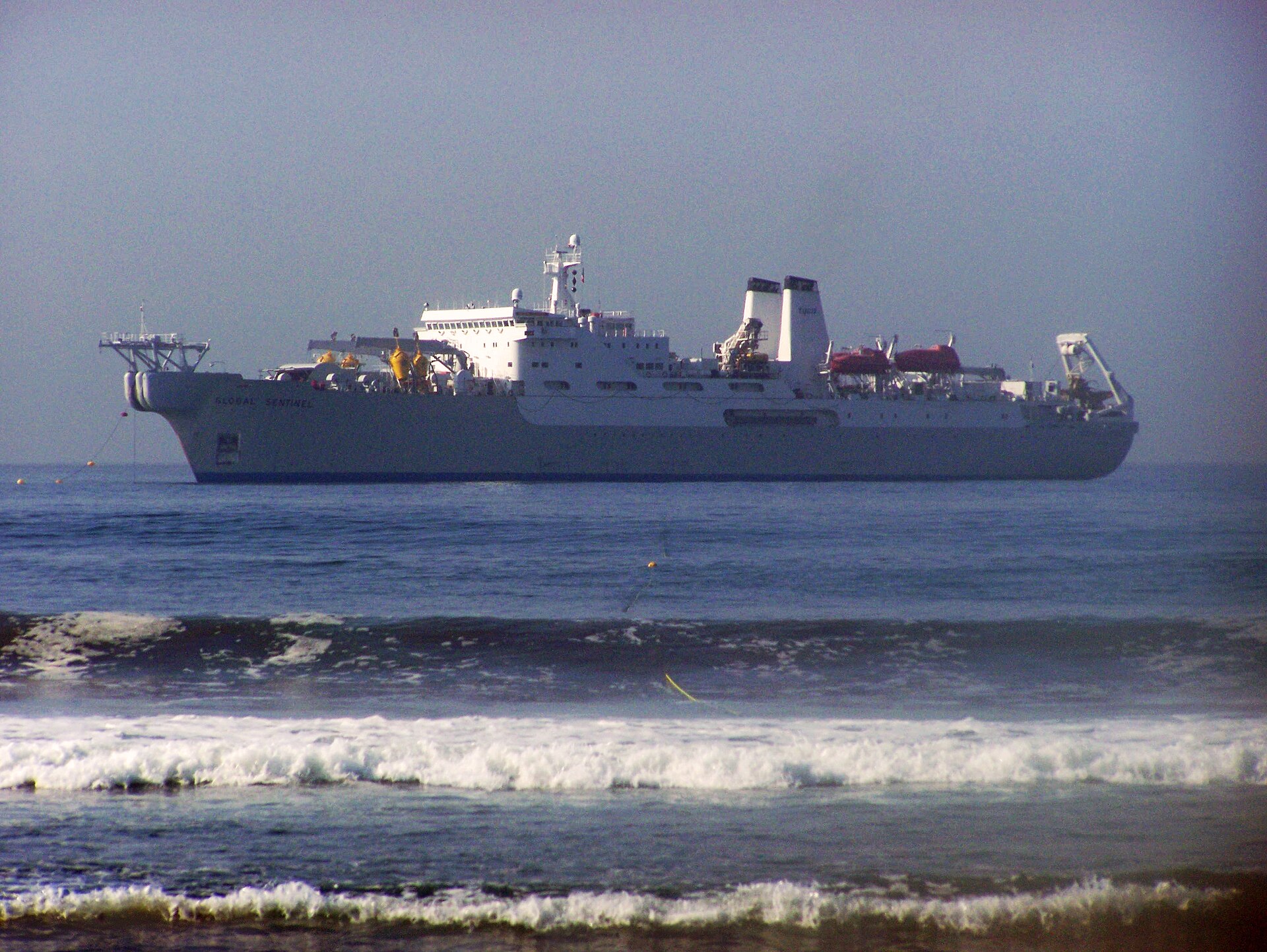
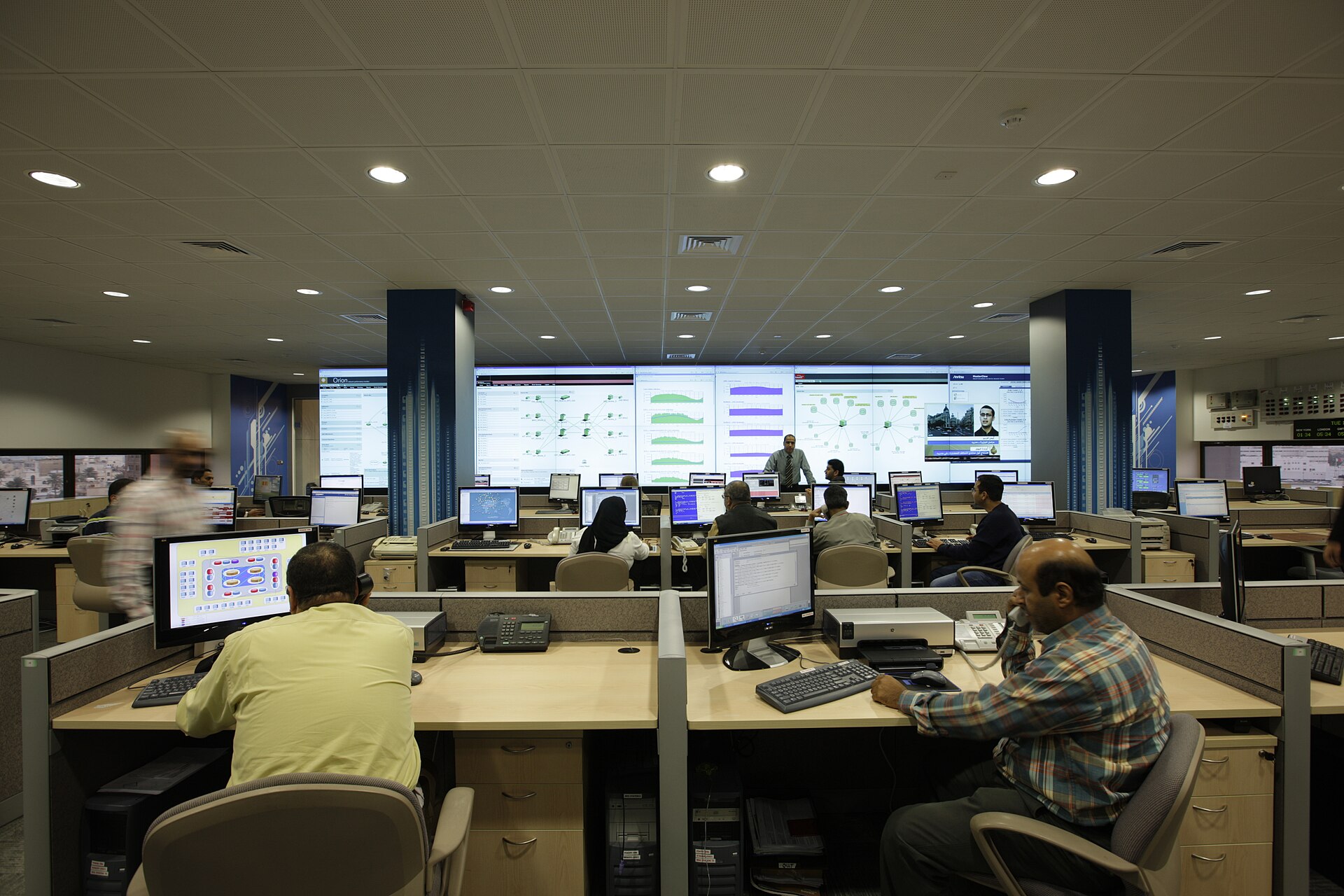
On 12 March, Alcatel Submarine Networks (ASN), the company contracted to lay the fibre-optic cables, declared force majeure, according to Bloomberg and Tom’s Hardware reporting. ASN stated that it could no longer safely operate in the Persian Gulf. The cable-laying vessel Ile de Batz, one of the world’s most sophisticated submarine cable ships, is now effectively stranded off the coast of Dammam, Saudi Arabia, unable to complete its mission. The bulk of the undersea cable has already been manufactured and partially laid, but it remains disconnected from the onshore landing stations that would bring it into service.
The financial implications are substantial. The 2Africa project, funded by a consortium that includes Meta, China Mobile International, MTN GlobalConnect, Orange, stc (Saudi Telecom Company), Telecom Egypt, Vodafone, and WIOCC, represents an estimated $1 billion in total investment. The Pearls extension specifically was valued at approximately $400 million, according to industry estimates from Capacity Media. Much of this investment is now frozen, with no clear timeline for resumption.
The SEA-ME-WE 6 project faces similar paralysis. The Gulf Extension was set to provide Saudi Arabia’s eastern coast with its first direct connection to the next-generation intercontinental cable backbone. According to Rest of World reporting, the consortium has prioritised a terrestrial bypass through Saudi Arabia to ensure network resilience, adopting a hybrid subsea-terrestrial architecture that would route around the Strait of Hormuz entirely. This adaptation, while technically feasible, would cost hundreds of millions in additional infrastructure and add at least eighteen months to the deployment timeline.
The pattern is consistent across the industry. The WorldLink Transit Cable Project, a $700 million hybrid cable planned to run from the UAE through Iraq and Kurdistan to Turkey, has been thrown into uncertainty by the conflict’s expansion into Iraqi territory, where militia attacks on US bases have made overland routing through southern Iraq hazardous. Google’s Blue-Raman cable, designed to connect Italy to India via Saudi Arabia, faces similar Red Sea transit risks. Not a single new submarine cable project in the Gulf region is proceeding on its original schedule.
Saudi Arabia’s $18 Billion Digital Bet
The war threatens to undermine what may be the most consequential component of Vision 2030: Saudi Arabia’s transformation into the Middle East’s premier digital economy. In June 2025, the Saudi government unveiled its National Data Centre Strategy, targeting 1.5 gigawatts of data centre capacity by 2030, according to the US International Trade Administration. The strategy is backed by approximately $18 billion in committed investments from global hyperscalers and sovereign wealth fund vehicles, making it one of the largest planned national data centre builds in the developing world.
The scale of individual commitments underscores the ambition. Oracle revealed plans in May 2025 to invest over $14 billion in Saudi cloud and artificial intelligence infrastructure, according to industry reporting. Microsoft confirmed in February 2026 that its Saudi Arabia East datacentre region, comprising three availability zones with independent power, cooling, and networking, would begin serving customers in Q4 2026. AWS announced a new Saudi Arabia cloud region for 2026. HUMAIN, the Public Investment Fund’s dedicated AI investment vehicle, partnered with AirTrunk on a $3 billion data centre project as its initial phase.
Saudi Arabia’s designation of 2026 as the Year of Artificial Intelligence was supposed to be the centrepiece of this digital transformation. The Saudi Data and Artificial Intelligence Authority (SDAIA) broke ground in January on the Hexagon Data Centre, planned as the world’s largest government data centre at 480 megawatts of capacity, built on a thirty-million-square-foot site in Riyadh. SDAIA reported that Saudi companies in the AI sector secured $9.1 billion in funding through seventy investment deals in 2025 alone, positioning the Kingdom as the largest AI investment market in the Middle East and North Africa.
Every one of these investments assumes reliable, high-bandwidth connectivity to global networks. Data centres are not islands. They require submarine cables to connect Saudi-hosted workloads to users in Europe, Asia, and Africa. A data centre in Riyadh without functioning submarine cable connections to the outside world is a very expensive room full of warm servers. The S&P Global analysis of the Saudi data centre market explicitly identified submarine cable connectivity as a critical enabler of the sector’s projected growth from $2.08 billion in 2025 to $6.16 billion by 2031.
The war has not destroyed this infrastructure. The data centres themselves, located in Riyadh and the Eastern Province, remain physically intact and operational. Saudi Arabia’s mainland has not experienced the kind of direct strikes on digital infrastructure that hit AWS facilities in the UAE and Bahrain. But the connectivity that gives those data centres their economic value is now constrained, degraded, and at ongoing risk. Latency to European endpoints has increased as traffic reroutes around conflict zones. New cable capacity that was expected to come online in 2026 and 2027 is indefinitely delayed. And the insurance and risk premiums associated with Gulf-based digital services have risen sharply, according to financial analysts at Goldman Sachs.
The Digital Chokepoint Vulnerability Index
The concentration of digital infrastructure risk across the Gulf is not uniform. An assessment of six GCC states across five critical dimensions reveals sharply different vulnerability profiles, with implications for where technology investment flows after the war ends.
| Dimension | Saudi Arabia | UAE | Bahrain | Qatar | Kuwait | Oman |
|---|---|---|---|---|---|---|
| Submarine cable dependence (1-10, 10 = highest) | 7 | 9 | 9 | 8 | 8 | 6 |
| Data centre strike exposure (1-10) | 4 | 9 | 8 | 6 | 5 | 3 |
| Overland alternative progress (1-10, 10 = most advanced) | 7 | 5 | 2 | 6 | 3 | 2 |
| Cloud sovereignty readiness (1-10) | 8 | 7 | 4 | 5 | 3 | 2 |
| Estimated recovery timeline (months) | 6-12 | 12-18 | 18-24 | 12-18 | 18-24 | 12-18 |
| Composite vulnerability score | 5.5 | 7.5 | 7.3 | 6.3 | 6.0 | 4.8 |
Saudi Arabia scores the lowest composite vulnerability among the major Gulf economies, and the reasons illuminate a strategic advantage that predates the war. The Kingdom’s geographic span gives it access to both the Persian Gulf (Eastern Province) and the Red Sea (Western Province) coast, meaning it can route submarine cable connections through either chokepoint. Its National Data Centre Strategy emphasised onshore sovereignty from inception, with strict data localisation regulations that mandate sensitive workloads remain within the country. And the SilkLink overland cable project, an $800 million initiative led by stc Group, was already under development before the war began.
The UAE, by contrast, faces the highest vulnerability despite hosting the most data centre capacity in the region. Three of its AWS facilities have already been struck. Its submarine cable connections route almost exclusively through the Strait of Hormuz and the Gulf of Oman. It lacks Saudi Arabia’s Red Sea coastline, and its overland alternatives require transit through Oman and then either Yemen (impossible) or the Arabian Sea (expensive). Dubai’s position as the Gulf’s technology hub, which attracted cloud providers precisely because of its connectivity advantages, has become a liability.
Bahrain’s extreme vulnerability stems from its small geographic size, its hosting of AWS’s original Middle East region, and the absence of any overland alternative. The island nation is entirely dependent on submarine cables that pass through waters where Iranian drones have demonstrated the ability to strike with precision. Oman’s relatively lower vulnerability reflects its position at the mouth of the Gulf of Oman, giving it access to Indian Ocean cable routes that bypass the Strait of Hormuz entirely, though the Gulf of Oman itself remains a conflict zone.
The vulnerability index highlights a structural asymmetry that will shape post-war digital investment. Countries with geographic depth, overland options, and data sovereignty frameworks will attract capital faster. Countries dependent on a single maritime chokepoint will face higher costs, longer recovery timelines, and persistent risk premiums that make them less competitive for hosting global digital workloads.
Can Overland Cables Replace the Seabed?
Six competing overland fibre-optic corridors are now under development, each attempting to create a terrestrial bypass around the Persian Gulf’s submarine cable chokepoints. The race, reported extensively by Rest of World and Subsea Cables, reflects both the urgency of the crisis and the competing geopolitical interests that make coordination difficult.
The most advanced project is SilkLink, an $800 million initiative led by Saudi Arabia’s stc Group that would run fibre-optic cables overland from the Kingdom through Jordan and into Europe via Turkey or Egypt. The route avoids both the Strait of Hormuz and the Red Sea, and leverages Saudi Arabia’s existing terrestrial fibre backbone. stc Group announced in late 2025 that the first phase would be operational by 2028, though the war has accelerated both funding and regulatory approvals.
Qatar’s Ooredoo Group is pursuing a parallel strategy. The company has pledged $500 million to develop overland links from Iraq to Europe via Turkey, building on its existing Fibre in Gulf submarine ring. The WorldLink Transit Cable Project, a $700 million hybrid cable led by a privately funded consortium of Iraq’s Tech 964, UAE-based Breeze Investments, and Iraq-Kurdish DIL Technologies, would run from the UAE to Iraq’s Al-Faw Peninsula, then overland through Iraq and Kurdistan to Turkey.
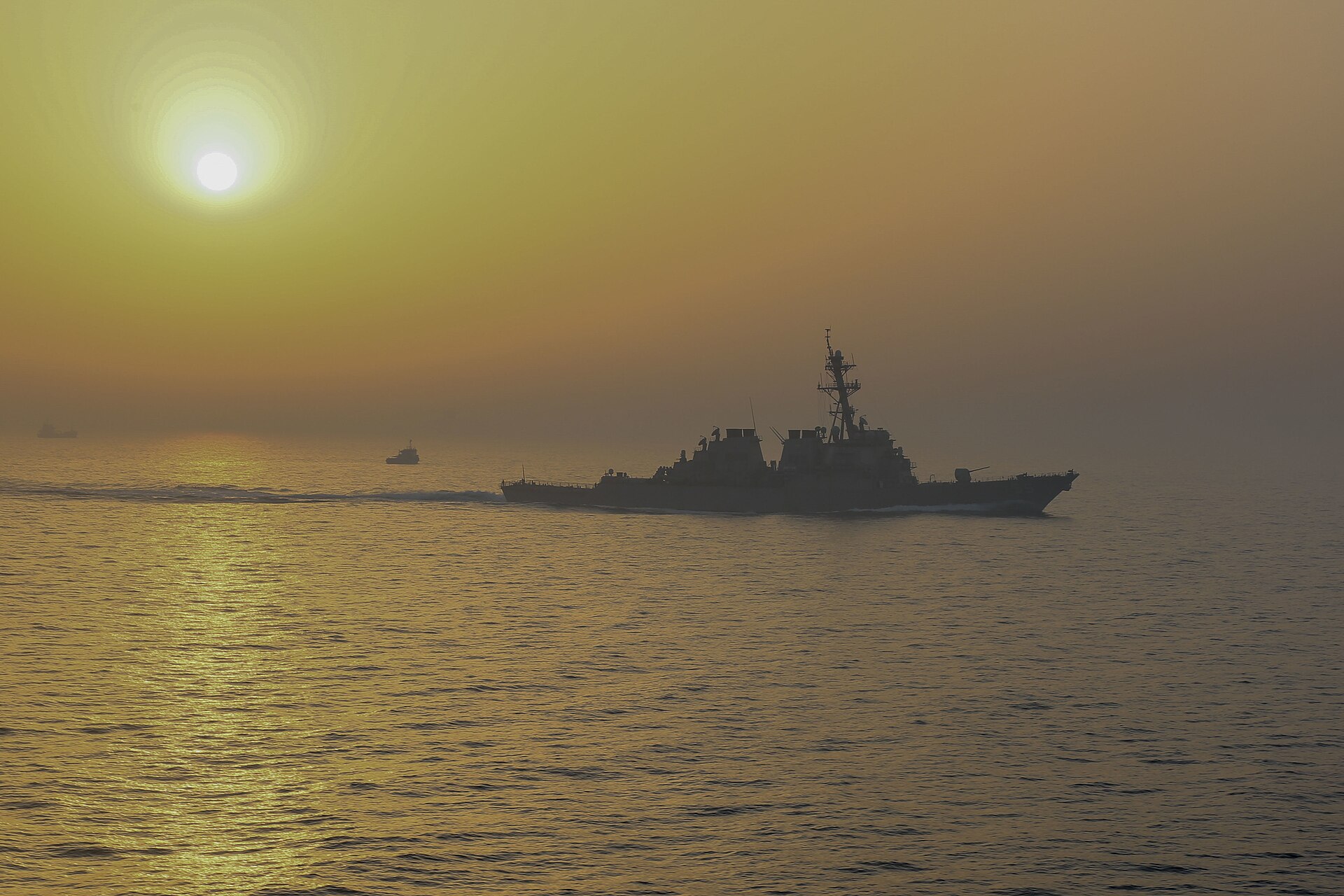
The challenge with every overland alternative is the same: they trade maritime vulnerability for political vulnerability. Routing cables through Iraq means crossing territory where Iranian-backed militias have launched twenty-one attacks on US bases in a single twenty-four-hour period. Routing through Syria means depending on a country whose territory remains contested by multiple armed factions. Routing through Turkey means entrusting critical infrastructure to a NATO member that has refused to pick a clear side in the Iran conflict.
According to Rest of World’s reporting, analysts have characterised the scramble as reflecting “an element of competition for influence rather than an alignment of effort.” Each Gulf state wants its overland corridor to become the dominant route, creating a fragmented landscape where six partially funded projects compete for the same limited pool of terrestrial right-of-way. A coordinated GCC-wide approach would be faster and cheaper, but the politics of digital infrastructure mirror the politics of everything else in the Gulf: cooperation is aspirational, competition is structural.
Even under optimistic projections, none of these overland alternatives will be operational before 2028. Most realistic estimates place full capacity closer to 2029 or 2030. The Gulf’s digital infrastructure is therefore likely to remain in a degraded state for two to four years after the war ends, assuming the conflict concludes within 2026. This timeline gap represents the single largest risk to Saudi Arabia’s Vision 2030 digital ambitions.
Why Is Data More Dangerous Than Oil for Iran?
Iran’s decision to target digital infrastructure, rather than merely disrupt it as collateral damage from oil-focused strikes, represents a strategic calculation that most Western analysts have underestimated. The IRGC’s explicit claim of responsibility for the AWS data centre strikes, and its stated justification that cloud facilities support US military operations, signals a deliberate escalation into a domain where international humanitarian law provides little clarity.
Data centres occupy an ambiguous space in the laws of armed conflict. A military base is a legitimate target. A hospital is protected. But a commercial cloud facility that simultaneously processes retail transactions, government services, and military workloads defies clean categorisation. TechPolicy.Press published a detailed analysis of the legal and policy fallout on 9 March, noting that no existing framework adequately addresses the targeting of dual-use digital infrastructure during interstate conflict.
For Iran, the strategic logic is straightforward. Striking Gulf data centres imposes costs on the United States and its allies that extend far beyond the physical damage. Every AWS outage in the Middle East forces American technology companies to reconsider their Gulf expansion plans. Every Meta cable delay pushes the Gulf states further from their goal of digital self-sufficiency. And every insurance premium increase on Gulf-based cloud services makes competing locations in Singapore, Mumbai, or Frankfurt marginally more attractive. Iran does not need to destroy the Gulf’s digital infrastructure. It merely needs to make it unreliable enough that global capital flows elsewhere.
This logic mirrors Iran’s approach to oil infrastructure. The drone strike on the Yanbu refinery, the mine fields in the Strait of Hormuz, and the GPS jamming that has reduced tanker traffic to a trickle all follow the same principle: destroy confidence, not capacity. A $20,000 Shahed drone that closes a $5 billion data centre for forty-eight hours achieves a return on investment that no conventional military operation could match, a pattern consistent with Iran’s broader asymmetric warfare strategy throughout the conflict.
The question no Gulf government has publicly answered is whether digital infrastructure will receive the same protective priority as energy infrastructure. Saudi Arabia’s air defence network has performed impressively against missile and drone strikes on oil facilities. The Patriot batteries defending Ras Tanura and the THAAD systems protecting Prince Sultan Air Base are designed to intercept inbound threats to high-value targets. But no equivalent defensive umbrella exists over the cable landing stations at Dammam, Al Khobar, or Jeddah, where submarine cables make their vulnerable transition from seabed to shore.
The War May Accelerate Saudi Digital Sovereignty
The conventional narrative frames the war as a catastrophe for Saudi Arabia’s digital ambitions. The contrarian case is more nuanced and, in several respects, more compelling: the conflict may be the external shock that forces the Kingdom to build a genuinely sovereign digital infrastructure rather than one dependent on foreign-owned cables and American-operated cloud regions.
Before the war, Saudi Arabia’s digital strategy was essentially a hosting strategy. Attract global hyperscalers. Offer incentives for data centre construction. Mandate data localisation. Let Amazon, Microsoft, Google, and Oracle compete for the privilege of serving Saudi workloads from Saudi soil. The model worked brilliantly for speed of deployment but created a structural dependency on foreign-owned infrastructure connecting to foreign-controlled networks through foreign-dominated chokepoints.
The war has exposed every weakness in that model. AWS data centres in neighbouring states have been struck. Meta’s cable ship sits idle off Dammam. The submarine connections that Saudi data centres rely on pass through waters where the IRGC exercises de facto naval control. The Kingdom’s $18 billion in data centre investments are physically secure but digitally stranded.
HUMAIN, the PIF’s AI investment vehicle, represents the alternative model. Created by consolidating national AI capabilities from Saudi Aramco, Aramco Digital, and other state entities, HUMAIN is building gigawatt-scale AI data centres designed from inception for sovereign operation. The HUMAIN OS platform, unveiled in early 2026, embeds AI directly into enterprise workflows and runs on the company’s own expanding infrastructure, reducing dependence on foreign cloud providers. Saudi Arabia’s strict data localisation regulations, which some technology executives previously criticised as overly restrictive, now look prescient.
The SDAIA Hexagon Data Centre, at 480 megawatts the planned world’s largest government facility, would give Saudi Arabia more sovereign computing capacity than most European nations. Combined with stc Group’s SilkLink overland cable and the Kingdom’s unique geographic access to both the Red Sea and Persian Gulf, Saudi Arabia is better positioned than any other Gulf state to build a digital infrastructure that does not depend on the Strait of Hormuz.
The war’s damage to competing Gulf hubs strengthens Riyadh’s relative position. Financial institutions have already begun relocating from Dubai and Doha to Riyadh. Technology companies that had distributed their Gulf operations across multiple emirates may consolidate in Saudi Arabia’s relatively more protected interior. The Kingdom’s distance from the Strait of Hormuz, previously a disadvantage for cable connectivity, becomes an advantage when proximity to the strait means proximity to drone strikes.
The parallel to oil strategy is striking. Saudi Arabia spent decades building spare crude oil capacity not because the market demanded it, but because strategic reserve capability conferred geopolitical power. The PIF’s trillion-dollar war economy investments suggest the same logic is now being applied to digital infrastructure. Spare bandwidth, sovereign cloud capacity, and overland cable routes are the digital equivalents of Aramco’s spare million barrels per day.
What Happens to Vision 2030 If the Cables Stay Dark?
Vision 2030’s digital components, representing roughly $50 billion in planned technology, entertainment, and services investment, face a binary outcome depending on how quickly Gulf submarine cable connectivity is restored. The first scenario, in which the war ends within 2026 and cable repairs begin immediately, would delay but not derail the digital transformation. The second scenario, in which conflict persists or cable infrastructure suffers direct damage requiring months of repair, would force a fundamental restructuring of the Kingdom’s technology timeline.
The gaming sector illustrates the stakes. Saudi Arabia’s $38 billion gaming push, anchored by the PIF’s Savvy Games Group and its acquisitions of ESL Gaming, FACEIT, and Scopely, depends entirely on low-latency internet connections to global gaming networks. Cloud gaming services require round-trip latency below fifty milliseconds to function competitively. If submarine cable disruptions add fifty to one hundred milliseconds of latency to Gulf-to-Europe connections, Saudi Arabia’s ambition to become a global gaming hub becomes technically unviable until alternative routing is established.
The financial services sector faces similar constraints. Riyadh’s emergence as a financial centre, accelerated by institutions relocating from Dubai, requires the kind of millisecond-level connectivity that financial trading demands. The Saudi Exchange (Tadawul) and its ambitious foreign listing programme depend on institutional investors having confidence that their trading infrastructure will not be disrupted by a drone strike on a cable landing station six hundred kilometres away.
NEOM, the $500 billion megaproject that represents Vision 2030’s most visible ambition, was designed as a technology-integrated city requiring massive data throughput. Its location on the Red Sea coast, near the Gulf of Aqaba, gives it access to Red Sea cable routes but exposes it to Houthi-related disruption risks. The project’s recent restructuring, which broke it into smaller, independently viable components, may have inadvertently improved its digital resilience by reducing single-point-of-failure risks.
Tourism, entertainment, sport, and education, the four pillars of Saudi Arabia’s post-oil economic diversification, all require reliable digital infrastructure. An international tourist expects mobile connectivity. A Formula 1 event requires broadcast-quality streaming capability. A university partnership with MIT or Stanford requires video conferencing infrastructure that does not buffer. The war has not destroyed any of this capability, but it has introduced a level of uncertainty that undermines investment confidence in the sector.
How Long Does It Take to Repair a Submarine Cable in a War Zone?
Under peacetime conditions, repairing a damaged submarine cable takes between two and six weeks, depending on the depth, location, and extent of the damage. The process requires a specialised cable repair ship, of which fewer than sixty exist worldwide, to sail to the fault location, grapple the cable from the seabed, splice in a replacement section, and lower it back to the ocean floor. It is delicate, expensive work that costs between $1 million and $3 million per repair, according to the International Cable Protection Committee.
In a war zone, these timelines become meaningless. No cable repair ship will operate in waters where Iranian mines, drone boats, and missile batteries pose an active threat to commercial vessels. The twenty-one confirmed attacks on commercial shipping since 1 March have pushed maritime insurers to classify the Strait of Hormuz and much of the Persian Gulf as war-risk exclusion zones. Hull and machinery insurance premiums for vessels operating in these waters have increased by as much as ten per cent of the vessel’s value per transit, according to Lloyd’s of London underwriting data. A cable repair ship, valued at $200-400 million, would face insurance costs of $20-40 million for a single Gulf deployment.
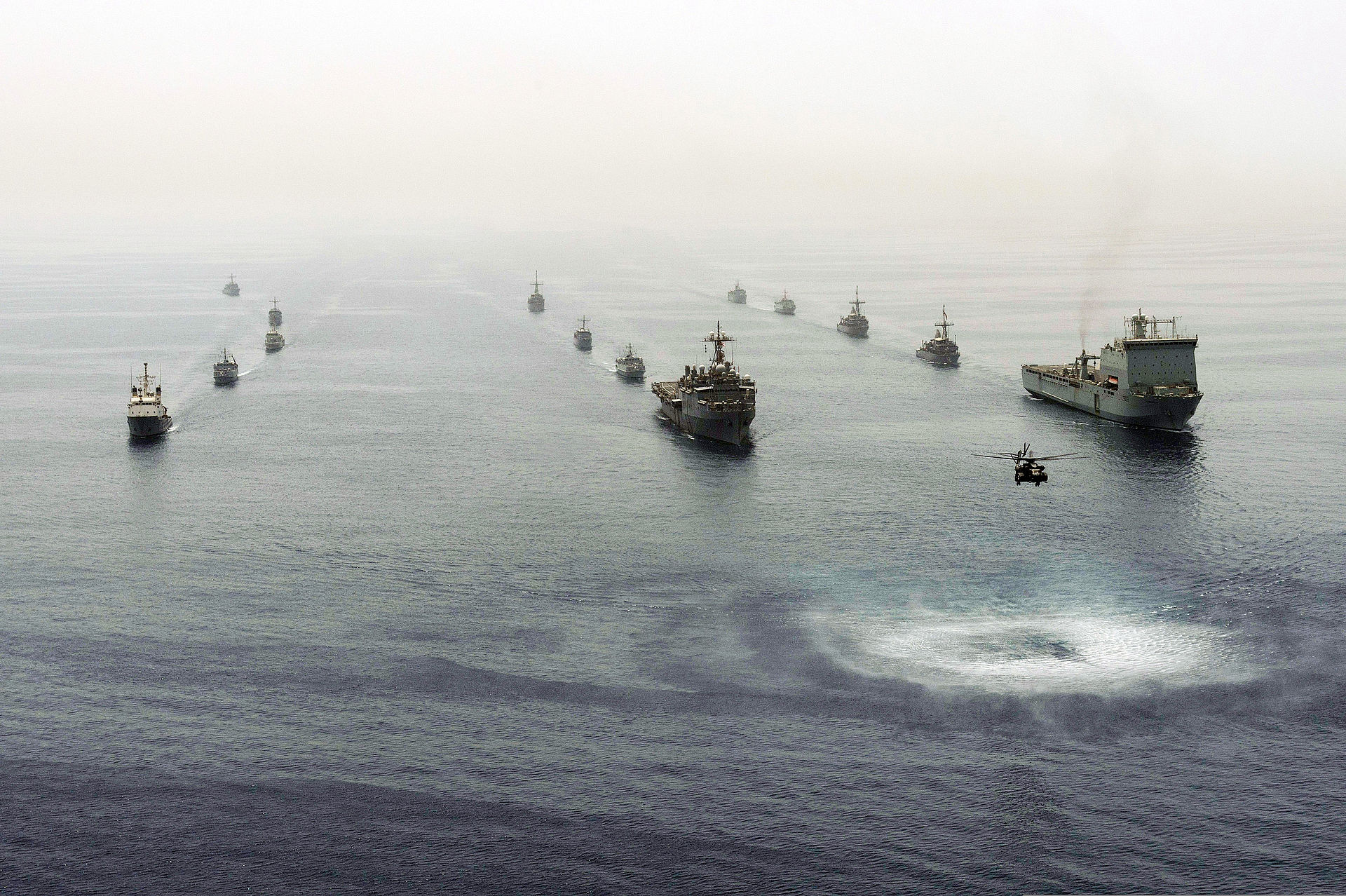
Even after the war ends, mine clearance will take months before cable repair vessels can safely operate. The IRGC’s mine-laying campaign has deposited thousands of devices across the Strait of Hormuz and the Gulf of Oman. International mine countermeasures operations during the 1991 Gulf War took over a year to clear a fraction of the mines Iran deployed, and modern naval mines are significantly more sophisticated than their predecessors.
The repair queue itself presents a bottleneck. Multiple submarine cables will require assessment and potential repair simultaneously. The global fleet of cable repair ships is already operating at near-capacity for routine maintenance. Surging that fleet to the Gulf after a ceasefire would require diverting ships from repair operations in the Atlantic, Pacific, and Indian Ocean, creating secondary disruptions in other regions.
A realistic assessment of the full recovery timeline for Gulf submarine cable infrastructure, from ceasefire to full restoration of pre-war capacity, ranges from eighteen months to three years. This timeline assumes no cables suffer direct damage during the conflict, which is far from guaranteed. If one or more major trunk cables are severed, either by mines, anchor drags from distressed vessels, or deliberate targeting, the restoration timeline extends further. The 2024 Red Sea cable damage caused by Houthi-related anchor drags took four months to repair under relatively permissive security conditions. Similar damage in the Strait of Hormuz during active hostilities could take a year or more.
| Phase | Duration | Prerequisites | Key Risks |
|---|---|---|---|
| Ceasefire and initial security assessment | 1-3 months | Formal cessation of hostilities | Spoiler attacks, mine drift |
| Mine clearance in cable corridors | 6-12 months | Multinational naval cooperation | Uncharted mine fields, depth |
| Cable assessment and damage survey | 2-4 months | Insurance cover, ship availability | Multiple fault points |
| Cable repair operations | 3-6 months per cable | Repair ship deployment, spare cable | Global fleet bottleneck |
| New cable construction resumption | 12-24 months | Consortium refinancing, route approval | Investor confidence |
| Full capacity restoration | 18-36 months total | All of the above | Geopolitical instability |
Frequently Asked Questions
How many submarine cables run through the Persian Gulf?
Seventeen submarine cable systems currently operate in or transit the Persian Gulf, connecting GCC states to global networks through the Strait of Hormuz, the Gulf of Oman, and the Red Sea. These cables carry approximately thirty per cent of all intercontinental internet traffic, including banking transactions, cloud computing workloads, government communications, and streaming media for hundreds of millions of users across the Middle East, South Asia, and East Africa.
Were Amazon data centres in the Gulf actually hit by Iranian drones?
Three Amazon Web Services facilities, two in the UAE and one in Bahrain, were struck by Iranian drones on 1 March 2026 in what analysts described as the first known military targeting of cloud data centres in any conflict. The IRGC claimed responsibility, citing the facilities’ alleged role in supporting US military operations. The strikes caused structural damage, power disruptions, and water damage from fire suppression systems, affecting banking, payments, and enterprise software across the region.
What is Meta’s 2Africa Pearls cable and why did it declare force majeure?
The 2Africa Pearls extension is part of Meta’s 45,000-kilometre submarine cable encircling Africa and extending into the Persian Gulf, designed to connect nine Gulf and South Asian countries with 180 terabits per second of capacity. Alcatel Submarine Networks declared force majeure on 12 March 2026, stating it could no longer safely lay cables in the Persian Gulf due to the Iran war. The cable-laying vessel Ile de Batz remains stranded off Dammam, Saudi Arabia.
How is Saudi Arabia preparing for a post-submarine-cable future?
Saudi Arabia is pursuing three parallel strategies: building sovereign data centre capacity through the PIF’s HUMAIN initiative and the SDAIA Hexagon Data Centre (480 megawatts), developing overland fibre-optic cables through stc Group’s $800 million SilkLink project via Jordan and Turkey, and enforcing strict data localisation regulations that reduce dependence on foreign-controlled infrastructure. The Kingdom’s unique access to both Red Sea and Persian Gulf coastlines provides routing diversity unavailable to other Gulf states.
How long will it take to restore Gulf internet infrastructure after the war?
Full restoration of Gulf submarine cable capacity is estimated to take eighteen to thirty-six months after a ceasefire, depending on mine clearance timelines, cable damage assessment, and the availability of specialised repair ships. Overland alternatives being developed by Saudi Arabia, Qatar, and the UAE are not expected to reach full operational capacity before 2028 at the earliest. The recovery gap represents the most significant risk to the Gulf’s technology investment pipeline and Vision 2030 digital ambitions.
Could Iran deliberately cut submarine cables in the Gulf?
Submarine cables are vulnerable to deliberate cutting, anchor damage, and mine detonation near cable routes. Iran possesses midget submarines and diver-delivery vehicles capable of operating at cable-laying depths in the Persian Gulf, which averages just fifty metres in the Strait of Hormuz. While no confirmed deliberate cable cuts have occurred during the 2026 conflict, the IRGC’s demonstrated willingness to target data centres and threaten cable infrastructure raises the possibility that cables could become explicit military targets if the conflict escalates further.