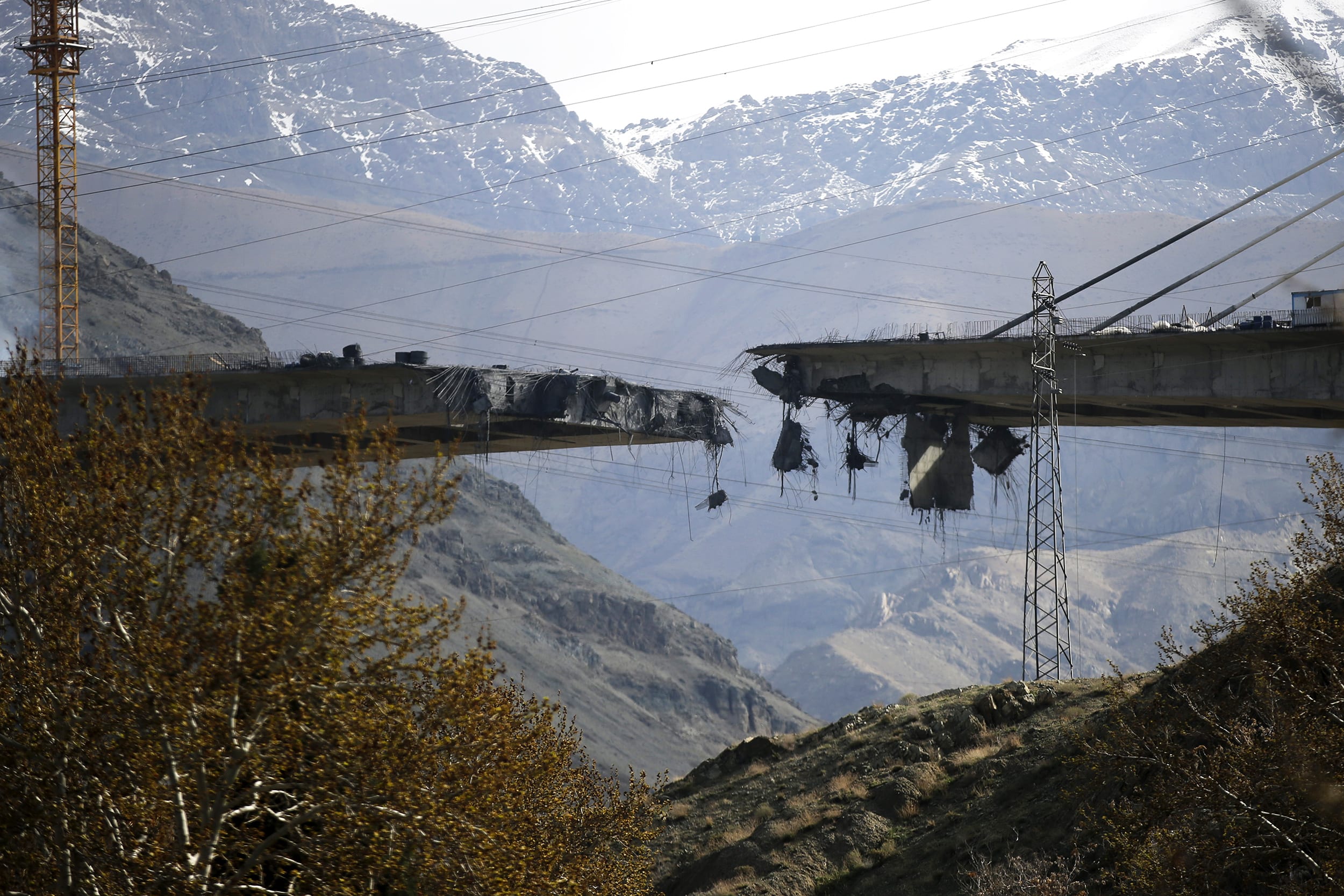

RIYADH — Day 35 of the war opened with the image the Trump administration wanted the world to see: a 10-second video of Iran’s B1 bridge — the tallest in the Middle East, a 136-metre structure connecting Tehran to Karaj that was a point of national engineering pride — collapsing under American munitions. Trump posted it to Truth Social with the caption: “The biggest bridge in Iran comes tumbling down, never to be used again — Much more to follow!” Eight civilians were killed and 95 injured in the strike, according to Iran’s Fars News Agency. Hours later, Trump escalated further: “Our Military hasn’t even started destroying what’s left in Iran. Bridges next, then Electric Power Plants!”
The war has entered a new phase. The targeting of civilian transport infrastructure — bridges, not bases — represents a deliberate shift from military degradation to the systematic destruction of Iran’s ability to function as a modern state. With the April 6 deadline 72 hours away and the UN Security Council deadlocked on a Hormuz resolution, the next three days will determine whether the conflict ends at the negotiating table or in the ruins of Iran’s power grid.
The B1 Bridge and the Infrastructure Campaign
The B1 bridge between Tehran and Karaj was still under construction when it was hit. It was designed to reduce travel time between the capital and one of its largest satellite cities from one hour to ten minutes, and was widely regarded as a flagship civil engineering project. The Israeli military told CNN it was “not aware” of an Israeli strike on the bridge, suggesting it was a unilateral US action — a distinction that may carry significance as the legal debate over targeting civilian infrastructure intensifies.
Iran’s Foreign Minister Abbas Araghchi responded directly: “Striking civilian structures, including unfinished bridges, will not compel Iranians to surrender.” The IRGC’s Fars News Agency responded differently — by publishing a list of bridges in Kuwait, Saudi Arabia, Abu Dhabi, and Jordan as potential retaliatory targets. The escalation logic is now symmetrical: US strikes Iranian civilian infrastructure, Iran threatens to strike Gulf civilian infrastructure in return. On April 3, Iran struck Kuwait’s Mina al-Ahmadi refinery and a desalination plant simultaneously — then denied the desalination attack and blamed Israel in what analysts identified as a coordinated information operation, detailed in Iran’s simultaneous strikes on Kuwait’s refinery and desalination plant.
More than 100 international law experts signed a letter on Thursday warning that attacks on power plants — which Trump has repeatedly threatened — could constitute war crimes and would violate the prohibition on striking “objects indispensable to the survival of civilians.” Trump has also previously threatened to target water desalination plants.
Iran Claims US Fighter Jet Shot Down
Iran’s IRGC claimed on Friday that it shot down a US F-35 over central Iran, describing the aircraft as “completely destroyed.” No information on the pilot was provided. US Central Command denied the claim, stating that “all US fighter aircraft are accounted for.” This is the second time Iran has claimed to down an American jet during the conflict. The claims remain unverified, though Iran’s continued assertions — regardless of their accuracy — serve a domestic propaganda function at a time when the population has been under a near-total internet blackout for 35 consecutive days, with connectivity at approximately 1% of normal levels according to NetBlocks.
The UN Security Council Showdown
The UN Security Council is expected to vote today on a Bahrain-drafted resolution authorising “all necessary measures” to protect commercial shipping in and around the Strait of Hormuz — language that would effectively authorise defensive military action against Iranian maritime forces. The GCC has backed the resolution. More than 40 countries attended a UK-led virtual summit on Thursday to discuss reopening the waterway.
The resolution has stalled. China, Russia, and France have objected to the draft, with China warning it could escalate the conflict rather than resolve it. Iran warned the Security Council against “provocative action,” and separately proposed joint monitoring of the Strait with Oman as an alternative — a move that would formalise Iranian control over the waterway while offering a veneer of multilateral governance.
Meanwhile, a French-linked container ship successfully exited the Strait of Hormuz on Friday, the first transit by a Western European-linked vessel since the war began, according to Bloomberg. The transit suggests that Iran’s blockade operates selectively rather than absolutely — allowing passage for some vessels while restricting others, consistent with the “Tehran Toll Booth” model of controlled access rather than total closure.
Gulf Strikes Continue
Iran’s retaliatory strikes on Gulf states continued overnight and into Friday morning, maintaining the pattern of targeting energy and civilian infrastructure across the GCC:
Kuwait: An Iranian strike hit a power and water desalination plant, causing material damage. The Ministry of Electricity said emergency teams were responding under contingency plans. Separately, drones struck the Mina al-Ahmadi refinery early Friday, causing fires at operating units but no injuries. Kuwait’s airport remains closed since February 28, with Saudi Arabia providing buses to alternative airports.
UAE: The Abu Dhabi Media Office confirmed that debris from an intercepted aerial threat fell on the Habshan gas facilities, causing a fire and a temporary suspension of operations. The UAE defence ministry said it was responding to missile and drone threats from Iran on Friday.
Israel: Cluster munition impact sites were reported in the Haifa area following Iran’s latest ballistic missile attack, with damage to roads and vehicles. Hezbollah fired approximately 130 rockets at northern Israel on Passover, lightly injuring four people.
The Kharazi Aftermath
The strike on former Foreign Minister Kamal Kharazi’s Tehran home — which killed his wife and left him critically wounded — continued to generate diplomatic fallout. The IRGC claimed it struck Oracle’s Dubai data centre and Amazon’s Bahrain infrastructure in direct retaliation for the Kharazi hit; the Dubai Media Office called the Oracle claim “fabricated and incorrect,” while the Batelco/AWS strike in Bahrain has been confirmed.
Iran’s Foreign Ministry spokesperson reiterated that Tehran “will not tolerate this vicious cycle of war, negotiations, ceasefire, and then repeating the same pattern.” The Pakistan back channel through which Kharazi was arranging a Vance-Iran meeting has not produced any visible diplomatic activity since the strike.
Trump on Israel: “They’ll Do What I Tell Them”
In remarks to Time magazine, Trump made his most explicit statement yet on the US-Israel command relationship in the war. When asked whether Israel would stop attacking Iran when the US stops, Trump said: “They’ll do what I tell them. They’ve been a good team player. They’ll stop when I stop. They’ll stop unless they’re provoked, in which case they’ll have no choice, but they’ll stop when I stop.”
The statement contradicts Netanyahu’s private assurances to US officials that Israel’s campaign would continue regardless of any US-Iran deal, and it contradicts the public posture of Israeli autonomy that both governments have maintained throughout the conflict. Whether Trump’s claim reflects the actual command dynamic or is itself a negotiating signal directed at Tehran — demonstrating that a deal with Washington would bind Israel — remains unclear.
Child Soldiers
Amnesty International said Thursday that Iran’s recruitment of children as young as 12 for roles linked to the IRGC amounts to a war crime. The statement followed remarks by IRGC official Rahim Nadali on state media, who said the minimum age for support roles including patrols, checkpoints, and logistics had been lowered to 12 “given that the age of those coming forward has dropped.” Iran’s internet blackout — now in its 35th consecutive day — means the domestic population has virtually no access to independent information about the war or the recruitment programme.
Consolidated Conflict Metrics
| Category | Estimated Data |
|---|---|
| Iranian Fatalities (Deputy Health Minister) | 1,900+ |
| Iranian Fatalities (Human Rights Orgs) | 2,400+ |
| Total Middle East Death Toll | 3,000+ |
| Israeli Fatalities | 24+ |
| U.S. Fatalities | 13 |
| Lebanese Fatalities (since March 2) | 1,200+ |
| Brent Crude Price | $104-106 / barrel |
| U.S. Gasoline (National Average) | $4.06+ / gallon |
| Strait of Hormuz Status | Controlled by Iran / 5-10 ships/day |
| Iran Internet Connectivity | ~1% of normal (NetBlocks) |
| Days to April 6 Deadline | 3 |
The next 72 hours centre on two events: the UN Security Council vote on the Bahrain-drafted Hormuz resolution, which China and Russia are expected to block, and the approach of Trump’s April 6 deadline for Iran to reopen the Strait or face strikes on its energy infrastructure. Iran has shown no indication it intends to comply. The IRGC’s Fars News Agency listed Gulf bridges as retaliatory targets within hours of the B1 bridge strike. Iran proposed joint Hormuz monitoring with Oman — a framework that preserves Iranian control while offering the appearance of cooperation. And Iran’s internet blackout, now the longest in the country’s history, has cut 88 million people off from the outside world for over five weeks. The war continues.