
RIYADH — The Iran war entered its eleventh day on Tuesday with President Donald Trump declaring the conflict “very complete” even as his own Pentagon insisted the United States had “only just begun to fight,” a contradiction that captured the dissonance at the heart of a campaign that has killed more than 1,255 Iranians, sent oil prices on their wildest ride since the 1973 embargo, and drawn every major Gulf state into a shooting war none of them sought. Mojtaba Khamenei, the 56-year-old son of the assassinated supreme leader, took command of Iran on Saturday night and immediately ordered a fresh barrage of missiles at Israel and the Gulf, while his foreign policy adviser told CNN there was “no room for diplomacy anymore.” Saudi Arabia intercepted nine drones aimed at Aramco’s Shaybah oil field and three missiles targeting Prince Sultan Air Base, but a projectile that evaded defenses struck a residential building in Al-Kharj, killing two Bangladeshi nationals and injuring twelve others — the first confirmed civilian fatalities on Saudi soil from Iranian fire since the war began on February 28.
The conflict’s economic shock wave proved equally violent. Brent crude spiked to $119.50 on Monday morning before crashing below $89 by the close — a single-day swing of more than $30 — after Trump told CBS News he was “thinking about taking over” the Strait of Hormuz. Bahrain’s state oil company Bapco declared force majeure. Qatar intercepted 17 ballistic missiles and six drones in a single salvo. The G7 energy ministers convened an emergency virtual session to discuss what would be the largest coordinated release of strategic petroleum reserves in history. And the U.S. State Department ordered all non-emergency personnel to leave Saudi Arabia, the starkest acknowledgment yet that the war has moved beyond Iran’s borders and into the civilian infrastructure of America’s closest Arab allies.
Table of Contents
- Trump’s ‘Very Complete’ War and the Pentagon’s ‘Only Just Begun’
- Operation Epic Fury by the Numbers
- Who Is Mojtaba Khamenei and What Does His Appointment Mean?
- Why Has Iran Rejected Every Ceasefire Offer?
- Saudi Arabia Under Fire and Fighting Back
- The Gulf States Under Siege
- The Strait of Hormuz Crisis
- Oil Market Chaos and the $30 Swing
- Global Economic Fallout and the Stagflation Threat
- The Hezbollah Front and Israel’s Ground War in Lebanon
- How Gulf Air Defenses Are Holding the Line
- Iran’s Civilian Toll and the Humanitarian Emergency
- Why Has Kharg Island Been Left Untouched?
- The Cyber War Nobody Is Talking About
- The Houthi Wildcard
- Iraq and the Kurdish Front
- Pakistan Invokes the Saudi Defense Pact
- America’s Force Posture in the Gulf
- China and Russia Jockey for Mediator Role
- Europe’s Paralysis
- The United Nations Response
- The War at Home — Congress, Protests, and the War Powers Fight
- The Nuclear Dimension
- Black Rain Over Tehran
- The Shipping Insurance Crisis
- Asia’s Energy Emergency
- Iran’s Internet Blackout and Internal Unrest
- American Casualties and the Domestic Toll
- Refugees and Displacement Across the Region
- Gold, the Dollar, and the Flight to Safety
- Trump’s $20 Billion Tanker Reinsurance Gamble
- Pezeshkian’s Broken Ceasefire Promise
- Iran’s Hormuz Ultimatum to the Arab World
- The NATO-Turkey Missile Incident
- What Comes Next
- Frequently Asked Questions
Trump’s ‘Very Complete’ War and the Pentagon’s ‘Only Just Begun’
In a phone interview with CBS News from his Doral, Florida, golf club on Monday afternoon, President Trump offered what appeared to be a victory declaration. “I think the war is very complete, pretty much,” the president said, adding that Iran had “no navy, no communications, they’ve got no air force.” He told the interviewer he believed the United States was “very far” ahead of his initial four-to-five-week estimated time frame for the conflict, suggesting the military campaign had achieved its core objectives in less than half the anticipated period.
Within hours, the Pentagon delivered a starkly different assessment. Defense Secretary Pete Hegseth, speaking to 60 Minutes, said the United States had “only just begun to fight” and warned Iran against assuming Washington could not sustain the campaign indefinitely. “We’ve got no shortage of munitions,” Hegseth said. “Our stockpiles of defensive and offensive weapons allow us to sustain this campaign as long as we need to. We have only just begun to fight, and fight decisively.” The Defense Department’s rapid response social media account posted “We have Only Just Begun to Fight” without additional context, amplifying the message.
The contradiction was not subtle. Trump, speaking from a golf resort, appeared eager to declare victory and move on. His defense secretary, from the Pentagon, was signaling to Iran and to American allies that the campaign would continue at full intensity. CNN’s analysis described the gap as a pattern of Trump “contradicting himself on Iran repeatedly in just a few hours,” noting that the president also told House Republicans that “we haven’t won enough” even as he told CBS the war was nearly over.
The mixed messaging created uncertainty across every theater of the conflict. Gulf allies seeking clarity on American staying power received none. Financial markets, attempting to price the war’s duration, swung violently in both directions. Iranian decision-makers, trying to calibrate their response, faced a Washington that appeared to be arguing with itself in public. And American military commanders on the ground, executing Operation Epic Fury under CENTCOM authority, continued to strike targets at the same pace they had maintained since February 28 — regardless of what either the president or the defense secretary said to reporters.
Trump also addressed the question of Iran’s new supreme leader, Mojtaba Khamenei, who was appointed on Saturday night. “I have no message for him. None, whatsoever,” the president said, adding that he had “someone else in mind” to lead the country — the clearest signal yet that the administration’s war aims extend beyond military degradation to regime change, despite official denials.
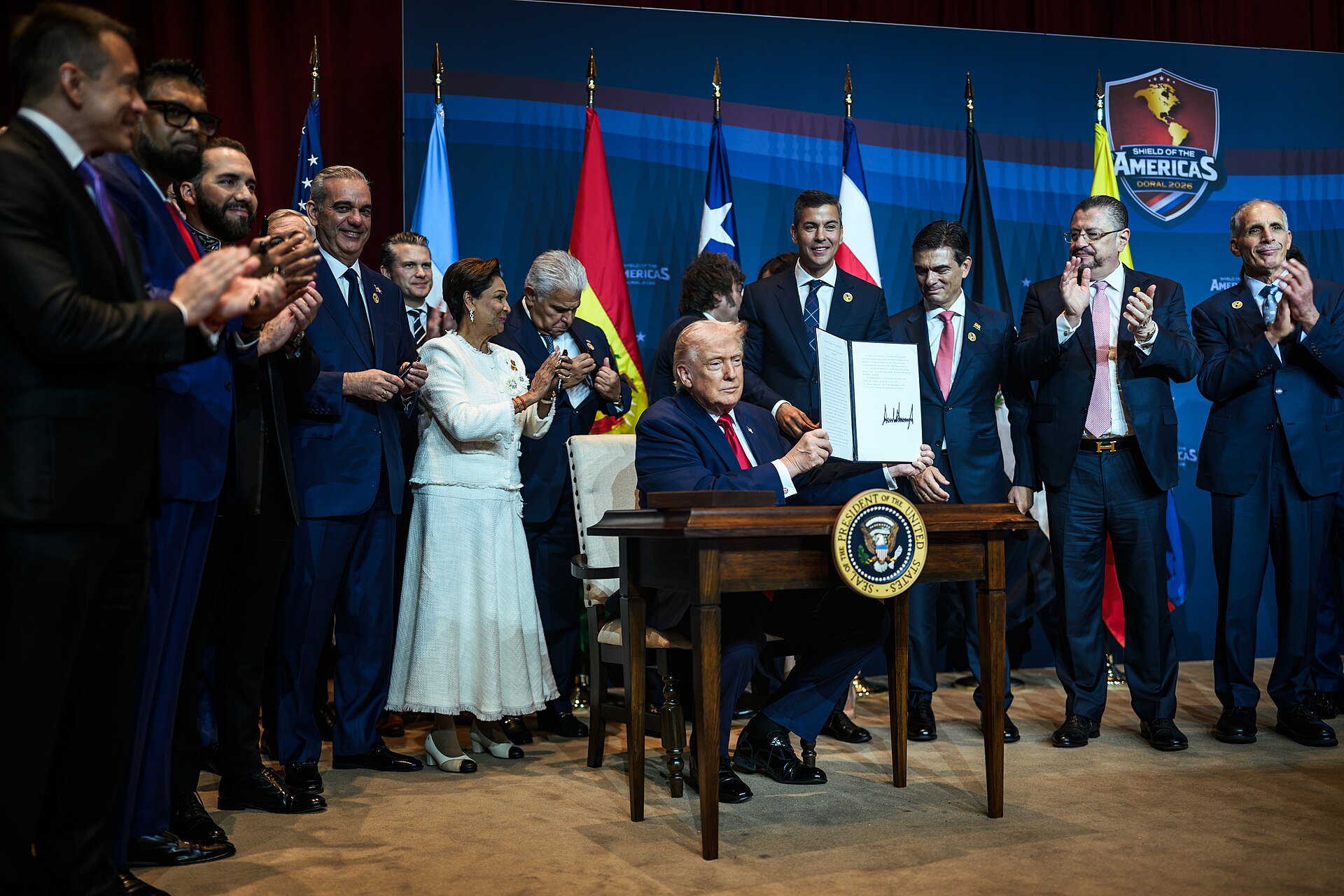
The press conference at Doral — where Trump had been hosting the Shield of the Americas summit when the war erupted — also included the president’s assertion that he was considering “taking over” the Strait of Hormuz. The remark, whose operational meaning remains unclear, sent oil prices sharply lower as markets interpreted it as a signal that the United States would forcibly reopen the waterway to commercial shipping. Whether that interpretation was correct, or whether the comment was another instance of presidential improvisation, remained uncertain on Tuesday morning.
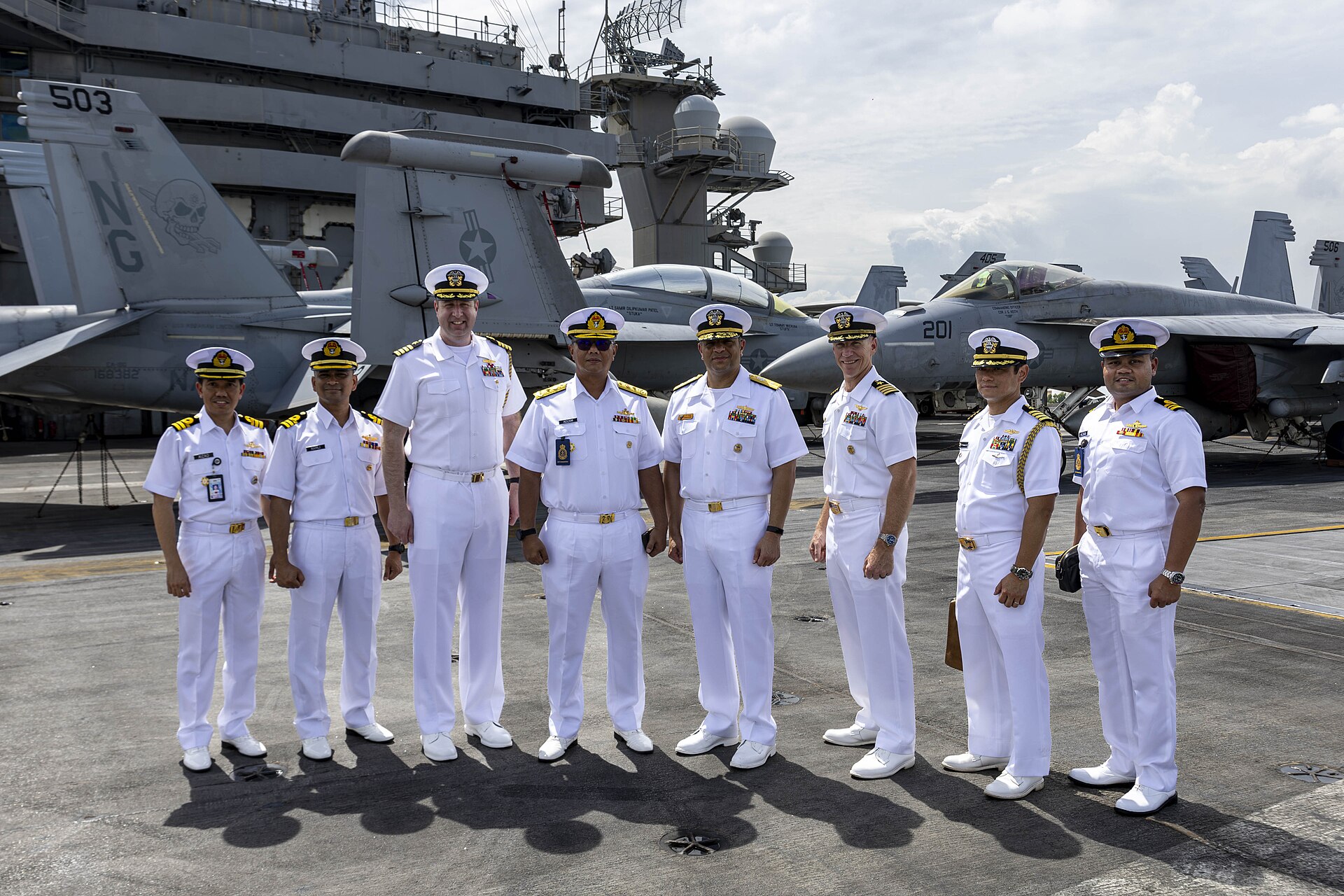
Operation Epic Fury by the Numbers
The U.S. Central Command’s campaign against Iran, codenamed Operation Epic Fury, and Israel’s parallel Operation Roaring Lion together constitute the most intensive air and naval campaign since the 2003 invasion of Iraq. The scale of destruction inflicted on Iranian military infrastructure in eleven days has exceeded what most analysts believed possible in so short a period, though the campaign has also consumed munitions and resources at an extraordinary rate.
CENTCOM reported that more than 3,000 targets across Iran had been struck by the end of the first week. The initial phase prioritized degrading Iranian air defenses, with approximately 200 air defense systems destroyed in the first 24 hours, enabling the United States and Israel to establish effective control of Iranian airspace from the western border to central Tehran. B-2 Spirit stealth bombers dropped dozens of 2,000-pound GBU-31 penetrator bombs targeting deeply buried ballistic missile launchers and command bunkers, while F-22 Raptors and F-15E Strike Eagles flew continuous sorties from bases in Israel and Jordan.
| Metric | Figure | Source |
|---|---|---|
| Total targets struck | 3,000+ | CENTCOM, March 7 |
| Iranian warships sunk or destroyed | 43 | CENTCOM, March 7 |
| Air defense systems destroyed | ~200 | CENTCOM, March 1 |
| Estimated cost (first 100 hours) | $3.7 billion | CSIS estimate |
| Daily cost estimate | $891 million | CSIS estimate |
| US carrier strike groups deployed | 2 | Pentagon |
| US service members killed | 7 | Pentagon, March 9 |
| Iranian military killed (est.) | 2,100+ | Hengaw, March 4 |
| Total Iranian dead (govt. figure) | 1,255+ | Iran govt., March 9 |
The destruction of Iran’s navy has been particularly comprehensive. CENTCOM reported that 43 Iranian warships had been sunk or destroyed, including submarines, missile boats, and the IRGC Navy’s drone carrier — a converted vessel roughly the size of a World War II aircraft carrier that the CENTCOM commander said was “currently on fire” when he briefed reporters. Seven warships were lost at two separate naval bases, along with critical pier infrastructure. At the Konarak naval base in southeastern Iran, three warships moored at the pier sank and at least eight buildings on the base were destroyed.
The Center for Strategic and International Studies estimated the cost of the first 100 hours of Operation Epic Fury at $3.7 billion, or approximately $891 million per day. That figure includes the consumption of precision-guided munitions — Tomahawk cruise missiles, Joint Direct Attack Munitions, Small Diameter Bombs, and air-launched cruise missiles — as well as the operating costs of two carrier strike groups, forward-deployed fighter squadrons, tanker aircraft, and naval escorts. CENTCOM is reportedly preparing for a 100-day campaign, a timeline that would push total costs well beyond $80 billion and raise acute questions about congressional authorization and appropriations.
The reduction in Iranian missile fire has been dramatic. CENTCOM reported that the air campaign had cut Iranian missile and drone attacks by approximately 90 percent from their peak levels in the first 72 hours, a figure that, if accurate, represents one of the most effective suppression-of-enemy-air-defenses campaigns in modern military history. Iran’s ballistic missile infrastructure — mobile launchers, fixed sites, guidance systems, and propellant production facilities — has been systematically targeted in a campaign that extends from the western provinces near the Iraqi border to the eastern reaches of Khorasan.
The White House published two separate press releases praising the operation, titled “America’s Unstoppable Momentum in Operation Epic Fury” and “Operation Epic Fury: Unmatched Power, Unrelenting Force of America’s Warriors.” The language was triumphalist and contrasted sharply with the measured assessments coming from CENTCOM headquarters in Tampa, where military planners were focused less on narrative and more on the logistics of sustaining a campaign that shows no sign of winding down.
Who Is Mojtaba Khamenei and What Does His Appointment Mean?
Mojtaba Khamenei, 56, was announced as Iran’s new supreme leader by the Assembly of Experts on the evening of Saturday, March 8, replacing his father Ali Khamenei, who was killed in the joint U.S.-Israeli strike on his compound on February 28 — the opening salvo of the war. The appointment was, in the words of the Washington Post, “the culmination of years of behind-the-scenes maneuvering” by IRGC commanders who had pressured Assembly of Experts members to vote for Mojtaba beginning on March 3, according to Al Jazeera.
Mojtaba is a mid-ranking cleric with close ties to the Islamic Revolutionary Guard Corps. He had long been viewed by elements of Iran’s ruling establishment as a potential successor to his father, though the notion of hereditary succession is theoretically antithetical to the Islamic Republic’s governing ideology. The IRGC pledged immediate obedience to the new leader, with commanders issuing public statements of allegiance within hours of the announcement. Iran’s president, Masoud Pezeshkian, and foreign minister Abbas Araghchi also pledged loyalty, presenting a united front during wartime even as the internal dynamics of power remained unclear.
The appointment carried several immediate implications. First, it signaled that the hardline military establishment — not the reformist-leaning presidency — controlled the succession process. Second, it ensured continuity in Iran’s war strategy: Mojtaba immediately authorized a fresh wave of missile and drone strikes against Israel and Gulf states, demonstrating that the killing of his father had not disrupted the chain of command. Third, it foreclosed any possibility of a moderate pivot. Where Pezeshkian had offered tentative de-escalatory gestures, Mojtaba’s first public acts were martial.
The NCRI, an Iranian opposition group, published an analysis titled “Who Is Mojtaba Khamenei: The Iranian Regime’s Last Supreme Leader and Its Hereditary Gamble,” arguing that the appointment undermined the Islamic Republic’s legitimacy by converting the supreme leadership into a dynastic position. Within Iran, reaction was impossible to gauge given the near-total internet blackout, but opposition groups in exile described the succession as proof that the regime had abandoned even the pretense of revolutionary ideology in favor of raw power consolidation.
Trump’s response to the succession was dismissive. “I have no message for him. None, whatsoever,” the president told CBS, before adding that he had “someone else in mind” to lead Iran — a remark that intelligence analysts interpreted as confirmation that the CIA’s reported program to arm Kurdish forces inside Iran and foment a popular uprising, reported by CNN on March 3, was an active component of U.S. war planning rather than a contingency option. House of Saud’s profile of Mojtaba Khamenei details the new leader’s background, his relationship with the IRGC, and the internal power dynamics that brought him to power within days of his father’s assassination.
Why Has Iran Rejected Every Ceasefire Offer?
Every diplomatic off-ramp offered to Tehran since the war began has been rejected. The refusal is not posturing — it reflects a calculated strategic assessment by Iran’s military leadership that negotiation from a position of weakness would yield worse terms than continued resistance.
Kamal Kharazi, the foreign policy adviser to the office of the supreme leader, told CNN on Monday that there was “no room for diplomacy anymore,” citing what he described as years of American deception in previous negotiations. “Donald Trump had been deceiving others and not keeping with his promises,” Kharazi said, referencing the U.S. withdrawal from the 2015 nuclear deal and the reimposition of sanctions. He said Iran was prepared for a long war and that only “economic pain” — pressure so severe that other countries would “intervene to guarantee the termination of aggression” — would end the conflict.
Iran’s Foreign Minister Abbas Araghchi reinforced the message in an interview with NBC News, rejecting calls for a ceasefire outright. “We need to continue fighting for the sake of our people,” Araghchi said. When asked what conditions Iran would accept to end the war, he said Tehran would not consider a ceasefire “until the US and Israel justified their aggression” — a precondition that effectively ruled out any near-term diplomatic resolution.
Iran’s foreign ministry spokesman Esmaeil Baghaei told reporters on Sunday that “speaking of any matter other than defending our homeland is irrelevant” while military operations continued. The statement was notable for its absolutism: Iran was not merely rejecting specific terms, but rejecting the concept of negotiation itself for as long as bombs continued to fall on Iranian territory.
The diplomatic freeze left mediators — China, Qatar, Oman, and several European capitals — with nothing to work with. Beijing’s special envoy Zhai Jun was in Riyadh meeting Saudi Foreign Minister Prince Faisal bin Farhan and GCC Secretary-General Jassim Al-Budaiwi, but Chinese mediation requires both parties to engage. Iran’s refusal to talk, combined with Washington’s evident satisfaction with the military campaign’s trajectory, created what one European diplomat described to the Financial Times as “the most dangerous vacuum in Middle Eastern diplomacy since the Six-Day War.”
The logic of Iran’s position, while seemingly self-destructive, has internal coherence. Tehran’s leadership calculates that its missile and drone arsenal — even degraded — can inflict sufficient economic pain on the global economy through the Hormuz blockade and Gulf attacks to eventually force third-party intervention. The strategy is to make the war expensive enough for everyone that external powers compel the United States to stop. Whether this calculation is correct depends on variables that Tehran cannot control: American political will, global economic tolerance for high energy prices, and the speed at which CENTCOM’s campaign depletes Iran’s remaining military capacity.
Saudi Arabia Under Fire and Fighting Back
Saudi Arabia’s position in the conflict hardened sharply on Monday. The Kingdom’s air defenses intercepted nine drones targeting Aramco’s massive Shaybah oil field in the Empty Quarter and three ballistic missiles aimed at Prince Sultan Air Base in Al-Kharj. In a separate incident, a military projectile struck a residential building in Al-Kharj used by a maintenance and cleaning company, killing two Bangladeshi nationals and injuring twelve others — eleven Bangladeshi citizens and one Indian national, who remains hospitalized. The Indian Embassy in Riyadh confirmed that no Indian nationals were killed, correcting initial reports.
The Saudi Ministry of Foreign Affairs issued its most forceful statement of the war, warning Iran that it would be “the biggest loser” if it continued attacking Arab states. The statement directly contradicted Iranian President Pezeshkian’s claim from Saturday that Iran had halted attacks on Gulf neighbors. “The Kingdom affirms that the Iranian side has not implemented that declaration on the ground, either during the President’s speech or afterward, and has continued its attacks based on baseless justifications that have no basis in fact,” the ministry said.
The warning carried weight because of what it implied about Saudi Arabia’s next steps. Riyadh has so far refrained from directly engaging Iranian forces, relying instead on its air defense architecture to absorb incoming fire while the United States and Israel conduct offensive operations against Iran. But the Saudi statement’s language — warning of “the heaviest diplomatic, economic, and strategic consequences” — signaled that the Kingdom’s patience was finite. Combined with Pakistan’s invocation of the mutual defense pact and the ongoing deployment of additional Patriot batteries, Saudi Arabia appeared to be preparing for a more active role should Iranian attacks continue.
The U.S. State Department’s decision on March 8 to order non-emergency personnel to leave Saudi Arabia underscored the severity of the threat. The order followed reports that the U.S. Embassy in Riyadh had been struck by drone fire, causing part of its roof to collapse — a remarkable breach of diplomatic security that would have been unthinkable two weeks ago. It was the first evacuation order for American diplomatic staff from Saudi Arabia during the conflict, and it sent an unmistakable signal: the world’s largest oil-producing nation was now a frontline state in a regional war.
Saudi Arabia’s defense spending trajectory, already accelerating under Crown Prince Mohammed bin Salman’s modernization program, is expected to surge further as a consequence of the war. The Kingdom operates one THAAD battery and multiple Patriot systems, but the intensity of Iranian fire — averaging dozens of missiles and drones per day — is testing the depth of Saudi interceptor stockpiles. Mohammed bin Salman’s three-front war — managing the military threat, the economic disruption, and the diplomatic fallout simultaneously — represents the most severe test of Saudi leadership since the 1990 Iraqi invasion of Kuwait.
Aramco’s Shaybah oil field, located in the harsh terrain of the Empty Quarter near the UAE border, has been targeted repeatedly because of its strategic value. The field produces approximately one million barrels per day and is connected to the Kingdom’s eastern export terminals via a network of pipelines. Successful strikes on Shaybah would not only reduce Saudi production capacity but would demonstrate Iran’s ability to reach targets deep inside Saudi territory, far from the Gulf coast where air defenses are most concentrated. That the drones have been intercepted each time speaks to the effectiveness of Saudi air defense, but the persistence of the attacks speaks to Iran’s determination to test that defense until it finds a gap.
The Gulf States Under Siege
Iran’s retaliatory campaign has struck every nation in the Gulf Cooperation Council, as well as Jordan, Kuwait, Iraq, and Turkey. The scale of the attacks has far exceeded what most Gulf defense planners had modeled in their worst-case scenarios, and the targeting of civilian infrastructure — airports, desalination plants, refineries, residential areas — has crossed red lines that even the most hawkish analysts had not expected Iran to breach.
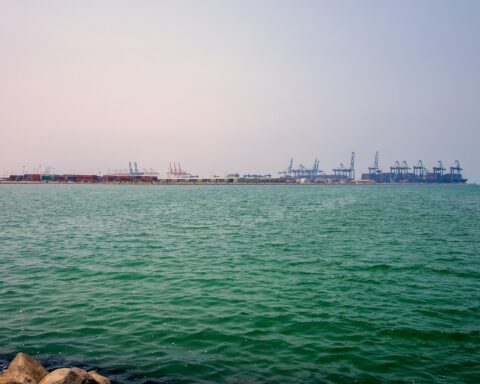
The United Arab Emirates has absorbed the heaviest volume of fire. By the end of the first week, the UAE Ministry of Foreign Affairs reported intercepting more than 1,000 attacks — approximately 174 ballistic missiles tracked (161 intercepted, 13 falling to the sea), 689 detected drones (645 intercepted), and eight cruise missiles that struck the country. Four people were killed and 112 injured. Debris from missile interceptions and drones sparked fires at five-star hotels on Dubai’s Palm Jumeirah, and Dubai International Airport was struck by a drone. A fire broke out at Jebel Ali Port, the largest commercial port in the Middle East, attributed by the Dubai government to debris from aerial interception. The UAE was considering striking Iranian missile sites in response, according to Axios — a step that would transform the Emirates from a target into a belligerent.
| Country | Missiles | Drones | Killed | Wounded | Key Targets |
|---|---|---|---|---|---|
| UAE | 174+ | 941+ | 4 | 112 | Dubai airport, Jebel Ali Port, hotels |
| Saudi Arabia | 5+ | 21+ | 2 | 12 | Shaybah field, Prince Sultan AB, Al-Kharj |
| Qatar | 17+ | 6+ | 0 | 0 | Hamad Airport, Al-Udeid AB |
| Bahrain | 86+ | 148+ | 2 | 32+ | Bapco refinery, Manama, desalination plant |
| Kuwait | 178+ | 384+ | 6 (US) | — | Ali-Salem AB, Shuaiba port |
| Jordan | 119 | — | 0 | 14 | Muwaffaq Salti AB (THAAD radar hit) |
Bahrain, which hosts the U.S. Fifth Fleet, declared a humanitarian emergency after a drone struck its main water desalination plant and the Bapco refinery was damaged severely enough for the state oil company to declare force majeure on all operations on March 9. One person was killed and eight wounded when an Iranian strike hit a residential area in Manama on Monday, the first confirmed civilian death in Bahrain from the war. Argus Media reported that Bapco’s 267,000 barrel-per-day refinery had sustained damage to processing units that would take weeks to repair. Separately, an Iranian drone attack near Manama had earlier sparked a fire near a petroleum refinery and injured at least 32 Bahraini citizens, four of them described as “serious cases.”
Qatar intercepted 17 ballistic missiles and six drones in a single Monday salvo, the heaviest attack on the gas-rich state since the war began. Qatari F-15 fighters had earlier downed two Iranian Su-24 bombers, and the armed forces intercepted multiple strikes targeting Hamad International Airport. The world’s largest LNG facility, Qatar’s North Field, shuttered production, sending Asian gas prices to their highest levels since 2023 and threatening the energy security of Japan, South Korea, and China.
Kuwait reported 178 missiles and 384 drones targeting the country, with most intercepted by Kuwaiti air defenses. But the deadliest single incident of the war for American forces occurred at Kuwait’s Shuaiba port on March 1, where six U.S. Army reservists were killed in a drone attack on a tactical operations center that had “little protection,” according to satellite imagery analyzed by the Washington Post.
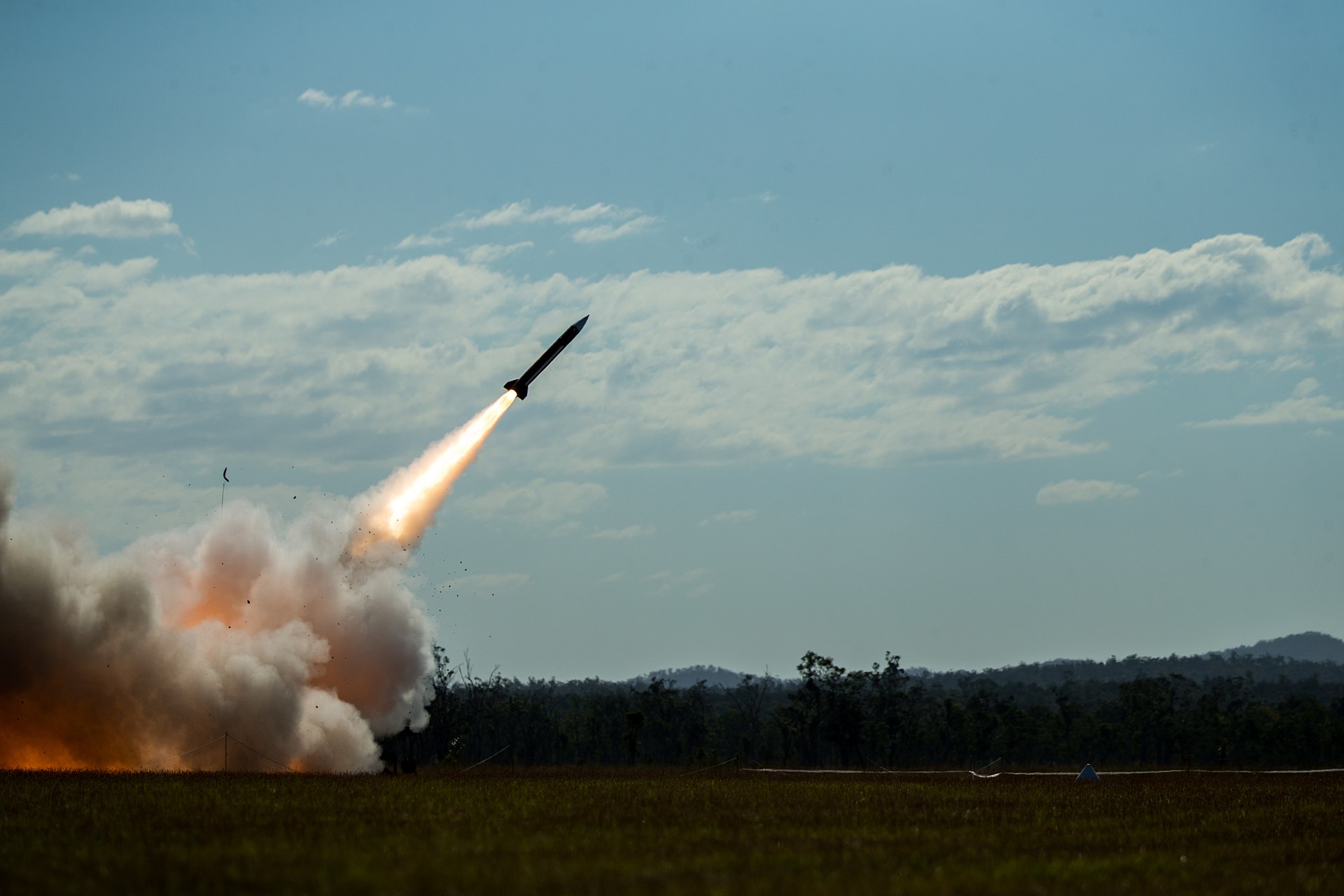
The Strait of Hormuz Crisis
The Strait of Hormuz, through which approximately 20 percent of the world’s daily oil supply transits, has been effectively closed since the war began. The IRGC issued warnings prohibiting vessel passage on February 28, and commercial shipping has largely complied. Before the conflict, the strait averaged more than 153 vessel transits per day. Since March 1, only 78 vessels have been detected passing through — a daily average of 13, representing a 90 percent collapse in traffic, according to France24.
The human cost of the Hormuz crisis became real within hours. On March 1, the oil tanker Skylight was struck by a projectile north of Khasab, Oman, killing two Indian crew members and injuring three others. The MKD VYOM was hit by an Iranian drone boat, causing a fire and explosion in its engine room that killed an Indian sailor. At least five tankers have been damaged, two crew members killed, and approximately 150 ships remain stranded around the strait, anchored in clusters outside the danger zone with nowhere safe to go.
Bloomberg reported that a Greek oil tanker exited the Strait of Hormuz on Monday with its transponder signal turned off — a desperate maneuver that highlighted the risks facing any vessel that attempts the passage. CSIS published an analysis titled “No One, Not Even Beijing, Is Getting Through the Strait of Hormuz,” noting that the blockade was indiscriminate: Chinese tankers carrying Iranian crude were as unable to transit as American-flagged vessels.
The economic consequences are cascading. The disruption has removed approximately 20 million barrels per day of export capacity from global markets — not because the oil has stopped being produced, but because it cannot be shipped. Saudi Arabia, Kuwait, the UAE, Iraq, and Qatar all depend on Hormuz for the vast majority of their hydrocarbon exports. With tanker traffic at a standstill, storage facilities across the Gulf are filling rapidly. Bloomberg reported that Saudi Arabia has already begun cutting oil output as onshore storage nears capacity, a measure that compounds the supply crisis by reducing the volume available for export when shipping eventually resumes.
On Monday, the IRGC issued what amounted to an ultimatum: any Arab or European country that expels Israeli and American ambassadors from its territory would be granted “full authority and freedom” to transit the strait starting the following day, according to the Iranian state news agency ISNA. The offer was a transparent attempt to fracture the coalition arrayed against Tehran, and no government accepted it. But the proposal revealed Iran’s awareness that the Hormuz blockade was its most powerful remaining weapon — the one card that could not be neutralized by American air superiority.
Oil Market Chaos and the $30 Swing
The oil market experienced its most volatile day in decades on Monday. Brent crude surged more than 30 percent on Sunday night, touching $119.50 per barrel in early Asian trading — levels not seen since 2022. But by the close of Monday trading, after Trump’s CBS interview and his suggestion of seizing the Strait of Hormuz, Brent had crashed to approximately $88.43, a decline of more than 26 percent from the intraday high. U.S. West Texas Intermediate oil experienced a similarly violent trajectory, surging past $100 before settling near $85.27, down 6.19 percent on the day.
The swing was historic. CNBC reported that oil had surged 35 percent in a single week for the “biggest gain in futures trading history dating back to 1983.” The subsequent collapse was equally dramatic. Traders could not agree on the war’s duration or severity, and every presidential statement — Trump’s “very complete,” Hegseth’s “only just begun,” Trump’s Hormuz threat — sent prices lurching in a different direction.
| Date | Brent ($/bbl) | WTI ($/bbl) | Key Event |
|---|---|---|---|
| Feb 27 (pre-war) | ~$70 | ~$68 | Normal trading |
| Mar 1 | $80-82 | $78-80 | IRGC declares Hormuz closed |
| Mar 4 | $83-90 | $80-88 | First tanker struck; KOSPI crashes 12% |
| Mar 6 | $95-100 | $90-95 | Bapco refinery hit; oil up 35% in a week |
| Mar 8 (Sun) | $100-110 | $95-105 | Mojtaba takes power, new strikes |
| Mar 9 (Mon AM) | $119.50 | $101.97 | Peak — panic buying |
| Mar 9 (Mon close) | ~$88.43 | ~$85.27 | Trump “very complete” + Hormuz threat |
The market turmoil erased trillions from global equity markets. South Korea’s KOSPI index suffered its worst crash since the 2008 financial crisis, plunging up to 12 percent in a single session on March 4 and triggering a circuit breaker. Europe’s Stoxx 600 fell 1.61 percent. Japan’s Nikkei dropped 1.35 percent. Wall Street experienced whipsaw sessions, with the Dow, S&P 500, and Nasdaq all falling more than 2.5 percent intraday before recovering partially on Trump’s remarks. The recovery was fragile: the S&P 500 closed down 0.94 percent on Monday, with the Dow down 0.83 percent and the Nasdaq losing 1.02 percent.
Goldman Sachs warned that prices could climb above $100 per barrel and stay there if shipping flows through Hormuz remained disrupted. Morgan Stanley’s analysts published a note on the “stagflation scenario” in which the oil shock pushed inflation higher while simultaneously slowing growth — the worst of both worlds for central banks that had been cautiously cutting interest rates. The very large crude carrier (VLCC) freight rate hit an all-time record of $423,736 per day on Monday, up 94 percent from Friday — a figure that reflected not just the oil supply disruption but the war risk premium that now attached to every barrel of Gulf crude.
Global Economic Fallout and the Stagflation Threat
The war’s economic consequences extend far beyond the oil market. The stagflation shock is now rippling through every major economy, threatening to reverse the progress made against inflation over the previous two years and confronting central banks with an impossible set of trade-offs.
In the United States, gasoline prices surged to $3.41 per gallon by Saturday, rising $0.43 in a single week — the largest seven-day increase in three years, according to Axios. Economists estimated that the bump could push monthly inflation to 1 percent in March, which would be the highest monthly increase in four years. The war is creating what NBC News described as a direct threat to “Trump’s affordability push,” undermining the president’s core economic message at a time when consumer sentiment was already fragile.
American households pay on average $2,500 per year to fill their tanks. At $3.50 per gallon — a level analysts expect within weeks if the Hormuz crisis persists — that figure rises by approximately $520 annually. The spike in diesel prices threatens to cascade through the trucking industry via fuel surcharges, increasing the cost of every consumer good that moves by road. CNN Business reported that the war “threatens Trump’s affordability push as rising energy prices complicate Fed rate cuts.”
The Federal Reserve faces an impossible dilemma. Before the war, the central bank had been signaling further rate cuts in 2026. The oil shock has made that trajectory untenable: cutting rates while energy-driven inflation is accelerating would risk un-anchoring inflation expectations. But holding rates steady, or worse, hiking them, would tighten financial conditions at precisely the moment when the war is already slowing economic activity. Treasury bonds, normally a safe haven during geopolitical crises, have sold off as investors price in higher inflation and larger fiscal deficits from increased defense spending.
The global dimension is equally severe. The World Bank had projected that Iran’s economy would shrink in both 2025 and 2026 even before the war. The Iranian rial, which had already halved in value between July 2024 and March 2025 and plunged to more than 1.53 million per dollar by early 2026, faces effective collapse as the war destroys the country’s remaining export capacity and economic infrastructure. The war is also triggering food price spikes in countries that depend on Gulf energy imports to power their agricultural sectors, creating secondary humanitarian crises in regions far from the battlefield.
The Hezbollah Front and Israel’s Ground War in Lebanon
The war has a second major front. Hezbollah launched 223 attack waves against Israel since March 2, when the Lebanese militia entered the conflict in retaliation for the assassination of Ali Khamenei. The International Rescue Committee reported that more than 700,000 people had been displaced across Lebanon by March 9, triggering what it described as a “rapidly deepening humanitarian crisis.” Lebanese Prime Minister Nawaf Salam called the displacement “unprecedented.”
Israel responded with overwhelming force. The IDF launched “wide-scale” airstrikes on Beirut’s southern suburbs, the Bekaa Valley, and southern Lebanon, killing at least 294 people and wounding more than 1,000 by the end of the first week, according to Lebanese health ministry figures. In the eastern Bekaa Valley town of Nabi Chit, Israeli forces attempted a heliborne landing that sparked fierce ground battles alongside devastating airstrikes, killing at least 41 people and wounding 40, according to Al Jazeera.
Israel authorized a ground invasion of Lebanon on March 3, and tanks and armored bulldozers have been massing at the frontier. On March 5, the IDF ordered all residents of southern Lebanon to move north of the Litani River — an evacuation order covering more than 100 villages and towns. Amnesty International condemned the orders as “overly broad” and accused Israel of “sowing panic and fuelling humanitarian suffering.” The Norwegian Refugee Council reported that less than 100 hours after fighting escalated, more than 300,000 people had been displaced, a figure that rose to 517,000 by Saturday and more than 700,000 by Sunday.
The Lebanon front is strategically distinct from the main campaign against Iran. While the U.S.-Israeli air war against Iran is designed to destroy military capacity, the ground campaign in Lebanon is aimed at eliminating Hezbollah’s ability to threaten northern Israel with rockets and guided missiles. The two campaigns are linked by Iran’s proxy architecture, but they require different military tools and carry different escalation risks. A prolonged Israeli ground operation in Lebanon would consume resources and attention that could otherwise be directed at Iran, creating a strategic dilemma for both Jerusalem and Washington.
The humanitarian toll in Lebanon is compounding a country already in severe economic crisis. Lebanon’s banking system collapsed in 2019, its currency has lost more than 90 percent of its value, and the Beirut port explosion of 2020 destroyed critical infrastructure that has never been rebuilt. The addition of 700,000 internally displaced people to this already catastrophic baseline creates conditions for a full-scale humanitarian disaster — one that may require international intervention independent of the military conflict.
How Gulf Air Defenses Are Holding the Line
The air defense performance across the Gulf has been one of the conflict’s most significant surprises. Saudi Arabia’s Patriot and THAAD batteries intercepted an estimated 75 to 90 Iranian ballistic missiles with a success rate between 85 and 90 percent — significantly better than most analysts had predicted.
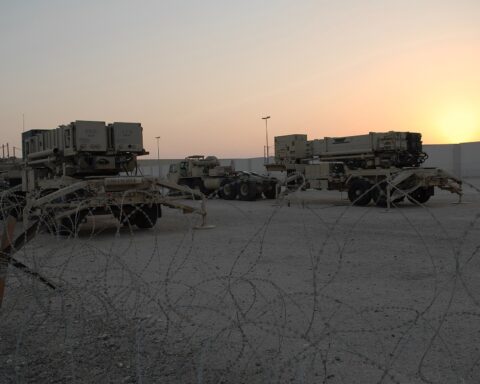
The U.S. operates eight THAAD batteries worldwide, with several now deployed to the Gulf alongside the UAE’s two batteries and Saudi Arabia’s one. Patriot systems are distributed across Kuwait’s Ali Al-Salem Air Base, Qatar’s Al-Udeid Air Base, Saudi Arabia’s Prince Sultan Air Base, and Jordan’s Muwaffaq Salti Air Base. The multi-layered architecture — THAAD for high-altitude intercepts, Patriot PAC-3 for lower-altitude threats, and point-defense systems for drones — has proven its worth under combat conditions for the first time at this scale.
But the system is not flawless. In Jordan, satellite imagery from March 2 showed debris surrounding a blackened THAAD radar at Muwaffaq Salti Air Base — evidence that an Iranian missile had struck or severely damaged the AN/TPY-2 transportable radar, which costs approximately $500 million per unit according to the Missile Defense Agency’s 2025 budget. CNN reported that radar bases housing key U.S. missile interceptors had been hit in both Jordan and the UAE, raising questions about the vulnerability of the detection systems that the entire air defense architecture depends upon. The War Zone described these Iranian attacks on “prized missile defense radars” as “a wake-up call.”
The deepest concern among Gulf military planners is interceptor stockpile depletion. Each Patriot PAC-3 missile costs approximately $4 million. Each THAAD interceptor costs approximately $12 million. Iran’s drone strategy is explicitly designed to exploit this asymmetry: a $50,000 Shahed-136 drone that forces the expenditure of a $4 million Patriot missile represents an 80-to-1 cost exchange ratio in Iran’s favor. If Iran maintains its current tempo of attacks for another two to three weeks, the interceptor mathematics become acute — and the question shifts from whether the defense works to whether there are enough interceptors left to maintain it.
The drone threat has prompted innovative responses. Ukraine has offered to send drone defense teams to Saudi Arabia and Gulf states, leveraging the expertise gained in two years of defending against Russian drone attacks. The offer highlights an ironic convergence: Ukraine’s battlefield experience with Iranian-designed Shahed drones, supplied to Russia, may prove directly applicable to defending the Gulf against the same weapons launched by Iran itself.
Iran’s Civilian Toll and the Humanitarian Emergency
Iran’s government reported on Monday that 1,255 people had been killed and more than 12,000 wounded since the war began, with the majority described as civilians. The figures, provided by the Iranian Red Crescent and cited by Al Jazeera, include 194 children. Independent monitoring by the human rights organization Hengaw estimated that 2,100 members of Iranian military forces alone had been killed by March 4, suggesting the total death toll — military and civilian combined — may be significantly higher than the government’s reported figure.
The humanitarian situation in Iran has deteriorated rapidly. The World Health Organization verified at least 13 attacks on healthcare facilities, with 25 hospitals damaged and nine now out of service. Eighteen pre-hospital emergency bases were destroyed along with 14 ambulances. Two county health centers, 17 comprehensive health service centers, and two rural health houses also suffered damage. Videos from Gandhi Hospital in northern Tehran showed the in-vitro fertilization department destroyed after a projectile struck a nearby area.
WHO Director-General Tedros Adhanom Ghebreyesus warned that damage to petroleum facilities “risks contaminating food, water and air” and that the resulting hazards “can have severe health impacts especially on children, older people, and people with pre-existing medical conditions.” The Red Crescent reported that more than 3,600 civilian sites had suffered damage, including schools, markets, and the Grand Bazaar in Tehran — one of the oldest and largest covered markets in the world.
The United Nations declared the situation a “major humanitarian emergency,” noting that the affected regions currently host nearly 25 million people. Iran also hosts 1.65 million refugees, predominantly Afghans, whose status and safety amid the conflict remain largely unmonitored due to the near-total internet blackout. Humanitarian organizations both inside and outside Iran have mobilized resources, with medical aid shipments containing trauma supplies, surgical tools, and medications beginning to arrive — but the scale of need far exceeds the available response capacity.
Why Has Kharg Island Been Left Untouched?
Kharg Island, the small Persian Gulf island that handles approximately 90 percent of Iran’s crude oil exports and can process up to seven million barrels per day, has not been struck since the war began. The omission is deliberate and strategically significant.
Several factors explain the restraint. CSIS estimated that attacking Kharg Island could push oil prices up by an additional $10 per barrel at a time when prices have already surged past $100. Destroying Iran’s primary oil export facility would cripple the country for years — but if the eventual goal is a stable post-war Iran, eliminating the revenue base that any successor government would need to function is counterproductive. As one Iranian energy expert warned, “if the regime eventually falls, no future government would be able to stabilize the country or provide basic services if the energy infrastructure is destroyed.”
There is also a diplomatic calculation. Leaving Kharg Island untouched preserves it as leverage — an implicit threat that could be executed at any time if Iran escalates beyond certain thresholds. This approach gives Washington and Tel Aviv a powerful card to play in any future negotiation without having to absorb the global economic consequences of actually playing it. Bloomberg reported that Iran was continuing to load crude at Kharg Island even two days after the strikes began, indicating that the export infrastructure remains fully operational.
Israel’s decision to strike other oil infrastructure — specifically, oil storage depots and refining facilities in and around Tehran on March 8 — suggests a calibrated approach: degrade Iran’s domestic fuel supply to increase internal pressure on the regime while preserving the export infrastructure that the global economy depends upon. The distinction is precise and reveals a level of strategic coordination between Washington and Jerusalem that extends beyond purely military targeting into economic warfare.
The Cyber War Nobody Is Talking About
Behind the kinetic campaign, a parallel war is being fought in cyberspace. Palo Alto Networks’ Unit 42 reported that Tehran-linked hackers stepped up digital reconnaissance and began preparing for “potentially disruptive cyber activity” immediately after the February 28 strikes. Between February 28 and March 1 alone, CloudSEK documented more than 150 hacktivist incidents claimed in open channels, with activity explicitly tied to the military escalation.
The DieNet Network led large-scale distributed-denial-of-service campaigns targeting government portals, telecom providers, airports, and financial institutions across Bahrain, Qatar, the UAE, Kuwait, Saudi Arabia, and the United States. Iranian-backed groups employed website defacement, data exfiltration, and wiper attacks across a range of targets. The FBI issued a reminder about “potentially malicious activity by Iranian cyber actors” and urged critical infrastructure operators to heighten their defenses.
Fortune reported that Iran could “use AI to accelerate cyberattacks on U.S. and Israeli critical infrastructure,” noting that Iran’s cyber capabilities have become increasingly sophisticated in recent years. Halcyon documented Iranian use of ransomware-like tactics in destructive operations, blurring the line between criminal cyber activity and state-sponsored warfare. HSToday reported on military desertions linked to a broader campaign of GPS spoofing and digital psychological operations aimed at demoralizing Iranian military personnel.
The Foundation for Defense of Democracies assessed that most claimed hacks were “nuisance-level” DDoS attacks rather than genuinely destructive operations. But the sheer volume — more than 150 incidents in 48 hours — and the breadth of targeting suggested a coordinated campaign that could escalate from harassment to genuine infrastructure disruption if the kinetic war continues to intensify.
The Houthi Wildcard
The Houthis in Yemen represent the most unpredictable variable in the conflict’s trajectory. Despite their status as Iran’s most capable proxy force and their demonstrated willingness to attack international shipping during the 2024 Red Sea crisis, the Houthis have not formally entered the war as of Day 11.
Their restraint is notable but may be temporary. The FDD’s Long War Journal reported that while the Houthis have issued statements of solidarity with Iran and organized demonstrations in Sanaa — including a claimed “million-strong” march on March 1 — they have not officially announced military action. Anonymous officials within the group told multiple outlets that attacks on Israel and international shipping would resume “soon,” but as of March 4, internal debate over the group’s response was ongoing, according to the Long War Journal.
The Stimson Center analysis framed the Houthis’ dilemma starkly: “The Houthis Must Decide — Join Iran’s War Against the US and Israel or Abandon Iran.” The previous Red Sea attack campaign, which the Houthis halted following the October 2025 Gaza ceasefire, demonstrated both the group’s ability to disrupt global shipping and the significant military cost they absorbed from U.S. and British retaliatory strikes. Resuming attacks would invite another round of Western military action against Houthi positions in Yemen — a prospect that may explain the group’s caution.
If the Houthis resume attacks on Red Sea shipping while the Strait of Hormuz remains closed, the world would face a dual-chokepoint crisis of unprecedented severity. Container Magazine described this scenario as “qualitatively different from the Red Sea disruption” alone, noting that simultaneous closure of Hormuz and disruption of the Bab al-Mandeb strait would leave no viable alternative route for Gulf energy exports to reach global markets. The Houthis’ decision, whenever it comes, could be the single most consequential variable in determining whether the current oil shock becomes a sustained energy crisis.
Iraq and the Kurdish Front
Iraq and its Kurdistan Region have become an active theater of the war, with consequences that extend beyond the immediate conflict. The Kurdistan Region has been targeted by an estimated 196 drone and missile attacks since February 28, killing at least two people and wounding several others. Iranian and Iranian-backed militias increased attacks on Erbil and Sulaimani provinces on March 6 and 7, striking targets deep inside the semi-autonomous region.
On March 6, Iran threatened to target “all the facilities” of the Kurdistan Region if Kurdish militants were allowed to enter Iran from Iraqi territory. The threat was a response to CNN’s March 3 report that the CIA was actively working to arm Kurdish forces with the aim of fomenting a popular uprising inside Iran — a covert program that, if confirmed, would represent a significant expansion of the war from a conventional military campaign to an active regime-change operation involving indigenous armed groups.
The Kurdish dimension adds complexity that no other front of the war possesses. Iran’s own Kurdish population, concentrated in the western provinces of Kurdistan, Kermanshah, and West Azerbaijan, has a history of armed resistance to the Islamic Republic. The 2025-2026 Iranian protests, which began in December 2025 and spread to more than 100 cities, had strong support in Kurdish areas. A Wikipedia article on the “2026 Kurdish rebellion in Iran” suggests that organized armed resistance has already begun in Iranian Kurdistan, though the internet blackout makes independent verification impossible.
Pakistan Invokes the Saudi Defense Pact
Pakistan has emerged as an increasingly active player in the conflict through the lens of its Strategic Mutual Defence Agreement with Saudi Arabia, signed on September 17, 2025. Under the agreement, both countries committed to treating any act of aggression against one as an act against both — a collective security guarantee that is now being tested in real time.
Pakistan’s Deputy Prime Minister Ishaq Dar disclosed on March 3 that he had personally reminded Iranian Foreign Minister Araghchi of Pakistan’s defense obligations to Saudi Arabia, telling the Iranian leadership to “take care of the pact.” In response, Araghchi asked for guarantees that Saudi soil would not be used to launch attacks against Iran. Pakistan’s Field Marshal Asim Munir traveled to Riyadh on March 6 to meet Saudi Defense Minister Prince Khalid bin Salman, where they discussed Iranian attacks and “the measures needed to halt them within the framework” of their mutual defense agreement, as Bloomberg reported.
Neither Islamabad nor Riyadh has formally invoked the pact’s mutual defense clause, but the public discussion of the agreement’s terms — unprecedented in its seven-month existence — has brought it into the geopolitical foreground. Pakistani officials have emphasized that the pact does not automatically require military intervention and allows each country to determine the form of support according to national interests and capabilities. But the message to Tehran was unmistakable: continued attacks on Saudi Arabia risk drawing a nuclear-armed nation into the conflict.
Al Jazeera’s analysis posed the central question: “Caught between Iran and Saudi Arabia, can Pakistan stay neutral for long?” Pakistan shares a border with Iran and hosts a significant Shia minority population. Military intervention on Saudi Arabia’s behalf would strain relations with Tehran and potentially inflame sectarian tensions within Pakistan itself. But failing to honor the mutual defense agreement would undermine Pakistan’s most important regional alliance and the financial support that accompanies it.
America’s Force Posture in the Gulf
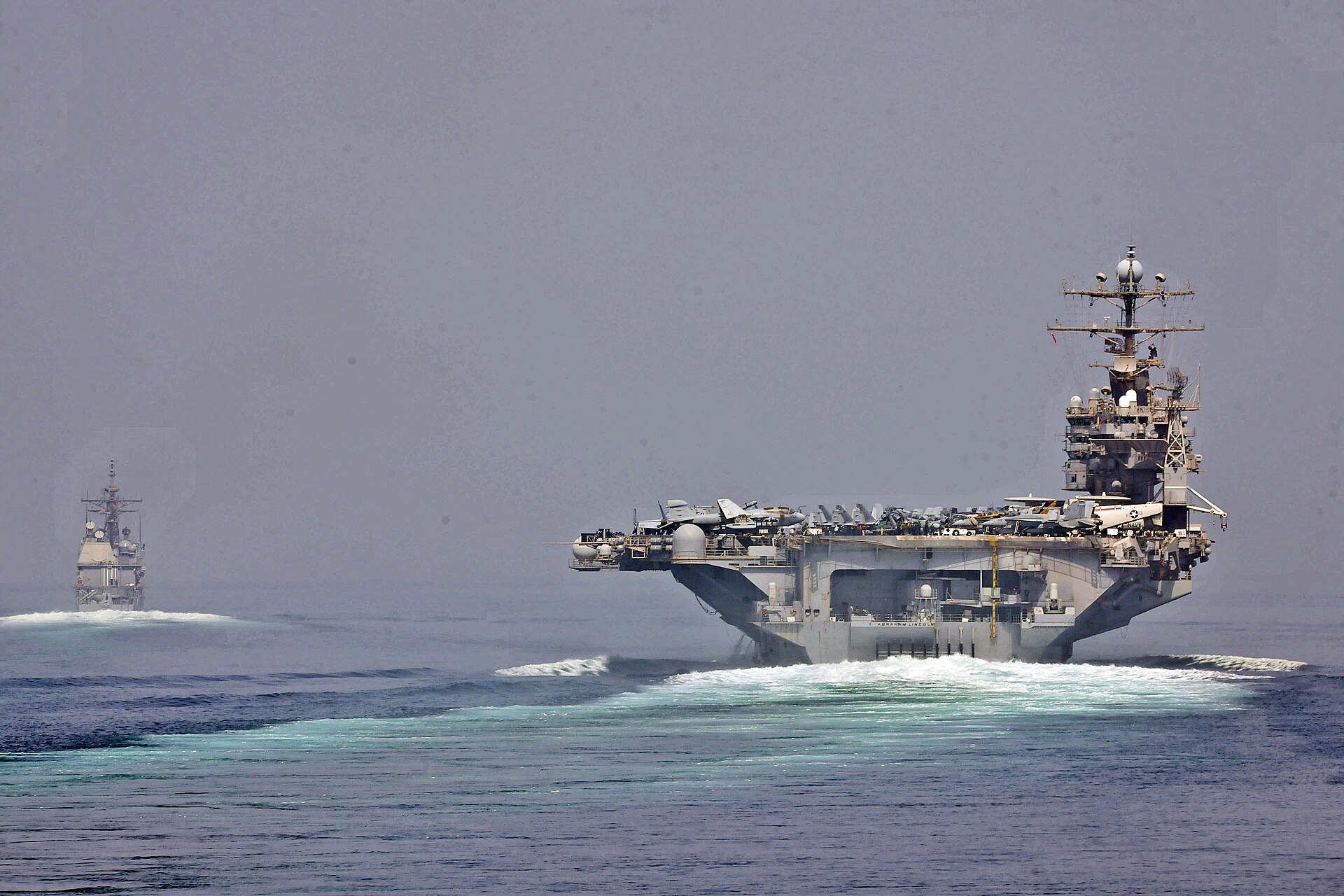
The U.S. military presence in the Middle East has reached its highest level since the 2003 invasion of Iraq. Two carrier strike groups — the USS Abraham Lincoln in the Arabian Sea and the USS Gerald R. Ford in the Red Sea after transiting the Suez Canal — provide the offensive backbone of the air campaign, supporting cruise missiles, F-35C Lightning II, and F/A-18E Super Hornet fighters.
Air components were reinforced with F-15E Strike Eagles relocated from RAF Lakenheath in the United Kingdom to Muwaffaq Salti Air Base in Jordan, while F-22 Raptors were deployed to bases in Israel. Large numbers of tanker aircraft support the continuous sortie generation required for a sustained air campaign across Iranian airspace. Naval assets positioned in the Strait of Hormuz, the Red Sea, and the Mediterranean include destroyers, cruisers, and littoral combat ships operating in the Persian Gulf.
The force posture reflects the campaign’s two principal military objectives: the continued degradation of Iranian military capacity through offensive air and naval operations, and the defense of allied nations and U.S. forces across the region through the multi-layered air defense architecture. The tension between these objectives — offense draws assets forward while defense requires them to remain in place — is the central operational challenge facing CENTCOM as the campaign extends into its second week.
The CENTCOM commander described the destruction of Iran’s “drone carrier” as a milestone, noting that the vessel — which could launch dozens of Shahed-series drones simultaneously — represented a significant threat to both naval and land targets across the Gulf. Its elimination reduced Iran’s ability to sustain the high-volume drone attacks that have characterized its retaliatory campaign, though the IRGC retains a substantial inventory of ground-launched drones and missiles.
China and Russia Jockey for Mediator Role
Both Beijing and Moscow have positioned themselves as potential mediators, though their approaches differ markedly and neither has gained traction.
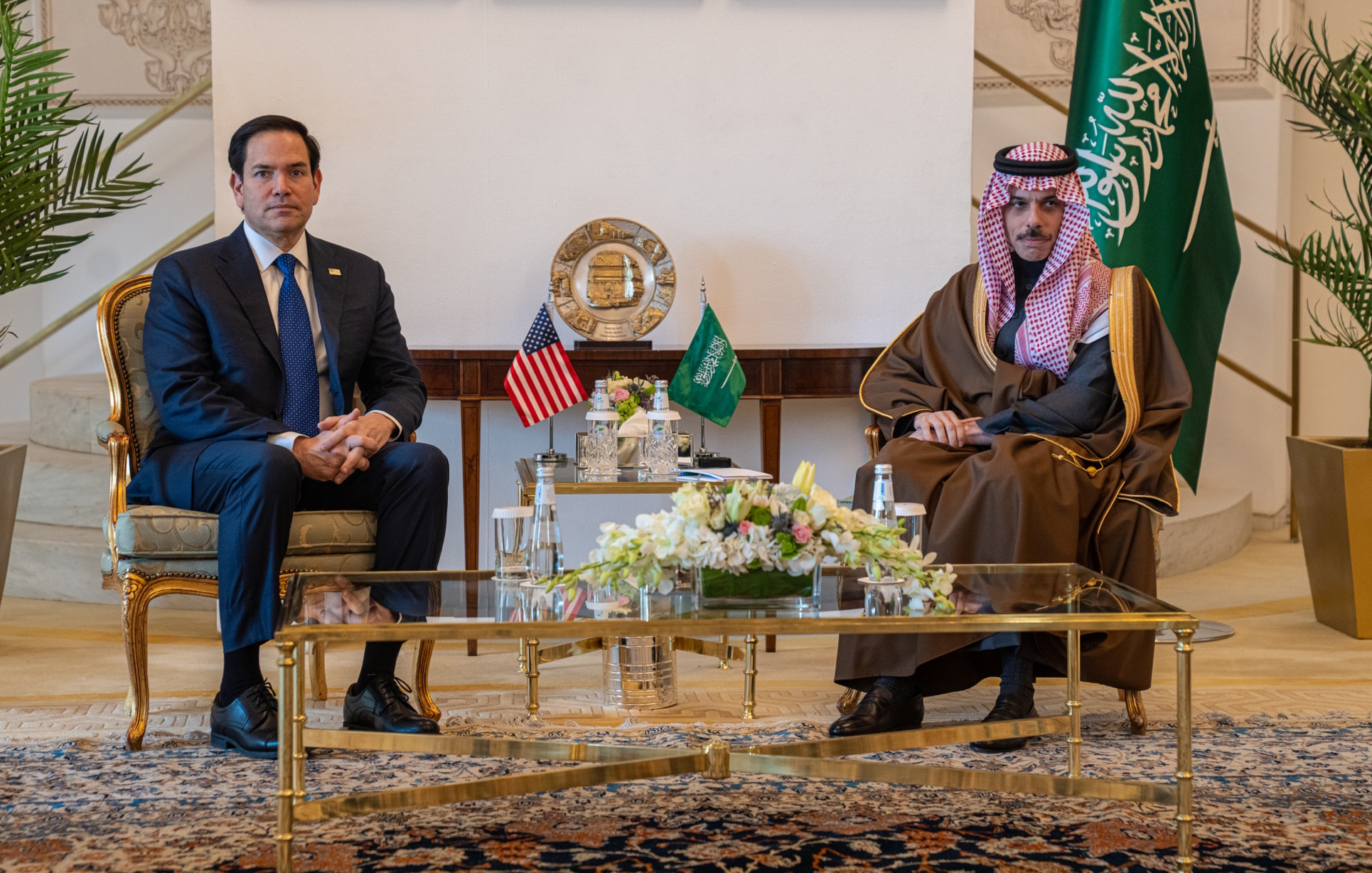
China’s special envoy on the Middle East, Zhai Jun, met Saudi Foreign Minister Prince Faisal bin Farhan and GCC Secretary-General Jassim Al-Budaiwi in Riyadh on Monday, pushing for de-escalation and urging “all parties to immediately stop military operations.” Beijing’s credibility as a mediator rests on its role in brokering the 2023 Saudi-Iranian rapprochement — a diplomatic achievement that the current war has effectively destroyed. Chinese Foreign Minister Wang Yi stated that China would “continue to play a constructive role” and was “ready to work with Saudi Arabia to engage all parties.”
But mediation requires willing parties, and Iran’s categorical rejection of diplomacy leaves Beijing with influence over only one side. Saudi Foreign Minister Prince Faisal noted in his meeting with Zhai Jun that “the situation in the Middle East is undergoing an unprecedented crisis, with the flames of war spreading to Gulf countries including Saudi Arabia, seriously threatening regional stability and affecting global energy supply and maritime security.”
Russia’s position is more ambiguous. Putin denounced the killing of Khamenei as “illegal and immoral” and held four phone calls with Gulf leaders on March 2, positioning himself as a potential stabilizing force. But the Washington Post reported that “Russia sits back as the Iran war escalates, expecting long-term gains” — a calculation that the conflict diverts American attention and resources from Ukraine while increasing European dependence on Russian energy. Putin publicly offered to supply oil and gas to Europe as prices surged, an offer Al Jazeera described as Russia seeking to “take advantage of the conflict.”
Chatham House’s assessment was blunt: “The Iran war exposes the limits of Russia’s leverage in a fragmenting regional order.” Moscow has neither the military capacity to intervene on Iran’s behalf nor the diplomatic capital to broker a ceasefire that Washington does not want. Russia’s role is to condemn, observe, and profit — a position that suits the Kremlin’s interests but does nothing to end the war.
Europe’s Paralysis
The European Union’s response to the war has been described by the Council on Foreign Relations as “disjointed.” The EU’s High Representative issued a statement warning that “events unfolding must not lead to an escalation that could threaten the Middle East, Europe and beyond,” while French President Emmanuel Macron called the strikes an “outbreak of war” with “serious consequences for international peace and security” and demanded an urgent UN Security Council meeting.
But behind the rhetoric, European capitals are deeply divided. While countries across the continent found common ground in condemning Iran’s retaliatory strikes on nonbelligerent Gulf states, their positions on the U.S.-Israeli campaign that provoked those strikes have been, in Al Jazeera’s words, “confused and incoherent.” Some European leaders privately support the elimination of Iran’s nuclear program and military infrastructure. Others view the campaign as a violation of international law. None have been willing to take concrete action in either direction.
Europe’s paralysis is deepened by its energy vulnerability. The EU added the Islamic Revolutionary Guard Corps to its terrorist list in January 2026, but that measure predated the war and was driven by Iran’s human rights record and support for Russia in Ukraine. The war itself has generated no new European sanctions, no military contribution, and no coherent diplomatic initiative — a performance that the European Leadership Network described as evidence of the continent’s strategic irrelevance in the Middle Eastern theater.
The United Nations Response
The UN Security Council convened an emergency session on February 28, hours after the strikes began. Secretary-General Antonio Guterres condemned the U.S.-Israeli attacks as “violations of international law, including the U.N. Charter” and warned that the action risked “igniting a chain of events that nobody can control in the most volatile region of the world.” He also condemned Iran’s retaliatory attacks for “violating the sovereignty and territorial integrity of nations in the Middle East.”
Russia and China requested the emergency meeting, where China’s representative called for an immediate ceasefire. But the Council was unable to agree even on its provisional programme of work for March, with disputes between China and Russia on one side and the United States and its allies on the other. The International Crisis Group observed that most Council members “avoided criticising the U.S.-Israeli operation or criticised it very obliquely” — a reflection of Washington’s diplomatic power even during an operation that much of the world regards as illegal.
In a notable moment, Melania Trump presided over a UN Security Council session as the U.S. representative while her husband’s military forces were attacking Iran, according to NPR — a juxtaposition that drew widespread commentary. UN experts called for “de-escalation and accountability,” and the OHCHR documented attacks on civilian infrastructure including hospitals and schools. But the Security Council’s structural paralysis — the U.S. veto power that prevents any resolution condemning American military action — means that the UN’s role in the conflict is limited to documenting harm, coordinating humanitarian response, and issuing statements that carry moral weight but no enforcement mechanism.
The War at Home — Congress, Protests, and the War Powers Fight
The strikes were launched without congressional authorization, and the administration has not sought a formal declaration of war. CNN reported that the Trump administration “does not want to formally ask Congress to declare war on Iran, as the text of the Constitution requires,” preferring to rely on existing presidential authorities.
Congress mounted a challenge. Senator Tim Kaine (D-VA) and Senator Rand Paul (R-KY) introduced a war powers resolution to force Trump to withdraw from the conflict. The measure failed in the Senate on a 47-53 vote, falling short of the 50-vote threshold needed to advance. A parallel resolution in the House, introduced by Representatives Ro Khanna and Thomas Massie, was expected to face a similar outcome. The American Prospect described the congressional debate under the headline “Can Congress Stop Mad King Trump’s Mad War on Iran?” — a question the Senate answered, at least for now, in the negative.
The domestic political dynamics are shaped by the war’s unusual coalition of supporters and opponents. Traditional hawks in both parties support the campaign. Anti-interventionists on both the left and the libertarian right oppose it. Trump’s base is divided between those who support military action against Iran and those drawn to Trump’s 2016 promise to end “forever wars.” The tension is sharpened by the war’s economic costs: rising gas prices and market turmoil are felt by precisely the voters Trump needs in his political coalition.
Antiwar protests erupted in multiple American cities. Demonstrators marched past Trump Tower in New York on March 2. Rallies were held in Washington, Los Angeles, Chicago, and other cities, though the scale of the protests has been modest compared to the 2003 Iraq war demonstrations. The protests reflected genuine opposition to the conflict but had not yet coalesced into a political force capable of influencing the administration’s calculations.
The Nuclear Dimension
Four strikes targeted Iranian nuclear facilities during the campaign, hitting a covert weapons development site known as Minzadehei, enrichment facility entrances at Natanz, nuclear complex structures at Isfahan, and an apparent laboratory in the Lavisan 2/Mojdeh complex that housed facilities operated by Iran’s nuclear weapons program. The International Atomic Energy Agency confirmed on March 3 that entrance buildings at Iran’s underground Natanz Fuel Enrichment Plant were damaged, though the agency said there were “no additional impacts on the main facility nor any radiological effects.”
Independent satellite imagery analysis by the Institute for Science and International Security identified damage at Natanz, Mojdeh, and Minzadehei. The IAEA reported no radiation increase following the strikes — a finding that suggests the attacks were precisely targeted at above-ground infrastructure rather than the underground centrifuge halls where enriched uranium is processed. NucNet reported the IAEA’s confirmation that no radiation levels had increased.
The damage to Iran’s nuclear infrastructure builds on the strikes conducted during the June 2025 Twelve-Day War, which had already inflicted severe damage on the program. The Foundation for Defense of Democracies described the current strikes as signaling “resolve to end Tehran’s nuclear weapons program.” But the IAEA’s finding that the main enrichment facilities remain intact suggests that Iran’s nuclear knowledge and some of its physical infrastructure survive — meaning reconstitution, while more difficult, remains possible in the medium to long term. The Arms Control Association described Trump’s overall Iran nuclear policy as “chaotic and reckless,” arguing that military strikes alone cannot eliminate a nuclear weapons program rooted in scientific knowledge and industrial capacity.
Black Rain Over Tehran
On Saturday evening, Israeli warplanes struck five oil storage depots and refining facilities in and near Tehran, marking the first time Israel had targeted Iran’s oil infrastructure since the war began. Four people were killed in the strikes, according to Iranian state television.
The environmental consequences were immediate and alarming. Thick black smoke engulfed Tehran for hours as fires burned at the struck facilities. By Sunday morning, residents reported “black rain” — oil-saturated raindrops falling from contaminated clouds, staining everything they touched. The phenomenon, caused by oil particles absorbed into cloud moisture, was documented across an area extending dozens of miles from the strike sites. Tehran’s population of nine million was exposed to the toxic fallout.
Iran’s environmental authorities urged residents to remain indoors. The Times of Israel reported “black clouds over Tehran rain down oil drops” while TIME described Tehran as “shrouded in toxic smoke.” Common Dreams called the strikes “intentional chemical warfare,” citing environmental experts who warned that the long-term health effects of petroleum contamination — respiratory disease, cancer, neurological damage — could affect Tehran’s population for years. Al Jazeera reported that the attacks aimed “to break resilience of people.”
The targeting of Tehran’s fuel infrastructure served a distinct strategic purpose. By degrading domestic fuel refining capacity, the strikes increased pressure on a population already suffering from years of economic crisis, international sanctions, and the protest crackdowns of December 2025. Whether this pressure translates into political change or merely deepens humanitarian suffering is a question that divides the war’s planners and its critics along predictable lines.
The Shipping Insurance Crisis
The war has triggered a parallel crisis in the global maritime insurance market that is, in some respects, as consequential as the military conflict itself. Major marine war risk providers — Gard, Skuld, NorthStandard, the London P&I Club, and the American Club — cancelled war risk cover for vessels operating in the Persian Gulf, with cancellations taking effect from March 5.
War risk premiums surged from approximately 0.25 percent of hull value before the conflict to 3 percent — representing an increase from roughly $625,000 to $7.5 million for a single VLCC valued at $250 million. The Insurance Journal reported increases exceeding 1,000 percent. CNBC reported that “oil supertanker rates soar as insurers drop war risk protection,” creating a structural barrier to commercial shipping independent of the military threat.
Even if a shipowner were willing to transit the Strait of Hormuz, they could not obtain the insurance required to do so. Banks that finance oil cargoes require war risk cover as a condition of letters of credit. Without insurance, there is no financing. Without financing, there is no trade. The insurance cancellation has created a hard structural barrier to resuming commerce through Hormuz that persists independently of the military situation — meaning that even a ceasefire would not immediately restore oil flows until insurers were satisfied that the risk had abated. The restoration of maritime insurance confidence typically lags the cessation of hostilities by weeks or months, creating a long tail to any supply disruption.
Asia’s Energy Emergency
The war’s impact on Asia has been severe and could prove the most consequential long-term economic effect of the conflict. Fortune reported that Japan, South Korea, China, and Southeast Asian nations face an energy shock of historic proportions as Gulf oil and LNG supplies are disrupted.
Japan is the most exposed major economy: 75 to 90 percent of its oil imports transit the Strait of Hormuz. South Korea sources approximately 60 percent of its crude through the strait and is even more vulnerable in LNG terms, with 30 percent of its natural gas dependent on Gulf supplies including Qatari cargoes that must transit the chokepoint. Of the LNG moved out of the Gulf, 83 percent was exported to Asian markets, with China, India, and South Korea among the top destinations, according to the Atlantic Council.
China stopped exporting refined fuel products to conserve domestic supply. Vietnam and Thailand halted sales of bunker fuel to ships. South Korea’s KOSPI index suffered its biggest crash since the 2008 financial crisis, dropping up to 12 percent and triggering a circuit breaker on March 4 — a market convulsion driven almost entirely by energy security fears rather than direct military exposure.
Japan and South Korea have larger crude oil reserves — 150 and 208 days of coverage respectively — that provide a buffer. But reserves are a depletable resource, not a solution. Without a reopening of the Strait of Hormuz or alternative supply arrangements, Asian economies face the prospect of energy rationing by the second quarter of 2026. The Atlantic Council’s analysis warned that the crisis could accelerate Asia’s long-term pivot away from Gulf energy dependence — a structural shift that would reshape global energy markets for decades.
Iran’s Internet Blackout and Internal Unrest
Iran has maintained a near-total internet blackout since February 28, with connectivity measuring approximately 1 percent of normal levels as of March 8, according to NetBlocks. CNBC reported the blackout had extended into its second week. Severe restrictions remain in place, with most users allowed to access only pre-approved websites under a whitelist system. The Iranian Ministry of Communications acknowledged that the shutdown was costing the economy $35.7 million per day.
The blackout serves a dual purpose: it prevents the coordination of domestic protests and limits the flow of battlefield information to external audiences. But it also prevents the Iranian public from accessing accurate information about the war, leaving state media as the sole information source — a dynamic that enables the regime to control the domestic narrative but also breeds mistrust and rumor.
The 2025-2026 Iranian protests, which began in December 2025 amid the rial’s collapse and spread to more than 100 cities in what has been described as the largest uprising since the 1979 revolution, demonstrated the regime’s deep anxiety about public mobilization. The UN Special Rapporteur on Iran reported that at least 5,000 people were killed in the regime’s crackdown on those protests, with medical sources suggesting the toll could be as high as 20,000. Amnesty International documented the crackdown extensively. The internet blackout that began during those protests was extended and deepened when the war started, creating an information vacuum that makes independent verification of conditions inside Iran nearly impossible.
American Casualties and the Domestic Toll
Seven U.S. service members have been killed in the Iran war as of March 9. Six Army reservists died in the March 1 drone attack on a tactical operations center at Shuaiba port in Kuwait. The Washington Post’s investigation found that the soldiers had “little protection” and that the makeshift operations center was vulnerable to the type of low-altitude drone attack that struck it. CBS News identified the victims, reporting that “U.S. service members killed in the Iran war include a Minnesota mom and an Iowa college student.”
The seventh casualty, Sergeant Benjamin N. Pennington, 26, of Glendale, Kentucky, died on Sunday of injuries sustained during a March 1 attack at a military base in Saudi Arabia. CNN identified him as the seventh U.S. service member killed in the conflict. In addition to the fatalities, 18 other U.S. service members suffered serious injuries, though that number had been reduced to 10 as patients progressed through medical treatment.
President Trump stated that more American casualties were “likely” as the campaign continued. The Pentagon conducted a dignified transfer of remains for the six soldiers killed in Kuwait on March 7, a ceremony photographed by official White House photographers. The images — flag-draped caskets carried across a military tarmac — represented the type of visual that has historically shaped American public opinion about military conflicts, from Vietnam to Iraq to Afghanistan.
Refugees and Displacement Across the Region
The UNHCR reported that it was “mobilizing across the region” in response to displacement that now spans multiple countries and threatens to become one of the largest humanitarian crises of the 21st century.
Inside Iran, an estimated 300,000 people have been internally displaced, though the internet blackout makes precise figures impossible. An initial government estimate of 100,000 people leaving Tehran in the first two days has been surpassed, with 1,000 to 2,000 vehicles per day departing the capital, primarily heading north toward the Caspian coast. In Lebanon, more than 700,000 people have been forced from their homes by Israeli military operations. At least 33,600 Syrians and 3,000 Lebanese have crossed into Syria. Afghanistan has seen an estimated 115,000 displaced, and Pakistan approximately 3,000.
The potential for a much larger crisis looms. Iran’s population of 88 million, combined with the existing 1.65 million Afghan refugees already in the country, creates conditions for mass displacement on a scale that would overwhelm every neighboring country’s capacity. Turkey, Iraq, Pakistan, and Afghanistan — Iran’s land neighbors — each face their own internal challenges and would struggle to absorb significant refugee flows. The UNHCR noted that it had maintained a presence in Iran since 1984 but acknowledged that “the situation is fluid” and that the full scale of displacement remained unknown.
Gold, the Dollar, and the Flight to Safety
Gold prices surged past $5,300 per ounce for the first time in history following the war’s outbreak, driven by safe-haven demand. The escalating conflict pushed spot gold to test $5,400 per ounce during Monday’s trading, according to Finance Magnates. Goldman Sachs published forecasts suggesting gold could reach $5,500-$6,000 per ounce if hostilities intensified further.
The U.S. dollar also benefited from safe-haven flows, strengthening against most major currencies. But the traditional safe-haven playbook broke down in the Treasury bond market. Bond yields rose rather than fell — meaning investors were selling, not buying, government debt. As Marketplace explained, “since President Trump launched a military strike in Iran on Saturday — effectively declaring war — bond market yields have been rising.” A prolonged conflict would increase defense spending, widen the fiscal deficit, and stoke inflation through energy prices — all of which reduce the attractiveness of fixed-income securities.
The divergence between gold (rising sharply) and Treasury bonds (falling) represented an unusual market regime. In previous crises, gold and bonds rose together as investors fled risk assets. In the Iran war, the inflationary nature of the oil shock has broken that correlation, creating an environment where the only unambiguous safe haven is gold — a metal that pays no yield, costs money to store, and whose price is driven entirely by fear.
Trump’s $20 Billion Tanker Reinsurance Gamble
The Trump administration’s most significant non-military intervention in the crisis was the announcement on March 6 of a $20 billion federal reinsurance program for oil tankers transiting the Strait of Hormuz. The program, administered by the U.S. International Development Finance Corporation and announced alongside Treasury Secretary Scott Bessent, was designed to fill the gap left by private insurers’ cancellation of war risk cover.
The logic was straightforward: if private insurers would not cover tankers in the Gulf, the U.S. government would. The program offered to provide war risk reinsurance on a rolling basis through preferred American insurance partners. Trump had earlier told reporters that the U.S. would “escort and insure” oil tankers, combining military naval escorts with government-backed insurance to create a corridor of relative safety through the strait.
But shipowners have been slow to take the offer. CNBC reported that safety concerns about sending crews into an active war zone remained the primary barrier, regardless of insurance coverage. CBS News explained the mechanics of the DFC program, noting that it was unprecedented in scope and uncertain in execution. A $20 billion reinsurance program means nothing to a sailor whose ship is struck by an Iranian missile. The practical effect has been more psychological than material — a signal of American commitment rather than an actual restoration of tanker traffic.
Pezeshkian’s Broken Ceasefire Promise
On Friday, March 7, Iranian President Pezeshkian offered what CNN described as “the highest-level de-escalatory comments so far from Iran,” announcing a decision to stop attacks on Gulf neighbors unless strikes on Iran originated from their territory. He also apologized to neighboring countries for the strikes of previous days.
The promise collapsed within hours. On Saturday morning, Iran fired 16 ballistic missiles and 121 drones at the UAE alone — the very day after Pezeshkian’s announcement. Arab News reported that “strikes continue despite Iranian president’s apology.” By Sunday, both the president and other Iranian officials had shifted back to a harder line. The disconnect between Pezeshkian’s words and the IRGC’s actions exposed the fundamental power dynamic within the Islamic Republic: the presidency controls the rhetoric, but the Revolutionary Guards control the weapons.
Iran International reported that Pezeshkian was “grilled” internally after his apology, suggesting that his de-escalatory gestures were not authorized by the military leadership. The episode reinforced what Gulf analysts had long suspected: the Iranian president is not a decision-maker on matters of war and peace. That authority rests with the supreme leader — now Mojtaba Khamenei — and the IRGC commander corps that serves him.
Iran’s Hormuz Ultimatum to the Arab World
On Monday, the IRGC announced via state media that any Arab or European country that expelled Israeli and American ambassadors would receive “full authority and freedom” to transit the Strait of Hormuz starting the following day. The offer, reported by WION News, Shafaq News, and multiple regional outlets, was transparently coercive: accept diplomatic isolation from the world’s two most powerful military nations, or accept economic strangulation through the Hormuz blockade.
No government accepted the terms. The offer was, in practical terms, unacceptable: expelling American and Israeli ambassadors would sever the security relationships that Gulf states depend upon for their defense. But the IRGC’s gambit revealed something important about Iran’s strategic calculus. Tehran recognizes that the Hormuz blockade is its most powerful remaining weapon and is attempting to weaponize it diplomatically as well as economically.
The offer also highlighted the IRGC’s growing role in Iranian foreign policy. In previous crises, diplomatic overtures would have been channeled through the foreign ministry. The Hormuz ultimatum was issued by the military directly, bypassing civilian leadership entirely — a public demonstration that the IRGC, not the presidency, sets the terms of Iran’s engagement with the outside world.
The NATO-Turkey Missile Incident
On March 4, NATO assets shot down an Iranian ballistic missile headed for Turkish airspace — the first time NATO territory received incoming fire from Iran since the conflict began. A U.S. Navy ship in the Mediterranean Sea used a Standard Missile 3 interceptor to neutralize the projectile, with interception debris landing near Dortyol, approximately 45 miles east of Incirlik Air Base, a major NATO installation hosting American nuclear weapons.
The incident was significant for several reasons. First, it demonstrated that the war’s geographic scope extended to the Eastern Mediterranean. Second, it raised the question of whether an Iranian strike on NATO territory could trigger Article 5 — the alliance’s collective defense clause. Third, it forced Turkey, which has maintained carefully calibrated neutrality, to confront the war’s implications directly. The FDD asked: “Will NATO’s Downing of an Iranian Ballistic Missile Over Turkey Shift Ankara’s Stance?”
Turkey denied that Incirlik was the intended target, with anonymous officials claiming the missile was aimed at a base in Cyprus. Iran denied firing the missile. The diplomatic dance of denials suited all parties: Turkey did not want to invoke Article 5, Iran did not want to provoke NATO, and the United States did not want to expand the war’s scope. Middle East Eye described the missile as likely fired by “isolated” Iranian forces, suggesting it may not have been authorized by Tehran’s central command — a possibility that is, in its own way, more alarming than a deliberate escalation.
What Comes Next
The war enters its twelfth day on Tuesday with no ceasefire in prospect, no diplomatic channel operational, and both sides signaling their intention to continue fighting. The G7 energy ministers were meeting Tuesday morning to discuss the largest coordinated release of strategic petroleum reserves in history — a measure that would, at best, buy weeks of time rather than resolve the underlying disruption.
Several variables will determine the conflict’s trajectory in the coming days and weeks. First, whether the Houthis formally enter the war by resuming attacks on Red Sea shipping, creating the dual-chokepoint nightmare scenario. Second, whether Israel launches the full-scale ground invasion of Lebanon that it has been preparing since March 3, opening a resource-intensive second ground front. Third, whether Iran’s depleted conventional military can sustain its current rate of missile and drone fire against Gulf states, or whether the CENTCOM campaign has degraded its capacity sufficiently to reduce the threat below a critical threshold. Fourth, whether domestic pressure in the United States — rising gas prices, casualties, congressional opposition — begins to constrain Trump’s willingness to continue the campaign at its current intensity.
The G7’s deliberation on strategic reserves provides a partial answer to the economic question but not the military one. A coordinated release of 300 to 400 million barrels — representing 25 to 30 percent of the 1.2 billion barrels in strategic reserves worldwide — would cover less than five days of the disrupted Hormuz volume. It buys time. It does not solve the problem. The problem is solved only when the Strait of Hormuz reopens, and the strait reopens only when the war ends or when Iran’s ability to threaten shipping through it is eliminated.
For Saudi Arabia and the Gulf states, the war has crystallized a set of strategic realities that existed before February 28 but were easy to defer. The Kingdom’s windfall from elevated oil prices comes with the existential cost of being a frontline state in a conflict it did not choose. The air defense architecture works, but it is finite. The U.S. alliance is the foundation of Gulf security, but American staying power is uncertain — a reality underscored by Trump’s contradictory signals about the war’s duration and objectives. Mohammed bin Salman’s leadership is being tested in ways that no Saudi ruler has faced since King Fahd confronted the Iraqi invasion of Kuwait in August 1990.
What is clear, eleven days in, is that the conflict has already reshaped the Middle East in ways that will persist long after the last missile is fired. Iran’s conventional military power has been crippled. Its nuclear program has been set back. Its supreme leader has been replaced by his son in a hereditary succession that undermines the Islamic Republic’s founding ideology. Its economy, already in crisis, faces total collapse. But Iran’s ability to inflict damage on its neighbors — through missiles, drones, proxies, and the Hormuz chokepoint — remains potent, and the regime’s refusal to negotiate means the damage will continue to accumulate on all sides until something — military exhaustion, economic pain, domestic revolt, or external intervention — forces a change that neither Washington nor Tehran appears willing to initiate.
Frequently Asked Questions
How many people have been killed in the Iran war so far?
Iran’s government reported 1,255 killed and more than 12,000 wounded as of March 9, including 194 children. Independent estimates of Iranian military dead exceed 2,100. In Lebanon, at least 294 have been killed by Israeli strikes and more than 1,000 wounded. Seven U.S. service members have died. Civilian casualties across Gulf states include two killed in Saudi Arabia, four in the UAE, two in Bahrain, and six U.S. soldiers in Kuwait. The true death toll inside Iran is likely significantly higher given the near-total internet blackout preventing independent verification.
Is the Strait of Hormuz completely closed to shipping?
The strait is not technically blockaded by a naval force, but commercial shipping has largely ceased. Tanker traffic dropped 90 percent from pre-war levels, falling from 153 daily vessel transits to an average of 13. Major marine insurers cancelled war risk cover for the Persian Gulf from March 5, creating a structural barrier that prevents commercial shipping regardless of military conditions. The Trump administration’s $20 billion federal reinsurance program has not yet restored significant traffic, as shipowners cite crew safety as the primary concern rather than insurance availability.
What is Mojtaba Khamenei’s position on continuing the war?
Mojtaba Khamenei, named supreme leader on March 8, has taken an uncompromising stance. He authorized new missile and drone strikes within hours of his appointment and received pledges of loyalty from the IRGC. His foreign policy adviser Kamal Kharazi told CNN there is “no room for diplomacy anymore.” Foreign Minister Araghchi rejected ceasefire calls on NBC News, saying Iran would fight “for the sake of our people.” The appointment ensures continuity rather than any shift toward negotiation.
Will the G7 release strategic petroleum reserves?
G7 energy ministers met Tuesday morning to discuss a coordinated release, but as of Monday evening had not reached agreement. France’s energy minister said the group was “not there yet,” while French President Macron confirmed the use of strategic reserves was “an envisaged option.” The United States has proposed a joint release of 300 to 400 million barrels, representing 25 to 30 percent of global strategic reserves. Even if approved, such a release would cover less than five days of the disrupted Hormuz volume and would serve primarily as a market confidence signal.
How is Saudi Arabia defending itself against Iranian missile and drone attacks?
Saudi Arabia relies on a multi-layered air defense architecture including THAAD for high-altitude ballistic missile interception, Patriot PAC-3 for medium-altitude threats, and short-range systems for drones. The Kingdom intercepted nine drones at the Shaybah oil field and three missiles at Prince Sultan Air Base in the latest attacks, achieving an estimated 85 to 90 percent intercept rate overall. Pakistan’s Field Marshal Asim Munir visited Riyadh on March 6 to discuss joint defensive measures under the bilateral Strategic Mutual Defence Agreement. Ukraine has offered to deploy drone defense teams based on its experience countering Russian drone attacks.