RIYADH — The Iran war entered its twelfth day on Wednesday in a convergence of escalation and diplomacy that left the outcome as uncertain as at any point since the conflict began. Washington pressed ahead with what Pentagon chief Pete Hegseth described as the most intense bombardment yet of Iranian territory, while the International Energy Agency convened emergency talks on a potential record release of strategic reserves, and the United Nations Security Council adopted a Gulf-sponsored resolution condemning Tehran’s attacks on seven Arab states in a 13-0-2 vote. Saudi Arabia and its Gulf neighbours intercepted fresh waves of Iranian drones and missiles before dawn, as oil prices swung wildly on contradictory signals from the White House about how much longer the fighting would last.
Contents
- Day 12 Military Operations: The Most Intense Strikes Yet
- Gulf Air Defences Hold Through Another Night of Attacks
- Hormuz Crisis: IEA Proposes Record Reserve Release
- What Is Blocking a Ceasefire?
- The UN Security Council Vote and Why It Matters
- Mojtaba Khamenei: The Wounded Supreme Leader Now Running a War
- Ukraine’s Arms Deal and the New Drone-Defence Equation
- Casualties, Displacement and the Humanitarian Toll
- Saudi Arabia’s Economy Under Fire
- FAQ
Day 12 Military Operations: The Most Intense Strikes Yet
Defence Secretary Pete Hegseth said Tuesday would mark the most intense day of American military operations inside Iran since the campaign began on 28 February. “The most fighters, the most bombers, the most strikes,” Hegseth said, signalling a deliberate escalation as Washington calibrated pressure aimed at forcing Tehran toward negotiation without providing a clear off-ramp.
The US-Israeli operation, officially designated Operation Epic Fury, has targeted Iranian ballistic missile production facilities, naval infrastructure, air defence networks, and what Israeli officials described as an underground nuclear weapons site. The strikes have now hit facilities across Tehran, Isfahan, Qom, Karaj, and Kermanshah. Iran’s Civil Defence Organisation said US and Israeli forces had bombed nearly 10,000 sites across the country since the conflict began, a figure that Western governments have not verified.
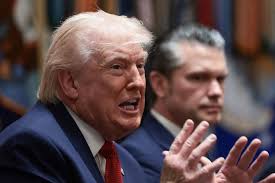
Trump signalled on Tuesday that the United States had not yet hit some of Iran’s most sensitive targets, specifically the country’s electricity infrastructure. When asked whether the war would end this week, he said “No,” before adding the conflict would conclude “very soon.” That contradiction — escalating while promising an imminent end — has become the defining tension in Washington’s public messaging.
The US military destroyed 16 Iranian minelaying vessels on Tuesday following Trump’s warning that Iran would be hit “twenty times harder” if it disrupted commercial shipping in the Strait of Hormuz. The Pentagon said the vessels were inactive at the time of the strikes, a detail that Tehran called a violation of international law. The destruction of the minelaying fleet follows escalating concern that Iran would mine the strait to cut off oil exports and force a halt to allied military operations.

Gulf Air Defences Hold Through Another Night of Attacks
Saudi Arabia’s Ministry of Defence confirmed the destruction of two drones over the kingdom’s oil-rich Eastern Province before dawn on Wednesday. The intercepts came hours after Bahrain reported its air defences had shot down 105 ballistic missiles and 176 drones launched against it — a cumulative total for the conflict that underscores the scale of Iran’s sustained bombardment of Gulf states hosting US military assets.
In Kuwait, the National Guard intercepted six drones attacking positions in the country’s northern and southern areas. Qatar’s armed forces reported the interception of a missile attack on Wednesday. The UAE’s Abu Dhabi media office confirmed its forces were responding to a fire at a facility in the Ruwais industrial complex caused by a drone strike, the latest in a series of attacks on the emirate’s energy infrastructure.
The pattern of intercepts illustrates the asymmetric logic of Iran’s Gulf campaign. Bahrain alone has intercepted hundreds of projectiles, yet even intercepted missiles generate debris, pressure, and cost on the defending side. Saudi Arabia and its Gulf partners are burning through expensive Patriot interceptor missiles — at roughly $3 million to $4 million per shot — to defeat drones that cost Iran a fraction of that to build and launch.
Prince Sultan Air Base at Al-Kharj, the US forward operating base deep in the Saudi interior that has been struck multiple times during the conflict, remained under active threat on Wednesday. Five ballistic missiles aimed at the base were intercepted in an earlier salvo. The base hosts US air assets that are central to the campaign inside Iran and makes it one of Tehran’s highest-priority targets.
Iran is not trying to destroy its Gulf neighbours. It is trying to make their hosting of American forces untenable — to raise the political and economic cost of US forward presence until Washington is forced to the table.
Gulf International Forum analyst quoted in Breaking Defense, March 2026
Hormuz Crisis: IEA Proposes Record Reserve Release
The International Energy Agency proposed the largest emergency oil reserve release in its history on Wednesday, as the 32-nation body sought to stabilise energy markets battered by the shutdown of the Strait of Hormuz. The proposed release would exceed the 182 million barrels released in two tranches after Russia’s 2022 invasion of Ukraine, with Washington backing a coordinated drawdown of 300 million to 400 million barrels — representing 25 to 30 per cent of the 1.2 billion barrels held across IEA member states’ strategic reserves.
Brent crude prices swung violently across the trading day on Wednesday. The benchmark crude had briefly touched $120 per barrel at the start of the week, the highest since 2022, before retreating to below $80 on Tuesday as ceasefire speculation briefly lifted markets. By early Wednesday the price had rebounded to near $85 per barrel, still approximately 17 per cent above pre-conflict levels on 27 February 2026.
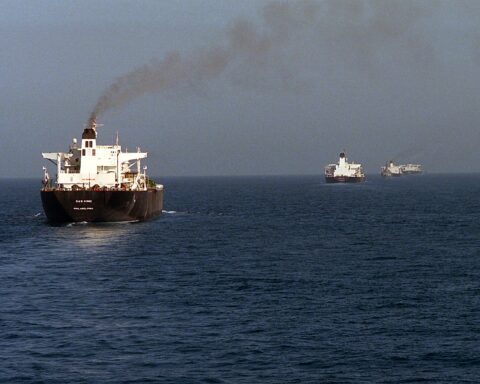
The Strait of Hormuz has been effectively closed to commercial shipping. Under normal conditions, over 100 vessels transit the 33-kilometre-wide chokepoint daily, carrying approximately one-fifth of global oil supplies. Tanker traffic dropped by roughly 70 per cent in the first days of the war, with more than 150 vessels anchoring outside the strait to await the outcome. Traffic has since approached zero.
| Indicator | Figure | Source |
|---|---|---|
| Brent crude peak (week of 8 March) | $120/barrel | Bloomberg |
| Pre-conflict Brent price (27 Feb) | ~$73/barrel | CNBC |
| Share of global oil supply via Hormuz | ~20% | IEA |
| Tanker traffic reduction | ~70% | Kpler |
| IEA proposed reserve release | 300–400 million barrels | WSJ / Bloomberg |
| Saudi Aramco alternative pipeline capacity | ~70% of normal exports | Aramco statements |
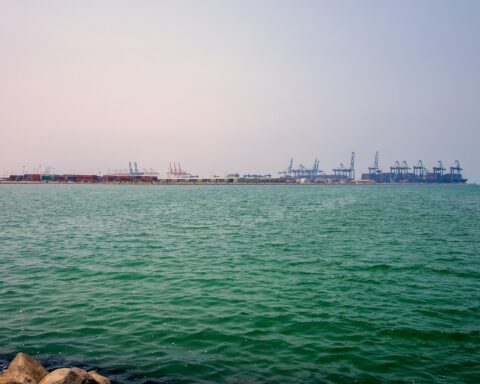
Saudi Aramco has partially rerouted exports through the East-West Pipeline to the Red Sea port of Yanbu, a route that can handle approximately 5 million barrels per day — enough to substitute for most of the kingdom’s normal export volumes. But the pipeline was not designed for sustained full-capacity operation as a wartime alternative, and storage at the Yanbu terminal is finite. Saudi Aramco’s chief executive warned last week that the conflict’s impact on energy markets would be “catastrophic” if it continued.
An accidental disinformation episode earlier this week illustrated how fragile market confidence has become. US Energy Secretary Chris Wright falsely claimed the US Navy had escorted a tanker through the Strait of Hormuz, triggering a brief but sharp sell-off that briefly pushed Brent below $80. The false claim wiped billions from oil market valuations before being corrected. The episode revealed how sensitive traders are to any signal about whether the strait might reopen.

What Is Blocking a Ceasefire?
The gap between the parties on ceasefire conditions remains as wide as at any point in the twelve-day war. Iran’s Deputy Foreign Minister Kazem Gharibabadi said a halt to hostilities would require “guarantees that aggressive actions against Iran will not be repeated” — a demand tantamount to asking the United States and Israel to commit, in advance, to never targeting Iran again. Parliament Speaker Mohammad Bagher Ghalibaf stated on Tuesday that Tehran is “definitely not looking for a ceasefire,” adding that the aggressor must be “punched in the mouth so that it learns a lesson.”
The White House has made its own demands maximalist. Trump has publicly called for Iran’s “unconditional surrender” and rejected talks while operations continue. He told CBS News the war was “very much complete” — a characterisation his own defence secretary contradicted hours later by announcing a new escalation.
Saudi Arabia has intensified its back-channel engagement with Tehran in a bid to contain the conflict. Bloomberg reported that Riyadh has used a diplomatic backchannel established during the 2023 Saudi-Iran normalisation talks with renewed urgency, with Crown Prince Mohammed bin Salman pressing for de-escalation. Several European nations have joined the Saudi effort, but the absence of a credible mediator acceptable to both Washington and Tehran remains the central obstacle.
Oman, the traditional channel between the United States and Iran, has reiterated its call for an immediate ceasefire and declared “off-ramps available.” Oman’s Foreign Minister Badr Al-Busaidi had announced a diplomatic breakthrough just hours before the strikes began on 28 February — a development that still generates bitterness in Muscat about the timing of the US-Israeli decision to proceed. Oman’s back channel to Tehran remains the conflict’s best — and perhaps only — viable mediation track.
Russia’s President Vladimir Putin spoke by phone with Trump on Monday, proposing ways to end the hostilities. China’s peace envoy is in the region. Neither Moscow nor Beijing carries sufficient influence with all parties to broker a deal, but both are signalling that the diplomatic space is not entirely closed.
The UN Security Council Vote and Why It Matters
The United Nations Security Council was scheduled to convene Wednesday in New York to vote on a resolution sponsored by Bahrain on behalf of the Gulf Cooperation Council. The text condemns Iranian attacks on Bahrain, Kuwait, Oman, Qatar, Saudi Arabia, the UAE, and Jordan, calls for an immediate end to all strikes and threats against neighbouring states, and demands that Iran halt its ballistic missile and drone campaigns against civilian infrastructure.
Iran’s permanent representative to the United Nations warned the resolution would damage the world body’s credibility if adopted, arguing that it would “reward aggressors while punishing the victim” of what Tehran characterises as an unlawful military assault by the United States and Israel. Russian and Chinese vetoes remain possible, though diplomatic sources cited by The Times of Israel suggested both Moscow and Beijing were weighing the cost of shielding Iran from a resolution that specifically addresses attacks on Arab civilians.
The vote carries symbolic rather than immediate operational weight. A Security Council resolution cannot force a ceasefire on the United States, a permanent member with veto power. Its value, if passed, would be to formally establish international legal condemnation of Iran’s Gulf campaign and provide diplomatic cover for GCC states already under pressure to escalate their own defensive responses.
The GCC held its 50th extraordinary ministerial meeting on 1 March and issued a statement reserving the right to “respond to Iranian aggression.” Arab foreign ministers, meeting in Cairo in the second week of the war, collectively invoked collective defence provisions for the first time since the organisation’s founding. The drive for a UN resolution represents the GCC’s attempt to move the conflict into the multilateral arena it controls — the diplomatic front, where Gulf states have considerably more leverage than on the battlefield.
Mojtaba Khamenei: The Wounded Supreme Leader Now Running a War
Iran’s new supreme leader Mojtaba Khamenei was described by state television on Wednesday as “janbaz” — the Farsi term for one who has offered their life to the cause — a word typically reserved for veterans wounded in the Iran-Iraq war of the 1980s. The anchor framing reflects a deliberate effort by Tehran to present its wartime leader as a martyr figure, wounded by the same assault that killed his father, Ayatollah Ali Khamenei, on 28 February.
Israeli intelligence said Mojtaba Khamenei survived targeted strikes earlier in the conflict but was wounded. Iran’s state television later confirmed this, acknowledging he was injured. Former CIA Director William Burns described the appointment of Mojtaba as Iran’s new supreme leader as “unfortunate,” suggesting that a leader whose family was destroyed by American and Israeli strikes would be less inclined toward any compromise settlement.
The new supreme leader’s willingness to negotiate remains entirely unclear. Under Iranian constitutional arrangements, the supreme leader — not the elected president — controls the Islamic Revolutionary Guard Corps and holds ultimate authority over war and peace. President Masoud Pezeshkian had promised on 7 March to halt attacks on Gulf states so long as those countries did not facilitate strikes on Iran. His pledge lasted less than 72 hours before the IRGC resumed its Gulf campaign, an illustration of where real power in Tehran now sits.
For a deeper profile of Iran’s new wartime leader, see the analysis of the conflict’s religious dimensions.
Ukraine’s Arms Deal and the New Drone-Defence Equation
Ukrainian defence companies signed an agreement this week to supply Saudi Arabia with interceptor missiles, and the Kyiv Independent reported that a separate “huge deal” covering a broader weapons package was expected to be finalised in days. The transactions represent a significant realignment of global arms flows: Ukraine, a country under Russian attack and nominally dependent on Western military aid, emerging as a defence exporter to the Gulf in the middle of a war.
The logic is specific to the conflict. Ukraine has spent more than three years developing — by direct battlefield experience — the world’s most sophisticated protocols for intercepting the Shahed-series kamikaze drones that Iran has been mass-launching against Gulf cities. No other military possesses comparable operational expertise in countering these specific weapons at scale.
Ukrainian military experts arrived in Qatar, Saudi Arabia, and the UAE this week to share expertise on drone interception. Kyiv’s government framed the deployments as both a security contribution and a commercial opportunity. In return, Ukraine’s government is seeking Patriot PAC-2 and PAC-3 interceptors — missiles that Gulf states hold in inventory but that Washington has been slow to approve for transfer to Kyiv.
President Volodymyr Zelenskyy framed the arrangement in an exchange with Crown Prince Mohammed bin Salman that covered both the immediate war and Ukraine’s own ongoing conflict with Russia. The weapons deal reflects a new axis in which the Iran war is generating unexpected strategic dependencies far beyond the Gulf itself.
Casualties, Displacement, and the Humanitarian Toll
Iran’s health ministry said Wednesday that more than 1,300 people had been killed inside Iran since the conflict began, the majority civilians. The figure represents an official tally that independent monitors cannot verify; the UN Human Rights Office has called for de-escalation and independent access. Iran’s internet has been shut down for 240 hours cumulatively since the war began, what cybersecurity watchdog NetBlocks called “among the most severe government-imposed nationwide internet shutdowns on record globally.”
A single airstrike on residential buildings in eastern Tehran on Tuesday killed at least 40 people, according to Iran’s emergency services. Earlier strikes on Tehran’s oil depots — the Aghdasieh warehouse, the Tehran refinery to the south, and the Shahran depot to the west — sent toxic black smoke across the capital for several days. Iran’s Civil Defence Organisation said nearly 12,000 people have been wounded.
| Location / Category | Figures | Source |
|---|---|---|
| Iranian civilians killed | 1,300+ | Iran health ministry |
| Wounded in Iran | ~12,000 | Iran Civil Defence |
| US service members killed | 7 | Pentagon |
| US service members wounded | ~140 | Pentagon |
| Killed in Gulf states (civilians) | 14+ | Multiple governments |
| Killed in Lebanon | 200+ | Lebanese health ministry |
| Displaced in Lebanon | ~700,000 | UN |
| Internet shutdown duration (Iran) | 240+ hours | NetBlocks |
Seven American service members have been killed in the war. The seventh, an Army sergeant, was identified last week after dying of wounds sustained in an Iranian attack on a base in Saudi Arabia. The Pentagon said 140 US personnel have been wounded in total, with the vast majority returning to duty. Eight service members remained “severely injured” as of Tuesday.
Lebanon has opened as a major second front, with Israel intensifying airstrikes against Hezbollah across the country. The United Nations estimated that approximately 700,000 people have been displaced by Israeli evacuation orders and bombardment. Iran has used Hezbollah’s continued activity as evidence that its “axis of resistance” retains strategic value even as Iranian territory absorbs direct punishment.
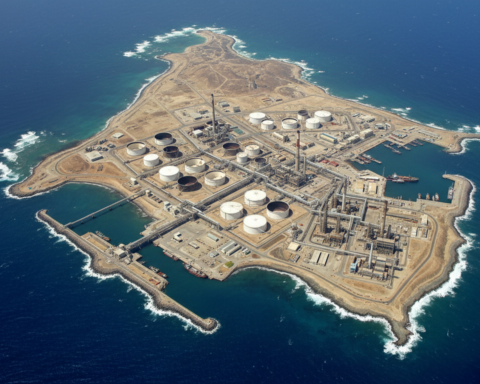
In Saudi Arabia, two civilians were killed in Al-Kharj in an earlier phase of the conflict when an intercept failed and debris struck a residential area. The kingdom has not published a comprehensive casualty figure, but the sustained attacks on the Eastern Province — the heart of Saudi oil production — have forced civilian evacuations near key facilities including Ras Tanura and the Shaybah field deep in the Empty Quarter.
Saudi Arabia’s Economy Under Fire
The economic paradox facing Saudi Arabia deepened on Wednesday. The war has driven oil prices dramatically higher, delivering a windfall to Saudi Aramco’s revenues; yet the same conflict is simultaneously attacking the infrastructure that generates those revenues, disrupting the Gulf aviation and real estate markets, and stalling the Vision 2030 projects that form the kingdom’s long-term strategic plan. Meanwhile, Iran’s Khatam al-Anbiya military command declared Gulf banks and financial institutions as legitimate military targets, threatening the King Abdullah Financial District and major international bank offices across the Gulf.
Aramco has demonstrably insulated Saudi oil exports from total shutdown through the East-West Pipeline, which connects the Eastern Province to the Red Sea port of Yanbu. The pipeline can carry up to 5 million barrels per day, covering roughly 70 per cent of the kingdom’s normal export capacity. That residual export route explains why Saudi oil revenues have remained robust even as the Strait is closed — and why Saudi Arabia’s financial position is considerably stronger than its Gulf neighbours’.
The Vision 2030 damage accumulates more quietly. King Salman Park attracted $3.8 billion in commitments at MIPIM this week even as missiles flew over Riyadh, a signal of private-sector confidence in the kingdom’s long-term trajectory. But the aviation sector is acutely exposed: Saudi Arabia’s flagship hub ambition depends on Riyadh becoming a global transit point, and that plan is on hold so long as Gulf airspace remains dangerous. Airlines have diverted hundreds of flights around the region at enormous cost.
The IMF has estimated that every 10 per cent increase in oil prices correlates with a 0.4 per cent rise in inflation and a 0.15 per cent reduction in global economic growth. With prices up some 17 to 50 per cent at their peak since the conflict began, the macroeconomic damage is already substantial — and falls disproportionately on the oil-importing economies of Asia and Europe that depend most heavily on Gulf supplies.
Frequently Asked Questions
What happened in the Iran war on Wednesday 11 March 2026?
On day twelve of the conflict, the US conducted its most intensive bombing of Iranian territory yet, the IEA proposed a record 300–400 million barrel emergency oil reserve release, the UN Security Council prepared to vote on a GCC resolution condemning Iranian attacks on seven Arab states, and Gulf air defences intercepted fresh Iranian drone and missile attacks before dawn. No ceasefire was in sight, with Tehran explicitly rejecting negotiations.
Is there a ceasefire in the Iran war?
There is no ceasefire as of 11 March 2026. Iran’s parliament speaker and deputy foreign minister both explicitly rejected negotiations. The United States is demanding unconditional surrender. Saudi Arabia and Oman are pressing back-channel diplomacy, but the gap between the parties’ stated positions remains too wide for an immediate agreement. Oman says “off-ramps are available” — but neither side appears ready to use them.
What is happening to oil prices during the Iran war?
Brent crude reached nearly $120 per barrel at its highest point before retreating to near $85 on 11 March 2026, still roughly 17 per cent above pre-conflict levels. The Strait of Hormuz remains effectively closed. The IEA proposed releasing 300–400 million barrels from strategic reserves on Wednesday to stabilise markets. Saudi Arabia has maintained roughly 70 per cent of normal oil exports through the East-West Pipeline to Yanbu.
Who is Mojtaba Khamenei and what is his role in the war?
Mojtaba Khamenei is the son of the late supreme leader Ali Khamenei, who was assassinated in the opening hours of the conflict on 28 February 2026. Mojtaba was named supreme leader by Iran’s Assembly of Experts and was wounded in a strike earlier in the war. As supreme leader, he holds ultimate command over the IRGC and controls Iran’s war and peace decisions above the elected presidency.
Has Saudi Arabia been attacked by Iran during the war?
Saudi Arabia has been a repeated target of Iranian ballistic missiles and drones throughout the twelve-day war. Key targets have included Prince Sultan Air Base at Al-Kharj, Aramco’s Shaybah field in the Empty Quarter, and the US Embassy compound in Riyadh. Saudi air defences have intercepted the vast majority of inbound projectiles, but debris from interceptions has caused limited civilian casualties, including two deaths in Al-Kharj.