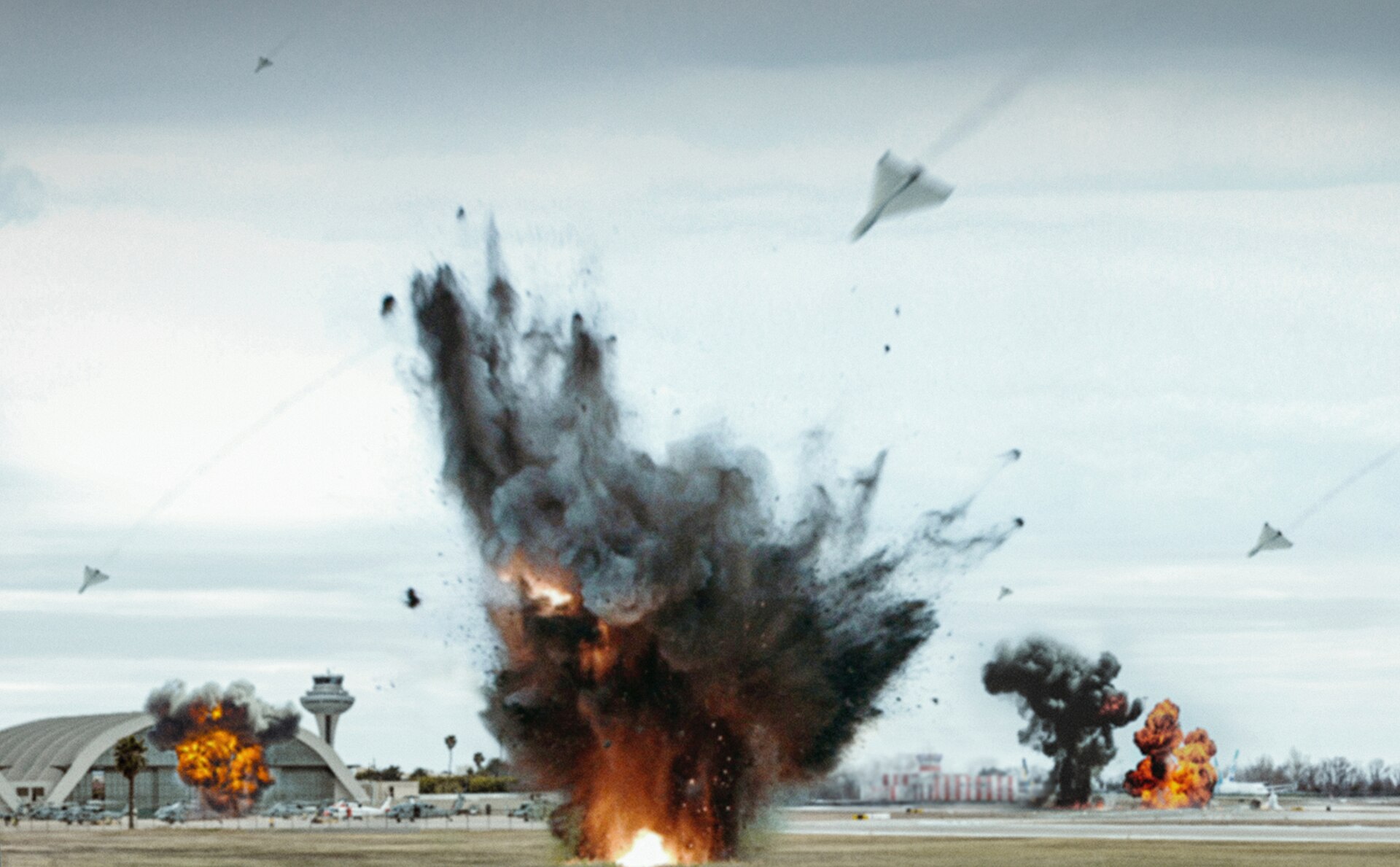

The Iran war moved into a more dangerous phase on Sunday, March 8, as the conflict spread beyond military bases, oil installations and air-defense engagements into the civilian systems that keep Gulf states functioning day to day. Bahrain said an Iranian drone caused material damage to a desalination plant, Dubai confirmed that a driver was killed by debris from an aerial interception, and Kuwait said drones targeted fuel tanks at its international airport and a government building in the capital.
Taken together, the developments mark a significant shift in the character of the crisis. For most of the past week, Gulf governments have been trying to contain the conflict through air defenses, civil-defense warnings and careful public messaging, stressing that most incoming threats were intercepted and that core systems remained operational. Sunday’s news did not show a total breakdown of that posture. But it did show something more troubling: that even when defenses are working, the war is now spilling into the civilian infrastructure that underpins water supply, aviation, logistics, commerce and daily life across the Gulf.
That matters because the Gulf’s vulnerability has never been limited to oil. The region’s economies depend on a tightly linked network of desalination plants, airports, shipping routes, electrical systems, fuel depots, ports and high-density urban corridors. Once those systems come under direct or near-direct pressure, the damage is not measured only in explosions or casualties. It is measured in disrupted routines, higher insurance costs, suspended flights, tighter emergency measures and the creeping sense that the Gulf’s commercial core is operating under wartime conditions.
Bahrain’s Water Infrastructure Is Now in the War
The clearest new escalation came from Bahrain, where authorities said an Iranian drone attack caused material damage to a desalination plant. According to Associated Press reporting published Sunday, it is the first time during the current war that an Arab state has publicly reported a strike on a desalination facility. Bahrain’s water authority said supplies were not disrupted, which is important and reassuring in the immediate sense. But the symbolism is still severe. A desalination plant is not just another industrial site in the Gulf. It is part of the basic system that makes modern urban life in the region possible.
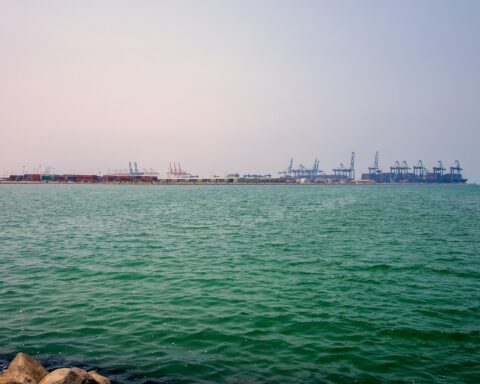
That is especially true in the Gulf, where desalination is not optional infrastructure but a strategic necessity. AP reported Sunday that about 70% of Saudi Arabia’s drinking water comes from desalination, with even higher dependence in some neighboring states. Across the Gulf, desalination plants sit on exposed coastal corridors and are physically tied into power and distribution systems that can be disrupted by direct strikes, nearby explosions or falling debris. An attack on such a facility therefore carries a different meaning from a strike on an oil terminal or military site. It tests the infrastructure of civilian endurance.
Bahrain also reported additional fallout on Sunday beyond the plant itself. AP said missile fragments fell onto a road in Manama, injuring one person and damaging several shops, while other regional reporting and official statements indicated that debris in Muharraq injured three people and damaged a university building. Whether counted as one injury in central Manama or three in Muharraq from separate fragments, the overall message is the same: Bahrain is no longer dealing only with abstract overflight risk. Pieces of this war are now falling into civilian spaces.
For the wider Gulf, the Bahrain desalination strike is a warning about where this conflict could go next. Analysts have long argued that water, not oil, may be the most underappreciated strategic vulnerability in the Arabian Gulf. If major desalination plants were knocked offline for more than a short period, cities could face severe supply stress within days. That does not appear to be the case in Bahrain right now. But the threshold has been crossed. Water infrastructure is now part of the target environment.
Dubai Shows the Cost of Interception
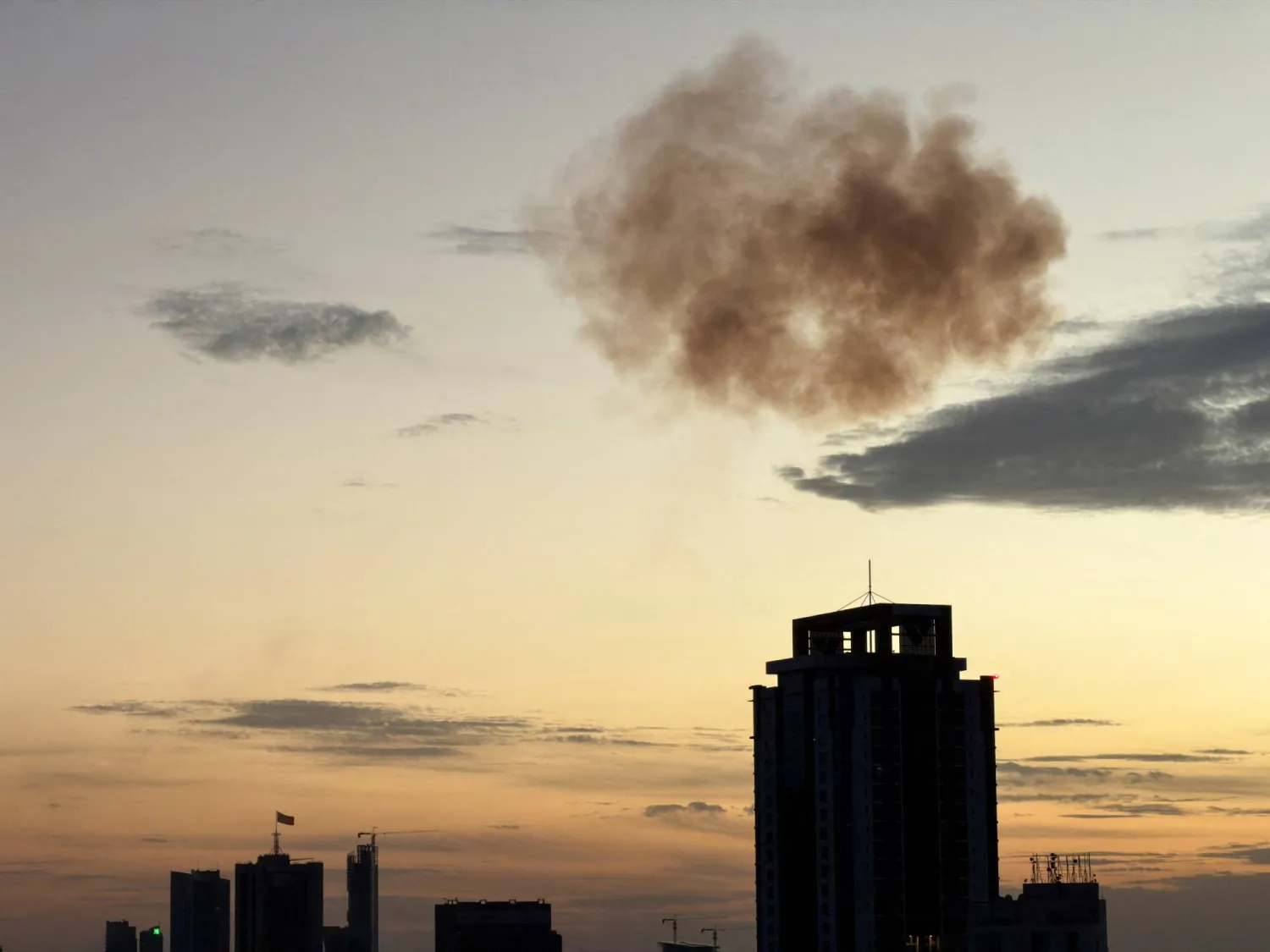
The second major development came from the UAE, where Dubai authorities confirmed that debris from an aerial interception fell onto a vehicle in Al Barsha and killed a Pakistani driver. That is a materially different development from the earlier confusion around Dubai International Airport. On Saturday, officials had clarified that DXB was briefly suspended during an interception operation and denied reports of a direct airport incident. Sunday’s confirmed fatality sharpened the picture. The danger to civilians is not limited to what incoming drones or missiles hit. It also extends to what falls from the sky when they are shot down over dense urban areas.
That is one of the crueler truths of modern air defense in a heavily built-up Gulf city. Successful interception prevents the larger disaster but does not eliminate danger at ground level. Debris can still strike roads, towers, residential areas or parked vehicles. The National reported that the death in Al Barsha raised the UAE’s total death toll from Iranian missile and drone attacks to four, all foreign nationals according to authorities. Dubai officials also said debris from another interception damaged the facade of a tower in Dubai Marina, though no injuries were reported there.
For Gulf governments, this creates a communications and policy problem as much as a military one. They must reassure the public that defenses are holding while also acknowledging that interceptions over urban centers can still have lethal consequences. For investors, airlines and residents, the distinction between a direct strike and debris from a successful intercept matters technically, but it does not erase the sense of exposure. Either way, civilian life has been penetrated by the war.
Kuwait’s Airport Fuel Tanks Add to the Pressure
Kuwait supplied the third major sign of escalation. AP reported that Kuwaiti authorities said a wave of drones targeted critical infrastructure, including fuel tanks at Kuwait International Airport and a government building in Kuwait City. That is an important development not because it produced a single dramatic image, but because it underlines how broad the target set has become. Airports are not simply transport hubs. They are commercial lifelines, symbols of normality and gateways for business continuity. Fuel tanks at an international airport sit squarely at the intersection of civilian mobility and strategic vulnerability.
The significance for the Gulf is cumulative. Bahrain’s desalination plant points to water security. Dubai’s fatal debris incident points to civilian exposure in dense urban areas. Kuwait’s airport fuel tanks point to the fragility of transport infrastructure under sustained regional pressure. None of these incidents alone amounts to systemic collapse. Together, however, they reveal a conflict that is widening outward from its original military logic and beginning to test the civilian backbone of the Gulf order.
Saudi Arabia Is Still Holding the Line, But the Neighborhood Is Changing
Saudi Arabia’s own latest developments remain serious but, for now, somewhat more familiar. AP reported that the Kingdom destroyed a drone headed toward the Shaybah oil field on Sunday and shot down four drones over Riyadh, including one aimed at the Diplomatic Quarter. Those developments fit the pattern already visible in recent days: Saudi air defenses remain active and apparently effective, but the pressure on strategic infrastructure and the capital persists.
What has changed is the neighborhood around Saudi Arabia. A Saudi reader looking at Bahrain, Dubai and Kuwait on Sunday would have seen a new kind of regional warning. The issue is no longer only whether Saudi oil fields, airports and cities can be defended. It is whether the Gulf’s wider civilian ecosystem can stay functionally normal while missile and drone warfare continues. Saudi Arabia’s economic future is tied not just to what happens inside its own borders but to the stability of the broader Gulf system of aviation, finance, logistics and investor confidence.
That is why Sunday’s developments matter so much to Riyadh even where Saudi territory was not directly involved. Bahrain’s desalination plant, Kuwait’s airport fuel tanks and the civilian death in Dubai all point to the same strategic problem: the Gulf’s most valuable systems are civilian, networked and difficult to fully shield once war begins to sprawl. Saudi Arabia may still be holding the line militarily, but the environment in which it pursues Vision 2030 is becoming harder to protect economically.
Iran’s Apology Is Being Overtaken by Events
These attacks also deepened the contradiction in Iran’s messaging. AP reported that President Masoud Pezeshkian again adopted a conciliatory tone on Sunday, calling Gulf neighbors friends and brothers and accusing the United States and Israel of sowing division. That came after his earlier statement that Iranian forces should stop attacking neighboring countries unless those countries themselves attacked Iran. Yet the hard-line line inside Tehran appeared unchanged. AP cited judiciary chief Gholam Hossein Mohseni-Ejei as saying that intense attacks would continue on targets in countries whose geography was being used by Iran’s enemies.
In practical terms, the apology has been overtaken by events. Gulf states are being asked to listen to de-escalatory language while still intercepting drones, counting debris injuries and assessing damage to civilian systems. That is not a basis for restored confidence. It is a recipe for further mistrust. Saudi Arabia’s own warning to Tehran earlier Sunday, reported by Reuters, reflected that reality. The Kingdom is no longer in a position to treat Iranian messages of regret as strategically meaningful if the operational pattern remains unchanged.
The Gulf’s Civilian Systems Are Now the Story
The key lesson from Sunday’s developments is that the Gulf war story has changed. It is no longer enough to track missile launches, interceptions and refinery threats in isolation. The bigger story is the widening pressure on the systems that sustain civilian life across the region: water, roads, airports, fuel depots, universities, commercial towers and urban transport. Once those systems enter the conflict, the line between military escalation and economic disruption becomes harder to draw.
For Saudi Arabia, that should sharpen the strategic lens. The Kingdom is not just defending territory. It is defending a regional environment in which normal commerce, travel, investment and high-value development remain possible. Bahrain’s desalination strike is therefore not only a Bahraini story. Dubai’s civilian fatality is not only a UAE story. Kuwait’s airport attack is not only a Kuwaiti story. Together they are a Gulf story, and one that Saudi Arabia cannot afford to ignore.
The war’s toll on civilians deepened further when a projectile strike on a worker compound in Al-Kharj killed two Bangladeshi nationals, marking the first confirmed civilian deaths on Saudi soil since hostilities began. Al-Kharj, located near Prince Sultan Air Base, had previously been considered a secure rear area rather than a frontline target.
Sunday’s events do not mean the Gulf is sliding into immediate systemic failure. Water supplies in Bahrain remain on, Dubai is still functioning, and Kuwait’s airport has not ceased to exist as an operating hub. But they do mean the war has found new pressure points. The next phase of the crisis may be defined less by spectacular military damage than by the slow erosion of civilian confidence in the infrastructure that keeps the Gulf running.