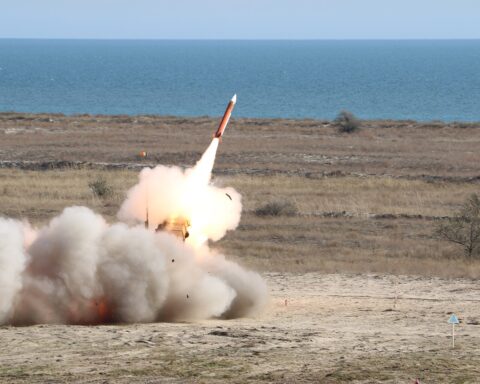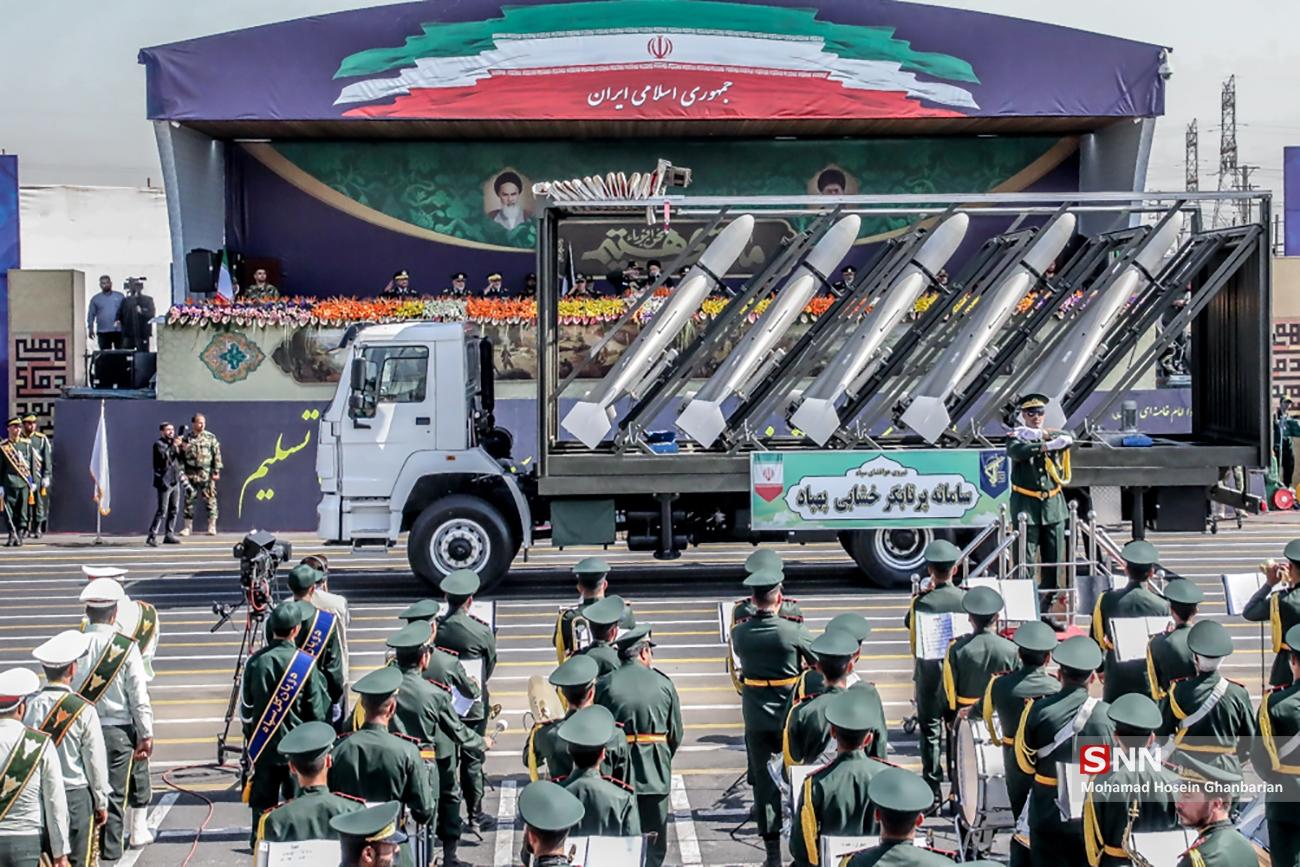

RIYADH — Iran has fired more than 1,200 missiles and drones at Saudi Arabia and its Gulf neighbours in the seven days since Operation Epic Fury began, deploying the largest and most diverse arsenal of precision-guided weapons ever used simultaneously against multiple sovereign states. On March 7, sixteen drones targeted the Shaybah super-giant oil field deep in Saudi Arabia’s Empty Quarter — the fourth distinct wave of Iranian attacks on Kingdom territory in a single week — confirming that Tehran’s arsenal remains far from exhausted and that its targeting strategy is expanding, not contracting. From solid-fuelled ballistic missiles screaming through the upper atmosphere at seventeen times the speed of sound to $20,000 kamikaze drones swarming oil refineries in packs of four, the weapons Iran has unleashed represent three decades of clandestine procurement, reverse-engineering, and indigenous development. Understanding what Tehran is firing, how much of it remains, and where the next salvo is aimed is no longer an academic exercise. For Saudi Arabia, it is a matter of national survival.
Table of Contents
- What Weapons Has Iran Fired at Saudi Arabia in 2026?
- How Many Missiles and Drones Has Iran Launched at the Gulf States?
- Iran’s Ballistic Missile Arsenal — The Backbone of Tehran’s Offensive
- What Are Shahed-136 Drones and Why Are They So Difficult to Stop?
- Iran’s Cruise Missiles — The Stealthy Middle Tier
- How Large Is Iran’s Remaining Weapons Stockpile?
- The Naval Dimension — Mines, Fast Boats, and Anti-Ship Missiles
- Which Saudi Targets Has Iran Hit and Which Has It Missed?
- The Threat Escalation Matrix — Predicting Iran’s Next Strikes
- Can Iran Sustain This Rate of Fire?
- What Did Iran Learn From Ukraine About Attacking Saudi Arabia?
- Why Iran’s Arsenal May Be More Dangerous After the War Than Before It
- Frequently Asked Questions
What Weapons Has Iran Fired at Saudi Arabia in 2026?
Iran has deployed at least seven distinct weapons categories against Saudi Arabia since February 28, 2026, ranging from intercontinental-capable ballistic missiles to low-cost loitering munitions that fly slower than a commercial airliner. The arsenal includes short-range and medium-range ballistic missiles, land-attack cruise missiles, one-way attack drones, anti-ship ballistic missiles, naval mines, and fast-attack boat swarms — the most diverse simultaneous deployment of precision-guided weapons in the history of modern warfare.
Saudi Arabia’s Ministry of Defence confirmed intercepts of cruise missiles near Al-Kharj, ballistic missiles aimed at Prince Sultan Air Base, and multiple waves of drones targeting Ras Tanura refinery, Shaybah oil field, and the Riyadh metropolitan area, according to official statements reported by Arab News. The US Embassy in Riyadh was struck by two drones on March 3, while the CIA station in the Saudi capital also sustained damage, the Washington Post reported.
The scale of the assault dwarfs Iran’s previous direct attacks on Gulf states. The April 2024 strike on Israel involved approximately 330 projectiles. The current campaign against the Gulf Cooperation Council states has exceeded that figure several times over in its first week alone, according to interception tallies released by individual GCC defence ministries.
| Weapon Category | Key Systems Used | Range | Speed | Warhead | Unit Cost (est.) |
|---|---|---|---|---|---|
| Short-Range Ballistic Missiles | Fateh-110, Zolfaghar | 300–700 km | Mach 4–5 | 450–600 kg | $500K–$1M |
| Medium-Range Ballistic Missiles | Shahab-3, Emad, Sejjil, Khorramshahr | 1,300–2,500 km | Mach 10–14 | 750–1,800 kg | $2M–$8M |
| Land-Attack Cruise Missiles | Soumar, Hoveyzeh, Quds/Paveh | 700–2,500 km | Mach 0.6–0.8 | 350–450 kg | $500K–$2M |
| One-Way Attack Drones | Shahed-136, Shahed-131, Arash-2 | 900–2,500 km | 185 km/h | 30–50 kg | $20K–$50K |
| Anti-Ship Ballistic Missiles | Khalij Fars, Fateh Mobin | 300 km | Mach 3+ | 450 kg | $1M–$3M |
| Naval Mines | EM-52, SADAF, Manta-type | N/A (deployed) | N/A | 145–600 kg | $10K–$25K |
| Fast-Attack Craft | Peykaap, Zolfaghar, Seraj | 150–300 km | 50+ knots | Missiles + guns | $2M–$10M |
The diversity of the arsenal is itself a strategic choice. By combining ballistic missiles that travel at hypersonic speeds with drones that fly at the altitude and velocity of a hang-glider, Iran forces Saudi air defences to engage threats across the entire electromagnetic spectrum simultaneously — a challenge that even the most advanced integrated air defence systems were not designed to handle at this scale.
How Many Missiles and Drones Has Iran Launched at the Gulf States?
Iran has fired more than 1,200 missiles and drones at Gulf Cooperation Council member states in the seven days between February 28 and March 7, 2026, based on interception tallies released by individual GCC defence ministries, though the true figure may be higher because not every projectile was tracked or intercepted. The breakdown reveals a campaign of staggering scale that dwarfs every previous missile barrage in modern warfare, including Iraq’s Scud attacks during the 1991 Gulf War.
For the first time in history, every single GCC member state was attacked by the same adversary within a 24-hour window, Breaking Defense reported — a scenario Gulf security planners had privately described as their “nightmare scenario” for decades but never expected to face simultaneously.
| Country | Ballistic Missiles | Cruise Missiles | Drones | Total Intercepted | Key Targets |
|---|---|---|---|---|---|
| UAE | 165 | 2 | 541 | 708 | Al Dhafra Air Base, Abu Dhabi port, Dubai airport |
| Kuwait | 97 | — | 283 | 380 | Ali Al Salem, Arifjan, Kuwait City |
| Bahrain | 45 | — | 143 | 188 | Israeli Embassy, US NSA facility, Manama |
| Saudi Arabia | Est. 50–80 | Est. 10–15 | Est. 100+ | Est. 160–200 | Riyadh, Al-Kharj, Ras Tanura, Shaybah, Al-Jouf |
| Qatar | 18 | — | 4+ | 22+ | Al Udeid Air Base |
| Jordan | 13 | — | 49 | 62 | Muwaffaq Salti Air Base |
Saudi Arabia has notably declined to publish precise interception tallies, a decision that defence analysts attribute to operational security rather than failure. Riyadh’s approach contrasts sharply with the UAE, which has released detailed figures — a distinction that reflects different strategic communications philosophies rather than different outcomes.
The raw numbers, while dramatic, tell only part of the story. What matters strategically is the ratio of weapons fired to weapons that reached their targets. The interception rate across the GCC has been remarkably high — above 90 percent for ballistic missiles and approximately 85 percent for drones, according to estimates by the International Institute for Strategic Studies. Yet even a 10 percent leakage rate, when applied to hundreds of projectiles, means dozens of warheads have struck targets across the Gulf.
Iran’s Ballistic Missile Arsenal — The Backbone of Tehran’s Offensive
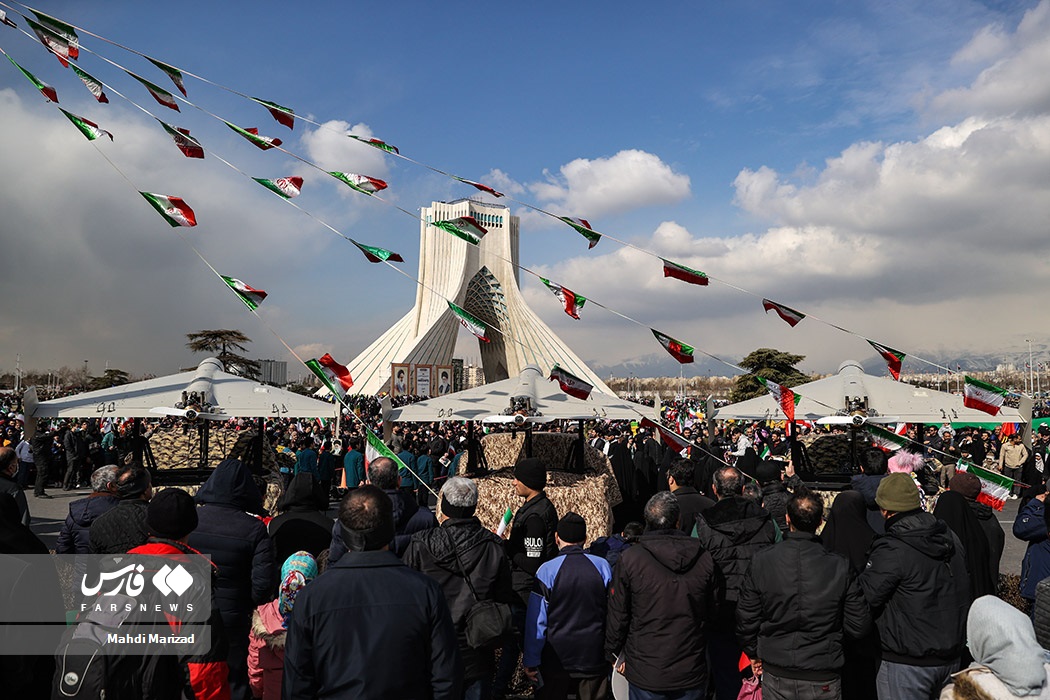
Iran’s ballistic missile programme represents three decades of development that began with North Korean and Chinese technology transfers in the late 1980s and has since evolved into the largest and most diverse indigenous missile capability in the Middle East. The Islamic Republic has developed at least a dozen distinct ballistic missile variants, ranging from battlefield-range weapons capable of hitting targets 300 kilometres away to medium-range systems that can strike any city in the Arabian Peninsula from deep inside Iranian territory.
The programme’s evolution follows a clear trajectory: from liquid-fuelled derivatives of the Soviet Scud through increasingly sophisticated solid-fuelled designs that can be launched on short notice with minimal preparation. This shift from liquid to solid fuel is perhaps the most consequential technical development in the entire programme, because solid-fuelled missiles can be stored ready to fire and launched within minutes of a decision, whereas liquid-fuelled variants require hours of fuelling that leaves them vulnerable to pre-emptive strikes.
The Shahab Family — First Generation
The Shahab-3, Iran’s first true medium-range ballistic missile, remains the workhorse of the arsenal. A single-stage, liquid-fuelled, road-mobile system with a range of approximately 1,300 kilometres, the Shahab-3 is derived from North Korea’s Nodong missile, which itself traces its lineage to the Soviet R-17 Elbrus (known in the West as the Scud-B). The missile carries a 750-kilogramme warhead, sufficient to destroy a city block, and has a circular error probable (CEP) of approximately 2,500 metres — meaning half of all shots land within 2.5 kilometres of the aim point, according to the CSIS Missile Threat Project.
That level of accuracy makes the Shahab-3 a weapon for striking cities and large military installations, not individual buildings. During the current conflict, Shahab-3 variants have been fired at major Saudi military bases where the sprawling footprint of the target compensates for the missile’s limited precision.
The Emad — Precision Revolution
The Emad represents Iran’s first genuinely precision-guided ballistic missile. First tested in 2015, the Emad is an upgraded Shahab-3 with a manoeuvring re-entry vehicle (MaRV) that adjusts its trajectory during the terminal phase of flight using aerodynamic fins. The system is 16 metres long with a 1.25-metre diameter, carries a 750-kilogramme warhead, and has a range exceeding 1,700 kilometres, according to Iran Watch. Its circular error probable is estimated at approximately 500 metres — a five-fold improvement over the Shahab-3 that transforms it from an area weapon into a precision tool capable of targeting specific infrastructure.
The Sejjil — Iran’s Most Advanced Solid-Fuelled Missile
The Sejjil is a two-stage, solid-fuelled medium-range ballistic missile with a range of 2,000 to 2,500 kilometres and a flight speed exceeding 17,000 kilometres per hour — roughly Mach 14 — according to Iran’s ISNA news agency. The solid-fuel design gives the Sejjil three critical advantages over liquid-fuelled predecessors: it can be launched within minutes rather than hours, it is easier to hide from satellite surveillance because it does not require fuel trucks, and it burns more efficiently, giving it greater range per kilogramme of propellant.
The Sejjil’s range places every capital in the Arabian Peninsula within reach from launch sites in central Iran, with sufficient margin to fire from dispersed positions deep inside Iranian territory where US air strikes are less likely to find them. Its hypersonic speed gives Saudi Arabia’s air defence network mere minutes to detect, track, and engage an incoming warhead after it clears the radar horizon.
The Khorramshahr — Maximum Payload
The Khorramshahr is Iran’s heaviest-hitting ballistic missile, capable of delivering an 1,800-kilogramme warhead to a target between 1,000 and 2,000 kilometres away. Named after the city that bore the heaviest fighting during the Iran-Iraq War, the Khorramshahr is a liquid-fuelled system derived from the North Korean Musudan (BM-25) missile, according to the Nuclear Threat Initiative. Its circular error probable of approximately 30 metres makes it Iran’s most accurate medium-range ballistic missile — precise enough to target individual buildings, hardened bunkers, and critical infrastructure nodes.
The combination of extreme precision and an 1,800-kilogramme warhead makes the Khorramshahr uniquely dangerous against high-value, heavily defended targets. Defence analysts at the Jewish Institute for National Security of America (JINSA) have identified the Khorramshahr as the weapon most likely to be used against Saudi Arabia’s desalination plants, which provide 70 percent of the Kingdom’s drinking water — a target set that even a small number of hits could turn into a humanitarian catastrophe. The latest evolution of the platform, the Khoramshahr-4, trades that single massive warhead for multiple independent re-entry vehicles — a design shift that transforms the most dangerous missile in Iran’s inventory into the one Saudi air defenses are least equipped to counter.
| System | Type | Fuel | Range (km) | Warhead (kg) | CEP (m) | Speed | Saudi Targets |
|---|---|---|---|---|---|---|---|
| Fateh-110 | SRBM | Solid | 300 | 450 | 100 | Mach 4 | Eastern Province facilities |
| Zolfaghar | SRBM | Solid | 700 | 580 | 50–100 | Mach 5 | Dhahran, Dammam, oil fields |
| Shahab-3 | MRBM | Liquid | 1,300 | 750 | 2,500 | Mach 7 | Riyadh, Jeddah, major bases |
| Emad | MRBM | Liquid | 1,700+ | 750 | 500 | Mach 10 | Precision strikes on infrastructure |
| Kheibar Shekan | MRBM | Solid | 1,450 | 500 | 30–50 | Mach 12+ | Precision strikes, manoeuvrable |
| Sejjil | MRBM | Solid | 2,000–2,500 | 750 | 500 | Mach 14 | All Saudi territory from deep Iran |
| Khorramshahr | MRBM | Liquid | 2,000 | 1,800 | 30 | Mach 10 | Desalination, critical infrastructure |
What Are Shahed-136 Drones and Why Are They So Difficult to Stop?
The Shahed-136 is a one-way attack drone — also known as a loitering munition or kamikaze drone — designed and manufactured by the Iranian state-owned corporation HESA in association with Shahed Aviation Industries. With a range of approximately 2,000 kilometres, a cruising speed of 185 kilometres per hour, and a warhead weighing between 30 and 50 kilogrammes, the Shahed-136 costs between $20,000 and $50,000 to produce, according to estimates cited by CNBC. That price point makes it perhaps the most cost-effective precision weapon ever mass-produced.
The drone’s difficulty stems not from its sophistication but from its simplicity. The Shahed-136 flies at extremely low altitudes — often below 100 metres — using GPS-guided navigation to follow terrain contours that keep it below most radar horizons. Its small radar cross-section, comparable to a large bird, makes it nearly invisible to air defence radars optimised to detect the much larger signatures of aircraft and ballistic missiles. Its composite-material airframe minimises radar reflection, while its small piston engine produces a heat signature too faint for most infrared sensors to detect at distance.
The economics of the Shahed-136 create what defence planners call an “exchange-rate problem.” When Saudi Arabia fires a $4 million Patriot interceptor at a $20,000 drone, Iran wins the cost calculus regardless of whether the interception succeeds. Russia’s use of the drone in Ukraine demonstrated this asymmetry at industrial scale — Moscow ordered 2,400 Shahed-136 units from Iran as early as 2022, according to US intelligence assessments — and Iran’s own deployment against the Gulf states has amplified the problem by an order of magnitude.
The drone’s effectiveness lies in saturation. A single Shahed-136 is relatively easy to defeat with close-in weapons systems, electronic warfare jamming, or even small-arms fire. But when Iran launches them in waves of eight, twelve, or — as demonstrated at the Shaybah oil field assault on March 7 — sixteen at a time, each wave at a different altitude and approach vector, the air defence system must engage every single one while simultaneously tracking ballistic missiles arriving at twenty times the speed. The cognitive and physical burden on air defence operators becomes the real weapon.
The Abqaiq Precedent — What 2019 Taught Iran About Targeting Saudi Oil
The current drone campaign against Saudi oil infrastructure cannot be understood without reference to the September 14, 2019 attack on the Abqaiq processing facility and the Khurais oil field. That attack — carried out with a combination of cruise missiles and drones attributed to Iran despite Tehran’s claims that Houthi rebels in Yemen were responsible — temporarily knocked out 5.7 million barrels per day of Saudi production, approximately 5 percent of global supply, according to Reuters. Brent crude surged 14.6 percent in a single trading session, the largest one-day increase on record.
The 2019 attack demonstrated three principles that Iran has applied with devastating effect in 2026. First, Saudi air defences were oriented toward the south and east — toward Yemen and the Persian Gulf — and the drones approached from the north, exploiting a gap in radar coverage that allowed them to reach their target undetected. Second, the Shahed-type drones used in the attack proved capable of precision strikes on specific processing equipment within a vast industrial complex, hitting stabilisation towers and separation columns that took weeks to repair. Third, the international response was muted: despite clear evidence of Iranian involvement, neither the United States nor Saudi Arabia retaliated militarily, a restraint that Iran’s military planners interpreted as confirmation that drone attacks on oil infrastructure carried acceptable political risk.
The 2026 campaign has applied these lessons at scale. The Ras Tanura attack on March 2 used the same approach — small drones targeting specific refinery components — but against a target that processes more than 550,000 barrels per day, making it the single most consequential refinery in Saudi Arabia’s network. The Shaybah attack on March 7 extended the concept to upstream production facilities, demonstrating that Iran can threaten the entire Saudi oil value chain from wellhead to export terminal.
The Shahed Family Variants
| System | Range (km) | Speed (km/h) | Warhead (kg) | Unit Cost (est.) | Guidance | Deployment |
|---|---|---|---|---|---|---|
| Shahed-131 | 900 | 185 | 15 | $10K–$15K | GPS/INS | Launched from ground rail, truck, or shipping container |
| Shahed-136 | 2,000–2,500 | 185 | 30–50 | $20K–$50K | GPS/INS | Launched from ground rail in packs of 5 |
| Arash-2 | 2,000+ | 250 | 50 | $30K–$60K | GPS/INS + terminal seeker | Ground rail, potential ship-launch capability |
| Mohajer-6 | 200 (combat radius) | 200 | 2 x Qaem PGMs | $500K+ | Operator-guided + PGM | Runway-launched ISR/strike |
The Shahed-136’s success in Ukraine — where it struck power stations, military headquarters, and civilian infrastructure across a country defended by some of the most advanced Western air defence systems — provided Iran’s military planners with invaluable operational data. Every Ukrainian interception (and every failure to intercept) refined Iran’s understanding of how to sequence drone waves, which altitudes maximised survivability, and how to coordinate drone attacks with ballistic missile salvos to overload defensive systems. The Gulf campaign reflects those lessons applied at even greater scale.
Iran’s Cruise Missiles — The Stealthy Middle Tier
Between the hypersonic velocity of ballistic missiles and the swarm economics of kamikaze drones sits a third category of Iranian weapons that defence analysts consider the most strategically dangerous: land-attack cruise missiles. These subsonic weapons fly at altitudes below 50 metres, follow pre-programmed waypoints that route them around known air defence positions, and carry warheads large enough to cripple a refinery or destroy a military command centre. Their combination of precision, stealth, and meaningful destructive power makes them arguably the most effective tool in Iran’s arsenal for striking hardened, high-value targets.
Saudi Arabia’s Ministry of Defence confirmed the interception of cruise missiles near Al-Kharj on multiple occasions during the first week of the conflict. The identification of these weapons as cruise missiles rather than drones — a distinction that matters because cruise missiles fly faster, carry heavier warheads, and follow more sophisticated flight profiles — indicates that Iran is deploying its most capable standoff weapons against Saudi military infrastructure, not reserving them for a future escalation.
The Soumar — Derived from a Soviet Giant
The Soumar is Iran’s longest-range cruise missile, with an estimated reach of 2,000 to 2,500 kilometres, according to the CSIS Missile Threat Project. First revealed publicly in March 2015, the Soumar is widely assessed to be derived from the Russian Kh-55 air-launched cruise missile, several of which were illegally sold to Iran by Ukraine in 2001. Iran reverse-engineered the Soviet design and converted it from an air-launched weapon requiring a strategic bomber to a ground-launched system that can be fired from a mobile transporter-erector-launcher.
The Soumar’s range places every city in Saudi Arabia within reach from launch positions in western Iran — including targets that ballistic missiles from the same positions could not reach. Its terrain-following radar allows it to fly at altitudes below 30 metres, hugging the desert floor across the Arabian Peninsula in a flight profile that keeps it below most radar coverage until it enters the terminal approach to its target.
The Hoveyzeh — Indigenous Precision
Unveiled in February 2019, the Hoveyzeh represents Iran’s first genuinely indigenous cruise missile design, though it retains aerodynamic similarities to the Kh-55/Soumar lineage. With a range of approximately 1,350 kilometres and what Iranian officials describe as “pinpoint accuracy,” the Hoveyzeh is optimised for strikes against fixed infrastructure — refineries, power stations, water treatment facilities, and military bases — where its 350-to-450-kilogramme warhead can disable critical systems with a single hit.
The Quds/Paveh — Battle-Proven in Yemen
The Quds cruise missile, known in Iran as the Paveh, has the dubious distinction of being the most combat-tested weapon in Iran’s cruise missile inventory. Iran provided Quds-1 and Quds-2 variants to Yemen’s Houthi rebels, who used them to strike Saudi oil facilities in the September 2019 Abqaiq-Khurais attack — the most damaging assault on oil infrastructure in history, which temporarily knocked out 5.7 million barrels per day of Saudi production, according to Reuters. That attack demonstrated the cruise missile’s ability to penetrate Saudi air defences from an unexpected approach vector, flying north from Yemen rather than east from Iran.
The current conflict presents a far more complex scenario than 2019. Iran is now launching cruise missiles directly from its own territory — giving Saudi radars a longer detection window — but compensating by firing them in coordination with ballistic missiles and drone swarms that force air defence operators to divide their attention across multiple threat axes simultaneously.
How Large Is Iran’s Remaining Weapons Stockpile?
Iran entered the current conflict with an estimated 2,500 ballistic missiles across all variants, according to Israeli Defence Forces assessments reported by the Times of Israel. This figure represented a significant recovery from the losses sustained during the 2025 Iran-Israel war, when Israeli strikes destroyed manufacturing facilities and launch sites, temporarily reducing Iran’s inventory to an estimated 1,500 missiles and 200 launchers. By late 2025, Iran had replenished its stockpile to approximately 2,000 ballistic missiles through accelerated production, with the additional 500 units added in the months before Operation Epic Fury began.
The drone stockpile is harder to estimate but almost certainly larger. Iran manufactures Shahed-136 drones at multiple facilities, and the production cost of $20,000 to $50,000 per unit means that even modest factory output — perhaps 50 to 100 drones per week — generates significant inventory quickly. The JINSA estimated in a June 2025 report that Iran’s drone inventory exceeded 3,000 units across all variants, with Shahed-136 production running at approximately 200 units per month.
If Iran entered the conflict with approximately 2,500 ballistic missiles and 3,000-plus drones, and has fired an estimated 500 to 700 ballistic missiles and 1,000-plus drones in the first week, the remaining inventory suggests Tehran can sustain the current tempo for two to three additional weeks before facing critical shortages in its ballistic missile arsenal. The drone inventory has more runway — perhaps four to six weeks at current rates — because production continues even during the conflict.
| Category | Pre-War Inventory (est.) | Fired to Date (est.) | Destroyed in US/Israeli Strikes | Remaining (est.) | Weeks of Supply at Current Rate |
|---|---|---|---|---|---|
| Ballistic Missiles (all) | 2,500 | 500–700 | 300–500 | 1,300–1,700 | 2–3 weeks |
| Cruise Missiles | 300–500 | 50–80 | 50–100 | 150–350 | 3–5 weeks |
| One-Way Attack Drones | 3,000+ | 1,000+ | 200–400 | 1,600–2,000 | 4–6 weeks |
| Naval Mines (pre-laid) | 5,000–6,000 | 200–400 deployed | Minimal | 4,600–5,800 | N/A (stockpile) |
The critical variable is not the size of the existing stockpile but the rate at which Iran can replace expended weapons while its production facilities are under sustained US and Israeli aerial bombardment. A ship carrying 1,000 tonnes of sodium perchlorate — a chemical crucial for solid propellant production — arrived at the Iranian port of Bandar Abbas before the conflict began, according to open-source intelligence tracking. That single shipment contained enough raw material to produce propellant for approximately 260 Kheibar Shekan missiles or 200 Soleimani ballistic missiles, suggesting Iran had been preparing for a protracted conflict well before the first shots were fired.
The Naval Dimension — Mines, Fast Boats, and Anti-Ship Missiles
Iran’s offensive arsenal extends beyond the air domain into a maritime warfare capability that has effectively closed the Strait of Hormuz — the 33-kilometre-wide chokepoint through which 20 percent of the world’s daily oil supply normally transits. The naval component of Iran’s arsenal is built around three pillars: a vast stockpile of sea mines, a fleet of fast-attack craft designed for swarm tactics, and anti-ship ballistic missiles capable of targeting moving vessels from hundreds of kilometres inland.
Open-source and intelligence-linked estimates place Iran’s naval mine stockpile in the range of 5,000 to 6,000 units, including bottom mines, influence mines triggered by a ship’s magnetic or acoustic signature, and moored contact mines that sit just below the waterline, according to US Naval Institute analysis. Iran began laying mines in the Strait of Hormuz within hours of the first US-Israeli strikes, deploying them from dhows, civilian fishing vessels, and IRGC Navy fast-attack boats under cover of darkness. The mines are cheap — as little as $10,000 each — but slow and expensive to clear, requiring specialised minesweeping vessels and weeks of methodical work.
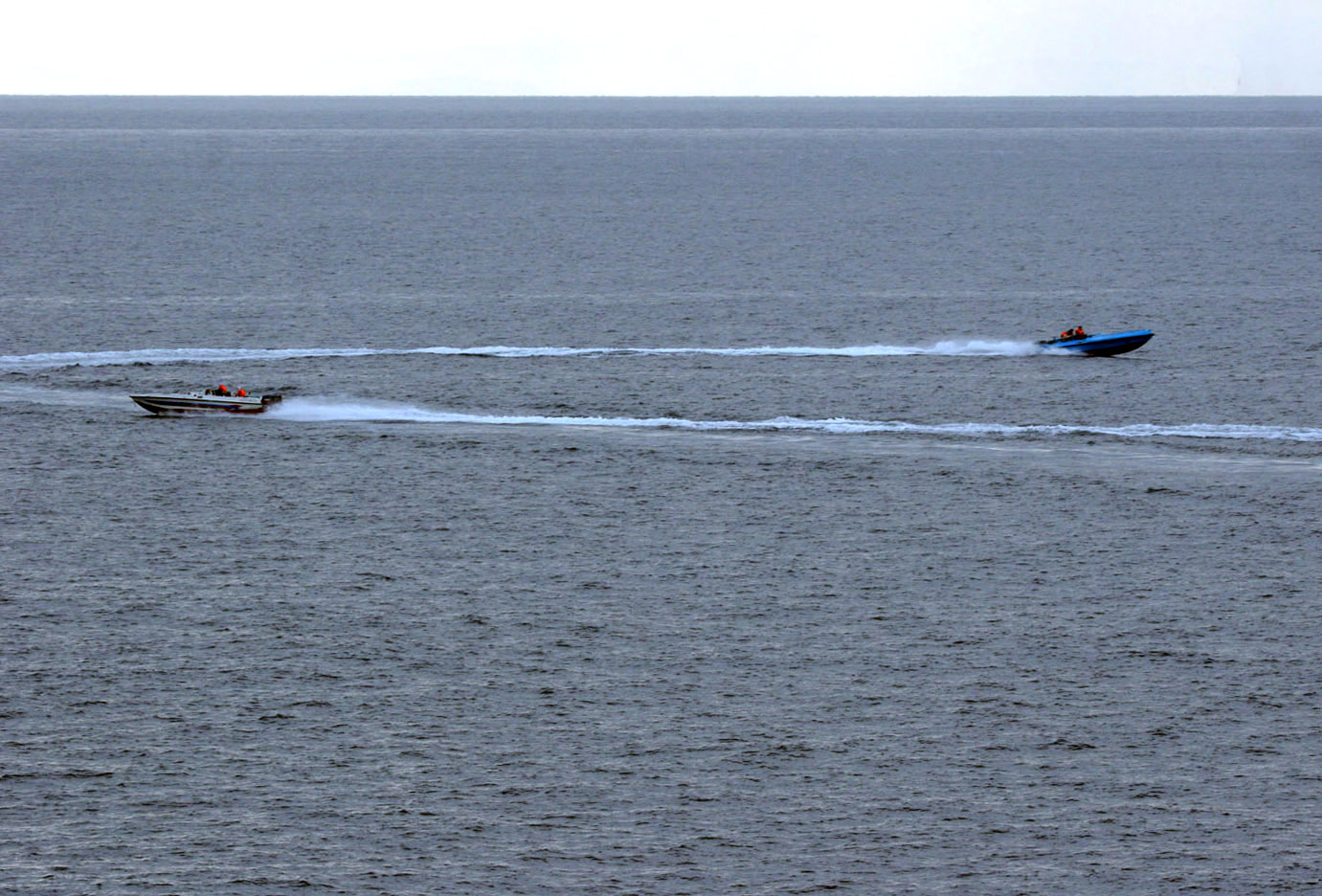
The IRGC Navy maintained a fleet of more than 1,500 small fast-attack craft before the conflict, though US Navy strikes during Operation Epic Fury have destroyed at least 17 warships and one submarine, according to Army Recognition. That tally has since risen above 30 vessels as three US carrier strike groups now converge on the Gulf, including the destruction of Iran’s converted drone carrier IRIS Shahid Bagheri. These small boats — including Peykaap missile boats, Zolfaghar fast-attack craft, Seraj high-speed boats, and Ashura-class patrol vessels — are armed with a combination of anti-ship missiles, rockets, and heavy machine guns. Their tactical doctrine relies on swarming: overwhelming a larger enemy vessel’s defensive systems by attacking from multiple directions simultaneously with dozens of expendable boats.
Anti-Ship Ballistic Missiles
Iran’s most novel naval weapon is the Khalij Fars (Persian Gulf) anti-ship ballistic missile, a derivative of the Fateh-110 short-range ballistic missile fitted with a manoeuvring re-entry vehicle and an electro-optical seeker for terminal guidance against moving ships. With a range of approximately 300 kilometres, the Khalij Fars can target vessels throughout the Persian Gulf and the northern Arabian Sea from launch positions on Iran’s southern coast. The missile approaches its target at speeds exceeding Mach 3, giving a ship’s close-in weapons system mere seconds to engage.
The combination of sea mines that deny passage, fast boats that harass and overwhelm, and ballistic missiles that can sink ships from hundreds of kilometres away creates a layered anti-access strategy that has, for the first time in history, effectively shut down a major international shipping lane through military action rather than legal decree. More than 200 internationally trading tankers are currently stranded in the Persian Gulf, according to Lloyd’s List, with insurers dropping war-risk coverage and supertanker charter rates hitting all-time highs.
Saudi Arabia’s strategic response — exploring alternative export routes through the East-West Pipeline to the Red Sea port of Yanbu — acknowledges that the naval component of Iran’s arsenal has achieved its strategic objective of severing the Kingdom’s primary oil export route, even if the air defence network has successfully intercepted the vast majority of missiles and drones aimed at Saudi territory.
Which Saudi Targets Has Iran Hit and Which Has It Missed?
The targeting pattern of Iran’s attacks on Saudi Arabia reveals a deliberate and escalating strategy that began with military installations, expanded to energy infrastructure, and has now reached diplomatic and civilian facilities in the capital itself. The pattern is not random. It reflects a calculated campaign to demonstrate that no target in the Kingdom is beyond Tehran’s reach — a message directed as much at Riyadh’s civilian population as at its military command.
| Date | Target | Location | Weapon Used | Projectiles | Outcome |
|---|---|---|---|---|---|
| Feb 28 | Prince Sultan Air Base | Al-Kharj | Ballistic missiles | Multiple | Intercepted — no damage reported |
| Mar 1 | Riyadh air defence sites | Riyadh | Drones + BMs | 8+ | Intercepted — debris fell in residential areas |
| Mar 2 | Ras Tanura refinery | Eastern Province | Drones (2) | 2 | Intercepted — debris caused fire, refinery shut down |
| Mar 3 | US Embassy compound | Riyadh | Drones (2) | 2 | Struck — limited fire, minor structural damage |
| Mar 3 | CIA station | Riyadh | Drones | Unknown | Struck — damage confirmed (Washington Post) |
| Mar 5 | Al-Jouf region | Northern Saudi Arabia | Cruise missiles (3) | 3 | Intercepted and destroyed |
| Mar 5 | Multiple targets | Riyadh, Eastern Province | CMs (2) + drones (9) | 11 | Intercepted |
| Mar 6 | Prince Sultan Air Base | Al-Kharj | Ballistic missiles (3) | 3 | Intercepted and destroyed |
| Mar 6 | Al-Kharj area | Central Saudi Arabia | Cruise missile (1) | 1 | Intercepted |
| Mar 6 | Multiple targets | Across Kingdom | Missiles (5) + drones (5) | 10 | Intercepted and destroyed |
| Mar 7 | Shaybah oil field | Empty Quarter | Drones (16 in 4 waves) | 16 | Intercepted — all 16 destroyed |
Several patterns emerge from the targeting data. Iran has concentrated ballistic missile attacks on Prince Sultan Air Base in Al-Kharj, Saudi Arabia’s most important military airfield and the home of the Royal Saudi Air Force’s most advanced fighter squadrons. The base has been targeted on at least two separate days with ballistic missiles — the weapon category hardest to intercept — suggesting it is a priority target for Tehran’s most capable systems.
The shift from military targets to energy infrastructure — Ras Tanura on March 2 and Shaybah on March 7 — represents a deliberate escalation. Ras Tanura is Aramco’s largest refinery and the world’s largest integrated oil facility. Shaybah is a super-giant oil and gas field in the Empty Quarter that produces approximately 1 million barrels per day of Arabian Extra Light crude and feeds natural gas liquids to Saudi Arabia’s entire petrochemical sector. Attacking these facilities threatens the economic foundations of the Saudi state.
The March 7 Shaybah attack is particularly significant because the field is located approximately 800 kilometres from the nearest Iranian border — deeper inside Saudi territory than any previous target. Reaching Shaybah with 16 drones in four coordinated waves demonstrates that Iran can project force across the full depth of the Kingdom, including facilities that were previously considered beyond the range of all but the longest-range ballistic missiles. The drones likely transited either through Iraqi airspace or via the Persian Gulf coast, flying at altitudes below radar coverage for hundreds of kilometres before turning inland toward the Empty Quarter.
The Threat Escalation Matrix — Predicting Iran’s Next Strikes
The pattern of Iranian attacks during the first week of the conflict follows a recognisable escalation logic that can be mapped across two axes: target sensitivity and weapon sophistication. Plotting confirmed strikes against these variables reveals a campaign that is methodically climbing both ladders simultaneously — starting with military targets attacked by drones and progressing toward critical civilian infrastructure targeted by precision-guided ballistic missiles.
| Escalation Level | Target Category | Examples | Weapons Used | Strategic Impact | Status (Mar 7) |
|---|---|---|---|---|---|
| Level 1 | Military bases (hardened) | Prince Sultan Air Base, Al-Kharj | Ballistic missiles, drones | Degrade Saudi air operations | Active — ongoing attacks |
| Level 2 | Energy infrastructure (refineries) | Ras Tanura refinery | Drones (precision) | Disrupt oil exports, economic pain | Active — refinery shut down |
| Level 3 | Energy infrastructure (production) | Shaybah oil/gas field | Drone swarms (16 units) | Threaten upstream production | Active — attacked Mar 7 |
| Level 4 | Diplomatic / foreign facilities | US Embassy, CIA station (Riyadh) | Drones | Demonstrate reach, embarrass US | Active — struck Mar 3 |
| Level 5 | Critical civilian infrastructure | Desalination plants, power grid | Cruise missiles, precision BMs | Humanitarian crisis | Not yet targeted |
| Level 6 | Population centres (terror targeting) | Riyadh residential, Jeddah, Mecca corridor | Ballistic missiles (area weapons) | Mass casualties, political shock | Not yet targeted |
The matrix reveals that Iran has reached Level 4 in its escalation ladder — striking diplomatic facilities in the Saudi capital — while sustaining simultaneous operations at Levels 1 through 3. The critical question is whether Tehran will cross the threshold to Level 5: deliberate targeting of civilian infrastructure that sustains human life, particularly desalination plants and the electrical grid that powers them.
Three factors will determine whether Iran escalates to Level 5. First, the pace of US-Israeli strikes against Iranian territory: if attacks on Iranian cities intensify, the IRGC may calculate that striking Saudi civilian infrastructure is justified as reciprocal escalation. Second, the state of Iran’s leadership: with Khamenei dead and command authority fragmented, the IRGC’s field commanders may act more aggressively than the political leadership would authorise, according to analysis by the Carnegie Endowment for International Peace. Third, the status of ceasefire negotiations: Iran’s Foreign Minister Abbas Araghchi has explicitly rejected negotiations, stating that Iran “does not see any reason to negotiate” with parties who “attacked in the middle of negotiations,” CNBC reported — a posture that removes the diplomatic brake on military escalation.
The framework suggests that Saudi Arabia’s most acute near-term vulnerability is not another attack on an oil facility — devastating as that would be — but a precision strike on the desalination infrastructure that provides 70 percent of the Kingdom’s drinking water. A coordinated Khorramshahr ballistic missile attack on three or four major desalination plants along the Gulf coast could create a water crisis affecting millions of people within days, a scenario that some defence analysts have described as Saudi Arabia’s most dangerous vulnerability.
Can Iran Sustain This Rate of Fire?
Iran’s ability to maintain the current volume of missile and drone attacks depends on three variables: the size of existing stockpiles, the rate of wartime production, and the survival of manufacturing infrastructure under US and Israeli bombardment. The evidence from the conflict’s first week suggests that Iran entered the war with sufficient reserves to sustain high-tempo operations for several weeks, but that the long-term trajectory favours exhaustion unless production facilities survive.
The ballistic missile production challenge is the most acute. Iran manufactures ballistic missiles at multiple facilities, the most important of which include the Parchin military complex east of Tehran, the Shahid Hemmat Industrial Group facilities, and dispersed underground production sites in the Zagros Mountains. US Central Command (CENTCOM) listed missile production facilities among the primary target sets for Operation Epic Fury, and satellite imagery has confirmed strikes on at least three major production complexes, according to CENTCOM press releases.
Drone production is more resilient. The Shahed-136’s simplicity — a small piston engine, composite airframe, commercial-grade GPS receiver, and basic explosive warhead — means it can be assembled in facilities far less sophisticated than those required for ballistic missiles. Iran has dispersed Shahed production across dozens of small workshops and factories, many located in residential areas or commercial districts where they are difficult to identify from satellite imagery and politically costly to strike. Even with sustained aerial bombardment, shutting down Iran’s drone production capacity entirely would require a ground campaign targeting hundreds of small facilities across a country the size of Alaska.
The ammunition supply chain offers a potential chokepoint. Solid-fuelled ballistic missiles require sodium perchlorate, ammonium perchlorate, and specialised composite propellant ingredients that Iran imports from China and intermediary states. Liquid-fuelled missiles require red fuming nitric acid and unsymmetrical dimethylhydrazine, both of which Iran produces domestically but in limited quantities. If the US Navy interdicts chemical precursor shipments — a capability it demonstrated by tracking the 1,000-tonne sodium perchlorate shipment to Bandar Abbas — Iran’s ability to produce new missiles could be degraded within weeks even if manufacturing facilities survive.
“For the first time in history, all the GCC states were targeted by the same actor within 24 hours. This is the nightmare scenario that Gulf defence planners have feared for decades.”
Breaking Defense, March 2026
The war of attrition calculus ultimately favours the defence. Saudi Arabia and its GCC partners can replenish their interceptor stockpiles through existing procurement contracts with the United States (Patriot and THAAD missiles) and France (SAMP/T), backed by the financial resources of the world’s wealthiest sovereign wealth funds. Iran cannot replace precision-guided ballistic missiles at anything approaching the rate it is expending them, and every destroyed launcher and production facility permanently reduces its future capacity. The question is whether Iran can inflict sufficient damage before its arsenal runs dry to force a political settlement on terms Tehran finds acceptable.
What Did Iran Learn From Ukraine About Attacking Saudi Arabia?
Iran’s drone and missile campaign against the Gulf states bears unmistakable fingerprints of lessons learned from the Shahed-136’s extensive deployment in Ukraine, where Russia used thousands of Iranian-supplied drones against Ukrainian air defences between 2022 and 2025. The Ukrainian theatre served as a live-fire testing laboratory for Iranian weapons technology, generating operational data on interception rates, optimal attack profiles, and electronic warfare vulnerabilities that has been directly applied to the Gulf campaign.
In Ukraine, early Shahed-136 deployments suffered high interception rates — exceeding 80 percent in some months — because the drones flew predictable straight-line routes at constant altitude, making them vulnerable to radar-guided anti-aircraft guns and short-range air defence missiles. Iranian engineers responded by updating the drone’s guidance software to incorporate waypoint routing that mimics terrain-following flight, random altitude variations that complicate tracking, and timed course changes designed to break radar locks. Ukrainian air defence operators reported that later Shahed variants were noticeably harder to intercept, with some waves achieving hit rates above 30 percent, according to analysis by the Royal United Services Institute (RUSI).
The Gulf campaign reflects these refinements. Saudi air defence operators have reported that incoming drones are flying lower, changing altitude more frequently, and approaching from multiple vectors simultaneously — tactics that were first observed in the later stages of the Ukraine conflict. The four-wave structure of the Shaybah attack on March 7, where groups of four drones approached the target from different compass bearings at staggered intervals, mirrors the wave-attack methodology that Iran refined through feedback from Russian combat operations in Ukraine.
The most consequential lesson from Ukraine, however, is strategic rather than tactical. Iran observed that sustained drone campaigns against energy infrastructure — power stations, transformer substations, heating plants — could degrade a country’s civilian resilience without triggering the nuclear-threshold escalation that attacks on military targets might provoke. The systematic targeting of Ukraine’s electrical grid during the winters of 2022-2023 and 2023-2024 demonstrated that civilian infrastructure could be destroyed incrementally with minimal international consequence. Iran’s targeting of Saudi oil infrastructure follows the same logic: each refinery shutdown and pipeline disruption degrades Saudi economic capacity without crossing the threshold into direct attacks on population centres — at least for now.
Why Iran’s Arsenal May Be More Dangerous After the War Than Before It
The conventional analysis treats this conflict as a depletion event for Iran’s arsenal — every missile fired is one fewer in the stockpile, and US strikes are degrading production capacity, so Iran’s military threat is declining with each passing day. The contrarian reading of the evidence suggests precisely the opposite: Iran’s weapons programme may emerge from this war more capable than it entered it, for three reasons that Western analysts are largely overlooking.
First, combat data is the most valuable commodity in weapons development. Every missile Iran fires at Saudi Arabia generates real-world performance data on flight characteristics, guidance accuracy, interception vulnerability, and warhead effectiveness that cannot be replicated in testing. The Shahed-136 programme was transformed by its deployment in Ukraine; Iran collected data on hundreds of engagements and used it to refine guidance algorithms, adjust flight profiles, and develop countermeasures against specific air defence systems. The Gulf campaign is providing the same feedback loop at even greater scale and against more sophisticated defences. When Iran rebuilds its arsenal — and the programme survived the 2025 war and began rebuilding within months — the next generation of missiles and drones will incorporate lessons learned from real combat against Patriot, THAAD, and Pantsir systems.
Second, the conflict is demonstrating to Iran’s leadership that its investment in missiles and drones was strategically correct. Iran spent an estimated $1 billion to $2 billion annually on its missile programme over the past decade, according to IISS estimates — a fraction of Saudi Arabia’s $75 billion defence budget. That relatively modest investment has enabled Iran to close the Strait of Hormuz, shut down the world’s largest oil refinery, strike the US Embassy in a foreign capital, and force the evacuation of American dependents from the Gulf — outcomes that no amount of conventional military spending could have achieved. The lesson Iran’s military planners will draw is not that they need fewer missiles, but that they need more of them, with better guidance and longer range.
Third, the global proliferation dynamic works in Iran’s favour. North Korea, which helped launch Iran’s ballistic missile programme in the 1980s, has continued to advance its own missile technology and retains the political motivation to share it. China, though publicly neutral, has been identified as the source of critical chemical precursors for solid-fuel production and advanced guidance components including inertial navigation systems. Russia, which received thousands of Shahed drones from Iran for use in Ukraine, may reciprocate with advanced cruise missile technology, radar-absorbing materials, or satellite targeting data. The post-war reconstruction of Iran’s arsenal will draw on all of these sources, potentially accelerating beyond pre-war capabilities.
The proliferation dynamic also extends to non-state actors. Iran has demonstrated a willingness to transfer weapons technology to proxy groups — Hezbollah, which fired 200 rockets at Israel in a coordinated operation with Iran on 12 March, the Houthis, Iraqi militias — and the combat-proven nature of the current arsenal makes these weapons even more attractive to non-state buyers. For Saudi Arabia, this analysis carries a sobering implication. Even if the current conflict ends with Iran’s arsenal temporarily depleted, the strategic threat will not diminish. The Kingdom’s investment in layered air defence — which has performed remarkably well during the first week — must be understood as a permanent requirement, not a wartime expedient. Every dollar spent on Patriot interceptors is a dollar the Kingdom will need to spend again, and again, for as long as Iran retains the motivation and industrial capacity to produce the weapons that make those interceptors necessary.
Frequently Asked Questions
How many missiles has Iran fired at Saudi Arabia in 2026?
Saudi Arabia has not released precise tallies, but based on confirmed interceptions reported by the Ministry of Defence and cross-referencing with GCC-wide data, Iran has fired an estimated 160 to 200 missiles and drones at Saudi targets between February 28 and March 7, 2026, including ballistic missiles, cruise missiles, and one-way attack drones targeting military bases, oil facilities, and diplomatic compounds in Riyadh.
What is Iran’s most dangerous weapon against Saudi Arabia?
The Khorramshahr medium-range ballistic missile is Iran’s most dangerous single weapon system deployed against Saudi Arabia, combining a 1,800-kilogramme warhead — the heaviest in Iran’s arsenal — with a circular error probable of just 30 metres, making it precise enough to target individual buildings and critical infrastructure nodes such as desalination plants and power stations from 2,000 kilometres away.
Can Saudi Arabia’s air defences stop Iranian missiles?
Saudi Arabia’s layered air defence network — including Patriot PAC-3, THAAD, and Shahine systems — has achieved an interception rate estimated above 90 percent for ballistic missiles and approximately 85 percent for drones during the first week of the conflict, according to defence analysts. The system has performed well but faces persistent challenges from saturation attacks combining multiple weapon types simultaneously.
How much does a Shahed-136 drone cost?
The Shahed-136 one-way attack drone costs between $20,000 and $50,000 to produce, according to defence industry estimates cited by CNBC. This compares to approximately $4 million for a single Patriot interceptor missile, creating an exchange-rate problem where even a successful interception costs the defender 80 to 200 times more than the attacker spent on the weapon.
How many missiles does Iran have left?
Based on pre-war IDF estimates of approximately 2,500 ballistic missiles and accounting for weapons fired and destroyed in US-Israeli strikes, Iran is estimated to retain between 1,300 and 1,700 ballistic missiles, 150 to 350 cruise missiles, and 1,600 to 2,000 one-way attack drones as of March 7, 2026 — sufficient to sustain the current rate of fire for two to six weeks depending on the weapon category.
Has Iran attacked Saudi oil facilities?
Iran has attacked at least two major Saudi oil facilities since February 28, 2026. Two drones targeted the Ras Tanura refinery — Aramco’s largest — on March 2, causing a fire from interception debris that led to a precautionary shutdown. On March 7, sixteen drones in four waves targeted the Shaybah super-giant oil field in the Empty Quarter, all of which were intercepted by Saudi air defences, according to the Saudi Ministry of Defence and Arab News.
The IRGC Aerospace Force commander subsequently pledged to launch only missiles carrying warheads weighing at least one ton, signalling that Tehran is trading volume for destructive power as its launcher fleet shrinks.
What is the range of Iran’s longest-range missile?
The Sejjil two-stage solid-fuelled ballistic missile has the longest confirmed range in Iran’s arsenal at 2,000 to 2,500 kilometres, according to CSIS and ISNA reports. The Soumar cruise missile has a comparable range of 2,000 to 2,500 kilometres. Both weapons can reach any target in Saudi Arabia from launch positions deep inside Iranian territory, including Jeddah and Mecca on the western coast. The man who now commands this arsenal — Mojtaba Khamenei, Iran’s new Supreme Leader — has deeper ties to the IRGC missile programme than any previous Iranian leader.