
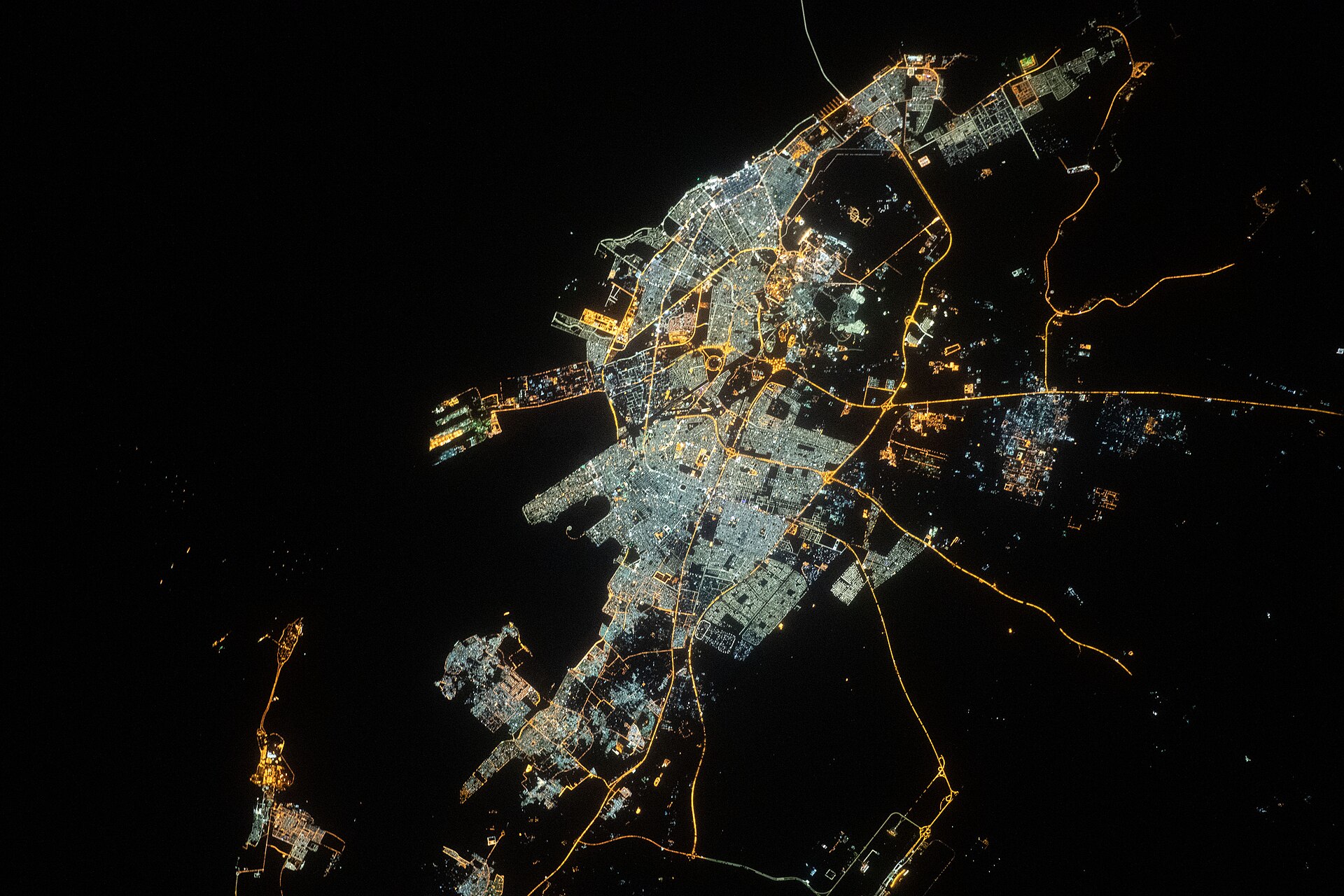
DHAHRAN — Debris from an intercepted Iranian ballistic missile fell on two residential buildings in Saudi Arabia’s Eastern Province on Tuesday, marking the first confirmed instance of war-related wreckage striking civilian homes in the kingdom’s oil-producing heartland. The Saudi Ministry of Defense reported that air defense systems destroyed a ballistic missile and more than 30 drones targeting the region overnight, according to spokesperson Major General Staff Turki Al-Malki. No casualties were reported, but the incident underscored the growing risk to millions of civilians living beneath one of the most active air defense corridors on earth.
The Eastern Province, home to roughly four million people and the majority of Saudi Arabia’s petroleum infrastructure, has endured near-daily aerial attacks since Iran began retaliating against the kingdom on 2 March 2026. While Saudi and allied air defense batteries have intercepted the vast majority of incoming threats — maintaining a success rate between 85 and 90 per cent for ballistic missiles, according to defence analysts — the debris from those successful interceptions now poses its own danger. Four people were injured by fallen missile fragments in Riyadh just one week earlier, on 18 March, when interceptor wreckage struck a residential building housing Asian workers.
Table of Contents
- What Happened on 25 March in the Eastern Province?
- How Does Interceptor Debris Threaten Saudi Civilians?
- The Scale of Iran’s Aerial Campaign Against the Eastern Province
- Why Is the Eastern Province the Primary Target?
- Air Defense Performance After Four Weeks of War
- Saudi Civil Defense Response and Shelter Gap
- Debris Damage Across the Gulf
- Frequently Asked Questions
What Happened on 25 March in the Eastern Province?
Saudi air defense forces intercepted and destroyed one ballistic missile and at least 33 drones targeting the Eastern Province on Tuesday 25 March, the Ministry of Defense confirmed. The ballistic missile was detected and engaged while still in flight toward the region, with fragments falling on two residential structures in a neighbourhood that authorities have not publicly identified for security reasons. A comprehensive assessment of Saudi wartime military performance estimates an overall ballistic missile interception rate of 85 to 90 percent across the first four weeks of the conflict.
One of the buildings struck by debris was still under construction and unoccupied at the time, Saudi Civil Defense said in a statement. The second structure, a completed and occupied home, sustained what officials described as limited material damage to its roof. Emergency crews deployed to the site and carried out standard safety procedures, including debris removal, structural assessment, and perimeter cordoning.
No injuries were reported in either building. The Saudi Civil Defense confirmed the incident was handled in line with approved emergency procedures and that residents of the surrounding area were not evacuated.
Separately, Major General Al-Malki confirmed that 21 drones were intercepted and destroyed over the Eastern Province earlier in the day, with five additional drones also engaged. A further drone was shot down over Riyadh, indicating that Iran continues to target both the capital and the eastern oil-producing region simultaneously.
How Does Interceptor Debris Threaten Saudi Civilians?
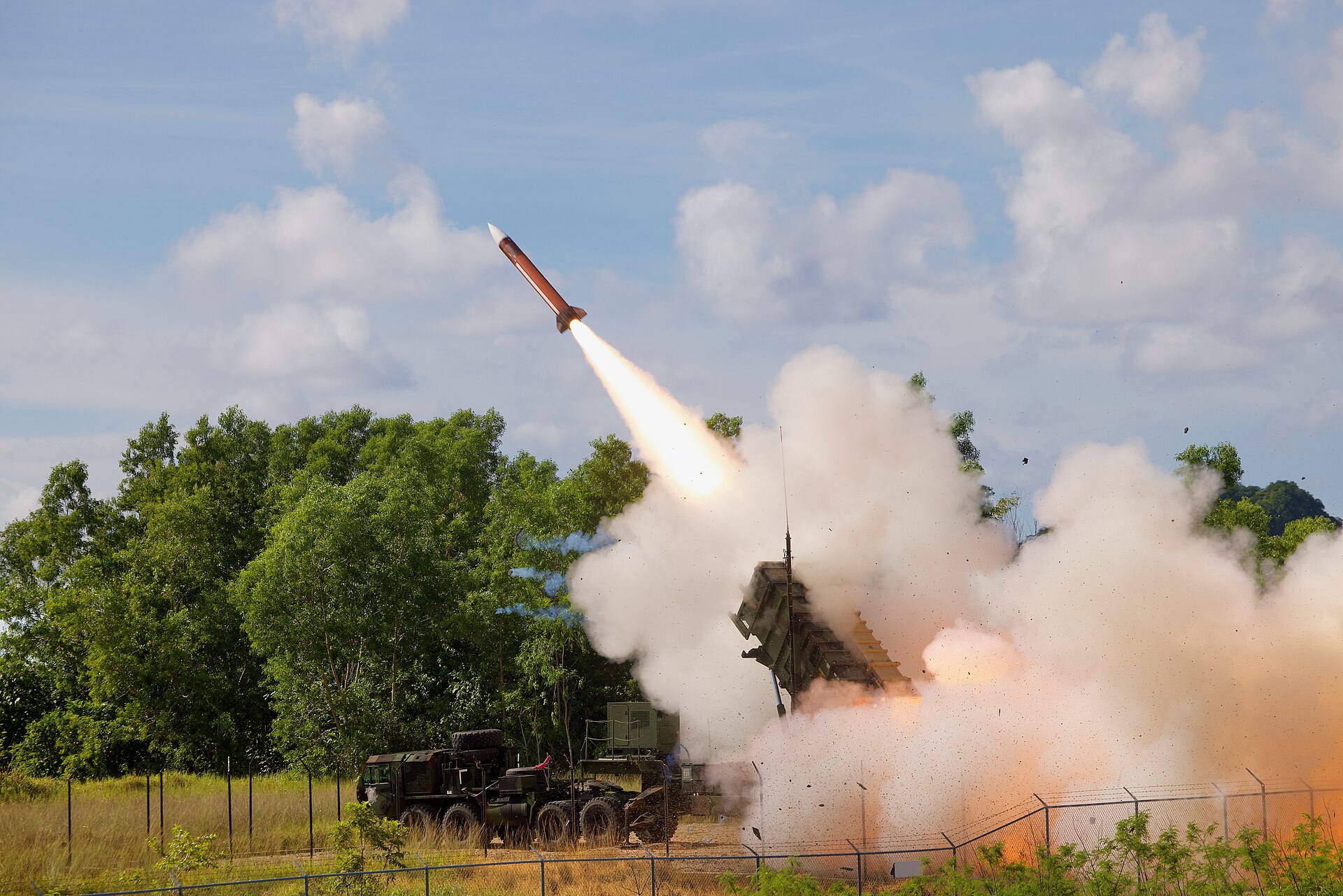
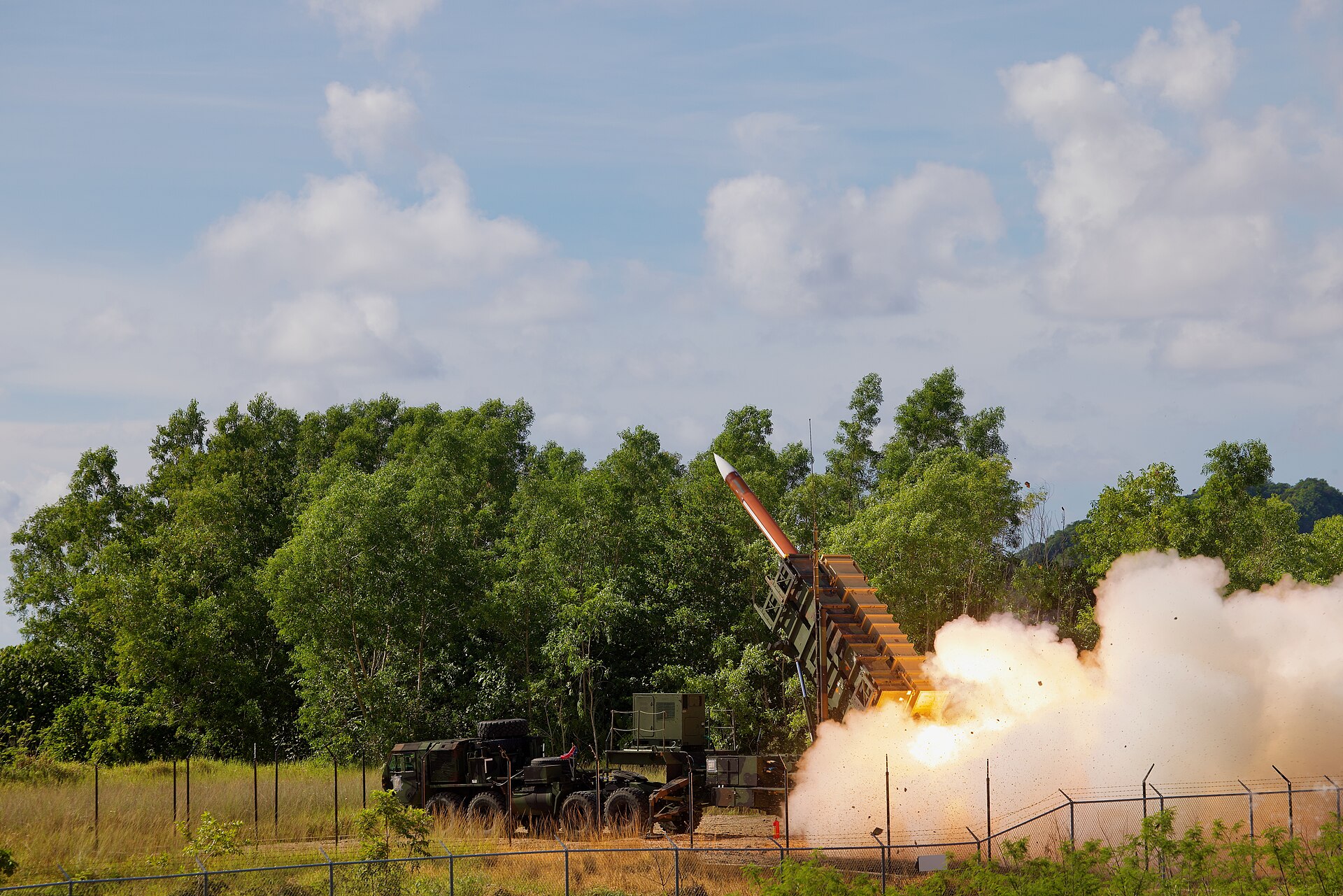
When a Patriot PAC-3 or THAAD interceptor destroys an incoming ballistic missile at altitude, the engagement does not vaporise the threat. Both the incoming warhead fragments and the spent interceptor components fall back to earth, often across a debris field stretching several kilometres. The fragments are heavy, metallic, and arrive at terminal velocity — fast enough to punch through standard residential roofing.
The 25 March incident in the Eastern Province was the second confirmed case of interceptor debris striking civilian structures in Saudi Arabia since the war began on 28 February. On 18 March, fragments from a successful interception over Riyadh fell on a residential building in the capital, injuring four Asian residents, according to the Saudi General Directorate of Civil Defense. That incident involved one of eight ballistic missiles intercepted over Riyadh in a single engagement, and a second piece of debris landed near a refinery, the Anadolu Agency reported.
The problem is inherent to kinetic missile defence. Israel has faced similar incidents during its decades of operating the Iron Dome, David’s Sling, and Arrow systems. During the April 2024 Iranian barrage, falling debris from intercepted missiles injured several people and caused property damage across the Negev and the Jordan Valley. Military engineers in both countries acknowledge that interception success rates tell only part of the story — the debris field is the unacknowledged cost of every successful engagement.
Saudi Arabia’s situation is particularly acute because the kingdom spent an estimated $80 billion on air defence over the past decade but built no public bomb shelters and no civilian protection infrastructure comparable to Israel’s Home Front Command shelters or South Korea’s underground evacuation network. When debris falls, 35 million people have nowhere to go.
The Scale of Iran’s Aerial Campaign Against the Eastern Province
The 25 March barrage was part of a sustained aerial campaign that has struck Saudi Arabia’s eastern region almost every day since the war began. According to Ministry of Defense statements compiled by the Alma Research and Education Center in Israel, Saudi air defense forces have intercepted more than 700 drones and approximately 25 ballistic missiles since 28 February — the majority of them aimed at the Eastern Province and its petroleum infrastructure.
| Date | Drones Intercepted | Missiles Intercepted | Notable Damage |
|---|---|---|---|
| 2 March | 12 | 0 | Ras Tanura refinery hit, operations halted |
| 12 March | 24 | 1 | Drones targeted Shaybah oil field, 800 km into the Empty Quarter |
| 13 March | 50+ | 2 | Largest single-day barrage in first two weeks |
| 17 March | 35+ | 1 | Sustained overnight bombardment |
| 22 March | 60 | 3 | Three ballistic missiles targeted Riyadh simultaneously |
| 25 March | 33+ | 1 | Debris hits two residential homes in Eastern Province |
The tempo of attacks has not diminished despite four weeks of US and Israeli strikes against Iranian military infrastructure. Iran’s drone arsenal — built around the Shahed-136 and its variants — is cheap to produce at roughly $20,000 to $50,000 per unit, while each Patriot PAC-3 MSE interceptor costs approximately $4 million. This cost asymmetry has become a defining feature of the conflict, with Saudi and allied forces estimated to have expended between $2 billion and $3 billion in interceptor munitions in the first five days of fighting alone, according to defence industry analysts tracking the conflict.
Why Is the Eastern Province the Primary Target?
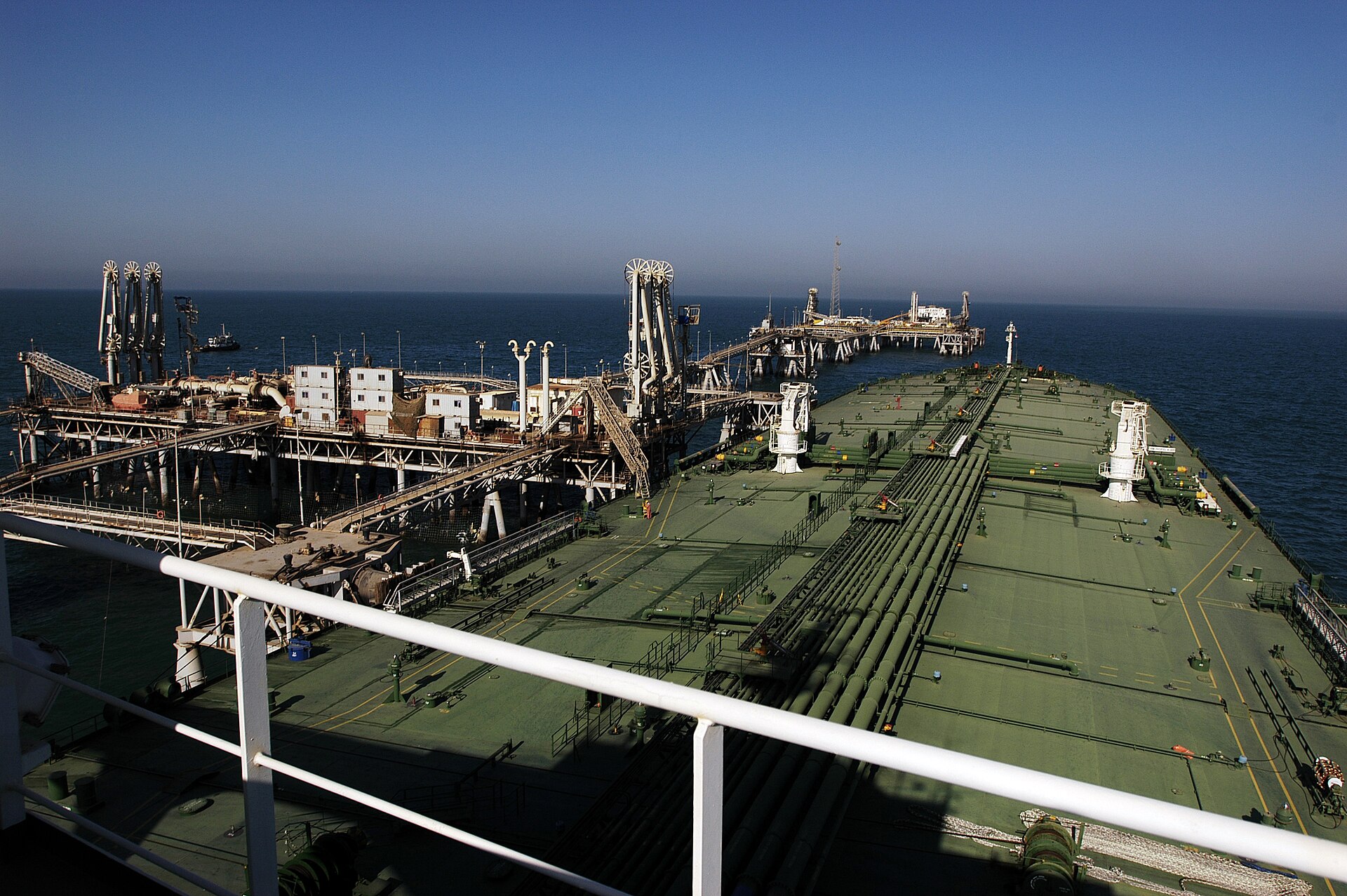
The Eastern Province contains the world’s largest concentration of oil production and processing infrastructure. Saudi Aramco’s Abqaiq stabilisation facility processes approximately seven million barrels per day of crude oil — roughly seven per cent of global daily consumption — before it enters the pipeline network. The Ras Tanura terminal, the world’s largest offshore oil-loading facility, handles 550,000 barrels per day of refined products. The Shaybah field, located more than 800 kilometres into the Empty Quarter desert, produces approximately one million barrels per day.
Iran’s targeting strategy reflects a calculated attempt to impose maximum economic pain on Saudi Arabia and the wider global economy. The Ras Tanura refinery was shut down on 2 March after a drone struck the facility, causing a fire and briefly halting operations, Bloomberg reported. Though damage was limited and production resumed within days, the incident demonstrated that even a single drone penetrating air defences could temporarily disable a facility processing more than half a million barrels daily.
Saudi Aramco has responded by rerouting the bulk of its exports through its East-West crude oil pipeline to the Red Sea port of Yanbu. The 1,200-kilometre pipeline, originally built during the 1991 Gulf War as a strategic bypass, reached its full emergency capacity of seven million barrels per day on 11 March, according to Aramco CEO Amin Nasser. Of that capacity, roughly five million barrels per day are allocated to export operations, with the remainder serving domestic western-coast refineries.
The rerouting has reduced the Eastern Province’s importance as an export node but has not diminished its value as a processing hub. Abqaiq, in particular, cannot be replicated or bypassed — it is the single point through which the majority of Saudi crude must pass before entering any pipeline. A successful strike on Abqaiq would paralyse Saudi oil output far more completely than the 2019 Abqaiq-Khurais attack, which briefly halved the kingdom’s production.
Air Defense Performance After Four Weeks of War
Saudi Arabia’s multi-layered air defence network has performed significantly better in 2026 than it did during previous Iranian and Houthi attacks. Defence analysts estimate a ballistic missile interception rate of 85 to 90 per cent, a marked improvement over the mixed results of the 2019 Abqaiq-Khurais attack when Saudi Patriot batteries failed to engage the incoming cruise missiles and drones.
The improvement reflects a decade of investment and integration. Saudi Arabia now operates a combined air defence architecture incorporating US-made Patriot PAC-3 MSE batteries, THAAD (Terminal High Altitude Area Defense) systems, and shorter-range point defence systems. These are supplemented by US military assets deployed to the kingdom, including additional Patriot batteries and the AN/TPY-2 forward-based X-band radar that provides early-warning tracking of ballistic missile launches from Iranian territory.
Against drones, the picture is more complex. The low-cost, slow-flying Shahed-type drones present a different challenge from ballistic missiles. They fly at low altitude, carry small radar cross-sections, and can approach targets from multiple vectors simultaneously. Saudi forces have deployed a mix of solutions including modified anti-aircraft guns, electronic warfare systems, and — when necessary — expensive interceptor missiles against cheap drones. The cost exchange ratio remains heavily in Iran’s favour.
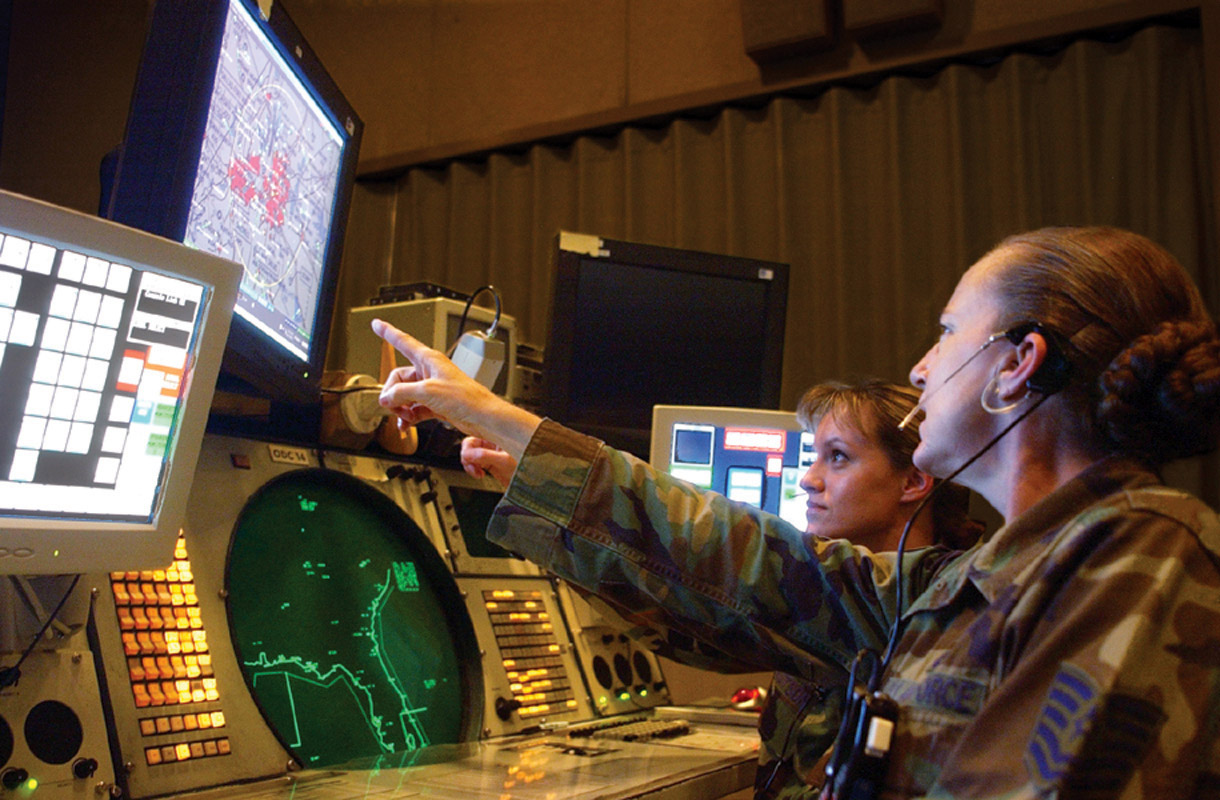
A critical vulnerability emerged in the war’s opening days when an Iranian strike reportedly damaged or destroyed a THAAD radar system, according to reports cited by Al Jazeera’s Centre for Studies. The AN/TPY-2 radar is the eyes of the THAAD system — without it, the interceptors cannot engage targets. The loss of even one radar node degrades the entire defensive umbrella over the Eastern Province. Saudi Arabia’s defence establishment has acknowledged that sustaining the current interception tempo is consuming interceptor munitions faster than they can be replenished, with annual US production of PAC-3 MSE interceptors — approximately 620 units — potentially consumed in less than a week of sustained combat.
Saudi Civil Defense Response and Shelter Gap
The Saudi General Directorate of Civil Defense has operated on an emergency footing since 2 March, deploying teams across the Eastern Province, Riyadh, and the western region to respond to debris incidents, fires, and air raid alerts. The directorate confirmed that the 25 March debris incident was handled through established emergency protocols, with crews conducting building assessments, debris clearance, and safety inspections within hours.
Saudi Arabia sent its first air raid alert to eight million mobile phones in Riyadh on 19 March via the emergency broadcast system, Al Arabiya reported — a system that had never been activated for a live threat before. Residents in the Eastern Province have reported hearing sirens and receiving mobile alerts multiple times per week, creating what psychologists describe as a sustained stress environment comparable to populations living under frequent bombardment.
The kingdom’s principal civil defence gap, however, remains the absence of hardened shelters. Israel maintains approximately 6.5 million shelter spaces for a population of 9.8 million — a ratio of roughly 0.66 shelter spaces per person. South Korea’s Seoul metropolitan area has more than 23,000 designated shelters. Saudi Arabia has none that are purpose-built for missile attack. The kingdom’s building codes, developed for earthquake and fire risks, do not include blast protection standards.
Saudi authorities have not publicly announced plans to construct shelters, and the current war’s tempo may not allow time for such infrastructure. Instead, the Civil Defense directorate has issued guidance advising residents to shelter in interior rooms away from windows during air raid alerts — a measure that offers limited protection against falling debris weighing several kilograms arriving at terminal velocity.
Debris Damage Across the Gulf
Saudi Arabia is not alone in facing debris risks from successful interceptions. Bahrain, which has absorbed more than 385 Iranian strikes since the war began according to Bahraini officials, has reported similar incidents of interceptor debris falling in populated areas. Kuwait suffered a direct drone strike on Kuwait International Airport’s fuel storage on 25 March, causing a fire but no casualties, the Peninsula Qatar reported.
The United Arab Emirates, which has pulled back from publicly sharing its interception statistics according to Breaking Defense, is understood to have experienced comparable debris incidents in Abu Dhabi and Ras al-Khaimah. The UAE’s investment in the THAAD system and its domestically developed missile defense programs has given it a layered defence capability, but the same debris problem applies to every kinetic interception.
The cumulative effect of daily air raids, falling debris, and air raid alerts across the Gulf region has prompted the Gulf Cooperation Council to push a resolution through the UN Human Rights Council demanding that Iran halt its attacks and pay reparations. That resolution, adopted on 25 March with broad international support, specifically cited damage to civilian infrastructure and the psychological toll on Gulf populations as grounds for its demands.
Meanwhile, ceasefire negotiations remain stalled. Iran rejected Washington’s 15-point peace proposal on 25 March, calling it maximalist and unreasonable, and issued its own five-point counterproposal that includes a demand for sovereignty over the Strait of Hormuz. Until a diplomatic resolution is reached, the Eastern Province — and the millions of people who live alongside its oil infrastructure — will continue to absorb the daily toll of a war fought overhead.
Frequently Asked Questions
Was anyone injured when missile debris fell on Saudi homes on 25 March?
No injuries were reported in the 25 March incident. The Saudi Civil Defense confirmed that debris from an intercepted ballistic missile struck two residential buildings in the Eastern Province — one under construction and unoccupied, one completed — causing limited material damage. Emergency crews deployed and conducted standard safety procedures. However, four people were injured in a similar debris incident in Riyadh on 18 March when interceptor fragments struck a residential building.
How many drones has Saudi Arabia intercepted since the Iran war began?
Saudi air defence forces have intercepted more than 700 drones and approximately 25 ballistic missiles since the war began on 28 February 2026, according to Ministry of Defense statements compiled by the Alma Research and Education Center. The interception rate for ballistic missiles is estimated between 85 and 90 per cent. The Eastern Province has been the primary target for the majority of these attacks due to its concentration of Aramco oil infrastructure.
What air defense systems protect Saudi Arabia’s Eastern Province?
The Eastern Province is defended by a multi-layered system including US-made Patriot PAC-3 MSE batteries for ballistic missile and cruise missile interception, THAAD (Terminal High Altitude Area Defense) for high-altitude ballistic threats, the AN/TPY-2 X-band radar for early warning, and shorter-range point defence systems for drone interception. These Saudi-operated systems are supplemented by US military air defence assets deployed to the kingdom since the war began, including additional batteries supporting the more than 50,000 US troops now in the Middle East.
Why is the Eastern Province targeted more than other parts of Saudi Arabia?
The Eastern Province hosts the world’s largest concentration of oil production and processing infrastructure, including Saudi Aramco’s Abqaiq processing facility (seven million barrels per day capacity), the Ras Tanura terminal and refinery (550,000 barrels per day), and multiple major oil fields. The province is also geographically closest to Iran across the Persian Gulf, making it the easiest target for drones with limited range. Disrupting Eastern Province oil operations imposes direct economic costs on Saudi Arabia and destabilises global energy markets, giving Iran maximum leverage.
Does Saudi Arabia have bomb shelters for civilians?
Saudi Arabia does not have purpose-built civilian bomb shelters comparable to those in Israel or South Korea. The kingdom’s building codes address earthquake and fire risks but do not include blast protection standards. The Saudi Civil Defense directorate has advised residents to shelter in interior rooms during air raid alerts, but defence analysts have noted this offers limited protection against falling debris from intercepted missiles. The absence of shelters for a population of 35 million has been described as a critical gap in the kingdom’s civil defence posture.