
BAGHDAD — Iraq declared force majeure on all foreign-operated oil fields on Thursday, formally suspending contractual obligations with some of the world’s largest energy companies after the closure of the Strait of Hormuz severed the country’s primary export route and slashed crude output by more than two-thirds. Oil Minister Hayan Abdel-Ghani confirmed that production at the Basra Oil Company, which manages the southern fields responsible for 94 percent of Iraq’s exports, had been cut from 3.3 million barrels per day to roughly 900,000 barrels per day — a level sufficient only to feed domestic refineries.
The declaration, reported by Reuters and confirmed by multiple Iraqi government officials, transforms what had been a physical disruption into a legal and financial crisis for international oil companies that collectively invested tens of billions of dollars in Iraqi oilfields over the past two decades. For Saudi Arabia and its Gulf neighbours, the collapse of Iraqi production carries immediate consequences: the removal of nearly 2.4 million barrels per day from global markets at a moment when oil prices have already surged above $110 per barrel, and the elimination of a major OPEC producer from the supply equation for an indefinite period.
Table of Contents
- What Does Iraq’s Force Majeure Declaration Mean for Oil Companies?
- How Much Oil Has Iraq Lost?
- Which Companies Are Affected?
- Iraq’s Revenue Collapse
- Why Saudi Arabia Has Not Declared Force Majeure
- The Hormuz Chokepoint
- The Kirkuk-Ceyhan Pipeline Alternative
- What Happens to OPEC Without Iraqi Barrels?
- Frequently Asked Questions
What Does Iraq’s Force Majeure Declaration Mean for Oil Companies?
Force majeure — a legal clause invoked when extraordinary circumstances beyond a party’s control prevent the fulfilment of contractual obligations — releases Iraq’s state oil marketing body, the State Organization for Marketing of Oil, from liability for failing to deliver crude to buyers who have nominated tankers and agreed lifting schedules. Under the terms of Iraq’s technical service contracts with foreign operators, the declaration also suspends production targets, cost-recovery timelines, and remuneration fees that international oil companies receive for each barrel extracted.
The practical effect, according to Iraqi oil ministry sources who spoke to Reuters on condition of anonymity, is that foreign operators are no longer required to maintain output at contracted levels and will not be penalised for the collapse in production. The Iraqi government, in turn, is no longer obligated to compensate those companies at agreed rates per barrel for barrels that cannot be exported.
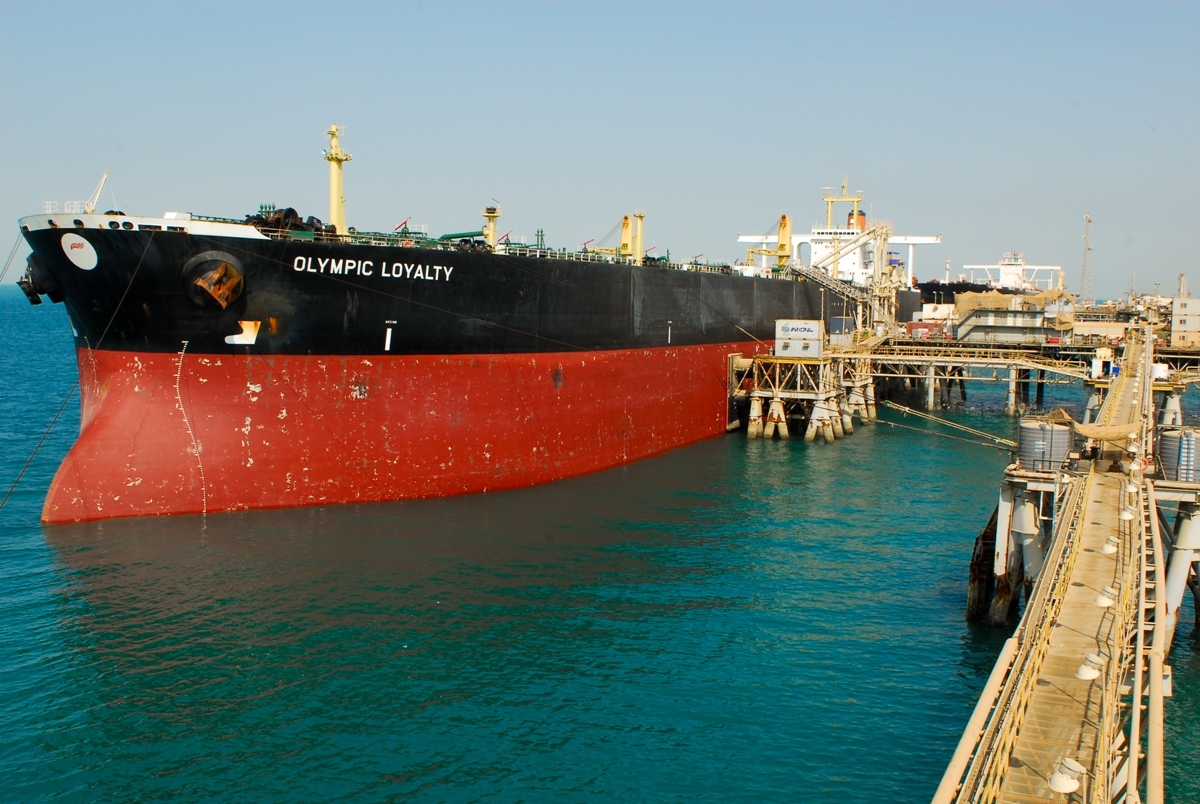
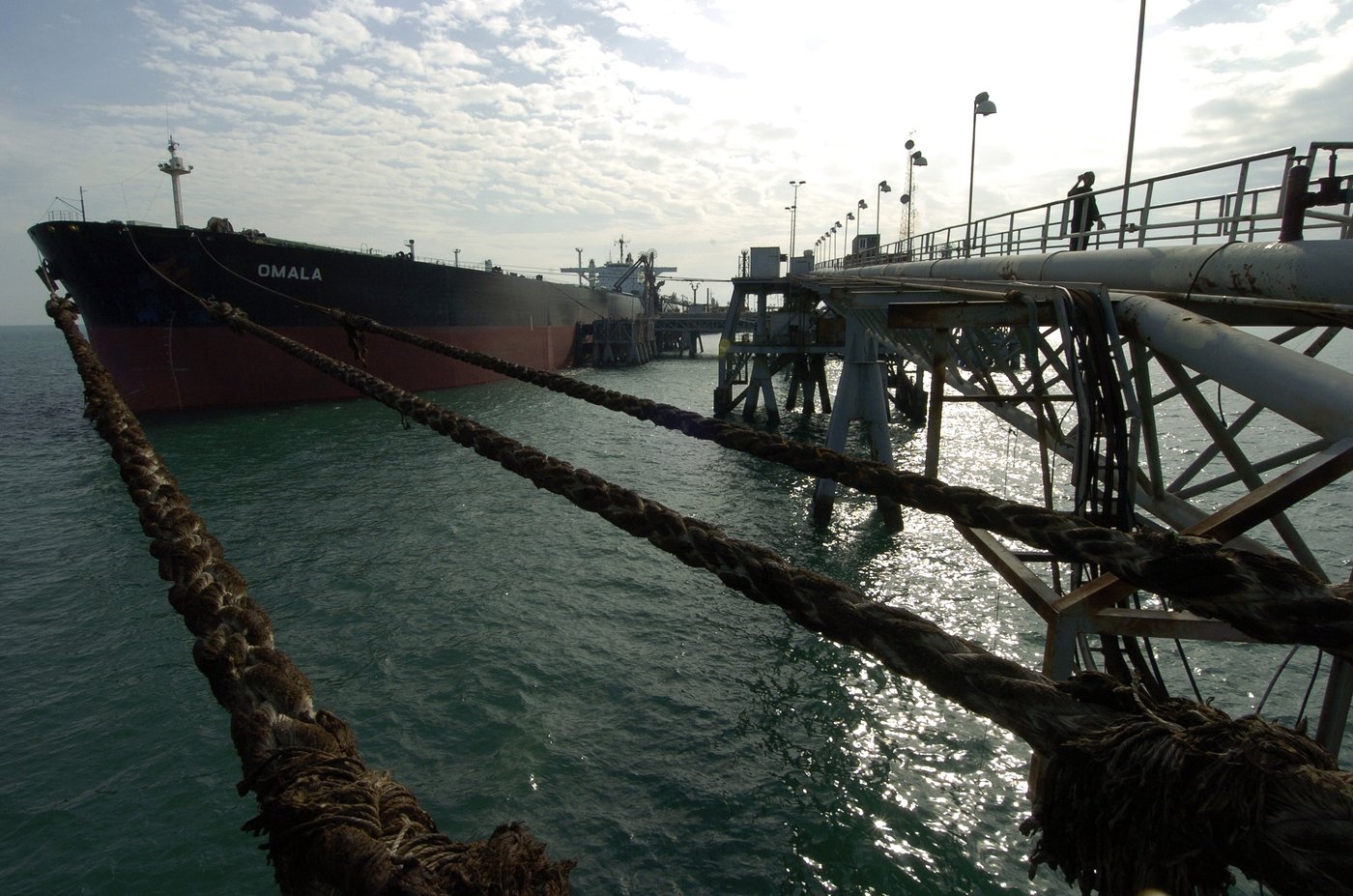
SOMO confirmed that export operations from Iraq’s southern ports — the terminals at Basra, Khor al-Amaya, and the offshore Al Basrah Oil Terminal — had “effectively stopped” because international partners were unable to nominate tankers to lift cargoes, despite SOMO being ready to load shipments. The insurance market’s withdrawal from the Persian Gulf has made it impossible for commercial vessels to enter the waterway. As maritime insurers cancelled war risk cover in early March, the cost of insuring a tanker through Hormuz surged from 0.02 percent of hull value to roughly 5 percent — an increase that priced out all but the most risk-tolerant operators.
How Much Oil Has Iraq Lost?
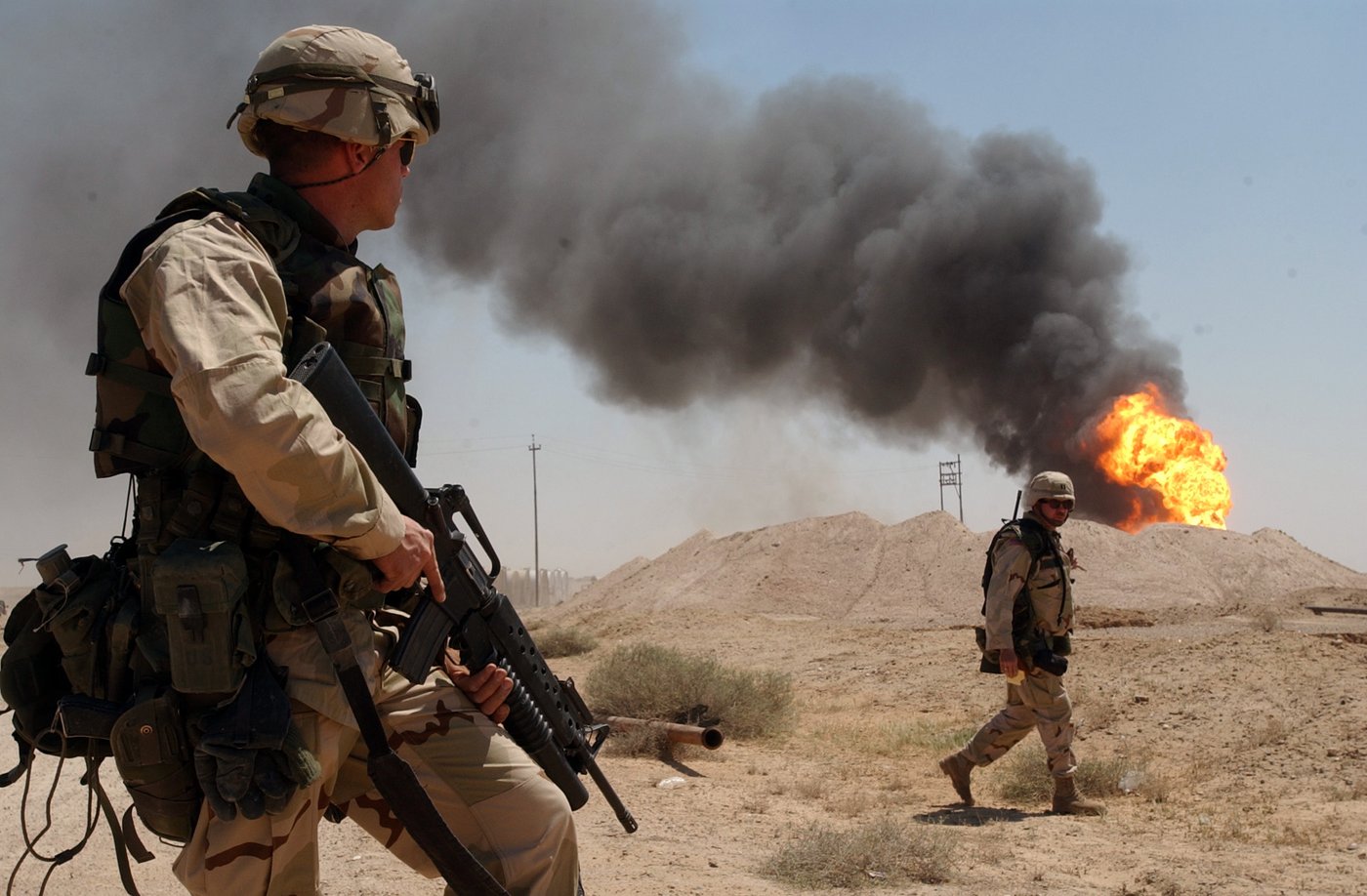
The scale of Iraq’s production collapse is without precedent outside of wartime invasion. Before the Strait of Hormuz crisis began on 28 February, Iraq was producing approximately 4.3 million barrels per day, making it OPEC’s second-largest producer behind Saudi Arabia. Three weeks later, output has fallen to roughly 1.4 million barrels per day — a 67 percent decline, according to Bloomberg reporting citing Iraqi ministry data.
The Middle East briefing 3,000+ readers start their day with.
One email. Every weekday morning. Free.
The Basra Oil Company, which operates the giant Rumaila, West Qurna 1 and 2, Majnoon, Halfaya, and Zubair fields in the south, has seen the steepest cuts. Oil Minister Abdel-Ghani told Iraqi state television that Basra production fell from 3.3 million barrels per day to 900,000 barrels per day, with the remaining output directed entirely to domestic refineries and power stations.
The timeline of the collapse underscores how rapidly the crisis escalated:
| Date | Event | Production (bpd) | Change |
|---|---|---|---|
| 27 February | Pre-war baseline | 4.3 million | — |
| 3 March | Storage fills at Basra; initial cuts begin | 3.1 million | -28% |
| 7 March | Insurance withdrawal halts tanker nominations | 2.2 million | -49% |
| 12 March | Southern exports suspended; Iran strikes near Basra | 1.5 million | -65% |
| 20 March | Force majeure declared on foreign fields | 1.4 million | -67% |
Iraq’s northern fields, operated through the semi-autonomous Kurdistan Regional Government, have continued limited production. But the Kirkuk-Ceyhan pipeline to Turkey — Iraq’s only non-Hormuz export route — has been offline for most of the past year due to a pricing dispute between Baghdad and Ankara, and can handle only a fraction of Iraq’s pre-crisis output even when operational.
Which Companies Are Affected?
The force majeure declaration affects every major international oil company operating in Iraq. The country’s southern oil fields are developed under technical service contracts that pay foreign operators a fixed fee per barrel produced, rather than granting them equity stakes in reserves. The contracts were signed between 2009 and 2014 under competitive bidding rounds that attracted the world’s largest energy firms.
| Field | Lead Operator | Partners | Pre-Crisis Output (bpd) |
|---|---|---|---|
| Rumaila | BP | PetroChina, Basra Oil Co. | 1,400,000 |
| West Qurna 1 | ExxonMobil | PetroChina, Pertamina | 500,000 |
| West Qurna 2 | Lukoil | Basra Oil Co. | 400,000 |
| Halfaya | PetroChina | TotalEnergies, Petronas | 300,000 |
| Majnoon | Basra Oil Co. | (Formerly Shell) | 230,000 |
| Zubair | Eni | Occidental, KOGAS | 200,000 |
BP, which operates the giant Rumaila field — the largest in Iraq and one of the largest in the world — faces the most significant exposure. Rumaila was producing approximately 1.4 million barrels per day before the crisis, according to S&P Global Commodity Insights, making it one of the highest-output fields on the planet. BP’s remuneration fee for Rumaila was set at $2 per barrel under the original contract, later renegotiated upward, meaning the company was receiving hundreds of millions of dollars annually from the field.
ExxonMobil, which operates the West Qurna 1 field, had already signalled an intention to reduce its Iraq presence before the war. But the force majeure creates a new complication: under the service contract terms, cost recovery — the mechanism by which operators recoup their capital investments — is frozen when production falls below contracted thresholds. Industry analysts at Rystad Energy estimated that foreign operators have approximately $30 billion in unrecovered costs across Iraqi fields, according to a March 2026 assessment.
Iraq’s Revenue Collapse
The financial consequences for Iraq are catastrophic. Oil revenues account for more than 90 percent of government income, according to the International Monetary Fund’s most recent Article IV consultation, funding everything from the public payroll — which covers an estimated 4.5 million government employees — to electricity generation, food subsidies, and pension payments.
Iraqi News, citing government planning commission data, reported that the country is losing approximately $280 million per day in export revenue since southern shipments ceased. Extrapolated over a month, losses reach $6 billion to $7 billion — a figure that exceeds Iraq’s entire non-oil revenue for a typical fiscal year.
Fitch Ratings warned in a 14 March note that each week of Hormuz closure cuts Iraq’s export proceeds by approximately 0.4 percent of GDP. The ratings agency placed Iraq’s sovereign credit on negative watch, noting that the government’s fiscal buffer — foreign currency reserves of roughly $100 billion held at the Central Bank of Iraq — could be drawn down rapidly if the crisis extends beyond two months.
Iraq is the most exposed sovereign in OPEC to the Hormuz closure. Unlike Saudi Arabia or the UAE, it has no meaningful alternative export route and no sovereign wealth fund large enough to absorb a multi-month revenue drought.
Fitch Ratings sovereign analysis, March 2026
Prime Minister Mohammed Shia al-Sudani convened an emergency economic committee on 19 March to discuss contingency measures, including the possibility of drawing down central bank reserves to cover government salaries for up to three months. The committee also discussed accelerating repairs to the Kirkuk-Ceyhan pipeline to Turkey as an alternative — though even at full capacity, that route can handle only a fraction of Iraq’s pre-crisis exports.
Why Saudi Arabia Has Not Declared Force Majeure
The contrast between Iraq’s position and Saudi Arabia’s response to the Hormuz crisis illustrates a strategic divergence that predates the current war by decades. Saudi Arabia, despite facing the same Hormuz closure, has not declared force majeure — because it does not need to.
The Kingdom’s 1,200-kilometre East-West Crude Oil Pipeline, known as Petroline, connects the oil fields of the Eastern Province to the Red Sea port of Yanbu, bypassing the Strait of Hormuz entirely. The pipeline has a capacity of approximately 5 million barrels per day, though operational throughput has been running at 3 to 4 million barrels per day since the crisis began, according to Aramco data cited by Reuters. Saudi Arabia also operates the Abqaiq-Yanbu natural gas liquids pipeline and has port infrastructure at Yanbu capable of loading very large crude carriers.
Iraq has no equivalent infrastructure. The country’s only non-Hormuz export route — the Kirkuk-Ceyhan pipeline to Turkey’s Mediterranean coast — has been largely offline since March 2023 due to a pricing and revenue-sharing dispute between Baghdad and the Kurdistan Regional Government, complicated by a separate arbitration ruling involving Ankara. Even when operational, the pipeline’s capacity is limited to approximately 500,000 barrels per day, a fraction of Iraq’s pre-crisis output.
The result is a structural asymmetry that has become acute under wartime conditions. Saudi Arabia has maintained oil exports — albeit at reduced volumes and with complications arising from the Yanbu bottleneck — while Iraq’s exports have fallen to effectively zero from its southern terminals.
| Country | Bypass Route | Capacity (bpd) | % of Pre-Crisis Exports | Status |
|---|---|---|---|---|
| Saudi Arabia | East-West Pipeline to Yanbu | 5,000,000 | ~65% | Operational |
| UAE | Habshan-Fujairah Pipeline | 1,500,000 | ~50% | Operational |
| Iraq | Kirkuk-Ceyhan to Turkey | 500,000 | ~12% | Mostly offline |
| Kuwait | None | 0 | 0% | N/A |
| Qatar | None | 0 | 0% | N/A |
The Hormuz Chokepoint
The Strait of Hormuz, a 33-kilometre-wide waterway between Iran and Oman, carried approximately 21 million barrels per day of crude oil and petroleum products before the Iran war began on 28 February — roughly one-fifth of global daily consumption, according to the US Energy Information Administration. Iran’s decision to block commercial transit through the strait, enforced by naval mines, fast-attack boats, and anti-ship missile batteries along the Iranian coastline, created the largest supply disruption in the history of the global oil market.
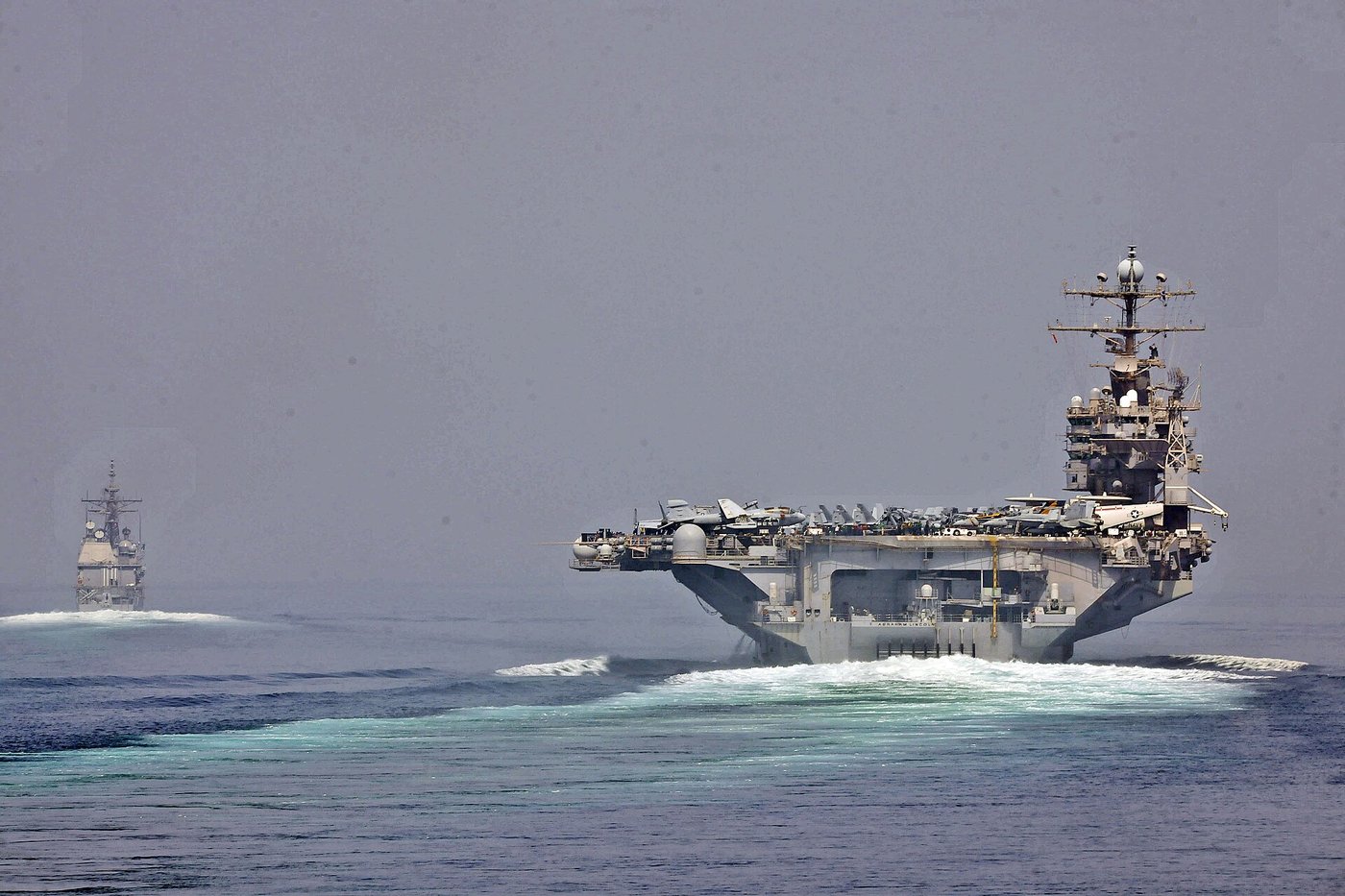
CENTCOM commander Admiral Brad Cooper said on 21 March that US strikes had “degraded” Iran’s ability to threaten Hormuz, noting the destruction of an underground anti-ship cruise missile storage facility along the Iranian coast. But Pentagon officials acknowledged privately that restoring commercial shipping through the strait would require weeks of mine-clearing operations and the establishment of a continuous naval escort corridor — a capability that does not yet exist.
For Iraq, the distinction between military progress and commercial reality is irrelevant. Until insurance companies restore war risk cover for Gulf transit — a decision that no major underwriter has indicated willingness to make, even after the Trump administration’s $20 billion government-backed insurance programme failed to attract a single tanker — tankers will not enter the waterway, regardless of how many Iranian coastal batteries are destroyed. The UK Maritime Trade Operations confirmed on 21 March that the threat level across the Gulf, Strait of Hormuz, and Gulf of Oman remains “critical,” with 21 confirmed attacks on commercial vessels and offshore infrastructure since 1 March.
The total disruption to global oil flows has been staggering. JPMorgan estimated that Gulf production cuts exceed 10 million barrels per day when all affected producers are counted — Iraq, Kuwait, Iran itself, and reduced output from Saudi Arabia, the UAE, Qatar, and Bahrain. The disruption dwarfs every previous supply shock, including the 1990 Iraqi invasion of Kuwait, which removed approximately 4.3 million barrels per day, and the 1979 Iranian Revolution, which cut roughly 5.6 million barrels per day, according to Dallas Federal Reserve historical data.
The Kirkuk-Ceyhan Pipeline Alternative
Iraq’s oil ministry has scrambled to revive the Kirkuk-Ceyhan pipeline as an emergency alternative. Oil Minister Abdel-Ghani said on 16 March that approximately 100 kilometres of pipeline testing remained before operations could resume, with a potential throughput of 200,000 to 250,000 barrels per day in the near term, The National reported.
The pipeline, which runs 970 kilometres from the Kirkuk fields in northern Iraq to Turkey’s Mediterranean port of Ceyhan, was suspended in March 2023 after an International Chamber of Commerce arbitration tribunal ruled that Turkey had facilitated unauthorised Kurdish oil exports. Baghdad subsequently demanded that all pipeline exports be routed through SOMO, a condition that the Kurdistan Regional Government initially resisted.
Even if the pipeline were brought back online at its maximum rated capacity of 500,000 barrels per day — a prospect that industry analysts consider optimistic given maintenance backlogs — it would replace only 12 percent of Iraq’s pre-crisis southern exports. Turkey, meanwhile, has signalled willingness to cooperate on pipeline transit but has sought concessions on Kurdish autonomy and water-sharing agreements that Baghdad has been reluctant to grant.
The pipeline’s limitations highlight a strategic vulnerability that Iraqi policymakers have debated for years: the country’s near-total dependence on a single export chokepoint. Saudi Arabia built its East-West Pipeline in the 1980s during the Iran-Iraq war precisely to avoid this scenario. Iraq never invested in a comparable bypass, a decision that one senior Iraqi petroleum engineer described to the Washington Examiner as “the most expensive infrastructure decision Baghdad never made.”
What Happens to OPEC Without Iraqi Barrels?
Iraq’s forced production collapse has removed approximately 2.9 million barrels per day of OPEC output from the market — a cut larger than any voluntary OPEC agreement in the organisation’s history. Combined with production losses in Kuwait, which cut output after Iranian drone strikes damaged the Mina Al-Ahmadi refinery, and Iran’s own export collapse under the weight of military strikes, total OPEC production losses from the war exceed 8 million barrels per day, according to estimates from the International Energy Agency’s March 2026 Oil Market Report.
The IEA described the disruption as “unprecedented in peacetime” and noted that strategic petroleum reserve releases by the United States, Japan, South Korea, and IEA member states — totalling approximately 400 million barrels announced to date — could cover the shortfall for roughly 50 days at current deficit rates but not beyond.
For Saudi Arabia, Iraq’s collapse creates a paradox. The Kingdom is now effectively the only major Gulf producer still exporting crude in meaningful volumes, giving it outsized influence over global pricing but also concentrating risk. If Iran escalates attacks on Yanbu — as the strike on the SAMREF refinery on 19 March suggested it might — Saudi Arabia could face the same export paralysis that has already consumed Iraq.
OPEC Secretary General Haitham al-Ghais has refrained from commenting publicly on member state production losses, beyond noting in a brief statement that “market fundamentals are being driven by geopolitical factors beyond the organisation’s control.” The cartel’s next formal meeting is scheduled for April, but several delegates told Reuters they expected an emergency session before then.
The irony has not been lost on market observers. OPEC+ spent much of 2024 and 2025 struggling to enforce voluntary production cuts among members — with Iraq among the most frequent overproducers, routinely exceeding its agreed quota by 200,000 to 400,000 barrels per day, according to OPEC secondary source data. The war has achieved involuntarily what years of diplomatic pressure could not: a dramatic reduction in Iraqi output. But the mechanism — the destruction of export infrastructure and the collapse of maritime insurance — is one that no producer would have chosen, and one whose consequences extend far beyond the oil market into the fiscal stability of an entire nation.
For Saudi Arabia, the strategic calculus is complex. The Kingdom’s position in the Iran war has been one of reluctant engagement, absorbing Iranian drone and missile strikes while declining to launch retaliatory attacks. But Iraq’s force majeure reinforces Riyadh’s leverage: as the only Gulf producer with a functioning export alternative, Saudi Arabia controls an increasing share of the marginal barrel reaching global markets. That position carries both opportunity and risk — opportunity in the form of pricing power and strategic indispensability, risk in the form of concentrated targeting by an adversary that has already demonstrated willingness to strike Yanbu.
Frequently Asked Questions
What is force majeure in oil contracts?
Force majeure is a legal provision in commercial contracts that excuses parties from fulfilling obligations when extraordinary events — such as wars, natural disasters, or government actions — make performance impossible. Iraq’s declaration suspends production targets, cost-recovery schedules, and remuneration fees for foreign oil companies operating in the country’s southern fields, while also releasing SOMO from liability for failing to deliver contracted crude volumes to buyers.
How long could the force majeure last?
The duration depends entirely on when the Strait of Hormuz reopens to commercial shipping. Iraqi oil ministry officials told Reuters they expect the declaration to remain in effect until tanker traffic resumes at sustainable levels, which requires both a reduction in military threats and the restoration of maritime insurance coverage. No major insurer has indicated willingness to restore war risk cover for Gulf transit as of 21 March.
Will Iraq’s oil production recover quickly after the crisis ends?
Industry analysts at Rystad Energy warned that prolonged production shutdowns at Iraq’s southern fields could cause reservoir damage that takes months to reverse. When oil wells are shut in for extended periods, pressure changes can cause water intrusion and near-wellbore damage that reduces future productivity. The longer the shutdown continues, the more likely that Iraq’s post-crisis production capacity will be lower than pre-crisis levels.
How does Iraq’s situation compare to Saudi Arabia’s?
Saudi Arabia has avoided force majeure because it can export crude through the Red Sea port of Yanbu via the East-West Pipeline, bypassing the Strait of Hormuz — though even with the pipeline at full capacity, Aramco faces an unprecedented operational crisis that has forced a 20 percent production cut. Iraq has no equivalent bypass infrastructure. The Kirkuk-Ceyhan pipeline to Turkey, Iraq’s only alternative, has been mostly offline since March 2023 and can handle only about 12 percent of Iraq’s pre-crisis export volume even at full capacity.
What impact has the force majeure had on oil prices?
Oil prices topped $112 per barrel on the day Iraq announced the force majeure, according to CNBC, adding to a surge that has seen Brent crude rise approximately 45 percent since the war began on 28 February. The removal of nearly 2.9 million barrels per day of Iraqi production from the market — combined with losses from Kuwait, Iran, and reduced Gulf output — has created the largest supply deficit since the 1973 Arab oil embargo.