Table of Contents
- The Declaration and Its Timing
- What Did the IRGC Actually Announce on April 10?
- Four Independent Legal Bases for a Single Military Fact
- The Araghchi Gap
- Who Controls Hormuz — the Foreign Ministry or the IRGC?
- The Larak Corridor and the Physics of Control
- The Arhimeda and the Exemption Architecture
- Can the Islamabad Talks Bind the IRGC Navy?
- Why 2026 Has No Tanker War Precedent
- Frequently Asked Questions
TEHRAN — The IRGC Navy published its terms for the Strait of Hormuz at 9:16 AM Tehran time on April 10, 2026 — the same morning JD Vance landed in Islamabad for bilateral ceasefire talks with Iran’s parliamentary speaker. The statement declared that Hormuz management “has entered a new phase” and that vessels transiting without express IRGC authorization would be “targeted and destroyed.” Whatever Araghchi signs across a table in Pakistan, the Guards have already published their own treaty — written in military doctrine, not diplomatic language, and backed by a minefield the United States currently lacks the ships to clear.
The declaration was not improvised. It followed a 24-hour chain of command: on April 9, Supreme Leader Ali Khamenei issued a written statement pledging to “advance the management of the Strait of Hormuz to a new stage.” On April 10, the IRGC Navy translated that political mandate into operational rules. Iran has formally separated ceasefire authority from strait authority, and the Islamabad format has no mechanism to reunify them.
The Declaration and Its Timing
The IRGC Navy’s social media post carried a specific retrospective claim: “The two days of silence in military battle clearly showed to friends and enemies that the management of the Strait of Hormuz has entered a new phase.” The two days referenced were April 8-9, the first 48 hours of the ceasefire, during which post-ceasefire throughput dropped to roughly six vessels per 24 hours against a pre-war baseline of 100-140. The silence, in the IRGC’s framing, was not inactivity. It was proof of control.
The timing was precise. Vance arrived in Islamabad on April 10 for the first principal-level US-Iran bilateral meeting of the war — sitting across from Ghalibaf, a man who commanded the IRGC Aerospace Force from 1997 to 2000. The IRGC declaration landed hours before the talks began. It functioned as a pre-negotiation position statement delivered not to diplomats but to ship operators, insurance underwriters, and naval commanders.
Hamid Hosseini, spokesman for Iran’s Oil Product Exporters Association, made the domestic interpretation explicit: “The acceptance of Iran’s proposed provisions about the security and legal regime of the Strait of Hormuz as part of the truce agreement can be one of the most important diplomatic achievements in recent decades.” The word was “acceptance” — not “negotiation.”
What Did the IRGC Actually Announce on April 10?
The IRGC Navy’s April 10 declaration consists of three operational elements: all vessels require express IRGC authorization before entering the Strait of Hormuz; unauthorized transits will be “targeted and destroyed”; and all routing follows the Larak Island corridor — inbound north, outbound south — running entirely within Iranian territorial waters at a width of approximately five nautical miles.
The Middle East briefing 3,000+ readers start their day with.
One email. Every weekday morning. Free.
This is not a temporary wartime safety measure. The Khatam al-Anbiya Central Headquarters — the IRGC’s joint operational command — issued a separate statement confirming that following Iran’s acceptance of the 10-point ceasefire plan, the armed forces remain “hand on the trigger.” The language is unambiguous: the ceasefire and the strait regime are parallel tracks. One can end while the other continues.
Maritime security firm Ambrey issued a concurrent advisory warning of “continued risk to unauthorized Strait of Hormuz transits as well as to Israel- and US-affiliated shipping attempting to transit.” The IRGC did not need to fire on a vessel to enforce the regime. The 168 AIS-dark events recorded in the strait during the first 48 hours post-ceasefire — vessels operating without transponders under IRGC coordination — showed the system already functioning.
Four Independent Legal Bases for a Single Military Fact
The IRGC’s authority over Hormuz now rests on four independent foundations, each of which would have to be dismantled separately for transit passage to resume on pre-war terms.
The first is the Supreme Leader’s mandate. Ali Khamenei’s April 9 statement — read on state television — pledged Iran would “advance the management of the Strait of Hormuz to a new stage” and demand “blood money for the martyrs, and reparations for the disabled veterans of this war.” The IRGC’s April 10 declaration is the military operationalization of that political directive. Under Article 110 of Iran’s constitution, the Supreme Leader commands the armed forces. The IRGC Navy’s declaration carries the force of a direct order.
The second is the IRGC’s constitutional autonomy. The Guards operate under the Supreme Leader, not the elected government or the Foreign Ministry. Araghchi reports to President Pezeshkian. The IRGC reports through the Supreme National Security Council — currently under Zolghadr, who is under both US and EU sanctions — to the Supreme Leader. The April 10 declaration bore no MFA co-signature.
The third is enacted statute. On March 31, eight days before the ceasefire, Iran’s Majlis approved the “Strait of Hormuz Management Plan,” codifying “sovereignty, control and oversight” over the strait in domestic law. MP Mohammadreza Rezaei Kouchi stated that parliament was “pursuing a plan to formally codify Iran’s sovereignty, control and oversight over the Strait of Hormuz, while also creating a source of revenue through the collection of fees.” Araghchi cannot repeal a parliamentary statute in bilateral talks. Any modification requires a Majlis vote.
The fourth is physical: the minefield. The standard shipping lanes remain designated a “danger zone” on IRGC-published charts. Only the narrow Larak corridor has been cleared by Iranian mine-clearance teams. The US mine-clearance capacity in the Persian Gulf is currently zero — a consequence addressed in detail in the FAQ below.
The Araghchi Gap
The distance between what the United States announced and what Iran’s foreign minister actually said is the distance between a ceasefire and a controlled-access regime.
The US side stated that Iran had agreed to “complete, immediate and safe opening” of the Strait of Hormuz. Araghchi’s actual language was different in every operative word: “For a period of two weeks, safe passage through the Strait of Hormuz will be possible via coordination with Iran’s Armed Forces and with due consideration of technical limitations.”
“Complete” became “for a period of two weeks.” “Immediate” became “via coordination with Iran’s Armed Forces.” “Opening” became “safe passage” — with “technical limitations” attached. The IRGC’s April 10 declaration is not a contradiction of Araghchi’s formulation. It is a military expansion of it. “Coordination with Iran’s Armed Forces” is precisely what the IRGC is now offering: coordinate with us or be destroyed.
“The Strait of Hormuz is not open. Access is being restricted, conditioned and controlled.”
Sultan Ahmed Al Jaber, CEO of ADNOC, April 9 2026 (CNBC)
Al Jaber — the chief executive of Abu Dhabi’s national oil company, not an analyst or commentator — stated the operational reality on April 9. The IRGC confirmed it on April 10. The US ceasefire language exists in a diplomatic register that has no corresponding physical reality in the strait.
Who Controls Hormuz — the Foreign Ministry or the IRGC?
The IRGC controls the waterway and the Foreign Ministry controls the vocabulary used to describe it. Araghchi’s “coordination” language was not a concession wrung from Tehran in negotiations. It was a deliberate formulation that accommodated both the US demand for “opening” and the IRGC’s insistence on permanent authority. The ambiguity is a feature of the ceasefire text, not a flaw.
The Khatam al-Anbiya Central Headquarters’ post-ceasefire statement — “negotiations are continuation of battlefield” — established the institutional framework. The IRGC treats the Islamabad talks as a pressure campaign subordinate to military outcomes, not a settlement mechanism that supersedes them. Brigadier General Ebrahim Zolfaqari, the Khatam al-Anbiya spokesman, stated on April 7 that the IRGC would act to deprive “the Americans and its allies of regional oil and gas for years.” The April 10 declaration is the peacetime version of that same objective.
Torbjorn Soltvedt of Verisk Maplecroft identified the practical consequence: “Most shipping lines are likely to remain cautious, and two weeks will not be enough to clear the backlog even if there is a marked increase in traffic.” The caution is rational. The IRGC’s destroy-on-sight warning is not conditional on the ceasefire holding or failing. It applies regardless.
The Larak Corridor and the Physics of Control
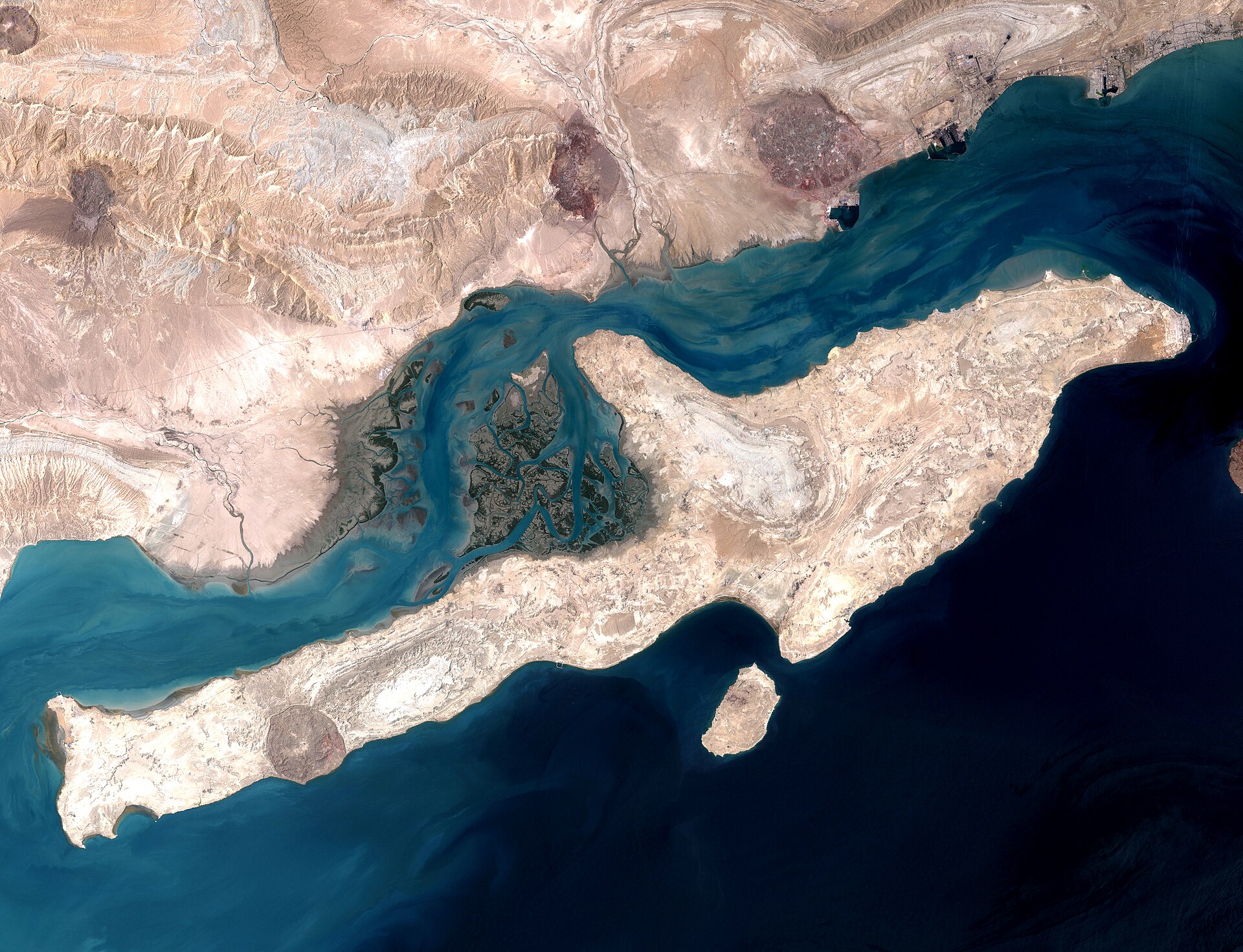
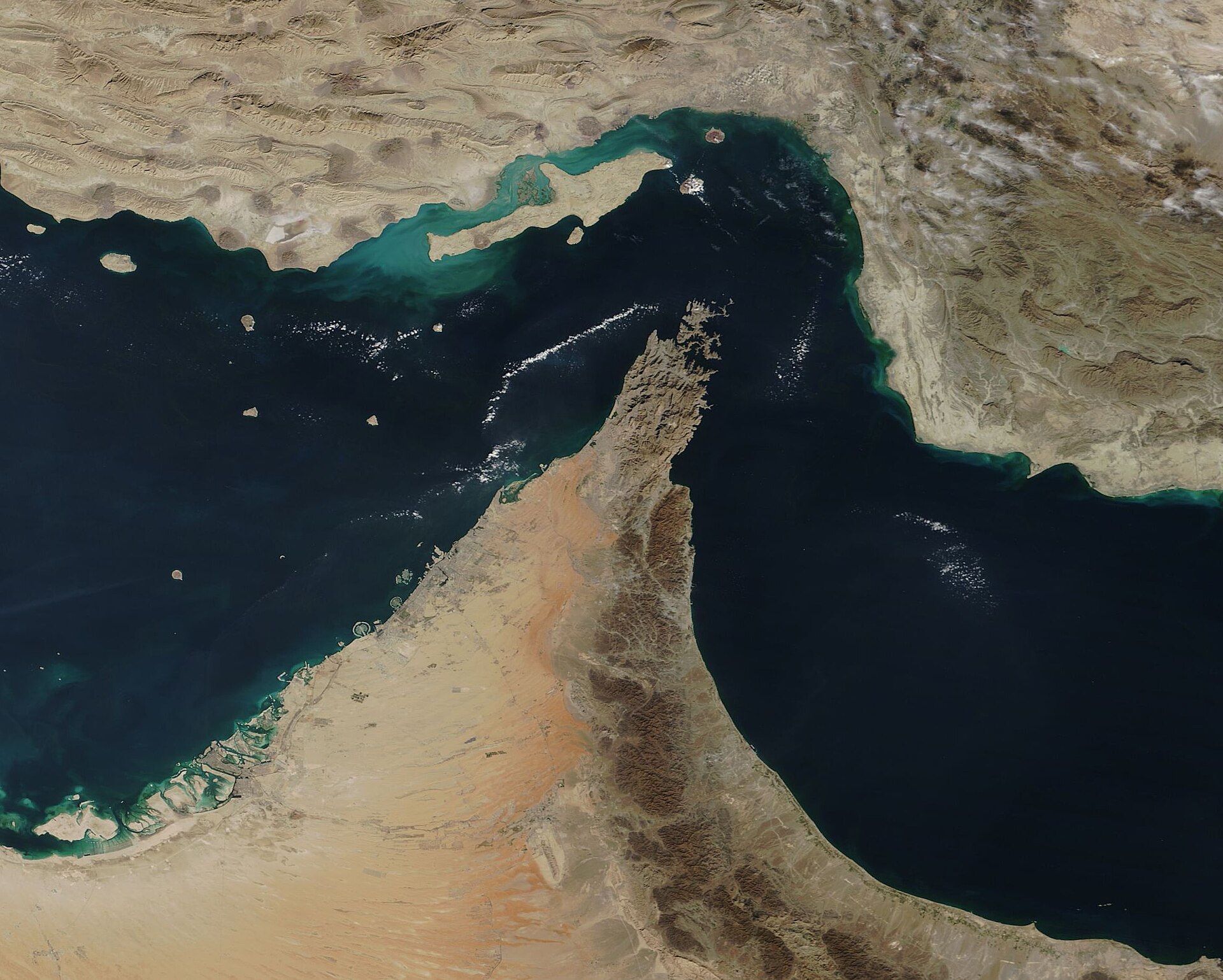
The internationally recognized Traffic Separation Scheme routes inbound and outbound shipping through two-mile-wide lanes separated by a two-mile buffer zone, running partly through Omani and partly through Iranian waters. The IRGC’s replacement routing sends all traffic through the Qeshm-Larak channel: inbound north of Larak Island, outbound south. The corridor narrows to approximately five nautical miles and runs entirely within Iranian territorial waters.
The rerouting achieves three objectives simultaneously. It places every transiting vessel inside Iranian sovereign jurisdiction. It channels traffic into a corridor narrow enough for shore-based observation and interception. And it renders the internationally recognized lanes — which Iran has designated a danger zone and which remain mined — commercially unusable without Iranian mine-clearance cooperation.
| Metric | Pre-War (Feb 2026) | Post-Ceasefire (April 9-10) |
|---|---|---|
| Daily vessel transits | 100-140 | ~6 |
| Routing | International TSS (Omani/Iranian waters) | Larak corridor (Iranian waters only) |
| Corridor width | ~6 miles (two lanes + buffer) | ~5 nautical miles |
| Authorization required | None (transit passage) | Express IRGC permission |
| Fee | None | $1/barrel (~$2M per laden VLCC) |
| Payment method | N/A | Yuan via Kunlun Bank/CIPS, Bitcoin, USDT |
| Tankers stranded west of Hormuz | 0 | ~800 |
| AIS-dark events (48 hours) | Minimal | 168 |
C. Uday Bhaskar, a maritime analyst, told Al Jazeera that ship owners facing mine damage exposure “would likely heed Iranian warnings” — compliance driven by risk calculation, not legal acceptance of Iran’s claims. A ship owner who complies because the alternative is a mine strike is as compliant as one who accepts Iranian sovereignty. The IRGC does not need legal recognition. It needs behavioral compliance, and the minefield provides it.
The Arhimeda and the Exemption Architecture
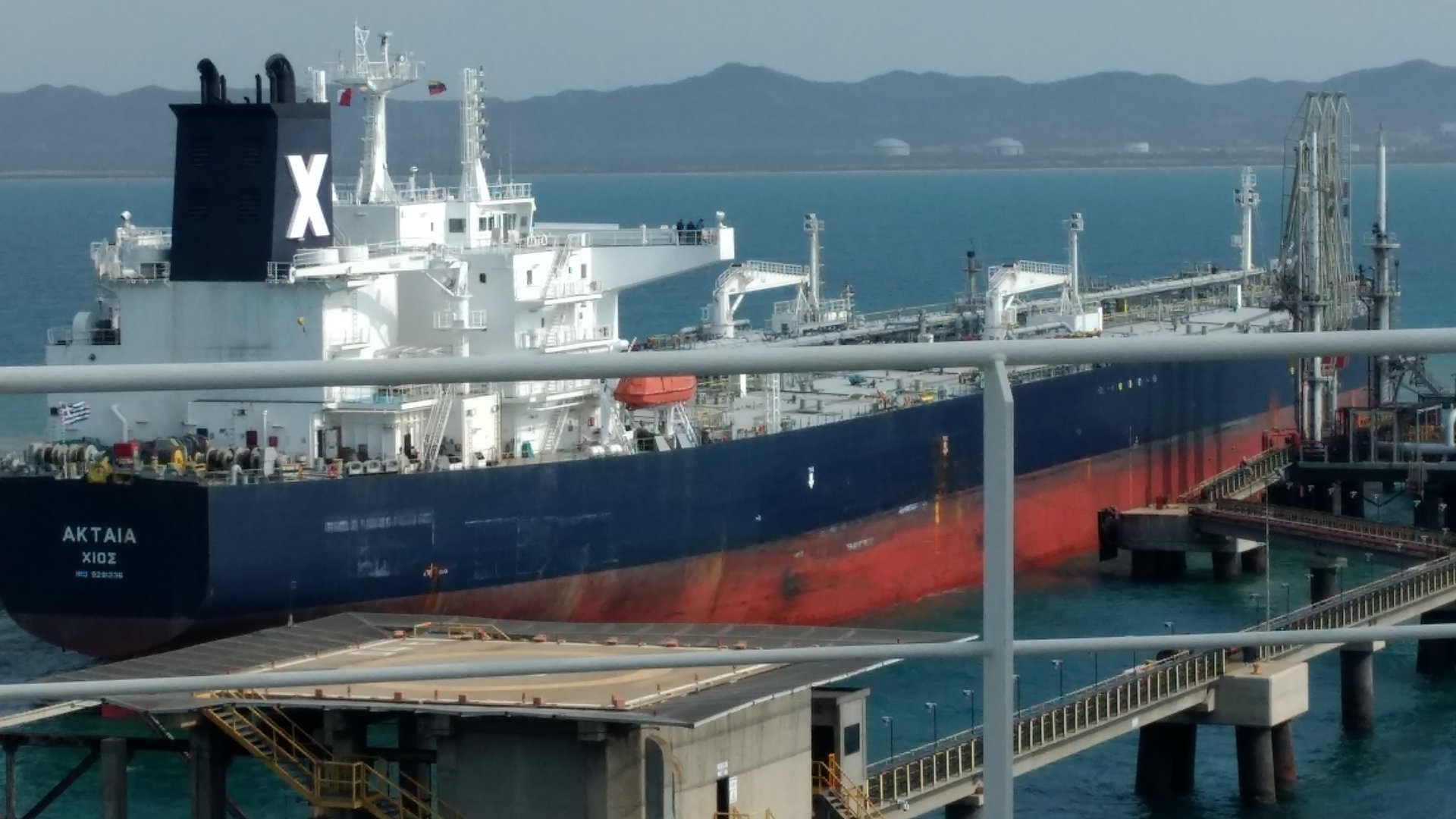
On April 10, the Russia-flagged VLCC Arhimeda transited westward into the Persian Gulf toward Kharg Island. The vessel — formerly named Vizuri, sanctioned by the US Treasury in July 2024 for transporting Venezuelan crude — was reflagged to Russia in January 2026. Its transit on the same day as the IRGC’s “new stage” declaration was the operational proof of a two-tier system: destroy-on-sight for the unauthorized, smooth passage for the exempted.
The exemption architecture began with five “friendly” nations — China, Russia, India, Iraq, and Pakistan — and has since expanded to approximately eleven, quietly adding Turkey, Malaysia, Thailand, the Philippines, France (one CMA CGM vessel), Japan (one Mitsui OSK LNG tanker), and Oman. The expansion follows a pattern: nations that maintain diplomatic engagement with Tehran or that supply goods Iran needs receive passage rights. US and Israeli-linked vessels are denied transit entirely.
The fee structure — $1 per barrel of crude cargo, approximately $2 million for a laden VLCC — is settled in Chinese yuan via Kunlun Bank through CIPS, in Bitcoin, or in USDT on the Tron blockchain. Every element of the payment mechanism is designed to bypass SWIFT and US secondary sanctions. Iran’s parliament authorized collection in rials and “digital currencies,” providing statutory cover for what amounts to a toll on an international waterway.
UNCLOS Article 26 prohibits charges on vessels exercising transit passage except as payment for specific services rendered to the vessel. Iran’s $1/barrel flat fee — identical regardless of vessel size, cargo type, or service provided — does not qualify. Tehran’s parliamentary legislation attempts to reframe it as a “management fee” for mine clearance and route maintenance. The legal argument is weak. The enforcement mechanism — a minefield and a destroy-on-sight order — is not.
Can the Islamabad Talks Bind the IRGC Navy?
The Islamabad bilateral format places Vance opposite Ghalibaf. Ghalibaf is the speaker of Iran’s parliament. He does not command the IRGC Navy. He does not sit on the Supreme National Security Council. He cannot issue operational directives to the Guards. His authority over the strait is precisely zero.
Araghchi, who negotiated the ceasefire text, reports to President Pezeshkian. The IRGC reports to the Supreme Leader through the SNSC. Pakistan’s role as mediator extends to facilitating communication between capitals, not to adjudicating disputes between Iranian institutions. There is no mechanism in the Islamabad format — or in any format currently proposed — that binds the IRGC Navy’s operational directives to commitments made by the Foreign Ministry.
The IRGC’s April 5-6 pre-ceasefire statement that the strait “will never return to its previous status, especially for the US and Israel” was issued before any talks began. The April 10 post-ceasefire declaration confirmed the same position. The ceasefire changed nothing about the IRGC’s operational posture in the strait. It changed the diplomatic vocabulary surrounding it.
Saudi Arabia’s exclusion from the April 10 bilateral compounds the problem. Riyadh held a co-guarantor seat at the March 29-30 multilateral round but was not invited to the principal-level talks. The kingdom whose oil exports depend on Hormuz — and whose ADNOC counterpart publicly stated the strait “is not open” — has no seat at the table where the strait’s status is nominally being discussed.
Why 2026 Has No Tanker War Precedent
During the 1984-88 Tanker War, Iran deliberately kept the Strait of Hormuz open. Tehran limited its attacks to Iraqi-flagged and Iraqi-linked shipping, calculating — correctly — that closing the strait entirely would trigger direct US military intervention. The 1987-88 Operation Earnest Will convoy escorts and the 1988 Operation Praying Mantis engagement confirmed the logic: Iran could harass shipping, but it could not close the waterway without inviting a response it could not absorb.
The 2026 situation inverts every element of that calculus. Iran has already absorbed US military strikes — two rounds at Kharg Island, 50-plus military targets destroyed on April 7 alone, 140-plus installations hit across the war. The IRGC absorbed the strikes and maintained its strait posture. The deterrent that kept Hormuz open for 40 years — the threat of American military action — has been expended. What remains is the physical reality: a minefield, a five-nautical-mile corridor under Iranian territorial jurisdiction, and a destroy-on-sight order.
Mark P. Nevitt, a retired Navy commander and associate professor at Emory University School of Law, argued in Just Security that the transit passage regime is “a foundational right under customary international law and UNCLOS” and that “Article 37 establishes rights not suspended by armed conflict.” Julien Raynaut, head of the French Association of Maritime Law, concurred that Iran “remains subject to international law and notably this customary right of passage” even without having ratified UNCLOS.
Both are correct on the law. Neither addresses the enforcement problem. The US — also not an UNCLOS party — cannot invoke UNCLOS dispute resolution mechanisms. The UN Security Council route has already failed: Bahrain co-drafted a Hormuz resolution across six drafts over 15 days, stripped from Chapter VII to non-binding, and it was vetoed by Russia and China. The legal right of transit passage exists. The institutional capacity to enforce it against a state that controls the physical waterway does not.
“The two days of silence in military battle clearly showed to friends and enemies that the management of the Strait of Hormuz has entered a new phase.”
IRGC Navy statement, April 10 2026
The 51-Day Problem
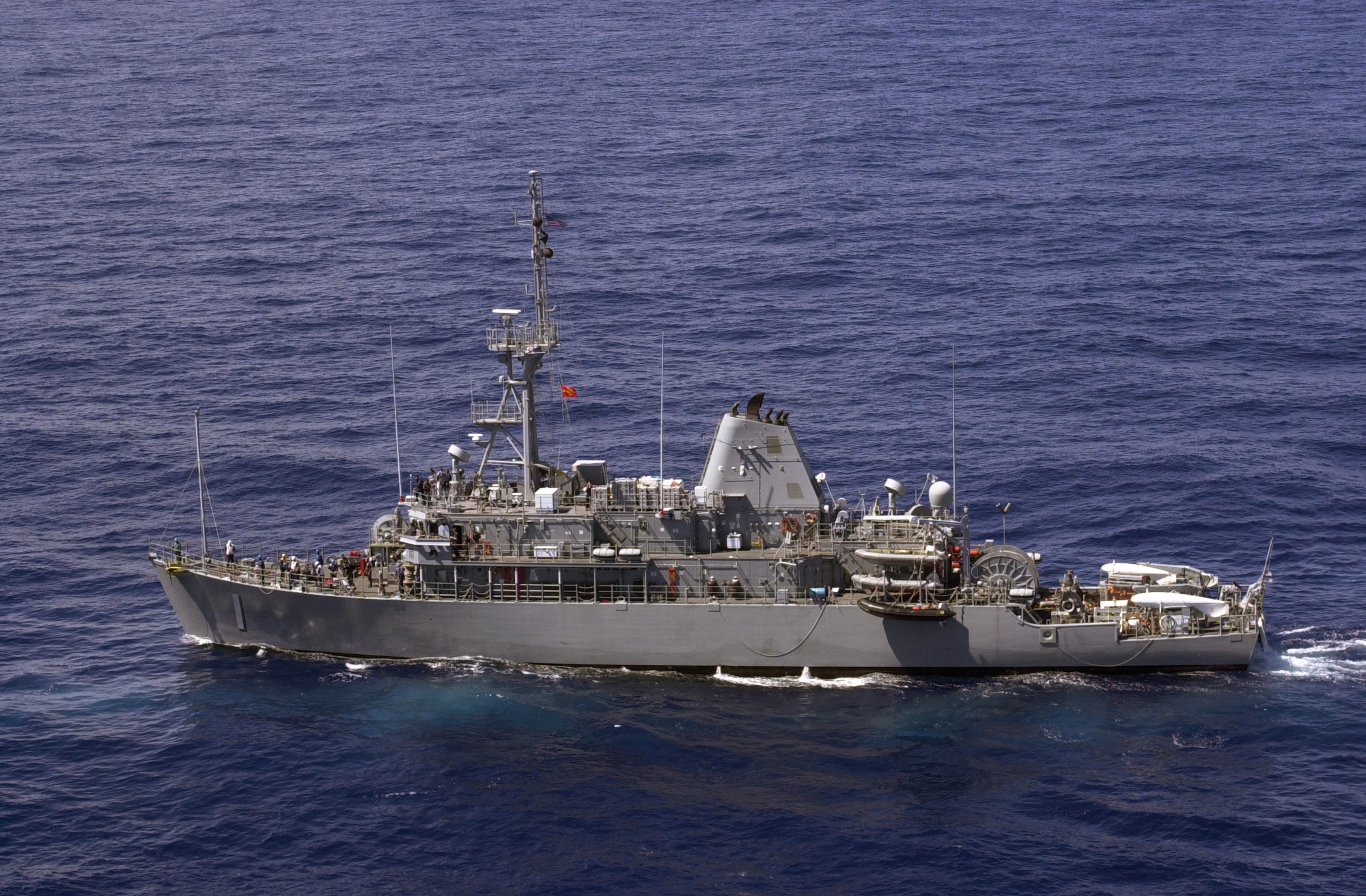
Even in the most optimistic scenario — a comprehensive Phase 2 deal in which Iran agrees to restore the international Traffic Separation Scheme — the physical restoration of Hormuz faces an irreducible timeline. The standard shipping lanes are mined. Clearing approximately 200 square miles of mined waterway took 51 days in Kuwait in 1991, using a full coalition mine countermeasure fleet. The US has no MCM vessels in the Gulf: the four Avenger-class ships based in Bahrain were retired in September 2025; the three LCS with mine countermeasure modules are deployed to the Pacific.
Iran’s mine-clearance teams have cleared the Larak corridor — five nautical miles wide, entirely within Iranian waters. They have not cleared the international lanes. Even if the IRGC were to rescind its authorization requirement tomorrow, commercial shipping could not safely use the standard routing. The only cleared path runs through Iranian territorial waters, under Iranian control, subject to Iranian fees.
Windward AI’s post-ceasefire assessment — titled “A Controlled System, Not a Recovery” — captured the distinction the competing diplomatic narratives obscure. Post-ceasefire throughput of roughly six vessels per 24 hours, against approximately 800 tankers waiting west of Hormuz, is not a recovery. It is an access regime operating at approximately four percent of pre-war capacity, with every transit individually authorized by the force that mined the waterway.
The Cape of Good Hope routing alternative — 41 days versus 25 days for a Europe-Gulf voyage, adding 6,500 nautical miles and roughly 25 percent to shipping costs — is not a substitute. It is an emergency bypass that makes Gulf crude exports more expensive than competitors’ for as long as Hormuz remains under IRGC management. Saudi Arabia’s East-West Pipeline to Yanbu handles 7 million barrels per day at maximum capacity; pre-war Saudi exports ran above that figure.
Frequently Asked Questions
Has Iran formally claimed sovereignty over the Strait of Hormuz?
Iran has not made a blanket sovereignty claim over the entire strait, which would be legally untenable given Oman’s coastline on the southern side. The Majlis legislation of March 31 codifies “sovereignty, control and oversight” over Iran’s portion, while the IRGC’s rerouting of traffic through the Larak corridor achieves de facto control without requiring a de jure claim to the Omani side. Oman’s inclusion on the IRGC’s exemption list suggests a bilateral access arrangement that has not been publicly disclosed — the two countries share a history of back-channel coordination, including Oman’s role as the original venue for US-Iran nuclear talks in 2012-13.
Why can’t the US Navy simply clear the mines and reopen the standard shipping lanes?
The US Navy retired its four Bahrain-based Avenger-class mine countermeasure ships in September 2025 under a fleet modernization plan that expected LCS mine countermeasure mission modules to fill the gap. Those three LCS are currently in the Western Pacific. The Navy’s next-generation mine hunting systems — the Unmanned Influence Sweep System and the Knifefish unmanned underwater vehicle — are both still in low-rate initial production and are not operationally deployed. Coalition partners with MCM capability — the UK’s Hunt-class and Sandown-class ships, France’s Tripartite-class — would need to transit to the Gulf and then conduct clearance operations under a standing IRGC destroy-on-sight order. The 51-day Kuwait estimate assumes uncontested operations by a full coalition fleet, conditions that do not exist.
What happens when the two-week ceasefire “coordination” window expires?
Araghchi’s language specified “a period of two weeks” for safe passage “via coordination with Iran’s Armed Forces.” That window expires approximately April 22 — the same date Indonesia begins Hajj departures, with 221,000 pilgrims booked — and has no automatic extension mechanism. If Phase 2 talks have not produced an agreement, the IRGC’s standing authorization requirement and destroy-on-sight order become the only operative framework. The Majlis legislation, the Supreme Leader’s mandate, and the physical minefield all persist independently of any ceasefire’s diplomatic timeline. Iran’s negotiating position is structured so that the passage of time strengthens, rather than weakens, the IRGC’s physical control.
Could shipping companies simply pay the IRGC fee and resume normal operations?
Some already are — the roughly six vessels transiting per day are operating under IRGC authorization and, where applicable, paying the $1/barrel fee. But compliance creates its own legal exposure. The fee is settled through Kunlun Bank (under US secondary sanctions since 2012), via CIPS, or in cryptocurrency on the Tron blockchain. Any company that pays through these channels risks triggering US sanctions liability under OFAC secondary-sanctions rules. P&I clubs — the mutual insurers that cover roughly 90 percent of global shipping tonnage — have not issued guidance confirming coverage for vessels transiting under IRGC authorization. Without P&I cover, a vessel is effectively uninsurable, and most port states deny entry to uninsured ships. The practical result is that fee compliance and insurance compliance are currently irreconcilable.
Is the IRGC’s Hormuz regime permanent or a bargaining position?
The IRGC’s own statements — “will never return to its previous status” (April 5), “new phase” (April 10) — frame it as permanent. Iran has previously used maximum positions as opening offers in negotiations; the 2015 JCPOA involved Iran accepting constraints it had previously called non-negotiable. The structural difference in 2026 is that the Hormuz regime rests on four independent foundations — Supreme Leader mandate, IRGC constitutional autonomy, Majlis statute, and a physical minefield — each requiring a separate political or military process to dismantle. The JCPOA required Iran to modify its nuclear program, which sat under centralized AEOI control and could be unwound by executive decision. Dismantling the Hormuz regime requires a Majlis vote, a Supreme Leader reversal, IRGC compliance, and 51 days of uncontested mine clearance.