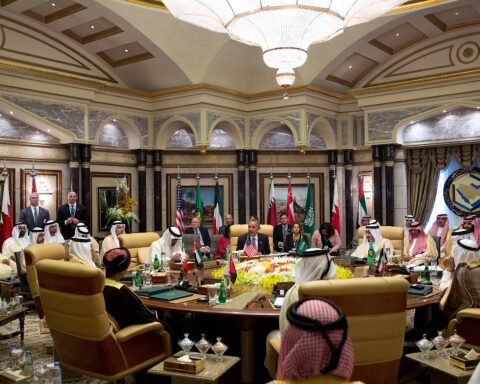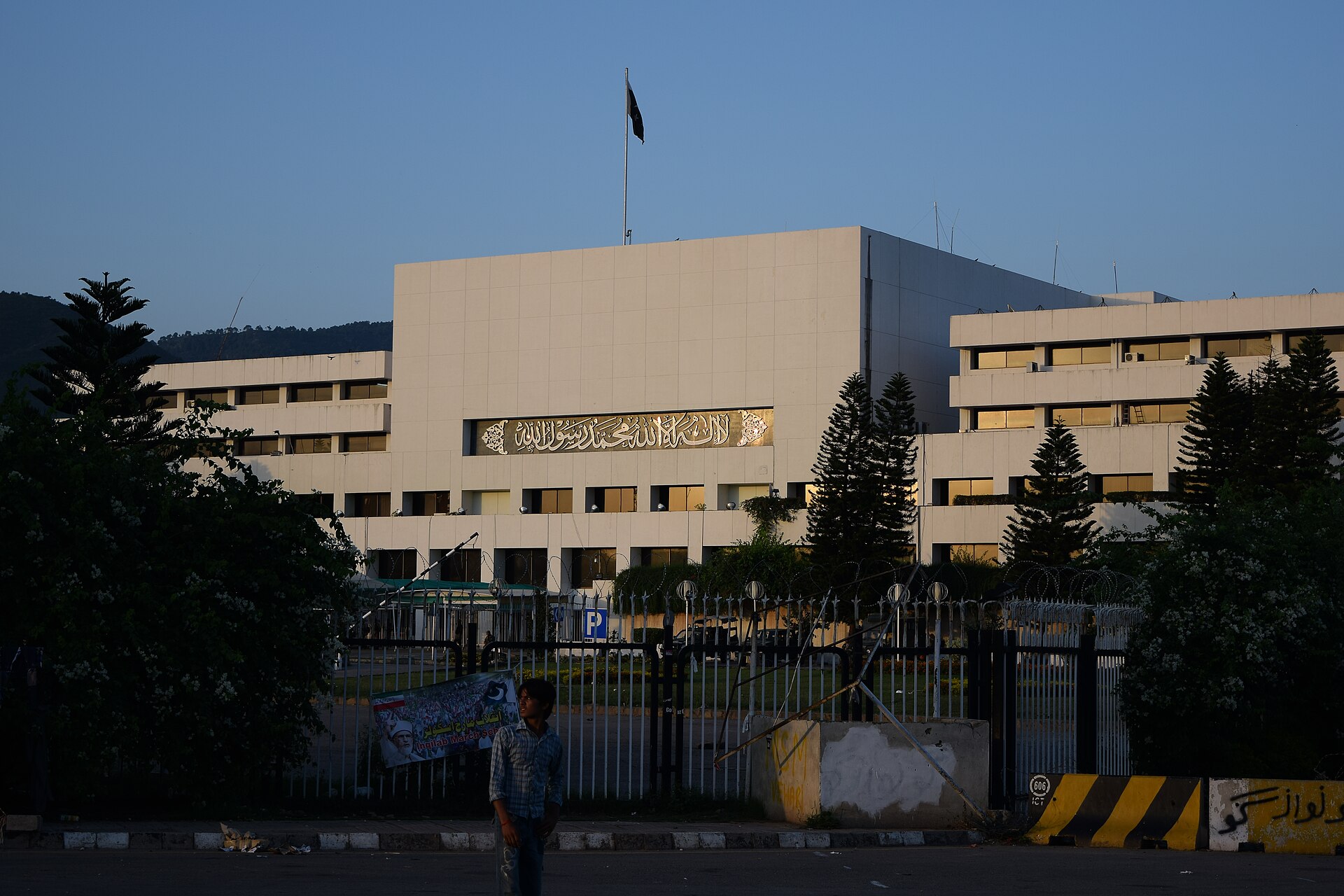
ISLAMABAD — Mediating countries led by Pakistan are pressing to convene the first face-to-face meeting between American and Iranian officials since the war began on February 28, with Islamabad emerging as the only venue both sides have signalled a willingness to accept, according to officials briefed on the diplomatic push. The planned talks, reported by Axios on March 23 and confirmed by Pakistani and Israeli officials, would bring White House Special Envoy Steve Witkoff and senior adviser Jared Kushner to Pakistan’s capital as early as this week to sit across from Iran’s Parliament Speaker Mohammad Bagher Ghalibaf and other senior Iranian representatives.
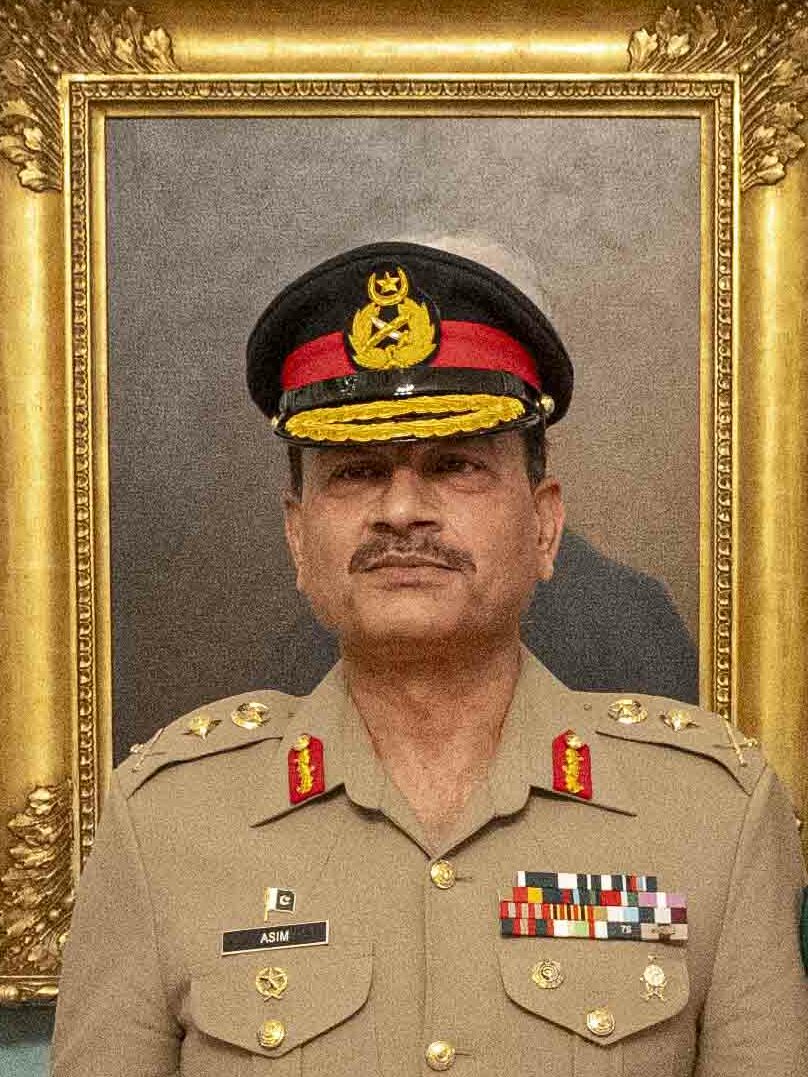
The diplomatic manoeuvre follows President Donald Trump’s decision on March 23 to postpone threatened strikes against Iran’s power grid and energy infrastructure for five days, citing what he described as “very productive conversations” with Tehran. Iran’s Foreign Ministry immediately denied any talks had taken place, calling Trump’s claims an attempt to manipulate oil markets. Yet behind the denials, intermediaries from at least four countries have been shuttling messages between Washington and Tehran for days, according to Reuters, and Pakistan’s army chief General Asim Munir spoke directly with Trump by telephone on Sunday to pitch Islamabad as a neutral meeting ground.
Table of Contents
- Why Did Pakistan Emerge as the Venue for US-Iran Talks?
- Who Is Mohammad Bagher Ghalibaf and Why Is He Leading Iran’s Side?
- The American Delegation and What Washington Wants
- Why Is Tehran Denying Talks While Preparing to Negotiate?
- Where Does Saudi Arabia Stand on the Islamabad Channel?
- What Would a Deal Need to Include?
- The Four-Country Mediator Network Behind the Scenes
- What Happens If Talks Fail Before Trump’s Five-Day Window Closes?
- Frequently Asked Questions
Why Did Pakistan Emerge as the Venue for US-Iran Talks?
Islamabad’s selection as the venue for potential US-Iran negotiations reflects Pakistan’s unusual position as one of the few countries that maintains working relationships with all three parties to the conflict: the United States, Iran, and Saudi Arabia. Pakistan shares a 909-kilometre border with Iran, hosts American military cooperation programmes, and maintains a formal defence pact with Riyadh that has already seen Pakistani troops deployed to the Kingdom since the war began.
The diplomatic groundwork accelerated rapidly over the weekend. Pakistan’s army chief, General Asim Munir, spoke directly with President Trump on Sunday, according to two people briefed on the call, while Prime Minister Muhammad Shehbaz Sharif held parallel talks with Iranian President Masoud Pezeshkian on Monday, according to the Irish Times. Islamabad offered itself as a bridge between parties that cannot be seen communicating directly.

A Pakistani official told Fox News that US Vice President JD Vance, along with Witkoff and Kushner, was expected to meet Iranian officials in Islamabad this week. An Israeli official separately confirmed to Axios that mediating countries were trying to convene a meeting in Pakistan’s capital, describing Ghalibaf as Iran’s likely representative.
Pakistan’s neutrality, however, is a carefully managed fiction. Islamabad has formal defence agreements with Saudi Arabia and has deployed military personnel to the Kingdom since early March. Its troops operate alongside forces from Turkey, Egypt, and several Gulf states in what has become the largest multinational security operation in the Middle East since the 1991 Gulf War. Hosting peace talks while simultaneously providing military support to one side is a diplomatic balancing act with few historical precedents.
Who Is Mohammad Bagher Ghalibaf and Why Is He Leading Iran’s Side?
Mohammad Bagher Ghalibaf is a 65-year-old former Islamic Revolutionary Guard Corps general who now serves as speaker of Iran’s parliament, the Majlis. His reported selection as Iran’s lead negotiator carries significant implications for both the substance and the seriousness of any talks. Unlike the reformist diplomats who negotiated the 2015 nuclear deal, Ghalibaf is a product of the IRGC’s hardline establishment — a commander who fought in the Iran-Iraq War and later served as head of the IRGC’s Aerospace Force.
Ghalibaf joined the IRGC at its founding in 1980, serving throughout the eight-year war with Iraq. By 1998, he had risen to command the aerospace division, overseeing Iran’s early ballistic missile development. He later served as Tehran’s mayor for 12 years and ran for president three times, most recently in 2024. He has been speaker of parliament since May 2024.
His significance in the current context is threefold, according to analysts at the Hill and the Jerusalem Post. First, he is one of the most senior Iranian officials confirmed alive and functioning after weeks of US and Israeli strikes that have killed multiple military commanders and disrupted Iran’s command structure. Second, he is a close associate of the new Supreme Leader, Mojtaba Khamenei, giving any commitments he makes a degree of authority that a foreign ministry official could not provide. Third, his IRGC background means the military establishment would find it difficult to disavow any agreement he signs.
Ghalibaf has publicly denied that any negotiations have taken place. On Monday, he called Trump’s claims about productive talks “fake news” designed to manipulate oil markets, according to Turkiye Today. The denial is consistent with Tehran’s broader posture of refusing to acknowledge engagement with Washington while the war continues.
The American Delegation and What Washington Wants
The reported US delegation reflects the Trump administration’s preference for dealmakers over career diplomats. Steve Witkoff, a New York real estate developer turned special envoy, has been Trump’s primary emissary in the region since the war began. Jared Kushner, the president’s son-in-law and a senior adviser, brings experience from the Abraham Accords negotiations but no prior direct engagement with Iranian officials.
The potential addition of Vice President JD Vance would elevate the talks to a level not seen in US-Iran diplomacy since the 1979 hostage crisis. Vance’s involvement, if confirmed, would signal that Washington views the Islamabad channel as a genuine pathway to ending the war rather than a tactical pause to regroup.
Washington’s demands, according to multiple reports from NBC News, PBS, and the Times of Israel, centre on several interconnected issues. The United States wants Iran to reopen the Strait of Hormuz, which Iran’s Revolutionary Guards effectively closed on March 2, choking approximately 20 percent of the world’s daily oil supply. Trump has also demanded that Iran commit to ending its nuclear weapons programme, surrender its stockpiles of highly enriched uranium, cease its ballistic missile development, and dismantle its network of regional proxy forces.
Trump claimed on Monday that Iran had already agreed to several of these conditions, including a commitment not to pursue nuclear weapons and to reopen the Strait. Iran flatly denied these claims. The gap between Trump’s public assertions and Tehran’s denials has become a defining feature of the diplomatic landscape, one that sent prediction markets into a frenzy and contributed to oil’s largest single-day crash since the war began.
Why Is Tehran Denying Talks While Preparing to Negotiate?
Iran’s simultaneous denial of negotiations and apparent preparation for them follows a pattern familiar to Gulf diplomats. Tehran cannot acknowledge talks without appearing to negotiate under military duress, which would undermine the regime’s legitimacy with both its domestic audience and its remaining proxy network across the region. The denial provides political cover for engagement that is already occurring through intermediaries.
Iranian Foreign Ministry spokesperson Esmaeil Baghaei stated on Monday that there would be “no negotiations until Iran’s goals have been achieved,” according to Al Jazeera. Foreign Minister Abbas Araghchi set out three conditions for ending the war: a complete and permanent ceasefire, guarantees that attacks will not resume, and compensation for damages sustained during 25 days of bombardment.
Behind the public stance, however, the selection of Ghalibaf as the reported point man suggests Tehran is preparing for substantive engagement. Ghalibaf’s IRGC credentials insulate the negotiations from accusations of capitulation. A deal brokered by a former Revolutionary Guard commander carries a fundamentally different domestic political weight than one negotiated by a reformist foreign minister.
According to the Times of Israel, citing diplomatic sources, Iran may be willing to offer more than its public demands suggest. Behind the scenes, Tehran has reportedly signalled a willingness to halt its ballistic missile programme for five years, reduce uranium enrichment levels, and enter discussions over its stockpile of 60 percent enriched uranium — concessions that would have been unthinkable before US and Israeli strikes destroyed significant portions of Iran’s nuclear infrastructure.
Where Does Saudi Arabia Stand on the Islamabad Channel?
Saudi Arabia occupies a paradoxical position in the Islamabad diplomatic track. Riyadh expelled Iran’s military attache and four embassy staff on March 21, giving them 24 hours to leave the Kingdom after weeks of drone and missile strikes on Saudi territory. Yet Saudi Arabia remains one of the countries actively involved in the mediation network that is pushing the talks forward.
The contradiction reflects Crown Prince Mohammed bin Salman’s dual-track approach to the conflict. MBS has maintained Saudi Arabia’s formal non-belligerent status despite absorbing hundreds of Iranian drone and missile attacks, while simultaneously allowing US forces to operate from Saudi bases and providing logistical support to the coalition. The expulsion of Iranian diplomats served as a warning to Tehran without constituting a declaration of war.
Saudi Arabia’s interests in any peace deal are substantial but distinct from Washington’s priorities. Riyadh needs the Strait of Hormuz reopened — Aramco’s eastern terminals remain effectively blockaded, forcing crude exports through the Red Sea port of Yanbu at reduced capacity. The Kingdom also wants an end to the daily barrage of drones and missiles that has struck oil facilities, military installations, residential areas, and airports across the country.
At the same time, a hasty peace that leaves Iran’s missile capabilities intact would leave Saudi Arabia more vulnerable than before the war began. The conflict has demonstrated that Iran can reach every major Saudi city with ballistic missiles, a reality that shapes Riyadh’s approach to any negotiated settlement. Saudi officials have communicated through intermediaries that any deal must address Iran’s long-range strike capabilities, not merely its nuclear programme.
The talks carry particular significance for Saudi Arabia, which despite absorbing more than 600 Iranian strikes has no seat at the negotiating table and faces a deal that may not address its core security demands.
Saudi Arabia also brokered a separate diplomatic achievement during the Eid al-Fitr holiday. Along with Qatar and Turkey, Riyadh mediated a temporary pause in hostilities between Pakistan and Afghanistan, a ceasefire that ran from March 19 to March 24 and represented the first cessation of violence since Pakistan declared “open war” on Afghanistan in February. The Eid ceasefire demonstrated Saudi Arabia’s continued capacity to broker regional agreements even while absorbing Iranian attacks on its own territory.
What Would a Deal Need to Include?
Any agreement to end the Iran war faces extraordinary complexity. The conflict involves three primary belligerents — the United States, Israel, and Iran — and at least a dozen secondary parties with competing interests. A deal brokered in Islamabad would need to address military, nuclear, economic, and territorial dimensions simultaneously.
The immediate priority for both sides is the Strait of Hormuz. Iran’s IRGC closed the strait on March 2, reducing daily oil transit from more than 100 vessels to fewer than 21 tankers in the three weeks since, according to S&P Global Market Intelligence. The blockade has pushed Brent crude from $73 per barrel before the war to a peak of $126 before Monday’s crash to below $100. Trump’s offer to share control of Hormuz with Iran suggested a willingness to compromise on the strait’s governance, though Saudi Arabia and other Gulf states have rejected any arrangement that gives Tehran veto power over their energy exports.
| Iran’s Demands | US Demands | Saudi Arabia’s Priorities |
|---|---|---|
| Complete, permanent ceasefire | Reopen Strait of Hormuz | End drone and missile strikes |
| Guarantees war will not resume | End nuclear weapons programme | Reopen Hormuz for Aramco exports |
| Compensation for war damages | Surrender enriched uranium stockpiles | Limit Iran’s ballistic missile range |
| Closure of US military bases in region | Cease ballistic missile development | Dismantle proxy networks near Saudi borders |
| Recognition of Iran’s regional role | Dismantle proxy forces (Hezbollah, Houthis) | Security guarantees for Gulf infrastructure |
The nuclear dimension has been partially simplified by the war itself. US and Israeli strikes have destroyed significant portions of Iran’s nuclear infrastructure, including centrifuge facilities at Natanz and Fordow, missile production sites in Tehran, and research facilities at Malek-Ashtar University of Technology. According to CENTCOM, more than 9,000 Iranian targets have been struck since February 28, including missile sites, drone manufacturing facilities, and IRGC intelligence centres.
Iran’s reported willingness to halt ballistic missile development for five years and reduce enrichment represents a significant shift from its pre-war position. Before the conflict, Tehran refused to discuss its missile programme in any diplomatic format, describing it as a non-negotiable sovereign right. The destruction of an estimated 140 Iranian naval vessels and much of its missile production capacity has altered the calculus.
The Four-Country Mediator Network Behind the Scenes
The talks, if they materialise, would be the product of an informal mediator network involving Pakistan, Turkey, Egypt, and Oman. Each country brings a distinct channel of communication and a different set of relationships to the table.
Pakistan’s role as host reflects its army chief’s direct line to both Trump and Iran’s military establishment. General Munir, a former intelligence chief, has cultivated relationships across the region’s security establishments. His call with Trump on Sunday followed weeks of Pakistani shuttle diplomacy, including Prime Minister Sharif’s visit to Riyadh in early March and ongoing communication with Iranian President Pezeshkian.
Turkey has served as one of the primary message carriers between Washington and Tehran, according to CBS News and Reuters. Ankara maintains diplomatic relations with both sides and has used its position as a NATO member with an independent foreign policy to position itself as an honest broker. Turkish officials have been passing messages alongside Egyptian and British counterparts.
Egypt, under President Abdel Fattah el-Sisi, has quietly emerged as a conduit after pledging to defend the Gulf while maintaining communication channels with Tehran. Oman, the traditional discreet intermediary in Gulf affairs, has played a background role consistent with its decades-long practice of facilitating US-Iran communication without taking public positions.
The four-country network represents an expansion from the twelve mediators previously mapped as attempting to end the conflict. The difference now is focus: rather than competing mediation tracks, the four countries appear to be coordinating toward a single venue and a defined timeline imposed by Trump’s five-day window.
What Happens If Talks Fail Before Trump’s Five-Day Window Closes?
Trump’s postponement of strikes against Iran’s power plants and energy infrastructure began on March 23, giving both sides until approximately March 28 to demonstrate progress. If no meeting materialises or talks collapse, the president has made clear that attacks on Iran’s civilian energy grid will resume — a threat that Tehran has said would trigger the complete and permanent closure of the Strait of Hormuz.
The economic stakes are immense. Oil prices fell more than 13 percent on Monday after Trump’s announcement, their largest single-day decline since the war began, as markets priced in the possibility of a deal. A collapse in talks would likely reverse those gains and push crude back above $120 per barrel, according to Goldman Sachs analysts cited by Bloomberg.
For Saudi Arabia, the five-day window creates both opportunity and risk. A successful negotiation that reopens Hormuz would restore Aramco’s full export capacity and begin reversing the economic damage that Goldman Sachs has warned could trigger the Gulf’s worst recession in a generation. A failure, followed by US strikes on Iran’s power grid, could escalate the conflict to a level that draws Saudi Arabia directly into combat — a threshold that Crown Prince Mohammed bin Salman has thus far managed to avoid.
The diplomatic track through Islamabad represents the most concrete pathway to de-escalation since the war began 25 days ago. Whether Ghalibaf will sit across from Witkoff and Kushner this week may determine whether the conflict measured in weeks becomes one measured in months.
Frequently Asked Questions
When are the Islamabad talks expected to take place?
Mediating countries are pushing for a meeting later this week, potentially before Trump’s five-day pause on strikes against Iranian energy infrastructure expires around March 28. Pakistani officials have confirmed that Islamabad has been offered as a venue, though no specific date has been publicly announced. The timing depends on whether Iran agrees to send Ghalibaf or another senior representative.
Who will represent each side at the talks?
The United States is expected to send White House Special Envoy Steve Witkoff and senior adviser Jared Kushner, with Vice President JD Vance potentially attending as well. Iran’s Parliament Speaker Mohammad Bagher Ghalibaf has been identified as Tehran’s likely representative, though Iran denies any talks are planned. Pakistan, Turkey, Egypt, and Oman are serving as mediating countries facilitating the diplomatic channel.
Why is Pakistan hosting the talks instead of a Gulf country?
Pakistan maintains working relationships with all parties — it has defence agreements with Saudi Arabia and the United States, shares a 909-kilometre border with Iran, and has historically served as a conduit for regional diplomacy. Gulf countries are directly involved in the conflict as targets of Iranian attacks, making them unacceptable to Tehran as neutral venues. Pakistan’s army chief, General Asim Munir, personally pitched Islamabad to Trump during a phone call on Sunday.
What does Saudi Arabia want from any peace deal?
Saudi Arabia’s priorities include the immediate reopening of the Strait of Hormuz to restore oil export capacity, an end to Iranian drone and missile strikes on Saudi territory, limits on Iran’s ballistic missile capabilities, and the dismantling of proxy networks near Saudi borders. Riyadh has communicated through intermediaries that it will not accept a deal that addresses only Iran’s nuclear programme while leaving its conventional strike capabilities intact.
Has Iran agreed to any conditions?
Iran publicly denies any negotiations are occurring. However, diplomatic sources cited by the Times of Israel report that Tehran has privately signalled willingness to halt ballistic missile development for five years, reduce uranium enrichment, and discuss its stockpile of 60 percent enriched uranium. Iran’s formal demands include a permanent ceasefire, guarantees against future attacks, compensation for war damages, and the closure of US military bases in the region.