
Saudi Arabia holds more than 10,000 heritage and religious sites, yet most Muslim travellers never venture beyond the two Holy Mosques. That is a mistake. From the Quranic landscape of AlUla to the mud-brick birthplace of the Saudi state in Diriyah, the Kingdom offers a trail of Islamic history that stretches back to the earliest days of the Prophet’s mission. This guide, a companion to our Hajj 2026 Guide, maps every significant Islamic heritage site you can visit outside the Haramain — the battlefields where Islam was defended, the mosques where revelation descended, and the ancient cities mentioned by name in the Quran.
Best Time to Visit: October – March (cooler temperatures for outdoor sites)
Getting There: Domestic flights via Saudia/flynas from Riyadh, Jeddah, or Medina; car rental for road trips between sites
Visa Required: Yes — tourist e-visa or Umrah visa
Budget: SAR 400–800 / USD 105–215 per day (mid-range, including transport)
Must-See: Hegra (Mada’in Saleh), Diriyah At-Turaif, Jeddah Al-Balad
Avoid: Visiting outdoor archaeological sites at midday in summer — temperatures exceed 45°C
Why Islamic Heritage Tourism Matters Now
Under Vision 2030, Saudi Arabia is investing billions in restoring and opening Islamic heritage sites that were previously inaccessible or neglected. The Diriyah Gate project alone aims to attract 25 million visitors annually. The Heritage Commission has catalogued approximately 400 sites mentioned in the biography of the Prophet Muhammad and his Companions, and many are now equipped with visitor centres, signage, and guided tour infrastructure for the first time.
For Muslim travellers combining Umrah or Hajj with broader exploration, these sites transform a pilgrimage into a full immersion in Islamic civilisation. For non-Muslim visitors holding a tourist e-visa, many of these destinations are fully accessible — Diriyah, Al-Balad, AlUla, Khaybar, and Najran welcome all nationalities.
Medina Region: Beyond the Prophet’s Mosque
The Medina region contains dozens of Islamic landmarks beyond Al-Masjid an-Nabawi. While Muslim visitors will want to spend time at the Prophet’s Mosque, the sites below reward those willing to explore the wider city and surrounding province.
Masjid Quba — The First Mosque in Islam
Masjid Quba holds the distinction of being the first mosque ever built, its foundation stone laid by the Prophet Muhammad himself on 12 Rabi al-Awwal, 1 AH (16 July 622 CE), the day he arrived in Medina during the Hijra. The Prophet said that praying two rak’ahs in Quba Mosque is equal in reward to performing one Umrah.
The current structure dates from a 1986 reconstruction commissioned by King Fahd and designed by Egyptian architect Abdel-Wahed El-Wakil. It features four minarets, 62 white domes, and a prayer hall spanning over 5,000 square metres that accommodates 20,000 worshippers. The mosque is open 24 hours a day and lies 3.5 km south of the Prophet’s Mosque.
Visitor note: Quba Mosque is accessible only to Muslims. The traditional practice is to perform wudu at home, then pray two rak’ahs of nafl upon arrival. Saturday visits follow the Sunnah, as the Prophet reportedly visited Quba every Saturday.
Masjid al-Qiblatayn — The Mosque of Two Qiblas
Five kilometres northwest of the Prophet’s Mosque stands Masjid al-Qiblatayn, the only mosque in the world historically associated with two prayer directions. Built in 2 AH (623 CE) by Sawad ibn Ghanam, this is where the Prophet Muhammad received the divine command to change the qibla from Jerusalem’s Al-Aqsa Mosque to the Kaaba in Mecca — mid-prayer, during the Dhuhr salah on 15 Sha’ban.
The modern mosque’s architecture deliberately commemorates this pivotal moment: twin domes and twin minarets connected by a small cross-vault symbolise the transition from one qibla to the other. In October 2025, King Salman issued a directive to keep Masjid al-Qiblatayn open 24 hours a day.
The Seven Mosques — Site of the Battle of the Trench
The Sab’a Masajid (Seven Mosques) cluster marks the site of the Battle of Khandaq (the Trench), fought in 5 AH (627 CE) when a coalition of 10,000 Quraysh and allied forces besieged Medina. On the advice of Salman al-Farsi, the Muslims dug a defensive trench along the city’s northern flank — a tactic unknown in Arabian warfare.
The mosques are named after the commanders who held positions along the trench: Al-Fath Mosque (where the Prophet prayed during the siege), Salman al-Farsi Mosque, Abu Bakr as-Siddiq Mosque, Umar ibn al-Khattab Mosque, Ali ibn Abi Talib Mosque, and Fatimah az-Zahra Mosque. Originally seven, six mosques remain today, clustered near Jabal Sila in northern Medina. The Saudi government has restored the Battle of the Trench site as part of Vision 2030’s Medina heritage programme.
Jannat al-Baqi — Islam’s First Cemetery
Adjacent to the eastern wall of the Prophet’s Mosque lies Jannat al-Baqi, the oldest Islamic cemetery in existence. Founded by the Prophet Muhammad, it holds the remains of more than 10,000 of his Companions, including his wives (the Mothers of the Believers), his daughters, his grandson Hasan ibn Ali, and four Shia Imams — Hasan ibn Ali, Ali ibn Husayn (Zayn al-Abidin), Muhammad al-Baqir, and Ja’far al-Sadiq.
The cemetery’s domed mausoleums were demolished in 1925 in accordance with Wahhabi doctrine prohibiting monumental grave construction. Today Baqi is an open, austere ground. Male visitors may enter during brief windows after Fajr and Asr prayers. Women are not permitted inside.
Battle of Badr Site
Approximately 130 kilometres southwest of Medina, the town of Badr preserves the site of Islam’s first and most consequential military victory. On 17 Ramadan, 2 AH (13 March 624 CE), 313 Muslims under the Prophet’s command defeated a Quraysh army nearly three times their size. The Quran describes the battle in Surah Al-Anfal (8:9): “When you sought help from your Lord, and He answered you, ‘Indeed, I will reinforce you with a thousand from the angels.'”
Today visitors can see the Martyrs’ Cemetery (Maqbarat Shuhada Badr), containing the graves of 14 Muslim martyrs; the Al-Arish Mosque; and the expansive plain where the armies clashed. Wadi Yalil and the mountains where angels are said to have descended are also part of the circuit.
Practical tip: The drive from Medina takes 2–3 hours. Hire a local guide — the sites are spread across a wide area and lack comprehensive signage. Visit between November and February for comfortable temperatures. Bring water and sun protection.
Khaybar Oasis
About 150 km northwest of Medina, the fortified oasis of Khaybar was the site of a pivotal 628 CE battle between the early Muslim community and the oasis’s Jewish tribes. The Battle of Khaybar secured the northern approaches to Medina and is remembered in Islamic tradition for the heroism of Ali ibn Abi Talib, who reportedly tore the fortress gate from its hinges.
Archaeological work has revealed that Khaybar’s settlement history stretches back 10,000 years. A massive defensive wall dating to 2250–1950 BCE once encircled the entire oasis, making it one of the earliest fortified towns in the Arabian Peninsula. Saudi Arabia’s Heritage Commission has developed the site with interpretive displays and walking trails, and a glamping resort now operates nearby, blending heritage tourism with desert hospitality.
Mecca Region: Beyond the Haram
Jabal al-Noor and the Cave of Hira
Four kilometres northeast of the Grand Mosque, Jabal al-Noor (the Mountain of Light) rises 642 metres above the Meccan plain. Near its summit, a narrow cave measuring just 3.7 metres long and 1.3 metres wide holds singular importance in Islamic history: this is Ghar Hira, where the Prophet Muhammad received the first five verses of the Quran from the angel Jibril in 610 CE — the opening of Surah Al-Alaq: “Read, in the name of your Lord, who created.”
The climb involves roughly 1,750 stone steps and takes 45 minutes to 1.5 hours depending on fitness and crowd density. During Hajj season, up to 5,000 visitors ascend daily. The Hira Cultural District Centre, covering 67,000 square metres, now includes the Revelation Exhibition, a Holy Quran Museum, and modern visitor facilities.
When to climb: Go at dawn or after Asr prayer to avoid the worst heat. Wear sturdy shoes with good grip — the path is uneven rock. Carry at least two litres of water. The cave itself is small and can feel claustrophobic when crowded.
Jeddah: Al-Balad Historic District
The Jeddah historic district of Al-Balad has served as the gateway to Mecca since the 7th century CE, when Caliph Uthman ibn Affan designated it as the port of arrival for sea-borne pilgrims. In 2014, UNESCO inscribed “Historic Jeddah, the Gate to Makkah” as a World Heritage Site in recognition of its unique blend of Red Sea coral-stone architecture and multicultural Islamic heritage.
The district’s tower houses — built from coral blocks extracted from the Red Sea, with ornate wooden rawasheen (projecting latticed windows) — represent a distinctive Hijazi architectural tradition shaped by centuries of trade between Arabia, Africa, India, and Southeast Asia. The Al-Shafi’i Mosque, one of the oldest in Jeddah, anchors the district’s religious heritage, while the restored merchant houses of Beit Nassif and Beit Baashan showcase the wealth of the Hajj trade economy.
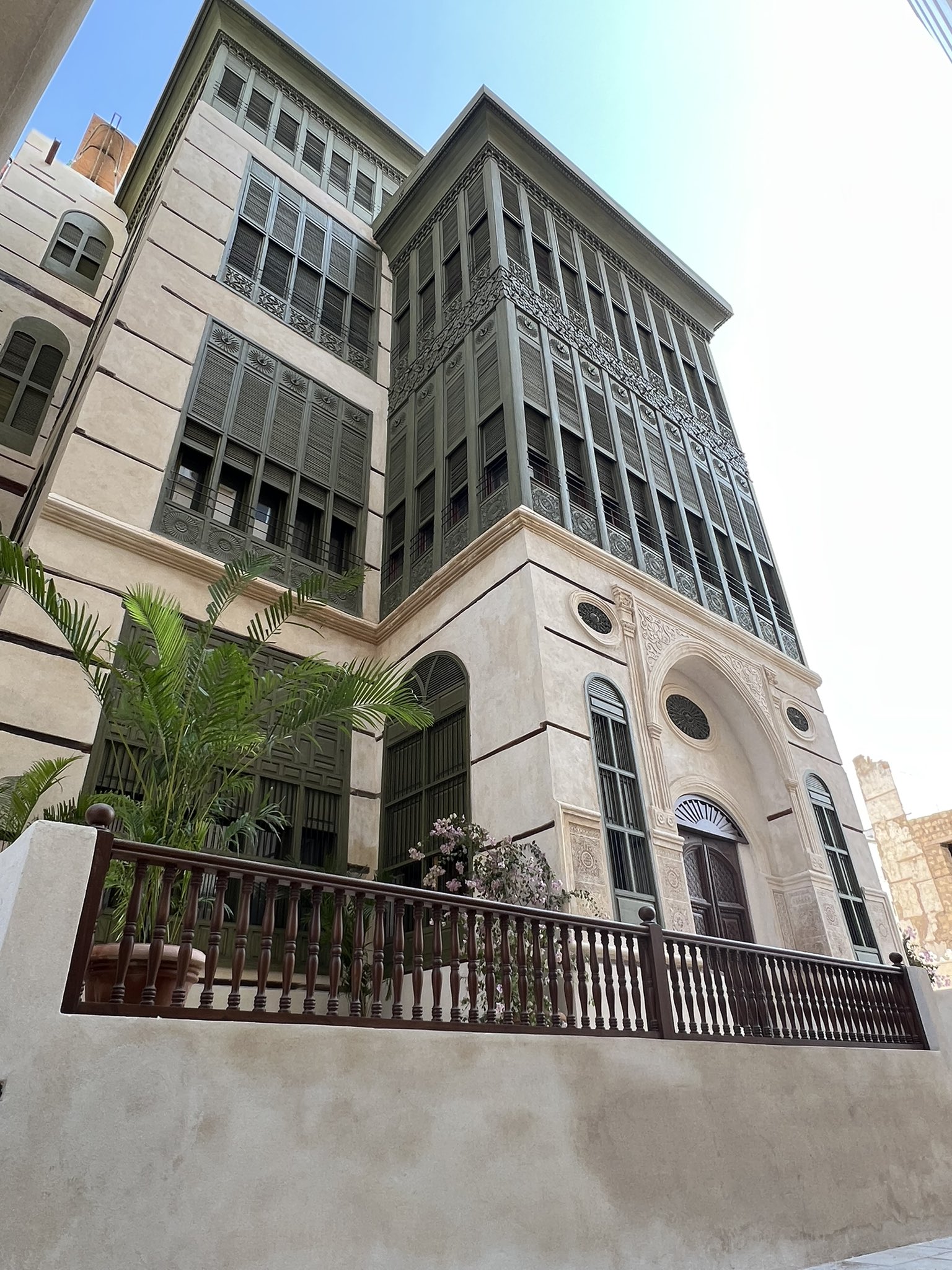
In 2019, Crown Prince Mohammed bin Salman announced a multi-billion-riyal restoration programme for 56 historic buildings in Al-Balad. Visitors today can walk the narrow alleyways freely, visit the Jeddah Historic District gallery, and explore restored houses that now function as museums and cultural centres.
Getting there: Al-Balad sits in central Jeddah, accessible by taxi or rideshare. The district is open to all visitors regardless of religion. Early morning or evening visits are recommended — the narrow streets trap heat in summer. Free walking tours operate on weekends during the cooler months.
Taif: Islamic Heritage in the Mountains
The mountain city of Taif, at 1,879 metres elevation in the Hejaz range, holds deep roots in early Islamic history. The Prophet Muhammad visited Taif in 619 CE seeking support from the Thaqif tribe — a visit that ended in rejection and stoning, making it one of the most painful episodes in the Seerah. The site of the demolished Al-Lat temple, once a major pre-Islamic shrine mentioned in Surah An-Najm (53:19), is now occupied by the Abdullah ibn Abbas Mosque.
Abdullah ibn Abbas Mosque
Built in 630 CE on the site where the Al-Lat temple was destroyed upon the Thaqif tribe’s conversion to Islam, this mosque is named after Abdullah ibn Abbas — the Prophet’s cousin, renowned scholar of Tafsir, and narrator of 1,660 hadith — who is buried within its grounds. The mosque was expanded to 15,000 square metres during King Faisal’s reign and accommodates 3,000 worshippers. Its white minarets and domes dominate the Taif skyline.
Other Islamic Sites in Taif
- Al-Kur Mosque: Believed to be where the Prophet prayed during his visit to Taif
- Al-Abbas Mosque: Named after Abbas ibn Abd al-Muttalib, the Prophet’s uncle
- Al-Hada Road historic mosques: Several Ottoman-era mosques line the old pilgrimage route between Mecca and Taif
Taif is a 90-minute drive from Mecca and makes an excellent day trip or overnight stop for visitors combining pilgrimage with mountain exploration.
AlUla and Hegra (Mada’in Saleh): The Quranic Landscape
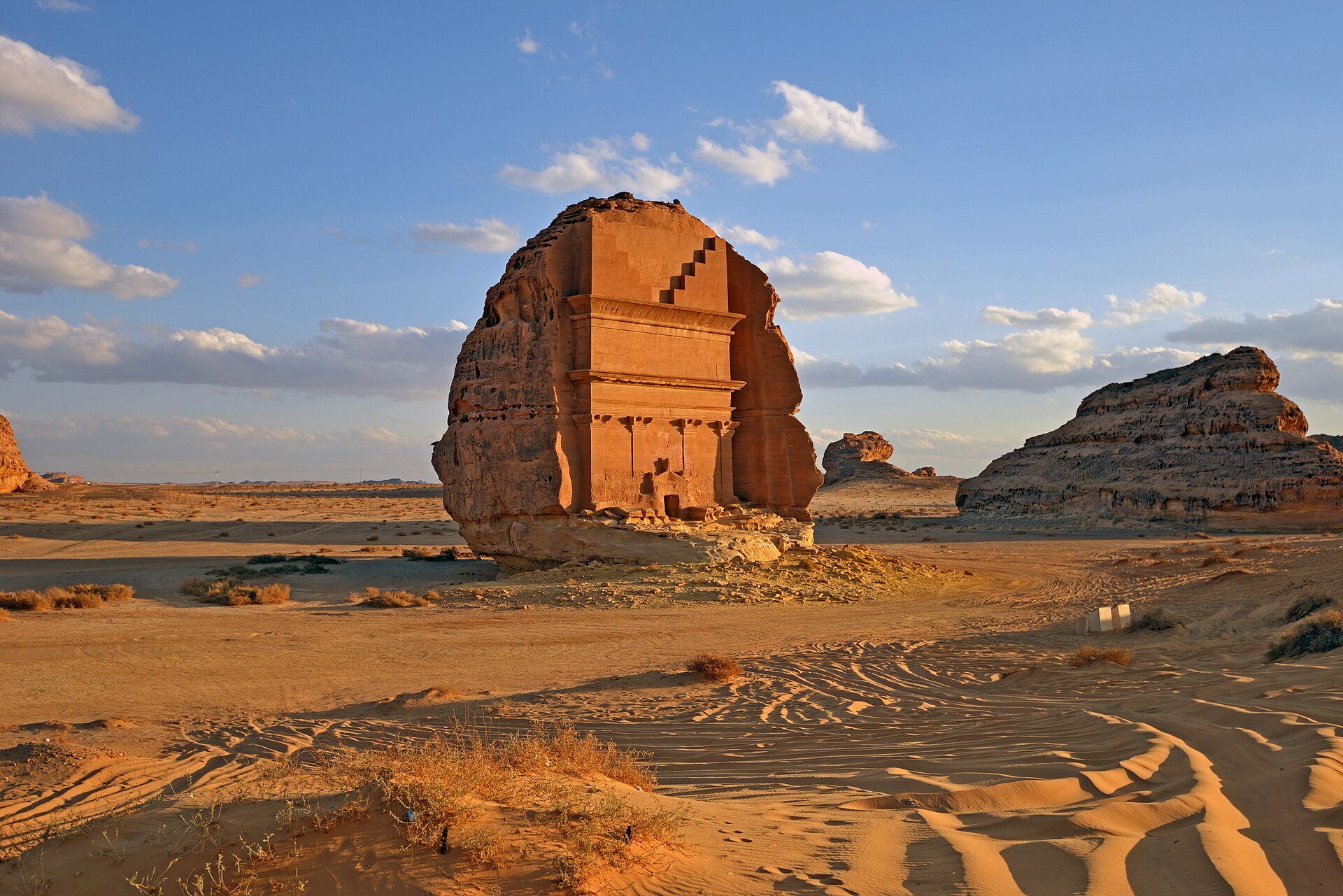
AlUla is where archaeology and the Quran converge. Hegra (historically known as Mada’in Saleh), Saudi Arabia’s first UNESCO World Heritage Site (inscribed 2008), contains more than 110 monumental Nabataean tombs carved into sandstone outcrops. But for Muslim visitors, Hegra’s significance runs far deeper than Nabataean architecture.
The Thamud and the Prophet Saleh
Islamic tradition identifies the Thamud as the people to whom Allah sent the Prophet Saleh, and the Quran references their fate explicitly. Surah Al-Fajr (89:9) describes “Thamud who carved their homes into the rocks in the Stone Valley,” while Surah Al-Hijr (15:80) declares: “Indeed, the residents of the Stone Valley also denied the messengers.” The name Mada’in Saleh itself means “Cities of Saleh.”
The Quran recounts that the Thamud demanded a miracle from Saleh, and Allah sent a she-camel as a sign. When the people killed the camel in defiance, they were destroyed by a catastrophic blast (sayha). Muslim scholars have long associated this narrative with the archaeological remains at Hegra.
Visiting Hegra
Hegra is open to all visitors (Muslim and non-Muslim alike) with tickets booked through the AlUla tourism portal. Guided bus tours depart from the AlUla visitor centre and last approximately 90 minutes, covering the major tomb clusters including Qasr al-Farid (the Lonely Castle), the Diwan gathering hall, and the Siq passage. The Hegra visitor centre provides archaeological and Quranic context.
Islamic perspective: Some Muslim scholars advise visitors to enter Hegra in a reflective and solemn state, recalling the Prophet Muhammad’s instruction to his Companions when passing through: “Do not enter the dwellings of those who were punished unless you are weeping, lest what befell them befall you.” Whether you follow this interpretation or simply visit as a cultural tourist, the site’s scale and history command respect.
Dadan and the Lihyanite Kingdom
Near Hegra, the ancient city of Dadan was the capital of the Lihyanite Kingdom (circa 5th–2nd century BCE). While pre-Islamic, its archaeological remains — including lion tombs and inscriptions — illuminate the religious and commercial landscape of northwest Arabia before Islam. The Dadan visitor centre in AlUla Old Town provides excellent interpretation of this context.
Diriyah: Where the Saudi-Wahhabi Alliance Was Forged
Diriyah, on the outskirts of Riyadh, is where the modern Saudi state and its religious identity were born. In 1744, Muhammad ibn Saud, the ruler of Diriyah, formed an alliance with the religious reformer Muhammad ibn Abd al-Wahhab, establishing a political-religious compact that continues to shape Saudi Arabia today.
At-Turaif District (UNESCO World Heritage Site)
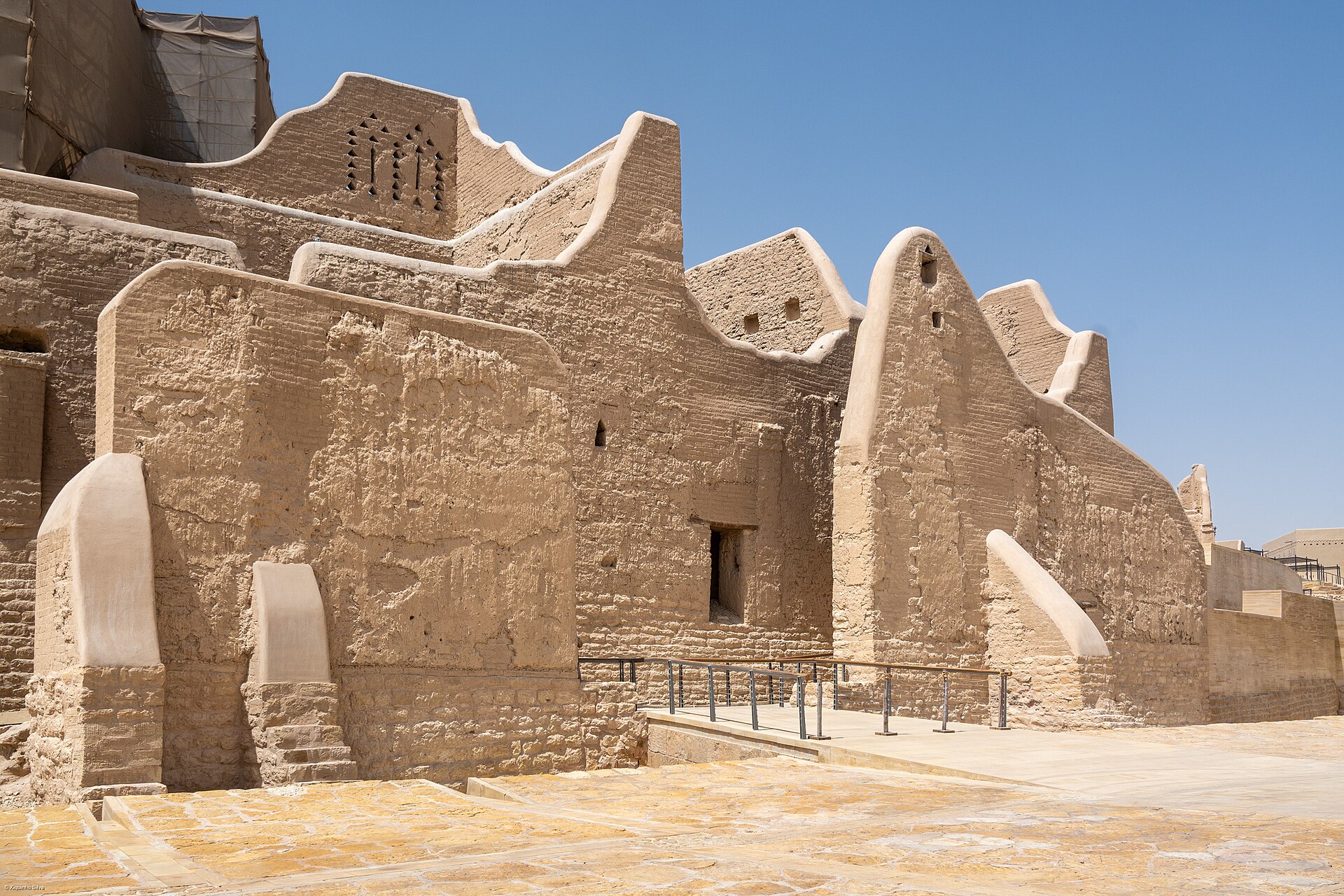
The At-Turaif citadel, inscribed by UNESCO in 2010, was the seat of the First Saudi State from 1727 to 1818. Built in the Najdi mud-brick style — thick adobe walls, geometric courtyards, and defensive towers — At-Turaif served as both the political capital of the House of Saud and the centre from which the Salafi reform movement spread across the Arabian Peninsula.
The restored citadel now houses multiple museums covering Saudi royal history, Najdi architecture, and the Wahhabi reform movement. The Diriyah Gate mega-project, launched in 2019, is transforming the surrounding area into a cultural district with hotels, restaurants, and event spaces while preserving the UNESCO core zone.
For a deeper look at visiting Diriyah, see our Diriyah Travel Guide and our overview of Saudi Arabia’s UNESCO World Heritage Sites.
Najran: Al-Ukhdood and the People of the Ditch
In Saudi Arabia’s deep south, near the Yemeni border, the Al-Ukhdood archaeological site preserves one of the most dramatic episodes referenced in the Quran. Surah Al-Buruj (85:4–8) speaks of “the People of the Ditch” — believers who were burned alive in trenches for refusing to renounce their faith.
The Historical Event
Historians identify this event with the massacre ordered by the Himyarite king Dhu Nuwas in approximately 523 CE, when the largely Christian population of Najran was killed for refusing to convert to Judaism. The Quran’s reference to the “ashab al-ukhdood” (people of the ditch/trench) has made this a site of deep spiritual resonance for Muslims reflecting on religious persecution and steadfastness of faith.
The Archaeological Site
Excavations ongoing since 1979 have revealed a settlement dating from 600 BCE through the Islamic period, including Umayyad and Abbasid-era artifacts. Over 1,000 artifacts have been unearthed, including pottery, glass, bronze items, and inscriptions in South Arabian script. The Al-Ukhdood Archaeological Visitor Centre provides bilingual interpretation and contextualises the site within both pre-Islamic and Quranic history.
Getting to Najran: Daily flights from Riyadh (approximately 2 hours). Najran is remote — plan at least two days to explore the archaeological site, the Najran Fort (Qasr al-Imara), and the surrounding palm oasis. A tourist e-visa covers Najran; no special permits are required.
Other Notable Islamic Heritage Sites
Dumat al-Jandal (Al-Jawf Province)
The Marid Castle and the Mosque of Omar ibn al-Khattab in Dumat al-Jandal are among the oldest Islamic structures in northern Arabia. The mosque, attributed to the second caliph’s campaigns in the region, features a distinctive stone minaret believed to date from the early Islamic period. The surrounding ruins of the ancient walled city span thousands of years of habitation.
Tabuk and the Prophet’s Mosque
The city of Tabuk in northwest Saudi Arabia was the destination of the Prophet Muhammad’s last military expedition in 9 AH (630 CE), the Expedition of Tabuk. The Repentance Mosque (Masjid al-Tawbah) marks the spot where the Prophet prayed during the campaign. The city also preserves the Tabuk Castle (Qasr Tabuk), a fortress associated with the expedition.
Al-Ula’s Islamic Period Heritage
Beyond Hegra, AlUla served as a major station on the Hajj pilgrimage route for centuries. The AlUla Old Town, inhabited from the 12th century until the 1980s, preserves a dense medieval settlement built around a 10th-century citadel. Stone inscriptions, a restored mosque, and the narrow alleyways of the abandoned town offer a glimpse of life along the overland pilgrimage road to Mecca.
Planning Your Islamic Heritage Trip
Suggested Itineraries
| Duration | Route | Key Sites |
|---|---|---|
| 3 days | Medina region | Quba Mosque, Seven Mosques, Baqi, Qiblatayn, Battle of Badr |
| 5 days | Medina + AlUla | All Medina sites + Hegra, Dadan, AlUla Old Town, Khaybar (en route) |
| 7 days | Medina – AlUla – Tabuk | Full Medina circuit, Khaybar, Hegra, Dadan, Tabuk Mosque, Marid Castle |
| 10 days | Grand Islamic Heritage Circuit | Medina sites, Badr, Khaybar, AlUla/Hegra, Tabuk, fly to Riyadh, Diriyah, fly to Najran, Al-Ukhdood |
For detailed day-by-day planning, see our Saudi Arabia itinerary guide which includes a heritage-focused route option.
Access and Restrictions
| Site | Muslim-Only? | Ticket Required? | Notes |
|---|---|---|---|
| Quba Mosque | Yes | No | Open 24/7 |
| Masjid al-Qiblatayn | Yes | No | Open 24/7 since Oct 2025 |
| Seven Mosques | Yes | No | Open access |
| Jannat al-Baqi | Yes (men only) | No | Open after Fajr and Asr only |
| Battle of Badr | No | No | Open site, guide recommended |
| Khaybar | No | No | Heritage site open to all |
| Jabal al-Noor | Yes | No | Within Mecca’s Haram boundary |
| Al-Balad, Jeddah | No | No | UNESCO site, open to all |
| Hegra (Mada’in Saleh) | No | Yes | Book via experiencealula.com |
| Diriyah At-Turaif | No | Yes | Ticket via Diriyah website |
| Al-Ukhdood, Najran | No | No | Visitor centre on-site |
Practical Tips for Heritage Visitors
- Dress modestly everywhere — not just at mosques. Saudi Arabia’s heritage sites are in conservative communities. Long sleeves, long trousers or skirts, and headscarves for women at religious sites.
- Hire local guides — especially at Badr, Khaybar, and Najran. Signage is improving but still limited at many sites. Guides add essential historical and Quranic context.
- Download offline maps — many heritage sites are in areas with patchy mobile coverage, particularly between Medina and AlUla.
- Respect photography rules — photography is prohibited inside active mosques during prayer times. At archaeological sites, photography is generally permitted but ask at visitor centres first.
- Combine with Umrah — visitors on an Umrah visa can easily add Medina-region sites, Taif, and Jeddah Al-Balad to their pilgrimage itinerary.
- Car rental is essential for heritage touring — see our getting around Saudi Arabia guide for rental tips and driving advice.
Explore More Saudi Arabia Travel Guides
- Hajj 2026 Guide — Complete guide to the Hajj pilgrimage, step by step
- Umrah Guide 2026 — Rituals, costs, best times, and everything you need to know
- Mecca for Muslim Travellers — The complete Hajj and Umrah city guide
- The Prophet’s Mosque Medina — Visitor guide for Muslims
- AlUla Travel Guide — Hegra, Elephant Rock, desert camps, and ancient Arabia
- Diriyah Travel Guide — Birthplace of the Saudi state and At-Turaif UNESCO site
- Saudi Arabia UNESCO Sites — The complete visitor guide to all seven inscribed sites
- Saudi Arabia Travel Guide 2026 — The complete guide to visiting the Kingdom
- Saudi Arabia Visa Guide — Every visa type explained