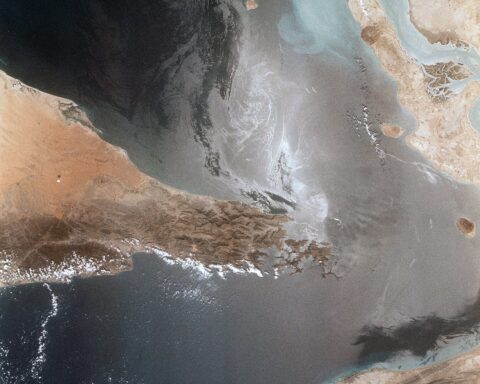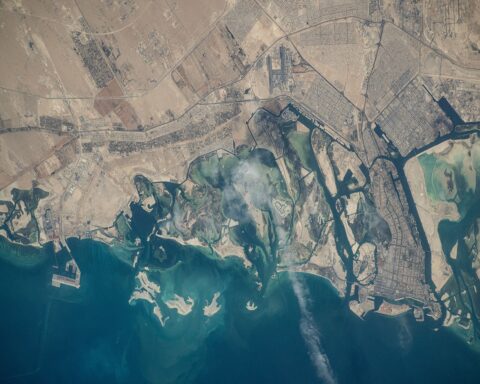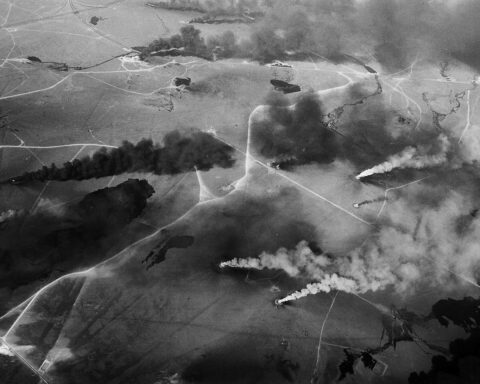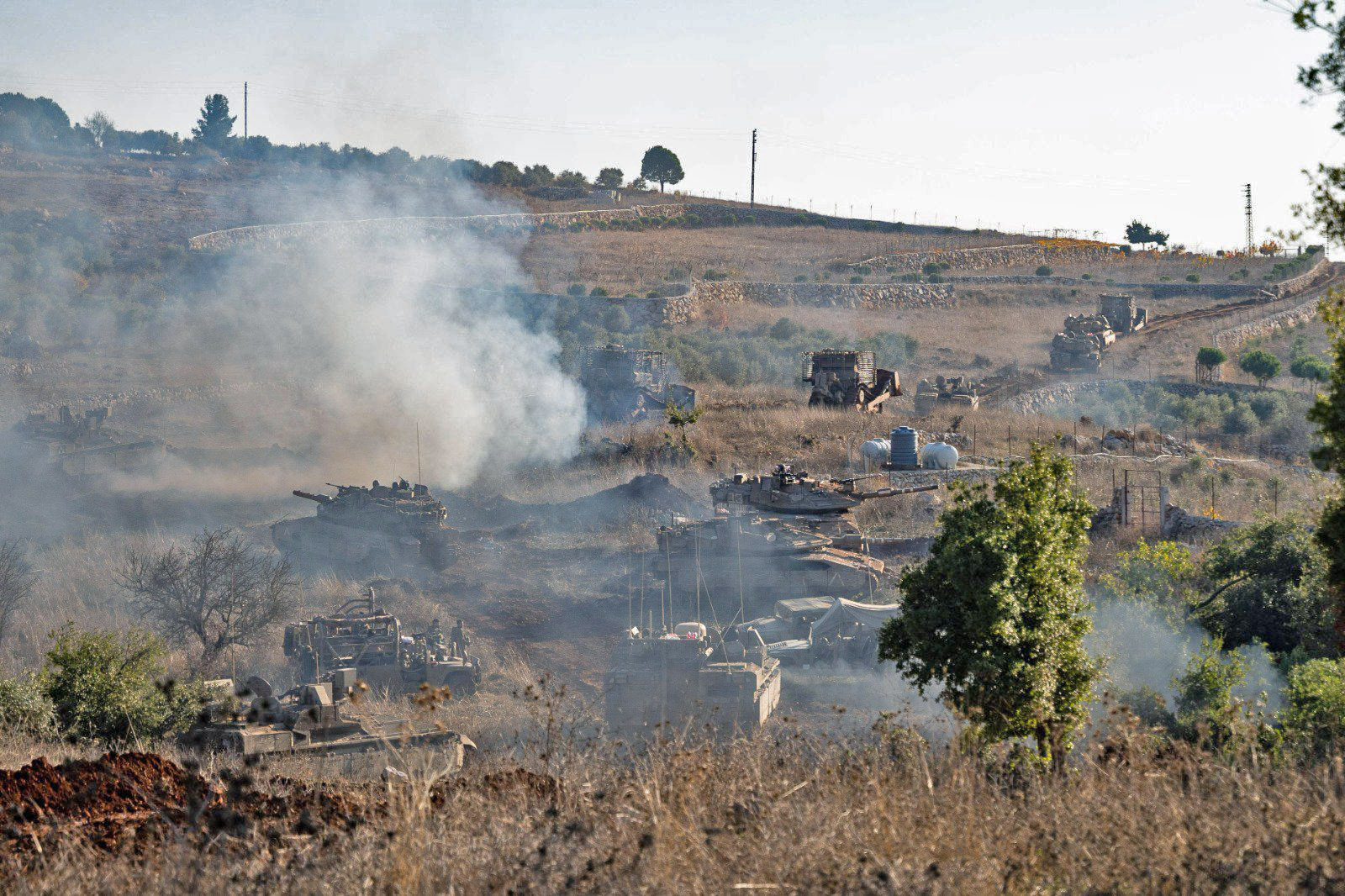

BEIRUT — Israeli armored forces crossed into southern Lebanon on Monday in what the Israel Defense Forces called “limited and targeted ground operations” against Hezbollah strongholds, opening a significant new front in a war that has already engulfed Iran, the Persian Gulf, and global energy markets. The ground offensive, led by the IDF’s 91st Division, marks the most consequential Israeli territorial incursion into Lebanon in nearly two decades and comes on the seventeenth day of the broader US-Israeli campaign against Iran.
The assault focused on the strategic town of Khiam, a Hezbollah stronghold perched on elevated terrain just kilometres from the Israeli border and the Litani River. Israeli Defense Minister Israel Katz said the operation aimed “to eliminate threats and protect the residents of the Galilee and the North.” For Saudi Arabia and its Gulf neighbours, the Lebanon front adds another layer of instability to a conflict already draining regional missile defense stockpiles and shutting the Strait of Hormuz to commercial traffic.
Table of Contents
- What Did Israel Launch in Southern Lebanon?
- The Battle for Khiam
- How Has Hezbollah Responded to the Ground Offensive?
- Lebanon and the Wider Iran War
- What Does Israel’s Lebanon Offensive Mean for Saudi Arabia?
- Iran’s Proxy Network Stretches From Beirut to Bab al-Mandab
- Interceptor Shortages and the Multi-Front Problem
- Diplomatic Fallout Across the Gulf
- Frequently Asked Questions
What Did Israel Launch in Southern Lebanon?
The Israeli military began its ground incursion early on March 16, deploying troops from the 91st Division into areas south of the Litani River. IDF spokesperson Lieutenant Colonel Nadav Shoshani told reporters that soldiers were operating in “new locations that our troops were not operating yesterday,” according to Reuters. At least three airstrikes hit Khiam while additional raids targeted the towns of Yater, Burj Qalawiya, Sultaniya, Chaqra, Qantara, and as-Sawana, according to Al Jazeera.
Israel has amassed roughly six divisions — an estimated 100,000 soldiers — along its northern border in recent weeks, according to the Armed Conflict Location and Event Data Project. The ground operation is being conducted primarily by the 91st, 210th, and 146th Divisions, currently deployed across eastern, central, and western sectors of southern Lebanon respectively, according to Israeli military briefings. Two additional divisions are expected to join the fighting, the IDF confirmed.
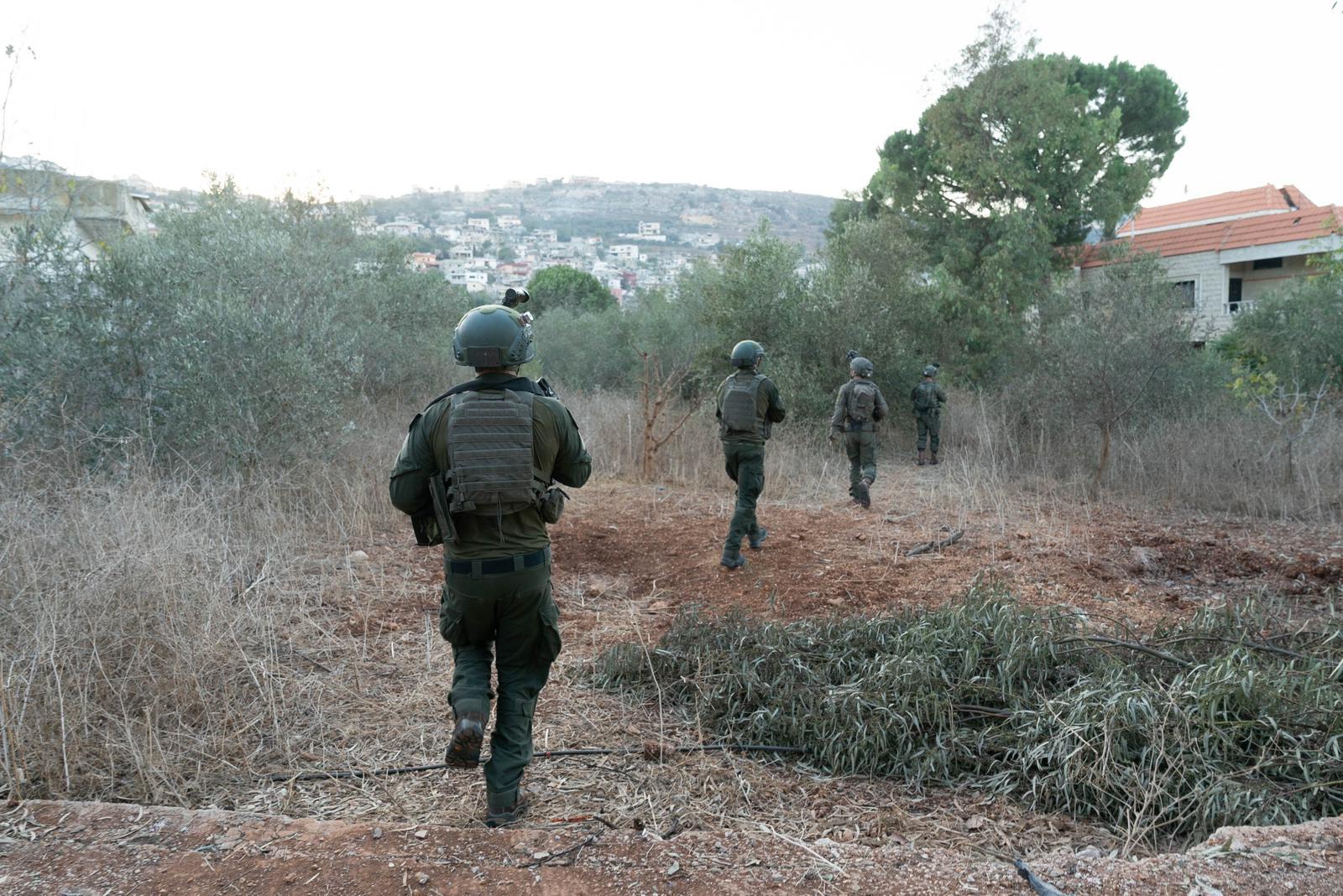
The stated objective, according to Defense Minister Katz, is to “eliminate threats and protect the residents of the Galilee and the North.” In practice, according to military analysts cited by Haaretz, the operation aims to cut Hezbollah supply lines running south of the Litani River and destroy anti-tank missile and rocket launch positions that have struck Israeli towns since the war began on February 28.
The ground incursion represents a significant escalation from the airstrikes Israel had been conducting against Lebanon since Hezbollah formally joined the war. More than 850 people have been killed in Israeli attacks on Lebanon since the conflict began, including 107 children and 66 women, according to Lebanese government figures. Approximately 800,000 Lebanese civilians have been displaced by Israeli evacuation orders covering swathes of southern Lebanon and parts of Beirut.
The Battle for Khiam
The focal point of the Israeli ground offensive is Khiam, a town of approximately 30,000 people that sits on a commanding ridgeline overlooking both northern Israel and the Lebanese plains below. According to Al Jazeera’s military analysis, a “major battle was under way” in and around the town on Monday.
Khiam’s strategic value is substantial. The town occupies high ground just a few kilometres from the Israeli border and the Litani River, giving forces that hold it a commanding view of the surrounding terrain, according to the Long War Journal. A road junction at Khiam connects the eastern and western sectors of southern Lebanon, and a separate route leads to the Bekaa Valley in eastern Lebanon — a critical Hezbollah logistics corridor, according to analysts at the Foundation for Defense of Democracies.
The town has historical resonance. During Israel’s 18-year occupation of southern Lebanon that ended in 2000, Khiam housed a notorious detention facility run by the Israel-backed South Lebanon Army, according to Human Rights Watch. The facility became a symbol of Lebanese resistance. Hezbollah subsequently built extensive military infrastructure in and around the town, making it one of the group’s most heavily fortified positions south of the Litani.
Hezbollah fighters engaged Israeli forces attempting to advance toward Khiam in clashes that began on March 10, according to Mada Masr. The full-scale ground push that followed on March 16 suggests those initial probing attempts encountered sufficient resistance to require a larger conventional operation. Israeli military officials said the objective was to push Hezbollah fighters north of the Litani River and establish a wider buffer zone along the entire border.
How Has Hezbollah Responded to the Ground Offensive?
Hezbollah has fired more than 1,000 drones, rockets, and missiles at Israel since the broader Iran war began on February 28, according to IDF spokesperson Shoshani, speaking on approximately March 12. The group’s most devastating single barrage came when it launched approximately 200 rockets and 20 unmanned aerial vehicles in a coordinated strike that the Israeli military called the “biggest barrage” of the war, according to The Defense Post.
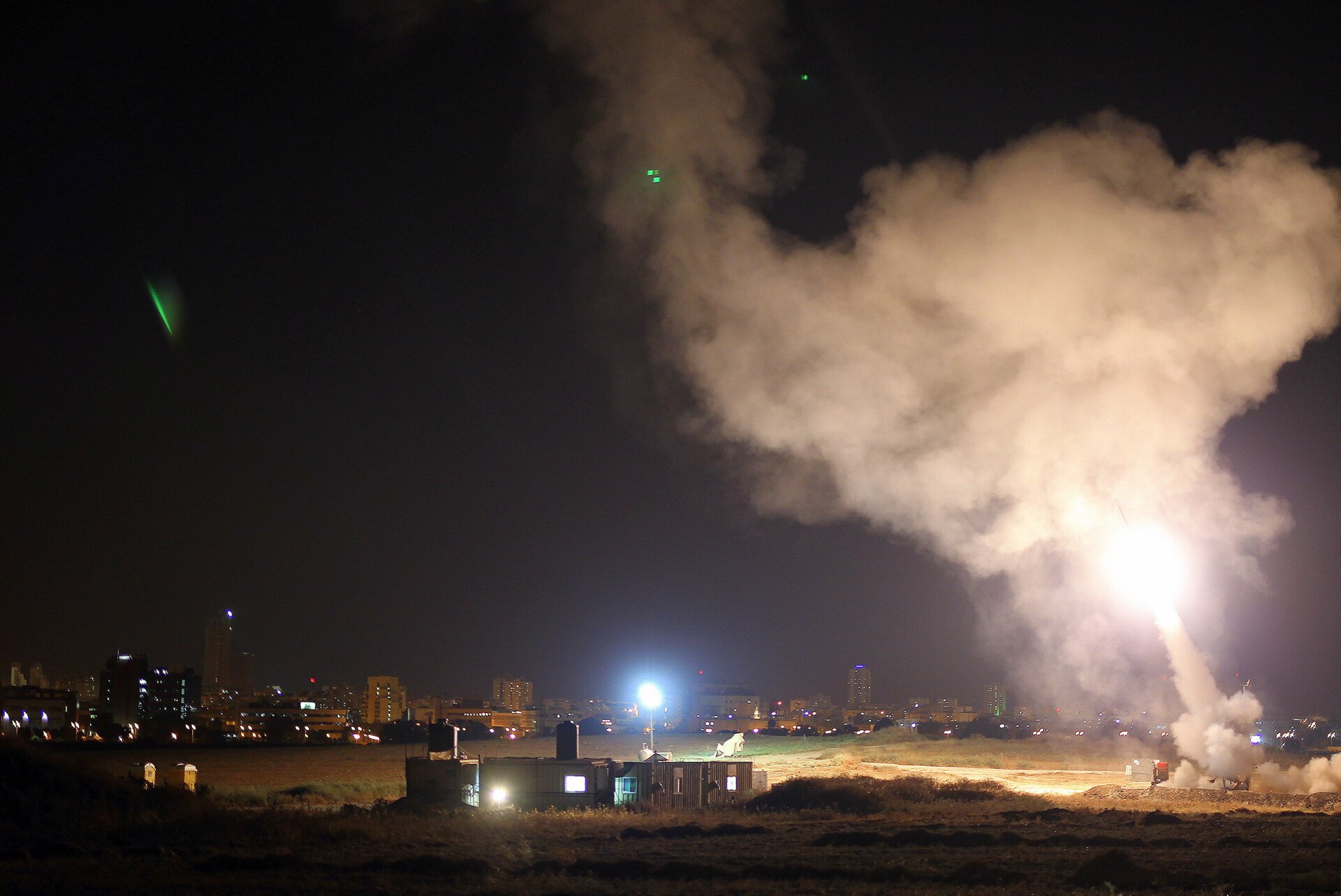
Hezbollah formally joined the conflict after the killing of Iranian Supreme Leader Ayatollah Ali Khamenei in the opening US-Israeli strikes, breaking a ceasefire that had held since late 2024 despite repeated Israeli violations, according to Al Jazeera. The group’s military wing has since operated in close coordination with Iran’s Islamic Revolutionary Guard Corps, launching integrated salvos that combine Hezbollah rockets from the north with Iranian ballistic missiles and drones targeting Israel and Gulf states simultaneously.
Lebanese caretaker Prime Minister Najib Mikati condemned the ground incursion as “a flagrant violation of Lebanese sovereignty,” according to the Lebanese National News Agency. The Lebanese Armed Forces, which maintain a fragile presence in the south under UN Security Council Resolution 1701, have not engaged Israeli forces directly. The United Nations Interim Force in Lebanon reported that its peacekeepers had taken cover in their positions as fighting intensified around Khiam.
Hezbollah’s deputy secretary-general Naim Qassem vowed in a televised address that the group would “defend every inch of Lebanese territory” and warned that the ground offensive would become “a quagmire worse than 2006,” according to Al-Manar television. In 2006, a 34-day Israeli ground campaign in southern Lebanon ended in a stalemate that many military analysts considered a strategic failure for Israel. Hezbollah’s current leadership appears to be counting on a similar outcome, banking on its tunnel networks, anti-tank missile positions, and knowledge of the terrain to inflict unacceptable casualties on Israeli ground forces.
Lebanon and the Wider Iran War
The Lebanon ground offensive did not occur in isolation. It came on day 17 of the US-Israeli war against Iran that began on February 28 when American and Israeli forces launched joint strikes that killed Supreme Leader Khamenei, according to CNN. Since then, the conflict has expanded into what multiple defence analysts have described as the most complex multi-front war in the Middle East since 1973.
On the same day Israel sent troops into Lebanon, several other major developments unfolded across the region. The Israeli military struck more than 200 targets in Iran over the previous 24 hours, with thick black smoke rising over Tehran, according to CNN. Iran’s Foreign Minister Abbas Araghchi declared the Strait of Hormuz “open, but closed to our enemies,” according to Al Jazeera’s live coverage. An advanced fire broke out at the Fujairah petroleum industrial zone in the United Arab Emirates after a drone attack, and a missile killed one person in Abu Dhabi, according to The National.
Iran has claimed to have fired approximately 700 missiles and 3,600 drones at US and Israeli targets since the war started, according to Iranian state media cited by CNN. The conflict has drawn in proxy forces across the region. The Houthis in Yemen have joined Tehran’s campaign, and Hamas has urged Iran to stop bombing Gulf states, revealing fractures within the so-called Axis of Resistance.
The opening of the Lebanon front effectively creates a five-theatre war: direct US-Israeli strikes on Iranian territory, Iranian retaliatory strikes on Gulf states and US bases, the Strait of Hormuz maritime blockade, Hezbollah’s rocket campaign from Lebanon, and Houthi attacks on Red Sea shipping. Saudi Arabia faces direct threats from at least three of these five theatres — Iranian drones targeting the Kingdom, the Hormuz closure strangling oil exports, and Houthi missiles threatening the Red Sea corridor.
What Does Israel’s Lebanon Offensive Mean for Saudi Arabia?
Saudi Arabia has maintained a carefully calibrated posture throughout the Iran war, absorbing Iranian drone and missile attacks while declining to join the US-Israeli offensive against Tehran, a strategy analysts at the Arab Center Washington DC have described as “strategic restraint.” The Israeli ground offensive in Lebanon introduces new complications for Riyadh on several fronts.
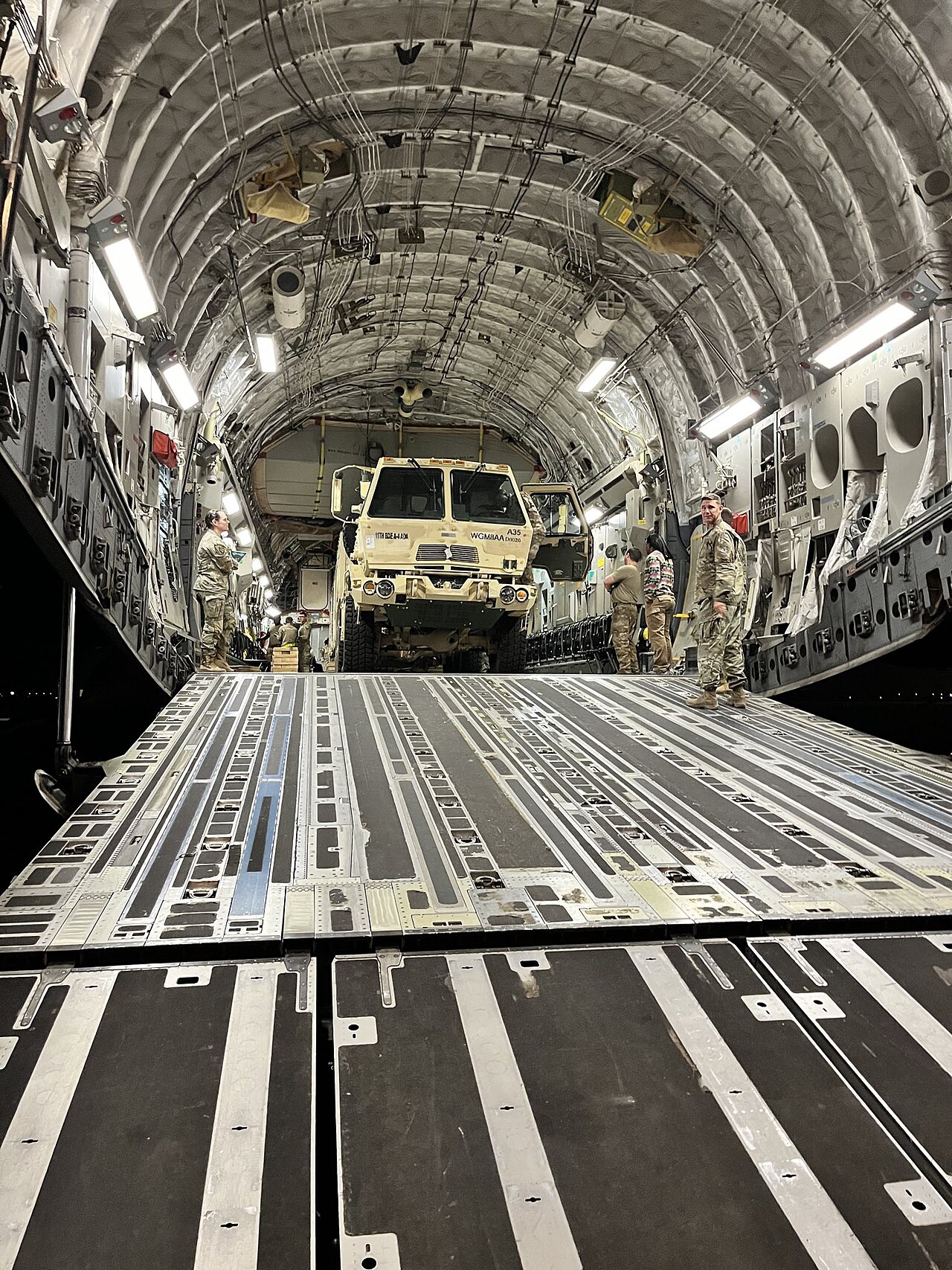
The immediate concern is the strain on regional air defense systems. Israel’s Iron Dome, David’s Sling, and Arrow systems are now engaged on two fronts simultaneously — intercepting Iranian ballistic missiles from the east and Hezbollah rockets from the north. The United States has deployed additional Patriot and THAAD batteries to both Israel and Saudi Arabia, but interceptor production capacity is finite. Every missile fired to defend Israel’s northern border is one fewer available for Saudi Arabia’s defense, according to defence analysts at the International Institute for Strategic Studies.
Saudi Arabia’s defense ministry reported intercepting 51 drones across the Kingdom in a single day last week, including over Riyadh itself. Iranian drone strikes have already killed civilians in Al-Kharj, south of the capital, according to Al Arabiya. With Iran’s drone production running at industrial scale, the Saudi military faces a war of attrition against cheap, expendable weapons that cost a fraction of the interceptors required to shoot them down.
There is also a diplomatic dimension. Saudi Arabia has historically opposed Hezbollah’s presence in Lebanon and designated the group as a terrorist organization. Some Gulf states may quietly welcome a weakened Hezbollah, according to the Arab Center Washington DC. But Crown Prince Mohammed bin Salman faces a delicate calculus. Supporting Israel’s ground offensive — even tacitly — risks inflaming opinion across the Arab world during Ramadan. Criticizing it risks alienating Washington at a moment when Saudi Arabia depends on American missile defense systems to survive Iranian attacks.
Riyadh has chosen silence. As of Monday evening, the Saudi foreign ministry had not issued a statement specifically addressing the Israeli ground offensive in Lebanon, focusing its public messaging instead on condemning Iran’s attacks on civilian infrastructure across the Gulf.
Iran’s Proxy Network Stretches From Beirut to Bab al-Mandab
The Lebanon front highlights the operational reach of Iran’s proxy network — and the problem it poses for Saudi defence planners. Hezbollah operates from southern Lebanon. Iraqi Shia militias have launched attacks from western Iraq. The Houthis control much of Yemen and have begun targeting Red Sea shipping, according to Reuters. Each of these proxy forces can threaten Saudi territory or Saudi economic interests without Iran firing a single missile from its own soil.
The combined effect is a ring of threats surrounding the Arabian Peninsula. From the north, Hezbollah and Iraqi militias can target Saudi Arabia’s northern border regions and the critical East-West Pipeline that carries oil from the Eastern Province to the Red Sea port of Yanbu. From the south, Houthi forces threaten the Bab al-Mandab strait and the Red Sea shipping lanes that have become Saudi Arabia’s primary alternative export route since the Hormuz blockade. From the east, Iranian drones and missiles target oil infrastructure, military bases, and civilian areas directly.
Saudi Defence Minister Prince Khalid bin Salman has held calls with counterparts in South Korea, the United Kingdom, and Pakistan in recent days, according to the Saudi Press Agency. Pakistan deployed air defense systems and troops to Saudi Arabia earlier this month, according to Dawn. The United Kingdom dispatched additional fighter jets, helicopters, and a destroyer to the Gulf, with Prime Minister Keir Starmer telling Crown Prince Mohammed bin Salman that Britain “stands ready to support the defence of Saudi Arabia,” according to Downing Street.
The multi-front nature of the conflict means that even allies must spread their assets thin. American bases in Saudi Arabia are themselves targets of Iranian strikes, creating a paradox where the military infrastructure meant to defend the Kingdom also attracts fire toward it.
Interceptor Shortages and the Multi-Front Problem
The Lebanon ground offensive compounds a logistics crisis that has been building since the war began. The United States produces roughly 500 Patriot PAC-3 MSE interceptors per year, according to Raytheon’s public disclosures. Each interceptor costs approximately $4 million. Saudi Arabia has been firing them at Iranian drones that cost between $20,000 and $50,000 each, according to estimates by the Royal United Services Institute.
Israel faces the same arithmetic. Iron Dome interceptors cost approximately $50,000 each. Hezbollah’s Katyusha rockets cost a few hundred dollars. With Hezbollah firing over 1,000 projectiles in 16 days, according to the IDF, Israel’s interceptor reserves are depleting at an unsustainable rate. The ground offensive in Lebanon is partly an attempt to solve this problem by destroying Hezbollah’s launch infrastructure at its source rather than attempting to intercept every rocket in flight.
For Saudi Arabia, the calculation is alarming. The Kingdom’s primary air defense systems — Patriot, THAAD, and the domestically developed SAMI systems — draw from the same global supply chain as Israel’s. Lockheed Martin and Raytheon cannot produce interceptors fast enough to meet simultaneous demand from Israel’s multi-front war and Saudi Arabia’s ongoing defense against Iranian drones, according to defence industry analysts at Janes. The Pentagon has already pulled Marines and F-35s from Japan to bolster forces in the Middle East, according to Stars and Stripes, signalling that even the world’s largest military is stretching to cover all fronts.
The Saudi government allocated approximately $74.76 billion for defence in 2026, according to the Tactical Report. At the World Defense Show in Riyadh in February, Saudi Arabia signed 60 military and defence contracts worth more than 33 billion riyals ($8.8 billion), according to World Defense Show organisers. But money cannot immediately solve a production bottleneck. The interceptors Saudi Arabia needs today were ordered months or years ago, and production lines cannot be accelerated overnight.
Diplomatic Fallout Across the Gulf
The diplomatic landscape across the Gulf has grown more fractured as the war has expanded. Iran’s Foreign Minister Araghchi rejected ceasefire proposals on CBS News’ Face the Nation on Sunday, saying “No, we never asked for a ceasefire, and we have never asked even for negotiation,” according to NPR. He added that Iran was “ready to defend ourselves as long as it takes.”
Araghchi also said that multiple countries had approached Tehran to negotiate safe passage of oil and gas vessels through the Strait of Hormuz, stating “We are open to countries who want to talk to us about the safe passage of their vessels,” according to CBS News. The distinction between “enemies” and others seeking passage creates a potential opening for Gulf states willing to distance themselves from the US-Israeli coalition — a diplomatic wedge that threatens the unity of the Gulf Cooperation Council.
The U.S. Embassy in Riyadh issued its latest security alert on Monday, maintaining shelter-in-place advisories for all American citizens in the Kingdom. Non-emergency U.S. government employees were ordered to depart on March 8, according to the State Department. Saudi airports in Riyadh, Jeddah, and Dammam remain operational but face frequent air traffic restrictions due to ongoing missile and drone threats.
President Trump has urged China and other nations to send warships to help secure the Strait of Hormuz, according to CNN. U.S. Energy Secretary Chris Wright told CNBC that the Navy is “not ready” to begin escorting oil tankers through the strait, with all military assets focused on destroying Iran’s offensive capabilities. The escort operation, being planned under the name Operation Epic Escort according to USNI News, could restore tanker traffic to roughly 10 percent of pre-war levels — a figure that falls far short of what global energy markets require.
Saudi Arabia’s Crown Prince Mohammed bin Salman has been speaking regularly with Trump and “urging him to continue attacking Iran harshly,” according to The New York Times. But the expansion of the conflict into Lebanon — which risks destabilizing an already fragile country where Saudi Arabia has significant political and economic interests — tests the limits of that alignment. Riyadh invested heavily in Lebanon’s reconstruction after the 2006 war and has historically competed with Iran for influence in Beirut. An Israeli ground war that devastates southern Lebanon further erodes the Lebanese state and, paradoxically, may strengthen the very Hezbollah narrative of resistance that Saudi Arabia has spent decades trying to counter.
Frequently Asked Questions
Why did Israel launch ground operations in Lebanon during the Iran war?
Israel launched the ground offensive to destroy Hezbollah rocket and missile launch infrastructure in southern Lebanon, particularly around the strategic town of Khiam. Hezbollah has fired more than 1,000 projectiles at Israel since joining the war after Iran’s Supreme Leader Khamenei was killed. The ground push aims to establish a wider buffer zone south of the Litani River and cut Hezbollah supply lines, according to IDF briefings.
How many Israeli troops are involved in the Lebanon ground offensive?
Israel has amassed roughly six divisions — an estimated 100,000 soldiers — along its northern border, according to the Armed Conflict Location and Event Data Project. The initial ground push is led by the 91st Division, with the 210th and 146th Divisions also deployed across eastern, central, and western sectors. Two additional divisions are expected to join, according to the Israeli military.
Does the Lebanon front affect Saudi Arabia’s air defense?
The Lebanon front strains the same interceptor supply chain that Saudi Arabia depends on. Patriot, THAAD, and Iron Dome systems all draw from limited production capacity at Lockheed Martin and Raytheon. Every interceptor fired to defend Israel’s northern border reduces the stockpile available for Saudi Arabia’s defense against Iranian drones and missiles, according to defence analysts at the International Institute for Strategic Studies.
How many fronts does the Iran war now have?
The conflict now spans five distinct theatres: direct US-Israeli strikes on Iranian territory, Iranian retaliatory strikes on Gulf states and US bases, the Strait of Hormuz maritime blockade, Hezbollah’s campaign from Lebanon, and Houthi attacks on Red Sea shipping. Saudi Arabia faces direct threats from at least three of these five theatres, according to analysts at the Arab Center Washington DC.
What is Hezbollah’s strategy against the Israeli ground offensive?
Hezbollah appears to be drawing on lessons from the 2006 Lebanon war, relying on tunnel networks, anti-tank missile positions, and intimate knowledge of southern Lebanon’s terrain to inflict casualties on Israeli ground forces. Deputy Secretary-General Naim Qassem warned the offensive would become “a quagmire worse than 2006,” signalling that Hezbollah intends to fight a war of attrition rather than conventional defence, according to Al-Manar television.