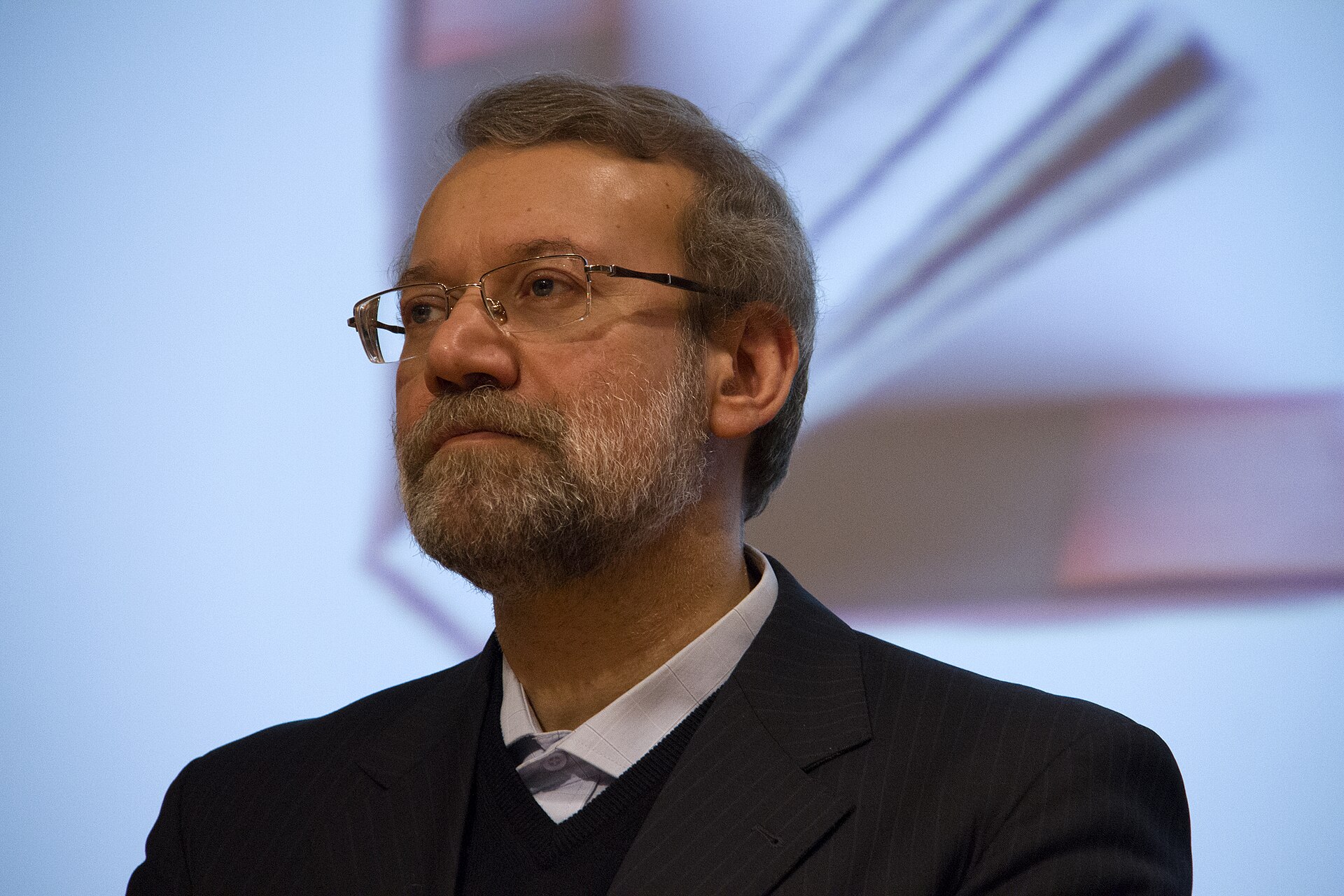

RIYADH — Israel claims to have killed Ali Larijani, the secretary of Iran’s Supreme National Security Council and the man widely regarded as Tehran’s de facto wartime leader since the assassination of Ali Khamenei on 28 February. If confirmed, the Israeli airstrike that struck Larijani overnight on 16–17 March eliminates the single figure in Iran’s fractured leadership who possessed the institutional authority, the diplomatic connections, and the pragmatic instincts to negotiate an end to this war. For Saudi Arabia, whose cities have endured seventeen consecutive days of drone and missile fire, the killing does not bring peace closer. It pushes it further away.
The Israeli Defence Forces simultaneously claimed to have killed Gholamreza Soleimani, commander of the Basij paramilitary militia, and his deputy in a separate precision strike in central Tehran. In Baghdad, Kataib Hezbollah confirmed the death of Abu Ali al-Askari, its security chief, in an airstrike on 15 March. Taken together, the events of the past seventy-two hours represent the most concentrated campaign of leadership elimination since Operation Epic Fury’s opening salvo killed Khamenei, the chief of the armed forces, and the IRGC commander in a single night. Iran is not simply losing a war. It is losing the people who would have had to sign whatever agreement ends it.
Table of Contents
- Who Was Ali Larijani?
- How Did Larijani Become Iran’s Most Powerful Man?
- Who Else Did Israel Kill on 17 March?
- The Decapitation Ledger
- Does Decapitation Actually End Wars?
- How Iran’s Mosaic Defence Frustrates the Kill Chain
- What Does This Mean for Saudi Arabia’s Security?
- The Vanishing Negotiating Table
- Why Killing Iran’s Negotiators May Prolong the War
- Who Commands Iran’s War Machine Now?
- The Ghost Command
- Frequently Asked Questions
Who Was Ali Larijani?
Ali Larijani was not a general. He was not a cleric with a turban and a fatwa. He was a philosopher with a PhD in Kantian ethics from the University of Tehran, born in 1958 in Najaf, Iraq, into one of Iran’s most distinguished clerical dynasties. His father and maternal grandfather were both grand ayatollahs. His brother Sadeq served as head of the judiciary. Another brother, Fazel, ran the state broadcaster. The Larijani family occupied a position in the Islamic Republic roughly analogous to the Kennedys in American politics — embedded in every critical institution, connected to every faction, trusted (to varying degrees) by all.
Larijani’s career spanned the full architecture of the revolutionary state. He served briefly as an IRGC commander between 1981 and 1983, then spent a decade running state television and radio from 1994. President Ahmadinejad appointed him secretary of the Supreme National Security Council in 2005, making him Iran’s chief nuclear negotiator — the man who sat across the table from the P5+1 powers and managed the file that defined Tehran’s relationship with the West. He held the nuclear portfolio until 2007 and was instrumental in laying the groundwork for what became the 2015 Joint Comprehensive Plan of Action, the nuclear deal that represented the high-water mark of Iranian pragmatism.
From 2008 to 2020, Larijani served as Speaker of Parliament, consolidating his reputation as a power broker who could bridge the divide between hardliners and reformists. He ran for president in 2024 but was disqualified by the Guardian Council — a decision that underscored his threat to the system’s more rigid factions. President Masoud Pezeshkian reappointed him as SNSC secretary in August 2025, and when Operation Epic Fury killed Khamenei six months later, Larijani found himself in the most consequential position of his career: the man tasked with coordinating Iran’s response to the most devastating military assault in the republic’s history.
How Did Larijani Become Iran’s Most Powerful Man?
Larijani’s ascent to effective wartime leadership was neither planned nor constitutional. The Islamic Republic’s succession mechanism, codified in Article 111 of the constitution, calls for an Interim Leadership Council to assume the Supreme Leader’s functions until the Assembly of Experts selects a replacement. When Khamenei was killed on 28 February, that council formed within hours: Alireza Arafi of the Guardian Council, Chief Justice Gholam-Hossein Mohseni-Eje’i, Parliament Speaker Mohammad Bagher Ghalibaf, and President Pezeshkian.
The council was structurally unwieldy. Four men with competing institutional loyalties cannot run a war. By 9 March, the Assembly of Experts announced the selection of Mojtaba Khamenei as the new Supreme Leader, but his assumption of power coincided with intensifying Israeli strikes on Tehran’s government quarter. Mojtaba has not been seen publicly since his appointment, leading President Trump to speculate openly that he may be dead.
Into this vacuum stepped Larijani. As SNSC secretary, he controlled the institutional nerve centre through which all security, intelligence, and foreign policy coordination flows. The SNSC, established by Article 176 of the constitution, includes the president, the foreign minister, the intelligence minister, the interior minister, the armed forces chief of staff, and both the regular army and IRGC commanders. With several of those positions vacant — their occupants killed in the opening strikes — Larijani became, as Haaretz described him, “the country’s most powerful man.” The Australian called him “the de facto wartime leader of Iran.” Radio Free Europe noted that amid “Iran’s leadership wipeout, Ali Larijani emerges as key player.”
His authority derived from a combination of institutional position, personal relationships, and the simple fact of survival. Larijani knew every faction, had served under every president since Rafsanjani, and possessed something vanishingly rare in revolutionary Tehran: credibility with both the IRGC hardliners and the diplomatic establishment. In early March, he announced the formation of the Interim Leadership Council and then, according to Al Jazeera, “promised a lesson” to the United States, signalling that Iran’s retaliation would be sustained and strategic rather than impulsive.
Who Else Did Israel Kill on 17 March?
Larijani was not the only target. The Israeli military published a statement on social media confirming it had killed Gholamreza Soleimani, commander of the Basij paramilitary force, and his deputy in a “targeted strike yesterday in the heart of Tehran, eliminating Gholamreza Soleimani, commander of the Basij unit over the past six years.” The IDF said the operation was “guided by precise intelligence from Military Intelligence.”
Soleimani — no relation to Qasem Soleimani, the Quds Force commander killed by the United States in January 2020 — ran the Basij, a volunteer paramilitary force of between 600,000 and five million members depending on the estimate, tasked with internal security, protest suppression, and moral enforcement. The European Union, the United States, and several other governments sanctioned him for his alleged role in the violent crackdown on the 2022 Mahsa Amini protests. The Basij operates local branches across every Iranian city and functions as the regime’s eyes and ears at the neighbourhood level.
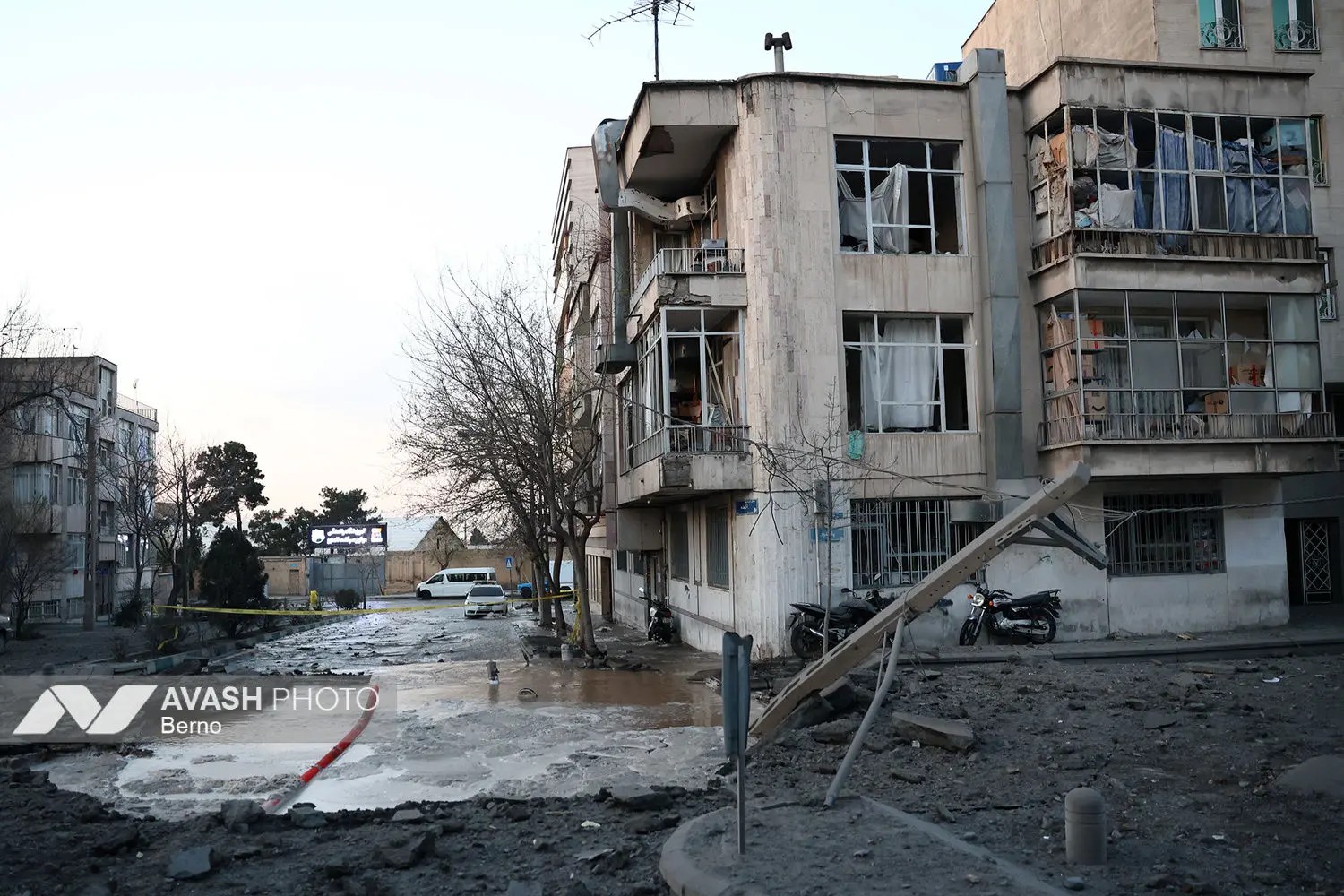
In Baghdad, Kataib Hezbollah — one of Iraq’s most powerful Iran-backed Shia militias — confirmed the death of Abu Ali al-Askari, its security commander and primary spokesperson, who was killed in an airstrike on 15 March. Al-Askari, whose real name was Abu Ali al-Amiri according to Iraqi security officials, had served as the public face of the group’s confrontation with the United States and was responsible for issuing its most provocative statements throughout the conflict. His death was followed by an escalation of attacks on the Baghdad Green Zone, with Katyusha rockets and drones targeting the US Embassy compound.
The Decapitation Ledger
The killings of 16–17 March represent an acceleration of what has already been the most intensive leadership elimination campaign in modern warfare. A systematic accounting of Iran’s wartime losses reveals the scale of the decapitation.
| Official | Position | Date Killed | Method | Replacement | Replacement Posture |
|---|---|---|---|---|---|
| Ali Khamenei | Supreme Leader | 28 Feb | US-Israeli airstrike | Mojtaba Khamenei | Hardliner (possibly dead/hiding) |
| Gen. Abdolrahim Mousavi | Chief of Armed Forces | 28 Feb | US-Israeli airstrike | Unknown | Unknown |
| Amir Nasirzadeh | Defence Minister | 28 Feb | US-Israeli airstrike | Unknown | Unknown |
| Mohammad Pakpour | IRGC Commander | 28 Feb | US-Israeli airstrike | Unknown | Unknown |
| Ali Shamkhani | Defence Council Secretary | 28 Feb | US-Israeli airstrike | Position vacant | N/A |
| Mohammad Shirazi | Head, Supreme Leader’s Military Office | 28 Feb | US-Israeli airstrike | Position vacant | N/A |
| Abu Ali al-Askari | Kataib Hezbollah Security Chief | 15 Mar | Airstrike, Baghdad | Unknown | Unknown |
| Gholamreza Soleimani | Basij Force Commander | 16–17 Mar | Israeli airstrike, Tehran | Unknown | Unknown |
| Ali Larijani | SNSC Secretary / de facto wartime leader | 16–17 Mar | Israeli airstrike (claimed) | None named | N/A |
Nine senior figures eliminated in seventeen days. The pattern reveals a deliberate progression: the opening strikes targeted the supreme leader and the formal military chain of command; the subsequent phase targeted the institutional coordinators (Larijani) and the paramilitary/proxy network (Soleimani, al-Askari). Each wave has moved down the hierarchy, from the top of the state to its operational middleware.
The replacement column tells the most important story. In at least five cases, no confirmed replacement has been publicly identified. Where replacements have been named — Mojtaba Khamenei as Supreme Leader — they have either gone into hiding or are themselves targets. The table suggests a system that is not adapting to losses so much as absorbing them, relying on pre-existing institutional inertia rather than new leadership direction.
A parallel assessment can be applied to the surviving leadership. This framework — the Command Continuity Index — evaluates each remaining senior figure across three dimensions: institutional authority (their formal power to make decisions), operational connectivity (their ability to communicate orders to the field), and diplomatic reach (their capacity to negotiate with external actors).
| Official | Position | Institutional Authority (1–10) | Operational Connectivity (1–10) | Diplomatic Reach (1–10) | Composite Score |
|---|---|---|---|---|---|
| Mojtaba Khamenei | Supreme Leader | 10 | 2 | 1 | 13 |
| Masoud Pezeshkian | President | 6 | 5 | 7 | 18 |
| Abbas Araghchi | Foreign Minister | 3 | 4 | 9 | 16 |
| Mohammad B. Ghalibaf | Parliament Speaker | 5 | 3 | 4 | 12 |
| Mohseni-Eje’i | Chief Justice | 4 | 2 | 2 | 8 |
| Ali Larijani (pre-strike) | SNSC Secretary | 8 | 8 | 9 | 25 |
Larijani’s composite score of 25 out of 30 dwarfed every surviving official. He scored highest on institutional authority because the SNSC sits at the intersection of all security institutions; highest on operational connectivity because the council coordinates between the military, intelligence, and political leadership; and joint-highest on diplomatic reach because of his decade as nuclear negotiator and parliament speaker. The next-best scorer, President Pezeshkian at 18, lacks the security establishment’s trust. Foreign Minister Araghchi at 16 has the diplomatic skills but not the authority. No single remaining figure combines all three dimensions the way Larijani did.
Does Decapitation Actually End Wars?
The academic literature on leadership decapitation is extensive and sobering. A landmark study by Jenna Jordan at the Georgia Institute of Technology, published in the journal International Security, analysed 298 instances of leadership targeting across 96 organisations and found that decapitation increased the probability of organisational collapse by roughly 30 per cent — but in the remaining 70 per cent of cases, the targeted organisation continued to operate at some level of capacity. Crucially, Jordan found that “groups that have experienced decapitation are no more likely to ‘die’ or end than those that have not had their leaders killed or arrested.”
A separate study by Patrick B. Johnston at RAND, published by the Belfer Center at Harvard, reached a more optimistic conclusion: leadership decapitation “has substantial causal effects on campaign outcomes” and “increases counterinsurgents’ chances of achieving quick, successful campaign outcomes.” However, Johnston’s sample consisted primarily of insurgent and terrorist organisations, not nation-states with standing armies, industrial bases, and diplomatic infrastructure.
The distinction matters enormously for every capital with skin in this conflict, from Riyadh to Washington to Beijing. Iran is not a guerrilla movement. It is a state of ninety million people with a $400 billion GDP, a military of over 600,000 active personnel, a defence-industrial complex capable of producing ballistic missiles and drones at scale, and a decentralised command architecture designed specifically to resist decapitation. The historical precedents for decapitating a state during wartime — as opposed to a non-state actor — are limited and discouraging. The assassination of Admiral Yamamoto in 1943 did not accelerate Japan’s surrender by a single day. The targeting of Saddam Hussein’s inner circle from 2003 to 2006 coincided with the Iraqi insurgency’s deadliest period, not its end.
Max Abrahms and Jochen Mierau, writing in the Journal of Conflict Resolution, identified a perverse mechanism: leadership decapitation creates disorder within the targeted organisation, but the resulting chaos often leads to “politically ineffective, unfocused attacks on civilians” — which is to say, more violence, not less, directed at softer targets with less strategic logic. For the thirty-five million people living in Saudi Arabia and the wider Gulf, this finding should concentrate minds in Riyadh.
How Iran’s Mosaic Defence Frustrates the Kill Chain
Iran anticipated the possibility of a leadership decapitation campaign decades before it happened. The Islamic Republic’s military doctrine, refined after observing the American invasions of Afghanistan and Iraq, incorporates a concept known as Mosaic Defence — a system of radical decentralisation designed to ensure that no single strike can paralyse the war effort.
Under Mosaic Defence, operational command and control is distributed across hundreds of semi-autonomous cells at the regional, provincial, and even neighbourhood level. Each cell possesses its own pre-authorised rules of engagement, its own weapons stores, and its own communication networks independent of the central command. If Tehran falls silent — as it briefly did during the opening strikes — local commanders are doctrinally authorised to continue operations based on standing orders. The drone and missile attacks that have struck Saudi Arabia, the UAE, Bahrain, Kuwait, and Qatar for seventeen consecutive days have not required real-time authorisation from any single leader. They are the product of a system designed to function after its head has been severed.
Iran has also developed what some analysts call the Fourth Successor Model — a layered leadership redundancy system ensuring that three or four layers of succession exist for every critical position. The IRGC alone maintains regional commands in every Iranian province, each headed by a general who can assume broader authority if central command is compromised. The evidence from the past seventeen days supports the model’s effectiveness: despite losing the supreme leader, the chief of the armed forces, the IRGC commander, and now the SNSC secretary, Iran’s retaliatory operations have not decreased in intensity. Drone production has continued. Missile launches have continued. The Hormuz blockade has continued.
What Does This Mean for Saudi Arabia’s Security?
For Crown Prince Mohammed bin Salman and Defence Minister Khalid bin Salman, the killing of Larijani creates a paradox that strikes at the heart of the Kingdom’s war strategy. Saudi Arabia has endured the most sustained aerial bombardment in its history: according to the Saudi Ministry of Defence, the Kingdom has intercepted more than 200 drones and over 30 ballistic and cruise missiles since 28 February. At least 11 civilians have been killed and 268 injured across the Gulf Cooperation Council states, with the majority being migrant workers occupying the region’s most exposed positions.
The Saudi strategic interest is unambiguous: end the war as quickly as possible. Every day that missiles fly, the Kingdom bleeds — not just in lives and infrastructure, but in investor confidence, tourism revenue, and the credibility of the Vision 2030 programme that MBS has staked his reign upon. Riyadh’s back-channel engagement with Tehran, reported by Bloomberg as early as 6 March, reflected a pragmatic recognition that military escalation served nobody’s interests except those who had nothing left to lose.
Larijani was the interlocutor on the Iranian side with the institutional weight to deliver a deal. He understood Saudi Arabia — in April 2025, Prince Khalid bin Salman visited Tehran and met with the SNSC secretary’s office, establishing a diplomatic rapport that both sides intended to maintain. Larijani’s background as a nuclear negotiator meant he knew how to structure complex multi-party agreements, how to manage hardline spoilers within his own system, and how to present compromises in language that revolutionary purists could accept.
The economic cost of continued conflict is measurable and accelerating. Saudi Arabia’s non-oil GDP growth, which had reached 4.3 per cent in the last quarter of 2025 according to the General Authority for Statistics, faces contraction risks as international investors reassess Gulf exposure. The Tadawul stock exchange has shown resilience, but the longer the war persists, the more it threatens the foreign direct investment pipeline that Vision 2030 depends upon. The AGBI reported on 11 March that “the Iran war threatens to undermine Saudi FDI efforts,” citing concerns from institutional investors about operational continuity in a conflict zone.
With Larijani dead, Riyadh must now identify a new counterpart — and that counterpart, whoever it is, will possess less authority, less diplomatic sophistication, and less ability to enforce any agreement across the IRGC’s fractured command structure. The net effect for Saudi Arabia is more uncertainty, more exposure to continued attacks, and a longer timeline to any ceasefire. A separate analysis examines five diplomatic pathways through which Saudi Arabia might end a war it did not start, none of them simple.
The Vanishing Negotiating Table
Wars end at negotiating tables. That is the one constant across every conflict in modern history. The First World War ended in a railway carriage at Compiègne. The Korean War ended at Panmunjom. The Iran-Iraq War ended when both exhausted parties accepted UN Security Council Resolution 598 after eight years of mutual devastation. Even the most lopsided conflicts — the Gulf War of 1991, the fall of Japan in 1945 — required a formal act of agreement between identifiable leaders with the authority to bind their states.
The systematic elimination of Iran’s senior leadership raises a question that no one in Washington, Jerusalem, or Riyadh appears to be publicly asking: who will sign the ceasefire?
Foreign Minister Abbas Araghchi has the diplomatic training — he was a career diplomat before his appointment — but he lacks the domestic authority to commit the IRGC to any agreement the military establishment has not already blessed. His public statements have been combative: “We never asked for a ceasefire, and we have never asked even for negotiation,” he told NPR on 15 March. Whether this represents genuine policy or performative defiance designed to preserve leverage is impossible to determine from the outside.
President Pezeshkian, a reformist physician who won the 2024 election on a platform of re-engagement with the West, holds constitutional authority but has been sidelined by the security establishment since the war began. The presidency in Iran’s system is subordinate to the Supreme Leader on all matters of defence and foreign policy, and with Mojtaba Khamenei either dead or incommunicado, the presidency occupies an ambiguous constitutional space — formally empowered but practically constrained.
Parliament Speaker Ghalibaf, a former IRGC general and Tehran mayor, has the hardliner credentials but not the diplomatic instincts. Chief Justice Mohseni-Eje’i is a jurist, not a strategist. The Interim Leadership Council as a collective body lacks the nimbleness to negotiate under fire. By process of elimination, Iran’s negotiating capacity has been degraded to a point where even if the political will for a ceasefire existed, the institutional machinery to execute one may not.
Why Killing Iran’s Negotiators May Prolong the War
The conventional wisdom in Washington and Jerusalem frames the decapitation campaign as a pathway to Iranian capitulation. Remove the leadership, the theory goes, and the war machine collapses, or at minimum, the survivors become desperate enough to accept terms. The evidence from seventeen days of war contradicts this assumption at every level.
Iran’s retaliatory capacity has not diminished. The IRGC launched its largest coordinated drone swarm on 13 March — fifty drones targeting Saudi Arabia within hours, according to The National — which came well after the opening-night leadership losses. The Hormuz blockade, maintained by the IRGC Navy, continues to choke sixty per cent of Gulf oil exports, according to CBS News. Oil prices remain above $100 a barrel. The global economic damage, estimated by the IEA at $6 trillion in market value destroyed and described by economists as the worst energy shock since 1973, has intensified, not diminished, as more leaders have been killed.
The contrarian case deserves serious consideration: killing Iran’s pragmatists guarantees that the hardliners inherit the war. Larijani, for all his revolutionary credentials, was a man who had negotiated with the P5+1, who had accepted the JCPOA’s constraints on Iran’s nuclear programme, and who understood the concept of strategic compromise. The IRGC regional commanders who now constitute the de facto operational leadership have no such background. They are tacticians, not diplomats. Their training is in prosecuting wars, not ending them.
The historical parallel is not encouraging. When the United States pursued a decapitation strategy against al-Qaeda in Iraq from 2006 to 2010, killing dozens of senior commanders, the organisation did not collapse. It metastasised into the Islamic State, a more radical, more violent, and more territorial successor that required a second war to defeat. The killing of individual leaders created succession crises that were resolved not by moderates but by the most ruthless figures within the organisation — those who had survived precisely because they were the most operationally cautious and ideologically extreme.
The targeted killing of Qasem Soleimani himself in January 2020 offers perhaps the most directly relevant precedent. The Trump administration presented his assassination as a decisive blow to Iran’s proxy network. Within months, the militias Soleimani had coordinated — including the very Kataib Hezbollah whose commander was just killed in Baghdad — had not only survived but expanded their operations, launching hundreds of attacks on US forces in Iraq through 2020 and 2021. The Quds Force appointed Esmail Qaani as Soleimani’s replacement within hours. According to a 2021 assessment by the Institute for the Study of War at the US Military Academy at West Point, “the death of Soleimani did not meaningfully degrade Iran’s ability to project power through proxy forces.”
Apply that dynamic to the current conflict and the implications for Saudi Arabia become stark. Every pragmatist killed is a pragmatist who cannot restrain the zealots. Every negotiator eliminated is a negotiator who cannot deliver the ceasefire that the Gulf states need. The war does not end because its leaders are dead. It continues because nobody with the authority to stop it remains alive and willing to try.
Who Commands Iran’s War Machine Now?
The honest answer, based on available intelligence, is: nobody commands it in the traditional sense. Iran’s war effort is currently operating as a distributed network rather than a hierarchical command structure. The Mosaic Defence doctrine has been activated — not because anyone issued an order to activate it, but because the conditions it was designed for (catastrophic leadership loss) have been met.
Several identifiable nodes of authority remain operative. The IRGC’s provincial commands continue to coordinate missile and drone production at dispersed facilities across Iran’s western and central provinces. The IRGC Navy maintains autonomous control of operations in the Strait of Hormuz and the Persian Gulf. The Quds Force, the IRGC’s external operations arm, continues to coordinate with proxy forces in Iraq, Lebanon, Yemen, and Syria through pre-established communication channels.
President Pezeshkian remains the most senior confirmed-alive political leader, but his statements have been carefully calibrated to avoid either escalation or capitulation. He has called for an end to hostilities without using the word “ceasefire” — a linguistic distinction that signals awareness of the political dangers of appearing to seek terms. Foreign Minister Araghchi has maintained diplomatic contacts with intermediaries including Oman, Pakistan, and China, but these channels have produced no visible progress.
Mojtaba Khamenei’s sole public statement — a vow to hold Hormuz closed — was issued through state media without video confirmation of his whereabouts. If he is dead, as Trump has speculated, then the Supreme Leader position is vacant again, creating a constitutional crisis layered on top of a military one. If he is alive but in hiding, he cannot exercise the real-time command authority that the Supreme Leader theoretically holds over the armed forces.
The practical effect is a war on autopilot. Missiles launch because the orders were given before the commanders who issued them died. Drones fly because the production lines were established before the factories were struck. The Hormuz blockade persists because the naval forces maintaining it require no daily instruction from Tehran. This is both a testament to Iran’s institutional resilience and a deeply alarming indicator for anyone seeking a negotiated end to the conflict. A war machine that runs without leadership cannot be turned off by killing more leaders.
The Ghost Command
Western intelligence agencies and Gulf security establishments now confront a scenario for which their planning frameworks are poorly equipped: a state that is simultaneously decapitated and functional. Iran’s government buildings in Tehran have been bombed. Its senior leadership has been killed or driven underground. Its new Supreme Leader may not be alive. Its most capable negotiator has been assassinated. And yet its military operations continue unabated, its proxy network remains active across four countries, and its blockade of the world’s most important maritime chokepoint shows no sign of weakening.
For Saudi Arabia, this creates a compound security challenge. The Kingdom’s air defence network, anchored by Patriot PAC-3 batteries and supported by THAAD systems, has performed impressively — intercepting the vast majority of incoming threats — but even a ninety-five per cent interception rate means that five per cent of attacks get through. With Iran launching dozens of drones and missiles daily from dispersed locations, Saudi Arabia cannot simply wait for the other side to run out of ammunition or motivation. Both appear abundant.
The diplomatic channel that Bloomberg reported between Riyadh and Tehran now lacks a credible Iranian endpoint. Saudi Arabia responded by convening an emergency Arab-Islamic ministerial summit in Riyadh within hours of the assassination. Prince Khalid bin Salman has prosecuted the Saudi side of the conflict with a combination of defensive restraint and diplomatic outreach that analysts have praised as strategically astute — Saudi Arabia has conspicuously refused to launch offensive strikes against Iran, positioning itself as a victim of aggression rather than a combatant, which strengthens its legal and diplomatic position. But restraint requires a partner, and that partner has just been killed in his own capital.
The diplomatic mathematics have worsened at every level. Pakistan’s Prime Minister Shehbaz Sharif flew to Riyadh on 12 March after calling Iran’s President Pezeshkian, positioning Islamabad as a potential shuttle diplomat. But shuttle diplomacy requires endpoints, and the Iranian endpoint has been vaporised. Oman, which has historically served as the Gulf’s most reliable back channel to Tehran, faces the same problem: the Omani interlocutors knew Larijani personally, having worked with him during the nuclear negotiations. His replacement, if one is named, will not carry the same relationships or institutional memory. China’s peace envoy, dispatched to Riyadh during the war’s second week, has produced no visible progress.
The remaining options are grim. A US-brokered ceasefire requires an Iranian counterpart with the authority to accept terms — a role Larijani could have filled and no one else credibly can. A UN-mediated process faces Russian and Chinese resistance on the Security Council and the more fundamental problem of identifying an Iranian signatory. A bilateral Saudi-Iranian agreement, which the 2023 Beijing-brokered rapprochement suggested was possible, now lacks the institutional infrastructure on the Iranian side to support it.
The war, in other words, may continue not because anyone wants it to, but because no one with the power to stop it remains at the table. Iran’s ghost command — the distributed, leaderless, autopilot war machine that Mosaic Defence created — has achieved something its designers probably never intended: it has made the war interminable. The Islamic Republic prepared for decapitation by building a system that could fight without a head. What it did not prepare for was a system that could negotiate without one.
The paradox of the decapitation campaign is that each successful strike eliminates not only a military commander but a potential ceasefire signatory. Israel has demonstrated it can kill anyone in Tehran. It has not demonstrated that killing everyone in Tehran ends the war.
Analysis based on Command Continuity Index assessment, March 2026
Frequently Asked Questions
Was Ali Larijani’s death confirmed by Iran?
As of 17 March, Iran has not confirmed Ali Larijani’s death. Israeli Defence Minister Israel Katz claimed the killing, and the IDF stated the strike was carried out overnight in Tehran. Iranian state media subsequently published what it said was a handwritten note by Larijani, though its authenticity and timing remain unverified. Multiple Western intelligence sources cited by Haaretz and the Jerusalem Post treat the Israeli claim as credible.
Who replaces Ali Larijani as SNSC secretary?
No replacement has been publicly announced. The SNSC secretary is formally appointed by the president with confirmation from the Supreme Leader. With Mojtaba Khamenei’s status uncertain and President Pezeshkian operating under wartime constraints, the appointment process faces both practical and constitutional obstacles. Foreign Minister Abbas Araghchi and Parliament Speaker Mohammad Bagher Ghalibaf have been mentioned by analysts as possible successors, though neither possesses Larijani’s combination of institutional authority and diplomatic experience.
How many senior Iranian officials have been killed since the war began?
At least nine senior officials have been killed or are claimed killed since 28 February 2026, including Supreme Leader Ali Khamenei, Chief of Armed Forces General Abdolrahim Mousavi, Defence Minister Amir Nasirzadeh, IRGC Commander Mohammad Pakpour, Defence Council Secretary Ali Shamkhani, SNSC Secretary Ali Larijani, Basij Commander Gholamreza Soleimani, and Kataib Hezbollah security chief Abu Ali al-Askari. Additional military and intelligence officials have been reported killed but not publicly confirmed by Iran.
Does killing leaders end wars faster?
Academic research is divided. A Georgia Institute of Technology study of 298 decapitation events found leadership targeting caused organisational collapse approximately 30 per cent of the time, with the organisation continuing to operate in the remaining 70 per cent. A RAND study found decapitation can increase counterinsurgents’ chances of success. However, most research focuses on non-state actors, not nation-states with standing armies and industrial bases. Historical state-level precedents, including the assassination of Admiral Yamamoto in 1943 and the targeting of Saddam Hussein’s inner circle, did not accelerate conflict termination.
What does Larijani’s death mean for Saudi Arabia?
Saudi Arabia has the most to lose from the elimination of Iranian pragmatists. Riyadh’s back-channel diplomacy with Tehran, reported by Bloomberg, relied on the existence of an Iranian interlocutor with sufficient authority and diplomatic skill to negotiate credible terms. Larijani was that interlocutor. His death likely extends the timeline for any ceasefire, prolongs Saudi Arabia’s exposure to drone and missile attacks, and increases the probability that the war’s termination — when it eventually comes — will be imposed by exhaustion rather than negotiated by statesmen. The crisis deepened further on March 18 when Israel killed intelligence minister Esmaeil Khatib, the third senior official assassinated in 48 hours, under a new standing kill order that authorizes further targeted killings without case-by-case approval.
What is Iran’s Mosaic Defence doctrine?
Mosaic Defence is Iran’s military doctrine of radical decentralisation developed after observing American regime-change operations in Afghanistan and Iraq. Under Mosaic Defence, operational command and control is distributed across hundreds of semi-autonomous regional cells, each with pre-authorised rules of engagement and independent communication networks. The doctrine was designed specifically to ensure that Iranian military operations can continue even if central leadership is destroyed — a scenario that has now been tested in real combat conditions since 28 February 2026.
Is Mojtaba Khamenei still alive?
Mojtaba Khamenei’s status remains uncertain. He was named Supreme Leader by the Assembly of Experts on 9 March but has not appeared publicly. His sole communication was a statement issued through state media vowing to hold the Strait of Hormuz closed. President Trump has speculated that Mojtaba may be dead. Iranian state media has not provided proof of life. If he is dead, the Supreme Leader position is constitutionally vacant again, compounding the leadership crisis.