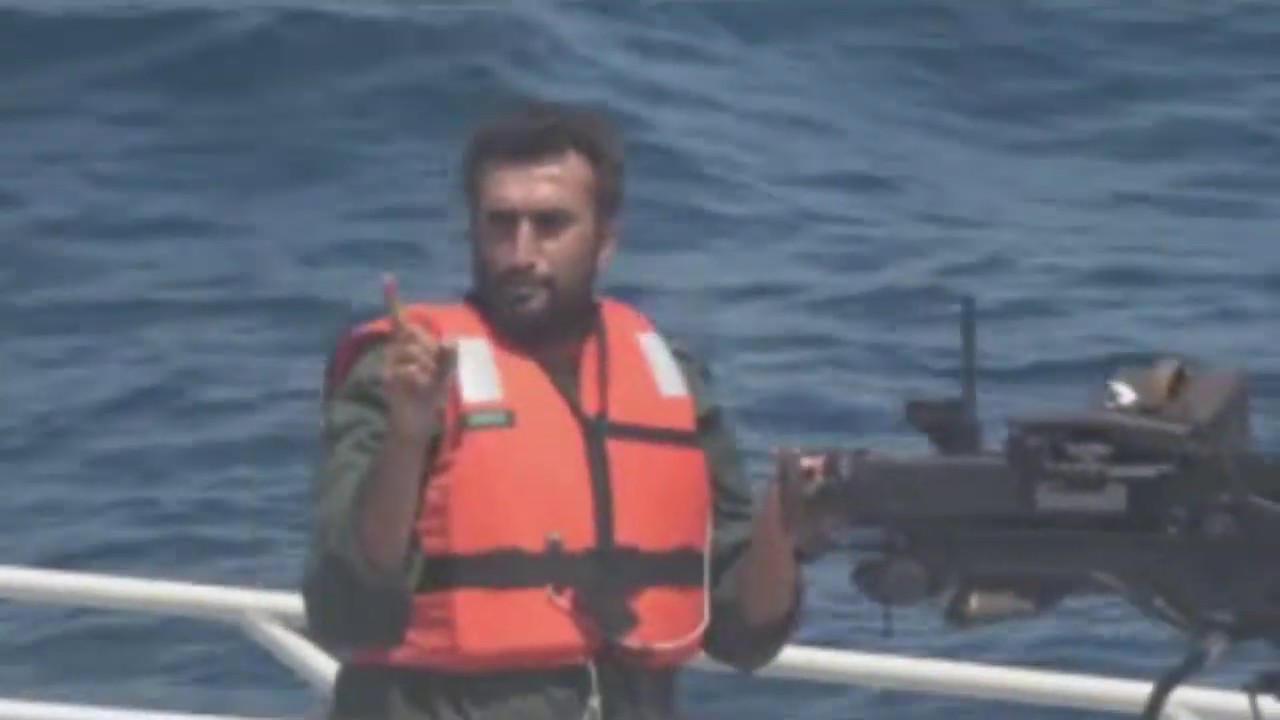

RIYADH — Israel announced on Thursday that it had killed Alireza Tangsiri, the commander of Iran’s Islamic Revolutionary Guard Corps Navy, in an air strike on the southern Iranian port city of Bandar Abbas. Israeli Defense Minister Israel Katz said the operation was “precise and lethal” and targeted senior officers of the IRGC naval command alongside Tangsiri. The killing eliminates the man Israeli and Gulf officials held directly responsible for the mining and blockade of the Strait of Hormuz, through which one-fifth of the world’s oil and gas normally transits. Tehran has not confirmed the death, but the strike represents the highest-profile naval leadership kill of the 27-day-old war and the latest in a series of Israeli assassinations that have hollowed out Iran’s military and political command structure.
Table of Contents
- Who Was Alireza Tangsiri?
- What Do We Know About the Bandar Abbas Strike?
- Why Does Tangsiri’s Death Matter for the Strait of Hormuz?
- How Has Iran’s Command Structure Been Decimated?
- What Does Saudi Arabia Stand to Gain?
- The Hormuz Blockade in Numbers
- What Happens to the IRGC Navy Now?
- Tangsiri’s Death and the Ceasefire Stalemate
- Frequently Asked Questions
Who Was Alireza Tangsiri?
Alireza Tangsiri was a rear admiral who served as commander of the IRGC Navy since August 2018, when Supreme Leader Ali Khamenei appointed him to replace Rear Admiral Ali Fadavi. Born in 1962 in Bushehr Province on Iran’s southern coast, Tangsiri was a veteran of the Iran-Iraq War who rose through the IRGC’s naval ranks over four decades of service.
Tangsiri commanded the IRGC’s 1st Naval District in Bandar Abbas before ascending to the top post. His appointment in 2018 came at a time of escalating tensions between Tehran and Washington. Under his leadership, the IRGC Navy adopted an asymmetric warfare doctrine built around fast attack boats, naval mines, anti-ship missiles, and unmanned aerial and surface vehicles designed to challenge far larger and more technologically advanced navies operating in the Persian Gulf.
The U.S. Treasury Department designated Tangsiri a Specially Designated Global Terrorist in June 2019, under Executive Order 13224, for acting on behalf of the IRGC. He received additional sanctions in February 2023 for his role on the board of directors of Paravar Pars Company, an Iranian unmanned aerial vehicle developer linked to the IRGC.
Tangsiri was known for incendiary rhetoric. In August 2019, he warned that “whenever our country’s leaders want, we are capable of seizing any ship, even if it is part of a British-American military convoy.” In February 2023, he declared that “if the Americans return to the Persian Gulf again, they will face another failure.” After the war began on February 28, 2026, he stated that “our list of targets is updated. Oil facilities associated with America are now on par with American bases,” according to Gulf News, signalling the expansion of Iran’s maritime campaign across the Strait of Hormuz.
Under Tangsiri’s command, the IRGC Navy harassed international vessels, monitored foreign ships entering the strait, and implemented a permit system requiring all vessels to seek Iranian permission before transiting the waterway. His forces were also implicated in the seizure and detention of foreign-flagged tankers throughout 2024 and 2025.
What Do We Know About the Bandar Abbas Strike?
Israeli Defense Minister Israel Katz announced the killing on Thursday morning in a video statement, declaring that “the man who was directly responsible for the terrorist operation of mining and blocking the Strait of Hormuz to shipping was blown up and eliminated.” Katz said the strike was carried out Wednesday night and targeted other senior officers of the naval command in addition to Tangsiri.
The strike hit an Iranian naval installation in Bandar Abbas, according to Israeli state media and multiple Western news outlets including the Washington Post and Al Jazeera. Bandar Abbas serves as the headquarters for both the regular Iranian Navy and the IRGC Navy, and sits directly on the Strait of Hormuz across from Oman’s Musandam Peninsula. The port city has been a primary target in the war, with earlier strikes in March setting fires at the naval base and disrupting operations.
Israel did not specify whether the operation was conducted by the Israeli Air Force alone or in coordination with U.S. forces. Throughout the conflict, Israel and the United States have carried out joint strikes on Iranian military targets, though Israel has taken the lead in targeted killings of senior Iranian officials. The Israeli military said its forces had conducted the strike as part of an ongoing campaign to degrade Iran’s ability to threaten global shipping.
As of Thursday afternoon, Tehran had not issued an official confirmation of Tangsiri’s death. Al Jazeera’s correspondent in Tehran noted that any confirmation would represent “another major blow for a country that has already experienced a lot of military commanders being killed.” Iran’s state media had not carried any immediate reports on the claim.
Why Does Tangsiri’s Death Matter for the Strait of Hormuz?
Tangsiri was the architect and operational commander of Iran’s Strait of Hormuz blockade, the most consequential economic weapon Tehran has deployed since the war began on February 28. His elimination removes the single most important figure in Iran’s maritime denial strategy at a moment when the blockade has become Tehran’s primary source of leverage against the United States and its Gulf allies.
The Strait of Hormuz normally carries approximately 20 percent of the world’s oil and gas, with an estimated 15 million barrels per day of crude shipments passing through the waterway before the war, according to the U.S. Energy Information Administration. Since the IRGC Navy under Tangsiri’s command began enforcing its selective closure in early March, daily vessel transits have plunged from roughly 150 to fewer than 100, according to Lloyd’s List Intelligence. The Washington Post reported that overall traffic has fallen more than 90 percent since March 2.
The closure has not been absolute. Iranian Foreign Minister Abbas Araghchi stated that “the Strait of Hormuz is open. It is only closed to the tankers and ships belonging to our enemies, to those who are attacking us and their allies.” Iran has continued exporting its own crude oil through the strait, shipping an average of more than 1.5 million barrels per day primarily to China, according to commodity intelligence firm Kpler. At least 89 ships crossed the strait between March 1 and 15, including 16 oil tankers, Lloyd’s List Intelligence data showed.
Analysts cautioned that Tangsiri’s death, even if confirmed, would not automatically reopen the waterway. The IRGC Navy’s selective blockade relies on naval mines, drone boats, and shore-based missile batteries rather than the personal direction of a single commander. The infrastructure of interdiction predates Tangsiri and would outlast him.
How Has Iran’s Command Structure Been Decimated?
Tangsiri’s reported killing continues a systematic Israeli campaign to eliminate Iran’s senior military and political leadership that has left Tehran’s command structure in unprecedented disarray. Since the war began on February 28, Israel has announced the assassinations of more than a dozen top Iranian figures, many killed in the opening hours of the conflict.
The most significant losses include Supreme Leader Ali Khamenei, who was killed along with approximately 40 senior military commanders in US and Israeli strikes on Tehran during the initial wave of Operation Roaring Lion. The Israeli military said those individuals were killed “in less than one minute.” Other confirmed or claimed kills include:
- Ali Larijani, Iran’s secretary of the Supreme National Security Council, killed in a targeted strike. His position was subsequently filled by IRGC veteran Mohammad Bagher Zolghadr.
- Mohammad Pakpour, commander-in-chief of the IRGC ground forces, killed in the opening strikes on Tehran.
- Gholamreza Soleimani, head of the Basij paramilitary forces.
- Esmail Khatib, Iran’s intelligence minister.
- Ali-Mohammad Naeini, IRGC spokesperson, killed on March 20.
- Esmail Ahmadi, deputy for intelligence at the Basij Organization, killed on March 20.
- Mehdi Qureishi, a commander in the IRGC’s aerospace force, killed in strikes on Isfahan.
The depth of leadership losses is without precedent in modern Middle Eastern conflict. Iran has attempted to maintain operational continuity by promoting junior commanders and establishing emergency succession protocols. Mojtaba Khamenei, Ali Khamenei’s son, has assumed effective control of the state, though his authority remains contested within the IRGC hierarchy.
With Tangsiri’s death, the IRGC has now lost the commanders of its navy, its ground forces, and its Basij militia, along with its spokesperson and intelligence leadership. The aerospace force and Quds Force remain the only major branches with confirmed surviving senior leadership.
What Does Saudi Arabia Stand to Gain?
For Saudi Arabia, the elimination of the man who ordered the Hormuz blockade carries both immediate economic significance and longer-term strategic implications. The Kingdom has been one of the countries most severely affected by the strait’s closure, which has disrupted its primary oil export route and forced a costly rerouting of crude shipments.
Before the war, Saudi Arabia exported the bulk of its crude through Persian Gulf terminals including Ras Tanura, the world’s largest offshore oil loading facility. With Hormuz effectively closed to Saudi-bound tankers, the Kingdom has diverted exports to the Red Sea port of Yanbu via the East-West Crude Oil Pipeline. Average shipments from the Red Sea rose from 786,000 barrels per day in February to 2.5 million barrels per day by mid-March, according to Bloomberg. Saudi Arabia has also reduced overall production by 20 percent, from 10 million barrels per day to 8 million, according to the Daily News Egypt.
Even with the pipeline diversion, Saudi Arabia cannot match pre-war export volumes. The East-West pipeline’s maximum capacity is estimated at 3.5 to 5.5 million barrels per day, well below the roughly 7 million barrels per day that normally flows through the strait from Saudi terminals alone. The rerouting of trade through Jeddah and other Red Sea ports has created bottlenecks and infrastructure strain.
The Yanbu corridor itself has come under threat. On March 19, Iranian drones struck the SAMREF refinery near Yanbu, a joint venture between Saudi Aramco and ExxonMobil, briefly halting crude loadings at the port. A ballistic missile targeting the port was intercepted by Saudi air defenses the same day. The attacks demonstrated that Iran’s war against Saudi Arabia’s energy infrastructure extends beyond the Hormuz chokepoint.
Saudi officials have not publicly commented on Tangsiri’s reported killing. Riyadh has maintained a position of active self-defense throughout the conflict while stopping short of formally declaring war on Iran, although the Wall Street Journal reported on March 24 that Saudi Arabia and the UAE have taken steps toward joining the conflict, including granting U.S. forces access to King Fahd Air Base in Taif.
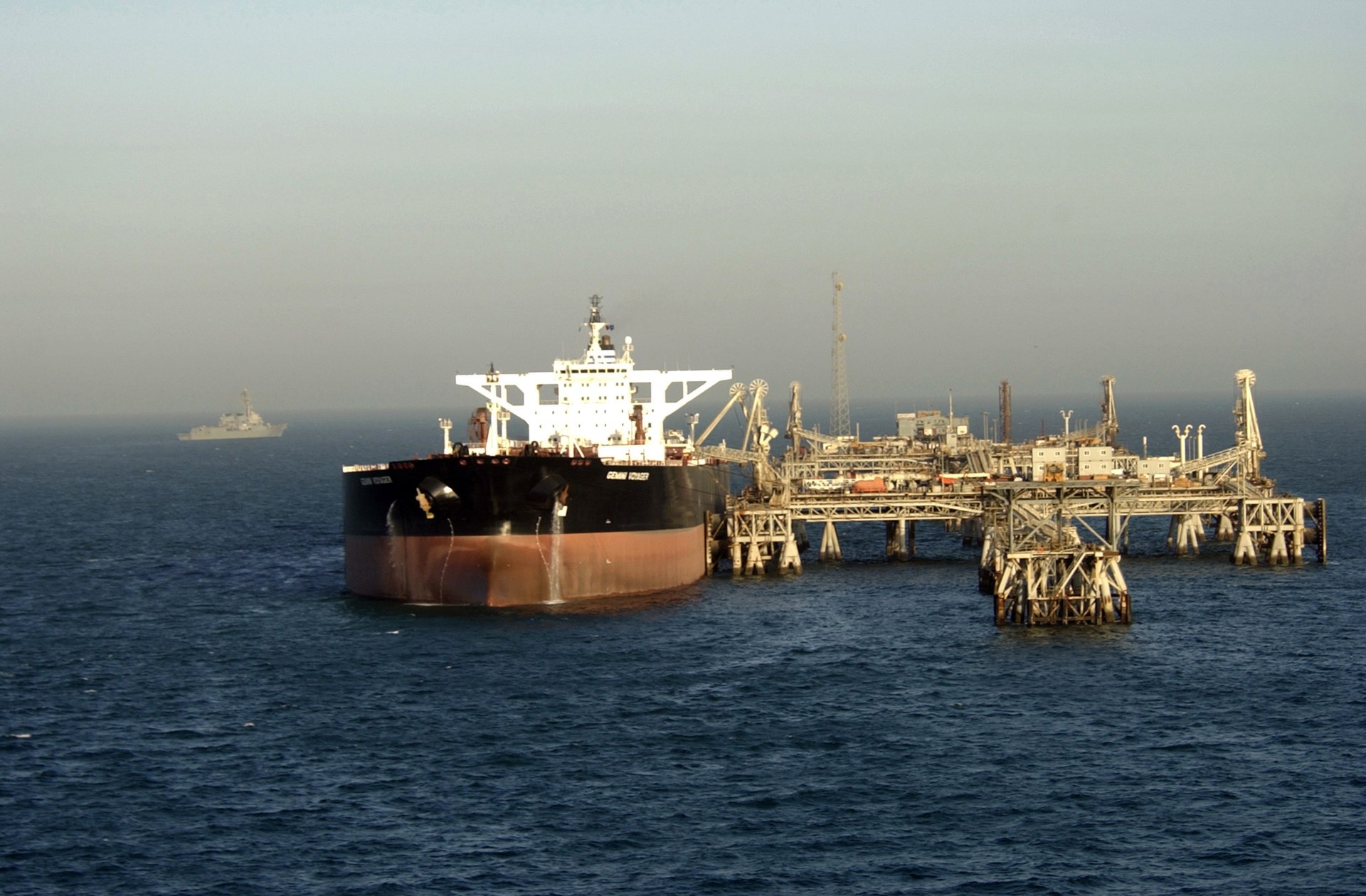
The Hormuz Blockade in Numbers
The scale of the disruption caused by the IRGC Navy’s blockade under Tangsiri’s command is captured in the economic data accumulated over 27 days of conflict.
| Indicator | Pre-War | Current (March 26) | Change |
|---|---|---|---|
| Daily vessel transits | ~150 | <100 | -90%+ |
| Crude oil flow through Hormuz (bpd) | ~15 million | ~1.5 million (Iranian only) | -90% |
| OPEC crude basket price (per barrel) | $67.90 (Feb) | $115.45 (Mar avg) | +70% |
| Saudi oil production (bpd) | 10 million | 8 million | -20% |
| Saudi Red Sea exports via Yanbu (bpd) | 786,000 | 2.5 million | +218% |
| Ships crossing Hormuz (Mar 1-15) | ~2,000 (est.) | 89 | -96% |
The OPEC crude basket price has surged from $67.90 per barrel in February to an average of $115.45 per barrel in March, a 70 percent increase driven primarily by the Hormuz disruption, according to countryeconomy.com data. The Dallas Federal Reserve Bank described the closure’s global impact as comparable to or exceeding the 1973 and 1979 oil shocks in terms of the volume of supply removed from world markets.
The blockade has hit Gulf states beyond Saudi Arabia. Kuwait, Qatar, Bahrain, and the UAE all depend on Hormuz for their crude exports. Iraq, which normally exports approximately 3.3 million barrels per day through the strait and southern terminals, has suspended all oil exports from its southern ports. Shipping analysts have assessed that commercial transit through Hormuz is unlikely to resume fully for the remainder of 2026 under current security conditions.
What Happens to the IRGC Navy Now?
The question of who succeeds Tangsiri and whether the blockade strategy changes is central to the war’s trajectory. Iran’s IRGC has demonstrated resilience in the face of leadership losses throughout the conflict, rapidly promoting deputies and regional commanders to fill gaps in the command chain.
The IRGC Navy’s operational structure is decentralized by design. Its 1st Naval District, headquartered at Bandar Abbas, and 2nd Naval District at Bushehr each maintain independent operational capability. Fast attack craft, mine-laying vessels, and drone boats are dispersed across multiple bases along Iran’s southern coastline. The infrastructure that enforces the blockade — the mines, the shore-based missiles, the surveillance systems — does not require central direction to remain active. A deeper analysis of the five structural factors that make the Hormuz blockade resilient to command decapitation reveals why the strait is unlikely to reopen regardless of which IRGCN commander falls.
Military analysts interviewed by CNN and Reuters noted that Iran’s pattern following previous targeted killings has been to intensify operations rather than pull back. After the killing of security chief Ali Larijani in early March, Iran escalated its drone and missile attacks on Gulf countries, striking targets across all six GCC nations for the first time. A similar escalatory response to Tangsiri’s killing cannot be ruled out.
The IRGC Navy’s deputy commander, whose identity has not been publicly confirmed since the war began, would be the likely interim replacement. Iran’s supreme national security council, now led by Zolghadr, would approve any permanent appointment. The process could take days or weeks, during which tactical decisions would fall to district commanders with standing orders to maintain the blockade.
Tangsiri’s Death and the Ceasefire Stalemate
The killing comes at a moment of diplomatic deadlock. On Tuesday, Iran formally rejected President Trump’s 15-point ceasefire proposal, which demanded the dismantling of Iran’s nuclear facilities at Natanz, Isfahan, and Fordow, a permanent commitment to never develop nuclear weapons, and the handover of enriched uranium stockpiles to the International Atomic Energy Agency.
Iran issued its own five-point counterproposal, demanding a complete halt to strikes and assassinations, concrete mechanisms to prevent future attacks, guaranteed war reparations, the conclusion of hostilities across all fronts including those involving resistance groups, and Iranian sovereignty over the Strait of Hormuz. An Iranian official told NPR that “no negotiations will be held prior to” acceptance of those conditions.
Tangsiri’s killing is likely to harden Iran’s negotiating position. Tehran’s demand for sovereignty over the Strait of Hormuz was already the most contentious element of its counterproposal, and the elimination of the commander who enforced that sovereignty claim removes any incentive for Iran to moderate its stance. Mediators working through Pakistan to arrange possible face-to-face talks, potentially as early as Friday, now face an even more hostile environment.
President Trump, speaking after Iran rejected his ceasefire plan, said Tehran was “‘begging’ us to make a deal.” Iran’s military command rejected that characterization, with an IRGC spokesperson stating that “Washington is in no position to negotiate.” Germany’s defense minister, commenting on the broader conflict, called the war “a catastrophe for the world’s economies” and accused the United States of having “no exit strategy,” according to CNN.
The gap between the American and Iranian positions remains vast. Washington demands the complete dismantling of Iran’s nuclear program and military capabilities. Tehran demands reparations and recognition of its maritime sovereignty. Tangsiri’s death adds another grievance to Iran’s list without offering any mechanism for bridging the divide.
Tangsiri’s killing was part of a broader 48-hour blitz Netanyahu ordered on Iran’s arms factories, a last-ditch effort to destroy as much of Iran’s military-industrial base as possible before a potential ceasefire.
Frequently Asked Questions
Who was Alireza Tangsiri?
Alireza Tangsiri was the commander of Iran’s Islamic Revolutionary Guard Corps Navy, appointed in August 2018 by Supreme Leader Ali Khamenei. He was a veteran of the Iran-Iraq War born in 1962 in Bushehr Province. The U.S. Treasury designated him a Specially Designated Global Terrorist in June 2019. He was the architect of Iran’s asymmetric naval warfare doctrine and the operational commander of the Strait of Hormuz blockade during the 2026 war.
How was Tangsiri killed?
Israel announced that Tangsiri was killed Wednesday night, March 26, 2026, in what Israeli Defense Minister Israel Katz described as “a precise and lethal operation” targeting the IRGC naval command at Bandar Abbas, the headquarters of Iran’s naval forces on the Strait of Hormuz. The strike also reportedly killed other senior naval officers. Iran has not confirmed the death.
Will Tangsiri’s death reopen the Strait of Hormuz?
Analysts assess that it is unlikely to lead to an immediate reopening. The IRGC Navy’s blockade relies on distributed infrastructure including naval mines, shore-based missiles, drone boats, and surveillance systems that operate independently of central command. District commanders have standing orders to maintain the blockade, and Iran’s pattern has been to escalate rather than de-escalate following leadership killings.
How many Iranian commanders have been killed in the 2026 war?
Israel has announced the killing of more than a dozen senior Iranian officials since the war began on February 28. The most significant include Supreme Leader Ali Khamenei, IRGC ground forces commander Mohammad Pakpour, security chief Ali Larijani, Basij head Gholamreza Soleimani, intelligence minister Esmail Khatib, and IRGC Navy commander Alireza Tangsiri. Iran has confirmed some but not all of these claims.
What does Tangsiri’s death mean for Saudi Arabia?
Saudi Arabia has been one of the countries most affected by Tangsiri’s Hormuz blockade, which has forced Riyadh to reroute oil exports through the Red Sea port of Yanbu and cut production by 20 percent. While the killing does not immediately change the blockade’s operational status, it removes a key figure in Iran’s naval command at a time when Saudi Arabia is weighing deeper involvement in the conflict alongside the United States.