
TEL AVIV — Israel’s military has positioned approximately 40,000 ground troops along the Lebanese border, the largest northern buildup since the 2006 Lebanon war, as Hezbollah escalated its rocket and drone campaign against Israeli cities on Monday, killing three civilians in Haifa and triggering emergency cabinet discussions about authorising a ground operation that Washington has explicitly asked Jerusalem to defer.
The Israeli Defence Forces confirmed Monday that reserve call-ups for three additional brigades had been completed over the weekend and that the 36th Armoured Division and 98th Paratroop Division had been repositioned from their regular deployment zones to staging areas in the Upper Galilee and the Golan Heights. An IDF spokesperson described the movements as “defensive positioning in response to Hezbollah’s ongoing attacks” but declined to confirm or deny whether the cabinet had issued a ground operation order.
Hezbollah, the Lebanese armed movement and Iran-backed proxy that controls significant territory in southern Lebanon, fired more than 340 rockets and drones at northern Israel in the 48 hours ending Monday morning, according to IDF counts. That rate of fire culminated in a single coordinated barrage of 200 rockets on 12 March, which Iran described as a joint integrated operation — a sharp escalation from the 60 to 80 daily projectiles recorded in the conflict’s first week. The group’s media arm announced Monday that it had deliberately targeted “military and industrial infrastructure” in Haifa, Israel’s third-largest city, for the first time in the current conflict. Israeli emergency services confirmed three deaths and eleven injuries from strikes on a residential neighbourhood in the Neve Sha’anan district.
The combination of Israeli troop concentrations, Hezbollah’s deliberate escalation, and the fog of strategic calculation across Washington, Riyadh, and Beirut has made the northern front — previously a secondary theatre of the Iran war — the most acutely dangerous in the region.
In this briefing:
- Why Hezbollah is escalating now — the logic of the Axis of Resistance
- Israel’s strategic window — the case for acting before it closes
- What a ground invasion would look like — three scenarios
- Washington’s alarm — a second front nobody asked for
- Saudi Arabia and the Arab world — the red line that matters most
- The escalation cascade — Houthis, Iraq, and the three-front nightmare
- The next 72 hours — what to watch
Why Is Hezbollah Escalating Now?
Hezbollah’s decision to dramatically increase its fire rate against Israel this week reflects a calculation that has been building since Operation Epic Fury began on February 28. The movement entered the current conflict at low intensity — symbolic rocket barrages designed to demonstrate solidarity with Iran without triggering an Israeli response that Hezbollah, still recovering from the devastating 2024 Lebanon campaign, could not sustain. That calculus has now shifted.
The trigger was Mojtaba Khamenei’s first public address as Iran’s Supreme Leader on Sunday. In a 22-minute broadcast carried by Iranian state television, the new Supreme Leader explicitly called on the “Resistance” to activate and described Hezbollah as “the shield of the Axis.” For Hezbollah’s leadership, that phrase — “shield of the Axis” — was not rhetorical. It was a direct operational instruction from the movement’s primary patron and spiritual authority. Two senior Hezbollah figures told Lebanese newspaper Al-Akhbar, which carries editorial positions sympathetic to the movement, that the group had received “clear guidance” from Tehran following Khamenei’s address.
The internal logic extends beyond obedience to instructions. With Iran’s conventional military shattered — the Pentagon assesses Iranian ballistic missile launch capability has fallen 90 percent since February 28 — the Axis of Resistance faces an existential credibility question. If Hezbollah sits out the war in which its patron is being comprehensively defeated, it emerges from the conflict politically neutered: unable to claim it stood by Iran, vulnerable to disarmament demands from Lebanon’s Saudi-backed political factions, and stripped of the deterrent credibility that has protected it from Israeli military action since 2006.
Acting now, even at the cost of drawing Israeli retaliation, preserves Hezbollah’s political position in Lebanon and demonstrates to its constituency that the organisation is a genuine military force and not a deterrent that only works while Iran is strong. The International Crisis Group assessed in a briefing note circulated to governments Sunday that Hezbollah’s escalation represented “a choice between two forms of strategic damage — take the hit now, or face dissolution later.”
Israel’s Strategic Window — The Case for Acting Before It Closes
Inside Israel’s security cabinet, a parallel argument has been building since the first week of the Iran war, and it has now become the dominant frame for the northern front discussion. The argument runs as follows: the conditions for a decisive operation against Hezbollah will never be more favourable than they are at this moment, and they will deteriorate rapidly if Israel waits.
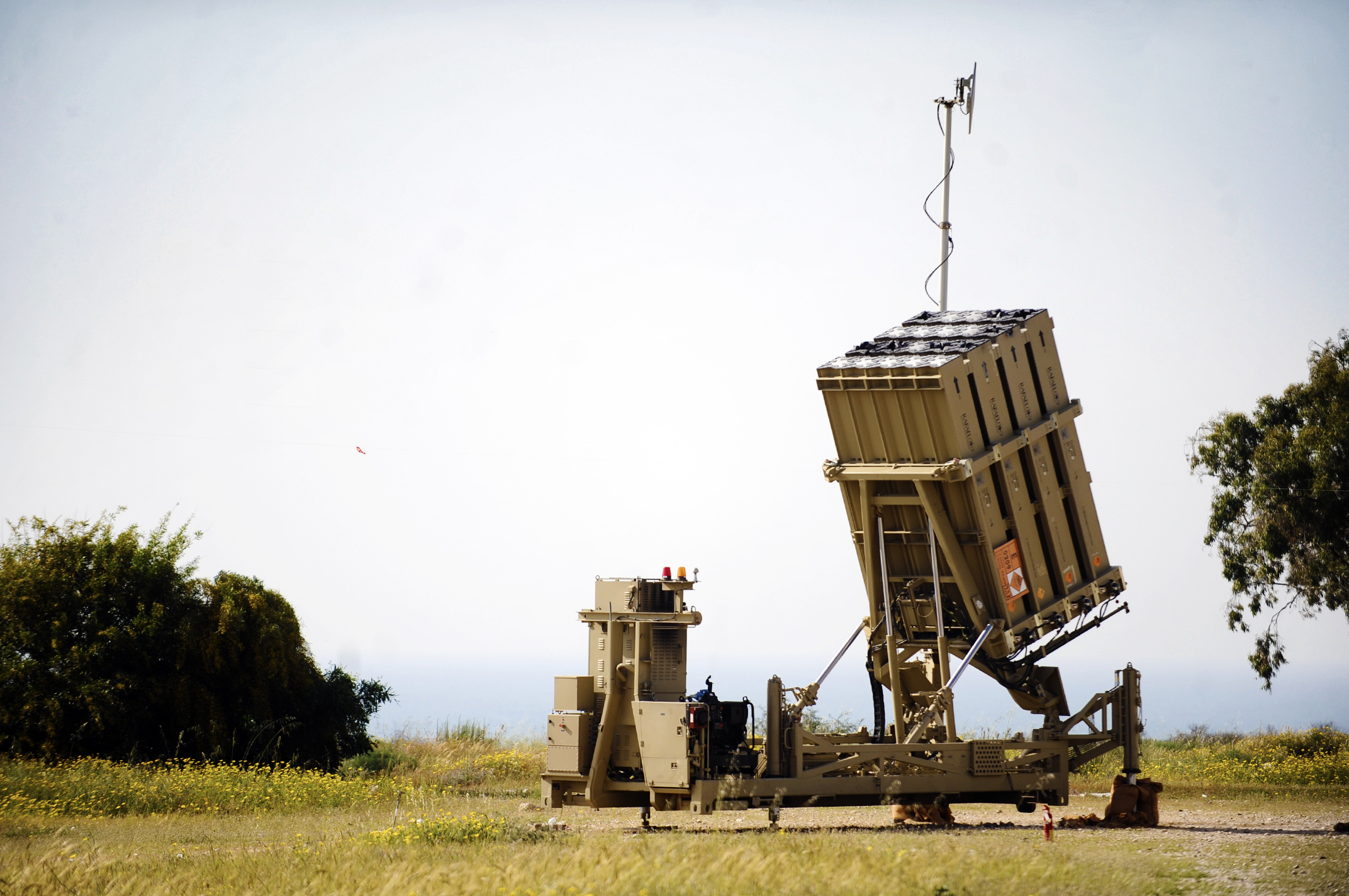
Iran’s logistics corridor through Syria — the principal route through which weapons, money, and military advisers have flowed to Hezbollah for two decades — has been severed by the US-Israeli strike campaign. Iran’s ability to reconstitute that corridor while its own military is being dismantled is close to zero. Hezbollah’s arsenal, formidable as it remains, is finite and not replenishable on any timeline that matters. Every week of delay allows the group to reposition forces, consolidate its tunnel network in southern Lebanon, and potentially source weapons through alternative maritime or Turkish channels that Israeli intelligence has identified as contingency routes.
Israeli military planners also point to the 2006 precedent with a particular kind of institutional anger. The Second Lebanon War began with Israeli hesitation, gave Hezbollah three weeks to prepare for the ground phase, and ended inconclusively — with Hezbollah’s political standing enhanced rather than diminished by its survival. Eighteen months of post-2024 planning for a renewed Lebanon operation, which Israeli media began reporting in late 2025, has been specifically designed to avoid those errors. The 36th Division’s repositioning reflects operational plans that are ready to execute, not plans being written under pressure.
Prime Minister Netanyahu told his security cabinet on Sunday, according to three Israeli journalists with access to cabinet participants, that the current moment represented “a window that will not reopen.” He reportedly argued that Hezbollah’s own escalation had resolved the question of proportionality — that Haifa, a civilian city, had now been deliberately targeted, providing the legal and political justification for a ground response that previous Israeli governments had lacked.
The IDF’s publicly stated objective in any ground operation would be the destruction of Hezbollah’s tunnel and rocket infrastructure in the area south of the Litani River, a strip of Lebanese territory approximately 30 kilometres deep that has been the source of the majority of Hezbollah’s projectile launches. The Litani line was the stated objective of the 1982 Israeli invasion as well; whether it remains the limit of a 2026 operation would depend heavily on Hezbollah’s resistance and the speed of international pressure for a ceasefire.
What a Ground Invasion Would Look Like — Three Scenarios
Military analysts and former IDF commanders consulted by Haaretz and the Jerusalem Post this weekend described three possible operational models for an Israeli ground move into Lebanon, ranging in ambition and risk.
The first and most limited scenario is a border buffer operation: Israeli armoured and infantry units advance between two and five kilometres into southern Lebanon, establishing fire control over the immediate border zone and destroying tunnel exits and launch sites within range of the frontier communities. This option carries the lowest risk of extended urban combat and the lowest international political cost, but does not substantively degrade Hezbollah’s medium and long-range rocket capacity, which is deployed well north of the border strip.
The second scenario, which IDF planning appears to centre on, involves an advance to the Litani River line — approximately 25 to 30 kilometres into Lebanese territory. This operation would require clearing Hezbollah forces from dozens of villages in the southern Lebanon heartland, including Bint Jbeil and Khiam, where the group has constructed its most extensively prepared defensive positions. Israeli military estimates, leaked to Channel 12 over the weekend, put the duration of such an operation at “weeks, not months” — though analysts at the RAND Corporation warned in a report published last year that similar optimism in 2006 proved badly misplaced.
The third and most dangerous scenario involves a push beyond the Litani toward the Beirut-Damascus highway, aiming to cut Hezbollah’s internal supply lines and potentially threaten the group’s political and military command infrastructure in the southern suburbs of Beirut. This option carries the highest risk of extended attrition warfare in urban terrain, the highest probability of significant Israeli casualties, and the most severe international political consequences — particularly for Lebanon’s civilian population of approximately 4.5 million, of whom an estimated 400,000 are concentrated in the operational zone of the first two scenarios alone.
The UN Office for the Coordination of Humanitarian Affairs warned Monday that a ground operation of any scale in southern Lebanon would create a “mass displacement emergency” within 48 hours, drawing on the 2006 experience in which one million Lebanese civilians were displaced within two weeks.
Washington’s Alarm — A Second Front Nobody Asked For
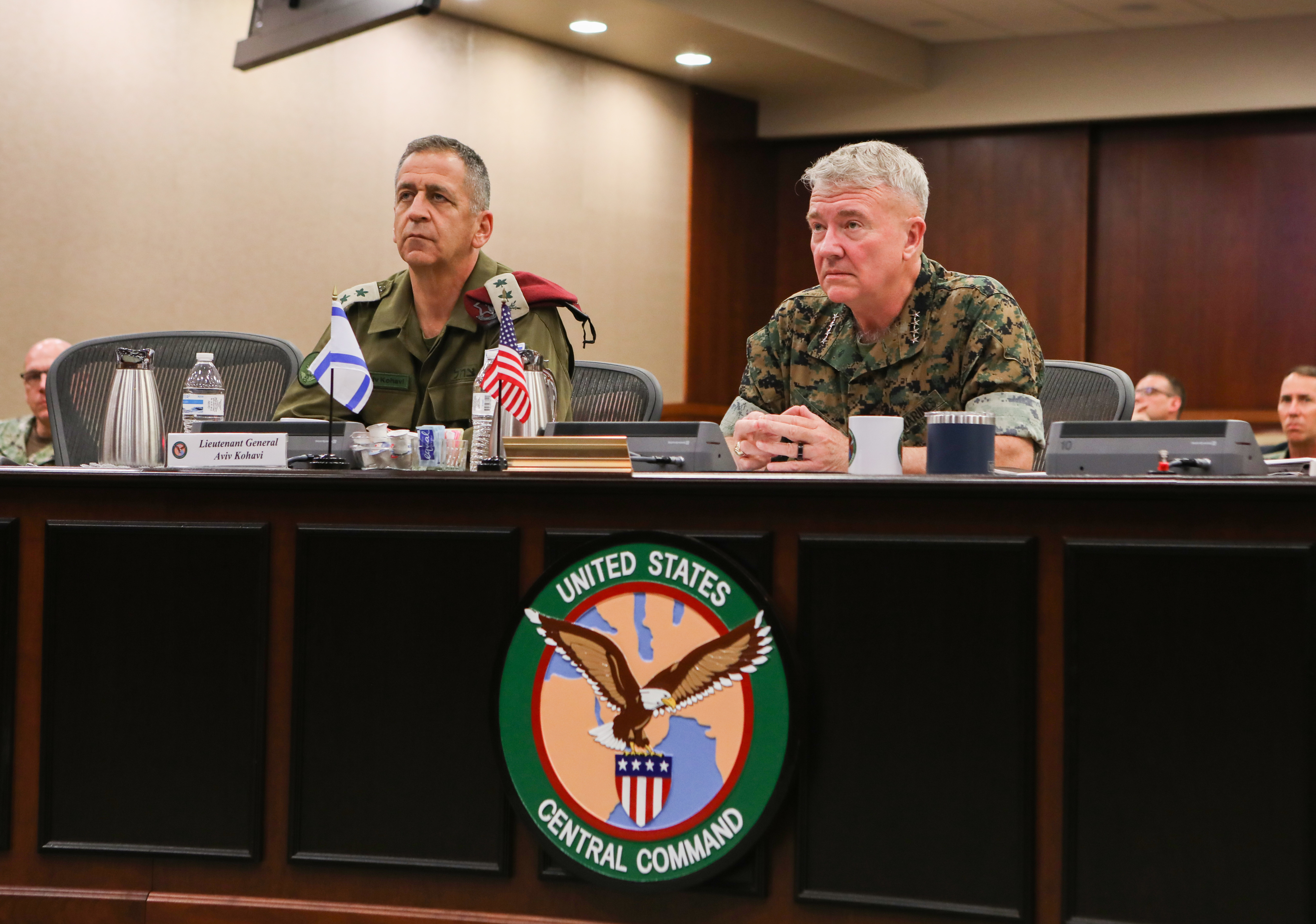
The Trump administration’s reaction to the Lebanese escalation follows the same pattern as its response to the Kharg Island strikes, and carries the same risk of being ignored. National Security Adviser Mike Waltz held emergency calls with his Israeli counterpart on both Saturday and Sunday, according to a senior administration official who spoke to Reuters on condition of anonymity. The message, in both calls, was consistent: do not open a ground front in Lebanon while the Iran campaign is incomplete. The administration needs sequential operations, not simultaneous ones.
The military rationale is straightforward. The United States currently has two carrier strike groups operating in the Persian Gulf in support of the Iran campaign; a third was deployed to the region last week following Iranian strikes on Saudi oil fields. A significant escalation on the Lebanese front would require repositioning assets to the Eastern Mediterranean at a moment when the Gulf theatre remains unsettled. The Pentagon has no appetite for managing three simultaneous combat theatres — Iran, Lebanon, and the Gulf — with the force structure currently deployed.
There is also a coalition dimension that goes beyond force availability. France has approximately 10,000 troops serving with UNIFIL, the United Nations Interim Force in Lebanon, in positions that would be directly jeopardised by a large-scale Israeli ground operation. Paris has made clear, through both diplomatic channels and public statements by Foreign Minister Jean-Noël Barrot, that French UNIFIL forces “will not move and will not be ordered to move” if Israeli armour advances into their operational area. The prospect of French military personnel caught between Israeli tanks and Hezbollah positions is the scenario that keeps NATO planners awake, and it is one that State Department officials have flagged explicitly to Jerusalem.
Secretary of State Marco Rubio told reporters Monday that the United States “strongly supports Israel’s right to defend itself” against Hezbollah attacks but that “the timing and sequencing of any operations needs to be coordinated within the coalition framework.” The formulation — “timing and sequencing” rather than unconditional support — was identical to his carefully chosen language on the Kharg Island strikes last week. Its effectiveness in deterring Israeli unilateral action remains an open question, as the Kharg episode made clear.
Saudi Arabia and the Arab World — The Red Line That Actually Matters
If Washington’s objections carry less operational weight than they should, the Arab world’s reaction to a Lebanese ground invasion may carry more. Saudi Arabia, Jordan, Egypt, and the UAE have all communicated privately to Washington in the past 48 hours that an Israeli ground operation in Lebanon would cross a political threshold that none of their governments can manage domestically.
The distinction, as Saudi officials have explained it to American interlocutors according to sources familiar with those discussions, is fundamental. The Iran war — framed as a campaign against the IRGC’s nuclear programme and its proxy network — has been politically manageable in Saudi Arabia and the Gulf states because it can be presented as a targeted counter-terrorism operation rather than a war on a Muslim country. That framing, already strained by the Kharg Island strikes, cannot survive images of Israeli tanks rolling through Lebanese villages and Israeli artillery falling on the suburbs of Beirut.
Lebanon is not Iran. Its population is Arab and substantially Sunni Muslim; its political culture, however dysfunctional, has produced governments that the Arab world recognises as legitimate. The Hariri family, Saudi Arabia’s most significant Lebanese political investment over four decades, represents exactly the constituency that would be destroyed politically if Riyadh is seen to have enabled Israeli military action against Lebanon. Crown Prince Mohammed bin Salman has spent years cultivating the image of a modernising leader who represents a new regional order; standing by silently while Israel conducts a ground war in an Arab country would corrode that image in ways that no amount of subsequent diplomacy could repair.
Egypt and Jordan face the same pressure at higher domestic intensity. Both governments have populations that have followed the Gaza war with sustained outrage; a Lebanon invasion would almost certainly produce street protests that neither government is confident it can contain. Egyptian President el-Sisi reportedly told his American counterpart in a call Sunday that Cairo’s “continued cooperation with the coalition framework cannot be assumed” if Israeli forces enter Lebanon — a statement that, given Egypt’s role in maritime security and Sinai border management, carries genuine strategic weight.
The Escalation Cascade — Houthis, Iraq, and the Three-Front Nightmare
The scenario that most concerns US military planners is not the Lebanon operation itself but what it triggers. The Houthis have kept their forces on a hair trigger since the conflict began, with leader Abdulmalik al-Houthi stating as recently as last week that his forces were “ready to respond at any moment.” An Israeli ground operation in Lebanon — visually and politically the most striking expansion of the conflict since it began — would almost certainly provide the political cover the Houthi leadership needs to justify full activation to its own constituency.
A fully activated Houthi force would simultaneously threaten Saudi Arabia’s southern border, the Bab el-Mandeb strait, and Red Sea shipping — opening the dual-chokepoint scenario that economists and energy analysts have identified as the most severe supply shock risk in the conflict. The Strait of Hormuz is already severely disrupted; Bab el-Mandeb closing simultaneously would effectively remove two of the world’s four critical energy transit chokepoints from operation at the same time.
In Iraq, Iran-backed Popular Mobilisation Force factions that have so far limited themselves to rocket attacks on US bases face the same credibility pressure as Hezbollah. A Lebanon ground war provides an activation trigger for groups including Kataib Hezbollah and Asaib Ahl al-Haq, whose drone and rocket systems have range sufficient to reach both Saudi territory and the Fifth Fleet’s Bahrain base. Iraq’s government has repeatedly demonstrated that it cannot order these groups to stand down; the question is whether their Iranian command links, already degraded by the death of IRGC leadership in the opening strikes, have been severed enough to prevent coordinated escalation.
The three-front scenario — Iran campaign ongoing, Lebanon ground war active, Houthis and Iraqi militias simultaneously engaged — is the combination that sends oil above $160 per barrel, exhausts US forward force posture, fractures the Arab coalition members’ political ability to remain nominally aligned, and transforms a campaign that began with clear and limited objectives into something that starts to resemble the indefinite regional war that Trump promised his domestic audience he would not fight.
As the war has already widened to Gulf civilian infrastructure, the threshold for further escalation has demonstrably lowered with each passing week. The Lebanon decision now sits at the centre of a web of strategic consequences that extend far beyond the IDF’s operational plans for the Litani River line — and the next 72 hours will determine whether the coalition’s fragile discipline holds, or whether the northern front becomes the conflict’s defining escalation.
What to Watch in the Next 72 Hours
Several developments over the next three days will determine the trajectory of the northern front.
The Trump-Netanyahu call scheduled for Monday afternoon Washington time — already complicated by the Kharg Island fallout — will now address Lebanon as the primary agenda item. Whether Trump extracts a public commitment from Netanyahu to defer a ground operation, or accepts Israeli assurances through private channels that have previously proved unreliable, will signal how much effective leverage Washington retains over Israeli decision-making in this conflict.
The UN Security Council is expected to receive a formal request for an emergency session from France and Lebanon’s caretaker government by Monday evening. Russia and China are likely to table a resolution calling for Israeli restraint and a Lebanese ceasefire; the United States will veto it, but the debate itself will harden European and Arab diplomatic positions and increase the political cost of Israeli action.
Hezbollah’s fire rate is the most immediate operational indicator. If the group sustains or increases Monday’s pace — 340-plus projectiles per 24 hours — Israeli domestic pressure for a ground response will intensify beyond what the cabinet can absorb politically. If Hezbollah pulls back to lower-intensity fire, it may signal an internal calculation that the escalation has achieved its political objectives without requiring Israel to respond with ground forces.
IDF reserve unit movements are being tracked by Israeli media in real time; any transfer of the 162nd Division — held in reserve and not yet repositioned north — to the Galilee staging areas would be the clearest operational signal that a ground order is imminent.
The question hanging over all of it is whether the pattern established by the Kharg Island strikes — Israeli unilateralism, American displeasure, no consequences — will repeat itself on the far larger stage of a Lebanon ground war. If it does, the Iran war of February 2026 will have become something considerably more dangerous and considerably less controlled than anything the coalition’s architects planned for.