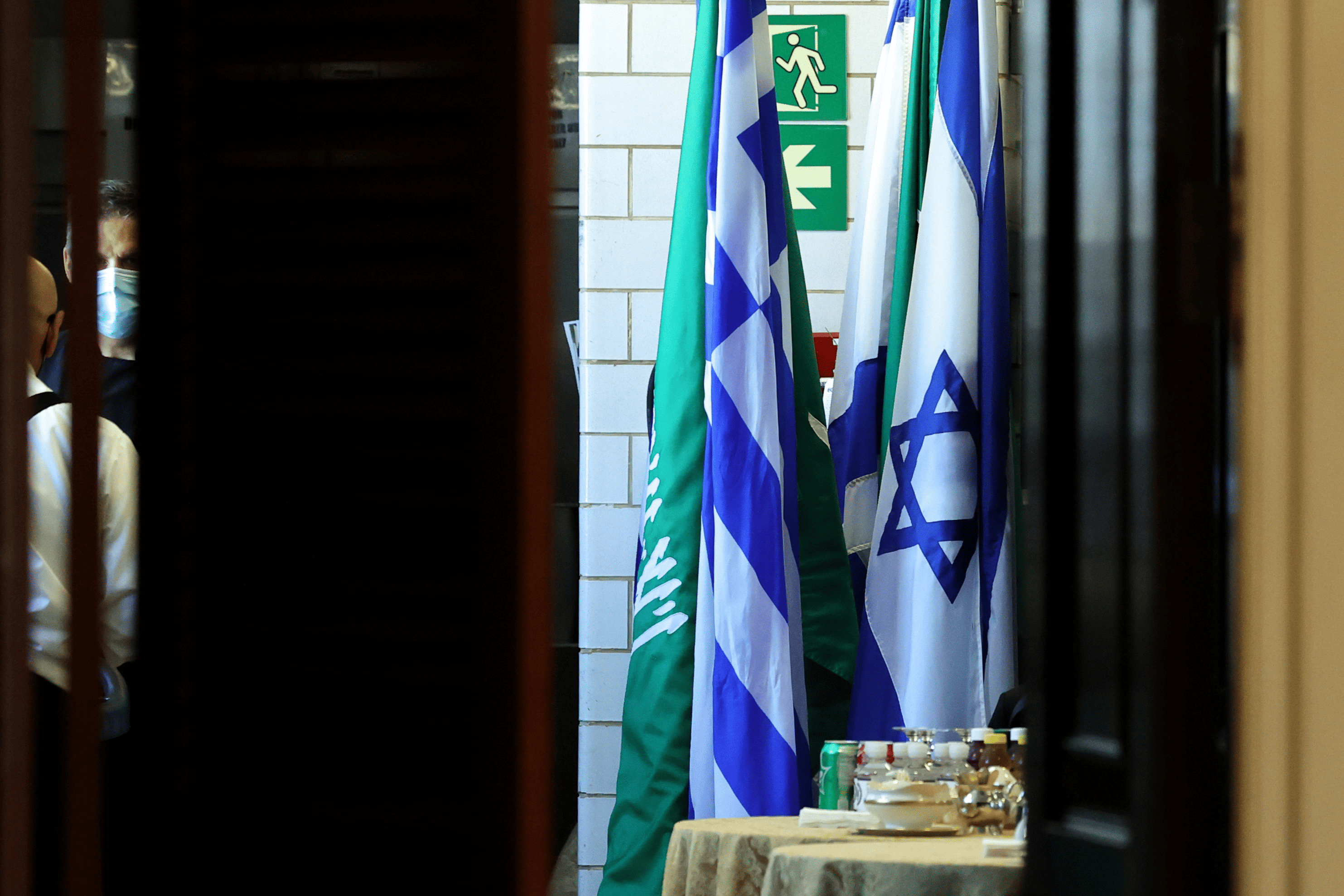

An extraordinary development took place on Monday as an Israeli delegation made its way to Riyadh to attend a meeting hosted by the United Nations’ cultural agency, UNESCO. This historic event serves as a clear indication that Saudi Arabia is taking significant steps in opening up to Israel, as pressure from Washington for a complete normalization of relations continues to mount.
Eyewitnesses reported that three Israeli officials were present at the 45th session of UNESCO’s World Heritage Committee, confidently occupying the reserved chairs designated for Israel. However, when approached for comment, the officials chose to keep a tight-lipped stance.
Among the members of the Israeli delegation were the deputy director-general for international organizations from the Foreign Ministry and the ambassador to international organizations in Paris, representing the nation’s diplomatic front. Additionally, a delegate from the Education Ministry and the chair of the Antiquities Authority played essential roles during this significant gathering.
Unsurprisingly, the Saudi government has remained tight-lipped thus far and refrained from providing any comments in response to this unprecedented event. Similarly, both Israel’s Foreign Ministry spokesperson and UNESCO have chosen not to disclose any additional information.
It is worth noting that public appearances of Israeli officials within Saudi Arabia are a rarity, considering the country’s status as a Muslim powerhouse and the custodian of Islam’s most sacred sites. Nonetheless, beneath the public eye, clandestine contacts have been established between the two nations, fostered in part by shared concerns regarding the Iranian threat.
The United States, a longstanding ally of Riyadh, has been diligently advocating for a normalization agreement between Saudi Arabia and Israel. Such an achievement would undoubtedly cement Washington’s strategic position and influence in the region, following similar successful agreements with the United Arab Emirates, Bahrain, and Morocco under the banner of the Abraham Accords.
Despite the considerable pressure exerted by the United States, Riyadh has remained steadfast in its stance, linking any potential normalization to the establishment of a Palestinian state within a two-state solution framework for the Israeli-Palestinian conflict, along with a list of other demands.
Clearly, this unexpected gathering has caught the attention of the international community. The far-reaching implications of Israel’s presence at the UNESCO meeting in Saudi Arabia cannot be underestimated, as it marks a possible turning point in regional dynamics and the prospects for peace in the Middle East.