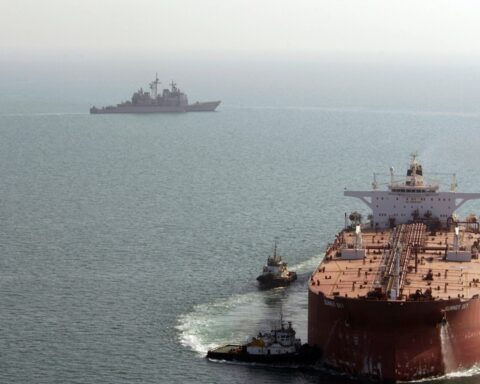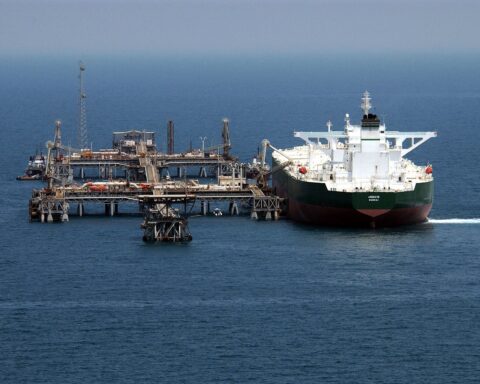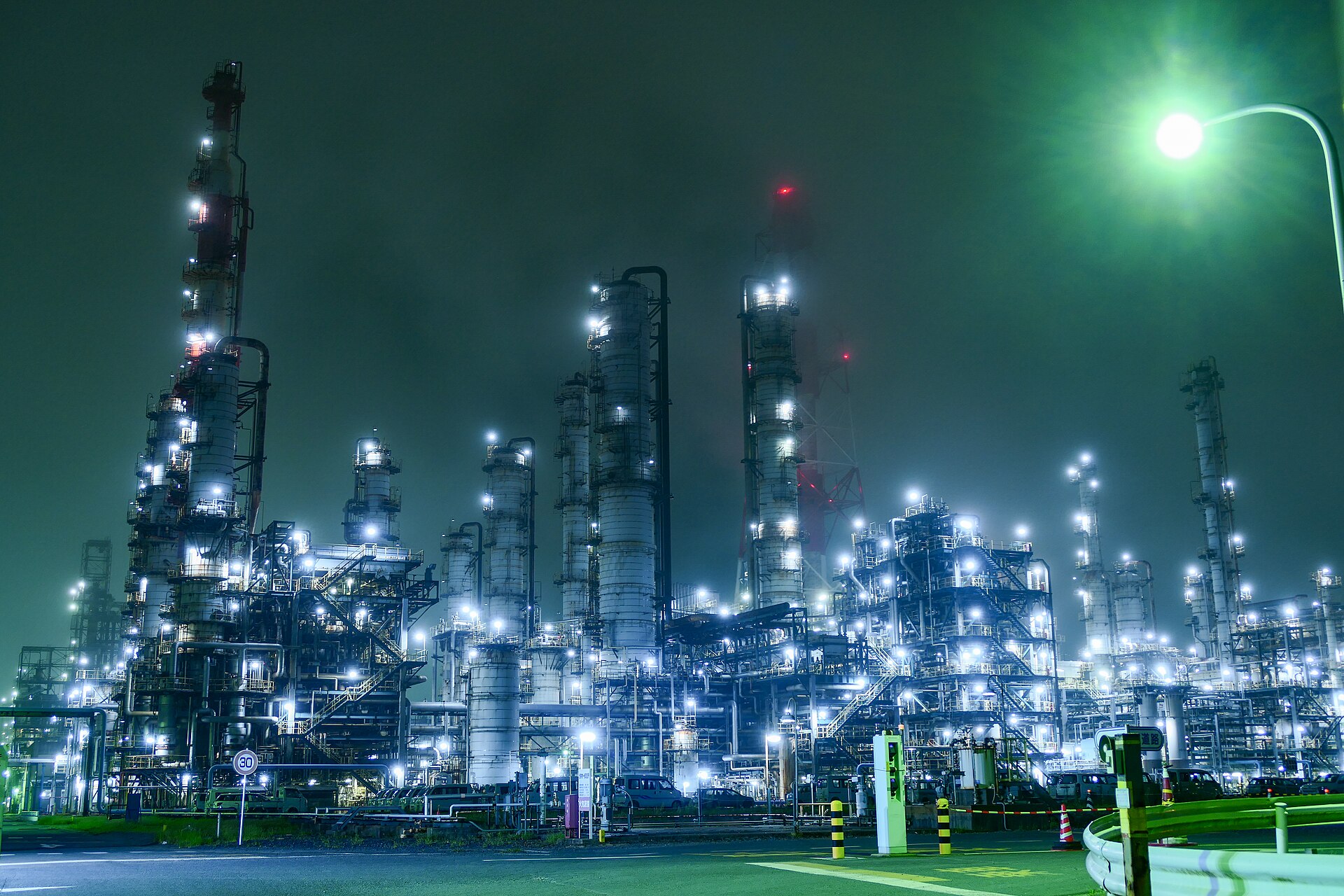

TOKYO — In the fluorescent-lit trading rooms of Idemitsu Kosan and ENEOS Holdings, the numbers on the screens have stopped making sense. Oil is above $110 a barrel. The yen has slid past 158.5 to the dollar. And the Strait of Hormuz — the narrow waterway through which 70 percent of Japan’s crude oil supply flows — is functionally closed for the first time in modern history.
Across the Sea of Japan, the picture is no better. South Korea, the most crude oil-dependent economy among all 37 OECD members, watches as 68 percent of its petroleum lifeline disappears behind a curtain of IRGC naval mines and anti-ship missiles. Samsung and SK Hynix, the companies that manufacture more than half the world’s memory chips, face the prospect of energy costs that shatter every production model they have ever built.
These are Saudi Arabia’s two most important customers in Asia. Together, Japan and South Korea purchase hundreds of billions of dollars in Saudi crude, invest in Aramco downstream projects, and anchor the entire economic architecture of Mohammed bin Salman’s Vision 2030 partnerships in East Asia. What happens to them in the next sixty to ninety days will shape the global energy order for a generation.
The conventional wisdom frames the Hormuz crisis as a problem for consuming nations — a supply shock that Tokyo and Seoul must absorb and survive. That framing misses the deeper story. The countries that look most damaged may actually emerge stronger, forced into diversification strategies they have resisted for decades. The entity with the most to lose is not Japan or South Korea. It is Mohammed bin Salman and the kingdom he is trying to transform.
Table of Contents
- Why Are Japan and South Korea the Most Vulnerable Economies in the Hormuz Crisis?
- How Much Oil Do Japan and South Korea Import Through the Strait of Hormuz?
- What Does Saudi Arabia Stand to Lose From Its Best Asian Customers?
- The Aramco Lifeline — Okinawa Storage and the S-Oil Backdoor
- Can Strategic Petroleum Reserves Buy Enough Time?
- The Currency Trap — How $110 Oil Is Crushing the Yen and the Won
- Will the Semiconductor Supply Chain Survive the Energy Shock?
- The Nuclear Card — Why Tokyo and Seoul Are Restarting Reactors Under Fire
- The East Asian Energy Vulnerability Matrix
- The Contrarian Angle — Saudi Arabia Is the Real Loser
- What Happens After Hormuz Reopens — The Permanent Shift in Asian Energy Procurement
- Frequently Asked Questions
Why Are Japan and South Korea the Most Vulnerable Economies in the Hormuz Crisis?
Japan and South Korea sit at the extreme end of energy import dependence among advanced industrialized nations. Japan imports more than 95 percent of its oil from the Middle East, a concentration of supply risk that no other G7 economy comes close to matching. South Korea meets 92 percent of its total energy needs through imports, making it the single most energy-vulnerable developed economy on the planet.
Geography is the root cause. Neither country possesses meaningful domestic hydrocarbon reserves. Japan’s domestic oil production is negligible — a few aging fields in Niigata and Akita prefectures that produce less than 4,000 barrels per day against national consumption of roughly 3.2 million. South Korea produces zero crude oil domestically. Every barrel that enters a Korean refinery arrives by tanker.
This dependence has been a known vulnerability for decades. Japan’s 1973 oil shock trauma, when Arab producers imposed an embargo that triggered rationing and economic crisis, led to the creation of one of the world’s most extensive strategic reserve systems. South Korea’s rapid industrialization in the 1980s and 1990s was built on cheap Gulf crude, and the structural dependence was baked into the economy long before anyone in Seoul thought to question it.
What makes 2026 different from 1973 is the nature of the disruption. The Arab oil embargo was a political weapon — producers chose to withhold supply. The Hormuz closure is a physical blockade. The oil still exists. Saudi Arabia still wants to sell it. But the waterway through which it must travel is controlled by a military force that has declared it closed, and the tanker traffic that once carried twenty million barrels per day through the strait has dropped to near zero since the IRGC’s March 2 declaration.
For Japan and South Korea, the distinction between a voluntary embargo and a physical blockade matters enormously. An embargo can be negotiated away through diplomacy or circumvented through alternative suppliers. A blockade backed by naval mines, anti-ship cruise missiles, and fast-attack boats requires military force to break — and neither Tokyo nor Seoul possesses the naval power to do it alone.
How Much Oil Do Japan and South Korea Import Through the Strait of Hormuz?
The raw numbers are staggering. Japan imports approximately 1.6 million barrels per day through the Strait of Hormuz, representing 70 percent of its total crude oil imports. Saudi Arabia alone supplied 43.6 percent of Japan’s crude oil imports as of August 2025, with the UAE, Kuwait, and Qatar providing most of the remainder. Nearly all of that Saudi, Emirati, and Kuwaiti crude transits Hormuz.
South Korea’s exposure is comparable in scale and arguably worse in proportion. Roughly 1.7 million barrels per day of Korean crude imports flow through the strait, representing 68 percent of total crude supply. Beyond oil, South Korea imports 14 percent of its liquefied natural gas from Qatar and the UAE — shipments that also transit Hormuz and for which Seoul maintains only two to four weeks of reserves.
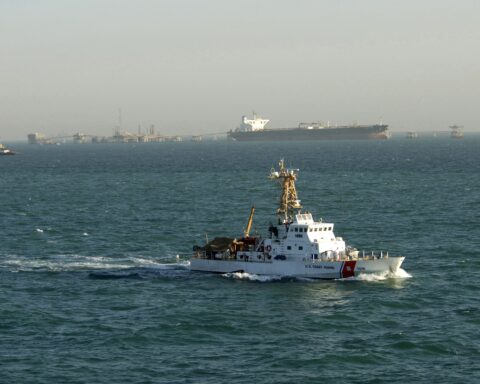
The Second Tanker War unfolding in the Persian Gulf has effectively severed both supply lines. Insurance rates for Hormuz-transiting tankers have climbed to levels that make commercial voyages uneconomical. Lloyd’s of London and its syndicates now classify the entire Persian Gulf as a war-risk zone, adding premiums that can exceed $5 million per voyage for a single VLCC.
The Strait of Hormuz handles roughly 20 million barrels per day under normal conditions — approximately 20 percent of all seaborne oil trade globally. The IRGC’s closure declaration on March 2 did not immediately halt all traffic, but the combination of naval mine warnings, missile threats, and the physical interdiction of several tankers in the first days reduced traffic by an estimated 70 percent within 48 hours. By the second week of March, commercial shipping through the strait has effectively ceased.
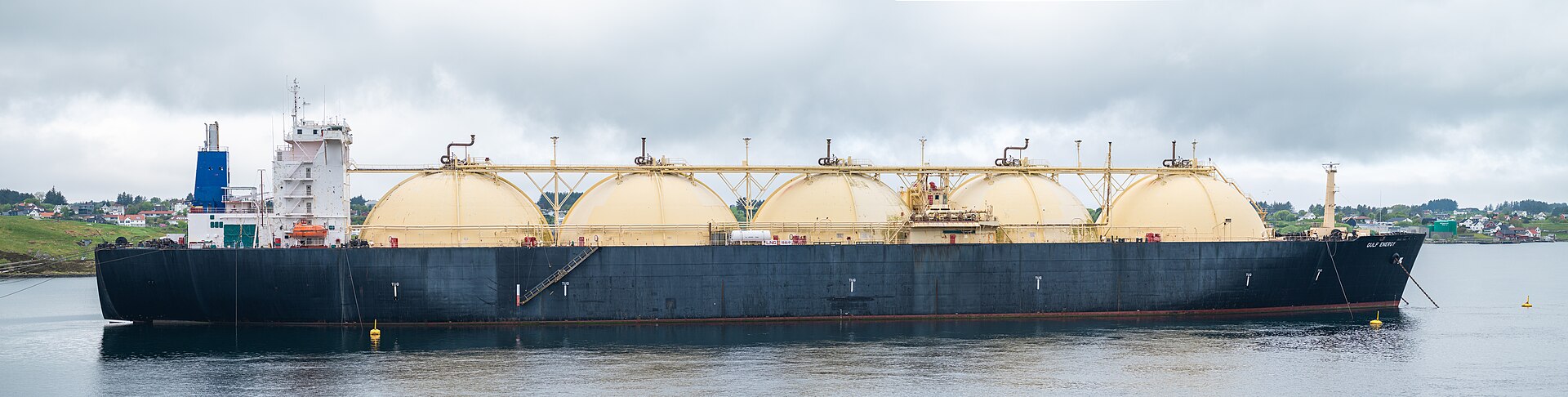
For South Korea, the LNG exposure adds a dimension that Japan partially avoids. Japan diversified its LNG supply chain aggressively after the 2011 Fukushima disaster, securing contracts with Australian, Malaysian, and US suppliers that do not transit Hormuz. South Korea’s LNG diversification has lagged, leaving it with a dangerously thin buffer of just two to four weeks of reserves for the 14 percent of supply that comes from Gulf sources.
The combined oil import disruption facing Japan and South Korea — roughly 3.3 million barrels per day — represents more than 16 percent of the total Hormuz flow. Replacing that volume from non-Gulf sources on short notice is not merely difficult. It is physically impossible given current global spare capacity, pipeline constraints, and tanker fleet logistics.
What Does Saudi Arabia Stand to Lose From Its Best Asian Customers?
The Saudi kingdom has spent decades cultivating Japan and South Korea as cornerstone customers for its crude oil exports. Japan is Saudi Arabia’s third-largest trading partner, and bilateral trade rose 38 percent between 2016 and 2024. South Korea is home to S-Oil, the nation’s fourth-largest refiner, in which Saudi Aramco holds a 63.4 percent ownership stake — one of Aramco’s most significant downstream investments anywhere in the world.
The three-front war that MBS is managing — military, diplomatic, and economic — puts the Asian customer relationship under unprecedented strain. The Hormuz blockade is not Saudi Arabia’s doing. Riyadh did not start the war with Iran, and Saudi forces are not the ones mining the strait. But the kingdom’s inability to guarantee delivery to its most important buyers is a strategic failure that no amount of diplomatic nuance can disguise.
The September 2025 Japan-Saudi Vision 2030 8th Ministerial Meeting outlined an ambitious roadmap for bilateral cooperation in hydrogen, blue ammonia, and clean energy technologies. Those plans now sit in limbo. Japanese companies that were exploring joint ventures with Saudi partners are quietly reassessing whether Gulf-based energy investments carry acceptable geopolitical risk.
MBS has positioned himself as Asia’s long-term energy partner — the leader who would modernize the Saudi economy while maintaining the reliable oil supply that Asian industrial powers require. The Hormuz closure undermines that positioning in a way that a temporary price spike never could. Price spikes are uncomfortable. Supply cutoffs are existential. And the memory of an existential threat reshapes procurement strategy for decades.
The Hormuz crisis is not a temporary inconvenience for Saudi Arabia’s Asian relationships. It is a structural break that will force Tokyo and Seoul to redesign their energy architectures — and those new designs will not center on Gulf crude.
Senior energy analyst, Institute of Energy Economics Japan (IEEJ), speaking on background, March 7, 2026
The financial exposure runs both directions. Aramco’s investments in Asian downstream operations — the Okinawa storage facility, the S-Oil refinery complex, planned petrochemical joint ventures in South Korea and Japan — all assume continued high-volume crude shipments from the Gulf. If Japan and South Korea permanently shift even 15 to 20 percent of their procurement away from Gulf sources, the revenue impact on Aramco runs into the tens of billions of dollars annually.
Saudi Arabia’s wartime oil revenue windfall — the paradoxical price surge that has boosted per-barrel income even as some export volumes face disruption — masks the longer-term damage. High prices today mean nothing if the customers who paid those prices decide to never again place themselves in a position of such vulnerability.
The Aramco Lifeline — Okinawa Storage and the S-Oil Backdoor
Saudi Aramco, to its credit, anticipated the possibility of a Hormuz disruption and positioned assets to provide emergency supply through alternative channels. The two most important are the Okinawa crude oil storage facility in Japan and the S-Oil refinery relationship in South Korea.
Aramco has leased crude oil storage capacity on Okinawa holding approximately nine million barrels. Under the terms of the arrangement, Japan receives priority access to this stored crude in emergencies — a diplomatic and commercial lifeline that no other Gulf producer has replicated. Nine million barrels sounds significant until you measure it against Japan’s daily consumption: at 1.6 million barrels per day of Hormuz-dependent imports, the Okinawa reserves cover roughly five and a half days.
The Okinawa facility was never designed to substitute for Hormuz. It was designed as a buffer — a few days of breathing room while diplomatic channels opened or alternative shipping routes were arranged. In a scenario where the strait remains closed for weeks or months, nine million barrels is a symbolic gesture, not a strategic solution.
South Korea’s backdoor runs through S-Oil, the refiner in which Aramco holds 63.4 percent ownership. S-Oil’s unique relationship with Aramco gives it theoretical access to Saudi crude shipped through alternative routes — specifically the East-West Pipeline that connects Saudi oil fields to the Red Sea port of Yanbu, bypassing Hormuz entirely.
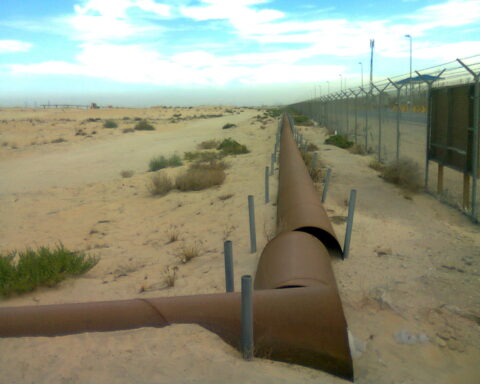
The East-West Pipeline, also known as Petroline, has a capacity of roughly five million barrels per day, though current throughput runs well below that level. In theory, Saudi crude could be loaded at Yanbu, shipped through the Red Sea, around the Cape of Good Hope or through the Suez Canal, and delivered to South Korean ports. In practice, the pipeline is already being stretched to serve multiple customers, the voyage from Yanbu to Ulsan adds roughly ten to fourteen days compared to direct Gulf shipping, and tanker availability for the longer route is constrained.
S-Oil’s Aramco parentage does provide one genuine advantage: priority allocation. When Saudi crude is available through the Yanbu route, S-Oil is likely to receive its contracted volumes before independent Korean refiners. This creates a two-tier system in the Korean refining sector — Aramco-connected refiners with some access to Saudi crude, and independent refiners scrambling for spot cargoes from West Africa, the Americas, and wherever else barrels can be found.
The Saudi oil storage strategy extends beyond Okinawa and S-Oil. Aramco has storage agreements in several Asian countries, and the company’s commercial team has been working since the Hormuz closure to redirect volumes through the Yanbu route. But the fundamental math remains challenging: the East-West Pipeline cannot replace the full volume of crude that normally transits Hormuz, and the logistical complications of the longer shipping route mean delivery times are unpredictable.
Can Strategic Petroleum Reserves Buy Enough Time?
Japan holds the world’s third-largest strategic petroleum reserve, totaling 254 days of net imports. That figure breaks down into 146 days held by the Japanese government in dedicated storage facilities and more than 100 days held by private-sector companies under legal obligation. It is, by any measure, one of the most comprehensive emergency energy buffers any nation has ever constructed.
South Korea’s reserves are smaller but still substantial: 206 days of net imports, managed by the Korea National Oil Corporation. Combined, Japan and South Korea hold more than a year of emergency supply — a cushion that appears to provide ample time for the Hormuz crisis to resolve.
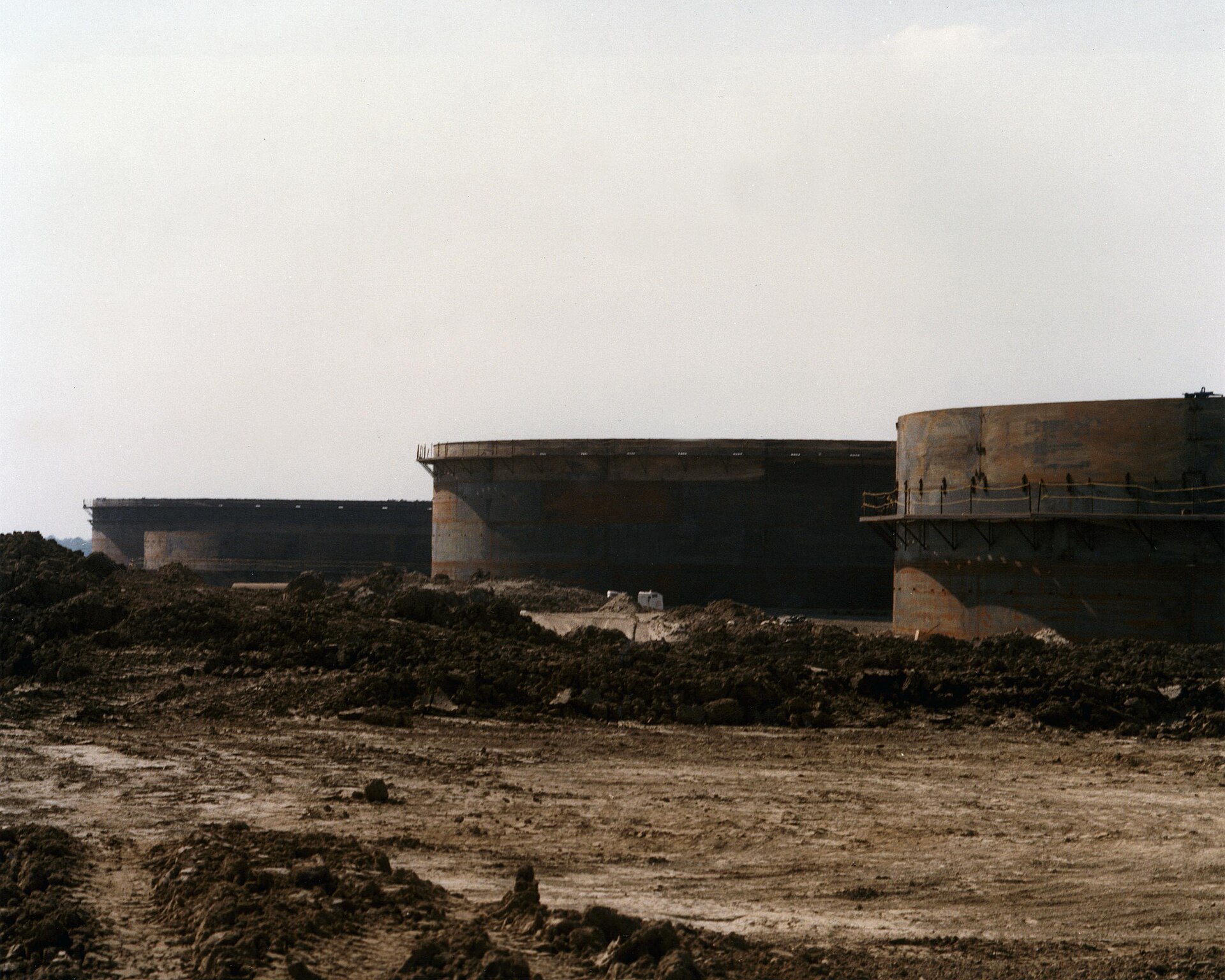
The appearance of security is misleading for several reasons. First, the day-count calculation assumes reserves replace only the Hormuz-dependent portion of imports, not total consumption. If other supply disruptions occur simultaneously — as they tend to during major geopolitical crises — the effective coverage drops significantly. Second, tapping strategic reserves at maximum draw-down rates creates logistical bottlenecks at storage facilities, pipeline connections, and refinery intake points that reduce actual delivery below theoretical capacity.
Third, and most critically, strategic reserves are a finite resource whose depletion creates its own form of vulnerability. Every barrel drawn from the SPR is a barrel that is not available for the next crisis. Government decision-makers in Tokyo and Seoul face a classic game theory problem: release reserves aggressively now to stabilize markets and suppress prices, or conserve them against the possibility that the Hormuz closure lasts longer than anyone expects.
Bloomberg reported on March 5 that Japanese refiners including Idemitsu Kosan and ENEOS Holdings have formally requested that the government begin tapping strategic reserves. The request signals that private-sector reserves — the first line of defense — are already under pressure after just days of disrupted supply. The government has not yet authorized a draw-down, reportedly because Tokyo is coordinating with the G7 on what could be the largest coordinated SPR release in history.
South Korea’s position is complicated by its LNG exposure. The 206-day oil reserve calculation does not account for LNG shortfalls, and South Korea’s LNG reserves cover only two to four weeks of the Gulf-dependent portion of supply. If the Hormuz closure persists through the Northern Hemisphere spring and into summer, South Korea faces the prospect of natural gas shortages during the air conditioning season — a scenario that would force load-shedding at industrial facilities and potentially affect power generation for semiconductor fabrication plants.
The Korean government’s $68.3 billion stabilization fund provides fiscal firepower to subsidize energy costs and cushion the economic blow. But the fund was designed for financial market crises, not prolonged energy supply disruptions. Both the Nikkei and Kospi have already suffered devastating losses, part of a $6 trillion global equity rout driven by stagflation fears. Using it to subsidize fuel costs for months would deplete resources meant for other contingencies and create fiscal pressure that rating agencies would notice.
The Currency Trap — How $110 Oil Is Crushing the Yen and the Won
Oil above $110 per barrel triggers a vicious cycle for both Japan and South Korea that extends far beyond the direct cost of fuel. Because both countries import virtually all their oil, higher crude prices immediately widen trade deficits, which weakens their currencies, which makes the next barrel of dollar-denominated crude even more expensive.
The yen’s depreciation past 158.5 per dollar — reported by Bloomberg on March 9 — represents a level not seen since the intervention episodes of 2022-2023. Finance Minister Satsuki Katayama has stated publicly that currency intervention remains an option, signaling that the Ministry of Finance is prepared to sell dollar reserves to support the yen. But intervention is a temporary measure that burns through foreign exchange reserves without addressing the underlying cause of weakness: a massive and growing energy import bill.
Bank of Japan Governor Kazuo Ueda warned explicitly that the Hormuz conflict could significantly affect Japan’s economy, a statement that markets interpreted as a signal that the BOJ’s tentative interest rate normalization — the slow exit from decades of near-zero rates — may be paused or reversed. Bloomberg’s March 9 analysis identifies a mounting stagflation risk for Japan: $100-plus oil and a sagging yen creating simultaneous inflation pressure and growth drag.
Stagflation is the worst-case macroeconomic scenario because the standard policy tools work against each other. Raising interest rates to fight inflation and support the currency would crush an already fragile economy. Cutting rates to stimulate growth would further weaken the yen and amplify imported inflation. The BOJ faces a trap with no good exit.
South Korea’s won has experienced parallel pressure, though from a different starting point. The won’s decline against the dollar widens the cost of crude imports while simultaneously making Korean exports cheaper — a mixed blessing for an economy that depends on both energy imports and manufactured exports. The Hyundai Research Institute has modeled the scenario in detail: if the Hormuz blockade persists and Dubai crude averages $100, South Korean GDP growth falls by 0.3 percentage points, consumer prices rise by 1.1 percentage points, and the current account balance deteriorates by $26 billion.
Nomura’s research team has identified South Korea as among the most vulnerable economies globally to sustained higher oil prices — a finding that reflects not just the direct energy cost but the knock-on effects through the manufacturing supply chain. Every Korean export, from automobiles to electronics to steel, carries an embedded energy cost that rises with crude prices.
The currency trap also affects the cost of emergency measures. Drawing down strategic reserves and purchasing replacement crude on the spot market requires spending dollars that have become more expensive in local currency terms. Japan’s SPR draw-down, when it comes, will cost more in yen terms than any previous release. South Korea’s stabilization fund, denominated in won, buys fewer barrels at the current exchange rate than planners assumed when the fund was sized.
Will the Semiconductor Supply Chain Survive the Energy Shock?
South Korea produces more than half of the world’s memory chips. Samsung Electronics and SK Hynix, both headquartered in the country, are the dominant manufacturers of DRAM and NAND flash memory — components that go into every smartphone, server, laptop, and data center on earth. These fabrication facilities are among the most energy-intensive industrial operations in existence.
Semiconductor fabrication plants — known as fabs — require enormous quantities of electricity delivered with absolute reliability. A momentary power fluctuation can destroy an entire batch of wafers worth millions of dollars. The plants run 24 hours a day, 365 days a year, and their energy consumption is measured in hundreds of megawatts per facility. Samsung’s Pyeongtaek campus alone consumes more electricity than some small cities.
Oil above $85 per barrel forces a revision of semiconductor cost models, according to industry analysts. At $110, the impact is severe. South Korea generates a significant portion of its electricity from natural gas and oil, and with only 9.64 percent of the power generation mix coming from renewable sources — compared to a world average of 30.25 percent — the country has limited ability to insulate its grid from fossil fuel price shocks.
The implications extend beyond South Korea’s borders. A sustained energy crisis that forces rolling blackouts or load-shedding in South Korea would create a global semiconductor shortage that makes the 2020-2022 chip crisis look minor. Every automobile manufacturer, every cloud computing provider, every smartphone maker depends on the continuous operation of Korean fabs. A disruption measured in weeks rather than days would cascade through global supply chains for months.
Japan’s semiconductor exposure is different in character but equally concerning. Japan is the leading producer of semiconductor manufacturing equipment and advanced materials — the photoresists, silicon wafers, and specialty chemicals without which no fab in the world can operate. Companies like Tokyo Electron, Shin-Etsu Chemical, and JSR Corporation are energy-intensive manufacturers that would face cost pressure from sustained high oil prices.
Prime Minister Sanae Takaichi has condemned Iran’s nuclear program but has remained notably quiet about the US attack that triggered the Hormuz closure — a diplomatic positioning that reflects Japan’s impossible balancing act between its alliance with Washington and its dependence on Gulf energy. Every statement about the Iran conflict must be weighed against the risk of alienating either the security guarantor that protects Japan or the energy suppliers that power it.
The Nuclear Card — Why Tokyo and Seoul Are Restarting Reactors Under Fire
The Hormuz crisis has injected urgent momentum into nuclear energy programs that both Japan and South Korea had been pursuing at a politically cautious pace. In the space of a single week, nuclear restarts that were expected to take months of regulatory review have been fast-tracked with emergency authorizations.
South Korea’s nuclear push is the more dramatic. The Shin-Kori Nuclear Power Plant on the southeastern coast has been the centerpiece of Seoul’s nuclear expansion program, and the Saeul No. 3 reactor — cleared for startup in 2026 — is being brought online on an accelerated timeline. Separately, the government has approved the restart of the Kori 2 reactor, a unit that had been mothballed under the previous administration’s nuclear phase-out policy.
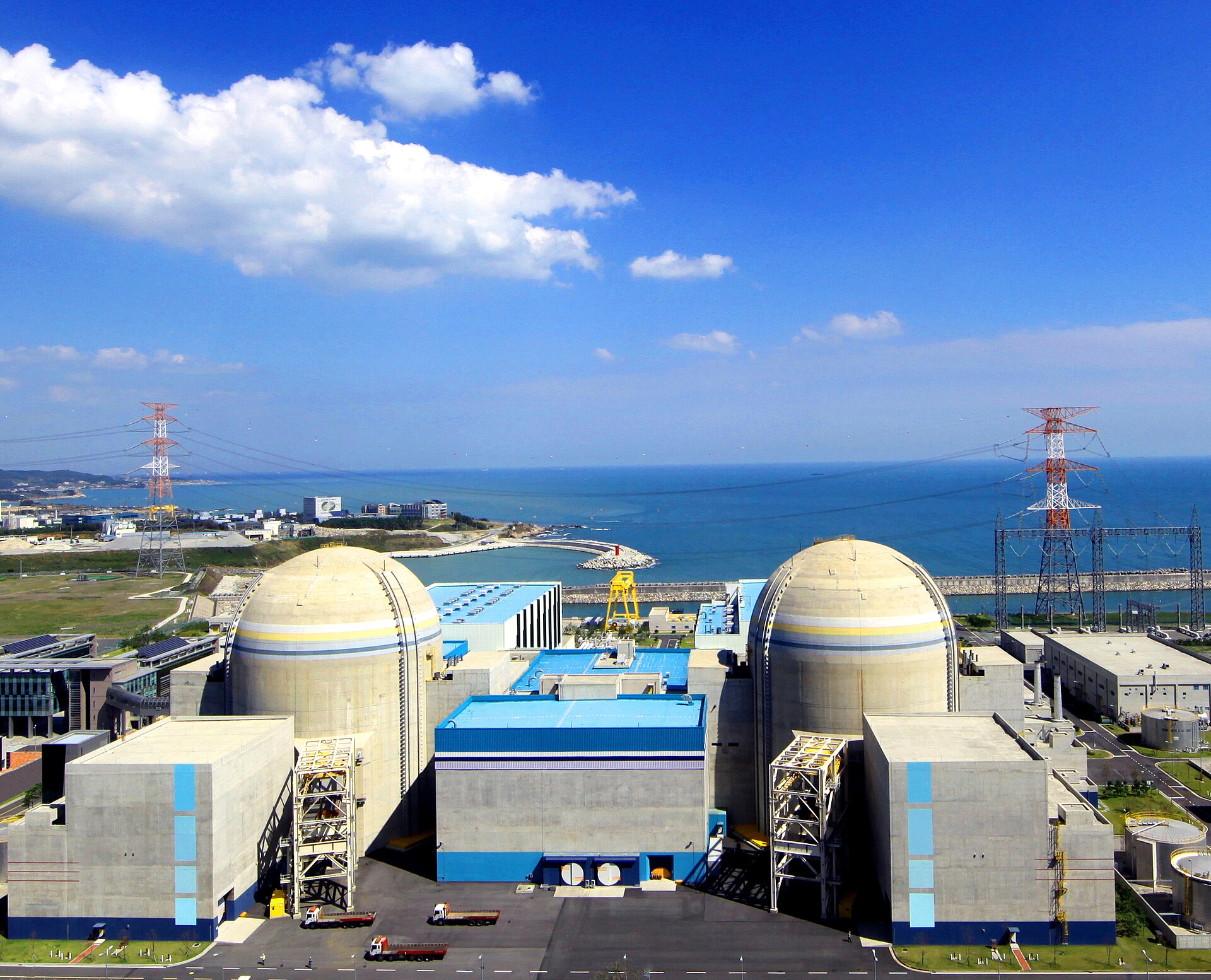
Every gigawatt of nuclear capacity that comes online reduces South Korea’s dependence on imported fossil fuels for electricity generation. With only 9.64 percent of the power mix coming from renewables, nuclear is the only proven technology that can provide baseload electricity without hydrocarbon imports at the scale South Korea requires. The math is straightforward: each restarted reactor displaces roughly 15,000 barrels per day of oil-equivalent thermal generation.
Japan’s nuclear restart program has been painfully slow since the 2011 Fukushima disaster. Of the 33 reactors that were operable before Fukushima, only a handful have returned to service, hampered by new safety regulations, local government opposition, and public anxiety. The Hormuz crisis is shifting the political calculus. The same public that feared nuclear meltdowns now fears cold houses and shuttered factories.
The political dynamics in Tokyo are complex. PM Takaichi has been more pro-nuclear than her predecessors, but moving faster on restarts requires either overriding local government objections or persuading skeptical communities that the crisis justifies accelerated timelines. The Nuclear Regulation Authority, created after Fukushima specifically to be independent of political pressure, faces its first real test of whether emergency energy security can coexist with post-Fukushima safety standards.
Neither country can bring enough nuclear capacity online fast enough to offset the Hormuz disruption in the near term. Reactor restarts are measured in months, not days. But the crisis is permanently changing the trajectory of nuclear policy in both countries, and the long-term effect will be a significant reduction in the share of Gulf oil in the East Asian energy mix. That reduction is precisely what Saudi Arabia should fear most.
The East Asian Energy Vulnerability Matrix
Comparing Japan and South Korea across key energy vulnerability indicators reveals both striking similarities and critical differences that shape each country’s crisis response capacity.
| Indicator | Japan | South Korea |
|---|---|---|
| Oil Import Dependency | 95%+ from Middle East | 92% of total energy imported |
| Hormuz-Dependent Oil | 1.6 million bbl/day (70%) | 1.7 million bbl/day (68%) |
| LNG Dependency (Gulf) | Diversified post-Fukushima (Australia, US, Malaysia) | 14% from Qatar/UAE; 2-4 weeks reserves |
| Strategic Petroleum Reserves | 254 days (146 govt + 100+ private) | 206 days (KNOC-managed) |
| Nuclear Capacity | 33 operable reactors; few restarted post-Fukushima | 25 reactors; Saeul No. 3 and Kori 2 accelerated |
| Renewable Energy Share | ~22% of power mix | 9.64% of power mix |
| Currency Exposure (March 9) | Yen past 158.5/USD; BOJ trapped | Won weakening; $68.3B stabilization fund deployed |
| Aramco Relationship | Okinawa storage (~9M barrels); Vision 2030 partner | S-Oil (63.4% Aramco-owned); pipeline access via Yanbu |
| Semiconductor Exposure | Equipment/materials supplier (Tokyo Electron, Shin-Etsu) | Fab operator (Samsung, SK Hynix — 50%+ global DRAM) |
| Saudi Crude Share | 43.6% of crude imports (Aug 2025) | ~30% of crude imports via Aramco network |
| Diversification Progress | Hydrogen/ammonia cooperation with Saudi Arabia; LNG diversified | SK Innovation expanding North/South American shale imports |
| Estimated GDP Impact (Hyundai RI) | Stagflation risk per Bloomberg; BOJ warning | -0.3pp growth, +1.1pp inflation, -$26B current account |
The matrix reveals a counterintuitive finding. Japan, despite higher absolute dependence on Middle Eastern oil, is better positioned to weather the crisis than South Korea. Japan’s larger strategic reserves, more diversified LNG supply chain, and greater nuclear restart potential provide a thicker buffer. South Korea’s combination of extreme oil dependence, thin LNG reserves, low renewable penetration, and exposed semiconductor manufacturing creates a fragility that the Hyundai Research Institute’s modeling only begins to capture.
The Aramco relationships tell different stories in each country. Japan’s Okinawa storage is a symbolic commitment with limited practical impact — nine million barrels against 1.6 million barrels per day of disrupted supply. South Korea’s S-Oil connection is more substantive, offering a genuine procurement channel through the Yanbu bypass route, but S-Oil serves only a fraction of Korea’s total refining capacity.
The semiconductor row in the matrix deserves particular attention. Japan’s semiconductor exposure is primarily in the upstream supply chain — equipment and materials — where higher energy costs compress margins but do not threaten production continuity. South Korea’s exposure is in the fabs themselves, where any interruption to power supply can destroy billions of dollars in work-in-progress wafers. The asymmetry means a prolonged crisis damages South Korea’s industrial base more directly than Japan’s.
The Contrarian Angle — Saudi Arabia Is the Real Loser
The dominant narrative of the Hormuz crisis positions Japan and South Korea as victims — energy-dependent nations caught in a conflict not of their making, forced to drain reserves and absorb economic pain until the strait reopens. That narrative is accurate in the short term and profoundly misleading over any longer horizon.
Japan and South Korea are resilient, adaptive, technologically advanced economies with deep capital markets, world-class engineering talent, and democratic institutions capable of making painful but necessary course corrections. They have weathered energy shocks before. They will weather this one. And when they emerge, they will have learned a lesson that no amount of Saudi diplomatic charm can erase: dependence on Gulf oil is an existential risk that must be systematically reduced.
The policy changes already underway in both countries — accelerated nuclear restarts, emergency renewable procurement, new contracts with non-Gulf oil producers, hydrogen and ammonia research programs — are not temporary crisis measures. They are the opening moves of a permanent strategic reorientation. SK Innovation is already expanding imports of North American shale and South American crude, building relationships with suppliers in Canada, the United States, Brazil, and Guyana that will outlast the Hormuz crisis by decades.
We will never again allow 70 percent of our oil to flow through a single chokepoint controlled by a hostile power. The Hormuz crisis has ended fifty years of energy complacency in Tokyo.
Senior METI official, speaking to reporters on background, March 8, 2026
Saudi Arabia faces a structural problem that high oil prices cannot solve. The kingdom’s long-term economic strategy depends on being the preferred energy supplier to the world’s largest and most sophisticated economies. Vision 2030’s diversification goals require sustained revenue from oil exports to fund the transition. The OPEC wartime production gambit may boost short-term revenue, but if the customers who receive that production are simultaneously building alternatives, the revenue gains are temporary and the customer losses permanent.
The hydrogen and blue ammonia trade that Japan and Saudi Arabia explored at the September 2025 Vision 2030 ministerial meeting was supposed to be the bridge — a way for Saudi Arabia to remain Japan’s energy partner even as the world decarbonized. That bridge now looks fragile. Japanese companies evaluating blue ammonia projects in Saudi Arabia are asking a question that would have been unthinkable a year ago: if Saudi Arabia cannot guarantee delivery of crude oil through a twenty-one-mile-wide waterway, how can it guarantee delivery of hydrogen through the same route?
The real loser in the Hormuz crisis is not the country that runs short of oil for a few months. It is the country that loses its best customers forever. Japan and South Korea will recover from the supply shock. Their economies will contract, their currencies will weaken, their citizens will pay more for gasoline and electricity. But they will adapt, diversify, and emerge with energy portfolios far less dependent on the Persian Gulf.
Saudi Arabia will watch its most valuable customer relationships erode — not in a sudden break, but in a slow, methodical rebalancing that plays out over the next decade. Every nuclear reactor restarted in Japan, every shale oil contract signed by SK Innovation, every renewable energy project fast-tracked in South Korea represents a permanent reduction in future Saudi crude purchases. The Asia energy crisis is not just a short-term disruption. It is the beginning of the end of East Asia’s dependence on Gulf oil, and no entity has more to lose from that shift than Saudi Aramco.
What Happens After Hormuz Reopens — The Permanent Shift in Asian Energy Procurement
The Hormuz strait will eventually reopen. Whether through military action, diplomatic resolution, or the collapse of Iran’s ability to maintain the blockade, commercial tanker traffic will resume. The question that matters for global energy markets is not when, but what the world looks like when it does.
The precedent of the 1973 oil embargo is instructive. The Arab embargo lasted five months and triggered a permanent restructuring of Western energy policy — strategic reserve systems, fuel efficiency standards, nuclear energy programs, and diversification away from OPEC suppliers that played out over the following two decades. The Hormuz closure, even if it lasts only weeks, is likely to trigger a comparable restructuring in East Asia.
Japan’s post-Hormuz energy policy will almost certainly include several elements that are already being discussed in Tokyo policy circles. Mandatory diversification of crude oil sourcing, with caps on the percentage that can come from any single chokepoint. Accelerated nuclear restarts with streamlined regulatory processes. Massive investment in renewable energy, particularly offshore wind, where Japan’s long coastline provides enormous untapped potential. And a fundamental reassessment of the hydrogen and ammonia trade with Saudi Arabia, conditioning future investment on supply route diversification.
South Korea’s trajectory will mirror Japan’s in broad strokes but differ in specifics. Seoul’s nuclear expansion program, already the most ambitious in the OECD, will accelerate further. SK Innovation’s pivot toward North and South American crude will become company policy rather than crisis improvisation. The $68.3 billion stabilization fund will be restructured to include dedicated energy security components. And the semiconductor industry will demand — and receive — priority access to stable power supply, potentially through dedicated nuclear capacity reserved for fab operations.
The G7 emergency oil reserve release under discussion will set a new precedent for coordinated international response to supply disruptions. But the bigger legacy will be the national-level policy changes that the release buys time to implement. Strategic reserves exist to provide a bridge — the question is what you build on the other side.
For Saudi Arabia, the post-Hormuz world will require a fundamental recalibration of its Asia strategy. The kingdom cannot change its geography — its oil will always need to transit Hormuz or take the longer route through Yanbu and the Red Sea. But it can invest in redundancy: expanded East-West Pipeline capacity, additional storage facilities in customer countries, long-term supply contracts with price guarantees that incentivize continued procurement. Whether Riyadh has the strategic vision and fiscal discipline to make those investments while simultaneously funding Vision 2030 megaprojects remains an open question.
The bilateral trade relationship between Saudi Arabia and its East Asian customers will not collapse. Oil will continue to flow from the Gulf to Japan and South Korea for decades to come. But the share will decline, the terms will shift in buyers’ favor, and the political leverage that came with being an indispensable supplier will erode. The Hormuz crisis has demonstrated, in the most visceral way possible, that indispensable is a dangerous word in energy markets. Japan and South Korea have learned that lesson. The question is whether Saudi Arabia has learned it too.
Frequently Asked Questions
How long can Japan survive without oil from the Strait of Hormuz?
Japan holds 254 days of strategic petroleum reserves — 146 days in government-controlled storage and more than 100 days in mandatory private-sector stockpiles. However, the effective duration depends on draw-down rates, logistical constraints at storage facilities, and whether alternative supply sources can partially offset the Hormuz shortfall. Realistically, Japan can maintain near-normal economic activity for three to four months using a combination of strategic reserves, Aramco’s Okinawa storage, and redirected non-Gulf imports, though with significant price inflation and currency pressure.
Why is South Korea more vulnerable to the Hormuz crisis than Japan?
South Korea faces greater vulnerability due to several compounding factors: it is the most crude oil-dependent economy among OECD members, it has lower strategic petroleum reserves (206 days versus Japan’s 254), its LNG reserves for Gulf-sourced gas cover only two to four weeks, its renewable energy share is just 9.64 percent (versus the world average of 30.25 percent), and its semiconductor manufacturing sector is extremely energy-intensive. The Hyundai Research Institute estimates the blockade could cut GDP growth by 0.3 percentage points and push consumer prices up by 1.1 percentage points.
What is Aramco’s Okinawa oil storage facility, and how does it help Japan?
Saudi Aramco has leased crude oil storage capacity on Okinawa, Japan’s southernmost prefecture, holding approximately nine million barrels of Saudi crude. Under the arrangement, Japan receives priority access to these stored barrels during emergencies. While nine million barrels covers only about five and a half days of Japan’s Hormuz-dependent imports, the facility serves as a diplomatic signal of Saudi commitment and provides a short-term buffer while longer-term alternative supply arrangements are activated.
Could the Hormuz crisis cause a global semiconductor shortage?
A prolonged Hormuz closure poses a genuine risk to global semiconductor supply. South Korea’s Samsung Electronics and SK Hynix produce more than half the world’s DRAM and a significant share of NAND flash memory. These fabrication facilities require enormous, uninterrupted power supplies — any grid instability can destroy in-progress wafer batches worth millions. With South Korea generating only 9.64 percent of electricity from renewables and heavily dependent on imported fossil fuels for power generation, sustained energy disruption could force production curtailments that cascade through global electronics, automotive, and cloud computing supply chains.
Will Japan and South Korea permanently reduce their dependence on Saudi oil after the crisis?
Historical precedent strongly suggests yes. The 1973 oil embargo triggered decades of Western energy diversification, and the Hormuz crisis is a more severe supply disruption than the embargo. Both countries are already taking steps that signal permanent reorientation: SK Innovation is expanding North and South American crude imports, Japan is accelerating nuclear restarts and hydrogen research, and both governments are fast-tracking renewable energy procurement. Saudi Arabia’s share of East Asian oil imports is likely to decline by 10 to 20 percent over the next decade as a direct consequence of the Hormuz crisis.
What is the East-West Pipeline, and can it replace Hormuz tanker traffic?
The East-West Pipeline, also known as Petroline, connects Saudi Arabia’s eastern oil fields to the Red Sea port of Yanbu, providing a route for Saudi crude exports that bypasses the Strait of Hormuz entirely. The pipeline has a capacity of roughly five million barrels per day. While it offers a critical alternative during the Hormuz closure, it cannot replace the full 20 million barrels per day that normally transit the strait. The longer shipping route from Yanbu to East Asian ports adds 10 to 14 days to delivery times compared to direct Gulf shipping, and tanker availability for the extended route remains constrained.
How is the Hormuz crisis affecting the Japanese yen and South Korean won?
Both currencies are under severe pressure. The yen depreciated past 158.5 per dollar on March 9, 2026, prompting Finance Minister Satsuki Katayama to declare that currency intervention remains an option. BOJ Governor Kazuo Ueda has warned that the conflict could significantly affect Japan’s economy. The mechanism is straightforward: higher oil prices widen trade deficits as import costs surge, weakening the currency, which in turn makes the next barrel of dollar-denominated crude more expensive — a vicious cycle that standard monetary policy tools struggle to break.