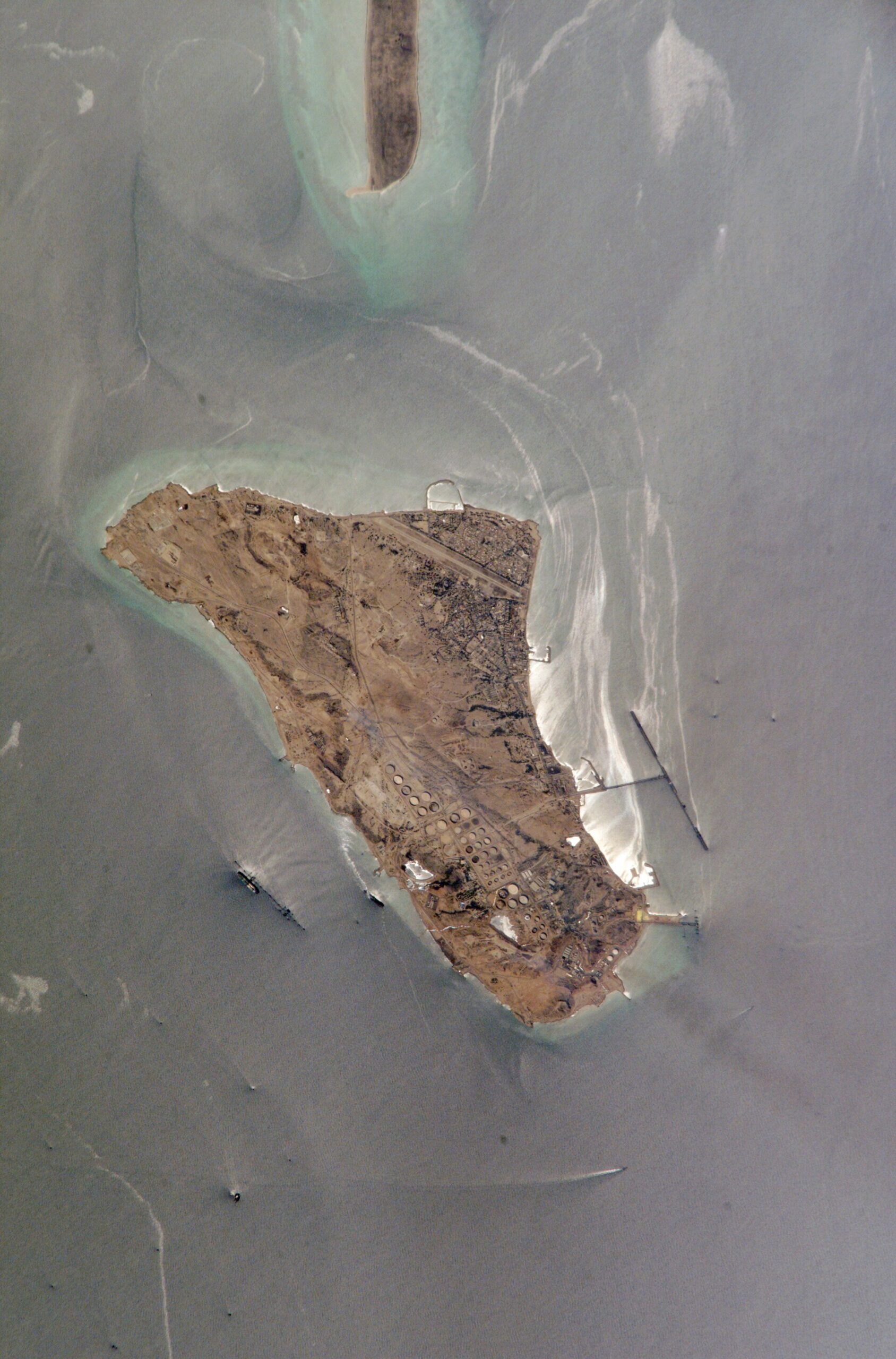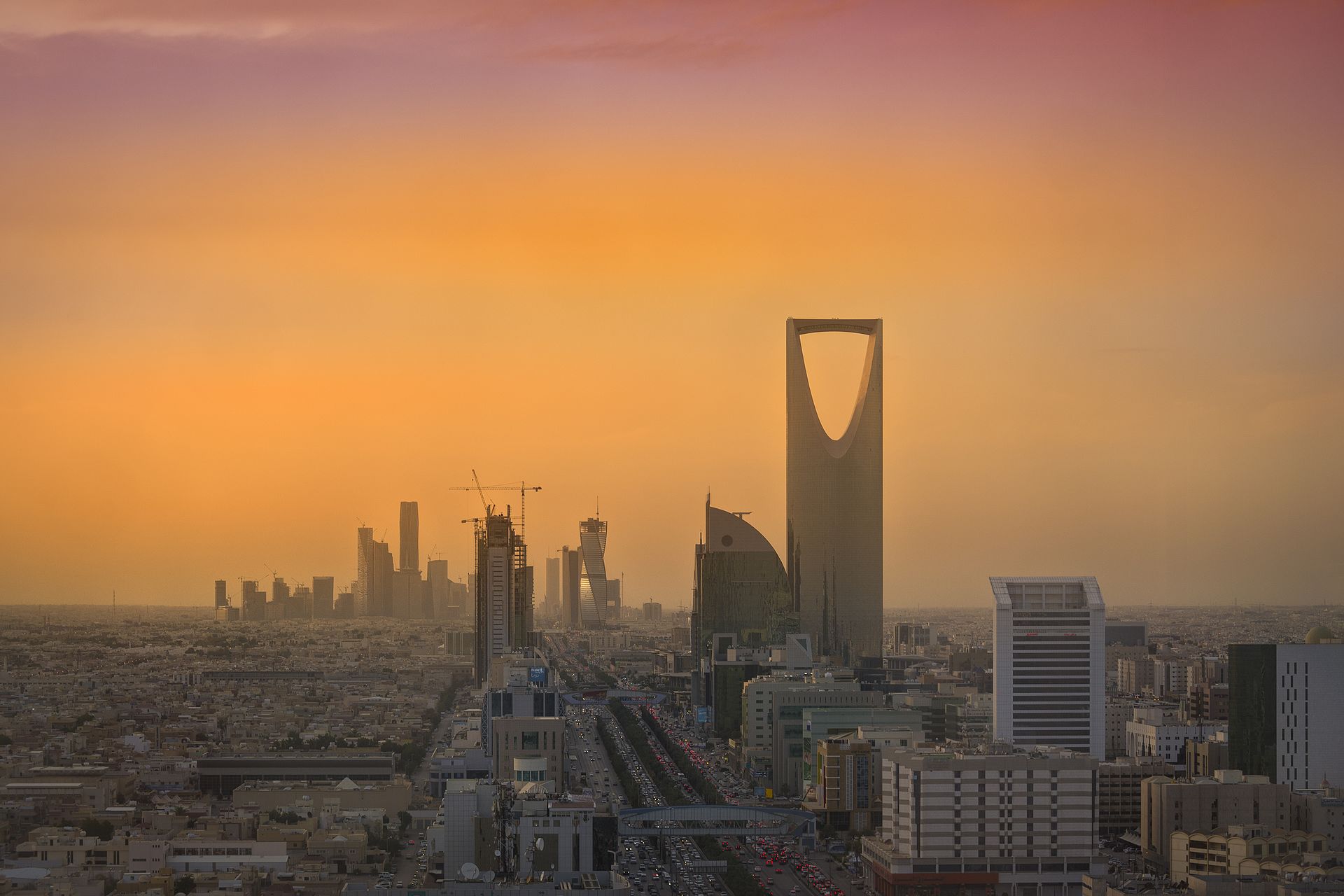

DHAHRAN — Iranian ballistic missile debris struck SABIC’s petrochemical complex at Jubail Industrial City on April 7, igniting a fire at the heart of Saudi Arabia’s $69 billion downstream empire and forcing partial evacuations of worker housing across the world’s largest industrial zone. Saudi Arabia intercepted all 11 missiles fired at the Eastern Province — and it didn’t matter, because the wreckage falling from those successful kills set SABIC ablaze anyway.
The fire at Jubail exposes a flaw that no interceptor stockpile can fix. Terminal-phase kills shatter incoming warheads at altitude, but the debris still falls — tons of metal and propellant raining across a target area measured in hundreds of square kilometres. Jubail spans 1,016 square kilometres, produces roughly 60 million tonnes of petrochemicals per year, and accounts for 7% of Saudi GDP. A PAC-3 battery covers perhaps 50 to 100 square kilometres. The math is devastating: even a perfect intercept record cannot umbrella an industrial footprint this large, and the IRGC has spent 38 days learning exactly how to exploit that gap.
Table of Contents
What Happened at Jubail on April 7
Iran launched 11 ballistic missiles and 18 drones at Saudi Arabia’s Eastern Province on April 7 in two sequential waves — four missiles in the first salvo, seven in the second, according to Saudi Gazette and Asharq Al-Awsat. Saudi Ministry of Defense spokesman Maj. Gen. Turki Al-Maliki confirmed all 11 missiles were “intercepted and destroyed” but acknowledged that debris from those interceptions fell near energy facilities, with damage assessment ongoing. The Saudi Civil Defense’s National Platform for Emergency Warning had already issued two sequential early-morning alerts, instructing residents to “avoid gatherings, refrain from photography, and stay away from hazardous areas.”
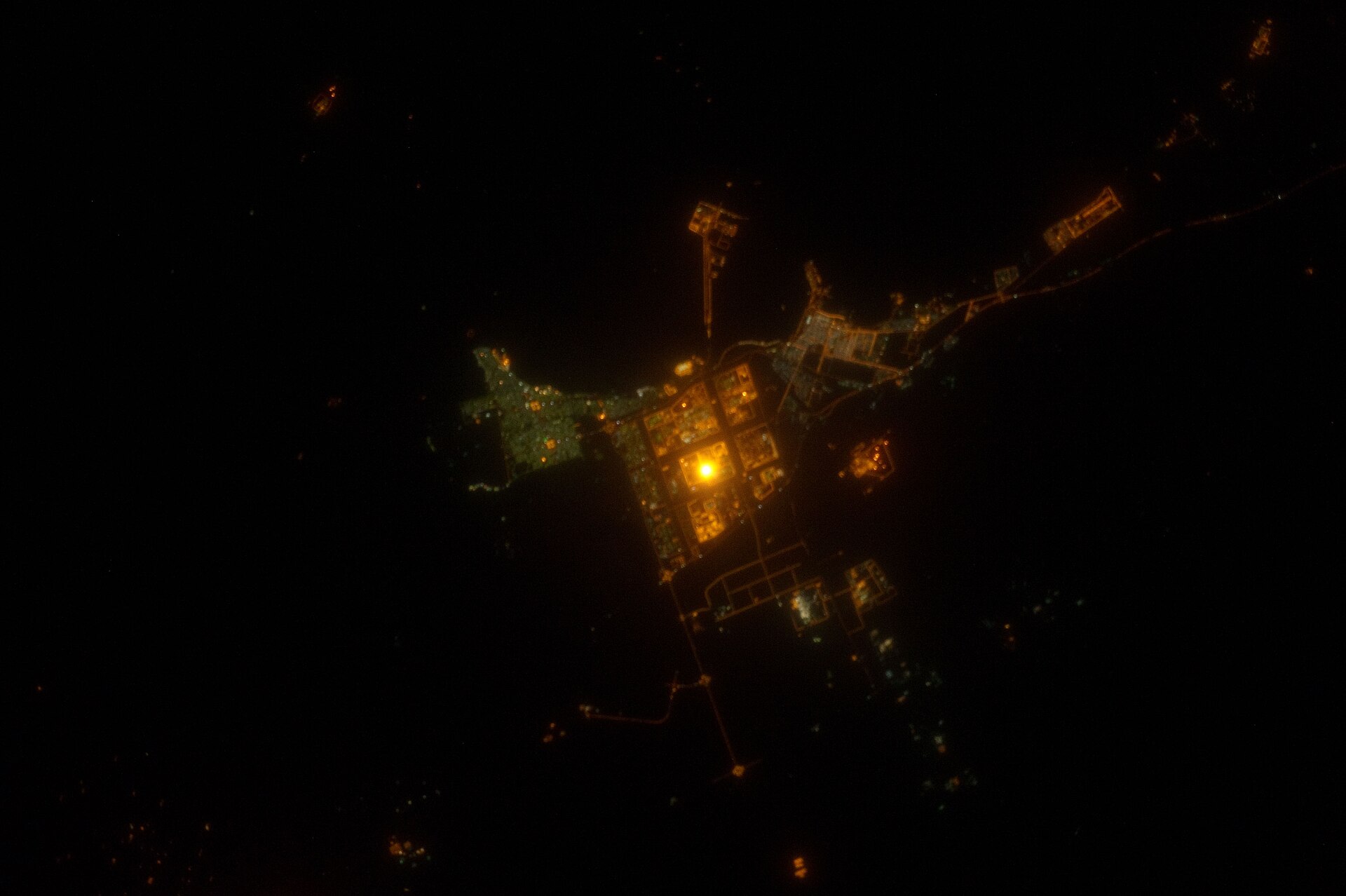
At SABIC’s Jubail plants, the debris did not merely fall near the facilities — it started a fire. An unnamed AFP source in Jubail told the Jakarta Post that “the sounds of explosions were very loud.” Saudi authorities ordered partial evacuations of worker housing and temporarily halted plant operations, though neither SABIC nor Saudi Aramco had issued a public statement on the scope of damage or production impact as of the evening of April 7. SABIC is a Tadawul-listed company; any production halt triggers mandatory regulatory disclosure, and the silence from the company’s investor-relations apparatus is itself a data point.
Parts of ballistic missile debris fell around power facilities; damage assessment is underway.
— Maj. Gen. Turki Al-Maliki, Saudi MoD Spokesperson, Saudi Gazette, April 7, 2026
The phrasing is worth reading twice. Al-Maliki said “power facilities,” not petrochemical plants — a formulation that keeps the most economically sensitive detail vague while technically disclosing the event. SABIC’s Jubail operations sit at the core of the Kingdom’s non-oil industrial strategy, accounting for more than 11% of Saudi non-oil GDP, and any extended disruption has consequences that ripple far beyond the Eastern Province.
The Three-Stage Collapse of Jubail
The April 7 fire is not where Jubail’s crisis begins — it is the third act of a degradation sequence that started weeks ago, and no other industrial zone in the world has absorbed this kind of layered punishment in such a compressed timeline. The progression tells a story that the fire footage alone does not convey.
Stage one arrived in late March, when Sadara Chemical Company — the $20 billion Saudi Aramco-Dow joint venture at Jubail — shut down all production due to Hormuz Strait supply-chain disruptions, according to Bloomberg and Argus Media. Sadara’s rated capacity went to zero overnight: 1.5 million tonnes per year of ethylene, 750,000 tonnes of polyethylene, 330,000 tonnes of propylene oxide, and 400,000 tonnes of MDI, all offline with no restart timeline. The company’s Tadawul regulatory filing stated it “cannot provide, at the present time, an estimate for the return to production, as this is contingent on domestic and international factors,” and warned of material impact to 2026 financial results. Sadara carries $3.7 billion in debt, and the grace period on that debt expires June 15 — a date now approaching with zero revenue.
Stage two came days later. On March 26-27, SABIC declared force majeure on five chemical export lines out of Jubail — MMA, MEG, DEG, styrene, and methanol — citing the same Hormuz shipping blockage that killed Sadara’s operations, according to ICIS and Chemical Week. Force majeure is the legal acknowledgment that a company cannot meet its contractual obligations, and SABIC was already in that position before a single piece of missile debris touched down.
Stage three is the fire itself. What the IRGC struck on April 7 was not a functioning industrial complex operating at capacity — it was a wounded facility already bleeding revenue from shipping disruptions and force majeure declarations. The fire adds physical damage on top of commercial paralysis, and the combination makes any restart timeline considerably longer than either problem alone. For global petrochemical markets already stretched thin — naphtha crack spreads hit roughly $190 per metric ton above Brent in March, nearly triple the $68 per metric ton in February, according to Chemical Week — the Jubail disruption tightens an ethylene feedstock supply chain that has no obvious substitute at this scale.
Why Does a Successful Intercept Still Cause Damage?
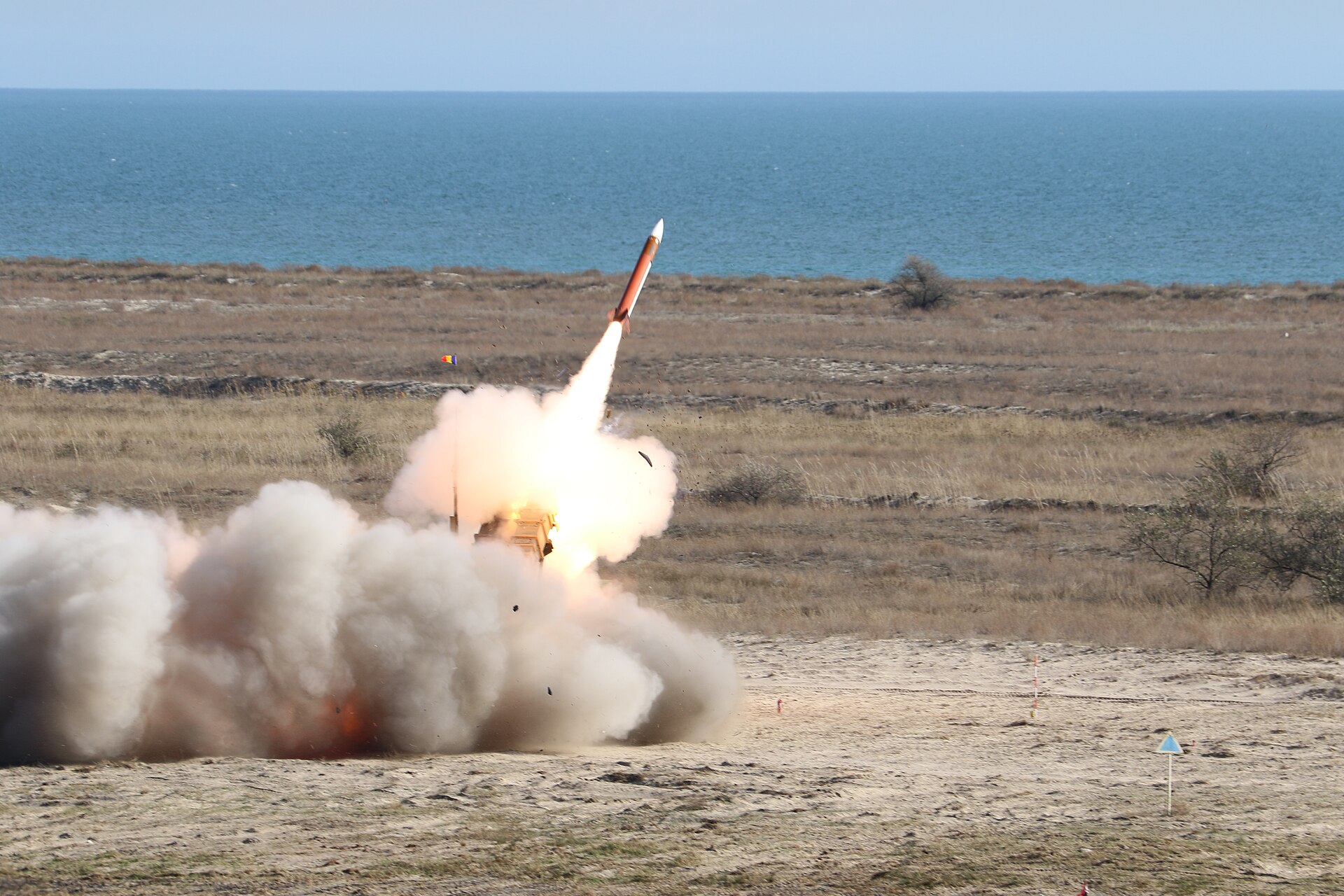
Saudi Arabia’s air defense performed exactly as designed on April 7, and a fire broke out anyway. The paradox is not a paradox at all once you understand what a terminal-phase intercept actually does. A PAC-3 MSE — the hit-to-kill missile that stops Iranian ballistic rockets before they reach their targets — collides with an incoming warhead at combined closing speeds exceeding Mach 10. The warhead is destroyed, but it does not vanish. It fragments into a debris field of twisted metal, unburned propellant, and warhead casing that falls across a wide area, still carrying enormous kinetic energy.
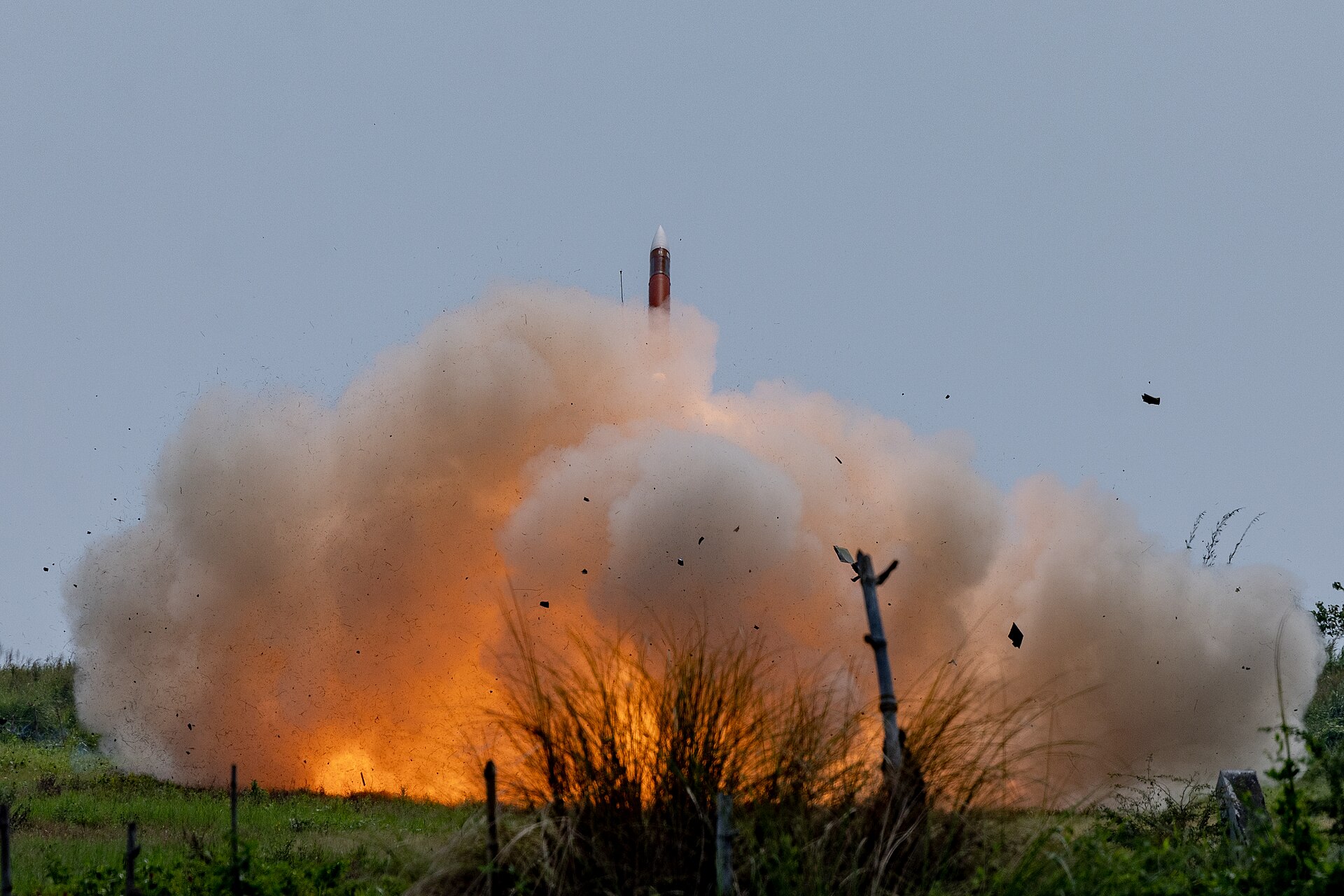
The precedent already exists in this war. In Abu Dhabi, interceptor debris from successful kills sparked fires at Borouge’s polyolefin plant — the same type of facility, the same type of damage, the same paradox of successful defense producing industrial destruction. What happened at Jubail on April 7 is not an anomaly; it is a feature of point-defense systems operating over dense industrial terrain. A PAC-3 battery protects roughly 50 to 100 square kilometres, according to Lockheed Martin’s own specifications. Jubail Industrial City covers 1,016 square kilometres and houses more than 170 industrial enterprises. Covering the entire zone would require a constellation of batteries that the Kingdom does not possess and cannot acquire in the middle of a war.
Saudi Arabia fields approximately 108 M902 launchers spread across roughly 16 Patriot batteries, supplemented by THAAD, according to MIM-104 Patriot system records. Those batteries must defend Riyadh, Jeddah, NEOM, Aramco facilities at Ras Tanura and Abqaiq, military airfields, and the entire Eastern Province coastal corridor. The coverage problem is not about quality — it is about geometry and the finite number of batteries trying to shield a target set that spans the width of Western Europe.
Can Saudi Arabia Defend Both Jubail and Ras Tanura?
Ras Tanura — Saudi Aramco’s largest crude export terminal and the facility that was already struck by two drones on March 2, causing a fire that took roughly a week to resolve, according to Euronews — sits 65 to 73 kilometres north of Jubail along the same Eastern Province coastline. The two facilities represent different tiers of Saudi Arabia’s hydrocarbon economy: Ras Tanura handles crude exports, Jubail processes the downstream petrochemicals that are supposed to be the Kingdom’s post-oil future. Defending both simultaneously with point-defense systems requires batteries positioned to cover each site independently, because a single PAC-3 battery cannot throw a protective umbrella across a 70-kilometre gap.
The stockpile arithmetic makes this worse. As of April 7, the GCC’s collective PAC-3 MSE inventory stands at approximately 400 rounds — down 86% from a pre-war stock of roughly 2,800. Saudi Arabia and its partners have spent the equivalent of $3.49 billion in interceptors at $3.9 million per round over 38 days of war, a burn rate that would empty the remaining stockpile within weeks if Iran maintains its current tempo. The Lockheed Martin production line in Camden, Alabama turns out 620 PAC-3 MSE rounds per year — meaning even if every missile off that line went directly to Saudi Arabia, it would take more than four years to replace what has been expended in barely five weeks.
Washington approved a $9 billion sale of 730 PAC-3 missiles to Saudi Arabia through the Defense Security Cooperation Agency in February 2026, according to the DSCA notice. None of those missiles have been delivered. Poland refused a US request to transfer Patriot batteries to the Kingdom on March 31, leaving Riyadh defending its industrial heartland with a stockpile that shrinks with every salvo while the production pipeline to refill it remains structurally incapable of meeting wartime demand. The IRGC does not need to overwhelm Saudi air defenses with volume — it needs to maintain a tempo that drains the interceptor reserve faster than it can be replenished, and 38 days of data suggest it is succeeding.
The IRGC Planned This Twenty Days Ago
The April 7 strike on Jubail was not improvised. On March 18, 2026 — twenty days before the missiles arrived — the IRGC issued a public statement naming Jubail Petrochemical Complex among its “direct and legitimate targets,” according to PressTV and GlobalSecurity.org. The statement, released after Israeli strikes on Iran’s South Pars gas complex, included explicit evacuation orders for workers and residents.
These centers have become direct and legitimate targets and will be targeted in the coming hours. Therefore, all citizens, residents, and employees are requested to immediately leave these areas and move to a safe distance without any delay.
— IRGC Statement, March 18, 2026, via PressTV / GlobalSecurity.org
The “coming hours” turned into 20 days, but the follow-through arrived. IRGC-affiliated Fars News distributed footage of the Jubail fires on April 7 and explicitly claimed the strike, according to Drop Site News. The IRGC framed the attack as retaliation for Israeli strikes on South Pars and Asaluyeh the previous day, with TRT World’s framing capturing the intended symmetry: “Overnight attack hits Saudi petrochemical complex after similar strikes in Iran.” The message is calibrated for an audience beyond Saudi Arabia — Tehran is telling the world that strikes on Iranian energy infrastructure will produce equivalent strikes on Gulf energy infrastructure, and Jubail is the proof.
The pattern is now unmistakable. The IRGC has struck Saudi crude infrastructure at Ras Tanura on March 2, targeted Saudi refining capacity, and now hit Saudi downstream petrochemicals at Jubail — methodically working down every tier of the Kingdom’s hydrocarbon value chain, according to TRT World and IranWire. Iranian state media outlet Defapress.ir made the tactical argument explicit, claiming that Saudi air defenses “cannot protect the full Eastern Province target set.” The debris reaching SABIC despite 11 successful intercepts is Iran’s information-warfare proof point: even when every missile is shot down, the Kingdom burns.
American Money in the Debris Field
Jubail is not exclusively a Saudi problem, and the economic shrapnel from the April 7 fire will land in boardrooms in Midland, Michigan and Irving, Texas. Dow Chemical holds a 35% stake in Sadara, the $20 billion joint venture that is already offline with $3.7 billion in debt and a June 15 grace-period expiration approaching at zero revenue. ExxonMobil owns 50% of the Kemya joint venture at Jubail — a $3.4 billion elastomers plant producing 400,000 tonnes per year, according to ExxonMobil corporate filings. Between the two, American companies hold billions of dollars in equity at a site where Iranian missile debris started a fire on April 7.
SABIC itself, the 70%-Aramco-owned company at the centre of the blaze, is the world’s fourth-largest petrochemical producer with roughly 72 million tonnes of annual global production across 59 sites. Aramco acquired its controlling stake from the Public Investment Fund in 2020 for $69 billion — a transaction that was marketed as the flagship demonstration of Vision 2030’s industrial-diversification thesis. The argument was straightforward: Saudi Arabia would move beyond crude exports by building a world-class downstream petrochemical sector, and the Aramco-SABIC integration would be the proof of concept. That proof of concept is now on fire, and the Kingdom’s flagship diversification asset has been under force majeure for its key export lines since March 26.
The silence from Aramco, SABIC, and the Crown Prince’s office is commercially significant in its own right. Every hour that passes without a Tadawul filing raises the question of whether the damage is minor enough to manage or severe enough that the disclosure itself becomes a market event.
What Comes After the Fire
The operational question at Jubail is not whether the fire can be extinguished — it is whether any restart of production is possible while the conditions that caused all three stages of degradation remain in place. Hormuz remains contested, meaning the supply-chain disruption that shut Sadara in late March and triggered SABIC’s force majeure on March 26-27 has not been resolved. The IRGC’s March 18 target list and its April 7 follow-through mean Jubail remains under explicit threat. And the interceptor stockpile that failed to prevent debris damage at approximately 400 rounds continues to deplete with each new Iranian salvo.
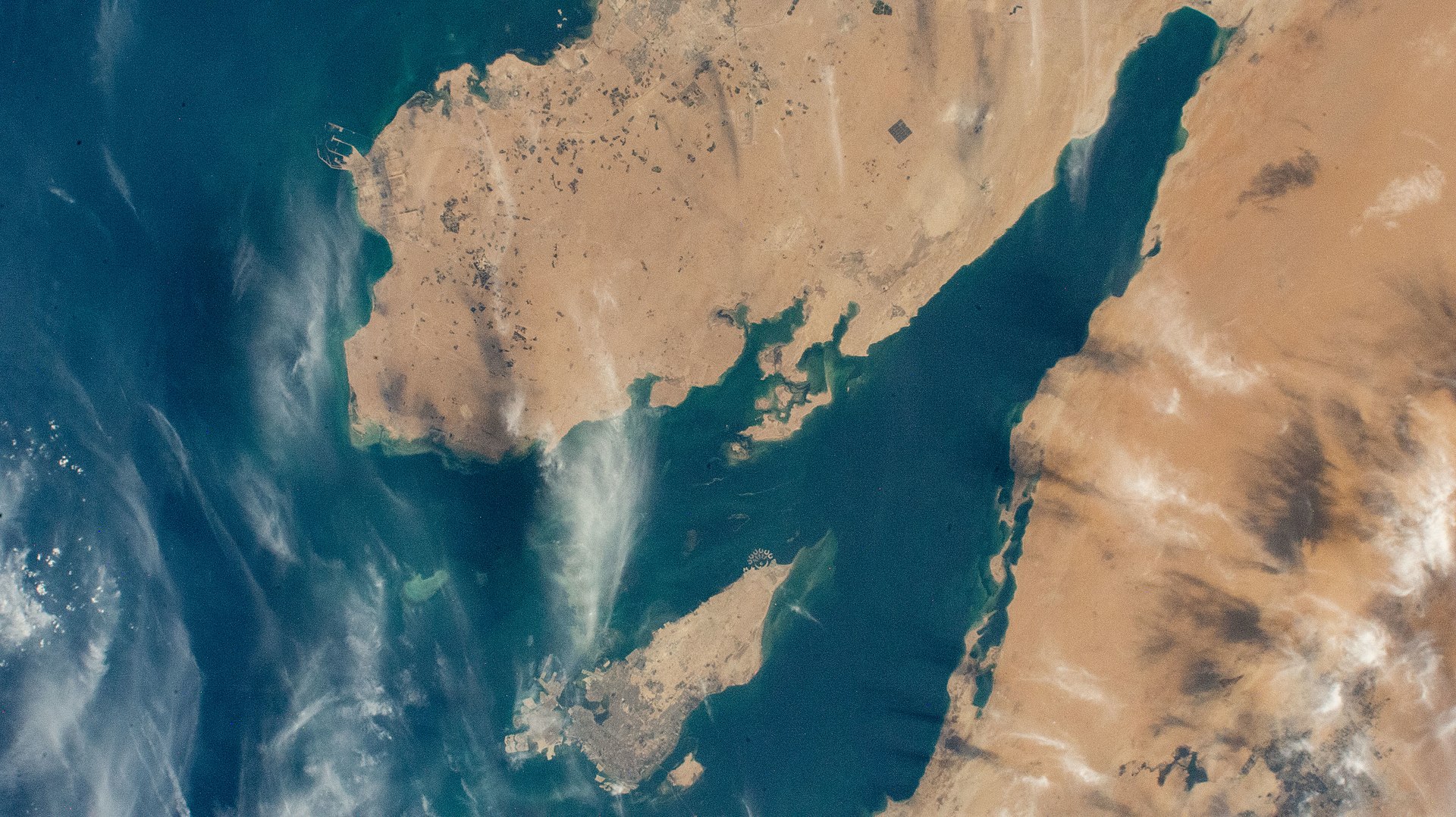
For the global petrochemical market, Jubail’s disruption compounds an already extraordinary tightening. Jubail accounts for somewhere between 6% and 8% of total global petrochemical output, according to Bechtel’s project profiles, and that volume does not have a substitute supplier. Buyers who had contracts with SABIC and Sadara are already navigating force majeure declarations; physical damage at the production site extends the timeline from weeks to potentially months.
The IRGC’s operational logic has a clarity that Riyadh’s response so far lacks. Iran fires at Jubail and Ras Tanura simultaneously or in sequence, forcing Saudi interceptor batteries to defend both nodes. Every successful intercept subtracts from a stockpile that cannot be refilled in 2026. Even when every missile is killed in flight, the debris falls on an industrial zone that no point-defense system can fully cover — and the replacement rounds remain undelivered while Saudi Arabia’s fires burn now.
Frequently Asked Questions
What chemicals does SABIC produce at Jubail that are under force majeure?
SABIC declared force majeure on five specific chemical product lines exported from Jubail: methyl methacrylate (MMA), monoethylene glycol (MEG), diethylene glycol (DEG), styrene, and methanol. These declarations, issued on March 26-27 according to ICIS and Chemical Week, preceded the April 7 fire and were caused by Hormuz Strait shipping disruptions rather than physical damage. MEG is a primary feedstock for polyester fibre and PET plastic bottles, meaning the disruption cascades into consumer-goods supply chains far from the Middle East.
Has Jubail Industrial City been attacked before in its history?
Jubail was targeted by Iraqi Scud missiles during the 1991 Gulf War, but the city’s modern petrochemical infrastructure was still under construction at the time and sustained no recorded industrial damage. The March-April 2026 sequence — supply-chain shutdown, force majeure, and now physical fire from missile debris — represents the first time the operational complex has been materially disrupted by military action since it reached full industrial scale.
What is the Sadara debt situation and why does the June 15 date matter?
Sadara Chemical Company carries $3.7 billion in outstanding debt from the construction of its $20 billion complex, according to Bloomberg. The company’s lenders granted a debt service grace period that expires on June 15, 2026. With all production offline since late March and no restart timeline — the company’s own regulatory filing states it “cannot provide, at the present time, an estimate for the return to production” — Sadara is generating zero revenue against that debt obligation. A missed payment after the grace period expires would trigger default provisions and could force Aramco and Dow Chemical, the 65/35 joint venture partners, into a restructuring negotiation during an active military conflict.
How does this fire compare to the Borouge debris incident in Abu Dhabi?
The Borouge polyolefin plant fire in Abu Dhabi was caused by the same mechanism — debris from successful air defense intercepts falling onto industrial facilities. Borouge suspended operations after the fires. The Jubail incident is larger in scale because SABIC’s Jubail footprint dwarfs Borouge’s single-site operation, and the pre-existing degradation at Jubail (Sadara offline, SABIC under force majeure) means the fire compounds an already critical commercial situation rather than disrupting an otherwise functional plant.
Could THAAD batteries solve the debris problem at Jubail?
THAAD (Terminal High Altitude Area Defense) intercepts ballistic missiles at higher altitudes than PAC-3, which in theory means debris disperses over a wider area and individual fragments carry less kinetic energy by the time they reach ground level. However, THAAD’s higher intercept altitude also means the debris footprint is larger, not smaller — fragments spread across a wider radius as they fall. Saudi Arabia does operate THAAD batteries, but they are primarily positioned for upper-tier defense against medium-range ballistic missiles and cannot replace the PAC-3’s role in terminal-phase intercept. No existing air defense architecture eliminates the debris problem entirely; it is an inherent physical consequence of destroying objects travelling at hypersonic speeds in the atmosphere.
The Jubail attack took on additional significance on April 7 when Brigadier General Zolfaqari issued a formal three-part IRGC retaliation doctrine removing all prior restraint on Gulf energy targeting and explicitly naming Sadara and ExxonMobil facilities as deliberate targets rather than collateral damage — the first time in the war Iran publicly claimed US corporate equity inside Saudi Arabia as an intentional military objective.