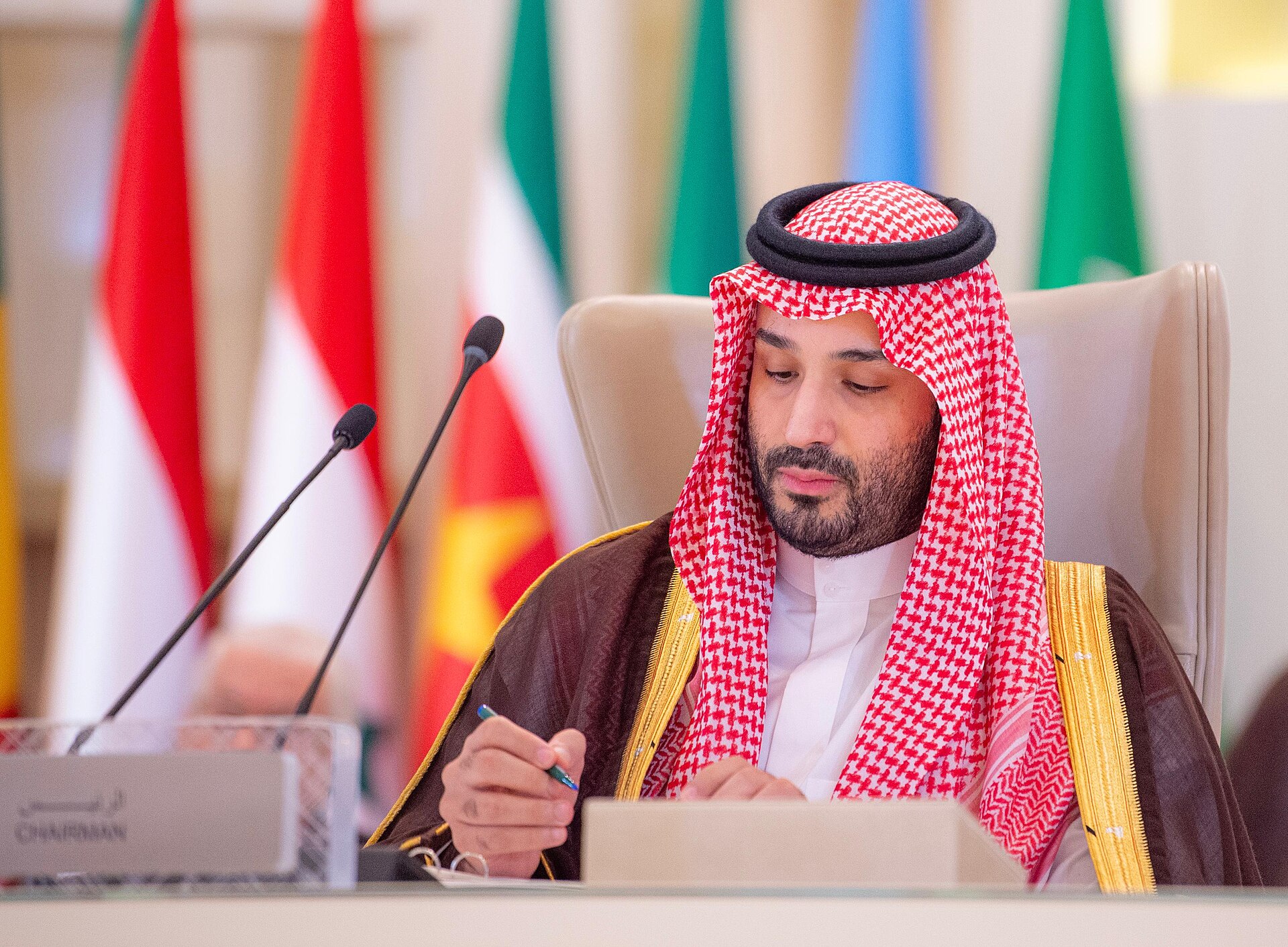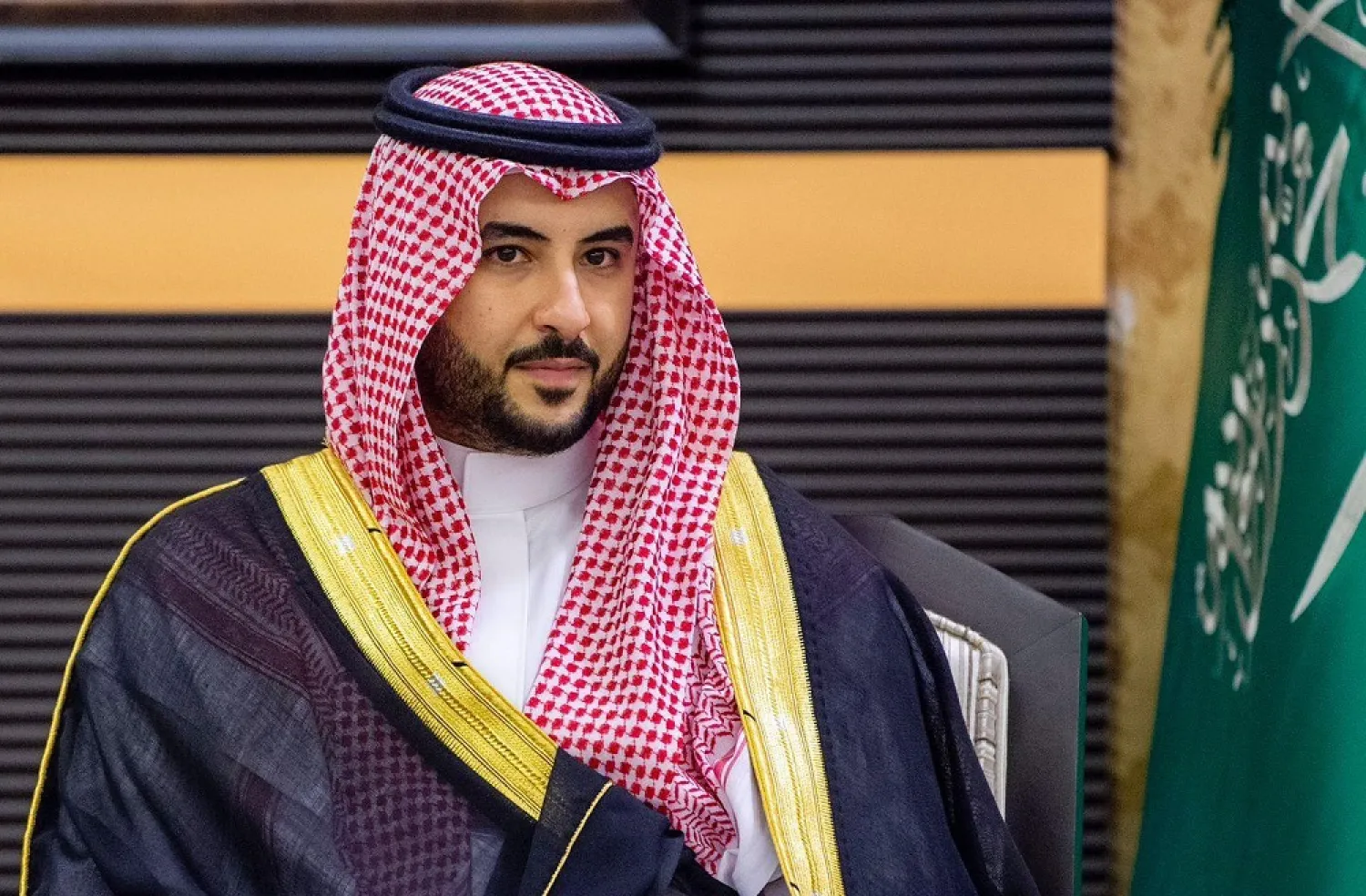

RIYADH — Prince Khalid bin Salman bin Abdulaziz Al Saud is Saudi Arabia’s minister of defense, the younger brother of Crown Prince Mohammed bin Salman, a former F-15 fighter pilot who flew combat missions over Yemen, a former ambassador to the United States who navigated the Khashoggi crisis, and the man who privately lobbied President Donald Trump to launch military strikes on Iran. In March 2026, with Iranian drones hitting Aramco refineries and missiles falling on Riyadh, Khalid bin Salman finds himself managing the consequences of a war he helped advocate — and the performance of a $78 billion military machine he has spent four years rebuilding.
No figure in the House of Saud better embodies the contradictions of modern Saudi statecraft. Khalid bin Salman visited Tehran in April 2025 and delivered a personal letter from King Salman to Supreme Leader Ali Khamenei — the first such high-level Saudi-Iranian meeting in two decades. Less than ten months later, Khamenei was dead, killed in the very US-Israeli strikes that Khalid had privately urged Washington to undertake. The defense minister who shook hands in Tehran is now the defense minister defending Riyadh from Iranian retaliation. This is his story, his record, and his moment of reckoning.
Table of Contents
- Who Is Khalid bin Salman?
- How Did a Fighter Pilot Become Saudi Arabia’s Defense Minister?
- The Washington Years — Ambassador to America
- The Khashoggi Shadow — An Allegation That Never Went Away
- What Role Did Khalid bin Salman Play in Pushing for War with Iran?
- From Tehran to Total War — The Most Dramatic Diplomatic Reversal in Saudi History
- How Is Saudi Arabia’s $78 Billion Military Performing Under His Command?
- The Defense Industry Revolution — From 4 Percent to 25 Percent
- The World Defense Show and the $8.8 Billion Shopping Spree
- Is Saudi Arabia Getting the F-35? What the Fighter Deal Means for KBS
- Where Does Khalid bin Salman Fit in the Saudi Succession?
- The Contrarian Case — Why KBS May Be the Most Consequential Saudi Royal After MBS
- The Defense Minister Effectiveness Matrix
- Frequently Asked Questions
Who Is Khalid bin Salman?
Khalid bin Salman bin Abdulaziz Al Saud is the minister of defense of Saudi Arabia, a position he has held since September 27, 2022. He is the younger brother of Crown Prince Mohammed bin Salman, the tenth child and ninth son of King Salman, and a grandson of the Kingdom’s founder, King Abdulaziz. Born in 1988, he is 37 years old as of March 2026 — one of the youngest defense ministers in the world commanding one of the largest military budgets.
His mother is Fahda bint Falah Al Hithlain, King Salman’s third wife and the same mother as Mohammed bin Salman. This full-blood sibling bond places Khalid in the innermost circle of Saudi power. In the House of Saud’s complex family tree, the distinction between full brothers and half-brothers has always determined who wields real authority. Khalid and MBS share both parents, making their political alliance one of blood as much as strategy.
Before entering government, Khalid built a military career as an F-15 fighter pilot in the Royal Saudi Air Force, trained at American air bases, and flew combat sorties. He then pivoted to diplomacy, serving as Saudi Arabia’s ambassador to the United States from 2017 to 2019 — a period that coincided with the murder of journalist Jamal Khashoggi and the deepest crisis in modern Saudi-American relations. He subsequently served as deputy defense minister from February 2019 before being elevated to the full ministerial position in September 2022.
Today, he oversees a defense budget of approximately $78 billion, an armed force of 227,000 active personnel, and a defense industry localization program that has grown from 4 percent domestic production in 2018 to 25 percent by 2024. As Iranian drones and missiles test Saudi Arabia’s defenses in March 2026, Khalid bin Salman’s decisions carry consequences that extend far beyond the Kingdom’s borders.
How Did a Fighter Pilot Become Saudi Arabia’s Defense Minister?
Khalid bin Salman’s path to the defense ministry began not in the corridors of Riyadh’s power but in the cockpit of a fighter jet. He earned a bachelor’s degree in aviation sciences from King Faisal Air Academy, the Royal Saudi Air Force’s officer training institution in Riyadh. He then crossed the Atlantic for advanced flight training, attending the US Air Force’s pilot training program at Columbus Air Force Base in Columbus, Mississippi, graduating in 2009. He also trained at Lackland Air Force Base in San Antonio, Texas.
The American training pipeline was deliberate. Saudi Arabia has sent hundreds of military officers to train in the United States since the 1950s, building interoperability and personal relationships that anchor the bilateral defense relationship. Khalid emerged from the program qualified to fly the F-15 Eagle, the backbone of the Royal Saudi Air Force. He was subsequently based at King Abdulaziz Air Base in Dhahran, on the Gulf coast — the same eastern region now under Iranian missile threat.
He did not merely hold a ceremonial flight qualification. In 2014, when Saudi Arabia joined the US-led coalition against the Islamic State and simultaneously launched its intervention in Yemen’s civil war under the banner of Operation Decisive Storm, Khalid flew combat missions. The prince who would later sit across negotiating tables from the American secretary of defense had personally dropped ordnance in both theatres. This operational experience set him apart from most Saudi royals who held military titles without having seen the inside of a combat aircraft.
Beyond his cockpit hours, Khalid pursued academic credentials designed for statecraft. He obtained a certificate from Harvard University’s senior executives in national and international security program — a course designed for senior military and government leaders. He studied advanced electronic warfare in Paris. He was enrolled in Georgetown University’s master of arts in security studies program before his diplomatic appointment interrupted his studies.
| Year | Position / Event | Significance |
|---|---|---|
| 2009 | Graduated US Air Force pilot training, Columbus AFB | F-15 qualified, built US military relationships |
| 2014 | Flew combat missions against ISIS and in Yemen | Operational combat experience rare among royals |
| 2017 | Appointed ambassador to the United States | MBS’s trusted envoy to Washington at age 29 |
| 2018 | Khashoggi crisis | Named in CIA intelligence regarding phone call |
| 2019 | Appointed deputy minister of defense | Returned from Washington to manage defense reform |
| 2022 | Appointed minister of defense | Full control of $78B military budget |
| 2025 | Visited Tehran, met Supreme Leader Khamenei | First Saudi royal to meet Khamenei in 20 years |
| 2026 | Managing Saudi defense during Iran war | Wartime defense minister |
The trajectory reveals a pattern of deliberate preparation. Each posting — pilot, combat aviator, academic, ambassador, deputy minister, minister — built capabilities that converged on a single role: managing Saudi Arabia’s military relationship with the United States while modernizing its domestic defense capacity. Whether this was KBS’s own ambition or a strategic plan orchestrated by his brother MBS is debatable. The result is the same: by September 2022, Khalid bin Salman arrived at the defense ministry with more diverse preparation than any Saudi defense minister in recent memory.
The Washington Years — Ambassador to America
On April 22, 2017, King Salman issued a royal decree appointing the 29-year-old Prince Khalid as Saudi Arabia’s ambassador to the United States. He officially commenced duties on July 21, 2017, becoming one of the youngest ambassadors in Washington’s diplomatic corps and the Kingdom’s envoy during one of the most consequential periods in Saudi-American relations.
The appointment was no accident of timing. Mohammed bin Salman had been named crown prince just weeks earlier, on June 21, 2017. Placing his younger brother in Washington was a deliberate move to ensure the Kingdom’s most important bilateral relationship — worth over $100 billion in arms sales alone — was managed by someone with direct access to the new power centre in Riyadh. Khalid was not merely an ambassador; he was MBS’s personal channel to the American foreign policy establishment.
His tenure in Washington coincided with the Trump administration’s first term, and the Saudi-American relationship reached a high point that would have been unthinkable under President Obama. Trump’s first foreign trip as president was to Riyadh in May 2017, where he announced $110 billion in arms deals. Khalid bin Salman worked to operationalize those agreements and to build relationships with the National Security Council, the Pentagon, and Congressional leadership.
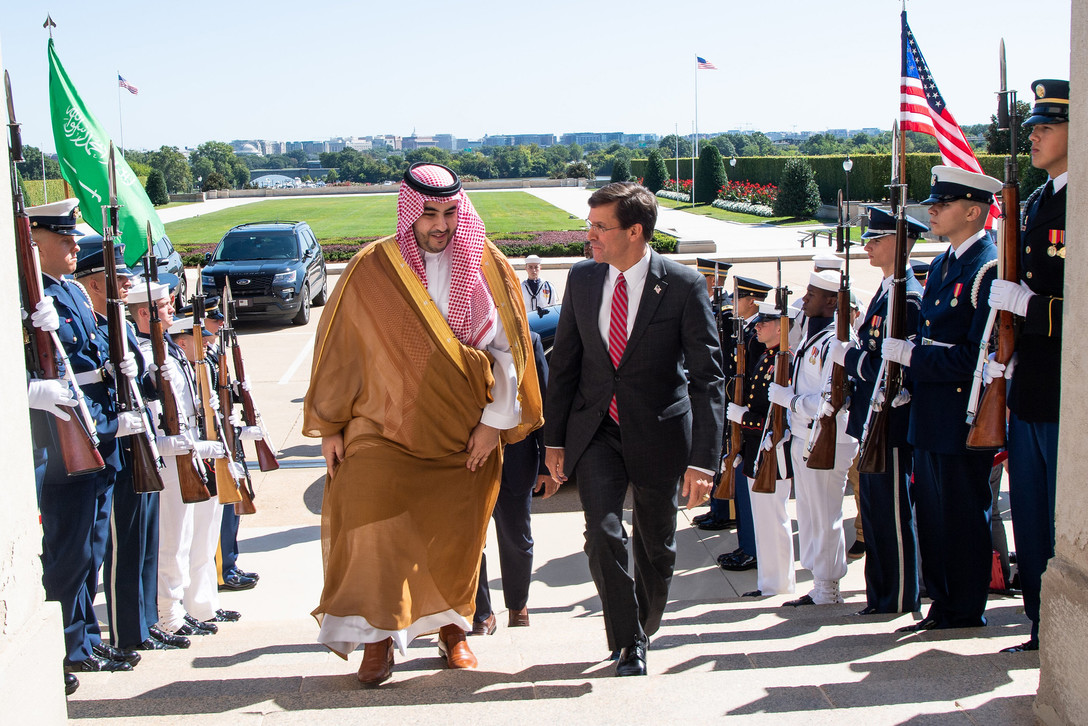
Khalid cultivated connections across Washington with a sophistication unusual for Saudi diplomats. He engaged think tanks, media organizations, and Congressional offices. He presented a younger, more polished face of the Kingdom at a moment when MBS was projecting an image of reform — women driving, cinemas opening, entertainment concerts arriving. The ambassador’s fluent English, American pilot training, and comfortable manner in Western settings made him an effective communicator of Saudi interests.
But the Washington years also exposed Khalid to scrutiny that would shadow him permanently. The October 2018 murder of Jamal Khashoggi at the Saudi consulate in Istanbul transformed the ambassador’s role from cheerful promoter of Saudi reform into crisis manager of the Kingdom’s worst reputational catastrophe in a generation.
The Khashoggi Shadow — An Allegation That Never Went Away
The assassination of Washington Post columnist Jamal Khashoggi on October 2, 2018 inside the Saudi consulate in Istanbul created a crisis that fundamentally altered international perceptions of the Saudi government. For Khalid bin Salman, then serving as ambassador in Washington, the crisis became deeply personal when intelligence reporting linked him directly to the events surrounding Khashoggi’s death.
The CIA examined an intercepted phone call in which Khalid bin Salman reportedly spoke with Khashoggi before the journalist’s fatal visit to the Istanbul consulate. According to multiple reports, including a declassified US intelligence assessment released in February 2021, Prince Khalid told Khashoggi it would be safe to go to the Istanbul consulate to collect marriage documents. Khashoggi entered the consulate and was killed by a team of Saudi operatives.
Khalid bin Salman has categorically denied any involvement in Khashoggi’s murder. In the immediate aftermath of the killing, he described the allegations as “malicious leaks and grim rumors,” calling claims that Saudi authorities had detained or killed the journalist “absolutely false and baseless.” The Saudi government’s official position, which evolved over several weeks from denial to acknowledgment, ultimately attributed the killing to rogue operatives acting outside official authority.
Human rights organizations have maintained pressure. DAWN (Democracy for the Arab World Now), the organization Khashoggi himself helped found before his death, has consistently called for accountability, arguing that Khalid bin Salman “conspired in Khashoggi’s murder.” The Biden administration, which took office in January 2021 and released the intelligence assessment, initially imposed a so-called “Khashoggi ban” restricting engagement with MBS — but notably did not extend similar restrictions to Khalid, prompting criticism from Al Jazeera and rights groups who accused the administration of inconsistency.
The Khashoggi controversy did not prevent Khalid’s career advancement. He was appointed deputy defense minister in February 2019, just four months after the murder, and elevated to full defense minister in September 2022. The Trump administration’s return to power in January 2025 effectively closed the chapter on US government scrutiny of the affair, with Trump himself publicly dismissing the significance of the Khashoggi killing during a November 2025 meeting with MBS. Khalid bin Salman now meets regularly with US Defense Secretary Pete Hegseth without the issue being formally raised.
The Khashoggi shadow has not disappeared; it has simply been absorbed into the realpolitik of Saudi-American relations. For Khalid bin Salman, it remains the single most damaging episode of his career — and the one he has most completely survived.
What Role Did Khalid bin Salman Play in Pushing for War with Iran?
Khalid bin Salman played a direct and documented role in lobbying the United States to launch military strikes on Iran, according to reporting from Axios, the Washington Post, and Middle East Eye. His advocacy, which intensified through late 2025 and January 2026, helped create the political conditions for the US-Israeli strikes that began on February 28, 2026.
In a January 2026 private briefing reported by Axios, Khalid bin Salman told US officials that if President Trump did not follow through on his threats against Iran, “the regime will end up stronger.” The defense minister’s argument was strategic rather than emotional: a nuclear-capable Iran, unrestrained by military deterrence, would pose an existential threat to Saudi Arabia and the Gulf states. Restraint, in Khalid’s framing, was more dangerous than action.
The lobbying effort was coordinated. According to the Washington Post, Israeli and Saudi officials arrived at the White House in late January 2026 to discuss a possible Iran strike — an “unusual pair of US allies” working in tandem, as the newspaper described them. Senator Lindsey Graham met with Saudi leadership approximately one week before the February 28 attacks, reportedly to “bring him on board,” according to Middle East Eye. The convergence of Saudi and Israeli lobbying was unprecedented in its openness and its effectiveness.
Khalid bin Salman’s position represented a harder line than some within the Saudi establishment were comfortable with. As defense minister, he understood the risks of Iranian retaliation better than most — Saudi Arabia’s eastern oil infrastructure, concentrated along the Persian Gulf coast, sits within range of Iranian ballistic missiles. The 2019 Abqaiq-Khurais drone attack, which temporarily knocked out half of Saudi oil production, had demonstrated the vulnerability. Khalid lobbied for strikes knowing full well that Saudi Arabia would absorb the first wave of retaliation.
The decision to advocate for war while simultaneously conducting diplomacy with Tehran — Khalid had met Khamenei in person just ten months earlier — reflects a strategic calculus that Western observers have struggled to categorize. Was it duplicity? Was it hedging? Or was it the cold calculation of a defense minister who had concluded that diplomacy had failed and that the window for military action was closing? The answer depends on which intelligence Khalid was reading and which scenario he judged more dangerous: a nuclear Iran constrained by diplomacy, or a nuclear Iran unconstrained but militarily degraded.
From Tehran to Total War — The Most Dramatic Diplomatic Reversal in Saudi History
On April 17, 2025, Khalid bin Salman landed in Tehran for a visit that analysts called a “pivotal moment” in Saudi-Iranian relations. He met Supreme Leader Ali Khamenei, President Masoud Pezeshkian, Armed Forces Chief Major General Mohammad Hossein Bagheri, and Secretary of the Supreme National Security Council Ali Akbar Ahmadian. He delivered a personal letter from King Salman to Khamenei. Both sides discussed security cooperation, regional stability, and economic engagement. It was the first visit by a senior Saudi royal to meet Iran’s supreme leader in nearly two decades.
The context of the visit was the 2023 Saudi-Iranian détente brokered by China, which had restored diplomatic relations after a seven-year rupture. By early 2025, the relationship was producing tangible results: increased Hajj quotas for Iranian pilgrims, direct flight agreements, and consular cooperation. The Tehran visit came amid US-Iran nuclear negotiations, and analysts interpreted Khalid’s presence as Riyadh signalling its commitment to de-escalation while hedging against the possibility that nuclear talks might fail.
The Sana’a Center for Strategic Studies described the visit as “strategic hedging” — maintaining a diplomatic channel with Tehran while simultaneously deepening the security relationship with Washington. The Rasanah International Institute for Iranian Studies called it a “significant step in the renewal of bilateral diplomatic engagement.” Arab News reported it had created a “positive atmosphere.”
Ten months later, Ali Khamenei was dead — killed in the US-Israeli strikes of February 28, 2026. The man whose hand Khalid had shaken, to whom he had delivered his father’s letter, was eliminated in the very military operation Khalid had lobbied Washington to execute. The diplomatic architecture Khalid had helped build in Tehran was destroyed by the military strikes Khalid had helped advocate in Washington.
As the Kingdom discovered within hours of the strikes beginning, Iran’s retaliation was immediate and targeted. Missiles and drones struck across Saudi Arabia. The Ras Tanura refinery — Saudi Arabia’s largest, processing 550,000 barrels per day — was hit on March 2 and again on March 4. The US Embassy in Riyadh took drone strikes on March 3. The Strait of Hormuz, through which roughly 20 percent of global oil shipments transit, was effectively closed by Iranian naval threats.
The reversal from Tehran handshake to incoming missiles took less than a year. No Saudi official has experienced a more dramatic diplomatic whiplash in the Kingdom’s 93-year history. Khalid bin Salman, the diplomat who toasted peace in the Iranian capital, became the wartime defense minister scrambling to protect Saudi cities from Iranian retaliation. The question that will define his legacy is whether the military outcome justifies the diplomatic destruction.
How Is Saudi Arabia’s $78 Billion Military Performing Under His Command?
Saudi Arabia’s defense budget for 2025 stands at approximately $78 billion, constituting 21 percent of total government spending and 7.1 percent of GDP, according to Breaking Defense. This places the Kingdom as the fifth-largest defense spender in the world and the largest in the Arab world — ahead of the UAE, Egypt, and Israel combined.
The question confronting Khalid bin Salman in March 2026 is whether this enormous expenditure has produced a military capable of defending the Kingdom against a determined adversary. The Iran conflict is the first full-scale test of Saudi military modernization since the Yemen intervention began in 2015 — and the results, after one week of fighting, are mixed.
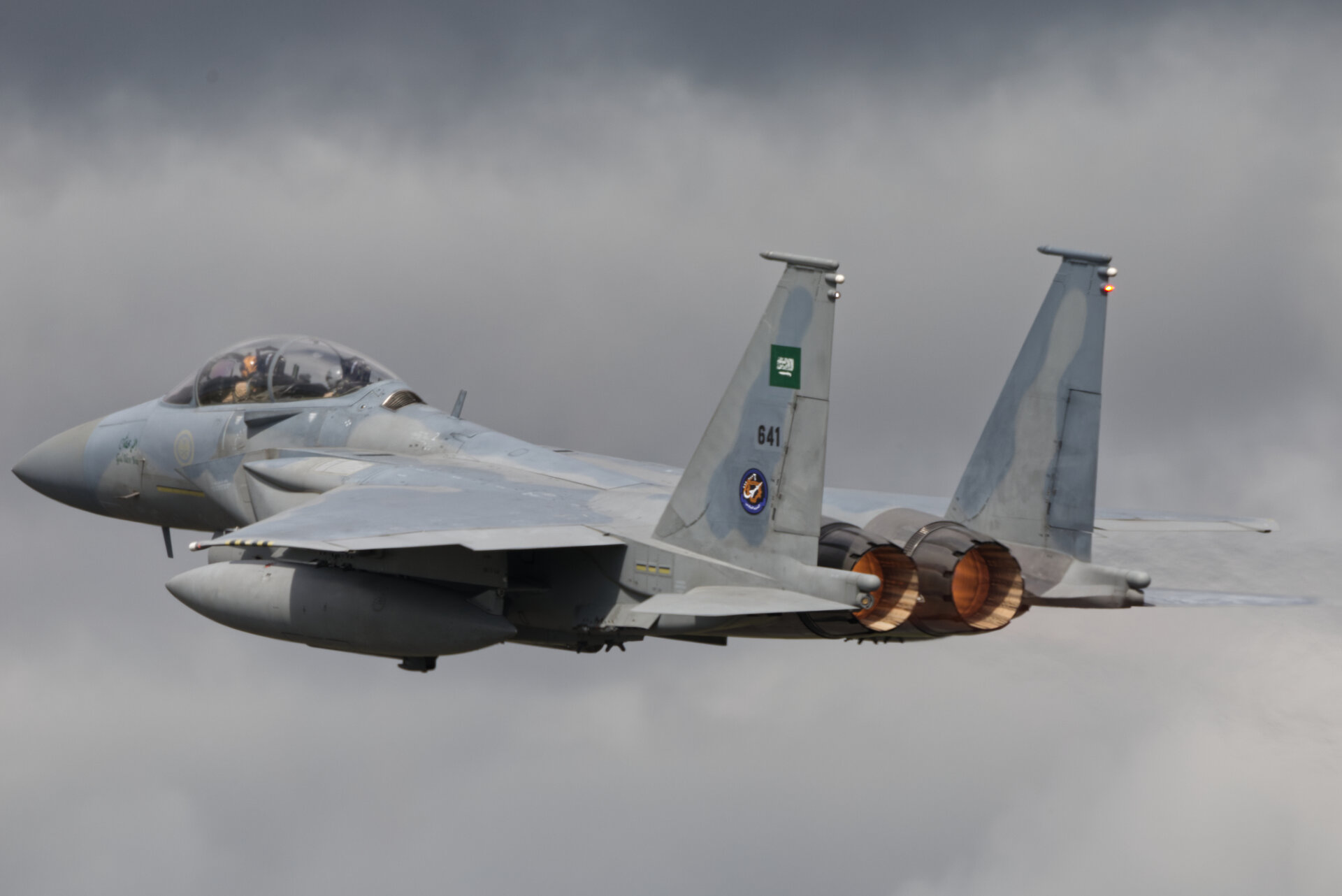
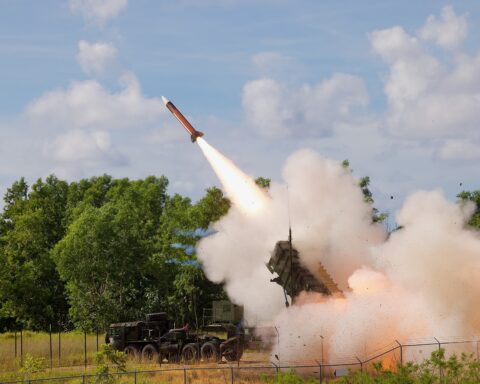
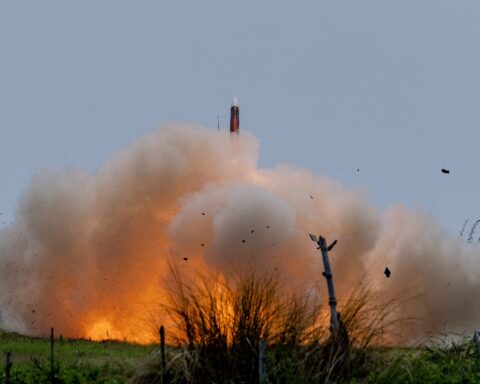
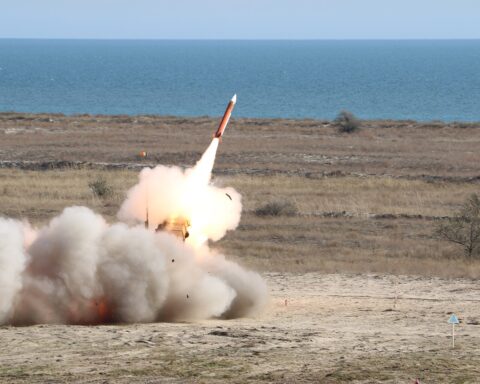
On the defensive side, Saudi Arabia’s $80 billion air defense shield — comprising Patriot PAC-3 batteries, THAAD systems, and layered short-range defenses — has intercepted the majority of incoming Iranian missiles and drones. The Saudi Ministry of Defense has claimed interception rates above 85 percent, though independent verification remains difficult. The Ras Tanura refinery damage came from debris falling after interceptions, not direct missile impacts — a technical distinction that suggests the air defense network is performing close to its design parameters, even if “close” still permits significant infrastructure damage.
On the offensive side, Saudi Arabia has not launched retaliatory strikes against Iranian territory. This restraint, reportedly advocated by MBS himself, reflects a strategic calculation that the United States and Israel should bear the burden of offensive operations while Saudi Arabia absorbs and defends. It also reflects an honest assessment: despite $78 billion in annual spending, the Royal Saudi Air Force lacks the standoff precision munitions and intelligence infrastructure to conduct effective deep strikes against hardened Iranian targets at ranges exceeding 1,500 kilometres.
| System | Type | Quantity | Origin | Role in Iran Conflict |
|---|---|---|---|---|
| F-15SA/S Eagle | Multirole fighter | 213 | United States | Air superiority, ground strike |
| Eurofighter Typhoon | Multirole fighter | 72 | UK / Europe | Air defense, patrol |
| Patriot PAC-3 | Air defense | 16 batteries | United States | Ballistic missile interception |
| THAAD | Air defense | 7 batteries | United States | High-altitude missile defense |
| M1A2 Abrams | Main battle tank | 400+ | United States | Ground defense |
| AH-64 Apache | Attack helicopter | 36 | United States | Close air support |
| Al-Riyadh frigates | Naval vessel | 3 | France | Gulf patrol |
The Yemen experience offers a cautionary precedent. Saudi Arabia’s intervention, which began in March 2015 under then-Defense Minister Prince Mohammed bin Salman, exposed persistent weaknesses in joint operations, targeting precision, and logistics sustainability. The campaign consumed enormous resources — estimates suggest $5-6 billion per year — without achieving its primary political objective of restoring the internationally recognized Yemeni government. Khalid inherited that war’s lessons when he took the defense portfolio.
His response has been structural rather than operational. Rather than focus on winning in Yemen (a conflict that has since wound down), Khalid concentrated on institutional reform: professionalizing procurement, accelerating defense industry localization, diversifying supplier relationships beyond the United States, and building the indigenous capacity to maintain and eventually produce military equipment domestically. Whether these reforms have produced a fundamentally more capable military — or merely a more expensive one — is the test now underway in the skies over Riyadh and the waters of the Persian Gulf.
The Defense Industry Revolution — From 4 Percent to 25 Percent
The most consequential achievement of Khalid bin Salman’s tenure may not be a diplomatic breakthrough or a military operation but a bureaucratic metric: the localization rate of Saudi military spending. When he entered the defense establishment in 2019, Saudi Arabia produced just 4 percent of its military equipment domestically. By the end of 2024, that figure had reached 24.89 percent, according to the General Authority for Military Industries (GAMI) — a sixfold increase in six years.
The strategic logic is straightforward. A country that imports 96 percent of its military hardware is a country that cannot sustain a prolonged conflict without the consent of its suppliers. Saudi Arabia’s near-total dependence on American, British, and European arms manufacturers meant that a single Congressional vote, a single export licence denial, or a single political shift in Washington could ground Saudi fighters, disable Saudi missiles, and halt Saudi tank operations. The Yemen intervention made this vulnerability visceral: repeated Congressional efforts to restrict arms sales to Saudi Arabia, driven by humanitarian concerns, threatened to cut the military’s supply lines mid-conflict.
Under Khalid’s watch, the defense localization program has produced tangible industrial capacity. Saudi Arabian Military Industries (SAMI), a PIF-owned holding company, has launched multiple subsidiaries: SAMI Alsalam Aerospace Industries for aircraft maintenance and modification, SAMI Advanced Electronics Company for military electronics, SAMI Aerospace Mechanics for structural components, and — announced at the World Defense Show 2026 — SAMI Land Co. and SAMI Autonomous Co. for armored vehicles and unmanned systems.
GAMI itself received three excellence awards for SAMI subsidiaries recognizing “outstanding contributions to building a sustainable, competitive defense ecosystem.” These are not paper entities. SAMI Alsalam performs heavy maintenance on RSAF F-15 and Tornado aircraft that previously required airframes to be shipped to the United States or UK for servicing. SAMI Advanced Electronics produces electronic warfare components and communication systems. Local production of THAAD missile defense components has begun through partnerships with AIC Steel and Middle East Propulsion Company, in collaboration with Lockheed Martin.
The scope of the localization program extends beyond assembly and maintenance. GAMI has established regulatory frameworks requiring international defense contractors to include Saudi industrial participation in any contract above a threshold value. Lockheed Martin, the manufacturer of both the F-35 and the THAAD system, has expanded local manufacturing, strengthened Saudi supply chains, and integrated Saudi firms into global production networks. Recent initiatives include local production of THAAD components through partnerships with AIC Steel and Middle East Propulsion Company. Boeing, BAE Systems, and Thales have followed with their own localization agreements.
The program has also created employment. GAMI reports that the defense sector now employs over 100,000 Saudi nationals, up from fewer than 20,000 in 2018. The demographic significance is considerable: in a country where youth unemployment has been a persistent challenge, the defense industry offers high-skilled, well-compensated positions that align with national pride. Khalid bin Salman has explicitly linked defense localization to Vision 2030’s economic diversification goals, framing military industrialization as both a security imperative and an employment programme.
The 50 percent localization target for 2030 remains ambitious, and independent analysts at Tandfonline have questioned whether the Kingdom can achieve “defence industrial transition from vision to reality” at the pace required. The gap between 25 percent and 50 percent is not merely arithmetic — it requires mastering increasingly complex technologies, including precision guidance systems, jet engine components, and radar subsystems that represent the most closely guarded intellectual property in the global defense industry. No country has achieved this transition in less than two decades. Saudi Arabia is attempting it in twelve years.
The war with Iran has injected urgency into what was previously a peacetime industrial strategy. Spare parts consumption, ammunition expenditure, and equipment maintenance cycles accelerate dramatically during active conflict. If Saudi Arabia’s localized defense industry can sustain operations during wartime — replacing interceptor missiles, repairing battle-damaged air defense radars, and manufacturing drone components — then the localization program will have proven its value under the most demanding conditions. If the domestic supply chain buckles and the Kingdom must rely on emergency American airlift for critical components, the program’s limitations will be exposed at the worst possible moment.
The World Defense Show and the $8.8 Billion Shopping Spree
On February 9, 2026 — just nineteen days before US-Israeli strikes would plunge the region into war — Khalid bin Salman inaugurated the third edition of the World Defense Show in Riyadh. The event, organized by GAMI, had grown into one of the world’s largest defense exhibitions. The numbers were staggering: 1,486 exhibitors from 89 countries, 513 official delegations from 121 governments, 137,000 visitors, and exhibition space of 272,000 square metres across four halls — a 58 percent expansion from the previous edition.
The show closed with the signing of 60 defense contracts worth more than 33 billion riyals (approximately $8.8 billion). Khalid personally toured pavilions, visited the Saudi Interior Ministry’s display, and unveiled SAMI’s HEET indigenous vehicle program and RUKN local content supply chain program. The show featured 63 static aircraft and 25 aircraft in live aerial demonstrations, including F-15 Eagles, F-16 Fighting Falcons, Eurofighter Typhoons — and, for the first time, an F-35 Lightning II in Royal Saudi Air Force markings.
The F-35 mockup was the most politically significant display at the show. Lockheed Martin’s Saudi Arabia CEO declared on camera: “We’ve brought the F-35 to Saudi Arabia.” The full-scale model in RSAF livery signalled that the long-sought Saudi acquisition of America’s most advanced fighter — approved in principle by the Trump administration in November 2025 — was moving from political announcement to industrial reality.
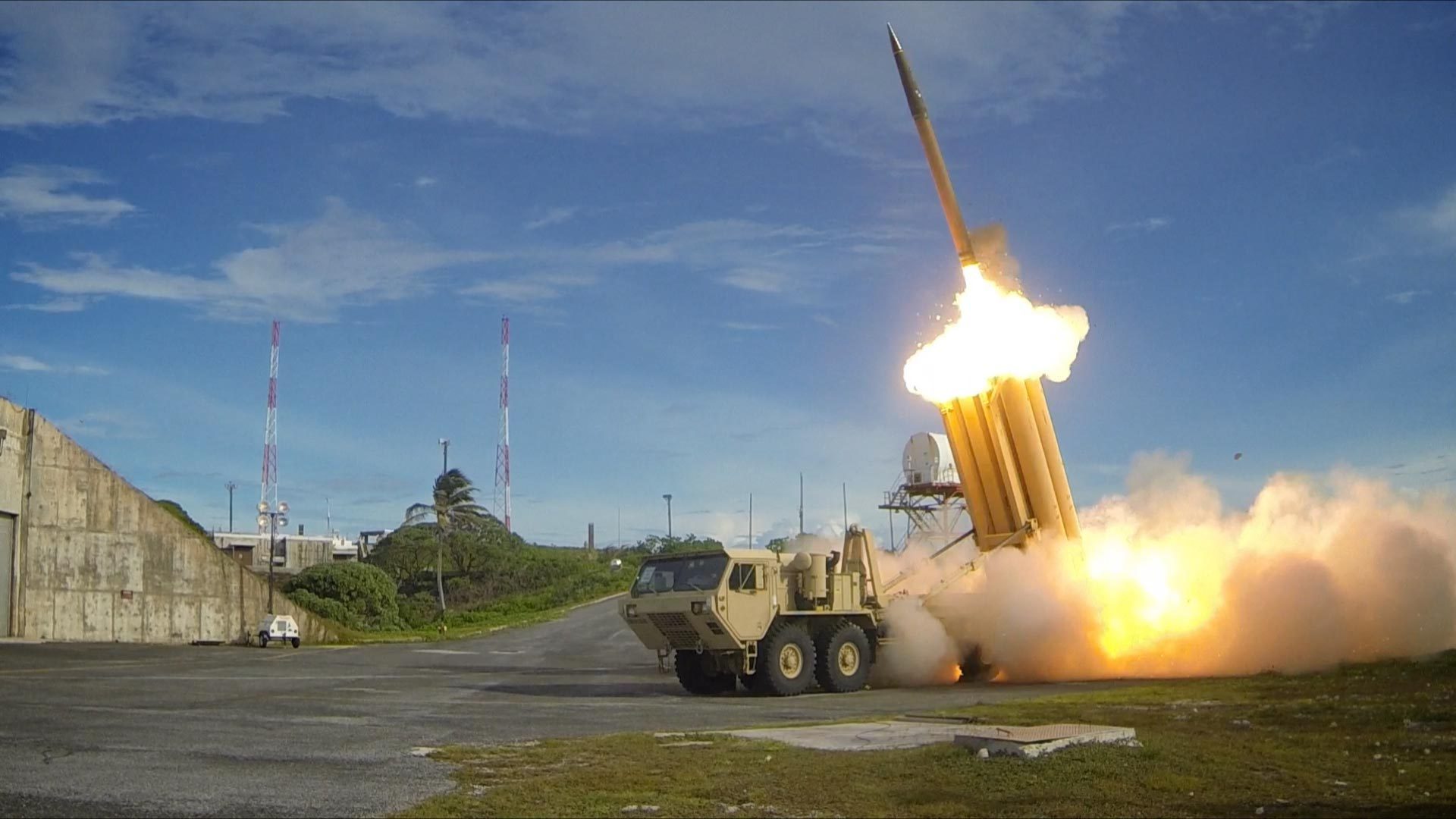
The timing now carries grim irony. The $8.8 billion in contracts signed at the World Defense Show included agreements for precisely the kinds of systems — air defense components, surveillance equipment, command-and-control networks — that Saudi Arabia needed three weeks later when Iranian drones began arriving over its cities. The question of whether those contracts can be accelerated from peacetime procurement timelines to wartime urgency falls squarely on Khalid bin Salman’s desk.
A defense show that was designed to project Saudi Arabia’s emergence as a military-industrial power has instead become a retrospective marker of the last days of peace. Khalid bin Salman, who opened the show projecting confidence and industrial ambition, closed it with the knowledge — whether he shared it publicly or not — that the region was weeks away from war. The $8.8 billion shopping spree was not premature; it may prove to have been barely sufficient.
Is Saudi Arabia Getting the F-35? What the Fighter Deal Means for KBS
The potential sale of F-35 Lightning II stealth fighters to Saudi Arabia represents the most significant arms deal in the Kingdom’s history and the centrepiece of Khalid bin Salman’s defense acquisition strategy. The Trump administration approved the sale in principle in November 2025, and Saudi Arabia is reportedly seeking up to 48 F-35A aircraft — a purchase that would make it the first Arab country to operate the fifth-generation stealth fighter.
The deal carries conditions. Under pressure from Israel, which maintains a policy of preserving its “qualitative military edge” (QME) over regional neighbours, the F-35s sold to Saudi Arabia will reportedly lack some of the advanced weapons systems and classified sensor packages that Israel’s fleet possesses, according to the Times of Israel. The precise configuration remains under negotiation, but the principle is established: Saudi Arabia will receive a capable but intentionally downgraded variant.
For Khalid bin Salman, the F-35 is not merely a weapons platform; it is a strategic anchor. Possession of the F-35 binds Saudi Arabia irreversibly to the American defense ecosystem for decades — the aircraft requires US-controlled software updates, maintenance support, and weapons integration. It is simultaneously a guarantee of American commitment and a leash on Saudi military independence. Khalid, who has championed defense localization and diversification, is aware of this paradox. His interest in alternative fifth-generation fighters — including Turkey’s KAAN and South Korea’s KF-21, according to Eurasian Times — suggests he views the F-35 as essential but insufficient.
The Iran war has accelerated the urgency of the F-35 question. Saudi Arabia’s current fighter fleet — F-15SA/S Eagles and Eurofighter Typhoons — is capable but lacks stealth characteristics. Against a reconstituted Iranian air defense network or in potential future strikes on hardened underground facilities, the F-35’s low-observable capabilities would provide a qualitative advantage that no amount of fourth-generation fighters can replicate. Whether the deal survives Congressional scrutiny during wartime, and whether delivery timelines can be compressed from the standard 3-5 year procurement cycle, are questions that will define the next phase of Khalid’s tenure.
Where Does Khalid bin Salman Fit in the Saudi Succession?
In the complex mathematics of Saudi royal succession, Khalid bin Salman occupies a position of unique proximity and uncertain trajectory. He is the full brother of Crown Prince Mohammed bin Salman, making him the most trusted male relative of the man who will almost certainly become king. He holds the defense portfolio — historically the launching pad for royal advancement in Saudi Arabia, given that both King Salman and King Abdullah held defense-adjacent positions before ascending to the throne.
The February 2026 government reshuffle further consolidated the Salman branch’s grip on power. The traditional power centres of the House of Saud — the branches of King Faisal, King Abdullah, and the once-dominant Sudairi Seven — have been systematically neutralized. The Saudi Arabian National Guard, once a parallel military force loyal to the Abdullah branch, has been integrated into a unified command structure under the Ministry of Defense — under Khalid’s authority.
Whether Khalid himself harbours ambitions for the crown prince position is a question that no publicly available evidence answers. The position does not currently have a designated successor — MBS is crown prince but has not named a deputy crown prince. In Saudi Arabia’s system, the king has the authority to appoint and dismiss the crown prince, and MBS has shown no inclination to designate a successor while he is still in his late thirties.
What is clear is that Khalid’s current position makes him indispensable to MBS’s governance structure. He manages the military relationship with the United States, oversees the largest discretionary spending portfolio in the Saudi government, and provides MBS with a trusted interlocutor for the most sensitive defense and intelligence conversations. If MBS becomes king and chooses to appoint a crown prince from among his full brothers, Khalid is the obvious candidate. If MBS instead chooses to leave the position vacant or appoint from another branch, Khalid’s defense ministry position ensures he remains the second most powerful Salman brother regardless of formal titles.
The succession question also has international dimensions. Western governments and intelligence services track Saudi succession dynamics closely because the identity of the next Saudi leader affects oil markets, defense partnerships, and regional stability. Khalid’s extensive relationships in Washington — built during his ambassadorship and deepened during his defense ministry tenure — would make a potential future succession involving him the most internationally connected power transition in Saudi history. He has met every American defense secretary since James Mattis, every national security advisor since H.R. McMaster, and maintained working relationships with intelligence officials across the Five Eyes alliance.
For now, the succession question remains theoretical. Khalid bin Salman shows no public indication of positioning himself as a rival to or successor of his brother. His public statements consistently defer to MBS’s leadership. His actions — managing the defense portfolio, building American relationships, advancing industrial localization — are entirely consistent with a loyal lieutenant executing his sovereign’s strategy. Whether that loyalty conceals ambition is a question that only future historians will answer.
In the hierarchy of the Saudi royal family, proximity to power matters more than titles. Khalid bin Salman has both.
The Contrarian Case — Why KBS May Be the Most Consequential Saudi Royal After MBS
Western media coverage of Khalid bin Salman tends to cluster around two narratives: the Khashoggi connection and his role as “MBS’s brother.” Both framings diminish a record that, judged on institutional outcomes rather than controversies, stands as arguably the most productive tenure of any Saudi defense official in the Kingdom’s history.
Consider the measurable achievements. Defense industry localization has increased sixfold under his watch. The World Defense Show, which did not exist before 2022, has become the world’s fourth-largest defense exhibition in three editions. Saudi Arabia has secured access to the F-35, a platform that every previous Saudi government sought and failed to obtain. The defense budget has been restructured to prioritize capability over patronage — a reform that required confronting deeply entrenched procurement interests within the royal establishment.
The conventional narrative — that Khalid is merely a placeholder installed by his brother, a figurehead name attached to a portfolio controlled by MBS — ignores the operational reality. MBS cannot personally manage defense procurement, foreign military relationships, industrial localization, and wartime operations while simultaneously running the economy, managing the PIF’s $930 billion portfolio, and overseeing the political fallout of the Iran war. Khalid bin Salman is not a figurehead; he is a node in a distributed power system that allows the Salman brothers to govern a complex state at war.
The contrarian proposition is this: when the history of Saudi Arabia’s military modernization is written, the period from 2019 to 2030 will be identified as the decisive inflection point — the years when the Kingdom moved from being a passive consumer of Western military hardware to an active builder of indigenous defense capacity. And the official most responsible for that transition is not Mohammed bin Salman, whose attention spans the entire government, but Khalid bin Salman, whose focus has been exclusively on defense.
The Iran war will test this proposition under fire. If Saudi air defenses hold, if the defense industrial base proves capable of sustaining operations, if the American alliance delivers the support that Khalid’s years of relationship-building were designed to guarantee — then the contrarian case becomes the consensus view. If the military falters, if the cost asymmetry of Iranian drones overwhelms Saudi Arabia’s multi-layered air defense shield, if the localization program proves to be industrial theatre rather than military capability — then Khalid bin Salman will carry the blame for a $78 billion annual investment that failed its first real test.
The Defense Minister Effectiveness Matrix
Assessing a defense minister’s performance requires more than counting weapons systems or budget figures. Five variables determine whether a defense minister has genuinely strengthened national security: alliance management (maintaining the external relationships that underpin security guarantees), industrial development (building domestic capacity to reduce foreign dependency), force modernization (upgrading military capabilities to match evolving threats), strategic positioning (ensuring the country is prepared for the conflicts it is most likely to face), and crisis performance (how the military performs when tested).
| Variable | MBS as Defense Min. (2015-2022) | KBS as Defense Min. (2022-2026) | Assessment |
|---|---|---|---|
| Alliance Management | Strained US relations post-Khashoggi; Obama-era tensions; diversification to Russia/China explored | Rebuilt US relationship; secured F-35 approval; maintained UK/France ties; 121 government delegations at WDS | KBS significantly strengthened alliances |
| Industrial Development | Created SAMI and GAMI (institutional foundations); localization at 4% when period began | Localization from ~10% to 25%; SAMI subsidiaries producing components; local THAAD production initiated | Both contributed; KBS delivered measurable industrial output |
| Force Modernization | Acquired new F-15SA fleet; THAAD and Patriot procurement; major arms deals | F-35 access secured; World Defense Show as procurement platform; electronic warfare upgrades; unified command structure | KBS secured higher-tier platforms |
| Strategic Positioning | Yemen intervention (inconclusive); regional coalition building; GCC crisis with Qatar | Iran war preparations (debatable foresight); Tehran diplomacy as intelligence opportunity; lobbying for preemptive US action | Mixed — KBS advocated for a war that created new vulnerabilities |
| Crisis Performance | 2019 Abqaiq attack: 50% oil output lost; air defenses failed to prevent strike | 2026 Iran war: air defenses intercepting 85%+ of threats; Ras Tanura damaged but from debris; no Saudi cities destroyed | KBS era showing improved but imperfect performance |
The matrix reveals a pattern. Khalid bin Salman has excelled at the institutional dimensions of the defense portfolio — alliance management, industrial development, and procurement — while the operational and strategic dimensions remain contested. He secured better weapons, stronger alliances, and more domestic industrial capacity than any of his predecessors. Whether he correctly judged the strategic environment — specifically, whether advocating for war with Iran was a sound strategic bet or a catastrophic miscalculation — cannot be assessed until the conflict reaches a conclusion.
The comparison with the Abqaiq benchmark is instructive. In September 2019, Iranian-attributed drones and cruise missiles struck the Abqaiq processing facility and the Khurais oil field, temporarily halving Saudi oil production. The air defense network, operating under MBS’s defense ministry leadership, failed to detect or intercept the attack. In March 2026, under Khalid’s command, the same air defense network is intercepting the majority of incoming Iranian threats. The Ras Tanura refinery was damaged but not destroyed; it suffered from interceptor debris, not direct hits. The improvement is real, even if the threat environment is incomparably more intense.
Three factors will determine the final assessment: whether the air defense network sustains its interception rate as Iranian attacks continue, whether the defense industrial base can maintain equipment readiness through a prolonged conflict, and whether the American alliance — which Khalid has cultivated more assiduously than any Saudi official — delivers tangible military support when the Kingdom needs it most. On all three counts, the early evidence favours Khalid bin Salman. The question is whether early evidence holds.
The defense minister’s efforts to modernize the Saudi armed forces face their ultimate test in the current conflict. A comprehensive assessment of Saudi Arabia’s military strength and combat readiness against Iran reveals both the progress made under his leadership and the structural challenges that remain.
Frequently Asked Questions
How old is Khalid bin Salman?
Khalid bin Salman was born in 1988, making him 37 years old as of March 2026. He is one of the youngest defense ministers in the world, commanding one of the largest military budgets at approximately $78 billion annually. His youth has been both an advantage — connecting with younger military officers and Western counterparts — and a source of scepticism from older Saudi military establishment figures accustomed to seniority-based promotion.
Is Khalid bin Salman the brother of MBS?
Khalid bin Salman is the full brother of Crown Prince Mohammed bin Salman. Both are sons of King Salman and his third wife, Fahda bint Falah Al Hithlain. The full-blood sibling relationship is significant in Saudi political culture, where full brothers typically form the tightest political alliances. Khalid is MBS’s ninth full sibling and his most politically prominent brother, holding the defense ministry portfolio that MBS himself once controlled.
What military experience does Khalid bin Salman have?
Khalid bin Salman is a trained F-15 fighter pilot who completed US Air Force pilot training at Columbus Air Force Base in Mississippi in 2009. He flew combat missions for the Royal Saudi Air Force against ISIS targets in 2014 and participated in Saudi Arabia’s military intervention in Yemen. He also studied advanced electronic warfare in France and completed Harvard University’s senior executives national security program, giving him both operational and strategic military credentials.
Did Khalid bin Salman visit Iran before the war?
On April 17, 2025, Khalid bin Salman visited Tehran and met Supreme Leader Ali Khamenei, President Masoud Pezeshkian, and senior Iranian military officials. He delivered a personal letter from King Salman to Khamenei. The visit was described as a landmark in Saudi-Iranian diplomatic engagement — the first meeting between a senior Saudi royal and Iran’s supreme leader in nearly two decades. Less than a year later, Khamenei was killed in the US-Israeli strikes that Khalid had reportedly lobbied for.
What is Khalid bin Salman’s role in the Iran war?
As minister of defense, Khalid bin Salman is responsible for Saudi Arabia’s military response to Iranian missile and drone attacks that began on February 28, 2026. He oversees air defense operations, coordinates with US Central Command, manages military readiness across all service branches, and directs the defense industrial base supporting wartime operations. He also played a pre-war lobbying role, privately urging the Trump administration to launch military strikes against Iran.
Could Khalid bin Salman become king of Saudi Arabia?
While technically possible under Saudi Arabia’s system of royal succession, Khalid bin Salman becoming king would require several unprecedented steps. He would first need to be appointed crown prince by his brother MBS once MBS becomes king. No deputy crown prince has been named. Khalid’s position as defense minister and MBS’s full brother makes him a plausible successor, but Saudi succession is determined by the king’s decree, not by hereditary right, and multiple other scenarios remain possible.
What is the Saudi defense budget under Khalid bin Salman?
Saudi Arabia’s defense budget for 2025 is approximately $78 billion, according to Breaking Defense, representing 21 percent of total government spending and 7.1 percent of GDP. This makes Saudi Arabia the fifth-largest defense spender globally and the largest in the Arab world. Under Khalid bin Salman’s tenure, the focus has shifted from pure hardware acquisition to defense industry localization, with the goal of producing 50 percent of military equipment domestically by 2030.
Khalid bin Salman’s role as the official diplomatic channel between Riyadh and Washington is only one layer of the broader Trump-MBS alliance that has reshaped U.S.-Saudi relations since 2017, with Jared Kushner serving as the primary back channel and the two leaders maintaining direct phone contact.