
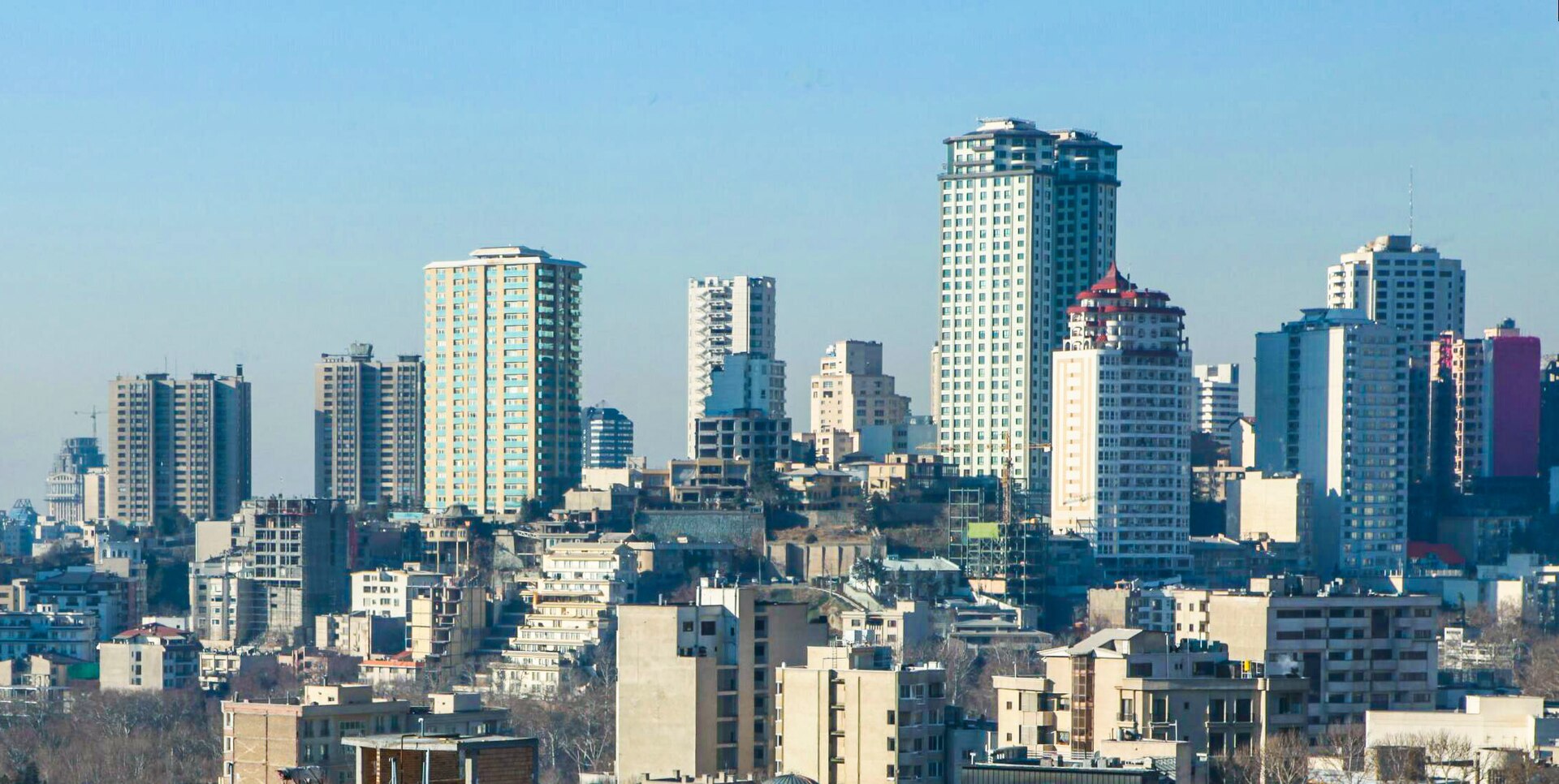
TEHRAN — On the night of April 1, an airstrike hit the home of Kamal Kharazi, the 81-year-old former Iranian foreign minister who was, according to two Iranian officials, actively overseeing back-channel negotiations with the United States through Pakistan at the moment the bomb found him. His wife was killed, and Kharazi was pulled from the wreckage gravely wounded — his condition still unclear as of this writing — and with him went the last Iranian official who personally remembers how every nuclear negotiation since 1997 was structured, what concessions were offered, and what red lines were drawn. The strike on the Ajouraniyeh neighborhood of northern Tehran, a residential area associated with senior government figures rather than military installations, landed five days before President Trump’s self-imposed April 6 deadline to resume strikes on Iran’s power grid, inside a window when diplomacy was supposed to be the operative word.
Whether the strike was a deliberate attempt to kill the man running Iran’s last diplomatic track, or a miss aimed at nearby IRGC offices that happened to destroy the home of Iran’s foremost negotiator, the practical consequences are identical: the person coordinating the only back-channel that might have produced a meeting between Iranian officials and Vice President JD Vance is now in a hospital bed, if he is still alive at all, and his counterpart network — already thinned by the systematic elimination of approximately 40 Iranian officials since February 28 — has lost its institutional memory. For Saudi Arabia, which invested its diplomatic credibility in the Islamabad quartet framework, the question is not abstract: Riyadh built its strategy on the premise that someone on the Iranian side could eventually say yes, and the strike on Kharazi removes the most plausible candidate.
Table of Contents
- Who Is Kamal Kharazi and Why Does His Targeting Matter?
- The Man Running the Pakistan-Vance Track
- Was the Strike Deliberate or Incidental?
- The CNN Interview and the Contradiction at the Center
- What Does the Strike Mean for the April 6 Deadline?
- The Decapitation Ledger — 40 Officials in 33 Days
- Araqchi’s Denial Architecture
- The IRGC’s Pre-Set Retaliation Framework
- What Does This Mean for Saudi Arabia’s Diplomatic Position?
- Who Negotiates for Iran Now?
- The Nuclear Dimension That Nobody Wants to Name
Who Is Kamal Kharazi and Why Does His Targeting Matter?
Kamal Kharazi is not a military commander, not an IRGC general, and not a member of Iran’s security apparatus in any operational sense — he is, or was before the bomb hit, the single most experienced diplomatic operator in the Iranian state. He served as Iran’s representative to the United Nations from 1989 to 1997, an eight-year stretch that covered the aftermath of the Iran-Iraq War, the Gulf War, and the entire Clinton-era engagement with Tehran, before moving to the foreign ministry under President Mohammad Khatami, where he served as minister from August 1997 to August 2005. That tenure covers the period in which Iran’s nuclear program first became a matter of international negotiation, the post-9/11 cooperation between Tehran and Washington in Afghanistan (which Kharazi’s ministry facilitated), and the early architecture of what would eventually become the JCPOA framework.
When Ayatollah Ali Khamenei created the Strategic Council on Foreign Relations in 2006 — a body that sits outside the formal government, answerable directly to the supreme leader’s office — he appointed Kharazi as its chairman. Kharazi is the only person who has ever held that position in its 20-year existence. The SCFR was designed as Khamenei’s personal foreign policy advisory channel, separate from the elected government’s foreign ministry, and its creation reflected Khamenei’s distrust of leaving diplomacy entirely in the hands of whichever president happened to hold office. After Khamenei’s assassination on February 28, Kharazi continued in this advisory role under Mojtaba Khamenei, the supreme leader’s son who has assumed de facto authority.
The detail that most Western coverage has missed, or not yet connected, is that Kharazi holds a PhD in industrial psychology from the University of Houston — he is fluent in English, trained in American academic institutions, and comfortable operating in the language and idiom of US-style negotiation in a way that almost no other senior Iranian figure can match. He also served as head of Iran’s War Information Headquarters and as military spokesman during the 1980-1988 Iran-Iraq War, which means he knows from direct institutional experience how Iran ends wars under conditions of military disadvantage, what the internal politics of capitulation look like, and where the breaking points sit. The combination — a man who knows how Iran talks to America and how Iran stops fighting — is not replaceable from the current roster of Iranian officials.
The Man Running the Pakistan-Vance Track
The detail that elevates this strike from a high-profile assassination attempt to a potential inflection point in the war’s diplomatic trajectory comes from researcher Nicole Grajewski, who cited two Iranian officials saying that Kharazi had been “overseeing engagement with Pakistan for a possible meeting between Iranian officials and Vice President JD Vance.” No major Western outlet has published analysis connecting the strike to this back-channel function — the Grajewski post on X remains the sole public reference to this operational detail — but its implications restructure the entire meaning of the April 1 bombing.
Pakistan emerged over the past month as the primary conduit for US-Iran message exchange, a role formalized by the March 29 Islamabad quartet meeting that brought together Saudi Arabia, Pakistan, Turkey, and Egypt. Pakistan was simultaneously the host of that diplomatic gathering and the carrier of messages between Washington and Tehran, a dual function that worked precisely because it could be denied from both ends — Islamabad could describe itself as a regional peace broker while privately serving as a postal service for communications that neither side wanted to acknowledge. Kharazi’s role, overseeing Iran’s side of this track, placed him above the formal interlocutor level: he was not the messenger but the person who decided what the messengers carried.
The timing compounds the operational significance. The strike occurred on Day 32 or 33 of the war, depending on how the count is reckoned from February 28, and landed five days before Trump’s April 6 deadline to resume strikes on Iran’s power grid — a deadline Trump himself established on March 26 when he posted: “As per Iranian Government request, please let this statement serve to represent that I am pausing the period of Energy Plant destruction by 10 Days to Monday, April 6, 2026, at 8 PM, Eastern Time.” The pause was framed as a response to diplomatic progress, and Kharazi was reportedly the senior figure managing that progress from Tehran’s end. Whatever the targeting rationale, the operational effect is that the person coordinating Iran’s engagement with the only off-ramp available before the deadline is now incapacitated or dead.

Was the Strike Deliberate or Incidental?
The honest answer is that the available evidence does not resolve this question, and any analysis that claims certainty in either direction is manufacturing conclusions the data cannot support. What is known: the strike hit Kharazi’s home in Ajouraniyeh, a neighborhood in northern Tehran associated with senior government and clerical figures. A nearby building linked to IRGC offices and a pharmaceutical company was also damaged, as reported by Turkiye Today, which introduces the possibility that the IRGC facility was the intended target and Kharazi’s home was collateral damage — or that both were on the target list, or that the IRGC building provided convenient cover for a strike whose primary purpose was the house next door.
Neither the United States nor Israel has claimed responsibility, which is standard practice for strikes inside Tehran but also means there is no official statement of targeting intent to evaluate. Iranian newspapers Shargh, Etemad, and Ham Mihan described it as a US-Israeli airstrike, and Iranian officials have explicitly characterized it as an assassination attempt against a diplomatic figure — framing it as “an attempt to derail diplomacy” — but Iranian officials have obvious incentive to describe any strike in terms that maximize international sympathy and minimize military context. The proximity of the IRGC facility muddies the narrative in ways that both sides can exploit.
The analytical problem is that deliberate and incidental produce the same outcome. If the strike was a targeted killing of the man running Iran’s back-channel to the United States through Pakistan, it represents a conscious decision — by whichever party ordered it — to close the diplomatic window before the April 6 deadline. If it was an accident, a bomb aimed at IRGC offices that happened to land on the most important diplomatic operator in the Iranian government, the result is identical: that diplomatic window is closed anyway, or at minimum severely damaged, and the person who understood its architecture from the inside is no longer available to explain it to whoever might take over. Intent matters for moral and legal accountability; for the trajectory of the war and the viability of the ceasefire track, intent is irrelevant.
The CNN Interview and the Contradiction at the Center
Twenty-four days before the strike, on March 9 — Day 9 or 10 of the war — Kharazi sat down with CNN’s Frederik Pleitgen in Tehran for what became one of the most substantive public statements by any senior Iranian official during the conflict. The interview is worth revisiting in light of what we now know about his private activities, because the gap between his public posture and his operational role is the crux of the entire story.
On camera, Kharazi was categorical: “I don’t see any room for diplomacy anymore. Because Donald Trump had been deceiving others and not keeping with his promises, and we experienced this in two times of negotiations — that while we were engaged in negotiation, they struck us.” He went further on conditions, saying there was “no room unless the economic pressure would be built up to the extent that other countries would intervene to guarantee the termination of aggression of Americans and Israelis against Iran.” This is as close to a public closing of the diplomatic door as any senior Iranian figure has come during the war.
And yet, privately, Kharazi was doing the opposite — overseeing engagement with Pakistan for a possible meeting with Vice President Vance, working the very diplomatic track he publicly said did not exist. The contradiction is not hypocrisy; it is how Iranian diplomacy has always functioned. Public statements of maximum resistance create political cover for private flexibility; the harder the public rhetoric, the more room the negotiator has to make concessions behind closed doors without appearing weak. Kharazi, with three decades of experience in this architecture, understood the dynamic better than anyone in the system, and his CNN interview was itself a negotiating instrument — telling Washington publicly that the door was closed while privately leaving it ajar through the Pakistan channel. Whoever struck his home either understood this dual-track function and sought to end it, or did not understand it and ended it anyway.
What Does the Strike Mean for the April 6 Deadline?
The April 6 deadline at 8 PM Eastern — now five days away — was framed by Trump as a pause to allow diplomacy to produce results. The strike on Kharazi makes the production of diplomatic results within that window functionally impossible, not because of any change in political will on either side but because the institutional capacity to convert message exchange into a structured meeting has been degraded in a way that cannot be repaired in five days. The 15-point US-Israel peace plan, which includes Hormuz reopening and nuclear rollback, requires an Iranian interlocutor who can speak with authority for the supreme leader’s office, understand the history of prior negotiations well enough to evaluate what is actually new in the proposal versus what has been rejected before, and translate between American negotiating assumptions and Iranian red lines. That person was Kharazi.
On the same day as the strike, Iranian Foreign Minister Araqchi told Al Jazeera: “At present there is no negotiation.” He described US envoy Witkoff’s messages as “a kind of message exchange… by no means negotiation,” and said trust with the United States was “at zero.” Read against the Kharazi strike, Araqchi’s language on April 1 reads less like a negotiating posture and more like a description of operational reality — the person who was running the negotiation track is in a hospital, so there is, factually, no negotiation. Meanwhile, Trump on the same day claimed Iran’s president had asked for a ceasefire, said such a ceasefire was possible only when the Strait of Hormuz was “open and clear,” and warned that Iran would be “hit hard for the next 2 or 3 weeks.” The two sides are not speaking the same diplomatic language, and the translator — Kharazi — has been removed.
The practical question for the Islamabad quartet framework is whether anything built through the Pakistan channel survives the loss of its Iranian coordinator. Saudi Arabia, Turkey, Egypt, and Pakistan invested their collective diplomatic weight in a track that depended on someone inside Iran being able to deliver. The five-day window before April 6 was already narrow; without Kharazi, it may not exist at all.
The Decapitation Ledger — 40 Officials in 33 Days
Kharazi’s strike does not exist in isolation — it is the latest entry in a campaign of targeted killings that has eliminated approximately 40 Iranian officials since the war began on February 28, a rate of more than one per day. The pattern, viewed in sequence, shows an escalating willingness to move beyond military and security targets into the political and advisory layer of the Iranian state, and Kharazi represents the first strike on a figure whose primary function was diplomatic rather than military, intelligence, or security.
| Date | Official | Position | Domain |
|---|---|---|---|
| February 28 | Ayatollah Ali Khamenei | Supreme Leader | Political/Religious |
| February 28 | Aziz Nasirzadeh | Defense Minister | Military |
| February 28 | Abdolrahim Mousavi | Armed Forces Chief of Staff | Military |
| February 28 | Mohammad Pakpour | IRGC Ground Forces Commander | Military/IRGC |
| March 17 | Ali Larijani | Secretary, Supreme National Security Council | Political/Security |
| March 17 | Gholamreza Soleimani | Basij Commander | Paramilitary |
| March 18 | Esmaeil Khatib | Intelligence Minister | Intelligence |
| April 1 | Kamal Kharazi | Chair, Strategic Council on Foreign Relations | Diplomatic/Advisory |
The progression from Khamenei, Nasirzadeh, Mousavi, and Pakpour on Day 1 — all military or political-military — through Larijani (political/security), Soleimani (paramilitary), and Khatib (intelligence) to Kharazi (diplomatic) traces an expanding target set. Larijani, as SNSC secretary, sat at the intersection of security and political decision-making; Khatib ran the intelligence ministry. But Kharazi’s primary identity is as a diplomat and foreign policy adviser, and his placement on this list, if deliberate, marks a qualitative shift in the targeting logic. The total body count — 3,114 Iranian deaths by March 17, including 1,354 civilians and 1,138 military personnel according to the Human Rights Activists’ News Agency data compiled by the Foundation for Defense of Democracies — provides the backdrop against which these individual eliminations operate.
The question this ledger raises is not whether a pattern exists — it plainly does — but whether the pattern reflects a coherent strategy of eliminating Iran’s ability to make war, make peace, or both. If the targeting has now expanded to include the diplomat overseeing back-channel negotiations, the answer is either that decision-makers in Washington or Tel Aviv do not believe diplomacy is a viable path and are clearing the field for a military conclusion, or that the left hand of the targeting process does not know what the right hand of the diplomatic process is doing, which is a different kind of failure but one with equal consequences.
Araqchi’s Denial Architecture
The language that Iranian Foreign Minister Abbas Araqchi used on April 1 deserves closer parsing than it has received, because the construction is deliberate in ways that create political space rather than closing it. When Araqchi told Al Jazeera “at present there is no negotiation,” the operative phrase is “at present” — a temporal qualifier that denies the current state without foreclosing the future. When he described Witkoff’s communications as “a kind of message exchange that can take place in times of peace or war,” he simultaneously acknowledged contact while denying its status as negotiation, a distinction that matters inside Iranian domestic politics where being seen to negotiate under fire is politically fatal but exchanging messages is not.
This is not unusual for Iranian diplomatic language — the distinction between “negotiation” and “message exchange” has been a feature of Iran’s public communications since the early nuclear talks — but it acquires new meaning in the context of the Kharazi strike. If Kharazi was overseeing the conversion of message exchange into actual negotiation, and Araqchi is now publicly insisting that only message exchange exists, the denial may reflect the operational reality that the mechanism for upgrading messages into meetings has been broken by the strike rather than a political decision to walk away from the table. Araqchi’s statement that “the trust level is at zero” reinforces this reading: trust was already low before the strike, and the bombing of the chief negotiator’s home predictably drives it below any threshold at which structured talks could function.
The careful construction also serves a domestic audience. The IRGC military council that has consolidated power since February 28 views any negotiation with the United States as capitulation, and Araqchi — a career diplomat serving under an elected president who has been increasingly marginalized — cannot afford to be seen as the face of a peace track that the IRGC opposes. Denying negotiation while maintaining message exchange lets the diplomatic process exist without any Iranian official having to claim ownership of it, which was precisely the architecture Kharazi had built and now can no longer maintain.
The IRGC’s Pre-Set Retaliation Framework
In a development that has been overshadowed by the Kharazi strike itself, the IRGC issued a threat on its Telegram channels on March 31 or April 1 — before the strike on Kharazi became public — naming 18 American and Western technology companies and declaring: “From now on, for every assassination, an American company will be destroyed.” The named companies include Apple, Google, Microsoft, Nvidia, IBM, Tesla, Cisco, HP, Intel, Oracle, Meta, Dell, Palantir, JP Morgan Chase, GE, Spire Solution, Boeing, and UAE firm G42, and the threat was reported by CNBC and the Times of Israel.
The timing matters because it establishes that the IRGC’s retaliation framework was pre-set, constructed in response to the cumulative pattern of targeted killings rather than as a specific reaction to the Kharazi strike. This means the Kharazi bombing feeds into an already-activated escalation architecture on the Iranian side, and whatever retaliation the IRGC was preparing before April 1 will now carry the additional emotional and political charge of an attack on a figure who, unlike the military and intelligence officials previously killed, was identifiable to the Iranian public as a civilian diplomat — a former foreign minister whose CNN interview three weeks earlier gave him a public face and name recognition that most of the other targeted officials lacked.
The inclusion of UAE firm G42 in the IRGC’s list is a separate point of pressure for Gulf states, particularly given the existing Saudi-UAE tensions over the war. G42, a technology conglomerate backed by Emirati national security adviser Sheikh Tahnoun bin Zayed Al Nahyan, has deep partnerships with Microsoft and other US tech firms, and its presence on the IRGC’s target list binds Abu Dhabi’s technology sector to the conflict in a way that purely military threats do not. The IRGC’s shift toward economic and technological targets — whether as actual operational plans or as strategic messaging — opens a front that did not exist in the first month of the war.
What Does This Mean for Saudi Arabia’s Diplomatic Position?
Saudi Arabia’s exposure to the Kharazi strike is indirect but substantial, because Riyadh’s entire diplomatic strategy since the war began has rested on two assumptions: that the war would end through negotiation rather than military conclusion, and that there would be someone on the Iranian side capable of negotiating. The strike on Kharazi damages the second assumption in a way that threatens the first, and it does so at the worst possible moment — inside the five-day window before Trump’s deadline, when Saudi Arabia needed the diplomatic track to produce something tangible enough to justify the political risks Riyadh has taken. The combined effect of Iran’s Araghchi rejection and the Kharazi strike on Saudi Arabia’s remaining options is analysed in Pakistan’s mediation collapse and Saudi Arabia’s diplomatic off-ramp before April 6.
Foreign Minister Prince Faisal bin Farhan has maintained near-daily contact with Iranian FM Araqchi since the war began, even after the March 21 expulsion of Iran’s military attache and four embassy staff from Riyadh — a move that narrowed the channel but did not close it. Faisal’s diplomacy has operated on the premise that Araqchi, or someone above him in the Iranian system, could eventually deliver a yes on terms that Washington and Riyadh could accept. Kharazi was that someone — the figure who sat above the formal diplomatic apparatus, reported directly to the supreme leader’s office, and had the institutional memory to evaluate whether a proposed deal was actually better or worse than what Iran had rejected in previous rounds. Without him, Araqchi is a foreign minister without a mandate, reporting to an elected president who has been progressively cut off from the real decision-making center by the IRGC military council.
The Faisal statement that trust in Iran had been “shattered” — reported by Asharq Al-Awsat before the Kharazi strike — takes on additional weight after April 1, because whatever residual Iranian trust in the Saudi-brokered diplomatic process existed was anchored in Kharazi’s personal relationships and institutional credibility. Saudi Arabia built its position as the indispensable mediator on the argument that Riyadh could talk to both sides; the strike on Kharazi did not close the Saudi channel to Iran, but it removed the person on the other end of the line who had the authority to turn conversation into commitment.
Who Negotiates for Iran Now?
The operational vacuum created by Kharazi’s incapacitation — and it must be described as incapacitation rather than death, because as of April 2 his status remains uncertain, with conflicting reports and the Indian outlet The Week among the few publications foregrounding the ambiguity — is not merely a matter of replacing one official with another. Kharazi’s value was cumulative: 37 years of continuous involvement in Iranian foreign policy, from the Iran-Iraq War through the UN posting through the foreign ministry through two decades as the supreme leader’s personal foreign policy adviser. That institutional memory, the understanding of what was offered and rejected and counter-offered across four American administrations, cannot be transferred in a briefing document.
The most probable successor figures — Araqchi himself, or whoever Mojtaba Khamenei might appoint to the SCFR — face a compound problem. They would need to reconstruct whatever understandings Kharazi had developed through the Pakistan channel, re-establish credibility with Pakistani intermediaries who were dealing with Kharazi personally, and do all of this while the IRGC military council pulls decision-making authority away from the diplomatic apparatus and toward a resistance posture that treats negotiation as betrayal. The CNN interview from March 9, in which Kharazi said “there’s no room unless the economic pressure would be built up to the extent that other countries would intervene,” was itself a framework for what a deal might look like — external economic pressure providing political cover for Iranian concessions — and the person who designed that framework is no longer available to implement it.
Iran’s five-point counter-proposal, which includes sovereignty over the Strait of Hormuz, was crafted within the strategic ecosystem Kharazi oversaw, and the gap between it and the US-Israeli 15-point plan requires someone who understands both documents’ genealogies — where each provision came from, what domestic constituency it serves, and where the flexibility actually lives beneath the public positions. That is a diplomatic skill set, not a policy position, and it left the Iranian government with the person who possessed it.
The Nuclear Dimension That Nobody Wants to Name
In 2022, speaking to Al Jazeera Arabic, Kharazi made a statement that has become one of the most-cited declarations in the history of Iran’s nuclear ambiguity: “It is no secret that we have the technical capabilities to manufacture a nuclear bomb, but we have no decision to do so… In a few days, we were able to enrich uranium up to 60 percent, and we can easily produce 90% enriched uranium.” That statement, at the time, was read as a warning — a way of signaling threshold capability without crossing the line into weaponization — and it cemented Kharazi’s public profile as someone who spoke with a level of candor about Iran’s nuclear program that other officials avoided.
The 2022 statement introduces a targeting logic beyond diplomacy. If Kharazi was understood by the striking party not only as the coordinator of the Pakistan-Vance track but also as a public figure who had confirmed Iran’s nuclear threshold status, the targeting calculus becomes more complicated than a simple attempt to derail negotiations. It also provides domestic cover within Iran for the IRGC’s argument that the strike was aimed at eliminating voices who have managed the nuclear file — an argument that, whether accurate or not, pushes the internal Iranian debate in a direction that makes future nuclear concessions harder to sell politically. The man who said Iran could build a bomb but chose not to is now the victim of an airstrike; the IRGC’s response to that will not be to recommit to restraint.
For Saudi Arabia’s strategic calculations, the nuclear dimension is the layer that Riyadh cannot publicly discuss but cannot ignore. The 15-point US-Israel peace plan includes nuclear rollback as a condition, and any Iranian negotiator who eventually sits across from Washington will need the credibility to sell nuclear concessions domestically. Kharazi, who had publicly acknowledged threshold capability while maintaining the “no decision” position, was arguably the only Iranian official who could have delivered nuclear rollback language and been believed by both sides — by Washington because he had admitted the capability, and by Tehran because he had framed the restraint as a sovereign choice rather than a concession. His replacement, whoever it may be, inherits neither that credibility nor that framing.
Frequently Asked Questions
Has any country officially claimed responsibility for the strike on Kharazi’s home?
As of April 2, 2026, neither the United States nor Israel has claimed responsibility for the strike on the Ajouraniyeh neighborhood. Iranian newspapers Shargh, Etemad, and Ham Mihan attributed it to a joint US-Israeli airstrike, and the Iranian semi-official Mehr News Agency was the first wire to report it on April 1. The absence of a claim is consistent with the broader pattern of strikes inside Tehran during this conflict, where none of the approximately 40 official killings since February 28 have been formally acknowledged by either Washington or Tel Aviv, maintaining a layer of deniability that serves operational and diplomatic purposes for both.
What was the Islamabad quartet meeting on March 29, and how does it connect to the Kharazi strike?
The Islamabad quartet — Saudi Arabia, Pakistan, Turkey, and Egypt — met in Pakistan’s capital on March 29, three days before the Kharazi strike. Pakistan served a dual function at that meeting: it was both the host of the regional diplomatic effort and, separately, the conduit for US-Iran message exchange that Kharazi was overseeing from the Iranian side. The March 29 gathering effectively created a layered diplomatic architecture in which the public four-nation framework operated alongside a private bilateral channel running through Pakistani intermediaries, and Kharazi sat at the apex of the Iranian side of that private channel. His incapacitation disrupts the private layer while leaving the public quartet framework technically intact but functionally hollow.
What is the Strategic Council on Foreign Relations and why is its disruption consequential?
The SCFR was created by Ayatollah Ali Khamenei in 2006 as a body that reports directly to the supreme leader’s office, operating outside and above the formal foreign ministry. Unlike the foreign ministry, which answers to the elected president, the SCFR answers only to the supreme leader — a distinction that gave it the authority to conduct diplomacy that the elected government could deny or disavow. Kharazi has been its only chairman across its entire 20-year existence, spanning the tenures of presidents Ahmadinejad, Rouhani, and Pezeshkian. The body’s institutional knowledge is effectively coextensive with Kharazi himself, and its disruption creates a gap in the Iranian system that no existing institution — not the foreign ministry, not the SNSC (whose secretary Larijani was killed on March 17), and not the IRGC — is designed to fill.
How does the IRGC’s threat against 18 tech companies relate to the Kharazi strike?
The threat was issued before the Kharazi strike became public, which means the Kharazi bombing feeds into an already-activated framework rather than triggering a new decision. The analytical significance is structural: by constructing a pre-set “for every assassination, an American company will be destroyed” doctrine, the IRGC has removed the per-strike deliberation that might otherwise moderate its response. The Kharazi strike does not require a new IRGC decision — it simply activates the next entry in a sequence the IRGC had already committed to, which means the retaliatory calculus is no longer responsive to diplomatic signals in the way it would be if each strike required fresh authorization.
Could Kharazi’s CNN interview have contributed to his targeting?
Kharazi’s March 9 CNN interview with Frederik Pleitgen, broadcast from Tehran on approximately Day 9 of the war, was one of the most substantive on-camera appearances by any senior Iranian official during the conflict and would have confirmed several things to any intelligence service watching: his physical location in Tehran, his continued operational role in Iranian foreign policy, and his public framing of the conditions under which Iran might negotiate. His 2022 Al Jazeera Arabic statement confirming Iran’s nuclear threshold capability may have added a separate targeting rationale. However, attributing specific causation is speculative without access to the strike order, and the proximity of IRGC-linked offices to his home means the interview’s role in targeting — if any — cannot be isolated from other potential motivations.
The war is 33 days old, approximately 40 Iranian officials are dead, and the man who was privately trying to arrange the meeting that might have ended it is lying in a hospital in Tehran — if he is alive at all — while his wife’s body is recovered from the rubble of their home in a neighborhood where bombs were not supposed to fall. On April 6, five days from now, the pause on power grid strikes expires, and the person who understood how to convert that deadline into a diplomatic opening is no longer available to do so. Saudi Arabia called for peace, Pakistan carried the messages, and the recipient’s house was destroyed before the reply could be sent.