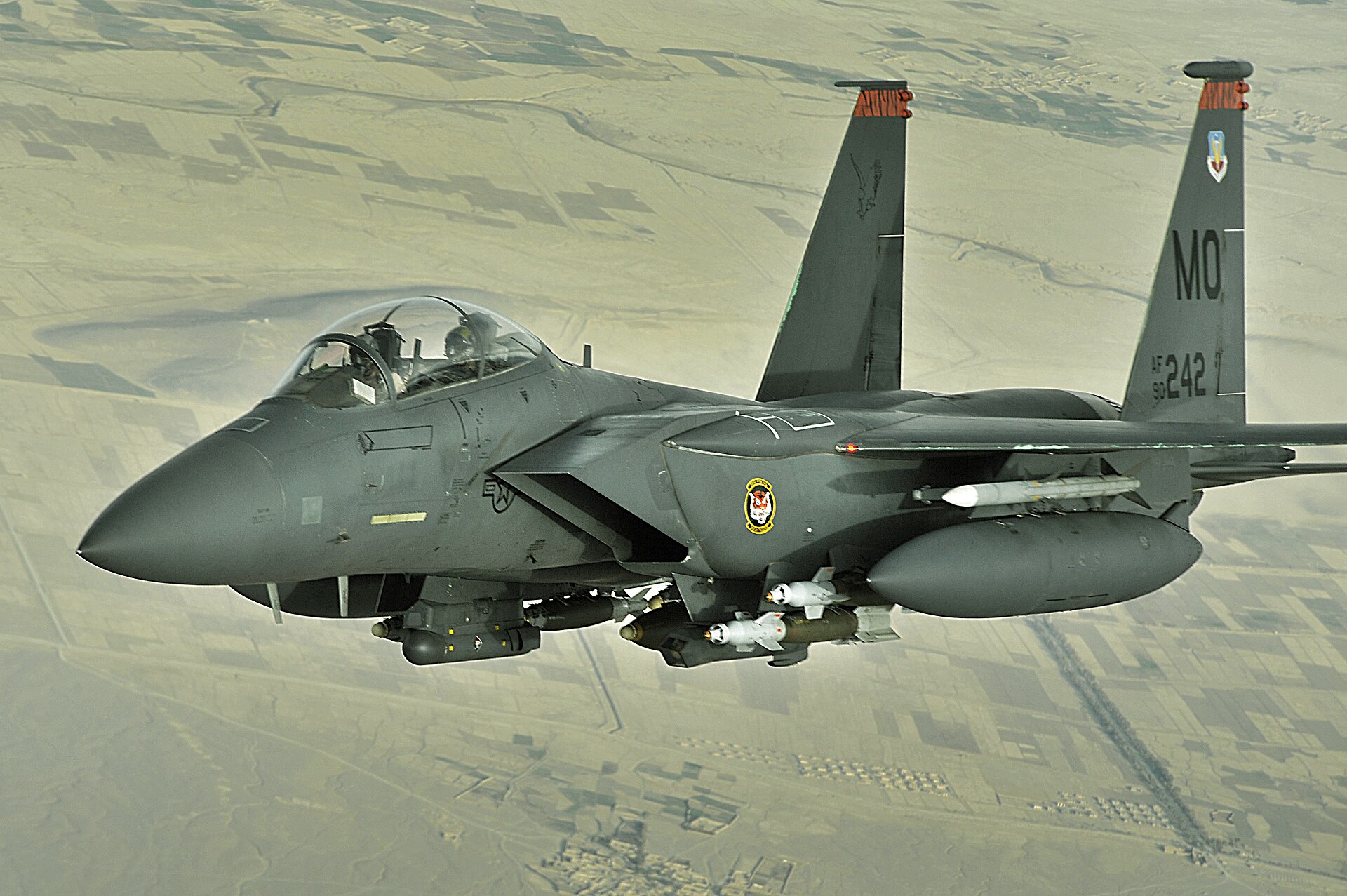
DHAHRAN — The United States struck more than 50 military targets on Kharg Island on April 7, the second systematic destruction of Iranian defense infrastructure on the island since February 28, while again leaving intact the oil terminal that handles approximately 90 percent of Iran’s crude exports and generates an estimated $139 million per day in revenue. A US official confirmed to NBC News that the strikes “did not involve oil assets.” The operation came roughly 12 hours before President Trump’s self-imposed 8pm ET deadline for Iran to accept a deal or face escalated consequences.
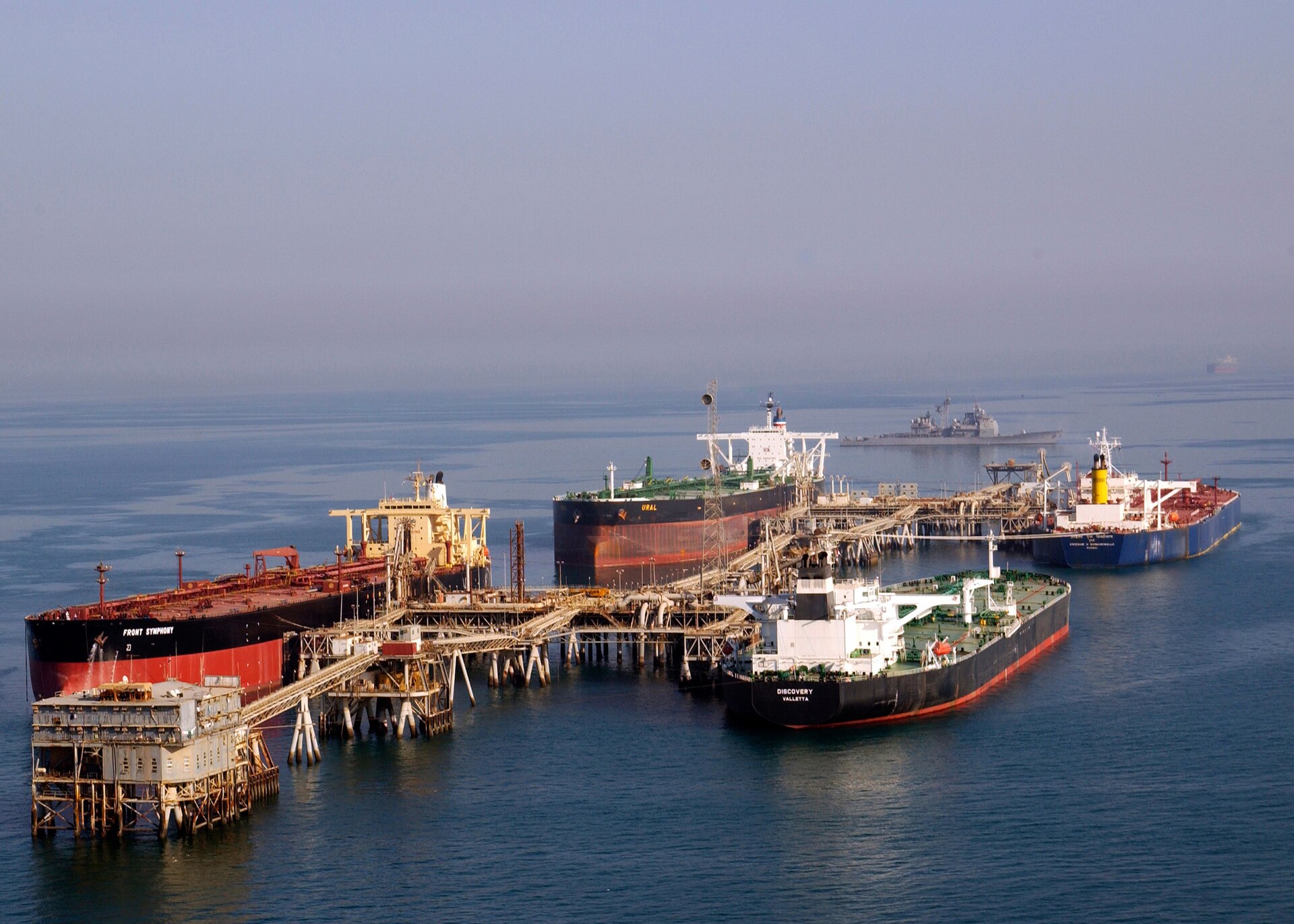
Satellite imagery published by TankerTrackers.com within hours of the strikes showed Kharg’s oil loading terminals “fully operational,” with a VLCC actively taking on cargo and smaller tankers queued nearby. The combined toll from both Kharg strikes — March 13 and April 7 — now exceeds 140 confirmed military installations destroyed, based on CENTCOM’s individual strike counts. The oil infrastructure sits untouched beside the wreckage. Iran’s semi-official Mehr News Agency, citing local sources, confirmed “no damage to critical oil infrastructure” — a rare point of agreement between Washington and Tehran on the same operational facts.
Table of Contents
- What Was Hit — and What Was Not
- The $139 Million-a-Day Revenue Stream Washington Left Standing
- Why Strike 12 Hours Before the Deadline?
- Kharg Under Fire Before: The 1984-1988 Tanker War
- How Has the IRGC Responded?
- Diplomatic Channels Go Dark
- What Happens if the Oil Terminal Is Next?
- Frequently Asked Questions
What Was Hit — and What Was Not
The US official who confirmed the operation to NBC News described the April 7 strikes as “re-strikes on what we hit previously” — a description that frames the attack as a second pass on targets that had been rebuilt, reinforced, or reconstituted since the March 13 operation. That earlier strike, led by CENTCOM under Admiral Brad Cooper, destroyed more than 90 military targets including what CENTCOM described as “naval mine storage facilities, missile storage bunkers, and multiple other military sites.”
Iran’s semi-official Fars News Agency, cited by CNN, reported that the April 7 targets included air defenses, a naval base, an airport control tower, and a helicopter hangar. Al-Monitor reported strikes on “bunkers, radar stations, and ammunition storage sites,” placing the attack at approximately 1:30 p.m. local time — 6:00 a.m. EST. Defense Secretary Pete Hegseth, in a statement released on April 7, said the day would see “the most fighters, the most bombers, the most strikes” since the war began, with “intelligence more refined and better than ever.”
CENTCOM has now systematically dismantled Kharg’s military defense infrastructure — air defenses, naval facilities, missile storage, command-and-control nodes — while preserving the loading arms, storage tanks, and deep-water berths that make the island Iran’s irreplaceable crude export hub. TankerTrackers’ satellite confirmation of a VLCC loading cargo post-strike on April 7 mirrors the same pattern documented after the March 13 strike.
The $139 Million-a-Day Revenue Stream Washington Left Standing
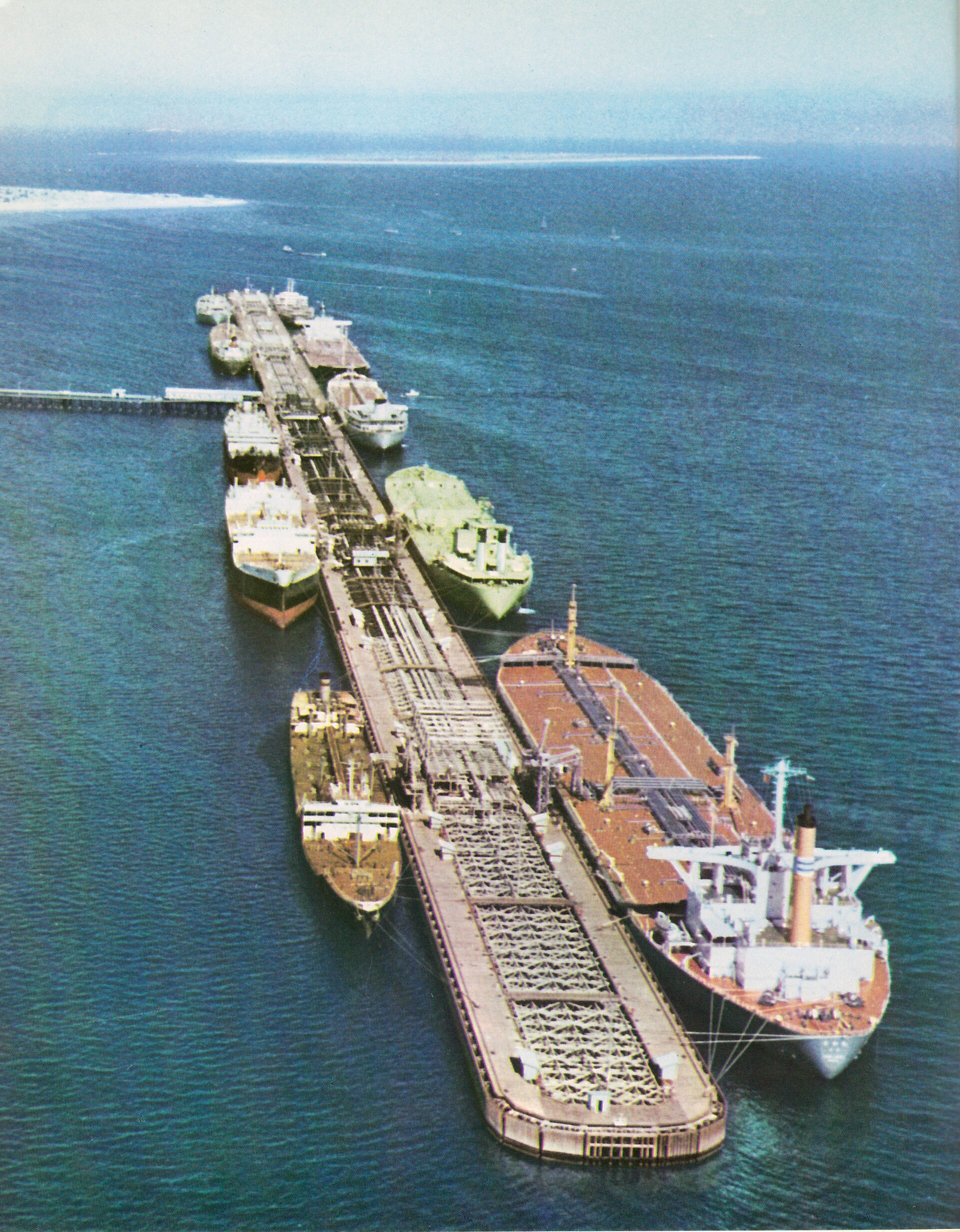
Kharg Island’s oil terminal has a design loading capacity of approximately 7 million barrels per day, with 31 million barrels of crude storage capacity. As of March 7, inventory stood at approximately 18 million barrels — 58 percent of capacity — according to commodity data firm Kpler. Current throughput runs at approximately 1.52 million barrels per day, representing 94 percent of Iran’s total crude export volume by Kpler’s vessel-tracking data. The remaining volumes move through the Jask terminal on the Gulf of Oman, which has an effective capacity of only about 0.3 million barrels per day against a theoretical 1.0 Mbd design — nowhere near sufficient to absorb Kharg volumes if the terminal were destroyed.
The revenue arithmetic is what makes the oil-sparing decision legible. Iran earned an estimated $139 million per day from crude exports in March 2026, up from approximately $115 million per day in February, according to Bloomberg. Export volumes held at approximately 1.6 million barrels per day from March 1 through 23. The war that shut down every other Gulf exporter’s access to the Strait of Hormuz paradoxically increased Iran’s pricing power: Iran’s crude discount to Brent narrowed from over $10 per barrel before the conflict to just $2.10 per barrel, Bloomberg reported on March 26 — because Iran became the only Gulf producer with unimpeded Hormuz transit.
A Council on Foreign Relations analysis published after the first Kharg strike articulated the preservation logic directly. “Once air power is used to take out export capacity on Kharg Island, that capability is going to be very hard to restore,” the CFR analyst wrote, “and if there is a different kind of government in Iran, one that the United States and others want to support, it will certainly need to have that export capacity, to have revenues to build itself.” The framing treats Kharg’s oil infrastructure as a post-conflict asset for a successor government — a calculation that only holds as long as the current government’s behavior doesn’t force Washington to change the equation.
| Kharg Island Metric | Figure | Source |
|---|---|---|
| Share of Iran crude exports | ~90% (94% by vessel tracking) | CFR; Kpler (March 16, 2026) |
| Design loading capacity | ~7 million barrels/day | Kpler; Britannica |
| Current throughput | ~1.52 million barrels/day | Kpler (March 16, 2026) |
| Storage capacity | ~31 million barrels | Kpler |
| Inventory (March 7) | ~18 million barrels (58% full) | Kpler |
| Iran daily oil revenue (March 2026) | ~$139 million/day | Bloomberg / OilPrice.com |
| Iran crude discount to Brent (March 26) | $2.10/bbl (down from $10+) | Bloomberg |
| Jask alternative capacity (effective) | ~0.3 million barrels/day | Kpler |
Why Strike 12 Hours Before the Deadline?
The April 7 Kharg strike landed approximately 12 hours before Trump’s 8pm ET deadline — a timeline that Al-Monitor was among the first to note. The sequencing is not incidental. Trump has spent the intervening weeks constructing a graduated threat architecture around Kharg’s oil infrastructure specifically. On March 13, after the first strike, he posted on Truth Social: “I have chosen NOT to wipe out the Oil Infrastructure on the Island… However, if Iran or anyone else interferes with the free and safe passage of ships through the Strait of Hormuz, I will immediately reconsider this decision.” On March 30, he escalated the language, threatening to “obliterate” Kharg’s oil hub if no deal was reached “shortly,” as reported by Euronews and Time.
The April 7 strike extends that architecture. By destroying another 50-plus military targets on the island while once more leaving the oil terminal intact, the operation demonstrates both the capacity to reach Kharg at will and the deliberateness of the decision to spare what remains. Trump, speaking the same day about Iran’s 10-point counter-proposal transmitted via Pakistan, called it “significant” but “not good enough,” Al Jazeera reported. He said it was “highly unlikely” he would extend the deadline. His language on Truth Social carried a different register entirely: “A whole civilization will die tonight, never to be brought back again,” he posted. He then added: “However, now that we have Complete and Total Regime Change… maybe something revolutionarily wonderful can happen,” per Al-Monitor’s reporting.
Hegseth’s April 7 statement confirmed the US and Israel have hit more than 15,000 enemy targets and destroyed more than 100 Iranian naval vessels since the war began, according to PBS News. The Kharg strikes are a subset of that campaign operating under a distinct logic: they degrade Iran’s ability to defend the island without degrading the thing on the island that Iran most needs to defend.
Kharg Under Fire Before: The 1984-1988 Tanker War
Kharg Island has been a military target before. In March 1984, Iraq began attacking the island with missile-armed aircraft, aiming to destroy Iran’s oil loading infrastructure and provoke Tehran into closing the Strait of Hormuz — a closure that would have drawn in the US Navy and internationalized the conflict in Baghdad’s favor. By 1986, Iraqi attacks on Kharg and on tankers loading there had nearly doubled in frequency. Iran responded by developing alternative export terminals at Lavan, Sirri, and Larak islands, dispersing its loading capacity southward and away from Iraqi air range.
The US intervention came in 1987 with Operation Earnest Will, the largest naval convoy operation since World War II, escorting reflagged Kuwaiti tankers through the strait. The Tanker War’s central lesson — that Kharg’s destruction forces Iran into inferior alternatives that reduce both volume and revenue — maps directly onto the current geography. The Jask terminal, Iran’s only operational bypass, is a remnant of the same dispersal logic that produced Lavan and Sirri four decades ago, scaled for a different war and still nowhere near sufficient to replace what Kharg moves.
How Has the IRGC Responded?
The IRGC’s public posture shifted markedly on April 7. In a statement carried by Tasnim News Agency, the IRGC declared: “Until now we have exercised significant restraint for the sake of good neighborliness and have taken precautions in selecting retaliatory targets, but from now on, all such precautions have been removed.” The statement, reported by NBC News and TRT World, included an explicit threat to Gulf energy infrastructure: allies of the US would be “deprived of oil and gas in the region for years” if “red lines” were crossed. The IRGC warned its response would “extend beyond the region.”
That language represents a departure from the IRGC’s prior operational posture. Since the war’s first weeks, Iran’s retaliatory strikes against Gulf state infrastructure — including the Ras Tanura terminal hit on March 2 and the sustained barrage against Saudi Arabia’s Eastern Province — were framed as calibrated responses to specific provocations. The April 7 Tasnim statement removes that framing. It reads as a pre-commitment to unconstrained targeting of regional energy infrastructure, timed to the hours before Trump’s deadline.
Inside Iran, the response took a different form. Alireza Rahimi, an Iranian official, appeared in a video message calling on “all young people, athletes, artists, students and university professors” to form human chains around power plants, France 24 and CBS News reported. The appeal followed Trump’s earlier threat — posted on Truth Social as “Power Plant Day and Bridge Day” — that Iranian bridges and power infrastructure would be targeted. On April 7, Israeli Prime Minister Netanyahu confirmed strikes on bridges and railways across Iran, citing IRGC use of that infrastructure to “transport weapons and military equipment,” the Jerusalem Post reported. Two people were killed at the Yahya Abad railway bridge in Kashan. All trains to and from Mashhad were cancelled, per Al Jazeera and Haaretz.
The IRGC’s denial pattern continued in parallel. After the March 13 strike, the IRGC denied that military facilities on Kharg had been hit — a claim contradicted by CENTCOM’s own damage assessment and satellite imagery. Mehr News Agency’s April 7 framing — “the situation on Kharg Island is under control” — minimized without denying, a subtle shift from outright rejection of the operational facts.
Diplomatic Channels Go Dark
Iran severed all diplomatic and indirect communication channels with the United States on April 7, China Daily and Republic World reported. The Pakistan-mediated track — which had produced the 10-point counter-proposal Trump called “significant but not good enough” — was frozen. Iran’s state news agency IRNA published the substance of the counter-proposal: a permanent ceasefire rather than the 45-day phased framework Washington had been working through intermediaries; full lifting of sanctions; reconstruction of Iranian sites damaged by US-Israeli strikes; a new mechanism to govern Hormuz passage; an end to Israeli strikes on Hezbollah; and recognition of Iran’s right to enrich uranium under the Non-Proliferation Treaty.
The gap between the two positions is structural, not tactical. The 45-day ceasefire framework — reported by Axios and The National in early April with four-source attribution — deferred Hormuz and Iran’s nuclear enrichment program to a second phase. Iran’s counter-proposal pulls those issues into the preconditions for any pause at all. Iranian state media framed any temporary cessation as a trap, arguing it would allow the US and Israel “time to regroup and launch renewed attacks.” With the mediator track frozen and the deadline hours away, the diplomatic space between the two frameworks had effectively collapsed.
What Happens if the Oil Terminal Is Next?
The arithmetic of destruction, should Washington decide to cross the line it has twice declined to cross, is straightforward. The gap between Kharg’s throughput and what Jask can absorb — approximately 1.2 million barrels per day — has no operational substitute. Iran’s revenue from crude exports, already elevated by its monopoly on unimpeded Hormuz transit, would collapse: the fiscal impact would exceed $100 million daily even under optimistic Jask-substitution scenarios.
The reconstruction timeline compounds the problem. Deep-water loading berths, VLCC-capable jetties, and the island’s storage tank infrastructure are not field-repairable — CFR’s post-March 13 analysis warned that restoring destroyed export capacity would be the work of years, not months, and that the loss would fall hardest on any successor government attempting to fund itself. The 1984-1988 Tanker War precedent confirms it: Iraqi strikes on Kharg forced Iran into a years-long dispersal program that never fully replaced the island’s capacity. The East-West Pipeline bypass that Saudi Arabia has activated through Yanbu — routing 7 million barrels per day around Hormuz — has no Iranian equivalent.
The IRGC’s April 7 threat to deprive regional allies of oil and gas “for years” is the mirror image. Both sides have now placed Gulf oil infrastructure into the active threat matrix. Saudi Arabia’s own PAC-3 MSE interceptor stockpile, already depleted to approximately 400 rounds after 894 intercepts since March 3, would face an IRGC operating without self-imposed constraints on target selection. The next hours will determine whether Kharg’s oil terminal remains a preserved asset or becomes a target — and whether the IRGC’s removal of “all precautions” translates into operational action against the Gulf energy infrastructure it has now explicitly threatened.
Frequently Asked Questions
How many times has the US struck Kharg Island during the current conflict?
Twice. The first strike, on March 13, 2026, destroyed more than 90 military targets including naval mine storage facilities and missile storage bunkers, according to CENTCOM. The second strike, on April 7, hit more than 50 military targets that a US official described to NBC News as “re-strikes on what we hit previously.” In both cases, oil export infrastructure was deliberately left intact. Admiral Brad Cooper, CENTCOM commander, led the March 13 briefing and described the campaign as aimed at “eliminating Iran’s ballistic missiles, drones and naval threats and dismantling the country’s defense industrial base.”
Could Iran reroute its oil exports if Kharg were destroyed?
Not at meaningful scale. The Jask terminal on the Gulf of Oman — Iran’s only operational alternative — has an effective throughput of approximately 0.3 million barrels per day, per Kpler data, against a theoretical design capacity of 1.0 Mbd. Kharg’s current throughput of 1.52 Mbd means Jask could absorb roughly 20 percent of displaced volume at best. During the 1984-1988 Tanker War, Iraq’s attacks on Kharg forced Iran to develop alternative terminals at Lavan, Sirri, and Larak islands — a dispersal effort that took years and never matched Kharg’s original capacity.
Why did Iran’s oil revenue increase during the war?
Iran’s Hormuz blockade shut down exports from Saudi Arabia, the UAE, Kuwait, Qatar, and other Gulf producers that depend on the strait, while Iran’s own crude continued to transit — making Iran the only Gulf exporter with unimpeded Hormuz access. The supply disruption compressed Iran’s crude discount to Brent from over $10 per barrel before the conflict to $2.10 per barrel by March 26, Bloomberg reported. Higher realized prices on sustained volumes of approximately 1.6 million barrels per day produced the $139 million daily revenue figure for March 2026.
What is Trump’s stated condition for striking Kharg’s oil infrastructure?
Trump established the condition on Truth Social following the March 13 strike: “I have chosen NOT to wipe out the Oil Infrastructure on the Island… However, if Iran or anyone else interferes with the free and safe passage of ships through the Strait of Hormuz, I will immediately reconsider this decision,” CNBC reported. He escalated on March 30, threatening to “obliterate” Kharg’s oil hub if no deal came “shortly,” per Euronews. On April 7, he called Iran’s 10-point counter-proposal “not good enough” and said extending the deadline was “highly unlikely.”
What does the IRGC’s “restraint removed” declaration mean for Gulf oil producers?
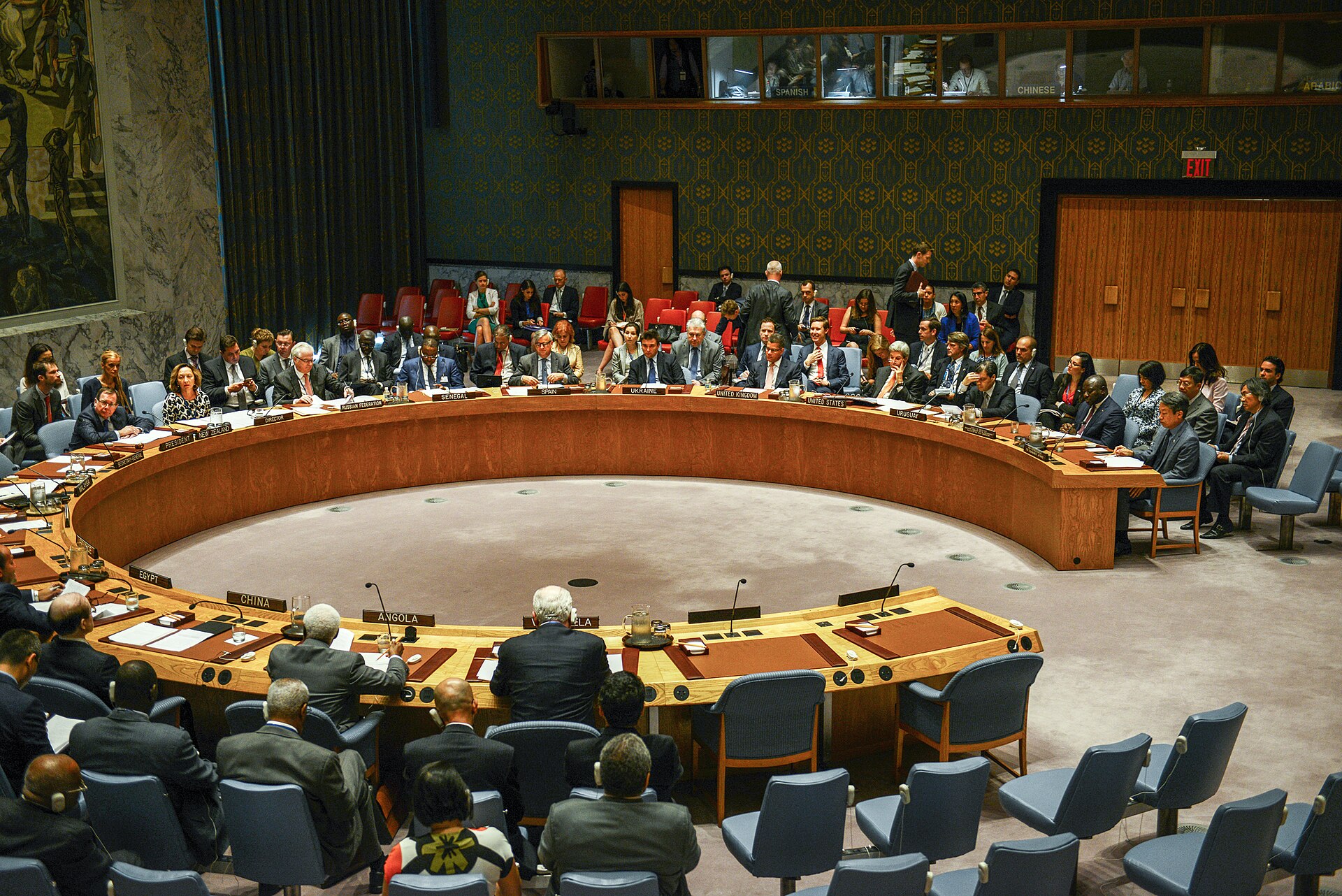
The April 7 Tasnim News Agency statement declared that “all such precautions have been removed” from IRGC target selection, with an explicit warning that US allies would be “deprived of oil and gas in the region for years.” The IRGC counter-target list, portions of which have been published by Fars News Agency during the conflict, includes Gulf state energy infrastructure and transportation links such as the King Fahd Causeway. Saudi Arabia’s Eastern Province oil facilities — including Ras Tanura, already struck on March 2 — and petrochemical complexes in Jubail fall within the declared threat envelope. Iran has maintained an estimated 50 percent of its pre-war missile and drone arsenal, according to defense analysts cited in prior CENTCOM briefings. The legal and diplomatic architecture this action operates within was finalized hours earlier when Russia and China vetoed the UNSC Hormuz resolution 11–2, exhausting all multilateral remedies and activating Saudi Arabia’s Article 51 collective self-defense framework as the only operative international law basis for coalition action in the Gulf.