
RIYADH — Fifty-one years ago today, a nephew’s bullet ended the life of the king who turned petroleum into a geopolitical weapon. On March 25, 1975, King Faisal bin Abdulaziz Al Saud was assassinated during a royal majlis in Riyadh, leaving behind an oil-powered kingdom that would reshape the global economy for half a century. In 2026, that same oil weapon is aimed squarely at his heirs. Iran’s drone and missile campaign against Saudi energy infrastructure, combined with the effective closure of the Strait of Hormuz, has produced an irony that Faisal never anticipated: the kingdom that invented the oil embargo is now its most prominent victim.
The parallels run deeper than geography. In 1973, Faisal withheld five million barrels a day from world markets, quadrupling prices and triggering the worst economic crisis since the Great Depression. In 2026, Iran has cut roughly 15 million barrels a day of Gulf exports by mining, blockading, and terrorizing the same maritime corridor. The price of Brent crude stood at $102 per barrel on March 24 — a war premium that enriches no one, because the oil Saudi Arabia produces cannot reach the customers willing to pay for it. Where Faisal wielded scarcity as leverage, Mohammed bin Salman confronts a scarcity imposed upon him. The oil weapon has reversed polarity, and the anniversary of the assassination that created modern Saudi Arabia lands on the same week that war threatens to unmake it.
Table of Contents
- Who Was King Faisal and Why Does His Legacy Still Matter?
- The 1973 Oil Embargo That Remade the World
- The Bullet That Transferred Power
- How Did the Oil Weapon Turn Against Saudi Arabia?
- The Pipeline Faisal Built and the War It Now Serves
- The Oil Leverage Inversion Matrix
- What Would King Faisal Make of MBS’s Predicament?
- The Contrarian Case — Oil Was Always a Double-Edged Sword
- Does the Assassination Still Shape Saudi Succession?
- Can Saudi Arabia Survive Without the Strait Faisal’s Oil Built?
- Two Oil Shocks, Fifty Years Apart
- Frequently Asked Questions
Who Was King Faisal and Why Does His Legacy Still Matter?
King Faisal bin Abdulaziz Al Saud ruled Saudi Arabia from 1964 until his assassination in 1975 and remains the most consequential monarch in the kingdom’s modern history. He transformed a desert kingdom reliant on Hajj pilgrimage revenues into the world’s swing oil producer, founded OPEC in 1960, introduced public education for women, abolished slavery in 1962, and launched Saudi Arabia’s first five-year economic development plan in 1970. TIME magazine named him Man of the Year in 1974 — not as a compliment, but as acknowledgment that one man had redrawn the global economic order.
Faisal’s significance in March 2026 is not merely historical. The infrastructure he built — the East-West Petroline, the port of Yanbu, the administrative apparatus of OPEC, the alliance architecture with Washington — forms the backbone of Saudi Arabia’s wartime survival strategy. When Crown Prince Mohammed bin Salman activated the Petroline to full capacity on March 11, 2026, routing four million barrels a day away from the Strait of Hormuz and toward the Red Sea, he was running oil through pipes that Faisal’s government commissioned. The king who weaponized oil inadvertently built the escape route his great-nephew now needs.
Faisal also bequeathed a more troubling inheritance. By demonstrating that oil could function as a coercive instrument, he established a template that adversaries would eventually adopt. The Islamic Revolutionary Guard Corps did not invent the concept of energy disruption — it merely studied the man who did.
The 1973 Oil Embargo That Remade the World
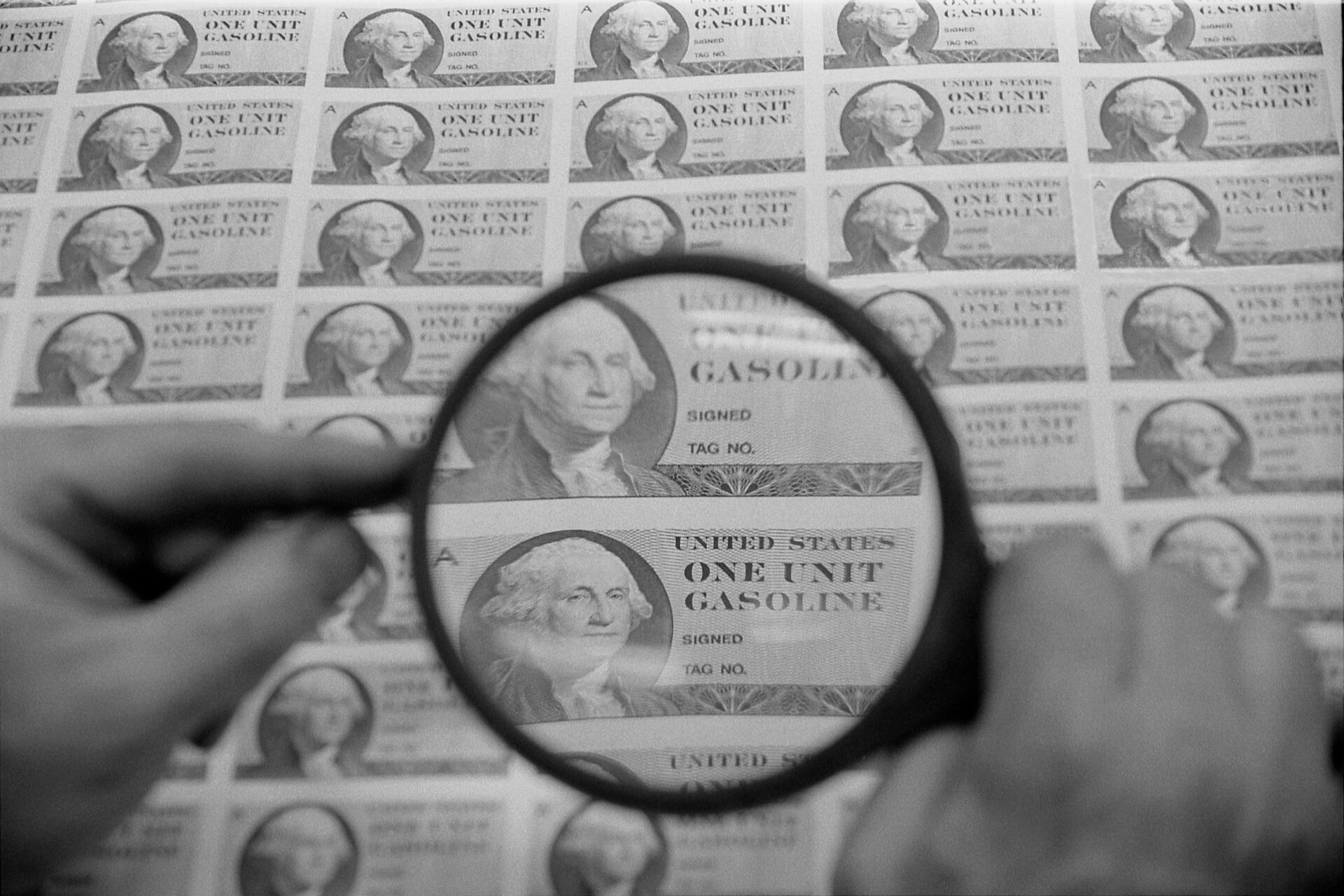
The Arab oil embargo of October 1973 remains the single most consequential use of energy as a geopolitical weapon. In a meeting at the Sheraton Hotel in Kuwait City on October 17, 1973, Arab OPEC members voted to cut production by five percent per month and embargo all oil shipments to the United States and the Netherlands — punishment for their support of Israel during the Yom Kippur War. King Faisal had secretly coordinated the strategy with Egyptian President Anwar Sadat months earlier, transforming what diplomats expected to be a limited military campaign into a global economic crisis.
The price of crude oil rose from $3.01 per barrel before the embargo to $5.12 per barrel on October 16, then to $11.65 by December 1973, according to OPEC conference records. In six months, oil had quadrupled. The American Treasury Department estimated that US gross national product fell by $10 to $20 billion and half a million Americans lost their jobs. Western European nations and Japan, which depended on OPEC for 45 to 50 percent of their oil, suffered proportionally worse. Britain imposed a three-day work week. France banned Sunday driving. Japan’s economic miracle stuttered for the first time since 1945.
Saudi revenue surged. The kingdom’s GDP grew from approximately $15 billion in 1973 to $184 billion by 1981, according to International Monetary Fund data. The flood of petrodollars financed the infrastructure — hospitals, universities, highways, airports, military bases — that Saudi Arabia still relies upon today. Faisal channelled oil wealth into national development with a discipline that his predecessor, the profligate King Saud, had conspicuously lacked.
The embargo also reshaped the global energy map in ways that would constrain Faisal’s successors. The International Energy Agency was created in 1974 specifically to coordinate Western responses to future supply disruptions. The United States began building the Strategic Petroleum Reserve, now holding 395 million barrels. North Sea and Alaskan oil development accelerated, driven by prices that suddenly justified the cost of drilling in hostile environments. Every barrel that flowed from Prudhoe Bay or the Brent field was a barrel that would never generate Saudi revenue. The oil weapon worked brilliantly once — and ensured it could never work the same way again.
The Bullet That Transferred Power
On March 25, 1975, King Faisal held his customary majlis at the Royal Diwan in Riyadh to receive guests and petitioners. Among the visitors was his nephew, Prince Faisal bin Musaid, who had joined a Kuwaiti diplomatic delegation. As the king leaned forward to receive his nephew’s greeting — expecting the traditional kiss on the forehead — the prince drew a revolver from beneath his thawb and fired two shots into the king’s head. Saudi television cameras captured the aftermath. Surgeons at the Central Hospital could not save him.
The assassin’s motives have never been established with certainty. Prince Faisal bin Musaid’s older brother, Prince Khaled, had been shot dead by police in 1965 while leading an assault on the new television station that King Faisal had established — a modernisation project that ultraconservatives considered an affront to Islam. Some accounts suggest personal grievances: the prince had reportedly complained that his monthly royal stipend of $3,500 was insufficient, and he was scheduled to marry a daughter of the deposed King Saud that same week. A Saudi sharia court found him guilty and he was publicly beheaded on June 18, 1975.
Power transferred immediately to Crown Prince Khalid bin Abdulaziz, but the real authority passed to Prince Fahd, who served as first deputy prime minister and effectively ran the government. The succession was smooth — a consequence of the structures Faisal himself had put in place. He had deposed his own brother, King Saud, in 1964 through a family consensus process that established a precedent still invoked in the House of Saud. The assassination proved that the Al Saud system could absorb a violent shock without fracturing. That resilience is being tested again in 2026, not by a nephew’s revolver but by a regional war.
How Did the Oil Weapon Turn Against Saudi Arabia?
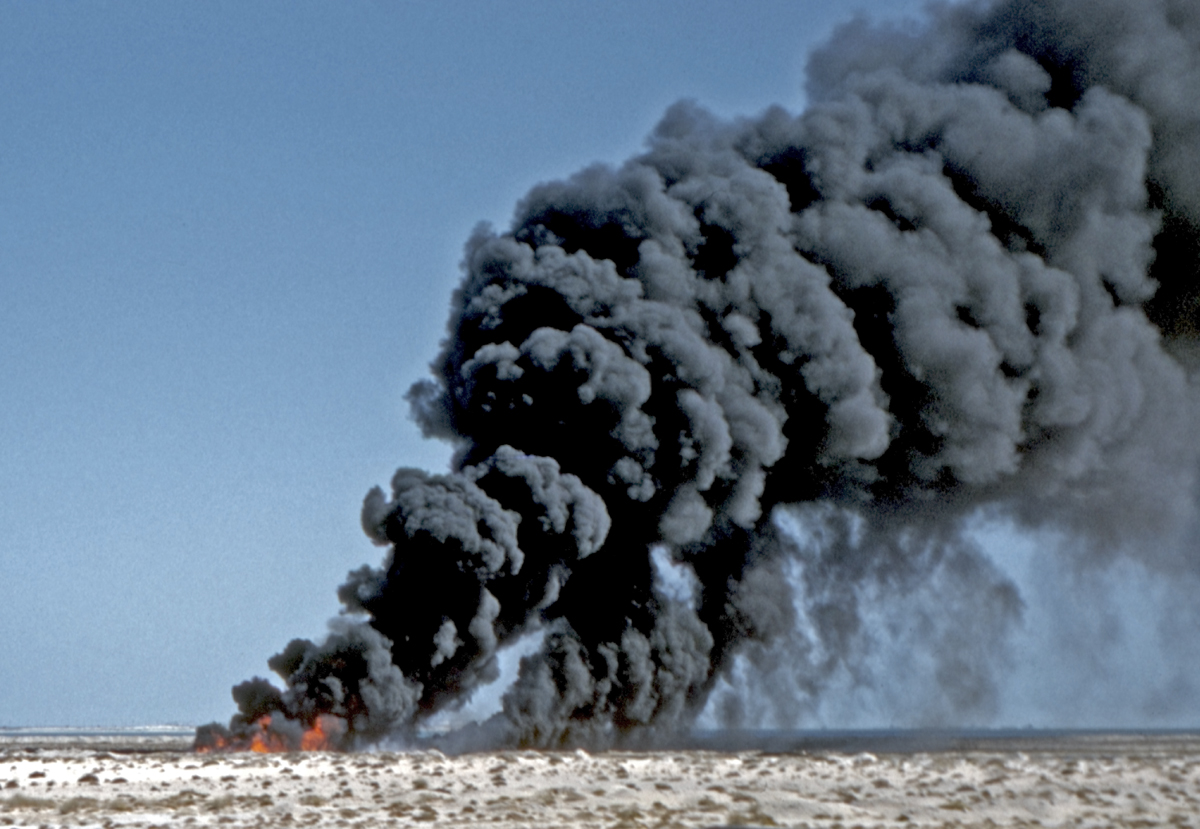
The concept is disarmingly simple: in 1973, Saudi Arabia denied oil to the world; in 2026, the world’s oil is being denied to Saudi Arabia’s customers. Iran’s closure of the Strait of Hormuz — through a combination of naval mines, anti-ship missiles, drone attacks, and the threat of further escalation — has reduced transit through the waterway by 95 percent since the war began on February 28, according to shipping analytics firm Vortexa. Daily vessel passages fell from approximately 130 before the crisis to single digits within the first two weeks.
The mechanism differs from Faisal’s embargo, but the economic effect mirrors it. Roughly 20 million barrels per day flowed through Hormuz before the war, representing approximately 20 percent of global petroleum consumption. Iran’s Islamic Revolutionary Guard Corps has made 21 confirmed attacks on merchant vessels as of March 12, according to the US Naval Forces Central Command. Major container lines — Maersk, CMA CGM, Hapag-Lloyd — suspended all transits within the first week. War-risk insurance premiums for vessels entering the Persian Gulf exceeded ten percent of hull value, making passage economically prohibitive even where it remained physically possible.
Saudi Arabia, which exported 5.5 million barrels per day through Hormuz in 2024 — representing 38 percent of the strait’s total crude flow, according to the US Energy Information Administration — has been forced to reroute its entire export operation to the Red Sea coast. The Petroline carries roughly 4.19 million barrels daily to the port of Yanbu, but that still leaves over a million barrels stranded. Kuwait, Iraq, Qatar, and the UAE face even worse constraints, lacking comparable bypass infrastructure.
The irony compounds when one considers the strategic logic. Faisal used the oil weapon to coerce nations into changing their foreign policy toward Israel. Iran is using the Hormuz weapon to coerce the United States and its Gulf allies into stopping military operations. In both cases, the wielder bet that the world’s dependence on Gulf petroleum would prove more powerful than any military response. Faisal won that bet in 1973. Whether Iran wins it in 2026 remains the defining question of the war.
The Pipeline Faisal Built and the War It Now Serves
The East-West Crude Oil Pipeline — known as the Petroline — stretches approximately 750 miles from the Abqaiq processing facility on the Persian Gulf coast to the port of Yanbu on the Red Sea. Saudi Aramco commissioned the first phase in 1981, but the strategic rationale was born during Faisal’s reign. The king understood, even as he wielded the oil embargo, that any waterway chokepoint represented a vulnerability. The Petroline was the insurance policy.
For decades, the pipeline operated well below its theoretical maximum capacity of seven million barrels per day. Most Saudi crude continued to flow eastward through Hormuz, where tanker routes to Asia offered the shortest and cheapest passage. On March 11, 2026 — eleven days after the Iranian blockade began — Saudi Aramco activated the Petroline and its accompanying natural gas liquids pipelines to full crude-carrying capacity, according to Bloomberg tracking data. Within a week, Yanbu was loading roughly 4.19 million barrels daily onto tankers bound for Europe, Africa, and the Americas via the Red Sea and Suez Canal.
The Petroline has saved Saudi Arabia from complete export paralysis. Without it, the kingdom would have joined Kuwait and Iraq in the humiliating position of producing oil it cannot sell. But the pipeline also reveals the limits of Faisal’s foresight. Its seven-million-barrel ceiling falls short of Saudi Arabia’s pre-war export volume of approximately ten million barrels per day. The remaining three million barrels — roughly $300 million in lost daily revenue at current prices — represents the gap between strategic planning and the scale of the current crisis.
The pipeline is also not invulnerable. Iran’s drone strike on the Red Sea port of Yanbu on March 20 demonstrated that the bypass route is within reach of Iranian weapons. Saudi Arabia’s trillion-dollar Public Investment Fund has already begun redirecting capital from megaprojects toward food security and strategic reserves — a tacit acknowledgment that even the Petroline may not guarantee economic stability if the war drags on.
The Oil Leverage Inversion Matrix
To understand how the oil weapon has reversed, it helps to map the structural parallels between 1973 and 2026 across five dimensions: the wielder, the mechanism, the target, the objective, and the countermeasure.
| Dimension | 1973 Embargo | 2026 Hormuz Blockade | Inversion |
|---|---|---|---|
| Wielder | Saudi Arabia (King Faisal) | Iran (IRGC) | Producer becomes victim |
| Mechanism | Production cut + export ban | Maritime blockade + drone strikes | Supply-side to transit-side |
| Target | US, Netherlands, Western consumers | Saudi Arabia, UAE, Gulf producers | Consumer to producer |
| Oil price effect | $3 to $12/barrel (4x increase) | $73 to $102/barrel (1.4x and rising) | Embargo was more disruptive |
| Volume removed | ~5 million barrels/day | ~15 million barrels/day | Blockade removes 3x more |
| Duration | 5 months (Oct 1973 – Mar 1974) | 25+ days and counting | Blockade duration uncertain |
| Objective | Change US policy on Israel | Stop US/Israel military operations | Both use oil to constrain the US |
| Countermeasure | IEA creation, SPR, non-OPEC drilling | Petroline bypass, SPR releases, naval escorts | 50 years of preparation, still inadequate |
| Revenue impact on wielder | Massive increase for Saudi Arabia | Revenue collapse for Iran | Wielder’s economics reversed |
| Successor state of oil power | Saudi Arabia became global swing producer | Saudi Arabia may lose that role | Power eroding in both directions |
The matrix reveals a paradox at the heart of the oil weapon: it punishes the wielder almost as severely as the target. Faisal’s embargo raised Saudi revenues in the short term but accelerated the very diversification that eventually reduced OPEC’s market share from 55 percent in 1973 to 35 percent by 2024, according to the International Energy Agency. Iran’s Hormuz blockade has not raised Iranian revenues at all — quite the opposite, as US and Israeli strikes have devastated Iranian energy infrastructure — but it may accelerate the same global pivot away from Gulf oil that Faisal’s embargo initiated.
The most revealing column is the last. In both cases, the oil weapon creates the political will and economic incentive for the world to find alternatives. Faisal’s embargo gave birth to North Sea oil, Alaskan drilling, Japanese fuel efficiency, and the International Energy Agency. The 2026 Hormuz crisis is already accelerating investment in renewable energy, strategic petroleum reserve expansion, and pipeline projects that bypass the Gulf entirely. The oil weapon, regardless of who fires it, always recoils.
What Would King Faisal Make of MBS’s Predicament?
The contrast between the two men’s circumstances is more instructive than their personal differences. Faisal ruled during an era of energy scarcity, when global demand for oil was growing at six percent annually and no viable alternatives existed. He held a monopoly position and exploited it. Mohammed bin Salman governs during an era of energy transition, when electric vehicles, solar panels, and battery storage are eroding petroleum’s structural dominance even as short-term demand remains high. MBS holds a powerful hand, but the game is changing.
Faisal used oil to punish adversaries. MBS has spent a decade trying to reduce his kingdom’s dependence on oil revenues through Vision 2030 — a $840 billion programme of economic diversification encompassing tourism, entertainment, technology, and megaprojects. The war has interrupted that transition at the worst possible moment. Foreign direct investment has frozen, according to the Middle East Insider. Luxury hotel bookings in the kingdom dropped 45 percent in the first two weeks of March 2026. The World Economic Forum postponed its Jeddah conference. NEOM construction contracts have been cancelled.
Yet MBS also inherits strengths from Faisal’s era. The Public Investment Fund holds assets exceeding $930 billion, giving the kingdom self-financing capacity that no other Gulf state possesses. The Petroline infrastructure — Faisal’s legacy — is keeping half of Saudi exports moving. And the diplomatic relationships that Faisal cultivated with Washington, however strained by decades of friction, are delivering tangible military support: Patriot and THAAD batteries defending Saudi cities, intelligence sharing that has enabled the interception of over 600 Iranian projectiles since the war began, and now access to King Fahd Air Base for US strike operations.
Faisal would likely recognise the predicament even if the weaponry would be alien to him. A king whose power rested on controlling the flow of oil faces a war in which controlling that flow has become the central strategic objective for both sides.
The Contrarian Case — Oil Was Always a Double-Edged Sword
The conventional narrative treats Faisal’s oil embargo as a masterstroke — a bold assertion of Arab sovereignty that forced the world’s most powerful nation to reconsider its Middle East policy. This reading is incomplete. The embargo was a Pyrrhic victory that set in motion the very forces now threatening Saudi Arabia’s economic model.
Consider the evidence. Before 1973, the world had no coordinated mechanism for responding to oil supply disruptions. The IEA did not exist. Strategic petroleum reserves were minimal. Non-OPEC production was economically marginal. Faisal’s embargo changed all of that. By demonstrating that oil could be weaponised, he provided the political justification for every subsequent effort to reduce dependence on Gulf petroleum.
The numbers tell the story. OPEC’s share of global oil production fell from 55 percent in 1973 to approximately 35 percent by 2024, according to IEA data. The United States, which imported 36 percent of its oil from OPEC nations in 1977, imported less than eight percent by 2023, thanks to the shale revolution that Faisal’s price shock ultimately financed — high oil prices made fracking economically viable decades later. Japan’s oil consumption per unit of GDP fell by 70 percent between 1973 and 2020, driven by fuel-efficiency standards that the embargo inspired.
The 2026 Hormuz blockade is accelerating the same dynamic. Reuters reported on March 18 that European Union energy ministers approved a $50 billion emergency package to fast-track renewable energy deployment, explicitly citing the Hormuz crisis as justification. India, which receives 60 percent of its crude imports through the strait, announced plans to double its strategic petroleum reserve capacity and accelerate domestic solar and nuclear programmes. The Baker Institute at Rice University warned in a March 2026 analysis that the Hormuz disruption could permanently reduce global oil demand growth by accelerating the energy transition by five to eight years.
Faisal’s real legacy, from this perspective, is not the oil weapon itself but the lesson it taught the world: any nation that builds its economy around a single commodity creates a target on its own back. The bullet that killed Faisal in 1975 was personal. The structural damage his oil embargo inflicted on OPEC’s market power was systemic — and irreversible.
Does the Assassination Still Shape Saudi Succession?
The assassination of King Faisal established two enduring principles in House of Saud governance that remain operative fifty-one years later. The first is that succession must be managed through institutional consensus rather than left to chance. Faisal himself had engineered the deposition of his brother King Saud in 1964, using a council of senior princes to legitimise the transfer of power without foreign intervention or military conflict. When his own death came violently and without warning, the system he built transferred power to Crown Prince Khalid within hours, with no public disorder and no rival claimants. Foreign embassies in Riyadh reported no troop movements, no arrests, and no disruption to oil production — a remarkable testament to the institutional machinery Faisal had constructed.
The second principle is less visible but equally consequential: internal threats to the royal family must be neutralised before they metastasise. The speed of Prince Faisal bin Musaid’s trial and execution — less than three months from assassination to beheading — sent an unmistakable message. Mohammed bin Salman’s 2017 anti-corruption purge at the Ritz-Carlton, in which over 200 princes, ministers, and businessmen were detained, drew on the same logic of pre-emptive consolidation that Faisal’s successors adopted after 1975.
MBS has gone further than any predecessor in concentrating power. He holds the positions of Crown Prince, Prime Minister, Chairman of the Council of Economic and Development Affairs, Chairman of the Public Investment Fund, and effective commander of the armed forces through his brother, Defence Minister Prince Khalid bin Salman. The succession, for the first time in Saudi history, is not a question of which brother comes next but of whether MBS’s line will hold across generations.
The war has reinforced this concentration. Emergency governance demands unified command, and MBS has demonstrated the capacity to make rapid decisions — opening King Fahd Air Base to US forces after initially refusing, expelling Iranian diplomats, redirecting PIF capital from megaprojects to strategic reserves. Whether this centralisation proves a strength or a vulnerability will depend on outcomes no one can yet predict. Faisal’s assassination proved that a single bullet could trigger a succession crisis if institutions were weak. The institutions MBS has built are stronger than anything that existed in 1975 — but they have never been tested by a shooting war.
The family dynamics are also instructive. Faisal’s assassin was a prince of the blood, a grandson of the kingdom’s founder. The threat came from within the royal house itself. MBS neutralised internal dissent early in his tenure through the 2017 Ritz-Carlton purge and the arrest of senior princes including his cousin Mohammed bin Nayef. The result is a succession line that faces no credible internal challenger — but also one that lacks the distributed power base that made the post-Faisal transition so seamless. If the war produces a crisis that demands consensus-building among princes, the infrastructure for that consensus may no longer exist.
Can Saudi Arabia Survive Without the Strait Faisal’s Oil Built?
Saudi Arabia’s survival is not in question. Its economic model, however, is. The kingdom possesses $930 billion in sovereign wealth, minimal external debt relative to GDP, and the physical infrastructure to export roughly seven million barrels per day through the Petroline bypass. These assets can sustain the war effort and the civilian economy for months, possibly years.
The deeper challenge is structural. Before the war, Saudi Arabia exported approximately ten million barrels per day and earned roughly $1 billion in daily oil revenue. The Hormuz blockade and Iranian strikes on eastern oil infrastructure have reduced effective exports to approximately 4.19 million barrels via Yanbu, according to Bloomberg data. Even at $102 per barrel, daily revenue has roughly halved. The kingdom is burning through reserves, delaying Vision 2030 projects, and cutting discretionary spending — all while financing an air defence campaign that consumes interceptors costing between $3 million and $15 million each against drones costing as little as $20,000.
| Metric | Pre-War (Feb 2026) | Current (March 25) | Deficit |
|---|---|---|---|
| Total crude exports | ~10M bpd | ~4.19M bpd | -5.81M bpd |
| Hormuz-routed exports | ~5.5M bpd | ~0 | -5.5M bpd |
| Petroline/Yanbu exports | ~2M bpd | ~4.19M bpd | +2.19M bpd |
| Petroline spare capacity | ~5M bpd | ~2.81M bpd | Declining |
| Estimated daily revenue | $1B+ | ~$430M | -$570M/day |
The financial arithmetic is sobering. A revenue deficit of roughly $570 million per day translates to approximately $17 billion per month in lost income. Even the $930 billion PIF cannot absorb that indefinitely. The kingdom’s fiscal breakeven oil price — the price at which government revenues match expenditures — was estimated at $96 per barrel for 2025 by the International Monetary Fund. With exports halved, the effective breakeven rises to nearly $200 per barrel — a price no market will pay when demand destruction is already underway.
Faisal’s generation did not face this calculus. In 1973, Saudi Arabia had negligible government expenditure, minimal public services, and no megaproject ambitions. The entire kingdom ran on a fraction of current costs. MBS governs a state with 35 million residents, a $340 billion annual budget, and commitments to projects ranging from NEOM to the 2034 World Cup that cannot be paused without enormous reputational damage.
Two Oil Shocks, Fifty Years Apart
The 1973 embargo and the 2026 Hormuz crisis are the bookends of the petroleum age. Between them lies the entire arc of oil’s rise and incipient decline as the world’s dominant energy source.
| Factor | 1973 Arab Oil Embargo | 2026 Hormuz Blockade |
|---|---|---|
| Trigger | Yom Kippur War / US support for Israel | US-Israel strikes on Iran / Khamenei assassination |
| Saudi role | Primary aggressor (wielder) | Primary victim (target) |
| Oil price before | $3.01/barrel | $73/barrel |
| Oil price peak | $11.65/barrel | $119/barrel |
| Percentage increase | 287% | 63% |
| Barrels removed from market | ~5M bpd | ~15M bpd |
| Duration | 5 months | 25+ days (ongoing) |
| US Strategic Petroleum Reserve | Did not exist | 395 million barrels |
| Alternative energy share | <1% of global energy | ~15% of global energy |
| OPEC market share | ~55% | ~35% |
| US oil imports from OPEC | ~36% (1977) | <8% (2025) |
| Long-term consequence | IEA created, diversification begins | Energy transition accelerates |
The most striking difference is scale. The 2026 crisis has removed three times as much oil from global markets as the 1973 embargo, yet the price increase has been proportionally much smaller — 63 percent versus 287 percent. The reason is precisely the infrastructure built in response to Faisal’s embargo: strategic reserves, diversified supply chains, alternative energy sources, and fuel-efficiency standards have all cushioned the blow. The world Faisal created by weaponising oil is better prepared for the weapon Iran is now using.
The Arab embargo 50 years ago weaponized oil to inflict economic trauma. The institutions created in response — the IEA, strategic reserves, energy diversification — are the reason the 2026 crisis, while devastating, has not produced the existential panic of 1973.
Baker Institute, Rice University, March 2026
But the 2026 crisis is inflicting different kinds of damage. The IEA chief warned on March 23 that the Gulf energy crisis already surpasses the 1970s oil shocks in terms of supply disruption volume. The Dallas Federal Reserve published analysis showing that the Hormuz closure is disrupting not just crude oil but fertiliser precursors, petrochemicals, and liquefied natural gas — supply chains that did not exist in 1973 and for which no strategic reserves exist. The UN warned of a “dire fertiliser shortage” threatening global food production.
The 1973 embargo ended when Faisal chose to lift it in March 1974, following Henry Kissinger’s shuttle diplomacy and Israel’s partial withdrawal from the Sinai. The critical distinction is agency: Faisal could turn the weapon off whenever the political calculus favoured doing so. The 2026 blockade will end only when either Iran is compelled to reopen Hormuz by military force or the warring parties reach a ceasefire. Neither outcome is imminent. Washington has sent Tehran fifteen conditions for peace; Tehran has rejected all of them. The oil weapon, once a tool of policy, has become a feature of war — and wars do not end on schedule.
Frequently Asked Questions
Who assassinated King Faisal and when did it happen?
King Faisal bin Abdulaziz Al Saud was assassinated on March 25, 1975, at the Royal Diwan in Riyadh by his nephew Prince Faisal bin Musaid. The prince shot the king twice in the head during a receiving ceremony. He was found guilty by a sharia court and publicly beheaded on June 18, 1975 — less than three months after the killing.
What was the 1973 Arab oil embargo and how much did it raise oil prices?
The 1973 Arab oil embargo was a coordinated production cut and export ban imposed by Arab OPEC members on October 17, 1973, during the Yom Kippur War. Led by King Faisal, the embargo targeted the United States and other nations supporting Israel. Oil prices rose from $3.01 per barrel to $11.65 by December 1973 — a nearly fourfold increase that triggered a global recession and fuel rationing across the Western world.
How is Iran’s Hormuz blockade similar to Faisal’s oil embargo?
Both crises weaponise oil supply to coerce geopolitical adversaries. Faisal withheld Saudi production to change US policy on Israel; Iran has blocked the Strait of Hormuz to pressure the US into halting military operations. The 2026 blockade removes approximately 15 million barrels per day from global markets compared to five million in 1973, making it larger in scale though proportionally less disruptive due to decades of energy diversification.
What is the Petroline and why is it important in the 2026 Iran war?
The East-West Crude Oil Pipeline, or Petroline, is a 750-mile pipeline system running from Abqaiq in eastern Saudi Arabia to the Red Sea port of Yanbu. Commissioned in 1981 as a Hormuz bypass, it was activated to full capacity on March 11, 2026, carrying approximately 4.19 million barrels per day. The pipeline is Saudi Arabia’s primary tool for maintaining oil exports while the Strait of Hormuz remains effectively closed to commercial traffic.
Did King Faisal’s oil weapon ultimately hurt Saudi Arabia?
The embargo generated enormous short-term revenue and political leverage but triggered structural changes that permanently reduced OPEC’s market power. The IEA was created in direct response, strategic petroleum reserves were built, and non-OPEC production from the North Sea and Alaska was accelerated. OPEC’s share of global output fell from 55 percent in 1973 to 35 percent by 2024. The oil weapon worked once and ensured it could never work the same way again — a lesson Iran may be learning in 2026.
How does King Faisal’s legacy connect to MBS and Vision 2030?
Faisal built the oil infrastructure and wealth that Saudi Arabia still depends upon, while MBS is attempting to reduce that dependence through Vision 2030’s $840 billion economic diversification programme. The 2026 Iran war has interrupted Vision 2030 at a critical moment, with foreign investment frozen and megaproject contracts cancelled, but the PIF’s $930 billion in assets — wealth ultimately traceable to Faisal’s oil revolution — provides the financial runway MBS needs to sustain both the war effort and the reform agenda.