
KUWAIT CITY — Kuwait closed its airspace, slashed oil production, and declared force majeure on petroleum exports after Iranian drone strikes damaged fuel storage tanks at Kuwait International Airport and killed six American service members at a nearby military installation, marking the most severe escalation of the Iran war on Kuwaiti territory since hostilities began on February 28. The small Gulf state, which hosts approximately 13,500 American troops across multiple military installations, intercepted six additional drones on Tuesday as the conflict entered its eleventh day.
The strikes have transformed Kuwait from a peripheral player in the US-Iran confrontation into one of its most exposed frontline states. Kuwait Petroleum Corporation, the country’s national oil company, confirmed precautionary production cuts beginning at approximately 100,000 barrels per day, with reductions expected to nearly triple as storage capacity across the Persian Gulf fills and tanker traffic through the Strait of Hormuz remains paralysed. For Saudi Arabia, Kuwait’s crisis compounds an already strained regional security architecture and threatens OPEC’s ability to respond to the worst energy supply disruption since the 1973 Arab oil embargo.
Table of Contents
- What Happened at Kuwait International Airport?
- Six American Soldiers Killed at Port Shuaiba
- Why Did Kuwait Cut Oil Production?
- Kuwait’s Air Defense Intercepts Ballistic Missiles and Drone Swarms
- How Does Kuwait’s Crisis Affect Saudi Arabia and the GCC?
- The GCC Collective Defense Framework Faces Its First Real Test
- Why Did Kuwait Shut Its Airspace?
- Kuwait and Iran’s Decades of Tension
- Frequently Asked Questions
What Happened at Kuwait International Airport?
Two Iranian drones struck fuel storage tanks operated by Kuwait Aviation Fuelling Company (Kafco) at Kuwait International Airport on the morning of March 8, according to Kuwait’s Ministry of Defence. The attack ignited a fire at the facility that required several hours to contain, though Kuwaiti authorities reported no significant casualties at the airport site itself.
Kafco operates as the sole jet fuel supplier for Kuwait International Airport, providing more than one billion litres per year — approximately 17,000 barrels per day — of aviation fuel to commercial airlines, military flights, and government agencies, according to Argus Media. The strike on the fuel depot represented a deliberate targeting of civilian aviation infrastructure, a significant escalation from Iran’s earlier attacks on military installations and energy facilities across the Gulf.
Kuwait’s armed forces said air defences had intercepted three ballistic missiles that entered the country’s airspace during the same wave of attacks, and responded to multiple drones, including those that penetrated defences to strike the airport fuel tanks. The Defence Ministry described the attack as “a direct targeting of vital infrastructure” in a statement carried by the official Kuwait News Agency (KUNA).

The airport briefly suspended operations following the attack before resuming limited services. However, Kuwait’s General Directorate of Civil Aviation subsequently closed Kuwaiti airspace entirely, with flight-tracking service Flightradar24 reporting that the closure was set to expire at 1600 UTC on March 10. No commercial flights operated to or from Kuwait during the closure period, according to Anadolu Agency, with Kuwait Airways suspending all services.
The attack on Kuwait International Airport followed similar Iranian strikes on civilian infrastructure across the Gulf, including damage to aviation facilities in Bahrain and drone impacts on residential areas in Saudi Arabia. Asharq Al-Awsat reported that loud explosions were also heard over Doha, Qatar, during the same wave of attacks.
Six American Soldiers Killed at Port Shuaiba
The deadliest single attack on Kuwait occurred on March 1, the first day of Iranian retaliatory strikes, when an Iranian drone struck a Tactical Operations Centre at Port Shuaiba, killing six American service members. The soldiers — Captain Cody A. Khork, 35; Sergeant First Class Noah L. Tietjens, 42; Sergeant First Class Nicole M. Amor, 39; Specialist Declan J. Coady, 20; Major Jeffrey O’Brien, 45; and Chief Warrant Officer Robert Marzan — had relocated from Camp Arifjan to the port facility in an attempt to disperse and reduce their vulnerability to incoming strikes, according to a Washington Post investigation.
The operations centre was housed in what the Washington Post described as a “triple wide trailer” surrounded by concrete barriers designed to protect against car bombs and improvised explosive devices, but with no overhead protection against drones or missiles. The facility sat within a civilian port approximately ten miles from Camp Arifjan, surrounded by oil storage tanks, refineries, and a power plant.
A memo from US Army Central Command, obtained by CBS News, indicated that Iranian intelligence had likely been monitoring the movements of American troops in Kuwait before the strike. The surveillance suggested Iran had conducted targeting reconnaissance on US positions outside the main military compounds, exploiting the dispersal strategy that was intended to protect them.
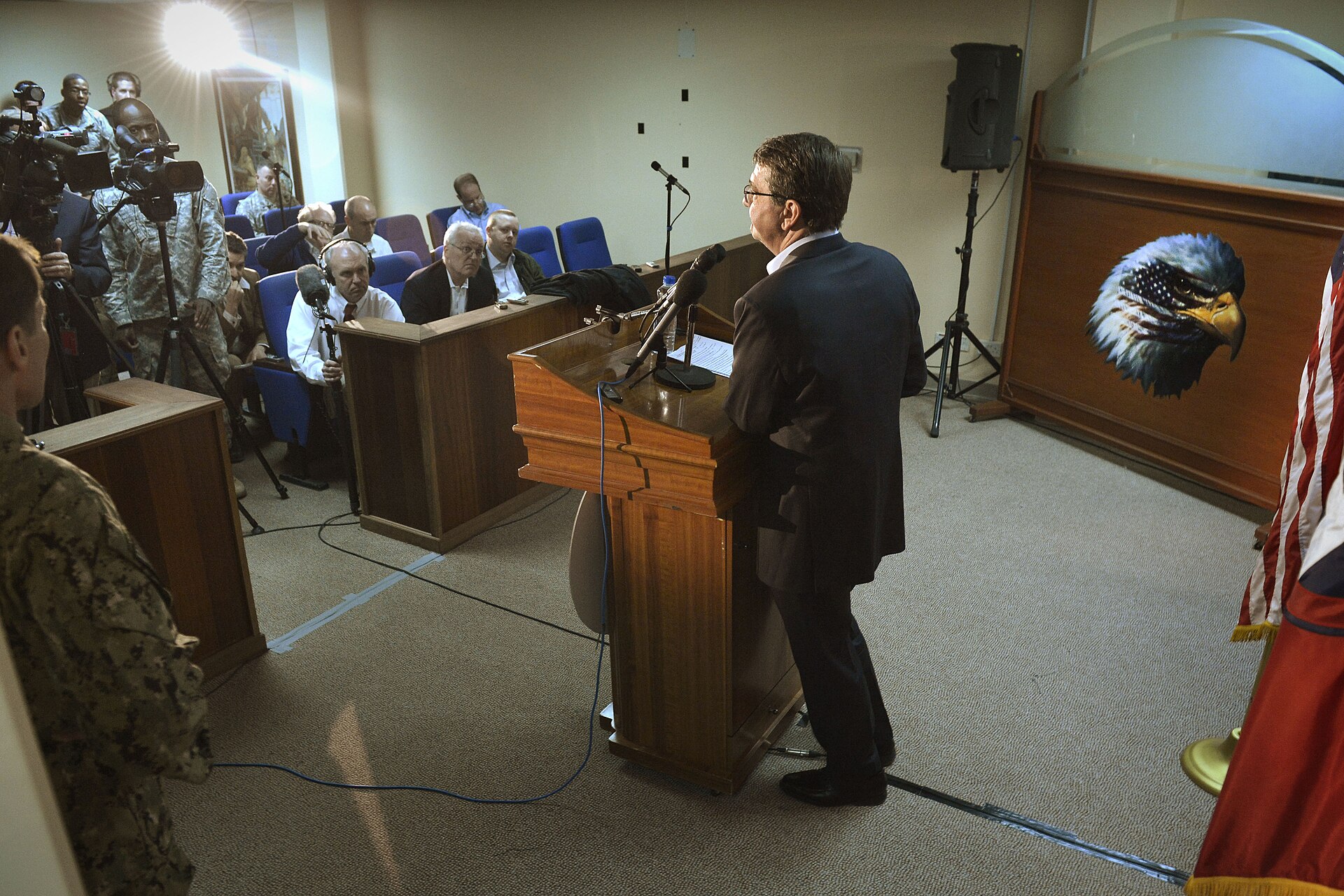
The Port Shuaiba attack accounted for six of the seven American combat deaths in the Iran war as of March 10, underscoring Kuwait’s position as one of the most lethal theatres of the conflict for US forces. Satellite imagery analysed by Defence Security Asia showed that at least three satellite communication radomes at Camp Arifjan were also damaged or destroyed by Iranian precision strikes, crippling elements of the American command network in the Gulf.
Camp Arifjan, constructed in 1999 south of Kuwait City, serves as the primary logistics, supply, and command hub for US military operations across the US Central Command area of responsibility. The facility accommodates elements of the US Air Force, Navy, Marine Corps, and Coast Guard, and was built and funded by the Kuwaiti government. The base’s vulnerability to Iranian strikes has raised serious questions about the protection of US military personnel across Gulf installations.
Why Did Kuwait Cut Oil Production?
Kuwait Petroleum Corporation (KPC) announced precautionary cuts to oil production and refinery output beginning approximately March 6, citing “ongoing aggression by the Islamic Republic of Iran against the state of Kuwait, including Iranian threats against safe passage of ships through the Strait of Hormuz.” The national oil company also declared force majeure — a legal clause releasing it from contractual obligations due to circumstances beyond its control — on sales of crude oil and refinery products, according to Bloomberg and gCaptain.
The initial production cut was approximately 100,000 barrels per day from Kuwait’s January output of 2.6 million barrels per day, making Kuwait OPEC’s fifth-largest producer. Bloomberg reported that the reduction was expected to nearly triple, with further gradual cuts depending on storage levels and the status of shipping through the Strait of Hormuz.
The Strait of Hormuz, through which approximately 20 percent of global oil supply passes daily, has been effectively closed to commercial shipping since Iran’s Islamic Revolutionary Guard Corps declared it a military exclusion zone. Insurance costs for vessels attempting the passage have risen to prohibitive levels, and several tanker incidents in the first days of the conflict deterred shipowners from risking crews and vessels. Kuwait’s oil storage facilities, like those across the Gulf, are rapidly filling as production continues but export routes remain blocked.
| Metric | Pre-War | Current (Est.) | Change |
|---|---|---|---|
| Crude production | 2.6M bpd | ~2.2M bpd | -15% |
| Refinery output | ~800K bpd | Reduced | Undisclosed |
| Export capacity | ~2.0M bpd | Near zero | -95%+ |
| Storage utilisation | ~60% | Approaching capacity | Critical |
The force majeure declaration has significant implications for global energy markets already reeling from the conflict. Kuwait’s petroleum exports, which account for approximately 90 percent of the country’s government revenue, have effectively ceased. The International Energy Agency had already warned that the Iran war represented the most significant disruption to global oil supply since the 1973 embargo. Saudi Aramco’s chief executive Amin Nasser said the company was rerouting tankers to avoid the Strait and pushing the East-West Pipeline to its full 7 million barrel per day capacity.
Kuwait’s oil cuts compound the production collapse in neighbouring Iraq, where output from the three main southern oilfields has fallen approximately 70 percent to 1.3 million barrels per day, according to Bloomberg. Combined with reduced UAE output and Saudi Arabia’s own storage constraints, the war has removed an estimated 20 percent of global oil supply from the market.
Kuwait’s Air Defense Intercepts Ballistic Missiles and Drone Swarms
Kuwait’s military has intercepted multiple waves of Iranian missiles and drones since the conflict began, demonstrating the small Gulf state’s air defence capabilities in its first test under sustained combat conditions. On March 10, Kuwait’s armed forces reported intercepting six drones, according to Al Jazeera. Earlier interceptions included three ballistic missiles on March 8 and multiple drone waves on March 4, when hundreds of drones targeted Kuwait, Iraq, Saudi Arabia, and the UAE simultaneously.
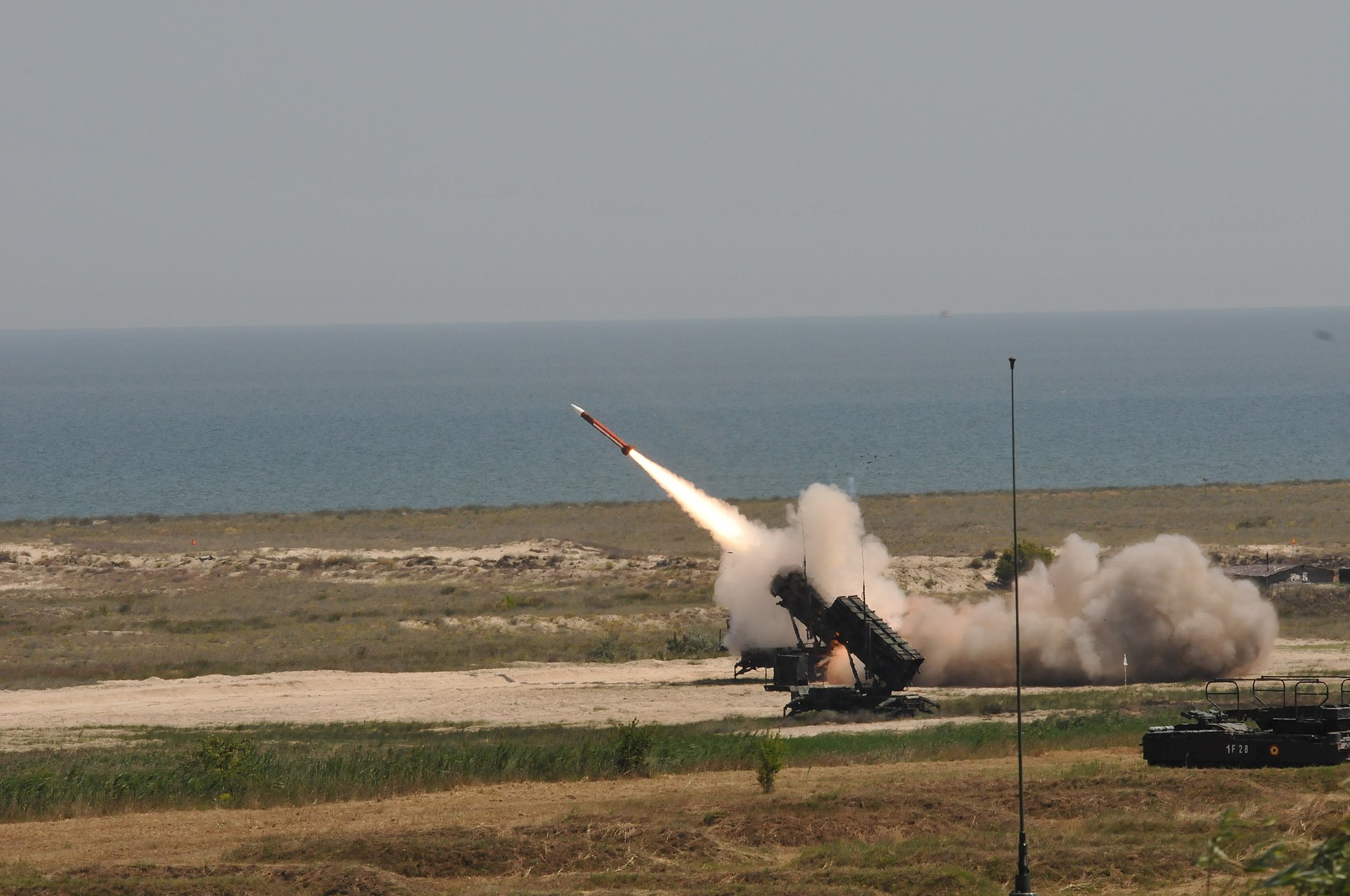
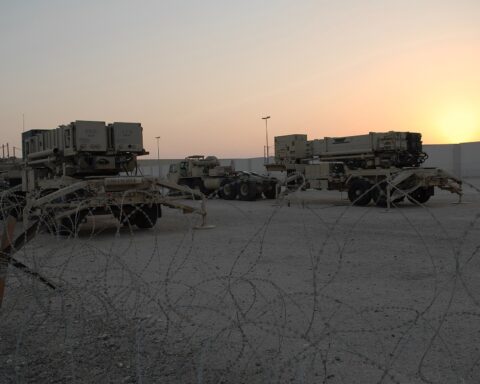
Kuwait operates a layered air defence network that includes US-supplied Patriot PAC-3 batteries, HAWK medium-range systems, and short-range air defence assets. American Patriot units stationed in Kuwait have supplemented the national air defence force since the 1991 Gulf War, and the integrated system has performed effectively against the Iranian threat, though the airport fuel tank strike demonstrated that low-flying drones can still penetrate the defensive envelope.
The challenge facing Kuwait’s air defences mirrors the broader problem confronting all Gulf states in the current conflict: the asymmetric cost of defence. Iran’s Shahed-series drones cost an estimated $20,000 to $50,000 per unit, while a single Patriot interceptor costs between $2 million and $4 million. Sustained Iranian drone barrages threaten to deplete interceptor stockpiles faster than they can be resupplied, a calculus that Iran has deliberately exploited by mixing high-value ballistic missiles with mass-produced suicide drones.
Kuwait’s proximity to Iran — Kuwait City sits approximately 250 kilometres from the Iranian coast — gives its air defences less warning time than Saudi Arabia’s southern and central installations receive. Ballistic missiles launched from Iran’s Khuzestan Province can reach Kuwaiti territory in under four minutes, compressing the decision cycle for intercept operators.
How Does Kuwait’s Crisis Affect Saudi Arabia and the GCC?
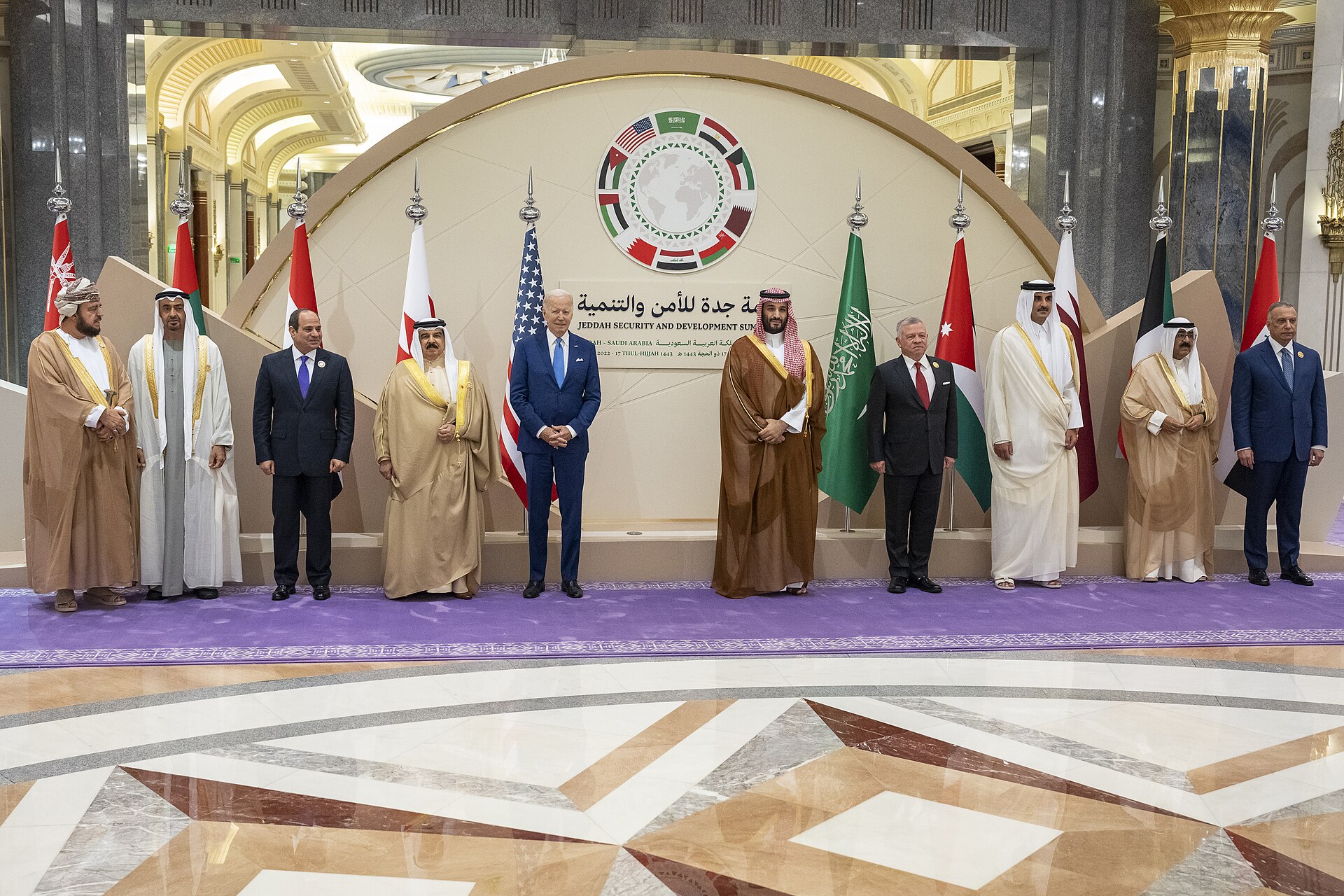
Kuwait’s airspace closure, oil production cuts, and force majeure declaration carry direct consequences for Saudi Arabia and the broader Gulf Cooperation Council security architecture. The Saudi Ministry of Foreign Affairs condemned Iran’s attacks on Kuwait alongside strikes on the UAE, Bahrain, Qatar, and Jordan in a statement that described them as “blatant aggression and flagrant violation of sovereignty,” warning that Iran would be “the biggest loser” if attacks continued.
For Saudi Arabia, Kuwait’s oil disruption adds pressure to an already strained OPEC response. The group agreed in principle to a modest 206,000 barrel per day increase on March 1, but with Iraq’s production collapsing, Kuwait declaring force majeure, and the Strait of Hormuz effectively closed, OPEC’s ability to deliver additional supply to global markets has been severely limited. Saudi Arabia and the UAE are the only OPEC members with significant spare production capacity, but both face the same export bottleneck through the blocked strait.
Saudi Aramco has responded by pushing its East-West Pipeline — which bypasses the Strait of Hormuz entirely, carrying crude from the Eastern Province to the Red Sea port of Yanbu — to its full capacity of 7 million barrels per day. Kuwait has no equivalent bypass infrastructure. The country’s entire export capacity depends on tanker traffic through the Persian Gulf and the Strait of Hormuz, leaving it with no alternative route to global markets.
The Saudi-Kuwaiti security relationship has deepened in recent years through the Gulf Shield exercise programme, which was completed in Saudi Arabia in early 2026 with full Kuwaiti participation. The exercise, described by GCC Secretary-General Jassim Al-Budaiwi as “a practical embodiment of deep-rooted Gulf military integration,” included advanced scenarios simulating multi-dimensional air and missile threats — a programme that has now transitioned from training to reality.
The GCC Collective Defense Framework Faces Its First Real Test
Iran’s simultaneous attacks on six Gulf states — Saudi Arabia, Kuwait, Bahrain, the UAE, Qatar, and Oman — have triggered the most significant test of the GCC’s collective security mechanisms since the organisation’s founding in 1981. Arab foreign ministers invoked collective defence provisions at an emergency meeting, and the GCC’s Unified Military Command, formerly known as the Peninsula Shield Force, has been activated for operational coordination.
The Unified Military Command was restructured and renamed on January 5, 2021, to reflect deeper military integration among the six member states. The command coordinates joint air and missile defence, intelligence sharing, and operational planning across the Gulf. The Iran war has provided its first operational deployment against a state adversary rather than the asymmetric threats — Houthi missiles, terrorist organisations — it was originally designed to counter.
Kuwait’s case illustrates both the strengths and vulnerabilities of the GCC defence framework. Joint air and missile defence coordination has improved intercept rates across the Gulf, with the Pentagon reporting a 90 percent reduction in Iranian missile fire by Day 11 of the conflict. Yet individual member states have absorbed significant damage to civilian infrastructure, military installations, and energy assets that no collective framework has been able to prevent entirely.
| Country | Military Targets Hit | Civilian Infrastructure | Casualties | Airspace Status |
|---|---|---|---|---|
| Saudi Arabia | Prince Sultan Air Base, eastern military sites | Residential areas (Al-Kharj, Az Zulfi), desalination | 2 killed, 12+ injured | Open (restricted) |
| Kuwait | Camp Arifjan, Port Shuaiba | Airport fuel tanks | 6 US soldiers killed | Closed |
| Bahrain | US Naval Support Activity | Residential buildings, airport | 1 killed, 32+ injured | Closed |
| UAE | Al Dhafra Air Base | Petrol facility (debris) | None reported | Restricted |
| Qatar | Al Udeid Air Base | None confirmed | None reported | Restricted |
For Crown Prince Mohammed bin Salman, Kuwait’s vulnerability reinforces the argument for accelerated investment in indigenous Gulf defence capabilities. Saudi Arabia has led efforts to develop regional air defence integration through the Gulf Shield exercises, and the current conflict is likely to produce demands for deeper integration, shared interceptor stockpiles, and potentially a NATO-style mutual defence clause with binding military commitments.
Why Did Kuwait Shut Its Airspace?
Kuwait’s decision to close its airspace entirely followed the drone strike on airport fuel storage infrastructure and ongoing Iranian missile and drone barrages across Kuwaiti territory. The closure, implemented by Kuwait’s General Directorate of Civil Aviation, was among the most restrictive in the Gulf, with only Iraq’s 72-hour total shutdown matching its severity.
The decision reflected both immediate safety concerns — active missile and drone engagements over Kuwaiti airspace made commercial flight operations dangerous — and the practical impact of the fuel tank strike. With Kafco’s fuel supply disrupted, the airport lacked the jet fuel capacity to sustain normal operations even if the security environment had permitted flights.
Across the Gulf, the aviation meltdown has been sweeping. Bahrain’s airport was damaged and all Gulf Air flights suspended. Iraq imposed a complete 72-hour airspace closure. The UAE’s Dubai International, Dubai World Central, and Abu Dhabi’s Zayed International airports operated under severe restrictions. Qatar’s Hamad International Airport suspended routine operations with only controlled corridors for limited flights. Major international carriers including Emirates, Lufthansa, KLM, British Airways, United Airlines, and Air Canada suspended Gulf services, while flydubai limited operations to repatriation flights only.
Saudi Arabia’s airports in Riyadh, Jeddah, and Dammam remained open, functioning as the primary exit points for foreign nationals and evacuees leaving the region. Air India deployed 78 additional flights between March 10 and March 18 to evacuate Indian nationals, with approximately 50 daily flights coordinated by India’s Ministry of Aviation.
Kuwait and Iran’s Decades of Tension
Kuwait’s exposure to Iranian military action reflects decades of difficult relations between the two countries. During the Iran-Iraq War of 1980-1988, Iran attacked Kuwaiti oil tankers in retaliation for Kuwait’s financial support of Saddam Hussein’s Iraq, triggering the original “Tanker War” that saw US naval escorts protect Kuwaiti-flagged vessels through the Gulf. In 1983, the Iranian-backed Islamic Dawa Party bombed the US and French embassies in Kuwait City, and in 1985, a member of the same organisation attempted to assassinate the Emir of Kuwait.
Relations improved following the 1990 Iraqi invasion of Kuwait, which Iran opposed, and the two countries established functional diplomatic ties during the subsequent reconstruction period. However, tensions resurfaced periodically over Iranian espionage operations on Kuwaiti territory. In 2015, Kuwait expelled the Iranian ambassador after uncovering an Iranian Revolutionary Guard Corps weapons cache on Kuwaiti soil, linked to a spy ring that had been operating since at least 2011.
Kuwait’s position as host to the largest American military presence in the Gulf — approximately 13,500 troops across Camp Arifjan, Camp Buehring, Ali Al Salem Air Base, and other installations — has made it an inevitable target in any direct US-Iran confrontation. Kuwaiti officials had reportedly warned Washington in January 2026 that they would not allow their airspace or military bases to be used to launch attacks on Iran, seeking to maintain the country’s traditional role as a regional mediator. Iran’s decision to strike Gulf states regardless of their diplomatic positions has rendered that neutrality impossible.
Kuwait’s Emir, Sheikh Mishal Al-Ahmad Al-Sabah, who assumed the position in December 2023, faces the most severe foreign policy crisis of his tenure. The country’s constitution prohibits offensive military operations without parliamentary approval, and Kuwait’s National Assembly has historically been the most active legislature in the Gulf, with members publicly debating the country’s security posture and alliance commitments. The current crisis is expected to accelerate Kuwait’s defence spending, which stood at approximately $7.7 billion in 2024 according to the International Institute for Strategic Studies, and may push the government toward the more explicit security alignment with Washington and Riyadh that it has traditionally sought to avoid.
Frequently Asked Questions
Is Kuwait’s airspace still closed?
Kuwait’s airspace closure was set to expire at 1600 UTC on March 10, 2026, according to flight-tracking data from Flightradar24 and NOTAM filings. The General Directorate of Civil Aviation has not confirmed a timeline for full reopening, and the status depends on the ongoing security assessment and Iran’s continued drone and missile activity over Kuwaiti territory.
How many US troops are stationed in Kuwait?
Approximately 13,500 American service members are deployed across multiple installations in Kuwait, including Camp Arifjan, Camp Buehring, Ali Al Salem Air Base, and Port Shuaiba. Camp Arifjan serves as the primary logistics and command hub for US Central Command operations. Six American soldiers were killed at Port Shuaiba on March 1 when an Iranian drone struck their Tactical Operations Centre.
Why did Kuwait declare force majeure on oil exports?
Kuwait Petroleum Corporation declared force majeure because the Strait of Hormuz — through which virtually all Kuwaiti oil exports pass — has been effectively closed to commercial shipping since Iran’s Revolutionary Guard Corps declared it a military exclusion zone. With export routes blocked and domestic storage approaching capacity, Kuwait had no alternative but to cut production and release customers from contractual obligations.
How much oil has Kuwait lost in production?
Kuwait initially cut approximately 100,000 barrels per day from its January production level of 2.6 million barrels per day. Bloomberg reported the cuts were expected to nearly triple depending on storage levels and Hormuz transit conditions. The country’s export capacity has dropped to near zero, representing a loss of approximately $200 million per day in oil revenue at current prices.
What air defence systems does Kuwait operate?
Kuwait operates a layered air defence network including US-supplied Patriot PAC-3 batteries for ballistic missile defence, HAWK medium-range systems, and short-range air defence assets. American Patriot units have supplemented Kuwaiti national defences since the 1991 Gulf War. The systems have intercepted multiple Iranian ballistic missiles and drones, though some low-flying drones have penetrated the defensive envelope.