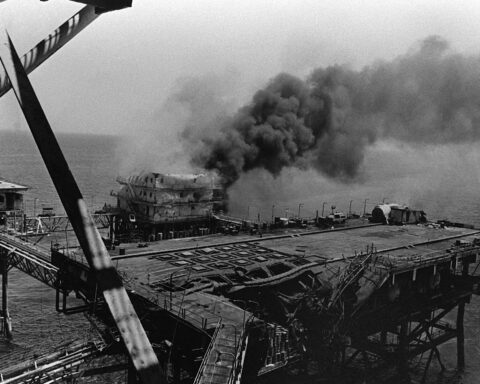
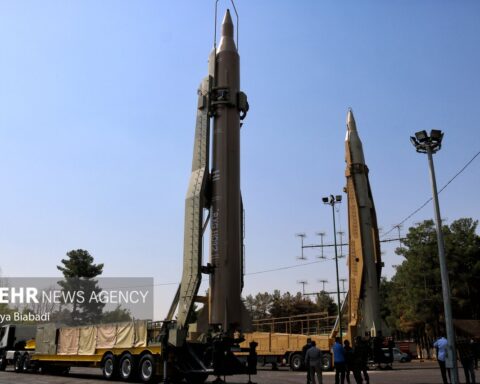
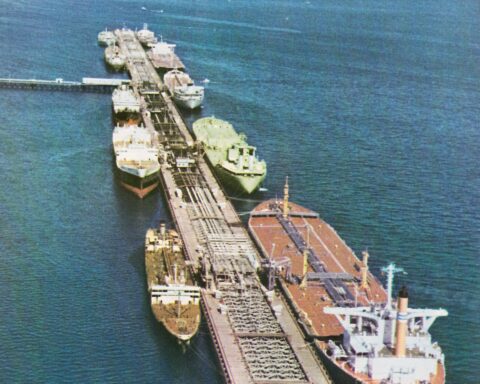
KUWAIT CITY — Iranian drones struck Kuwait’s largest oil refinery, power stations, and water desalination plants on Tuesday morning — hours after a US-Iran ceasefire took effect — in what Kuwait’s Defence Ministry called “an intense wave of hostile Iranian attacks” that began at 08:00 local time and forced air defenses to engage 28 unmanned aerial vehicles across the country’s southern infrastructure corridor. The strikes, which Iran’s Islamic Revolutionary Guard Corps cataloged as its “95th wave” of Operation True Promise 4 without any reference to the ceasefire, mark the first confirmed post-ceasefire damage event in the Gulf and the most direct evidence yet that the IRGC’s decentralized command structure is producing operational outcomes that Tehran’s political leadership cannot control.
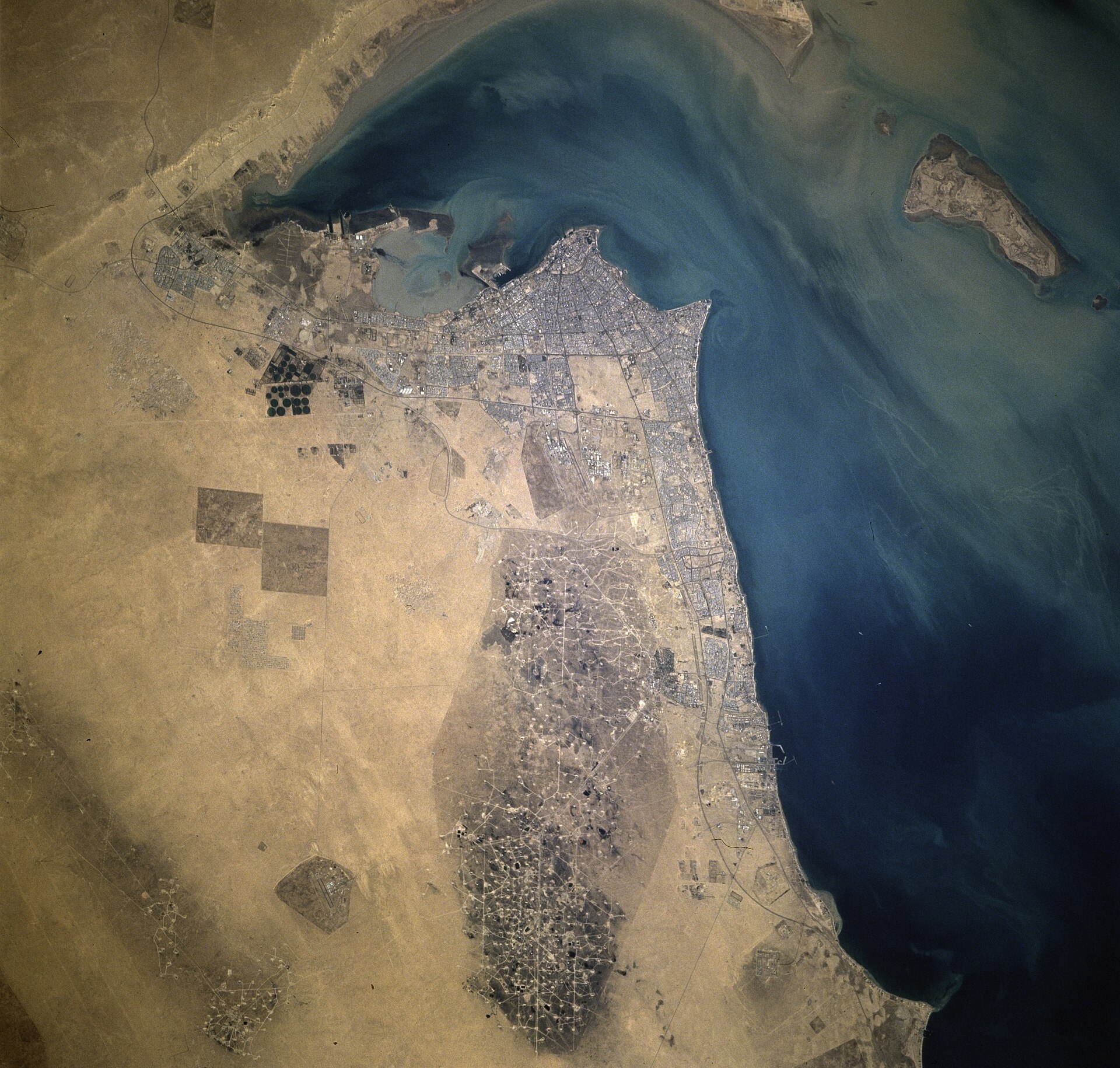
The damage compounds an already severe infrastructure crisis for Kuwait, whose 346,000-barrel-per-day Mina Al Ahmadi refinery — operated by the Kuwait National Petroleum Company and among the largest in the Middle East — has now been hit at least three times since the war began on February 28. Kuwait’s Ministry of Electricity, Water and Renewable Energy confirmed that two power generation units and desalination plants have been shut down as a cumulative result of strikes on April 5 and April 8, degrading civilian services in a country that has already slashed oil production from 2.6 million barrels per day to roughly 500,000 bpd for domestic consumption alone. The Kuwait Petroleum Corporation had previously declared force majeure on all export contracts; its CEO, Shaikh Nawaf Al-Sabah, estimated that restoring full capacity would take three to four months after hostilities end — a timeline that each new strike extends.
Table of Contents
The April 8 Strikes
Kuwait’s armed forces issued a statement at midday on April 8 confirming that air defense systems had been “dealing with 28 drones targeting the State of Kuwait” since 08:00 local time (05:00 GMT), with the unmanned aircraft directed at “vital oil installations and power stations” in the country’s south, according to reporting by Anadolu Agency and Asharq Al-Awsat. The Defence Ministry described “serious material damage to oil infrastructure facilities, power stations, and water desalination plants” — language that Kuwait’s military has used with increasing frequency over the past five weeks, each iteration describing damage to the same cluster of facilities in and around the Ahmadi governorate that houses the bulk of the country’s refining and export capacity.
The timing is the central fact. The US-Iran ceasefire was announced on the night of April 7, barely an hour before President Donald Trump’s deadline to escalate operations against Iran expired, according to Al Jazeera’s ceasefire timeline. Iran’s Supreme National Security Council accepted the two-week ceasefire but appended language stating that “negotiations are continuation of battlefield” and warned that its forces’ “hands remain on the trigger” until national interests were secured, as reported by France24 and PM News Nigeria. Khamenei’s attributed halt order was broadcast on IRIB approximately two hours after Trump’s announcement — meaning the 08:00 Kuwait time drone wave on April 8 fell into a window where the ceasefire had been declared by both sides but the IRGC’s 31 provincial commands were still executing pre-authorized operational plans.
Kuwait was not alone. Saudi Arabia reported intercepting nine drones in the same hours, the UAE said its air defenses were “actively engaging” ballistic missiles, cruise missiles, and UAVs — with a fire breaking out at Abu Dhabi’s Habshan gas complex from falling debris — and Bahrain reported two citizens with minor injuries from shrapnel in the Sitra area, according to Al Jazeera. The breadth of the post-ceasefire strikes, spanning four GCC states simultaneously, is consistent with a pre-programmed operational sequence rather than a deliberate decision to violate the agreement.
What Did the IRGC Claim It Was Targeting?
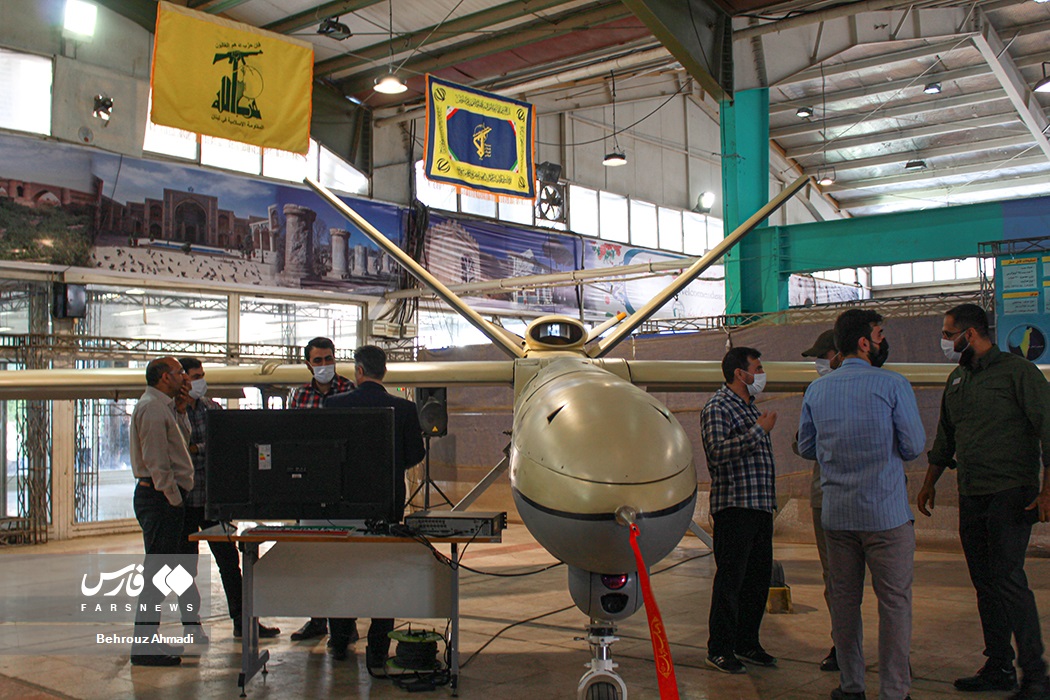
The IRGC Aerospace Force’s press statement on April 8 made no mention of the ceasefire, according to reporting by TASS and the National Herald India. Spokesperson Ebrahim Zolfaghari stated that the 95th wave targeted “equipment depots, satellite communication units, and command headquarters of the US military stationed in Bubiyan Island, Kuwait” — framing the operation as an anti-American military strike rather than an attack on Kuwaiti sovereignty. The IranPress news service added that the same wave also struck “American HIMARS rocket artillery batteries” on Bubiyan Island and a US Patriot system in northern Bahrain, according to Tasnim News Agency.
The Middle East briefing 3,000+ readers start their day with.
One email. Every weekday morning. Free.
The framing is structurally important because it allows Tehran to maintain two simultaneous positions: that it accepted the ceasefire in good faith, and that the IRGC was targeting US military assets co-located with — but legally distinct from — civilian infrastructure. The physical reality on the ground contradicts the legal fiction; Kuwait’s Defence Ministry confirmed that the damage was to oil facilities, power plants, and desalination plants, not to US military installations on Bubiyan Island, which sits roughly 120 kilometers north of the Ahmadi refinery complex. Iran used an identical rhetorical maneuver after the April 3 strikes on Kuwait’s desalination and power infrastructure, when the IRGC’s public relations office stated that “the attack on Kuwait’s power plant and desalination facilities is the work of the Zionist regime,” according to Sahara Reporters.
The 95th-wave designation itself carries analytical weight. The IRGC’s operational numbering system — sequential wave counts filed through its press service — proceeded through the ceasefire announcement as if the ceasefire did not exist. Wave 94 came before the ceasefire; wave 95 came after it; the bureaucratic continuity suggests that the operational tempo was set by pre-authorized strike packages, not by real-time political decisions in Tehran.
Why Can’t Tehran Enforce Its Own Ceasefire?
The gap between the political announcement and military compliance is not, in this case, best explained by deliberate Iranian deception — though that possibility cannot be excluded. The more structurally grounded explanation lies in the IRGC’s mosaic defense doctrine, a command architecture designed to ensure that military operations continue regardless of what happens to political leadership. In September 2008, IRGC Commander General Mohammad Ali Jafari restructured the force into 31 independent provincial corps — one per Iranian province — each with its own weapons arsenals, logistics chains, intelligence services, and Basij militia units, trained to make independent military decisions without consulting Tehran, as documented by the Soufan Center’s March 9 IntelBrief.
Iranian Foreign Minister Abbas Araghchi stated in early March that “our military units are now, in fact, independent and somewhat isolated, and they are acting based on general instructions given to them in advance,” as reported by Iran International. The admission, made in the context of an IRGC strike on Oman that Araghchi said was “not our choice,” effectively conceded that Iran’s civilian government does not exercise operational command over the forces prosecuting the war. Eitan Charnoff, founder and CEO of the GCC-based geopolitical consultancy Potomac Strategy, wrote in Modern Diplomacy on March 10 that “when a state’s political leadership announces a ceasefire and its military keeps firing, the instinct is to reach for deception as the explanation,” but that “in Iran’s case, the more unsettling answer may be structural.”
Our military units are now, in fact, independent and somewhat isolated, and they are acting based on general instructions given to them in advance.
— Abbas Araghchi, Iranian Foreign Minister, March 2026 (Iran International)
The structural problem was visible four days before the ceasefire. On April 4, Iranian President Masoud Pezeshkian confronted IRGC commander Ahmad Vahidi and Khatam al-Anbiya Central Headquarters commander Ali Abdollahi, accusing them of “acting unilaterally and driving escalation through attacks on regional countries, especially against infrastructure,” warning that their policies had “destroyed any remaining chance of a ceasefire and were steering the Islamic Republic toward a huge catastrophe,” according to Iran International via Ynet News. An unnamed Iranian parliamentarian told NBC that Vahidi was the effective operational decision-maker during the war. The confrontation — a sitting president publicly accusing his own military commanders of sabotaging diplomacy — simultaneously admitted the compliance gap while demonstrating the civilian government’s inability to close it.
When a state’s political leadership announces a ceasefire and its military keeps firing, the instinct is to reach for deception as the explanation. In Iran’s case, the more unsettling answer may be structural.
— Eitan Charnoff, CEO, Potomac Strategy (Modern Diplomacy, March 10, 2026)
Kuwait’s Five-Week Attack Timeline
The April 8 post-ceasefire strike was not an isolated event but the latest in a systematic degradation of Kuwait’s energy and water infrastructure that has accelerated since the war began on February 28. The pattern — repeated strikes on the same facilities, with each wave compounding damage from the last — suggests that Kuwait’s southern infrastructure corridor has been incorporated into IRGC targeting packages as a persistent objective rather than a one-off escalation.
| Date | Target | Damage / Outcome | Source |
|---|---|---|---|
| March 20 | Mina Al Ahmadi refinery | First confirmed hit; fires in operational units | The National |
| March 30 | Doha West power & desalination plant | One Indian national killed; facility damaged | Al Jazeera |
| April 3 | Mina Al Ahmadi refinery; desalination plant | KNPC declared “severe material damage” | Al Jazeera |
| April 5 | KPC headquarters; two power/desalination plants | MEWRE shut two electricity generation units | The National / AGBI |
| April 8 | Mina Al Ahmadi; power stations; desalination plants | 28 drones engaged; “serious material damage” | Anadolu / Asharq Al-Awsat |
The cumulative effect is severe. Kuwait had already slashed production to roughly 500,000 bpd for domestic consumption only — down from 2.6 million barrels per day before the war — after the Strait of Hormuz was effectively closed to Kuwaiti tankers, as reported by CNBC on March 7. KPC declared force majeure on crude oil and refined product exports, citing “explicit threats by Iran against the safe passage of vessels through the Strait of Hormuz, continued attacks on Kuwait, and the near-total absence of available ships.” The Mina Al Ahmadi refinery processes fuel for both domestic use and export; each strike on the facility degrades Kuwait’s ability to sustain even its reduced production baseline.
The March 30 strike on the Doha West power and desalination plant killed an Indian national — the first confirmed fatality from Iranian strikes on Kuwaiti soil — and the April 5 strikes on KPC’s own headquarters represented an escalation from infrastructure targeting to institutional targeting. The total GCC and Iraqi crude production shut-in reached 9.1 million barrels per day by April 7, according to Bloomberg, a figure that the post-ceasefire strikes threaten to extend well beyond any ceasefire window.
The Air Defense Arithmetic
The post-ceasefire strikes carry a second-order implication for Saudi Arabia that is not visible in Kuwait’s damage reports but is measurable in interceptor stockpiles. Saudi Arabia’s PAC-3 MSE inventory stood at approximately 400 rounds as of April 7 — roughly 86 percent depleted from pre-war levels of around 2,800 rounds — after intercepting 799 drones and 95 missiles across the March 3 to April 7 period, according to prior House of Saud reporting. Saudi Arabia’s Eastern Province, home to Ras Tanura and the Jubail industrial complex, sits approximately 80 kilometers from Kuwait’s Ahmadi refinery complex; the two countries’ air defense coverage zones overlap, and interceptors expended over Kuwait are interceptors unavailable for Saudi targets.
If IRGC units are continuing to launch drone waves under nominal ceasefire conditions, Saudi air defenses face a degradation problem that the ceasefire was supposed to arrest. The Camden, Arkansas Lockheed Martin facility that produces PAC-3 MSE rounds manufactures roughly 620 per year at current capacity — a production rate that cannot replenish Saudi stocks faster than they are being depleted, even at the reduced post-ceasefire tempo. Poland refused a Saudi request to transfer Patriot batteries on March 31, and the $16.5 billion emergency US arms package authorized in March was directed to the UAE, Kuwait, and Jordan rather than Saudi Arabia, as prior HOS reporting documented.
US Defense Secretary Pete Hegseth, at a press conference on April 8, attributed the continuing strikes to “poor command and control in Iran, with some commanders out of reach due to communications issues,” and stated that “it takes time for a ceasefire to take hold — we think it will,” according to Axios. A senior White House official, also speaking to Axios, stated that “it may take time for orders to reach lower level units of Iran’s Islamic Revolutionary Guard Corps.” Both statements accepted the IRGC’s structural fragmentation as the operative explanation — which means both accepted that the ceasefire cannot be enforced from the top down, only absorbed from the bottom up, one provincial command at a time.
How Did Kuwait Respond?
Kuwait’s foreign ministry welcomed the ceasefire as “an initial step toward de-escalation” and called for “full adherence” to the agreement, while praising Pakistan’s role in mediation, according to Al Jazeera and the Arab Times. The statement expressed hope that the ceasefire would lead to “a comprehensive and sustainable settlement that enhances security and stability in the region.” What the statement did not do is equally telling: Kuwait did not formally invoke the GCC’s collective defense architecture, did not summon the Iranian ambassador, and did not characterize the post-ceasefire strikes as a violation of the agreement — choosing instead a diplomatic posture that treats the continuing attacks as a transitional friction rather than a breach of faith.
That restraint is consistent with Kuwait’s broader positioning throughout the conflict. Unlike Saudi Arabia and the UAE, which have absorbed far larger volumes of Iranian fire and whose infrastructure has sustained more extensive damage, Kuwait has calibrated its public statements to avoid language that could be interpreted as co-belligerency or as an invitation for further targeting. The approach carries risks: each unanswered strike normalizes the IRGC’s targeting of Kuwaiti civilian infrastructure as an acceptable cost of the conflict, and the cumulative damage to Mina Al Ahmadi, the country’s power grid, and its desalination capacity is real regardless of how the foreign ministry characterizes it.
FAQ
Has the IRGC acknowledged the ceasefire in any operational communication?
No. The IRGC’s 95th-wave press release, issued on April 8, described strikes on Kuwait and Bahrain without any reference to the ceasefire agreement. The sequential wave numbering system — maintained by the IRGC press service as an operational ledger — continued through the ceasefire announcement without interruption, suggesting that field commands were executing pre-authorized strike packages rather than responding to real-time political guidance from Tehran. Iran’s SNSC accepted the ceasefire but appended language that “hands of Iran’s armed forces remain on the trigger,” according to France24 — framing the pause as conditional rather than absolute.
How many times has Kuwait’s Mina Al Ahmadi refinery been struck since the war began?
At least three times: on March 20, April 3, and April 8, according to The National, Al Jazeera, and Anadolu Agency respectively. KNPC declared “severe material damage” after the April 3 strike, and the April 8 post-ceasefire strike compounded that damage further. The refinery processes both export-grade refined products and fuel for domestic consumption, meaning each hit degrades Kuwait’s ability to maintain even its reduced domestic-only production.
Could the post-ceasefire strikes have been launched before the halt order was transmitted?
The timing makes this plausible but not conclusive. Trump announced the ceasefire on the night of April 7; Khamenei’s attributed halt order was broadcast on IRIB approximately two hours later; the Kuwait strikes began at 08:00 local time on April 8 (05:00 GMT). Drones launched from Iranian territory or proxy positions in Iraq could have been airborne before the halt order reached field units — consistent with the US Defense Department’s assessment that “poor command and control in Iran, with some commanders out of reach due to communications issues” explains the continuing strikes, as Hegseth stated to reporters on April 8, per Axios.
What is Kuwait’s current oil production and when can it recover?
Kuwait has been reduced to roughly 500,000 bpd for domestic consumption only, with KPC having declared force majeure on all crude and refined product exports. KPC CEO Shaikh Nawaf Al-Sabah estimated that restoring proportionate production would take three to four months after hostilities end — but that estimate was issued before the April 5 and April 8 strikes inflicted additional damage on the Mina Al Ahmadi refinery and power infrastructure. Each successive strike pushes the recovery timeline further out, compounding the economic cost for a country whose pre-war 2.6 million bpd output now contributes nothing to global supply.
Why hasn’t Kuwait invoked the GCC’s collective defense mechanisms?
Kuwait’s foreign ministry response to the post-ceasefire strikes was deliberately restrained, welcoming the ceasefire as “an initial step” and calling for “full adherence” without characterizing the April 8 attacks as a violation, per Al Jazeera and the Arab Times. Kuwait has maintained this posture throughout the war, avoiding language that could be interpreted as co-belligerency. The GCC’s Article 51 self-defense architecture has been constructed — Saudi Arabia, the UAE, and Bahrain have all absorbed sustained Iranian strikes — but formal collective invocation would carry escalatory implications that Kuwait has chosen to avoid, preferring instead to frame each attack as a security incident rather than an act of war requiring a collective response.