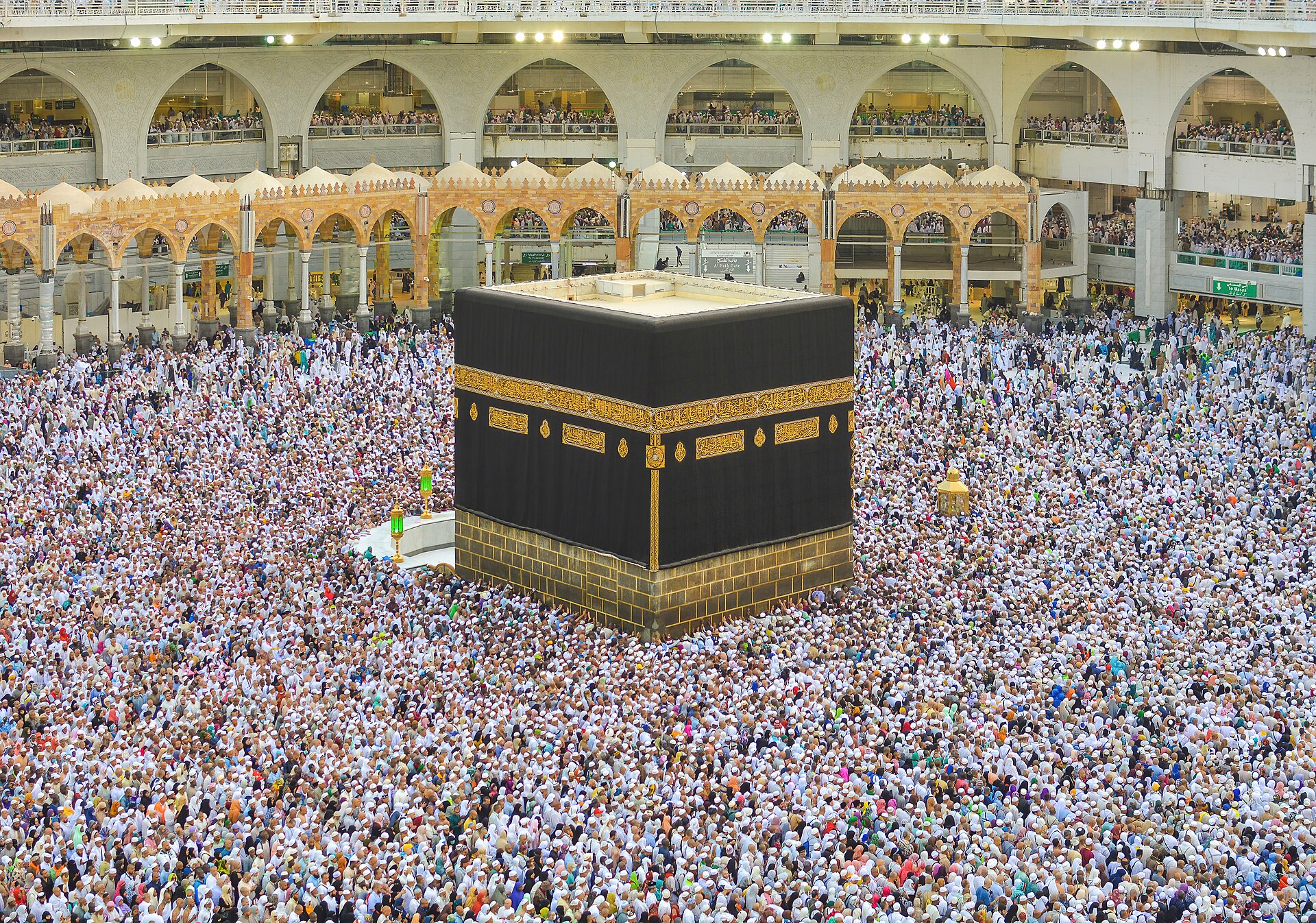

MAKKAH — On the night of March 16, 2026, as hundreds of thousands of worshippers packed the Grand Mosque in Mecca for Laylat al-Qadr — the holiest night in the Islamic calendar — Patriot missile batteries ringing the Hejaz stood at their highest state of alert since Saudi Arabia’s air defense network was first assembled. Somewhere between the evening prayer and the dawn call, the two most important obligations of the Saudi state converged in a single, extraordinary evening: the duty to protect two million people kneeling before the Kaaba, and the duty to intercept Iranian munitions crossing Saudi airspace for the seventeenth consecutive day.
The convergence is without precedent in the modern era. Saudi Arabia has weathered Houthi missiles during Hajj, a two-week siege of the Grand Mosque in 1979, and stampede disasters that killed thousands. It has never faced all three dimensions of threat simultaneously: a sustained aerial bombardment campaign from a state adversary, a domestic security challenge on the scale of the world’s largest annual religious gathering, and the political pressure of 2 billion Muslims watching whether the Custodian of the Two Holy Mosques can keep his most sacred promise. March 16, 2026, tested that promise more severely than any single night in the Kingdom’s ninety-four-year history.
The security operation at Makkah during Laylat al-Qadr has informed preparations for the upcoming Eid al-Fitr holiday, when millions more worshippers are expected at the Grand Mosque. Saudi authorities have deployed reinforced security for Eid prayer sites while Gulf states impose unprecedented restrictions on celebrations. With Eid al-Fitr just days away, the security operation protecting Laylat al-Qadr will extend into an even larger deployment. Analysis of Saudi Arabia’s wartime Eid celebrations reveals how the Kingdom is simultaneously protecting millions of worshippers and sustaining a sixteen-billion-riyal consumer economy.
Table of Contents
- What Is Laylat al-Qadr and Why Does It Matter for the Saudi State?
- How Many Worshippers Are Gathered at the Two Holy Mosques?
- The Air Defense Architecture Over the Hejaz
- Has Any Enemy Ever Threatened the Grand Mosque Before?
- What Would a Strike on Makkah Mean for Iran?
- The Sacred Shield Assessment
- Why the Custodian Title Matters More Than Crown Prince
- How Is Saudi Arabia Protecting the Prophet’s Mosque in Madinah?
- The Muslim World’s Judgment
- Can Saudi Arabia Host Hajj 2026 Under These Conditions?
- The War Within the War
- Frequently Asked Questions
What Is Laylat al-Qadr and Why Does It Matter for the Saudi State?
Laylat al-Qadr, the Night of Decree, falls on the 27th night of Ramadan — in 2026, the evening of March 16. Islamic tradition holds that worship on this single night equals one thousand months of devotion. The Quran describes it as the night when angels descend to earth and the fate of every human being is inscribed for the coming year. For the roughly 2 billion Muslims worldwide, no night in the calendar carries greater spiritual weight.
For the Saudi state, Laylat al-Qadr is an annual stress test of its most foundational claim to legitimacy. The House of Saud derives its authority not solely from oil wealth or military power, but from a title that King Fahd adopted in 1986 and every successor has retained: Custodian of the Two Holy Mosques. The title is not ceremonial. It carries a binding obligation, understood across the Islamic world, that the Saudi monarch will ensure safe access to Makkah and Madinah for every Muslim who seeks to worship there. King Salman and Crown Prince Mohammed bin Salman have staked the Kingdom’s international standing on this commitment. When Iranian missiles began falling on Saudi territory on February 28, 2026, the commitment was no longer theoretical.
The General Presidency for the Affairs of the Two Holy Mosques activated full operational protocols for the final ten nights of Ramadan, deploying thousands of staff across the Grand Mosque complex. AI-powered crowd monitoring systems tracked worshipper movement in real time, and the Mataf area around the Kaaba was configured to handle 107,000 pilgrims per hour, according to the General Presidency’s operational plan. Digital indicators at mosque entrances — green for open access, red for full capacity — guided the flow of worshippers into the available prayer areas. But the question hovering over every logistical preparation was one no crowd-management algorithm could answer: what happens if a ballistic missile gets through?
How Many Worshippers Are Gathered at the Two Holy Mosques?
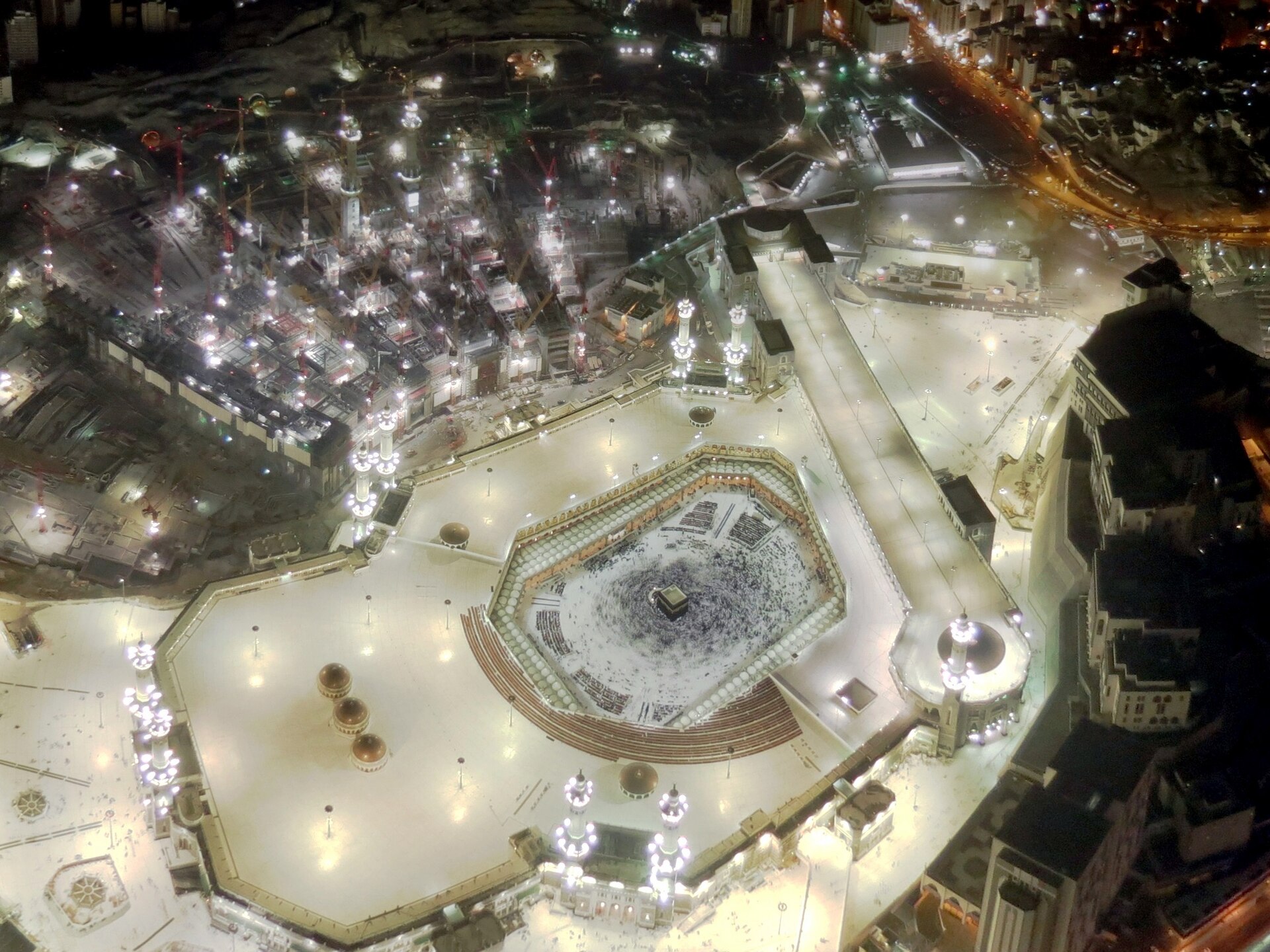
The Grand Mosque in Makkah can accommodate over two million worshippers at peak capacity, and Laylat al-Qadr consistently produces the highest attendance figures of the entire Ramadan season. More than 32 million worshippers and Umrah performers visited the Two Holy Mosques in just the first ten days of Ramadan 2026, according to data from the General Presidency. By the 20th day of Ramadan, 57.6 million worshippers had attended prayers at the Grand Mosque alone, while 15.6 million pilgrims had performed Umrah. Saudi Arabia set a new single-day record of 904,000 Umrah pilgrims on the fourth day of Ramadan, the Khaleej Times reported on February 21.
The numbers are staggering even by the standards of a country accustomed to managing mass gatherings at continental scale. Saudi Arabia invested over $100 billion in the Grand Mosque expansion project completed under King Abdullah, tripling the complex’s capacity. The investment was designed for a peacetime operating environment. In March 2026, the infrastructure built for spiritual tourism must function simultaneously as a hardened target under a wartime air defense umbrella — a combination no architect or urban planner anticipated when the expansion blueprints were drawn.
The 27th night concentrates a disproportionate share of that annual traffic into a single twelve-hour window. The congregation fills not only the Grand Mosque’s interior prayer halls and the open-air Mataf circling the Kaaba but also the multi-story northern and southern expansions, the rooftop prayer areas, and the overflow zones stretching into the surrounding streets of Makkah’s central district. A similar pattern plays out 450 kilometres to the north at the Prophet’s Mosque in Madinah, where hundreds of thousands more gather for Qiyam al-Layl — the extended night prayers that define the final ten nights of Ramadan.
The scale of the congregation creates a security paradox that defence planners describe as a density-vulnerability inversion: the holier the night, the larger the crowd, and the more catastrophic any single point of failure becomes. A missile strike, a debris field from a successful intercept, or even a false alarm triggering a stampede in a crowd of this density could produce casualties on a scale that would redefine the war’s political dynamics overnight.
The Air Defense Architecture Over the Hejaz
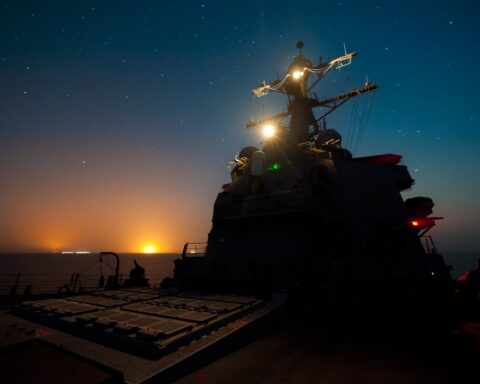
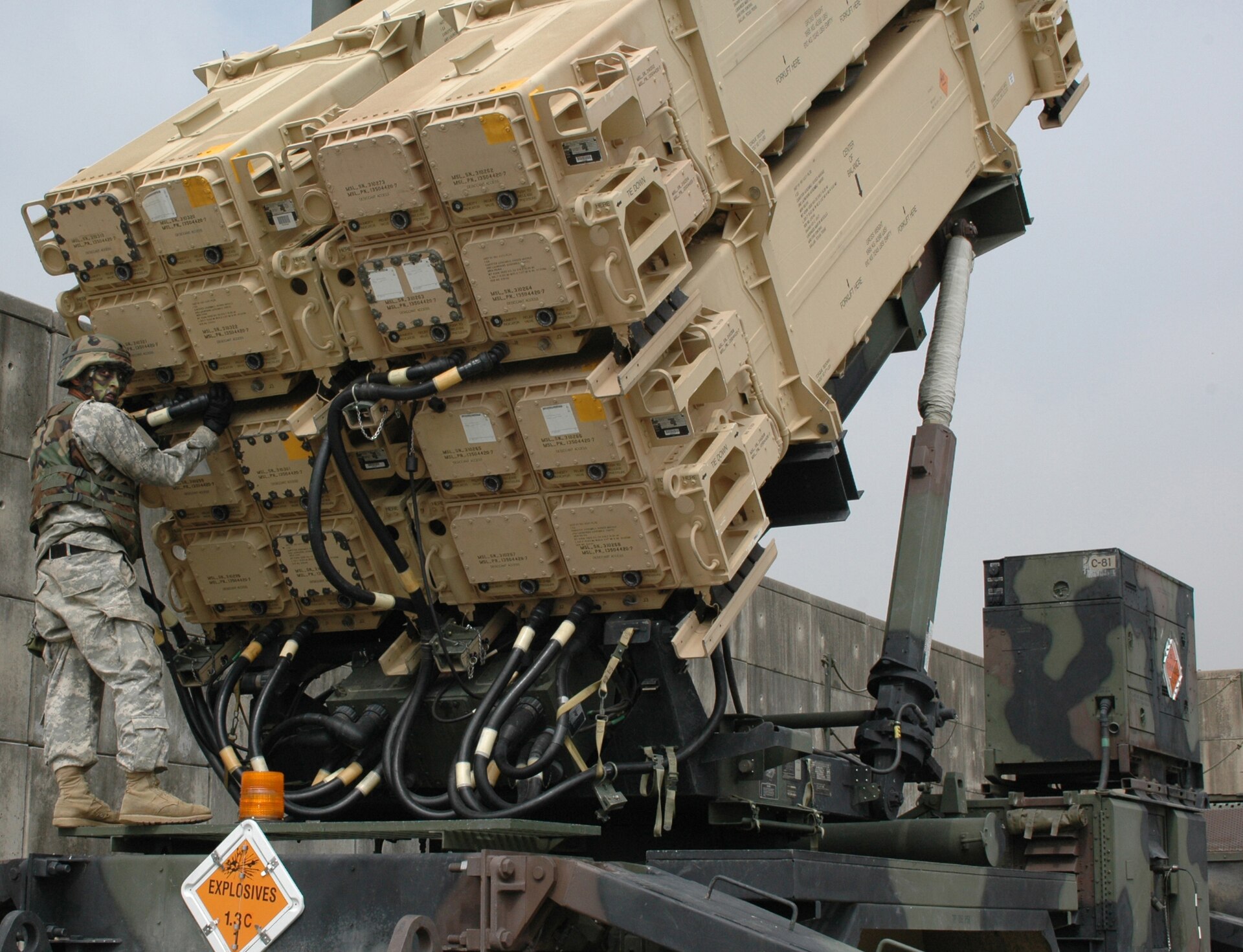
Saudi Arabia has deployed Patriot PAC-3 missile batteries around Makkah since at least 2018, when the Kingdom publicly acknowledged the deployment during Hajj after Houthi missiles were intercepted within 70 kilometres of the Grand Mosque. The system was designed to protect the holy cities from the relatively slow and predictable ballistic missiles that Yemen’s Houthis fired intermittently between 2016 and 2022. The Iran war of 2026 has presented an adversary of a fundamentally different character.
Iran’s Islamic Revolutionary Guard Corps has deployed at least seven distinct weapon categories against Saudi Arabia since February 28, according to open-source tracking by defence analysts. These include Khorramshahr and Emad medium-range ballistic missiles, Soumar and Hoveyzeh land-attack cruise missiles, Shahed-136 and Mohajer-6 one-way attack drones, and Khalij Fars anti-ship ballistic missiles. The IRGC has fired an estimated 160 to 200 missiles and drones at Saudi targets in the first two weeks of the war alone, according to Pentagon briefings cited by CNN. Saudi Arabia’s multi-layered air defense shield has achieved an intercept rate between 85 and 90 percent on ballistic missiles, a figure that exceeds most pre-war estimates but leaves a statistical residual that, applied to a crowded mosque, is terrifying.
The Hejaz — the western Saudi province containing Makkah and Madinah — sits approximately 1,300 kilometres from the nearest Iranian launch sites. That distance provides a longer warning time than the eastern oil infrastructure around Dhahran and Ras Tanura, which has absorbed the majority of Iranian strikes. But distance is not immunity. Iran’s Khorramshahr-4 ballistic missile has a declared range of 2,000 kilometres and can reach Makkah from western Iran within 12 to 14 minutes of launch, according to estimates from the International Institute for Strategic Studies. The missile’s separating warhead is designed to complicate interception by Patriot and THAAD systems.
Defence sources speaking to Bloomberg on March 6 indicated that Saudi Arabia moved additional Patriot batteries westward from the Eastern Province to reinforce the Hejaz corridor in the first week of the war. The redeployment carried its own risk: every battery moved to protect the holy cities was a battery no longer protecting Aramco’s oil infrastructure or the capital, Riyadh. The trade-off illustrates the impossible geometry facing Saudi defence planners. Protecting everything simultaneously against a state-level adversary firing from multiple azimuths requires more interceptor inventory than the Kingdom possesses.
Has Any Enemy Ever Threatened the Grand Mosque Before?
The Grand Mosque has faced direct military threat three times in the modern era, each incident reshaping the Saudi state’s security posture and political direction. The 2026 Iran war represents a fourth and qualitatively different kind of danger — the first time a foreign state’s conventional military arsenal has placed the mosque within striking range during active hostilities.
The most traumatic precedent remains the 1979 Grand Mosque seizure. On November 20, 1979 — the first day of the Islamic year 1400 — approximately 500 armed militants led by Juhayman al-Otaybi stormed the Grand Mosque and declared his brother-in-law, Mohammed Abdullah al-Qahtani, to be the Mahdi. The siege lasted two weeks. Islamic law forbids violence within the Grand Mosque’s precincts, and the Saudi government required a formal fatwa from the Kingdom’s senior ulema before deploying military force to retake the complex. French commandos from the GIGN provided tactical assistance. By the time the siege ended on December 4, at least 255 people had been killed, including 127 Saudi soldiers and security personnel. Sixty-three captured militants were publicly executed on January 9, 1980.
The second category of threat emerged from Yemen. Between 2016 and 2019, Houthi forces launched at least four ballistic missiles that either targeted or passed near Makkah. On October 28, 2016, Saudi air defenses intercepted a Burkan-1 missile 65 kilometres from the holy city, according to Al Jazeera. On July 28, 2017, another Houthi missile was downed in Taif province, 69 kilometres from the Grand Mosque, during the Hajj season. Saudi Arabia’s response included deploying a full Patriot battery perimeter around Makkah for the 2018 Hajj — the first time an anti-ballistic missile system had been configured specifically to protect a religious site.
The third incident involved the 2015 crane collapse during the Grand Mosque expansion, which killed 111 people and injured 394 — a reminder that the sheer scale of the infrastructure surrounding the Kaaba creates risks even in peacetime.
The 2026 threat differs in kind, not merely degree. Yemen’s Houthis fired missiles intermittently and with limited accuracy. Iran is conducting a sustained aerial bombardment campaign using multiple weapon types simultaneously, with demonstrated capability to strike targets across the full breadth of Saudi territory. The question is not whether Iran could hit Makkah. The question is whether Iran would.
What Would a Strike on Makkah Mean for Iran?
A deliberate Iranian strike on the Grand Mosque or any target within Makkah’s municipal boundaries would constitute the single most consequential military action in the modern history of the Islamic world. The political, religious, and strategic consequences would be instantaneous and irreversible.
Iran’s leadership understands this calculus. Despite launching hundreds of munitions at Saudi oil infrastructure, military bases, and diplomatic compounds, Tehran has not targeted the Hejaz. The IRGC’s targeting pattern since February 28 has concentrated on four categories: energy facilities in the Eastern Province, military airfields hosting US assets, diplomatic sites in Riyadh, and critical infrastructure in the Gulf littoral states. The western Saudi peninsula has been conspicuously absent from the target list.
The restraint is not altruistic. Iran is a Shia-majority state that already faces deep suspicion from the Sunni-majority Muslim world. The OIC General Secretariat has issued “strong condemnation and denunciation” of Iran’s attacks on neighbouring member states. Ali al-Qaradaghi, Secretary-General of the International Union of Muslim Scholars, has issued a fatwa calling for cessation of hostilities between Muslim nations during Ramadan, describing it as a religious obligation. A strike on Makkah during Ramadan — let alone on Laylat al-Qadr — would transform Iran from a besieged victim of American and Israeli aggression into the perpetrator of an act that every Islamic school of jurisprudence considers inviolable sacrilege. The 57-member OIC would have no choice but to authorize collective action. Pakistan, which has already deployed troops and air defenses to Saudi Arabia, would face irresistible domestic pressure to escalate dramatically.
This calculus creates what game theorists call a credible commitment to restraint. Iran gains nothing and loses everything by striking Makkah. But credible commitments require rational actors, and the fragmenting Iranian command structure — with Mojtaba Khamenei only weeks into his contested role as Supreme Leader, the IRGC pursuing its own targeting priorities, and the elected government of President Pezeshkian sidelined — introduces uncertainty that no missile shield can fully resolve.
The Sacred Shield Assessment
Evaluating Saudi Arabia’s ability to protect the Two Holy Mosques during wartime requires examining five distinct dimensions of vulnerability, each of which interacts with the others in ways that complicate simple pass-fail judgments. Defence analysts, religious scholars, and logistics planners converge on a framework that weighs kinetic threat, crowd vulnerability, interceptor sustainability, intelligence reliability, and legitimacy consequence.
| Dimension | Threat Level | Saudi Capability | Gap | Consequence of Failure |
|---|---|---|---|---|
| Kinetic Threat | Medium — Iran has not targeted Hejaz but possesses the range and payload | Patriot PAC-3 and THAAD batteries relocated to the Hejaz corridor | Interceptor inventory depleted by 16 days of sustained engagement in the east | Catastrophic — mass casualties among worshippers |
| Crowd Density | Extreme — 2M+ peak on Laylat al-Qadr | AI crowd monitoring, digital flow indicators, 107K/hour Mataf throughput | No evacuation plan can move 2M people in the 12-14 min flight time of an Iranian MRBM | Catastrophic — stampede risk from false alarm alone |
| Interceptor Sustainability | High concern — PAC-3 MSE costs $4M per round | Estimated 200-400 interceptors remaining after 2 weeks of war | Resupply from US production lines takes weeks; Israeli demand competing for same inventory | Severe — degraded protection if war extends past 30 days |
| Intelligence Reliability | Medium — US shares satellite and signals intelligence | Integrated air picture via Saudi C2 network linked to CENTCOM | Iranian mobile launchers evade detection for 30-60% of launches | Reduced warning time increases intercept failure probability |
| Legitimacy Consequence | Existential — failure destroys the Custodian’s core mandate | 96-year track record of uninterrupted access to holy sites | No precedent for testing this guarantee under sustained state-on-state warfare | Existential — regime legitimacy among 2 billion Muslims collapses |
The assessment reveals a counterintuitive conclusion. The kinetic threat to Makkah from Iran is probably the lowest of the five risks. Iran’s rational self-interest argues strongly against targeting the Hejaz. The greater danger lies in the intersection of crowd density, interceptor sustainability, and the cascading consequences of even a near-miss. Falling debris from a successful intercept over Makkah could kill hundreds. A false alarm that triggers a panic in the Mataf could produce a stampede rivaling the 2015 Mina disaster, which killed over 2,400 people according to AP’s count. And the long-term erosion of interceptor stocks threatens to leave the holy cities progressively less defended as the war continues — a degradation curve that Iran’s strategists are almost certainly monitoring.
Why the Custodian Title Matters More Than Crown Prince
Most Western analysis of the Iran war focuses on Mohammed bin Salman’s roles as Crown Prince, Prime Minister, and de facto commander-in-chief. This framing misses the dimension of the conflict that matters most to the House of Saud’s long-term survival. The title that confers the deepest legitimacy on the Saudi monarchy is not Crown Prince. It is Custodian of the Two Holy Mosques.
King Fahd adopted the title in 1986, replacing the previous designation of “His Majesty.” The change was not cosmetic. It repositioned the Saudi monarch’s claim to authority away from dynastic inheritance and toward a sacred obligation that resonates with every Muslim, regardless of sect or nationality. King Abdullah, King Salman, and now effectively Crown Prince Mohammed bin Salman have governed under its weight. The title binds them to a specific, measurable commitment: the holy cities will remain safe, accessible, and operational.
The Iran war creates the most severe test of this commitment since the title’s adoption. Fifteen days of air raid sirens across Saudi Arabia have already reshaped the social contract between the state and its citizens. But the social contract with 2 billion Muslims is of a different order. If the Custodian cannot guarantee that a pilgrim praying at the Kaaba on Laylat al-Qadr will survive the night, the title becomes a liability rather than an asset. And titles, once hollowed, are not easily refilled.
The contrarian argument is that the war may actually strengthen the Custodian’s claim — if the holy cities emerge unscathed. A Saudi Arabia that demonstrably defends the Two Holy Mosques against a sustained state-level aerial bombardment campaign, while keeping the mosques open at full capacity throughout Ramadan, will have accomplished something no previous Custodian has been asked to do. Success under these conditions would elevate Saudi Arabia’s standing in the Islamic world far more than any peacetime expansion project or Hajj efficiency upgrade. The Custodianship would have been tested in extremis and found adequate. That is a narrative of extraordinary power.
How Is Saudi Arabia Protecting the Prophet’s Mosque in Madinah?
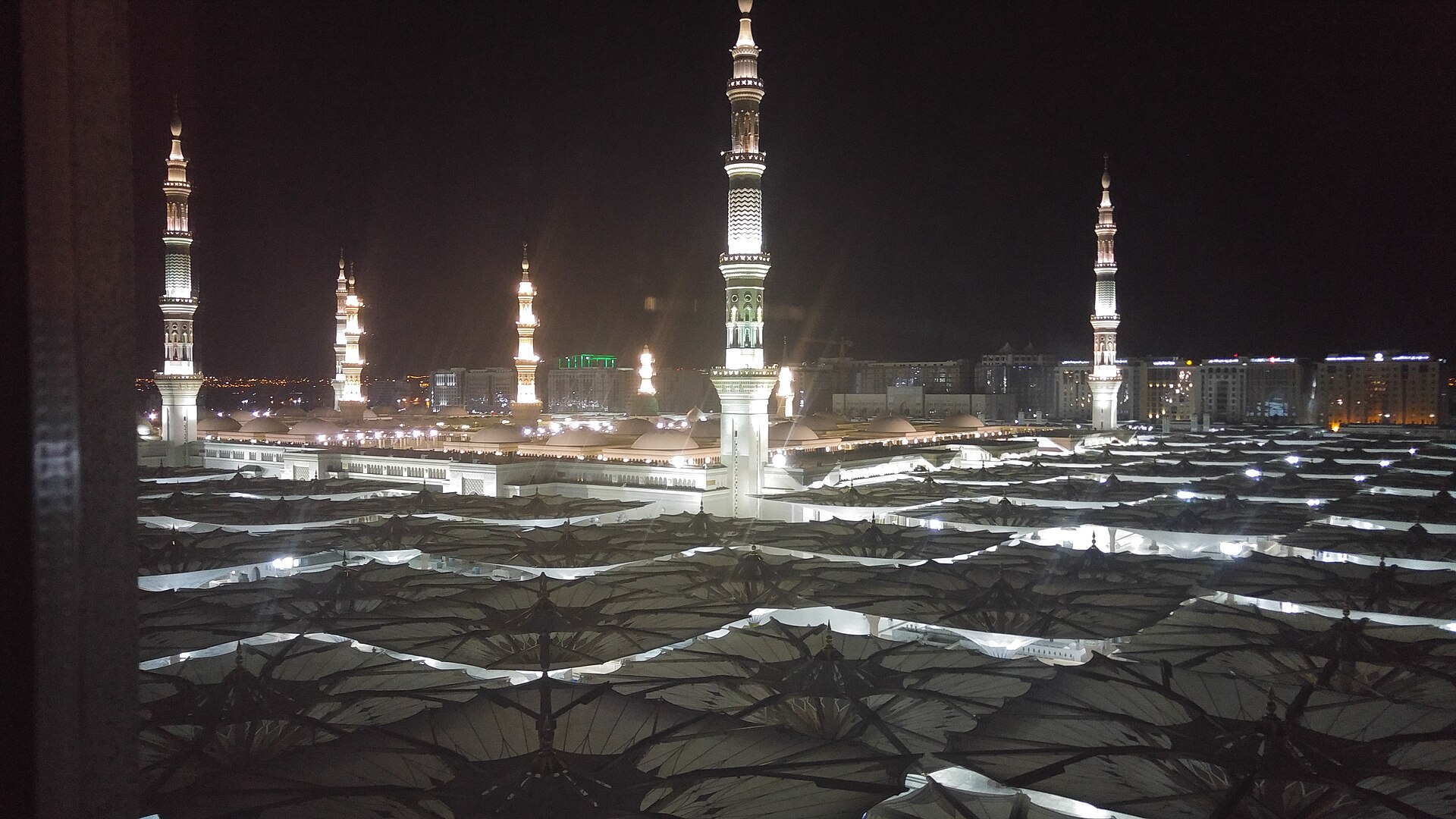
The Prophet’s Mosque in Madinah presents a different but equally acute security challenge. While smaller than the Grand Mosque — its expansion under King Abdullah increased capacity to approximately one million worshippers — Madinah sits 340 kilometres north-northeast of Makkah, requiring its own dedicated air defense umbrella. The two cities cannot be protected by a single battery complex.
Madinah has already experienced a wartime near-miss in the current conflict. Saudi air defenses intercepted a Yemeni missile that crossed near the Prophet’s Mosque while heading toward Israel, according to Saudi military officials. The intercept demonstrated both the reliability of the western defence network and the terrifying proximity of the threat corridor to Islam’s second holiest site.
The General Presidency has deployed what it describes as “comprehensive safety measures” at the Prophet’s Mosque for the final nights of Ramadan, including enhanced security checkpoints, expanded medical teams, and real-time crowd analytics. The Civil Defense directorate has positioned rapid-response fire and rescue units around the mosque perimeter and in the surrounding Madinah districts.
But the core military challenge remains the same as in Makkah: a Patriot battery intercepts missiles using explosive fragmentation warheads that create their own debris field. A successful intercept directly over the Prophet’s Mosque during prayer times would rain metal fragments onto hundreds of thousands of exposed worshippers in the outdoor prayer areas. Defence planners must weigh engagement zones — the geographic areas where interceptors are authorized to engage incoming threats — against the risk of debris falling on populated areas. The optimal engagement geometry places the intercept point as far from the mosque as possible, but Iran’s cruise missiles fly low and fast, compressing the available reaction time and forcing later, closer intercepts.
The Muslim World’s Judgment
The 57 member states of the Organisation of Islamic Cooperation have been forced to pass judgment on a conflict that few wished to acknowledge. The OIC General Secretariat condemned Iran’s attacks on neighbouring member states in what it described as an “unacceptable escalation.” The Arab League Secretary-General, Ahmed Aboul Gheit, called the strikes “fully reprehensible” and a “grave Iranian strategic mistake.” The GCC Ministerial Council, convening its 50th extraordinary session, rejected and condemned “in the strongest terms these heinous Iranian attacks,” according to the GCC Secretariat’s official statement.
The religious establishment has been equally direct. Ali al-Qaradaghi, Secretary-General of the International Union of Muslim Scholars, issued a fatwa calling for cessation of hostilities during Ramadan as a “religious obligation.” The fatwa drew on established Islamic jurisprudence that historically prohibited fighting during the sacred months — a tradition that pre-dates Islam and was reinforced by Quranic injunctions.
The significance of these condemnations extends beyond diplomatic protocol. Iran’s decision to launch military strikes against Muslim-majority nations during Ramadan — the religious dimension of the conflict that few have been willing to name directly — has cost Tehran the narrative advantage it initially held as a victim of American and Israeli aggression. The framing that served Iran in the first 48 hours of the war — a besieged nation defending itself — collapsed the moment Iranian ordnance began killing Muslims in Kuwait, Bahrain, Qatar, and the UAE during the holiest month of the Islamic year.
The condemnations carry economic weight alongside their diplomatic significance. Saudi Arabia is the OIC’s largest economy and its most generous development aid donor to Muslim-majority countries. The Kingdom’s annual Hajj quota allocations — which determine how many pilgrims each country can send — represent a form of soft power that touches every Muslim-majority government directly. A Saudi Arabia that has demonstrably defended the holy sites under fire will enter post-war diplomatic negotiations with enhanced standing that no amount of petroleum diplomacy could have purchased.
Russia and China, notably, have declined to condemn Iran’s strikes on Gulf states, despite both nations holding OIC observer status and governing significant Muslim populations. Moscow’s silence is calculated: Russia benefits from the oil price surge and from any fracture in US-Gulf relations. Beijing’s position is more ambiguous. China depends heavily on Gulf energy imports — Saudi Arabia alone supplied 17 percent of Chinese crude oil imports in 2025, according to Chinese customs data — yet refuses to antagonize Tehran, whose oil China continues to purchase at steep discounts through the very strait Iran claims to have closed.
Can Saudi Arabia Host Hajj 2026 Under These Conditions?
Hajj 2026 is scheduled to begin around May 24. The pilgrimage is expected to draw approximately 1.8 million international pilgrims to Makkah and Madinah over a compressed period of five days. If the Iran war has not ended — or at least entered a durable ceasefire — by that date, Saudi Arabia faces the most consequential decision of the conflict: whether to proceed with Hajj under wartime conditions or to invoke the rarely used Islamic principle of darurah (necessity) to restrict or cancel the pilgrimage.
The Kingdom has already begun examining this dilemma. A Hajj proceeding under active missile threat from Iran would require an unprecedented security operation. Every flight carrying pilgrims into Jeddah’s King Abdulaziz International Airport would need to be routed through airspace verified clear of Iranian drones and cruise missiles. The road network connecting Jeddah to Makkah — 80 kilometres of highway carrying tens of thousands of buses — would present a concentrated target corridor.
The precedent of COVID-19 provides partial cover. Saudi Arabia restricted Hajj to just 1,000 domestic pilgrims in 2020 and 60,000 in 2021, citing public health necessity. A similar restriction citing security conditions would be less politically damaging than a cancellation. But even a restricted Hajj under wartime conditions carries risks that a viral pandemic did not: pandemics do not send ballistic missiles into crowds. The logistics have been further complicated by the collapse of Gulf aviation and the stranding of millions of travelers, prompting Saudi Arabia to extend all expired visas to April 18 — the same date first Hajj arrivals are expected.
| Scenario | Conditions Required | Probability (Analyst Assessment) | Consequence for Saudi Arabia |
|---|---|---|---|
| Full Hajj — no restrictions | Ceasefire or war ended before May 1; Iranian threat neutralised | 20-25% | Strongest possible vindication of Custodian mandate |
| Restricted Hajj — domestic + limited international | Ceasefire holding but fragile; reduced flight operations into Jeddah | 30-35% | Acceptable — COVID precedent provides cover |
| Minimal Hajj — token domestic only | Active hostilities ongoing; Hejaz airspace contested | 25-30% | Damaging but survivable — similar to COVID 2020 |
| Hajj suspended entirely | Direct Iranian strikes on Hejaz infrastructure or credible, specific intelligence of planned attack on holy cities | 10-15% | Catastrophic for Saudi legitimacy; strengthens Iranian narrative |
The decision point will arrive in late April, when Saudi Arabia must confirm or modify its Hajj visa allocations and begin the logistics of receiving international pilgrims. By that date, the war will have been underway for nearly two months. The interceptor sustainability question — whether Saudi Arabia has enough Patriot and THAAD rounds remaining to maintain coverage through a full Hajj cycle — may matter more than any diplomatic negotiation.
The War Within the War
The prevailing narrative frames the Iran war as a strategic conflict between states: the United States and Israel versus Iran, with Gulf states caught in the crossfire. This framing is incomplete. Beneath the geopolitical layer runs a sectarian current that Iran has catastrophically misjudged.
Iran’s clerical leadership has spent four decades positioning the Islamic Republic as the champion of all Muslims — Sunni and Shia alike — against Western imperialism and Israeli occupation. The destruction wrought by US and Israeli strikes on Iranian cities, including at least 10,000 damaged or destroyed residential homes in Tehran alone according to the Tehran governor’s office, initially generated sympathy across the Muslim world. The “Islamic 9/11” framing, widely circulated on social media, drew parallels between the bombing of Iran during Ramadan and the shock of the September 11 attacks.
Iran’s retaliatory strikes on Gulf states demolished that sympathy in a matter of days. Bombing fellow Muslim-majority nations — members of the OIC, partners in Islamic solidarity — during Ramadan placed Iran in violation of principles that the Islamic Republic claims to uphold. The fatwa issued by the International Union of Muslim Scholars was not directed at the United States or Israel. It was directed at Iran. The distinction is devastating for Tehran’s soft power across the Sunni world, which constitutes roughly 85 percent of the global Muslim population.
The Laylat al-Qadr dimension sharpens this dynamic. Every Muslim who watched footage of worshippers at the Grand Mosque on the night of March 16 understood intuitively that the scene was possible only because Saudi Arabia’s air defense network held. The Kingdom did not merely host worship — it defended worship. The visual contrast between Iranian missiles flying over the Arabian Peninsula and millions of Muslims praying peacefully in Makkah is a strategic communications asset that no Saudi public relations operation could have manufactured.
The dynamics of Islamic solidarity have shifted in ways that will outlast the conflict. Turkey, which under President Erdogan has positioned itself as an alternative centre of Sunni leadership, has been notably restrained in its support for Iran during Ramadan — a calculated decision that reflects Ankara’s unwillingness to be seen endorsing attacks on fellow Muslims during the holiest month. Indonesia, the world’s most populous Muslim-majority nation with 230 million Muslims, summoned Iran’s ambassador to Jakarta on March 5 to protest the strikes on Gulf states. Malaysia’s Prime Minister Anwar Ibrahim called the attacks “unconscionable” during a joint statement with Pakistan’s Shehbaz Sharif on March 10.
Iran’s sectarian miscalculation may prove to be the war’s most durable consequence. The 2023 Saudi-Iranian rapprochement, brokered by China, had begun to dissolve decades of mutual suspicion. Eleven days of war destroyed three years of Gulf-Iran detente. The religious dimension — strikes on Muslim nations during Ramadan, the implicit threat to Islam’s holiest sites — has added a layer of damage that no post-war diplomatic reset can easily repair. Saudi Arabia will carry the Custodian’s shield long after the missiles stop. Iran will carry the stigma of having fired them during the holiest month.
Frequently Asked Questions
What is Laylat al-Qadr and when does it fall in 2026?
Laylat al-Qadr, the Night of Decree, is the holiest night in the Islamic calendar. Muslims believe worship on this night equals one thousand months of devotion. In 2026, the 27th of Ramadan falls on the evening of March 16. The Grand Mosque in Makkah typically receives its highest attendance of the year on this night, with over two million worshippers expected.
Has Iran directly targeted Makkah or Madinah during the 2026 war?
Iran has not targeted the Hejaz region containing Makkah and Madinah during the current conflict. Iranian strikes have concentrated on the Eastern Province oil infrastructure, military bases hosting US assets, and diplomatic compounds in Riyadh. Targeting the holiest sites in Islam would constitute an act of sacrilege that would unite the entire Muslim world against Iran, making it a self-defeating strategic choice.
What air defense systems protect the Two Holy Mosques?
Saudi Arabia has deployed Patriot PAC-3 missile batteries around both Makkah and Madinah since at least 2018. Additional batteries were moved westward from the Eastern Province in the first week of the Iran war to reinforce the Hejaz corridor. The Kingdom also operates THAAD systems for higher-altitude intercepts. The combined system has achieved an 85 to 90 percent intercept rate against Iranian ballistic missiles across all Saudi territories.
Could Saudi Arabia cancel Hajj 2026 because of the Iran war?
Saudi Arabia faces a decision in late April on whether to proceed with Hajj 2026, scheduled for around May 24. Options range from a full pilgrimage under ceasefire conditions to a restricted or suspended Hajj citing security necessity. The COVID-19 precedent, when Saudi Arabia limited Hajj to 1,000 domestic pilgrims in 2020, provides a framework for restrictions without full cancellation.
What happened during the 1979 Grand Mosque seizure?
On November 20, 1979, approximately 500 armed militants led by Juhayman al-Otaybi seized the Grand Mosque in Makkah, declaring al-Otaybi’s brother-in-law as the Mahdi. The siege lasted two weeks before Saudi forces, assisted by French commandos, retook the complex. At least 255 people were killed, including 127 Saudi soldiers. Sixty-three captured militants were publicly executed in January 1980.
How many people have visited the Two Holy Mosques during Ramadan 2026?
Over 32 million worshippers and Umrah performers visited the Grand Mosque in Makkah and the Prophet’s Mosque in Madinah in just the first ten days of Ramadan 2026. By the 20th day, 57.6 million had attended prayers at the Grand Mosque alone, while 15.6 million had performed Umrah. Saudi Arabia recorded 904,000 Umrah pilgrims in a single day during the first week of Ramadan.
What is the Custodian of the Two Holy Mosques title?
The Custodian of the Two Holy Mosques is the official title used by Saudi monarchs since King Fahd adopted it in 1986. It signifies the monarch’s sacred obligation to ensure safe access to the Grand Mosque in Makkah and the Prophet’s Mosque in Madinah for all Muslims. The title is the foundation of the Saudi royal family’s religious and political legitimacy within the Islamic world.