WASHINGTON — White House Press Secretary Karoline Leavitt produced three contradictory formulations of the Trump administration’s position on an Iran-US Strait of Hormuz toll arrangement during a single briefing on April 8, 2026 — walking back President Donald Trump’s proposal for a “joint venture” with Iran while simultaneously declining to disavow it. The retraction, which came less than 24 hours after Trump told ABC News the toll plan was “a beautiful thing,” leaves the United States entering the April 10 Islamabad bilateral talks with a documented record of internal contradiction that Iranian negotiators can deploy at will.
The damage is not that Trump proposed the idea. The damage is that Iran now possesses both a presidential endorsement and an official retraction — two mutually exclusive US positions produced within the same news cycle — and can cite whichever serves its interests at any given moment during the talks. Trump’s original proposal, analyzed here on April 8, raised questions under UNCLOS Article 26 and the 1857 Copenhagen Convention precedent. The walkback raises a different question: whether the United States can maintain a coherent negotiating position on Hormuz transit for 48 consecutive hours.
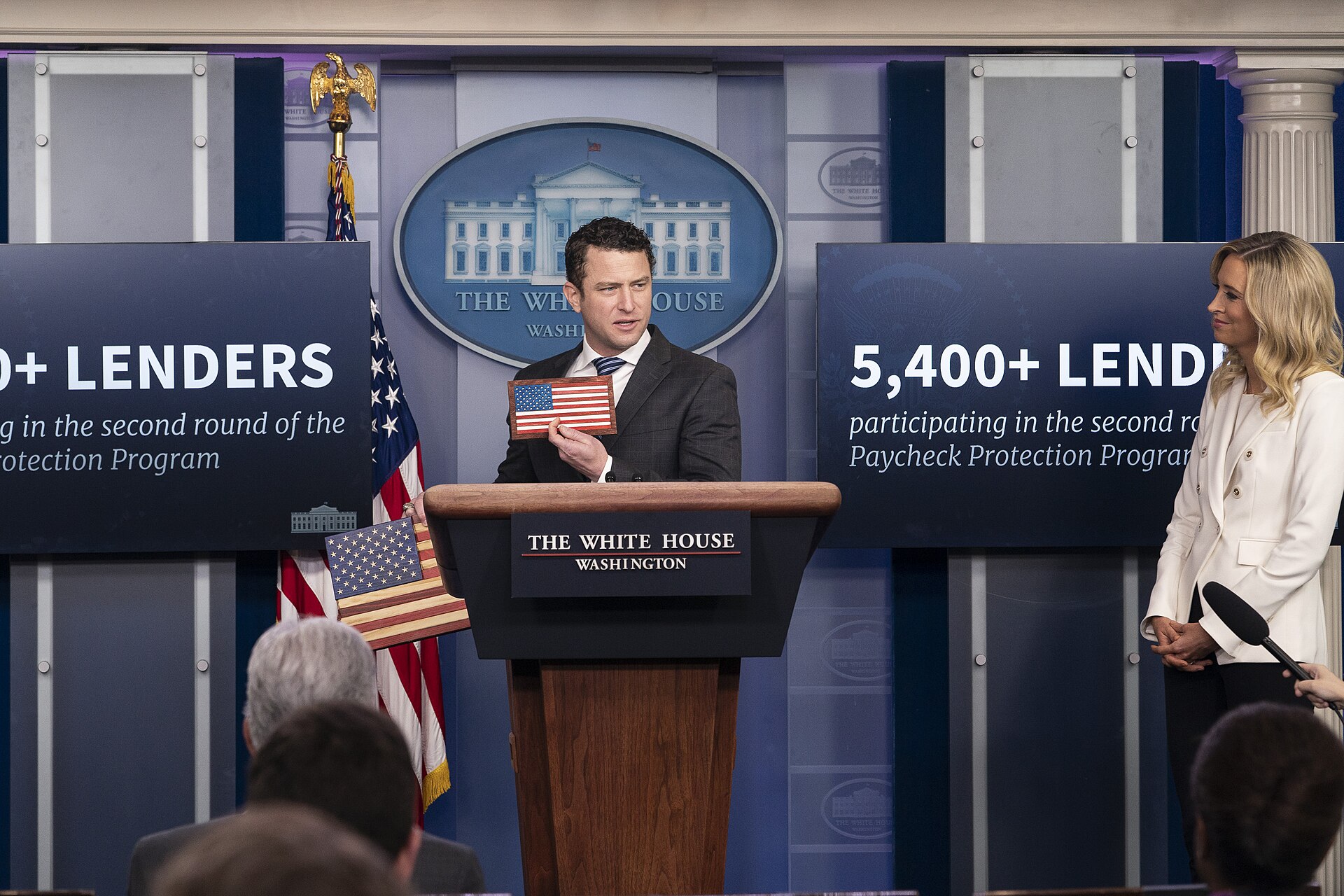
Table of Contents
Three Statements, One Briefing, Zero Clarity
Trump’s ABC News interview with Jonathan Karl, published at 8:51 AM ET on April 8, contained no ambiguity. Asked directly whether he approved Iran’s plan to charge vessels a fee for Hormuz transit, Trump replied: “We’re thinking of doing it as a joint venture. It’s a way of securing it — also securing it from lots of other people. It’s a beautiful thing.” The statement appeared to validate Iran’s Hormuz Transit Fee Law, passed by Iran’s Parliament on March 31, which formalized a toll of up to $2 million per voyage framed as “security and environmental maintenance,” according to TRT World and Courting the Law.
Leavitt’s briefing later that day attempted to contain the fallout. It did not.
Her first formulation, reported by CNBC and The Hill: “It’s an idea the president has floated, as you know, and it’s something that will continue to be discussed over the course of the next two weeks. But the immediate priority of the president is the reopening of the Strait without any limitations, whether in the form of tolls or otherwise.”
Her second formulation, reported by the Washington Times: “The joint venture is something that was proposed by the president, but he was very clear in his statement last night: He wants to see the strait reopened immediately, without limitation, and that’s something we’re going to hold them to.”
The Middle East briefing 3,000+ readers start their day with.
One email. Every weekday morning. Free.
Her third formulation, reported by CNBC and NOTUS: the toll proposal is “not something we’ve said that we’ve definitively accepted.”
Read together, the three statements say: the idea will be discussed over the next two weeks; the president wants no tolls whatsoever; and the administration has not definitively accepted the idea. The first and second contradict each other. The third contradicts both by introducing the qualifier “definitively,” which implies partial acceptance remains possible. None of them retract Trump’s own words from the ABC interview.
Is This the Second Hormuz Walkback in 29 Days?
On March 10, Energy Secretary Chris Wright posted on social media that “The U.S. Navy successfully escorted an oil tanker through the Strait of Hormuz.” Leavitt walked it back within hours. “The U.S. Navy has not escorted a tanker or vessel at this time,” she said, according to Al Jazeera and CNBC. Wright’s post was deleted. Brent crude and WTI each fell more than 17 percent on the erroneous claim, per CNBC.
On March 30, the White House stated that Trump “doesn’t require Strait of Hormuz reopened to be ready to end Iran war,” according to TIME. That position — that Hormuz could remain closed during and after a ceasefire — lasted nine days before the April 8 ceasefire framework required toll-free passage as an immediate condition.
The timeline produces three distinct and incompatible White House positions on Hormuz in under two weeks. March 30: Hormuz reopening is not required. April 8 morning: the US and Iran should operate a joint toll venture on Hormuz. April 8 afternoon: Hormuz must reopen immediately, without any limitations including tolls. Each position supersedes the previous one. Each remains on the public record.
How Can Iran Use the Contradiction at Islamabad?
The Islamabad bilateral talks, scheduled for April 10, will place US Special Envoy Steve Witkoff, Vice President JD Vance, and senior adviser Jared Kushner across from an Iranian delegation led by Parliament Speaker Mohammad Bagher Ghalibaf. Iran’s Supreme National Security Council confirmed, via Turkiye Today on April 9, that the delegation enters with “complete distrust toward the American side.”
Iran’s negotiating advantage from the walkback operates on two tracks. On the first track, the Trump ABC statement validates Iran’s position that Hormuz transit can carry a commercial fee. Iran’s Hormuz Transit Fee Law, which established the $2 million per-voyage charge, is the domestic legal instrument for precisely the arrangement Trump described as “a beautiful thing.” The Iranian delegation can argue — accurately — that the US President endorsed their legislation before his own press secretary attempted to retract it.
On the second track, the retraction itself becomes evidence of US unreliability. If the White House cannot sustain a Hormuz position for 12 hours, any commitment made at Islamabad is subject to the same half-life. Iran’s SNSC statement that the US “has been begging for a ceasefire for over a month,” reported by Pakistan Today on April 9, frames the entire negotiation as proceeding from American weakness. The walkback feeds that frame without distortion.
Tasnim News Agency, the IRGC-affiliated outlet, published “10 signs of the great defeat of the enemy” on April 8. Sign 10: “The enemy claimed Iran must accept limitations on its missile capabilities either diplomatically or by force. There is no trace of this in the 10-point plan that Trump was forced to accept,” according to Republic World. The article cited continuing Iranian control over Hormuz as a central feature of Iran’s claimed victory. Trump’s “joint venture” statement, broadcast before the walkback, supplied Tasnim with a direct presidential quote endorsing that claim.
Iran’s 10-point plan includes, at Point 7, the requirement that Hormuz passage occur “in coordination with Armed Forces of Iran.” Foreign Minister Abbas Araghchi confirmed this language publicly, telling Al Jazeera on April 8 that shipping resumption requires passage “via coordination with Iran’s Armed Forces and with due consideration of technical limitations.” Leavitt’s “without any limitations” formulation and Araghchi’s “with due consideration of technical limitations” are irreconcilable. The gap between them is the space in which the April 10 talks will either succeed or fail.
The Freedom of Navigation Problem
The legal consequence of the original proposal, which the walkback does not erase, extends beyond the Islamabad talks. Neither Iran, the United States, nor Israel has ratified the United Nations Convention on the Law of the Sea. The US Freedom of Navigation program, which asserts transit passage through international straits as customary international law, depends on the consistent US legal position that no coastal state can impose fees, restrictions, or conditions on passage through straits like Hormuz.
Imposing transit fees is a violation of the rules of transit passage. There is no legal basis under international law for a coastal state to charge fees in an international strait like Hormuz.
James Kraska, Professor of International Maritime Law, US Naval War College — Just Security, 2026
A US President proposing to co-administer a toll on Hormuz transit directly undermines the legal foundation of that program. Mark Nevitt, Commander JAGC (ret.) and Associate Professor at Emory University School of Law, wrote in Just Security that Iran’s $2 million transit fee “is neither linked to any service nor applied without discrimination — it is a selective toll imposed for purely coercive purposes.” Trump’s proposal to make that toll a bilateral US-Iran enterprise would, if implemented, convert a coercive instrument into a jointly sanctioned commercial operation — precisely the outcome Iran’s Parliament legislated on March 31.
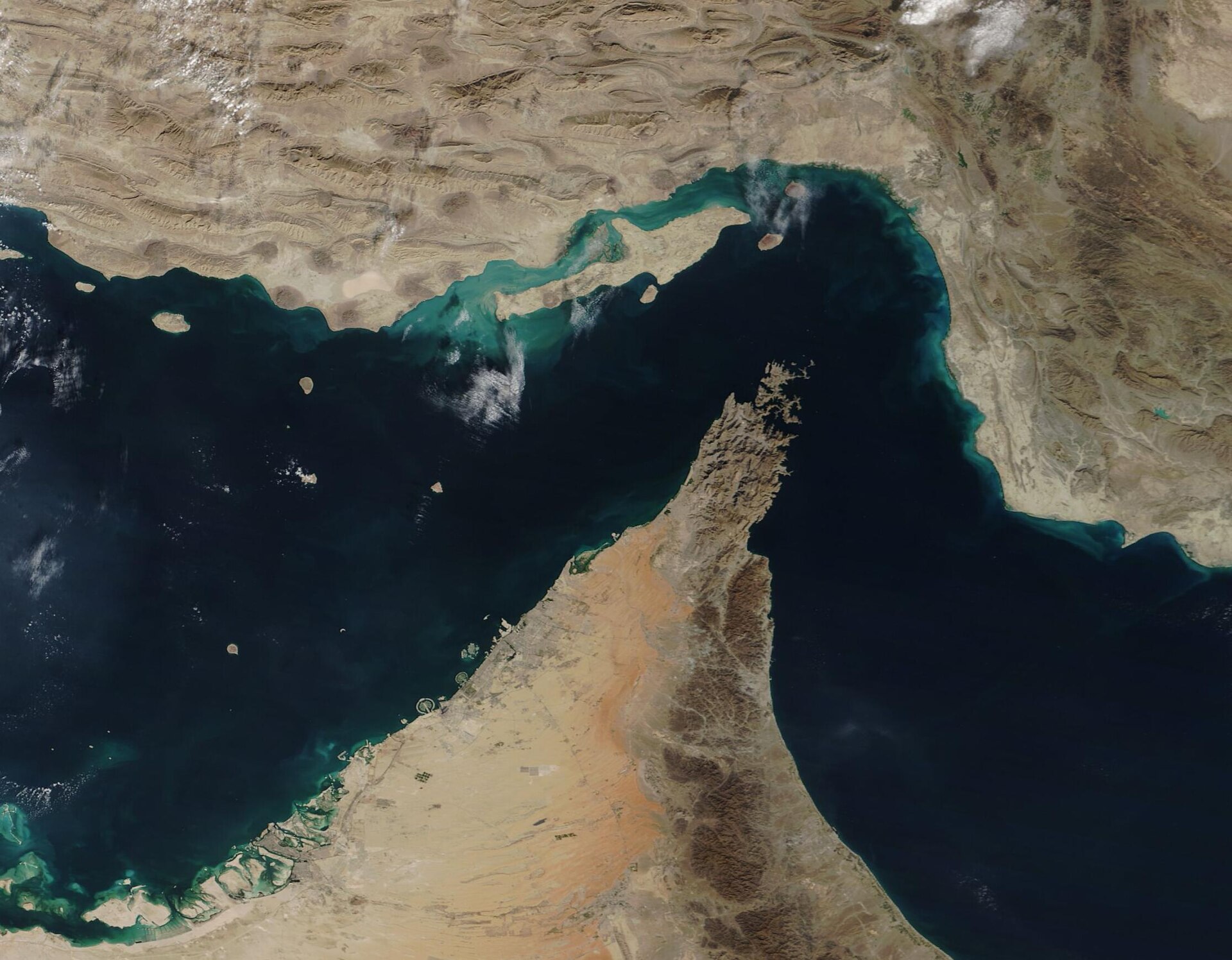
The walkback does not solve this problem. A presidential statement endorsing a toll structure exists on the record regardless of what the press secretary said hours later. Any future US legal challenge to Hormuz transit fees — at the International Court of Justice, the International Tribunal for the Law of the Sea, or in diplomatic correspondence — will face the counterargument that the US President himself proposed the arrangement. Iran allowed only 15 ships through Hormuz on the ceasefire’s first day, far below the pre-war average of 138 daily transits tracked by Windward. The legal framework governing that passage is now contested not only by Iran but by the US President’s own words.
Islamabad Talks: The Delegation and the Distrust
The US delegation to Islamabad — Vance, Witkoff, and Kushner — arrives with the walkback less than 48 hours old. The Iranian delegation is led by Ghalibaf, who served as commander of IRGC Aerospace Force from 1997 to 2000, according to NBC News. The principal-level bilateral between Vance and Ghalibaf was confirmed by The Tribune on April 8.
Saudi Arabia was excluded from the April 10 bilateral format after having held a co-guarantor seat at the March 29-30 round. The kingdom’s absence means no Gulf producer state will be present to challenge Iran’s Hormuz framing directly.
NOTUS reported on April 8 that Leavitt simultaneously described reports of Hormuz closure as “false” while shipping companies monitoring the strait directly contradicted her. This factual dispute — over whether Hormuz is open, partially open, or closed — adds a fourth layer of White House-reality divergence to the three formulations on the toll. Iran blocked Chinese-flagged tankers on April 9, less than 24 hours after the ceasefire was supposed to restore transit, demonstrating that even the ceasefire’s own terms on passage remain unimplemented.
Iran’s ceasefire halt order faces its own enforcement questions, with decentralized IRGC command structures complicating Tehran’s ability to guarantee that local naval commanders in the strait will honor any agreement reached at Islamabad. The combination of US messaging incoherence and Iranian command fragmentation means both sides of the April 10 table carry credibility deficits — but only one side has a transcript of the other’s president contradicting his own press secretary on the core issue under negotiation.
Background and Context
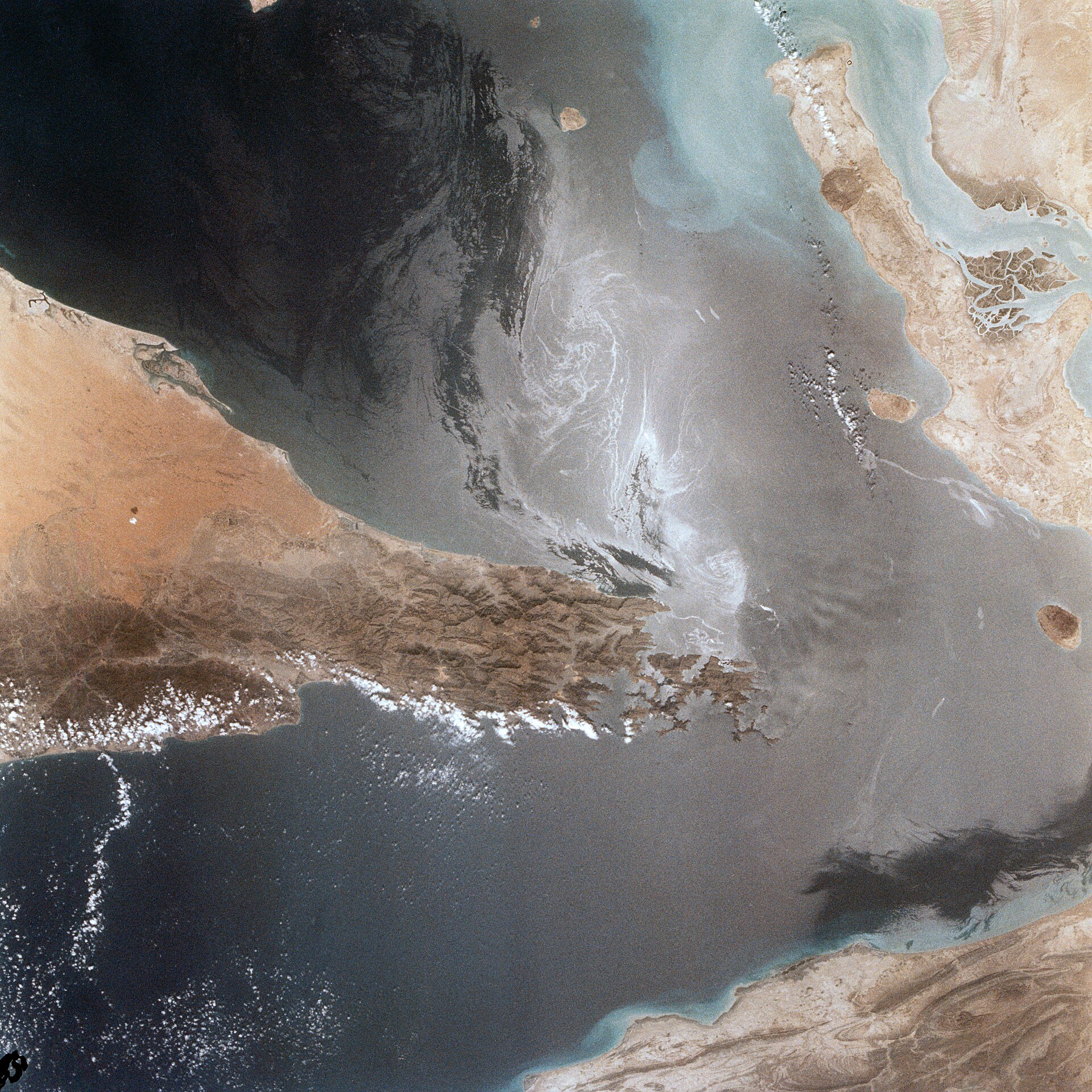
The Iran-US war, now in its 37th day, has reduced Hormuz transit to intermittent passage of 15-20 vessels per 24-hour period. The Islamabad Accords framework, negotiated through Pakistani and Egyptian mediation, established a phased ceasefire with Hormuz reopening as a Phase 1 condition and the toll question deferred to Phase 2.
Araghchi has called for “a new protocol for the Strait of Hormuz” negotiated “between the countries that lie on both sides of the strait” — a formulation that would include Iran and Oman but exclude the United States. Trump’s “joint venture” proposal inserted the US into precisely the bilateral framework Araghchi was constructing, while the walkback attempted to remove it.
Iran accused the United States of three ceasefire violations within 24 hours of the agreement taking effect, citing Israeli strikes on Lebanon that Tehran characterized as US-sanctioned. The Iranian delegation arrives at Islamabad with this grievance layered on top of the Leavitt walkback. The SNSC’s “complete distrust” framing, reported by Turkiye Today, predates the walkback but is reinforced by it.
The Brent crude benchmark dropped from $109.27 to $91.70 — a $17.57 decline — in the 48 hours surrounding the ceasefire announcement. Aramco’s May Official Selling Price, set at +$19.50 per barrel above the Oman/Dubai benchmark when Brent was at $109, now sits $11-14 per barrel above the spot market. The June OSP repricing decision, due around May 5, will occur against a backdrop of unresolved Hormuz transit terms that the White House has taken three positions on in under two weeks.
FAQ
What exactly did Trump propose in the ABC News interview?
Trump proposed a US-Iran “joint venture” to collect fees from ships transiting the Strait of Hormuz. He made the statement in response to a direct question from ABC’s Jonathan Karl about whether he approved Iran’s plan to charge vessels. Trump called the arrangement “a beautiful thing” and described it as “a way of securing it — also securing it from lots of other people.” Iran’s Parliament had already passed a law on March 31 establishing a toll of up to $2 million per voyage, meaning Trump appeared to endorse legislation Iran had already enacted domestically.
Did Leavitt fully retract the joint venture proposal?
No. Leavitt’s three formulations during the April 8 briefing stopped short of a full disavowal. Her statement that the idea “will continue to be discussed over the course of the next two weeks” kept the joint venture alive as a future agenda item even as she insisted on “no limitations” for immediate Hormuz reopening. The qualifier “not something we’ve said that we’ve definitively accepted” implies a spectrum between rejection and acceptance rather than a clean retraction. No White House official has stated that the joint venture is off the table permanently.
How does this affect the April 10 Islamabad bilateral talks?
Iran enters the talks holding two contradictory US positions in writing: a presidential endorsement of the toll structure and an official walkback. The Iranian delegation, led by Parliament Speaker Ghalibaf, can use the Trump statement to argue that the US President validated Iran’s Hormuz fee law, or use the walkback to argue that US commitments are unreliable and therefore any Islamabad agreement requires additional guarantees and enforcement mechanisms. Either deployment serves Iran’s interest in extending negotiations and preserving its de facto control over strait transit during the interim period.
What is the Chris Wright precedent from March 10?
Energy Secretary Chris Wright posted that the US Navy had “successfully escorted an oil tanker through the Strait of Hormuz.” Leavitt walked it back within hours, confirming the Navy had not escorted any vessel. Wright’s post was deleted. The false claim triggered a Brent crude and WTI decline of more than 17 percent each. The Wright episode established a pattern: senior administration officials make definitive Hormuz statements that the White House subsequently retracts, with each cycle eroding the credibility of the next US position on the strait.
What are Iran’s stated terms for Hormuz reopening?
Iran’s 10-point plan, Point 7, requires that Hormuz passage occur “in coordination with Armed Forces of Iran.” Foreign Minister Araghchi specified that transit must proceed “with due consideration of technical limitations.” Araghchi has also called for a new bilateral Hormuz protocol negotiated between coastal states — Iran and Oman — that would exclude the United States from the governance framework entirely. These terms are incompatible with Leavitt’s “without any limitations” formulation, and the gap between the two positions defines the central unresolved issue at Islamabad.