
RIYADH — Iran named its price for peace on March 12 — reparations for American and Israeli strikes, international guarantees against future aggression, and formal recognition of its nuclear rights. Within hours, the terms were dismissed in Washington as a non-starter. But in Riyadh, where Crown Prince Mohammed bin Salman has spent thirteen days absorbing Iranian missiles while quietly building the most consequential diplomatic position of his career, the reaction was something closer to relief. Iran’s maximalist demands ensured that the war MBS never started but has learned to use would not end before he was ready.
The conventional reading of this conflict places Saudi Arabia as a reluctant bystander — a nation dragged into a war between the United States, Israel, and Iran that it neither provoked nor desired. That reading is incomplete. Thirteen days of Iranian drone and missile strikes have cost Saudi Arabia two civilian lives, temporary disruption to oil infrastructure, and approximately $1.2 billion in air defense expenditures, according to defense analysts cited by Bloomberg. In return, Riyadh has gained something it could not have purchased at any price during peacetime: the simultaneous destruction of Iran’s nuclear program, the degradation of its missile and drone arsenals, a defence pact with the world’s only superpower, and the undivided attention of every major capital on earth.
The question that matters is not when this war ends. The question is what Mohammed bin Salman intends to extract from the ending.
Table of Contents
- What Does MBS Actually Want From This War?
- Why Did Iran Set Conditions It Knows Washington Will Reject?
- The Military Calculus That Favours Patience
- The Five Endgame Scenarios Washington Is Debating
- Can Saudi Arabia Afford a Long War?
- Prince Faisal’s Backchannel and the Diplomacy Nobody Sees
- Why a Premature Ceasefire Is Saudi Arabia’s Worst Outcome
- What Role Does Pakistan Play in the Endgame?
- How Does the Hormuz Blockade Change the Calculus?
- The Endgame Probability Matrix
- The War After the War
- Frequently Asked Questions
What Does MBS Actually Want From This War?
Mohammed bin Salman’s war aims are not identical to Washington’s, and the gap between the two sets of objectives will determine how this conflict concludes. The United States entered the fight to destroy Iran’s nuclear weapons program, degrade its ballistic missile capability, and — in the most optimistic reading of the Trump administration’s intentions — create conditions for regime change in Tehran. Saudi Arabia shares the first two goals. The third terrifies Riyadh more than any Iranian missile.
Princeton scholar Bernard Haykel, one of the few academics with direct access to the Saudi leadership, told Bloomberg that MBS’s principal fear is not a strong Iran but a collapsed one. “He realises that Iran has an arsenal of short-range missiles that can do tremendous damage to oil facilities and vital installations,” Haykel said. “His main concern is not a weakened Iran, but an Iran that has no state or ends up in chaos and civil war, as chaos in Iran would spill over into Saudi Arabia.”
This insight reframes the entire Saudi position. While the Pentagon measures success in targets destroyed — Trump told Axios on March 11 that there is “practically nothing left” to hit — Riyadh measures success in outcomes shaped. MBS wants Iran’s military capability permanently degraded without the Iranian state disintegrating. He wants the regime weakened enough to accept a new regional order in which Saudi Arabia holds the balance of power, but strong enough to govern its own territory and prevent the kind of militia-state chaos that consumed Iraq, Libya, and Syria.
Saudi Arabia’s specific objectives, distilled from diplomatic communications, defence briefings, and royal family sources, form a hierarchy of interests that diverges from Washington’s at critical junctures.
| Priority | Objective | Status (Day 13) | Alignment with US |
|---|---|---|---|
| 1 | End Iranian strikes on Saudi territory | Ongoing — reduced 90% from peak | Full alignment |
| 2 | Destroy Iran’s nuclear weapons capability | Largely achieved | Full alignment |
| 3 | Degrade Iranian missile/drone arsenals | Substantially achieved | Full alignment |
| 4 | Reopen Strait of Hormuz to Saudi oil exports | Blocked — mines and IRGC Navy remain | Partial alignment |
| 5 | Preserve Iranian state integrity (prevent civil war) | Uncertain — regime under severe pressure | Divergent |
| 6 | Establish new Gulf security architecture with US guarantee | In progress — defence pact signed Nov 2025 | Conditional alignment |
| 7 | Lock in high oil prices during wartime | Achieved — Brent at $92/barrel | Divergent (US wants low prices) |
| 8 | Eliminate Houthi missile capability permanently | Not yet addressed | Low US priority |
The table reveals a structural tension. On priorities one through three, Saudi and American interests converge completely. On priorities four through eight, they diverge — in some cases dramatically. The United States wants low oil prices to contain domestic inflation ahead of midterm elections. Saudi Arabia benefits from every day oil trades above its fiscal breakeven of $87 per barrel, according to the International Monetary Fund’s latest estimate. The United States is indifferent to the Houthi threat. Saudi Arabia considers it existential. The United States may welcome regime change in Tehran. Saudi Arabia dreads it.
This divergence explains why MBS is in no hurry to see the war end on Washington’s timeline. Every additional day of conflict that degrades Iranian military capability without collapsing the Iranian state serves Saudi interests.
Why Did Iran Set Conditions It Knows Washington Will Reject?
Iranian President Masoud Pezeshkian’s ceasefire conditions, announced on March 12, are designed to fail. Recognition of Iran’s nuclear rights, reparations for the destruction caused by American and Israeli strikes that have killed more than 1,200 Iranians and struck thousands of sites, and binding international guarantees against future military aggression — these are terms that no American president could accept and survive politically, and Tehran knows it.
The conditions serve three purposes, none of which involve achieving peace in the immediate term. First, they position Iran as the reasonable party in the court of global public opinion, particularly in the Global South, where sympathy for a nation attacked without a UN Security Council mandate remains substantial. Second, they buy time for the Islamic Revolutionary Guard Corps to reconstitute whatever missile and drone capacity survives the American bombing campaign. Third, they signal to Russia and China — both of whom have called for a ceasefire — that Iran is open to negotiations in principle, thereby preserving its diplomatic relationships with the two powers most likely to provide reconstruction aid.
For Riyadh, Iran’s maximalist stance is a strategic gift. As long as Tehran refuses terms that Washington could plausibly accept, the war continues, and every day of continuation advances Saudi objectives three through six without requiring Saudi Arabia to fire a single offensive round.
Revolutionary Guard spokesperson Ali Mohammad Naini reinforced this dynamic when he told Iranian state media that “Iran will determine when the war ends.” Speaker of Parliament Mohammad Bagher Ghalibaf went further, declaring on social media: “Certainly we aren’t seeking a ceasefire.” These statements, designed for domestic consumption in Tehran, are read with quiet satisfaction in Riyadh.
The Military Calculus That Favours Patience
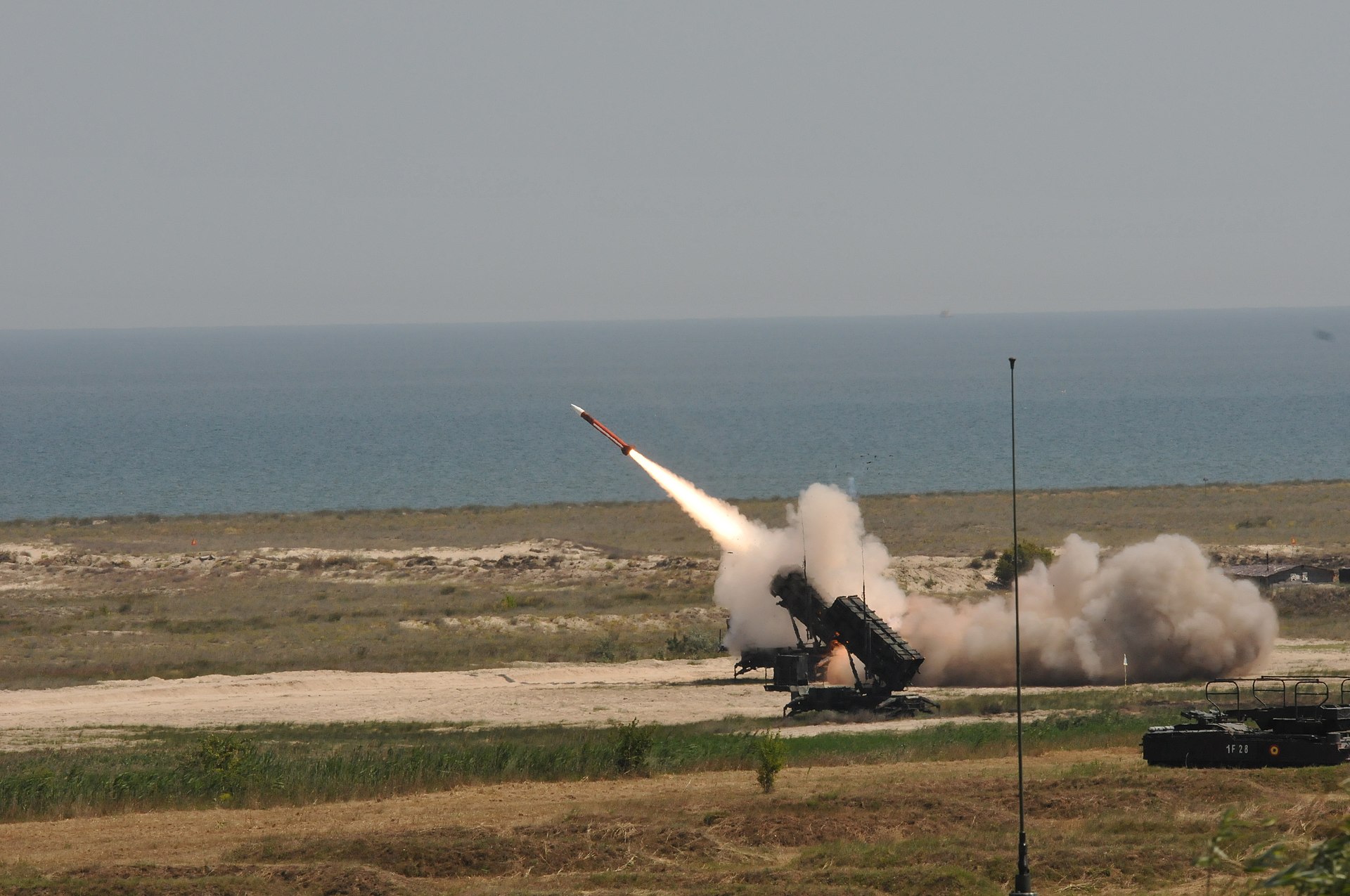
Saudi Arabia’s military position on Day 13 of the conflict is stronger than it was on Day 1, and the trajectory favours continued improvement. The Saudi Defence Ministry has reported intercepting and destroying cruise missiles near Al Jouf, ballistic missiles aimed at Prince Sultan Air Base, drone swarms targeting the Shaybah oil field in the Empty Quarter, and multiple attempts to strike residential areas in Riyadh. The interception rate, while not publicly confirmed at an aggregate level, appears to exceed 90 percent based on the ratio of confirmed strikes to reported launches.
The Pentagon reported on March 10 that Iranian missile fire had dropped 90 percent from its peak in the first week of the war. This decline reflects two factors: the destruction of Iranian launch infrastructure by American strikes, and the depletion of Iran’s finite missile stockpile. Iran entered the war with an estimated 3,000 ballistic missiles and several thousand armed drones, according to the International Institute for Strategic Studies. Two weeks of firing at targets across Saudi Arabia, the UAE, Kuwait, Qatar, Bahrain, Jordan, Iraq, and Israel has consumed a significant portion of that arsenal.
For Saudi Arabia, the mathematics of attrition favour patience. Each day of continued conflict further depletes Iran’s offensive capability while Saudi defensive capacity remains largely intact — backed by American resupply commitments under the strategic defence agreement signed in November 2025. The only variable threatening this equation is the Strait of Hormuz blockade, which imposes an economic cost that will eventually outweigh the strategic benefits of continued conflict.
The cost-exchange ratio tells its own story. Iran’s Shahed-136 drones cost approximately $20,000 each. The Patriot missiles used to intercept them cost between $3 million and $4 million per round, according to the Center for Strategic and International Studies. But this comparison, while dramatic, misses the point. Saudi Arabia’s daily oil revenue at $92 per barrel Brent — approximately $800 million per day for the kingdom’s pre-war output of 9 million barrels per day, less the current production curtailment — dwarfs its daily air defence expenditure. The kingdom can sustain this defensive posture for months.
The Five Endgame Scenarios Washington Is Debating
Axios reported on March 10 that the Pentagon and National Security Council are evaluating five distinct scenarios for war termination. Each scenario has different implications for Saudi Arabia, and MBS is positioned differently in each.
The first scenario is declared victory followed by withdrawal. Trump announces that Iran’s nuclear and missile capabilities have been sufficiently degraded, claims a historic achievement, and orders a drawdown. This is the scenario markets are pricing in, which explains the $32-per-barrel collapse in oil from $120 to $88 between March 8 and March 10. For Saudi Arabia, this is the second-best outcome — it achieves objectives one through three while leaving the Hormuz question unresolved and the Iranian state intact.
The second scenario is a negotiated ceasefire. Iran agrees to verifiable limits on its nuclear and missile programs in exchange for a halt to strikes and eventual sanctions relief. This is the outcome the international community prefers and the one most likely to produce a durable settlement. For Saudi Arabia, the value depends entirely on the terms. A ceasefire that does not address Iranian proxy capabilities — particularly the Houthis in Yemen — would leave Riyadh’s eighth objective unmet.
The third scenario is regime change. Popular uprisings, triggered by the destruction of Iran’s security apparatus and emboldened by the killing of Supreme Leader Ali Khamenei on February 28, topple the Islamic Republic. Trump has pointed to his removal of Venezuelan President Nicolás Maduro in January as a template. But experts caution that the comparison has significant limits. The Islamic Republic has survived 47 years of sanctions, wars, and internal uprisings, entrenching itself with military, religious, and political institutions designed to outlast any single leader. Mojtaba Khamenei’s appointment as the new Supreme Leader suggests the regime is adapting, not collapsing. For Saudi Arabia, this is the worst scenario — a failed state on the eastern shore of the Persian Gulf, with loose missiles, militia factions, and no authority capable of securing the Strait of Hormuz.
The fourth scenario is a special forces mission to physically secure or destroy Iran’s stockpile of highly enriched uranium. This eliminates the nuclear threat definitively but requires boots on the ground in a country still firing ballistic missiles. Israeli Defence Minister Israel Katz signalled support for this approach when he declared the war would continue “without any time limit, for as long as necessary, until we achieve all the objectives.” For Saudi Arabia, this scenario is acceptable only if it does not lead to a broader ground invasion that could trigger the state collapse MBS fears.
The fifth scenario is indefinite low-intensity conflict. American strikes continue at a reduced tempo while Iran fires occasional retaliatory salvos. Neither side escalates to decisive action. The war becomes a chronic condition rather than an acute crisis. This is the worst outcome for the global economy but potentially useful for Saudi Arabia in the medium term — it keeps oil prices elevated, justifies continued American military presence in the Gulf, and gives MBS leverage in every bilateral conversation.
| Scenario | Probability | Saudi Objectives Met | Key Risk | Saudi Preference |
|---|---|---|---|---|
| Declared victory + withdrawal | 35% | 1, 2, 3 (partial 6) | Hormuz unresolved; Iran rebuilds | Second-best |
| Negotiated ceasefire | 25% | 1–6 (if terms include Houthis) | Proxy threat survives; verification fails | Best (if comprehensive) |
| Regime change | 10% | 2, 3 | Failed state; militia chaos; refugee crisis | Worst |
| Special forces nuclear mission | 10% | 2 (definitive) | Escalation; ground war; state collapse | Acceptable with limits |
| Indefinite low-intensity conflict | 20% | 2, 3, 7 (partial others) | Economic fatigue; alliance strain; Hormuz | Tolerable short-term |
Can Saudi Arabia Afford a Long War?
The fiscal arithmetic of wartime Saudi Arabia is more favourable than conventional analysis suggests. The kingdom entered 2026 projecting a budget deficit of 3.3 percent of GDP based on oil prices around $60 per barrel, according to the Saudi Finance Ministry’s December 2025 budget announcement. Oil has not traded below $85 since the war began. At current prices of $92 per barrel for Brent crude, Saudi Arabia is generating revenue well above the IMF’s estimated fiscal breakeven of $87 per barrel.
The war’s financial impact on Saudi Arabia operates through four channels, and three of them are positive in the short term.
Revenue from oil sales has surged. Even with production curtailed by the Hormuz blockade — Saudi Arabia cut output from approximately 9 million barrels per day to an estimated 7.5 million, rerouting exports through the East-West Pipeline to Red Sea terminals — the price increase more than compensates. Revenue per barrel has increased roughly 50 percent from pre-war levels. AGBI reported on March 8 that the Iran war could actually reduce Saudi Arabia’s budget deficit for 2026 compared to pre-war projections.
Aramco’s share price has surged the most since April 2023, according to Bloomberg, adding tens of billions of dollars to the Public Investment Fund’s portfolio value. The PIF holds approximately 98 percent of Aramco shares, meaning every dollar of share price appreciation flows directly to the sovereign wealth fund that finances Vision 2030.
Foreign direct investment commitments have accelerated rather than slowed. Pakistan’s Prime Minister Shehbaz Sharif flew to Riyadh on March 12 accompanied by Deputy Prime Minister Ishaq Dar — officially to discuss security, but bilateral investment packages are invariably on the agenda. Saudi Arabia signed a $5 billion deal to build Chinese combat drones in Jeddah on March 11. The message is clear: war-era Saudi Arabia is open for business.
The negative channel is the Hormuz blockade’s impact on non-oil trade, supply chain disruption to Vision 2030 megaprojects, and the direct cost of air defence operations. Defence analysts estimate the air defence campaign costs Saudi Arabia $80-120 million per day in interceptor missiles, radar operations, and force readiness — roughly $1.5 billion over the first thirteen days. That figure, while substantial, represents less than two days of oil revenue at current prices.
Prince Faisal’s Backchannel and the Diplomacy Nobody Sees
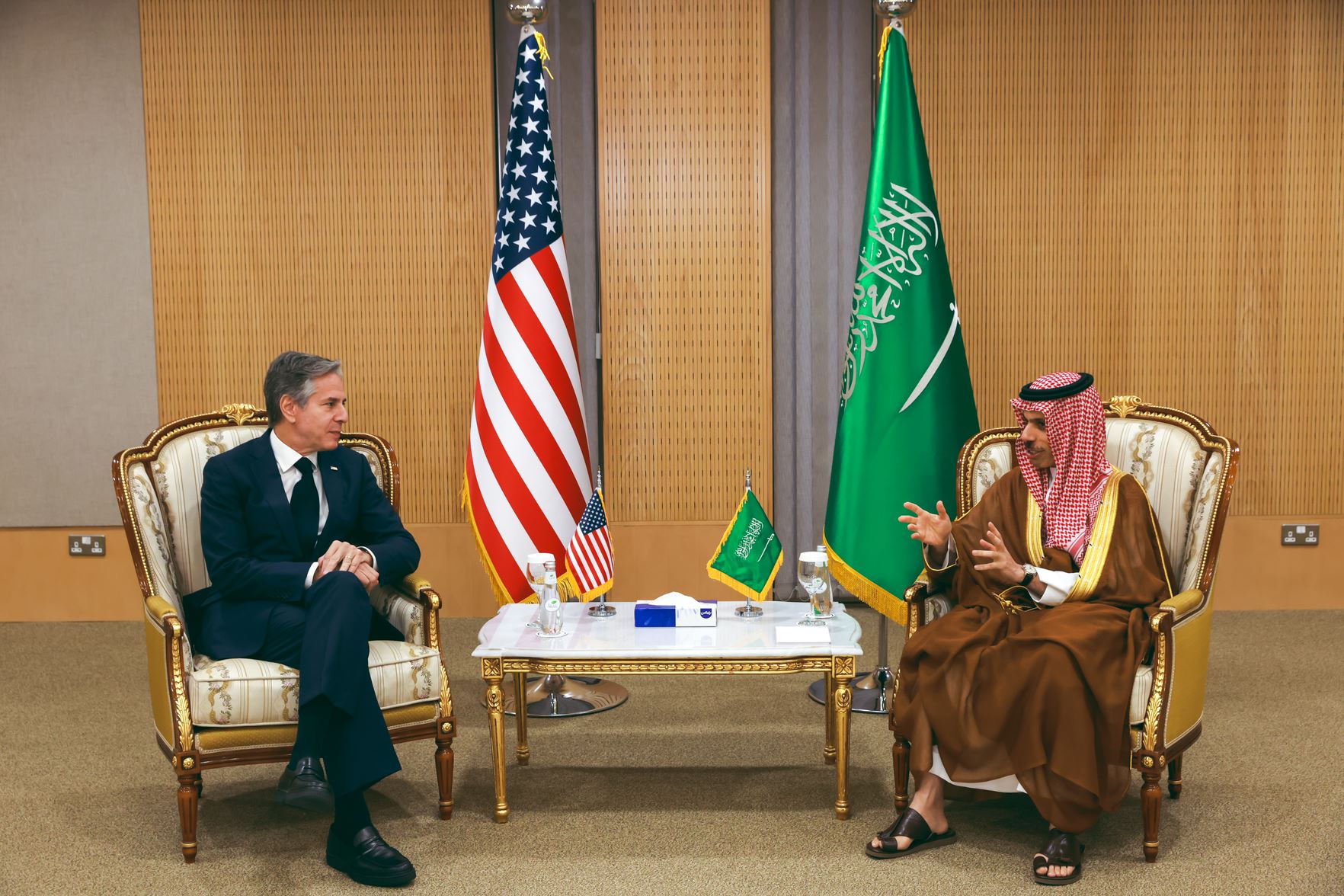
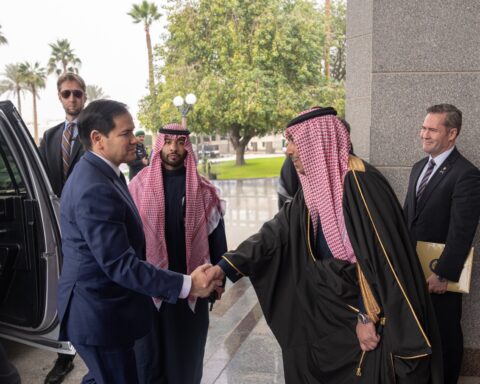
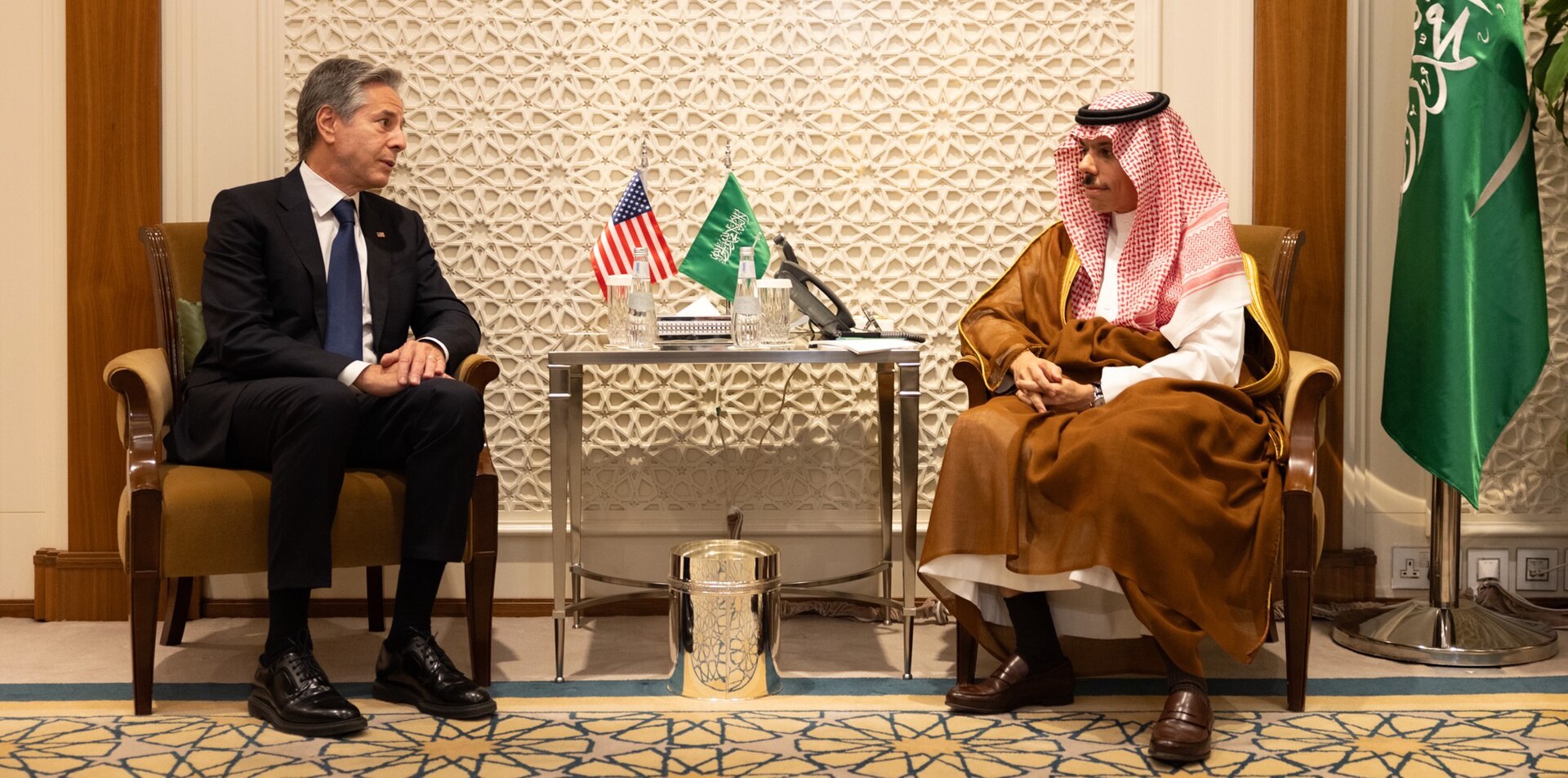
While missiles dominate headlines, the most consequential theatre of this war may be the encrypted phone lines between Riyadh, Tehran, Washington, Moscow, and Beijing. Bloomberg reported on March 6 that Saudi Arabia has intensified its direct engagement with Iran through a diplomatic backchannel that involves both security agencies and diplomatic officials. Foreign Minister Prince Faisal bin Farhan has spoken with Iranian Foreign Minister Abbas Araqchi, US Secretary of State Marco Rubio, and counterparts from Russia, China, and several European nations.
The State Department confirmed on March 12 that Secretary Rubio held his twelfth call with Prince Faisal since the war began — roughly one call per day. The frequency signals not merely coordination but dependence. Washington needs Riyadh’s channel to Tehran because the United States has no direct communication with the Iranian government.
Saudi Arabia’s diplomatic position is unprecedented in modern warfare. It is simultaneously a target of Iranian attacks, an interlocutor with Iran’s government, a military ally of the United States, a peace broker courted by China and Russia, and the custodian of the world’s largest spare oil production capacity. No nation in the last century has occupied all five roles at once during an active conflict.
Prince Faisal’s message to Tehran, as reported by Reuters and CNBC, has been delivered with characteristic Saudi clarity. Saudi Arabia favours a diplomatic settlement. Continued attacks on the kingdom and its energy infrastructure, however, could push Riyadh to respond in kind. The Japan Times reported on March 8 that Saudi Arabia explicitly told Iran not to attack Saudi territory and warned of possible retaliation — a statement that carried additional weight given the arms buildup Saudi Arabia has undertaken since the war began.
The backchannel serves MBS’s endgame in two ways. It ensures that Saudi Arabia will have a seat at any negotiating table, preventing Washington and Tel Aviv from cutting a deal that ignores Gulf security concerns. And it positions Riyadh as indispensable to any ceasefire — the only party trusted enough by both sides to facilitate communication. That indispensability translates directly into leverage when terms are eventually discussed.
Why a Premature Ceasefire Is Saudi Arabia’s Worst Outcome
The conventional assumption is that Saudi Arabia wants this war to end immediately. That assumption misreads the kingdom’s strategic calculus. A premature ceasefire — one that halts American strikes before Iran’s military capability is sufficiently degraded, or one that fails to address the Hormuz blockade and Houthi threat — would leave Saudi Arabia in a worse position than before the war started.
Consider the counterfactual. Before February 28, Iran possessed a functioning nuclear enrichment program, an estimated 3,000 ballistic missiles, the most advanced drone arsenal in the Middle East, proxy armies in Yemen, Iraq, Lebanon, and Syria, and effective control over the Strait of Hormuz. Saudi Arabia lived with this threat through a combination of American security guarantees, regional diplomacy (including the China-brokered détente of 2023), and massive defence spending.
A ceasefire that restores the pre-war status quo — or anything close to it — negates thirteen days of strategic gain. Iran would retain whatever military capability survived the bombing. It would claim victimhood and attract reconstruction aid from Russia and China. The Houthis would remain armed and hostile. And the three years of diplomatic normalization that Saudi Arabia invested in from 2023 to 2025 would have been destroyed for nothing.
The alternative is worse still. If the war ends without a comprehensive settlement, Saudi Arabia faces years of low-grade Iranian retaliation — cyberattacks, proxy operations, terrorist financing, and eventual missile reconstitution. The kingdom would bear the costs of permanent heightened security without the benefits of a resolved threat.
This explains Riyadh’s carefully calibrated public posture. Saudi Arabia calls for restraint and de-escalation through official channels while doing nothing to obstruct American military operations launched from bases on Saudi soil. The kingdom absorbs Iranian strikes with stoic resilience — the March 8 projectile that killed two foreign workers in Al-Kharj produced condemnation of Iran, not demands for a ceasefire. And Prince Faisal’s backchannel keeps open the possibility of a negotiated outcome while setting no deadline for achieving one.
The pattern is consistent with a leadership that has decided the optimal outcome is a war long enough to achieve its objectives but short enough to avoid the catastrophic scenarios — regime collapse, regional conflagration, or direct Saudi military engagement — that would make the cure worse than the disease. A deeper examination of Saudi Arabia’s strategic restraint doctrine reveals how this posture of deliberate non-belligerence has become the foundation of MBS’s most consequential geopolitical wager.
What Role Does Pakistan Play in the Endgame?
Pakistan’s Prime Minister Shehbaz Sharif arrived in Riyadh on March 12 for what was described as an urgent, high-level meeting with Crown Prince Mohammed bin Salman. The visit, accompanied by Deputy Prime Minister and Foreign Minister Ishaq Dar, is the latest activation of the Strategic Mutual Defence Agreement signed between the two nations in September 2025 — a pact that treats an attack on either country as an act of aggression against both.
Pakistan has already deployed air defence systems and military personnel to Saudi Arabia, as reported on March 11. The PM’s spokesman declared unequivocally: “Pakistan will stand by Saudi Arabia no matter what.” The Jerusalem Post reported that the two nations reaffirmed their mutual defence pact specifically in response to Iranian missile and drone strikes.
Pakistan’s role in the endgame extends beyond the conventional military dimension. As the only Muslim-majority nuclear power, Pakistan’s alignment with Saudi Arabia introduces a deterrence dynamic that constrains Iranian escalation options. Tehran cannot pursue the most extreme scenarios — chemical weapons, attacks on Saudi desalination infrastructure, or strikes designed to cause mass civilian casualties — without considering that Pakistan has publicly committed to Saudi Arabia’s defence under a treaty framework that does not exclude any capability.
The Al Jazeera analysis published on March 7, asking whether Pakistan can stay neutral “for long” between Iran and Saudi Arabia, answered its own question within five days. Islamabad chose. The implications for the war’s endgame are significant: any ceasefire negotiation must now account for a Pakistani military presence in Saudi Arabia that will not be withdrawn until Riyadh is satisfied that the Iranian threat has been resolved.
How Does the Hormuz Blockade Change the Calculus?
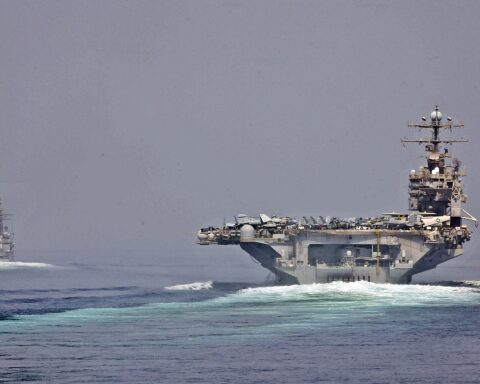
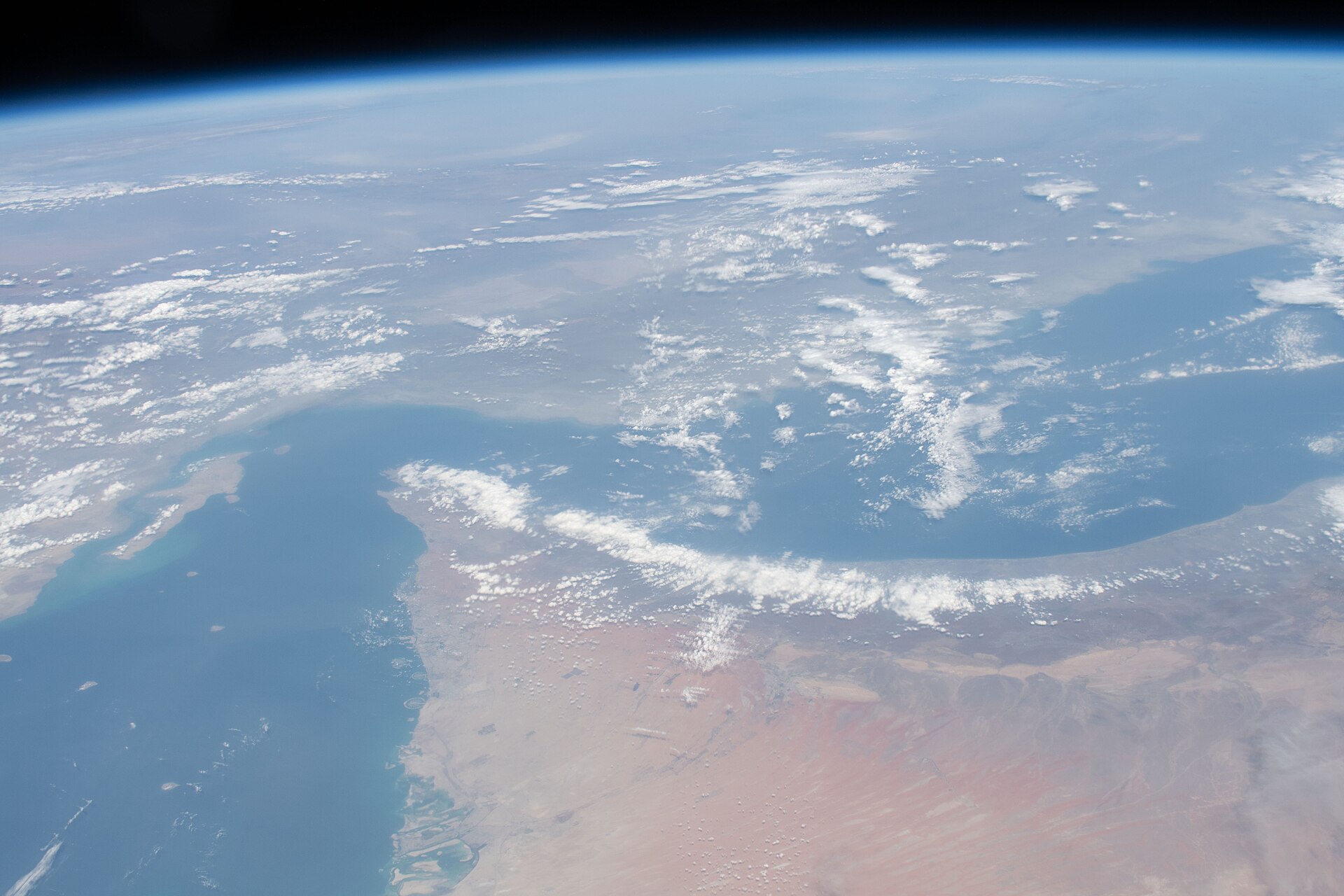
The Strait of Hormuz is both MBS’s greatest vulnerability and his most powerful bargaining chip. Iran’s IRGC Navy has demanded that ships seek permission to transit the strait, effectively imposing a blockade on the world’s most important energy chokepoint. Approximately 20 percent of global petroleum shipments — roughly 21 million barrels per day — normally transit Hormuz, according to the US Energy Information Administration.
The blockade has produced contradictory effects for Saudi Arabia. On March 10, a “Memorandum of Maritime Stability” brokered by neutral regional powers and UN mediators temporarily eased shipping restrictions, triggering the oil price collapse from $120 to $88 per barrel. But the underlying threat persists — Iranian mines remain in the waterway, IRGC fast boats patrol the shipping lanes, and Iran continues to sell its own oil through the same strait it has shut to others.
For Saudi Arabia, the Hormuz blockade is tolerable but not sustainable indefinitely. The kingdom has partially compensated by routing exports through the 1,200-kilometre East-West Pipeline to the Red Sea port of Yanbu, but this pipeline’s maximum capacity of approximately 5 million barrels per day cannot replace the full volume that normally moves through Hormuz. Storage facilities in Ras Tanura and Ju’aymah on the Persian Gulf coast are filling, forcing production curtailments.
The IEA’s decision to release a record 400 million barrels from strategic reserves, the largest coordinated release in history, has eased global supply concerns but not Saudi Arabia’s specific problem: the kingdom’s own oil is stranded unless Hormuz reopens or pipeline capacity expands. French President Emmanuel Macron’s push for an international naval mission to secure Hormuz offers a potential solution, but organizing a multinational force takes months, not days.
The Hormuz variable introduces a time limit on MBS’s strategic patience. Saudi Arabia can absorb Iranian missiles almost indefinitely. It cannot absorb indefinite closure of its primary export route without serious economic damage. The clock is running, and MBS knows it — which is precisely why the Omani backchannel to Tehran has focused more on Hormuz navigation rights than on a comprehensive ceasefire.
The Endgame Probability Matrix
Thirteen days of conflict data, combined with declared positions from all principal actors, allow a structured assessment of how this war is most likely to conclude and what each outcome means for Saudi Arabia’s long-term strategic position. The War Termination Calculus maps each scenario against six variables: probability, timeline, Saudi objectives achieved, Saudi objectives failed, primary risk, and net strategic impact for Riyadh.
| Scenario | Probability | Timeline | Objectives Achieved | Objectives Failed | Net Impact for Saudi Arabia |
|---|---|---|---|---|---|
| Trump declares victory, withdraws (Iran capability 70%+ degraded) | 35% | 2–4 weeks | Nuclear threat eliminated, missile arsenal depleted, US defence pact locked in | Hormuz unresolved, Houthis intact, Iran rebuilds in 5–7 years | Positive short-term, uncertain long-term |
| Comprehensive ceasefire (all parties, verified) | 15% | 2–6 months | All eight objectives addressable | Verification failures likely; Russia/China role complicates | Best outcome if terms hold |
| Limited ceasefire (US-Iran only, Gulf excluded) | 10% | 3–8 weeks | Nuclear threat, missile arsenal | Hormuz, Houthis, Gulf security architecture, proxy network | Negative — Saudi left exposed |
| Regime change in Tehran | 5% | Months to years | Permanent threat elimination | Failed state risk, refugee crisis, loose weapons | Catastrophic if unmanaged |
| Indefinite low-intensity conflict | 20% | 6+ months | Gradual Iranian attrition, high oil prices | Hormuz remains contested, economic damage accumulates | Tolerable but diminishing returns |
| Escalation to ground war | 5% | Indefinite | Maximum degradation | Regional conflagration, Saudi homeland at risk | Catastrophic |
| Iranian internal collapse (uncontrolled) | 10% | Weeks to months | Permanent threat elimination if managed | Chaos spillover, humanitarian crisis, Hormuz anarchy | Highly negative unless transitional authority emerges |
The matrix reveals several conclusions that contradict the dominant media narrative. The most probable outcome — Trump declaring victory and withdrawing — is positive for Saudi Arabia but leaves critical objectives unresolved. The best outcome for Saudi Arabia — a comprehensive, verified ceasefire — has only a 15 percent probability because it requires agreement from parties (Iran, Israel, the United States, and Russia) with fundamentally incompatible interests. And the outcomes that dominate cable news coverage — regime change and escalation to ground war — are both low-probability events that Riyadh actively works to prevent.
The strategic implication is clear. MBS is not waiting for the war to end. He is shaping the ending.
The War After the War
Whenever the shooting stops, a second conflict begins immediately — the contest to define the post-war regional order. Saudi Arabia’s position in this contest is stronger than at any point since the founding of the modern kingdom in 1932.
Iran’s military capability will emerge from this war drastically diminished regardless of the specific endgame scenario. The nuclear program that consumed four decades of effort has been set back by years if not permanently destroyed. The missile arsenal that gave Tehran asymmetric leverage over its wealthier neighbours is depleted. The proxy network that allowed Iran to project power from Beirut to Sanaa to Baghdad has been degraded by two years of Israeli operations and will struggle to reconstitute without Iranian logistical support. The IRGC’s domestic prestige, already damaged by the killing of Qasem Soleimani in 2020, has taken a further blow from the failure to protect the Supreme Leader or prevent American bombers from operating over Iranian airspace with near-impunity.
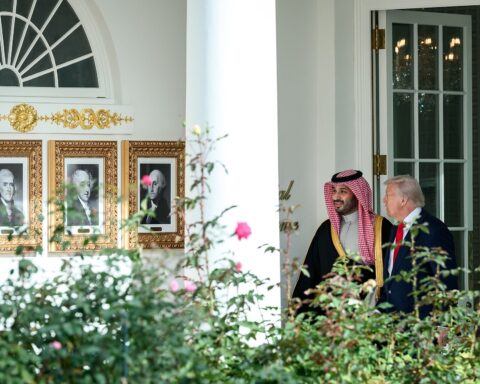
Saudi Arabia, by contrast, has used the war to accelerate its strategic transformation. The Trump-Putin phone call on March 11 discussed a quick end to the Iran war with Putin — and both leaders know that any peace arrangement requires Saudi cooperation. China dispatched special envoy Zhai Jun to the Middle East, starting with Riyadh. The UN Security Council condemned Iran’s attacks on Gulf states in a near-unanimous vote, providing the diplomatic validation Riyadh sought.
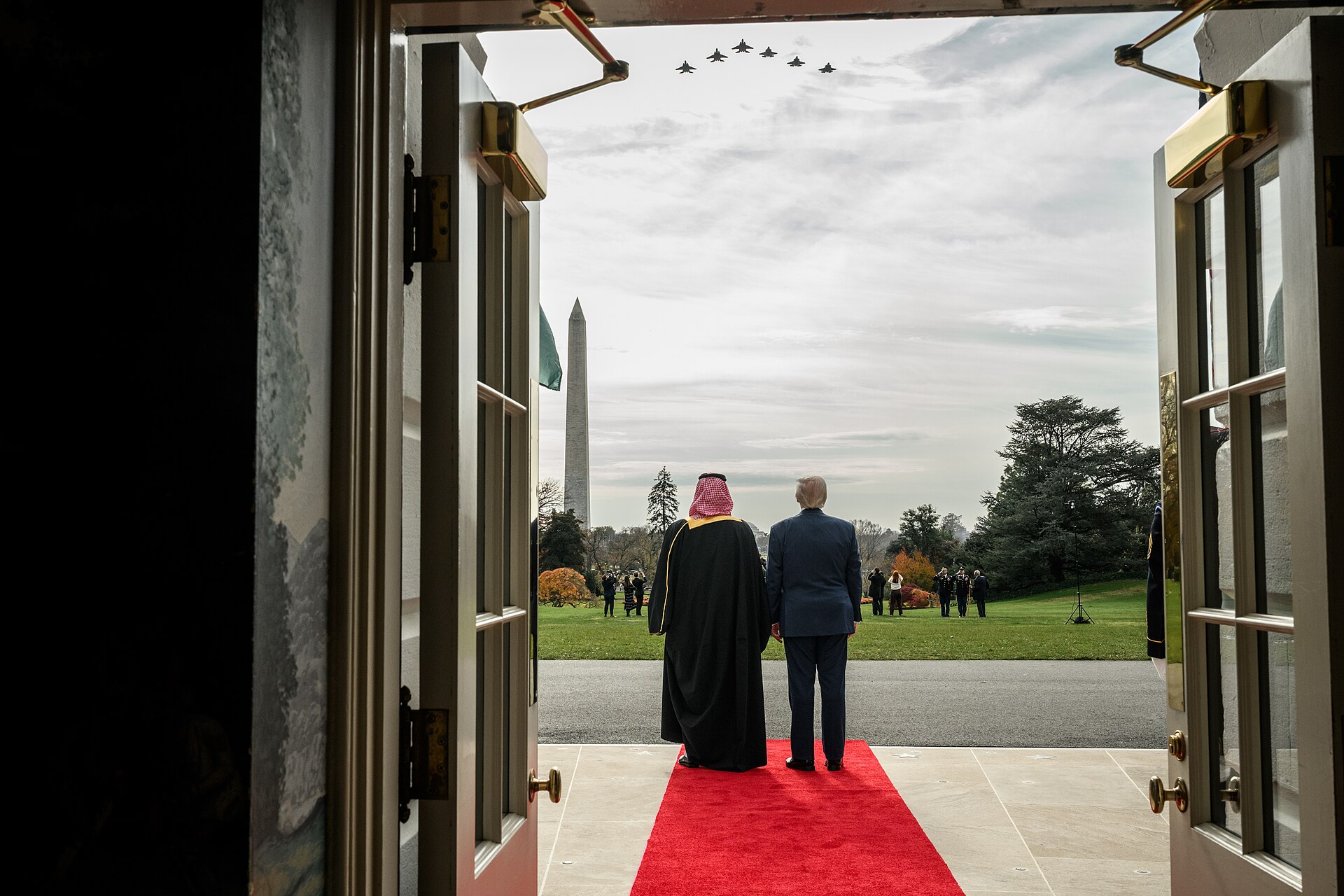
The post-war agenda that MBS is assembling, piece by piece while missiles still fly, includes four pillars. A permanent American military commitment to Gulf security, already achieved in principle through the November 2025 defence pact but requiring operational substance. A regional security architecture that includes Arab states, Turkey, and potentially India in a collective defence framework. An energy policy that leverages Saudi Arabia’s position as the world’s swing producer to extract maximum value from the post-Hormuz recovery. And a diplomatic posture that positions Riyadh as the essential mediator in any future Iran negotiation — a role that brings influence, intelligence, and the ability to veto terms that threaten Saudi interests.
The thirteen days since February 28 have not merely tested Saudi Arabia. They have revealed the scale of Mohammed bin Salman’s ambition. The Crown Prince did not choose this war. But he may emerge from it with more power, more leverage, and more strategic depth than any Saudi ruler since King Abdulaziz ibn Saud unified the kingdom ninety-four years ago. The only question is whether the war ends before MBS has finished using it.
Frequently Asked Questions
What are Iran’s conditions for a ceasefire with the United States?
Iranian President Masoud Pezeshkian announced three conditions on March 12, 2026: formal recognition of Iran’s nuclear rights including its enrichment program, reparations for damage caused by American and Israeli strikes that have killed over 1,200 Iranians, and binding international guarantees preventing future military aggression against Iran. These conditions are widely considered non-negotiable for Washington.
Does Saudi Arabia want the Iran war to end immediately?
Saudi Arabia’s official position calls for restraint and de-escalation. However, the kingdom’s strategic interests are served by a continuation of the conflict until Iranian military capabilities are sufficiently degraded, the Strait of Hormuz blockade is resolved, and a comprehensive security framework is established. A premature ceasefire that leaves Iran’s proxy network intact would leave Saudi Arabia worse off than before the war began.
How much is the Iran war costing Saudi Arabia per day?
Direct military costs, primarily air defence operations including Patriot and THAAD interceptor missiles, radar operations, and enhanced force readiness, are estimated at $80 to $120 million per day by defence analysts. However, elevated oil prices above the IMF’s estimated $87-per-barrel fiscal breakeven mean that Saudi Arabia is generating more revenue per day than it did before the war, offsetting defence expenditures substantially.
What is the most likely way the Iran war will end?
The most probable scenario, estimated at approximately 35 percent probability, is that President Trump declares Iran’s military capability sufficiently degraded, announces a historic victory, and orders a withdrawal of American forces from the offensive campaign. This would leave Iran’s nuclear and missile programs severely damaged but would not resolve the Strait of Hormuz blockade or address Iran’s proxy network in Yemen and Iraq.
How does Pakistan’s defence pact with Saudi Arabia affect the Iran war endgame?
The Strategic Mutual Defence Agreement signed in September 2025 commits Pakistan to treat an attack on Saudi Arabia as an attack on itself. Pakistan has deployed air defence systems and troops to Saudi Arabia, and Prime Minister Shehbaz Sharif flew to Riyadh on March 12 to reaffirm the commitment. As the only Muslim-majority nuclear power aligned with Riyadh, Pakistan’s presence constrains Iranian escalation options and ensures that any ceasefire negotiation must account for a Pakistani military footprint that will not withdraw until the Saudi threat assessment is resolved.
What happens to oil prices when the Iran war ends?
Oil prices are expected to decline significantly once a credible ceasefire is established and the Strait of Hormuz reopens to commercial shipping. The March 10 diplomatic breakthrough that produced the Memorandum of Maritime Stability triggered a $32-per-barrel decline in a single session. However, the pace of the decline depends on the speed of Hormuz clearance, Iran’s willingness to remove mines, and whether OPEC+ adjusts production quotas to prevent a price collapse below Saudi Arabia’s fiscal breakeven.