
RIYADH — In the first weeks of March 2026, as Iranian ballistic missile fragments cooled in the sands of the Eastern Province and Houthi drones continued probing Saudi air defenses, Crown Prince Mohammed bin Salman faced the starkest test of his decade-long accumulation of power. The man who had rewritten Saudi Arabia’s social contract, launched a $3.2 trillion economic transformation program, and positioned himself as the indispensable architect of a post-oil kingdom was now confronting a reality that spreadsheets and sovereign wealth funds cannot resolve: the possibility of direct, sustained conflict with Iran. What happens next will not merely shape Saudi foreign policy for a season. It will determine whether MBS enters history as the ruler who dragged the world’s largest oil exporter into modernity or the prince who gambled the kingdom’s future on a war he privately tried to prevent.
Table of Contents
- From Restraint to Retaliation: The 72 Hours That Changed Saudi Policy
- The Khalid Factor: How MBS’s Brother Became Washington’s Hawk
- Can Vision 2030 Survive a Shooting War?
- The Investability Thesis Under Fire: Saudi Arabia’s Fiscal Reckoning
- What Happened to NEOM and the Giga-Projects?
- Yemen’s Shadow: The War MBS Cannot Escape
- Defense as Industrial Policy: The $78 Billion Bet
- Is the Saudi-UAE Rivalry Now More Dangerous Than the Iran Threat?
- Succession and Survival: What War Means for the House of Saud
- The Resilience Case: Why the Bears May Be Wrong
- Does History Favor Wartime Rulers? The Fahd Precedent
- The War King Framework: Measuring MBS Against His Own Ambitions
- Contrarian Analysis: The Case That War Strengthens MBS
- What Are Global Investors Watching Most Closely?
- Frequently Asked Questions
From Restraint to Retaliation: The 72 Hours That Changed Saudi Policy
The Saudi response to the Iran crisis unfolded in three distinct phases, each revealing a different facet of Mohammed bin Salman’s decision-making calculus. Before the United States launched Operation Burning Sword in late February 2026, MBS privately counseled the Trump administration against strikes on Iranian nuclear facilities. Through back-channel communications reported by the Washington Post and corroborated by Atlantic Council analysts, the Crown Prince warned that military escalation would carry catastrophic consequences for regional stability and, critically, for the global energy markets upon which Saudi Arabia’s economic transformation depends.
This was not pacifism. It was calculation. MBS understood what many in Washington did not: that Iran’s retaliation matrix extends far beyond its borders, encompassing proxy networks across Iraq, Lebanon, Yemen, and the Gulf littoral states. A strike on Isfahan or Natanz would not produce a clean surgical outcome. It would produce a multi-front regional conflagration in which Saudi Arabia, with its 2,640 kilometers of coastline and its critical oil infrastructure clustered along the Persian Gulf, would be among the first targets.
The second phase arrived when Washington proceeded regardless. According to MEMRI translations of Arabic-language media coverage, Saudi officials maintained a posture of declared neutrality in the opening hours of the strikes, neither endorsing nor condemning the American operation. Al Arabiya, the Saudi-owned news network, covered the strikes with clinical detachment, a sharp contrast to the triumphalist tone adopted by Israeli media.
The third phase, and the one that will define the MBS era, began when Iranian ballistic missiles struck Saudi territory. The Saudi Foreign Ministry’s statement described the attacks as “blatant and cowardly” and declared that the Kingdom “reserves the right to respond with military force.” The language was carefully chosen. “Reserves the right” is not the same as “will respond.” It preserves strategic ambiguity while signaling that the prior posture of restraint has reached its limit.
What the Washington Post subsequently reported added another dimension entirely: the push from both Riyadh and Jerusalem had played a role in moving the Trump administration toward its decision. This means MBS occupied two positions simultaneously, warning against strikes through one channel while his own defense establishment, led by his brother Prince Khalid bin Salman, pressed Washington to act through another. The contradiction is not accidental. It is the essence of how Saudi Arabia operates under MBS: maintaining multiple, often conflicting, strategic positions until events force a commitment.
The Khalid Factor: How MBS’s Brother Became Washington’s Hawk
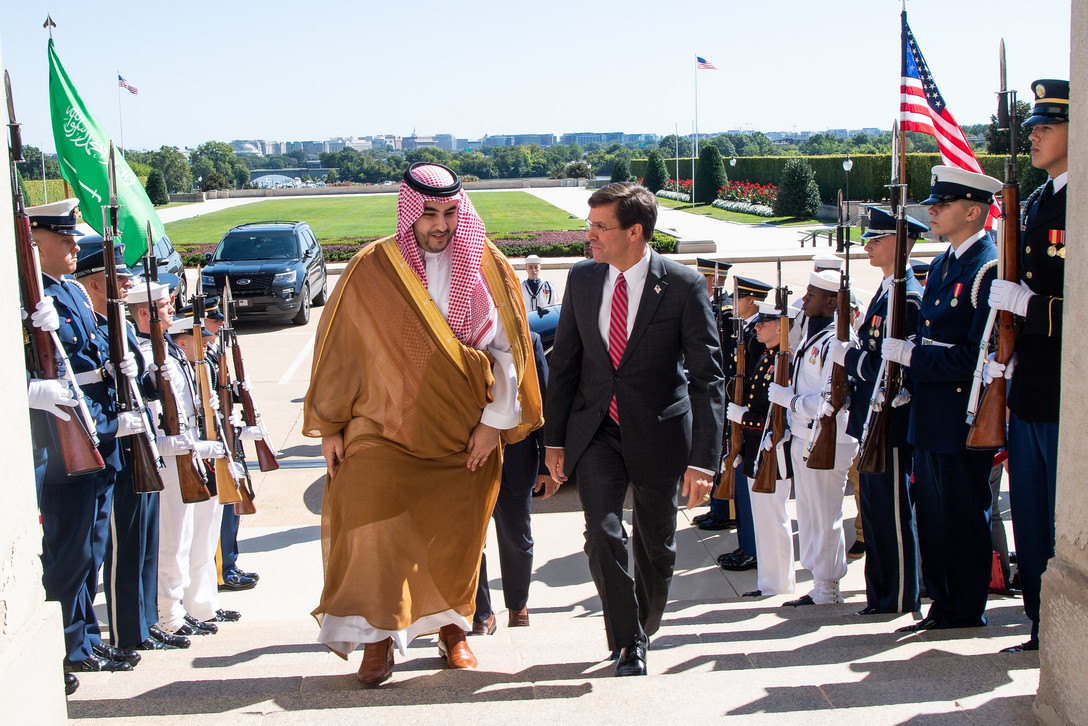
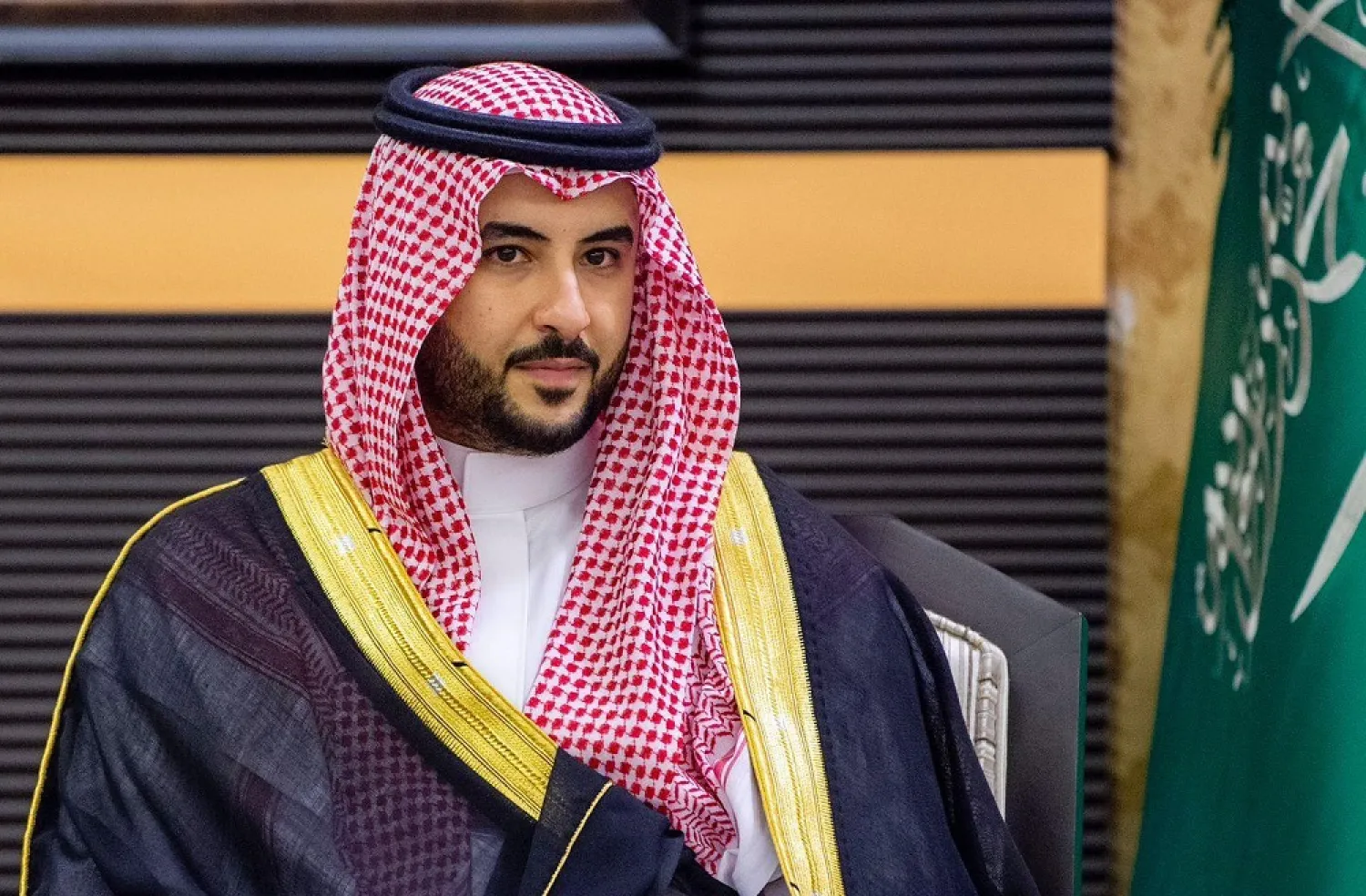
Prince Khalid bin Salman bin Abdulaziz Al Saud, the younger brother of the Crown Prince and Saudi Arabia’s Minister of Defense since 2022, has emerged as one of the most consequential figures in the current crisis. His message to the Trump administration was unambiguous: failure to act against Iran’s nuclear program would embolden Tehran and its proxies, ultimately making conflict more likely, not less.
Khalid’s trajectory illuminates the internal dynamics of the Al Saud power structure under MBS. A former fighter pilot and Saudi ambassador to the United States (2017-2019), Khalid possesses something rare in the current Saudi leadership: institutional relationships in Washington that predate the current crisis. His tenure as ambassador coincided with the Khashoggi affair, and he emerged from that period with his credibility among American defense officials largely intact, a remarkable feat given the diplomatic damage sustained by the broader Saudi establishment.
The division of labor between the two brothers appears deliberate. MBS operates as the strategic visionary, the public face of Saudi transformation, the man who must preserve the investability thesis that underpins Vision 2030. Khalid operates as the operational executor, the defense minister who can speak the language of threat assessments and force posture with his Pentagon counterparts. When Khalid told the Trump administration that inaction would embolden Iran, he was not freelancing. He was delivering a message that MBS could not deliver himself without compromising his carefully constructed image as a modernizing reformer rather than a wartime leader.
This dual-channel approach carries risks. If the conflict escalates and Saudi Arabia is drawn into sustained hostilities, the narrative that MBS warned against strikes will be overshadowed by the reality that his defense minister pushed for them. International media and congressional critics will not parse the distinction between the Crown Prince’s private counsel and his brother’s public advocacy. They will see a Saudi Arabia that helped precipitate a war it now claims was thrust upon it.
Can Vision 2030 Survive a Shooting War?
The question is not rhetorical. Vision 2030, the sweeping economic diversification program that MBS launched in April 2016, was designed for a world in which Saudi Arabia could redirect its hydrocarbon revenues toward building a post-oil economy over a 15-year horizon. The underlying assumptions included stable oil prices above $80 per barrel, sustained foreign direct investment, a functioning regional security environment, and a gradual social opening that would attract both international capital and skilled expatriate labor. The Iran conflict threatens every one of these assumptions simultaneously.
Start with the fiscal picture. Saudi Arabia’s 2025 fiscal deficit reached SR 276.6 billion ($73.8 billion), a dramatic increase from SR 115.6 billion in 2024 and the largest quarterly shortfall since the pandemic-era collapse of 2020, according to Bloomberg data. The Kingdom’s fiscal breakeven oil price, the price per barrel needed to balance the national budget, exceeds $90. Through most of 2025, Brent crude traded at approximately $63. The conflict premium has pushed prices to roughly $82 in early 2026, which helps but does not close the gap.
The Tadawul, Saudi Arabia’s stock exchange, declined 4.43 percent in the first nine months of 2025. Over the trailing twelve months through early 2026, the decline reached 10.58 percent. Aramco, whose $1.66-1.72 trillion market capitalization represents the single largest repository of Saudi national wealth, has responded by pursuing what analysts describe as a “sell the parts” strategy, executing lease-and-leaseback deals and spinning off infrastructure assets to generate liquidity without diluting state ownership.
| Indicator | 2024 | 2025 | 2026 (YTD/Est.) |
|---|---|---|---|
| Fiscal Deficit (SR billions) | 115.6 | 276.6 | TBD |
| Brent Crude (avg $/barrel) | ~$81 | ~$63 | ~$82 |
| Fiscal Breakeven Oil Price | >$90 | >$90 | >$90 |
| Tadawul YTD Performance | +2.1% | -4.43% (9mo) | Volatile |
| Aramco Market Cap ($ trillions) | ~$1.80 | ~$1.66-1.72 | ~$1.70 |
| S&P Credit Rating | A+ | A+ | A+ (under review) |
| CDS Spread (bps) | ~65 | 73.4 | Widening |
These numbers tell a story of an economy that was already under strain before the first missile struck Saudi soil. The Vision 2030 model depends on what economists call the “investability thesis”: the proposition that Saudi Arabia is a stable, predictable, reform-oriented destination for global capital. War, by definition, is the antithesis of stability and predictability. Every board room considering a Saudi investment must now price in the possibility that their factory, hotel, or data center could be within range of Iranian ballistic missiles or Houthi drones.
The Investability Thesis Under Fire: Saudi Arabia’s Fiscal Reckoning
The fiscal challenge confronting MBS predates the current conflict but is dramatically amplified by it. Saudi Arabia’s 2025 fiscal deficit of $73.8 billion represents more than an accounting problem. It represents the gap between the kingdom’s ambitions and its current revenue-generating capacity, a gap that was supposed to narrow as non-oil revenues grew but has instead widened as mega-project spending accelerated faster than diversification gains could offset.
Understanding why this matters requires examining the architecture of Saudi public finance. The Public Investment Fund, which MBS chairs personally, has created more than 80 new companies since its reconstitution as the kingdom’s primary development vehicle. PIF’s assets under management exceed $930 billion, making it one of the world’s largest sovereign wealth funds. But PIF is not a savings account. It is an investment vehicle with committed capital obligations across dozens of active projects, from NEOM to the Red Sea tourism corridor to the new airline RIA. War does not merely reduce the revenue available for these projects. It raises the cost of capital for every PIF-backed venture, as international lenders and co-investors reassess country risk.
The silver lining, such as it exists, is that Saudi Arabia entered this crisis with stronger fundamentals than many analysts expected. Foreign direct investment grew 24 percent in 2024 to reach $31.7 billion, and cumulative FDI stock reached SR 1.05 trillion ($280 billion). Non-oil GDP now constitutes 52 percent of total economic output, a historic milestone that represents real structural change, not mere accounting. Non-oil GDP grew 4.9 percent year-over-year in Q1 2025, suggesting that the diversification engine was gaining momentum before the crisis erupted.
The question is whether these resilience factors can withstand the sustained pressure of a regional conflict. Historical precedent suggests that FDI is among the first casualties of geopolitical instability. The 24 percent growth achieved in 2024 was built on the back of MBS’s global charm offensive, his meetings with Silicon Valley executives, his attendance at international summits, and his positioning of Saudi Arabia as the “Switzerland of the Middle East,” a neutral convening power. That positioning is now in tatters.
The investability thesis that underpins every aspect of Vision 2030 rests on a single proposition: that Saudi Arabia under MBS is a fundamentally different country than it was under his predecessors. War with Iran does not merely test that proposition. It forces a binary choice between the roles of modernizing reformer and wartime commander that MBS has spent a decade trying to hold simultaneously.
House of Saud Analysis
What Happened to NEOM and the Giga-Projects?
No element of Vision 2030 better illustrates the gap between MBS’s ambitions and current reality than NEOM, the $500 billion megacity planned for Saudi Arabia’s northwestern Tabuk Province. By September 2025, the Public Investment Fund had suspended work on The Line, NEOM’s signature linear city concept. Only 2.4 kilometers of the planned 170-kilometer structure had been completed. Independent cost estimates, compiled by engineering consultants and reported by international media, placed the total buildout cost at $8.8 trillion, a figure so far beyond the original budget that it effectively constitutes a different project entirely.
The target resident population for The Line had been quietly slashed from the originally announced 9 million to fewer than 300,000, a 97 percent reduction that represents either a pragmatic recalibration or a tacit admission of failure, depending on one’s perspective. The Asian Winter Games at Trojena, NEOM’s mountain resort component, were postponed indefinitely, eliminating a key milestone that was supposed to demonstrate Saudi Arabia’s ability to deliver world-class infrastructure on schedule.
What has emerged in NEOM’s place is a potential pivot toward data center development, leveraging the kingdom’s abundant land, solar energy potential, and growing fiber-optic connectivity. This pivot, if executed, would represent a more achievable and economically rational use of the NEOM site than the original utopian vision. But it would also represent a significant scaling back of the ambition that was supposed to define the MBS era.
| Metric | Original Vision (2017) | Current Status (2026) |
|---|---|---|
| Total Investment | $500B | Suspended (est. $8.8T full build) |
| The Line Length | 170 km | 2.4 km completed |
| Target Population | 9 million | <300,000 |
| Trojena Winter Games | 2029 | Postponed indefinitely |
| Potential Pivot | Mixed-use megacity | Data center hub |
| PIF Status | Flagship project | Work suspended Sept 2025 |
The broader giga-project portfolio faces similar pressures. The Red Sea Global tourism development, Qiddiya entertainment city, and Diriyah Gate cultural district all continue, but at reduced scales and extended timelines. War does not kill these projects outright. What it does is redirect fiscal resources, raise insurance and construction costs, deter international contractors, and create an environment where long-horizon bets on Saudi tourism and entertainment become harder to justify.
For MBS, NEOM’s trajectory raises an uncomfortable question: if the signature project of your reign is suspended before the war even begins, what does active conflict do to the rest of the portfolio? The answer depends on duration. A short, contained exchange that ends with a ceasefire could actually reinforce the case for accelerated diversification. A prolonged conflict that drains PIF reserves and deters foreign capital could set the entire Vision 2030 program back by a decade.
Yemen’s Shadow: The War MBS Cannot Escape
Any assessment of MBS’s wartime leadership must begin with Yemen, the conflict that first defined him as a military actor and that continues to shape both his strategic options and his international reputation. When MBS, then serving as Defense Minister, launched Operation Decisive Storm in March 2015, the Saudi-led coalition intervention was expected to last weeks. It lasted years, costing an estimated $200 million per day at its peak, according to David Ottaway of the Wilson Center, and producing one of the world’s worst humanitarian crises.
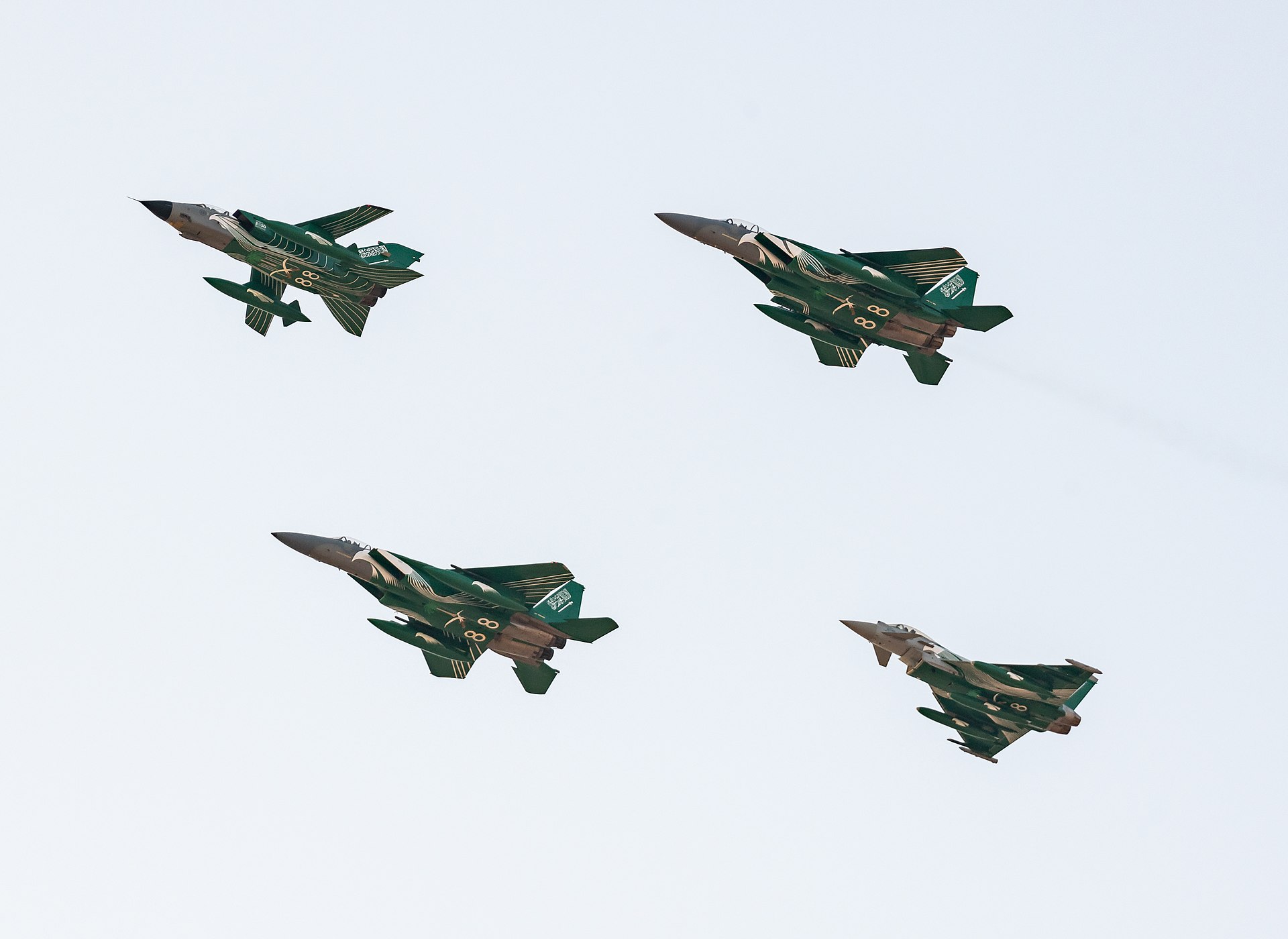
Middle East Eye has characterized Yemen as “a war MBS lost,” and the characterization, while reductive, captures a truth that resonates across Western capitals and within certain branches of the Saudi royal family. The intervention did not achieve its stated objective of restoring the internationally recognized government. It did not eliminate the Houthi threat. And it generated sustained international criticism that complicated Saudi Arabia’s diplomatic relationships for the better part of a decade.
The Yemen situation has grown more complex, not less, in recent months. In December 2025, the UAE-backed Southern Transitional Council launched a military takeover of six southern Yemeni governorates, directly challenging the Saudi-backed Presidential Leadership Council. Saudi Arabia responded with airstrikes targeting Emirati weapons supply routes, the first direct Saudi military action against UAE-linked assets in the Yemen theater. This represents a remarkable escalation: two nominal allies in the original anti-Houthi coalition now engaging in direct military confrontation within Yemen.
H.A. Hellyer, writing in War on the Rocks in January 2026, drew a distinction between Saudi “de-escalatory developmentalism” and UAE “pre-emptive activism” as competing strategic doctrines in the post-Yemen landscape. The distinction is useful. Saudi Arabia under MBS has increasingly pursued a strategy of buying stability through economic investment, offering Yemen reconstruction funds and Houthi integration into a political settlement. The UAE under Mohammed bin Zayed has pursued a strategy of creating facts on the ground through proxy forces, particularly the STC in the south.
The Soufan Center’s 2026 forecast predicted a Saudi-Houthi peace deal within the year but flagged implementation as deeply uncertain. Bruce Riedel of the Brookings Institution described the Yemen peace process as “brittle,” a characterization that now appears prescient given the Iran escalation. Whatever diplomatic progress had been achieved between Riyadh and the Houthis is now hostage to the broader Saudi-Iranian confrontation. The Houthis, as an Iranian-backed proxy, cannot credibly negotiate a separate peace while their patron is under attack from the same forces Saudi Arabia is aligning with.
Defense as Industrial Policy: The $78 Billion Bet
Saudi Arabia’s 2026 defense budget of $78 billion, representing 21 percent of total government spending and 7.1 percent of GDP, is not merely a security expenditure. It is an industrial policy program disguised as a military budget. Understanding this distinction is essential to assessing whether war strengthens or weakens the MBS economic model.
The General Authority for Military Industries (GAMI) reports that military localization, the percentage of defense procurement sourced from domestic manufacturers, has reached 24.89 percent, with a target of 50 percent by 2030. This localization drive has created a domestic defense industrial base that did not exist a decade ago, encompassing armored vehicle production, ammunition manufacturing, drone assembly, and electronic warfare systems. Saudi Arabian Military Industries (SAMI), the state-owned defense company, has signed joint ventures with Lockheed Martin, Boeing, Raytheon, and European defense firms including Leonardo and Navantia.
| Metric | Value | Context |
|---|---|---|
| Defense Budget (2026) | $78B | 21% of government spending |
| Defense as % of GDP | 7.1% | Among highest globally |
| Military Localization (current) | 24.89% | GAMI reported figure |
| Military Localization (target) | 50% | By 2030 |
| SAMI Joint Ventures | 6+ | Lockheed, Boeing, Raytheon, Leonardo, Navantia, others |
| Defense Sector Jobs (target) | 100,000+ | By 2030, per GAMI |
War accelerates defense industrial development in ways that peacetime procurement cannot. Operational demands create immediate requirements for munitions, spare parts, maintenance, and logistics that favor domestic suppliers over foreign import chains. The Yemen intervention, for all its strategic failures, produced a generation of Saudi military officers and defense industry workers with operational experience. The Iran conflict, if it extends, would amplify this effect, potentially advancing the localization timeline by several years.
This is the paradox at the heart of the MBS defense strategy: the $78 billion budget makes more economic sense in wartime than in peacetime. Defense spending that would otherwise represent a drag on productive investment becomes a stimulus for domestic manufacturing, technology transfer, and skilled employment. Saudi national unemployment has reached a record low of 7 percent, and the defense sector is among the largest employers of Saudi nationals in the private sector. War, perversely, could accelerate the Saudization of the defense industry that GAMI has been pursuing incrementally.
The risk, of course, is that defense spending crowds out the non-defense investments that are supposed to drive long-term diversification. Every riyal spent on Patriot missile interceptors is a riyal not spent on tourism infrastructure, entertainment venues, or technology incubators. The opportunity cost becomes more severe as the fiscal deficit widens, forcing a prioritization between guns and giga-projects that MBS has so far managed to avoid.
Is the Saudi-UAE Rivalry Now More Dangerous Than the Iran Threat?
Among the least discussed but most consequential dynamics in the current crisis is the accelerating rivalry between Saudi Arabia and the United Arab Emirates, two states that were supposed to be the twin pillars of Gulf stability. Foreign Affairs, CSIS, the Atlas Institute, and Israel’s INSS have all published analyses in the past twelve months examining the strategic divergence between Riyadh and Abu Dhabi. The rift is no longer a subject of speculation. It is a structural feature of Gulf geopolitics that the Iran conflict has brought into sharp relief.
The economic dimension of the rivalry centers on regional hub competition. Saudi Arabia has launched an aggressive campaign to attract global corporate headquarters, offering tax incentives and regulatory advantages that directly challenge Dubai’s longstanding position as the Gulf’s business capital. The Kingdom has successfully lured 675 global headquarters to establish regional bases in Riyadh, a figure that represents both a genuine economic achievement and a deliberate provocation aimed at Abu Dhabi’s development model.
The military dimension, already described in the Yemen context, represents an escalation that would have been unthinkable five years ago. Saudi airstrikes on Emirati weapons supply routes in southern Yemen are not a minor diplomatic incident. They represent a willingness by MBS to use force against assets linked to his most important Gulf ally, and they signal that the “brotherly” relationship between Saudi Arabia and the UAE has entered a fundamentally different phase.
The Iran conflict adds a new variable to this rivalry. Both Saudi Arabia and the UAE have pursued backchannel relationships with Tehran, but with different objectives. Saudi Arabia sought de-escalation to protect its economic transformation. The UAE sought de-escalation to protect its trade relationships, as Dubai serves as one of Iran’s most important commercial gateways. The American strikes disrupted both strategies, but the fallout affects each country differently. Saudi Arabia, as a direct target of Iranian retaliation, faces immediate security threats. The UAE, geographically more exposed through the Strait of Hormuz but not directly struck in the initial exchange, faces primarily economic exposure through shipping disruption and trade uncertainty.
The question for MBS is whether the Iran crisis provides an opportunity to subsume the Saudi-UAE rivalry within a broader Gulf solidarity framework, or whether it accelerates the divergence by forcing each state to pursue its own security arrangements. Historical precedent from the 1990-91 Gulf War suggests that external threats can temporarily unify Gulf states, but the current rift runs deeper than the Kuwait-era disagreements, touching fundamental questions of economic model, regional influence, and the future balance of power within the GCC.
Succession and Survival: What War Means for the House of Saud
Mohammed bin Salman has concentrated more power in his person than any Saudi leader in the kingdom’s modern history. He serves simultaneously as Crown Prince, Prime Minister, Chairman of the Public Investment Fund, Chairman of the Council of Economic and Development Affairs, and de facto commander of the armed forces. He controls the military, the intelligence services, and the National Guard, the three institutional pillars that Saudi analysts have traditionally identified as the foundations of Al Saud power. King Salman, now 90 years old, has largely receded from public view, making MBS the kingdom’s operational ruler in all but formal title.
This concentration of power is both MBS’s greatest strength and his most significant vulnerability. In peacetime, it enables the kind of rapid decision-making and strategic coherence that produced the Vision 2030 program, the social liberalization reforms, and the diplomatic pivot toward Israel. In wartime, it means that every military setback, economic disruption, and diplomatic failure lands on a single pair of shoulders. There is no prime minister to sacrifice, no defense minister to blame (Khalid bin Salman serves at his brother’s pleasure), no parliament to absorb public frustration.
The PIF, which MBS chairs, has created more than 80 new companies, making the Crown Prince personally responsible for a commercial empire that spans airlines, entertainment, sports, tourism, and technology. If war disrupts these ventures, the economic losses are not merely national losses. They are personal losses for MBS’s credibility and legacy.
The succession question operates on two levels. At the formal level, MBS’s position as heir apparent is unchallenged. No rival prince has the institutional base, popular support, or international relationships necessary to mount a credible challenge. The sidelined branches of the royal family, including descendants of former Crown Princes Mohammed bin Nayef and Muqrin bin Abdulaziz, lack access to the security apparatus, financial resources, or media platforms that would be necessary for any form of organized opposition.
At the informal level, however, a sustained conflict that visibly damages Saudi Arabia’s economy, security, or international standing could create space for what Gulf analysts call “murmuring,” the quiet expression of dissatisfaction among senior royals that has historically preceded shifts in the succession order. The Al Saud family includes thousands of princes, many with their own wealth, international contacts, and opinions about the kingdom’s direction. These princes cannot challenge MBS directly. But they can withhold cooperation, slow-walk implementation, and, most importantly, send signals to international partners that the current leadership does not command unanimous family support.
The historical pattern is instructive. Every major Saudi succession transition since the death of King Abdulaziz in 1953 has occurred during or immediately after a period of regional crisis. King Saud was deposed during the 1964 power struggle shaped by the Yemen civil war. King Faisal’s assassination in 1975 occurred against the backdrop of the oil embargo aftermath. King Khalid ascended during the Lebanese civil war. King Fahd took power as the Iran-Iraq War raged. King Abdullah’s effective regency began during the post-Gulf War period, and his formal succession coincided with the rise of ISIS. King Salman became king as the Yemen intervention was being planned. In every case, crisis both tested and ultimately validated the incoming ruler. The question is whether the current crisis follows this pattern, enabling MBS’s formal ascension as a tested wartime leader, or breaks it, producing the first genuinely contested succession since the Saud-Faisal rivalry of the early 1960s.
The Resilience Case: Why the Bears May Be Wrong
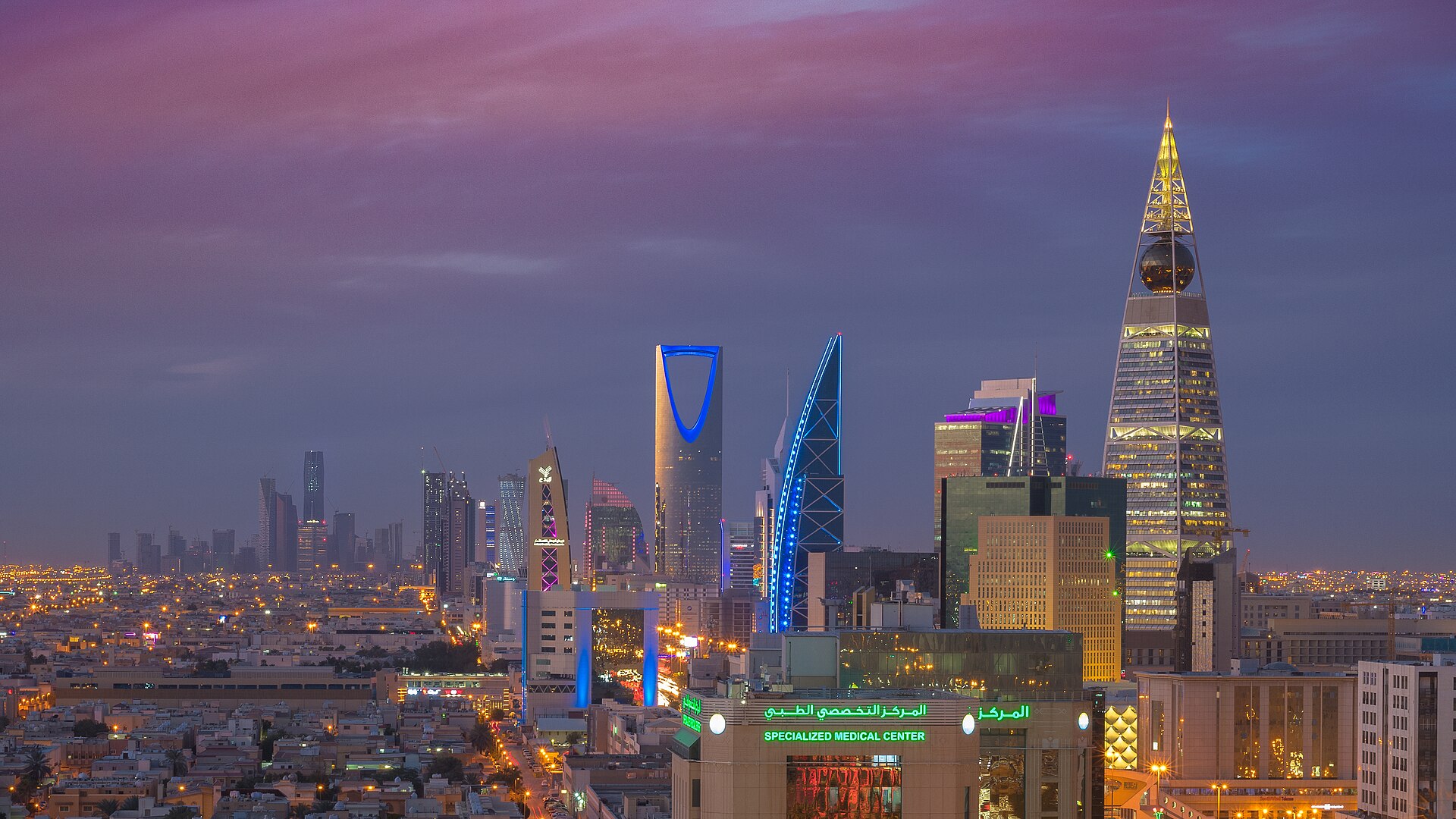
The bearish case against Saudi Arabia writes itself: fiscal deficits, suspended mega-projects, regional conflict, and a one-man governance model with no institutional checks. But the bearish case has been written before, notably during the 2014-2016 oil price collapse, the 2019 Aramco drone attacks, and the pandemic-era demand destruction of 2020. Each time, the kingdom’s demise was prematurely announced, and each time, Saudi Arabia demonstrated a capacity for adaptation that surprised its critics.
The current resilience indicators deserve serious examination. Tourism arrivals reached 122 million in 2025, surpassing the original 100-million target six years ahead of schedule. This is not a statistical artifact. It reflects real infrastructure investment, visa liberalization, and the emergence of Saudi Arabia as a destination for regional travelers who previously defaulted to Dubai, Cairo, or Istanbul. The tourism sector generates employment, foreign exchange, and demand for the hospitality, entertainment, and retail sectors that are central to the diversification strategy.
Non-oil GDP now represents 52 percent of total economic output, a milestone that represents genuine structural transformation. When MBS launched Vision 2030 in 2016, the non-oil economy constituted roughly 40 percent of GDP. The 12-percentage-point increase over nine years represents the largest sectoral rebalancing in Saudi economic history. Non-oil GDP growth of 4.9 percent year-over-year in Q1 2025 demonstrates that this shift has momentum independent of oil market conditions.
| Indicator | Value | Significance |
|---|---|---|
| FDI (2024) | $31.7B | 24% YoY growth |
| Cumulative FDI Stock | $280B (SR 1.05T) | All-time high |
| Non-Oil GDP Share | 52% | Historic majority for first time |
| Non-Oil GDP Growth (Q1 2025) | 4.9% YoY | Sustained diversification momentum |
| Tourist Arrivals (2025) | 122M | Exceeded 100M target 6 years early |
| Saudi CEO Confidence (PwC) | 94% | vs. 55% globally |
| National Unemployment | 7% | Record low |
| S&P Rating | A+ | Stable outlook pre-conflict |
| CDS Spread | 73.4 bps | Modest risk premium |
| Global HQs Attracted to Riyadh | 675 | Direct challenge to Dubai hub model |
PwC’s 2025 CEO Survey found that 94 percent of Saudi chief executives expressed confidence in domestic economic growth, compared to 55 percent globally. This disparity reflects both genuine optimism about the Saudi market and the self-selection inherent in surveying executives who have chosen to establish operations in the kingdom. Nonetheless, it indicates that the corporate community, at least before the Iran escalation, viewed Saudi Arabia as a growth market despite the fiscal headwinds.
The credit markets tell a similar story. Saudi Arabia’s A+ rating from S&P and its CDS spread of 73.4 basis points suggest that international creditors view the kingdom as a manageable risk, not a crisis candidate. These metrics will deteriorate if the conflict extends, but they start from a position of strength that gives MBS fiscal room to maneuver.
Does History Favor Wartime Rulers? The Fahd Precedent
The most relevant historical precedent for MBS’s current situation is the experience of King Fahd during the 1990-91 Gulf War. Fahd’s decision to invite American forces onto Saudi soil to defend against Saddam Hussein’s invasion of Kuwait was the most controversial act of his reign. It generated fierce domestic opposition from religious conservatives, it inflamed Osama bin Laden’s anti-Saudi ideology, and it permanently altered the kingdom’s security relationship with the United States.
Yet Fahd survived. More than survived: the successful defense of the kingdom and the liberation of Kuwait strengthened his domestic position, at least in the short term. The key factors that enabled Fahd to weather the crisis are instructive for the current moment. First, the threat was unambiguous. Iraqi forces were massed on the Saudi border, and the kingdom’s own military was insufficient to repel an invasion. This made the American deployment a matter of national survival rather than strategic choice, silencing domestic critics who might otherwise have opposed the foreign military presence.
Second, the war was short. Operation Desert Storm lasted 42 days, a timeframe that was insufficient for opposition to organize, for economic disruption to compound, or for public patience to erode. Third, the war ended in clear victory. Kuwait was liberated, the Iraqi army was expelled, and Saudi territory was never occupied. These three conditions, unambiguous threat, short duration, and clear victory, are the preconditions for wartime leadership to strengthen rather than weaken a ruler’s position.
For MBS, the Iran conflict meets the first condition. Iranian missiles have struck Saudi territory, creating an unambiguous threat that justifies whatever response the Crown Prince deems appropriate. Whether the conflict meets the second and third conditions, short duration and clear victory, depends on factors substantially beyond MBS’s control, including American strategic patience, Iranian escalation thresholds, and the behavior of proxy forces across the region.
If the conflict follows the Gulf War template, with a decisive American-led military operation that neutralizes the Iranian nuclear program and a subsequent de-escalation, MBS could emerge as a wartime leader who protected the kingdom while maintaining the trajectory of economic transformation. If the conflict follows the Yemen template, with an open-ended commitment, mounting costs, ambiguous objectives, and no clear exit strategy, the consequences for MBS’s legacy would be severe.
The War King Framework: Measuring MBS Against His Own Ambitions
To assess whether the Iran conflict will define MBS’s legacy positively or negatively, it is useful to construct a framework that measures outcomes against the Crown Prince’s own stated objectives. The War King Framework evaluates five dimensions of the MBS project, each scored on a scale from strengthened to destroyed, based on how different conflict scenarios affect each dimension.
| Dimension | Short War (3-6 months) | Prolonged Conflict (12+ months) | Failed Defense Scenario |
|---|---|---|---|
| 1. Economic Transformation (Vision 2030) | Delayed 1-2 years; recoverable | Delayed 5+ years; FDI flight | Permanently derailed |
| 2. Security Credibility | Strengthened; proven defender | Eroded; drawn into attrition | Destroyed; exposed as hollow |
| 3. International Standing | Enhanced; key US ally | Complicated; war fatigue | Collapsed; Western abandonment |
| 4. Domestic Legitimacy | Rallying effect; wartime unity | Strain; economic pain spreads | Succession pressure mounts |
| 5. Succession Path | Accelerated; formal kingship | Stable but questioned | Vulnerable to family challenge |
The framework reveals a stark asymmetry. In the short-war scenario, MBS emerges strengthened across all five dimensions. A successful defense of the kingdom, combined with the neutralization of the Iranian nuclear threat, would validate his military leadership, enhance his standing in Washington, rally domestic support, and potentially accelerate his formal ascension to the throne. Vision 2030 would be delayed but not derailed, and the conflict premium on oil prices would actually improve near-term fiscal dynamics.
In the prolonged-conflict scenario, the picture darkens considerably. Every dimension except security credibility deteriorates, and even security credibility erodes if the conflict devolves into the kind of attritional stalemate that characterized the later years of the Yemen intervention. The fiscal deficit widens, FDI declines, giga-projects stall, and the narrative of Saudi Arabia as a modernizing, investable economy gives way to the narrative of Saudi Arabia as a state at war.
The failed-defense scenario, while unlikely given the American security umbrella, would be existential. If Iranian strikes successfully targeted critical infrastructure (Aramco processing facilities, desalination plants, or major urban centers) and Saudi/American defenses proved inadequate, the damage to MBS’s personal credibility would be irrecoverable. The man who consolidated all power in himself would bear all blame for the failure to protect the kingdom. This is the scenario that keeps the Al Saud’s strategic planners awake at night and explains why MBS privately counseled restraint before the strikes began.
Contrarian Analysis: The Case That War Strengthens MBS
The prevailing Western analysis of the Iran-Saudi crisis assumes that conflict is bad for MBS, bad for Vision 2030, and bad for Saudi Arabia’s economic prospects. This assumption deserves interrogation, because it rests on premises that may not hold.
Consider the following contrarian propositions. First, the fiscal deficit matters less than it appears. Saudi Arabia is not a market economy where fiscal deficits trigger bond vigilantes, currency crises, or austerity requirements. It is a state-directed economy where the government controls the currency, the central bank, the largest employer, and the largest revenue source. The deficit can be financed through Aramco dividends, sovereign bond issuance (Saudi Arabia’s debt-to-GDP ratio remains below 30 percent), or direct PIF asset sales. The constraint is not financing. It is the opportunity cost of diverting resources from development to defense.
Second, the oil price effect is non-trivial. Every $10 increase in the price of Brent crude generates approximately $40 billion in additional annual revenue for the Saudi government. The conflict premium has already pushed Brent from $63 to $82, a $19 increase that translates to roughly $76 billion in annualized revenue, more than covering the 2025 fiscal deficit. If the conflict sustains prices above $90, Saudi Arabia could actually improve its fiscal position relative to the pre-conflict baseline. This is the dark arithmetic that few analysts discuss openly: war is good for the Saudi budget.
Third, war accelerates defense localization, which is one of Vision 2030’s stated objectives. The $78 billion defense budget, when combined with the GAMI localization mandate, represents the kingdom’s largest single industrial policy intervention. Conflict creates urgency that peacetime procurement lacks, forcing the acceleration of technology transfer agreements, the expansion of domestic production capacity, and the development of indigenous technical skills. The 24.89 percent localization rate could plausibly reach 35-40 percent within three years if sustained conflict creates demand for domestic alternatives to imported systems.
The assumption that war destroys the MBS project rests on the premise that Vision 2030 and military conflict are fundamentally incompatible. They are not. They are, under certain conditions, mutually reinforcing: oil revenues fund the defense budget, the defense budget drives industrial localization, and industrial localization is itself a Vision 2030 objective. The question is whether the conditions hold.
House of Saud Analysis
Fourth, the conflict resolves the Saudi-UAE rivalry in Saudi Arabia’s favor. If Saudi Arabia demonstrates credible military capability while the UAE maintains its distance from the Iran confrontation, regional security architecture will recalibrate in Riyadh’s favor. International defense firms, foreign governments, and regional states will recognize that Saudi Arabia, not the UAE, is the primary security provider in the Gulf. This shifts the balance of power in ways that benefit Saudi Arabia’s hub competition strategy. The broader question of what a militarily destroyed Iran means for Saudi Arabia’s post-war strategic future extends well beyond the Saudi-UAE rivalry — it touches every dimension of the Kingdom’s regional ambitions, from energy dominance to defense architecture.
Fifth, and most controversially, war may accelerate MBS’s formal succession. King Salman’s health is a closely guarded state secret, but his advanced age and reduced public presence suggest that the transition to King Mohammed bin Salman is a matter of when, not if. A wartime succession carries a different political valence than a peacetime one. A crown prince who becomes king while successfully defending the kingdom enters the role with a mandate that no amount of economic reform could provide. He becomes, in the language of Saudi political culture, a war king, a ruler whose legitimacy derives not only from lineage and wealth but from demonstrated capacity to protect the nation.
What Are Global Investors Watching Most Closely?
For the international investment community, the Iran-Saudi crisis has created a hierarchy of risk indicators that will determine capital allocation decisions for years to come. At the top of the list is Strait of Hormuz transit security. Approximately 21 percent of global petroleum liquids consumption passes through the strait daily, and any sustained disruption would trigger a supply shock far exceeding the 2019 Aramco attack or the 1990 Kuwait invasion. Insurance premiums for tankers transiting the strait have already tripled since the strikes began, adding approximately $2-3 per barrel to the effective cost of Gulf oil exports.
The second watchpoint is the trajectory of Saudi sovereign debt issuance. The kingdom issued $17 billion in international bonds in 2025, a record, and the pricing of these instruments serves as a real-time referendum on market confidence in the Saudi project. If spreads on new issuances widen significantly beyond the current 73.4 basis points, it would signal that international creditors are reassessing Saudi creditworthiness, a development that would cascade through every PIF-backed project that depends on international co-financing.
The third watchpoint is the behavior of the 675 multinational corporations that have relocated regional headquarters to Riyadh. These companies made their decisions based on a Saudi Arabia that was reforming, stabilizing, and opening. If even a fraction of these companies trigger force majeure clauses in their lease agreements or announce contingency relocations to Dubai, Singapore, or other regional hubs, the signal effect would far exceed the direct economic impact. The headquarters program is MBS’s most visible proof point for the investability thesis, and its integrity depends on something that the Crown Prince can no longer guarantee: the absence of missiles falling on or near the Saudi capital.
Fourth, PwC’s finding that 94 percent of Saudi CEOs express confidence in domestic growth will face its first real test. This confidence was measured in a pre-conflict environment. The next quarterly survey will reveal whether the corporate sector has maintained or abandoned its bullish consensus. A sharp decline in CEO confidence, even if not reflected in immediate capital outflows, would signal the erosion of the soft infrastructure of trust and optimism upon which the Vision 2030 investor pitch depends.
MBS’s legacy increasingly hinges on his diplomatic record as much as his economic reforms. The Crown Prince’s decision to position Saudi Arabia as a peace broker mediating four simultaneous international conflicts while absorbing Iranian attacks represents the most ambitious diplomatic gambit in Saudi history.
Frequently Asked Questions
What is Saudi Arabia’s official position on the Iran strikes?
Saudi Arabia maintained declared neutrality during the initial U.S. strikes on Iranian nuclear facilities. After Iranian retaliatory missiles struck Saudi territory, the Saudi Foreign Ministry described the attacks as “blatant and cowardly” and stated that the Kingdom “reserves the right to respond with military force.” This formulation preserves strategic ambiguity while signaling that passive acceptance of strikes on Saudi soil is not an option.
How does the conflict affect oil prices and Saudi revenue?
The conflict has pushed Brent crude from approximately $63 per barrel in late 2025 to roughly $82 in early 2026. Each $10 increase generates approximately $40 billion in additional annual revenue for Saudi Arabia. However, the kingdom’s fiscal breakeven price exceeds $90 per barrel, meaning the conflict premium alone does not close the budget gap. If the conflict escalates to threaten Strait of Hormuz shipping, prices could spike well above $100, producing a windfall for Saudi coffers but also triggering global economic disruption that would harm the non-oil economy.
What is the current status of NEOM and The Line?
The Public Investment Fund suspended work on The Line in September 2025, before the Iran conflict began. Only 2.4 kilometers of the planned 170-kilometer structure had been completed. The resident population target was reduced from 9 million to fewer than 300,000. The Trojena winter sports component was postponed indefinitely. Reports suggest a potential pivot toward developing the site as a data center hub, which would represent a more achievable but less ambitious use of the NEOM location.
Could the conflict trigger a succession crisis?
A succession crisis is unlikely under most scenarios. MBS controls the military, intelligence services, and National Guard, the three institutional pillars of Saudi state power. No rival prince possesses the institutional base or international support necessary to mount a credible challenge. However, a prolonged conflict that visibly damages Saudi Arabia’s economy and security could create space for quiet dissatisfaction among senior royals, which historically has preceded shifts in the Saudi succession order. The short-war scenario, by contrast, could accelerate MBS’s formal ascension to the throne.
How does the Saudi-UAE rivalry affect the conflict dynamics?
The Saudi-UAE strategic divergence, already visible in competing economic models and Yemen proxy conflicts, adds a complicating layer to the Iran crisis. Saudi Arabia has been struck directly and faces immediate security threats. The UAE faces primarily economic exposure through Strait of Hormuz disruption. The two states may pursue different accommodation strategies with Iran, further fragmenting Gulf solidarity. Saudi airstrikes on Emirati weapons supply routes in southern Yemen demonstrate that the rivalry has already reached the kinetic phase in at least one theater.
What are MBS’s options for responding to Iranian strikes?
MBS’s response options range from diplomatic (demanding UN Security Council condemnation and international sanctions), to economic (weaponizing OPEC+ production decisions), to military (participating in coalition strikes on Iranian proxy infrastructure or directly targeting Iranian assets). The “reserves the right to respond with military force” formulation suggests that military options are on the table but not yet committed. The most likely near-term course is a calibrated military response targeting Houthi infrastructure in Yemen, which serves as a proxy retaliation against Iran without triggering direct state-on-state escalation.
The Iran conflict has, in many ways, become the ultimate test of the relationship MBS spent nearly a decade building with Washington. For a comprehensive examination of how the Trump-MBS partnership evolved from the 2017 sword dance in Riyadh to the present-day wartime alliance, see the full history of the most transactional alliance in modern geopolitics.