Table of Contents
- The Back-Channel: What MBS Asked For
- Did Saudi Arabia Deny It?
- The Public Posture: Ceasefire Calls and Diplomatic Choreography
- The Oil Surge That Preceded the Bombs
- What Would Ground Troops in Iran Actually Look Like?
- Cut Off the Head of the Snake — A Generational Doctrine
- Tehran’s Read on Riyadh
- Frequently Asked Questions
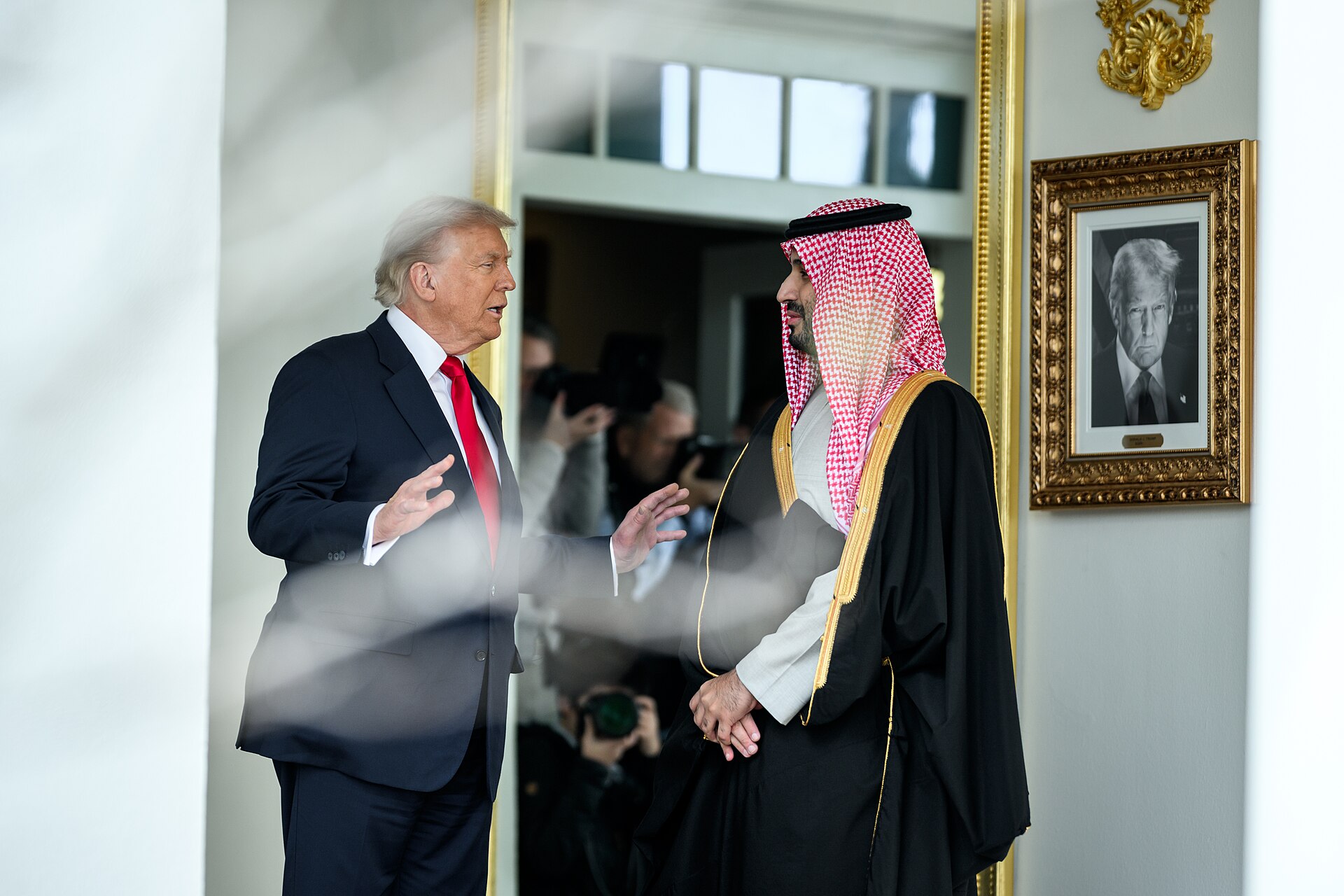
RIYADH — Saudi Crown Prince Mohammed bin Salman privately urged President Donald Trump to deploy American ground forces into Iran to seize the country’s energy infrastructure and topple its government, according to people briefed by American officials cited by the New York Times — a war aim that goes vastly beyond anything Riyadh has said in public. The reporting, confirmed across multiple outlets in early April 2026, describes a pattern of phone calls in which the crown prince framed the ongoing US-Israeli air campaign as a “historic opportunity” to eliminate the Iranian threat permanently, pressing Trump to escalate from air strikes to boots on the ground, from degradation to regime change.
The revelation lands at a moment when Saudi diplomats are simultaneously working the phones in the opposite direction — placing calls to Beijing, Moscow, Tokyo and Islamabad that carry the unmistakable language of de-escalation — and it forces a question that has hovered over the kingdom’s conduct since the first bombs fell on February 28: is Saudi Arabia a peace-seeker, a war-maximiser, or a state sophisticated enough to be both at once, deploying its foreign minister as a brake in public while its crown prince works the accelerator in private? The answer, according to the sourcing now available from Washington, appears to be the third option, and the scale of the contradiction is remarkable even by the standards of Gulf statecraft.
The Back-Channel: What MBS Asked For
The Washington Post reported on February 28 that MBS made “multiple private phone calls to Trump over the past month advocating a U.S. attack” on Iran, citing four people familiar with the matter — a detail that emerged on the same day the US-Israeli strike campaign began. At the time, the lobbying was understood as pressure for the air campaign that was already taking shape; the crown prince was not, as far as the sourcing showed, asking for anything beyond what was about to happen. What the New York Times subsequently reported in early April, however, was materially different: MBS had argued that the United States should put troops on the ground specifically to seize Iranian energy sites and force the government from power, according to people briefed by American officials.
The distinction matters. Air strikes degrade capability; they leave the question of who governs Iran to the Iranians. Ground troops seizing oilfields and pursuing regime change is a different category of war entirely — one that evokes Iraq 2003 rather than the limited-strike model that the administration has publicly described. MBS, the sourcing indicates, has been speaking to Trump “regularly,” urging him to “keep hitting the Iranians hard” and characterising the campaign as a once-in-a-generation opening. The Times of Israel, drawing on the same NYT reporting, noted that bin Salman has pushed for the war to continue “until the regime in Iran is toppled.”
None of these calls have been acknowledged by Riyadh. The Saudi government’s public position — expressed through its foreign ministry, its embassy in Washington, and its state-aligned media — has been consistent support for diplomatic resolution. The private position, as described by multiple US officials across two of America’s most scrutinised newsrooms, is something closer to the inverse.
Did Saudi Arabia Deny It?
Formally, yes. Fahad Nazer, spokesman for the Saudi Embassy in Washington, posted on X in early March: “The Kingdom of Saudi Arabia has been consistent in supporting diplomatic efforts to reach a credible deal with Iran. At no point in all our communication with the Trump Administration did we lobby the President to adopt a different policy.” The denial was categorical, leaving no room for ambiguity — and it was issued in response to the Washington Post’s original February 28 reporting about the phone calls that preceded the air strikes, before the more explosive April reporting about ground troops and regime change had emerged.
The denial sits uneasily alongside the volume and specificity of the American sourcing, which draws on multiple officials across the White House and national security apparatus. It also sits uneasily alongside what Trump himself has said. In a Financial Times interview published March 30, the president spoke openly about seizing Iranian energy assets:
“My favourite thing is to take the oil in Iran, but some stupid people back in the US say: ‘Why are you doing that?’ But they’re stupid people. Maybe we take Kharg Island, maybe we don’t. We have a lot of options.”
Donald Trump, Financial Times interview, March 30, 2026
Days later, Trump posted on Truth Social: “With a little more time, we can easily OPEN THE HORMUZ STRAIT, TAKE THE OIL, & MAKE A FORTUNE.” Whether Trump arrived at these positions independently or was nudged toward them by a Gulf ally who has his ear — and who stands to benefit commercially from the removal of Iranian barrels from global markets — is a question the sourcing does not definitively resolve but unmistakably invites.
The Public Posture: Ceasefire Calls and Diplomatic Choreography
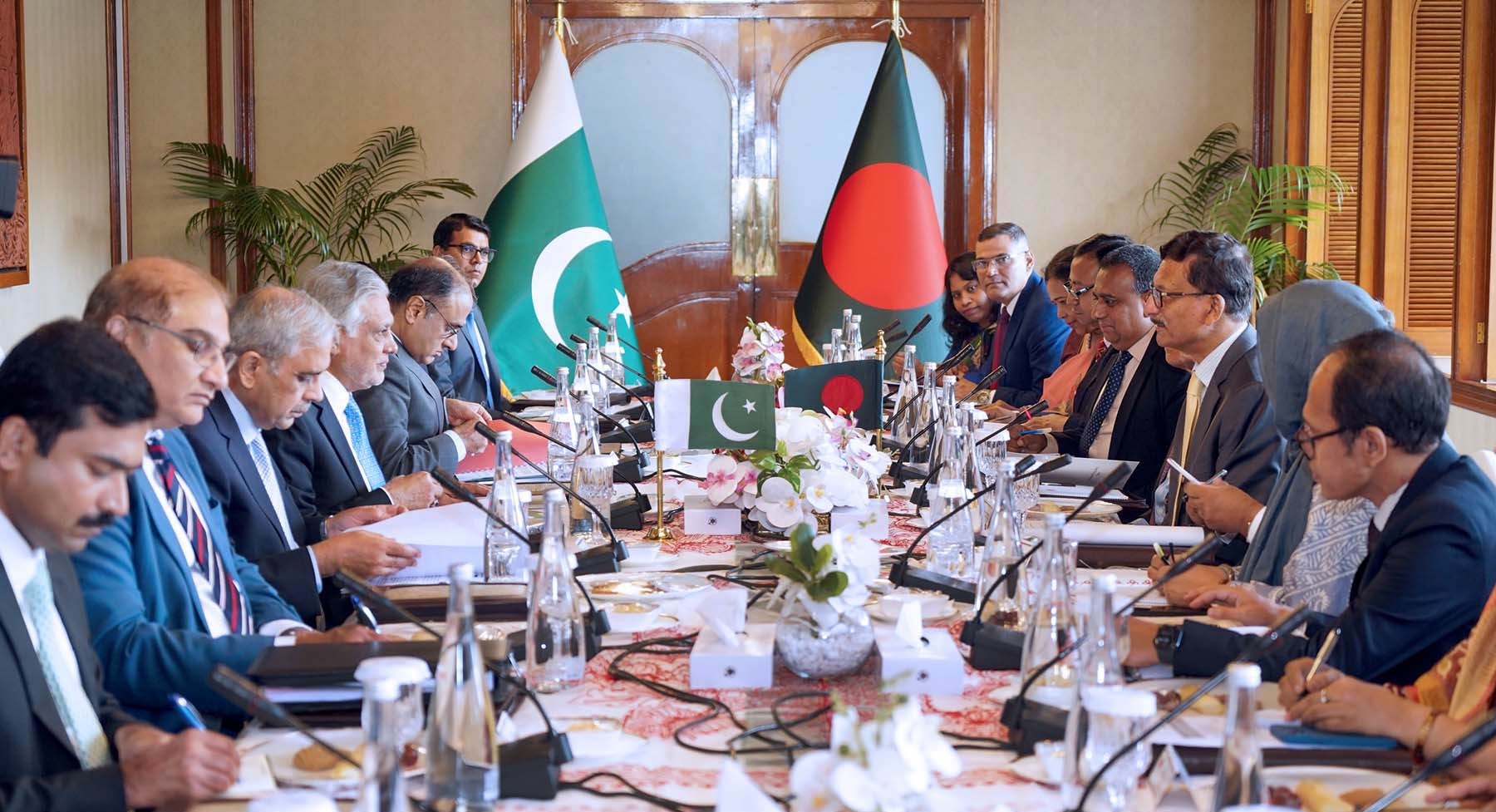
While MBS was privately lobbying for maximal escalation, Saudi Arabia’s diplomatic corps was executing what looked like a genuine de-escalation campaign. Foreign Minister Prince Faisal bin Farhan placed calls to Chinese Foreign Minister Wang Yi, Japanese Foreign Minister Motegi, and Pakistan’s foreign minister within days of each other in early April — a trilateral outreach that carried unmistakable ceasefire signalling. Riyadh hosted a meeting of twelve foreign ministers from Arab and Islamic states on March 18, and Prince Faisal has been positioned throughout the crisis as a potential guarantor of any negotiated off-ramp, including in the context of the collapsed Pakistan mediation track.
Simultaneously, Saudi Arabia privately told its Gulf Cooperation Council partners to avoid any steps that could provoke Iranian retaliation, according to Middle East Eye. MBS personally conveyed this message to the leaders of Bahrain, Kuwait, Qatar and the UAE shortly after the kingdom’s foreign ministry condemned Iran’s retaliatory strikes across the Arabian Peninsula. The instruction was clear: do nothing that could drag the Houthis or Iran’s broader proxy network into a wider conflict. This is not the behaviour of a government that wants an American ground invasion of Iran — or, more precisely, it is the behaviour of a government that wants someone else’s ground invasion of Iran, conducted at someone else’s cost, while the kingdom maintains enough diplomatic distance to avoid being targeted.
The pattern is not new. MBS’s back-channel maximalism combined with public restraint has been documented across the Qatar blockade of 2017, the Yemen war, and the Lebanon-Hariri detention crisis of the same year. What is new is the scale of the ask — American ground troops in a sovereign nation of 88 million people — and the fact that it comes from a leader who has spent the past three years cultivating an image as a regional reformer and dealmaker.
The Oil Surge That Preceded the Bombs
The lobbying did not happen in isolation; it was accompanied by a material preparation that looks, in retrospect, like a country readying itself to profit from exactly the war it was privately encouraging. Saudi Arabia ramped crude production to 10.882 million barrels per day in February 2026, up from 10.1 million bpd in January, according to OPEC data reported by Bloomberg on March 11. Crude shipments surged to 7.3 million barrels per day in the first twenty-four days of February — a three-year high — in what Bloomberg described as a “contingency plan” to compensate for any disruption to Iranian supply once the strikes began.
The contingency plan, of course, requires foreknowledge that there will be something to be contingent about. Saudi Arabia knew the strikes were coming — the Washington Post reported that MBS was actively lobbying for them — and it pre-positioned a production surge that would allow it to capture the market share vacated by Iranian barrels once those barrels stopped flowing. By mid-March, the kingdom had already routed more than fifty per cent of its normal export volume through the East-West Pipeline bypass to Yanbu, insulating its own exports from the Hormuz disruption that Iran’s retaliation created. Brent crude, which stood at roughly $85 per barrel in the days before the strikes, has since climbed as high as $140 per barrel by early April, according to ICE Brent futures data — a price environment in which every additional Saudi barrel is worth enormously more than it was in January.
None of this proves that Saudi Arabia engineered the war for commercial gain; the kingdom’s threat perception of Iran is genuine and documented across decades. But it does demonstrate that Riyadh was not caught off guard, that it positioned itself to benefit financially from the very escalation its crown prince was privately urging, and that the production surge began before the first bomb fell — not after.
What Would Ground Troops in Iran Actually Look Like?
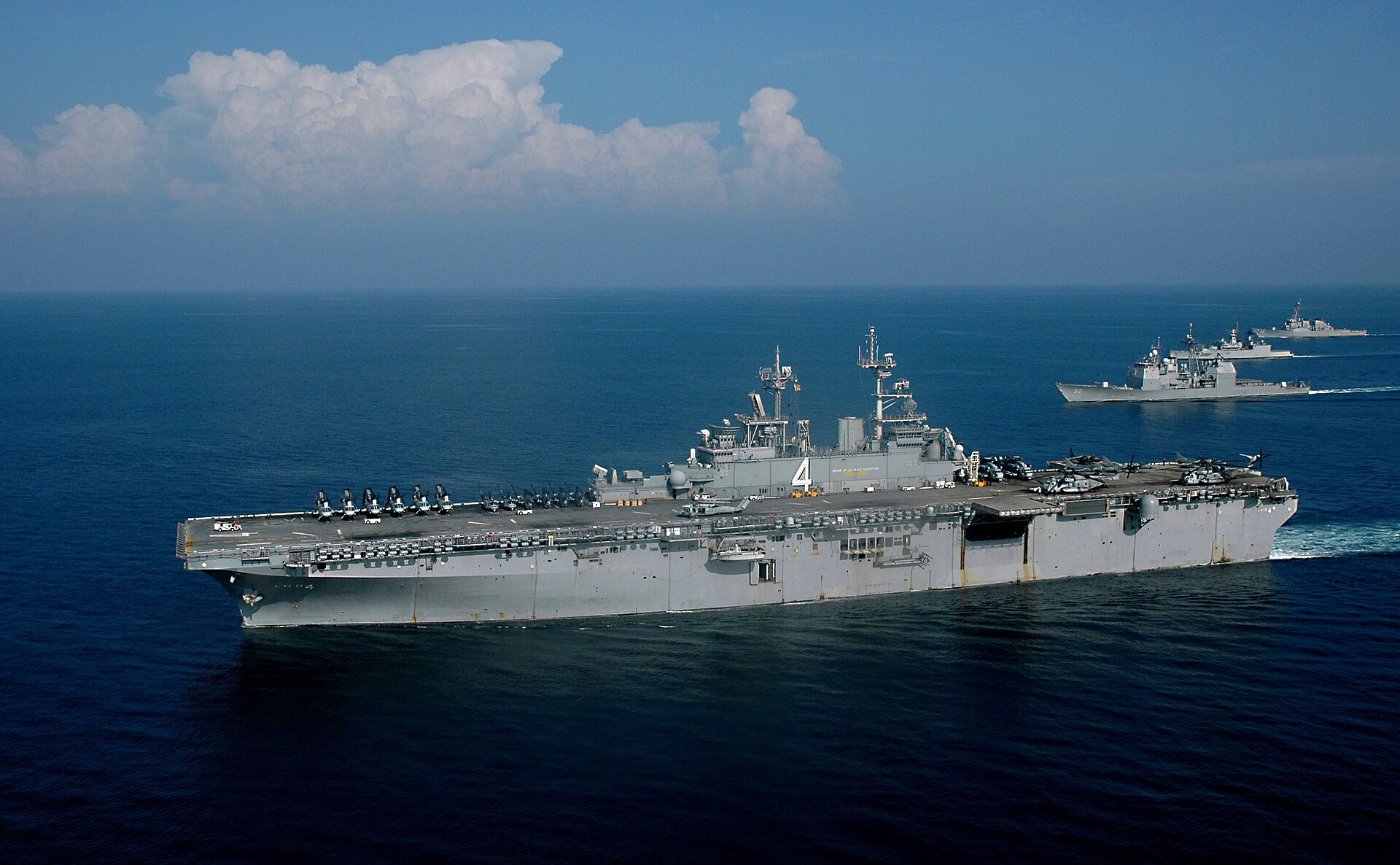
The Pentagon has already moved substantial forces into position. Elements of the 11th Marine Expeditionary Unit, the USS Boxer Amphibious Ready Group, and nearly 2,000 paratroopers from the 82nd Airborne Division have deployed to the region, with Maj. Gen. Brandon Tegtmeier establishing forward command and control for potential joint forcible-entry missions, according to Stars and Stripes and NBC News. The Wall Street Journal reported that an additional 10,000 troops were under consideration, and Secretary of State Marco Rubio told a congressional briefing that the US may need to “physically secure” nuclear material inside Iran, adding: “People are going to have to go and get it.”
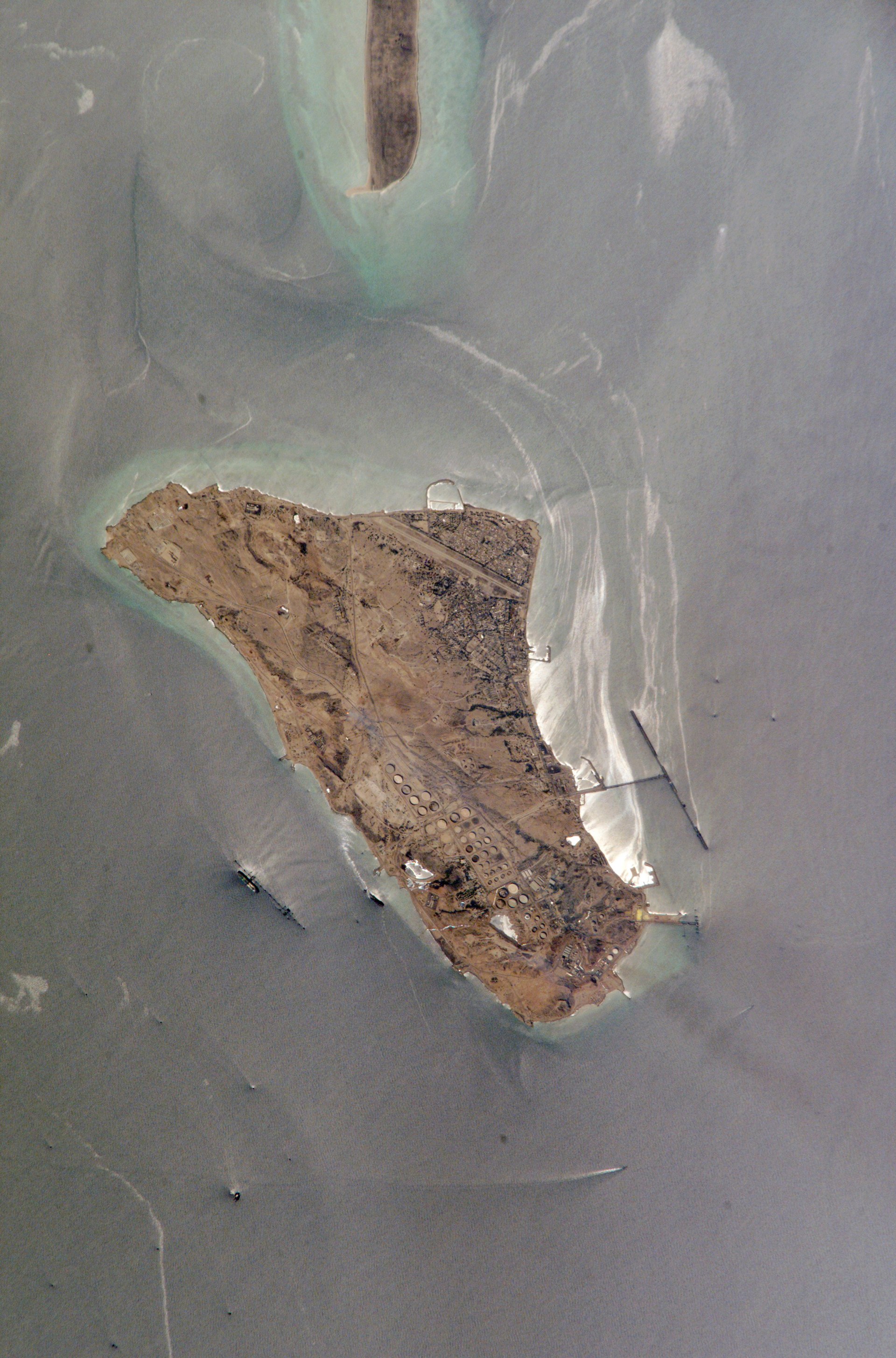
The most discussed target is Kharg Island, the tiny Persian Gulf outcrop through which more than ninety per cent of Iran’s crude exports flow. Iran has been watching the same news coverage as everyone else, and CNN reported on March 25 that Tehran has reinforced the island with anti-personnel mines, anti-armour mines on the shorelines where US Marines might stage an amphibious landing, shoulder-fired MANPAD systems, and additional troops — layered defences designed to make any assault costly. Danny Citrinowicz, an Iran expert at Israel’s Institute for National Security Studies, told the Washington Post: “It will be hard to take. It will be hard to hold. It might damage the economy, but not in a way that will force the Iranians to capitulate.”
Even the Foundation for Defense of Democracies, an organisation not typically accused of dovishness on Iran, published an op-ed on March 26 warning that seizing Kharg would be “a trap of America’s own making” — an operation likely to expand and extend the war rather than end it. The FDD analysts noted that destroyers providing missile defence for an occupied Kharg would have to transit the Strait of Hormuz, the entire length of the Gulf, and then linger close to the Iranian coastline, exposed to exactly the kind of asymmetric attacks Iran has spent decades preparing for. This is the ground war that MBS has privately been encouraging — and that Saudi troops would not be fighting.
Cut Off the Head of the Snake — A Generational Doctrine
MBS’s private advocacy for regime change is not an aberration; it is the latest expression of a Saudi strategic position that has persisted across two kings and now a crown prince. In 2010, WikiLeaks published US diplomatic cables in which the late King Abdullah bin Abdulaziz urged Washington to “cut off the head of the snake” — a direct call for military action against Iran’s nuclear programme. The phrasing became one of the most quoted lines in modern Gulf diplomacy, and its resonance sixteen years later is not coincidental: the Saudi royal family’s view of Iran as an existential threat is structural, not personal, and it predates MBS’s rise to power by decades.
What MBS has added is a willingness to operationalise the doctrine through direct engagement with a sympathetic American president, backed by a lobbying infrastructure that has no equivalent among US allies. Saudi Arabia maintained more than two dozen lobbying and PR firms registered under the Foreign Agents Registration Act following the 2015 Iran nuclear deal, spending $27.3 million on FARA-registered firms in 2017 alone, with more than 100 individuals registered as Saudi foreign agents in the United States. The kingdom’s capacity to shape Washington’s Iran policy is not improvised; it is institutional, well-funded, and continuously maintained.
The intellectual groundwork has also been laid domestically. Senior Saudi journalist Abd Al-Rahman Al-Rashed — the former director-general of Al Arabiya — published a piece titled “The Islamic Republic: 1979–2026” in early March, arguing that regime change in Iran requires no fear of destabilising consequences, since the Iranian government is itself the primary source of regional instability. MEMRI, which translated the piece on March 2, noted that Al-Rashed also shared an illustration depicting a gravestone bearing the inscription “The Islamic Republic: 1979–2026” following the announcement of Khamenei’s death. These are not fringe voices; Al-Rashed is one of the most prominent journalists in the Saudi media ecosystem, and his positions are widely understood to reflect, rather than challenge, the thinking of the kingdom’s leadership.
Tehran’s Read on Riyadh
The Iranian government treats Saudi Arabia’s role in the war as settled fact, regardless of what Riyadh says publicly. Iranian state media and IRGC-aligned outlets have consistently framed the kingdom as a co-belligerent — a state that lobbied for the war, pre-positioned oil production to profit from it, and provided the political cover that allowed Washington to act. The production surge to 7.3 million barrels per day in the weeks before February 28, the lobbying calls reported by the Washington Post and the New York Times, and Saudi Arabia’s refusal to condemn the strikes on Iran (while condemning Iran’s retaliatory strikes on the Arabian Peninsula) form a narrative that Iranian propagandists have not had to fabricate because the basic facts do the work for them.
The succession from Ali Khamenei to his son Mojtaba Khamenei on March 8, orchestrated under IRGC pressure, produced not the fracture that regime-change advocates might have hoped for but a consolidation of hard-line authority. US intelligence officials assessed in mid-March that the result would be “a weakened but more hard-line government in Tehran, backed by the powerful IRGC,” according to the Washington Post. Bernard Haykel, the Princeton professor of Near Eastern Studies who is in regular contact with MBS and is writing a forthcoming book on the crown prince, offered Bloomberg a more nuanced version of what Saudi Arabia actually wants — as opposed to what MBS may be lobbying for in phone calls with Trump: “The Kingdom wants Iran constrained, not detonated. It wants the missile threat reduced, the proxy architecture degraded. But it also wants an Iranian state capable of answering the phone, controlling its territory, honoring understandings and staying intact enough that the region does not inherit a second Iraq-style disorder on a much larger scale.”
If Haykel’s characterisation is accurate — and his access to MBS gives it considerable weight — then the crown prince’s private lobbying for regime change via American ground troops represents either a genuine maximalist position that contradicts his own stated fears, or a negotiating tactic designed to push Washington as far as possible in the knowledge that the final outcome will be something less than what was asked for. Either interpretation leaves Riyadh running a high-stakes double game, and either interpretation leaves American soldiers as the chips on the table. The Ynet report from April 5 that MBS is already executing a post-Iran strategic pivot — including a fierce online campaign targeting the UAE, steps toward a security alliance with Turkey and Pakistan, and Saudi airstrikes in southern Yemen to reshape the post-war regional order — suggests a leader who has already moved past the question of whether Iran falls and is planning for what comes after.
Frequently Asked Questions
Has Saudi Arabia contributed any military forces to the US-Israeli campaign against Iran?
No. Saudi Arabia has not committed combat forces to the campaign and has maintained a formally non-belligerent posture throughout the conflict, though it has allowed the use of its airspace and has coordinated air-defence operations with US Central Command assets operating in the Gulf. The kingdom’s military involvement has been limited to defensive measures, including intercepting Iranian retaliatory missiles targeting Saudi infrastructure, while the offensive campaign has been conducted entirely by American and Israeli forces.
How does MBS’s lobbying compare to Israel’s role in pushing for the strikes?
The Washington Post’s February 28 reporting described a joint lobbying effort by both Saudi Arabia and Israel, with Israeli Prime Minister Benjamin Netanyahu and MBS both pressing Trump to act. The key difference is that Israel became a direct military participant in the February 28 strike campaign and has remained one, while Saudi Arabia lobbied for the war without joining it — a distinction that gives Riyadh plausible deniability in the eyes of the broader Muslim world but that also places the entire military burden and casualty risk on Washington and Tel Aviv.
What is the legal basis for a US ground invasion to seize Iranian oilfields?
There is currently no congressional authorisation for ground operations inside Iran. The Trump administration has conducted air strikes under Article II commander-in-chief powers, and some administration lawyers have argued that the 2001 and 2002 Authorisations for Use of Military Force could be stretched to cover Iran-related operations. However, legal scholars across the political spectrum have argued that a ground invasion to seize oilfields and pursue regime change would require new congressional authorisation, and several members of Congress — including some Republicans — have publicly demanded a vote before any ground troops are deployed.
Could Iran retaliate directly against Saudi Arabia if it confirmed MBS’s lobbying role?
Iran has already struck Saudi and Gulf infrastructure during the war, hitting targets across the Arabian Peninsula in its retaliatory wave following the February 28 strikes. The IRGC has characterised Saudi Arabia as complicit regardless of official denials, and Iran retains the capacity to target Saudi oil facilities, desalination plants, and population centres with ballistic missiles, cruise missiles, and drone swarms — capabilities that the 2019 Aramco attack on Abqaiq and Khurais demonstrated to devastating effect. The Houthi movement in Yemen, though degraded, also remains a potential vector for Iranian-directed strikes on Saudi territory.
What would happen to global oil markets if US forces actually seized Kharg Island?
Kharg Island handles more than ninety per cent of Iran’s crude exports, which stood at roughly 1.5 to 1.8 million barrels per day before the war. A seizure would remove those barrels from the market permanently for the duration of any occupation, but Iran would almost certainly respond by intensifying its blockade of the Strait of Hormuz — through which roughly twenty per cent of global oil trade normally flows — and potentially targeting Saudi and Emirati export facilities. Analysts at Columbia University’s Center on Global Energy Policy have warned that a Kharg seizure scenario could push Brent crude well above $150, with cascading effects on global inflation, food prices, and emerging-market debt.