
TEHRAN — Mojtaba Khamenei became Iran’s third supreme leader on 9 March 2026, installed by a coerced Assembly of Experts less than nine days after US-Israeli strikes killed his father. He has not appeared on camera since. Sixteen days into the most consequential leadership transition in the Islamic Republic’s history, the man who commands Iran’s war machine — its missile arsenal, its drone fleets, its proxy networks across four countries, and the Strait of Hormuz blockade choking 20 percent of global oil supply — remains invisible. Intelligence agencies from Washington to Riyadh are hunting for evidence that he is even alive.
The mystery matters far beyond Tehran. For Saudi Arabia, Mojtaba’s ascension transforms the calculus of a war that has already reshaped the Kingdom’s strategic posture. Khalid bin Salman, the defence minister who has managed Saudi Arabia’s delicate balance between restraint and retaliation, now confronts an adversary whose command authority is genuinely unclear. Ali Khamenei was a known adversary whose red lines, however hostile, were at least legible. His son is a black box — a seminary-educated shadow operator who built Iran’s most secretive intelligence network, accumulated sanctioned wealth across London and Dubai, and now inherits a fractured military command prosecuting a war it is losing. This article maps the hidden architecture of Mojtaba Khamenei’s power, the IRGC takeover that put him there, and what his reign means for Saudi Arabia and the Gulf.
Table of Contents
- Who Is Mojtaba Khamenei?
- From Revolutionary Soldier to Shadow Powerbroker
- The Habib Circle — Mojtaba’s Private Intelligence Network
- How Did the IRGC Force Mojtaba Into Power?
- Where Is Iran’s Supreme Leader?
- The IRGC’s War Without a Supreme Leader
- The Sanctions Trail — From Bishops Avenue to Supreme Leader
- What Does Mojtaba’s Ascension Mean for Saudi Arabia?
- What Happens to Iran’s Proxy Networks Under Mojtaba?
- Ahmad Vahidi — The General Who Actually Commands Iran’s War
- The Hereditary Republic — Why Iran’s Revolution Consumed Itself
- The Shadow Leadership Assessment Matrix
- Why the IRGC May Not Need Mojtaba at All
- Can Mojtaba Khamenei Survive the War He Inherited?
- Frequently Asked Questions
Who Is Mojtaba Khamenei?
Mojtaba Hosseini Khamenei is the 56-year-old second son of the late Ali Khamenei who was installed as Iran’s third supreme leader on 9 March 2026 following his father’s assassination in the opening strikes of the US-Israeli war. He is a mid-ranking Shia cleric, a former IRGC combat veteran, a seminary teacher, and — according to the US Treasury Department, which sanctioned him in November 2019 — the most powerful unelected official in the Islamic Republic for more than a decade before his formal appointment.
Born on 8 September 1969 in Mashad, Iran’s holiest city, Mojtaba was named after Navvab Safavi, the radical Shia cleric whom Ali Khamenei credited with first igniting his revolutionary fervour. The name was no accident. From birth, Mojtaba was positioned at the intersection of clerical authority and revolutionary violence — a duality that would define his career and, ultimately, his path to supreme power.
His childhood coincided with the Iranian Revolution and the Iran-Iraq War. He spent seven formative years in the northwestern cities of Sardasht and Mahabad — Kurdish-majority regions where his father’s revolutionary ideology clashed with ethnic separatism, and where young Mojtaba absorbed lessons about state power, internal dissent, and the suppression of both. He graduated from the elite Alavi High School in Tehran, an institution that has produced a disproportionate share of Iran’s revolutionary establishment.
In addition to his native Persian, Mojtaba is fluent in Arabic and English and has completed specialized studies in psychology and psychoanalysis — an unusual intellectual profile for a supreme leader, and one that analysts at the Foundation for Defense of Democracies have noted may inform his approach to both domestic control and foreign negotiation.
From Revolutionary Soldier to Shadow Powerbroker
Mojtaba Khamenei’s trajectory from obscure seminary student to the most powerful man in Iran followed a path deliberately hidden from public view. Understanding that trajectory is essential to understanding the man who now controls the war.
After finishing secondary school in 1987, at the age of eighteen, Mojtaba enlisted in the Islamic Revolutionary Guard Corps. He was assigned to the Habib ibn Mazaher Battalion of the 27th Mohammad Rasulullah Division — one of the IRGC’s most ideologically committed formations, which recruited young fighters motivated more by religious fervour than military professionalism. He served during the final phase of the Iran-Iraq War, an experience that bonded him permanently to a cohort of IRGC officers who would later become his inner circle.
In 1989, with the war concluded and his father newly installed as supreme leader following the death of Ruhollah Khomeini, Mojtaba pivoted to religious scholarship. He enrolled at the Qom Seminary, studying under three of the most influential — and most hardline — clerics in the Iranian establishment. His primary teacher was Mohammad-Taqi Mesbah-Yazdi, widely considered the intellectual godfather of Iran’s ultra-conservative faction, who advocated for absolute clerical authority and provided theological justification for the use of violence against political opponents. His other instructors included Ayatollah Lotfollah Safi Golpaygani and Mohammad Bagher Kharazi.
By 2004, Mojtaba had ascended to teach advanced jurisprudence courses — known as Kharij-e Fiqh — at the Qom Seminary. His classes became among the most heavily attended in the institution, a fact that owed as much to his surname as to his scholarship. For approximately two decades, he occupied the unusual position of being simultaneously a seminary instructor, an operative within his father’s office, and an increasingly powerful broker between the supreme leader’s household and the IRGC’s military-intelligence apparatus.
The critical transformation occurred not in public but within the walls of Beit Rahbari — the Supreme Leader’s office compound. According to reporting by Iran International and corroborated by the US Treasury Department’s 2019 designation, Mojtaba gradually assumed the role of gatekeeper to his father, controlling access to Ali Khamenei and, by extension, controlling the flow of information and requests that shaped the supreme leader’s decisions. He operated, in the words of one analyst quoted by WBUR, as “a mini supreme leader” — exercising the prerogatives of the office without the title, the accountability, or the visibility.
The Habib Circle — Mojtaba’s Private Intelligence Network
The most consequential and least understood element of Mojtaba Khamenei’s power is an informal intelligence network that intelligence agencies refer to as the Habib Circle. Named after his former IRGC battalion, the Habib Circle is not a formal division within Iran’s sprawling security apparatus. It is a personal network — a shadow structure that Mojtaba built by systematically placing his former battlefield comrades into positions of influence across the IRGC, the Basij militia, and Iran’s domestic and foreign intelligence services.
According to analysis by the National Council of Resistance of Iran and confirmed in broad strokes by the US Treasury, the Habib Circle functions as Mojtaba’s private command channel, operating parallel to — and sometimes in competition with — the official IRGC chain of command. Its members include IRGC brigadier generals, intelligence directorate officers, and Basij commanders who owe their positions to Mojtaba’s patronage rather than to the formal promotion system.
The network has been implicated in three categories of activity. First, during the 2009 Green Movement protests, the 2019 nationwide demonstrations, and the 2022 Mahsa Amini protests, Habib Circle members reportedly received direct orders from Mojtaba for the suppression of dissent — orders that bypassed the official security chain of command. According to Iran International, Mojtaba would personally direct IRGC commanders to establish command centres where he could directly oversee crackdown operations.
Second, the Circle has been linked to overseas covert operations. The US Treasury’s 2019 designation specifically cited Mojtaba’s collaboration with the IRGC-Quds Force and Basij to “advance his father’s destabilising regional ambitions and oppressive domestic objectives.” Third, and most relevant to the current crisis, the Habib Circle provides Mojtaba with an intelligence picture that does not depend on the IRGC’s formal reporting structures — allowing him to verify, cross-check, or override the information he receives from the military establishment.
| Component | Function | Estimated Reach | Origin |
|---|---|---|---|
| 27th Division veterans | Core loyalty network, senior IRGC positions | 50-70 officers across IRGC divisions | Iran-Iraq War service (1987-88) |
| Basij liaison officers | Domestic surveillance, protest suppression | Provincial Basij commands | 2009 Green Movement operations |
| Intelligence directorate contacts | Parallel intelligence channel to Beit Rahbari | IRGC Intelligence Organization | Office of the Supreme Leader |
| Qom Seminary graduates | Clerical legitimacy, ideological validation | Mid-ranking clergy nationwide | Mojtaba’s teaching career (2004-2026) |
| Financial network | Sanctions evasion, offshore asset management | London, Dubai, European shell companies | Bloomberg investigation (Jan 2026) |
How Did the IRGC Force Mojtaba Into Power?
The Assembly of Experts convened under extraordinary circumstances between 3 and 8 March 2026 to select a successor to Ali Khamenei, who was killed in the opening US-Israeli strikes on 28 February. The 88-member clerical body, constitutionally responsible for appointing, supervising, and dismissing the supreme leader, faced a choice that would determine the trajectory of a nation at war. What followed was not an election but a managed transition orchestrated by the IRGC.
According to exclusive reporting by IranWire, corroborated by the Times of Israel and Euronews, IRGC intelligence officers subjected Assembly members to what multiple participants described as “repeated contacts and psychological and political pressure” beginning on 3 March — the first day of deliberations. Eight members publicly announced they would boycott the second session due to the intensity of the pressure being applied in favour of Mojtaba Khamenei.
Members who spoke anonymously to journalists described the atmosphere of the online meeting — necessitated by the ongoing bombardment — as “unnatural.” Those who presented arguments against Mojtaba’s candidacy were given limited time to speak. Discussion was curtailed. A vote was then held. US and Israeli bombs struck the Assembly of Experts office in Qom after the votes had been cast but before the count had been completed, adding a dimension of physical coercion to an already compromised process.
The IRGC’s motivations were straightforward. As Al-Monitor and France24 reported, the Guards viewed Mojtaba as “a more pliant version of his father” who would protect their institutional power, maintain aggressive foreign policy, and — crucially — not pursue the kind of reforms that might threaten the IRGC’s vast economic empire. The alternative candidates, including more moderate clerics who might have sought accommodation with the West, were systematically sidelined.
Foreign Affairs described the choice as reflecting “necessity as much as merit,” noting that the wartime conditions — with much of Iran’s senior military and clerical leadership killed or incapacitated — severely limited the pool of credible candidates who were both alive and willing to assume a position that had just become the most dangerous job in the Middle East.
Where Is Iran’s Supreme Leader?
Mojtaba Khamenei has not appeared publicly since being named supreme leader. He has not delivered a televised address. He has not been photographed at any official event. He has not visited wounded soldiers, addressed parliament, or appeared at Friday prayers. For a position that constitutionally holds absolute authority over Iran’s military, judiciary, media, and foreign policy, this absence is unprecedented in the Islamic Republic’s 47-year history.
The mystery has consumed intelligence agencies. An Axios investigation published on 21 March revealed that the CIA was actively searching for “signs of Iran’s new leader,” deploying satellite imagery analysis, signals intelligence, and human sources to determine his location and physical condition. The article noted that the absence raised fundamental questions about who was actually directing Iran’s military strategy — and whether anyone was.
Multiple competing narratives have emerged. According to the Kuwaiti newspaper Al-Jarida, citing a senior source, Mojtaba was secretly evacuated to Moscow on 12 March aboard a Russian military aircraft for advanced medical treatment after being wounded in the initial US-Israeli strikes. Vladimir Putin personally proposed the treatment during a phone call with Iranian President Masoud Pezeshkian, the report claimed. A Ukrainian news outlet reported that Mojtaba was receiving treatment at a private hospital within one of Putin’s presidential residences.
Iran’s ambassador to Cyprus offered a partial acknowledgement, stating that Mojtaba had suffered injuries to his legs, arms, and hands. International media reported a fractured foot and minor facial injuries, including bruising around his left eye. More extreme claims — reported by The Sun — suggested he was in intensive care on a ventilator, unable to breathe unaided. WION compiled seven different claims about his condition circulating simultaneously, ranging from “alive and recovering” to “in a coma” to “already dead.”
The only communication attributed to Mojtaba since his appointment was a written statement issued through state media on 12 March — four days after his selection. The statement, which was read by television presenters rather than delivered by Mojtaba himself, vowed revenge for his father’s assassination, promised to maintain the Strait of Hormuz blockade, warned of “new fronts” in the war, and thanked Iran’s proxy allies. Its authenticity has not been independently verified.
The IRGC’s War Without a Supreme Leader
Iran’s military command structure has been devastated by two successive conflicts in less than a year. During the 12-day Israeli war in June 2025, at least 30 IRGC generals were killed, according to Israeli military assessments. The current war has inflicted even heavier losses. Israel Defence Forces claim to have killed 6,000 Revolutionary Guards since operations began on 28 February, including the IRGC commander-in-chief, Mohammad Pakpour, who died in the opening strikes, and the Basij chief.
The new IRGC commander, Ahmad Vahidi, assumed leadership under conditions that would test any military organization. Vahidi, a former defence minister and founding member of the Quds Force, inherited a force that had lost much of its senior leadership, was under continuous aerial bombardment, and was simultaneously prosecuting operations across multiple theatres — from the Strait of Hormuz blockade to drone and missile attacks on Saudi Arabia, Bahrain, Kuwait, the UAE, and US military installations throughout the Gulf.
The response has been institutional adaptation. According to the Jerusalem Post, citing Iranian military sources, the IRGC has shifted to a decentralized command structure that empowers mid-ranking officers to launch independent retaliatory strikes without waiting for orders from Tehran. Deputy defence minister Reza Talaeinik explained the system publicly, stating that each figure in the command structure had named successors spanning three ranks, ready to replace them immediately upon their death or incapacitation.
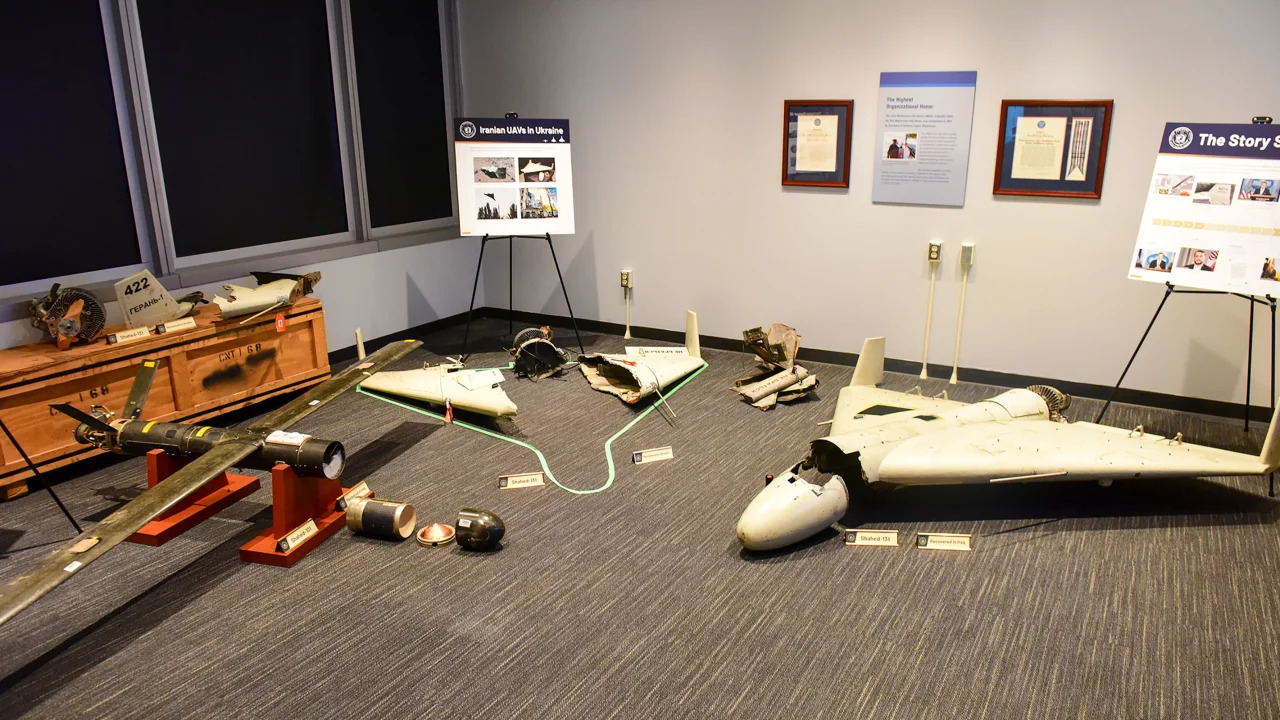
This decentralization has profound implications. It means that the drone barrages striking Saudi Arabia’s Eastern Province — including attacks that are rapidly depleting the Kingdom’s interceptor stockpiles — 51 intercepted in a single night on 22 March — may not be directed by any individual commander but by a distributed network of mid-level officers executing pre-authorized attack plans. The IRGC has, in effect, created an autopilot war machine that can continue prosecuting the conflict regardless of whether its supreme leader is conscious, present, or alive.
The Sanctions Trail — From Bishops Avenue to Supreme Leader
On 4 November 2019, the US Treasury Department designated Mojtaba Khamenei under Executive Order 13876, freezing any assets he held within US jurisdiction and prohibiting American entities from conducting business with him. The designation stated that Mojtaba had been sanctioned for “representing the Supreme Leader in an official capacity despite never being elected or appointed to a government position aside from work in the office of his father.”
The sanctions revealed the contours of a financial network that had operated invisibly for years. A year-long Bloomberg investigation published in January 2026 — weeks before the war began — mapped an offshore financial architecture linked to Mojtaba that spanned multiple jurisdictions. The investigation identified high-value real estate in London and Dubai, shipping interests, banking relationships, and hospitality assets in Europe.
The most striking finding involved London property. According to the investigation, Mojtaba’s network was connected to more than $138 million in London real estate, including eleven mansions on Bishops Avenue in Hampstead — a street known as “Billionaires’ Row” — and two apartments overlooking the Israeli embassy. The properties were held through layers of corporate structures designed to obscure beneficial ownership, a pattern consistent with sanctions evasion.
The financial trail raises questions that extend beyond corruption. A supreme leader who maintains $138 million in London property through shell companies is a supreme leader with financial exposure to Western legal systems — exposure that could, in theory, be leveraged for diplomatic purposes. Whether this represents a vulnerability or an asset for Mojtaba’s regime is a question that both Western intelligence agencies and MBS’s strategic advisers in Riyadh are almost certainly evaluating.
What Does Mojtaba’s Ascension Mean for Saudi Arabia?
For Saudi Arabia, Mojtaba Khamenei’s installation represents a structural shift in the adversary the Kingdom faces. Ali Khamenei was a calculating, conservative supreme leader who operated within established patterns. He authorized proxy operations against Saudi interests through the Houthis but maintained diplomatic channels. He accepted the 2023 China-brokered rapprochement with Riyadh. His red lines, while hostile, were predictable.
Mojtaba is fundamentally different in three ways that matter to Riyadh.
First, he is more ideologically committed to confrontation. Every credible analysis — from Foreign Affairs to the Carnegie Endowment to the Foundation for Defense of Democracies — describes him as more hardline than his father. CNBC reported that he is “more hardline and conservative than his father” with a determination to “strengthen the IRGC’s power” and “maintain an aggressive posture toward Israel and the United States.” For Saudi Arabia, which has opened King Fahd Air Base to US forces and expelled Iranian military personnel, this translates to a higher probability of sustained and escalating attacks on Saudi territory.
Second, his invisibility creates strategic uncertainty. Saudi defence planners need to understand their adversary’s decision-making process to calibrate responses. With Ali Khamenei, that process was opaque but functional — intelligence agencies could model his likely reactions based on four decades of observed behaviour. With Mojtaba, the question of whether he is even making decisions introduces a level of uncertainty that complicates every aspect of Saudi military planning, from air defence interceptor allocation to diplomatic signalling.
Third, the IRGC’s dominance over Mojtaba — or, alternatively, the IRGC’s ability to operate independently of him — means that Saudi Arabia effectively faces a military junta rather than a clerical autocracy. Negotiations with a supreme leader who may not control his own military are negotiations in name only. This reality was demonstrated on 22 March, when three ballistic missiles targeted Riyadh on the same day that Iranian diplomatic channels were reportedly exploring peace overtures — a contradiction that only makes sense if the IRGC’s strike capability operates independently of any peace process.
What Happens to Iran’s Proxy Networks Under Mojtaba?
The supreme leader’s authority over Iran’s proxy networks — Hezbollah in Lebanon, the Popular Mobilization Forces in Iraq, the Houthis in Yemen, and various Palestinian factions — has historically operated through the IRGC-Quds Force rather than through direct clerical command. Ali Khamenei set strategic direction; the Quds Force translated that direction into operational reality. The assassination of Qasem Soleimani in January 2020 disrupted this mechanism but did not destroy it. The current war has stressed it further.
Under Mojtaba, the proxy relationship faces a crisis of authority. Proxy leaders cultivated personal relationships with Ali Khamenei over decades. Mojtaba lacks these relationships. His first statement as supreme leader thanked the “axis of resistance” for their support and promised continued cooperation, but the statement was written, unsigned, and unverifiable — hardly the foundation for a wartime alliance that depends on trust and personal commitment.
The operational evidence suggests that Iran’s proxy networks are already fragmenting under wartime pressure. Iraqi militias have conducted 21 attacks on US bases in a 24-hour period, but the targeting patterns suggest autonomous decision-making rather than coordinated strategy. Houthi operations in the Red Sea have continued but with diminishing coordination with Iranian naval assets in the Gulf. Hezbollah’s rocket campaign against Israel reflects its own strategic calculus rather than instructions from a supreme leader who may be in a Moscow hospital.
For Saudi Arabia, proxy fragmentation is both an opportunity and a risk. Fragmented proxies are less capable of conducting the kind of coordinated, multi-front assault that would overwhelm Saudi air defences. But fragmented proxies are also less susceptible to diplomatic settlements — because there is no single authority that can credibly promise to restrain them all. A ceasefire negotiated with Mojtaba Khamenei means nothing if the Houthis, Iraqi militias, and Hezbollah each decide independently whether to honour it.
| Proxy Force | Pre-War Relationship to Supreme Leader | Current Status | Autonomy Level |
|---|---|---|---|
| Hezbollah (Lebanon) | Direct Quds Force liaison; ideological loyalty to supreme leader | Operating independently; 200-rocket barrages against Israel | High |
| Popular Mobilization Forces (Iraq) | Multiple factions; variable loyalty to Tehran | 21 attacks on US bases in 24 hours; force majeure on oil fields | Very High |
| Houthis (Yemen) | IRGC-supplied; strategic alignment but operational independence | Red Sea operations continuing; diminishing coordination with IRGC Navy | High |
| Palestinian Islamic Jihad | Financial and military support via Quds Force | Limited operational capacity under Israeli pressure | Moderate |
Ahmad Vahidi — The General Who Actually Commands Iran’s War
If Mojtaba Khamenei is Iran’s nominal supreme leader, Ahmad Vahidi is its functional wartime commander. Vahidi’s appointment as IRGC commander-in-chief following the death of Mohammad Pakpour in the opening strikes was itself a statement about the direction of Iran’s war. A founding member of the Quds Force, a former defence minister, and a man wanted by Interpol for his alleged role in the 1994 AMIA bombing in Buenos Aires that killed 85 people, Vahidi represents the IRGC’s old guard — the generation that built Iran’s asymmetric warfare doctrine from scratch.
Vahidi inherited a force that had been decapitated twice in less than a year. The June 2025 Israeli 12-day war killed more than 30 IRGC generals. The current conflict has, according to Israeli military claims, killed approximately 6,000 Revolutionary Guards including the previous commander-in-chief and the Basij chief. The senior and mid-level officer corps that took decades to develop has been destroyed in weeks.
His response has been institutional rather than personal. Rather than attempting to reconstitute a centralized command structure — which would present a target-rich environment for US and Israeli intelligence — Vahidi has pushed decision-making authority downward. Provincial IRGC commanders now operate under standing orders that authorize retaliatory strikes within defined parameters. Each officer has named three successors. The result is an organism that can absorb leadership losses and continue functioning, not because of any individual commander’s brilliance but because of structural resilience built into the system.
The relationship between Vahidi and Mojtaba Khamenei remains opaque. Constitutionally, the IRGC commander reports to the supreme leader. Practically, it is unclear whether Mojtaba is issuing orders, rubber-stamping Vahidi’s decisions, or absent from the process entirely. What is clear is that Iran’s strategic warfare decisions — including the financial dimension of the conflict — continue to be executed with a coherence that suggests institutional planning rather than individual leadership.
The Hereditary Republic — Why Iran’s Revolution Consumed Itself
The installation of Mojtaba Khamenei represents perhaps the most profound ideological contradiction in the Islamic Republic’s history. The 1979 revolution was, at its core, a repudiation of hereditary rule. The revolutionaries overthrew the Pahlavi dynasty — the Shah, his family, the entire apparatus of monarchical succession — and replaced it with a system that derived its legitimacy from clerical scholarship, revolutionary credentials, and divine authority rather than bloodline.
Forty-seven years later, the supreme leadership has passed from father to son. The son was installed not through scholarly consensus but through IRGC coercion. The clerical body responsible for the selection was pressured, its dissenting members silenced, its deliberative process curtailed. The revolution that began by abolishing hereditary rule has, under the pressure of war, reverted to exactly the dynastic principle it was founded to destroy.
This is not merely an academic observation. It has practical consequences for regime legitimacy, both domestically and across the Shia world. The Iranian diaspora opposition, led by organizations including the National Council of Resistance of Iran, has seized on the hereditary succession as evidence that the Islamic Republic has abandoned its founding principles. Within Iran, where public opinion is impossible to measure accurately under wartime conditions, the legitimacy gap may prove more dangerous to regime survival than any American bomb.
The Carnegie Endowment for International Peace noted that the Assembly of Experts’ decision reflected “necessity as much as merit” — an acknowledgement that the Islamic Republic’s system for selecting a supreme leader, designed for peacetime transitions, was never stress-tested against the simultaneous death of the incumbent, the destruction of the country’s military command structure, and an ongoing foreign bombardment. The system failed its first real test.
The Shadow Leadership Assessment Matrix
Assessing Mojtaba Khamenei’s actual power requires disaggregating the formal authority of the supreme leader’s office from the practical ability to exercise it. Five dimensions of leadership capacity — constitutional authority, military command, intelligence access, economic control, and legitimacy — each operate on different timelines and face different constraints. Their intersection determines whether Iran has a functioning supreme leader or merely a titled figurehead.
| Dimension | Formal Status | Practical Reality | Assessment |
|---|---|---|---|
| Constitutional authority | Supreme leader with absolute power under Article 110 | Cannot exercise authority while absent; no public decree since 12 March | Nominal |
| Military command | Commander-in-chief of all armed forces | IRGC operating under decentralized structure; mid-level officers conducting autonomous strikes | Marginal |
| Intelligence access | All intelligence agencies report to supreme leader | Habib Circle provides parallel channel; but physical absence limits processing | Uncertain |
| Economic control | Controls Setad, bonyads, and economic foundations worth est. $200 billion | Sanctions freeze external assets; wartime disruption limits domestic economic levers | Impaired |
| Clerical legitimacy | Selected by Assembly of Experts | Mid-ranking cleric; selection widely perceived as IRGC-coerced; hereditary succession undermines revolutionary credentials | Contested |
The matrix reveals a pattern: Mojtaba Khamenei holds full formal authority in every dimension but exercises effective control in none. This is not unprecedented in history — regents, absent monarchs, and incapacitated heads of state have governed through proxies throughout the centuries — but it is unprecedented in the Islamic Republic, which was designed around the concept of direct, personal, clerical rule by a single supreme leader.
The practical consequence is that Iran’s war is being fought by an institution — the IRGC — rather than by an individual. For Saudi Arabia and its allies, this means that targeting the supreme leader’s decision-making capacity through diplomatic pressure, intelligence operations, or military strikes may be strategically irrelevant. The war machine functions without its nominal commander. Stopping the machine requires engaging with the institution, not the individual.
Why the IRGC May Not Need Mojtaba at All
The conventional analysis of Mojtaba Khamenei’s ascension frames it as the IRGC selecting a pliant supreme leader who will serve their interests. The evidence supports this reading. But a more provocative interpretation deserves consideration: the IRGC may have selected Mojtaba precisely because they do not need him.
The supreme leader’s constitutional role is to provide religious legitimacy for the state’s actions, to arbitrate disputes between power centres, and to set strategic direction. In a war fought under existential conditions, the IRGC has discovered that it can perform all three functions itself. It generates its own legitimacy through combat. It resolves internal disputes through military hierarchy rather than clerical arbitration. It sets its own strategic direction through the decentralized command structure that has emerged from the destruction of its senior leadership.
Mojtaba’s value to the IRGC is not operational but symbolic. He provides constitutional cover — the legal fiction that Iran’s military actions are authorized by a legitimate supreme leader, even if that leader is in a Moscow hospital, in a Tehran bunker, or incapacitated beyond the ability to command. The IRGC needs a supreme leader the way a corporation needs a board chairman: for governance compliance, not for operational direction.
This interpretation challenges the assumption — prevalent in both Riyadh and Washington — that Iran’s war effort can be ended by pressuring, deterring, or eliminating the supreme leader. If the IRGC has achieved functional autonomy from the supreme leader’s office, then the traditional theory of decapitation strikes — removing leadership to paralyze the adversary — has already been tested and failed. Ali Khamenei was killed on 28 February. Iran’s drone attacks intensified. The Hormuz blockade tightened. The proxy networks accelerated their operations. The death of the supreme leader did not stop the war. It may have accelerated it.
The killing of Ali Khamenei was supposed to decapitate the Iranian regime. Instead, it liberated the IRGC from the last civilian restraint on its war-making power.
Assessment based on IRGC operational patterns, March 2026
For Saudi Arabia’s strategic leadership, including those tracking the IRGC’s evolving war strategy, this analysis carries an uncomfortable implication. The war will not end because a supreme leader decides to end it. It will end because the IRGC’s military capability is degraded below the threshold of effective operations, or because the economic costs of continuing become unbearable, or because an external diplomatic framework offers the Guards institutional survival in exchange for cessation — none of which depend on Mojtaba Khamenei.
Can Mojtaba Khamenei Survive the War He Inherited?
Mojtaba Khamenei faces a survivability problem that operates on three levels simultaneously: physical survival, political survival, and institutional survival.
Physical survival is the most immediate concern. If the reports of his evacuation to Russia are accurate, he has already demonstrated that he considers his physical safety incompatible with remaining in Iran — an extraordinary admission for a supreme leader whose father remained in Tehran throughout the Iran-Iraq War. The US and Israeli intelligence apparatus that tracked and killed his father is presumably attempting the same with Mojtaba, and his movement to Russia — if confirmed — would suggest that neither he nor his security detail believe Iranian territory can protect him.
Political survival depends on whether the war ends before the legitimacy gap widens beyond repair. A supreme leader who inherits power through IRGC coercion, who has never appeared publicly, who may not be in the country, and who presides over the most devastating military campaign in Iran’s modern history faces a timeline. If the war ends quickly with terms that can be framed as Iranian resilience, Mojtaba can consolidate. If the war continues and Iran’s cities, infrastructure, and economy are progressively destroyed, the question of whether a different leader might have achieved a better outcome becomes unavoidable.
Institutional survival is the deepest challenge. The supreme leader’s office is designed to sit above all other institutions — above the presidency, the parliament, the judiciary, the military. Under Mojtaba, the office has been subordinated to the IRGC for the first time. Once that precedent is established, reversing it requires either a supreme leader strong enough to confront the Guards or a fundamental restructuring of the Islamic Republic’s governance. Neither appears likely under current conditions.
| Dimension | Threat | Timeline | Key Variable |
|---|---|---|---|
| Physical | US-Israeli targeting; inability to appear publicly | Immediate (days to weeks) | Whether Russia can provide sustained sanctuary |
| Political | Legitimacy deficit from hereditary succession, IRGC coercion, public absence | Medium-term (months) | War outcome — victory narrative vs. defeat narrative |
| Institutional | IRGC subordination of supreme leader’s office; precedent of military autonomy | Long-term (years) | Post-war power settlement between clerical and military establishments |
The intersection of these three timelines creates a paradox. To survive physically, Mojtaba needs to remain hidden. To survive politically, he needs to appear publicly and demonstrate command. To survive institutionally, he needs to reassert authority over the IRGC — which requires both physical presence and political capital that he currently lacks. Each survival strategy undermines the others.
For Saudi Arabia and the broader coalition confronting Iran, this paradox is strategically significant. A supreme leader trapped between these contradictions is a leader who cannot make credible commitments — cannot credibly promise to end the war, cannot credibly threaten escalation, and cannot credibly negotiate a post-war settlement. The person sitting atop Iran’s constitutional hierarchy may be the person least capable of determining its trajectory.
Frequently Asked Questions
Who is Mojtaba Khamenei and why was he chosen as Iran’s supreme leader?
Mojtaba Khamenei is the 56-year-old son of the late Ali Khamenei who was selected as Iran’s third supreme leader by the Assembly of Experts on 9 March 2026 following his father’s assassination. He was chosen primarily because the IRGC pressured Assembly members to select him, viewing him as a hardline loyalist who would protect their institutional power. His selection was also influenced by the limited pool of candidates available during wartime conditions that had killed much of Iran’s senior leadership.
Has Mojtaba Khamenei appeared publicly since becoming supreme leader?
No. As of 24 March 2026, Mojtaba Khamenei has not appeared on camera, delivered a speech, or been photographed at any official event since being named supreme leader on 9 March. His only attributed communication was a written statement issued through state media on 12 March, read by television presenters rather than by Mojtaba himself. Multiple reports suggest he was evacuated to Moscow for medical treatment after being wounded in the US-Israeli strikes.
What is the Habib Circle and how does it relate to Iran’s war?
The Habib Circle is an informal intelligence network created by Mojtaba Khamenei from his former IRGC battalion comrades. Named after the Habib ibn Mazaher Battalion where he served during the Iran-Iraq War, the network places Mojtaba loyalists across the IRGC, Basij militia, and intelligence services. It provides him with a parallel intelligence channel independent of the official military chain of command and has been implicated in protest suppression and overseas covert operations.
What does Mojtaba Khamenei’s leadership mean for Saudi Arabia?
Mojtaba’s ascension introduces three new risk factors for Saudi Arabia. He is considered more hardline than his father, increasing the likelihood of sustained attacks on Saudi territory. His invisibility creates strategic uncertainty that complicates Saudi military planning. And the IRGC’s dominance over him — or independent of him — means Saudi Arabia faces a military institution rather than an individual leader, making traditional diplomatic engagement and deterrence strategies less effective.
Was Mojtaba Khamenei sanctioned by the United States before becoming supreme leader?
Yes. The US Treasury Department sanctioned Mojtaba Khamenei in November 2019 under Executive Order 13876 for “representing the Supreme Leader in an official capacity despite never being elected or appointed to a government position.” A Bloomberg investigation in January 2026 linked his network to more than $138 million in London real estate, including eleven mansions on Bishops Avenue, and financial interests in Dubai, shipping, and European hospitality assets.
Who is actually commanding Iran’s military operations?
Ahmad Vahidi, the newly appointed IRGC commander, officially leads military operations. However, the IRGC has shifted to a decentralized command structure following the destruction of much of its senior leadership. Mid-ranking officers are empowered to launch independent retaliatory strikes under pre-authorized attack plans, and each commander has named successors spanning three ranks. The practical effect is that Iran’s war machine operates as a distributed network rather than a hierarchical command dependent on orders from the supreme leader. Parliament Speaker Ghalibaf, a close Khamenei associate, has emerged as the reported lead negotiator for potential peace talks in Islamabad.