
RIYADH — Mojtaba Khamenei became the third supreme leader in the Islamic Republic’s 47-year history on 8 March 2026, inheriting a wartime theocracy in the same week that U.S. and Israeli bombs killed his father. The appointment solved the most urgent question in Middle Eastern geopolitics — who governs Iran when the supreme leader is assassinated — but it opened a far more corrosive one: whether a system designed to prevent hereditary rule can survive the moment it becomes hereditary. For Saudi Arabia and Crown Prince Mohammed bin Salman, that contradiction is not an academic debate. It is the single most exploitable fracture in the Iranian state since the 1979 revolution, and it will shape the Kingdom’s diplomacy, its wartime posture, and the eventual terms of whatever ceasefire emerges from twelve days of carnage.
The system Ayatollah Ruhollah Khomeini built rested on a foundational claim: that a senior Islamic jurist, chosen for his scholarly credentials and piety, would govern Iran as the representative of the hidden Imam. Mojtaba Khamenei is not that figure. He holds the mid-ranking clerical title of hojjatoleslam, has never published significant jurisprudence, commands no following as a source of emulation, and reached the supreme leader’s chair through a combination of IRGC coercion and biological inheritance. The theological architecture of velayat-e faqih — the guardianship of the Islamic jurist — has been hollowed out. What remains is a power structure that resembles a military dictatorship with a turban on top. US Defense Secretary Pete Hegseth has since described Khamenei as wounded and likely disfigured.
Table of Contents
- How Did Mojtaba Khamenei Become Supreme Leader?
- What Are the Theological Qualifications for Iran’s Supreme Leader?
- Why Does Mojtaba Khamenei Lack Religious Legitimacy?
- The Revolution That Killed a Monarchy Created a Dynasty
- How Did the IRGC Engineer Mojtaba’s Selection?
- The Clerical Establishment’s Quiet Revolt
- The Legitimacy Erosion Framework
- What Does Mojtaba’s Appointment Mean for the War?
- Can Saudi Arabia Exploit Iran’s Legitimacy Crisis?
- The Illegitimate Leader May Be More Dangerous, Not Weaker
- Can the Theocracy Survive Without Theological Authority?
- Frequently Asked Questions
How Did Mojtaba Khamenei Become Supreme Leader?
Mojtaba Khamenei was selected by the Assembly of Experts in an emergency vote on 8 March 2026, eight days after his father Ali Khamenei was killed in U.S.-Israeli airstrikes that launched the Iran war on 28 February. The 88-member body of senior clerics — constitutionally tasked with selecting, supervising, and if necessary dismissing the supreme leader — convened under extraordinary wartime conditions, with much of Iran’s government infrastructure damaged or destroyed. US Defense Secretary Pete Hegseth has since described Khamenei as wounded and likely disfigured.
The process began on 3 March when the Assembly held an initial online session. According to Iran International, IRGC commanders initiated “repeated contacts and psychological and political pressure” on Assembly members to vote for Mojtaba. Members described the atmosphere of the online meeting as “unnatural.” Those who presented arguments against Mojtaba were given limited time to speak before discussion was cut off and a preliminary vote was held. Eight members publicly announced they would boycott subsequent sessions in protest.
A second session convened on 5 March, and the formal announcement came on 8 March, with more than two-thirds of the 88 members attending a session in Qom. Mojtaba received approximately 85 percent of the votes cast by those present, according to Fortune. The announcement was delayed for security reasons — Israel had already threatened to assassinate any successor to Ali Khamenei. The Israel Defense Forces posted a statement declaring that “the hand of the State of Israel will continue to pursue every successor and every person who seeks to appoint a successor.”
The speed of the appointment reflected institutional survival instinct more than theological deliberation. Iran was under active bombardment. The Pentagon reported that by day twelve of Operation Epic Fury, nearly 10,000 civilian sites had been struck and over 1,300 civilians killed. The Assembly’s vote was a wartime decision dressed in constitutional procedure.
The contrast with previous successions is stark. When Khomeini died in 1989 after a prolonged illness, the Assembly of Experts had months of informal preparation. Senior clerics debated candidates. The eventual selection of Ali Khamenei — despite his inadequate theological credentials — at least followed a process that most participants recognized as legitimate, even if imperfect. In 2026, the Assembly had eight days, a war overhead, and IRGC officers making phone calls. The resulting selection carries the weight of emergency decree, not considered judgment.
What Are the Theological Qualifications for Iran’s Supreme Leader?
The supreme leader of Iran was conceived by Khomeini as the ultimate fusion of religious scholarship and political authority — a senior Islamic jurist whose legitimacy derived not from popular election but from divine mandate. The doctrine of velayat-e faqih, articulated in Khomeini’s 1970 lectures in Najaf and published as “Islamic Government: Governance of the Jurist,” argued that in the absence of the hidden twelfth Imam, governance must fall to the most qualified Islamic scholar.
The original 1979 constitution required the supreme leader to be a marja-e taqlid — a “source of emulation,” the highest rank in Shia clerical hierarchy, equivalent in authority to a grand ayatollah. A marja is recognized by millions of followers who voluntarily adopt his rulings on matters of Islamic law and personal conduct. There are typically only a handful of living marjas at any given time, each commanding decades of published jurisprudence, thousands of students, and independent financial networks through the khums religious tax.
This requirement was weakened in 1989 when the constitution was amended specifically to allow Ali Khamenei — who was not a marja and held only the mid-ranking title of hojjatoleslam — to succeed Khomeini. The amendment replaced the marja requirement with a vaguer demand for “Islamic scholarship” and “justice, piety, political judgement, courage, and administrative ability.” The revision was controversial at the time. Many senior clerics in Qom never fully accepted Ali Khamenei’s religious authority, and the gap between his political power and his theological standing became a defining tension of his 36-year reign.
What happened in March 2026 extended that erosion to its logical conclusion. The system no longer demands that the supreme leader be the most learned jurist. It demands only that he be acceptable to the institution that actually holds power: the Islamic Revolutionary Guard Corps. The IRGC’s dominance is now absolute — its Mosaic Defense doctrine has fragmented military authority across 31 autonomous provincial commands, making even the supreme leader’s ability to order a ceasefire structurally uncertain.
Why Does Mojtaba Khamenei Lack Religious Legitimacy?
Mojtaba Khamenei’s legitimacy deficit is structural, not merely personal. He holds the clerical rank of hojjatoleslam — one level below ayatollah and two below grand ayatollah. He has never published Islamic jurisprudence of significance. He commands no following as a source of emulation. No Shia believer in Iran, Iraq, Lebanon, or Bahrain looks to Mojtaba Khamenei for religious guidance on matters of Islamic law, and none did before his appointment.
Born on 8 September 1969 in Mashhad, Mojtaba grew up inside the revolutionary elite. He joined the IRGC in 1987 at the age of eighteen and served in the Iran-Iraq War. In 1999, he enrolled at the Qom seminary and later joined as a theological teacher. His scholarly career was modest by the standards of the institution he now leads. The seminary in Qom houses grand ayatollahs who have spent sixty years producing volumes of jurisprudence. Mojtaba’s credentials, by comparison, are thin.
His real power base was always operational, not theological. He cultivated deep ties with the IRGC’s intelligence apparatus and took de facto control of the Basij paramilitary force in 2009, according to leaked IRGC documents published by Iran International in 2023. Those documents revealed that Mojtaba effectively controlled the Basij and exercised significant influence over personnel assignments in the Intelligence and Intelligence Protection Organizations.
The gap between the role’s theological requirements and the occupant’s credentials has grown with each succession. Khomeini was a grand ayatollah and marja — the system’s founding ideal. Ali Khamenei was a hojjatoleslam who was retroactively promoted and never achieved marja status in practice. Mojtaba is a hojjatoleslam who has not even been retroactively promoted, and whose claim rests on neither scholarship nor revolution but on bloodline and IRGC patronage.
The Revolution That Killed a Monarchy Created a Dynasty
The 1979 Islamic Revolution was, at its core, an uprising against hereditary rule. Khomeini’s entire philosophical project was constructed in opposition to the Pahlavi dynasty. In his foundational texts, he wrote that “monarchy and hereditary succession represent the same sinister, evil system of government that prompted the Doyen of the Martyrs to rise up in revolt and seek martyrdom in an effort to prevent its establishment.” He declared that “Islam proclaims monarchy and hereditary succession wrong and invalid.”
Forty-seven years later, the system he created has produced exactly what he condemned: a son inheriting supreme power from his father, with the coercive apparatus of the state ensuring the transfer. The Islamic Republic’s defenders insist the comparison is invalid because the Assembly of Experts voted. The vote, they argue, makes the transfer constitutional rather than hereditary. The distinction is technically accurate and substantively hollow. The IRGC pressured the Assembly. Eight members boycotted. Some were not informed of the meeting. The discussion was truncated. The outcome was predetermined.
The irony extends beyond the succession itself. The Pahlavi dynasty lasted two generations — Reza Shah and his son Mohammad Reza Shah. The Khamenei dynasty has now matched it. And where the Pahlavis at least maintained a secular state that made no claims to divine mandate, the Khameneis preside over a system that explicitly grounds its authority in God’s will as interpreted by the most learned jurists. When the most learned jurists are bypassed in favor of the previous leader’s son, the theological scaffolding does not bend. It breaks.
How Did the IRGC Engineer Mojtaba’s Selection?
The Islamic Revolutionary Guard Corps did not merely support Mojtaba Khamenei’s candidacy. It manufactured his selection, according to multiple reports from Iranian opposition sources, Western intelligence assessments, and accounts from Assembly of Experts members themselves. The process exposed the degree to which Iran’s military establishment has become the true locus of power, with the supreme leader serving as its civilian interface rather than its master.
The campaign began within hours of Ali Khamenei’s death on 28 February. IRGC commanders initiated contact with Assembly of Experts members, according to Iran International reporting. The pressure was both political and, in some accounts, implicitly threatening. The IRGC controls the security apparatus that protects — or surveils — every senior cleric in Iran. In a country under active bombardment, the distinction between protection and coercion narrows considerably.
The Jerusalem Post reported that the Assembly was “divided” on Mojtaba, with some members favoring alternative candidates who held greater theological credentials. Iran International separately reported that some Assembly members were not informed about the timing of the critical session, even when they were physically present in Qom. Those who did attend and raised objections were given truncated speaking time before discussion was closed and the vote was called.
The result was an 85 percent vote among those present — a figure that sounds decisive until one accounts for the eight-member boycott, the uninformed members, and the climate of IRGC intimidation that preceded the ballot. A former Israeli ambassador to the United States assessed the selection bluntly: “The Iranians are showing defiance by choosing the son of Khamenei — showing continuity, and the guy will probably be vengeful.”
The IRGC’s preference for Mojtaba was rational from a self-preservation standpoint. Having cultivated deep ties with the guard corps since the 1980s, Mojtaba represented continuity of the patronage networks that fund IRGC commercial ventures, determine senior military appointments, and maintain the guard’s position as Iran’s dominant political and economic force. An alternative candidate with genuine theological authority might have demanded genuine clerical oversight of the military — an outcome the IRGC has spent forty years preventing.
The Clerical Establishment’s Quiet Revolt
The selection of Mojtaba Khamenei has provoked the most significant internal challenge to the theocratic system since the 2009 Green Movement, though this time the opposition comes not from the streets but from within the clerical establishment itself. Senior scholars in Qom — the traditional power base of Shia jurisprudence — view the appointment as a definitive break from the principles that justified their authority.
The theological objection is not peripheral. It strikes at the system’s founding rationale. If the supreme leader need not be the most qualified jurist — if the role can pass from father to son with IRGC approval — then velayat-e faqih ceases to be governance by Islamic scholars and becomes governance by whoever controls the guns. The clerics in Qom understood this immediately. Their response has been measured but unmistakable: silence where the system demanded celebration, absence where it demanded presence. On March 12, Khamenei finally issued his first public statement, vowing to hold the Strait of Hormuz closed and demanding the closure of all American bases in the region.
The verfassungsblog.de analysis of the succession identified the core constitutional problem: the system has “effectively separated the office of the Supreme Leader from the requirement of Marja seniority, replacing the ‘Philosopher King’ with a strategic leader.” This separation does not merely weaken Mojtaba personally. It undermines the entire class of scholars whose authority justified the Islamic Republic’s existence.
Rasanah, the International Institute for Iranian Studies based in Riyadh, published an assessment noting that Mojtaba’s appointment would produce “short-term elite consolidation” as the regime’s surviving hardliners rally around a known quantity. But the medium-term trajectory points toward institutional decay. A supreme leader without theological standing cannot arbitrate disputes between rival factions on religious grounds. He can only do so through coercion — which eventually exhausts itself.
The parallel to Saudi Arabia’s own religious establishment is instructive. When MBS consolidated power in the Kingdom, he co-opted the ulema rather than inheriting their authority. The Saudi religious establishment was brought to heel through a combination of institutional reform, selective prosecution, and the creation of new bodies that diluted traditional clerical influence. Iran’s IRGC has achieved something similar but more destructive: it has not co-opted the clerics but bypassed them entirely, leaving the theological establishment intact in form but irrelevant in function.
The Legitimacy Erosion Framework
Three dimensions determine whether a supreme leader can sustain the Islamic Republic’s governing model: theological authority, revolutionary credentials, and coercive capacity. Each of Iran’s three supreme leaders can be assessed against these dimensions, and the trajectory reveals a system in terminal theological decline.
| Dimension | Khomeini (1979-1989) | Ali Khamenei (1989-2026) | Mojtaba Khamenei (2026-) |
|---|---|---|---|
| Clerical rank | Grand Ayatollah, Marja | Hojjatoleslam (promoted to Ayatollah) | Hojjatoleslam |
| Published jurisprudence | Extensive (including foundational texts) | Limited | Negligible |
| Followers as marja | Millions worldwide | Limited (not widely accepted as marja) | None |
| Revolutionary credentials | Led the revolution, exiled under Shah | Survived assassination, served as president | None (born 1969, no revolutionary role) |
| IRGC dependence | Low (IRGC depended on him) | Moderate (mutual dependence) | Very high (IRGC selected him) |
| Popular legitimacy | High at inception | Declining (2009, 2017, 2019, 2022 protests) | Near zero among opposition, untested among base |
| Path to power | Revolution + Assembly of Experts | Assembly of Experts (expedited) | IRGC pressure + wartime Assembly vote |
| Constitutional compliance | Full (marja requirement met) | Partial (constitution amended for him) | Formally compliant, substantively contested |
The pattern is unmistakable. Each succession has required a further dilution of theological standards to accommodate a candidate who serves the security establishment’s needs. Khomeini embodied the system’s founding ideal. Ali Khamenei required a constitutional amendment. Mojtaba required IRGC coercion of the selection body. The trajectory points toward a future in which the supreme leader’s theological role is purely ceremonial — if the title survives at all.
A second dimension of the framework measures what might be called the “legitimacy gap” — the distance between what the system claims to be and what it actually is. Under Khomeini, the gap was narrow: the system claimed to be governance by the most qualified jurist, and Khomeini was plausibly the most qualified jurist willing to govern. Under Ali Khamenei, the gap widened: the system claimed theological authority while the leader lacked marja status. Under Mojtaba, the gap has become a chasm: the system claims divine mandate through scholarly excellence while the leader holds a mid-ranking clerical title and reached his position through his father’s name and the military’s endorsement.
When the legitimacy gap exceeds a critical threshold, the system must rely increasingly on coercion rather than consent. Coercion is expensive, it breeds resentment, and it has a half-life. The Islamic Republic’s own founding mythology — a revolution against a coercive monarch — demonstrates what happens when that half-life expires.
A third dimension considers the external validation each leader received. Khomeini’s revolution was recognized globally, even by governments that despised its ideology. The rupture with the United States, the hostage crisis, and the Iran-Iraq War all paradoxically reinforced Khomeini’s stature — he was clearly in charge, clearly the decision-maker, clearly the ideological architect. Ali Khamenei received grudging international recognition over decades, negotiating directly with world powers on the nuclear file and proxy networks. Mojtaba has received the opposite: President Trump declared himself “not happy” with the selection, Israel threatened assassination, and Oman’s congratulatory cable was notably the warmest international response — a measure of how isolated the new leader is on the world stage.
What Does Mojtaba’s Appointment Mean for the War?
The immediate effect of Mojtaba’s selection was to signal continuity rather than capitulation. His first days in office have been defined by the ongoing conflict — Iranian missile and drone attacks on Gulf states, the Strait of Hormuz crisis, and retaliatory U.S. strikes that have devastated Iran’s infrastructure. The appointment was read internationally as a defiant statement: Iran would fight on, under a leader who owed his position to the same IRGC commanders directing the war.
Mojtaba’s relationship with the war is more complex than simple hawkishness, however. As a leader whose domestic legitimacy is untested, he faces a paradox. Ending the war quickly through negotiations would require concessions that the IRGC — his primary power base — would interpret as betrayal. Continuing the war indefinitely risks the kind of catastrophic defeat that collapses regimes. The path between those outcomes is extremely narrow.
Multiple analysts have noted that Mojtaba is believed to be more favorable to developing an Iranian nuclear weapons program than his father. WION News reported that he has been described as a “pro-nuclear hardliner” who opposed his father’s fatwa against nuclear weapons. Ali Khamenei’s fatwa served as diplomatic cover during decades of negotiations with Western powers. Mojtaba has made no such commitment, and the circumstances of his appointment give him little incentive to do so. A nuclear weapon would be the ultimate security guarantee for a leader whose legitimacy derives from coercion rather than consent.
The war timeline further constrains Mojtaba’s options. Trump declared on 10 March that the conflict could end soon because there is “nothing left” for U.S. forces to hit. If the American campaign winds down, Iran faces a choice: accept a ceasefire from a position of devastation or continue retaliatory strikes on Gulf states while rebuilding. The IRGC generals who now control Tehran’s decision-making have shown no inclination toward restraint, and Mojtaba — whose authority depends on their continued loyalty — has limited ability to impose one.
The ceasefire dynamics are directly affected. As previous analysis on this site has explored, the barriers to ceasefire are formidable even with a consolidated Iranian leadership. With Mojtaba’s authority still coalescing, the question of who can negotiate on Iran’s behalf becomes more fraught. Does Mojtaba have the standing to override IRGC commanders who want to continue fighting? Does he have the theological authority to issue a fatwa permitting a ceasefire? The answer to both questions is uncertain, and uncertainty is the enemy of diplomacy.
Can Saudi Arabia Exploit Iran’s Legitimacy Crisis?
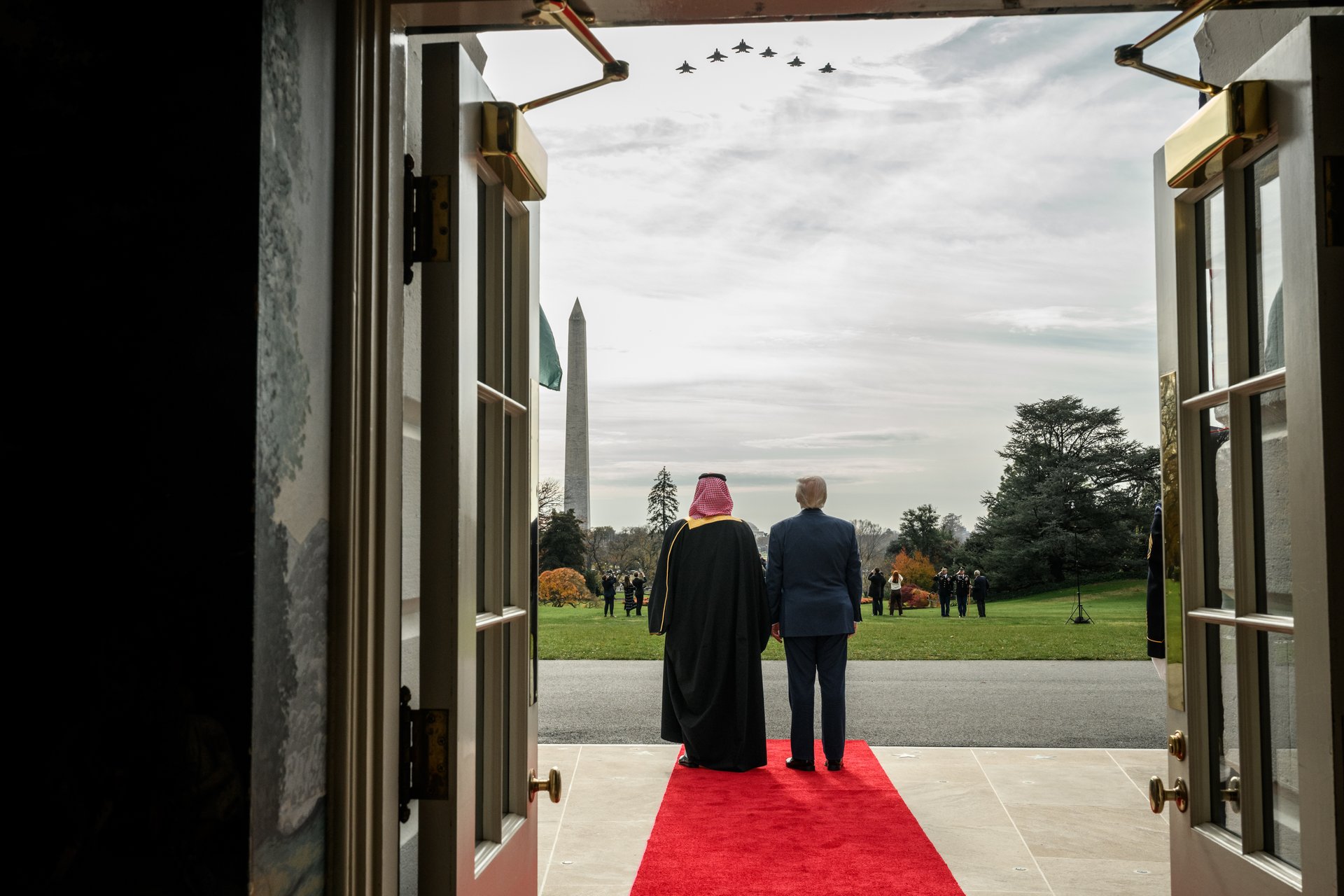
Saudi Arabia’s strategic calculus has shifted fundamentally since 8 March. The Kingdom spent years building a backchannel to Tehran through intermediaries including Oman, China, and direct diplomatic contacts restored during the 2023 rapprochement. Those channels were designed to negotiate with a consolidated Iranian leadership under Ali Khamenei. The interlocutor has changed, and the change creates both opportunities and risks. Whether Riyadh can convert those opportunities into a viable peace — whether Saudi Arabia can end a war it did not start — depends on whether Mojtaba’s regime produces anyone with the authority and pragmatism to negotiate.
The opportunity is that Mojtaba’s legitimacy deficit gives Saudi Arabia leverage it did not previously possess. A supreme leader who owes his position to the IRGC cannot afford to lose the IRGC’s support, which means he cannot make the kind of sweeping concessions that might end the war on unfavorable terms for the guard corps. But a supreme leader who lacks popular legitimacy also cannot sustain indefinite warfare against a superpower. The longer the conflict continues, the more Mojtaba’s claim to authority is tested against results he cannot deliver.
Prince Faisal bin Farhan, Saudi Arabia’s foreign minister, has been navigating this terrain since the war began. Bloomberg reported on 6 March that Saudi Arabia had “intensified direct engagement with Iran” through its diplomatic backchannel, with greater urgency to de-escalate. The Kingdom’s approach has been to position itself as a potential mediator — not allied with the U.S.-Israeli military campaign but not sympathetic to Iran’s retaliatory attacks on Gulf civilian infrastructure.
Riyadh can exploit the legitimacy crisis in several ways. Diplomatically, Saudi Arabia can frame ceasefire negotiations around the principle of legitimate governance — arguing that any post-war settlement must address the concerns of the Iranian people, not merely the IRGC’s institutional interests. This approach would resonate with the clerical opposition within Iran and with the broader international community.
The Kingdom can also leverage its religious authority. Saudi Arabia is the custodian of Islam’s holiest sites and possesses significant influence within the broader Sunni Muslim world. While the Saudi-Iranian rivalry has a sectarian dimension, Riyadh has the platform to question the theological legitimacy of a hereditary supreme leader in terms that would resonate across the Muslim world — a message that would amplify the doubts already circulating within Iran’s own Shia clerical establishment.
Economically, the legitimacy crisis creates long-term advantages for Saudi Arabia. An Iran led by a supreme leader without popular mandate will struggle to attract foreign investment, rebuild war-damaged infrastructure, or negotiate the sanctions relief that Tehran has sought for decades. Saudi Arabia, by contrast, continues to attract capital through Vision 2030 initiatives, even as the war has forced adjustments. The relative economic trajectory favors Riyadh in every scenario except one: an Iran that achieves nuclear weapons capability under Mojtaba’s leadership, which would fundamentally alter the power equation.
The risk is overplaying the hand. If Saudi Arabia is seen as actively undermining Iran’s government during a war, it validates the IRGC narrative that the Kingdom is complicit in American aggression. The art lies in exploiting the fracture without appearing to widen it — a diplomatic balancing act that Oman has historically managed better than any other Gulf state. Saudi Arabia’s best move is to let Iran’s internal contradictions do the work — to present itself as the reasonable interlocutor while the theocratic system undermines itself.
The Illegitimate Leader May Be More Dangerous, Not Weaker
The conventional wisdom in Western capitals and Gulf foreign ministries holds that a weakened Iran with an illegitimate leader is a less dangerous Iran. This analysis is comforting and probably wrong. The historical record suggests that leaders who lack domestic legitimacy are more likely to escalate externally, not less. The mechanism is straightforward: when you cannot derive authority from consent, you derive it from conflict.
Argentina’s military junta invaded the Falkland Islands in 1982 partly to distract from domestic economic collapse and declining legitimacy. Saddam Hussein’s invasion of Kuwait in 1990 followed a similar logic of external aggression as domestic deflection. Neither ended well for the aggressor, but both caused enormous damage in the interim. Mojtaba Khamenei faces a structurally similar incentive set: his domestic legitimacy is questioned, his economy is under siege, and his military commanders want to fight.
The nuclear dimension amplifies the danger. A leader who lacks the theological standing to issue a fatwa against nuclear weapons, and who depends on the IRGC for his political survival, has fewer barriers to crossing the nuclear threshold than his father did. Ali Khamenei’s fatwa against nuclear weapons was always debatable in its sincerity, but it served as a diplomatic instrument. Mojtaba has no such instrument, and the destruction of Iran’s nuclear infrastructure during Operation Epic Fury may have paradoxically increased the ideological commitment to reconstituting it.
For Saudi Arabia, this means that the legitimacy crisis is a double-edged sword. It creates diplomatic opportunities and intelligence advantages. But it also raises the probability of erratic decision-making, escalation for domestic consumption, and the pursuit of weapons programs that would fundamentally alter the regional balance. The Kingdom must prepare for both scenarios: an Iran that negotiates from weakness and an Iran that fights from desperation.
Can the Theocracy Survive Without Theological Authority?
The question is not whether Mojtaba Khamenei can govern Iran — he clearly can, at least in the short term, backed by the IRGC’s coercive apparatus. The question is whether he can govern Iran as a theocracy. The distinction matters because the Islamic Republic’s entire institutional architecture — its constitution, its judicial system, its educational curriculum, its foreign policy — is predicated on the theological authority of the supreme leader. Remove that authority, and the system becomes something else: a military dictatorship with Islamic characteristics, an authoritarian state that happens to have a cleric at the top rather than a general.
This transformation may already be underway. The NCRI, Iran’s main organized opposition, argued in an editorial that “the appointment of Mojtaba Khamenei as the next Supreme Leader has laid bare a truth the Iranian people have long understood: the regime of Velayat-e Faqih has reached a historic dead end.” Iran International’s analysis described the appointment as reflecting “pragmatism” over doctrine — a polite way of saying the system abandoned its own principles.
The Scotsman described the “hypocrisy” of the elevation as “shocking,” while Struan Stevenson, writing for the Scottish Conservative European Parliament group, went further: “Mojtaba Khamenei’s elevation to Supreme Leader marks Iran’s end.” That may be premature. Authoritarian systems can persist for decades after losing their founding legitimacy. The Soviet Union lasted seventy years despite abandoning Marxist-Leninist principles in practice long before its collapse. China’s Communist Party has governed for seven decades without meaningful adherence to Mao’s original ideology.
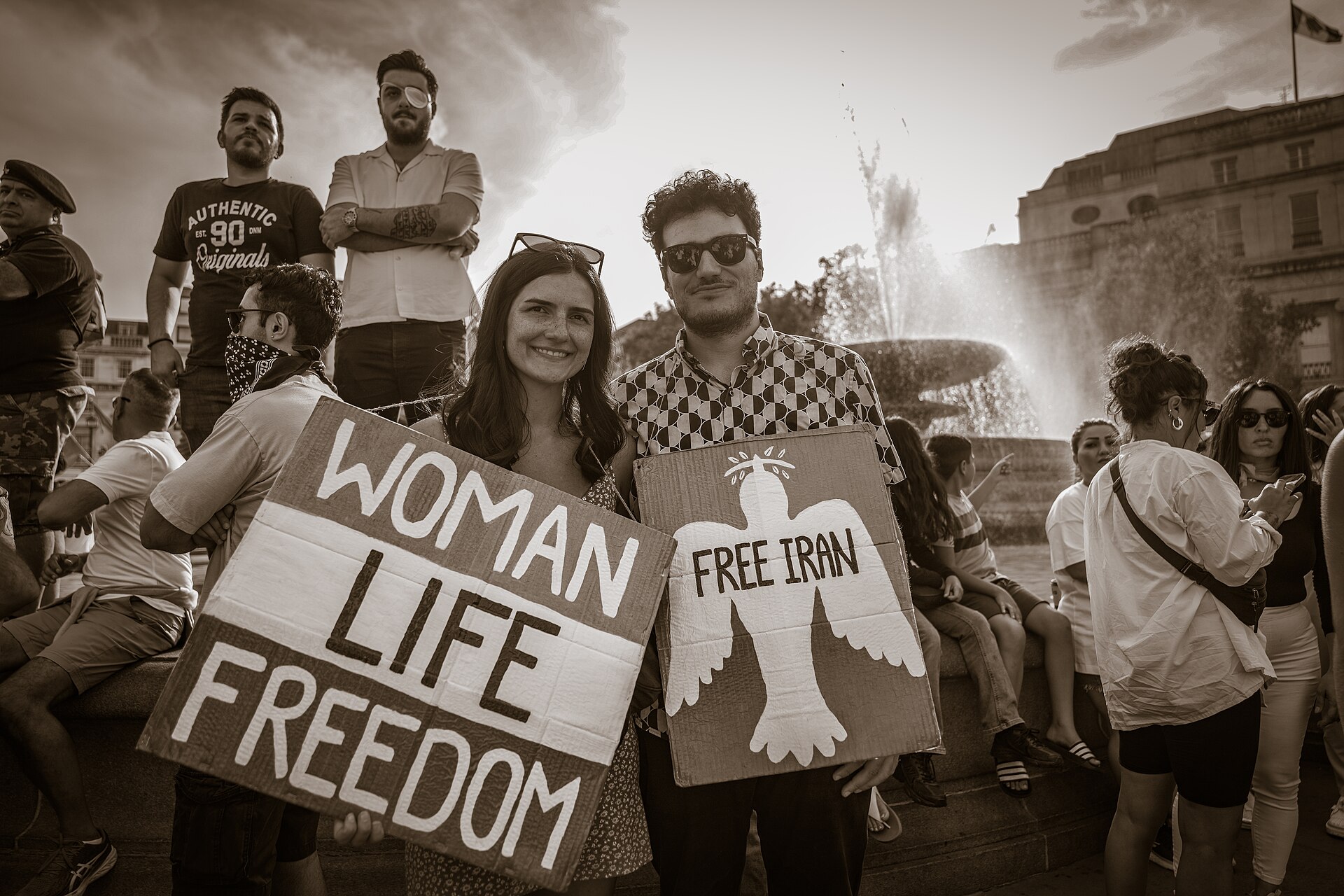
But the comparison has limits. The Soviet Union and China possessed vast territory, industrial capacity, and nuclear arsenals that gave the state durability beyond its ideological claims. Iran’s advantages are fewer: a large population, significant hydrocarbon reserves, and strategic geography. Against these stand a ruined economy, an ongoing war, a shattered infrastructure, and a population that has staged four major uprisings in seven years (2017, 2019, 2022, and the ongoing Mahsa Amini-inspired movement). The theocracy’s survival now depends not on the supreme leader’s authority but on the IRGC’s willingness to kill enough citizens to maintain order. History suggests this is a strategy with an expiration date.
For the Saudi royal family, the long-term implications are profound. A post-theocratic Iran — whether it emerges through revolution, institutional decay, or negotiated transition — would fundamentally reshape the Middle East. The sectarian framework that has defined Saudi-Iranian rivalry since 1979 would lose its primary driver. What replaces it could be a more pragmatic rivalry based on national interests, or a more chaotic competition in which Iran’s internal instability spills across borders.
Frequently Asked Questions
Who is Mojtaba Khamenei and why was he chosen as supreme leader?
Mojtaba Khamenei is the 56-year-old second son of the late Ali Khamenei, born in Mashhad in 1969. He was selected as Iran’s third supreme leader on 8 March 2026 by the Assembly of Experts following his father’s assassination in U.S.-Israeli airstrikes on 28 February. The IRGC pressured the Assembly into the selection, viewing Mojtaba as a continuation of the patronage networks and security relationships his father maintained. He holds the mid-ranking clerical title of hojjatoleslam and has deep ties to Iran’s intelligence and military structures.
Does Mojtaba Khamenei have the religious qualifications to be supreme leader?
By the standards of the original 1979 constitution, no. The founding document required the supreme leader to be a marja-e taqlid — the highest rank in Shia clerical hierarchy. That requirement was amended in 1989 to accommodate Ali Khamenei, who also lacked marja status. Mojtaba holds the rank of hojjatoleslam, has never published significant jurisprudence, and has no followers as a source of religious emulation. He meets the post-1989 constitutional requirements but not the theological standards that the system was designed to uphold.
What does Mojtaba’s appointment mean for the Iran war and ceasefire prospects?
Mojtaba’s appointment complicates ceasefire negotiations. As a leader dependent on the IRGC for legitimacy, he has limited ability to overrule military commanders who want to continue fighting. He also lacks the theological authority to issue religious rulings — such as a fatwa permitting ceasefire — that might provide religious cover for ending hostilities. Analysts believe he is more hawkish than his father on nuclear weapons, removing a diplomatic instrument that previously aided negotiations.
How does Iran’s legitimacy crisis benefit Saudi Arabia?
Saudi Arabia gains diplomatic leverage from Iran’s internal fractures. A supreme leader without popular or theological legitimacy is more vulnerable to international pressure, less able to sustain prolonged conflict, and more dependent on a narrow base of IRGC support. Riyadh can frame ceasefire negotiations around legitimate governance, leverage its religious authority to question the hereditary succession, and exploit divisions between the IRGC and the clerical establishment. The risk is that an illegitimate leader may escalate unpredictably to compensate for domestic weakness.
Is the Islamic Republic of Iran becoming a military dictatorship?
The selection of Mojtaba Khamenei accelerated a transformation that was already underway. The IRGC has progressively expanded its control over Iran’s political, economic, and military systems over the past two decades. By engineering the supreme leader’s selection, the guard corps has effectively demonstrated that it determines who holds the Islamic Republic’s highest office. The theological veneer remains, but the power structure beneath it is military in character. Whether this constitutes a full military dictatorship or a hybrid regime with residual theocratic elements depends on definitions, but the direction of travel is clear.
What was Khomeini’s view on hereditary succession?
Ayatollah Ruhollah Khomeini, founder of the Islamic Republic, explicitly condemned hereditary succession as antithetical to Islam. In his foundational texts, he wrote that “monarchy and hereditary succession represent the same sinister, evil system of government” and that “Islam proclaims monarchy and hereditary succession wrong and invalid.” The 1979 revolution was fought specifically to overthrow the Pahlavi dynasty. The selection of Mojtaba Khamenei — Ali Khamenei’s son — as supreme leader directly contradicts these founding principles, regardless of the Assembly of Experts vote that formally authorized it.