The Shield Has a Timer and the Coalition Defending Saudi Arabia Knows It
RIYADH — The multinational air defense coalition protecting Saudi Arabia intercepts more than 90 percent of everything Iran launches at the Kingdom, but each successful intercept subtracts from a finite stockpile that no wartime production pipeline can replenish fast enough. One month into the war, the strategic question has shifted from whether the shield works — it does — to whether it outlasts the Iranian arsenal it was built to defeat.
Greek Patriot batteries at Yanbu, French Rafales over the UAE, Ukrainian drone-countering specialists in Jeddah, and Saudi-operated THAAD systems across the Eastern Province together form the most complex multinational air defense arrangement ever assembled outside NATO’s European theater. Yet this patchwork shield operates without a unified command structure, without shared rules of engagement, and without a resupply chain scaled for the consumption rates the war has imposed. Bahrain has already expended an estimated 87 percent of its Patriot interceptors. The UAE and Kuwait have burned through roughly 75 percent. Saudi Arabia, firing an estimated 20 to 40 PAC-3 interceptors per day, could reach critically low levels within 60 to 90 days absent emergency resupply.
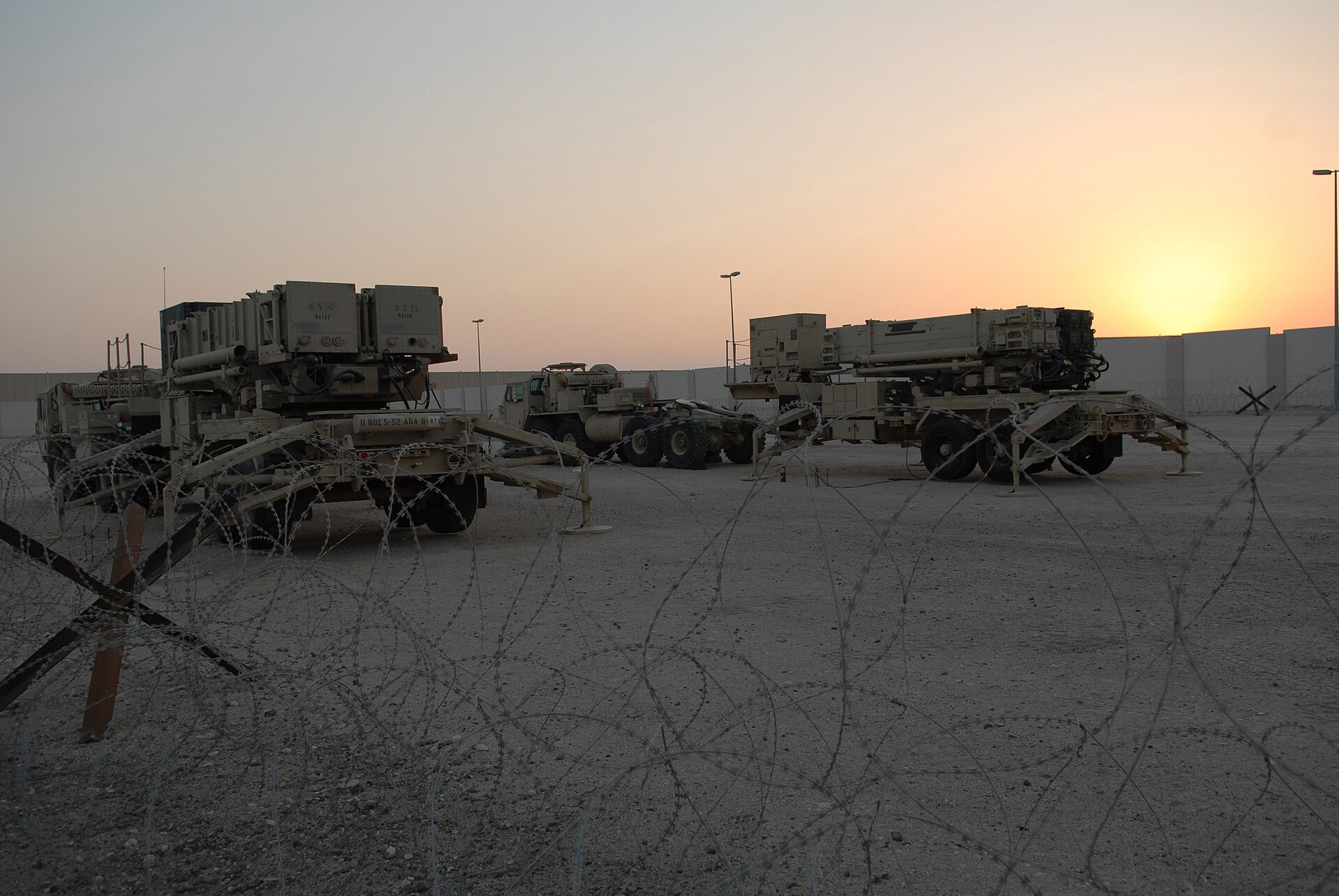
Table of Contents
- Who Defends Saudi Airspace and Under What Authority?
- The Greek Patriot at Yanbu: NATO’s First Gulf Combat Intercept
- Ukraine’s Drone Specialists: Wartime Knowledge as Export Commodity
- France’s Defensive Posture and the Limits of Bilateral Treaties
- How Fast Are Interceptors Depleting Across the Coalition?
- How Much of Iran’s Arsenal Remains?
- The $30,000 Drone Against the $4 Million Interceptor
- Why Does the Coalition Lack a Unified Command?
- What Happens When the Shield Runs Out?
- Frequently Asked Questions
Who Defends Saudi Airspace and Under What Authority?
Saudi Arabia’s air defense is not a single integrated system but a layered arrangement of bilateral deals, NATO-adapted missions, nascent Gulf frameworks, and ad hoc wartime agreements, each operating under distinct legal and political mandates. No fewer than six contributing nations — the United States, Greece, France, Ukraine, and GCC partners — now participate in defending Saudi territory, coordinated through the Combined Air Operations Center at Al Udeid Air Base in Qatar, where military personnel from 17 nations plan and execute air operations across the Middle East.
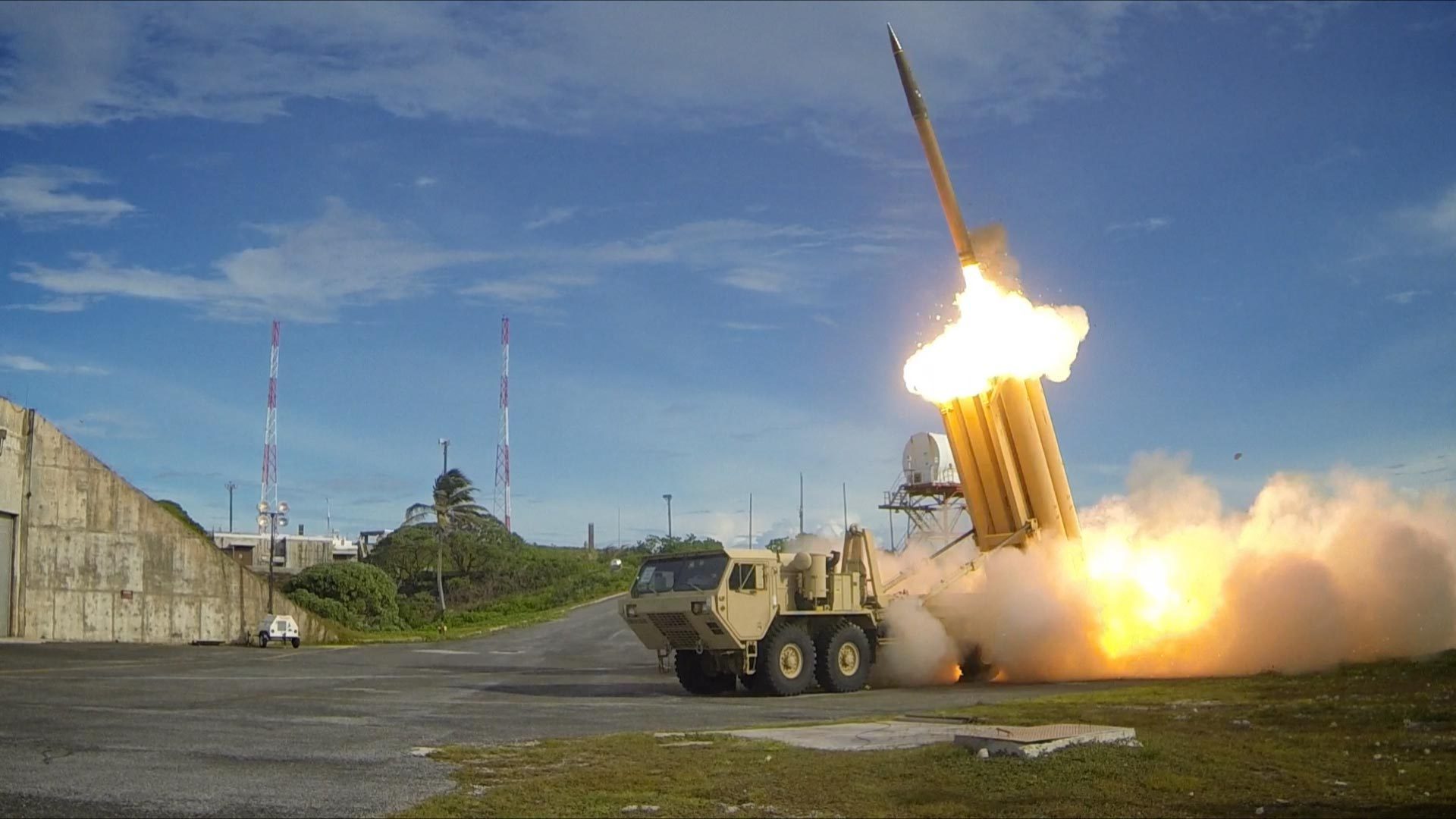
The backbone remains Saudi Arabia’s own Royal Air Defense Forces, operating 108 M902 Patriot launchers organized into six battalions with a mix of PAC-2 GEM-T and PAC-3 interceptors. The Kingdom also fields a growing THAAD capability: one battery fully operational as of March 2026, with a second expected soon and all seven batteries from the 2017 acquisition package — covering 44 launchers, 360 interceptors, and seven AN/TPY-2 radars — scheduled for completion by 2028.
The United States provides the essential connective tissue. American intelligence feeds, satellite cueing, and Aegis-equipped destroyers in the Persian Gulf supply the sensor data that makes interceptions possible. Without U.S. intelligence coordination, even Saudi Arabia’s own Patriot batteries would struggle to engage incoming threats at the optimal moment, according to the International Institute for Strategic Studies.
Layered atop this are the allied contributions that have turned a national defense into a multinational one. Greece’s ELDYSA mission operates a PAC-3 battery at Yanbu under a bilateral agreement adapted from NATO frameworks. France has deployed Rafale fighters and air defense assets to the UAE under an existing bilateral defense treaty. Ukraine has dispatched more than 200 drone-countering specialists under a new defense cooperation agreement signed March 27 in Jeddah. The GCC’s nascent Belt of Cooperation framework aims to integrate these disparate national systems into a coordinated network — but it remains more aspiration than architecture.
The Greek Patriot at Yanbu: NATO’s First Gulf Combat Intercept
On March 19, a Greek-operated PAC-3 Patriot battery stationed at Yanbu on Saudi Arabia’s Red Sea coast intercepted and destroyed two Iranian ballistic missiles targeting the SAMREF oil refinery — a joint venture between Saudi Aramco and ExxonMobil that serves as a critical node in the Kingdom’s Hormuz bypass pipeline network. The engagement, confirmed by the Greek Defense Ministry, marked the first time a NATO member has used Patriot in combat to defend Saudi territory.
The ELDYSA mission — the Hellenic Force in Saudi Arabia — comprises 120 to 130 Greek Air Force personnel operating a PAC-3 battery deployed from Tanagra Air Base. The mission began in September 2021 under a bilateral defense agreement and has been extended through November 2026. For more than four years, the battery operated in a training and readiness posture, integrated into the broader Saudi air defense network but never called upon to fire. That changed when Iran’s retaliatory campaign brought ballistic missiles within range of Yanbu, which now handles 2.2 million barrels per day of Saudi oil exports — the Kingdom’s most important export hub since Iranian strikes threatened Ras Tanura on the Gulf coast.
Greek Prime Minister Kyriakos Mitsotakis called the interception “strictly defensive” and part of a bilateral agreement with Saudi Arabia, language carefully chosen to avoid suggesting NATO institutional involvement in the Gulf conflict. The distinction matters. NATO has no formal Gulf mandate, and Greece’s participation creates political sensitivities within an alliance that includes Turkey, which has maintained diplomatic channels with Tehran throughout the war.
Ukraine’s Drone Specialists: Wartime Knowledge as Export Commodity
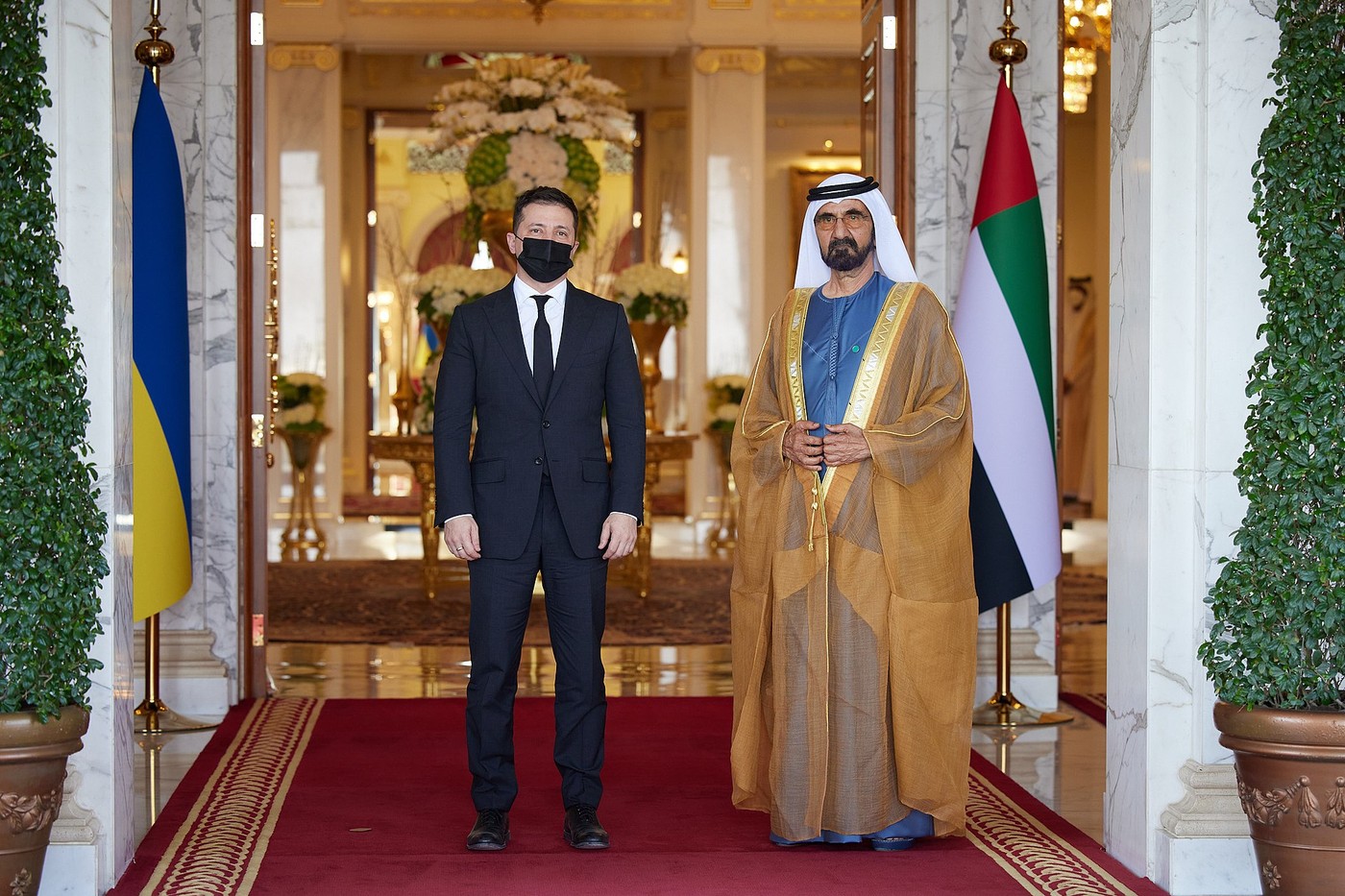
President Volodymyr Zelenskyy arrived in Jeddah on March 26 and concluded a formal defense cooperation deal with Crown Prince Mohammed bin Salman the following day. The agreement’s centerpiece: 201 Ukrainian anti-drone specialists already deployed to Saudi Arabia, the UAE, and Qatar, with an additional 30 heading to Jordan and Kuwait. It is Kyiv’s first defense deal in the Gulf — and arguably the most creative repackaging of hard-won combat knowledge since Israel began exporting Iron Dome expertise. A detailed breakdown of Ukraine’s first Gulf defense deal with Saudi Arabia maps the cost math, interceptor drone models, and geopolitical implications of the agreement.
Ukraine’s value proposition is specific. Having faced more than 13,000 Iranian-designed Shahed drones launched by Russia since 2022, Ukrainian forces developed layered counter-drone tactics combining electronic warfare, mobile fire teams, and cheap interceptor drones that cost a fraction of traditional missile interceptors. That expertise now addresses the Gulf coalition’s most acute vulnerability: the cost asymmetry between Iran’s expendable drones and the multimillion-dollar interceptors used to destroy them.
The deal carries geopolitical freight. Russia and Iran are allies, and Ukrainian specialists operating in Saudi Arabia sit at the intersection of two wars that share a common thread: Iranian munitions. Kyiv expects Saudi Arabia to provide financial backing and access to advanced air defense technologies in return, creating a transactional relationship where battlefield expertise flows south while money and defense technology flow north. For Saudi Arabia, the arrangement offers something its $80 billion annual defense budget cannot buy domestically — institutional knowledge of how to defeat Iranian drones cheaply and at scale.
France’s Defensive Posture and the Limits of Bilateral Treaties
France has assembled its largest naval deployment since the 2011 Libya intervention. The carrier Charles de Gaulle operates in the Eastern Mediterranean with 20 Rafale fighter jets. Eight frigates, two Mistral-class amphibious assault ships, a nuclear attack submarine, and supporting vessels patrol from the Red Sea to the Arabian Gulf. Paris doubled its Rafale complement in the UAE to 12 aircraft, added ground-based air defenses, and evacuated military families from facilities across the Gulf.
Yet France has drawn a sharp line. Armed Forces Minister Catherine Vautrin, meeting Prince Khalid bin Salman in Riyadh on March 26, condemned Iranian attacks on the Kingdom but described France’s posture as “defensive” and focused on a diplomatic solution, particularly regarding the Strait of Hormuz. Vautrin told French media that Washington “launched its Iran military campaign without consulting allies and now demands others join,” calling it “not the best example of a spirit of cooperation.”
France’s contribution operates under its existing bilateral defense agreement with the UAE and broader strategic partnerships with Saudi Arabia and other Gulf states. French Rafales flying air defense patrols over UAE airspace are authorized to engage incoming threats — but Paris has not extended that mandate to offensive operations. The distinction highlights a structural feature of the coalition: each contributing nation defines its own rules of engagement, creating seams in the defensive architecture that exist nowhere on a radar screen but everywhere in the chain of command.
The Saudi-French defense ministers’ meeting in Riyadh discussed expanding military ties across air, naval, and intelligence domains, but no new deployments were announced. France’s calculus is transparent: protect allied infrastructure, maintain freedom of navigation in the Strait of Hormuz, and avoid being drawn into an American-led offensive campaign that Paris had no role in planning.
How Fast Are Interceptors Depleting Across the Coalition?
The numbers are stark. A March 26 report from the Jewish Institute for National Security of America mapped depletion rates across all five GCC states with Patriot systems. Saudi Arabia, the largest consumer of American-made interceptors in the war, has fired an estimated 150 to 250 PAC-3 MSE interceptors in the first four weeks alone.
| Country | Estimated Pre-War Patriot Stock | Estimated Depletion | Iranian Projectiles Received | Source |
|---|---|---|---|---|
| Saudi Arabia | 600–800 PAC-3 | ~30–40% | 1,200+ missiles/drones | JINSA, HOS estimates |
| UAE | Not disclosed | ~75% | 2,156 missiles/drones | JINSA, Arab News |
| Bahrain | Not disclosed | ~87% | 429 missiles/drones | JINSA |
| Kuwait | Not disclosed | ~75% | 791 missiles/drones | JINSA |
| Qatar | Not disclosed | ~40% | 270 missiles/drones | JINSA |
The global production pipeline cannot close this gap at wartime speed. Lockheed Martin delivered roughly 600 PAC-3 MSE interceptors in 2025 — the entire global annual output — and agreed in January 2026 to ramp production to 2,000 per year over seven years. That ramp, however, is precisely that: a multi-year escalation, not an overnight surge. At current coalition consumption rates, the Gulf theater alone could exhaust a full year of global PAC-3 production in a matter of months.
THAAD interceptors face an even tighter bottleneck. Lockheed Martin currently produces 96 THAAD interceptors per year and plans to quadruple output to 400, but new missiles procured now will not arrive in volume until 2027 or 2028. The U.S. fired 198 THAAD interceptors during the first 16 days of Operation Epic Fury — roughly 40 percent of the inventory on hand before the conflict, according to Responsible Statecraft. Each costs approximately $12.7 million.
CBS News reported in early March that Gulf states communicated to Washington they were running short on interceptors and “having to choose which objects to blow up — and which not to.” The White House acknowledged the concern and said a task force was being established to expedite resupply, but sources told CBS the process was not moving as quickly as Gulf capitals needed.
How Much of Iran’s Arsenal Remains?
Iran entered the war on February 28 with an estimated 2,500 ballistic missiles and an extensive inventory of one-way attack drones. The opening salvo was ferocious: 480 ballistic missile launches on day one alone. But coalition strikes against Iranian launch infrastructure have dramatically degraded Tehran’s capacity. Israel has put up to 290 of an estimated 410 to 440 launchers out of service. Coalition forces destroyed more than 700 ballistic missiles in storage before they could be launched.
By March 9, Iran’s ballistic missile launch rate had collapsed 92 percent from its day-one peak, falling to approximately 40 launches per day. By late March, the rate had declined further to between five and 11 barrages per day, each consisting of a single missile or a small number. The Jerusalem Post, citing Israeli military estimates, reported that Iran retains between 100 and 200 active launchers.
Yet the math is not as reassuring as it first appears. Iran has demonstrated the ability to reconstitute. Al Jazeera reported on March 16 that despite U.S. claims of having destroyed Iran’s missile capacity, Tehran continued launching — suggesting concealed launch sites, mobile platforms, or reserves that survived the initial strikes. Iran’s drone inventory, cheaper and easier to produce, shows no comparable decline. CSIS analysis of Iran’s drone campaign in the Gulf found that drone launches have remained persistent even as ballistic missile salvos decreased.
The JINSA assessment that one-third of Iran’s missile arsenal was destroyed in the war’s early days means two-thirds survived or has been partially reconstituted. Iran’s strategic calculus has adapted accordingly: shifting from large barrages designed to overwhelm defenses to smaller, more frequent attacks that maintain constant pressure while forcing defenders to keep expending interceptors. The goal, whether by design or necessity, is attrition — not penetration.
The $30,000 Drone Against the $4 Million Interceptor
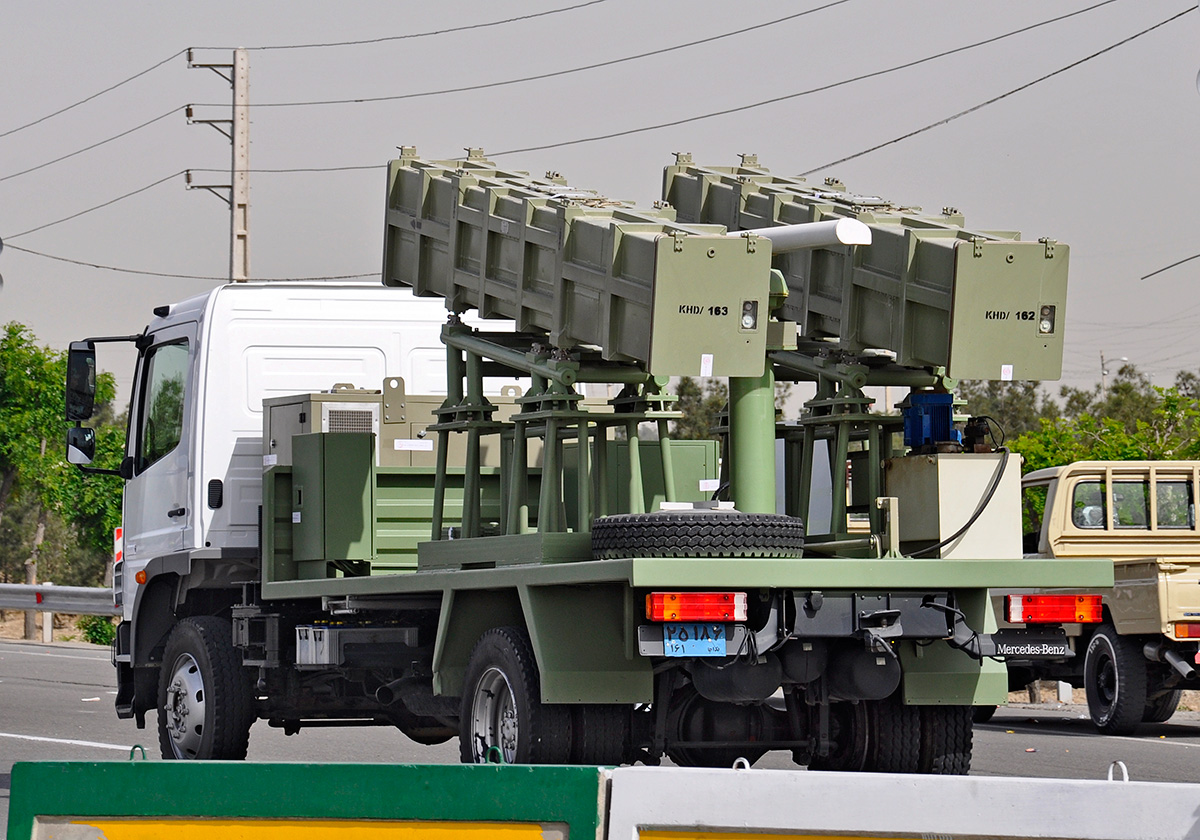
Iran’s Shahed-series drones cost an estimated $30,000 to $50,000 each. A single PAC-3 MSE interceptor costs $4 to $6 million. A THAAD interceptor — at $12.7 million apiece, as detailed above — costs more than 250 Shaheds. This cost ratio, somewhere between 80:1 and 400:1 in Iran’s favor, represents the central economic vulnerability of the coalition’s air defense posture.
The JINSA report framed this as a “dangerous imbalance.” Iran’s least expensive weapons are proving the most disruptive, not because they inflict significant damage on impact, but because they force the expenditure of interceptors that cannot be replaced at anything close to the rate they are consumed. Every Shahed destroyed by a PAC-3 is a $4 million withdrawal from a diminishing account, spent against a $30,000 deposit. RUSI characterized the dynamic as “command of the reload” — the side that can replenish faster than the other can launch will ultimately prevail.
This explains the urgency behind Ukraine’s drone-countering specialists. Kyiv’s approach to Shahed drones in the war against Russia evolved toward low-cost solutions: mobile fire teams with machine guns, electronic warfare systems that jam GPS guidance, and cheap interceptor drones that cost tens of thousands of dollars rather than millions. If the coalition can shift a meaningful portion of drone interceptions from PAC-3 missiles to these cheaper methods, it extends the interceptor stockpile’s effective lifespan — buying weeks or months that the current trajectory does not offer.
The U.S. military has begun its own adaptation. American strike operations transitioned early in the war from expensive cruise missiles to cheaper JDAM-guided munitions costing under $100,000 per shot, after expending over 850 Tomahawk cruise missiles — roughly nine times the Pentagon’s average annual procurement — in the war’s opening phase. The same logic of cost-discipline now applies to the defensive side of the ledger.
Why Does the Coalition Lack a Unified Command?
The multinational air defense of Saudi Arabia emerged not by design but by accumulation. Each contributing nation entered through a different door: Greece under a bilateral agreement adapted from NATO protocols. France under its existing UAE defense treaty, extended informally to cover Saudi-relevant operations. Ukraine under a brand-new bilateral signed during wartime. The United States under decades-old security guarantees and CENTCOM’s permanent Gulf presence. GCC states under the nascent Belt of Cooperation framework that has yet to produce a binding command architecture.
The result, as reporting on the Saudi-Israeli defense coordination has revealed, is a system that functions through American connective tissue rather than institutional integration. The Combined Air Operations Center at Al Udeid coordinates sensor data and targeting across all participants, but operational authority remains fragmented. A Greek battery commander at Yanbu operates under Hellenic Air Force rules of engagement. French pilots over the UAE follow French military doctrine. Saudi operators answer to the Royal Saudi Air Defense Forces chain of command.
This fragmentation has not prevented effective interceptions — the 90-percent-plus rate speaks for itself. But it creates vulnerabilities that a unified command would eliminate. Response time to novel threats depends on the slowest decision-making chain in the network. Information sharing between non-allied participants (Greece and Ukraine, for instance, have no bilateral defense relationship) flows through American intermediaries. And the political constraints each nation imposes on its forces — France’s insistence on defensive-only operations, Greece’s sensitivity to appearing outside NATO’s mandate — create gaps that cannot be filled by radar coverage alone.
The Stimson Center’s Kelly Grieco characterized the broader conflict as a “war of attrition” in which the U.S. and its partners race to intercept Iran’s missiles before their own stockpiles deplete. A unified command would not solve the production bottleneck, but it would enable more efficient allocation of a shrinking resource — ensuring that the cheapest available interceptor engages each threat rather than the most expensive one within range.
What Happens When the Shield Runs Out?
The coalition’s air defense operates on borrowed time. At current consumption rates, Saudi Arabia’s interceptor stockpile could reach critically low levels by mid-April to late May without accelerated resupply. Bahrain is already at the edge. The UAE faces similar pressure. The question is not hypothetical — it is arithmetic.
Several scenarios emerge as interceptor stocks decline. First, triage: the rationing CBS News reported in early March has intensified, with Gulf states prioritizing ballistic missiles over slower drones and critical infrastructure over lower-value targets. The JINSA report noted similar rationing in Israel, where commanders declined to intercept certain cluster-munition threats to conserve advanced interceptors.
Second, redistribution from other theaters. The Pentagon has already explored shifting air defense assets from Ukraine and East Asia to the Gulf, a move that would plug one gap by opening another. The U.S. Army’s Patriot stockpile had fallen to just 25 percent of the volume deemed necessary by the Pentagon as of July 2025 — before the Iran war began consuming interceptors at unprecedented rates.
Third, escalation. Saudi Foreign Minister Prince Faisal bin Farhan has declared the Kingdom reserves the right to military action against Iran. A declining defensive shield strengthens the argument for offensive operations that would destroy Iranian launch capability at the source rather than intercepting projectiles in flight. Saudi restraint has held so far, but Chatham House analysis notes that the calculus could shift if Iran escalates attacks against critical infrastructure and civilian areas. The political barrier remains formidable: joining the war offensively would mean fighting alongside Israel, which Chatham House calls “politically perilous for a Gulf leader” given regional public opinion.
Fourth, and most consequentially, the war could end before the shield does. Iran’s own arsenal depletion is severe. If Tehran’s remaining active launchers and diminished missile stocks cannot sustain even the current reduced tempo, the coalition’s interceptor crisis becomes moot. The war becomes a race of exhaustion on both sides — and the side that runs out second wins.
The decisive factor may ultimately be the side capable of sustaining production and resupply faster than its adversaries can launch attacks.
Royal United Services Institute, March 2026
Historical Precedent: Depletion Crises in Missile Defense
This is not the first time an air defense coalition has confronted the mathematics of depletion. During the 1991 Gulf War, Patriot batteries deployed to Saudi Arabia against Iraqi Scud missiles faced both performance and supply challenges. The U.S. Army initially claimed a 97 percent intercept rate; a subsequent Government Accountability Office investigation found the actual kill rate was far lower, with no unambiguous evidence of a single Scud warhead destroyed. The failure was partly technological — the original Patriot was designed for aircraft, not ballistic missiles — and partly a preview of the cost-exchange problem: expensive interceptors fired against cheap, structurally unreliable Scuds that often broke apart in flight.
Israel’s experience provides a more recent parallel. After the October 7, 2023 attack and the subsequent multifront war, Israel’s Iron Dome interceptor stocks came under severe pressure. By October 2024, Tamir missile supplies for Iron Dome had fallen low enough that the United States deployed a THAAD battery to Israel as a supplement. The pattern repeated: high interception rates sustained by finite stocks consumed faster than industry could produce them.
The Gulf coalition’s version of this crisis is larger in scale, more distributed across national boundaries, and complicated by the absence of a single industrial base capable of surge production. When Israel needed interceptors, the U.S. could ship from its own stockpiles. When every U.S. ally in the Gulf simultaneously needs interceptors, the source of emergency resupply narrows to a single factory in Camden, Arkansas.
The GCC’s Belt of Cooperation: Ambition Meets Reality
The GCC’s Belt of Cooperation framework — formally Hizam Al-Taawun — represents the Gulf’s attempt to build the integrated air defense architecture that the current crisis reveals it lacks. The January 2026 Gulf Shield exercise in Saudi Arabia tested multi-dimensional air and missile threat scenarios with participation from all six GCC air forces, practicing interoperability, command-and-control integration, and joint early warning procedures.
The war arrived before the framework matured. More than a dozen U.S. partners now work together with linked warning systems and shared sensor coverage, but the operational integration remains thinner than the exercise rhetoric suggests. Each GCC state maintains sovereign control over its own air defense decisions, and the Belt of Cooperation has not yet produced binding agreements on interceptor sharing, mutual resupply obligations, or coordinated rationing protocols — precisely the mechanisms needed when stockpiles deplete unevenly across the coalition.
The gap between Saudi Arabia’s $80 billion defense budget and its actual capability is nowhere more visible than in the dependence on foreign maintenance, training, intelligence, and now interceptor resupply. The war has demonstrated that money alone does not produce defense sovereignty. Riyadh can purchase systems, but it cannot manufacture the interceptors those systems fire, train the personnel who operate allied batteries, or compel foreign governments to share intelligence in real time. Each of those dependencies runs through Washington, and each creates a potential single point of failure.
The Strategic Ledger
One month into the war, the coalition defending Saudi Arabia has intercepted the vast majority of what Iran has launched. That achievement is real and should not be diminished. The 90-percent-plus interception rate has prevented catastrophic damage to Aramco infrastructure, military installations, and civilian population centers. The Greek intercept at Yanbu protected the Kingdom’s largest remaining export hub. The combined GCC air defense network absorbed 4,391 Iranian projectiles — 83 percent of Tehran’s total fire — and held.
But the shield is not a wall. It is a consumable. Every successful intercept subtracts from a total that cannot be replenished at the rate it is being spent. As the depletion data shows, the Gulf theater consumed in weeks what global production delivers in a year — and the planned ramp-ups are measured in years, not months.
Iran’s arsenal is depleting too, and faster. But Tehran needs only enough to maintain the threat of occasional penetration — a handful of missiles per day forcing continuous defensive expenditure — to win the attrition race. The March 28 attack on Prince Sultan Air Base, which wounded at least 15 U.S. service members when missiles and drones penetrated the defense network, demonstrated that even a diminished Iranian capability can find gaps. Goldman Sachs has projected that Saudi GDP could contract 3 to 5 percent from the war’s economic effects — damage inflicted not by the missiles that get through, but by the uncertainty created by a shield everyone knows has a timer.
The coalition’s next phase will be defined by three variables: how quickly Lockheed Martin can accelerate interceptor deliveries, how effectively Ukrainian counter-drone methods can substitute for expensive missile interceptors, and whether Saudi Arabia’s declared willingness to take military action translates into offensive strikes that reduce Iranian launch capacity at the source. The shield works. The question is whether it works long enough.
Frequently Asked Questions
How many nations contribute to the air defense of Saudi Arabia?
At least six nations contribute directly: the United States (intelligence, Aegis destroyers, THAAD batteries, and CENTCOM coordination), Greece (PAC-3 Patriot battery at Yanbu under the ELDYSA mission), France (Rafale fighters and ground-based air defenses operating from the UAE), Ukraine (201 anti-drone specialists deployed across Saudi Arabia, the UAE, and Qatar), and several GCC member states operating their own Patriot and other systems. Personnel from 17 nations participate in air operations planning at the Combined Air Operations Center at Al Udeid Air Base in Qatar, though not all are directly involved in air defense intercepts over Saudi territory.
Has the U.S. confirmed that Gulf allies are running low on interceptors?
The White House acknowledged in March that it was aware Gulf states had communicated concerns about interceptor shortages. CBS News reported that Gulf capitals were told Washington was establishing a task force to expedite resupply, but multiple sources indicated the process was not meeting the urgency of the situation. Separately, the U.S. Defense Security Cooperation Agency approved a $9 billion PAC-3 MSE sale to Saudi Arabia, though delivery timelines extend well beyond the current conflict’s tempo.
Could directed-energy weapons solve the interceptor depletion problem?
The U.S. Army has accelerated development of high-energy laser systems — including the Indirect Fires Protection Capability-High Energy Laser (IFPC-HEL) — that could theoretically engage drones and rockets at near-zero marginal cost per shot. However, no directed-energy weapon has been deployed operationally in the Gulf theater as of March 2026. Prototypes have demonstrated effectiveness against drones in testing environments, but the engineering challenges of sustained operation in Gulf heat and dust conditions, combined with limited range against fast-moving ballistic missiles, mean laser-based defenses remain a next-war solution applied to a this-war problem.
What role does China play in Saudi Arabia’s air defense?
Saudi Arabia operates Chinese-made DF-3A (CSS-2) intermediate-range ballistic missiles acquired in the 1980s and more recently procured DF-21 (CSS-5) solid-fuel ballistic missiles for its strategic deterrent. However, the Kingdom’s air defense interceptor systems are overwhelmingly American-made. China has not contributed forces or equipment to the multinational air defense coalition, though Saudi Arabia has accelerated defense supply chain diversification during the war, including discussions with Chinese defense firms about future systems that could reduce dependence on a single American production pipeline.
Why did Iran direct 83 percent of its fire at GCC states rather than Israel?
Iran’s targeting calculus reflects both geography and strategy. GCC states host the U.S. military bases — including Al Udeid, Al Dhafra, Prince Sultan, and Ali Al Salem — from which Operation Epic Fury is conducted. Striking these bases disrupts the coalition’s offensive capability at its source. Tehran has also framed its attacks as retaliation against nations it accuses of serving as launchpads for American strikes, while officially maintaining that its operations are “in no way directed against the sovereignty or territorial integrity of any regional country” — a formulation that Gulf governments have rejected as disingenuous. The geographic proximity of GCC states to Iran also means shorter missile flight times and more difficult interception windows compared to the longer trajectory required to reach Israel.