
RIYADH — Benjamin Netanyahu has given himself a public veto over the ceasefire that Saudi Arabia cannot survive without — and Riyadh has no seat at the table to contest it. On the first day of the US-Iran ceasefire, April 8, Netanyahu declared that Iran’s 440.9 kg of 60%-enriched uranium “will leave Iran — by agreement or through a renewal of the fighting,” a formulation that makes Phase 2 of the Islamabad framework structurally impossible because Iran has already declared enrichment non-negotiable, and the only country that could override Netanyahu — the United States — has adopted his position verbatim.
Saudi Arabia absorbed 894 drone and missile intercepts between March 3 and April 7, burned through an estimated $3.49 billion in PAC-3 interceptors, and watched its fiscal arithmetic collapse as Brent dropped from $109 to $96 against a break-even the kingdom cannot sustain. Riyadh held a co-guarantor seat at the March 29-30 talks and was absent entirely from the April 10-11 Vance-Ghalibaf bilateral. Now it faces the prospect that a single Israeli decision on enrichment could restart the war it cannot afford to fight again.
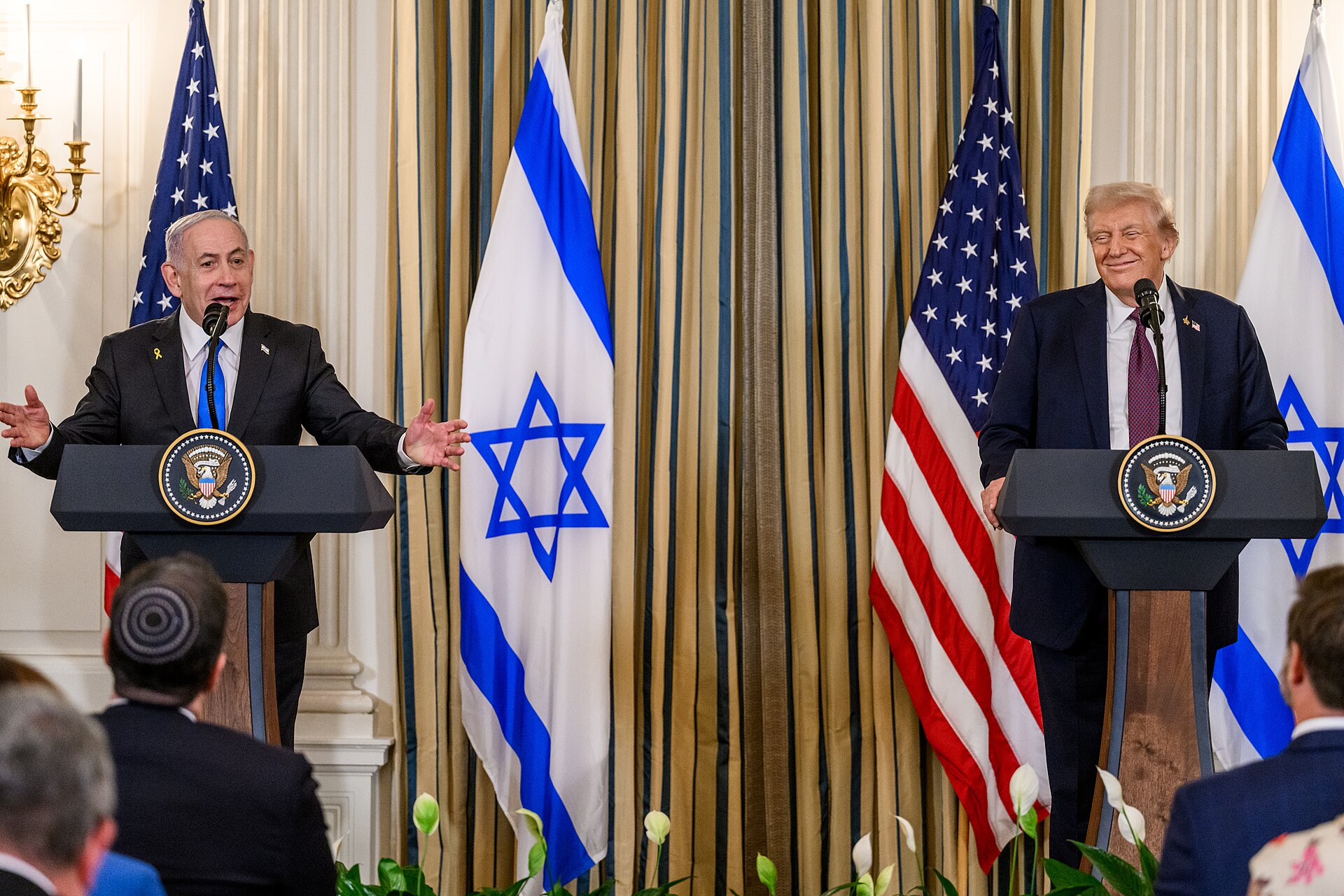
Table of Contents
- The Ultimatum and Its Architecture
- Why Does Netanyahu’s Demand Make Phase 2 Impossible?
- What Saudi Arabia Paid — and What It Got
- The Begin Doctrine Problem
- Can Witkoff Navigate Nuclear Physics He Doesn’t Understand?
- The Fordow Dependency: Why Israel Needs Washington but Won’t Wait
- Lebanon as the Preview
- Is Saudi Normalization Leverage Already Spent?
- The 45-Day Trap
- FAQ
The Ultimatum and Its Architecture
Netanyahu’s ceasefire-day press conference was not a reaction to the Islamabad framework — it was a pre-emptive demolition of its second phase. He articulated four conditions for any permanent deal: all enriched material leaves Iran; full dismantlement of enrichment infrastructure; ballistic missiles resolved with a 300-kilometre ceiling; and “real inspections — no lead-time inspections.” He had first laid out these conditions in February 2026, but restating them on April 8 — hours after the ceasefire took effect — transformed them from aspirational demands into operational red lines tied to a specific diplomatic timeline.
The Times of Israel reported that Netanyahu had asked Trump directly not to proceed with the ceasefire at this stage, and that Israel was “informed at last minute” and “wasn’t happy,” according to the Wall Street Journal. Netanyahu subsequently claimed “full cooperation” with Washington, a characterisation that no US official corroborated on the record. The gap between Netanyahu’s public framing and the private friction matters because it establishes that Israel regards the ceasefire as a concession it tolerated, not a process it endorsed — a distinction that becomes operative the moment Phase 2 negotiations begin.
Within the same press conference, Netanyahu declared the ceasefire “not the end of the war.” That phrase does double duty: domestically, it reassures an Israeli public that absorbed Iran’s retaliatory strikes that the threat has not been accepted; diplomatically, it signals that Israel reserves the right to resume operations unilaterally. Both audiences heard exactly what they needed to hear, and both interpretations are correct.
Why Does Netanyahu’s Demand Make Phase 2 Impossible?
The Islamabad ceasefire framework operates on a two-phase structure: Phase 1 establishes a 45-day ceasefire, and Phase 2 addresses the permanent settlement — enrichment, Hormuz sovereignty, sanctions relief, frozen assets, and US force withdrawal. The structural assumption is that deferral buys time for compromise. Netanyahu’s ultimatum eliminates that assumption because it declares the core Phase 2 issue — enrichment — already decided.
The Middle East briefing 3,000+ readers start their day with.
One email. Every weekday morning. Free.
Trump reinforced this on April 8 — “There will be no enrichment of Uranium” — and White House Press Secretary Karoline Leavitt called it “a red line that the President is not going to back away from.” Defence Secretary Pete Hegseth said Iran’s enriched uranium would leave “voluntarily…or if we have to do something else ourselves…we reserve that opportunity.” Three senior US officials, across three separate statements, adopted Netanyahu’s position within 48 hours of the ceasefire — not as a negotiating posture but as a precondition.
Iran’s position is equally fixed. At Islamabad on April 11, Parliament Speaker Mohammad Bagher Ghalibaf stressed Tehran’s longstanding refusal to concede its right to enrichment. Foreign Ministry spokesman Esmail Baghaei was blunter: “We do not seek permission from anyone for uranium enrichment on Iran’s soil and the United States is not in a position to be able to give or not give permission.” Iran’s 10-point plan enshrines enrichment as Point 3; the country’s JCPOA-era interpretation treats UNSCR 2231 as international legal recognition of the right, a reading that no Iranian government — reformist or hardline — has ever abandoned.
The arithmetic is binary. Netanyahu demands all enriched material leaves Iran. Iran says enrichment is a sovereign right it will never concede. There is no split-the-difference outcome between “all” and “never,” which means Phase 2 either produces capitulation by one side or it fails — and failure, by Netanyahu’s own formulation, triggers “a renewal of the fighting.” Saudi Arabia, which sits outside the room and has zero input into either position, absorbs the consequences of whichever outcome materialises.
What Saudi Arabia Paid — and What It Got
Between March 3 and April 7, Saudi Arabia’s Ministry of Defence reported intercepting and destroying 894 aerial threats: 799 drones, 86 ballistic missiles, and 9 cruise missiles. At $3.9 million per PAC-3 MSE round, that represents an implied expenditure of approximately $3.49 billion in interceptors alone — a figure that excludes operational costs, infrastructure damage, and the economic disruption from events like the SABIC force majeure at Jubail and the broader industrial shutdown across the Eastern Province.
The kingdom’s PAC-3 MSE stockpile has fallen from approximately 2,800 rounds to roughly 400 — an 86% depletion rate with no near-term resupply path. The January 2026 DSCA notification of a $9 billion, 730-round sale slots into a production queue running at roughly 620 rounds per year for all global customers; those rounds do not exist yet. Poland refused a Patriot battery transfer on March 31. Camden, Arkansas — the sole US production facility — cannot accelerate output to meet wartime burn rates. If the ceasefire collapses, Saudi Arabia re-enters the war with 14% of its pre-war interceptor capacity.
The fiscal picture compounds the military exposure. Goldman Sachs projects Saudi Arabia’s 2026 deficit at $80-90 billion against the government’s official $44 billion forecast, a gap driven by the PIF’s construction commitments, Aramco dividend obligations, and a Brent price that has dropped from $109 to approximately $96 — below the $108-111 break-even that Bloomberg calculates when PIF-inclusive expenditure is factored in. The kingdom is spending more than it earns, defending territory it cannot replenish defences for, under a ceasefire framework it has no voice in.
The diplomatic trajectory tells the same story. Saudi Arabia’s Foreign Minister held a co-guarantor seat at the March 29-30 talks. By April 10-11, when Vance met Ghalibaf in Islamabad for the first direct US-Iran face-to-face since 1979, Saudi Arabia was excluded entirely. Riyadh “welcomed” the ceasefire without publicly objecting to its exclusion — a posture that diplomats in the Gulf privately describe as acquiescence purchased by exhaustion.
| Saudi Metric | Pre-War | Current | Gap |
|---|---|---|---|
| PAC-3 MSE rounds | ~2,800 | ~400 | -86% |
| Interceptor expenditure | — | $3.49B | 35-day period |
| Brent price | $109/bbl | ~$96/bbl | -$13/bbl |
| Fiscal break-even | $108-111/bbl | $96 Brent | $12-15/bbl shortfall |
| Goldman deficit forecast | $44B official | $80-90B projected | +$36-46B |
| Diplomatic status | Co-guarantor | Excluded | — |
The Begin Doctrine Problem
Netanyahu invoked the Begin Doctrine by name in Knesset remarks in March 2026, and the invocation carries operational weight because the doctrine has been executed twice before — both times during active US diplomacy, and both times over explicit American opposition. In June 1981, Menachem Begin ordered the strike on Iraq’s Osirak reactor against Ronald Reagan’s direct wishes; the United States subsequently condemned Israel at the UN Security Council. In September 2007, Ehud Olmert struck Syria’s Al Kibar reactor after George W. Bush declined to act; Washington learned about the operation from Israeli intelligence, not from a request for permission.
The pattern is consistent enough to function as doctrine rather than anecdote: when Israel concludes that a regional adversary is approaching nuclear capability, it strikes — regardless of the diplomatic context, regardless of American preferences, and regardless of the consequences for whatever framework is in place at the time. Netanyahu’s explicit invocation in 2026 converts historical precedent into declared intent, and his four conditions provide the trigger criteria: if Phase 2 does not produce the removal of all enriched material, dismantlement of enrichment infrastructure, resolution of the ballistic missile programme, and unimpeded inspections, the Begin Doctrine supplies the alternative.
For Saudi Arabia, the Begin Doctrine creates a structural problem that no amount of bilateral diplomacy with Washington can resolve. The kingdom cannot negotiate with Israel about Israeli red lines on Iranian enrichment because Saudi Arabia has no formal diplomatic relationship with Israel and no treaty mechanism through which to communicate constraints. Riyadh cannot negotiate with Tehran about Israeli intentions because Iran does not accept that Saudi Arabia has standing to discuss Israeli military planning. And Riyadh cannot negotiate with Washington about restraining Israel because the United States has demonstrably failed to do so across multiple administrations — a record that the Vance-Ghalibaf bilateral in Islamabad does nothing to alter.
Can Witkoff Navigate Nuclear Physics He Doesn’t Understand?
The person responsible for translating Netanyahu’s maximalist demands and Iran’s maximalist refusals into a workable Phase 2 framework is Steve Witkoff, a former real estate developer whose nuclear expertise has been publicly questioned by the organisations that track it professionally. Daryl Kimball, executive director of the Arms Control Association, told CNN in an assessment published April 10: “Witkoff was too — I’m going to say a strong word: incompetent — and technically ill-informed to understand the significance of what was on the table.”
Kelsey Davenport, the ACA’s nonproliferation policy director, reinforced the assessment: Witkoff “was focused on the wrong details and did not have the nuclear expertise or the expert team available to him to assess how the Iranian proposal would have impacted risk overall.” Davenport added that Witkoff’s public comments indicated confusion between nuclear reactors — which use enriched uranium for power — and centrifuge facilities where the enrichment process takes place, a distinction that sits at the centre of any Phase 2 negotiation over Iran’s programme.
The technical gap matters for Saudi Arabia because the Phase 2 outcome depends on whether the US negotiator can identify a formula that satisfies Netanyahu’s demand for total removal while offering Iran something it can characterise domestically as preserving its enrichment right. The JCPOA achieved this through an intricate architecture — 5,060 centrifuges at Natanz, 3.67% enrichment cap, 300-kilogramme stockpile limit, continuous IAEA monitoring — that required years of technically fluent negotiation. Witkoff is attempting to produce a more restrictive outcome, in 45 days, without the technical fluency that his predecessors brought to a less ambitious goal.
“Witkoff was too — I’m going to say a strong word: incompetent — and technically ill-informed to understand the significance of what was on the table.”
— Daryl Kimball, Arms Control Association, CNN Politics, April 10, 2026
The Fordow Dependency: Why Israel Needs Washington but Won’t Wait
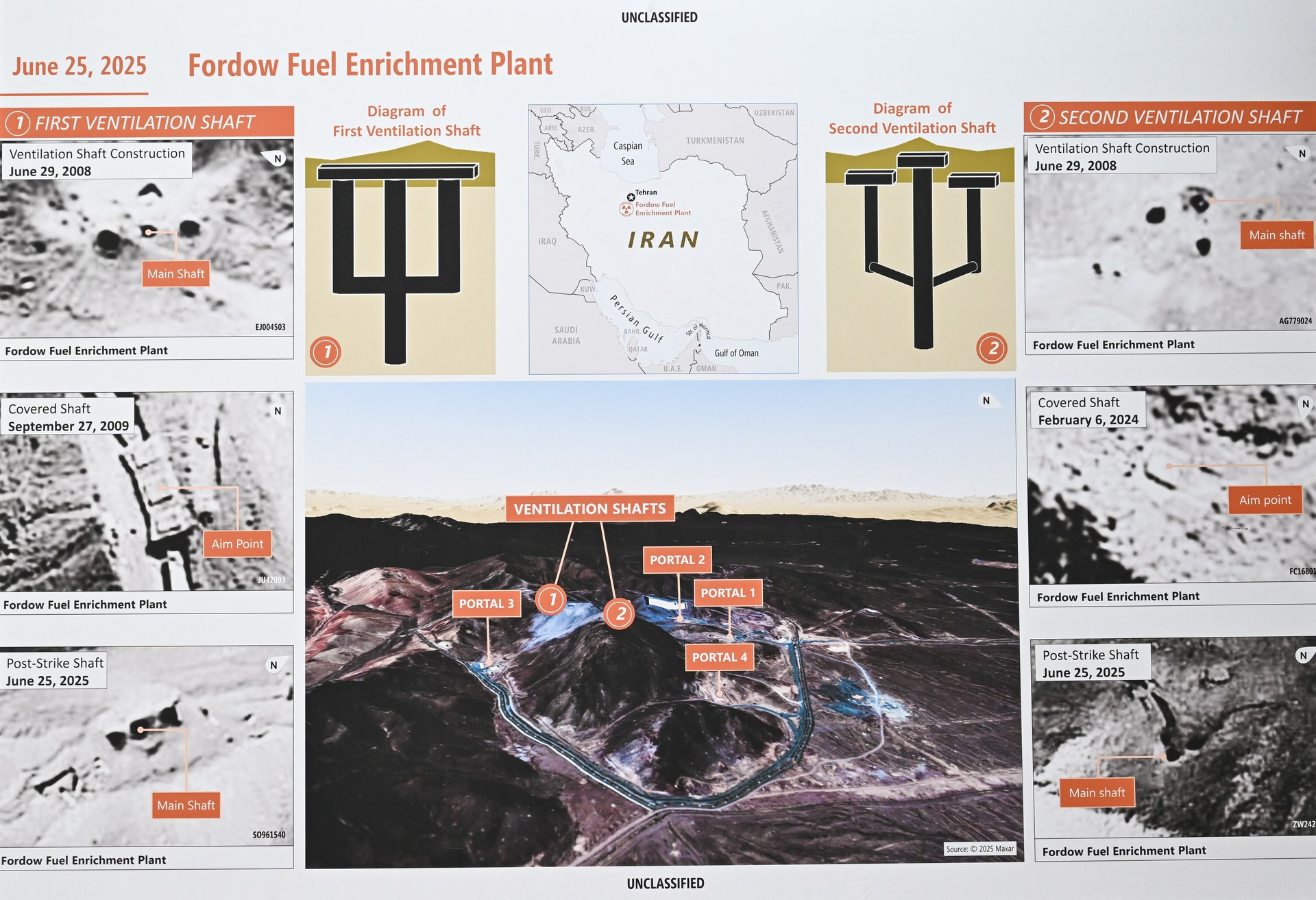
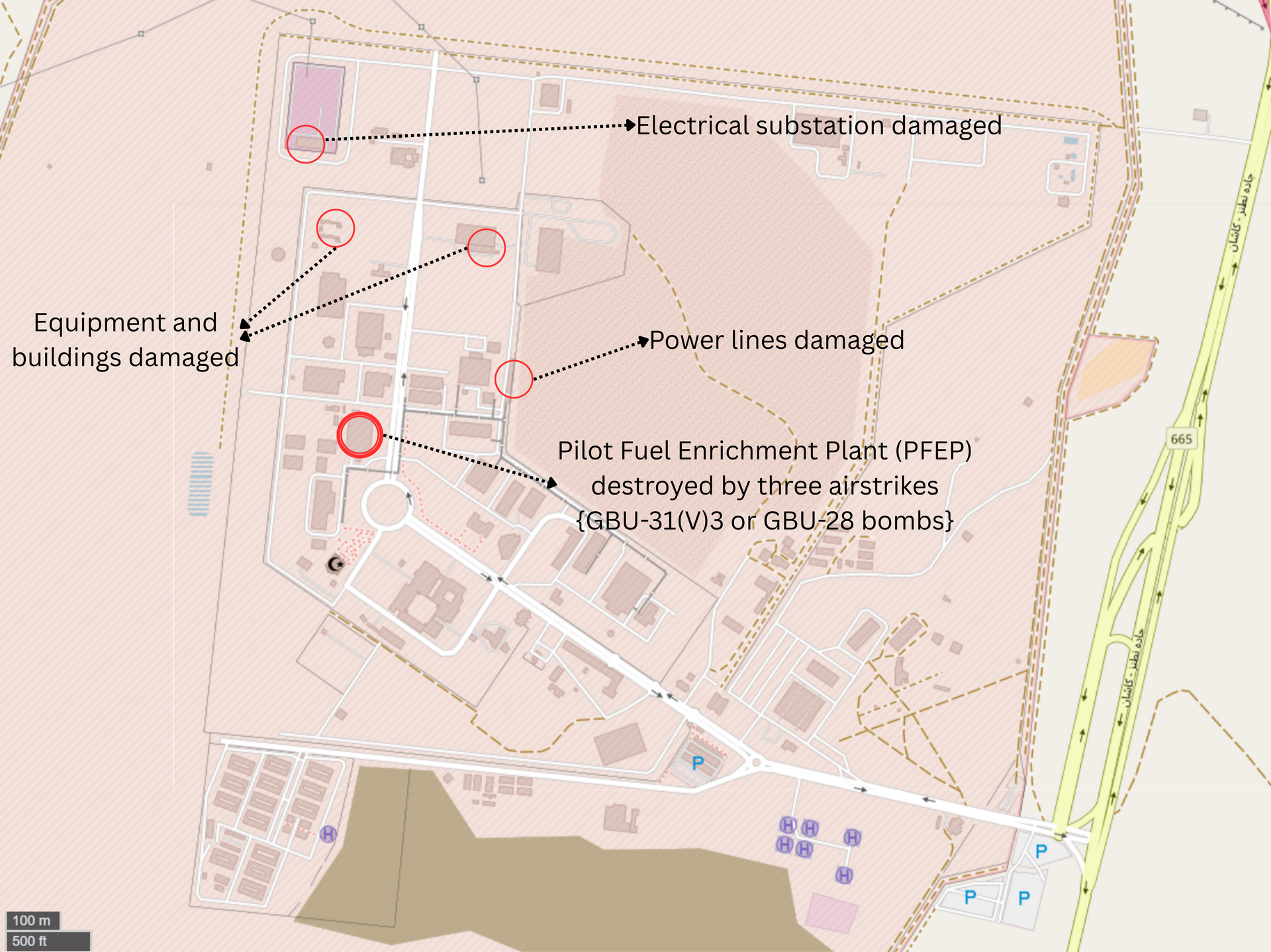
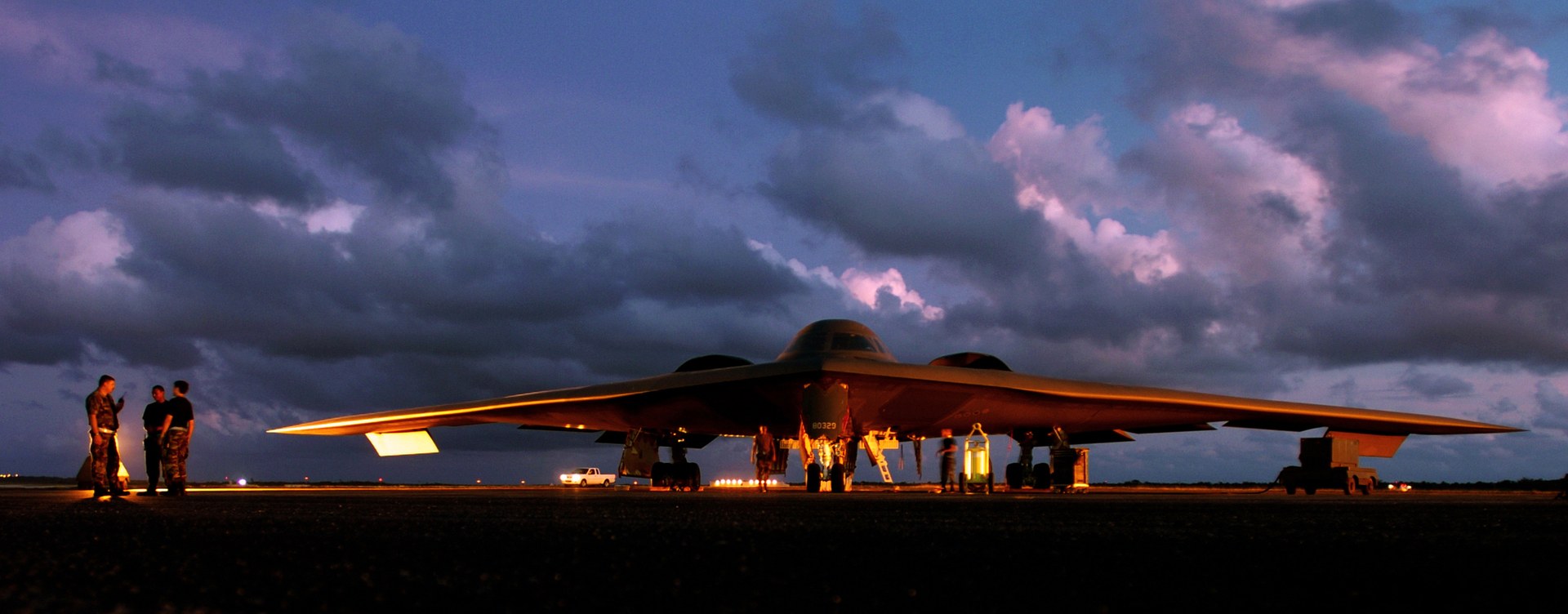
The military dimension of Netanyahu’s ultimatum runs into a specific constraint: Israel cannot independently destroy Iran’s most protected nuclear facility. Fordow sits 80 to 90 metres underground — estimates from the Foundation for Defense of Democracies place it between 60 and 90 metres — beneath a mountain near Qom. Israel’s deepest penetrator, the GBU-28, reaches approximately 30 metres. Only the US Air Force’s GBU-57 Massive Ordnance Penetrator, delivered by B-2 Spirit bombers, was designed for Fordow’s depth, and even its effectiveness against the site has been debated; NPR reported in June 2025 that the MOP’s penetration in medium-strength rock may reach only 7.9 metres, far short of what Fordow requires.
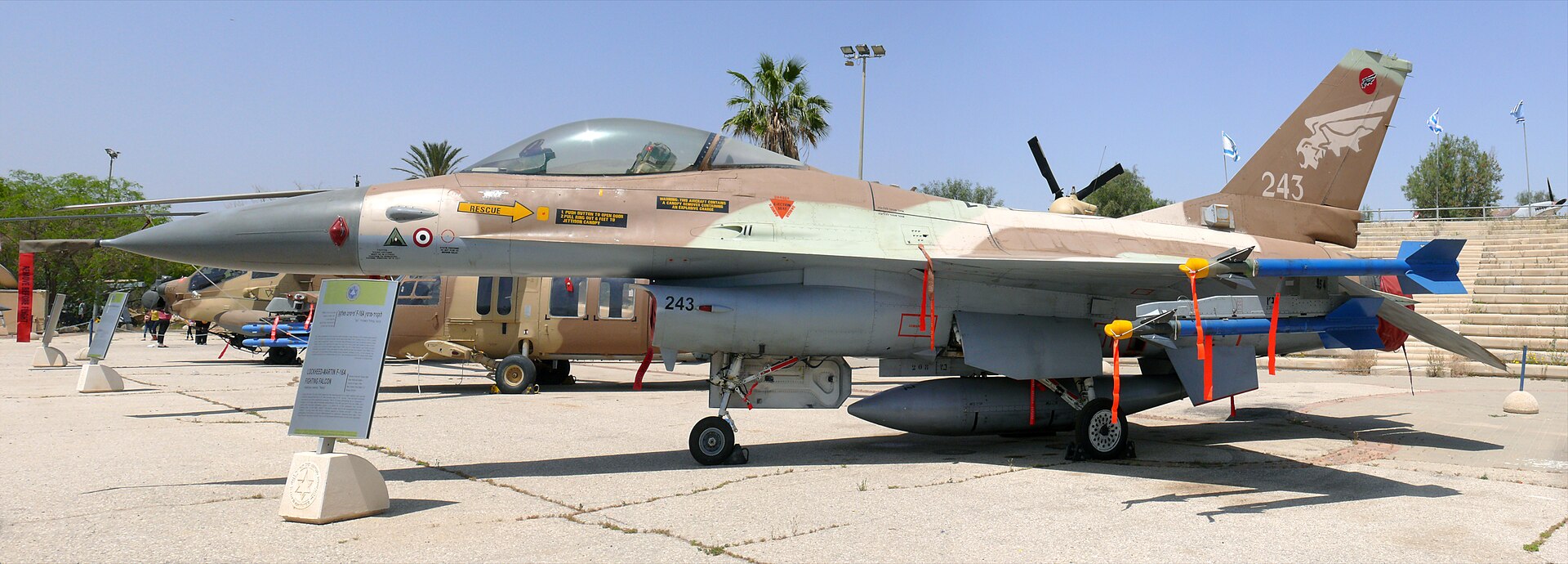
But the gap between what Israel can destroy and what it cannot creates an asymmetric incentive rather than a constraint. Israel can strike Natanz and Iran’s shallower facilities unilaterally — the F-35I Adir and F-15I Ra’am have already demonstrated this capability across more than 10,800 airstrikes on Iranian targets since the war began. A unilateral Israeli strike on above-ground and shallow-buried facilities would not eliminate Iran’s programme, but it would collapse the ceasefire, destroy whatever Phase 2 framework exists, and present Washington with a fait accompli that demands either US completion of the Fordow mission or acceptance that the diplomatic track is dead.
Israel does not need to finish the job alone; it needs to start it in a way that forces the United States to finish it. Osirak in 1981 and Al Kibar in 2007 were both single-site operations that Israel completed unilaterally, but Iran’s distributed programme — Fordow, Natanz, Isfahan, Arak — makes partial strikes more useful than comprehensive ones because they create irreversible facts on the ground that constrain US options more than any phone call from the White House.
Lebanon as the Preview
The argument that Netanyahu would respect a ceasefire framework he opposes requires ignoring what happened within hours of the ceasefire taking effect. On April 8, Israel launched approximately 100 airstrikes across Lebanon in 10 minutes — what the IDF called Operation Eternal Darkness — killing at least 303 people in strikes across central Beirut, southern Lebanon, and the Bekaa Valley. The attacks involved fifty fighter jets and approximately 160 munitions, hitting at least five neighbourhoods in central and coastal Beirut without prior warning.
Trump initially included Lebanon in the ceasefire terms, and Israel initially agreed, according to reporting from PBS and the Washington Post. After a phone call between Trump and Netanyahu, the US position shifted; Trump subsequently described Lebanon as “a separate skirmish.” Netanyahu stated that the ceasefire “does not include Lebanon.” Pakistan’s Prime Minister Shahbaz Sharif, the ceasefire’s host, maintained that it covered all fronts — a position that Israel simply disregarded.
The sequence establishes a template. Netanyahu accepted terms, received a phone call, reversed his acceptance, acted unilaterally, and the United States retroactively adjusted its public position to accommodate the fait accompli. Iran cited the Lebanon strikes as a ceasefire violation — 203 people were killed on April 9 alone, according to the Intercept. Trump’s “separate skirmish” framing and Steve Witkoff’s reported request that Netanyahu “calm down” represented the full extent of US pushback: phone calls, not operational control, not consequences.
For Riyadh, Lebanon is not a humanitarian concern detached from Saudi interests — it is a proof of concept for how Phase 2 collapses. If Netanyahu can carve Lebanon out of a ceasefire that explicitly included it, restructuring Phase 2 to exclude enrichment from the negotiating table requires only the same mechanism: act, then dare Washington to object.
Is Saudi Normalization Leverage Already Spent?
The conventional analysis holds that Saudi Arabia retains influence over Israeli behaviour through the normalization card — the promise of full diplomatic recognition that Netanyahu has publicly sought. But the war has gutted the marginal utility of that offer. Analysts at INSS, the Middle East Institute, and the Hoover Institution have independently reached the same conclusion: the normalization premium has evaporated because MBS has already secured the platforms he wanted from Washington without making Jerusalem concessions.
The US-Saudi military relationship deepened dramatically during the war itself. The $9 billion PAC-3 MSE sale, the emergency arms packages to UAE, Kuwait, and Jordan, the THAAD deployments, the operational integration of US and Saudi air defence systems — all of this happened without a normalisation agreement. The nuclear technology transfer discussions that were once conditioned on normalisation have continued through separate channels. Saudi Arabia got the security architecture; Israel got the operational cooperation; the agreement itself has lost its transactional value.
Without normalisation as a credible inducement, Saudi Arabia has no mechanism to influence Netanyahu’s calculus on enrichment, on the Begin Doctrine, or on the timing of a unilateral strike. The kingdom is reduced to the same position as every other regional state that opposes Israeli military action but lacks the tools to prevent it — watching, absorbing consequences, and issuing statements that describe concern without producing constraint.
The 45-Day Trap
The Phase 1 ceasefire runs 45 days. Within that window, three clocks are running simultaneously, and none of them synchronise. Netanyahu’s clock demands resolution of enrichment before Phase 2 begins — his April 8 formulation does not distinguish between phases, treating uranium removal as a precondition for any permanent arrangement rather than a subject for negotiation within one. Iran’s clock runs on the assumption that enrichment is off the table entirely — not deferred, not negotiable, but settled by NPT Article IV and UNSCR 2231. The US clock runs on Witkoff’s capacity to produce a framework that both sides can accept, constrained by a negotiator whom the Arms Control Association publicly described as technically unqualified for the task.
The IAEA’s absence from the verification chain compounds the timeline problem. Iran terminated IAEA access on February 28, 2026 — the day the war began. The last verified accounting of Iran’s enriched material is IAEA report GOV/2026/8, dated February 27, which documented 440.9 kg of uranium enriched to 60% U-235. That stockpile, if further enriched to weapons-grade 90%, could fuel nine nuclear weapons, with only 1% of the separative work — 564 SWU of 55,330 total — remaining. Any Phase 2 verification regime starts from zero: no chain of custody, no baseline measurements, no inspector access to confirm whether the stockpile has grown, been moved, or been further enriched during the 45-day gap.
Rafael Grossi, the IAEA Director General, indicated in March that almost half the 60%-enriched material was stored in a tunnel complex at Isfahan that appears not to have been badly damaged in the June 2025 strikes — meaning the material Iran would need to surrender under Netanyahu’s demand likely still exists and is likely still accessible. But confirming this requires the very inspection access that Iran has revoked and that Ghalibaf, at Islamabad, shows no inclination to restore.
“We do not seek permission from anyone for uranium enrichment on Iran’s soil and the United States is not in a position to be able to give or not give permission.”
— Esmail Baghaei, Iranian Foreign Ministry spokesman, April 11, 2026
Saudi Arabia sits outside all three clocks. It cannot accelerate the US negotiating position, moderate Netanyahu’s demands, or influence Iran’s enrichment stance. It cannot replenish its interceptor stockpile within the 45-day window. It cannot close its fiscal gap before the next OPEC+ decision forces a production choice that either supports revenue or supports market share, but not both. The kingdom’s exposure is total and its agency is zero — a position that no amount of welcoming statements from the Royal Court can alter.
FAQ
Could Saudi Arabia negotiate directly with Israel to influence Netanyahu’s enrichment demands?
Saudi Arabia has no formal diplomatic relationship with Israel and no treaty mechanism for direct communication on security matters. The Abraham Accords normalisation track, which would have provided such a channel, was suspended when the war began. Back-channel communication through Washington exists but operates at the discretion of US officials who have themselves adopted Netanyahu’s position on enrichment, making them unlikely intermediaries for a Saudi request to moderate Israeli demands. Egypt and Jordan, which maintain peace treaties with Israel, have not publicly offered to relay Saudi concerns on the nuclear file.
What happens to Saudi Arabia’s air defence if the ceasefire collapses before PAC-3 resupply arrives?
The $9 billion, 730-round PAC-3 MSE sale approved in January 2026 enters a production queue at Lockheed Martin’s Camden, Arkansas facility that manufactures roughly 620 rounds annually for all global customers — not just Saudi Arabia. Even if Saudi Arabia receives priority allocation, the first deliveries would not arrive for 12-18 months under normal production timelines. A Pentagon contract awarded April 10 for $4.7 billion in new Patriot interceptors addresses the broader supply crisis but does not accelerate Saudi-specific delivery. The kingdom would need to rely on THAAD batteries, shorter-range systems, and whatever allied contributions it can secure bilaterally — none of which replicate PAC-3’s capability against ballistic missile threats at the volumes Iran demonstrated during the first 38 days of the war.
Has Israel ever accepted an enrichment compromise with Iran?
Israel publicly opposed the JCPOA throughout its negotiation, with Netanyahu addressing a joint session of the US Congress in March 2015 to argue against the deal. After the JCPOA was signed, Israel maintained its opposition but did not strike Iranian facilities while the agreement held — a period of de facto acquiescence that some analysts distinguish from acceptance. Netanyahu’s 2026 conditions are more restrictive than even the JCPOA’s opponents demanded in 2015: total removal of enriched material goes beyond the JCPOA’s 300-kilogramme stockpile cap at 3.67% enrichment. No Israeli prime minister has ever accepted any level of Iranian enrichment as permanent.
Why can’t the United States simply overrule Netanyahu on enrichment?
US influence over Israeli military decisions is structurally limited to inducements rather than commands. The United States provides $3.8 billion in annual military aid to Israel under a 10-year memorandum of understanding, but conditioning or withholding that aid requires congressional action that no current political coalition would support. Operational control does not exist: Israel’s air force operates independently, its nuclear arsenal is sovereign, and its intelligence services maintain autonomous targeting capabilities. As journalist Jamal Abdi documented in the Intercept on April 9, Netanyahu has blocked or circumvented US-Iran diplomacy across multiple administrations — in 1995, 2002, 2013-2015, and 2020-2021 — a track record that suggests structural imperviousness to American diplomatic pressure rather than a pattern susceptible to correction.
What is the 1% separative work figure and why does it matter?
The Center for Arms Control and Non-Proliferation calculates that converting Iran’s 440.9 kg of 60%-enriched uranium to weapons-grade 90% requires only 564 separative work units (SWU) — approximately 1% of the 55,330 SWU already invested in enriching the material from natural uranium to 60%. A single cascade of 175 IR-6 centrifuges could produce enough weapons-grade material for one nuclear weapon every 25 days. The 1% figure means Iran’s breakout timeline is measured in weeks, not months — a reality that drives Netanyahu’s urgency and undermines any Phase 2 framework premised on gradual confidence-building measures over an extended negotiation period.
Netanyahu’s uranium ultimatum arrived as Washington simultaneously opened a Lebanon-Israel second diplomatic track — creating two unsynchronized negotiating timelines converging on the same April 22 ceasefire expiry.