
PARIS — The Organisation for Economic Co-operation and Development warned on Wednesday that the Iran war has wiped out what should have been a year of strengthening global growth, cutting its 2026 projections and raising inflation forecasts by the sharpest margin since the post-pandemic surge. The Paris-based institution said energy price spikes driven by the near-closure of the Strait of Hormuz had pushed G20 inflation to a projected 4.0 percent for 2026, up 1.2 percentage points from its December estimate, while global GDP growth would slow to 2.9 percent from 3.3 percent last year.
The forecast, released on day 27 of the US-Israeli military campaign against Iran, amounts to the first comprehensive institutional assessment of the war’s economic toll. Without the conflict, the OECD said, growth in 2026 “could have been upwardly revised by around 0.3 percentage points,” a revision “entirely erased by the impact of the fighting.” The United Kingdom emerged as the hardest-hit major developed economy, with growth cut to 0.7 percent and inflation now expected to reach 4.0 percent, 1.5 percentage points above the previous projection.
Table of Contents
- What Did the OECD Forecast for the Global Economy?
- The Inflation Surge Spreading Beyond the Gulf
- Why Is the United Kingdom the Hardest Hit?
- How Are European Economies Absorbing the Blow?
- Saudi Oil Disruption at the Centre of the Crisis
- What Does the Adverse Scenario Look Like?
- The Economic Case for Ending the War
- Frequently Asked Questions
What Did the OECD Forecast for the Global Economy?
The OECD now projects global GDP growth of 2.9 percent in 2026, unchanged from its December headline figure but masking a significant deterioration. OECD Secretary-General Mathias Cormann acknowledged “a high level of uncertainty around the duration and the magnitude of the current conflict in the Middle East,” warning that outcomes could diverge sharply from the baseline scenario depending on how long energy disruptions persist.
The headline number conceals a reversal. Prior to the war, strengthening technology investment, lower effective tariff rates following the US-China trade truce, and strong momentum carried over from 2025 had positioned the OECD to upgrade its 2026 global growth forecast by approximately 0.3 percentage points to 3.2 percent. That upgrade has been entirely eliminated. Growth for 2027 was also trimmed, from 3.1 percent to 3.0 percent, as the OECD expects the energy shock to linger even if a ceasefire is reached.
| Economy | 2026 (Dec 2025) | 2026 (Mar 2026) | Change | 2027 |
|---|---|---|---|---|
| Global | 2.9% | 2.9% | 0.0pp* | 3.0% |
| United States | 1.7% | 2.0% | +0.3pp | 1.7% |
| Eurozone | 1.2% | 0.8% | -0.4pp | 1.2% |
| United Kingdom | 1.2% | 0.7% | -0.5pp | 1.3% |
| China | 4.4% | 4.4% | 0.0pp | 4.3% |
| Japan | 0.9% | 0.9% | 0.0pp | 0.9% |
*The unchanged 2.9 percent headline for 2026 masks an erased 0.3pp upgrade that would have occurred without the war, according to the OECD.
The United States stands out as the only major economy to see its 2026 growth forecast raised, from 1.7 percent to 2.0 percent, reflecting strong domestic momentum from technology investment and consumer spending that partially offset the energy shock. Europe, by contrast, absorbed the heaviest blow, with the eurozone cut from 1.2 percent to 0.8 percent and the United Kingdom from 1.2 percent to 0.7 percent.

The Inflation Surge Spreading Beyond the Gulf
The OECD’s most alarming finding is the scale of the inflation transmission. G20 inflation is now projected to average 4.0 percent in 2026, a 1.2 percentage point increase from the December forecast. That figure had been trending downward for two consecutive years following the post-pandemic price surge, and central banks across the developed world had begun cutting interest rates. The Iran war has abruptly reversed that progress.
The United States faces headline inflation of 4.2 percent in 2026, up 1.2 percentage points from the OECD’s previous projection, driven by higher energy import costs and the ripple effects through transport, manufacturing, and food supply chains. US inflation had fallen to 2.4 percent in 2025, and the Federal Reserve had cut rates four times since September 2024. Those rate cuts now look premature.
European Central Bank President Christine Lagarde warned on March 19 that the Iran war was having a “material impact” on eurozone inflation, according to remarks reported by Euronews. The ECB, which had been gradually loosening monetary policy, now faces the prospect of pausing or even reversing course if energy prices remain elevated through the summer.
The inflation shock extends beyond energy. The near-closure of the Strait of Hormuz, through which roughly 20 percent of the world’s crude oil and a significant share of liquefied natural gas transits, has disrupted fertilizer supply chains, pushed up food prices in import-dependent nations, and forced shipping companies to reroute vessels around the Cape of Good Hope at vastly higher cost. A global fertilizer shortage is now emerging, the Council on Foreign Relations reported, as potash and phosphate shipments from Gulf ports have slowed to a fraction of their pre-war volume.
| Economy | Previous Forecast | New Forecast (2026) | Increase | 2027 |
|---|---|---|---|---|
| G20 average | 2.8% | 4.0% | +1.2pp | 2.7% |
| United States | 3.0% | 4.2% | +1.2pp | — |
| United Kingdom | 2.5% | 4.0% | +1.5pp | — |
| Eurozone | ~2.0% | ~3.2% | +1.2pp | — |
The OECD projects inflation will moderate to 2.7 percent across the G20 in 2027, but that estimate rests on the assumption that energy prices stabilise from mid-2026 onward, a scenario that depends on either a ceasefire or the successful reopening of the Strait of Hormuz to commercial shipping.
Why Is the United Kingdom the Hardest Hit?
The OECD identified the United Kingdom as the worst-affected major developed economy, with growth slashed from 1.2 percent to 0.7 percent, a 0.5 percentage point cut that is the largest downgrade among all G7 nations. UK inflation, meanwhile, is now forecast at 4.0 percent, up 1.5 percentage points from the previous estimate, the steepest upward revision in the OECD’s March outlook.
Three factors explain Britain’s particular vulnerability. First, the UK imports approximately 40 percent of its natural gas and remains heavily dependent on global energy markets despite its North Sea production. The disruption to Gulf LNG supplies has driven European gas prices sharply higher, and the UK, which lacks the pipeline connectivity and storage capacity of continental Europe, absorbs a disproportionate share of the price shock.
Second, the UK economy entered 2026 with limited fiscal headroom. Chancellor Rachel Reeves had already committed to tighter spending rules, and the energy price surge threatens to blow a hole in public finances by increasing the cost of energy subsidies, driving up index-linked gilt payments, and reducing tax revenue as growth slows. The Office for Budget Responsibility had already warned in January that Britain’s fiscal position was “fragile.”
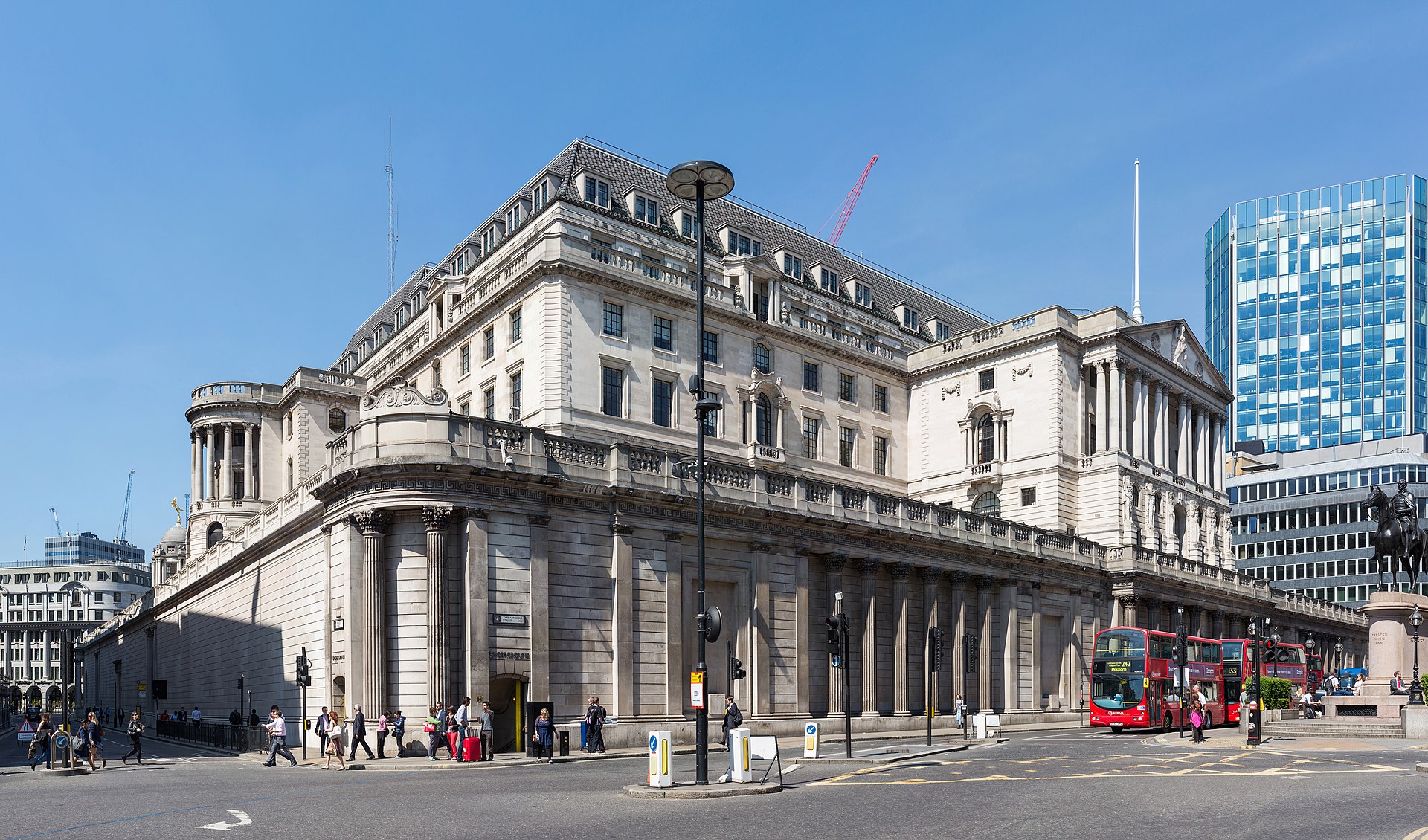
Third, the Bank of England faces an acute policy dilemma. It had been cutting interest rates gradually through late 2025 and early 2026, bringing the base rate down from its post-pandemic peak. The inflation surge now makes further cuts politically and economically impossible, trapping the economy in a stagflationary bind: growth is weakening, but prices are rising too fast for monetary easing. Bloomberg reported the OECD’s assessment that the UK faces the “worst hit from war among major economies.”
The OECD’s adverse scenario, in which energy prices remain elevated longer than expected, would push the UK even deeper into stagnation. Under that scenario, British GDP growth could fall below 0.5 percent while inflation climbs above 4.5 percent, a combination last seen during the energy price shock of 2022.
How Are European Economies Absorbing the Blow?
The eurozone’s growth forecast was cut from 1.2 percent to 0.8 percent for 2026, a 0.4 percentage point reduction that wipes out most of the recovery momentum Europe had built through the second half of 2025. The 2027 projection was also trimmed, from 1.4 percent to 1.2 percent, as the OECD expects higher energy costs to weigh on investment and consumer spending well into next year.
Germany, the eurozone’s largest economy, is particularly exposed. Its manufacturing sector, which was already struggling with competitiveness challenges and high energy costs from the Russia-Ukraine war, now faces a second energy shock in four years. German industrial output had only partially recovered from the 2022 gas crisis, and the renewed surge in energy prices risks pushing the country back toward recession.
The OECD noted one partial offset for European growth: a surge in defence spending. Several EU member states have accelerated military procurement in response to the Iran conflict, and this spending boost is expected to add roughly 0.1-0.2 percentage points to eurozone GDP growth in 2027. France, which recently agreed to deepen defence ties with Saudi Arabia, and the United Kingdom have both increased procurement budgets. But defence spending alone cannot compensate for the drag from energy costs.

Southern European economies, which are less energy-intensive and more dependent on services and tourism, face a somewhat milder impact. But even Spain and Italy are seeing inflation accelerate as higher transport and energy costs feed through to consumer prices. The OECD warned that the longer the Strait of Hormuz remains partially or fully closed, the greater the risk that temporary energy inflation becomes entrenched in wage demands and price expectations across the eurozone.
Saudi Oil Disruption at the Centre of the Crisis
At the heart of the OECD’s downgrade is the disruption to Saudi Arabia’s oil export infrastructure, the single most important supply chain in the global energy market. Saudi crude oil exports fell 39 percent between February and March 2026, from 7.108 million barrels per day to 4.355 million barrels per day, according to data from analytics firm Kpler. Saudi Aramco has cut supplies to Asian buyers for two consecutive months and is now routing shipments exclusively through its Red Sea port at Yanbu, bypassing the blockaded Strait of Hormuz.
Brent crude, the global benchmark, traded at approximately $96.68 on Wednesday after falling below $100 for the first time since the war began earlier this week on reports of a potential US-Iran diplomatic opening. But the price remains roughly 40 percent above its pre-war level of approximately $68 per barrel, and the OECD’s forecast assumes oil stays elevated through at least mid-2026.
Goldman Sachs estimated in a report earlier this month that if the war continues through late April, Saudi Arabia would face an approximately 3 percent GDP contraction. Kuwait and Qatar face far steeper losses, with Goldman projecting 14 percent GDP contractions for both nations, while the UAE would see an approximately 5 percent reduction. A strike on Qatar’s Ras Laffan facility has already eliminated roughly 17 percent of the nation’s LNG export capacity, the Council on Foreign Relations reported.
The Kingdom has been attempting to mitigate the damage. Aramco is increasing throughput at Yanbu and has rerouted tanker traffic to the Red Sea. China’s Sinopec received approximately 24 million barrels of Saudi crude from Yanbu in March alone. But the Red Sea route adds days to transit times for Asian buyers, raising shipping costs and reducing the volume that Saudi Arabia can deliver. The World Trade Organization warned that sustained high oil and gas prices could reduce 2026 global GDP growth by an additional 0.3 percentage points beyond current projections.
Saudi Arabia’s own fiscal position is strained. The Kingdom had budgeted for oil at approximately $80 per barrel in its 2026 fiscal plan, and while current prices are higher, export volumes have collapsed. The Public Investment Fund has already reduced allocations to several Vision 2030 megaprojects, including NEOM, and redirected funds toward food security and strategic reserves. The war Saudi Arabia’s crown prince, Mohammed bin Salman, has privately urged Washington to prosecute aggressively is simultaneously undermining the economic transformation programme that defines his domestic legacy.
What Does the Adverse Scenario Look Like?
The OECD’s baseline forecast assumes energy prices begin to stabilise from mid-2026 as either a ceasefire or the gradual reopening of the Strait of Hormuz eases supply constraints. But the institution also modelled an adverse scenario in which prices remain elevated for an extended period, and the results are significantly worse.
Under the adverse scenario, global GDP growth would be an additional 0.5 percentage points lower by the second year of the shock, pushing 2027 growth to approximately 2.5 percent. Inflation would be 0.9 percentage points higher than in the baseline, meaning G20 inflation could reach nearly 3.6 percent in 2027 rather than falling to 2.7 percent. That would force central banks to keep interest rates elevated far longer, compounding the drag on investment, housing markets, and consumer spending.
Cormann did not specify the probability the OECD assigned to the adverse scenario, but the conditions that would trigger it are not difficult to imagine. Iran has rejected Washington’s 15-point peace proposal and demanded $2 million per ship to transit the Strait of Hormuz. The decentralised structure of Iran’s naval blockade means that the death of IRGC Navy Commander Alireza Tangsiri, killed by an Israeli strike on Wednesday, may not meaningfully reduce Iran’s ability to disrupt shipping. And Gulf states have privately urged Washington not to accept a ceasefire until Iran’s cruise and ballistic missile capabilities are “degraded as much as possible,” according to CNN, a position that extends the timeline for any settlement.
The IEA chief warned earlier this month that the Gulf energy crisis has already surpassed the severity of the 1970s oil shocks in terms of absolute supply disruption, a comparison the OECD’s data now reinforces. The 1973-74 Arab oil embargo reduced global oil supply by roughly 5 percent. The current Hormuz disruption, combined with direct strikes on Gulf energy infrastructure, has taken approximately 15-20 percent of global seaborne crude trade offline.
The Economic Case for Ending the War
The OECD’s forecast implicitly strengthens the argument for a rapid ceasefire, though the institution carefully avoided making a political recommendation. Every additional week of the Hormuz blockade costs the global economy billions in lost output, higher consumer prices, and delayed investment. The OECD estimated that the war’s total impact on 2026 global GDP amounts to roughly $300 billion in foregone output, a figure that grows with each passing day.
But the economics cut both ways. Gulf states, particularly Saudi Arabia, are generating higher per-barrel revenue even as export volumes fall, creating a perverse incentive structure. And the war has triggered the first open fracture within OPEC as member states take opposing sides in the conflict, potentially ending the cartel’s ability to coordinate production cuts for years to come.
Diplomatic efforts remain stalled. Pakistan confirmed on Wednesday that “indirect talks” between Washington and Tehran are taking place, but Iran’s Foreign Minister Abbas Araghchi said the country would end the war only on “our own terms,” according to NPR. Tehran’s five conditions include recognition of Iran’s sovereignty over the Strait of Hormuz, war reparations, and a comprehensive end to the conflict across all fronts including proxy groups. Washington has offered a 15-point plan that Tehran has described as “maximalist.”
For Saudi Arabia, the OECD’s findings present a difficult calculation. The Kingdom has pushed for the war to continue until Iran’s missile and drone capabilities are degraded, but the global economic damage is now feeding back into Saudi Arabia’s own export revenue, fiscal position, and reform agenda. The Crown Prince has spoken regularly with both President Trump and Pakistan’s Prime Minister Shehbaz Sharif this week, according to Al Arabiya and Pakistani media, navigating between his desire to see Iran weakened and the mounting cost of achieving that objective.
The OECD’s report does not answer whether the war will end before the adverse scenario materialises. What it does establish, with the institutional weight of 38 member countries’ economic data behind it, is that the Iran war is no longer a regional conflict with local consequences. It is a global economic event reshaping inflation, growth, and monetary policy in every major economy on earth.
Frequently Asked Questions
What is the OECD’s 2026 global growth forecast?
The OECD projects global GDP growth of 2.9 percent in 2026 and 3.0 percent in 2027. Without the Iran war, the 2026 figure would have been upgraded by 0.3 percentage points to approximately 3.2 percent. The unchanged headline number masks a significant deterioration caused by the energy price shock from the Strait of Hormuz disruption.
Why is the UK the worst-hit developed economy?
The United Kingdom faces the largest growth downgrade among G7 nations, cut from 1.2 percent to 0.7 percent, and the steepest inflation revision, up 1.5 percentage points to 4.0 percent. Britain’s high dependence on imported energy, limited gas storage capacity, constrained fiscal headroom, and the Bank of England’s policy dilemma between cutting rates and fighting inflation all contribute to its vulnerability.
How has the Iran war affected oil prices?
Brent crude remains approximately 40 percent above its pre-war level of roughly $68 per barrel, trading near $97 on March 26. Saudi oil exports have fallen 39 percent since February as the Strait of Hormuz blockade forces Aramco to reroute shipments through the Red Sea port of Yanbu, significantly reducing the volume it can deliver to Asian buyers.
What happens if energy prices stay elevated longer than expected?
Under the OECD’s adverse scenario, global GDP growth would be an additional 0.5 percentage points lower by 2027, potentially falling to 2.5 percent. Inflation would be 0.9 percentage points higher, reaching approximately 3.6 percent across the G20 instead of moderating to 2.7 percent. That would force central banks to maintain elevated interest rates, further constraining economic activity.