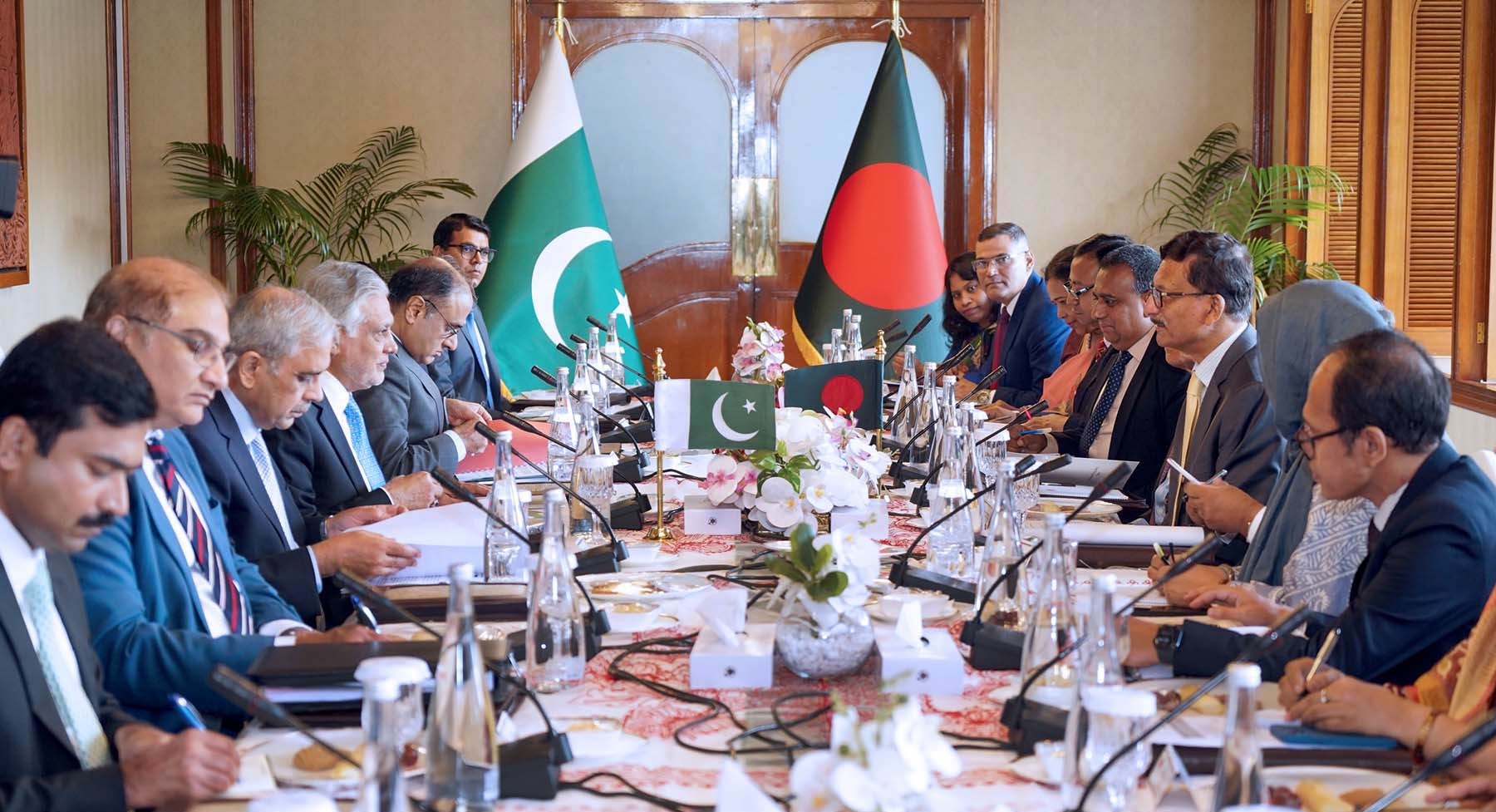
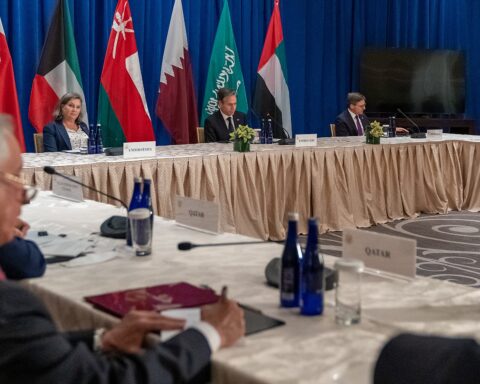
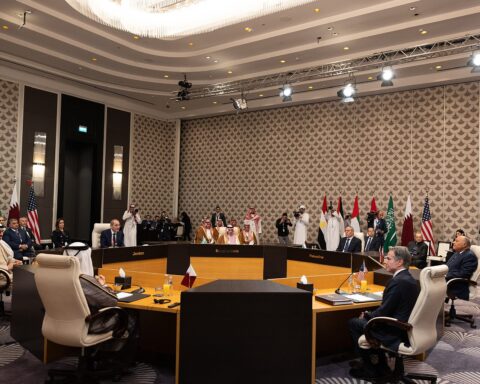
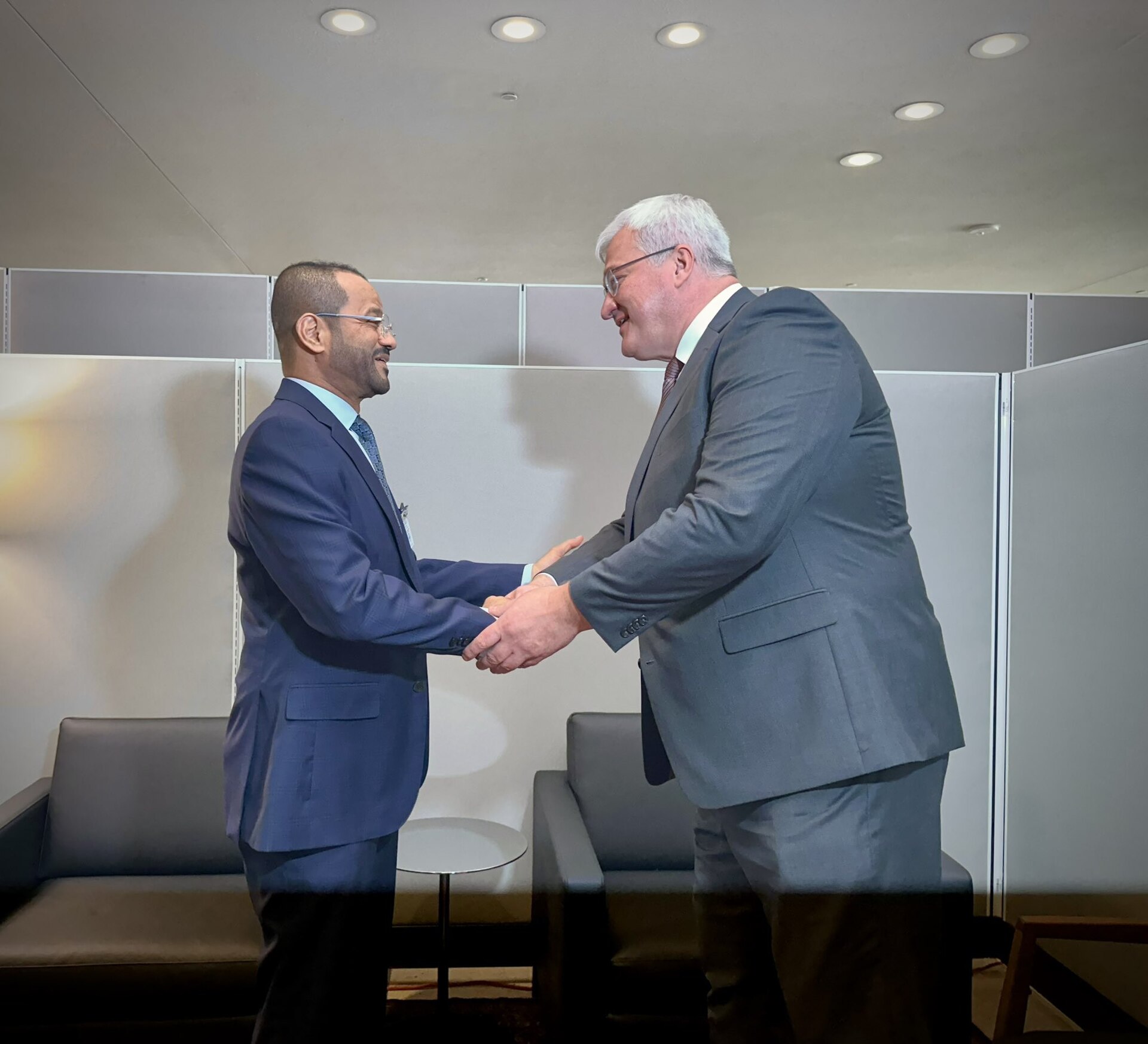
MUSCAT — Oman and Iran held deputy foreign minister-level talks in Muscat on Saturday to draft the terms of a new Hormuz transit regime — the only substantive diplomatic channel producing anything resembling a framework with fewer than 24 hours left before Trump’s April 6 deadline for Iran to reopen the strait or face strikes on its power grid. Saudi Arabia, the single largest crude exporter through Hormuz at roughly 5.5 million barrels per day, was not at the table.
The meeting was conducted “at the level of undersecretaries in the foreign ministries of the two countries, attended by specialists from both sides,” Oman’s Foreign Ministry said in a statement. Experts from both nations presented “a number of visions and proposals that will be studied.” In Omani diplomatic practice, that phrase has historically preceded framework agreements rather than stalled them — the same non-committal language that preceded the November 2013 Joint Plan of Action on Iran’s nuclear programme, hammered out in the same city by the same mediation architecture.
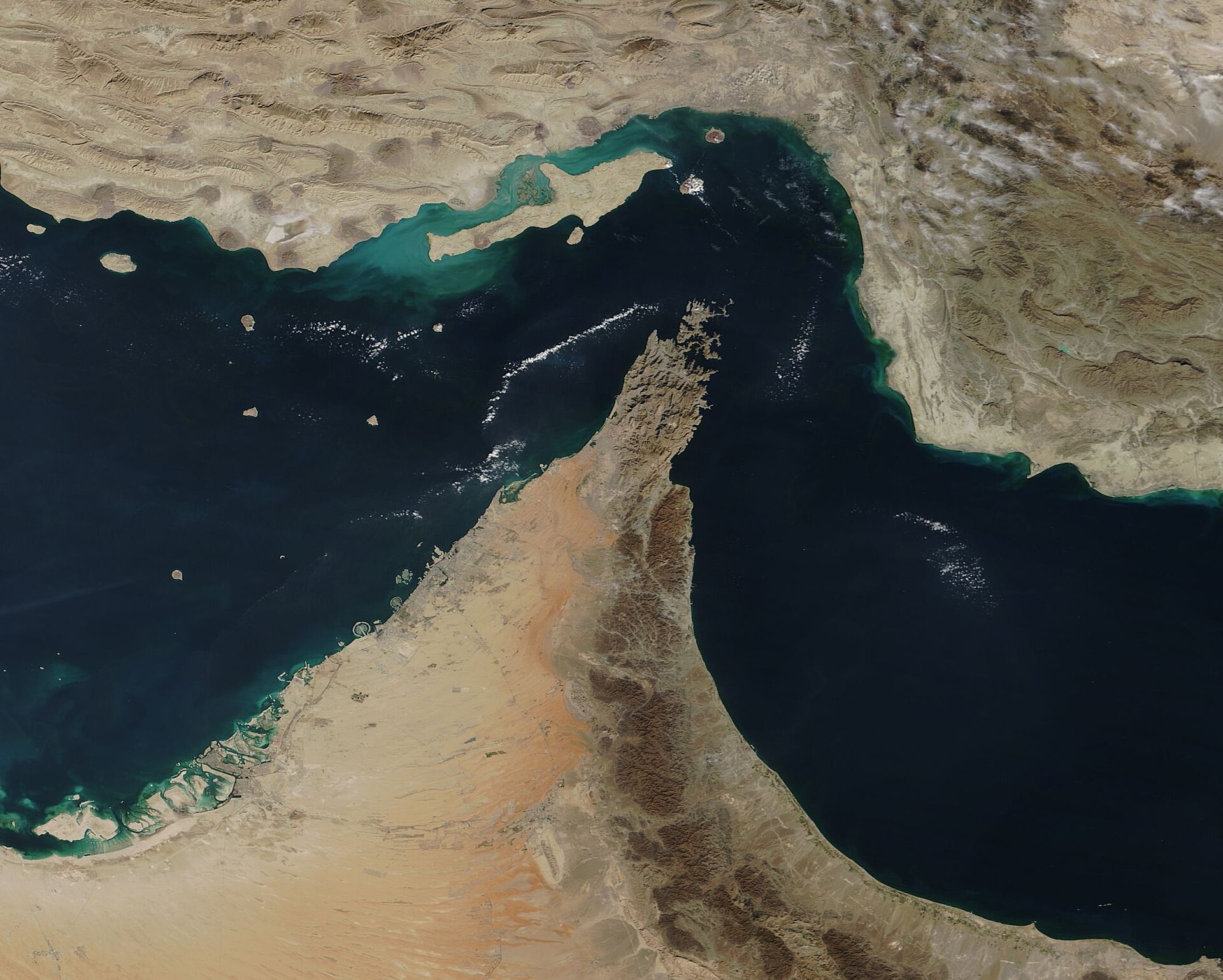
Table of Contents
- What Happened in Muscat on Saturday
- Why Is Saudi Arabia Excluded From Its Own Lifeline?
- Iran’s Draft Protocol: Governance, Not Reopening
- What Does “Proposals to Be Studied” Mean in Omani Diplomacy?
- Saudi Arabia’s Fiscal Exposure
- Parallel Tracks Going Nowhere
- Background: Oman’s Structural Position
- Frequently Asked Questions
What Happened in Muscat on Saturday
The Saturday meeting brought together undersecretary-level officials and technical specialists from both Iran and Oman to discuss “possible options regarding ensuring the smooth passage through the Strait of Hormuz during these circumstances witnessed in the region,” according to Oman’s Foreign Ministry. The talks followed Iran’s Deputy Foreign Minister for Legal and International Affairs Kazem Gharibabadi telling PressTV on April 2 that Iran had “almost finalized” an internal draft protocol for Hormuz, which would then be taken to Oman for joint finalization.
Gharibabadi had been explicit about the sequencing: “Once the internal drafting is completed, we will certainly begin our negotiations with the Omani side as well so that we can finalize a joint protocol.” Saturday’s meeting confirmed that internal drafting phase was complete and bilateral negotiation had begun. The undersecretary level, in Oman’s facilitation model, is precisely where technical terms are generated for political sign-off by foreign ministers and heads of state above.
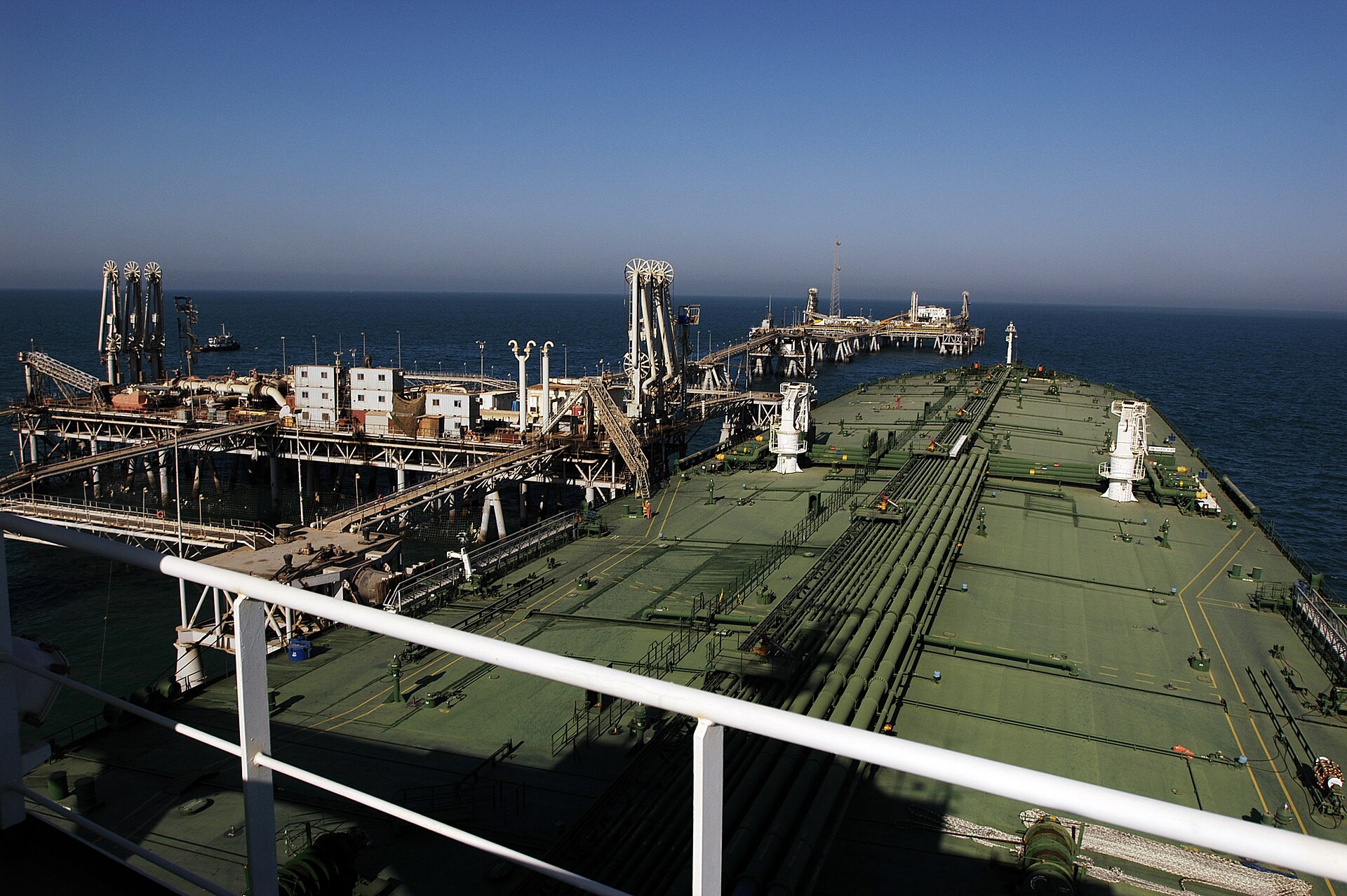
Within hours of the talks, three Omani vessels — two oil supertankers and one LNG carrier — transited the strait unusually close to the Omani coast, outside Iran’s Larak Island corridor, according to Lloyd’s List tracking data cited by Al Jazeera. The movements suggest Oman-flagged ships already operate under a de facto preferential channel distinct from the IRGC’s toll system that charges approximately $2 million per vessel in Chinese yuan or cryptocurrency.
Why Is Saudi Arabia Excluded From Its Own Lifeline?
Iranian Foreign Minister Abbas Araghchi answered this question with brutal directness on April 1. Speaking to a Qatari TV channel, Araghchi said: “What arrangements are made regarding the Strait of Hormuz after the war is a matter for Iran and Oman.” He described the waterway as lying within the territorial waters of the two coastal states. Saudi Arabia was not mentioned.
The geography is the legal foundation. Saudi Arabia is not a coastal state of the Strait of Hormuz. The strait lies between Oman’s Musandam Peninsula to the south and Iran to the north — a roughly 21-nautical-mile gap at its narrowest point. Under the UN Convention on the Law of the Sea, the coastal states have sovereign rights that non-coastal states do not share, regardless of how much crude those non-coastal states push through the channel. Saudi Arabia exports more oil through Hormuz than any other nation on earth, yet has no more legal standing in these negotiations than landlocked Switzerland.
No Saudi official — including Foreign Minister Prince Faisal bin Farhan — has publicly commented on Saturday’s undersecretary-level talks. That silence is conspicuous, not least because China’s Foreign Minister Wang Yi made a point of calling Faisal on April 2 specifically to discuss Hormuz’s regional impacts, telling him that “the issue of navigation through the Strait of Hormuz is a spillover effect of the current conflicts” and that “the Strait of Hormuz remains unstable if the war doesn’t end,” according to People’s Daily Online.
Iran’s Draft Protocol: Governance, Not Reopening
The protocol Iran brought to Muscat on Saturday is not a crisis deescalation measure. It is a governance instrument. Gharibabadi’s description of its contents, delivered to PressTV on April 2, would require all vessels transiting Hormuz to “coordinate in advance with Iranian and Omani authorities and obtain the necessary permits.” He framed the requirement as facilitative: “These requirements will not mean restrictions, but rather to facilitate and ensure safe passage and provide better services to ships that pass through this route.”
That language — “coordinate in advance” and “obtain necessary permits” — reframes one of the world’s most trafficked international straits as a permissioned corridor. Iran’s state-run Tasnim News Agency described the protocol as establishing joint “supervision and coordination” between Iran and Oman, language that implicitly rejects the UNCLOS framework of unimpeded transit passage through international straits. Under Part III of UNCLOS, ships and aircraft of all states enjoy the right of transit passage through straits used for international navigation, a right that cannot be suspended or require advance permission.
Gharibabadi was also explicit about who the protocol would exclude. He warned that “vessels belonging to aggressors and their supporters” would face transit restrictions even under a future framework. The protocol, in other words, is designed as both a wartime and post-war governance tool — one that would give Iran and Oman joint authority to determine which nations’ ships pass through and under what conditions. Since mid-March, the IRGC has already been operating a selective transit system through a corridor near Larak Island, granting free or preferential passage to China, Russia, India, Iraq, and Pakistan while barring US- and Israel-linked vessels entirely, as House of Saud has reported.
What Does “Proposals to Be Studied” Mean in Omani Diplomacy?
The phrase “a number of visions and proposals that will be studied” is the line that matters most in Saturday’s statement, and it requires decoding through Oman’s specific diplomatic history. Oman does not use non-committal language to stall. It uses non-committal language to manage the distance between technical progress and political announcement.
The precedent is the Muscat Channel — the secret US-Iran back-channel that began in 2012 after Iranian officials passed a message through Oman suggesting direct talks. For more than a year, meetings in Muscat proceeded under deliberately vague characterizations while participants negotiated the terms that became the November 2013 Joint Plan of Action. William Burns, who led the American side, documented in his memoir how Oman’s opacity was a feature, not a bug — it gave both sides room to negotiate without the domestic political exposure that public negotiations would create.
Saturday’s undersecretary-level format fits the same template. In Oman’s facilitation architecture, undersecretaries are where technical language is drafted, stress-tested, and revised. The political-level sign-off — by foreign ministers Albusaidi and Araghchi — comes after the technical terms are stabilized, not before. “Proposals to be studied” signals that draft language exists and both sides are iterating on it, not that the process is exploratory.
Oman’s Foreign Minister Badr Albusaidi has been publicly signalling this work for weeks. In a late March post on X, he wrote: “Whatever your view of Iran, this war is not of their making. This is already causing widespread economic problems and I fear they promise to get much worse if the war continues. Oman is working intensively to put in place safe passage arrangements for the Strait of Hormuz.”
Saudi Arabia’s Fiscal Exposure
Saudi Arabia’s East-West Pipeline is running at its maximum surge capacity of 7 million barrels per day to the Red Sea port of Yanbu, routing the majority of Saudi crude exports around the Hormuz chokepoint. Pre-war, roughly 5.5 million barrels per day of Saudi crude moved through Hormuz, according to EIA data; the pipeline’s 7 million barrel surge capacity now covers that volume. But the pipeline handles crude, not condensate or refined products, and is already at its ceiling.
That ceiling matters. Saudi Arabia cannot grow crude exports above current pipeline volumes, cannot route condensate and refined products to Asian buyers without Hormuz access, and cannot absorb any disruption to the Yanbu route through the increasingly volatile Red Sea corridor. At current Brent prices of $109 per barrel, each 1 million barrels per day of lost or constrained export capacity represents roughly $40 billion in annualized revenue — and Asian refineries are already shifting term contracts to non-Hormuz suppliers while Saudi Arabia watches.
| Country | Share of Hormuz Crude | Approx. Volume (million b/d) |
|---|---|---|
| Saudi Arabia | 37-38% | 5.5 |
| Iraq | 22.8% | 3.4 |
| UAE | 12.9% | 1.9 |
| Iran | 10.6% | 1.6 |
| Kuwait | 10.1% | 1.5 |
The fiscal arithmetic tightens further when OPEC+ enters the frame. The eight-nation OPEC+ group — which includes both Saudi Arabia and Oman — met on Saturday, the same day as the Muscat talks. The group had signalled a planned 206,000 barrel per day output increase for April, but the war has made the decision partially academic: Iraq and Kuwait physically cannot export through the strait, meaning OPEC+ production targets diverge from actual supply regardless of what ministers announce. Brent crude rose from $71 per barrel on February 27 — the day before the war began — to $94 by March 9, and has since climbed past $109.
The terms of whatever Hormuz framework emerges from Muscat will determine whether Saudi Arabia’s remaining 1-1.5 million barrels per day of Hormuz-dependent exports flow freely, flow at a price set by the IRGC, or do not flow at all. Riyadh has no seat at the table where those terms are being written.
Parallel Tracks Going Nowhere
The Muscat talks are not the only diplomatic track active on Hormuz, but they are the only one producing framework language. On April 2, a UK-led coalition of 40 nations met to address the strait’s closure, with British Foreign Secretary Yvette Cooper declaring that “we have seen Iran hijack an international shipping route to hold the global economy hostage.” The coalition produced no binding agreements, and neither the United States nor Iran participated.
Oman, which sits on the southern shore of the strait, was not part of the UK-led coalition in its coordinating role — it was busy doing the work that the coalition could not. The United Nations estimates approximately 20,000 seafarers are trapped on 200 ships, with roughly 3,000 vessels effectively stranded since the strait’s closure. The 40-nation grouping addressed the humanitarian and economic fallout of that blockage, while the Muscat channel addressed the political and legal terms under which it ends. Iran has made clear which track it considers legitimate: Tehran’s state media consistently frames the Oman bilateral channel as the only authorized negotiating path, separate from and superior to the UK-led grouping.
Meanwhile, the diplomatic track that mattered most to Washington — indirect negotiations through Pakistan, Egypt, and Turkey — has largely collapsed. Araghchi confirmed on April 1 that there are “no negotiations” with the United States, “only messages from the United States through Witkoff.” Trump’s response was to give Iran 48 hours — until 8 PM Eastern on April 6 — to reopen the strait or face strikes on Iran’s power grid, a threat he initially set for late March and has extended twice.
Saudi Arabia’s own diplomatic offensive — the simultaneous calls to Moscow, Beijing, and Tokyo on April 2, the positioning as potential ceasefire co-guarantor — has operated on a different plane entirely. Riyadh has been working to shape the broader war settlement, not the specific Hormuz transit terms. But the Hormuz terms are what will determine whether Saudi oil flows east at $109 per barrel or sits in Ras Tanura storage tanks while Asian refiners lock in alternative supply contracts they will not easily reverse.
Background: Oman’s Structural Position
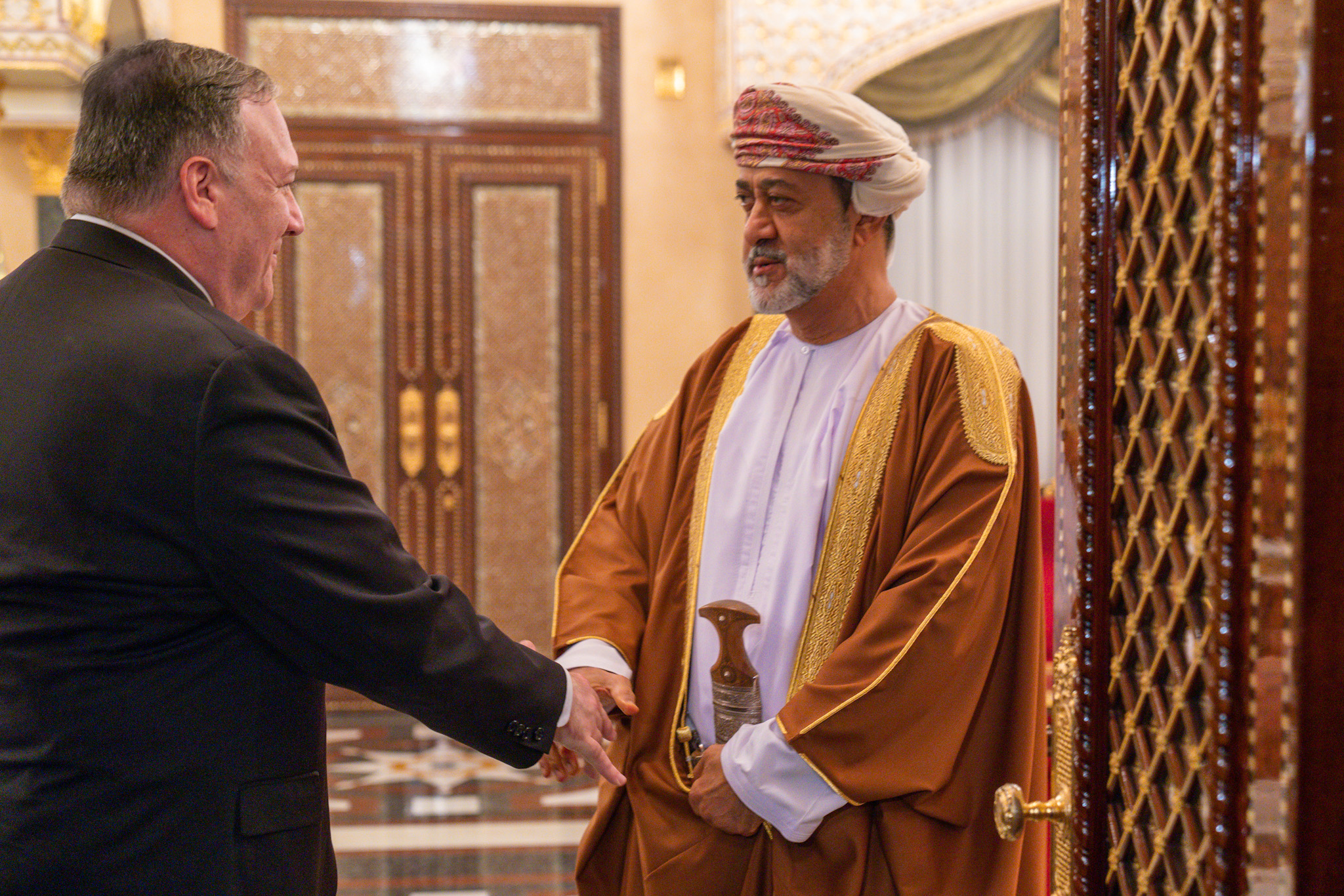
Oman’s role as Iran’s preferred diplomatic counterpart is not situational. It is structural, rooted in debts and doctrine that predate the Islamic Republic itself. In the 1970s, Iranian forces under Shah Mohammad Reza Pahlavi helped Sultan Qaboos bin Said defeat the Dhofar insurgency in southern Oman — a debt Muscat has never forgotten and Tehran has never stopped invoking. Even after the 1979 Islamic Revolution replaced the Shah with Ayatollah Khomeini, Oman refused to join regional anti-Iran coalitions, making it the only GCC member to maintain unbroken full diplomatic relations with Tehran through every crisis of the past five decades.
Sultan Qaboos codified this orientation as doctrine: “friend to all, enemy to none.” His successor, Sultan Haitham bin Tariq, has maintained it. The doctrine gave Oman the standing to host the secret US-Iran back-channel in 2012-2013 that produced the JCPOA framework, and to facilitate the multi-year Saudi-Iran mediation alongside Baghdad that led to the March 2023 Beijing-brokered normalization.
The most recent test of that standing came on February 6, 2026 — just three weeks before the war started — when Albusaidi hosted indirect US-Iran nuclear talks in Muscat, as reported by Shafaq News and the Stimson Center.
This history means that when Iran needs a trusted partner for a bilateral governance arrangement over shared waters, Oman is the only viable candidate. Not Qatar, which hosts the largest US military base in the region. Not the UAE, which normalized relations with Israel. Not Saudi Arabia, which Araghchi’s framing explicitly excludes. The Muscat channel is not a choice Iran is making in this crisis — it is the channel Iran has used for every high-stakes negotiation in living memory, from nuclear weapons to oil transit.
The February 6 talks in Muscat were mediated by Albusaidi himself. When those nuclear negotiations were destroyed by the February 28 strikes, the same Omani infrastructure — the same interlocutors, the same secure meeting facilities, the same institutional trust — was immediately available to pivot from nuclear diplomacy to Hormuz transit governance. Saturday’s undersecretary meeting is the product of that pivot, not a fresh initiative built from scratch.
Frequently Asked Questions
Could Saudi Arabia join the Oman-Iran talks at a later stage?
There is no mechanism for Saudi accession to a bilateral protocol between the two coastal states. Under international maritime law, the Strait of Hormuz is bordered by Iran and Oman; Saudi Arabia’s nearest coastline on the Persian Gulf is several hundred kilometres from the strait’s navigable channels. Iran has explicitly framed the arrangement as a two-party matter. Saudi Arabia’s influence would need to come from outside the protocol — through economic pressure, through a separate guarantee arrangement with Oman, or through a multilateral framework that supersedes the bilateral one. None of those alternatives are currently in motion.
How does the Oman-Iran protocol differ from the existing IRGC transit toll system?
The IRGC’s Larak Island corridor is an ad hoc wartime enforcement regime — $2 million per vessel, paid in yuan or crypto, with a tiered system of exemptions for friendly states and total exclusion for adversaries. The protocol being negotiated in Muscat would formalize and legalize a version of selective transit, replacing military enforcement with a diplomatic framework that both coastal states administer jointly. For Iran, the protocol transforms a potentially temporary wartime measure into a permanent governance structure. For Oman, it provides legal cover and joint authority over a system that currently operates unilaterally under Iranian military control.
What happens if Trump’s April 6 deadline passes without Iran reopening Hormuz?
Trump threatened on April 4 that “all Hell will reign down” if Iran does not reopen the strait or reach a deal by 8 PM Eastern on Sunday, April 6. The threatened escalation involves strikes on Iran’s power grid — up to 15 critical transmission nodes that, if destroyed, could cascade into a nationwide blackout lasting into summer 2027, according to energy infrastructure analysts cited by PBS. Trump initially set this deadline for late March and has extended it twice. Whether he extends it a third time may depend on whether the Muscat talks produce enough diplomatic cover for another pause. By Easter Sunday morning, Trump had already expanded the targeting list beyond the power grid, posting on Truth Social that Tuesday would be “Power Plant Day and Bridge Day” — a declaration that bridges across Khuzestan province would face systematic destruction alongside the power-plant campaign.
Does Oman benefit financially from the proposed Hormuz protocol?
Oman’s motivation is not primarily financial, but a joint governance framework would give Muscat administrative authority over one of the world’s most valuable shipping lanes — a role it has never formally held. Oman exported approximately 980,000 barrels per day of crude in 2025, making it a mid-tier producer whose own exports transit the strait. More consequentially, the protocol would cement Oman’s position as the indispensable diplomatic node between Iran and the rest of the Gulf — a role that translates into political capital, foreign investment, and security guarantees that Oman’s modest military cannot provide on its own.
Why did the UK-led 40-nation coalition fail to produce results?
The coalition, convened on April 2, brought together 40 nations but lacked the two parties that control the physical waterway. Iran refused to engage with a grouping it views as aligned with the US-led military campaign, and Oman — which sits on the strait’s southern shore — was not part of the coalition’s coordinating structure. Without either coastal state at the table, the coalition could issue statements and coordinate naval escorts but could not negotiate the transit terms themselves. The pattern of diplomatic frameworks that exclude the parties with actual control has been a recurring feature of the crisis.
Roughly 20 million barrels of petroleum moved through Hormuz daily before the war — one in every five barrels consumed on earth. The terms on which that traffic resumes are being written in a room in Muscat between two countries that share a coastline, a history, and an understanding of how their partnership works. Saudi Arabia’s 5.5 million barrels sit on the other side of the door.