
MUSCAT — Eleven days into the most destructive military confrontation the Persian Gulf has witnessed in a generation, the only telephone line between Tehran and Washington that still carries a human voice runs through the royal palace of a country with fewer people than the borough of Brooklyn. Oman, the quiet sultanate that straddles the southern shore of the Strait of Hormuz, has spent decades cultivating a role that no other nation can replicate: a trusted intermediary between powers that refuse to speak directly. That role is now being tested by live fire. Iranian drones have struck Omani ports, an oil tanker crew member has been killed in Omani waters, and the American aircraft carriers using Omani logistics facilities are launching sorties against Iranian targets from the Arabian Sea. Sultan Haitham bin Tariq faces a question that no amount of diplomatic finesse can indefinitely postpone: whether Oman can remain the region’s honest broker while its own territory absorbs the war’s collateral damage.
The answer matters far beyond Muscat. Every serious ceasefire proposal circulating among Western and Gulf capitals assumes Omani facilitation. If Oman’s neutrality collapses, the diplomatic architecture required to end the conflict collapses with it.
Table of Contents
- Why Does Oman Matter More Than Any Aircraft Carrier in the Iran War?
- The Backchannel That Built the Nuclear Deal
- Oman’s Intelligence Architecture and the Information Advantage
- Who Is Sultan Haitham and What Does He Want?
- Hormuz Geography and Oman’s Irreplaceable Position
- How Has Iran Justified Striking a Country It Calls a Friend?
- The Duqm Dilemma and American Military Access
- The Omani Neutrality Stress Index
- What Does Saudi Arabia Need From Oman Right Now?
- The GCC’s Uncomfortable Dependence on Omani Neutrality
- Can Oman Deliver a Ceasefire When Both Sides Refuse to Talk?
- Oman’s Economic Survival Depends on Ending This War
- How Other Small-State Mediators Fared in Wartime
- The Counterintuitive Case That Iranian Strikes Strengthened Oman’s Hand
- What Happens If Oman’s Neutrality Breaks?
- Frequently Asked Questions
Why Does Oman Matter More Than Any Aircraft Carrier in the Iran War?
Oman’s significance in the current conflict rests on a combination of geography, trust, and institutional memory that no other state in the region possesses. The sultanate controls the southern coastline of the Strait of Hormuz, through which approximately 20 million barrels of oil passed daily before the current blockade, according to the U.S. Energy Information Administration. Its Musandam Peninsula juts northward into the strait like a dagger, placing Omani sovereign territory within visual range of Iranian naval positions. Shipping lanes that carry a fifth of global petroleum liquids consumption run primarily through Omani territorial waters, governed by international maritime law and monitored by an Omani radar station perched on a small island at Musandam’s peak.
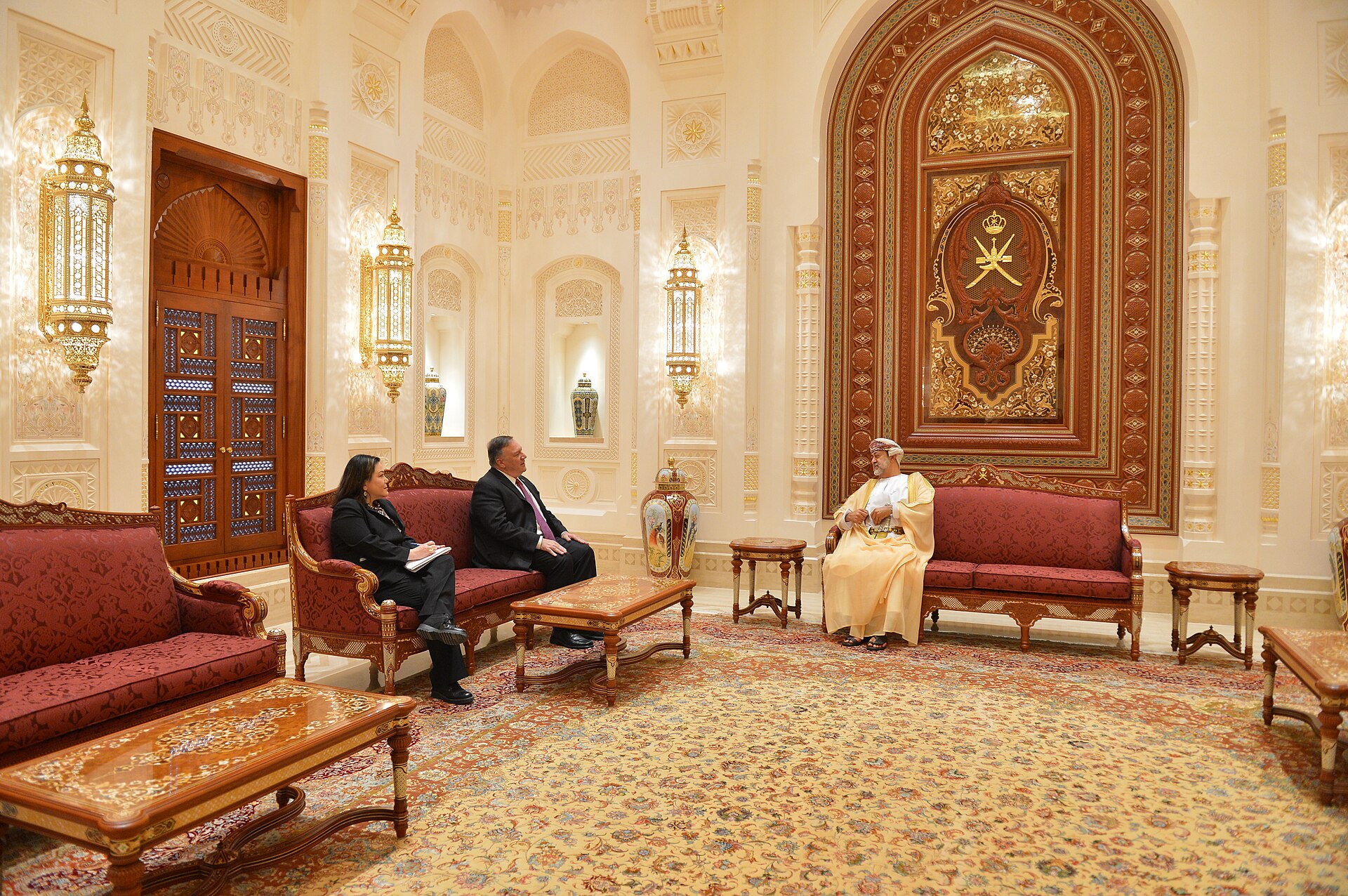
Geography alone does not explain Oman’s centrality. The sultanate has maintained uninterrupted diplomatic relations with Tehran since the 1970s, surviving the 1979 Islamic Revolution, the Iran-Iraq War, decades of US-Iran hostility, and the collapse of the 2015 nuclear deal. No other Gulf Cooperation Council member can make that claim. When Iran’s Foreign Minister Abbas Araghchi needs to send a message to Washington without routing it through hostile intermediaries, he calls Muscat. When American negotiators need a venue where Iranian officials will sit in the same building, they book rooms in Omani hotels. This infrastructure of trust took decades to build, and it cannot be replicated by a carrier strike group.
The 2025-2026 Iran-US nuclear negotiations, which collapsed when Operation Epic Fury began on February 28, were held in Muscat. Oman’s foreign minister, Badr bin Hamad al-Busaidi, personally shuttled between the American and Iranian delegations, who never met face to face. That mediation architecture remains intact even as the bombs fall. According to a March 6 Bloomberg report, Saudi Arabia has intensified its own diplomatic backchannel to Iran, but Riyadh’s channel is newer, thinner, and lacks the institutional depth of Oman’s three-decade relationship.
The Backchannel That Built the Nuclear Deal
Oman’s role as intermediary between Washington and Tehran did not emerge from a vacuum. It was constructed deliberately over three decades, beginning with quiet message-carrying during the Clinton administration and culminating in the secret negotiations that produced the 2015 Joint Comprehensive Plan of Action.
The foundation was laid during the Dhofar Rebellion of the 1960s and 1970s. When a Marxist insurgency threatened to overwhelm Sultan Qaboos’s forces in southern Oman, Shah Mohammad Reza Pahlavi dispatched an Imperial Iranian Army brigade of 1,200 troops in 1973, expanded to 4,000 by 1974. Iranian soldiers fought and died on Omani soil to preserve the sultanate. That military intervention created a debt of gratitude that survived the Shah’s overthrow, the establishment of the Islamic Republic, and every subsequent convulsion in Iranian politics. As William Burns, later CIA director, documented in his memoir “The Back Channel,” the trust Oman earned in that period gave it credibility with Tehran that no Western or Gulf Arab capital could match.
The modern backchannel took shape in 2009, when Omani Foreign Minister Yusuf bin Alawi offered to arrange meetings and provide secure venues for US-Iranian dialogue. What followed were eight rounds of secret negotiations in Muscat between 2012 and 2013, the longest sustained engagement between American and Iranian officials since the 1979 hostage crisis. These talks, kept secret from even close American allies, laid the groundwork for the JCPOA. The Obama administration publicly credited Oman for making the deal possible.
Oman facilitated the back channel between U.S. and Iranian officials, which remained secret throughout eight rounds of generally constructive dialogue that marked the longest and most sustained engagement between Iranian and U.S. officials since 1979.William Burns, former CIA Director, “The Back Channel”
Three features of Omani mediation distinguish it from alternatives. First, geographic proximity: Muscat sits a two-hour flight from Tehran, far closer and less surveilled than European venues like Vienna or Geneva. Second, media discretion: Oman’s press environment produces negligible leak risk compared to Western capitals. Third, institutional continuity: the same Omani diplomatic corps has managed the Iran relationship across multiple American administrations, accumulating knowledge and personal relationships that cannot be quickly rebuilt.
The Trump administration’s 2025-2026 nuclear negotiations followed the same Omani template. On April 12, 2025, US special envoy Steve Witkoff and Iranian Foreign Minister Araghchi began indirect talks in Muscat, with Omani Foreign Minister al-Busaidi serving as go-between. On February 6, 2026, just three weeks before Operation Epic Fury, Iran and the United States held what would prove to be their final round of negotiations in the Omani capital. The collapse of those talks and the onset of war have not severed Oman’s communication lines with Tehran. They have made those lines more valuable.
Oman’s Intelligence Architecture and the Information Advantage
Beyond diplomatic facilitation, Oman provides something that neither satellites nor signals intelligence can replace: direct insight into Iranian decision-making at the highest levels. The Omani intelligence service, formally known as the Internal Security Service, maintains liaison relationships with Iranian counterparts that date back decades. These relationships survived the transition from Qaboos to Haitham and, critically, they survived the Iranian attacks on Omani territory in March 2026.
The value of this intelligence architecture became clear during the 2025-2026 nuclear negotiations. According to The Conversation, an academic analysis platform, Oman served as a “crucial back channel” not merely for message-carrying but for contextualizing Iranian positions. Omani diplomats provided American negotiators with assessments of Iranian internal politics — which factions supported a deal, which opposed it, and where the red lines actually lay rather than where Tehran publicly claimed them to be. This analytical function is distinct from simple message relay and cannot be replicated by a country without deep institutional relationships inside the Iranian system.
In the current wartime environment, three intelligence requirements make Oman’s position uniquely valuable. First, the question of Iranian command and control: Tehran’s claim that strikes on Oman were conducted by independent military units raises fundamental questions about whether the IRGC Navy is operating under centralized authority or whether field commanders are making autonomous targeting decisions. Oman’s intelligence channels may be the only non-Iranian source capable of assessing this question with any reliability. Second, the succession dynamics around Mojtaba Khamenei: as a new and untested supreme leader elevated during wartime, Khamenei’s actual control over military operations is uncertain. Oman’s relationship with the Iranian clerical establishment provides a window into the new leader’s effective authority. Third, Iranian war aims: understanding whether Tehran’s strategic objective is a negotiated settlement, a demonstration of deterrence capability, or an indefinite war of attrition is essential for any diplomatic initiative, and Oman’s channels provide insight that technical intelligence collection cannot match.
Saudi intelligence chief Khalid bin Ali al-Humaidan has historically maintained his own contacts with Iranian counterparts, but these relationships are newer and lack the depth of institutional trust that Oman has cultivated over three decades. The Middle East Council on Global Affairs noted in its analysis that Oman has become “indispensable to nearly every actor in the conflict,” a status achieved through intelligence relationships as much as diplomatic ones.
Who Is Sultan Haitham and What Does He Want?
Sultan Haitham bin Tariq al-Said assumed power in January 2020 following the death of Sultan Qaboos, who had ruled Oman for nearly five decades. Where Qaboos was a charismatic autocrat who personally managed every significant diplomatic relationship, Haitham is a technocrat whose priorities are overwhelmingly economic. His signature initiative, Oman Vision 2040, aims to reduce the country’s dependence on hydrocarbons by developing manufacturing, logistics, tourism, and fisheries. The plan targets 4% annual GDP growth through 2030, according to Oman’s Ministry of Finance.
This economic orientation shapes Haitham’s approach to the current crisis. A regional war that disrupts shipping through the Strait of Hormuz, deters foreign investment, and forces emergency military spending is existential for a country whose GDP growth projections depend on international confidence in Gulf stability. Oil and gas still account for approximately 70-80% of Omani fiscal revenue and 60-75% of exports, according to Allianz Trade analysis. Oman’s 2026 budget, approved in January, projected non-oil revenue growth as a key fiscal pillar. The war has placed that entire fiscal strategy at risk.
Haitham has responded to the crisis with characteristic caution. On March 8, he was among the first world leaders to congratulate Mojtaba Khamenei on his appointment as Iran’s new supreme leader, a diplomatic signal that Oman intended to maintain its relationship with Tehran regardless of the leadership transition. Simultaneously, Oman has expressed solidarity with GCC states targeted by Iranian strikes, as the Oman Observer reported on March 5. The sultan is attempting to hold both positions — alignment with Gulf partners and communication with Tehran — a balancing act that grows more precarious with each Iranian drone that strikes Omani territory.
The contrast with his predecessor is instructive. Qaboos managed Oman’s neutrality through personal relationships with leaders across the region, including direct conversations with Iranian supreme leaders, Saudi kings, and American presidents. Haitham lacks that personal diplomatic capital. His strength lies in the institutional architecture Qaboos built, but institutions are being stress-tested by a war that moves faster than bureaucratic processes can adapt.
Hormuz Geography and Oman’s Irreplaceable Position
The Strait of Hormuz is approximately 104 miles long and narrows to 24 miles at its tightest point between Iran’s Larak Island and Oman’s Musandam Peninsula. Within that chokepoint, the shipping lanes occupy an even smaller corridor. Inbound traffic uses a two-mile-wide lane on the Omani side; outbound traffic uses a two-mile-wide lane closer to Iran; a two-mile buffer separates them. The entire navigable passage is barely six miles across.
Oman’s Musandam Governorate — a geographic exclave separated from the rest of Oman by the United Arab Emirates — provides the sultanate with physical control over the strait’s southern approach. The Omani navy operates patrol craft from Khasab, the governorate’s capital, and maintains the radar monitoring station that tracks vessel movements through the traffic separation scheme. In practical terms, any military operation to reopen the strait to commercial shipping requires Omani cooperation or at minimum acquiescence.
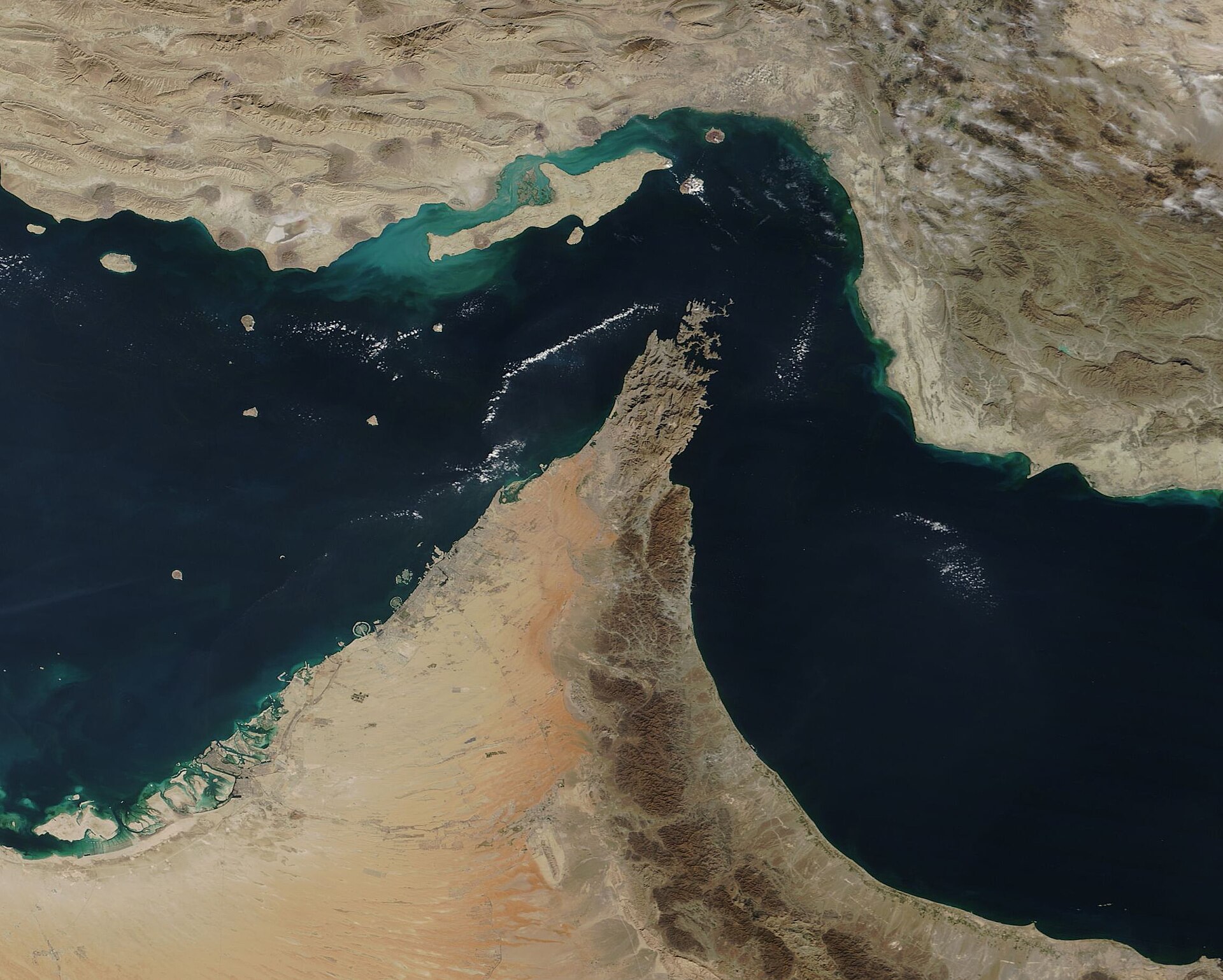
Before the current crisis, the strait handled approximately 20 million barrels of oil per day, or roughly 20% of global petroleum liquids consumption, according to the EIA. It also carried 20% of the world’s liquefied natural gas trade. Since Iran declared restrictions on strait transit in early March, tanker traffic has dropped by approximately 70%, with over 150 vessels anchoring outside the strait to avoid risk, according to maritime intelligence firm Windward. The effective closure of the strait has sent oil prices on a violent ride, touching $120 per barrel before crashing 15% to below $80 on March 10 after the US Navy escorted a tanker through the passage.
Oman’s position on the strait gives it leverage that extends beyond military geography. The sultanate could, in theory, grant or deny access to its territorial waters for naval escort operations, influence the terms under which commercial shipping resumes, and serve as the physical gateway through which any diplomatic solution to the Hormuz crisis must pass. No other country occupies this intersection of military geography and diplomatic credibility.
How Has Iran Justified Striking a Country It Calls a Friend?
The Iranian strikes on Oman represent one of the war’s most telling contradictions. Tehran has maintained for decades that Oman is a “friend and neighbour.” Yet from March 1, Iranian drones have struck multiple Omani targets, including the strategically important port of Duqm, the port of Salalah, and oil tankers in Omani waters.
The damage has been material. On March 1, two drones hit Duqm Port, with one striking a mobile workers’ housing unit. On March 3, several unmanned aircraft hit a fuel storage tank at Duqm. An oil tanker flying the Marshall Islands flag was attacked by a drone boat approximately 52 nautical miles off the coast of Muscat, killing one crew member. Another tanker, the Palau-flagged Skylight, was targeted 5 nautical miles north of the port of Khasab in the Musandam Governorate, injuring four crew members. On March 13, the toll escalated further when two foreign workers were killed by drone crashes in the Sohar industrial area, bringing confirmed deaths on Omani soil to at least five.
Iran’s explanation has been striking in its candor. Foreign Minister Araghchi stated that the attacks on Oman “were not their choice” and were carried out by military units “acting independently based on general instructions.” The Iranian General Staff separately declared that it did not order strikes on Omani territory. The implication — that elements of Iran’s military, likely Islamic Revolutionary Guard Corps naval units operating in the strait, are conducting operations without centralized authorization — raises profound questions about Tehran’s command and control during wartime.
For Oman, this explanation is simultaneously useful and dangerous. It allows Muscat to maintain the diplomatic fiction that Tehran’s leadership does not wish Oman harm. But it also means that Omani lives and infrastructure are vulnerable to Iranian military elements that may not answer to the same interlocutors with whom Omani diplomats negotiate. The Foundation for Defense of Democracies argued in a March 4 analysis that Oman’s “flipflopping on Iran will leave it isolated in the Gulf,” suggesting that Muscat’s attempt to absorb strikes while maintaining dialogue looks less like strategic patience and more like weakness.
That assessment underestimates the depth of Omani calculation. Sultan Haitham’s congratulatory message to Mojtaba Khamenei, Iran’s new supreme leader, was not naivety — it was a deliberate signal that Oman intended to preserve its channel to Iran’s new leadership at the precise moment that channel becomes most valuable. If and when ceasefire talks begin, the first call will go to Muscat.
The Duqm Dilemma and American Military Access
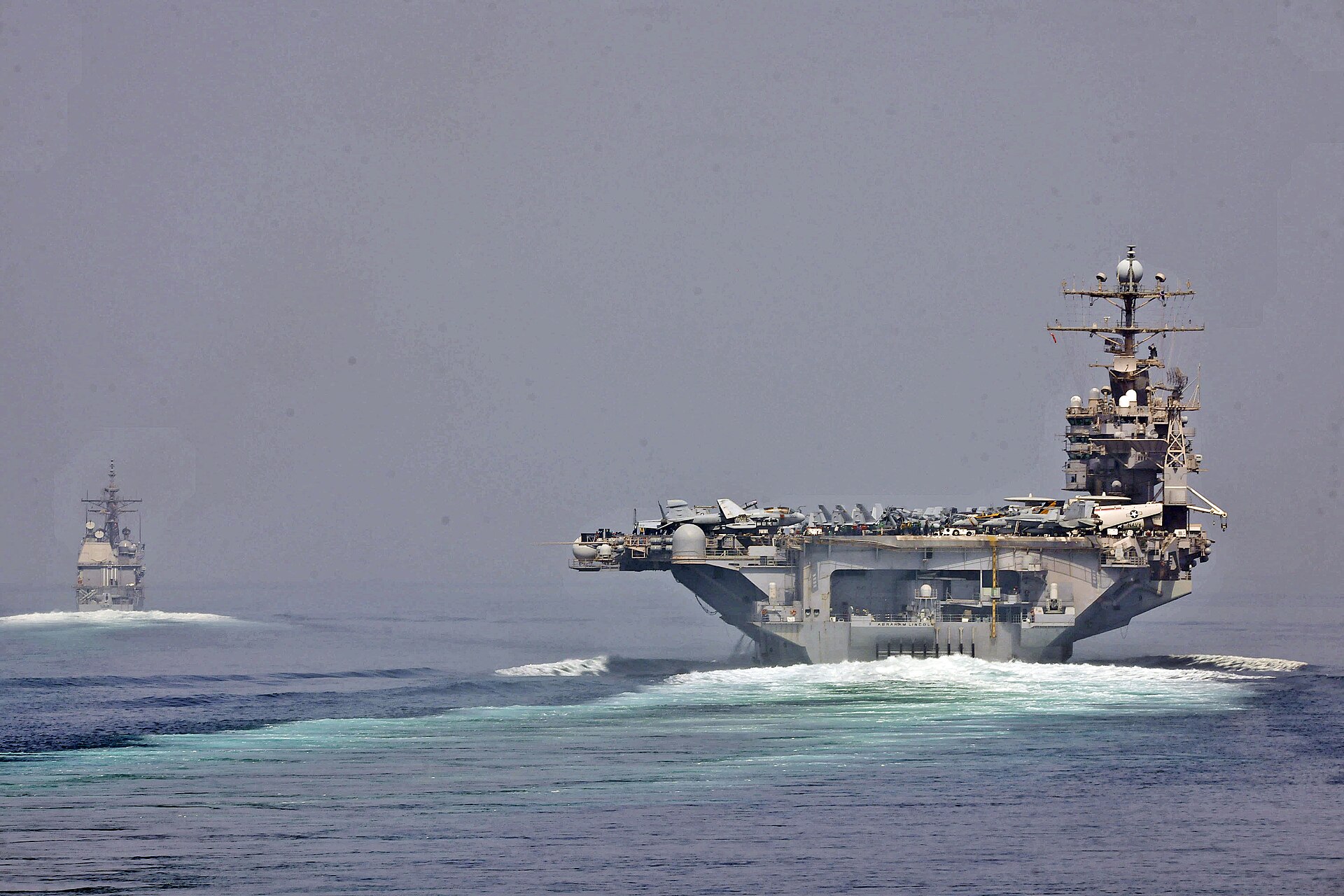
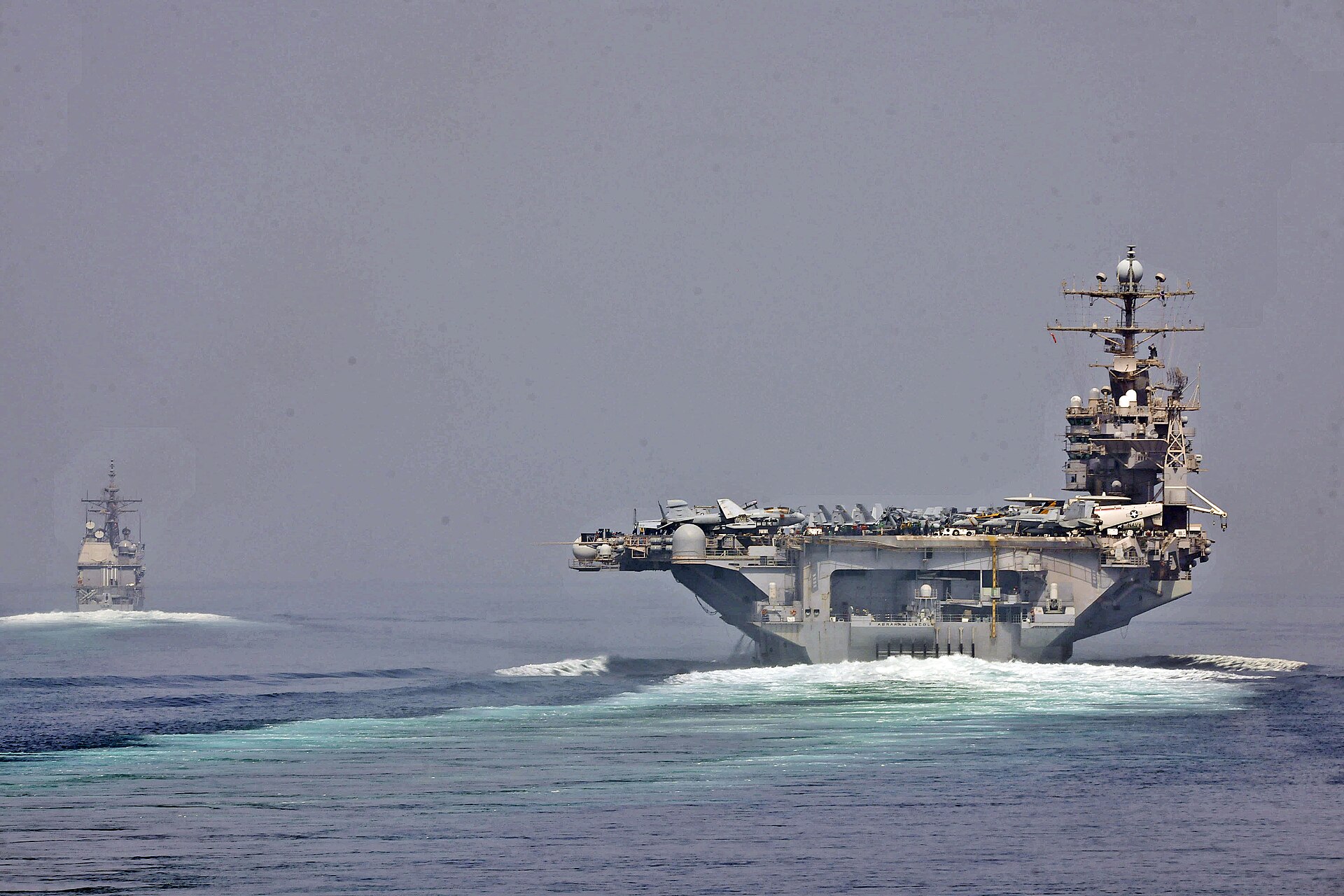
The port of Duqm, located on Oman’s Arabian Sea coast roughly 550 kilometers south of Muscat, has become the fulcrum of Oman’s neutrality crisis. Under a defense agreement dating to 1980 and expanded significantly in 2019, the United States has access to facilities at Duqm, Salalah, and various Omani airbases. Duqm’s deep-water dockyard can service vessels up to aircraft carrier size, and satellite imagery has shown the USS Abraham Lincoln carrier strike group operating in the Arabian Sea off the Omani coast.
In the months preceding Operation Epic Fury, facilities in Oman were enhanced in preparation for potential operations against Iran, according to the Wikipedia entry on the 2026 US military buildup in the Middle East. The Duqm Naval Dockyard, a joint venture with South Korean firm Daewoo, provides ship repair and maintenance capabilities that are critical to sustaining extended naval operations in the Arabian Sea and Persian Gulf.
This creates what analysts at SpecialEurasia have termed Oman’s central paradox: “If Oman allows the US or India to use Duqm for retaliatory logistics, it will lose its ‘Switzerland’ status with Tehran.” Iran’s drone strikes on Duqm suggest that Tehran has already concluded — or is warning — that the port’s role in supporting American operations compromises Oman’s claimed neutrality. The attack on the fuel storage tank on March 3 can be read as a calibrated signal: Iran can reach Duqm, and continued American use of the facility will not go uncontested.
Oman’s defense establishment has not publicly acknowledged the tension between hosting American naval logistics and maintaining Iranian trust. With 42,600 active military personnel and a defense budget of approximately $6 billion, about 6% of GDP, the sultanate lacks the military capability to independently secure its ports against Iranian asymmetric attacks. It depends on the American security umbrella that simultaneously undermines its mediator credentials. The Royal Navy of Oman operates 21 active vessels, ranking 59th globally — a force designed for coastal patrol, not for deterring a regional power’s drone and missile arsenal.
The Omani Neutrality Stress Index
Measuring the durability of Oman’s neutrality requires examining the specific pressures acting on it from multiple directions simultaneously. Six factors determine whether Muscat’s position holds or fractures, and each can be assessed on a spectrum from stable to critical.
| Pressure Factor | Source | Current Intensity | Trend | Breaking Point |
|---|---|---|---|---|
| Iranian military strikes on Omani territory | IRGC Navy, drone units | Moderate (port damage, 1 killed, 4 injured) | Escalating | Mass civilian casualties or critical infrastructure destruction |
| US demand for expanded military access | Pentagon, CENTCOM | High (carrier logistics, facility upgrades) | Increasing | Public basing of offensive operations from Omani soil |
| GCC solidarity pressure | Saudi Arabia, UAE, Bahrain | Moderate (solidarity statements, coordination calls) | Stable | Formal demand to choose sides or face economic consequences |
| Economic damage from Hormuz disruption | Oil market, trade routes, tourism | High (shipping collapse, investor flight) | Critical | Sustained oil price volatility undermining fiscal projections |
| Domestic political pressure | Omani public, tribal leaders, military | Low-Moderate | Rising | Iranian strike causing significant Omani civilian deaths |
| Erosion of Iranian trust | Tehran’s perception of Omani alignment | Moderate (Duqm use noted but excused) | Uncertain | Iran concluding Oman is an active belligerent |
The index reveals that economic pressure represents the most immediate threat to Oman’s position. A country that derives 70-80% of its fiscal revenue from hydrocarbons and has staked its future on the Vision 2040 diversification plan cannot indefinitely absorb the secondary effects of a conflict that has disrupted the primary shipping route for its exports. The Chatham House assessment published in March 2026 noted that while short-term oil price effects may be limited if prices stabilize near $70-80, a prolonged conflict would “almost certainly inflict a deeper economic wound, with output disrupted, investment postponed and tourism curtailed.”
The military pressure dimension is the most unpredictable. Iran’s claim that strikes on Oman were conducted by independent military units suggests either genuine command-and-control fragmentation — which makes future strikes more likely and less predictable — or a deliberate strategy of maintaining plausible deniability while testing Oman’s tolerance. Either interpretation counsels that Oman cannot count on Iranian restraint as a permanent condition.
What Does Saudi Arabia Need From Oman Right Now?
Saudi Arabia’s relationship with Oman has historically been more complex than the public rhetoric of GCC solidarity suggests. The two countries share a 676-kilometer border that was only formally demarcated in 1990, and Saudi Arabia’s physical mass and economic weight have always made smaller Oman wary of being absorbed into Riyadh’s orbit. Oman declined to join the Saudi-led boycott of Qatar in 2017, a decision that irritated Riyadh but preserved Muscat’s credibility as a neutral actor.
In the current crisis, however, Saudi Arabia needs Oman more than it has in decades. Crown Prince Mohammed bin Salman is fighting a three-front war — military, economic, and diplomatic — and Oman’s backchannel to Tehran represents the most viable path to a negotiated end to hostilities. Saudi Foreign Minister Faisal bin Farhan’s diplomatic efforts require a functioning intermediary with Iran, and Oman is the only candidate.
Riyadh’s specific needs from Muscat include four elements. First, message delivery: Saudi proposals for de-escalation or ceasefire terms need a trusted carrier to Tehran, particularly now that Mojtaba Khamenei’s new leadership team has not yet established direct communication protocols with Gulf capitals. Second, venue provision: any eventual face-to-face or proximity talks will almost certainly require Omani hosting, as Muscat’s February 2026 nuclear negotiation facilities remain the most recently tested diplomatic infrastructure. Third, intelligence sharing: Oman’s unique access to Iranian thinking provides Saudi decision-makers with assessments that intelligence services cannot easily replicate through technical means. Fourth, Hormuz coordination: any plan to reopen the strait to commercial shipping requires coordination between the navies operating in Omani territorial waters.
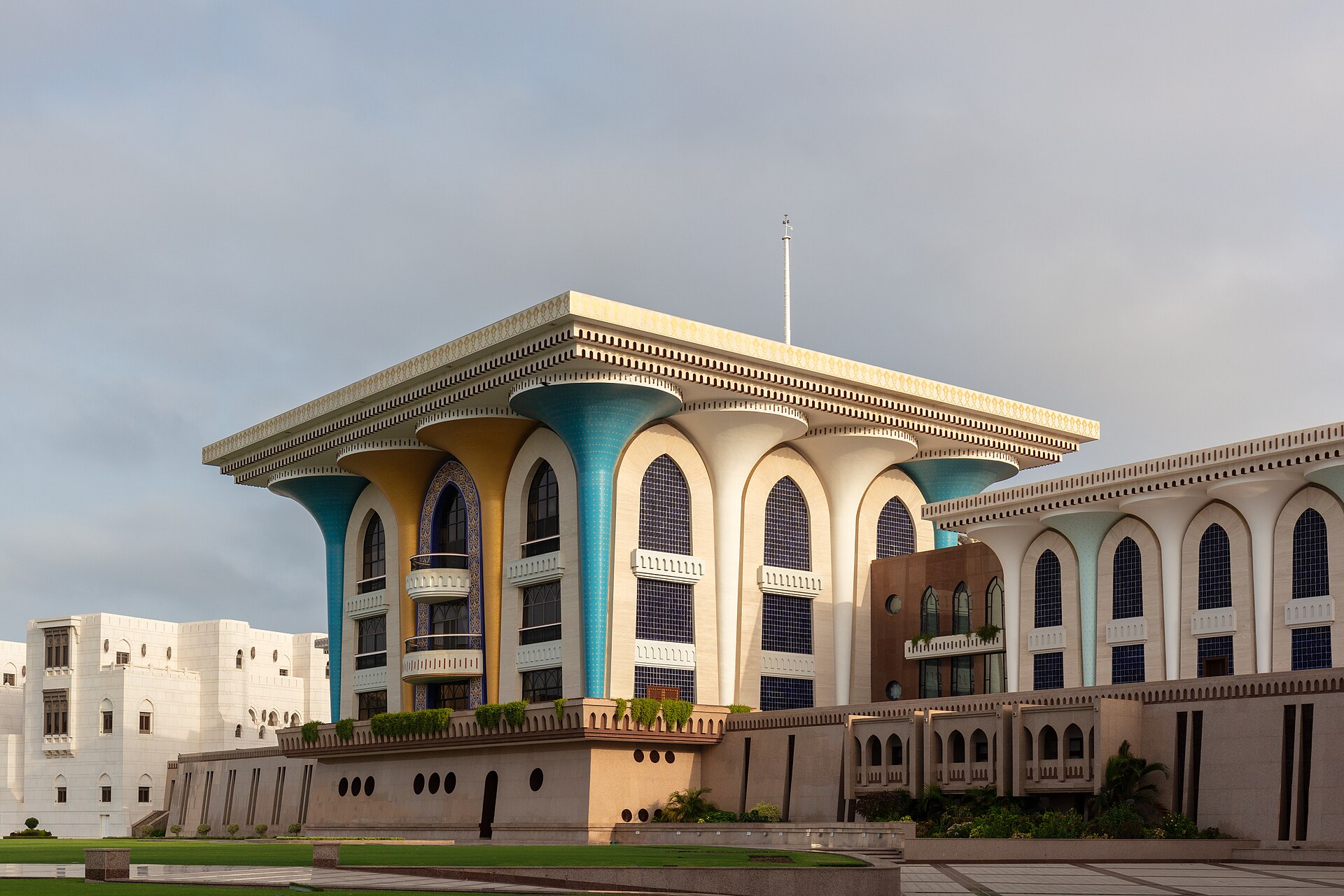
The Chatham House report on Oman published in January 2026, before the war began, noted that most Gulf capitals had come to accept “not only the value of Omani mediation but its necessity.” That assessment has only intensified. The barriers to a ceasefire are formidable — Iran has rejected negotiations, Mojtaba Khamenei’s IRGC-linked leadership shows no inclination toward compromise, and Washington insists the war will end “on our timeline,” as Defense Secretary Pete Hegseth stated on March 10. But when those barriers eventually shift, Oman’s diplomatic machinery will be the first thing every party reaches for.
Can Oman Deliver a Ceasefire When Both Sides Refuse to Talk?
The mechanics of wartime mediation differ fundamentally from peacetime diplomacy, and Oman’s experience has been overwhelmingly in the latter category. The sultanate facilitated nuclear negotiations between states that were adversaries but not actively shooting at each other. The current situation demands a different skill set: delivering proposals under fire, managing expectations when both parties have domestic audiences demanding escalation, and maintaining credibility with governments whose soldiers are killing each other’s citizens.
Several structural factors work in Oman’s favour. The sultanate has no territorial claims against Iran, no sectarian agenda, no military involvement in the conflict, and no public rhetoric that would require diplomatic retreat. Unlike Saudi Arabia, which Iran has struck repeatedly and which hosts American military infrastructure targeted in the conflict, Oman can approach Tehran without the baggage of perceived belligerency. Unlike the United States, which launched the war and whose diplomatic credibility in Tehran is effectively zero, Oman has a relationship with Iran’s new leadership that predates the current supreme leader by decades.
The obstacles are equally formidable. Iran’s new Supreme Leader Mojtaba Khamenei, appointed on March 8, has strong ties to the Islamic Revolutionary Guard Corps and represents hardline continuity rather than diplomatic opening, according to NPR’s March 9 profile. Foreign Minister Araghchi stated on March 10 that Iran would “continue fighting as long as necessary,” explicitly rejecting ceasefire. On the American side, President Trump has declared the war “very complete” even as strikes intensify, while Senator Lindsey Graham has threatened to kill the US-Saudi defense pact over Riyadh’s refusal to participate in offensive operations against Iran.
Complicating Oman’s mediation further, Tehran has formalized its negotiating position into a set of demands that most Western capitals consider unacceptable. Iran now insists on reparations payments and binding security guarantees against future strikes as preconditions for any ceasefire, raising the threshold that Omani diplomats must bridge between the two sides.
Oman’s most realistic contribution may not be a comprehensive ceasefire but rather incremental de-escalation: securing agreement to avoid strikes on civilian infrastructure, establishing humanitarian corridors, or brokering limits on the Hormuz blockade that allow essential shipping to resume. The NPR report on Omani mediation from February 27, published the day before the war began, noted that Muscat’s approach has always been “quiet, persistent, and focused on small agreements that create momentum for larger ones.” That methodology may be the only viable path forward in a conflict where neither belligerent can afford to appear weak by suing for peace.
The timeline for any Omani-facilitated dialogue depends on military developments. Pentagon spokesman Hegseth declared March 10 “the most intense day of strikes” on Iran, suggesting Washington believes it can achieve military objectives that make negotiation unnecessary. Iran’s new supreme leader has no incentive to negotiate from a position of perceived weakness. The alignment of circumstances required for talks — military stalemate, domestic political cover for both sides, and a credible mediator — may take weeks or months to materialize. Oman’s task is to ensure that when that alignment occurs, the diplomatic infrastructure is still functioning.
One specific mechanism deserves attention. During the 2015 nuclear negotiations, Oman hosted “proximity talks” in which American and Iranian delegations occupied separate floors of the same hotel, with Omani diplomats physically carrying proposals between them. This format allowed both sides to negotiate without the political cost of being seen in the same room. A similar structure could facilitate initial ceasefire discussions: neither Tehran nor Washington would need to announce talks, and Muscat’s media discretion would minimize leak risk. The logistical requirements are minimal — hotel rooms, secure communications, and Omani translators who understand both American negotiating culture and Iranian political sensitivities. All of these resources remain available in Muscat.
The comparison with Saudi Arabia’s own diplomatic efforts is illuminating. Bloomberg reported on March 6 that Riyadh has intensified its direct backchannel to Iran, deploying diplomats with “greater urgency to de-escalate tensions.” Saudi Arabia’s channel, however, operates from a fundamentally different position. Riyadh is under active Iranian attack, hosts American military infrastructure that Iran is targeting, and faces domestic pressure to respond forcefully. An Iranian interlocutor engaging with Saudi diplomats must account for the possibility that information shared could influence military operations. An Iranian interlocutor engaging with Omani diplomats faces no equivalent risk. This asymmetry gives Muscat a structural advantage in sensitive negotiations that Riyadh cannot overcome regardless of diplomatic effort.
The GCC’s Uncomfortable Dependence on Omani Neutrality
The Gulf Cooperation Council’s response to the Iran war has revealed a structural paradox: the organization’s collective defense depends on a member state that refuses to participate in that defense. Oman attended the emergency Arab Foreign Ministers’ meeting that invoked collective defense provisions, and it signed the Joint Statement on Iran’s Missile and Drone Attacks issued by the US State Department on March 5. But its contributions have been limited to diplomatic solidarity rather than military coordination.
This creates friction with GCC partners who are absorbing heavier punishment. Bahrain, with its concentrated population and small geography, has been under sustained Iranian fire. Kuwait has closed its airspace and cut oil production after Iranian strikes damaged its airport. The UAE has diverted military resources to homeland defense. Saudi Arabia has intercepted dozens of ballistic missiles, cruise missiles, and drones, with two civilian fatalities in al-Kharj. Against this backdrop, Oman’s insistence on maintaining diplomatic channels with the country launching these attacks generates resentment.
The Foundation for Defense of Democracies articulated this view explicitly in its March 4 analysis, arguing that Oman’s position would leave it “isolated in the Gulf.” The implication is that GCC states may eventually demand that Muscat choose: solidarity with fellow Gulf monarchies under fire, or continued engagement with the power attacking them. This framing misunderstands the GCC’s actual strategic calculation. As the Chatham House January 2026 report documented, Gulf capitals have come to accept Omani mediation as a necessity precisely because they lack alternative channels to Tehran. Saudi Arabia, for all its regional weight, cannot replicate what Oman offers. The UAE’s relationship with Iran, once relatively functional, has deteriorated since the war began. Bahrain has no meaningful diplomatic contact with Tehran. Kuwait and Qatar have been directly attacked.
The GCC’s dependence on Omani neutrality is therefore structural, not optional. Pressuring Muscat into a collective defense posture would eliminate the council’s only diplomatic pathway to Iran at the moment that pathway is most needed. Senior Gulf officials understand this, even if public rhetoric sometimes suggests otherwise. The private message from Riyadh and Abu Dhabi to Muscat, according to regional analysts, has been: stay neutral, keep the channel open, but do not congratulate Iran’s new supreme leader on social media.
Oman’s Economic Survival Depends on Ending This War
Oman’s economic vulnerability to the current conflict is more acute than that of any other GCC state. Saudi Arabia possesses $400 billion in central bank reserves, the world’s largest sovereign wealth fund, and the ability to reroute oil exports through its East-West Pipeline to Yanbu on the Red Sea. The UAE has diversified revenue streams and deep financial reserves. Qatar exports most of its LNG through facilities that have their own maritime vulnerabilities but benefit from American military protection. Oman has none of these buffers at comparable scale.
The sultanate’s GDP stood at approximately $104 billion in 2025, with real growth projected at 3.1% for that year and 4.4% for 2026, according to the World Bank. Hydrocarbons account for roughly 25-35% of GDP and 70-80% of fiscal revenue. The 2026 budget, approved in January with optimism about non-oil diversification, did not account for a regional war that would disrupt trade, deter foreign direct investment, and spike insurance premiums for shipping in Omani waters.
| Economic Indicator | Pre-War Projection | Wartime Impact | Risk Level |
|---|---|---|---|
| GDP growth (2026) | 4.4% | Estimated 1.5-2.5% | High |
| Oil revenue (% of fiscal income) | ~50% | Volatile — $80-120/barrel swings | Moderate-High |
| Duqm Port throughput | Growth trajectory | Disrupted by strikes and insurance costs | Critical |
| Tourism revenue | $3.5B target | Collapse in regional tourism | Critical |
| Foreign direct investment | $5.2B (2025) | Capital flight and project delays | High |
| Shipping insurance premiums | Standard rates | War-risk premiums adding 1-5% of cargo value | High |
| Defense spending (% of GDP) | ~6% | Emergency increases likely | Moderate |
The war’s impact on Duqm deserves particular attention. Oman has invested billions in transforming the port into a major logistics and industrial hub, a cornerstone of Vision 2040’s diversification strategy. The Duqm Special Economic Zone was designed to attract manufacturing, shipbuilding, and oil refining operations that would create jobs and reduce dependence on crude exports. Iranian drone strikes on the port — even limited ones that caused no casualties — send a devastating signal to potential investors. Insurance costs for operations in the zone will rise. Construction timelines will slip. The economic ecosystem Oman was building at Duqm cannot function if the port is periodically struck by a neighbouring country’s drones.
This economic calculus reinforces Oman’s motivation to facilitate a ceasefire. The sultanate is not mediating out of altruism or tradition alone. It is mediating because its economic survival depends on the restoration of stability in the Gulf. Every day the war continues erodes the fiscal foundations on which Vision 2040 is built.
How Other Small-State Mediators Fared in Wartime
Oman’s predicament has historical parallels that illuminate both the possibilities and the limits of small-state mediation during active conflict. Three cases are instructive.
Qatar, during the 2010s, positioned itself as a mediator between Western powers and various non-state actors, including the Taliban and Hamas. Doha hosted the Taliban’s political office from 2013 and facilitated the negotiations that produced the 2020 US-Taliban withdrawal agreement. Qatar’s mediation survived accusations that it was too close to the groups it facilitated — a criticism Oman now faces regarding Iran. The key to Qatari success was maintaining communication channels that all parties valued more than they resented. Oman’s situation is analogous: as long as Muscat’s channel to Tehran is more valuable to Washington and Riyadh than it is irritating, the mediation survives.
Switzerland during World War II offers a darker parallel. Swiss neutrality was maintained not through goodwill but through a combination of geographic defensibility, economic utility to both sides, and credible military deterrence. Oman lacks the military deterrence component — its 42,600-strong armed forces cannot meaningfully threaten Iran — but it does possess geographic and economic utility that both sides of the current conflict value. The Swiss model suggests that neutrality is sustainable as long as the mediator provides services that belligerents cannot obtain elsewhere.
Norway’s role in the 1993 Oslo Accords between Israel and the PLO demonstrates a third model: the mediator as venue provider and process manager rather than substantive participant. Norwegian diplomats created the physical and psychological space for negotiations but did not attempt to impose solutions. Oman’s approach most closely resembles the Norwegian model. Muscat does not claim to have answers to the Iran war; it claims to have relationships that make conversations possible. This modesty is a strategic asset. It allows Oman to avoid the perception of taking sides on substance while providing the process infrastructure that both sides may eventually need.
| Mediator | Conflict | Key Asset | Outcome | Lesson for Oman |
|---|---|---|---|---|
| Qatar | US-Taliban (2010-2020) | Access to non-state actors | 2020 withdrawal agreement | Maintaining channels critics resent can yield eventual results |
| Switzerland | World War II (1939-1945) | Geographic position, economic utility | Neutrality survived but was repeatedly violated | Neutrality requires utility to both sides, not just goodwill |
| Norway | Israeli-Palestinian (1993) | Diplomatic discretion, low media profile | Oslo Accords | Process management without substantive positions is sustainable |
| Algeria | Iran Hostage Crisis (1980-81) | Relationships with both Washington and Tehran | Algiers Accords, hostage release | Crisis mediation requires pre-existing trust with both parties |
The Algerian parallel deserves particular attention. When the Iran hostage crisis of 1979-1981 required a mediator, Algeria was selected precisely because it maintained relationships with both the United States and revolutionary Iran. Algerian diplomats shuttled between the parties for months, enduring mutual hostility and multiple breakdowns, before securing the Algiers Accords and the release of 52 American hostages. The process was slow, frustrating, and frequently appeared hopeless — characteristics that any Omani-facilitated negotiation in the current war would almost certainly share.
The Counterintuitive Case That Iranian Strikes Strengthened Oman’s Hand
Conventional analysis holds that Iran’s attacks on Oman have weakened the sultanate’s mediation position by exposing the limits of Omani neutrality and demonstrating that Tehran does not reciprocate the trust Muscat has extended. The Foundation for Defense of Democracies, among others, has argued that Oman’s continued engagement with Iran after being attacked looks like appeasement rather than strategy.
The evidence supports a more nuanced reading. Iran’s strikes on Oman — and Tehran’s subsequent claim that they were unauthorized — actually provide Muscat with a new form of diplomatic leverage that it previously lacked. Oman can now approach both sides of the conflict from a position of demonstrated injury rather than theoretical concern. To Tehran, Muscat can say: your forces have killed people in our waters and struck our ports; we maintain our channel with you not because we are naive but because we believe ending this war serves Iranian interests. To Washington and Riyadh, Muscat can say: we have absorbed Iranian fire while maintaining the only functional diplomatic channel to Tehran; do not question our commitment to regional security.
The Iranian claim that strikes were conducted by independent military units, while diplomatically convenient, also gives Oman a tool. If Muscat accepts Tehran’s narrative — that the Iranian government did not intend to attack Oman — it preserves the diplomatic relationship while creating a precedent that any future attacks would represent a deliberate escalation rather than a regrettable error. This transforms each subsequent Iranian strike on Oman into a higher-stakes decision for Tehran, effectively raising the cost of attacking a mediator.
Historical precedent supports this dynamic. Switzerland, the original neutral mediator, was bombed by both Allied and Axis forces during World War II. Rather than abandoning neutrality, the Swiss used the attacks to reinforce their position: we are neutral because we choose to be, not because we are untouched. Oman’s absorption of Iranian strikes, combined with its continued engagement, creates a similar moral authority. The sultanate has paid a physical price for its diplomatic role, which makes that role harder for others to dismiss as merely convenient.
This is not to minimize the risks. If Iranian strikes escalate to the point of significant Omani civilian casualties or critical infrastructure destruction — the crossing points identified in the Neutrality Stress Index above — the calculus changes entirely. But at the current level of damage, the attacks have paradoxically strengthened rather than weakened Oman’s position.
What Happens If Oman’s Neutrality Breaks?
The consequences of an Omani neutrality collapse would extend far beyond Muscat. Three scenarios illustrate the stakes.
In the first scenario, Oman aligns formally with the GCC military response, joining the collective defense architecture that other Gulf states have been constructing since the Arab Foreign Ministers’ emergency meeting. This would give Iran justification to treat Omani territory as hostile, likely triggering heavier strikes on Duqm and potentially on Musandam — which would put Iranian weapons landing within the Strait of Hormuz shipping lanes themselves. The escalation risk is extreme.
In the second scenario, Oman breaks with the United States, restricting American military access to Duqm and other facilities in order to preserve its relationship with Tehran. This would remove critical logistics infrastructure from the US military campaign, potentially forcing the Abraham Lincoln carrier strike group to rely on facilities in Bahrain and the UAE that are already strained and under Iranian fire. It would also create the first significant fissure within the GCC’s response to the war, emboldening Iran and alarming Saudi Arabia.
In the third scenario — and the one Oman is working hardest to avoid — the sultanate is simply overwhelmed by events. Escalating Iranian strikes, intensifying American demands for military access, and GCC pressure to demonstrate solidarity could collectively collapse the middle ground Muscat occupies. In this scenario, Oman does not choose a side; its ability to straddle both is simply crushed by the weight of the conflict.
| Scenario | Trigger | Impact on War | Impact on Saudi Arabia | Probability |
|---|---|---|---|---|
| Oman joins GCC military alignment | Major Iranian strike on Omani civilians | Loses only neutral mediator; Hormuz escalation | Gains military partner; loses ceasefire pathway | Low (15-20%) |
| Oman restricts US military access | US offensive operations staged from Duqm | Disrupts US logistics; Iran gains breathing room | Weakens coalition; forces Saudi to provide alternatives | Low (10-15%) |
| Neutrality collapses under combined pressure | Simultaneous escalation from multiple directions | Removes diplomatic off-ramp; conflict extends | Worst case — no mediator, no Hormuz coordination | Moderate (25-30%) |
| Neutrality holds (current trajectory) | Continued calibrated response from all parties | Preserves ceasefire pathway; manages Hormuz | Best case — maintained diplomatic architecture | Moderate-High (35-50%) |
The most dangerous aspect of all three collapse scenarios is the same: the disappearance of the only functioning diplomatic channel between Tehran and the coalition arrayed against it. China has sent a peace envoy to Riyadh, as reported on March 9. Turkey has made diplomatic overtures. But neither Beijing nor Ankara possesses the institutional relationship with Iran’s security establishment that Oman has built over thirty years. If that channel closes, the war’s diplomatic off-ramp closes with it.
Oman’s mediation runs parallel to Saudi Arabia’s own diplomatic track. Prince Faisal bin Farhan’s backchannel to Tehran operates independently and with a different objective: not merely to end the fighting but to shape the outcome in a way that serves Riyadh’s specific war termination calculus, which diverges from Washington’s priorities on several critical dimensions.
Frequently Asked Questions
Why is Oman neutral in the Iran war?
Oman has maintained diplomatic ties with Iran since the 1970s, when the Shah sent 4,000 troops to help Sultan Qaboos defeat an insurgency. That debt of trust survived the Islamic Revolution and made Oman the natural intermediary for US-Iran negotiations, including the talks that produced the 2015 nuclear deal. Sultan Haitham continues this policy because Oman’s economic survival under Vision 2040 depends on regional stability.
Has Iran attacked Oman in the 2026 war?
Iran has conducted drone strikes on Omani ports at Duqm and Salalah and attacked oil tankers in Omani waters, killing one crew member and injuring four others. Tehran claimed the attacks were carried out by military units acting independently and stated that Oman remains a “friend and neighbour.” The strikes have damaged port infrastructure but have not, so far, caused mass civilian casualties. The most significant attack came on March 11, when Iranian drones struck fuel storage tanks at Salalah port, setting at least three tanks ablaze and forcing the suspension of all operations at the facility that had become the Gulf’s primary Hormuz bypass.
What is the Duqm naval base used for?
Duqm is a deep-water port on Oman’s Arabian Sea coast that the United States has access to under a defense agreement dating to 1980, expanded in 2019. The port can service aircraft carriers and has been used for pre-deployment logistics by the USS Abraham Lincoln carrier strike group. It is also central to Oman’s Vision 2040 economic diversification plan as a logistics and industrial hub.
Could Oman broker a ceasefire between the US and Iran?
Oman possesses the institutional relationships, geographic proximity, and diplomatic discretion required to facilitate negotiations. However, both sides currently reject talks: Iran’s new Supreme Leader Mojtaba Khamenei has IRGC ties suggesting hardline continuity, and Washington insists the war will end on its own timeline. Oman’s most realistic contribution may be incremental de-escalation measures rather than a comprehensive ceasefire.
How does the Strait of Hormuz relate to Oman?
Oman’s Musandam Peninsula forms the southern coast of the Strait of Hormuz, and shipping lanes carrying 20% of global oil trade run primarily through Omani territorial waters. Oman operates the radar monitoring station that tracks vessel movements through the strait. Any military or diplomatic solution to the current Hormuz blockade requires Omani cooperation, giving the sultanate outsized influence relative to its military and economic size.
What is Oman’s Vision 2040 plan?
Vision 2040 is Oman’s national economic diversification strategy, launched by Sultan Haitham bin Tariq to reduce dependence on oil and gas revenues. The plan targets 4% annual GDP growth through 2030 and focuses on five priority sectors: manufacturing, logistics and transport, tourism, agriculture and fisheries, and mining. The Iran war threatens Vision 2040 by disrupting trade through the Strait of Hormuz, deterring foreign investment, and damaging the Duqm Special Economic Zone.
What is the difference between Oman’s mediation and Qatar’s?
Qatar has positioned itself as a mediator in conflicts involving non-state actors, including the Taliban and Hamas, but lacks Oman’s depth of institutional relationship with Iran’s state apparatus. Oman’s mediation rests on three decades of continuous diplomatic engagement with Tehran, dating to the Dhofar Rebellion when Iranian troops fought alongside Omani forces. Qatar’s geographic distance from the Strait of Hormuz also means it lacks the strategic leverage that Oman derives from controlling the strait’s southern shore.